Introduction
The cognitive model of depression posits that cognitive therapy (CT) reduces depressive symptoms and prevents relapse partly by changing depressive cognition (Clark et al. Reference Clark, Beck and Alford1999). Arguably, more is known about cognitive content during acute-phase CT, which aims to teach CT skills to currently depressed patients to reduce depressive symptoms, produce remission and prevent relapse (Beck et al. Reference Beck, Rush, Shaw and Emery1979). We examined changes in cognitive content during continuation-phase treatment aimed at reducing residual symptoms, preventing relapse/recurrence among CT responders, and generalizing compensatory skills (Jarrett et al. Reference Jarrett, Basco, Risser, Ramanan, Marwill, Kraft and Rush1998, Reference Jarrett, Vittengl, Clark and Whisman2008). Specifically, 241 CT responders with recurrent major depressive disorder (MDD) were randomized to 8 months of continuation cognitive therapy (C-CT), fluoxetine (FLX) or pill placebo (PBO) and followed for 24 additional months (Jarrett & Thase, Reference Jarrett and Thase2010). The current analyses clarified whether improvements in cognitive content during acute-phase CT are durable, and whether C-CT or FLX further improves cognitive content as a means to reduce residual symptoms and prevent relapse/recurrence.
In the cognitive model of depression, perceptions of external and internal stimuli are linked to negative affect (e.g. sadness, fear, anger; Clark et al. Reference Clark, Beck and Alford1999). Internal, relatively stable cognitive structures, such as schema (e.g. assumptions such as ‘I must always be liked’ and core beliefs such as ‘I am worthless’) and modes (groups of inter-related schema that handle demands; e.g. interpersonal loss or isolation) facilitate interpretation of stimuli. Cognitive structures activated by matching stimuli (e.g. interpersonal rejection activating the assumption ‘I must always be liked’) govern subsequent information processing. Activated cognitive structures then produce commensurate behaviors, thoughts and emotions (e.g. thinking ‘I am unlovable and always will be’ and avoiding social contact) including depression (Clark et al. Reference Clark, Beck and Alford1999). As an efficacious treatment of depression, CT may reduce negative schema activation directly and/or strengthen top-down (effortful, reflective) processing to correct biased information processing via observable neurophysiological mechanisms (Clark & Beck, Reference Clark and Beck2010).
The best-studied measures of depressive cognitive content include patient-report questionnaires (Dunkley et al. Reference Dunkley, Blankstein, Segal and Dobson2010). For example, the Attributional Style Questionnaire (ASQ; Peterson et al. Reference Peterson, Semmel, von Baeyer, Abramson, Metalsky and Seligman1982; Dykema et al. Reference Dykema, Bergbower, Doctora and Peterson1996) and Beck Hopelessness Scale (BHS; Beck et al. Reference Beck, Weissman, Lester and Trexler1974) assess outputs of activated schema, whereas the Dysfunctional Attitudes Scale (DAS; Weissmann, Reference Weissman1979) measures depressive semantic content. The Self-Control Schedule (SCS; Rosenbaum, Reference Rosenbaum1980), in contrast, measures learned resourcefulness (e.g. positive coping) to address challenging internal and external events. Although depression diagnostic criteria (American Psychological Association, 2013) and symptom measures (e.g. Hamilton, Reference Hamilton1960; Beck et al. Reference Beck, Ward, Mendelson, Mock and Erbaugh1961) include cognitive items (e.g. guilt, pessimism), ‘depression’ is distinguished from ‘cognitive content’ in theory (Clark et al. Reference Clark, Beck and Alford1999; Clark & Beck, Reference Clark and Beck2010) and measurement (Lorenzo-Luaces et al. Reference Lorenzo-Luaces, German and DeRubeis2014). For example, the validity of patient-report measures of cognitive content has been supported in currently and previously depressed patients, as well as normative samples, by differentiating these groups (Steer et al. Reference Steer, Rissmiller, Ranieri and Beck1994; Riso et al. Reference Riso, du Toit, Blandino, Penna, Dacey, Duin, Pascoe, Grant and Ulmer2003; Otto et al. Reference Otto, Teachman, Cohen, Soares, Vitonis and Harlow2007) and by predicting changes in health status among patients (major depressive treatment response, relapse, recovery; suicide; Burns et al. Reference Burns, Rude, Simons, Bates and Thase1994; Brown et al. Reference Brown, Beck, Steer and Grisham2000; Vittengl et al. Reference Vittengl, Clark and Jarrett2010). Researchers have used patient-report measures to clarify how much cognitive content improves during CT and mediates CT's effects on depression.
Depressed patients’ self-reported cognitive content improves substantively during acute-phase CT (e.g. on the ASQ, BHS, DAS; Garratt et al. Reference Garratt, Ingram, Rand and Sawalani2007; Webb et al. Reference Webb, Auerbach and DeRubeis2012). For example, Jarrett et al. (Reference Jarrett, Vittengl, Doyle and Clark2007) found substantive improvement in averages (median d = 0.79) and proportions of patients scoring in ‘healthy’ ranges (from median 39 to 70%) from pre- to post-acute-phase CT on the ASQ (failure and success composites), DAS and Self-Efficacy Scale (Sherer et al. Reference Sherer, Maddux, Mercandante, Prentice-Dunn, Jacobs and Rogers1982). Similarly in the current dataset, patients’ average cognitive content scores improved considerably [median d = 0.96 on the ASQ – stable (ASQ-S) and ASQ – global (ASQ-G) failure composites, BHS, DAS and SCS] and proportions of healthy patients increased notably (from median 45 to 82% on the BHS, DAS and SCS) during acute-phase CT (Vittengl et al. Reference Vittengl, Clark, Thase and Jarrett2014a ).
A smaller literature suggests that most of the improvement in cognitive content occurs during acute phase treatment, and these improvements are maintained but not greatly extended during continuation treatment. For example, among acute-phase CT responders randomized to 8 months of C-CT or assessment-control and followed for 16 additional months, cognitive content was generally stable through 24 months with few differences between groups (Jarrett et al. Reference Jarrett, Vittengl, Doyle and Clark2007). C-CT modestly improved ASQ failure scores relative to control from months 8–12, however. Similarly, among responders to acute-phase FLX, patients randomized to continuation FLX plus CT maintained gains in cognitive content made during acute-phase treatment, whereas patients in continuation FLX-only showed deteriorating cognitive content over 6 months (Petersen et al. Reference Petersen, Harley, Papakostas, Montoya, Fava and Alpert2004). This finding supports the hypothesis that CT has a unique, specific effect on improving cognitive content. The current analyses expanded the literature on longitudinal changes in depressed patients’ cognitive content during and after continuation treatments.
The potential causal role of cognitive content in CT's effects on depression is unclear (Kazdin, Reference Kazdin2007; Longmore & Worrell, Reference Longmore and Worrell2007). Moderately strong correlations between concurrent changes in cognitive content and depressive symptoms (e.g. from pre- to post-acute-phase CT; Jarrett et al. Reference Jarrett, Vittengl, Doyle and Clark2007; Vittengl et al. Reference Vittengl, Clark, Thase and Jarrett2014a ) suggested a causal link. However, depressive symptoms improved more, and more quickly, than cognitive content in acute-phase CT (Furlong & Oei, Reference Furlong and Oei2002; Jarrett et al. Reference Jarrett, Vittengl, Doyle and Clark2007). Further, change in cognitive content only partly accounted for change in depressive symptoms pre- to post-treatment (Jarrett et al. Reference Jarrett, Vittengl, Doyle and Clark2007; Christopher et al. Reference Christopher, Jacob, Neuhaus, Neary and Fiola2009).
Causation also requires temporal precedence – earlier improvements in cognitive content should account for subsequent changes in depressive symptoms, according to the cognitive model. That is, cognitive content is expected to mediate CT's effects on depressive symptoms (Kazdin, Reference Kazdin2009). At least three assessment periods (e.g. pre-, mid- and post-CT) are needed to disentangle earlier from later changes. During acute-phase CT, earlier changes in cognitive content have sometimes (DeRubeis et al. Reference DeRubeis, Evans, Hollon, Garvey, Grove and Tuason1990), but not always (Jarrett et al. Reference Jarrett, Vittengl, Doyle and Clark2007), predicted subsequent changes in depressive symptoms. In the current dataset, evidence that changes in cognitive content drove subsequent changes in depressive symptoms during acute-phase CT was limited (median r = 0.06; Vittengl et al. Reference Vittengl, Clark, Thase and Jarrett2014a ).
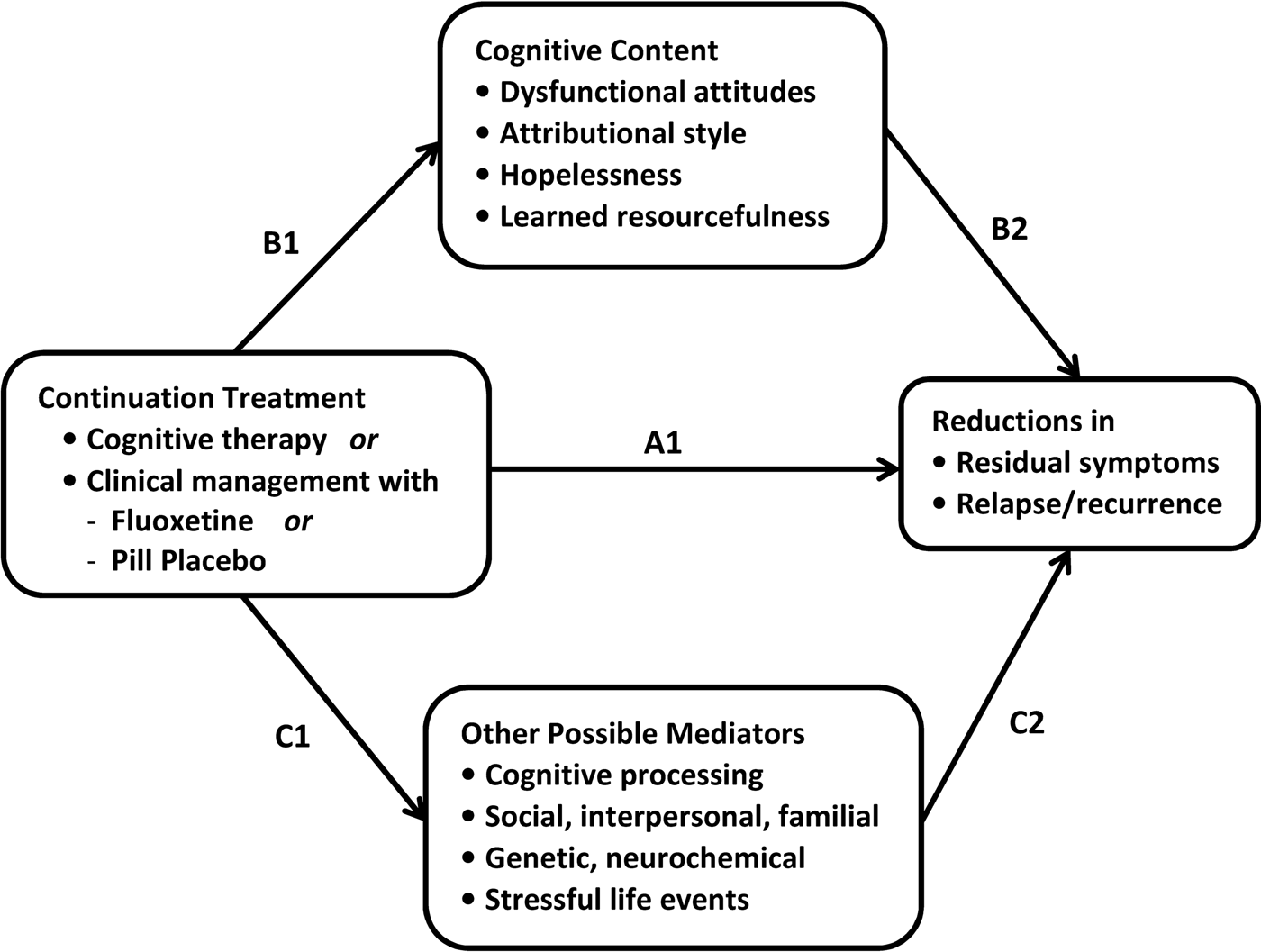
In randomized clinical trials, potential mediators can be evaluated more rigorously as variables that: (1) are changed by treatment (i.e. mediators assessed after treatment begins differ between treatment groups); and (2) predict later outcomes as main effects or interactions with treatment group (Kraemer et al. Reference Kraemer, Wilson, Fairburn and Agras2002). Fig. 1 depicts possible mediation of continuation treatments’ effects on residual symptoms and relapse (path A1) by cognitive content (paths B1, B2) and other variables beyond the current analyses (paths C1, C2). Previous analyses of the current dataset showed that C-CT or FLX decreased relapse (by nearly half; Jarrett et al. Reference Jarrett, Minhajuddin, Gershenfeld, Friedman and Thase2013a ) and residual symptoms (by about 0.2 s.d.; Vittengl et al. Reference Vittengl, Clark, Thase and Jarrett2014 b) compared with PBO during the 8-month experimental phase (path A1).
The current analyses tested the extent to which continuation cognitive therapy or fluoxetine's effects on residual symptoms and relapse/recurrence (path A1) are mediated by cognitive content. We tested whether continuation cognitive therapy or fluoxetine improved cognitive content relative to placebo (path B1), and the extent to which cognitive content accounted for subsequent outcomes (path B2). Other variables not analysed here may also mediate the continuation treatments’ effects (path C1, C2).

The current analyses tested: (1) the durability of improvements in cognitive content made by acute-phase CT responders, including the proportions of patients with cognitive content in ‘healthy’ ranges; (2) whether C-CT or FLX further improved cognitive content relative to PBO (Fig. 1, path B1); and (3) whether cognitive content mediated continuation treatments’ effects on depressive symptoms and relapse/recurrence (Fig. 1, path B2). To our knowledge, the current analyses were the first to test cognitive mediators of C-CT's effects in a randomized clinical trial.
Method
Participants
Data were drawn from a two-site randomized clinical trial described in detail by Jarrett & Thase (Reference Jarrett and Thase2010) and Jarrett et al. (Reference Jarrett, Minhajuddin, Gershenfeld, Friedman and Thase2013a ). Participants were out-patients who: (a) provided written informed consent; (b) met criteria for recurrent MDD (American Psychiatric Association, 2000) on the Structured Clinical Interview (First et al. Reference First, Spitzer, Gibbon and Williams1996); (c) had history of remission between depressive episodes, ⩾1 depressive episode with complete inter-episode recovery, or antecedent dysthymic disorder; (d) scored ⩾14 on the 17-item Hamilton Rating Scale for Depression (HAMD; Hamilton, Reference Hamilton1960)Footnote 1 Footnote †; and (e) were 18–70 years old. Exclusion criteria were: (a) severe or poorly controlled concurrent medical disorders that could cause depression; (b) psychotic or organic mental disorders, bipolar disorder, active substance dependence, or primary obsessive–compulsive or eating disorders; (c) inability to complete questionnaires in English; (d) active suicide risk; (e) <18 or >70 years old; (f) history of non-response to ⩾8 weeks of CT or 6 weeks of FLX; and (g) pregnancy current or planned within 11 months post-intake. The mean age of the participants (n = 523) was 42.4 (s.d. = 12.1) years and their mean duration of education was 15.1 (s.d. = 2.9) years; 67.5% were women; 80.9% were white, 10.3% were black, and 8.8% were other races/ethnicities. Participants’ mean age at MDD onset was 21.2 (s.d. = 10.8) years and the mean length of their current depressive episode was 25.0 (median = 10.0, s.d. = 45.1) months.
Acute phase
Prescribing or study physicians withdrew patients' psychotropic medications before the acute phase. Patients were not prescribed medications during the acute phase. The 16 cognitive therapists had completed ⩾1 year of CT training, submitted session videotapes for review, participated in group supervision/feedback sessions weekly, and demonstrated competence by maintaining Cognitive Therapy Scale (Young & Beck, Reference Young and Beck1980) scores ⩾40. The acute-phase CT protocol was 12 weeks, with 2 additional weeks allowed for rescheduling. Patients received twice-weekly CT sessions for 4 weeks. Then patients with ⩾40% reduction in HAMD scores received eight weekly sessions (total of 16 sessions), whereas patients with less improvement in HAMD scores received eight twice-weekly sessions before four weekly sessions (total of 20 sessions)Footnote 2 . Patients with less early improvement received more CT sessions to increase their chance of response and eligibility for the continuation phase. Among 523 consenting, 292 patients responded to acute-phase CT (no major depressive episode and final HAMD ⩽ 12; a liberal response threshold was used because the trial design focused on relapse prevention; Jarrett & Thase, Reference Jarrett and Thase2010).
Continuation phase
Among 292 acute-phase CT responders, 241 with higher risk for relapse based on a priori criteria (⩾1 of the last 7 acute-phase HAMD scores ⩾7; Jarrett & Thase, Reference Jarrett and Thase2010) consented to randomization to 8 months of C-CT (n = 86), FLX with clinical management (n = 86) or PBO with clinical management (n = 69)Footnote 3 .
The C-CT protocol included four biweekly then six monthly (10 total) sessions, each approximately 60 min (Jarrett et al. Reference Jarrett, Vittengl, Clark and Whisman2008; RB Jarrett, unpublished treatment manual). C-CT patients were taught to apply compensatory skills to residual and emergent depressive symptoms; to generalize CT skills across situations, problems and time; and to cope pre-emptively with cognitive and behavioral risks identified previously. With few exceptions (e.g. due to a therapist's maternity leave), patients’ C-CT and acute-phase therapists were the same.
The FLX and PBO clinical-management protocol (Fawcett et al. Reference Fawcett, Epstein, Fiester, Elkin and Autry1987) was double-blinded, provided by experienced pharmacotherapists, and included 10 sessions on the same schedule as C-CT. Pharmacotherapists met with patients 30–45 min for the first, and 15–30 min for subsequent, sessions. Pharmacotherapists provided supportive contact focusing on signs and symptoms of depression, effects of medication, and information about depression but were prohibited from using specific C-CT methods. Research pharmacies dispensed active FLX or identical PBO capsules for double-blinded administration. Patients received 10 mg/day for the first 2 weeks, 20 mg/day for 2 additional weeks, and 40 mg/day thereafter. Pharmacotherapists could decrease doses to reduce side effects. Patients intolerant to ⩾10 mg/day were withdrawn from medication and received only clinical management. Most patients (73%) achieved 40 mg/day (Jarrett et al. Reference Jarrett, Minhajuddin, Gershenfeld, Friedman and Thase2013a ).
Follow-up phase
After the continuation phase, patients entered a 24-month follow-up. Blinded evaluators assessed patients every 4 months. Patients were encouraged to contact study staff for interim evaluation if they experienced depressive symptoms. Patients were referred out for treatment if they met criteria for MDD.
Cognitive content measures
DAS
Patients completed the 40-item DAS (form A; Weissman, Reference Weissman1979), rating statements about their self-concept, happiness, perfectionism, and depression-relevant thoughts and feelings on seven-point scales. Higher total scores indicate stronger and more pervasive dysfunctional attitudes. In support of its validity, the DAS differentiated persons diagnosed with depression from non-depressed controls (Nelson et al. Reference Nelson, Stern and Cicchetti1992; Otto et al. Reference Otto, Teachman, Cohen, Soares, Vitonis and Harlow2007). Pooling data across assessments, the DAS showed high internal consistency (0.95) in the current sample.
ASQ: stable (ASQ-S) and global (ASQ-G) failure attributions
Patients completed the revised ASQ (Dykema et al. Reference Dykema, Bergbower, Doctora and Peterson1996) by generating causes for 12 hypothetical negative events and rating the extent to which the events’ causes were stable (v. unstable) and global (v. specific) on seven-point scales. Higher total scores reflect more stable and global failure attributions. Higher ASQ scores predicted acute and chronic depression (Riso et al. Reference Riso, du Toit, Blandino, Penna, Dacey, Duin, Pascoe, Grant and Ulmer2003), and poorer rehabilitation in cardiac patients (Bennett & Elliott, Reference Bennett and Elliott2005), in support of the measure's validity. The ASQ-S (0.88) and ASQ-G (0.85) scales showed moderate internal consistency in the current sample.
BHS
Patients completed the BHS, answering true/false to 20 items reflecting negative expectancies about the future (Beck et al. Reference Beck, Weissman, Lester and Trexler1974; Beck & Steer, Reference Beck and Steer1988). Higher total scores indicate greater hopelessness. BHS scores correlated positively with greater depression severity (Beck et al. Reference Beck, Kovacs and Weissman1975) and suicidality (Beck et al. Reference Beck, Steer, Kovacs and Garrison1985), in support of the measure's validity. The BHS showed high internal consistency (0.92) in the current sample.
SCS
On the SCS, patients rated 36 items tapping cognitive strategies, problem-solving strategies, delay of gratification, and belief in one's ability to regulate internal events on a six-point scale. Higher total scores reflect learned resourcefulness and use of self-control methods to solve behavioral problems (Rosenbaum, Reference Rosenbaum1980). In support of the measure's validity, SCS scores correlated positively with confidence (Akgun, Reference Akgun2004) and response to CT (Burns et al. Reference Burns, Rude, Simons, Bates and Thase1994), and negatively with depressive symptoms (Slessareva & Muraven, Reference Slessareva and Muraven2004). The SCS showed moderate internal consistency (0.89) in the current sample.
Depression measures
Depressive symptom severity
Patients completed the 21-item Beck Depression Inventory (Beck et al. Reference Beck, Ward, Mendelson, Mock and Erbaugh1961) and 30-item Inventory for Depressive Symptomatology (Rush et al. Reference Rush, Giles, Schlesser, Fulton, Weissenburger and Burns1986), and clinicians administered the 17-item HAMD. These measures are well validated and marked the same symptom construct, both cross-sectionally and longitudinally, during treatment of MDD (Vittengl et al. Reference Vittengl, Clark, Kraft and Jarrett2005, Reference Vittengl, Clark, Thase and Jarrett2013). Consequently, we standardized the three symptom measures based on their distributions at acute-phase intake and averaged them to form a robust symptom index. Higher scores indicated greater symptomatology. The symptom composite showed high internal consistency reliability (0.95) in the current sample.
Relapse/recurrence
Independent evaluators completed the Longitudinal Interval Follow-Up Evaluation (LIFE; Keller et al. Reference Keller, Lavori, Friedman, Nielsen, Endicott, McDonald-Scott and Andreasen1987) every 4 months post-acute-phase CT, at study exit, and when patients, therapists, or follow-up evaluators suspected major depressive relapse or recurrence. This semi-structured retrospective interview included weekly psychiatric status ratings of Diagnostic and Statistical Manual of Mental Diseases, fourth edition (DSM-IV) MDD. Ratings of 1 (no symptoms) or 2 (one or two mild symptoms) for ⩾35 continuous weeks defined recovery, whereas ratings of 5 (meets MDD criteria) or 6 (meets MDD criteria with severe impairment and/or psychosis) for ⩾2 weeks defined relapse and recurrence before and after recovery, respectively (Jarrett & Thase, Reference Jarrett and Thase2010).
Non-protocol treatment
The LIFE included weekly ratings (present or absent) of use of potentially mood-altering treatment outside the experimental protocol. Because non-protocol treatment was uncommon (Jarrett et al. Reference Jarrett, Minhajuddin, Gershenfeld, Friedman and Thase2013a ), and to match the frequency of cognitive-content assessments, weekly ratings were collapsed into 4-month intervals, each scored as present or absent for non-protocol treatment.
Identification of participants with healthy cognitive content
We estimated proportions of patients with ‘healthy’ scores on the BHS, DAS and SCS using available norms. Following established cut-offs (Jarrett et al. Reference Jarrett, Vittengl, Doyle and Clark2007; Vittengl et al. Reference Vittengl, Clark, Thase and Jarrett2014a ), we identified patients within 1.28 s.d. of the normative mean in the pathological direction as ‘healthy’ (i.e. about 90% of the normative population would be ‘healthy’ and 10% ‘unhealthy’). Although more conservative than a cut-off of 2 s.d. from the mean, which would identify about 98% of the normative population as healthy, the 1.28 s.d. cut-off is consistent with the higher prevalence of MDD (Kessler et al. Reference Kessler, Chiu, Demler and Walters2005). We used pooled adult norms for the DAS (mean = 115.0, s.d. = 26.7) and BHS (mean = 3.06, s.d. = 3.11) from Dozois et al. (Reference Dozois, Covin and Brinker2003) and for the SCS (mean = 26.04, s.d. = 22.29) from Vittengl et al. (Reference Vittengl, Clark, Thase and Jarrett2014a ). We did not compute health estimates for the revised ASQ because few normative data were available.
Statistical analyses
Appendix 1 shows descriptive statistics for the randomized sample on the current measures. To estimate means and proportions, and to test differences among treatments, we computed repeated-measures multilevel models using PROC GLIMMIX in SAS 9.3 software (USA). Continuous outcomes (e.g. raw BHS scores) were modeled assuming a normal distribution and identity link function, whereas dichotomous outcomes (e.g. ‘healthy’ v. ‘unhealthy’ BHS scores) were modeled assuming a binary distribution and logit link function. Models included fixed effects of continuation treatment and assessment time, the continuation treatment × time interaction, and receipt of non-protocol treatment as a covariate. The models’ error structures were compound symmetric. We computed effect size d and z scores with least-squares means estimated from these models and the standard deviation of patients at acute-phase intake. To predict time to relapse/recurrence, we computed Cox regression analyses using PROC PHREG. Cox regression models excluded the non-protocol treatment covariate because patients were referred out for treatment if they relapsed/recurred during the follow-up phase.
Ethical standards
All procedures contributing to this work comply with the ethical standards of the relevant national and institutional committees on human experimentation, including the American Psychological Association, and with the Helsinki Declaration of 1975, as revised in 2008.
Results
Levels of depressive cognitive content
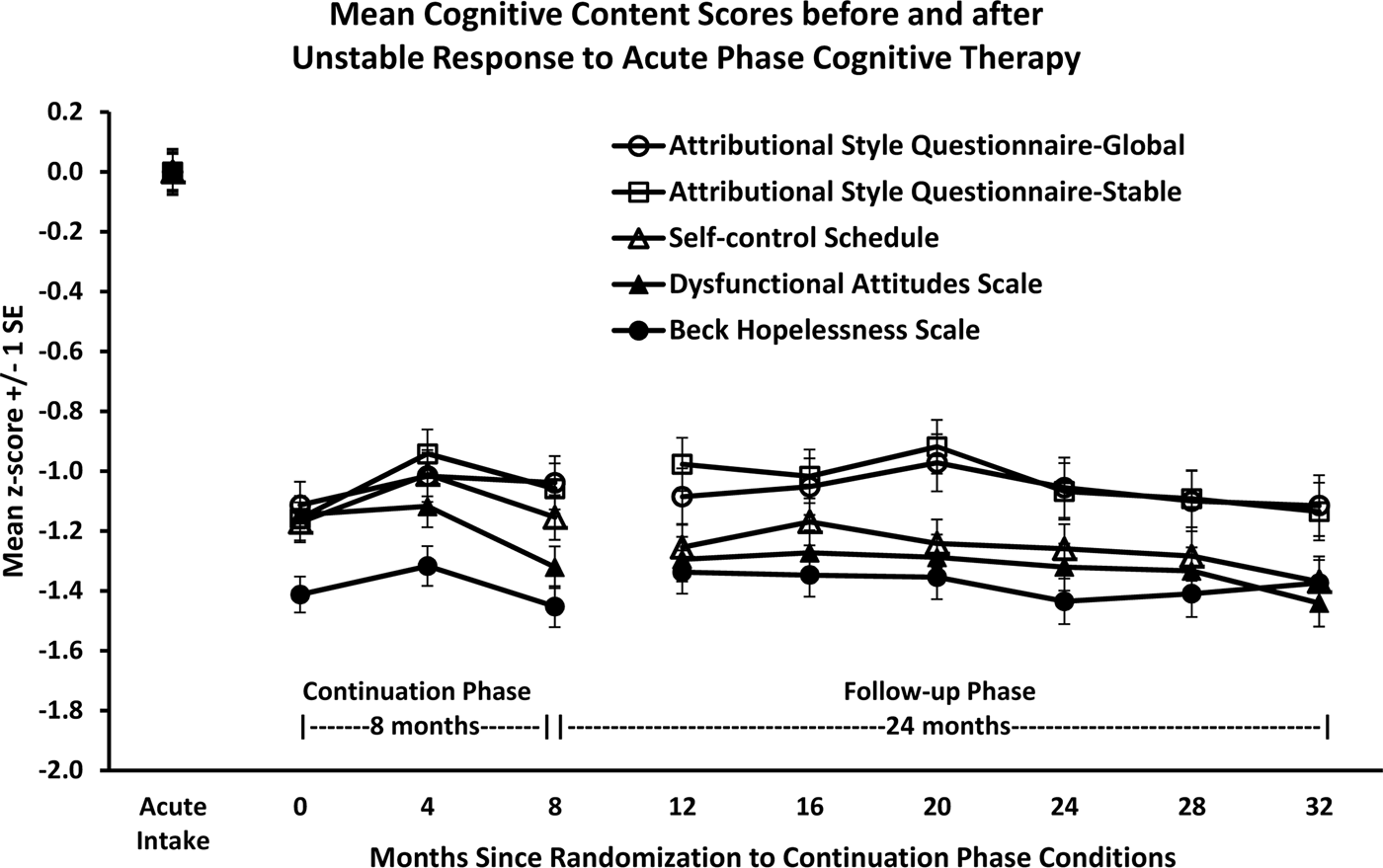
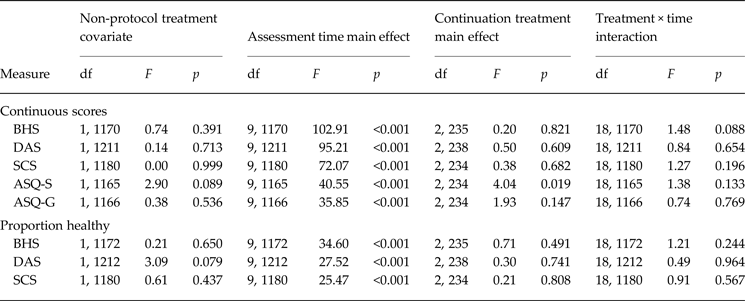
We predicted continuous scores on the five cognitive-content measures (BHS, DAS, SCS, ASQ-S, ASQ-G) from assessment time (acute-phase CT intake, randomization, and approximately every 4 months after randomization through to 32 months), continuation-phase treatment (C-CT, FLX, PBO), and the treatment × time interaction, controlling non-protocol treatment. Table 1 shows the main effects and interactions from multilevel models. The non-protocol treatment covariate was not significant, whereas the main effect of time was significant, in all models. Cognitive content was improved at all assessments throughout the experimental and follow-up phases relative to acute-phase intake (all pairwise contrasts p < 0.01) among acute-phase CT responders, with large effect sizes (mean d) for the BHS (1.38), DAS (1.28), SCS (1.21), ASQ-S (1.04) and ASQ-G (1.06) (see Fig. 2).
Patients with an unstable response to acute-phase cognitive therapy (n = 241) showed large, relatively stable decreases in depressive cognitive content maintained through 8 months of continuation-phase treatment (randomization at month 0 to cognitive therapy, fluoxetine or pill placebo) and 24 months of follow-up. Self-Control Schedule scores are reflected so that lower scores mark reductions in depressive cognitive content. Values are means, with standard errors represented by vertical bars.

Prediction of cognitive content through acute, continuation and follow-up phases a

df, Degrees of freedom; BHS, Beck Hopelessness Scale; DAS, Dysfunctional Attitudes Scale; SCS, Self-Control Schedule; ASQ-S, Attributional Style Questionnaire – stable; ASQ-G, Attributional Style Questionnaire – global.
a Subjects were 241 patients who had an unstable response to acute-phase cognitive therapy and who were randomized to 8 months of continuation treatment (cognitive therapy, fluoxetine or placebo) and followed up for 24 additional months. The 10 assessments occurred at intake to acute-phase cognitive therapy and approximately every 4 months thereafter. Tabled results are from repeated-measures multilevel models.
The main effect of continuation-phase treatment was significant only on the ASQ-S, with FLX patients (mean = 0.14) showing lower average scores than the C-CT (mean = 0.42, d = 0.32, p = 0.02) and PBO (mean = 0.49, d = 0.39, p = 0.01) groups, which did not differ (p = 0.63). However, the treatment × time interaction was not significant (see Table 1), indicating that differences between groups on the ASQ-S were relatively consistent and not clearly changed by starting or ending continuation treatments. Similarly, treatment × time interactions were not significant for the BHS, DAS, SCS or ASQ-G.
Patients with ‘healthy’ cognitive content
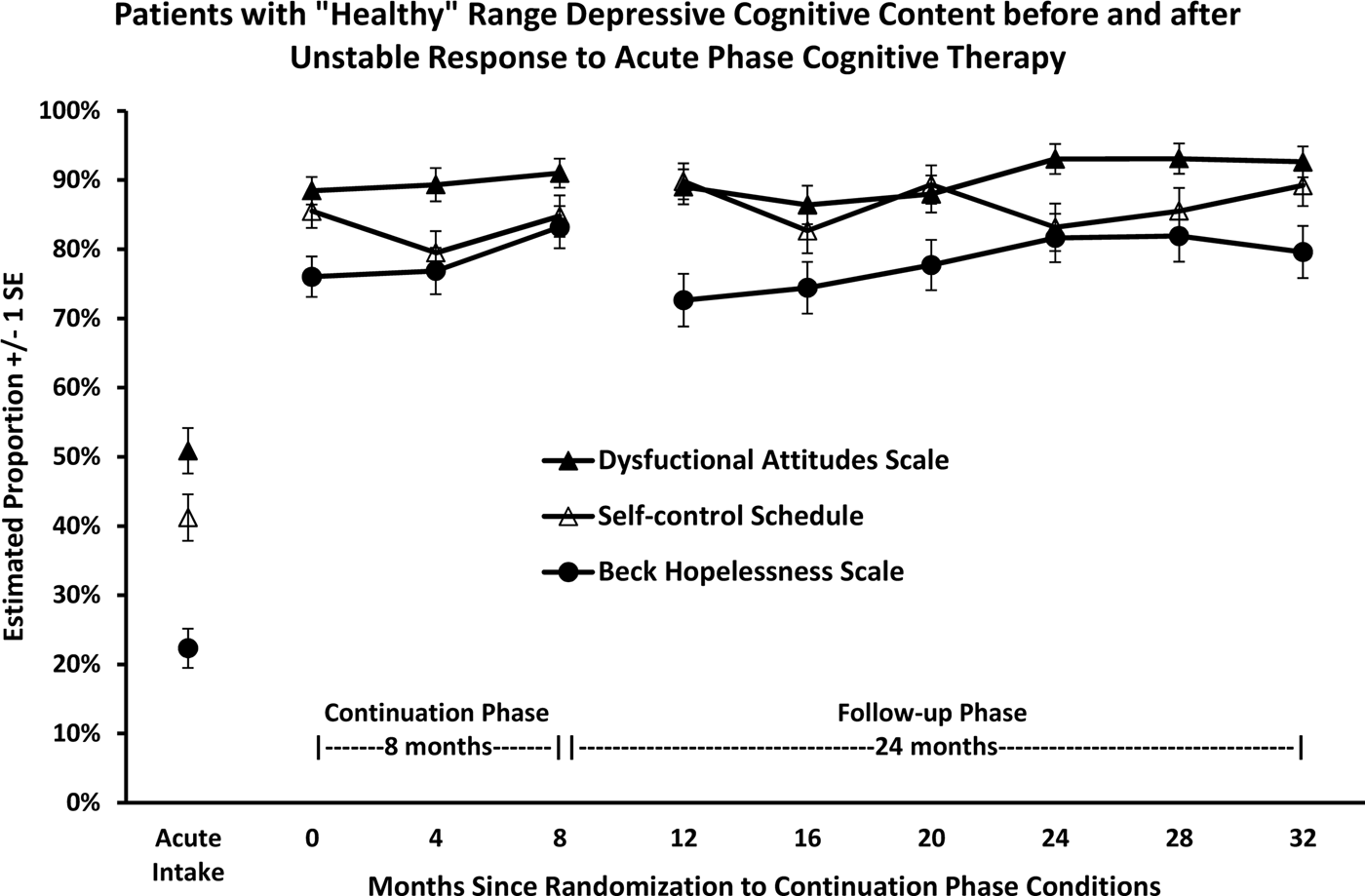
We predicted the proportion of patients with healthy-range cognitive content on the BHS, DAS and SCS (see Table 1). The non-protocol treatment covariate was non-significant, whereas the main effect of assessment time was significant, for all measures. The proportions of acute-phase CT responders scoring in the healthy range during the experimental and follow-up phases on the BHS (mean 78.2, range 72.6–83.2%), DAS (mean 90.1, range 86.4–93.1%) and SCS (mean 85.5, range 79.5–89.8%) were higher than at acute-phase intake (all pairwise contrasts p < 0.01) (see Fig. 3). In addition, the main effect of treatment and the treatment × time interaction were not significant (see Table 1). Relative to large improvements from acute-phase intake to month 0 (randomization), proportions of healthy patients from months 0–32 fluctuated little.
Proportions of patients (n = 241) with normative cognitive content increased substantively during an unstable response to acute-phase cognitive therapy and remained relatively stable through 8 months of continuation-phase treatment (randomization at month 0 to cognitive therapy, fluoxetine or pill placebo) and 24 months of follow-up. Values are proportions, with standard errors represented by vertical bars.

Contrasts among continuation groups
Because the clinical trial was designed to test relapse prevention during the continuation phase, and durability of continuation treatments’ effects during follow-up (Jarrett & Thase, Reference Jarrett and Thase2010), we computed a priori contrasts of C-CT, FLX and active treatment (C-CT or FLX) v. PBO at months 4, 8, 20 and 32 (middle and end of the experimental phase, plus follow-up years 1 and 2) in the multilevel models of continuous scores. Only four of 60 contrasts were significant at p < 0.05, two-tailed. At month 4, FLX patients (mean = 0.08) had lower ASQ-S scores than did PBO patients (mean = 0.45, d = 0.42, p = 0.04). At month 8, C-CT (mean = 26.01, d = 0.36, p = 0.0495) and active treatment (C-CT or FLX; mean = 25.64, d = 0.35, p = 0.03) patients had higher SCS scores than PBO patients (mean = 16.70). Finally, at month 20, FLX patients (mean = 0.08) again had lower ASQ-S scores than did PBO patients (mean = 0.56, d = 0.54, p = 0.02). Thus, C-CT and/or FLX produced only small, transient improvements in cognitive content relative to PBO.
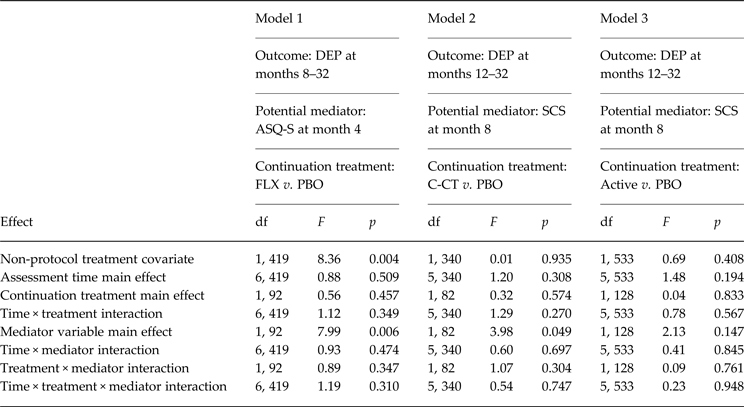
Mediation tests
Lower ASQ-S scores among FLX patients at month 4, and higher SCS scores among C-CT and active treatment (C-CT or FLX) patients at month 8, compared with PBO, suggest possible mediation of the 8-month continuation treatments’ effects, albeit by a subset of measures during limited periods. We tested mediation in three multilevel models predicting subsequent depressive symptoms in relevant treatment groups (see Table 2). Two of the three models provided some evidence of mediation with significant main effects of cognitive content. First, ASQ-S scores at month 4 (r = 0.28) predicted subsequent depressive symptoms among FLX and PBO patients. In addition, SCS scores at month 8 (r = −0.22) predicted subsequent depressive symptoms in C-CT and PBO patients. However, SCS scores at month 8 (r = −0.13) did not significantly predict subsequent depressive symptoms among active treatment (C-CT or FLX) and PBO patients. Moreover, all mediators became non-significant (p's > 0.34) after adding depressive symptoms assessed concurrently with cognitive content to the models (i.e. so that the models predicted subsequent changes in depressive symptoms).
Mediation tests: prediction of subsequent depressive symptoms from prior cognitive content a

DEP, Depressive symptoms; ASQ-S, Attributional Style Questionnaire – stable; SCS, Self-Control Schedule; FLX, fluoxetine; PBO, pill placebo; C-CT, continuation-phase cognitive therapy; Active, C-CT or FLX; df, degrees of freedom.
a Depressive symptoms and cognitive content were assessed at randomization and every 4 months during the 8-month experimental and 24-month follow-up phases.
We also computed three Cox regression models testing mediation of C-CT and FLX's effects on relapse/recurrence. Parallel to models in Table 2, we predicted relapse/recurrence after the cognitive-content assessment showing group differences. Model predictors were the cognitive-content measure, the relevant treatment-group contrast, and the cognitive content × treatment interaction. The potential mediators’ main effects and interactions were non-significant in all models (p's > 0.11).
Discussion
The current analyses clarified the durability of improvements in cognitive content among responders to acute-phase CT, the effects of 8-month continuation-phase treatments (C-CT, FLX or PBO) on cognitive content, and whether cognitive content mediated continuation-phase treatments’ effects on depressive symptoms and relapse/recurrence. Consistent with past research, we found that large gains during acute-phase CT in five measures of cognitive content were largely maintained across 32 months (8-month continuation plus 24-month follow-up phases). Moreover, most acute-phase CT responders maintained scores in the healthy range on the BHS, DAS and SCS for 32 months (means 78–90%). Thus, responders’ improvements in cognitive content during acute-phase CT were clearly durable.
Previous analyses showed that C-CT and FLX each reduced relapse and residual symptoms compared with PBO, as long as treatments were active (Jarrett et al. Reference Jarrett, Minhajuddin, Gershenfeld, Friedman and Thase2013a ; Vittengl et al. Reference Vittengl, Clark, Thase and Jarrett2014b ). However, in the current analyses, the continuation-phase arms produced few differences in cognitive content. Whether C-CT, FLX and PBO helped to maintain gains in cognitive content similarly is unclear because the trial lacked an assessment-only control. However, a prior trial found similar durability in improvements in cognitive content made during acute-phase CT in both assessment-only and C-CT arms across 24 months, with few differences between arms (Jarrett et al. Reference Jarrett, Vittengl, Doyle and Clark2007). Consequently, we speculate that the current continuation conditions have little effect on cognitive content and most of the clinically significant change occurs earlier during acute-phase CT.
We found a few, small differences in cognitive content among continuation-treatment groups, all in hypothesized directions. In particular, FLX patients had lower ASQ-S scores at months 4 and 20, and C-CT and active treatment (C-CT or FLX) patients had higher SCS scores at month 8, compared with PBO. The findings at months 4 and 8, when continuation treatments were active, suggested possible mediation (Kraemer et al. Reference Kraemer, Wilson, Fairburn and Agras2002). Supporting partial mediation, ASQ-S scores at month 4 predicted subsequent depressive symptoms among FLX and PBO patients, and SCS scores at month 8 predicted subsequent depressive symptoms among C-CT and PBO patients.
However, the mediators’ effects on depressive symptoms were small, accounted for by residual depressive symptoms, and did not extend to relapse/recurrence. Limited evidence for cognitive mediation of C-CT's effects parallels limited evidence for cognitive mediation of acute-phase CT's effects in the current (Vittengl et al. Reference Vittengl, Clark, Thase and Jarrett2014a ) and other (e.g. Jarrett et al. Reference Jarrett, Vittengl, Doyle and Clark2007) analyses of self-report measures. Although self-reported cognitive content may not strongly mediate CT's effects, depressive cognitive content measured after acute-phase CT response predicts poorer longitudinal outcomes (e.g. Vittengl et al. Reference Vittengl, Clark and Jarrett2010, Reference Vittengl, Clark, Thase and Jarrett2015) and thus signals need for additional treatment or clinical monitoring.
Qualities of our methods and sample limit our conclusions. First, negative-mood induction before assessment may reveal additional depressive cognition (Dunkley et al. Reference Dunkley, Blankstein, Segal and Dobson2010), but patients were not primed before assessment in the current analyses. Only unprimed (not primed) DAS scores predicted relapse in the current dataset (Jarrett et al. Reference Jarrett, Minhajuddin, Borman, Dunlap, Segal, Kidner, Friedman and Thase2012), however. Similarly, non-verbal assessments of depression-related cognition (e.g. reaction time, imaging studies; Lim & Kim, Reference Lim and Kim2005; Siegle et al. Reference Siegle, Carter and Thase2006) may better differentiate cognitive content from depressive symptom measures and diagnostic criteria than do the self-reports used here. Second, we assessed cognitive content about every 4 months. More frequent assessment might reveal more time-limited continuation-treatment-group differences and mediation processes (Forman et al. Reference Forman, Chapman, Herbert, Goetter, Yuen and Moitra2012). Third, our design did not include an assessment-only (no treatment) control, possibly limiting detection of changes in cognitive content relative to depression-specific (C-CT and FLX) and non-specific (PBO with clinical management) treatments. Fourth, our patient sample had carefully diagnosed recurrent MDD, responded to acute-phase CT with higher risk for relapse, and was treated by proficient cognitive therapists and pharmacotherapists in a research protocol. The extent to which our findings generalize to different patient populations (e.g. CT non-responders, chronically depressed), treatments (e.g. acute-phase medication, combined CT and medication) and routine clinical practice is unclear. For example, not working for pay, less frequent use of CT skills, poorer social functioning and a history of fewer depressive episodes predicted non-response to acute-phase CT in the current dataset (Jarrett et al. Reference Jarrett, Minhajuddin, Kangas, Friedman, Callan and Thase2013b ). Other variables (e.g. biochemical, genetic) may also distinguish non-responders and limit the generalizability of our findings concerning acute-phase CT responders.
Meta-analyses show that C-CT for depression has preventive effects greater than treatment-as-usual and non-active controls, and equal to or greater than active medication (Vittengl et al. Reference Vittengl, Clark, Dunn and Jarrett2007; Biesheuvel-Leliefeld et al. Reference Biesheuvel-Leliefeld, Kok, Bockting, Cuijpers, Hollon, van Marwijk and Smit2015). Similarly, C-CT reduced residual symptoms and relapse compared with PBO in the current dataset (Jarrett et al. Reference Jarrett, Minhajuddin, Gershenfeld, Friedman and Thase2013a ; Vittengl et al. Reference Vittengl, Clark, Thase and Jarrett2014b ). Although hypothesized in the cognitive model, the importance of cognition in CT's preventive effects is unclear (Lorenzo-Luaces et al. Reference Lorenzo-Luaces, German and DeRubeis2014). Our analyses extended the literature by showing that improvements in patient-reported cognitive content made during acute-phase CT are durable for 32 months. However, we also found that C-CT and FLX had only small effects on cognitive content relative to PBO, and cognitive content weakly mediated the continuation treatments’ preventive effects. Further clarification of cognitive mediation may require methodological advancements, including measures of cognition more distinct from depressive symptoms, more frequent measurement during treatment, and patient populations with high variability in cognitive and outcome variables (Biesheuvel-Leliefeld et al. Reference Biesheuvel-Leliefeld, Kok, Bockting, Cuijpers, Hollon, van Marwijk and Smit2015). Nonetheless, monitoring cognitive content and residual depressive symptoms is important clinically to predict longitudinal outcomes and need for retreatment (Brown et al. Reference Brown, Beck, Steer and Grisham2000; Vittengl et al. Reference Vittengl, Clark and Jarrett2010, Reference Vittengl, Clark, Thase and Jarrett2015).
Acknowledgements
This report was supported by grants number K24 MH001571, R01 MH58397 and R01 MH69619 (to R.B.J.) and R01 MH58356 and R01 MH69618 (to M.E.T.) from the National Institute of Mental Health (NIMH). The content is solely the responsibility of the authors and does not necessarily represent the official views of the NIMH or the National Institutes of Health (NIH). We also appreciate the careful review by members of the trial's Data Safety and Monitoring Board (DSMB). We are indebted to our research teams and our colleagues at The University of Texas Southwestern Medical Center at Dallas, the University of Pittsburgh (where M.E.T. was located during patient accrual), and the University of Pennsylvania (the current affiliation of M.E.T.). We appreciate the participation of colleagues, previously named, and study participants without whom such research could not have been completed.
Declaration of Interest
J.R.V. is a paid reviewer for UpToDate. L.A.C. has no financial interest or conflict of interest in the research. M.E.T. has no conflicts of interest pertaining to this paper, although he does report the following relationships with companies that develop treatment for depression or provide education pertaining to those treatments: M.E.T. has provided scientific consultation to Alkermes, Astra-Zeneca, Bristol-Myers Squibb Company, Dey Pharma, L.P., Eli Lilly & Company, Forest Pharmaceuticals, Inc., Gerson Lehman Group, GlaxoSmithKline, Guidepoint Global, H. Lundbeck A/S, MedAvante, Inc., Merck and Co. Inc., Neuronetics, Inc., Novartis, Otsuka, Ortho-McNeil Pharmaceuticals, PamLab, L.L.C., Pfizer (formerly Wyeth-Ayerst Laboratories), Schering-Plough (formerly Organon, Inc.), Shire US Inc., Sunovion Pharmaceuticals, Inc., Takeda (Lundbeck) and Transcept Pharmaceuticals. M.E.T. receives grant funding from the Agency for Healthcare Research and Quality, Eli Lilly & Company, GlaxoSmithKline (ended July 2010), NIMH, Otsuka Pharmaceuticals and Sepracor, Inc. He has equity holdings in MedAvante, Inc. and receives royalty income from American Psychiatric Foundation, Inc., Guilford Publications, Herald House, Oxford University Press and W.W. Norton & Company. His wife is employed as the Group Scientific Director for Embryon (formerly Advogent; which does business with BMS and Pfizer/Wyeth). R.B.J.'s medical center collects the payments from the cognitive therapy she provides to patients. R.B.J. is a paid consultant to the NIH, NIMH and UpToDate.
Appendix 1. Descriptive statistics for raw study measures