





Impact statement
This work proposes a novel scaffolding tool for acquiring hybrid skills in biodesign education. Biodesign Manuals aim to bridge disciplinary gaps through the use of universal language of visual communication, providing an accessible framework for early-stage practitioners to engage with living systems. This tool creates an alternative, design-based pedagogical intervention, grounded in the preceding classroom analysis framework. Translating complex laboratory procedures into beginner-friendly, assembly-manual-style workflows lowers barriers for non-biologists while supporting life sciences adepts in guiding their peers. This teaching model seeks to enhance reproducibility and observational literacy in fungal biodesign, establishing a transferable methodology applicable to other science-driven transdisciplinary contexts. By enabling students to navigate biological variability, it supports the development of experimental confidence and provides a foundation for interdisciplinary collaboration – key skills for the next generation of biodesign practitioners.
Introduction
Biodesign is an emergent and dynamic domain that evolved from various fringe biotechnology, do-it-yourself (DIY) and citizen science movements (Chappell et al. Reference Chappell, Perez and Takara2023; Pollini Reference Pollini2024; Vaage Reference Vaage2016). Presently, the definition of biodesign remains inexplicit and encompasses various interpretations to intersection of design and biology, with a predominant focus on design activities that incorporate living systems in the design process (Elsacker et al. Reference Elsacker, Zhang and Dade-Robertson2023; Gough et al. Reference Gough, Yoo, Tomitsch and Ahmadpour2021; Karana et al. Reference Karana, Giaccardi, Stamhuis and Goossensen2016; Marseglia et al. Reference Marseglia, Cantini, Celli, Brunelli and Lotti2026; Parisi et al. Reference Parisi, Rognoli and Sonneveld2017; Vuylsteke et al. Reference Vuylsteke, Detand and Ostuzzi2025). While technological advancements have enabled development of biodesign research in the forms of biofabrication and novel bio-based materials, educational frameworks have struggled to keep pace with the practical demands of teaching beyond the boundaries of a single domain (Jacobs et al. Reference Jacobs, Eggermont, Helms and Wanieck2022). At present, biodesign education largely concentrates on equipping designers with the skills necessary to work with biological organisms. While this approach has expanded the scope of design practice, it also reveals certain limitations, particularly the often surface-level depth of biological engagement and the predominant emphasis on design-driven outcomes. Biodesign educators report of challenges that arise from a design-dominated approach to biodesign, particularly with regard to limited foundational knowledge in life sciences among design students and a need for operational proficiency in biology (Marseglia et al. Reference Marseglia, Cantini, Celli, Brunelli and Lotti2026; Nehm Reference Nehm2019), as well as limited resources and lack of access to laboratory facilities (Marseglia et al. Reference Marseglia, Cantini, Celli, Brunelli and Lotti2026; Ward Reference Ward2024).
Currently, incorporating a broader range of disciplines into biodesign education poses a challenge due to the lack of established transdisciplinary teaching methodologies, making each attempt unique and experimental (Hepburn Reference Hepburn2022). This paper analyzes a case study of a biodesign research seminar with a heterogeneous student group from seven different academic backgrounds. The case study revealed several bottlenecks: the gap between documentation and practical application, diverse user demographics with different communication styles and the necessity of methodological hybridization to align pedagogical and user needs. These observations form the basis of the proposed teaching tool, the Biodesign Manual, which aims to bridge these gaps and facilitate the integration of laboratory knowledge into transdisciplinary group work. Introduction of biodesign manuals in biodesign teaching practice aims to facilitate peer-to-peer learning by creating shared instructional resources that distribute expertise more equitably within interdisciplinary teams. By structuring knowledge in a collectively accessible format, this approach supports more balanced participation and fosters genuinely transdisciplinary engagement, thereby mitigating the risk of disciplinary compartmentalization within project-based learning environments.
Current limitations in biodesign and biodesign education
The boundaries of biodesign remain conceptually diffuse and not well-defined as an academic field. The term encompasses a wide spectrum of practices and subdomains, ranging from bioart and speculative design to digital bio-interactive systems and vernacular architectural applications involving biological materials (Gough et al. Reference Gough, Yoo, Tomitsch and Ahmadpour2021). This breadth reflects the field’s experimental and interdisciplinary character, yet it also complicates efforts to articulate a coherent methodological foundation or shared epistemic framework. This conceptual ambiguity is further intensified by the epistemological tensions that arise from the fact that biodesign lies at the intersection of two fundamentally different epistemologies based on polar opposite frameworks. Synthetic biology produces knowledge through control, replication and statistical inference (Macovei Reference Macovei2022), while design produces knowledge through making, iteration and situated interpretation “relating thinking and making to each other” (Aicher Reference Aicher2015). The academic study of life sciences seeks to minimize variability; design often seeks to explore it. Laboratory work in domains like biotechnology privileges standardized protocols; design practice privileges context-based interventions. These differences are not obstacles but productive tensions that biodesign education must learn to navigate.
In academic teaching, most biodesign education caters to design students interested in sustainability and the more-than-human aspects of design (Marseglia et al. Reference Marseglia, Cantini, Celli, Brunelli and Lotti2026). Consequently, participants of biodesign courses tend to excel in creative ideation and storytelling, but have gaps in their knowledge of biology and material science. A common tendency in biodesign education is to compress foundational knowledge acquisition and feasibility testing in favor of producing physical outcomes, such as prototypes, within the limited timeframe of a semester.
In courses that span approximately fifteen weeks, the pace of learning is often accelerated because the final product is prioritized over the slower process of scientific inquiry. As a consequence, the early stages of biological literacy building, experimental validation and iterative testing may be abbreviated or treated as instrumental steps toward a final artifact rather than as central learning objectives in their own right. While this structure aligns with established design studio models that emphasize rapid prototyping and material exploration, it leaves insufficient time for thorough engagement with biological methods, reproducibility standards and critical evaluation of experimental results. Limited access to laboratory facilities further drives projects toward DIY approaches that constrain accuracy, while the lack of more informative instructions constrain reproducibility. Biodesign practitioners openly admit to reverting to DIY methods that do not adhere to established laboratory standards, as their knowledge of biology is mainly autodidactic (Pollini Reference Pollini2024). The resulting course outputs, therefore, tend to foreground design-driven achievements, reinforcing a predominantly monodisciplinary orientation despite the nominally interdisciplinary framing of the program.
A central limitation of current biodesign education is the attempt to transfer biological processes into design contexts directly, despite the absence of prior laboratory training or knowledge about the organism and its needs. Current biodesign pedagogy borrows laboratory protocols from the biological sciences without adaptation to non-biological contexts. However, classic design studios have different educational goals, such as explorations of concepts rather than the confirmation of results – this results in a misalignment between the students ability to participate in transdisciplinary classes and the educational tools being used. Participants are typically novices to biology, resources are limited and experimentation is exploratory rather than confirmatory. These knowledge gaps become the central focus of biodesign education – when experiments fail, students often cannot distinguish between biological variability, technical error, or user error. The lack of biological training poses an increased risk of inaccuracy and failure, frequently resulting in frustration, contamination, failed experiments and disengagement. This undermines both confidence and learning among students.
Rather than interpreting these outcomes as pedagogical signals, they are often treated as barriers, thus further moving biodesign towards abstraction and disciplinary division. This highlights that the lack of multidisciplinary expertise within biodesign instruction constrains the evolution of biodesign as a field. A more mature approach to biodesign would require heterogeneous forms of expertise and ongoing involvement from life scientists and engineers in both pedagogical and research contexts. Such an approach requires that biodesign education be understood not as a derivative of existing disciplinary models, but as a distinct multidisciplinary pedagogical domain with its own methodological frameworks, purpose-built instructional tools and clearly articulated standards of rigor. Within this formulation, biodesign education extends beyond conventional notions of design as primarily concerned with form-making or the conceptual development of hypothetical solutions. Instead, it emphasizes the importance of bringing together different standards for how knowledge is produced and evaluated. Introducing design thinking in interdisciplinary settings can contribute to this integration by offering a shared problem-solving framework (Peukert and Vilsmaier Reference Peukert and Vilsmaier2021).
In biodesign education, this shared framework can support broader participation by helping students formulate questions, approach uncertainty iteratively and connect material observations to possible courses of action. However, in order to enable a novel teaching paradigm, instructors must create conditions in which design-oriented and life-science-oriented ways of knowing can also inform one another in order to create new, hybrid knowledge. This necessitates new pedagogical methods to integrate and negotiate between distinct disciplinary ways of knowing. The educational task is therefore to create learning formats in which students can practice moving between these modes: from material curiosity to researchable questions, from experimental results to design-relevant interpretation and from biological uncertainty to reflective adaptation. In this sense, the integration of design and life sciences could be understood as a pedagogical process of translation between different epistemic cultures.
Biodesign in inter- and transdisciplinary contexts
Existing field research on biodesign confirms the necessity for close collaboration between various disciplines (Camere and Karana Reference Camere and Karana2018) and emphasizes the positive impact of interdisciplinary cooperation in academic research setting (Bandoni et al. Reference Bandoni, Almendra and Forman2022) and biodesign education (Marseglia et al. Reference Marseglia, Cantini, Celli, Brunelli and Lotti2026). The current imbalance of disciplinary contribution in favor of design, constrains the potential of biodesign to develop as a genuinely transdisciplinary domain. As an inherently hybrid field of knowledge (Vuylsteke et al., Reference Vuylsteke, Detand and Ostuzzi2025), biodesign is particularly suitable for interdisciplinary and transdisciplinary teamwork formats, with the contributing disciplines spanning architecture, design, biology, engineering and materials science. However, the absence of established interdisciplinary teaching frameworks (Peukert and Vilsmaier Reference Peukert and Vilsmaier2021) complicates the integration of these fields into biodesign education, particularly due to the necessity of mediating between the “ways of knowing” of each discipline (Marseglia et al. Reference Marseglia, Cantini, Celli, Brunelli and Lotti2026). Effective biodesign education requires teaching methods that move beyond traditional disciplinary boundaries while leveraging the strengths of each perspective and integrate diverse communication styles and knowledge structures. In practice, however, educational settings often attempt to resolve this tension by privileging one epistemology over the other (Groth et al. Reference Groth, Pevere, Niinimäki and Kääriäinen2020). Design studios may ignore the influence of biological agency and treat biological systems as expressive materials without sufficient rigor, while laboratory courses may reduce design to process planning. It is therefore crucial to produce new, hybrid pedagogical approaches that are tailored to the multifaceted field of biodesign. Consequently, biodesign education needs a reevaluation of how procedural knowledge is taught and how standards are set.
Within this context, interdisciplinary and transdisciplinary teaching models gain relevance. Interdisciplinary learning usually involves distinct disciplines collaborating while retaining their methodological identities to work towards a shared problem or project. In most biodesign courses, this often takes the form of design students learning biological techniques or collaborating with life scientists (Marseglia et al. Reference Marseglia, Cantini, Celli, Brunelli and Lotti2026). The aim of this collaboration of scientific experts and design students is to transform a variety of research approaches into transdisciplinary studies; knowledge exchange is structured around complementary expertise rather than full integration (de Mello et al. Reference de Mello, Nunes, de Deus Lopes, Peduzzi, Ramos, Pinto and Haddad2025). Transdisciplinary learning extends beyond interdisciplinarity by requiring students to traverse domain boundaries, translating between different epistemologies and knowledge systems (Hepburn Reference Hepburn2022). Structured learning scaffolds are therefore crucial in supporting their learning process and the overall workflow of the projects, enhancing their value through a dialogical relationship of expertise (Hepburn Reference Hepburn2022).
In a transdisciplinary context, learning becomes less about mastering knowledge and more about acquiring the capacity to negotiate uncertainty, as well as translating between different patterns of thinking and collaboratively constructing meaning (Hepburn Reference Hepburn2022). Current biodesign pedagogy research shows that, when biological processes are made accessible through mediated learning structures, students can participate across disciplinary boundaries and contribute creatively without compromising scientific rigor (Marseglia et al. Reference Marseglia, Cantini, Celli, Brunelli and Lotti2026). In this sense, accessibility becomes a prerequisite for transdisciplinary collaboration and transforming biology from an exclusionary discipline into a shared substrate for cross-disciplinary learning.
Furthermore, a collaborative model across disciplines could provide such accessibility by offering a space where knowledge gaps can be collectively addressed while maintaining the depth of expertise in each field. Thus, biodesign should be classified as an umbrella domain that integrates heterogeneous forms of knowledge and uses them to solve shared problems through interdisciplinary collaboration, rather than as a singular, unified discipline. It is evident that biodesign programs are moving towards hybrid models that combine interdisciplinary and transdisciplinary approaches. The hands-on engagement with biological processes shifts the focus from theoretical exploration to the initial research and experimental design phase, while subsequent stages prioritize empirical investigation, material negotiation iterative validation. The early project stages often rely on interdisciplinary structures to facilitate the transition from monodisciplinarity to a discipline-inclusive approach. Meanwhile, later stages encourage transdisciplinary experimentation and the emergence of new, shared practices (Castro-Arenas and Graterol-Fuenmayor Reference Castro-Arenas and Graterol-Fuenmayor2025; Vuylsteke et al. Reference Vuylsteke, Detand and Ostuzzi2025).
Transdisciplinary learning is frequently accompanied by heightened uncertainty and frustration, as students must navigate not only unfamiliar content but also divergent epistemic frameworks and pedagogical expectations. Learners encounter fundamentally different models of knowledge production which can create confusion about acceptable workflows standards of rigor. Collaboration becomes further complicated by disciplinary communities that effectively “speak different languages,” employing distinct terminologies, representational conventions and evaluative criteria. Without deliberate mediation, these differences can hinder communication and amplify feelings of disorientation, even as they simultaneously constitute the generative potential of transdisciplinary work.
In order to support learners across diverse backgrounds to engage in biodesign, this paper introduces a novel mediating tool for teaching as a foundational pedagogical scaffold in biodesign education. Biodesign Manuals (BM) aim to adapt the Standard Operating Procedures (SOPs) from laboratory environments into a discipline-heterogenous setting with the help of a visual language of graphic representation. This tool integrates exploratory and confirmatory processes, bridging the pedagogical gap between creative design thinking and biological experimentation. It contributes to the learning process by scaffolding laboratory practice during the pre-design research phase of group projects. By drawing on visual semiotics, it enables communication across diverse learning approaches through a common visual framework – a lingua franca of all participating domains.
Case study
The above theoretical reflections emerged from the practical engagement with biodesign education through the following case study, which in turn became both a pedagogical intervention and a site for generating research insights. The observations presented in this paper derive from a one-semester interdisciplinary biodesign seminar supported by the X-Student Research Group program of the Berlin University Alliance (BUA) and conducted at the Technische Universität Berlin Institute of Architecture in cooperation with Chair of Structural Design (AUT) led by Prof. Dr-Ing. Kerstin Wolff. The format of the X-Student Research Group allowed the creation of an interdisciplinary cohort due to a collaboration of different universities under the Excellence Cluster represented by BUA: Technical University of Berlin, Humboldt University of Berlin, Free University of Berlin and Charité. The participation is further open to members of other institutions, which was the case of design students from Weissensee University of Arts Berlin. The seminar brought together students from four Berlin-based universities and seven different programs of study, including design, natural sciences, engineering and humanities.
The course focused on hands-on biodesign research, exploring the growth of fungi on natural fabrics and concentrated particularly on the pre-design and research-oriented phases to gain insights into practical work with mycelium-textile composites. Instead of aiming at the development of finalized design objects or applications, the course approached biodesign as an exploratory research practice, in which biological processes, material behavior, laboratory work and documentation were used to generate knowledge that could inform future design processes. In this sense, the process of inquiry itself constituted a central part of the design work, shaping the conditions for possible future applications.
Throughout the semester, students investigated material–biological interactions through small-scale experiments with mycelium and textile fibers. The main objectives of the course were to introduce students to basic laboratory workflows, as well as the early-stage investigation of living materials and provide them with the opportunity to conduct their own small research project. Students were tasked with formulating their own research questions related to mycelium and textiles, planning a suitable experimental approach, conducting and documenting growth experiments with mycelium on different textile fibers (Figures 3, 4 and 6), presenting interim findings to invited guests and writing a final report on their process and results (Figures 5 and 7). These activities aimed to familiarize students with scientific documentation, academic writing and collaborative knowledge production across disciplinary boundaries. The expected outcome was to gather grassroots knowledge about the growth of mycelium on textile fibers, developed through collaborative experimentation and reflection.
The seminar had a cohort of sixteen participants from a range of disciplinary backgrounds: six students from architecture, two from urban design, two from textile design, two from biotechnology, one from agricultural sciences, one from biology, one from civil engineering and one from sociology. Approximately one-third of the participants were bachelor’s and two-thirds were master’s students. About 80% of the participants had no prior experience with biological laboratory work. The interdisciplinary setting was therefore intended to encourage students to work outside their disciplinary comfort zones and to negotiate different forms of expertise within a shared research process.
At the beginning of the course, students formed four groups of four participants each. The initial intention was to include at least one participant with a life-science background in each group. However, due to the predominance of architecture and design students in the course, and subsequent dropouts during the semester, this aim was adjusted to ensure that each group included at least one participant from a different disciplinary background. After the midterm presentation, dropouts in two groups led to the merging of the remaining members into one group, leaving three group projects.
To support students in the practical execution of their work, the curriculum was divided into input sessions, each focusing on one of four key mycelium-related skills. The first class covered basic isolation techniques, focusing specifically on isolation from mature fruiting bodies. The second class built on this knowledge by shifting the focus to secondary isolation techniques, specifically performing isolations from existing cultures – both from Petri dishes (agar plates) and liquid cultures. This ensured that students could manage and manipulate different forms of mycelium growth. The third class moved beyond laboratory techniques, focusing on experimental design and protocol writing – a crucial skill for reproducible research. This training ensured that students understood the principles of designing rigorous experiments and formally documenting laboratory procedures. The fourth and final input class concluded the initial practical series by inoculating solid substrates with the groups’ mycelium cultures. Due to infrastructural constraints, the sessions took place in a regular classroom without access to standard biotechnological equipment. This necessitated the use of non-sterile, DIY experimental setups (Figure 1).
DIY setup used to conduct the practical exercises in the classroom.

The practical sessions were instructed mainly by an instructor with an architectural background, however two were conducted in tandem with a second instructor specializing in biotechnology and fungal microbiology. This co-supervision was an intentional feature of the class program, with two supervisors present in sessions throughout the entire duration of the seminar. This dual expertise ensured that students received guidance on both the technical feasibility and the esthetic/structural potential of their bio-material innovations. While the first instructor remained constant, the second instructor’s seat was shared by two alternating experts due to capacity limitations.
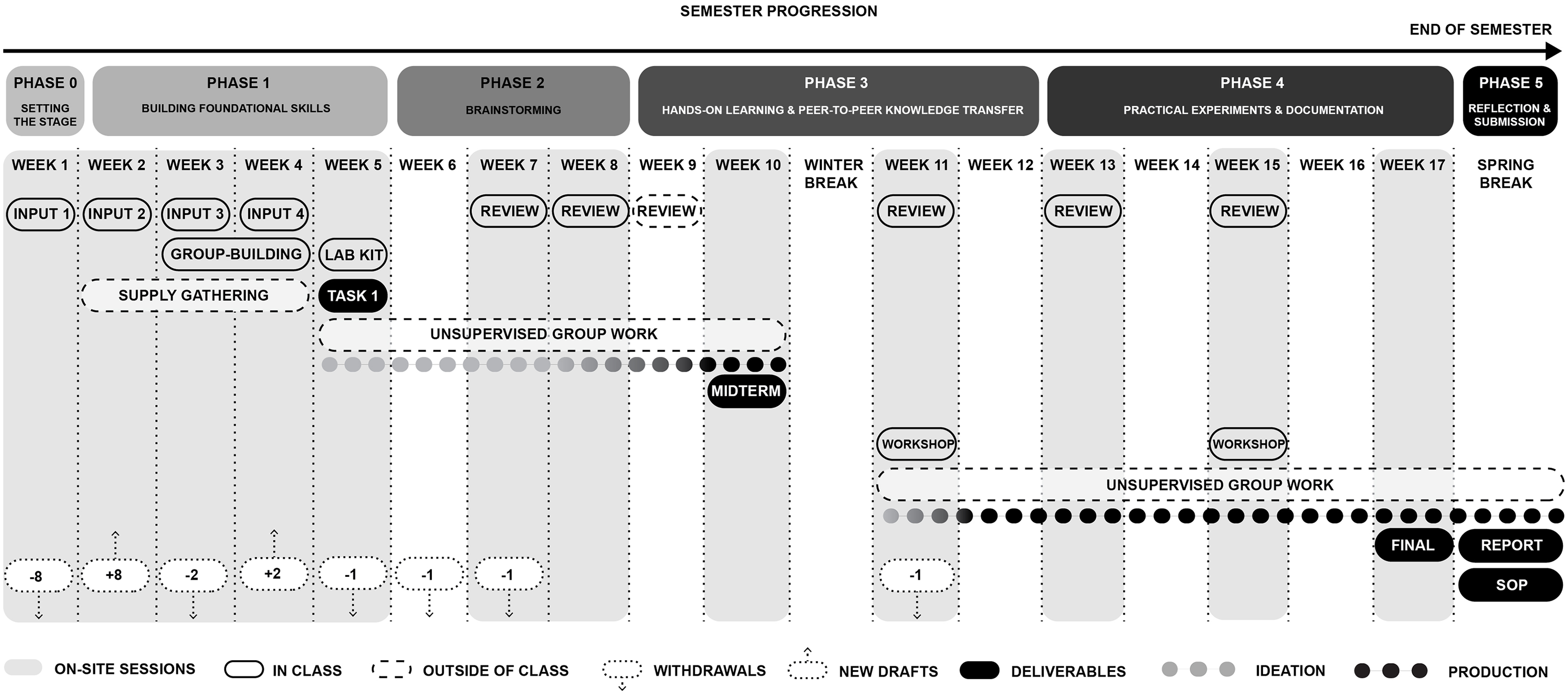
In the following, the curriculum transitioned to a self-directed, project-based learning phase for the interdisciplinary groups. Group work was supported by bi-weekly review sessions conducted by both instructors, which continued for the remaining duration of the semester. After the midterm presentation, two additional workshop sessions were held to scaffold the students’ progress. The first focused on research planning and helped groups refine their methodologies, manage timelines and anticipate challenges, while the last session concentrated on scientific writing, informing students how to communicate their experimental processes, results and conclusions clearly and formally. The whole progression of the seminar’s curriculum was illustrated on the diagram in Figure 2.
Gantt diagram of the seminar’s timeline.
Challenges
During the early phase of the seminar, a large fluctuation in participants was observed. The course saw a number of students interested in a more conventional, design-oriented approach, withdraw, leaving participants who joined for the opportunity to engage with living materials and open-ended experiments. The high withdrawal rate posed a significant organizational challenge to the instructors with regard to practical sessions, many of which had to be additionally repeated for the newcomers.
Further, throughout the seminar, the primary challenge observed by the instructors was the prolonged introductory phase leading to the executions of the experiments. A recurring hesitation among student groups to initiate practical experiments was noticeable, particularly during phases of unsupervised group work. Although a general interest among the student groups persisted, experimental procedures were frequently postponed, with extended discussions of theoretical considerations replacing hands-on engagement. Students often expressed concern about “doing something wrong,” indicating that the initial level of instructional scaffolding was insufficient for beginners navigating unfamiliar biological workflows. Throughout the semester, the initial instructional support was based on an established standard operating procedure (SOP) structured according to conventional biotechnological textual protocols. Although these SOPs were originally designed to be accessible to DIY practitioners, difficulties persisted in adapting the generalized instructions to the specific requirements and experimental trajectories of individual student projects. These patterns point to the presence of a high entry threshold in practical biodesign, especially in relation to laboratory-based experimentation. This issue was further exacerbated by the prolonged duration of the project planning phases. The underlying cause of this delay was identified as a gap in foundational biological knowledge, rather than a lack of enthusiasm.
Another major challenge for both instructors and students was the absence of adequate infrastructure to conduct biological experiments in a manner consistent with scientific standards. Limited access to properly equipped laboratory facilities, sterile environments, specialized tools and consumable materials constrained the scope and reliability of experimental work and restricted the complexity of feasible projects. Only one group was able to successfully gain access to a laboratory. However, they operated without direct supervision, leading to unexpected outcomes and contaminations. For instructors, the DIY setup meant investing considerable effort in adapting protocols to suboptimal conditions and managing risk, while for students it reinforced uncertainty and hesitation in engaging with hands-on biological processes. The lack of stable infrastructure therefore was not merely a logistical limitation, but a structural barrier that shaped the pedagogical possibilities and epistemic depth of the course.
A further complication arose from the uncertainty associated with the “bioaffordances” (Gough et al. Reference Gough, Yoo, Tomitsch and Ahmadpour2021) of the fungal organisms. Students required several iterations to recognize that the biological material does not behave as a passive medium but exhibits forms of agency that resist complete control (Ward Reference Ward2024). This realization challenged expectations shaped by conventional design processes, where materials are typically assumed to respond predictably to manipulation. Instead, it became a learning opportunity – working with living systems demanded an adjustment to variability, delayed feedback and unexpected outcomes, requiring students to reconceptualize experimentation as a negotiation with, rather than imposition upon, biological processes.
Throughout the semester, the disciplinary differences in experience with applied learning posed a challenge to the mixed-background groupwork. The architecture and design students, who are accustomed to conceptual development and speculative outcomes – often without requiring empirical validation or feasibility testing – needed time to adjust their working methods to a confirmatory practice taught in the course. Conversely, students from natural science backgrounds have encountered difficulties with open-ended, speculative modes of thinking, as their prior training emphasized standardized procedures, reproducibility and controlled variability with tangible results. These divergences can be attributed to contrasting educational traditions and contribute to an epistemic tension within transdisciplinary learning environments, complicating the development of a “common ground” among the various disciplines.
Despite the challenges described above, several student groups demonstrated a clear capacity for scientific thinking that developed over the course of the semester. Students progressively adopted hypothesis-driven approaches to their experimental work: they formulated researchable questions, designed small-scale trials and systematically documented their observations, including failed experiments and contamination events. The ability to present interim findings to external reviewers and articulate reasoning behind experimental decisions reflected a genuine engagement with the logic of scientific inquiry.
Findings
During the case study, it became evident that interdisciplinary groups communicated better when visual tools were involved, both internally and with external audiences. Visual representations proved to be the most effective means of conveying project processes and outcomes across disciplinary boundaries. Notably, participants with design backgrounds tended to initiate communication through sketches and diagrams, whereas life science students more frequently relied on textual explanations, tables and charts. This contrast highlights the distinct communicative conventions and representational preferences embedded within different disciplinary cultures.
Although peer-to-peer learning partially compensated for knowledge asymmetries, differences in disciplinary thinking patterns remained apparent throughout the course, which was attributed, to some extent, to the transdisciplinary learning format. As the seminar operated at the intersection of design and scientific logics, it exposed tensions between an exploratory design culture and laboratory-derived procedural expectations.
Additionally, students frequently hesitated to conduct experimental work independently, which the instructors credited to the absence of sufficient scaffolding. Because of temporal constraints and limited access to appropriate infrastructure, research tasks often had to be completed outside supervised sessions. The course format therefore emphasized peer-to-peer and facilitated learning rather than traditional master–apprentice instruction. Instructors primarily acted as coaches – guiding the research process and mediating between divergent learning approaches (Bohm et al. Reference Bohm, Klaassen, den Brok and van Bueren2025). This pedagogical model represented a departure from many students’ prior educational experiences, and not all groups were able to self-organize and distribute tasks effectively, which may have contributed to participants’ withdrawal over the semester.
Finally, the conclusion of the semester projects revealed that having a background in life sciences is not necessarily the decisive factor for successful engagement with living systems. Notably, the group that achieved the most consistent experiment results did not include participants with a biology background, but architecture, design and humanities students. Their approach was focused on growth patterns, textile structure and the spatial configuration of the substrate, as well as consistent documentation of the experiments in various forms. This indicates that design-oriented material exploration can contribute meaningfully to biodesign research, provided that it is combined with careful observation and procedural engagement.
Analysis
The case study analysis revealed four recurring bottlenecks: biological uncertainty, knowledge asymmetry, delegation dynamics and temporal mismatch. While they appear distinct at a first glance, closer examination suggests that they share a common structural origin: the misalignment between the laboratory-derived procedural knowledge and the experiential level of novice practitioner operating in a transdisciplinary setting (Barry et al. Reference Barry, Born and Weszkalnys2008)
Biological uncertainty is the factor of limited predictability associated with living systems and describes their probabilistic nature. However, uncertainty alone does not destabilize educational settings. Rather, destabilization occurs when participants lack interpretative constructs to distinguish between inherent biological variability and procedure error. Novices frequently interpreted this lack of guaranteed success as personal failure rather than an intrinsic property of living systems (Nehm, Reference Nehm2019). Contamination, for example, was often framed as the desired organism not growing as expected rather than questioning why that organism failed and why another survived under the same conditions.
Knowledge asymmetry further amplifies this instability. Standard Operating Procedures (SOPs) are designed for trained operators and presuppose tacit knowledge that remains undocumented (Collins Reference Collins2001; Polanyi Reference Polanyi1966). These protocols assume trained operators, stable experimental infrastructures and narrowly defined research objectives. They assume tacit knowledge: how to recognize contamination, how to interpret smell, texture, or subtle changes in growth, how to adapt procedures when materials behave unexpectedly. These forms of knowledge are rarely documented, yet they are precisely what novices lack. Without structured mediation, asymmetries of tacit knowledge may persist. When such documents are transferred into heterogeneous educational contexts without adaptation, mental overload can occur (Sweller Reference Sweller1988). Minor ambiguities, such as assessing sterility, can inhibit independent action.
Delegation dynamics emerged as a compensatory response. Participants with biological experience assumed mostly executional roles, while others withdrew from hands-on engagement. Interdisciplinary collaboration alone did not automatically generate knowledge transfer – without mediating artifacts asymmetries persisted (Star and Griesemer Reference Star and Griesemer1989). Temporal mismatch compounded these effects. Since biological workflows require more time due to preparation phases and incubation steps, there is a delay in receiving feedback (Vu et al. Reference Vu, Funk, Huang and Barati2024). This is in contrast to design studio cultures, which are more familiar with rapid iteration and building narratives, though these are also limited by the materials’ curing step. For novices, these temporal structures may appear unproductive or slow, as it is common to discuss the technical reproduction of the production process and biological replications of living components. The instability observed across groups reflects not only epistemological divergence but also a failure to stabilize practitioner experience under time constraints.
Across all four parameters, a shared issue became visible: early stage biodesign education struggles less with biological systems themselves than with the reproduction of procedural competence among heterogeneous learners. We refer to this structural challenge as the Problem of Experience Replication. If biological replication aims to stabilize organism-level variability, experience replication aims to stabilize practitioner-level variability. Within the limited timeframe of a semester, stabilizing practitioner competence may present a more achievable pedagogical objective than achieving full confirmation on biological validation.
Case study: discussion
A central pedagogical struggle in the course was students’ engagement with biological uncertainty. Working with mycelium required students to navigate forms of unpredictability that differed from those typically encountered in conventional design or Science, Technology, Engineering and Mathematics assignments. Growth rates varied across samples, contamination occurred and experimental outcomes were not always clearly attributable to a single variable. For many students, particularly those from design-oriented backgrounds, this uncertainty was initially difficult to integrate into their working process. Some groups responded by attempting to stabilize the experiments through repeated trials; others tended to treat unexpected results as disruptions to the planned process rather than as data in themselves. This revealed an important pedagogical tension within the course – students often approached the experiments on living materials with expectations shaped by more predictable material practices.
As a result, uncertainty was not always productively embraced, but instead had to be gradually reframed through feedback loops with the instructors and later a written reflection. Students were encouraged to document failed or inconclusive experiments, compare divergent outcomes and consider contamination, slow growth, or inconsistent colonization as part of the knowledge generated by the research process. In this way, biological uncertainty became both a practical obstacle and a learning object: it exposed the limits of linear planning and highlighted the need for iterative, observational and adaptive modes of working with living systems. Therefore, the core challenge lies in the transfer of heterogeneous knowledge under the transdisciplinary nature of biodesign education.
At the same time, the course also showed that not all students were equally willing or able to remain engaged with such uncertainty. For some participants, the open-endedness and lack of predictable outcomes created frustration, which points to the need for more explicit pedagogical scaffolding around uncertainty, failure and experimental ambiguity in future biodesign courses.
The case study also revealed that biodesign formats may be difficult to fit into single-semester course structures. A pedagogical model that is more sustainable would involve a sequence of at least two semesters. The first semester would be dedicated to establishing foundational competencies and mitigating knowledge asymmetries. The second semester would focus on the application and consolidation of this knowledge within project-based contexts. Expecting participants to attain equivalent proficiency in multiple disciplines within a limited timeframe is unrealistic and risks superficial engagement rather than substantive understanding.
However, the case study also showed that the integration of design and scientific thinking cannot be assumed simply by placing students from different disciplines in one course. It required pedagogical scaffolding, particularly around the translation of broad design interests into researchable questions, the documentation of failed or inconclusive experiments and the interpretation of biological variability as relevant material knowledge. This suggests that biodesign education benefits from explicitly teaching students how to move between exploratory, speculative and evidence-based modes of inquiry and that operational skills in handling biological organisms are necessary, although not necessarily formally trained
As the main focus of the course was “material tinkering”, the project’s workflow combined design and scientific thinking mainly at the level of pre-design material research. Student’s disciplinary backgrounds partially shaped which material properties and practical questions were considered relevant, as well as how they tackled the tasks. Scientific thinking helped them structure and document the projects and execute the practical experiments. This framing allowed students to engage with biodesign as a research-driven practice and to understand how biological and material investigations can precede and support later design decisions.
Although the course did not focus on the development of finalized design outcomes, some groups introduced design-oriented variations into their experimental setups. These included interventions in textile structure, such as weaving, as well as variations in the form, shape, and arrangement of textile substrates intended to explore possible growth patterns. These decisions can be understood as design-informed experimental variables: students used material configuration, structure and form as a way of investigating how textile substrates might interact with mycelium growth. This illustrates how design thinking entered the course at the level of experimental framing and material configuration, while scientific thinking was required to critically evaluate the limits of these interventions. This distinction was pedagogically important, because it helped students recognize that design intentions do not automatically translate into biological effects when working with living systems – the results of the design-based study did not provide sufficient evidence to conclude that these variations had a measurable or consistent influence on the organism.
The analytical synthesis therefore reframes the observed classroom difficulties not as isolated pedagogical shortcomings, but as structurally produced mismatches between procedural knowledge and practitioner experience. If the core challenge lies in the problem of experience replication under transdisciplinary and infrastructurally constrained conditions, then the response cannot remain purely descriptive or theoretical. It requires the design of an instructional intervention that applies this insight and addresses differing educational and knowledge backgrounds.
Finally, the case study analysis identified several structural issues to the pedagogy. First, the time allocation – depending on the student cohort experience, the foundational skills section may need to be extended before more complex research is attempted. Second course goals should be adjusted to cohort’s capacity in order to avoid cognitive overload at early stages (Bohm et al. Reference Bohm, Klaassen, den Brok and van Bueren2025). Third, standard laboratory SOPs need to be adapted to the novices’ needs to provide more robust instructions during unsupervised work. Rather than prioritizing rapid progression toward applications or prototypes, the primary objective should be the stabilization of procedural competence, upon which more advanced and applied forms of biodesign practice can be reliably built.
Tools
In synthetic biology, Standard Operating Procedures (SOP) are essential tools in laboratory work and occupy a central role in biological laboratories as instruments of reproducibility and safety (Hollmann et al. Reference Hollmann, Frohme, Endrullat and Nechyporenko2020), often at length for the benefit of the beginner user, providing them a procedural scaffold. However, the classical SOP assumes a certain level of pre-training for operators who can interpret subtle knowledge not captured in the SOP. Additionally, they are conceptualized for trained professionals operating within controlled infrastructures, not DIY setups (Evans and Silbey Reference Evans and Silbey2021). When transferred into design contexts without adaptation, such documents may presuppose tacit competencies that novice practitioners have not yet developed (Välk et al. Reference Välk, Chen, Dieckmann and Mougenot2022). Nevertheless, novice practitioners would likewise benefit from instructional frameworks adapted to their level of competence (Khalil and Elkhider Reference Khalil and Elkhider2016).
Successful biodesign education depends heavily on the early integration of learners from diverse disciplinary backgrounds. While pluralistic and more-than-human approaches to biology offer important perspectives on living systems as active participants in design processes, these conceptual frameworks cannot replace foundational laboratory literacy and procedural accessibility to working with biological organisms. Laboratory-based knowledge is traditionally taught through specialized terminology, processes and rigid laboratory protocols that assume a certain degree of disciplinary immersion. For novices, this can create cognitive overload (Johnstone Reference Johnstone1997) and reinforce the perception that biology is opaque, error-intolerant and exclusionary (McDonnell et al. Reference McDonnell, Barker and Wieman2015). This perception can inhibit motivation to experiment and discourage pursuit of the field altogether (Kloser et al. Reference Kloser, Brownell, Chiariello and Fukami2011). In interdisciplinary contexts such as biodesign, it is essential to lower this barrier in order to make the field accessible to beginners (Landrain et al. Reference Landrain, Meyer, Perez and Sussan2013). This can be achieved by reframing biology as a comprehensible, hands-on domain that can be learned through practice and by introducing universal learning tools that will support this process regardless of the students’ background knowledge (Välk et al. Reference Välk, Chen, Dieckmann and Mougenot2022).
Democratising biology through visual scaffolding
Marseglia et al. (Reference Marseglia, Cantini, Celli, Brunelli and Lotti2026) observed that visual communication, particularly sketches, was the most successful tool for mediating the conveyance of ideas between different disciplines in biodesign education because it served as a shared language between designers and scientists. This is due to the use of a visual language of pictograms, which enhances the decoding and interpretation of nonverbal and nontextual messages (Moriarty Reference Moriarty2002; Molins-Pitarch et al. Reference Molins-Pitarch, Krebs and Brena2025; Travere Reference Travere2023). Sketches and icons belong to the semiotic language of signs, making them universally understandable media (Travere Reference Travere2023). Visual elements can convey information and ideas that transcend language barriers by appealing directly to mental representations of visual forms, eliminating the need for written or verbal instructions (Kiklewicz Reference Kiklewicz2024). Therefore, graphic representations can be considered a universal language – a lingua franca – that mediates between not only cultures and languages but also learning styles and fields of knowledge.
Empirical research has consistently demonstrated that illustrations enhance information retention among novice learners, as visual representations directly depict an object’s form and configuration, thereby reducing the need to infer meaning from textual description alone (Kiklewicz Reference Kiklewicz2024; Mayer and Gallini Reference Mayer and Gallini1990). Visual communication enhances the learning process; information presented visually is more likely to be remembered than information delivered solely through text (Molins-Pitarch et al. Reference Molins-Pitarch, Krebs and Brena2025; Travere Reference Travere2023). This is a strong argument for incorporating visual communication into teaching methodologies for complex topics requiring the acquisition of a wide range of new base knowledge. Visual materials are particularly effective in supporting the comprehension of complex procedural instructions, especially when presented in a structured, step-by-step format (Labuschagne et al. 2025; Mayer and Gallini Reference Mayer and Gallini1990). These principles have been widely applied in practice, most notably in illustrated assembly manuals popularized by large-scale furniture manufacturers such as Ingvar Kamprad Elmtaryd Agunnaryd (IKEA) (Zhuang, Reference Zhuang2018).
The effectiveness of this approach lies in the capacity of visual representation to function independently of language-specific textual descriptions, enabling instructions to be applied across diverse linguistic contexts without extensive translation. In this sense, visual representation operates as a form of translation in itself, converting written procedural knowledge into a universally interpretable graphic system (Larkin and Simon Reference Larkin and Simon1987).
From this perspective, introducing visual communication into biological SOPs is not an esthetic enhancement of laboratory documentation, but rather a translational scaffold (Wood et al. Reference Wood, Bruner and Ross1976). Visualizing procedural steps reduces the students cognitive load by making implicit knowledge explicit (Sweller Reference Sweller1988); dual-channel processing (Mayer Reference Mayer2024) supports the textural and visual elements as separate functions between disciplines (Star and Griesemer Reference Star and Griesemer1989). However, it does not eliminate biological uncertainty; instead, it redistributes interpretive responsibility. It transforms technical language into an accessible system that can be understood by people with different educational or cultural backgrounds – a scaffolding system with the potential to reshape biodesign education into a democratic, cooperative activity through “increasing interest in (and reducing fear of) biology” (Chappell et al. Reference Chappell, Perez and Takara2023). In doing so, the new mediating tool provides a shared procedural grammar that may mitigate delegation hierarchies and encourage more balanced participation. Importantly, such a scaffold does not replace laboratory precision or infrastructure. It operates as a mediating manual designed to stabilize early engagement with living systems under transdisciplinary conditions.
The findings of the case study and its analysis motivated the incorporation of visual semiotics into text-based biological SOPs as an alternative instructional framework (Figure 8). Such transformation of conventional SOPs into visually structured illustrated instructions – Biodesign Manuals – seeks to establish a shared teaching tool across educational differences. By stratifying complex biological knowledge into clearly articulated and visually mediated steps, this approach lowers barriers to entry while sustaining learner engagement throughout iterative experimentation and replication processes (Morrison and Swenor Reference Morrison and Swenor2022; Välk et al. Reference Välk, Chen, Dieckmann and Mougenot2022). Such an intervention reframes early-stage biodesign experimentation not as a compliance-driven execution of protocol, but as a guided exploratory practice situated between disciplinary logics (Camere and Karana Reference Camere and Karana2018).
Methods
Teaching methodology
For the pedagogical framework used in the course, a research-through-design (RtD) methodology was adopted in combination with practices of material tinkering (Karana et al. Reference Karana, Giaccardi, Stamhuis and Goossensen2016; Parisi et al. Reference Parisi, Rognoli and Sonneveld2017). To illustrate the educational process of the case study, it was reconstructed into a loop diagram (Figure 9). RtD approach was chosen as it provides a methodological foundation that aligns closely with the aims of biodesign education – generates knowledge through the iterative creation, testing and evaluation of artifacts. Rather than positioning theory and practice as separate domains, RtD conceptualizes making as a mode of inquiry (Zimmerman et al. Reference Zimmerman, Forlizzi and Evenson2007); the inquiry becomes also an integral part of the design process. This orientation is particularly relevant to biodesign, where living systems resist complete abstraction and must be understood through situated, hands-on engagement.
Student sketches presented during a review.

List structure of the sketches – communication style preferred by life scientists.

Experiment documentation of the group “Funky Fungi”.

Figure 5. Long description
The image consists of one photo, one diagram, and one illustration. The photo shows a self-made SAB (Sterile Air Box) with circular openings covered by what appears to be filter material. The diagram illustrates the process of preparing and using the SAB, including steps for handling materials and the dimensions of the SAB components. The illustration depicts the biological material, specifically the fungus Pleurotus ostreatus, being handled within the SAB. The purpose of combining these images is to document the experimental setup and procedures used by the group Funky Fungi. The main subject is the self-made SAB and its application in handling biological materials. The photo highlights the physical construction of the SAB. The diagram provides a step-by-step guide to the experimental process, including the preparation of materials and the use of the SAB. The illustration shows the biological material being handled within the SAB, emphasizing the practical application of the setup. The images are separate but related, providing a comprehensive overview of the experiment.
Autoanalysis of the disciplinary contributions within the “Shroom Mates” group.

Design-oriented approach to biodesign research in the project of the group “Funky Fungi”.

Comparison of a page from a laboratory SOP (Hollmann et al. Reference Hollmann, Frohme, Endrullat and Nechyporenko2020) and the Biodesign Manual.

Diagram of the seminar’s educational process.

Biology similarly operates through iterative experimentation, often formalized in the Design-Build-Test-Learn (DBTL) cycle (Petzold et al. Reference Petzold, Chan, Nhan and Adams2015). In synthetic biology, DBTL structures the process by which hypotheses are embodied in constructs, empirically tested and refined through observation and feedback. Although frequently associated with genetic engineering, the underlying logic of DBTL – iterative experimentation and adaptive refinement – extends to biological research more broadly.
Viewing RtD and DBTL as complementary epistemic frameworks offers a potentially fruitful perspective for biodesign education. Both emphasize iteration, feedback loops and learning through action. Their distinction lies primarily in emphasis: RtD foregrounds designed artifacts as sites of knowledge production, whereas DBTL centers biological systems as experimental subjects. When integrated, these approaches provide a shared procedural logic capable of bridging disciplinary divides within transdisciplinary education.
Within the proposed pedagogical model, early-stage biodesign work was framed as exploratory experimentation rather than confirmatory science. Students were encouraged to test multiple variations with small sample sizes – often n = 1 – in order to map a space of possibilities rather than to establish statistically validated claims. This strategy parallels pilot studies in scientific research, which aim to generate hypotheses and identify promising directions prior to large-scale validation (Leon et al. Reference Leon, Davis and Kraemer2011). Only after identifying viable processes, students were guided toward more structured forms of replication.
Replication occupies a foundational role in biological research, serving as the basis for reproducibility and statistical inference. Classical experimental design distinguishes between technical replication, which evaluates the reliability of instruments and measurement procedures and biological replication, which captures variability across independent biological samples (Blainey et al. Reference Blainey, Krzywinski and Altman2014). Both forms presuppose a trained practitioner capable of executing protocols consistently and minimizing uncontrolled variation.
In biodesign education, however, this assumption is frequently untenable. Students often enter the laboratory as novices, acquiring procedural skills while simultaneously navigating exploratory conditions. Under such circumstances, the primary source of variability in early experiments is often neither the organism nor the equipment, but the student. Traditional models of replication do not adequately account for this pedagogical dimension. Traditional models of replication do not adequately account for this pedagogical dimension. Building on the concept of experience replication introduced in the analysis above, scaffolding theory offers a complementary framework for addressing it: only once practitioner variability is reduced can technical and biological replication achieve their intended scientific function – a transition that may be facilitated through scaffolded instructional design (Francom Reference Francom2018).
Pedagogical research has consistently demonstrated that scaffolding constitutes one of the most effective approaches to facilitating knowledge acquisition. Within this framework, a mentor supports a novice in performing a task while gradually transferring responsibility, enabling independent work within the learner’s zone of proximal development (Vygotsky Reference Vygotsky1978). The form of such structured support may vary and can be adapted to different disciplinary contexts and learning objectives (Bohm et al. Reference Bohm, Klaassen, den Brok and van Bueren2025). Importantly, scaffolding does not presuppose a single instructional configuration; it may operate through multiple relational structures, including teacher–student, student–resource and peer-to-peer interactions.
Design-based interventions: biodesign manuals as a translational scaffold
The result of the case study analysis is a proposal of a pedagogical mediating tool for biodesign education, grounded in the principles of scaffolding and supplemented by visually structured instructional materials in the form of take-home handouts. The idea to incorporate graphical tools as translational teaching instruments emerged from the observation that participants across disciplinary backgrounds were able to interpret pictorial language with relative ease (Labuschagne et al. Reference Labuschagne, Preez and Filipe2025). It is argued that such tools have the potential to address several central challenges in biodesign education, including supporting the development of foundational knowledge of biological processes and laboratory workflows, increasing understanding of alternative disciplinary epistemologies and the pressure to acquire this knowledge rapidly prior to project implementation (Marseglia et al. Reference Marseglia, Cantini, Celli, Brunelli and Lotti2026)
The pedagogical framework draws on scaffolding theory, in which structured support enables learners to operate within their zone of proximal development while progressively increasing autonomy (Vygotsky Reference Vygotsky1978). These tools are envisioned as illustrated SOPs, which use visual communication as the lingua franca of all disciplines. The advantage is that not everyone needs to actively create graphics in order to read and understand them. Through semiotics, knowledge is conveyed with minimal descriptive instruction and mainly through visual communication of easy-to-understand, step-by-step graphics, similar to diagrammatic furniture assembly manuals (Larkin and Simon Reference Larkin and Simon1987; Zhuang Reference Zhuang2018). The manuals are designed to support unsupervised group work, functioning as a student-resource interface that complements teacher–student interaction. Their function is supportive rather than substitutive; they do not replace instruction, demonstration, or supervision, but may contribute to stabilizing early engagement in unfamiliar biological workflows (Figure 10).
IKEA furniture assembly manual vs. Biodesign Manual.

Figure 10. Long description
A diagram illustrating the assembly and use of a pressure cooker. Panel A: Shows the correct and incorrect placement of a component. Panel B: Depicts the assembly process with labeled parts and steps. Panel C: Illustrates the steps to use the pressure cooker, including closing the lid, locking the steam valve, putting the pot on the stove, building up pressure, and pressure cooking the media on low heat.
These illustrated manuals – Biodesign Manuals – function as complementary learning interfaces, – they allow students to independently replicate and extend practical exercises introduced during supervised sessions. This approach intentionally oscillates between teacher-guided instruction and resource-mediated self-directed learning – while the instructor introduces foundational concepts and experimental frameworks, students are subsequently encouraged to engage in autonomous exploration supported by the visual manual. This pedagogical model may be understood as a form of scaffolded support that enables learners to develop competence through guided autonomy – a resource for developing their own competence as self-directed inquirers. Within this framework, the instructor’s role shifts from that of authoritative expert to facilitator and mediator of transdisciplinary learning processes.
The intervention was designed with the expectation that the introduction of biodesign manuals as a scaffolding tool could help establish a peer-to-peer learning platform and also support the students from life sciences to peer-instruct other students in the domain of biological processes.
The concept draws inspiration from visual instructional systems that translate complex procedures into stepwise graphical sequences (Mayer and Gallini Reference Mayer and Gallini1990). The visual SOPs translate standard operating procedures into step-by-step graphical narratives, incorporating simplified instructions and pictorial representations of tools, materials and temporal sequences (Figure 11). The aim is not to reduce biological complexity, but to mitigate initial cognitive overload by externalizing procedural knowledge into an accessible visual format. The visual layout was inspired by establishing pictographic instructional systems (e.g., assembly manuals), which demonstrate how complex procedures can be decomposed into sequential visual units. This served as a design reference rather than as empirical validation.
Excerpt from the Biodesign Manual for Agar Media, Basic preparation of culture vessels for growing fungi.

Developing biodesign manuals
The teaching tool was developed through reflective analysis of classroom practice, supplemented by insights gathered from instructors working in transdisciplinary and interdisciplinary contexts. Its structure and content were iteratively refined through engagement with student feedback. Although the manual is designed to provide clarity and procedural guidance, student questions and points of confusion are considered integral to its ongoing development, functioning as critical feedback mechanisms for improving both structure and content.
As a foundational reference, the open-source DIY-lab protocols (SOPs) developed within the “Mind the Fungi” project (2021–2022) at Technische Universität Berlin (Meyer and Rapp Reference Meyer and Rapp2020) were adopted. These protocols had previously been implemented during the initial teaching phase of the case study. Although originally formulated in a scientific register, these SOPs were simplified to ensure accessibility for beginners working without fully equipped laboratory infrastructure. Selected photographic documentation of procedural steps had already been incorporated to enhance clarity and support comprehension of the written instructions. Their successful application in the “Mind the Fungi” workshops at Futurium further substantiated their suitability as a foundation for the development of the Biodesign Manuals.
In the present adaptation, the materials and equipment specified in the original protocols were translated into a system of diagrammatic, assembly-style graphics, inspired by widely recognizable visual instructional formats. These graphics constitute the basis of the manual’s visual narrative structure. The content is organized into sequential steps, with each stage presented through visual units complemented by concise explanatory text detailing required measures, quantities and temporal parameters. The diagrams guide users through the preparation of media for mycelial growth and the cultivation of fungal organisms, structuring procedural knowledge into clearly delineated visual sequences. In this way, the manual reframes laboratory protocol as a visually mediated process, comparable in structure to a recipe, while maintaining procedural structure. The resulting format aims to facilitate intuitive navigation and reduce barriers to engagement. The Biodesign Manual for agar media preparation serves as an initial example of this translation process. For future classroom implementation, the intention is to convert all ten “Mind the Fungi” protocols into visual SOPs and to supplement them with additional guidelines for establishing a DIY laboratory environment.
Discussion
Structural limits of BM-based knowledge stabilization
Although introducing visual SOPs shows promise for stabilizing early engagement with fungal organisms, several structural limitations of biodesign education remain that cannot be addressed through instructional design alone. The Biodesign Manual was developed in direct response to the challenges observed during the case study: to make basic biological procedures more accessible, to help novices become operative more quickly and to reduce the dependency on participants with life-science backgrounds within interdisciplinary groups. The four bottlenecks identified in the analysis differ, however, in the extent to which they are addressable through this form of instructional intervention.
Knowledge asymmetry and, to a degree, biological uncertainty are the parameters most directly targeted by the Biodesign Manual. By externalizing tacit procedural knowledge into a visually structured, step-by-step format, the manual reduces the interpretive workload placed on novice practitioners and lowers the threshold for independent engagement with laboratory workflows. Crucially, it makes implicit knowledge – how to recognize contamination, how to assess sterility, how to interpret unexpected growth, legible to practitioners who have not developed laboratory intuition through prior training. In this way the manual contributes to stabilizing practitioner-level variability rather than resolving organism-level variability. As biological systems remain intrinsically variable, however, contamination, different growth rates and unexpected organismal behavior persist despite procedural clarity. Limitations in equipment, spatial conditions, or biosafety infrastructure play a significant role in this context. While the manual cannot influence these constraints, it can make the learning process more approachable by reducing procedural uncertainty and supporting continued engagement with unfamiliar biological materials.
Delegation dynamics may be partially mitigated through the provision of a shared instructional resource. When procedural knowledge is shared among all participants regardless of background, the conditions for more balanced task distribution within groups improve. By supporting participants without a life-science background to independently execute laboratory tasks, the manual expands the range of students who can take on an active procedural role. This structural shift – from hesitant assistant of an expert-peer to operative participant – reduces dependency on designated experts within interdisciplinary groups. Nevertheless, the manual cannot fully dissolve asymmetries in group collaboration, as active engagement remains contingent on individual motivation and group dynamics. Visual SOPs, however well designed, cannot compensate for insufficient investment of time in preparation, execution and documentation, or for limited motivation to engage with the practical demands of hands-on biological work. Temporal mismatch, by contrast, lies largely outside the scope of what any instructional tool can resolve. The fundamental incompatibility between biological growth timelines and design studio expectations is a structural feature of the educational format, not a knowledge gap. Addressing it would require changes to course duration, scheduling, or pedagogical framing – for example, through consecutive course structures or explicit preparation of students for the slower rhythm of biological work. The manual can make preparation times and expected growth periods more explicit, thereby reducing surprise and frustration, but it cannot alter the underlying temporal structure of biological processes.
Taken together, these considerations clarify that the Biodesign Manual is a targeted rather than comprehensive intervention. BMs are best understood as foundational scaffolds that stabilize the conditions under which more complex forms of learning and interdisciplinary collaboration can subsequently unfold. Their contribution to the broader design process is consequently indirect but structurally important: by addressing knowledge asymmetry and partially redistributing procedural agency, the manual creates a basis from which later design questions, material interpretations and applied investigations can emerge.
Future work
In the next seminar cycle, the practical use of Biodesign Manuals in the interdisciplinary educational setting of X-Student Research Groups will be examined further by evaluating their influence on students’ learning progress. A qualitative comparison with outcomes from previously used SOP formats will help clarify how different instructional tools support laboratory learning, interdisciplinary collaboration and engagement with living materials. Building on the two-semester model proposed above, the second semester will extend the pre-design research phase toward small-scale prototyping, allowing students to explore how empirical findings from the first cohort may inform tangible material applications. In addition, pictorials and/or sketch journals will be introduced as complementary deliverables for all groups to visually document experimental processes, growth observations, failures and relevant reflections.
Future development of the format will aim to generate observations and insights needed to address a broader open question: how can biodesign education better facilitate the creation of hybrid knowledge and mediate between designerly and scientific ways of thinking? Addressing this question may require the development of additional tools that support not only laboratory procedures, but also reflection, translation and knowledge integration across disciplinary perspectives.
Conclusion
This study examined an interdisciplinary biodesign seminar as an exploratory case study to identify structural tensions emerging at the intersection of design and life sciences education. Four recurring parameters (biological uncertainty, knowledge asymmetry, delegation dynamics and temporal mismatch) were analytically synthesized as indicators of insufficient practitioner stabilization under transdisciplinary conditions. In response, the development of visual SOP-based Biodesign Manuals was presented as a design-based pedagogical intervention. The manuals were conceived not as replacements for laboratory instruction, but as translational artifacts designed to make tacit procedural knowledge explicit and accessible, thereby supporting experience replication in early-stage experimentation.
While infrastructural limitations cannot be resolved within the scope of individual courses, efforts can be directed toward democratizing biodesign education and strengthening its scientific grounding through the meaningful inclusion of additional disciplines. For such integration to be effective, participants from non-biological backgrounds must acquire foundational laboratory competencies that enable them to engage substantively with experimental processes. A central objective of biodesign education should therefore be to reduce epistemic asymmetries among participants and mitigate knowledge gaps across disciplinary boundaries. This objective may be more readily achieved through the adoption of universally accessible instructional tools, rather than reliance on highly specialized, discipline-specific formats such as conventional biological SOPs.
The findings suggest that stabilizing the practitioner may be a necessary first step to stabilizing experimental processes in educational biodesign contexts. In this regard, the Biodesign Manual represents a targeted rather than comprehensive intervention : by externalizing tacit procedural knowledge into an accessible visual format, it primarily addresses knowledge asymmetry and partially mitigates delegation dynamics, while temporal mismatch and the intrinsic variability of biological systems remain structurally beyond the reach of any instructional tool. Importantly, the case study suggests that this stabilization does not necessarily require formal biological training – students from other disciplines demonstrated the capacity to consistently engage with living systems. Beyond the provision of structured instructional tools, a pedagogical reframing of biological constraints could provide a complementary strategy – treating contamination or inconclusive results as objects of inquiry rather than failures may support more adaptive and productive engagement with the inherent variability of living systems.
It is worth noting that the case study does not claim generalizability. The intervention was implemented within a specific institutional and infrastructural setting and no quantitative evaluation of learning outcomes was conducted. Future studies may further clarify the effectiveness of BM-based scaffolding, as well as whether the support provided through visual scaffolds translates into actual transdisciplinary competence. Lastly, the tool’s success depends not only on its effectiveness, but also on students’ motivation to actively engage with it – their openness to investigation of living materials, interdisciplinary experimentation and researching novel material knowledge through transdisciplinary means.
Supplementary material
The supplementary material for this article can be found at https://doi.org/10.1017/S2977905726100717.
Data availability statement
The data supporting the findings of this study can be found in the article itself and its supplementary materials. The authors are committed to adhering to the best open science and data-sharing practices, thereby ensuring that the research can be independently verified and reproduced.
Acknowledgements
The authors would like to express their gratitude to all students who participated in the “Fungi + Fabrics I” seminar in winter semester 2025/26 – their participation in the class and contributions to the insights were greatly valued. Further acknowledgement goes to the Berlin University Alliance (BUA), whose financial support made the seminar possible. The authors would also like to thank Technical University of Berlin (TU Berlin) for providing classroom facilities and Prof. Dr-Ing. Kerstin Wolff and her team for providing institutional support to this endeavor.
Author contributions
Marta Mastalerska-Scholz (M.M.), Sven Duda – (S.D.) Andrew Gennett (A.G.)
Class and Workshop Development: (M.M.)
Writing/Reviewing/Editing : (M.M.), (S.D.), (A.G.)
Funding: (M.M.)
Figures: (M.M.)
Financial support
While the seminar itself received financial support from the Berlin University Alliance, no external funding was secured for the preparation, revision, or submission of this manuscript. The article was developed and completed independently of institutional funding.
Competing interests
For the purpose of transparency and in adherence to ethical publication standards, the authors declare that they have no conflicts of interest that could influence the research, data presentation or conclusions of this publication. This includes financial, personal or professional relationships with organizations or individuals who could benefit from the study’s findings. It is important to emphasize that none of the authors have received direct funding, speaker fees, consulting fees, or any other form of payment from entities with a commercial interest in the subject matter. Furthermore, none of the authors have any stock, ownership, patent licence or employment interests that could compromise the objectivity or integrity of the reported findings. This declaration demonstrates the authors’ commitment to impartial, rigorous and independent scholarship in the field of Biodesign Education.
Ethical standards
All experimental work reported in this study was conducted in accordance with institutional and national guidelines for ethical research. All work focused on non-pathogenic fungal species commonly used in teaching laboratories. Participants were informed of the research objectives and provided consent to have their work and observations included in this study. Safety protocols, including aseptic techniques and appropriate containment measures, were strictly followed to minimize risk to participants and the environment. The authors declare adherence to ethical principles of honesty, transparency and accountability in data collection, analysis and reporting, ensuring that all methods, observations and findings are presented accurately and without fabrication, falsification, or inappropriate manipulation.


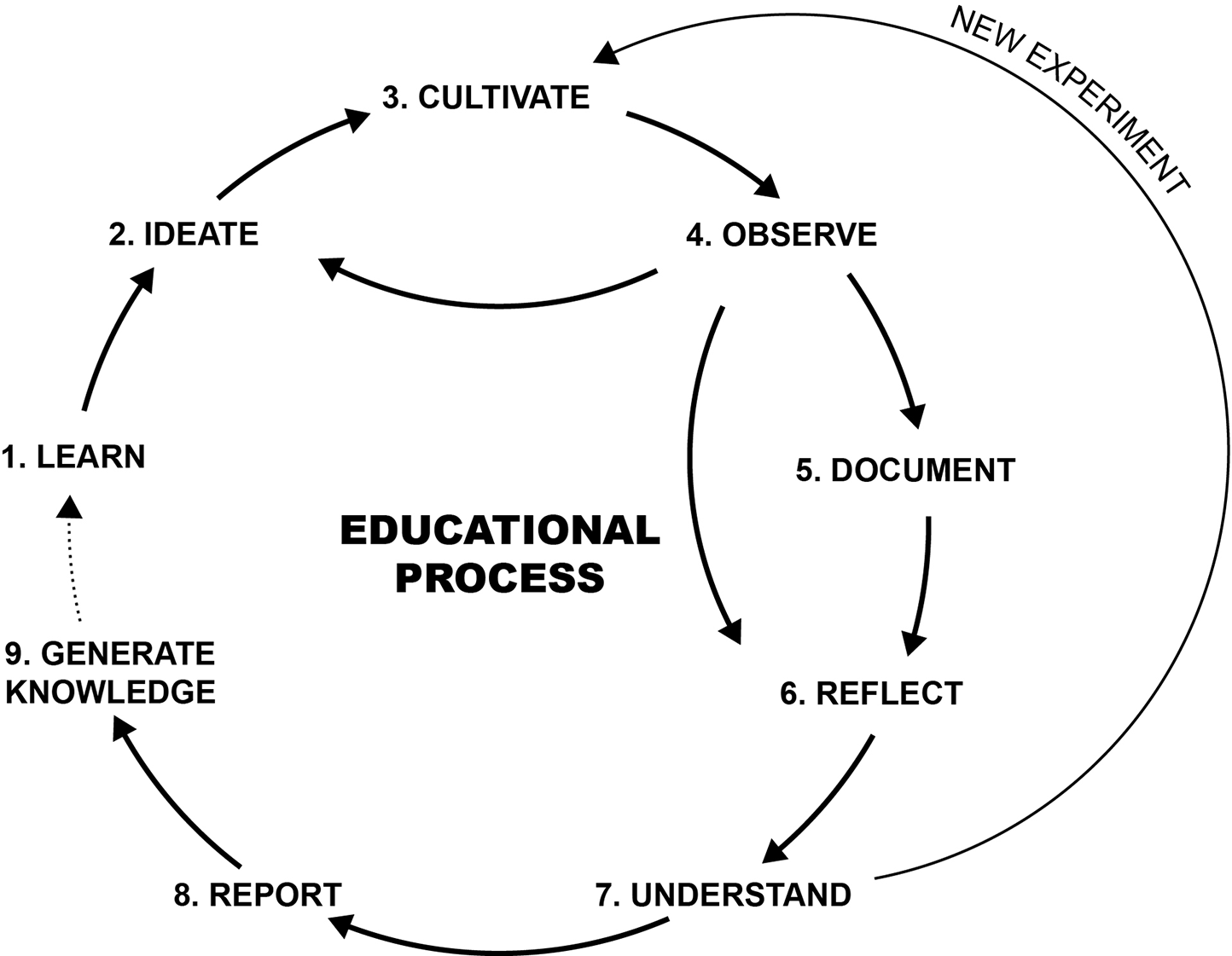


 Open access

