Introduction
Cist graves are small, stone-lined subterranean chambers with stone or wooden roofs used for the burial of the dead. In Western Europe, cist burials were common during the Bronze and Iron Ages, and continued in use into the late medieval period in areas such as Ireland (Ó’Carragáin Reference Ó’Carragáin2010). Such burials, however, do not continue in post-medieval Britain or Ireland (Cherryson et al. Reference Cherryson, Crossland and Tarlow2012), and the closest parallels from this period are the eighteenth- and nineteenth-century brick-lined graves of the British Isles and the USA, associated with higher wealth and status (Riordan & Mitchell Reference Riordan and Mitchell2011; Cherryson et al. Reference Cherryson, Crossland and Tarlow2012). It is against this background that the present article introduces the funerary archaeology of Saba, the only island in the Caribbean where cist burials are known, a historical practice that continues there as the standard burial treatment to the present day. To the authors’ knowledge, this use of stone cists is unparalleled not only in the Caribbean, but across the colonial Americas. It is argued here that this unique practice represents a cultural continuity of Western European burial practices, probably originating with colonists from remote, rural regions of the British Isles. On Saba today, cist graves are the near-universal form of burial, although this practice originally appears to have been associated with white populations, rather than enslaved Africans. Subsequently, the practice was adopted by free populations of African descent, probably during the nineteenth or twentieth centuries.
This article discusses the excavation of several cist burials on Saba, their structural forms, their relevance for identifying Saban vs non-Saban identity prior to the twentieth century, and the need for a relational approach towards the mortuary practices of white and African-descent populations in the Caribbean—especially in post-emancipation contexts. ‘Saban’ is a local term used to define native-born residents of the island. Originally, it only included white, native-born residents, although its meaning was contested during the nineteenth century due to the growth of Saba's free African-descent population from the 1780s onwards. Eventually, these individuals were included in the definition of ‘Saban’ (Espersen Reference Espersen2017).
Despite more than 40 years of archaeological research in the colonial Caribbean, there have been comparatively few published or grey-literature studies of burial contexts. This is due, in part, to the difficulty in locating the graves of enslaved Africans, as these were often unmarked. Between the mid seventeenth and early nineteenth centuries, graves among the low-class whites and any free, African-descent Sabans were also often unmarked, or marked only with drystone outlines. These markers are easily disturbed and can be difficult to locate in areas already naturally scattered with stone. As a result, many of the discoveries have been made by chance, the graves being found either during construction work or having been exposed by erosion.
Handler and Lange (Reference Handler and Lange1978) conducted the first large-scale excavations of unmarked, shallow graves of enslaved Africans in Barbados, focusing on grave goods and osteological analysis, and noting the increased use of coffins through time. Other archaeological studies on the burials of free populations and enslaved Africans have followed in: the Dutch Caribbean (Haviser Reference Haviser2006, Reference Haviser2017; Espersen Reference Espersen2017; Espersen & Haviser Reference Espersen and Haviser2018; Fricke Reference Fricke2019), including a leper colony on St Eustatius (Gilmore Reference Gilmore2008); the British Caribbean (Watters Reference Watters1994; Armstrong & Fleischmann Reference Armstrong and Fleischmann2003; Turner Reference Turner2018); the French Caribbean (Courtaud et al. Reference Courtaud, Delpuech, Romon and Haviser1999; Courtaud Reference Courtaud2013); and the former Danish Virgin Islands (Lenik Reference Lenik2004). Isotope analysis of buried individuals—predominantly in the Spanish and Dutch Caribbean—has identified the geographic origins and, by proxy, the first generation of enslaved Africans in the Caribbean (e.g. Laffoon et al. Reference Laffoon, Rojas and Hofman2012, Reference Laffoon, Espersen and Mickleburgh2018a; Schroeder et al. Reference Schroeder, Haviser and Price2012; Rojas Reference Rojas2016). Generally, the colonial-period mortuary practices of enslaved Africans (mainly simple pits and grave shafts) have received greater archaeological attention (France Reference France1846; Handler Reference Handler1997; Brown Reference Brown2010; Blouet Reference Blouet2013; Ogundiran & Saunders Reference Ogundiran and Saunders2014; Rogers Reference Rogers2015) than those of white populations, studies of which are limited mostly to oral histories (Crane Reference Crane1971, Reference Crane1989).
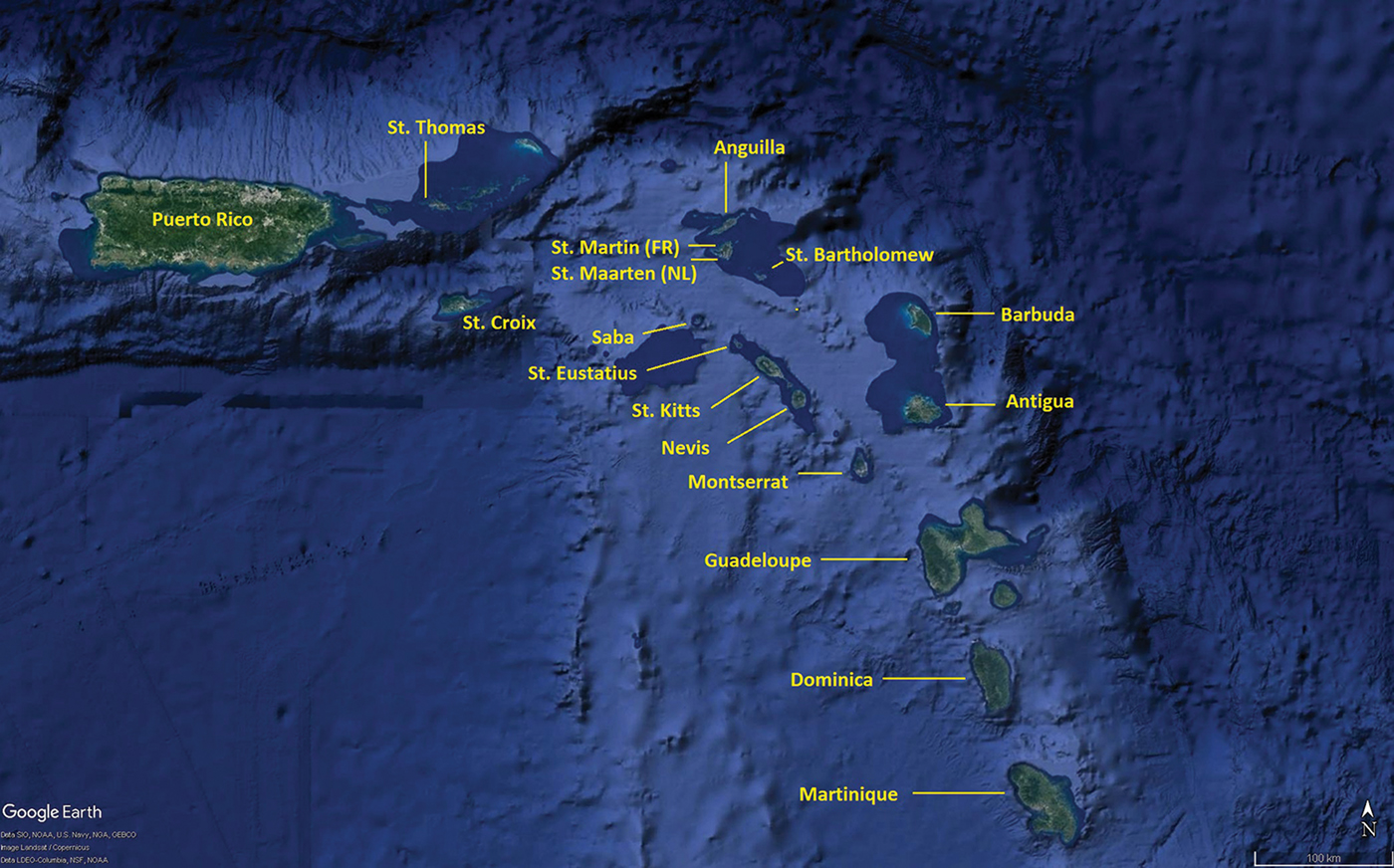
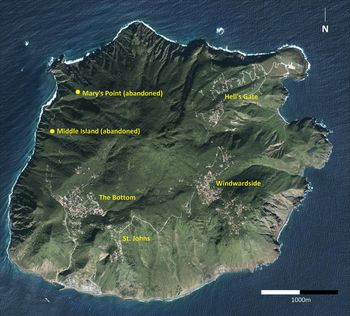
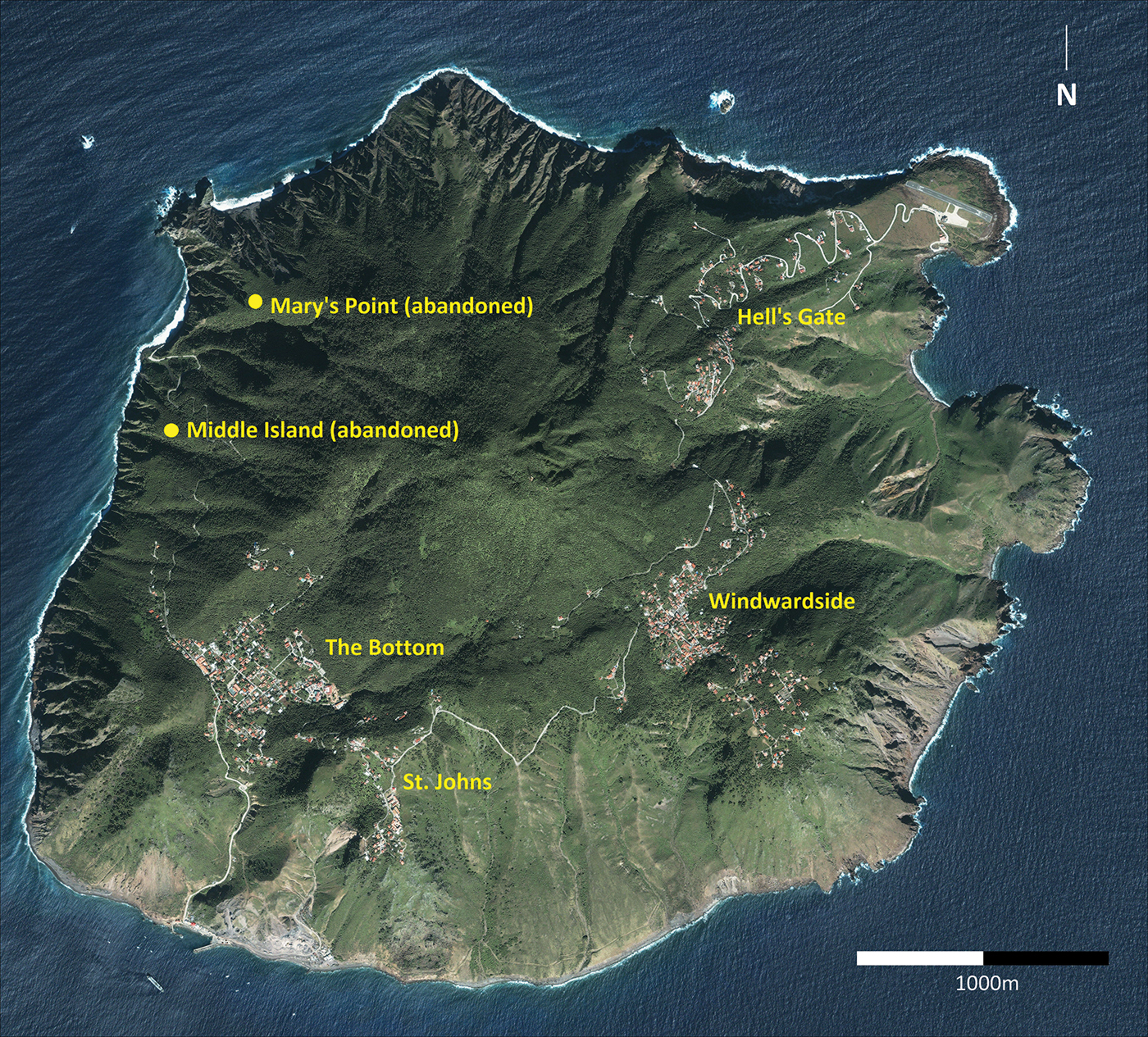
Saba is the northernmost of the arc of volcanic islands that comprise the Lesser Antilles in the Eastern Caribbean (Figure 1). It is a small, steep and rugged island, measuring approximately 13km2, with a maximum elevation of around 878m. Settlements are scattered across the island, on pockets of flat land, usually with deep, fertile soils (Figure 2). The administrative centre of the island is The Bottom, and other villages include St John's, Windwardside and Hell's Gate, along with the abandoned villages of Middle Island and Palmetto Point. Saba was colonised by the Dutch during the 1640s. By 1656, the free population were all from North-western Europe, comprising 200 English, Scottish, Dutch, French and Irish settlers (Hartog Reference Hartog1975; Espersen Reference Espersen2017: 52). The cultivation of sugar, as well as indigo, cotton and coffee, began during the 1650s. Although plantations occupied the best land, the island's rugged topography limited their spread. Thus, the island never developed a plantation economy to a similar scale as that of other nearby islands, such as St Kitts or St Croix. Consequently, Saba received very limited sustained immigration until the late twentieth century. Throughout the colonial period, through to emancipation in 1863, the numbers of enslaved Africans and white residents of European descent were approximately even. In 1780, the island's population had reached 1301 and, by the time of emancipation, this had increased to around 1877 (Espersen Reference Espersen2017: 58). Free Sabans of African descent first appeared in the documentary record in 1780, although their numbers did not increase significantly until around the 1820s. Saba's population peaked at 2488 residents in 1915, before dropping to 981 in 1960 as a result of emigration to Aruba and Curaçao.
Political map of the North-eastern Caribbean, 1824 (© Google Earth).

Satellite photograph of Saba, showing relevant sites (photograph courtesy of the Saba Planning Bureau).
Despite Dutch control, English has been the mother tongue for Sabans since at least the 1650s, when an English-speaking clergyman was requested as hardly anyone on the island spoke Dutch (Hartog Reference Hartog1975: 19). English, Irish and Scottish ancestry features prominently in Saban oral history and identity (Crane Reference Crane1971, Reference Crane1989; Johnson Reference Johnson2014), despite the island having been under Dutch control for most of its colonial history. Other notable elements of ‘intangible’ Western European cultural heritage include the Maypole dance, which is performed every year on Saba Day; the popularity of ‘Saba Pot’ (very similar to Irish brisket) and the baking of scones by the residents of Hell's Gate, a small village in north-eastern Saba.
Burial on Saba
Twentieth-century Saban burial practices and mortuary customs were well documented by the ethnographer Julia Crane during the 1960s. Death is first observed by tolling the nearest church bell, a tradition that continues to the present. During the twentieth century and probably prior, burial was arranged shortly after death. A shroud was made by a local seamstress, and the individual would be displayed in a coffin at home as the family received visits from friends and relatives. If death occurred at night, burial would be scheduled for the following morning, and a public wake would be held. Middle-aged and elderly Sabans took pride in having their own coffins made, often storing them in their houses, such as beneath their beds, until the time that they were required (Crane Reference Crane1971: 62). During the second half of the twentieth century, coffins were made by a local carpenter for purchase (Crane Reference Crane1971: 140).
In a tradition now unique to the modern Caribbean, white Sabans and many free Sabans of African descent were buried close to their houses in designated family plots, with most graves oriented (more or less) with the head to the east, in the Christian tradition. In 1919, Saba was granted a special legal exemption by the Dutch colonial authorities to continue the home-plot burial, and this practice continues to the present day. Burials on church property did not occur until at least the late nineteenth century; the earliest datable Anglican marker dates to 1854, while the earliest example in the Catholic churchyard in Windwardside dates to 1876. In at least one instance, a plot of land was designated as a burial ground, set apart from churches; land in the English Quarter was sold to the Government of Saba in 1873 for use as a burial ground for the poor (Hassell Reference Hassell1873: 202). Unfortunately, this plot could not be located during a pedestrian survey in 2017, and may have been destroyed as a result of construction in the area.
The earliest-known grave markers used on Saba comprise arrangements of unworked and unmortared stones, arranged either flat or as a heaped pile, or so as to mark out an outline around the buried individual. In some instances, this outline consists of carefully selected flattened stones, set into the ground to form a line, with a rounded rock serving as the headstone. Sometimes two stones were placed flush to this arrangement to serve as shoulder flares. Beginning in the 1820s, these dry-stone arrangements were gradually replaced by rectangular markers of mortared worked stone, indicating on the surface the approximate area of the buried coffin—a practice already in use across the colonial Eastern Caribbean before this time. By the mid nineteenth century, the top of these markers had sometimes been covered with a slate block inscribed with the details of the deceased. By the late nineteenth century, slate blocks had been replaced by engraved headstones.
Of the three types of contemporary burial on Saba, the most common is the grave shaft, which features a stone cist, located at the base of a shaft, to house the coffin. Eric Cornet, Saba's current gravedigger, was taught this method by the previous gravedigger; the practice goes back as far as his mentor and ancestors can remember (Eric Cornet pers. comm.). Crane also noted the practice in the 1960s, observing that the cist interiors were plastered (Crane Reference Crane1971: 140). Construction of the Saban cist involves lining the sides around the bottom of the grave shaft with a single course of locally sourced stones, sometimes worked and usually andesite. The stones are laid dry, or bonded with mud, to form a chamber for the coffin. The tops of the stones are flat (sometimes naturally, sometimes worked) to support the capstone(s). The cist was then covered with a single, flat capstone, or a series of smaller capstones set width-wise, and the remaining space above the capstone(s) backfilled with soil to the surface. Guy Johnson, an elderly Saban, relates that during his childhood, Sabans would look for large, flat stones that could be used as capstones, and that prized finds were collected for later use (Guy Johnson pers. comm.). The last recorded use of capstones was during the 1970s and, by the early 1980s, they were replaced by the use of a plywood sheet, covered with cement. This change occurred because suitable capstones were becoming difficult to find (Allicks Heyliger pers. comm.). Beyond Saba, there are no other known examples of cist burials in the colonial Caribbean.
The second burial style, of which there are fewer than 20 examples on Saba, is the stone-and-mortar, ground-level burial vault, which usually takes the form of a dome. The deceased is placed inside the structure and the small entrance sealed, usually with mortared stone, but occasionally by a simple sheet of plywood. This allowed the structure to be reopened for the interment of additional family members.
The third style, of which the only recorded example is from the Fort Bay Ridge site (SB 037), involves a shallow burial in an unmodified pit, with neither coffin nor accompanying grave marker. Osteological, strontium and carbon isotope analyses of the buried individual suggest it to be a late-term pregnant female, who was a first-generation enslaved African (Laffoon et al. Reference Laffoon, Fricke, Espersen and Hoogland2018b). She was buried between 1762 and 1780, at some distance from the landowners’ house (Espersen Reference Espersen2017: 220–21). This type of burial is not practised today, and is unknown to Saba's gravediggers (Eric Cornet pers. comm.). The lack of a cist burial for the Fort Bay individual is indicative of her legal status as a first-generation African slave, and as culturally non-Saban.
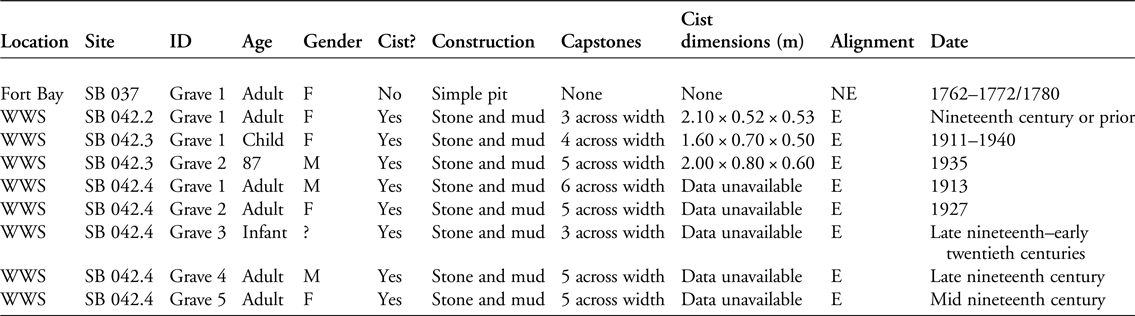
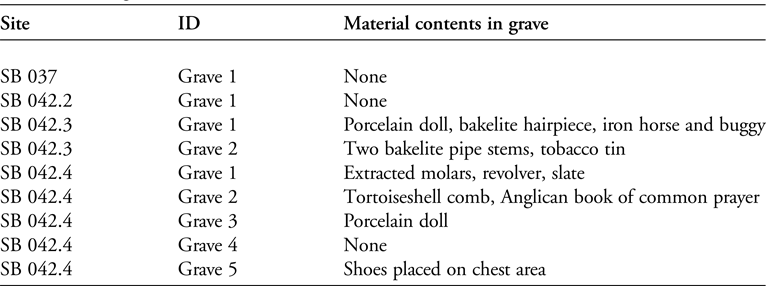
So far, eight cist burials have been excavated on Saba. Five mid nineteenth- and early twentieth-century graves were excavated by Jay Haviser, Grant Gilmore and Joanna Gilmore in 2011. Ryan Espersen, the Director of the Saba Archaeological Center (SABARC), has so far excavated three cist burials in Windwardside, which are discussed below. The details of the cists are summarised in Tables 1 and 2.
Colonial burials excavated on Saba, Dutch Caribbean (WWS = village of Windwardside).

Grave goods from excavated colonial burials on Saba, Dutch Caribbean.

Windwardside car park
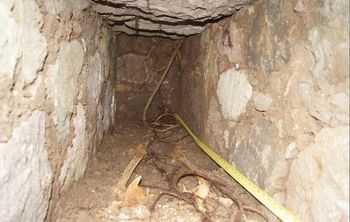
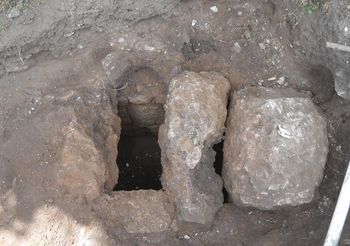
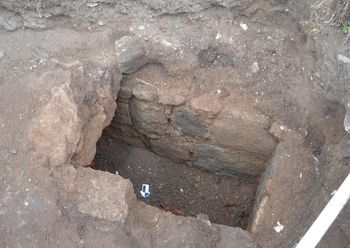
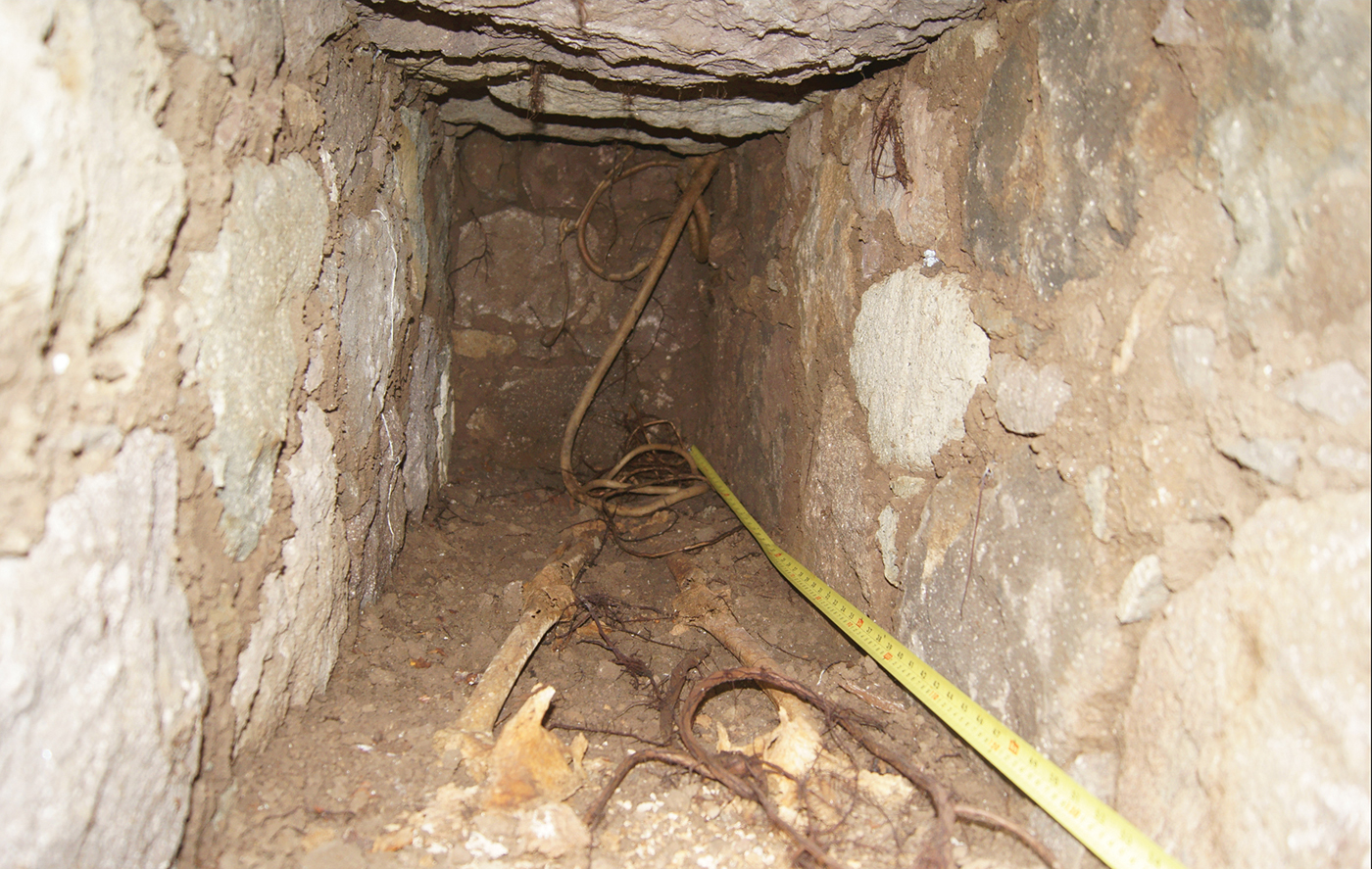
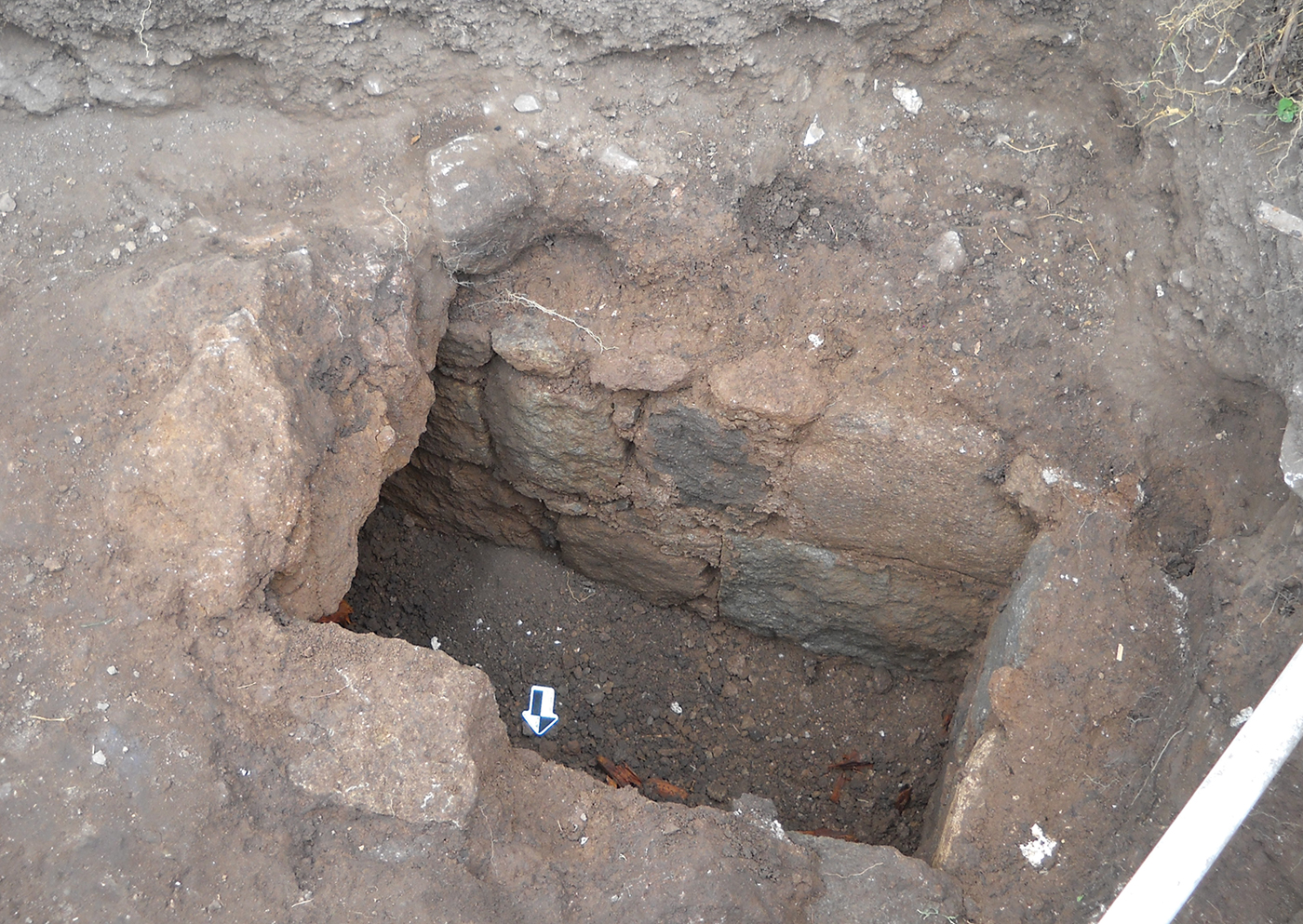
In 2015, construction began on a new car park to relieve congestion on the roads of Windwardside. During the works, a small machine excavator damaged a section of an old stone terrace, revealing the interior of a cist burial and associated skeletal remains. Unlike the other excavated cist burials on Saba, this allowed for visual observation of the cist's interior, with its capstones still in situ. The cist was built as a rectangular chamber (with no shoulder flares), lined with andesite stones, set with their cobbled, flat sides facing inwards. The cist stones were bonded with mud, and the grave was aligned east to west. The cist was covered by a series of andesite capstones, with their flat sides facing down (Figure 3).
Cist interior at the Windwardside parking lot in ‘The Quarter’ (SB 042.2). Note the series of elongated andesite capstones covering the cist at the top of the image (photograph by Ryan Espersen).
The skeletal remains were poorly preserved, and little remained of the coffin, aside from nails, which surrounded the deceased individual in a rectangular distribution. The cranium, scapulae, clavicles, ribs, humeri and sacrum had completely or almost completely disintegrated. The ulnae and radii were placed across the individual's pelvic area. Only a single tooth—a second molar—was recovered from the remains of the cranium. The pelvis, femora and tibiae were preserved, albeit in poor condition. Aside from the coffin nails, the only other associated artefacts were two pairs of hook-and-eye clothing fasteners. The bottom of the vault was approximately 1.22m from the surface, and the grave marked with a dry-stone marker. Although the burial is difficult to date given the absence of associated material culture, comparison with the dry-stone grave marker in the graveyard of the nearby Catholic church suggests that it probably dates to a time prior to the late nineteenth century.
Guido's property
In 2016, Ryan Espersen was contacted by Marcia Guido—the owner of Guido's Bar and Restaurant—to excavate and relocate two graves that were known to be present on the business property, in order to make way for the construction of a cesspit (or septic tank). Both graves comprised rectangular cobbled andesite blocks, stacked into three layers at ground level to form a marker, which was then covered with a layer of concrete. Although a concrete cross was affixed to the western end of each marker, in both cases, these were broken from their mounts, and only one of the crosses was located.
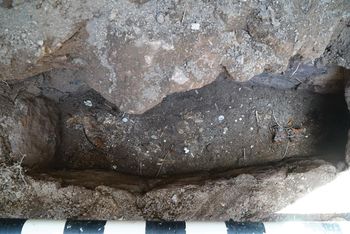
Upon removing the marker for grave 1, the shaft was excavated down to the capstones, located 1.20m below the surface. The cist of grave 1 is hexagonal, measuring 1.60m long by 0.65m wide, at both the head and foot, and 0.75m wide at the shoulder flare (Figure 4). The cist was lined with a single layer of unmodified, or lightly worked, locally sourced andesite stones. These were bonded with mud, with the flat surfaces aligned inwards to line the base and sides of the cist. The artefacts found in the cist suggest that the interred individual was probably a pre- or early pubescent girl. The remains were poorly preserved, with only the right ulna and radius still intact. Remains of faded ginger hair were present in the area of the cranium, along with a long, fine-toothed, black Bakelite hairpiece. A total of 25 porcelain buttons ran from below the position of the cranium down to the approximate area of the knees. The head and arms of a painted, white porcelain doll were found in the vicinity of the right hand. In addition, a cast-iron horse-and-buggy figurine was found around the location of the right femur, fused to the only surviving fragment of coffin wood. Two strands of copper were found flanking the horse and buggy, which probably served as the otherwise missing reins for the driver.
Cist interior of grave 1 (SB 042.3) with capstones removed, facing north. Note the Bakelite hairpiece, and the positioning of the porcelain doll and horse-and-buggy (photograph by Ryan Espersen).
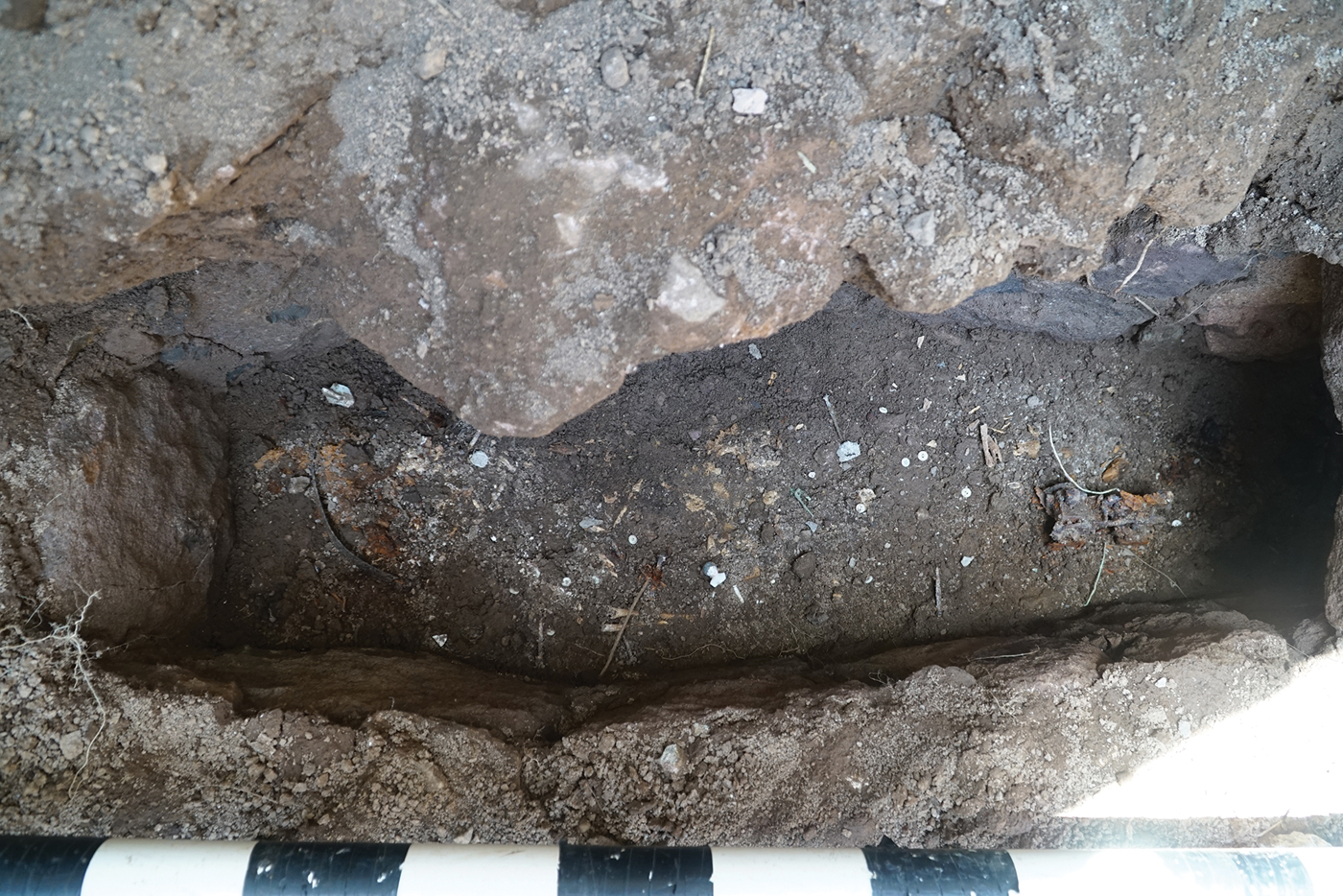
The terminus post quem for Bakelite is 1907 (Miller et al. Reference Miller, Samford, Shasko and Madsen2000: 16). This is consistent with the style of the grave marker, which first appeared on Saba in the first decade of the twentieth century, disappearing after the 1930s. Coffin nails lined the periphery of the cist's interior. All 21 of the nails were hand-wrought, rather than being industrially produced nails. This suggests that the nails were reused—a phenomenon observed elsewhere on Saba (Espersen Reference Espersen2018: 790–91).
Grave 2 was almost identical to grave 1 in terms of the construction of its marker and cist. The broken concrete cross was found close to where it was originally mounted on the grave marker. For privacy, the named deceased individual is anonymised here with initials only. The inscription on the cross reads:
-OP
D. J. P.
DIED 6 JUNE 1935
AGED 87 YEARS
RIP
The remains of this individual were also poorly preserved, with only the right humerus, sections of the right ulna and radius, and a fragment of patella surviving. Some faded ginger hair remained in the area of the cranium. A few small pieces of the individual's shirt—although no buttons—survived. Two Bakelite pipe stems, along with the top of a tobacco tin, were also found within the cist. Wire nails, developed during the late nineteenth century and still in use today, were scattered around the edges of the cist, and some small fragments of the coffin remained, two of which were joined together by a thick, flat-edged screw.
The Breadline property
The 2011 excavations at the Breadline site in Windwardside were undertaken following a request for official archaeological mitigation to remove known burials at the site, in advance of development. Three graves and a large water cistern were initially visible on the ground's surface, but further investigations increased this number to five. Three of these were confirmed as belonging to the family of Thomas Holm (1853–1913), a very prominent man of European descent, who served twice as Lt Governor of Saba between 1898 and 1908.
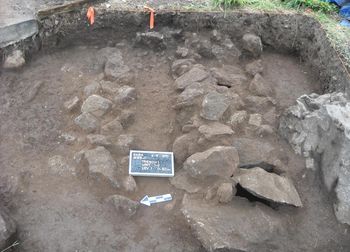
Figure 5 shows the graves of Thomas Holm (left) and his wife Ann Katherine (right), following removal of the headstones. Both graves were aligned broadly east to west. The first grave to be excavated (grave 1) was that of Ann Katherine, who was born in 1853 and died in 1927. Figures 5 and 6 show the large capstones laid across a stone-lined vault in which the coffin was placed. The position of the coffin nails and the void encountered when opening the vaulted space indicate that the coffin had completely decomposed. Although most of the skeletal remains survived, they were very poorly preserved and could not be handled without crumbling to dust. Some hair—faded red in colour—remained. Some of the personal artefacts recovered from the grave include a tortoise-shell comb and an Anglican Book of Common Prayer in poor condition.
The graves of Thomas and Ann Katherine Holm (graves 1–2 at SB 042.4), at first excavated level (photograph by Jay Haviser).
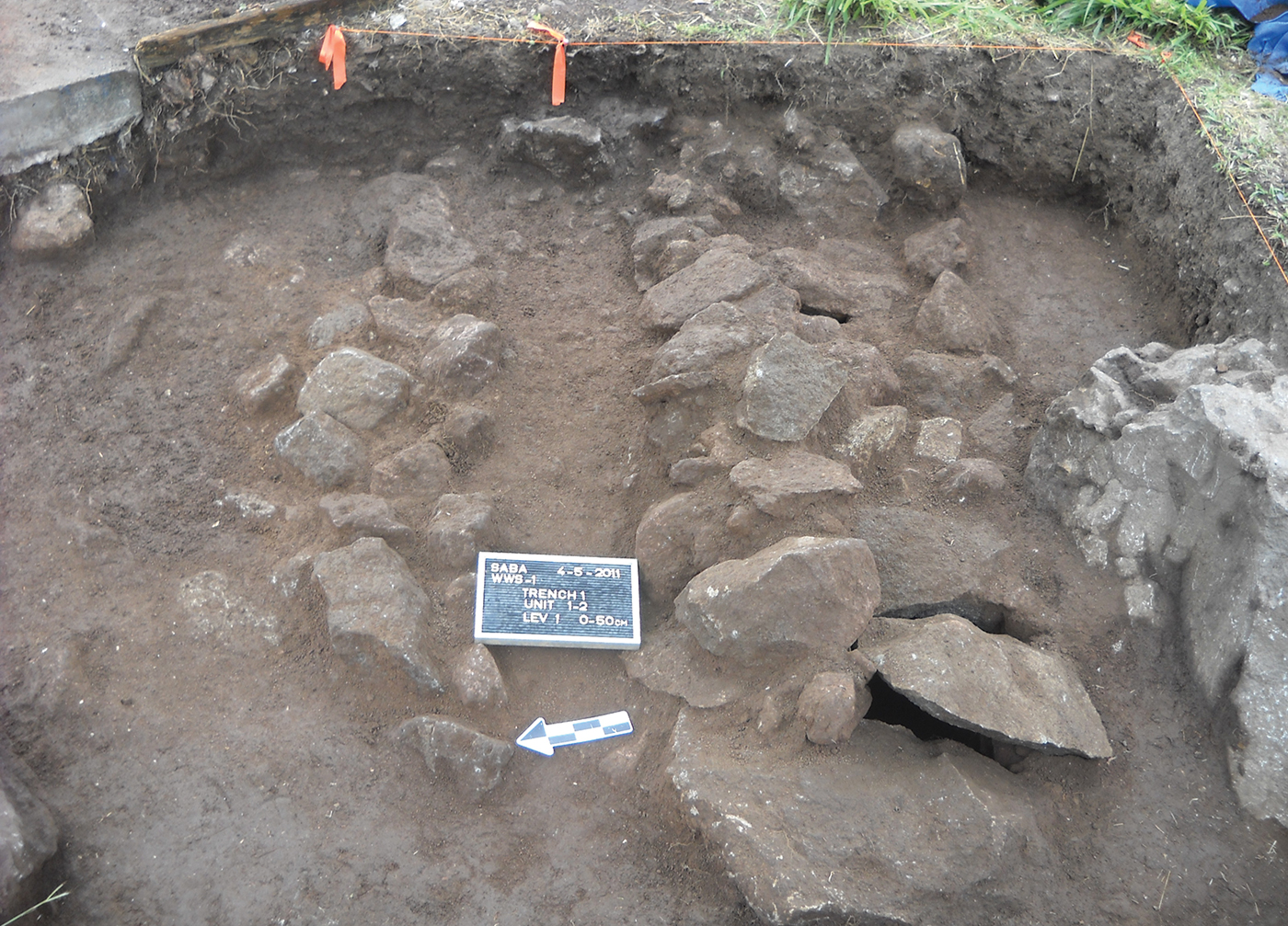
Further exposure of graves 1–2 at SB 042.4 (photograph by Jay Haviser).
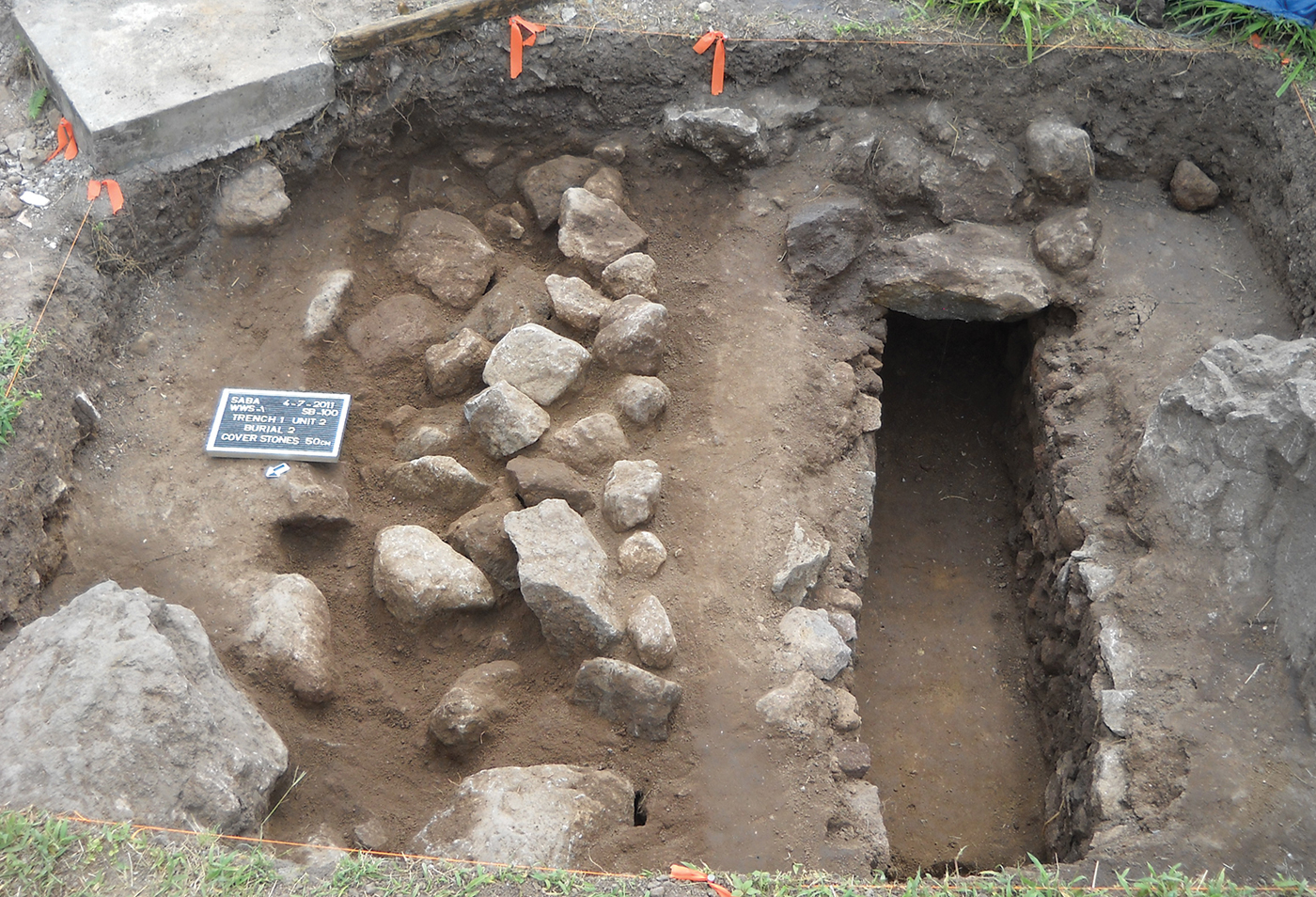
Adjacent and parallel to Ann Katherine's burial was that of Thomas Holm (grave 2). His burial demonstrates the same construction technique, with a series of capstones set width-wise. Several tin plates with ornamental designs were found within the cist. These were probably attached to the top of the wooden coffin and had subsequently fallen onto his skeleton below. As with grave 1, the skeletal remains were mostly intact but in poor condition.
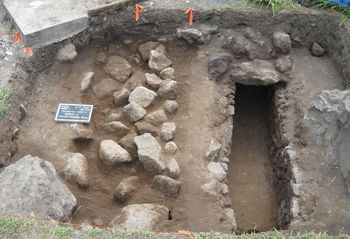
The third grave located adjacent yet perpendicular to the previous two, was that of an infant—based upon the diminutive size of the grave marker—and assumed to be the child of Thomas and Ann Katherine (Figures 7–8). Here, the same technique of capstones placed width-wise across the cist was used. The skeletal remains had decomposed to a powder.
Cist grave 3 of a young child with capstones (SB 042.4) (photograph by Jay Haviser).
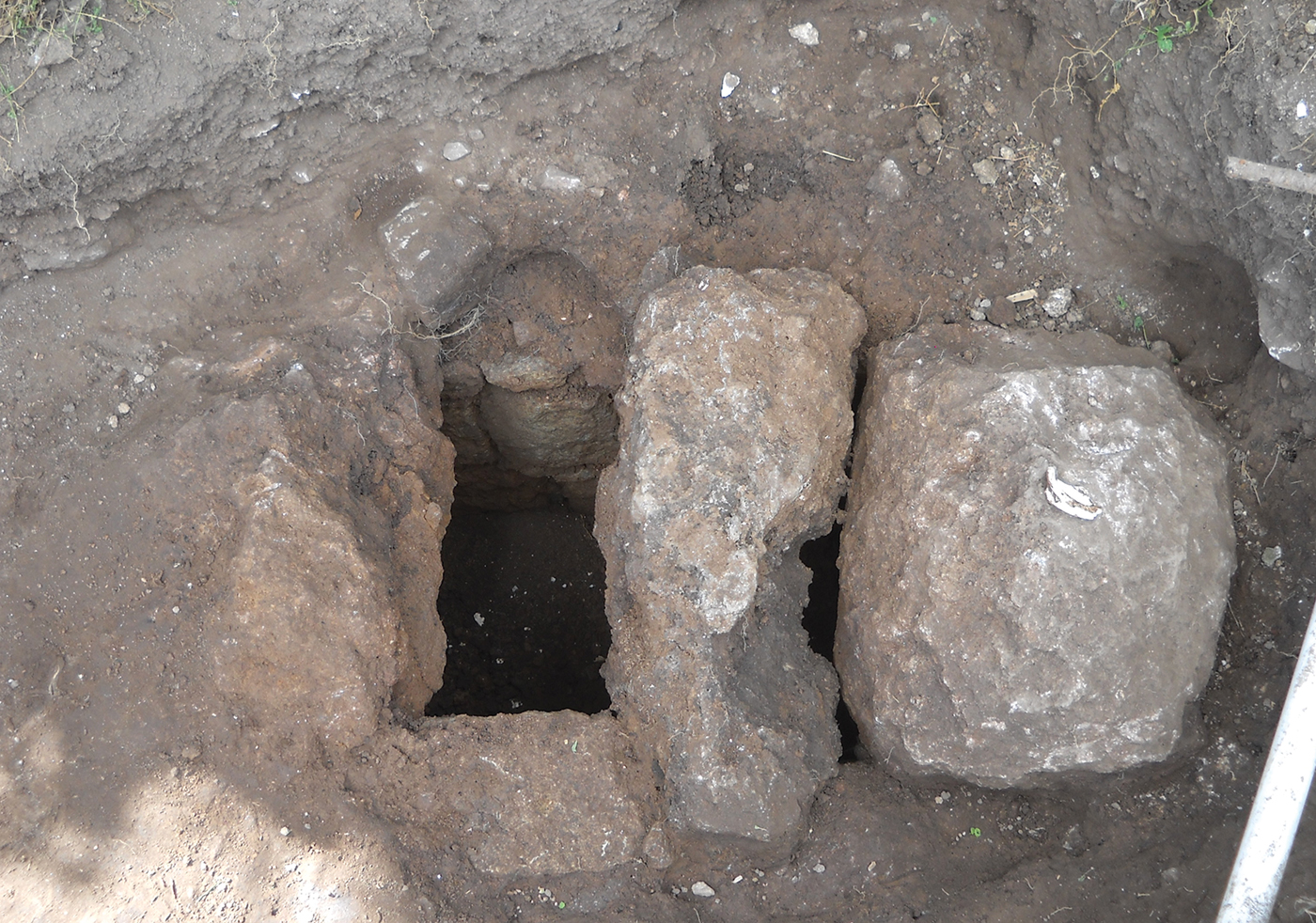
Grave 3 (SB 042.4) with the capstones removed (photograph by Jay Haviser).
A fourth burial, which was not immediately visible from the surface, was reported by Frank Hassell, who claimed it to be the grave of Reginald Hassell, a nineteenth-century maritime captain. It was excavated after the aforementioned graves. This grave was located approximately 20m from the Holm-family burials, and was marked by a mortared, worked-stone grave marker, with a layer of concrete over the top and no headstone. Several artefacts were recovered from within the cist, including numerous jacket buttons, along with a concentration of buttons at the individual's waistline (perhaps indicating braces), suggesting that the individual may have been buried wearing a captain's jacket.
The last grave excavated (grave 5) was located nearby and aligned immediately parallel to Thomas Holm's, and is believed to be that of his mother, Eleanor Hassell. Her remains were in a poor state and could not be handled without causing significant damage or disintegration. This compounded difficulties in determining age and sex via osteological analysis. Artefacts directly associated with the remains date to the mid nineteenth century; the burial is therefore earlier than the others in this group. Of particular interest is the set of laced shoes on her feet, and another pair of shoes placed on her chest. Shoemaking was Saba's primary industry during the late seventeenth and early eighteenth centuries, persisting until the mid nineteenth century (Espersen Reference Espersen2017: 87).
Over 1400 artefacts were recovered from the grave fills of the Breadline excavations. The artefact assemblage consists of ceramics (49 per cent) and objects of metal (12.4 per cent) and glass (9.3 per cent). Varieties of nineteenth- and early twentieth-century pearlware and whiteware are the most common ceramics. Some of the more notable artefacts are clearly indicative of the elite status of the Holm family. Found within the cists (rather than the grave fills), these included a slate-board for writing, firearms, hand-carved woodwork and, most curiously, two intentionally extracted molars. Here, it is relevant to note that Thomas Holm was known to have practised as a dentist on Saba, alongside his role as Lt Governor (Will Johnson pers. comm.). The infant's cist included a porcelain doll dating to 1914–1923.
Fort Bay early colonial homestead
The second known colonial-period burial style derives from the Fort Bay Ridge site (SB 037). In 2015, the SABARC, together with a small team from Leiden University, expanded upon excavations by the SABARC undertaken the previous year. These had discovered an early colonial homestead, along with large and significant Archaic-Age (pre-ceramic, pre-500 BC) Amerindian occupation. A 1 × 1m test unit from the 2014 excavation, located 15m south-east of the homestead foundation, was expanded in 2015 into a 2 × 2m unit to investigate the Archaic component of the site further, as it was one of the few undisturbed areas remaining following the construction of the new electricity plant. Even at the depth of excavation at which Archaic-Age materials were expected, later disturbances continued to be observed. Eighteenth-century ceramics were found on the same stratigraphic layers as the presumed Archaic-period artefacts, including queen conch (Strombus gigas) shells modified for use as tools.
Human remains were encountered at a depth of approximately 1.2m below the ground's surface. The individual was lying prone, with the head oriented to the north-north-east. The remains of a full-term foetus were also identified within the pelvic area. Osteological analysis has determined that the transverse diameter of the adult individual's pelvic inlet was just 100.3mm (Fricke Reference Fricke2016: 26–27). As this was too narrow to allow for a safe delivery, the individual probably died during childbirth. The burial consisted of a simple pit, which ended at a depth of 1.2m. There were no coffin nails or grave goods associated with the individual, and no clothing-related artefacts, such as buttons or fasteners, were found. Copper staining on the skull, however, suggests that a veil was pinned to the individual's hair. A sherd of early creamware was found next to the skull, along with a very worn Strombus gigas shell. The terminus post quem for creamware is 1762 (Miller et al. Reference Miller, Samford, Shasko and Madsen2000: 12), while the colonial homestead's occupation probably ended after the 1772 hurricane, and at the latest by the date of the hurricane of 1780.
The homestead's ceramic assemblage does not appear to post-date the early creamware period. Early creamware sherds were common, and no pearlwares or later ceramics were found at the site during the 2014–2015 excavations. The hurricane of 1772 destroyed 140 of 180 houses across Saba (Anonymous 1773), and although the effects of the regionally disastrous hurricane in 1780 are not well documented for Saba, it would also have affected the island. The burial therefore can be reliably dated to between 1762 and 1780 based on the absence of ceramics post-dating early creamware, combined with the destructive hurricanes of 1772 and 1780.
In contrast to all of the other skeletal remains within Saban cist burials encountered by the authors, the Fort Bay individual was remarkably well preserved. It appears that, in cist burials, decomposition proceeds rapidly, as the structural form traps a large pocket of air within the grave. The simple nature of the Fort Bay grave, along with the absence of a coffin, grave marker and grave goods, and its location some distance from the house foundations, all strongly suggest that the interred individual was not accorded a traditional Saban burial, and, by extension, was therefore not considered to be culturally ‘Saban’. Stable isotope analysis of the individual's molars reveal strontium ratios consistent with a birth and early life spent in West Africa, south of the Sahel. In later childhood, these values change dramatically to indicate migration to the Caribbean (Laffoon et al. Reference Laffoon, Fricke, Espersen and Hoogland2018b), thus indicating that the individual was a first-generation enslaved African.
Saban cist graves in wider context
The continuity of cist graves as the primary means of burial on Saba testifies to the island's social and economic insularity from the seventeenth to the late twentieth century. Following the probable introduction of this funerary custom by early European colonists, cist graves have become a deep and persistent practice on Saba, but remain otherwise undocumented in the Caribbean. After initial European settlement, Saba experienced limited immigration; indeed, it was faced with the problem of continual emigration, as the island's population was effectively “educated to emigrate” (Crane Reference Crane1971: 1), thereby fostering strong cultural insularity among those residents who chose to stay. Indeed, Saba's rugged topography isolated villages to the extent that five distinct Saban accents, each tied to villages and former settlements, developed and persist to the present day.
The island's cultural insularity has also contributed towards the preservation of other elements of early European cultural heritage, such as the Maypole dance, and traditional foods, such as scones and brisket. Modern cist graves are excavated and constructed by Saba's gravediggers without an awareness of its uniqueness within the Caribbean or the wider Americas. To date, no seventeenth- or eighteenth-century cist burials have been positively identified or excavated, due, in part, to the difficulty in identifying dry-stone grave markers within a naturally stony and erosion-prone landscape. Nonetheless, the practice was probably introduced to the island during the seventeenth or early eighteenth century by the first European colonists, and it has persisted as a cultural practice due to the social insularity of Saba. The introduction of this burial practice to Saba suggests that early immigrants were primarily from rural areas of North-western Europe, where cist burials continued to be used into the seventeenth century.
On Saba, cist burials appear to have been strongly associated with white Saban identity from at least the nineteenth century, and probably extended back to the first seventeenth-century European colonists. The burial of the enslaved African woman in a simple pit associated with the Fort Bay Ridge colonial homestead demonstrates the distinct treatment of early populations of African descent. During the nineteenth or twentieth centuries, cist burials were gradually adopted by the island's African-descent populations, and it remains the near-universal method of burial today for all residents. Saba's cist burials therefore demonstrate the need for relational approaches to colonial contexts, moving away from a binary opposition between the mortuary practices of white vs African-descent populations in the Caribbean—especially in post-emancipation contexts.
Although presently considered unique to Saba, it is possible that cist burials were introduced to other regions of the Americas by seventeenth-century colonists from North-western Europe, but that this cultural practice did not become established and persist. Future discoveries of cist burials in the Americas could therefore serve as a means for dating burials to the early colonial period. The example of the Saban cist graves also encourages a broader re-evaluation of early colonial burial practices in the Americas, and examination of questions of cultural interactions, insularity, continuity and change.
Acknowledgements
The authors would like to acknowledge the Peterson family for their cooperation with establishing Malta Treaty precedent on Saba with the Breadline excavations, to Marcia Guido for contacting the Saba Archaeological Center to remove graves ahead of construction, and to the Saba Electric Company for allowing continued archaeological excavations on the grounds of the new electricity plant.