Introduction
Visiting the country in 1906 on his way back from the Russian-Japanese War where he served as a physician, Dr. Leo (Arieh) BöhmFootnote 1 a Zionist activist from Kharkov, was astonished that there was not a single bacteriological laboratory in the country. Anyone suspected of having been exposed to rabies – a deadly disease – had to travel to Cairo or Constantinople, risking his or her life during the long journey. Böhm turned to some Zionist physicians, most notably Max Nordau, to find support for the idea of establishing a research laboratory in Palestine and began to explore the possibility of purchasing land in Palestine for the future institute.
In 1913, Böhm immigrated to Palestine and opened an anti-rabies department as part of the International Office for the Health of Jerusalem, established by the German anti-Malaria Society in Jerusalem, the World Zionist Organization, and the Nathan Strauss Jewish Health Station.Footnote 2 In 1916, when the International Office officially ceased to exist, Böhm continued his work there turning the department into the “Pasteur Institute for Health, Medicine, and Biology in Palestine.”
In this article we examine the creation and functioning of the Pasteur Institute of Palestine focusing primarily on the relationship between biological science, health policy, and the attempt to create a “new society.” We situate this discussion within a broader context of the history of public health and colonial medicine. Similar to other bacteriological institutes founded by colonial powers such as France, Germany, or the United-States, Böhm's laboratory was developed in response to public health needs; however, it also played a political role. Böhm strived to frame his institution within the Zionist aspiration to develop a national entity, based on strong scientific foundations. A bacteriological laboratory was perceived as an important asset even in early discussions at Zionist international congresses. Though it enjoyed several fruitful years of operation, mainly during World War I, the Pasteur Institute in Palestine never became a central institution, neither from the scientific nor from the national point of view. We argue that this is because it failed to adapt to the new methods of knowledge production, both scientific and social. The new epistemological, medical, and managerial practices were represented in Palestine by organizations that became the central actors after World War I, the Hadassah Medical Organization,Footnote 3 the General Sick Fund (Kupat Holim Clalit), and the British Mandate Health Department.Footnote 4 Thus, the case study of the Pasteur Institute in Palestine serves as a prism to view the role of the public health laboratory in the history of Palestine with its ongoing changes in scientific, organizational, and political contexts.
Pasteur Institutes, Colonialism, and Public Health
Colonial efforts to deal with the health of developing regions were closely linked to economic interests. Thus, health was not an end in itself, but rather a prerequisite for colonial development. Colonial medicine, or “tropical medicine,” as it was called during the late nineteenth century, was concerned primarily with maintaining the health of Europeans – whether missionaries, settlers, or soldiers – living in the tropics, who were viewed as essential to the colonial project's success. The health of the colonized subjects was usually only considered when their illness threatened colonial economic enterprise or the health of the Europeans (see Worboys Reference Worboys, Cooter and Pickstone2000, 51–66; Arnold Reference Arnold, Porter and Bynum1993, 1397–1398).
The laboratory played a special role in the colonial regime. As Warwick Anderson wrote: “For most colonial bureaucrats, the laboratory not only was an appealing representational space, but also seemed to allow a manipulation of the scale of things, so that macro may become micro and then be magnified again” (Anderson Reference Anderson2006, 5–6; on scale politics, see King Reference King2004, 62–76). The movement between the macro and micro scale was alluring, as the micro or laboratory level was presented as something that could be manipulated in a scientific-rational way, as opposed to the macro environmental and social levels that were perceived as unpredictable and hard to control.
In this context, the network of Pasteur institutes around the world as a unique model in the medical colonial framework has been described by several historians. Conducted as a tool for scattering science and promoting public health, Pasteur institutes were also part of the empire's expansion.Footnote 5 The original Pasteur Institute in Paris, established in 1887, presented itself as an independent institution dedicated exclusively to disinterested scientific research. While the institute was officially a private institution, hence seemingly disconnected from politics and external influences, its spread all over the world was part of French colonization.
According to Ilana Löwy, Pasteur institutes were based on a paradox, being private institutions dedicated to public health. The “private” part of the equation allowed it to retain its apparent independence from the French State, and at the same time obscure the less desirable components of its image. It relied on private money but also on a substantial fixed government subsidy for research, as well as profits of sales of vaccines to balance its budget. The commitment of the institute's leaders to the ideal of public health was perhaps a handicap too, hampering, for example, the development of more profitable commercial arrangements with industry (Löwy Reference Löwy1994). Also the “Pastorian spirit,” which the Pastorians liked to evoke, was an elusive entity. Thus, tensions between the public and private elements were expressed differently in the various institutions. Anne Marie Moulin has pointed to the remarkable flexibility of “Pastorian methods,” and their capacity to adapt themselves to different social and cultural environments (Moulin Reference Moulin, Petitjean, Cathérine and Moulin1992, 307–322). Although the network of overseas Pasteur institutes that flourished in the late nineteenth and early twentieth century offered doctors an intellectual point of reference and a means of legitimizing their work by association, this was not a one-way flow of authority, legitimacy, and identity. Colonial scientists sometimes challenged the work of their overseas colleagues situated in the “center” of knowledge production (Strachan Reference Strachan2006). The scientists who worked in these laboratories developed an extended periphery surrounding the “creole zone” of pure microbiological research, which was composed of several “trading zones” in which bacteriologists maintained contacts with other professionals and several “pidgin zones” in which they interacted with other specialists, developing new methods of study and laboratory practices (Löwy Reference Löwy1994; on hybridization, see Ben-David Reference Ben-David1960). It is difficult to subsume the multiple activities of Pastorians under a single heading of “the professional role of the bacteriologist.” It is equally difficult to distinguish between those who held the role of “applied scientists” and others who were “academic scientists” since often these two roles were held by the same person, sometimes at the same time. Early French bacteriology was not composed of a centralized network of social groups successfully “translated” into pastorism, but was rather a complex, decentralized mosaic of institutions and professional clusters.
In this article we analyze one such institute: the “Pasteur Institute in Palestine.” Though its founder, Böhm, was trained in Pasteur institutes and by some “Pastorians,” he was also trained and influenced by German bacteriologists. Moreover, in many ways it was a “stepson” of the original Pasteur institute: not only was it not created by the Parisian institute, or formally permitted to carry Pasteur's name, but it was also operated within a Zionist national context.
Numerous groups, ranging from public health officers, to military and colonial regimes, appropriated bacteriological knowledge and bacteriological techniques using them locally in a variety of ways. In the coming section we describe the role assigned to bacteriology and public health within Zionist ideology and practice and its appropriation by various actors.
Zionism, Science, and Public Health
Science and technology are fundamental to Zionist ideology, seen as part of national identity and social prosperity. Even in its early stages, the Zionist movement perceived science and technology as central tools in its aspiration to create a new society. Scientific knowledge was seen as a prerequisite for the successful settlement of Palestine, turning a “desert wasteland” into a vibrant, technologically based modern nation-state. In order to “civilize” this supposedly backward land, Zionist political leaders joined forces with professionals in the fields of science, technology, medicine, and public health to establish a new and healthy society. Important technological and managerial requirements for the realization of Zionism were developed during the era of high imperialism (see Penslar Reference Penslar1990 and idem 1991, 41–80). Moreover, Zionist settlement was made feasible by late nineteenth-century innovations in transportation, communications, and agriculture.
Theodor Herzl's utopian novel Altneuland represents the incorporation of science, technology, and public health as crucial components in Zionist's vision of a modern welfare society (see Davidovitch and Seidelman Reference Davidovitch and Rhona2004; Sufian Reference Sufian2007a, 44–47). The famous Austrian Jewish microbiologist Dr. Alexander Marmorek (1865–1923), who was close to Herzl, served as an inspiration for the Altneuland character, Professor Steineck, head of a bacteriological laboratory, patterned “after those of the Pasteur Institute in Paris” (Herzl [Reference Herzl and Levensohn1902] 1941). In the novel Steineck explained to his visitors how the Zionist use of science and public health can be exported:
We have overcome it here in Palestine thanks to the drainage of the swamps, canalization, and the eucalyptus forests. But conditions are different in Africa. The same measures cannot be taken there because the prerequisite, mass immigration, is not present. The white colonist goes under in Africa. That country can be opened up to civilization only after malaria has been subdued. Only then will enormous areas become available for the surplus populations of Europe. And only then will the proletarian masses find a healthy outlet. (Ibid., 169)
The above citation from Altneuland describing malaria eradication measures and the place of science and public health in the Zionist plan formulates explicitly the broader colonial context of these efforts. According to this vision the scientists of the Zionist bacteriological laboratory, based on the Pasteur model, were trying to find a cure for malaria in Africa after it was eliminated in Palestine.
Medical science had a special role in the Zionist endeavor: the depiction of medicine in Zionist writings came through their vision of progressive scientific medical innovation, clinical discoveries, bacteriology, hospitals, and specialists in promoting health. Medical science applied to public health had a special place in this scheme, not only in its important role of protecting the health of newcomers to a hostile epidemiological environment, but also as an important carrier of ideals of social progress, equality, and justice. As early as the 1920s, the Technion in Haifa and the Hebrew University in Jerusalem were established, creating a nucleus for local scientific research initiatives (see Cohen Reference Cohen2006; Katz and Heyd Reference Katz and Michael1997; on the Technion, see Alpert Reference Alpert1982; see also Troen Reference Troen1992).
“The Eretz-Israeli Bureau,” headed by Arthur Ruppin, used technology, agronomists, and modern management to expand rural Jewish settlement (Penslar Reference Penslar1991, 80–102). This pattern combined technical ethos with the ethos of Labor Zionism. The immigration of Jewish European and later American scientists, physicians, and engineers to the country made possible the successful transfer and implementation of science and technology. These professionals, through their relationships with and influence of Jewish academics and Jewish institutions in Western countries, not necessarily Zionists, largely laid the foundation for much of the science and technology in the Jewish settlement in Palestine. Community clinics to care for babies would create conditions where mothers would voluntarily advance the welfare of the utopian society, while bacteriological institutes, searching for cures for epidemic diseases, would decrease illness and thus improve the quality of life. This was exactly the base for Böhm's initiative.
First Steps
Even before his immigration to Palestine, Leo Böhm was involved in public health issues as part of his activity in the Jewish community, Zionist circles, and his appointment as a physician by the Russian Zemstvo.Footnote 6 Originally from Kharkov, a significant location for political Zionism, Böhm was deeply engaged in Zionist activities.Footnote 7 He founded the Bonei Zion and the Kadima students' associations and participated as a delegate in various Zionist congresses. In 1903, he went as a physician to assist the survivors of the Kishinev pogrom (Levi and Levi Reference Levi and Yael2008, 93). Böhm was one of many Jewish Zionist and non-Zionist physicians at that time who used science and social medicine to deal with the poor conditions of Eastern-European Jews (Hart Reference Hart2000, 96–138; Efron Reference Efron1994), but also to promote their political agenda, in the case of Böhm, Zionism.
From 1906 onward, after his first visit to Palestine, Böhm attempted to open an institute in Palestine that would produce vaccinations for the treatment of rabies for the local population, Jewish and non-Jewish. In 1911, while working at the bacteriological institute in Kharkov, he contacted the World Zionist Organization and informed them that he had managed to secure 5,000 Rubel for the institute from a colleague (CZA, L1/69), and in 1912 he visited Palestine again to examine the possibility of working at the Jewish Health Bureau, financed by the Jewish American philanthropist Nathan Strauss.Footnote 8 Although these preliminary attempts were not realized, Böhm's efforts to establish a bacteriological institute in Palestine were supported and encouraged by the World Zionist Organization whose members shared the view that science and technology ought to be part of the realization of Zionism in the country. For them, as for Böhm, without re-establishing the health of the country, the re-population of the land would be impossible (League of the Friends of Palestine Pasteur Institute, 1931).
At the Ninth Zionist Congress in 1908 held in Cologne, Dr. Yaakov Bernstein-Cohen first proposed that a bacteriological institute be established in Palestine.Footnote 9 His proposal was supported by Marmorek.Footnote 10 A year later at the Tenth Zionist Congress in Hamburg, the participants decided to establish a bacteriological institute in Palestine to celebrate the sixtieth birthday of Max Nordau and allocated 24,962 Marks for it. The future institute would be established to fight infectious diseases, mainly malaria, by regulating quarantine and isolation, securing clean water, and good sanitation, vaccinating the population against smallpox and educating people about trachoma and other prevalent infectious diseases (Zionistische Kongress 1909, 79–80). Moreover, the plan was that such an institute would be the basis for a future Jewish university in the country. The initiative had also concrete political motivations: to show loyalty to the Ottoman rule and to increase the trust between them and the Zionists (ibid., 81). The delegates decided to establish a special association that would promote the initiative, and recruit prominent scientists and leaders such as Paul Ehrlich, August Wasserman, and Senator Landau to raise 200,000 Marks needed for the foundation.
Such plans suited Böhm's aspirations to establish a department for rabies vaccines and serum tests (Sandler to Ruppin, 17.5.1913, CZA, L2/99/1). However, the main support for Böhm came from the Association of Jewish Physicians and Natural Scientists for the Sanitary Interests in Palestine (Gesellschaft jüdischer Ärzte und Naturwissenschaftler für sanitäre Interessen in Palästina). The association, which was founded in February 1913, was not affiliated with any Zionist political party and included also non-Zionist medical authorities and welfare representatives. It was located in Berlin and headed by Dr. Aaron Sandler.Footnote 11 The association aimed “to improve the sanitary conditions in Palestine” by various means. They put special emphasis on the prevention and treatment of malaria and trachoma, medical care for infants, school hygiene, and improvement of climate and land factors relevant to health (Berlin, 15.1.1913, CZA, L2/99/1). The association comprised more than 140 members, including nearly all Jewish professors of medicine in Europe as well as professors in natural sciences, lawyers, members of parliaments, rabbis, Jewish community leaders, and leading Zionists such as Chaim Weizmann, Otto Warburg, Jehiel Tsclenow, and Franz Oppenheimer (ibid.).
Despite the formal decision of WZO and non-Zionist bodies to engage in the project, they lacked the necessary funds. To realize it, several forces joined together to establish international cooperation. On 10 April 1913, an agreement was signed between the German Society for the Struggle against Malaria in Jerusalem (Deutsche Gesellschaft zur Bekämpfung der Malaria), the Jewish Health Bureau (Nathan Strauss Foundation), and the Association of Jewish Physicians and Natural Scientists for the Sanitary Interests in Palestine (Internationales Gesundheitsamt) for the establishment of an International Office for the Health of Jerusalem (Misrad Kol Leumi le'Havra'at Yerhushala'ym) (CZA, L2/99/1). According to the agreement, which was valid for four years, the Office included a department for malaria headed by the world renowned German malariologist Prof. Peter Mühlens (1874–1943), financed by the German association; a hygienic department headed by Dr. Zeev Brünn; and a department for bacteriological investigations headed by Dr. Arieh Goldberg, both financed by the Jewish Health Bureau; and a department for serums and rabies treatment headed by Dr. Böhm, financed by the Association of Jewish Physicians and Natural Scientists for the Sanitary Interests in Palestine.Footnote 12 The Association of Jewish Physicians and Natural Scientists for the Sanitary Interests in Palestine appointed Böhm for his medical and bacteriological experience at Kharkov and his year of training at the institute for tropical medicine in Hamburg,Footnote 13 as well as his ability to lecture and write in Hebrew and promote activities to popularize medical knowledge for the public on malaria, rabies, and black water fever (Wulf Reference Wulf2005, 52). In fact it was these experiences – participating in the creation of scientific activities that were carried out in modern Hebrew and the popularization of science and hygiene knowledge – that actually turned out to be the most successful aspect of Böhm's work (on Hebrew medical terminology, see Sufian Reference Sufian, Sufian and LeVine2007b, 97–120).
The International Office for the Health of Jerusalem with its hundred seats and its well equipped library became a meeting point and a study center for the physicians of Jerusalem. Professional literature and newspapers, weekly lectures and scientific meetings, demonstrations, and even courses on how to diagnose malaria with a microscope were held from the very first days of the institution (Wulf Reference Wulf2005, 56).
Cooperation between Zionist leaders and German scientists regarding contagious diseases in the Holy Land was not new. Germany hoped to promote its imperial interests in the region and saw scientific activity related to epidemics as a way to ensure it. Epidemiological surveys of local population and climate, sometimes espionage missions disguised as scientific explorations, were exploited to serve the German army. In addition, within the competition between Germany and France on international influence, the scientific activity of German scientists in the land was seen as an economic and national target (Wulf Reference Wulf2005, 42–44; Weindling Reference Weindling, Cunningham and Williams1992, 170, 173).Footnote 14 In 1912 the Jewish National Fund announced the arrival of a scientific expedition to Palestine headed by Peter Mühlens from the Institute for Tropical Medicine, Hamburg (Mühlens Reference Mühlens1913; Mühlens Reference Mühlens1914). Mühlens met Brünn in Palestine to get his assistance in conducting the malaria survey in Jerusalem.Footnote 15 The JNF planned to allocate 3,000 Marks for this cause (JNF to Warburg, 19.8.1912, 2).
Nevertheless, despite previous collaboration, the agreement with the German scientists aroused criticism from various actors in the Zionist Jewish Settlement. In general, the fact that Germans and not Jews were heading the institute, and practically took over the administration, was seen as a failure to realize the original plan to establish an independent Jewish institute (Sandler to Ruppin, 20.3.1913, L2/99/1, 2). This opinion was also shared by Brünn and Aaron Aaronsohn, who would become part of the future department (Boehm to Jacobsohn, 3.3.1913, A12/35, 2).Footnote 16 In particular, some Jewish physicians feared that the involvement of Germany would damage their relations with Ottoman rule and would endanger their medical activity and achievements in the region. The newly established Hebrew Medical Association in Palestine complained that it was not involved or consulted in the decision but rather were informed of it as a fait accompli (L. Pouchowsky, head of the association, to Warburg, 12.5.1913, CZA, L2/99/1, 3).Footnote 17 Furthermore, the agreement was signed during the “language war,” a public debate on teaching language at the future Technion, the Jewish Institute of Technology, initiated and financed by the Hilfsverein der Deutschen Juden, whose head James Simon, was also the treasurer of the anti-Malaria society (Shilo Reference Shilo1994). Thus, the opposition to the International Office for the Health of Jerusalem was part of a wider resistance to the influence of German Jewry and German national interests on the Jewish pioneer society in Palestine (Wulf Reference Wulf2005, 67).
The Zionist bodies responded to the attacks by saying that the way they chose “would secure the end” (Sandler to Ruppin, 20.3.1913, CZA, L2/99/1, 2). Thus, no one in the Jewish circles could have come up with 50,000 Marks to establish a comprehensive institute with four departments, covering different important aspects for promoting public health. Moreover, since the Germans would have realized their plan in any case in Palestine, to work together with them prevented competition that the Jewish physicians would not have won. Thus, collaboration with the Germans was seen as only a temporary means to fulfill Zionists ends in the field of scientific development and public health. The financial advantages combined with scientific expertise were the main reasons for this collaboration, even if the price meant shattering their own control of the Institute (Warburg to L. Pouchowsky, 13.11.1913, CZA, L2/99/1).
The international health station was inaugurated on 23 October 1913, the birthday of the German empress, with a series of public lectures. Whereas Mühlens insisted on giving his speech in French as a political act, to emphasize the victory of German science over the French one (Wulf Reference Wulf2005, 45–46), Böhm insisted on giving his lecture in Hebrew, emphasizing the importance of the institute in the revival of the Jewish nation in its homeland, and also the significance of conducting scientific life there in the national language.
World War I
The international institute was a short-lived example of cooperation. The outbreak of World War I shuffled the cards. Both for financial and political reasons the institute could no longer operate in a unified way. Mühlens, originally a naval medical officer before he joined the Hamburg Tropical Institute, was sent to Constantinople and worked as a hygienist for the Mediterranean division.Footnote 18 Dr. Tawfik Canaan (1882–1964), a well known Palestinian physician and anthropologist, replaced him as the head of the malaria department, and Goldberg became superintendent of the office (Wulf, Reference Wulf2005, 102–05). In the first phase of the war, the “International Office” served as military aid, while Böhm and Goldberg produced typhus, cholera, and smallpox vaccinations for the Turkish troops as well as the local population. The war situation, with famine, poverty, and poor hygienic conditions together with the exploitation of the office's resources for military aims, and especially the lack of quinine for treating malaria, created a health crisis in Jerusalem.
Like other health institutions at the time, Böhm's department suffered increasing economic difficulties. The Association of Jewish Physicians and Natural Scientists for the Sanitary Interests in Palestine, which supported Böhm's department, was unable to cover its expenses. Many members were drafted by various armies, and it was impossible to get donations. In the summer of 1915, Dr. Sandler as head of the association decided to close down the institute in Jerusalem because he could not guarantee payment of future debts. From 1 January 1916 all the expenses of the rabies department fell on Böhm (Böhm to Tahon, 28.11.1916, CZA, L2/100/2).Footnote 19 Nevertheless, Böhm decided to keep the institute open – a decision that was strongly supported by Warburg and the World Zionist Organization, which transferred 4,000 Marks to the institute in addition to a modest donation of 10,000 Franks by the American Zionist organization (“A Short Report on Pasteur Institute Activities during Its Nine Years of Existence,” CZA, A69/7, 2). On 16 April 1916, Warburg in a long letter encouraged Böhm to take financial responsibility for the institute. Since there was no chance of allocating money from Europe, Warburg suggested asking America for money (Warburg to Boehm, 16.4.1916, CZA, A12/35, 4). Böhm officially resigned his position in the spring, taking responsibility for allocating money from other sources. Friedenwald, who promised to help, managed to allocate only minimal sums from the United States (Sandler to Muehsman, 17.10.1916, Z3/1622, 2); nevertheless, Strauss was willing to help the newly established institute (ibid., 3–4). At this stage, Böhm renamed his facility the Pasteur Institute – without permission from the Parisian institute and in contrast to Warburg's recommendation to name the institute according to its function: microbiological or serological institute, in order to avoid unnecessary attacks (Warburg to Boehm, 16.4.1916, CZA, A12/35, 5–6).Footnote 20 In practice, the ties between this “Pasteur” Institute of Palestine and the Pasteur Institute of Paris were rather weak and uncertain. Hence, the Pasteur Institute of Palestine was not an entity that was part of the technical and administrative economy of the Pasteur institutes abroad. There was neither legal affiliation nor technical control and throughout the institute's existence only some exchange of virus strains and information were conducted.Footnote 21 Like other Pastorians working overseas, Böhm began his training in established bacteriological institutions where he learned the techniques of vaccine production. Later, after obtaining biological samples, he could move to the periphery and by trial and error develop local vaccines. This required a relatively simple laboratory and suitable animals for vaccine production, such as calves for smallpox vaccination.Footnote 22
In October 1916 Prof. Claus Schilling, the director of the tropical medicine department at the Robert Koch Institute in Berlin and a central figure in German colonial medicine, visited Palestine.Footnote 23 Keeping political and military interests in mind, he thought it would be a mistake to lose the institute given the French, Russian, and English military advances in the area (Wulf Reference Wulf2005, 108). He offered Böhm an opportunity to continue collaboration with the Germans. Schilling suggested financing the institute and sending Dr. Carl Hegler from Hamburg as director. Böhm perceived it as a dangerous idea: if Hegler would come and begin to accept bacteriological tests in order to serve the German army, he would compete with the existing department. Thus, he recommended that the Zionist leadership in Palestine should avoid this collaboration (Letter from Böhm to Tahon, 27/11/1916, CZA, L2/100/1). In November 1916 the Malaria society decided to sustain its connection with the International office, Hegler arrived in Jerusalem and headed the International office until June 1917.Footnote 24 With the British conquest of Palestine, the German institute officially ceased to exist.
Despite the difficulties, Böhm used the war as an opportunity to pursue varied activities. While the international institute ceased to exist and many other local health institutions suffered from lack of personnel and equipment, Böhm's rabies department actually flourished and increased its activities. The statistical report published after the war attested to the broad activities that were conducted then. The institute treated 1,438 persons exposed to rabies: 761 Muslims, 568 Jewish and 89 Christians. About one-third of those treated were from Jerusalem, but the locations varied from Beirut and Damascus in the north and Gaza and Beer Sheva in the south. Böhm managed to expand the institute and also establish a department for smallpox where he prepared smallpox vaccinations for the Turkish army, which paid for the services and also supplied materials (A Short Report on Pasteur Institute Activities during Its Nine Years of Existence, CZA, A69/7, 2–3). He produced 449,750 vaccine doses, mostly for the Turkish, Austrian, and German armies. The institute also vaccinated 7,103 people, about two-thirds of them (4,473) children of school age. Another department established during the war was that of vaccine-therapy, producing vaccines and treating eczema and erysipelas. His serodiagnostic department conducted 3,749 tests for typhoid fever, Malta fever, typhus, and syphilis (ibid.).
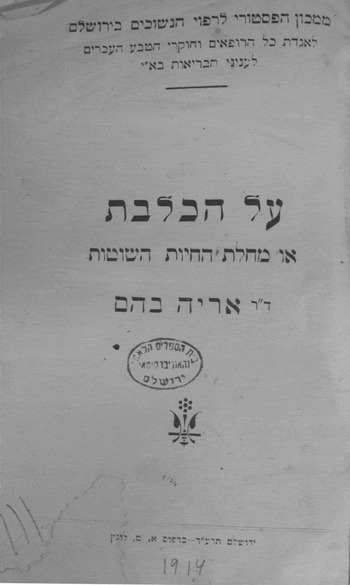
Another important aspect of Böhm's work during the war was the popularization of scientific medicine and the promotion of new ideas in bacteriology and hygiene. He published articles in the local Jewish press, also in Arabic and German, gave public lectures on infectious diseases, and published several booklets on rabies (1914) (see fig. 1), on the war, health and infectious diseases in Palestine (1915), on cholera (1916), and on typhoid fever. The popularization of science, especially in modern Hebrew, was perceived as crucial by Zionist political leaders and physicians. The practical aspects of the emerging bacteriological discipline helped attain this goal. In addition, Böhm was involved in clinical work for poor people in Jerusalem, together with other physicians from the Hebrew Medical Association. Thus, in contrast to the grave situation created by the war, these were actually the most fruitful years of the Pasteur Institute in Palestine. Böhm knew how to navigate among the different interests: to prepare vaccinations for the Turkish and German army that could pay for his services, while promoting his national agenda focusing on the local population and on the popularization of bacteriology and public health practices.
Front page of rabies booklet entitled, On Rabies, or the Disease of the Crazy Animals, published in Hebrew by Dr. Arieh Böhm in 1914. Reproduced with the kind permission of the Israeli Central Public Health Laboratories.

The Postwar Decline
When the Turks left Palestine they forced Böhm to shut down the institute so that it would not serve the British army. However, Böhm continued his activities in a private venue and it was reopened by the British Military Government soon after the war ended.Footnote 25 Yet Böhm's success was temporary. The arrival of new medical forces – the establishment of the British department of health and the American Zionist Medical Unit, later to become Hadassah Medical Organization, created a new reality regarding public health in Palestine.
The British Health Services for Palestine commenced its activities in December 1917 after the occupation of Jerusalem and Jaffa, when the military campaign in Palestine was still not completed. In July 1920, when the British Mandate civil administration took over from the military, public health was among the first concerns of the new rule. The focus was first and foremost on ridding Palestine of infectious diseases. The government embarked on installing new sewage and drainage systems, invested in swamp drainage projects and hygiene education campaigns, and established a school hygiene service. It also instituted the registration of all cases of infectious diseases and decreed several ordinances related to medical and public health matters, such as licensing various health-care professions, instituting pharmaceutical and food regulations, and strengthening quarantine measures (see Sufian Reference Sufian2007a; Borowy and Davidovitch Reference Borowy and Davidovitch2005). All these measures, however, were only partially implemented or limited in scope, while investment was restricted to relying on outside sources for the advancement of public health. One of them was Hadassah, which had previous experience in medical work in Palestine.
On December 1917, shortly after Jerusalem was conquered by British forces, Hadassah contacted the military authorities and requested that an American medical mission be allowed to enter Palestine. Permission was granted in March 1918, after the personal intervention of Justice Louis Brandeis. On 11 June 1918, the American Zionist Medical Unit (AZMU) arrived in Palestine with a staff of 44 physicians, nurses, dentists, pharmacists, administrators, equipped with medical instruments worth more than 25,000 dollars and a budget of 400,000 dollars for its activities. The arrival of the AZMU in Palestine was hailed by the Yishuv, and the local Jewish medical community. The hope for cooperation was not solely related to the medical aid given by the AZMU medical staff, but also for the possibilities of scientific cooperation with the local Jewish medical community, which comprised only a handful of university-educated physicians. The local medical community expected that Hadassah would raise scientific and professional standards, establish cooperation, and base itself on the local previous work and research when planning public health programs. The Workers’ General Sick Fund (Kupat Holim Clalit) together with the Hebrew Medical Organization created immediate ties with AZMU members to update them on the local health conditions and to create a mechanism of cooperation between all parties concerned. The local medical community submitted to the AZMU detailed epidemiological reports and arranged visits to various health facilities. The chances for cooperation looked promising, but tensions awakened relatively quickly.
Local scientific knowledge was either ignored or rejected by AZMU as outdated. Jewish physicians, such as Hillel Jaffe and Leo Böhm, who had arrived in Palestine before the War and conducted substantive laboratory and clinical research, were not taken seriously by the American organization. On the institutional and managerial level things were even worse. The rising Workers’ Sick Fund, which was only in its initial stages of development, was sharply criticized by Dr. Isaac Max Rubinow (1875–1936), the medical director of AZMU. He thought that Hadassah should control all the medical work among the Jewish community and that having a separate health organization such as the Sick Fund for the Jewish workers, was unnecessary and a waste of money and resources.
Rubinow, originally from Russia, practiced medicine among poor immigrants in the Lower East Side of New York City. This practice drew him to specialize in social insurance and he soon became America's leading authority in the field.Footnote 26 In 1913 his attempt to promote health insurance legislation together with the American Medical Association (AMA) failed. This failure was probably the main impetus for Rubinow to join the AZMU as its medical director. Thus, the opportunity to promote his “social medicine” ideas in a newly established society could serve as a bold experiment and foundation for a healthy medical system. Yet Rubinow – not familiar with the political context or knowing Hebrew – was considered an outsider by the local Zionist establishment (medical and non-medical). This gap created ongoing tensions and insurmountable conflicts that finally directed the Workers’ Sick Fund to develop its own medical services and hospitals. Although Rubinow resigned in 1922 and returned to the United-States, the tensions between Hadassah and the Workers’ Sick Fund continued throughout the 1920s.
Böhm also had hopes for cooperation with Hadassah. As described earlier, after the closure of the International office, Böhm's institute operated as a private entity. As its economic situation was still shaky, he hoped to secure resources through the support of Zionist organizations such as Hadassah. Yet relatively early, he discovered that Rubinow and Hadassah did not include him and his institute in their plans. Following some initial negotiations, Böhm realized that Hadassah would be happy to buy the institute, with its instruments and knowledge of vaccine production, but definitely not continue its status as a private facility supported by public money. Moreover, Hadassah considered Böhm incapable of leading such an institute. They criticized his reports, especially the budgetary part, as amateur and inadequate. Later, Hadassah was to criticize also the scientific mode of Pasteur's operation. The main criticism came from Prof. Israel Kligler, who was recruited in 1921 from the Rockefeller Foundation to establish a bacteriological laboratory with Hadassah as part of a plan to establish the Hebrew University followed by a medical school.Footnote 27 Kligler became a very powerful figure, not only in the medical and public health community, but also within the international scientific community at large. He was a world renowned researcher, publishing articles and reports on public health issues such as malaria and typhus and was also involved in the production of vaccines and laboratory tests, turning his scientific investigation into very practical means for the colonization of Palestine. He worked closely with the Mandatory Health Department as well as with the League of Nations on public health issues.Footnote 28
Kligler disregarded Böhm's scientific and managerial abilities. He disdained his continual laments to get funding for his private institute from public money. According to Böhm, the institute served national Zionist ends, having the historical virtue of having been established before the war, and having continued to operate during hardship, promoting the public health both of Jews and Arabs. Though he himself was an ardent Zionist, Kligler was not appreciative of such arguments. Coming from the United States and connected to new centers of science, for him, Böhm was a remnant of an outdated scientific regime: Böhm's scientific methods of vaccine production and tests were outdated and he did not publish significant scientific literature.Footnote 29
Böhm's failure to produce efficient smallpox vaccinations during the smallpox outbreak in Palestine in 1921 was proof for Kligler of Böhm's irrelevance to the current medical and public health scientific community. In December 1921, in the Arab village of Duwaimeh near Hebron, an epidemic of smallpox broke out following the variolation of 300 children by the local healer (Davidovitch and Greenberg Reference Davidovitch and Greenberg2007). The smallpox outbreak required a response from public health officials. The British Health Department wanted to initiate an immediate vaccination campaign and ordered smallpox vaccinations from Böhm's institute, then the only local producer. However “the vaccination lymph proved quite unsatisfactory” (MacQueen Reference MacQueen1926, 212–15). Only 172 out of 2,754 vaccinations showed positive results, which meant leaving a scar on the body.Footnote 30 After the poor results of Böhm's vaccines, fresh lymph was obtained from Egypt with a much better outcome. This event had grave consequences for the Pasteur institute. Moreover, it served as a catalyst for establishing the central public health laboratories by the British administration in 1925. The British Health Department also refused to continue to buy vaccines from the institute, which included not only smallpox vaccines, but also rabies vaccines, the original and main product of the laboratory. Officially, the reason mentioned for discontinuing buying vaccine products was not the nature of the vaccine that the Pasteur institute produced, but rather the payment Böhm demanded for it from those who could pay. Thus, according to the British Department of Health, vaccinations were a product to be delivered by the authorities free of charge as part of their responsibilities for disease prevention and public health. As Böhm planned to open vaccination stations where people could be charged for vaccinations, this was perceived as unacceptable.
However, Böhm's marginalization was not only in the realm of the scientific laboratory of medical actors such as Hadassah or the British medical department who refused to cooperate with his laboratory activities, but he was also marginalized as a public medical figure involved in medical policy making.Footnote 31 In 1922 during the British Mandate, the Zionist organization established the Health Committee (Va'ad B'riut) to coordinate the various Zionist medical bodies in order to prevent parallel and redundant health activities. Böhm was initially one of its members, representing the medical community that had been operating before the War. Soon Böhm was no longer included in the committee, and this partly symbolized his downfall. In a report published in 1928 written by outstanding public health figures such as M. J. Rosenau, Professor of Public Health at Harvard University, and Charles F. Wilinsky, Deputy Commissioner of Health of Boston, to survey the agriculture, labor, and public health conditions in Palestine, the Pasteur institute was only briefly mentioned and was not seen as an important medical institution (see Reports of the Experts, Joint Palestine Survey Commission, Boston, Massachusetts, 1928). Their recommendation that “the Hadassah Medical Organization constitute itself as the Department of Health of the Zionist Executive” was never accepted, but showed the centrality of Hadassah in the medical field and the shift toward American ideals of science (ibid., 670).
Böhm himself never gave up on his institute. A relentless writer of letters, he appealed to a variety of potential supporters who presented the Pasteur institute as a central institution for the Zionist endeavor, and argued for its historical rights. Böhm's attempts to gain international support were not only for financial support, but also for scientific updates. In September 1926 he wrote to Calmette and asked for his help in vaccine production “in order to comply with Paris standards.”Footnote 32 He managed to receive $5,000 from the Society for the Preservation of the Health of the Jewish Population (OZE)Footnote 33 to establish “the League of the Friends of Palestine Pasteur Institute,” which included Prof. Calmette then the current director of the Pasteur Institute in Paris, Albert Einstein, Herbert Samuel, Chaim Weizmann, and others. In 1931, this circle requested annual support of $15,000 from the Rockefeller Foundation arguing that “the Pasteur Institute solved two important problems of public health preservation, namely: correct prophylaxy [sic] of small-pox, and prevention of hydrophobia, two diseases that until then were the scourge of this country.” But though Böhm succeeded in mobilizing some impressive international support, in the end nothing materialized into substantial and sustainable financial support.
In September 1931, the Workers’ General Sick Fund, which was using the institute's laboratory services, decided that “both public and financial reasons do not allow forcing the physicians of the Sick Fund to use the Pasteur institute service while there is a possibility to receive this service from the government for free and in a way that does not hurt at all the national-social essence of the Sick Fund” (A Meeting between the Workers’ Union, General Sick Fund, and Friends of the Pasteur Institute, 16/1/1932, 1). Thus, for the General Sick Fund one reason to use government laboratories was financial, but another reason was to force the government to take responsibility for as many medical activities as possible for the benefit of the Jewish population, who were paying taxes. The protocol of the meeting between the Histadrut (General Federation of Laborers in the Land of Eretz Israel), the General Sick Fund, and the “Friends of Pasteur Institute” to discuss this change of policy on 16 January 1932, crystallized the main problems of the institute. The Histadrut and the Sick Fund argued that since the institute was a private facility, these public Jewish bodies were not obliged to support it.
In response, the Friends of Pasteur Institute explained that it became private because it did not have a choice after the withdrawal of public support during the War. However, since its ends were public, if it gained public moral and financial support, it could become a public facility again (ibid.). Moreover, handing it to the Mandatory government would be a mistake, they argued. Friends of the Institute brought up the original Pasteur institute in Paris as an example of an institute that was not in the hands of the government yet gained advantage from its independent status. They claimed that the British government constantly tried to liquidate the institute and even defamed it abroad. Another issue raised by the participants of the meeting was the scientific quality of the institute's work and its relevance. Böhm's laboratory used the Pasteur method to produce vaccines in contrast to newer methods used by the Mandatory government. Hillel Yaffe argued that experience showed that the Pasteur method was at least equivalent to the new method, and therefore, many of their patients preferred to get Böhm's vaccination and were even willing to pay for it. According to Yaffe's calculations, the collaboration of the Sick Fund with Pasteur would cost one cent (grush) per person per year: “I do not imagine that the workers who call the bourgeoisie, who use foreign labor [i.e. Arab labor] bad names, would not be ashamed not to use the Hebrew Pasteur Institute because of one cent” (ibid., 2).Footnote 34 Another grudge was directed against Hadassah. “When Hadassah came it wanted to swallow everything,” accused Avraham Benyamini. They closed down the health station, and Böhm's institute remained the only operating part of it. Yosef Meir, head of the General Sick Fund, held a different opinion: he thought that politically, “we need to take over the government laboratory.” Not to use its service because Heron, the director of the Mandatory Health Department was considered an anti-Semite by the Jewish bodies in the country, was not a sufficient reason for Meir. Using the services of the government laboratory would enable hiring Jewish clerks, who would gradually take over the facility (ibid., 3). Meir concluded that if the Pasteur method is better than the one of the government, the Sick Fund shall pay for it. But this has first to be proven (ibid., 5).
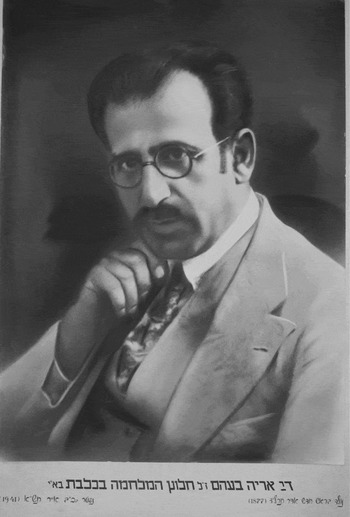
In his efforts to keep the institute open and survive economically, Böhm tried to expand his activity into other scientific directions and geographic areas. One such direction was a collaboration with Zionist agricultural agencies related to veterinary tests, vaccinations, and serum therapies. Other initiatives were even international – at the Central Zionist Archives (CZA), Böhm's correspondence contained a series of applications to various bodies all over the world, usually with no practical follow up.Footnote 35 In the local arena, Böhm tried to open various laboratory branches outside Jerusalem, in Tel Aviv and Petach Tikva, to offer rabies vaccinations in cases of exposure and other services such as smallpox vaccines, various serums, and laboratory tests. Very little of his efforts materialized and the Pasteur institute continued to operate in constant deficit until Böhm died in 1941. After his death, his wife and daughter donated the laboratory materials to the municipal Tel Aviv Hadassah hospital. The plaque memorializing the donation disappeared when the hospital closed and was amalgamated into the Tel Aviv Ichilov municipal medical complex. Another tangible memory still in place is Böhm's portrait, originally placed at the British Mandate's Public Health Laboratory later to become the Israeli Central Public Health Laboratory, titled: Dr. Arye Böhm Pioneer of war against Rabies (1877–1941) (see fig. 2).
Portrait of Böhm, now placed at the Israeli Central Public Health Laboratory, entitled “Dr. Arieh Böhm, Pioneer of war against Rabies in the land of Israel.” Reproduced with the kind permission of the Israeli Central Public Health Laboratories.

Conclusion
The Pasteur Institute in Palestine should be viewed in the contexts of various levels of its operation. It should be understood within the broader development of the science of bacteriology and public health and its relation to colonialism; it should be seen in relation to the introduction of pharmaceuticals as products of the laboratory that could finally promise concrete cures; it should be considered as one aspect of the ongoing changes of public and private realms of government related to health, illness, and personal hygiene. Finally, the Pasteur Institute in Palestine should be seen within the context of Zionist aspirations and the Yishuv's use of science and public health to promote its ideology and practical aims.
Böhm never asked for a formal permit to affiliate his institute as part of the Pastorian network. Nevertheless, he received his formal initial training in Kharkov, where a Pasteur institute operated, and he perceived himself as a follower of the “Pastorian spirit” in Palestine, where he produced rabies vaccines according to the Pasteur method and promoted the idea of a private institute that functioned for the purpose of public health. However, Böhm was not reluctant to cooperate with German science and interests in the region to realize his ends. The fact that he was trained at the institute for tropical medicine in Hamburg and knew Mühlens helped him to navigate between the different players and approaches, at least as presented in the pre-World War I context. Finally, Böhm's institute was part of the Zionist appreciation of the importance of public health in “healing the land and nation.”Footnote 36 Böhm emphasized this aspect when promoting the importance of his institute within the Zionist plan.
Health in Palestine at the beginning of the twentieth century was characterized by its relation to the rising field of tropical medicine. Böhm's institute, as other similar institutes operating in the periphery, transmitted bacteriological knowledge from centers such as the Pasteur and Hamburg institutes into the local context of Palestine. As in other similar knowledge transmission this was not a simple technical implementation of science and techniques. It requires negotiating and modifying the technology to fit the local context. Operating just before and during the First World War, Böhm succeeded in adapting what he learned abroad to the scientific and political context of Palestine. He found a way between German as well as Zionist aspirations and succeeded in joining a coalition of interests that used public health not only for its medical needs but also for a broader political agenda even in the midst of conflict and tension. Despite his achievement of rabies and small pox production during the War, after the War, Böhm failed to adapt to the radical changes in the science of the laboratory, its management, and the introduction of new forces in the medical field in Palestine and new approaches to conducting science and promoting public health. The Hadassah Medical Organization brought different ideals of the laboratory: not a small enterprise anymore that could be operated in a semi-autonomous fashion, but a complex entity related to growing institutions such as the modern hospital and a bacteriological department in a research university. The other mode of operation was of a public health laboratory related to the state, offering its services for free, as part of its responsibility for the local inhabitants as expressed in the work of the British Health Department. For sure the fact that these services were offered for free was perceived as a better economical choice for the Zionist medical institutes, but this was not the whole picture. Even the second main Jewish medical organization at the time, the Workers’ Sick Fund acknowledged the importance of public health services that the British government was responsible for – supplying vaccinations and epidemiological services in case of infectious disease outbreaks. Though the Workers’ Sick Fund developed public health programs, especially outside the urban context, they still required that British authorities take responsibility in public health matters. Böhm also failed to keep pace with scientific advancements in vaccine production as expressed in the Duweimeh outbreak. Furthermore, Böhm did not publish scientific research in established medical journals.
On one hand Böhm's institute is a story of failure: a failure to adapt to new scientific ideals after the War, expressed in technical, managerial, and political changes. The introduction of American medical science by Hadassah clashed with the older Zionist physicians’ generation. The “American-Jewish” version of medicine and public health was multi-faceted. It promoted the American scientific ideals of how medical science should be produced and how practicing physicians and nurses should relate to the laboratory, the university, and the community; but at the same time, it was very interested in social medicine, a less prominent feature in the American medical scene. In those years, the United States was gradually becoming an important producer of medical knowledge and practice, including the role of “scientific medicine” in promoting public health in places such as the public schools or mother-and-child health centers. The strong belief in expert knowledge and scientific analysis of social problems, part the progressive era which lasted from the 1890s though the 1920s in the United States, had a strong influence also on how medicine and public health should be conducted. It also meant the adoption of American managerial ideals in the medical field: how to run a hospital, a clinic, or a public health laboratory. Böhm did not adapt to these ideals. His ideas on the right mix between private and public health were not accepted by Hadassah nor by the General Sick Fund, the major players in the health field at the time. Böhm's intentions in promoting a private institute were not capitalistic, which would appeal to pharmaceutical companies. He was more interested in setting up an autonomous institute with a legitimizing base derived from being a scientific institute that is not dependent on political decisions. At the same time, Böhm wanted to utilize the nation-building forces, knowing the strong importance the Zionist movement placed on both science and public health. As time moved on, crude national sentiments that were not supported by strong scientific foundations proved to be outdated.
This case should not be interpreted only as a failure. Böhm set the stage for future activities in public health and in popularizing bacteriology. His persistence from the beginning in using Hebrew in medical practice, and his introduction of rabies and smallpox vaccines to Palestine were crucial initiatives that were carried on by different forces later. Böhm's contribution was erased from collective memory as part of the takeover of leading health institutions during the British Mandate. Hadassah and the General Sick Fund took over the collective memory in traditional historical analyses of the period. These institutions also took over the change in medical science and public health practices. Hadassah and the General Sick Fund promoted a specific vision of public health embedded in the vision of social medicine where private enterprise in vaccine production as well as in other public health activities should be part not only of a strong public institution but also unrelated to the private market or private institutions such as the Pasteur institute. The understanding of the fuller picture of the history of public health in the context of the relation between science, public health, and Zionism demands the understanding of the place of the Pasteur Institute in Palestine as well as other repressed figures and organizations of the time.
Acknowledgments
We would like to thank Leo Corry and Tal Golan, editors of this special volume, for their support; Alexandre Métraux for his continuous encouragement and especially for connecting us with Maurice Cassier who referred us to important materials located at the Pasteur Institute Archives in Paris. Finally, many thanks to Zalman Greenberg for supplying invaluable materials, especially the illustrations included here, and his companionship.