Introduction
More than any other head and neck cancer, oropharyngeal squamous cell carcinoma (SCC) has undergone a significant paradigm shift in terms of aetiology, management and prognosis in recent years. Traditionally, the development of oropharyngeal SCC has been strongly linked to the intensity and duration of smoking and alcohol use.Reference Wyss, Hashibe, Chuang, Lee, Zhang and Yu1, Reference Bagnardi, Rota, Botteri, Tramacere, Islami and Fedirko2 However, effective public health interventions have led to a reduction in tobacco consumption, and a commensurate decline in the incidence of smoking- and alcohol-related oropharyngeal SCC. Despite this decline, the incidence of oropharyngeal SCC in the community has actually increased. This is thought to be related to the impact of human papilloma virus (HPV) on oropharyngeal SCC carcinogenesis.
The incidence of HPV in oropharyngeal SCC has risen from 16.3 per cent during the 1980s to 72.7 per cent in the 2000s.Reference Chaturvedi, Engels, Pfeiffer, Hernandez, Xiao and Kim3 Human papilloma virus related oropharyngeal SCC tends to affect younger Caucasian males, and predominately arises from the lingual and palatine tonsils.Reference Chaturvedi, Engels, Anderson and Gillison4–Reference Gillison and Lowy6 Human papilloma virus tumour status is a strong prognostic factor, with the presence of HPV significantly improving survival compared with HPV-negativity.Reference Chaturvedi, Engels, Pfeiffer, Hernandez, Xiao and Kim3, Reference Gillison and Lowy6
There have been many new advances in the treatment of oropharyngeal SCC in recent years, such as transoral robotic surgery and intensity-modulated radiotherapy (RT). However, there is insufficient consensus regarding optimal treatment.
Historically, open surgery via either a lingual release or mandibulotomy approach and tailored adjuvant therapy was the treatment of choice for most oropharyngeal SCC cases. The functional implications of this procedure on speech and swallowing, and findings from other head and neck sites, namely the larynx, led to enthusiasm for non-surgical therapy as the primary treatment modality in these patients.Reference Kao, Peters, Krishnan and Ooi7–Reference van der Molen, van Rossum, Burkhead, Smeele and Hilgers9
Radiotherapy or chemoradiotherapy subsequently became the primary treatment modalities in oropharyngeal SCC, emphasising organ preservation. Because of the compounding effects of chemotherapy on RT, however, patients may suffer poor functional outcomes, such as dysphagia, xerostomia, mucositis and pharyngeal strictures, even when the organ is anatomically preserved. Intensity-modulated RT was an advancement in this field, as it was able to decrease the toxic effects by sparing normal tissue, without compromising the therapeutic dose of radiation to the primary tumour, thus maintaining locoregional control.Reference Lohia, Rajapurkar, Nguyen, Sharma, Gillespie and Day10
Transoral robotic surgery for oropharyngeal SCC was first introduced in the literature in 2005, by Weinstein et al., with their supraglottic laryngectomy in a canine model.Reference Weinstein, O'Malley and Hockstein11 In 2006, O'Malley et al. reported successfully utilised transoral robotic surgery to treat base of tongue neoplasms in three human patients, with complete tumour resection and minimal complications.Reference O'Malley, Weinstein, Snyder and Hockstein12 The advantages of transoral robotic surgery for oropharyngeal SCC include: more accurate dissection and improved visualisation, with the ability to navigate and operate in a multiplanar fashion transorally. Additionally, dissection through non-involved tissues (such as in mandibulotomy) and lingual release were avoided, resulting in reduced short-term morbidity and better functional outcomes.Reference Duek, Billan, Amit and Gil13
Over recent years, the understanding of oropharyngeal SCC as a disease and its treatment modalities have dramatically progressed. Intensity-modulated RT and transoral robotic surgery protocols have been thoroughly investigated regarding survivability and tumour recurrence rates. However, there is still no consensus regarding the optimal treatment of oropharyngeal SCC. This paper aims to investigate patterns of recurrence in oropharyngeal SCC patients treated with either primary transoral surgery protocols or non-surgical protocols in a single institution.
Materials and methods
Study design
A retrospective review was performed of patients diagnosed with oropharyngeal SCC and treated with either primary transoral surgery and adjuvant therapy or primary non-surgical therapy at the Royal Adelaide Hospital, Australia, between January 2008 and December 2012. This study was approved by the Human Research Ethics Committee at the Royal Adelaide Hospital.
Patients were included if they had biopsy-proven oropharyngeal SCC, were treated with curative intent and had a minimum follow-up period of 24 months. Patients who had undergone previous surgery, patients with recurrent tumours or distant metastases, or those who had received treatment aimed at palliation alone were excluded.
Treatment details
All patients had a complete head and neck examination and underwent a radiological investigation before embarking on treatment. Panendoscopy and biopsy was performed in all cases, to confirm the diagnosis and obtain p16 status when not already available, and to determine suitability for transoral robotic surgical resection of the primary tumour.
All patients were discussed in a multidisciplinary meeting and a consensus decision was made regarding their treatment. The choice of management was based on clinical characteristics and patient preference. The most suitable treatment options, as decided by the multidisciplinary team, were then discussed with the patient. Human papilloma virus status did not play a role in treatment selection and no de-escalation of treatment occurred in this series.
All patients were treated in line with the recognised National Comprehensive Cancer Network guidelines. Patients in the surgical group were treated with en bloc resection of the primary malignancy site via a transoral approach, with appropriate unilateral or bilateral neck dissections. Decisions regarding adjuvant therapy were made based on the surgical pathology results.Reference Bernier, Domenge, Ozsahin, Matuszewska, Lefebvre and Greiner14–Reference Moncrieff, Sandilla, Clark, Clifford, Shannon and Gao16 Radiation oncologists determined the specifics for radiation therapy (dose, fractionation and target volumes). All patients underwent computed tomography scan simulation, with thermoplastic immobilisation of the head and neck in the supine position. Primary tumour and gross nodal disease were contoured based on clinical examination and imaging findings. The treatment period encompassed the transition at our institution from conventional RT to intensity-modulated RT.
Data acquisition
Clinicopathological data were entered into a computerised head and neck cancer database prospectively. Data collected for this study included: gender, age, smoking and alcohol history, p16 status, tumour–node–metastasis (TNM) staging, treatment modality, and disease status at the most recent follow up. Tumour staging was based on the TNM classification of the Union for International Cancer Control (7th edition).17 High-risk tobacco smoking was defined as greater than 10 pack-years.Reference Ang, Harris, Wheeler, Weber, Rosenthal and Nguyen-Tan18 High-risk alcohol consumption was defined as greater or equal to four standard drinks per day.19 Residual disease was defined as the persistence of malignancy up to six months after the completion of definitive therapy. Recurrent disease was defined as malignancy occurring at least six months after the end of definitive therapy. For quality control of the database data, the medical records of all patients were reviewed to ensure all patients’ demographic, clinical, radiological, pathological and treatment data were correct and up to date.
Statistical analyses
Statistical analysis was performed utilising SAS 9.3 software (SAS Institute, Cary, North Carolina, USA). Descriptive statistics by treatment group were performed using chi-square tests, Fisher's exact tests and an independent t-test.
The primary end points of this study were: local, regional or distant recurrences, and overall survival. Time to recurrence and overall survival was defined as the time from the completion of treatment to the confirmation of recurrence at the clinic review or date of death. The Cox proportional hazards model was used to investigate the difference in time to death between treatment groups, and then time to overall disease recurrence (local, regional, distant and combined), between treatment groups. Bivariate Cox proportional hazards regressions were performed with treatment group and each covariate in separate models. Two final multivariable Cox proportional hazards regression models were subsequently performed for time to death and time to overall recurrence between treatment group, age at diagnosis, tumour (T) stage and HPV, as all of these covariates, except HPV, had a p value of less than 0.1 on bivariate regression analysis. Kaplan–Meier curves and estimates of survival were calculated for time to death, and time to local, regional, distant and combined recurrence, by treatment group and HPV status.
Results
Patient demographics
The database yielded 122 patients with primary oropharyngeal SCC, of which 98 fulfilled the inclusion criteria. Twenty-four were excluded because of palliative intent treatment, salvage surgery or non-transoral surgery. Mean patient age at diagnosis in the primary surgery group was 56.6 years (standard deviation (SD) = 8.6), compared with a mean age in the primary non-surgical group of 58.6 years (SD = 10.4). The mean follow-up time was 36.8 months (SD = 15.3).
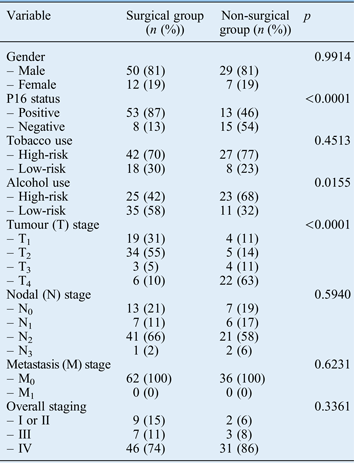
P16 status was used as a surrogate marker of HPV-positive disease in this patient cohort.Reference El-Naggar and Westra20 Prevalence of p16-positive disease in this study population was 74 per cent. Eighty-seven per cent of the surgical group was p16-positive, compared with 46 per cent of the non-surgical group. Nine patients (9.2 per cent) included in this study had unknown p16 status.
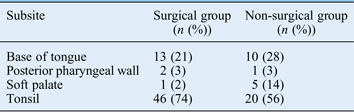
Table I demonstrates the patient demographics, with a breakdown of TNM staging. Table II shows the distribution of oropharyngeal SCC by subsite.
Patients' demographics

Distribution of oropharyngeal squamous cell carcinoma by subsite

Sixty-two patients underwent primary surgical therapy. Transoral robotic surgery was conducted on 47 patients (75.8 per cent), a transoral approach with a headlight and cautery was used on 6 patients (9.7 per cent), and transoral carbon dioxide laser resection was conducted on 9 patients (14.5 per cent). Neck dissections were performed on 60 patients (97 per cent), of which 54 dissections (87 per cent) were unilateral and 6 (10 per cent) were bilateral. Twenty-six surgical patients (41.9 per cent) received post-operative adjuvant RT and 30 surgical patients (48.4 per cent) received post-operative chemoradiotherapy. Indications for post-operative adjuvant therapy included adverse local factors (positive margins, 17 per cent) and advanced disease (positive neck nodes, 79 per cent, or evidence of extracapsular spread, 32.3 per cent).
Thirty-six patients underwent primary non-surgical treatment. Primary chemoradiotherapy was conducted on 31 patients (68.1 per cent) and the remaining 5 patients (13.9 per cent) were treated with RT alone. Radiotherapy treatment consisted of a median of 67 Gy (range, 60–70 Gy) delivered to the primary site. Thirty-two patients (89 per cent) underwent conventional fractionation, whereas seven patients (19.4 per cent) underwent intensity-modulated RT. Patients undergoing chemotherapy were treated with either cisplatin- or cetuximab-based regimes.
Survival
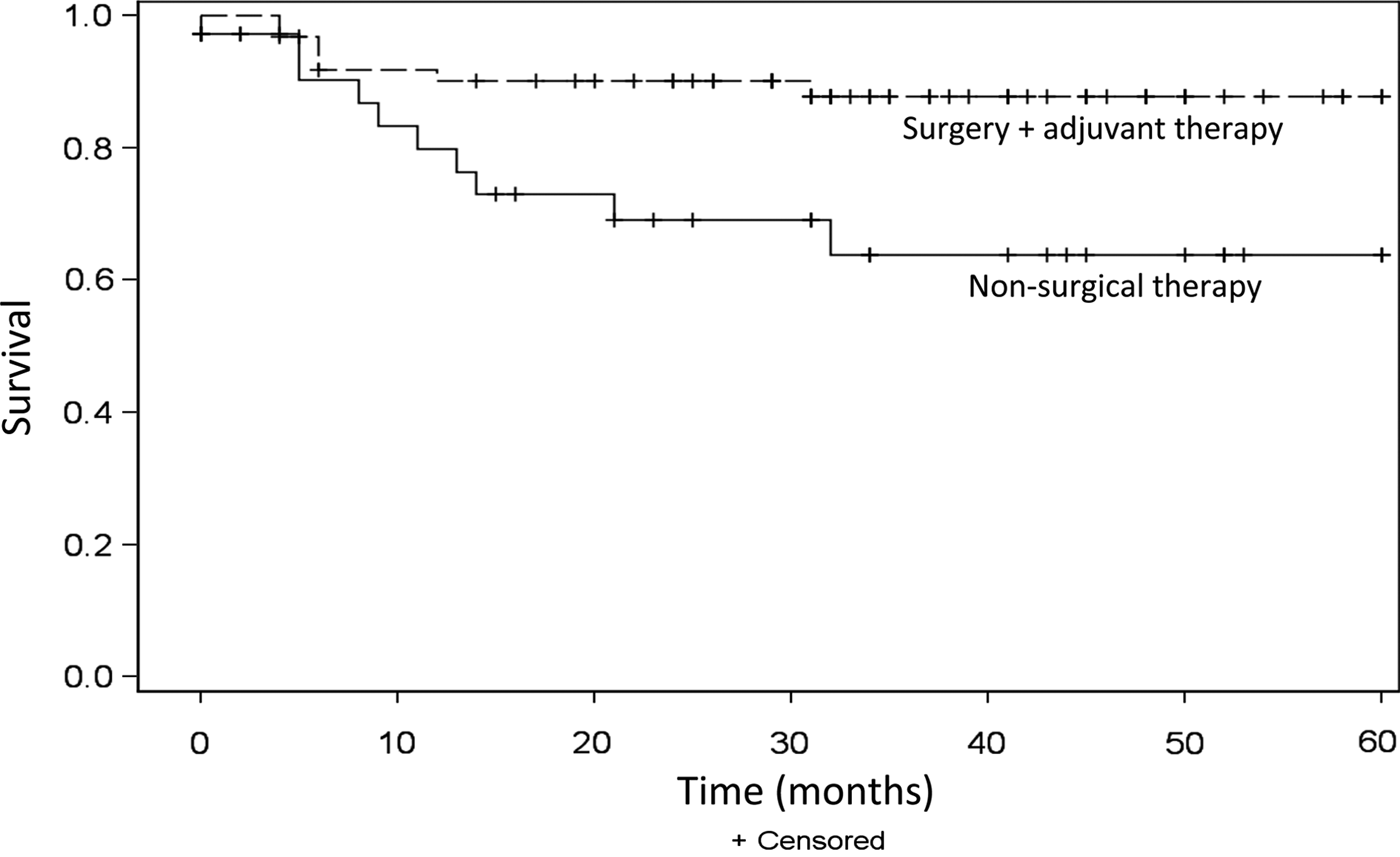
Five-year overall survival rates in the primary surgical and primary non-surgical groups were 78 per cent and 35 per cent, respectively (p = 0.0004) (Figure 1). Five-year disease-free survival rates in the primary surgical and primary non-surgical groups were 88 per cent and 64 per cent (p = 0.0122), respectively (Figure 2). The HPV-positive patients were associated with improved five-year overall survival of 83 per cent, compared with 38 per cent for HPV-negative patients (p < 0.0001). There was a statistically significant difference in time to death depending on recurrence (p < 0.0001) and HPV status (p = 0.0041), when controlling for treatment group. Furthermore, there was a statistically significant association between time to death and treatment group when controlling for T stage (p = 0.0202).
Kaplan–Meier curves comparing five-year overall survival between primary surgery and non-surgical therapy.

Kaplan–Meier curves comparing five-year disease-free survival between primary surgery and non-surgical therapy.

Recurrence
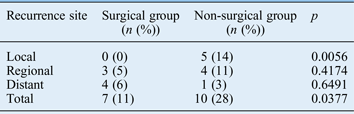
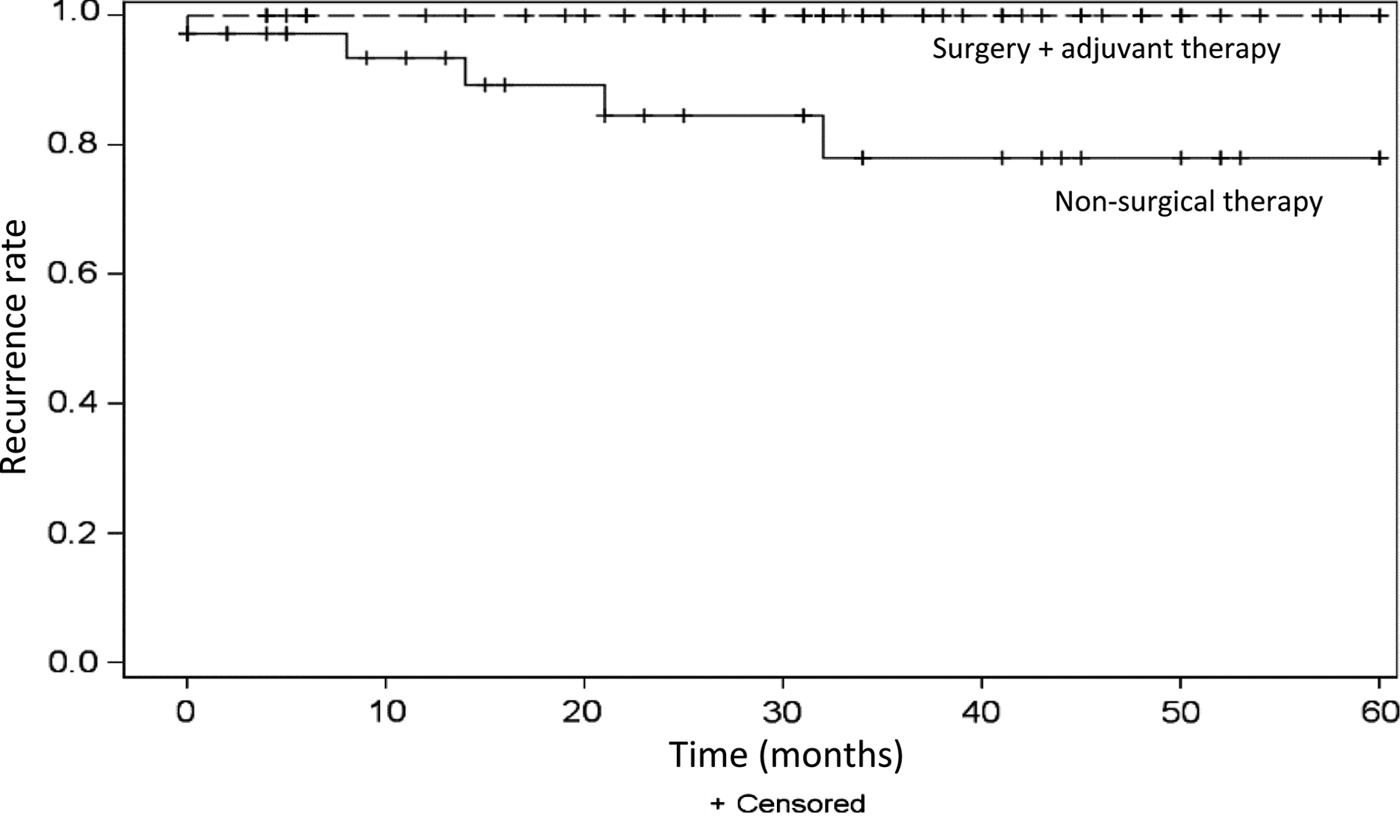
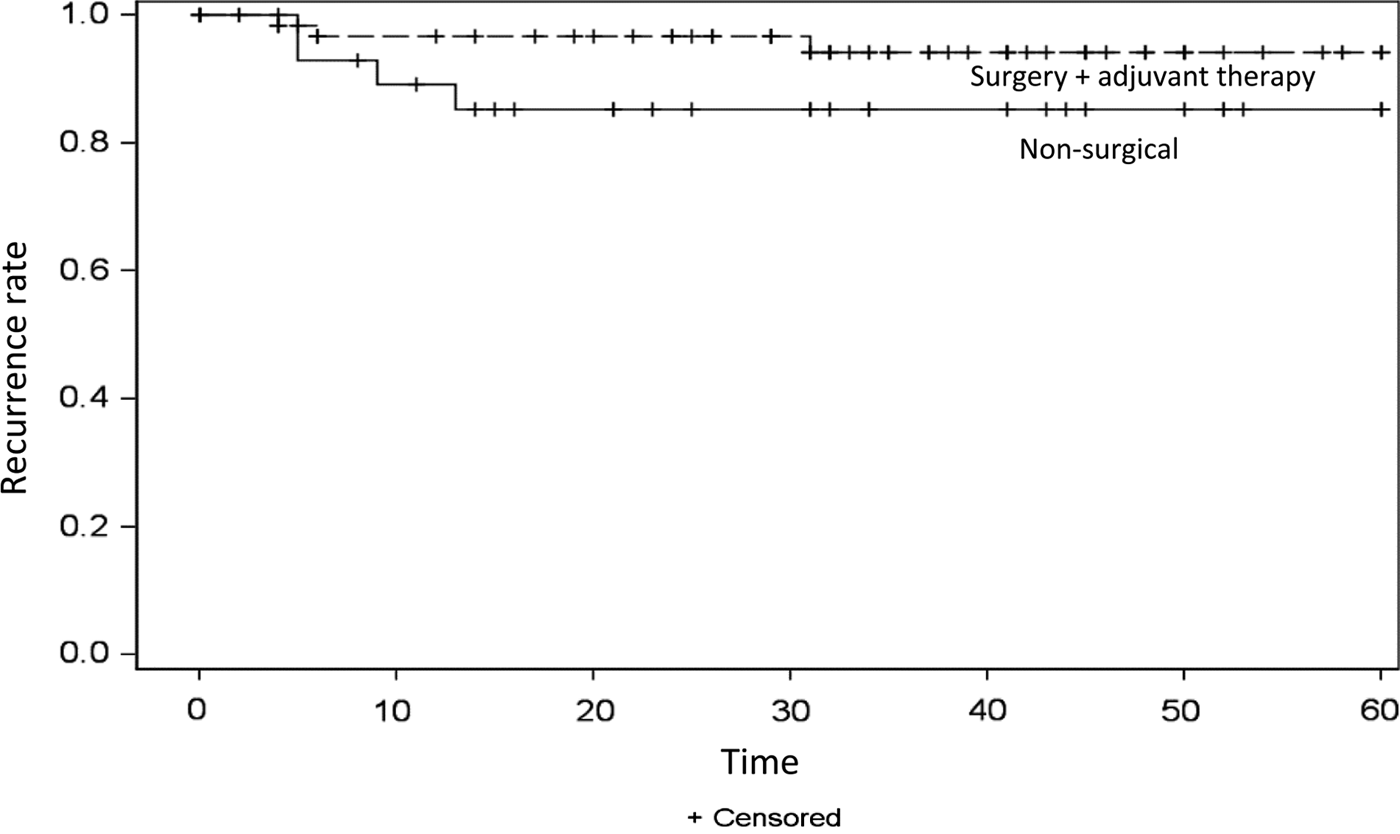
Amongst the primary surgery group, no patients suffered local recurrence, with regional recurrence occurring in three patients (5 per cent). Four patients (6 per cent) were found to have distant recurrences in this group. Amongst the primary chemoradiotherapy group, there were nine (25 per cent) locoregional recurrences, of which five (14 per cent) were local recurrences, and there was one (3 per cent) distant recurrence. The distribution of recurrences is summarised in Table III.
Distribution of recurrence

P16-positive patients were found to have no local recurrences, with four (4.1 per cent) regional and four (4.1 per cent) distant recurrences. In comparison, the p16-negative patients had two (2 per cent) local recurrences, with four (4.1 per cent) regional recurrences and one (1 per cent) distant recurrence. Two patients (2 per cent) with local recurrences in the non-surgical group had an unknown p16 status.
Residual disease was present in 5 patients (13.9 per cent) treated in the primary chemoradiotherapy group, of which all died within 2–17 months following treatment without further salvage surgery.
During the follow-up period, two patients presented with second primary malignancies, both located in the lung. One patient was p16-positive and was treated with tri-modality treatment; the other had unknown p16 status and was treated with chemoradiotherapy. Both of these patients were found to be high-risk smokers at pre-treatment and continued to smoke following treatment.
There was no statistically significant difference between time to overall recurrence and alcohol use (p = 0.2465), tobacco consumption (p = 0.5913) or TNM staging (tumour p = 0.4880, node p = 0.6870, metastasis p = 0.2608), when controlling for treatment group. A Cox proportional hazards model revealed a statistically significant difference in time to recurrence between the two treatment groups (p = 0.0184). Those patients treated without surgery had a hazard of recurrence 3.2 times that of patients treated with surgery (hazard ratio = 3.2, 95 per cent confidence interval = 1.2–8.4). However, a multivariable model showed no significant difference in time to recurrence between the two treatment groups, when controlling for T stage, age at diagnosis and HPV status (p = 0.1181; Table IV).
Multivariable Cox proportional hazards model of time to total recurrence

CI = confidence interval; HPV = human papilloma virus
Fisher's exact tests for treatment group versus local, regional, distant and total recurrence sites demonstrated a significant difference for local recurrence (p = 0.0056) and total recurrence (p = 0.0377) only (Table III).
Kaplan–Meier curves comparing local and regional recurrence between primary surgery plus adjuvant therapy and non-surgical therapy groups are shown in Figures 3 and 4 respectively.
Kaplan–Meier curves comparing local recurrence between primary surgery plus adjuvant therapy and non-surgical therapy.

Kaplan–Meier curves comparing regional recurrence between primary surgery plus adjuvant therapy and primary non-surgical therapy.

Discussion
In this retrospective review, data were prospectively collected from 98 patients with varying stages of oropharyngeal SCC, treated with either primary transoral surgery with adjuvant therapy or non-surgical therapy, at a single institution.
This study demonstrated decreased rates of overall recurrence with primary surgery compared with non-surgical treatment, predominantly because of the absence of local recurrences in the surgical group compared with 14 per cent in the primary non-surgical group. This difference was statistically significant (p = 0.0056). This finding is likely a result of a larger portion of patients in the non-surgical group having T3 and T4 disease (74 vs 5 per cent), and a higher proportion of HPV-related tumours in the surgical group (87 vs 46 per cent). Additionally, regression analysis controlling for T stage and HPV status demonstrated that treatment group was not a significant factor. These findings are consistent with a study by Diaz-Molina et al., which found that the majority of recurrences in the chemoradiotherapy group were local (28 per cent).Reference Diaz-Molina, Rodrigo, Alvarez-Marcos, Blay, de la Rua and Estrada21 Regional recurrence in the surgical group was also better than in the non-surgical group, but this difference was not significant.
There is much debate regarding the optimal treatment for oropharyngeal SCC; however, in many cases, treatment modality often depends on institution expertise. This time period saw the development of a transoral robotic surgery programme at the Royal Adelaide Hospital, the first in Australia. As expertise was built with increasing case numbers, confidence in transoral surgical success saw favourable tonsil cancers (early stage, with no tongue base involvement) approached transorally, with either the laser or monopolar diathermy.
During the study period, there was also a transition from conventional RT to intensity-modulated RT. Although intensity-modulated RT may have a benefit when compared to conventional RT in terms of functional outcomes, current literature has demonstrated that conventional RT has locoregional control and disease-free survival rates comparable to those of intensity-modulated RT.Reference Lohia, Rajapurkar, Nguyen, Sharma, Gillespie and Day10 The overall survival rate in the non-surgical group was found to be 36 per cent, with statistically significant associations with recurrences and HPV status. Typically, early T stage disease patients were recruited for transoral robotic surgery protocols. Higher T stage disease was typically associated with non-HPV disease, smoking, and older patients with associated co-morbidities. Such patients generally fare worst oncologically. Current literature shows that overall survival rates range from 33 to 84 per cent for non-surgical treatments.Reference Lohia, Rajapurkar, Nguyen, Sharma, Gillespie and Day10, Reference Diaz-Molina, Rodrigo, Alvarez-Marcos, Blay, de la Rua and Estrada21, Reference Garden, Dong, Morrison, Stugis, Glisson and Frank22 The Royal Adelaide Hospital experience revealed a higher T stage, lower HPV aetiology and higher incidence of smokers in this group.
Five-year overall survival was found to be 78 per cent in the surgical group, with time to death being statistically significant in terms of recurrence and HPV status. This result is comparable to the findings of a study by Moncrieff et al., which demonstrated a five-year disease-specific survival rate of 83 per cent in patients with T1 and T2 disease treated with primary surgery with adjuvant RT.Reference Moncrieff, Sandilla, Clark, Clifford, Shannon and Gao16 Diaz-Molina et al. found the overall five-year survival rate in the primary surgery group to be 38 per cent compared with 24 per cent in the primary RT group.Reference Diaz-Molina, Rodrigo, Alvarez-Marcos, Blay, de la Rua and Estrada21 Furthermore, their disease-specific survival rates for the primary surgery and primary non-surgical therapy groups were 70 per cent and 82 per cent for early stage (I–II) disease, and 47 per cent and 17 per cent for late stage (III–IV) disease, respectively.
The incidence of HPV-positive patients in this cohort was 74 per cent, which is consistent with findings in the current literature.Reference Chaturvedi, Engels, Pfeiffer, Hernandez, Xiao and Kim3, 23 Human papilloma virus associated disease has been reported to be located predominately in the tonsillar complex or base of the tongue, which is also consistent with our observations.Reference Chaturvedi, Engels, Anderson and Gillison4, Reference Gillison5, Reference Zengel, Assmann, Mollenhauer, Jung, Sotlar and Kirchner24 P16 status was shown to be a strong prognostic factor, with five-year overall survival rates of 83 per cent. These findings correlate well with current published literature.Reference Moncrieff, Sandilla, Clark, Clifford, Shannon and Gao16, Reference Diaz-Molina, Rodrigo, Alvarez-Marcos, Blay, de la Rua and Estrada21
• Despite reductions in tobacco consumption, oropharyngeal squamous cell carcinoma (SCC) incidence has increased
• This is likely due to the impact of human papilloma virus on oropharyngeal SCC carcinogenesis
• New advances in oropharyngeal SCC treatment include transoral robotic surgery and intensity-modulated radiotherapy
• Nevertheless, there is insufficient consensus regarding optimal treatment
• Five-year survival was 78 per cent in oropharyngeal SCC patients treated with primary transoral surgery and adjuvant therapy
• Overall recurrence was decreased with primary surgery compared with non-surgical treatment
Second primary malignancies are a significant cause of mortality in oropharyngeal SCC cancer survivors, with current rates ranging from 7 to 23 per cent.Reference Ang, Harris, Wheeler, Weber, Rosenthal and Nguyen-Tan18, Reference Baxi, Pinheiro, Patil, Pfister, Oeffinger and Elkin25, Reference Xu, Biron, Puttagunta and Seikaly26 Furthermore, second primary malignancies have been associated with heavy tobacco smoking and are less frequent amongst HPV-positive patients, with second primary malignancies occurring in 0.7–8 per cent of HPV-positive patients.Reference Ang, Harris, Wheeler, Weber, Rosenthal and Nguyen-Tan18, Reference Xu, Biron, Puttagunta and Seikaly26 Our study supports the current literature, as both patients found to have second primary malignancies also had a history of heavy tobacco consumption. These findings further support Slaughter's concept of ‘field cancerisation’, which states that dysplasia and pre-cancerous changes occur secondary to carcinogenic exposure, with tobacco and alcohol consumption increasing the risk of developing second primary malignancies.Reference Braakhuis, Tabor, Kummer, Leemans and Brakenhoff27, Reference Slaughter, Southwick and Smejkal28
This study has several strengths and limitations. The mean follow-up period was 36.8 months (range, 0–84 months), and thus may not capture the long-term prognosis of HPV-related malignancy. Secondly, our population size was small, thus decreasing the power of our study. Despite these limitations, our results correlate well with the current published literature in highlighting the fundamental role of HPV status in determining prognosis and demonstrating a potential survival benefit in oropharyngeal SCC patients treated with primary surgery and appropriate adjuvant therapy. The expectation is that these data will be crystallised when the results of current prospective case–control trials in this area are available. Further prospective trials comparing surgical and non-surgical treatment groups, whilst controlling for T stage and HPV status, are needed.
Conclusion
Our study demonstrates improved overall oncological control and survival of oropharyngeal SCC patients treated with primary transoral surgical and adjuvant therapy. This reflects higher p16 tumour status in this group and lower T stage. Patients with residual disease following non-surgical treatment fared poorly, with a 0 per cent five-year survival rate, irrespective of the modality of further treatment.