Introduction
The psychotic experiences that characterize schizophrenia spectrum disorders have previously been described in terms of a psychosis continuum, ranging from benign and/or transient experiences in non-clinical individuals on one end, to psychotic symptoms in patients on the other end (Johns & van Os, Reference Johns and Van Os2001; Larøi, Reference Larøi2012). Therefore, the meaning of psychotic experiences goes beyond psychopathology. Research has indeed shown that well-functioning individuals with frequent psychotic experiences share a wide range of risk factors with clinical patients with psychosis, including developmental and environmental factors (Kelleher & Cannon, Reference Kelleher and Cannon2011; Daalman et al. Reference Daalman, Diederen, Derks, van Lutterveld, Kahn and Sommer2012). In turn, presence of psychotic experiences is suggested to be an important risk marker for early psychopathology, as young people with hallucinatory and/or delusional experiences report higher rates of non-psychotic symptomatology, including symptoms of depression (Kelleher et al. Reference Kelleher, Keeley, Corcoran, Lynch, Fitzpatrick, Devlin, Molloy, Roddy, Clarke, Harley, Arseneault, Wasserman, Carli, Sarchiapone, Hoven, Wasserman and Cannon2012b ), suicide attempts (Sommer et al. Reference Sommer, Daalman, Rietkerk, Diederen, Bakker, Wijkstra and Boks2010a ) and higher levels of thought disorder (Sommer et al. Reference Sommer, Derwort, Daalman, de Weijer, Liddle and Boks2010b ). Moreover, well-functioning individuals with frequent non-clinical psychotic experiences also show vulnerability factors including high rates of childhood trauma, reduced brain volume and lower cognitive performance (Sommer et al. Reference Sommer, Daalman, Rietkerk, Diederen, Bakker, Wijkstra and Boks2010a ; Kelleher & Cannon, Reference Kelleher and Cannon2011; van Lutterveld et al. Reference Van Lutterveld, Van den Heuvel, Diederen, de Weijer, Begemann, Brouwer, Daalman, Blom, Kahn and Sommer2014; Begemann et al. Reference Begemann, Daalman, Heringa, Schutte and Sommer2016) similar to, but to a lesser degree than patients with a psychotic disorder.
Van Os and colleagues conducted a meta-analysis in 2009 to investigate the prevalence of psychotic symptoms in the general population, comprising hallucinations and delusions. They reported a median prevalence of 5.3%, which was mainly based on studies in adults. An update by Linscott & van Os (Reference Linscott and van Os2013) included additional studies on children and adolescents, showing a prevalence rate of 7.2%. Importantly, general psychotic experiences were found to be more common among younger individuals. Kelleher et al. (Reference Kelleher, Connor, Clarke, Devlin, Harley and Cannon2012a ) showed a higher median prevalence of 17% in children (9–12 years) compared with 7.5% in adolescents (13–18 years). A systematic review on the longitudinal course of general hallucinatory experiences during childhood and adolescence reported that discontinuation of hallucinatory experiences occurred in approximately 75% of the cases (person–year discontinuation 3% to 40.7% (Rubio et al. Reference Rubio, Sanjuán, Flórez-Salamanca and Cuesta2012). It has therefore been suggested that, while psychotic symptoms may be more commonly experienced during typical development as a child (van Os et al. Reference van Os, Linscott, Myin-Germeys, Delespaul and Krabbendam2009), these experiences become less frequent and increasingly indicative of pathology with advancing age (Kelleher et al. Reference Kelleher, Keeley, Corcoran, Lynch, Fitzpatrick, Devlin, Molloy, Roddy, Clarke, Harley, Arseneault, Wasserman, Carli, Sarchiapone, Hoven, Wasserman and Cannon2012b ).
Next to the prevalence of general psychotic experiences, many epidemiological studies have specifically focused on the occurrence of auditory hallucinations (AH). The number of studies evaluating the frequency of AH of young and adult populations has been rapidly accumulating during the past years. However, prevalence rates are found to differ greatly between studies (Beavan et al. Reference Beavan, Read and Cartwright2011; de Leede-Smith & Barkus, Reference De Leede-Smith and Barkus2013; Jardri et al. Reference Jardri, Bartels-Velthuis, Debbané, Jenner, Kelleher, Dauvilliers, Plazzi, Demeulemeester, David, Rapoport, Dobbelaere, Escher and Fernyhough2014). For example, Beavan et al. (Reference Beavan, Read and Cartwright2011) found rates varying between 0.6% and 84%, resulting in a median prevalence of 13.2% of AH in the general adult population. The authors reported that comparisons between studies were problematic given the different methodologies used. Several factors may be responsible for this high variance, such as the period over which presence of AH is assessed (last week, last month, last year, or lifetime), the type of questionnaire used (e.g. self-rated v. interview-based, phrasing of questions), and age of the population studied. Following the high prevalence of psychotic experiences during childhood and adolescence, and the transient course of AH, it can be hypothesized that the prevalence of AH decreases after childhood.
To provide more insight in the occurrence of AH in the general population, aim of the current meta-analysis is to estimate the prevalence of AH across the lifespan by combining population-based samples, from childhood to old age. As age may be an important factor, the prevalence rates are also separately evaluated for different developmental groups: children, adolescents, adults and elderly.
Methods
Search strategy
This quantitative review was conducted following the guidelines described in the Preferred Reporting Items for Systematic Reviews and Meta-Analyses (PRISMA) statement (www.prisma-statement.org/statement.htm; Moher et al. Reference Moher, Liberati, Tetzlaff and Altman2009). A systematic search for relevant studies published in English peer-reviewed journals was performed in Pubmed, EMBASE, PsychINFO. The search cut-off date was 31st January 2016. The following search terms were used: (prevalence OR prevalences OR prevalent OR epidemiology OR epidemiologic OR epidemiological) AND (‘voice hearing’ OR ‘hearing voices’ OR ‘voice hearer’ OR ‘AVH’ OR ‘psychotic symptom’ OR ‘psychotic symptoms’ OR ‘psychotic experience’ OR ‘psychotic experiences’ OR ‘hallucination’ OR ‘psychotic like’ OR ‘psychosis like’ OR ‘hallucinatory’ OR ‘hallucinative’ OR ‘hallucinatic’ OR ‘hallucinoid’). In addition, review articles and eligible studies were examined for cross-references.
Eligibility criteria
To be eligible, the articles had to meet the following criteria:
-
(1) Data were provided on the lifetime prevalence of auditory (verbal) hallucinations, or suggested that this information was available
-
(2) The included cohort was a general population sample
Study selection and data collection
Two reviewers (L.C. and E.T.) independently examined titles and abstracts of all retrieved articles to select potential eligible articles. If consensus was not reached, a third reviewer (K.M.) was consulted. For every eligible article, the corresponding author was contacted by email to ask for original or complementary data, so we were able to recalculate prevalence rates for the different developmental age groups when necessary. In case multiple publications were retrieved that described the same cohort, only the sample with largest overall sample size and/or original data was included. When an article reported data on different cohorts, each cohort was regarded as a separate study sample.
Several decisions were made to optimise uniformity between studies:
-
(1) As the majority of studies provided self-report data, this was preferred over interviewer-rated data when both were reported in the article.
-
(2) When prevalence rates were separately reported for ‘conscious’ v. sleep and/or drug related AH, the first option was used.
-
(3) The answering options ‘certainly’/‘definite’/‘yes’ were considered as positive for experiences of AH, while ‘possible’/‘probable’/‘maybe’ were considered as negative; this, in line with previous prevalence studies. Similarly, ‘sometimes’ and ‘often/always’ were both considered as positive for AH and therefore prevalence rates were summed when an article reported both options separately.
In five study samples, the authors designed their own questionnaire to evaluate the experience of AH (Verdoux et al. Reference Verdoux, van Os, Maurice-Tison, Gay, Salamon and Bourgeois1998; Yoshizimi et al. Reference Yoshizumi, Murase, Honjo, Kaneko and Murakami2004; Polanczyk et al. Reference Polanczyk, Moffitt, Arseneault, Cannon, Ambler, Keefe, Houts, Odgers and Caspi2010; de Loore et al. Reference De Loore, Gunther, Drukker, Feron, Sabbe, Deboutte, van Os and Myin-Germeys2011; Knobel & Lima, Reference Knobel and Lima2012). Four out of five screening questions were rather similar, specifically assessing AVH (Have you heard voices that other people cannot hear? Have you ever heard or are you currently hearing somebody's voice that no one around can hear? Have you ever heard voices other people cannot hear?), while the fifth evaluated AH in general (Do you have any noises in your ears or head?). These questionnaires were all grouped into one category termed ‘designed by author’.
Data analysis
First, our aim was to calculate a weighed mean lifetime prevalence rate of AH in the general population. Therefore, we derived sample size and prevalence rate for each study sample. Second, we evaluated the specific prevalence rates within four different developmental age groups: children (⩽12 years), adolescents (13–17 years), adults (18–60 years) and elderly (⩾60 years) (Kelleher et al. Reference Kelleher, Keeley, Corcoran, Lynch, Fitzpatrick, Devlin, Molloy, Roddy, Clarke, Harley, Arseneault, Wasserman, Carli, Sarchiapone, Hoven, Wasserman and Cannon2012b ). When the age range of an included cohort cut across the aforementioned developmental age ranges, original data were used to split the sample accordingly; sample size and prevalence rates were recalculated for each of the proposed age groups.
Studies were combined in meta-analysis to calculate a pooled estimate of general lifetime prevalence of AH in the general population. A random effects model was deemed most appropriate for this research area given the heterogeneity in applied methods (Borenstein et al. Reference Borenstein, Hedges, Higgins and Rothstein2009). In random-effects meta-analysis, the observed effect size is expected to vary to some extend from study to study. To determine whether the observed variation falls within the range that can be attributed to sampling error or whether the variation reflects differences in true effect sizes, we assessed heterogeneity using the Q-statistic and the I 2-statistic (Borenstein et al. Reference Borenstein, Hedges, Higgins and Rothstein2009) The Q-statistic tests the null hypothesis, stating that all studies in the analysis share a common effect size. If all studies shared the same effect size, the expected value of Q would be equal to the degrees of freedom (the number of studies minus 1). In addition, I 2 was calculated, which indicates the proportion of the observed variance reflecting differences in true effect sizes rather than sampling error. Moreover, it is important to investigate potential outlier studies, defined as standardized residual z-scores of effect sizes exceeding ± 1.96 (p < 0.05). All calculations were executed using Comprehensive Meta-Analysis version 2.0 (www.meta-analysis.com/) (Borenstein et al. Reference Borenstein, Hedges, Higgins and Rothstein2005, Reference Borenstein, Hedges, Higgins and Rothstein2009).
Results
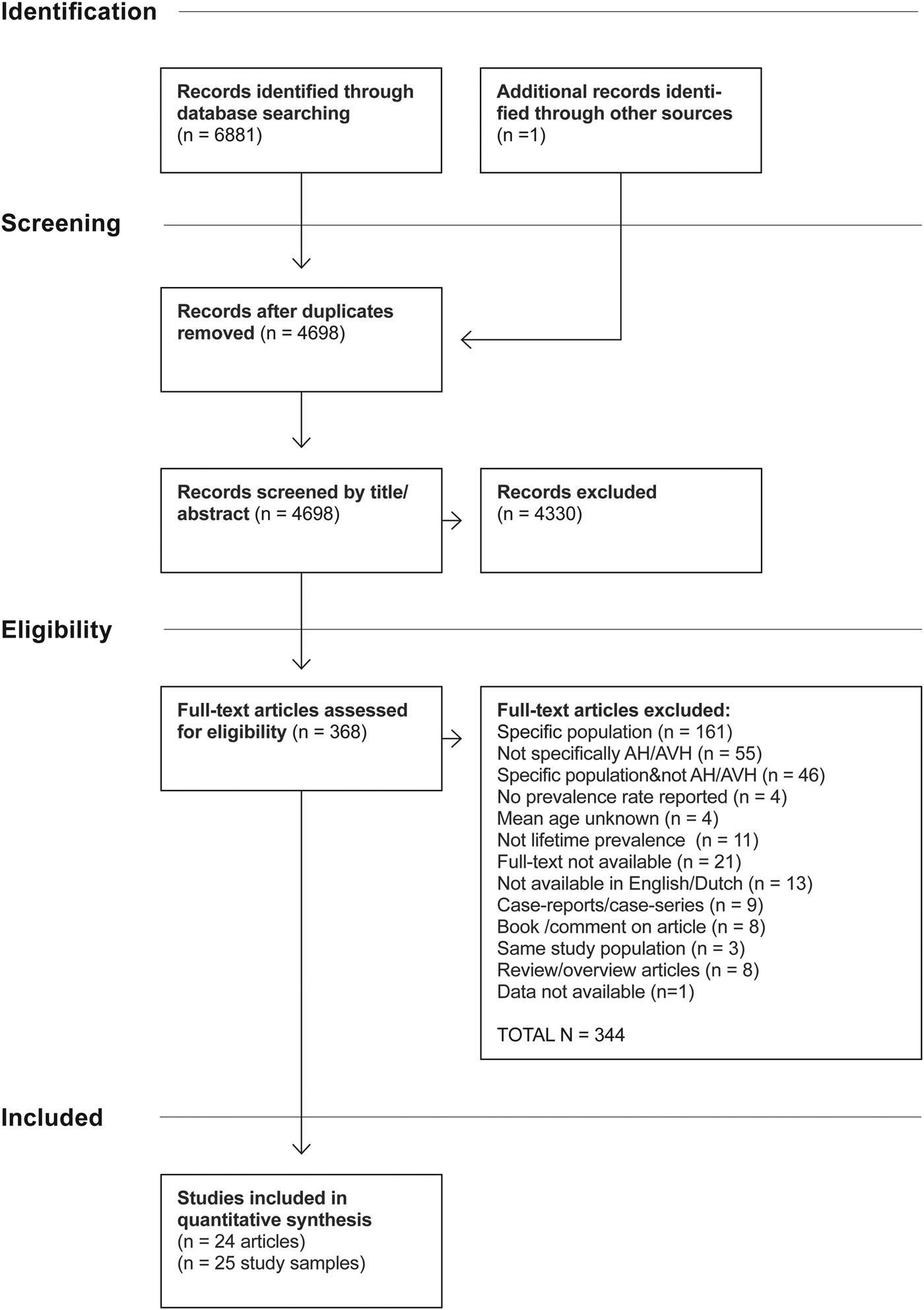
In total 27 articles investigating the prevalence of AH in the general population were retrieved from the literature search. Six of these eligible publications described overlapping cohorts of which three articles with the smallest sample size were excluded (Lataster et al. Reference Lataster, van Os, Drukker, Henquet, Feron, Gunther and Myin-Germeys2006; Shevlin et al. Reference Shevlin, Murphy, Read, Mallett, Adamson and Houston2011; Alsawy et al. Reference Alsawy, Wood, Taylor and Morrison2015). One article investigated two different study populations (Wigman et al. Reference Wigman, Vollebergh, Raaijmakers, Iedema, van Dorsselaer, Ormel, Verhulst and van Os2011), which were entered as separate study samples. Therefore, 25 study samples were included with a total number of 84 711 participants. See the PRISMA flowchart (Fig. 1) for the study selection process.
PRISMA flow diagram of the performed literature search.

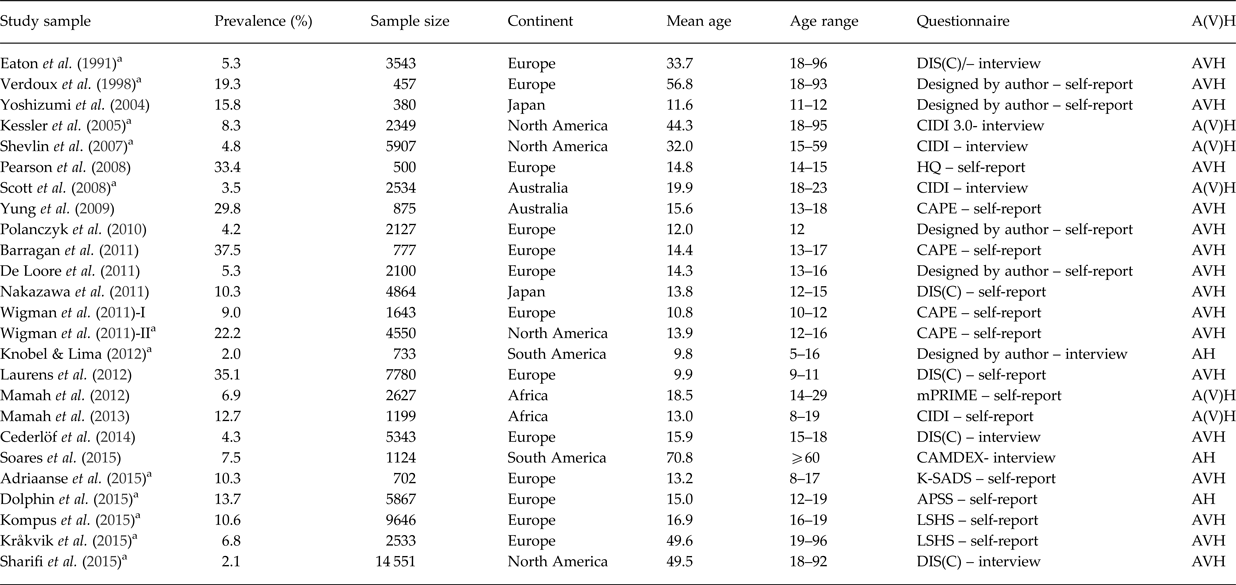
Table 1 shows an overview of all 25 included study samples with calculated lifetime prevalence rates. We received original data from 19 of the 25 included study samples. The age range of four study samples without original data exactly fell within the proposed age groups, while two study samples (Mamah et al. Reference Mamah, Mbwayo, Mutiso, Barch, Constantino, Nsofor, Khasakhala and Ndetei2012, Reference Mamah, Owoso, Mbwayo, Mutiso, Muriungi, Khasakhala, Barch and Ndetei2013) did not. These two samples were designated to one age category based on the mean age of the study sample.
Overview of the included studies and calculated lifetime prevalences

a Studies for which prevalence rates were recalculated based on original data.
A(V)H, Auditory (verbal) hallucinations; DIS(C), Diagnostic Interview Schedule (Child); CAPE, Community Assessment of Psychic Experiences; CIDI, Composite International Diagnostic Interview; K-SADS, Kiddie-Schedule for Affective Disorders and Schizophrenia; HQ, Hallucination Questionnaire; LSHS, Launay-Slade Hallucinations Scale; APSS, Adolescent Psychotic-Like Symptom Screener; CAMDEX, Cambridge Mental Disorders of the Elderly Examination.
General prevalence of AH
Including the prevalence rates of all 25 study samples, the pooled estimate of prevalence was 9.6%, with the 95% confidence interval [95% CI 6.7–13.6% (n = 84 711)]. The Q and I 2 statistic both showed heterogeneity, Q(24) = 6672.47, p < 0.001, I 2 = 99.64%, indicating that the true prevalence varies between studies. Indeed, the prevalence rates of the individual study samples ranged between 2% and 37.5%. No outliers were detected.
Developmental age categories: children, adolescents, adults and elderly
To evaluate whether prevalence rates differed between different age groups, the study samples were divided into four developmental age categories. This resulted in 36 study subsamples: nine subsamples evaluating AH in children 5–12 years; 13 adolescent subsamples of 13–17 years; nine subsamples evaluating adults aged 18–60 years and five subsamples on individuals aged ⩾60 years.
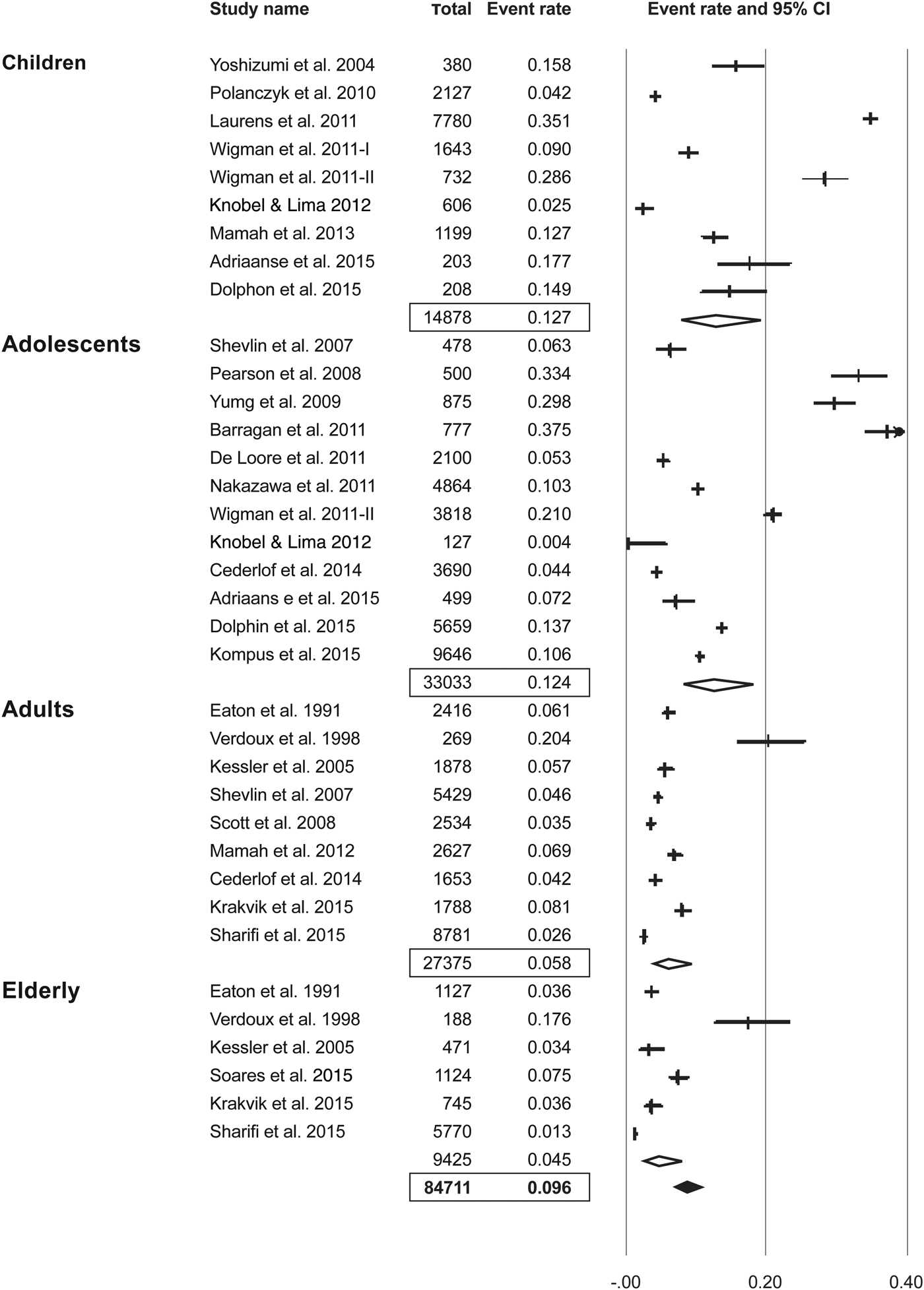
Prevalence of AH was 12.7% in children (n = 14 878; 95% CI 8.1–19.3%; Q(8) = 1142.91, p < 0.001; I 2 = 99.30%), 12.4% for adolescents (n = 33 033; 95% CI 8.3–18.1%; Q(12) = 1333.40, p < 0.001; I 2 = 99.18%), 5.8% for adults (n = 27 375; 95% CI 3.6–9.2%; Q(8) = 289.91, p < 0.001; I 2 = 97.24%) and 4.5% for the elderly (n = 9 425; 95% CI 2.5–8.1%; Q(5) = 204.73 p < 0.001; I 2 = 97.56) (see Fig. 2). The high Q- and I 2-values within each age subgroup analysis indicated that there was still evidence of dispersion in true prevalence rates among studies. The significant pooled Q-value [Q(32) = 2970.94; p < 0.001], evaluating whether this grouping (children v. adolescents v. adults v. elderly) could explain the variance in true effect sizes, also indicated that true variance remained even within the different developmental age subgroups.
Prevalence of A(V)H in the different developmental age groups.

When comparing the prevalence rates between the four age categories, prevalence was found to significantly vary with age [Q(3) = 13.66, p = 0.003]. Post-hoc analysis showed that the prevalence rate in both children (12.7%) and adolescents (12.4%) was significantly higher compared with the adult prevalence of 5.8% (z = 2.39; p = 0.017 and z = 2.44; p = 0.015, respectively). Children and adolescents also experienced more AH compared with the prevalence rate of 4.5% in the elderly (z = 2.76; p = 0.006 and z = 2.81; p = 0.005, respectively). The difference in prevalence in children v. adolescents was not significant (z = 0.08; p = 0.094), nor in adults v. elderly (z = 0.66; p = 0.512).
Discussion
Current meta-analysis included 25 study samples evaluating the prevalence of AH in the general population across the lifespan, with a total of 84 711 participants. We found a mean prevalence rate of 9.6% (95% CI 6.7–13.6%). When evaluating different age groups, the mean lifetime prevalence of AH was similar in children (12.7%) and adolescents (12.4%), but these two groups differed significantly from adults (5.8%) and elderly (4.5%).
Decreasing trend in lifetime prevalence
Our results suggest that AH are quite prevalent in children and adolescents, with more than 1 in every 10 individuals reporting these experiences. After adolescence, this prevalence rate decreases by half. When assessing lifetime prevalence numbers however, one would expect a general increasing trend with older age as a result of cumulative experiences over the years. Our data did not reflect such a trend. It could well be the case that lifetime prevalence estimates are biased downwards due to underreporting (McGrath et al. Reference McGrath, Saha, Al-Hamzawi, Alonso, Bromet, Bruffaerts, Caldas-de-Almeida, Chiu, de Jonge, Fayyad, Florescu, Gureje, Haro, Hu, Kovess-Masfety, Lepine, Lim, Mora, Navarro-Mateu, Ochoa, Sampson, Scott, Viana and Kessler2015), implicating the role of memory or recall bias. We speculate that AH at a younger age tend to be forgotten later in life, when infrequent and/or non-distressing. Indeed, AH are sporadic and simple in most cases as McGrath et al. (Reference McGrath, Saha, Al-Hamzawi, Alonso, Bromet, Bruffaerts, Caldas-de-Almeida, Chiu, de Jonge, Fayyad, Florescu, Gureje, Haro, Hu, Kovess-Masfety, Lepine, Lim, Mora, Navarro-Mateu, Ochoa, Sampson, Scott, Viana and Kessler2015) showed that 64% of the participants with psychotic experiences only had these once to five times in their lives. Regarding distress, while only 15% of young children report suffering (i.e. fear, distress and/or dysfunction) from AH (Bartels-Velthuis et al. Reference Bartels-Velthuis, Jenner, Van de Willige, van Os and Wiersma2010), this percentage increases with age, up to 70% in the elderly (Tien, Reference Tien1991).
It could also be that the common (and mostly transient) character of AH in childhood reflects typical development (van Os et al. Reference van Os, Linscott, Myin-Germeys, Delespaul and Krabbendam2009). The course of brain maturation starts during fetal development and continues into young adulthood (Toga et al. Reference Toga, Thompson and Sowell2006). Gray and white matter studies show that the language areas mature around puberty (11–13 years; Gogtay et al. Reference Gogtay, Giedd, Lusk, Hayashi, Greenstein, Vaituzis, Nugent, Herman, Clasen, Toga, Rapoport and Thompson2004). We hypothesize that immaturity of these areas might lead to a (transient) vulnerability for spontaneous, aberrant activity resulting in AH. The more advanced ‘executive’ functions, e.g. inhibition and source- and self-monitoring, mature later during late adolescence (Gogtay et al. Reference Gogtay, Giedd, Lusk, Hayashi, Greenstein, Vaituzis, Nugent, Herman, Clasen, Toga, Rapoport and Thompson2004), and thereby the increasing ability to accurately interpret stimuli and phenomena such as inner speech during adolescence. Accordingly, patients with a psychotic disorder but also healthy individuals with AH show reduced executive functioning (Aas et al. Reference Aas, Dazzan, Mondelli, Melle, Murray and Pariante2014; Begemann et al. Reference Begemann, Daalman, Heringa, Schutte and Sommer2016). While the common transient and ‘benign’ AH experiences in childhood (due to aberrant auditory stimuli or limited executive abilities) may decrease with age, the incidence of psychopathology-related AH is known to increase in adolescence (Kelleher et al. Reference Kelleher, Keeley, Corcoran, Lynch, Fitzpatrick, Devlin, Molloy, Roddy, Clarke, Harley, Arseneault, Wasserman, Carli, Sarchiapone, Hoven, Wasserman and Cannon2012b ; Schimmelmann et al. Reference Schimmelmann, Michel, Martz-Irngartinger, Linder and Schultze-Lutter2015), which could explain the relatively higher prevalence rates we found in both children and adolescents.
Methodological considerations
The Q- and I 2-values showed high heterogeneity within the mean lifetime prevalence estimate. While age was expected to be an explanatory factor, heterogeneity remained high within the different developmental age groups. This indicates that factors other than age are involved. One explanation could be the different questionnaires used in the separate studies. The 25 study samples used 11 different rating scales. When categorized by each of the different questionnaires, the mean prevalence ranged from 3.9% to 33.4%. Retrospectively, we quantitatively compared prevalence rates between scales but found that these differences did not reach significance [Q(10) = 8.850, p = 0.546], suggesting that type of questionnaire is not an explanatory factor per se. When qualitatively evaluating the different questions used to screen for AH, almost half of the studies used identical phrasing even though different questionnaires were used [namely the DIS(C), KSADS, APSS and four out of the five ‘designed by author’ questionnaires]. Moreover, the variety in definitions of AH does not seem to result in a specifically high or low prevalence. For example, a broad definition like ‘Do you have any noises in your ears or head’ as applied by Knobel & Lima (Reference Knobel and Lima2012) yielded one of the lowest prevalence rates (2.0%), while Pearson et al. (Reference Pearson, Smalley, Ainsworth, Cook, Boyle and Flury2008) asked for specific forms of AH and found one of the highest prevalence rates (33.4%). Importantly, even when studies did use the same questionnaire, prevalence estimates also showed large variety. For example, three studies used the DIS(C) in a young population – while Cederlöf et al. (Reference Cederlöf, Ostberg, Pettersson and Anckarsäter2014) found an interview-rated prevalence of 4.3%, self-reported prevalences were 10.3% and even 35.1% (Nakazawa et al. Reference Nakazawa, Imamura, Nishida, Iwanaga, Kinoshita, Okazaki and Ozawa2011; Laurens et al. Reference Laurens, Hobbs, Sunderland, Green and Mould2012). This can partly be due to the observation that although the DIS(C) and CIDI are designed as interviews, these were also applied as self-report questionnaires in some studies. Response rates could therefore be ‘confounded’ by the incapacity of distinguishing ‘true’ AH from other aberrant auditory perceptions, especially when using self-report questionnaires instead of interviews. However, self-report does not necessarily lead to higher estimates. A questionnaire such as the CAPE, which is solely used as self-report, revealed both relatively low estimates (9.0% for Wigman et al. Reference Wigman, Vollebergh, Raaijmakers, Iedema, van Dorsselaer, Ormel, Verhulst and van Os2011-I) as well as relatively high estimates (22.2% for Wigman et al. Reference Wigman, Vollebergh, Raaijmakers, Iedema, van Dorsselaer, Ormel, Verhulst and van Os2011-II, 29.8% for Yung et al. Reference Yung, Nelson, Baker, Buckby, Baksheev and Cosgrave2009 and 37.5% for Barragan et al. Reference Barragan, Laurens, Navarro and Obiols2011). This would suggest that neither type of questionnaire nor type of assessment (self-report v. interview) explains the heterogeneity. Other factors than type of questionnaire or type of assessment, for example the setting of testing and the introduction of the test, are more likely to be of influence (Beavan et al. Reference Beavan, Read and Cartwright2011). A systematic evaluation of these methodological factors was not possible in current meta-analysis, given the large variety of applied methods compared to the relatively low number of studies in each developmental age group.
Future directions and implications for research
Our findings underline previous statements about the relatively common character of AH in the general population and can help in de-stigmatizing and normalizing these experiences in both young, adult and elderly populations (Beavan et al. Reference Beavan, Read and Cartwright2011). Although there is abundant information on the prevalence of AH, only few studies provide longitudinal data, which is of great clinical relevance to AH experiences. Knowledge on which individuals with AH (eventually) warrant clinical care is needed to further develop prevention and early intervention strategies. Future studies should therefore include large follow-up datasets to allow a more detailed view on the course of AH with age and possible associated developmental risk and resilience factors.
Conclusion
The current meta-analysis shows that AH are quite common in the general population, with one in ten individuals reporting these experiences (mean prevalence 9.6%). Children (12.7%) and adolescents (12.4%) report significantly more AH compared with adults (5.8%) as well as elderly (4.5%). In order to support the development of prevention and intervention strategies, future large follow-up studies are needed to provide more details on the longitudinal course of AH and reveal concurrent risk and resilience factors.
Acknowledgements
We thank Ms. Laura Claus and Ms. Lisa Tijong for their efforts in performing the search and screening for eligible articles. Furthermore, we kindly thank all authors (and the support of NIDA grant DA026652 for the study of Sharifi and colleagues, 2015) who provided us with their original data or guided us to the freely available databases that they had used.
Declaration of Interest
None.