INTRODUCTION
Scorpaena porcus Linnaeus, 1758 is native to the eastern Atlantic Ocean, from the British Isles to the Azores and the Canary Islands, including Morocco, the Mediterranean Sea and the Black Sea (Harmelin, Reference Harmelin1987; Harmelin-Vivien et al., Reference Harmelin-Vivien, Kaim-Malka, Ledoyer and Jacob-Abraham1989). In the Black Sea and the north-western Mediterranean it is commonly found at depths between 10 and 30 m, and it rarely goes below 80–90 m (Bilgin & Çelik, Reference Bilgin and Çelik2009). It inhabits shallow rocky sea beds, concealed in crevices or under rocks, where its cryptic colouration enables it to catch and feed on prey (Demirhan & Can, Reference Demirhan and Can2009).
Most previous studies on this species have been carried out with fish collected in fishing grounds from Mediterranean areas (Gulf of Valencia: Morte et al., Reference Morte, Redon and Sanz-Brau2001; Gulf of Naples: Zupo & Stübing, Reference Zupo and Stübing2010), Adriatic Sea (Castriota et al., Reference Castriota, Falautano, Finoia, Consoli, Pedà, Esposito, Battaglia and Andaloro2012) and Black Sea (Başçïnar & Saǧlam, Reference Başçïnar and Saǧlam2009; Bilgin & Çelik, Reference Bilgin and Çelik2009; Demirhan & Can, Reference Demirhan and Can2009). On the Atlantic coast, specifically in the province of Cadiz, this species is mainly caught with bottom longlines.
It is well known that intertidal zones play an important role in life cycles of many commercial fish species (Wootton, Reference Wootton1992). In rocky intertidal shores of the Atlantic coast, S. porcus has been recognized to be the largest carnivorous resident fish (Compaire et al., Reference Compaire, Cabrera, Gómez-Cama and Soriguer2016). However, there is a lack of information on its feeding composition related to season, sex and size. Dietary composition essentially depends on the eating habits of each species and the availability of prey, but may also vary seasonally (Gibson, Reference Gibson1968, Reference Gibson1970, Reference Gibson1972; Zander & Hagemann, Reference Zander and Hagemann1989; Zander & Heymer, Reference Zander and Heymer1992). These analyses are necessary to define resource use, and assess intra- and interspecific interactions (Macpherson, Reference Macpherson1981) in order to estimate the degree of competition (if any), and in turn determine the trophic overlap between species within a community (Morte et al., Reference Morte, Redon and Sanz-Brau2001).
The objectives of this work are (1) to obtain detailed information about the diet of S. porcus according to season, sex and size, in order to (2) determine the trophic overlap and intraspecific competition of this species in rocky intertidal shores.
MATERIALS AND METHODS
Study area
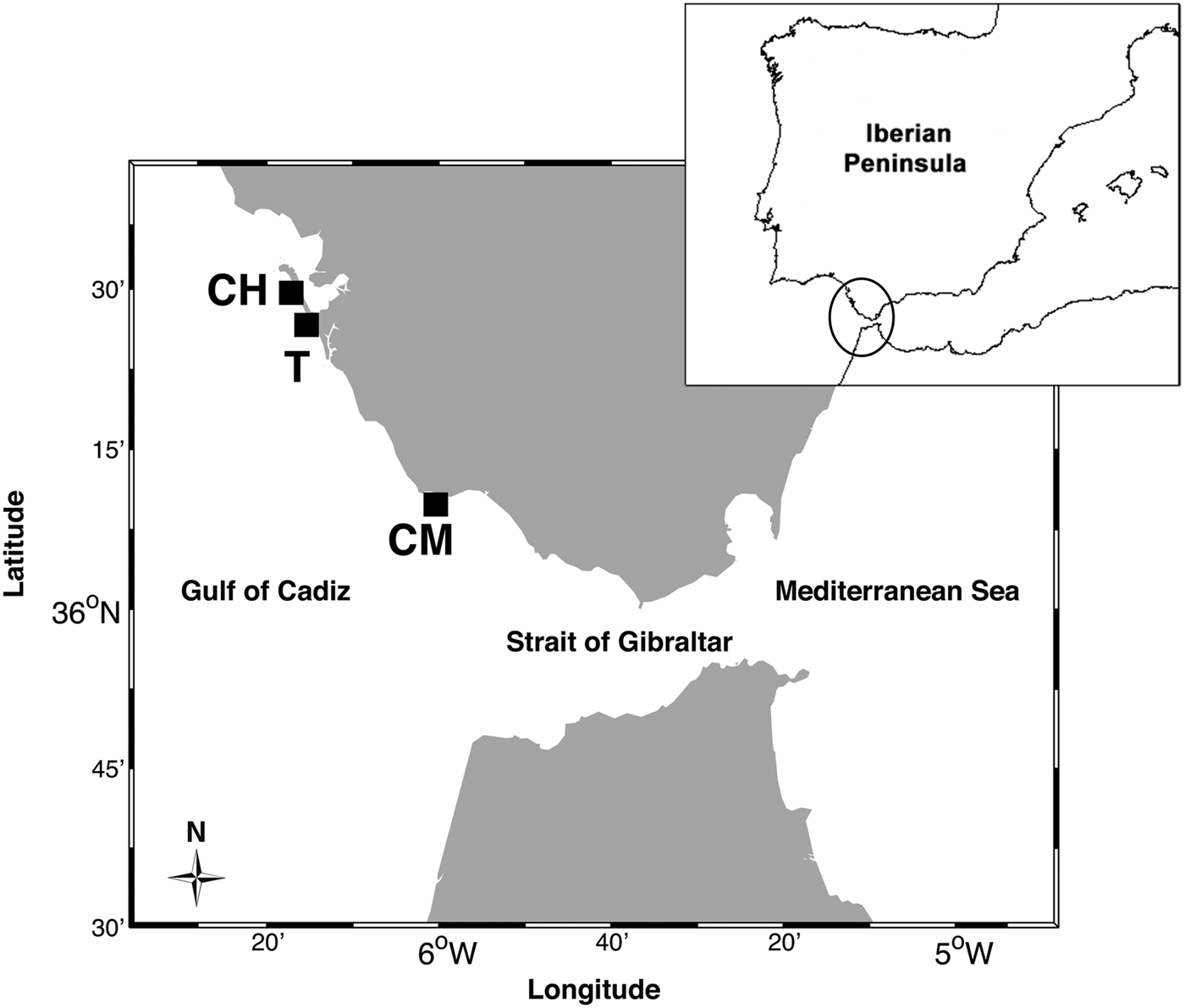
Fish were collected monthly from April 2008 to July 2010 in three areas of rocky intertidal zone in the Gulf of Cadiz. Caños de Meca (CM: 36°11′N 6°01′W), Torregorda (T: 36°26′N 6°14′W) and El Chato (CH: 36°28′N 6°15′W) (Figure 1). A total of 106 fish were caught during low spring tide in daytime, using natural clove essential oil as an anaesthetic at a concentration of 40 mg l−1 (Griffiths, Reference Griffiths2000; García-Gómez et al., Reference García-Gómez, de la Gándara and Raja2002). To reduce the loss of prey by regurgitation S. porcus were individually kept in sealed plastic bags immediately after collection.
Location of the study area: Gulf of Cadiz, south-west Iberian Peninsula. CH, El Chato; T, Torregorda; CM, Caños de Meca.

Due to the importance of habitat complexity and characteristics in the distribution of species (Faria & Almada, Reference Faria and Almada2001) each pool was measured (surface and depth). Pools are formed by abrasion through wave energy and currents which drag boulders over bedrock (Trenhaile, Reference Trenhaile1997). In general, despite different shapes, pools deepen from the edge towards the centre. Thus, pool volumetric size was determined by assuming that volume is approximated by a triangular prism. Physiographic features were recorded by visual census (presence or absence of sand, rock, boulders, sea urchins and algae coverage) and characterized in five categories. On the one hand, pools with a sandy bottom, with or without algae or boulders (SB), and on the other hand, pools with a rocky bottom. This last group was divided into pools with boulders (RC), with algae (RA), with sea urchins (RSU) and with boulders and algae (RBA).
Data analysis
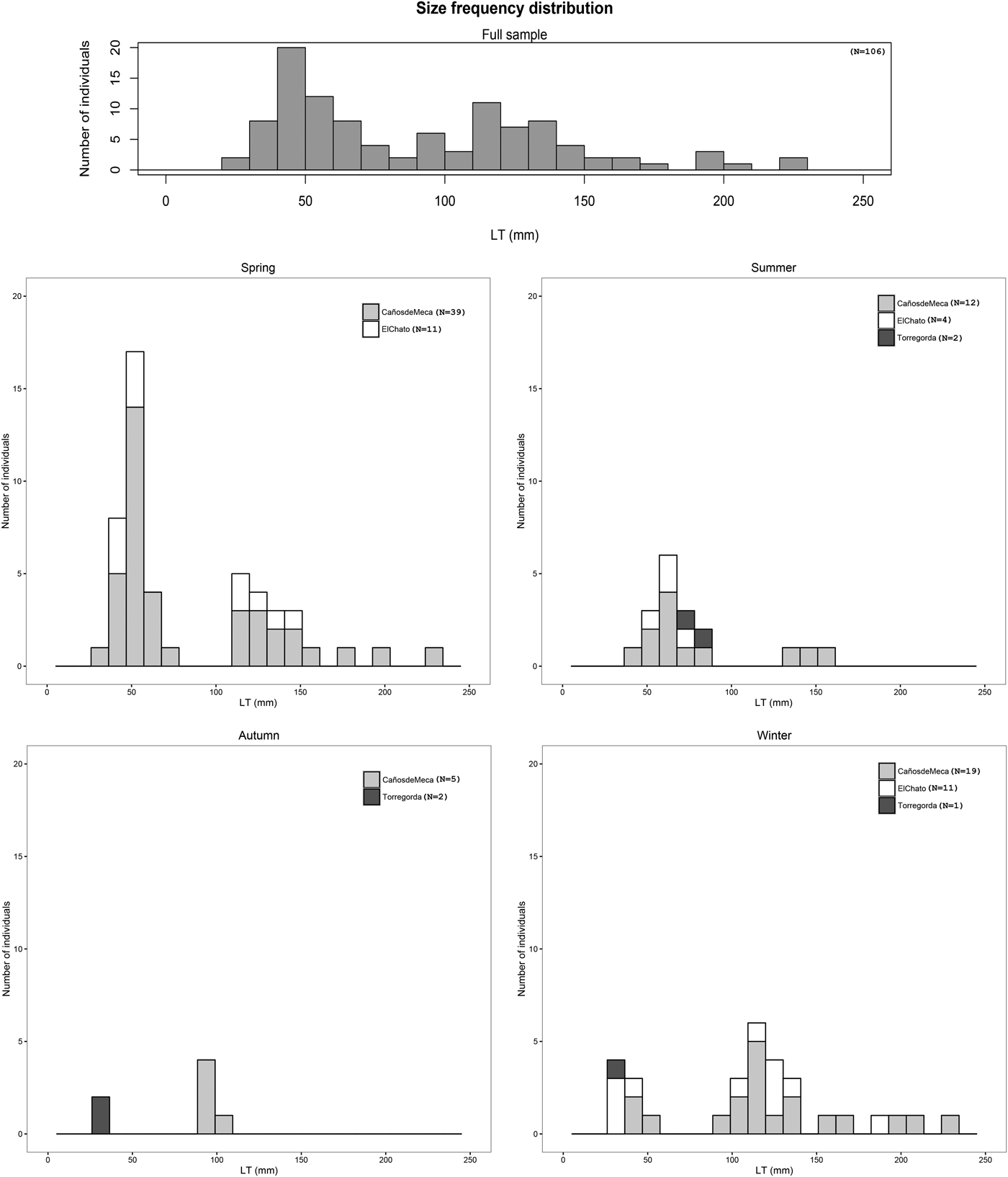
The total length (LT) of each fish was measured to the nearest millimetre. The sex was determined unequivocally by examination of the gonads using a stereomicroscope (Leica WILD M10). Fish without significant gonadal development were classified as indeterminate. The size distribution of a population is the result of the recruitment, growth, mortality and the errors made during sampling (Morales-Nin, Reference Morales-Nin1992). Generally, the different size classes of fishes clearly correspond to a cohort and these cohorts represent different age classes (Morales-Nin, Reference Morales-Nin1992). However, in our study, the criterion for selection of different size classes was their abundance and representativeness in the population, since there is no size selectivity associated with sampling with clove oil. Figure 2 shows the size frequency distribution based on the full sample, and per season for each location. The size classes established to assess changes in diet were: Size class I (<92 mm); Size class II (92–161 mm) and Size class III (>161 mm). These size ranges are very similar to those described by Siblot-Boutéflika (Reference Siblot-Boutéflika1976): Group I (<110 mm) maximum 2 years, Group II (110–150 mm) between 2 and 4 years old, and Group III (>150 mm) the oldest ones. Stomachs were preserved in 70% ethanol. Contents were examined with the use of a Leica WILD M10 stereomicroscope. Taxa were identified to the lowest possible taxonomic level. Diet analysis was performed based on the frequency of occurrence (%F: number of stomachs containing a given resource out of the total of stomachs analysed) (Guziur, Reference Guziur1976) and relative abundance (%N: number of prey of the same type out of the total of consumed prey). To assess feeding activity, the emptiness index was calculated as the number of empty stomachs out of the total number of stomachs analysed. The standardized Levin's index (Krebs, Reference Krebs1989) was used to study the breadth of the trophic niche:
 $$B_i = \displaystyle{{(1/\sum {_j p_{ij}^2 ) - 1}} \over {n - 1}}$$
where p 2ij represents the fraction of resource i in the sample j and n is the number of prey categories. Levin's index values vary between 0 and 1; low values of less than 0.6 indicate that the predator is a specialist, i.e. that a small number of prey species predominate in its diet, whereas values greater than 0.6 indicate a generalist diet (Krebs, Reference Krebs1989; Labropoulou & Eleftheriou, Reference Labropoulou and Eleftheriou1997).
Size frequency distribution of the whole sample, and per season for each location.

To understand intraspecific competition, it is important to measure diet overlap between sexes and with ontogenic shifts. Diet overlap was measured using the Schoener index (Schoener, Reference Schoener1968):
 $$S = 1 - 0.5\sum { \vert p_{ij} - p_{ik} \vert} $$
where p ij and p ik are the frequencies of the source i at levels j and k respectively. Schoener index value ranges from 0 to 1, classifying overlap as low when S ≤ 0.30, moderate when 0.30 < S < 0.6, and high when S ≥ 0.60 (Schoener, Reference Schoener1970).
Statistical analysis
All statistical analyses were performed using the R-commander software. Analyses of variance were performed using ANOVA or the Kruskal–Wallis test, depending on compliance with assumptions of normality and/or homoscedasticity of the data set. Permutational multivariate analysis of variance (PERMANOVA) (Anderson, Reference Anderson2001a, Reference Andersonb; McArdle & Anderson, Reference McArdle and Anderson2001; Anderson & ter Braak, Reference Anderson and ter Braak2003) was performed on prey abundance data to detect if there were significant differences related to habitat and fish characteristics. PERMANOVA was based on Bray–Curtis dissimilarities (Bray & Curtis, Reference Bray and Curtis1957). P-values were calculated using 9999 unrestricted random permutations (Anderson, Reference Anderson2001b). For all analyses the threshold for statistical significance was 0.05. To test habitat features PERMANOVA incorporated the following factors: (1) ‘Depth’ (fixed factor with four levels: shallow waters <0.1, medium waters = 0.1–0.2, deep waters = 0.2–0.3, extra-deep waters >0.30 m), (2) ‘Surface’ (fixed factor with three levels: small <10, intermediate = 10–30, large >30 m2). To test fish characteristics, PERMANOVA incorporated the following factors: (1) ‘Sex’ (fixed factor with three levels: Indeterminate, Females, Males), (2) ‘Size class’ (fixed factor with three levels: Size class I, Size class II, Size class III).
RESULTS
While the three sampling locations were similar regarding exposure time during the low tide, there were differences in size and physiography of the pools. Table 1 shows the number of Scorpaena porcus caught, the number of pools sampled and pools mean (±SD) size values for each location. In Torregorda, the number of pools was slightly lower because this study site is within a military area and access was forbidden in spring in 2008. Nevertheless, the number of pools sampled in each location was similar, with a higher number of S. porcus in Caños de Meca. There were no statistical differences (ANOVA, P > 0.05) in surface area of the pools sampled between Torregorda and El Chato, but differences were significant (ANOVA, P < 0.005) between these two places and Caños de Meca. In the case of pool depth, there was a significant difference between Torregorda and El Chato (ANOVA, P < 0.05) and especially between these sampling sites and Caños de Meca (ANOVA, P < 0.005). Finally, there were no statistical differences (ANOVA, P > 0.05) in pool volume among different zones.
Location, number of sampled pools, number of individual of S. porcus caught (N) and variables of size pool (mean and standard deviation, SD).

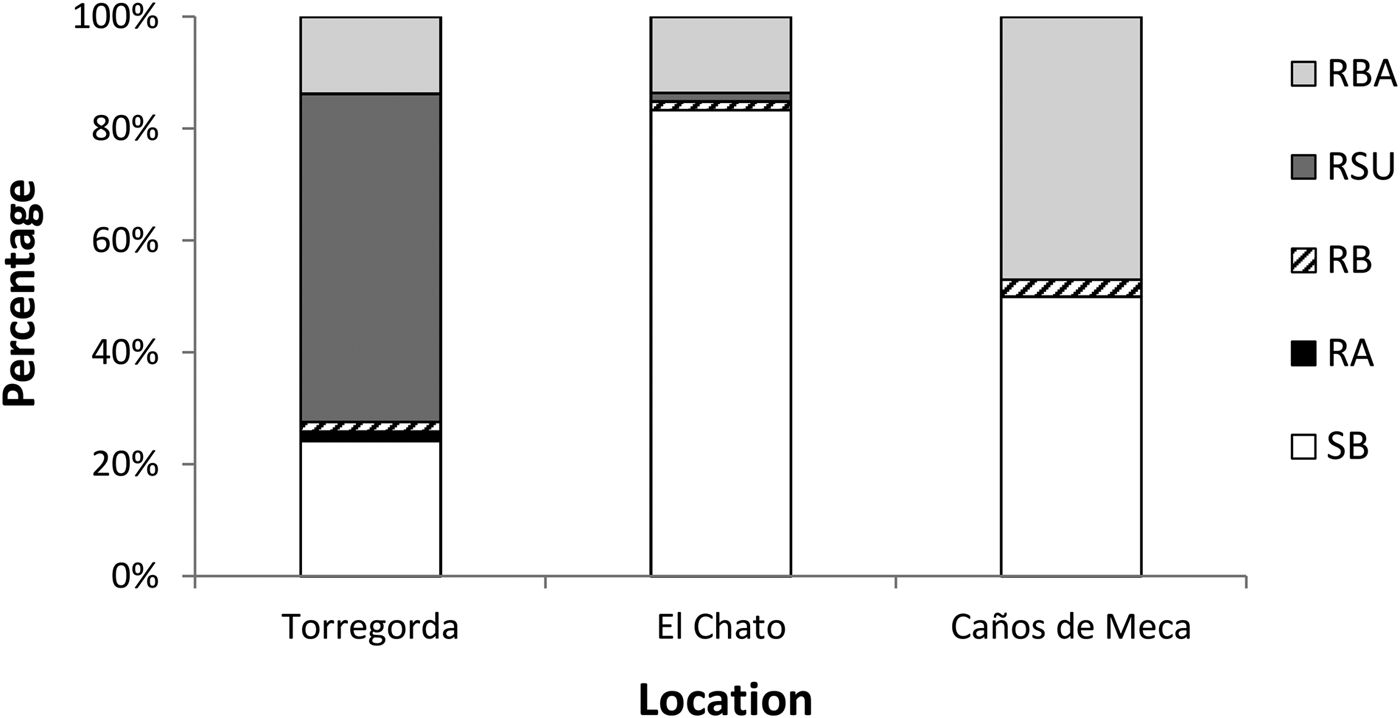
The three sampling locations had different physiographic composition (Figure 3). Torregorda was characterized by the presence of sea urchins, El Chato by sand pools and Caños de Meca by the similar proportion of sandy and rocky pools with boulders and algae. These differences between locations were statistically significant (χ2 = 115.24, df = 8, P < 0.005). However, no significant differences (χ2 = 6.3648, df = 4, P = 0.1735) between presence or absence of S. porcus relative to physiography were found.
Physiography proportion by location: SB: pools with sand bottom with or without algae or boulders, RA: pools with rocky bottom and algae, RB: pools with rocky bottom and boulders, RSU: pools with rocky bottom and sea urchins, RBA: pools with rocky bottom, boulders and algae.

The total mean length of the caught fish was 90.04 ± 48.37 mm, N = 106, with females presenting a higher mean length than males and indeterminate fish: 142.95 ± 30.38, N = 19 vs 118.89 ± 51.56 mm, N = 21 and 67.16 ± 34.31 mm, N = 66, respectively. The largest fish was a male of 226 mm, captured in December 2008 at Caños de Meca, while the smallest was an indeterminate fish of 29.29 mm caught in October 2009 at Torregorda.
Overall diet description
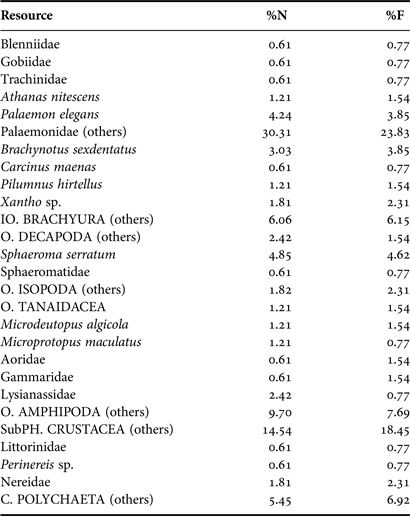
The diet of all the caught fish was analysed. Twenty-two stomachs were empty, with no seasonal pattern on the degree of emptiness. Twenty-six different prey items were found in the remaining 84 stomachs. Diet was quantified as relative abundance and percentage of occurrence (Table 2). In order to establish the feeding pattern, diet was analysed according to season (winter, spring, summer and autumn), size (Size class I, Size class II, Size class III) and sex, distinguishing between sexed and indeterminate fish.
Composition of the diet of S. porcus based in the relative abundance (%N) and frequency of occurrence (%F).
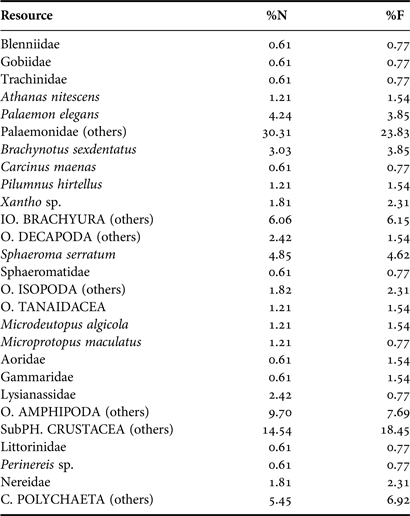
Table 2 shows that diet of S. porcus was largely based on the consumption of crustaceans with values much higher than for the rest of the prey groups, regarding both relative abundance and frequency of occurrence. Only four stomachs contained between 5–10% of algae and it was considered as incidental consumption during feeding. The dominant group within the Crustacea, both in terms of relative abundance and frequency of occurrence, was Decapoda, followed by Amphipoda, Isopoda and Tanaidacea. However, digestion processes rendered a considerable group of crustaceans unidentifiable.
Diet variation between locations
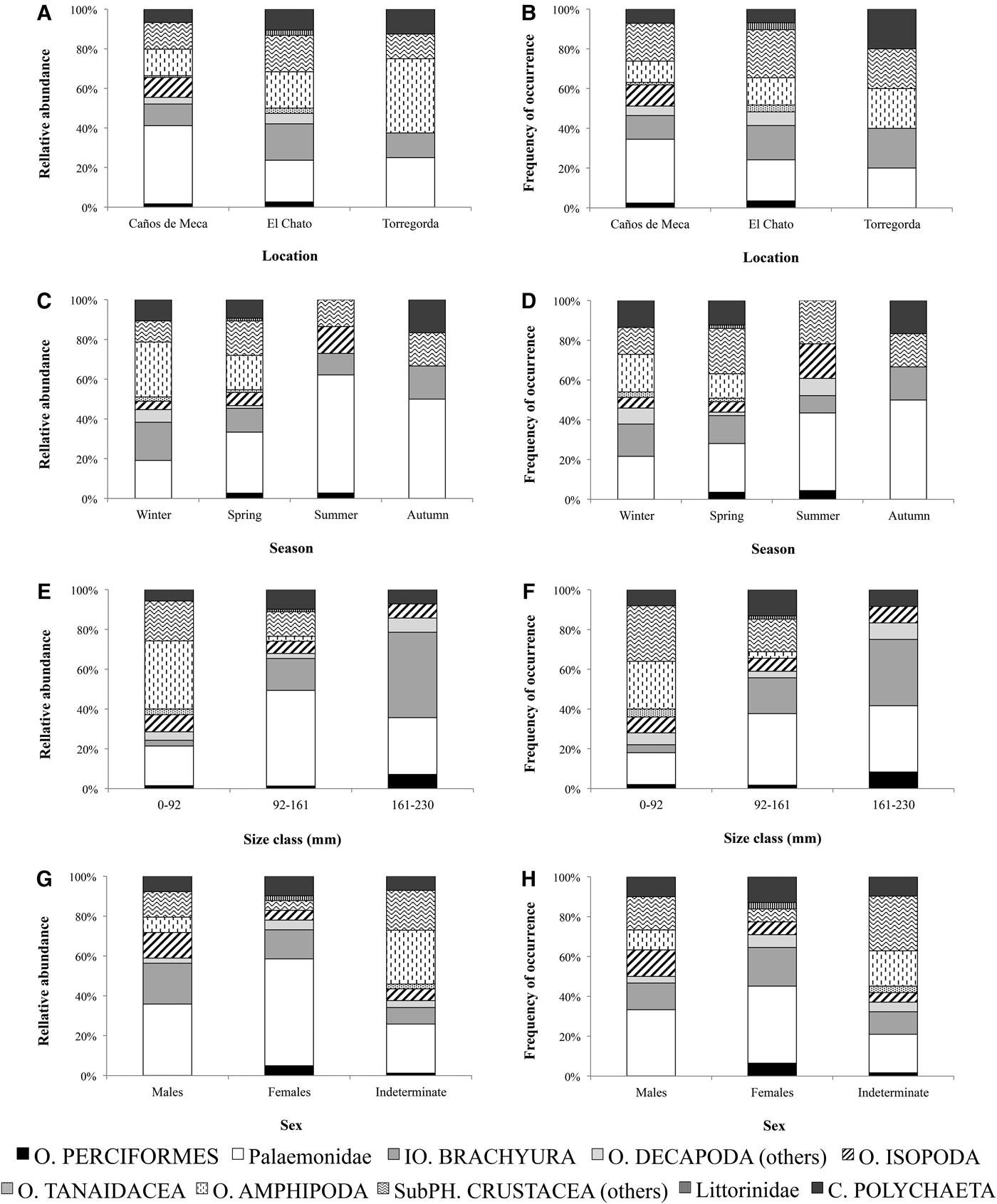
Although caught fish in Caños de Meca and El Chato fed mainly on decapods (Caños de Meca: %N = 50.4 and %F = 44.1%; El Chato: %N = 39.5 and %F = 37.9%), diet variation between locations (Figure 4A, B) indicated they had a more diverse diet than those caught in Torregorda. In this last location, the major prey groups, expressed in relative abundance, were amphipods (%N = 37.5%) and shrimp (%N = 25), notwithstanding the frequency of occurrence was the same for all prey. The mean number of prey consumed by fish in each location was 2.02 ± 1.42 prey, N = 59 in Caños de Meca, 1.81 ± 1.08 prey, N = 21 in El Chato and 2.00 ± 1.55 prey, N = 4 in Torregorda. These differences in the feeding intensity between locations were not significant (Kruskal–Wallis, P = 0.9080).
Composition of S. porcus diet among locations (A: Relative abundance; B: Frequency of occurrence), season (C: Relative abundance; D: Frequency of occurrence), size class (E: Relative abundance; F: Frequency of occurrence) and sex (G: Relative abundance; H: Frequency of occurrence).

Diet variation with season
Figure 4C, D show the seasonal variations in relative abundance and frequency of occurrence in the diet. Regardless of the season, the main resource in the diet was Palaemonidae, reaching 59.5% (%F = 39.1) of prey in summer, declining to 50.0% (%F = 50.0) in autumn, with the lowest value in winter, 19.1% (%F = 21.6), before rising again to 30.7% (%F = 24.6) in the spring. In summer, diet was mainly supplemented with isopods and crabs, whereas in autumn it was supplemented with polychaetes and crabs. In winter and spring, the diet also included amphipods, crabs, isopods and polychaetes. Consumption of fish was only observed in spring and summer. In terms of possible seasonal differences in feeding intensity, expressed as the mean number of prey, a slight variation was observed with lowest values in autumn (1.20 ± 0.45 prey, N = 5), increased in winter (1.88 ± 1.05 prey, n = 25) and spring (1.97 ± 1.40 prey, N = 38) to maximum values in the summer months (2.31 ± 1.62 prey, N = 16). These differences in the feeding intensity throughout the seasons were not significant (Kruskal–Wallis, P = 0.3446).
Diet variation with size-class fish
As the size of the fish increased, predation on smaller crustaceans (amphipods and tanaids) decreased and consumption of larger crustaceans (isopods, crabs and shrimp) grew (Figure 4E, F). Tanaids were only consumed by smaller fish (%N = 2.9 and %F = 4.0). Amphipods were predated by small-sized fish (%N = 34.3 and %F = 24.0) and by medium-sized fish (%N = 2.5 %F = 3.3). The relative abundance of decapods ranged from 27.1% (%F = 26.0) in the smallest fish to 78.6% (%F = 75%) in the largest ones. Predation on shrimp was higher among the medium-sized fish (%N = 48.1 and %F = 36.1) than large-sized ones (%N = 28.6 and %F = 33.3). The reverse pattern was observed in crabs – large-sized fish ate more crabs (%N = 42.9 and %F = 33.3) than medium-sized ones (%N = 16.0 and %F = 18.0). Consumption of fish presented a higher relative abundance (7.1%) and frequency of occurrence (8.3%) in large-sized fish.
The mean number of prey consumed by fish as a function of size category was 1.75 ± 1.10 prey, N = 40 for smaller fish, 2.19 ± 1.58 prey, N = 37 for medium-sized fish and 2.00 ± 0.82 prey, N = 7 for larger fish. These differences in the number of prey by size class were not significant (Kruskal–Wallis, P = 0.2518). Resources were classified by their size: amphipods, tanaids and molluscs were considered small-prey and annelids, isopods, decapods and fish were considered large-prey. In agreement with this classification, a significant relationship was observed between fish size and kind of prey (P <0.05). Smaller fish consumed a greater amount of different resources within the small-prey group, while larger fish increase the consumption of large-prey.
Diet variation with sex
Diet variation with sex (Figure 4G, H) indicated that females and males based their feeding on shrimps (males: %N = 35.9 and %F = 33.3; females: %N = 53.7 and %F = 38.7) and crabs (males: %N = 20.5 and %F = 13.3; females: %N = 14.6 and %F = 19.3). Indeterminate fish based their diet on the consumption of shrimps (%N = 24.7; %F = 19.3) and amphipods (%N = 27.1; %F = 17.7). Females consumed more fish (%N = 4.9; %F = 6.5) than indeterminate ones (%N = 1.2; %F = 1.6). Average prey consumption was lower for indeterminate fish (1.73 ± 1.04 prey, N = 48) than for females (2.28 ± 1.64 prey, N = 18) and males (2.28 ± 1.56 prey, N = 18). These differences in the feeding intensity between males, females and indeterminate fish were not significant (Kruskal–Wallis, P = 0.1563).
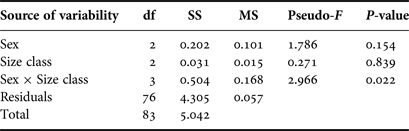
PERMANOVA results on prey abundance showed that the interaction between sex and size class was significant (Table 3). The effect of habitat features (depth and surface of the pools) was not significant (Pseudo-F = 1.4793; P = 0.2191) on prey abundance.
Results of permutational multivariate analysis of variance based on the Bray–Curtis dissimilarities testing the effects of sex and size class on prey abundance in S. porcus. The test was done using 9999 permutations.

Diet overlap
The low value obtained for trophic niche analysis (0.24) indicates that diet was composed of a small number of resources. Diet overlap throughout size classes reported an intermediate result between small and medium-sized fish (0.49) and also between medium and large-sized (0.48), obtaining the greatest difference between the small and large-sized fish (0.29). Diet overlap as function of sex was also analysed. Highest indices were observed between indeterminate and males (0.59) and between females and males (0.58). The lowest indice was obtained for females and indeterminate (0.48).
DISCUSSION
There are no differences between the presence or absence of S. porcus according to physiography. The biggest catch in Caños de Meca is related with the larger surface area of the pools in this location (Compaire et al., unpublished results), however this is not associated with the feeding intensity between locations. Usually, species of the coastal and neritic fish assemblages are mainly planktivores related to high primary production (Sanvicente-Añorve et al., Reference Sanvicente-Añorve, Flores-Coto and Sánchez-Velasco1998; Flores-Coto et al., Reference Flores-Coto, Martínez-Gutiérrez, González-Félix, Sanvicente-Añorve and Zavala-Garcia2000). The general scheme of the surface Gulf of Cadiz circulation under easterlies favours oligotrophy, and westerlies encourage the productivity in the eastern shelf (García-LaFuente & Ruiz, Reference García-LaFuente and Ruiz2007). The local topography and the influence of Guadalquivir River also have an important role in the existence of warm and productive waters in the eastern Gulf of Cadiz (Ruiz et al., Reference Ruiz, García-Isarch, Huertas, Prieto, Juárez, Muñoz, Sánchez-Lamadrid, Rodríguez, Naranjo and Baldó2006). This combination has a clear influence on the highest zooplankton abundance in this area of the shelf (Ruiz et al., Reference Ruiz, García-Isarch, Huertas, Prieto, Juárez, Muñoz, Sánchez-Lamadrid, Rodríguez, Naranjo and Baldó2006). Closer to the Strait of Gibraltar, there is also a general trend for an increase in productivity, which has been related to fertilization processes induced by the undulatory mechanisms occurring over the Camarinal Sill (Macías et al., Reference Macías, Martin, García-Lafuente, García, Yool, Bruno, Vázquez-Escobar, Izquierdo, Sein and Echevarría2007). Thus, plankton productivity does not seem to be the cause of differences in feeding habits between locations. In fact, with regard to El Chato and Caños de Meca, the results on diet composition and feeding activity are very similar, while the differences observed with respect to Torregorda are possibly due to the low number of fish caught and because these belong to the first size class.
The main resource in the diet of S. porcus is Crustacea, predominating both in relative abundance and frequency of occurrence. This result is in accordance with Castriota et al. (Reference Castriota, Falautano, Finoia, Consoli, Pedà, Esposito, Battaglia and Andaloro2012) where crustaceans accounted for 89% of the relative abundance of prey and 94.5% of the frequency of occurrence. Crustacean decapods are the main dietary components of S. porcus and other scorpaenids (Harmelin-Vivien et al., Reference Harmelin-Vivien, Kaim-Malka, Ledoyer and Jacob-Abraham1989; La Mesa et al., Reference La Mesa, La Mesa and Tomassetti2007; Castriota et al., Reference Castriota, Falautano, Finoia, Consoli, Pedà, Esposito, Battaglia and Andaloro2012). These are typical scorpaenid prey items, irrespective of species, biotope or geographic zone considered (Harmelin-Vivien et al., Reference Harmelin-Vivien, Kaim-Malka, Ledoyer and Jacob-Abraham1989). However, as indicated by Castriota et al. (Reference Castriota, Falautano, Finoia, Consoli, Pedà, Esposito, Battaglia and Andaloro2012), it should be noted that specific dietary composition will vary depending on the prey present in the study area. In fact, the Brachyura infraorder in their study accounted for 74.4% of quantified prey, whereas in our data set it accounted for 12.7%. This disparity may be related to the difference in length of fish caught since the mean length reported by Castriota et al. (Reference Castriota, Falautano, Finoia, Consoli, Pedà, Esposito, Battaglia and Andaloro2012) is larger, 168.6 mm. Indeed, our results also agree that larger fish increase predation on crabs. The decapods consumed by S. porcus have already been described as abundant species both in meroplankton and in the adult stage in this coastal zone (González-Gordillo & Rodríguez, Reference González-Gordillo and Rodríguez2003; Spivak et al., Reference Spivak, Arévalo, Cuesta and González-Gordillo2010). Specifically, in the neighbouring area of the Bay of Cadiz, González-Gordillo & Rodríguez (Reference González-Gordillo and Rodríguez2003) observed Brachyura larvae were dominant in almost every month, followed by Caridea.
Amphipods and isopods are also noted as important prey in other coastal species of Scorpaena, while molluscs, polychaetes and teleosts are occasional prey (La Mesa et al., Reference La Mesa, La Mesa and Tomassetti2007). Benavides et al. (Reference Benavides, Echevarría, Sánchez-García, Garzón and González-Gordillo2010) also noted the presence of amphipods, although less abundant than Brachyura and Caridea, as one of the main taxonomic groups in the Bay of Cadiz. Blenniidae, Gobiidae and Trachinidae were the largest prey in the diet of S. porcus. These families have often been found in the diet of Scorpaena (Bell & Harmelin-Vivien, Reference Bell and Harmelin-Vivien1983; Harmelin-Vivien et al., Reference Harmelin-Vivien, Kaim-Malka, Ledoyer and Jacob-Abraham1989; Bradai & Bouain, Reference Bradai and Bouain1990; Pallaoro & Jardas, Reference Pallaoro and Jardas1991; Morte et al., Reference Morte, Redon and Sanz-Brau2001; Başçïnar & Saǧlam, Reference Başçïnar and Saǧlam2009). In agreement with Harmelin-Vivien et al. (Reference Harmelin-Vivien, Kaim-Malka, Ledoyer and Jacob-Abraham1989), the frequency of occurrence of teleosts was higher in the diet of larger fish. Cannibalism was not observed in the rocky intertidal, but it has been described in previous studies (Harmelin-Vivien et al., Reference Harmelin-Vivien, Kaim-Malka, Ledoyer and Jacob-Abraham1989; Morte et al., Reference Morte, Redon and Sanz-Brau2001). Also, the predominant consumption of prey such as amphipods and isopods by the smaller sized fish and their replacement by decapods in larger fish has already been described for this species (Harmelin-Vivien et al., Reference Harmelin-Vivien, Kaim-Malka, Ledoyer and Jacob-Abraham1989; Bradai & Bouain, Reference Bradai and Bouain1990; Arculeo et al., Reference Arculeo, Froglia and Riggio1993; Morte et al., Reference Morte, Redon and Sanz-Brau2001). Therefore, the highest consumption of amphipods and tanaids by indeterminate fish appears to be strongly linked with their shorter length. Within species, ontogenetic changes in resources use caused by differences in size and habitat use with ontogeny are common (Werner & Gilliam, Reference Werner and Gilliam1984). The highest differences in diet overlap between size classes, rather than seasons or sexes, suggest that the size of the fish determines the difference in their diet. In fact, in consonance with results of PERMANOVA, size seems to be responsible for the increased consumption of decapods and fish in females due to their larger size. Also, the most diverse diet in winter and spring is related to the biggest size spectra of S. porcus in these seasons. However, size is not the only leading factor throughout the year. The non-appearance of amphipods on S. porcus diet in summer coincides with their absence in the mesozooplankton community structure in the Bay of Cadiz in June and July (Benavides et al., Reference Benavides, Echevarría, Sánchez-García, Garzón and González-Gordillo2010). Moreover, during spring and summer the presence of fish on the diet corresponds with the recruitment period of most of the intertidal fish species in this area (Compaire et al., unpublished results).
The low value obtained for the Levin's index indicates that S. porcus is a stenophagic species. On fishing grounds, S. porcus has been classified as opportunistic (Demirhan & Can, Reference Demirhan and Can2009) and specialist (Castriota et al., Reference Castriota, Falautano, Finoia, Consoli, Pedà, Esposito, Battaglia and Andaloro2012). This discrepancy may be due to different levels of taxonomic classification of prey. The low dietary overlap of S. porcus with other species resident in rocky intertidal shores noted by Compaire et al. (Reference Compaire, Cabrera, Gómez-Cama and Soriguer2016) indicates that it is a specialist rather than an opportunistic species.
Finally, the percentage of empty stomachs observed in our study was lower than that reported in previous studies (Morte et al., Reference Morte, Redon and Sanz-Brau2001; La Mesa et al., Reference La Mesa, La Mesa and Tomassetti2007; Başçïnar & Saǧlam, Reference Başçïnar and Saǧlam2009; Castriota et al., Reference Castriota, Falautano, Finoia, Consoli, Pedà, Esposito, Battaglia and Andaloro2012). These authors obtained fish from commercial fisheries: bottom longline (Morte et al., Reference Morte, Redon and Sanz-Brau2001; La Mesa et al., Reference La Mesa, La Mesa and Tomassetti2007; Başçïnar & Saǧlam, Reference Başçïnar and Saǧlam2009) and commercial trawl and bottom gillnet (Castriota et al., Reference Castriota, Falautano, Finoia, Consoli, Pedà, Esposito, Battaglia and Andaloro2012). Thus, one possible explanation for this difference could be the capture method. When fish are caught by hooks, trawls or gillnets, stress generated can produce regurgitation of stomach content and digested prey as a result of time between capture and being brought on board (Bowen, Reference Bowen, Nielsen, Johnson and Lampton1983). Morte et al. (Reference Morte, Redon and Sanz-Brau2001) is the only study reporting the absence of regurgitation. Nevertheless, this kind of feeding behaviour has already been noted in other Scorpaenidae (Orlov, Reference Orlov2002). Other studies have indicated that the increase in the percentage of empty stomachs corresponds to the spawning period (Siblot-Boutéflika, Reference Siblot-Boutéflika1976; Bradai & Bouain, Reference Bradai and Bouain1990; Pallaoro & Jardas, Reference Pallaoro and Jardas1991; Morte et al., Reference Morte, Redon and Sanz-Brau1999, Reference Morte, Redon and Sanz-Brau2001; La Mesa et al., Reference La Mesa, La Mesa and Micalizzi2005, Reference La Mesa, La Mesa and Tomassetti2007; Başçïnar & Saǧlam, Reference Başçïnar and Saǧlam2009; Stagioni et al., Reference Stagioni, Montanini and Vallisneri2012). In agreement with Castriota et al. (Reference Castriota, Falautano, Finoia, Consoli, Pedà, Esposito, Battaglia and Andaloro2012), no seasonal pattern in the percentage of empty gastrointestinal tracts was observed.
The results on diet obtained here are consistent with previous reports (Harmelin-Vivien et al., Reference Harmelin-Vivien, Kaim-Malka, Ledoyer and Jacob-Abraham1989; Bradai & Bouain, Reference Bradai and Bouain1990; Pallaoro & Jardas, Reference Pallaoro and Jardas1991; Arculeo et al., Reference Arculeo, Froglia and Riggio1993; Carpentieri et al., Reference Carpentieri, Colloca, Belluscio and Ardizzone2001; Morte et al., Reference Morte, Redon and Sanz-Brau2001; Follesa et al., Reference Follesa, Cabiddu, Sabatini and Cau2004; La Mesa et al., Reference La Mesa, La Mesa and Tomassetti2007; Başçïnar & Saǧlam, Reference Başçïnar and Saǧlam2009; Demirhan & Can, Reference Demirhan and Can2009; Zupo & Stübing, Reference Zupo and Stübing2010), and indicate that the diet of S. porcus reflects a gradual segregation in the use of resources that varies as it grows, which indicates there is no evidence of intraspecific competition. Furthermore, considering the size at first sexual maturity reported by previous authors (Aksiray, Reference Aksiray1987; Bradai & Bouain, Reference Bradai and Bouain1991; Ünsal & Oral, Reference Ünsal and Oral1996; Bilgin & Çelik, Reference Bilgin and Çelik2009), who pointed out that it is reached at 2 and 3 years in males and females, respectively, most of the fish examined here are immature. Consequently, and because of the growing interest as a regional economic resource, we consider it is necessary to assess and manage this species in rocky intertidal shores since rocky pools provide important settlement and nursery grounds, where survival and growth of young fish are enhanced.
ACKNOWLEDGEMENTS
The authors would like to thank all those who participated in field samplings, without their effort this study would not have been possible, and N. Visintini for English editing of the manuscript. The authors also would like to thank anonymous reviewers for their useful comments that improved the manuscript.
FINANCIAL SUPPORT
This study has been undertaken within the project ‘Environmental study of the Torregorda Testing Centre’, financed by the Ministry of Defence.