Disasters can occur without warning anytime and anywhere. Disasters, which inevitably have dramatic and often devastating impacts on individuals, families, and communities, can vary in scale and scope.Reference Klyman, Kouppari and Mukhier1 A report issued by the United Nations Office for Disaster Risk Reduction indicated that health care facilities are vital community assets during a disaster.2 The failure of emergency services and health care facilities to manage a disaster will exacerbate the negative impacts of a disaster. The World Health Organization (WHO) encouraged all countries to develop a strategy to decrease the risks associated with disasters. WHO identified strategies for disaster preparedness that included continuous assessment and monitoring, coordination, planning, implementation, and building resilience.3
Meeting the challenge of emergency preparedness necessitates defining the components of readiness during a disaster. One definition is the preparedness pyramid, which recognizes (1) planning and policies; (2) equipment and infrastructure; (3) knowledge and capabilities of staff; and (4) training and drills as the major components of maintaining a high level of preparedness.Reference Ryan and Montgomery4 However, the importance of the components mentioned above is not equal. Having a written disaster plan does not equal preparedness. Unfortunately, the mere existence of a disaster plan may create a false sense of security for hospital and community leaders. Disaster response requires adequate human resources. This includes personnel who are trained in emergency and disaster preparedness and have the necessary management skills, as many of the logistical problems faced in disasters are not caused by shortages of medical resources but rather from failures to coordinate the distribution of the staff.Reference Schultz, Mothershead and Field5 Moreover, critical thinking and emotional intelligence usually make a difference during the disaster.
Health care providers regularly face both natural and human-made disasters, and the occurrence of multiple casualty incidents has changed health care providers’ perspectives on disaster preparedness.Reference Veenema, Walden, Feinstein and Williams6,Reference DiGiovanni7 Health care providers in hospitals must possess adequate information and disaster management skills to help in the event of mass casualties.Reference Schultz, Koenig, Whiteside and Murray8
In Saudi Arabia, previous studies have provided facts about disaster management and preparedness.Reference Alraga9-Reference Bajow and Alkhalil16 A limited number of studies revealed various levels of knowledge, training, and education about preparedness for emergency and disaster incidents among health care providers.Reference Abdelghany Ibrahim10-Reference Alshehri12,Reference Bin Shalhoub, Khan and Alaska15,Reference Alsaad, Abu-Grain and El-Kheir17 Also, emergency health readiness and activating a national center for emergency and health disaster management, as well as supporting regional centers, are critical components of the Healthy People 2030 vision, the national action plan to improve the health of all Saudis.18 Therefore, our study aimed to evaluate the readiness of a tertiary medical cityʼs response to a disaster by assessing the resources and knowledge, attitudes, practices, and familiarity of the health care providers toward disaster and emergency preparedness.
MATERIALS AND METHODS
Study Design and Setting
With the approval of the institutional review board, a cross-sectional study was conducted at King Fahad Medical City (KFMC), Riyadh, Saudi Arabia.
Study Participants and Recruitment
All KFMC staff with more than 1 year of clinical experience were eligible to participate in this study, and participants were invited via a self-administered questionnaire that was sent through the KFMC – postmaster (online). Also, hard copies were distributed across all KFMC hospitals and centers. Note that the identities of the participants were kept confidential.
Data Collection Tool
Data were collected based on previously published methods.Reference Abdelghany Ibrahim10,Reference Gundran and Taborada19 The data collected included demographic information, responses to the Emergency Preparedness Information Questionnaire (EPIQ), knowledge and practices questionnaires, and a disaster planning attitude checklist. Also, data about KFMC resources were collected from all related departments, administrations, and hospitals and centers using the hospital disaster preparedness self-assessment tool.20 This assessment tool was developed to assist hospitals in revising and updating existing disaster plans or in the development of new plans. This assessment tool was based on 2 resources, the American College of Emergency Physicians’ Community Medical Disaster Planning and Evaluation Guide20 and the Hospital Emergency Analysis Tool. The tool consisted of 2 parts. The first part included the hospital profile and emergency management plan (EMP). The second part involved the analysis of 9 critical preparedness factors, that is, leadership and governance; EMP; clinical operations; safety, fire, and security; logistics and facilities; communication, warning, and notification; public information, media relations, and risk communications; training, drills, and exercises; and performance improvement and quality.
Sample Size
We used Cochranʼs method to estimate an appropriate sample size from a population of 4000 with parameters of a 95% confidence interval and 50% assumed level of participant knowledge and attitude toward emergency disaster preparedness. It was determined that a minimum of 351 participants were required for this study.
Statistical Analysis
Quantitative data were described as mean ± SD and qualitative data as frequency percent. A Pearsonʼs chi-square goodness of fit test was performed. For all tests, P < 0.05 was considered statistically significant. All analyses were performed using SAS 9.2 (SAS Institute Inc., Cary, NC).
RESULTS
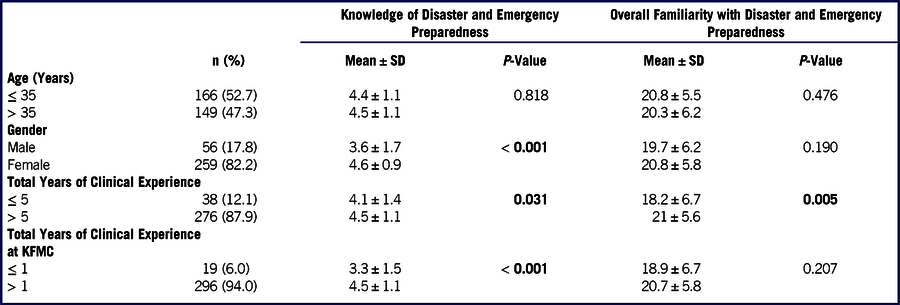
The relationship between participant demographic characteristics and overall knowledge and familiarity scores of disaster and emergency preparedness are presented in Table 1. The majority of participants were female with more than 5 years of total clinical experience and more than the 1 year of clinical experience at KFMC. The overall mean knowledge score for disaster and emergency preparedness was 4.4 ± 1.1, whereas the mean overall familiarity score was 3.43 ± 0.97.
Overall Mean Knowledge and Familiarity Scores for Disaster and Emergency Preparedness About Participant Demographic Characteristics

Female participants who had more than 5 years of total clinical experience and more than 1 year of experience at KFMC demonstrated greater knowledge of disaster and emergency preparedness (P = < 0.001, 0.031, < 0.001, respectively). Having more than 5 years of total clinical experience was the only variable associated with higher overall familiarity with disaster and emergency preparedness.
Participant knowledge about ongoing disaster practices was represented by 3 items that had a mean response rate of 79.0%. The majority of participants (90.2%) indicated that they knew that disaster drills were conducted at the hospital, 235 (74.6%) participants indicated that they were familiar with the ongoing disaster and emergency preparedness training, and 227 (72.1%) participants indicated that they were familiar with the fact that the EMP was updated periodically (Table 2).
Participant Practices Regarding Disaster and Emergency Preparedness

Participant attitudes toward disasters were assessed using 11 items with a mean response rate of 94.0%. However, 66 (21.0%) participants agreed with the eighth item: “Disasters are unlikely to happen in our hospital” (Table 3).
Participant Attitudes Toward Disasters and Emergency Preparedness

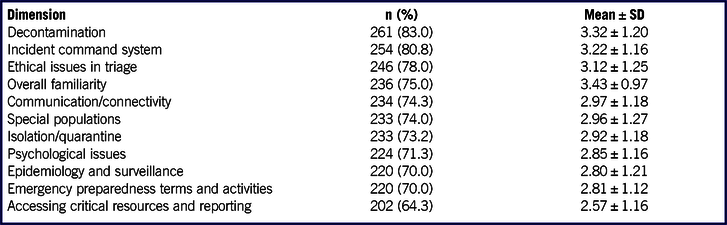
The mean score for the overall familiarity of the study participants with the EPIQ scale was 3.43 ± 0.97, which is within the “somewhat familiar” range on the EPIQ scale. The highest familiarity score was for decontamination (83.0%), followed by the incident command system (80.8%), ethical issues in triage (78.0%), and overall familiarity (75.0%). The dimension that attained the lowest familiarity score for EPIQ was accessing critical resources and reporting (64.3%) (Table 4).
Familiarity Scores By the Dimension of the EPIQ

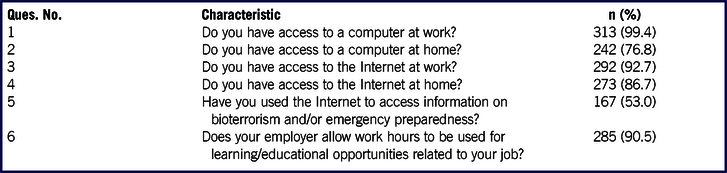
The results for participant access to electronic training/educational information are presented in Table 5. The majority of participants (99.4%) have access to a computer at work. However, only 53.0% used the Internet to access information on bioterrorism and/or emergency preparedness (see Table 5).
Participant Access to Electronic Training/Educational Information

HOSPITAL DISASTER PREPAREDNESS SELF-ASSESSMENT TOOL
Hospital Disaster Preparedness: Part 1
KFMC is a tertiary medical city located in the city of Riyadh. KFMC has 900 licensed beds, 866 of which have been staffed recently. There are 39 beds with negative airflow for patients who require respiratory isolation and 54 negative pressure beds. Three-hundred-eight beds are equipped with cardiac monitors and 131 mechanical ventilators. Sixty additional beds can be staffed and equipped within 12 hours. The medical city has a total of 7676 clinical and non-clinical staff.
KFMC has 2 helipads with support provided by the centerʼs fire, safety, security, and emergency medical services (EMS) departments. In the event of a helicopter crash, the response will be delivered by the EMS, safety, fire, traffic, and security departments. KFMC has 9 ambulances, but it is not a trauma center.
The hospital morgue can house 94 bodies. Other hospital capacities include 423 portable cardiac monitors, 21 portable X-ray machines, 63 portable sonograms, 53 additional portable ventilators, and 220 automatic resuscitation devices. In the first three-quarters of 2018, the Radiation Therapy Department saw 1472 new patients. Treatment was delivered to 19 701 patients, of which 9725 were follow-up patients.
The emergency department (ED) is one of the busiest areas, with an average of 250 patient visits per day. The safety and security of staff and visitors are provided by 243 full-time security personnel 24 hours per day, 7 days a week.
The hospitalʼs emergency power system is capable of powering elevators, critical branches, and food preservation. The system is tested every month for 30 minutes. It is situated at a safety level and can run for 16 hours without refueling.
The institute is connected to the community water supply. A secondary source of water is available whenever the primary source is cut off. The institution has a 30-day supply of fuel on hand with boilers capable of running for 24 hours, 7 days a week.
In terms of respiratory protection equipment, 63% of the clinical staff have undergone a fit test for N95 masks. The fit test is administered annually. However, no mask fit testing has been conducted for non-clinical staff. The quantity of powered air-purifying respirators is yet to be determined.
All of the medical and nursing staff have undergone disaster response and preparedness training. Almost 67.4% of nurses have been trained in their facility, whereas only 4.4% of other medical staff have been trained (Appendix 1).
Hospital Disaster Preparedness: Part 2
Leadership and Governance
An operational continuity strategy is an important component in EMP at our institute. The priority areas that should continue to function throughout or shortly after an emergency are the ED, the electrical supply, the information technology system, and safety and security.
The need to successfully communicate and manage resources during an emergency is very important for any institution. To avoid conflict and confusion, our institute has an Incident Command Center (ICC) that is charged with effectively and efficiently managing the aftermath of a critical incident. The ICC is headed by the chief executive officer (CEO) on duty and was established to be used during drills and actual emergencies. Incident command staff are aware of their assigned roles and understand the centerʼs flexibility. Also, a debriefing session occurs after all exercises, and an action plan is developed based on the debriefing.
Also, our fully operational ICC is integrated into local and national emergency planning and operations, which is located in a secure area with alternative emergency exits. The ICC can monitor local media. The ICC command staff has a communications system and is equipped with the essential items, except a generator, bullhorns, and flashlights.
There is a process to provide a Rapid Needs Assessment (RNA) or situation report (SITREP) to the ICC that includes an assessment of the extent of the event to describe its magnitude, the status of operational activities, and disrupted critical services. The report describes the scope of the impact on medical care, the nature of casualties, and the capability to sustain emergency response operations.
To provide a collaborative, comprehensive system of planning and response, our institute has a prearranged memorandum of understanding (MOU) with the Saudi Red Crescent Authority, Prince Sultan Humanitarian Medical City, and other local and regional health care facilities. However, MOUs are not in place with many important external agencies, such as law enforcement, the Fire Department, EMS, Public Safety, military installations, burn centers, the Metropolitan Medical Response System (MMRS), and the Computer Emergency Response Team (CERT). Moreover, MOUs have not been established with many internal departments, such as portable magnetic resonance imaging (MRI), computed tomography (CT), and dialysis units.
The KFMC multidisciplinary Emergency Preparedness Committee (EPC) aims to provide leadership and governance of the hospitalʼs “emergency preparedness system” and coordinates with other hospitals and medical centers. The EPC plan takes precedence over local plans. A regular monthly meeting is held to discuss all updates concerning issues related to disaster drills, actual disasters, action plans, and to ensure that the committee is involved in joint training exercises. The EPC does not report to KFMCʼs CEO regarding emergency planning, exercises, and action plans.
Emergency Management Planning
The EPC prepares our hospitalʼs Emergency (Disaster) Management Program that describes the internal, external, epidemic, natural disaster, and all-hazards events. To ensure that the needs of all staff, patients, and visitors are met, the program is accessible to all staff through the KFMC intranet.
Moreover, the program describes the procedure in case there is an urgent need to transfer an ED patient to an inpatient unit. It also includes measures for early discharge, transfer of inpatients from other health care facilities, and plans for follow-up outpatient care, as needed, including the provision of medication and consumable medical supplies.
The Emergency (Disaster) Management Program clearly states the validated arrangements for surge staffing whenever there is more than a 25% increase of patients in all units and how to manage non-emergent services. It also addresses the provision of childcare for staff and patients and spiritual care for all.
Furthermore, the recovery plan for returning to normal operations, including the financial recovery plan and method of tracking resources, is tested in an actual drill. Also, the EMP is consistent with local and state regulations to coordinate with the appropriate local and state emergency agencies.
If inpatients need to be transferred to other health care facilities, an MOU for the designated alternative care site is available and has been tested. However, there are no MOUs with other hospitals for patient transportation because our institute has its vehicles with adequate equipment to transport patients safely.
The roles of volunteers are identified in the Emergency (Disaster) Management Program. Unfortunately, volunteers are not trained in disaster management.
Clinical Operations
EMS and toxicology staff are integrated into the ED and can be used during an emergency. Our institute has its own EMS; therefore, an MOU is not required with Saudi Red Crescent. Moreover, there is no existing MOU between our hospital and the Regional Poison Control Center.
Regarding ED capacity, identifying gear, such as disaster vests, and action and permission cards are available and can be used by the emergency staff when needed. Pre-printed patient charts, approximately twice the number of average daily ED visits, are available for use in an emergency. The stock of emergency drugs and antidotes are maintained; however, some are not available, such as BAL, that is, dimercaprol, potassium iodine, silver sulfadiazine, and aspirin. Disaster trollies and crash carts are monitored, secured, cycled, and labeled “Disaster Use Only.”
Protocols regarding patient triage are consistently followed by the ED Triage Team. Note that the same triage color code system as local EMS is used. Our institute has a defined level of patient volume that triggers activation of the triage system and treatment areas to accommodate a casualty surge, including an alternative triage area in the ED, which is not weather-proof or temperature controlled.
The hospital has a method of tracking casualties, including unknown patients. However, casualty tracking is not automated. It is not always possible to track patients who were transferred to another local facility and evacuated out of the community. Furthermore, we can increase isolation bed capacity (negative flow) if required.
Our institute has a plan for personal protective equipment (PPE) to protect staff from the effects of chemical, biological, and radiological agents. Some staff have been trained and are aware of the PPE storage locations and understand the concepts of zones of care. However, certification regarding staff capability to donning-offing PPE is not yet applied.
Our study shows that our hospital does not have a well-equipped decontamination area, for example, no decontamination area is equipped with hot and cold water. Moreover, there is no portable decontamination unit and no procedure to ensure proper control of weapons or ammunition found on patients undergoing decontamination. Also, no patient decontamination team has been trained to adhere to the Occupational Safety and Health Administration (OSHA) standards with equipment approved by the National Institute for Occupational Safety and Health. The last 2 decontamination drills were conducted in 2013 and 2016.
Coordination regarding disease surveillance is in place to conduct epidemiologic surveillance (microbiology, pathology, infectious disease, infection control, etc.). However, procedures to monitor employee absenteeism daily are not in place. Admissions and diagnoses are reviewed daily with a focus on spike disorders, for example, pulmonary and dermatologic disorders. Surveillance was coordinated with local and/or state public health agencies on a daily, weekly, and monthly basis. All clinical staff were familiar with the signs and symptoms of the Centers of Disease Control and Prevention (CDC) Category A agents, such as anthrax, botulism, plague, smallpox, tularemia, and viral hemorrhagic fevers, and all staff have access to resources with information about such potential bioterrorism agents. Staff were aware of and able to comply with disease reporting requirements. The pharmacy monitors the daily usage of antibiotics, antidiarrheal, and dermatologic agents for spikes.
KFMC can survey and detect radiation contamination. The hospital has a functioning count rate meter, and the staff have been trained to operate it. Thermo-luminescent dosimeters (TLD) have been used to establish background radiation levels for general medical treatment areas and radiation decontamination areas. Threshold units for radiation decontamination and wide-area background monitoring that uses real-time alert monitors were established. Also, pencil dosimeters and TLD were provided to decontamination personnel and first responders. A plan has been developed to manage the detected radiation problem. Patient care management under detected radiation conditions involves contacting appropriate agencies, such as the Department of Energy and the Radiation Emergency Assistance Center/Training Site (REAC/TS). A method for documenting and detailing an occupational radiation exposure is included in the Radiation Safety Manual.
In case there is a need for mental health services, the Critical Incident Stress Management Team is available. Team members are trained regarding crisis care and emergency response; however, a detailed mental health services plan was not in place in the EMP. However, several issues that could reduce disaster workers’ stress were not identified, such as regular meals and exercise, mandatory rest/sleep, reasonable hours on duty, and access to someone to speak to about their experience.
Pharmacy services include maintaining a stockpile of antidotes, such as atropine, 2-PAM (2-pralidoxime), diazepam, and BAL (dimercaprol). Some required antidotes have been replaced by other products. For example, Mark I kits have been replaced by hydroxytes, which are available on the shelf but not as a kit. Also, sodium thiosulfate, sodium nitrate, and amyl nitrate have been replaced by hydroxyl cobalamin. Clear systems and policies have been established. Liaising with the pharmacy planning office, supply chain management led to the establishment of such systems and policies. Previously, medication utilization was monitored every month, and utilization rates were compared to average weekly utilization. However, monthly utilization monitoring has not been done for the past 5 years.
Nevertheless, to ensure the rapid delivery of medication from suppliers during an emergency, an MOU has been developed and tested. The MOU allows a secondary vendor to be used if the primary vendor is unavailable.
Our institute has a plan for immunization and chemoprophylaxis. Staff are trained to provide immunization and chemoprophylaxis with administrative support to manage record-keeping. The pharmacy can maintain a 5-day supply of antibiotics (ie, ciprofloxacin, doxycycline) for staff and patients in the event of exposure to anthrax spores. The plan addresses acquiring appropriate antiviral and prophylaxis for pandemic outbreaks.
We determine that there was no adequate plan in place to manage fatalities. However, refrigerated storage was available, relationships with local agencies had been established, the contact information was accessible, and policies and procedures were in place to facilitate the disposition of contaminated (infectious and/or chemical) remains. However, it was identified that morgue/mortuary services staff had not been trained to handle a disaster situation. No plan has been developed to handle infectious or contaminated remains that addresses the cultural and religious needs of survivors, and additional storage areas had not been designated. Also, the hospital EMP did not include participation in a community morgue surge plan.
Furthermore, a preservation plan and evidence collection procedures were not available for clinical and security staff. Such procedures would include how staff would be notified about the occurrence of a concurrent criminal investigation. The staff were trained in evidence collection procedures, and a procedure to maintain the chain of custody of potential evidence was in place.
Laboratory services staff were trained for surge capacity (increased specimen load) that includes a protocol for reporting and referring suspicious isolates to the local/state health department. Also, MOUs were in place to re-supply media, reagents, and other critical supplies. Furthermore, there is an arrangement with other hospitals that belong to MOU to transfer the workload if the laboratory is overwhelmed.
Moreover, Blood Bank Services has surge capacity plans in place with trained staff. Furthermore, an MOU has been developed with a regional blood center for emergent delivery of blood products that have been tested in the last 12 months.
Safety, Fire, and Security
Our institute has a safety program that identifies, controls, and mitigates facility hazards. A detailed fire prevention and response plan ensures that fire alarm, detection, and suppression systems are in good working order. Also, the staff were trained in their specific roles and responsibilities. At least half of the mandatory quarterly fire drills were unannounced drills. All exit routes have emergency lighting and signs indicating the direction of an exit.
Our institute has a full-time security force. To guarantee that security officers were qualified, all security staff were subject to criminal background screening and were required to undergo professional law enforcement training. All facility entrances and exits were controlled, monitored, and could be locked. A plan is available for security force surge staffing, and an MOU with local law enforcement to provide additional security has been tested. Parking is not permitted within 80 feet of the facility. A procedure to allow prompt facility access for staff and other authorized personnel is in place. Also, to control crowds, a plan that has been implemented was developed to provide information to large numbers of concerned family and friends. Moreover, security procedures were in place to ensure the safety of incoming mail, packages, and deliveries.
Logistics and Facilities
Our hospital can obtain additional durable medical equipment that is stored in-house, and MOUs exist with outside medical equipment suppliers, that is, secondary or backup vendors, if the primary vendor is unavailable. Regarding supplies, 24-hour contact with suppliers, as well as distribution arrangements, was available. The hospital maintains a current inventory of equipment, supplies, and other essential materials required to effectively respond to a mass casualty event.
Food on hand for staff and patients was adequate for a 3- to 4-day period. A plan was developed for a food service surge. However, the food surge plan was not tested in the last 12 months, and food services were excluded in the facilityʼs emergency exercises.
Emergency power generating capacity is located in a secure area. The emergency capacity is sufficient to provide all essential services for 3 days, the essential services that would require power have been identified, and the plan has been tested. The Laboratory and Blood Bank have been identified as essential services. Generator load testing was performed annually.
The regular water supply and alternative water supply were all secure. The hospital maintains a supply of medical gases sufficient to last 3 to 4 days. Medical gases are located in a secured area, and an MOU to obtain an emergency supply of medical gases at any time is in place; however, there is no MOU with a secondary or backup vendor if the primary vendor is unavailable.
Guidelines are in place to shut down heating, ventilation, and air conditioning (HVAC) system zones in an emergency. Furthermore, sections of the facility can be isolated. Also, staff authorized to order an HVAC shutdown were identified 24/7.
Air intakes are protected from tampering. Facilities and Engineering staff know HVAC zones and shutdown procedures. However, HVAC shutdown procedures were not tested in the past year.
Our hospitalʼs fuel supply is located in a secure area and can provide sufficient fuel for 3 continuous days at full-load demand before replenishment is required. An emergency fuel replenishment plan was developed with the primary supplier who can be contacted and provide service at any time. However, no MOU exists with a secondary or backup vendor if the primary vendor is unavailable.
A plan has been developed to manage the disposal of an increased volume of contaminated wastes, goods, and fluids. At least 1 individual is certified to package hazardous bio-hazardous materials. Wastewater containment procedures complied with the Environmental Protection Agency (EPA) guidelines.
Communications, Warning, and Notification
Emergency warning and notification information can be sent and received through our hospital intranet, mobiles, pagers, and overhead paging system. Also, our hospital can receive warnings of imminent emergency conditions from external agencies and can send warnings to external agencies. Redundant such as e-call system, activate the ring down system for each hospital, and center communication system is in place if the primary system (eg, activate our institute Emergency Response Group and through overhead paging system) fails.
Our hospital has an available plan and notification system (with up-to-date, verified phone, and other contact information) for sending notifications to on-duty and off-duty staff that has been tested in the past 6 months. Moreover, our hospital has both an automated call-back system by using the e-call system and emergency dispatchers for staff notification. However, staff cannot receive voice or text message warnings from the Digital Emergency Alert System on their wireless phones. Also, there is no available current and updated list of staff or volunteers who are likely to be deployed during an emergency (National Disaster Medical System [NDMS] in the United States, National Guard, etc.).
However, compatible radio communication (eg, radios that use the 800-MHz frequency band) with local agencies was not activated in our institute. Our hospital has access to communication on wheels (COWS). If technology-based communication systems fail, staff members who will serve as “runners” have been identified. However, COWS has not been implemented in all areas. Currently, the Emergency Operations Center has a dedicated telephone trunk line. Also, it has 2-way radios (walkie-talkies) available for all units and necessary personnel. The facility has access to an amateur radio system (Hertz-Armstrong-Marconi “Ham”/Radio Amateur Civil Emergency Service).
Essential information systems have offsite data storage and recovery capabilities. These systems are protected from viruses and malicious attacks. Furthermore, information management staff participate in facility emergency exercises.
Public Information, Media Information, and Risk Communication
The hospital has a designated public information officer (PIO). In the event of a multi-agency response, media activities are coordinated through the Joint Information Center (JIC). The staff knows where and to whom media inquiries are to be referred. A site in the administration building has been designated for press conferences and regular meetings with media. At present, the PIO does not have established official relationships with counterparts in public health, emergency management agencies, or local media. However, generic press releases about the facility and possible emergency conditions have been tested.
However, currently, neither the PIO nor other senior managers have received risk communication training, which would enhance their ability to act as spokespersons for specific events. On the other hand, credible leaders accustomed to media exposure were identified as spokespersons. Also, staff who were assigned to answer incoming calls and deal with visitors were trained for their role in an emergency.
Training, Drills, and Exercises
All hospital staff receive an orientation to the Emergency Management Program. All clinicians maintain current Basic Life Support (BLS) registration. Also, all staff have taken a general staff orientation course. However, annual training and education in chemical, biological, radiological, nuclear, and explosive (CBRNE) events was not a requirement for our institute staff. ED staff were not required to undergo at least biannual training to respond to CBRNE events. Also, not all clinicians receive annual CBRNE training, whereas even non-clinicians receive annual CBRNE/emergency preparedness training. It was also found that not all clinicians receive annual blood-borne pathogen training.
The Emergency Management Program was conducted at least every 4 months and no more than 8 months apart. The last execution was on December 20, 2018. One emergency services exercise involves an influx of simulated patients.
KFMC has conducted an emergency response drill that involves casualties that require decontamination because they have been exposed to hazardous materials and agents. Note that the contract staff are included in these drills. There has been an emergency evacuation drill for staff and patients in the last 12 months. Emergency evacuation drills involve horizontal evacuation, that is, to other units on the same floor, and vertical evacuation, that is, to units on other floors. Moreover, our hospital emergency response group responded to an actual event within the last 12 months. Emergency response drills/exercises do not take place during all shifts. Not all ED personnel participate in mass casualty exercises.
Performance Improvement and Quality
The hospital has conducted a hazard vulnerability analysis (HVA) in the last 12 months. The HVA was designed to integrate all risk analyses. The HVA was conducted by the hospital in coordination with the Disaster Management Department.
The EMP complies with the Joint Commission on Accreditation of Healthcare Organizations (JCAHO) standards and other accreditation organizations’ standards, such as the Joint Commission International (JCI) and Saudi Central Board for Accreditation of Healthcare Institutions (CBAHI). Moreover, all staff who participate in the implementation of the EMP receive orientation and training on the plan. Also, simulated or actual emergency events are subject to after-action reviews. After-action reports are used to identify the strengths and weaknesses of the EMP. Information gathered from the after-action reports is incorporated into the EMP as required.
DISCUSSION
The main purpose of this research is to examine the readiness of a tertiary medical city to respond in case of a disaster by assessing KFMC resources and knowledge, attitudes, practices, and familiarity of the health care providers toward disaster and emergency preparedness using the EPIQ scale and the hospitalʼs disaster preparedness self-assessment tool.
The overall mean knowledge score for disaster and emergency preparedness was 4.4 ± 1.1. Another study conducted in Saudi Arabia to examine the nurses’ knowledge, attitudes, practices, and familiarity regarding disaster and emergency preparedness revealed a lack of knowledge and practices with an acceptable level of attitude toward disaster preparedness and familiarity among the study participants.Reference Abdelghany Ibrahim10 A study carried out among Jordanian nurses to investigate their preparedness for disaster management found that disaster preparedness requires constant support to increase self-efficacy in managing any disaster situation. Also, the study found that disaster management should be included in the nursing curriculum, and country-wide drills should be conducted to increase disaster preparedness and confidence.Reference Al Khalaileh, Bond and Alasad21
Moreover, female participants with more than 5 years’ clinical experience and more than 1 year of clinical experience at KFMC were associated with more knowledge of disaster and emergency preparedness. Similarly, a previous study showed that participants with more than 5 years’ experience had a statistically significant knowledge scale score for disaster and emergency preparedness.Reference Gundran and Taborada19
Our results showed that the mean overall familiarity score was satisfactory, that is, 3.43 ± 0.97. Decontamination received the highest familiarity score for an EPIQ dimension received. The lowest familiarity score for an EPIQ dimension was accessing critical resources and reporting. These findings need critical attention in the event of large-scale emergencies. Only 64.3% of respondents know where to access critical resources. It is essential for all staff to be familiarized with where and how to access critical resources in the event of an emergency or a disaster situation. More than 5 years of clinical experience was the only significant variable associated with higher overall familiarity with disaster and emergency preparedness.
Regarding participant knowledge about ongoing disaster practices related to disaster and emergency preparedness, our results were satisfactory. The majority of the participants knew that disaster drills and training were ongoing at the hospital.
Ogedegbe et al. investigated health care providers. That study revealed the importance of disaster preparedness training.Reference Ogedegbe, Nyirenda and Delmoro22 Corrigan et al. conducted a study to evaluate disaster preparedness in a trauma center. They reported that 59.3% of participants were previously trained to handle a disaster, 37.9% had attended a disaster simulation drill, and 12.9% had handled a disaster.Reference Corrigan and Samrasinghe23
Overall, this study reveals that the participants had a positive attitude toward emergency and disaster preparedness. However, 21% of the participants agreed that disasters are unlikely to happen in our hospital. Similarly, previous studies showed that, although the study participants showed positive attitudes toward emergency and disaster preparedness, approximately 65%Reference Gundran and Taborada19 of participants thought that disasters were unlikely to happen in their hospitals.
In our study, most participants have access to a computer at work; however, only half of the participants used the Internet to access information on emergency and disaster preparedness, which indicated the need to cultivate and encourage the staff to advance their knowledge and practices toward emergency and disaster preparedness.
Using the hospital disaster preparedness self-assessment tool, our study proved that the hospital has the required logistics and facilities to respond to any disaster event. Using a different assessment tool, a previous study conducted by Kaji et al. in Los Angeles (United States) showed that hospitals’ disaster preparedness and surge capacity appear to be limited by a failure to fully integrate interagency training and planning and a severely limited surge capacity, although there is a generally high level of availability of equipment and supplies.Reference Kaji and Lewis24 Also, in Iran, a study conducted on 224 hospitals in 2014 showed that the majority (54.5%) of Iranʼs hospitals had a high vulnerability to disasters.Reference Ardalan, Kandi and Talebian25 Another study conducted by Asefzadeh et al. in 2016 showed that overall preparedness for facing disasters was at a moderate level in hospitals in Iran.Reference Ingrassia, Mangini and Azzaretto26 In Italy, a study conducted by Ingrassia et al., who evaluated the response to the disaster of EDs at 15 hospitals, revealed that 12 hospitals were inadequately prepared based on the WHO hospital emergency response checklist.Reference Ingrassia, Mangini and Azzaretto27
Moreover, our results indicate that the staff has undergone a series of disaster drills. Orientation programs to familiarize the staff with practices are in place. Also, the staff and the institution itself have evaluated actual disaster demonstrations. Our results demonstrate that policies, logistics, facilities, and plans related to disaster preparedness have been approved and implemented at KFMC, which sequentially might have positively affected the knowledge, attitudes, practices, and familiarity of the health care providers toward disaster and emergency preparedness.
The results of this study could be used as a guide for developing a strategic plan to adopt measures for disaster and emergency preparedness that would improve the quality of health care services. Moreover, there is a need to plan, design, and develop educational programs to enhance the knowledge of health care providers in handling disastrous events efficiently.
Further, future studies are needed to consider the impact of critical thinking, multitasking, characteristics, and emotional intelligence as among the main contributors for proactive identification of risk and initiating synchronized and structured response toward optimal containment for the situation while maintaining maximum safety for all involved stakeholders at all levels (strategic, tactical, and operational).
The limitation of the study is that it was conducted at a single tertiary hospital. Additional studies with a larger sample size should be conducted to provide data related to the need for such training and educational programs among all staff.
CONCLUSION
Although the levels of knowledge, practices, and overall familiarity toward emergency and disaster preparedness were satisfactory among the study participants, the participants’ attitudes and familiarity with where and how to access critical resources in the event of an emergency or disaster situation require reinforcement. Also, future follow-up research studies are essential in these critical areas. In general, we found that as a tertiary medical city in central Riyadh, KFMC is ready to respond in case of a disaster. However, there are some problems that should be considered.
Acknowledgments
The authors would like to acknowledge Yousef Alawad, Bandar Mzahim, Vanessa Mae Larroza, and Tariq Wani for their contributions to this study.
Financial Support
This study was funded by the Research Center of King Fahad Medical City, Riyadh, Saudi Arabia. Grant number 018-030/1.
Conflict of Interest Statement
The authors have no conflicts of interest to declare.
Supplementary material
To view supplementary material for this article, please visit https://doi.org/10.1017/dmp.2020.28