


Approximately 19 % of the US adults live with a mental illness, and about 1 in 25 of adults experienced some types of depressive symptoms (National Alliance on Mental Illness (NAMI), n.d.). Despite the high prevalence of mental illness among US adults, less than 50% of adults with mental illness receive treatment (National Institute of Mental Illness (NIMH), 2021). Of these, there were only 25% of Asian Americans, followed by Black/African American 31%, mixed/multiracial 32%, and Hispanic/Latinx 33% reported utilizing mental health services (NIMH, 2021). The low treatment rate is alarming as mental illnesses in minorities have more severe consequences than in their White counterpart, such as higher rates of disability, more persistent depression, higher rates of posttraumatic stress disorder and alcohol dependence, and are more likely to die by suicide (American Psychiatric Association (APA), 2020). Beside structural barriers such as cost of treatment and insurance, other hindrances include a lack of knowledge about, and access to, mental health services, and a low perceived need for treatment prevented individuals with diverse backgrounds from accessing and receiving mental health services (Walker, Cummings, Hockenberry & Druss, Reference Walker, Cummings, Hockenberry and Druss2015). Other researchers identified factors associated with mental health treatment disparities such as mental illness stigma and heath literacy (Cheng, Wang, McDermott, Kridel & Rislin, Reference Cheng, Wang, McDermott, Kridel and Rislin2018; Conner et al., Reference Conner, Copeland, Grote, Koeske, Rosen, Reynolds and Brown2010), prejudice and discrimination (Mays, Jones, Delany-Brumsey, Coles & Cochran, Reference Mays, Jones, Delany-Brumsey, Coles and Cochran2017), lack of providers of diverse backgrounds (Maura & Weisman de Mamani, Reference Maura and Weisman de Mamani2017), language barriers (American Psychiatric Association (APA), 2020; Kim et al., Reference Kim, Loi, Chiriboga, Jang, Parmelee and Allen2011), and distrust of the health care system (Mays et al., Reference Mays, Jones, Delany-Brumsey, Coles and Cochran2017). It has been well documented that adults with mental illness utilized complementary and integrative health (CIH) or complementary and alternative medicine (CAM) therapies to treat their mental illness (Alwhaibi, Bhattacharya & Sambamoorthi, Reference Alwhaibi, Bhattacharya and Sambamoorthi2015; Libby, Pilver & Desai, Reference Libby, Pilver and Desai2013; Moss, Monti, Amsterdam & Newberg, Reference Moss, Monti, Amsterdam and Newberg2011; Rhee, Evans, McAlpine & Johnson, Reference Rhee, Evans, McAlpine and Johnson2017). In the United States, it is estimated that over 83 million adults utilize CAM such as acupuncture, chiropractic, and massage therapy, and expenditures total over 33.9 billion yearly (Nahin, Barnes & Stussman, Reference Nahin, Barnes and Stussman2016). For adults with two or more chronic conditions, including individuals with mental illness, they were more likely to use different types of CAM therapies (Falci, Shi & Greenlee, Reference Falci, Shi and Greenlee2016; Solomon & Adams, Reference Solomon and Adams2015).
CAM is defined by the US National Center for Complementary and Alternative Medicine (NCCIH, 2020b) as “a group of diverse medical and health care systems, practices, and products that are not presently considered to be part of conventional medicine.” The term CIH is used in this article to include the nonpharmacologic options (Taylor et al., Reference Taylor, Herman, Marshall, Zeng, Yuan, Chu and Lorenz2019). Moreover, integrative health covers a broader vision of health promotion approach that facilitates the emerging community-based health promotion (Witt et al., Reference Witt, Chiaramonte, Berman, Chesney, Kaplan, Stange and Berman2017). CAM are two separate forms of treatment, with complementary medicine used in addition to conventional forms of medicine and alternative medicine used instead of conventional medicine. There are a variety of treatment and interventions categorized as the CAM. Generally, CAM falls within four main categories: mind–body therapies, biologically and whole medical systems, energy therapies, and manipulative and body-based practices, and the majority of the modalities were not medicinally based (Barnett and Shale, Reference Barnett and Shale2012; NCCIH, 2020b).
Researchers indicate that adults with depression, anxiety, bipolar spectrum disorders, and schizophrenia used CIH to treat their illnesses (Moss et al., Reference Moss, Monti, Amsterdam and Newberg2011; Rhee et al., Reference Rhee, Evans, McAlpine and Johnson2017; Russinova, Cash & Wewiorski, Reference Russinova, Cash and Wewiorski2009; Solomon & Adams, Reference Solomon and Adams2015). According to Russinova et al. (Reference Russinova, Cash and Wewiorski2009), adults with mental illness used CIH due to the perception that it could improve physical, emotional, social, and cognitive functioning. In addition to symptom relief, CIH may promote personal wellness, maintain personal autonomy of treatment, and fulfill unmet needs in conventional mental health care. CIH may also be at lower cost and adults can use prescription medication concurrent with CIH (Solomon & Adams, Reference Solomon and Adams2015). However, Rhee et al. (Reference Rhee, Evans, McAlpine and Johnson2017) found that Blacks and Hispanics adults with moderate mental distress were the least likely to use CIH therapies comparing to Asians and others such as American Indian, Alaska Native, and respondents who were in multiple race categories. The lack of likelihood in CIH use among racial/ethnic minority could be due to lack of opportunity for dialog about the integration of CIH to facilitate optimal mental health care, the discrepancy in the definitions of CIH, sampling design issues in different data sources, and/or different cultural backgrounds and traditional beliefs in specific racial/ethnic groups and CIH use (Gardiner et al., Reference Gardiner, Whelan, White, Filippelli, Bharmal and Kaptchuk2013; Revell, Reference Revell2012; Rhee et al., Reference Rhee, Evans, McAlpine and Johnson2017; Solomon & Adams, Reference Solomon and Adams2015; Wallen & Brooks, Reference Wallen and Brooks2012; Watson-Singleton et al., Reference Watson-Singleton, Black and Spivey2019).
There are many factors related to individuals with mental illness of racial/ethnic minority and their use of CIH therapies. The relevance and importance of indigenous healing to community and global health have been widely acknowledged. It is reported that Hispanic/Latinx utilized folk healing practices when experiencing emotional distress (Hoskins & Padrón, Reference Hoskins and Padrón2018; Sanchez, Reference Sanchez2018), Native Americans advocated for integrative approaches in conventional care and traditional healing (Horowitz, Reference Horowitz2012; Moghaddam, Momper & Fong, Reference Moghaddam, Momper and Fong2015). Black/African Americans relied on religion and prayers when experiencing mental health concerns (Gillum & Griffith, Reference Gillum and Griffith2010; Johnson, Williams & Pickard, Reference Johnson, Williams and Pickard2016). Asians had higher prevalence of using mind–body therapies (e.g., yoga and tai chi) and biologically based therapies such as herbal supplements (Choi & Kim, Reference Choi and Kim2010). Even though the tradition of indigenous healings exists in the community, they are underreported due to low disclosure rates of its use (Solomon & Adams, Reference Solomon and Adams2015), internal stigma (Corrigan & Rao, Reference Corrigan and Rao2012), different community terminology or phrasing of CIH (Gardiner et al., Reference Gardiner, Whelan, White, Filippelli, Bharmal and Kaptchuk2013), and mistrust of health researchers (Jaiswal, Reference Jaiswal2019).
Since complementary health questions were included in the National Health Interview Survey (NHIS), many studies have found different demographic characteristics associated with CIH use. Secondary data continued to show that women who are White, had a bachelor’s degree, single, and earned more than 75,000 were more likely to use CIH as general wellness and disease prevention (Zhang et al., Reference Zhang, Leach, Hall, Sundberg, Ward, Sibbritt and Adams2015). Zhang et al. (Reference Zhang, Leach, Hall, Sundberg, Ward, Sibbritt and Adams2015) noted that women were motivated to use CIH for reasons such as improving one’s health and well-being, utilizing preventative health care services to seek health information for both illness and wellness, and having greater health care needs. Non-Hispanic White women may have more social and financial resources than minority women, and they have a greater access to many types of CIH therapies (Chao & Wade, Reference Chao and Wade2008; Kronenberg, Cushman, Wade, Kalmuss & Chao, Reference Kronenberg, Cushman, Wade, Kalmuss and Chao2006). In addition, single individuals may have more time and less household commitments to focus on relaxation CIH therapy such as yoga or other mind-body exercise (Zhang et al., Reference Zhang, Leach, Hall, Sundberg, Ward, Sibbritt and Adams2015).
Su and Li (Reference Su and Li2011) found that provider-based complementary therapies (e.g., acupuncture, massage, and chiropractic care) had grown significantly as well as the racial/ethnic disparity in its use with Blacks/African Americans continuing to be significantly the least likely to use CIH, even among adults with moderate mental distress where they have indicated experiencing symptoms of mental health issues such as bipolar disorder, depression, anxiety, attention-deficit disorder/hyperactivity, insomnia, memory loss, phobia, frequent stress, or other mental health disorder (Rhee et al., Reference Rhee, Evans, McAlpine and Johnson2017).
1. Purpose of Study
Little is known about racial/ethnic minorities who experience mental illness and their use of CIH. Since the reports of CIH use in the NHIS had been generally low among racial/ethnic minority groups, we examined the patterns of CIH use based on predisposing, enabling, and need factors addressed in Andersen’s behavioral model (ABM) of health services use. ABM has been broadly used in health services research studies (Babitsch, Gohl & von Lengerke, Reference Babitsch, Gohl and von Lengerke2012). ABM consisted of three major components: (1) predisposing factors include demographic characteristic, social factors such as education, race, and ethnicity; (2) enabling factors are conditions that enabled service utilization such as accessibility of the health services, affordability or delayed care, service utility attitude; (3) need factors are individuals’ perceived need or evaluated need for health services such as psychological distress, disability status, type of mental illness, and perceived providers’ cultural competency (Babitsch et al., Reference Babitsch, Gohl and von Lengerke2012). Using ABM of health services use to examine the pattern of CIH use, we can generate greater insight into culturally responsive mental health care in racial/ethnic minority communities. We add additional evidence to the current literature by addressing three questions: (a) What are the demographic characteristics of adults with mental illness and factors that were associated with the CIH use? (b) What are the prevalence and patterns of type of CIH therapies of adults with mental illness by racial/ethnicity? and (c) Which factors are associated with or predictive of CIH use and type of CHI therapies of individuals with mental illness? The CIH therapies included and categorized in this article were based on the categories used in the 2017 NHIS Complementary Health Supplement. The types of CIH therapies in this article are (a) whole medical system and biological-based medicine, (b) traditional healers, (c) mind–body therapies, and (d) energy therapies (Table 1).
Complementary and integrative health (CIH) therapies

2. Method
2.1 Data Source and Study Sample
We used the 2017 NHIS data set for this study. The survey is the vital source of health information of the civilian noninstitutionalized population of the United States. It is a cross-sectional household interview survey conducted in a face-to-face interview format. The National Center for Health Statistics (NCHS), which is part of the Centers for Disease Control and Prevention (CDC), has conducted this survey since 1960 (CDC, 2018). The NHIS data are used widely by the Department of Health and Human Services (HHS) and by the public health research community to monitor trends of community health. Sponsored by the National Center for Complementary and Integrative Health (NCCIH), the 2017 NHIS includes supplemental questionnaires to collect additional health information in complementary health such as the CIH modalities, the pattern, and the reason of its use (NCCIH, 2020a).
In this study, we selected adults who were 18 years of age or older and had at least one mental illness. The mental illnesses identified were depressive disorders, anxiety disorders, schizophrenia, eating disorders, and addictive disorders (NAMI, n.d.). Thus, as part of our inclusion criteria, we included adults who responded to the following questions: “depression/anxiety/emotional problem causes difficulty with activity”; “alcohol/drug/substance abuse problem causes difficulty with activity”; and “other mental health problem/Attention Deficit Disorder (ADD)/bipolar/schizophrenia cause difficulty with activity.” Response categories were 1(mentioned), 2 (not mentioned), 7 (refused), 8 (not ascertained), and 9 (don’t know). The respondents who selected 2, 7, 8, and 9 were excluded from the study. The final unweighted sample size (N = 793) included individuals with depression (n = 753), and other mental health problems (n = 40).
2.2 Measures
2.2.1 Dependent Variables
Two primary outcomes of interest for CIH use were constructed as follows: (1) binary variable of the overall CIH use and (2) binary variable of four types of CIH.
CIH use. A binary variable (yes/no) was constructed if the participants indicated any use of CIH type in the past 12 months.
CIH types. Types of CIH therapies were categorized into four types (Table 1). They were based on their mode of practice: whole medical system and biological-based medicine, traditional healers, mind–body therapies, and energy therapies. For each group, we constructed a binary variable (yes/no) if participants indicated use of any CIH therapies type in that group in the past 12 months.
2.2.2 Independent Variables
Respondents were categorized as non-Hispanic White (n = 591), non-Hispanic Black/African American (n = 67), Hispanic/Latinx (n = 82), and non-Hispanic others (consisted of Asian, American Indian, Alaska Native, and those reporting multiple races) (n = 53). They were coded as such: (0 = non-Hispanic White, 1 = non-Hispanic others, 2 = non-Hispanic Black/African American, and 3 = Hispanic/Latinx).
2.2.3 Covariates
Several covariates were identified based on the ABM of health services use (Andersen, Reference Andersen2008) and others health disparity studies (Kim et al., Reference Kim, Loi, Chiriboga, Jang, Parmelee and Allen2011; Kronenberg et al., Reference Kronenberg, Cushman, Wade, Kalmuss and Chao2006; Maura et al., Reference Mays, Jones, Delany-Brumsey, Coles and Cochran2017). Variables that were considered in our analyses according to the BM model were selected and coded as described in the following paragraphs.
Predisposing factors. Fix demographic variables such as age, sex, marital status, region, and work history were included in this study to represent respondents’ personal backgrounds.
Enabling factors. We included three variables to represent enabling factors: (a) lack of access to care, (b) delayed care and/or did not get care due to cost, and (c) physical/mental health care utility. A binary variable (yes/no) was constructed if respondents indicated experiencing any of these situations in the past 12 months.
Need factors. We included type of mental illness, functional limitation with chronic condition, perceived providers’ cultural competency, and psychological distress as need factors.
Cultural competence. Questions regarding respondents’ perceptions of the cultural competence of their health care providers such as “How important is it to you that your health care providers understand or are similar to you in any of these ways? and How often were you able to see health care providers who were similar to you in any of these ways?” The items had a four-point Likert-type response ranging from (1) always to (4) none of the time. We recoded these responses in the opposite direction, (3) always to (0) none of the time, so that a higher score indicates a greater degree of cultural competency. When aggregated, we used a cut-point of 5 and more to indicate cultural competence.
Psychological Distress. Using Kessler and colleagues’ (Reference Kessler, Green, Gruber, Sampson, Bromet, Cuitan and Zaslavsky2010) K6 scale, an indicator of nonspecific psychological distress, is defined as “necessitating mental health treatment and causing impairments in functioning.” The K6 scale asks about frequency of six symptoms (effort, hopelessness, nervousness, sadness, restlessness/fidgety, and worthlessness) in the past 30 days. Each of these six items had a five-point Likert-type response option ranging from (1) all of the time to (5) none of the time. We recoded these responses in the opposite direction, (4) all of the time to (0) none of the time so that a higher score indicates a greater degree of mental distress. When aggregated, we used a cut-point of 6 and more to indicate psychological distress.
2.3 Data Analyses
For the first research question, we used a chi-square analysis to investigate the relationship between the demographic variables and the CIH use by race/ethnicity. For the second research question, we used a chi-square analysis to estimate the prevalence rate of CIH types selected by the respondents according to their race/ethnicity. For the third research question, a two-part analysis was performed. First, multivariate logistic regression analysis was conducted to identify the predictors of CIH use. Second, since multinomial logistic regression can be applied to an outcome variable with two or more categories that are nominal (Tabachnick & Fidell, Reference Tabachnick and Fidell2018), it was used to identify factors associated with each of the types of CIH therapies. The CIH type was coded as 0 = no use of any CIH therapies, 1 = alternative medicine therapies, 2 = meditation therapies, 3 = movement-breathing therapies, and 4 = combination of any two therapies. In this study, Category 0, no use of any CIH type, was chosen to be the referent outcome category. All analyses were conducted using the SPSS 26.
3. Results
3.1 Sample Characteristics
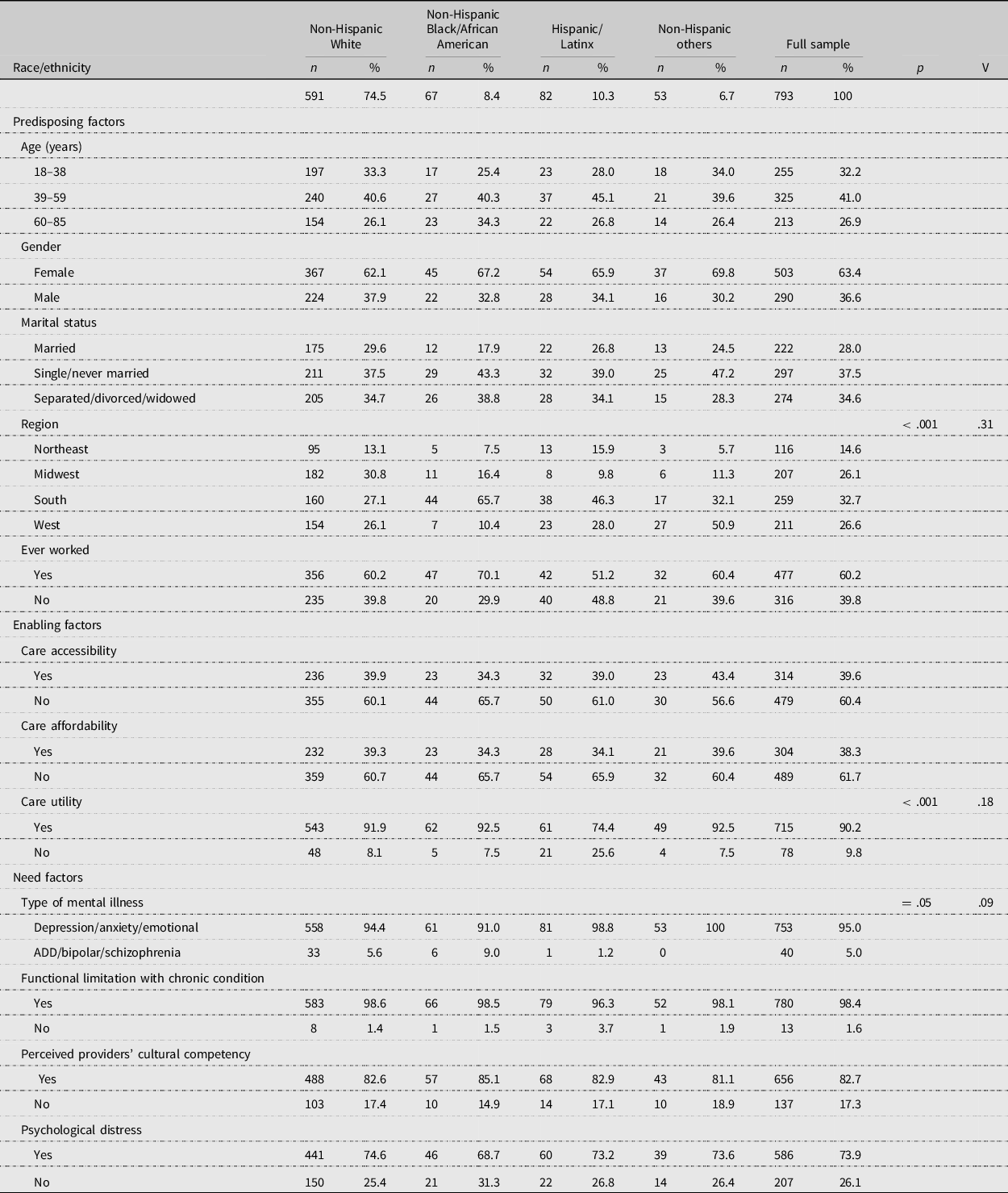
Table 2 represents the sociodemographic and health-related characteristics of the US adults with mental illness by race/ethnicity who were included in our study. A significantly large proportion of the respondents were between 39 and 59 years old (40%), women (70%), non-Hispanic White (80%), had experience in working (54%), don’t have good access to health care (51%), delayed care or are not able to afford to care (53%), and experiencing psychological distress (78%). There were statistically significant differences by race/ethnicity in region, health care service utility, and type of mental illness. A majority of our respondents utilize the physical and mental health care service (90%) and have difficulty in their daily functioning due to depression/anxiety/emotional issues (95%). For geographic regions, a third of Whites were from the Midwest, about 60% of Blacks were from the south, half of Asians were from the West, and over 70% of Hispanics were from southern and western regions. In terms of enabling factors, all race groups tend to utilize physical/mental health care services (close to 90% across the groups) except Hispanic/Latinx, which have the lowest proportion in utilizing the services (74%). In terms of needs factors, non-Hispanic others had the highest proportion of experiencing difficulty with daily functioning due to depression/anxiety/emotional issues (100%), followed by Hispanic/Latinx (98%) experiencing difficulty with daily functioning due to depression/anxiety/emotional issues.
Sociodemographic characteristics of participants and CIH use by race/ethnicity (N = 793)

3.2 Prevalence of CIH Use by Race/Ethnicity
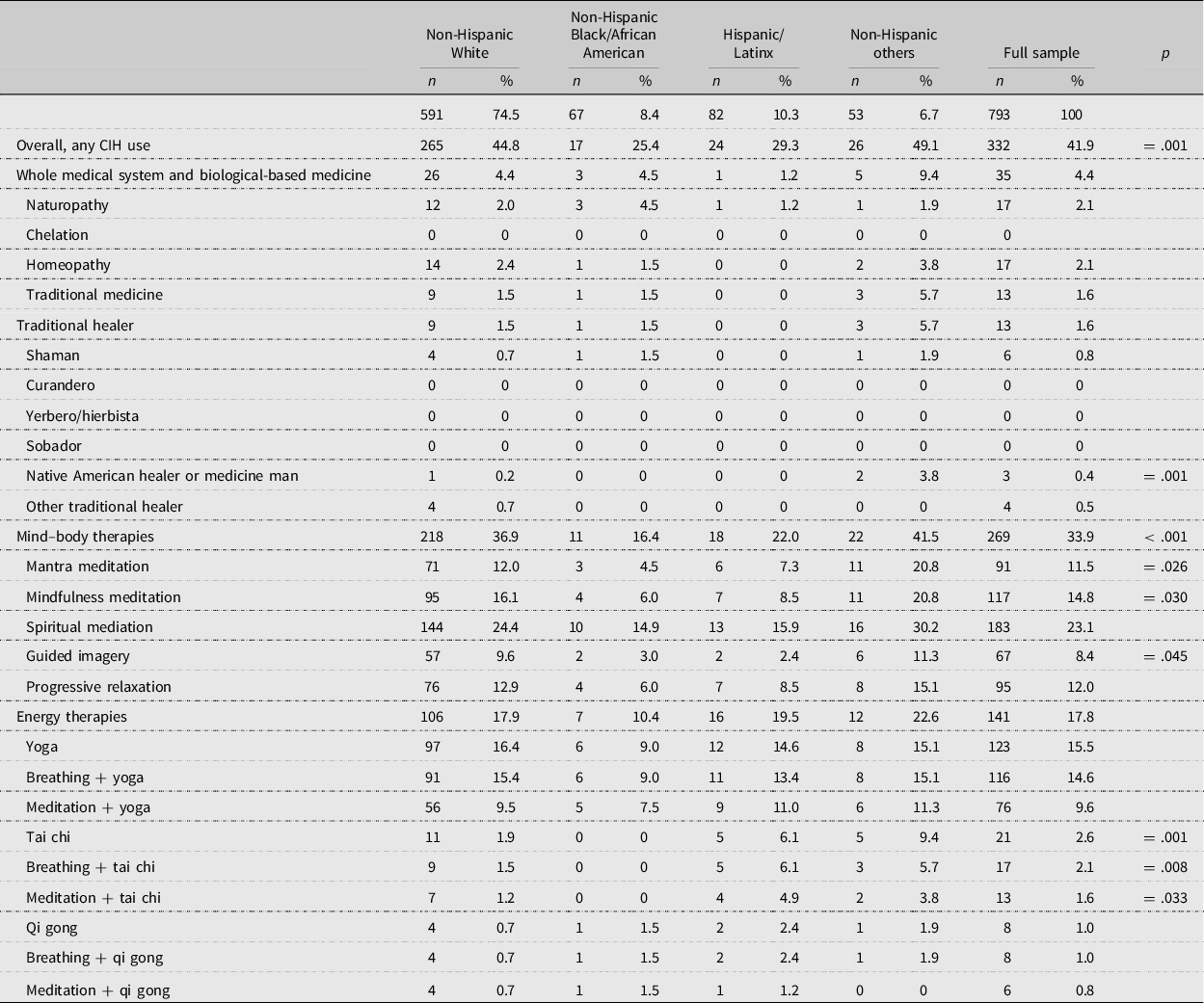
Table 3 presents the prevalence of CIH type used by adults in the United States with mental illness by race/ethnicity in the past year. Overall, about 40% of adults with mental illness reported having used at least one type of CIH in the past 12 months. Among adults with mental illness, non-Hispanic others reported using CIH the most (49%), whereas Black/African Americans (25%) had the lowest prevalence of CIH use across racial/ethnic groups. Close to 40% of the respondents used relaxation technique, especially by non-Hispanic others and White individuals. Additional racial/ethnic differences exist within each major type of CIH therapy. For instance, non-Hispanic/others reported seeing a Native American healer or medicine man (4%). When looking into different types of mind–body therapies, the non-Hispanic/other group tends to use mantra meditation (21%), mindfulness meditation (21%), and guided imagery (11%). A combination of the non-Hispanic/Other and Latinx/Hispanic group (approximately 10%) reported practicing tai chi, doing breathing and meditation as part of tai chi more than any other racial/ethnic group within energy therapies practices. On the other hand, Black/African Americans reported the least usage of any relaxation technique (16%), with the lowest proportion in mantra meditation (5%), mindfulness meditation (6%), and more in guided imagery than Latinx/Hispanic (3%). Meanwhile, Latinx/Hispanics reported using any mind–body therapies (22%) more than Black/African Americans (16%), whole medical system and biological-based medicine (1%), and guided imagery (2%) the least.
Prevalence of past year CIH use by CIH type and race/ethnicity

3.3 Odds of CIH Use
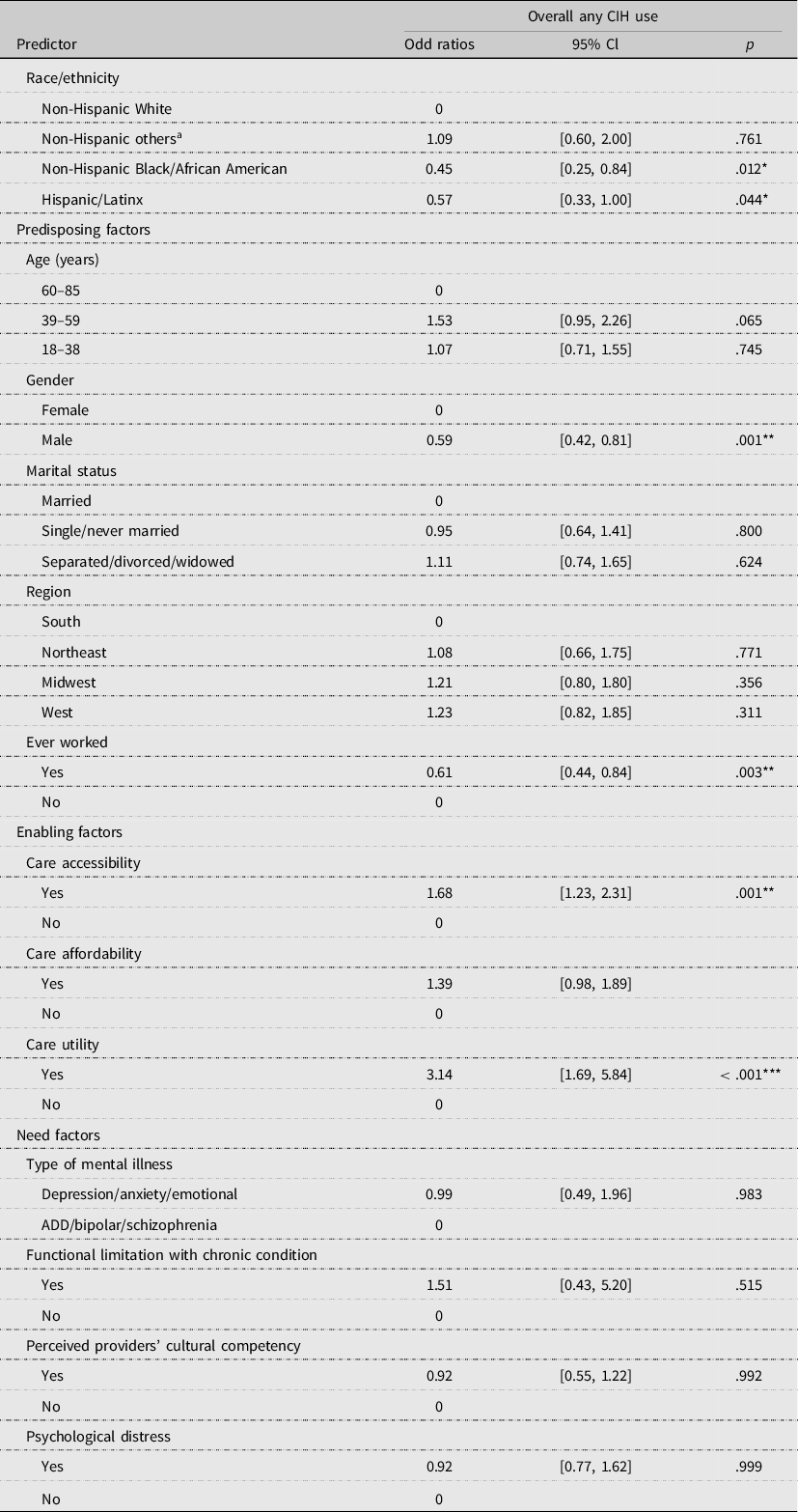
Table 4 presents the results of multivariate logistic regression models estimating the odds of any CIH use. The omnibus test for the final model was significant (LR χ2 = 968.68, df = 19, N = 793, p < .0001), indicating that the predisposing, enabling, and needs factors were significantly associated with the CIH use, particularly race/ethnicity, sex, age, the accessibility to physical/mental health care services, and its utilizations. Correct classification was 59.4%. The effect size is small as indicated by Cox and Snell R 2 = .108, the Negelkerke R 2 = .145 (Field, Reference Field2017; Tabachnick & Fidell, Reference Tabachnick and Fidell2018). The variables in the model only predicted about 10% of the variability in the CIH use. The goodness-of-fit results (χ2 = 647.13, df = 626, N = 793, p = .27) indicated that the model fit the data well.
Logistic regression analysis: predictive factors and any CIH use

a American Indian, Alaska Native, Asian, multiple races, and race group not released categories.
*p < .05. **p < .01. ***p < .001
Of all the variables entered for the multivariate logistic regression for adults with mental illness, when looking into race/ethnicity variables, non-Hispanic Black and Hispanic groups were negatively related to CIH use (β = −.80, SE = .31, Wald = 6.35, p = .012, Exp(β = .45) and (β = −.56, SE = .28, Wald = 4.06, p = .044, Exp(β = .57), respectively. The odds of CIH use decreased by a factor of .45 for non-Hispanic Black group. Also, the odds of CIH use decreased by .57 for Hispanic group.
Among predisposing factors, being male was negatively related to CIH use (β = −.53, SE = .17, Wald = 10.38, p = .001, Exp(β = .59). The odds of CIH use decreased by .59 for male respondents. If the individual had worked before, it was negatively related to CIH use (β = −.03, SE = .17, Wald = 8.79, p = .003, Exp(β = .61). The odds of CIH use decreased by .61 for the respondent that had work experience.
Among enabling factors, the lack of accessibility to different physical and mental health care services was positively related to CIH use (β = .52, SE = .16, Wald = 10.29, p = .001, Exp(β = 1.68). The odds of CIH use increased by 1.68 for the respondents who experienced the lack of access to care from different physical and mental health services. The regular utilization of the physical and mental health care services was also positively related to the CIH use (β = 1.14, SE = .32, Wald = 13.05, p < .0001, Exp(β = .3.14). The odds of CIH use increased by 3.14 for the respondents who regularly utilized the physical and mental health services.
3.4 Odds of CIH Types
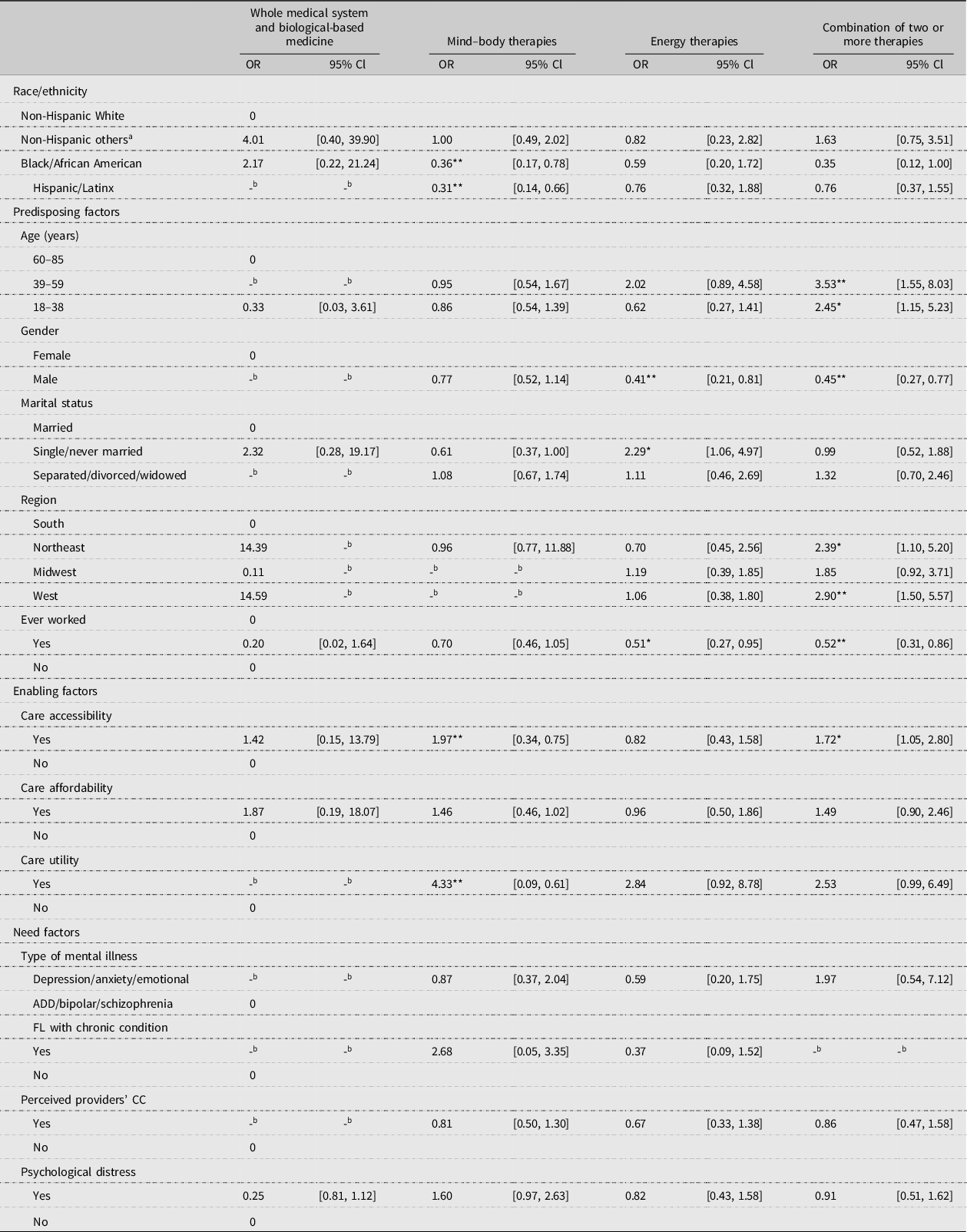
Table 5 presents the estimated multinomial logistic regression coefficients that predict the type of CIH therapies in log-odds units for each factor included in the final model. The CIH type of traditional healers was eliminated because there was no stand-alone use of this type of therapies. Thus, the category “combination of two or more therapies” was created. The omnibus test for the final model was significant (LR χ2 = 1436.78, df = 76, N = 793, p < .0001), indicating that the factors were significantly associated with the types of CIH therapies. Correct classification was 66.1%. The effect size is indicated by the Cox and Snell R 2 was .236, and the Negelkerke R 2 was .263. The variables in the model predicted about 20% of the variability in the CIH use. The goodness-of-fit results (χ2 = 2003.06, df = 2504, N = 793, p = 1.00) indicated that the model fit the data well.
Multinomial logistic regression: predictive factors and CIH types

Note. CC, cultural competency; FL, functional limitation; Cl, confidence interval.
a American Indian, Alaska Native, Asian, multiple race, and race group not released categories.
b Floating point overflow occurred while computing this statistic. It value is therefore set to system missing.
*p < .05. **p < .01. ***p < .001.
Holding all the other variables in the model constant with no use of any type of CIH therapies as the reference category, non-Hispanic Black (β = −1.03, SE = .39, Wald = 6.79, p = .009, Exp(β = .36) and Hispanic groups (β = −1.17, SE = .39, Wald = 9.05, p = .003, Exp(β = .31) were negatively related to mind–body therapies. The odds of using mind–body therapies decreased by .36 for the non-Hispanic Black/African American and decreased by .31 for the Hispanic/Latinx respondents. Among enabling factors, lack of access of care (β = .69, SE = .20, Wald = 12.11, p = .001, Exp(β = 1.97) and care utility (β = 1.47, SE = .49, Wald = 8.95, p = .003, Exp(β = 4.33) were positively associated with mind–body therapies. The odds of using mind–body therapies increased by a factor of 1.97 when the respondents experienced lack of access to care. On the other hand, the odds of using mind–body therapies increased by 4.33 when the respondents utilized the physical and mental health care services.
Variables such as sex, marital status, and work experience were significant predictors of energy therapies. Being a man was negatively associated with the use of energy therapies (β = −.89, SE = .34, Wald = 6.75, p = .009, Exp(β = 0.41). Similarly, when the respondents had worked before, they tended to be negatively related to the use of energy therapies (β = −.68, SE = .32, Wald = 4.53, p = .033, Exp(β = .51). The odds of using energy therapies decreased by .41 for a male respondent and decreased by .51 for a respondent that had worked before. Respondents who are single or never been married were positively related to the use of energy therapies (β = .83, SE = .40, Wald = 4.40, p = .036, Exp(β = 2.29). The odds of using energy therapies increased by a factor of 2.29 for respondents who are single or never married.
Variables such as age, sex, region, work experience, and lack of access to care are significant predictors for the use of the combination of two or more types of CIH therapies. The age group of 18–38 years (β = 1.26, SE = .42, Wald = 9.03, p = .003, Exp(β = 3.53) and 39–59 years (β = .89, SE = .39, Wald = 5.35, p = .021, Exp(β = 2.45) were positively related to the use. The odds of using any combination of two or more types of CIH therapies increased by 3.53 for respondents who are were in the age group of 18–38 years and increased by 2.45 for the age group of 39–59 years. We also found a positive relationship between respondents who lived in Northeast (β = .87, SE = .40, Wald = 4.86, p = .027, Exp(β = 2.39) and West (β = 1.06, SE = .33, Wald = 10.11, p = .001, Exp(β = 2.90) region. The odds of using any combination of two or more types of CIH therapies increased by 2.39 for respondents who lived in the Northeast region and increased by 2.90 for respondents who lived in the West region. On the other hand, being a male is negatively related to the use of combination of two or more types of CIH therapies (β = −.79, SE = .27, Wald = 8.53, p = .003, Exp(β = 0.45). The odds of using the combination of two or more types of CIH therapies decreased by .45 for respondents who identified as being males. There is also a negative association between work experience and the use of two or more CIH therapies (β = −.66, SE = .26, Wald = 6.62, p = .010, Exp(β = 0.52). The odds of using the combination of two or more types of CIH therapies decreased by .52 for a respondent who had ever worked. Lastly, we found that the lack of access to care was positively associated with the use of two or more types of CIH therapies (β = .54, SE = .25, Wald = 4.66, p = .031, Exp(β = 1.72). The odds of using two or more types of CIH therapies increased by 1.72 for an individual with a lack of access to care.
4. Discussion
Although the respondents of this study were adults with mental illness, the demographic characteristics are similar to previous studies in which individuals who use CIH therapies were likely to be White middle-aged women who had worked before and experienced psychological distress (Littlewood & Vanable, Reference Littlewood and Vanable2014; Ndao-Brumblay & Green, Reference Ndao-Brumblay and Green2010; Rhee et al., Reference Rhee, Evans, McAlpine and Johnson2017). We provided evidence of several disparities by race/ethnicity among US adults with mental illness and the association between the CIH use. When looking into the enabling factors, we found that only 74% of Latinx/Hispanic adults with a mental illness utilized conventional health care services. However, about 90% of the other racial/ethnic groups including Whites utilized conventional health care services. We reiterated the disparities in treatment and in the quality of life among Hispanic/Latinx with mental illness (American Psychiatric Association [APA], 2018). Researchers have identified treatment barriers, such as lack of bilingual health providers, social stigma on mental health, misdiagnosis, and insurance issues (American Psychiatric Association [APA], 2018).
When looking into the CIH use, compared to their White counterparts, Latinx/Hispanic and Black/African Americans groups have shown disparity in its use. Despite the increasing acceptance of integrative health care in the nation, Black/African American and Hispanic/Latinx groups remained the least proportional in both the CIH use and conventional health care services (Alwhaibi et al., Reference Alwhaibi, Bhattacharya and Sambamoorthi2015; Kronenberg et al., Reference Kronenberg, Cushman, Wade, Kalmuss and Chao2006; Okoro, Zhao, Li & Balluz, Reference Okoro, Zhao, Li and Balluz2012; Rhee et al., Reference Rhee, Evans, McAlpine and Johnson2017; Su & Li, Reference Su and Li2011).
These disparities may be explained by a variety of reasons. First, racial/ethnic minority groups who vary in their culture and level of health literacy may have different interpretations of various terms and phrases of complementary integrative health therapies (Bains & Egede, Reference Bains and Egede2011; Gardiner et al., Reference Gardiner, Whelan, White, Filippelli, Bharmal and Kaptchuk2013; Mackenzie, Taylor, Bloom, Hufford & Johnson, Reference Mackenzie, Taylor, Bloom, Hufford and Johnson2003). Some researchers suggested that terms such as “plant-based medicine” or “home remedies” may be more common in the community, instead of using the terms, such as traditional medicine, naturopathy, homeopathy, or chelation (Gardiner et al., Reference Gardiner, Whelan, White, Filippelli, Bharmal and Kaptchuk2013; Revell, Reference Revell2012). Since home remedies or botanica provider’s services are often used as the initial attempt in addressing an illness, individuals consult a health care provider only after failed attempts in using traditionally based healing methods (Gomez-Beloz & Chavez, Reference Gomez-Beloz and Chavez2001; Revell, Reference Revell2012). Second, the high prevalence of CIH therapies use in racial/ethnic minorities are related to self-care practices and their own healing traditions, which have been passed down from generation to generation (Gardiner et al., Reference Gardiner, Whelan, White, Filippelli, Bharmal and Kaptchuk2013; Nguyen et al., Reference Nguyen, Sorkin, Billimek, Kaplan, Greenfield and Ngo-Metzger2014; Whaley, Reference Whaley2019). The self-disclosure of the CIH use to the medical or mental health professionals is limited among racial/ethnic minority group (Wallen & Brooks, Reference Wallen and Brooks2012). Third, spirituality and religion are important among Blacks and Latinx communities. Blacks/African Americans and Latinx turned to devotional and spiritual practices, such as prayers and bible reading as coping strategies that improved the quality of life when living with chronic illness (Rush et al., Reference Rush, Lobo, Serrano, Blasini, Campos and Graves2016; Tate, Reference Tate2011; Watson-Singleton et al., Reference Watson-Singleton, Black and Spivey2019). A larger proportion of Blacks/African Americans and Latinx/Hispanic Americans reported integrating prayer as their health promotion approach compared to European Americans (Gillum & Griffith, Reference Gillum and Griffith2010; Upchurch, Dye, Chyu, Gold & Greendale, Reference Upchurch, Dye, Chyu, Gold and Greendale2010). Barnett and Shale (Reference Barnett and Shale2012) also pointed out the importance of prayers to be integrated into the practice of psychology. However, prayers or bible reading was not included as one of the CIH therapies in NHIS 2017 (NCCIH, 2020b). Fourth, Blacks/African Americans are more likely to use CIH therapy, such as indigenous healers when they experience poor physical health conditions (Whaley, Reference Whaley2019).
When investigating the use of specific CIH therapies, we found that racial/ethnic minority groups reported less than 6% to zero use of a traditional healer; and the usage of traditional healers were not reported among the Hispanic group. However, use of a Native American healer or “medicine man” was statistically significant among non-Hispanic others, which included Native Americans in this group. It appears that traditional knowledge, beliefs, and practices, including traditional healing practices, are utilized by Native Americans with mental illness. Although further research is warranted, George, Duran and Norris (Reference George, Duran and Norris2014) indicated that those who used traditional healing practices have a stronger First Nation identity, better self-reported spiritual health, higher scores on historical loss and historical loss symptoms, and higher levels of anxiety compared with people who did not use them. Moreover, Native Americans health promotion is based on the principle of achieving balance of the mind–body–spirit–environment. They advocate for integrating conventional care and the traditional healing, which is essential (Horowitz, Reference Horowitz2012). These common factors may be useful in the traditional healing practices for health promotion of Native Americans who live with mental illness. In addition, the Latinx group utilized traditional healers to treat mental illness. Because of this spiritual healing process, there might be nondisclosure in using traditional healer/medicine man among racial/ethnic minority groups, especially Latinx/Hispanic groups, to people outside of that group. For example, Curanderismo is not accepted as a form of psychotherapy in Mexican law and has historically been considered a “medicine of the underground” because it was rejected and individuals were persecuted by the Catholic Church’s inquisitional movement (Zacharias, Reference Zacharias2006). Furthermore, since such practices are often seen by Western culture as irrational and superstitious, the internalized social stigma of such practice could exhibit within the community (Koss-Chioino, Reference Koss-Chioino, Koss-Chioino and Hefner2006).
We also found that Black/African Americans and Latinx/Hispanic group were negatively related to the use of mind–body therapies, which consisted of mantra meditation, mindfulness meditation, guided imagery, and progressive relaxation. Although researchers emphasized the positive impact of mindfulness intervention with Blacks/African Americans (Greenfield et al., Reference Greenfield, Roos, Hagler, Stein, Bowen and Witkiewitz2018; Watson-Singleton et al., Reference Watson-Singleton, Black and Spivey2019), our study revealed otherwise. The disparity in using a mindfulness modality may be due to the beliefs that these approaches were in contradiction to Christian religious practices. Mind–body therapies may also be perceived as practicing another religion as well as/along with having limited knowledge about the perceived benefits from mindfulness intervention (Watson-Singleton et al., Reference Watson-Singleton, Black and Spivey2019). Other factors mentioned were related to a lack of culturally relevant adaptation, stigma, caretaking tensions, and extensive time commitment in mindfulness intervention (Watson, Black & Hunter, Reference Watson, Black and Hunter2016). Moreover, religion and prayer have been commonly included in the treatment of addiction, depression, and the symptoms of trauma among Blacks/African Americans and other racial ethnicity minority groups (Johnson et al., Reference Johnson, Williams and Pickard2016; Kawaii-Bogue, Williams & MacNear, Reference Kawaii-Bogue, Williams and MacNear2017). Blacks/African Americans are also more likely to use CIH when they experience poor physical health and have adequate health literacy in a mental health condition (Bains & Egede, Reference Bains and Egede2011; Whaley, Reference Whaley2019).
On the other hand, compared to the earlier studies regarding the increasing prevalence of CIH use among Whites (Rhee et al., Reference Rhee, Evans, McAlpine and Johnson2017; Su & Li, Reference Su and Li2011), non-Hispanic others in our study were more likely to use mind-body and energy therapies. Generally, racial/ethnic minorities perceived CIH as being closer to their cultural traditions with less addictive medicine than conventional treatment and believed that CIH treats the body as a whole such as using mindfulness and meditation (Lor, Moua & Ip, Reference Lor, Moua and Ip2016; Nguyen et al., Reference Nguyen, Sorkin, Billimek, Kaplan, Greenfield and Ngo-Metzger2014). Other factors, including level of education, English proficiency, perceived discrimination, and acculturation may be positively associated with the use of CIH therapies among Asian Americans (Choi & Kim, Reference Choi and Kim2010; Lee, Goldstein, Richard Brown & Ballard-Barbash, Reference Lee, Goldstein, Richard Brown and Ballard-Barbash2010; Misra, Balagopal, Klatt & Geraghty, Reference Misra, Balagopal, Klatt and Geraghty2010). Our study also revealed that the lack of access to health care was positively associated with the use of two or more CIH therapies. This result is similar to Okoro et al. (Reference Okoro, Zhao, Li and Balluz2012) where the researchers explained that CIH therapies might be seen as a less expensive alternative to the growing cost of conventional health care, especially when the cost had been a barrier to the needed care. Additionally, racial/ethnic diverse groups may also have limited awareness of the various types of CIH therapies that are available. Providers should play a role in increasing clients’/users’ awareness in CIH use. The diversity of health belief systems and practices espoused by contemporary Americans, especially those associated with a particular ethnic group, should be considered and validated (Mackenzie et al., Reference Mackenzie, Taylor, Bloom, Hufford and Johnson2003).
Our findings are consistent with recent reports stating that CIH users tend to be young or middle aged and they had been incorporating CIH into their healthy lifestyle behaviors (Okoro et al., Reference Okoro, Zhao, Li and Balluz2012; Rhee et al., Reference Rhee, Evans, McAlpine and Johnson2017; Upchurch & Rainisch, Reference Upchurch and Rainisch2012). Although previous studies suggested that adults used CIH to cure chronic conditions (Falci et al., Reference Falci, Shi and Greenlee2016; Taylor et al., Reference Taylor, Herman, Marshall, Zeng, Yuan, Chu and Lorenz2019), there was no reports of why young or middle-aged adults were likely to use CIH in those studies. Additional research investigating the reasons in which young or middle-aged adults, particularly young or middle-aged adults with mental illness, and their reasons and patterns of CIH integration into healthy lifestyle behaviors is warranted.
Overall, sociodemographic characteristics such as being a male, Black/African American, or Latinx/Hispanic and had work experience were predictors of no use of the CIH therapies, specifically energy therapies such as yoga, qi gong, and tai chi. There is a dearth of research regarding men with mental health conditions and their use of CIH. Some researchers provided evidence on the high prevalence of CIH use among men for physical health and reinforcing masculinity identities, rather than as a method to promote well-being (Atkinson, Reference Atkinson2007; Brenton & Elliott, Reference Brenton and Elliott2014; Sointu, Reference Sointu2011; Zhang et al., Reference Zhang, Leach, Hall, Sundberg, Ward, Sibbritt and Adams2015). Individuals with disabilities who had worked before might have public health insurance that offered limited coverage for CIH therapies or only covered one modality such as acupuncture, chiropractors, acupuncturists, and massage therapists, thus leading to the least usage of CIH (Field, Jette & Martin, Reference Field, Jette and Martin2007; Nahin et al., Reference Nahin, Barnes and Stussman2016).
4.1 Implications
Alliance health professionals, including rehabilitation counselors, have the responsibility to initiate the topic of CIH with respectful cultural humility using a strong working alliance approach. Such actions/behaviors could increase the self-disclosure of CIH use and reduce the internalized social stigma regarding its use (Wallen & Brooks, Reference Wallen and Brooks2012). Moreover, ethnic minority populations are open to integration of the CIH use with conventional medicine when it is perceived as having safe and natural properties (Agu, Hee-Jeon, Steel & Adams, Reference Agu, Hee-Jeon, Steel and Adams2019). Furthermore, since prayers and religious practices are an integral part of the Black/African American community, collaboration with the Black/African American Church can provide an effective support network for mental health promotion in rehabilitation counseling, including providing training and informational and referral support for a range of mental health challenges (Robinson, Jones-Eversley, Moore, Ravenell & Adedoyin, Reference Robinson, Jones-Eversley, Moore, Ravenell and Adedoyin2018). Future research on men with mental illness who are also with diverse background and their relationship with CIH use is warranted.
The relationship between mental health literacy and CIH use differed significantly by race (Bains & Egede, Reference Bains and Egede2011). It is critical to improve physical and mental health literacy among racial/ethnic minority individuals by developing a culturally responsive outreach program, connecting cultural concepts and its effect on mental health, normalize help-seeking behavior, and reduce self-stigma (Cheng et al., Reference Cheng, Wang, McDermott, Kridel and Rislin2018). Lastly, the development of culturally appropriate national measurement and methods to assess CIH use among racially and ethnically diverse individuals with mental illness is warranted to provide more comprehensive data for this population.
4.2 Limitations
NHIS data are self-reported and therefore subject to self-report bias, recall bias, social desirability bias, and underreporting due to racial/ethnic minority’s mistrust of medical research. Also, due to the small sample size for Native Americans and Alaska Natives, we combined these two groups into the Asian Americans and multiple races categories. Future research that is specifically based on Native Americans and Alaska Natives group is warranted to have a better understanding of their usage of traditional healers as a CIH therapy. We did not take into account within race/ethnic group differences on their use of CIH. The survey also did not provide the level of severity of respondents’ mental illness diagnosis. Lastly, mental health care, acupuncture service, and physical health care were combined into one conventional health care in this study.
5. Conclusion
Tremendous efforts must be made to bridge the gaps on the CIH use among racial/ethnic diverse individuals with mental illness. Collaboration between rehabilitation counselors and community-based CIH therapies is pivotal in enhancing mental health promotion and quality of life among racially and ethnically diverse individuals who live with mental illness. The findings of this study also reinforce the importance of rehabilitation counselors to intentionally engage in conversation regarding the possible CIH use with their consumers with diverse background to stimulate equitable and wholistic mental health care.
Acknowledgments
The authors thank Dr. Choya Wilson for proofreading the manuscript.
Financial support
This research received no specific grant from any funding agency.
Declaration of interest statement
The authors report no actual or potential conflicts of interest.
This manuscript is an original work that has not been submitted to nor published anywhere else. All authors have read and approved the paper and have met the ICMJE criteria for authorship listed above. All authors have also read the discussion provided by the ICMJE on overlapping publications.