




No CrossRef data available.
Article contents
The relationship between IgA activity against 4th-stage larvae and density-dependent effects on the number of 4th-stage larvae of Teladorsagia circumcincta in naturally infected sheep
Published online by Cambridge University Press: 23 August 2004
Abstract
The number of Teladorsagia circumcincta 4th-stage larvae in naturally infected lambs from a single farm varied among lambs and among different years. Within each year the distribution of 4th-stage larvae among lambs was similar to that expected from a negative binomial distribution. The ratio of 4th-stage larvae to adult T. circumcincta was low in two years with a low mean intensity of infection but high in two years with a higher mean intensity of infection. The negative binomial distribution is defined by the mean and by k, a parameter that measures dispersion; k was low when mean infection intensity was low but higher when mean infection intensity was high. As k is an inverse index of overdispersion this indicated that the distribution of 4th-stage larvae was more overdispersed at low levels of infection. In a combined analysis, the number of adult T. circumcincta and the plasma IgA activity against 4th-stage larvae were both associated with increased numbers of 4th-stage larvae. There was a statistical interaction between the number of adults and IgA activity that moderated their combined effect.
Information
- Type
- Research Article
- Information
- Copyright
- © 2004 Cambridge University Press
INTRODUCTION
Teladorsagia circumcincta is a major constraint on sheep production in cool temperate areas of the world (Urquhart et al. 1987). It is well adapted to its ovine host and is able to suspend development by going into inhibition within the host shortly after moulting to the 4th stage (Dunsmore, 1960; Eysker, 1997). The ability to inhibit development in adverse conditions may contribute to the success of this parasite by allowing it to avoid egg-laying when the survival of progeny on pasture is low, for example during winter in northern Europe. Inhibited larvae are able to resume development during more advantageous periods. Simultaneous development of large numbers of inhibited larvae can lead to diarrhoea, emaciation and death. This disease is known as type II teladorsagiosis, previously known as type II ostertagiasis (Armour & Coop, 1991).
There appear to be at least 4 mechanisms underlying inhibition and emergence from inhibition but they are poorly understood. The season influences the proportion of larvae that inhibit development. In northern Europe, a larger proportion of 3rd-stage larvae ingested during the autumn will go into inhibition compared to those ingested earlier in the year. This may be a consequence of larval chilling, at least in the related cattle nematode Ostertagia ostertagi (Armour & Bruce, 1974). Secondly, some parasite isolates can go into inhibition while others cannot; again this has been shown for O. ostertagi (Borgsteede & Eysker, 1987) but may also apply in sheep. Thirdly, the development of immunity has also been associated with inhibition. Previously infected lambs have more inhibited larvae than naïve controls (Smith et al. 1984). This is supported by the observation that sheep immunosuppressed by cortisone or whole body irradiation have fewer inhibited larvae than controls (Dunsmore, 1961). Specifically, animals with increased activity of parasite-specific IgA or increased numbers of IgA positive cells in lymph have more inhibited larvae (Smith et al. 1985; Stear et al. 1995b). Finally, there appears to be a density-dependent process. Animals with large numbers of adults have, on average, more inhibited larvae than animals with fewer adult T. circumcincta (Dunsmore, 1960). The density-dependent component may act through an immune mechanism where increased numbers of parasites provoke stronger immune responses or independently of immunity, for example through competition for food and shelter (Anderson & Michel, 1977).
The aim of the present study was to quantify the distribution of 4th-stage larvae (L4) and to investigate the forces influencing this distribution. In particular, we wished to see whether previously reported larval associations with adult worm number and with parasite-specific IgA activity could be confirmed in naturally infected lambs.
MATERIALS AND METHODS
Animals
All sheep were straightbred Scottish Blackface sheep from a commercial upland farm in south-west Strathclyde. Animals from a single farm were studied to minimize the influence of strain variation on inhibition. All husbandry procedures followed normal, commercial practice and have been described previously (Stear et al. 1998). All lambs were kept on the same field after weaning at 3 or 4 months of age until slaughter at 6–7 months of age at the local abattoir. Animals were slaughtered during the last week in October or the first week in November to minimize variation in seasonal effects on larval inhibition. To maintain health and welfare, all lambs were given anthelmintic (albendazole sulphoxide at the dose rate recommended by the manufacturer) 6 or 7 weeks before slaughter. The data were collected over 4 consecutive years (Stear et al. 1998) to accumulate sufficient data and to avoid bias due to unusually heavy or light infections in specific years.
Parasitological procedures
Standard procedures were used to estimate the number of 4th-stage, 5th-stage and adult nematodes in the abomasum and small intestine (Armour, Jarrett & Jennings, 1966). On average, over 70% of the worms identified at necropsy were T. circumcincta but these sheep also contained small populations of Cooperia spp., Nematodirus spp., Trichostrongylus vitrinus, Trichostrongylus axei and Haemonchus contortus (Stear et al. 1998). All adult worm burdens included males, females and unsexed 5th-stage larvae. They were transformed by taking the logarithm to the base 10 of the value plus 1 (Stear et al. 1998).
IgA activity
The activity of plasma IgA against a somatic extract of 4th-stage larvae from T. circumcincta was measured by indirect ELISA (Strain et al. 2002). To estimate IgA activity, the mean of 3 replicates from a pooled sample of helminth-naïve lambs was used. The value for each lamb was expressed as a proportion of a positive control, which was created by combining equal quantities of plasma from 6 lambs that gave strong IgA responses following natural infection. IgA activity was measured in September, 6 or 7 weeks before lambs were necropsied. IgA activity against 4th-stage larvae varied between years and was higher in females than males (Strain et al. 2002). Mean values ranged from a low of 0·174 in 1994 males to a high of 0·252 in 1993 females. The distribution of IgA activity among lambs was positively skewed (Strain et al. 2002) and the logarithm of IgA activity +1 was used in all analyses.
Statistical analyses
SAS programs (SAS Institute, Cary, N. Carolina) were used for statistical analyses. The univariate procedure was used to estimate means, standard errors of the mean and standard deviations. Chi-square tests were used to examine the goodness of fit to the negative binomial distribution. The GENMOD procedure and the GLIMMIX macro were used for generalized linear modelling. The default link function was used, i.e. log for the negative binomial. A single generalized linear model that fitted the effect of year only was used to determine whether the negative binomial distributions differed significantly among years. Confidence intervals were then used to compare the negative binomial parameters for specific years. The negative binomial distribution is defined by 2 parameters (the mean and a shape parameter k). Maximum likelihood methods were used to estimate the parameters for each year (Bliss & Fisher, 1953). Maximum likelihood estimates are known to be asymptotically normal but asymptotic assumptions are not necessarily valid with finite data sets. We examined the behaviour of the parameters by repeated sampling in silico from negative binomial distributions with the same parameters and similar sample sizes to those fitted to the data. Confidence limits for the mean were then calculated on the assumption that we were sampling from a normal distribution but estimates for the shape parameter (k) did not conform to a normal distribution. Therefore we employed a non-parametric bootstrap procedure to identify 95% confidence limits (Efron & Tibshirani, 1993). The bootstrap interval was slow to converge and a total of 128000 bootstrap samples were used to ensure that the 95% bootstrap intervals were accurate to 2 decimal places. The asymptotic behaviour of the shape parameter has been examined in more detail elsewhere (van de Ven & Weber, 1999).
The variance and the mean number of 4th-stage larvae were calculated separately for each year and log-transformed data were used to examine the relationship between the variance and the mean (Taylor, 1961). The general linear models procedure (GLM) was used for this regression.
The effects of IgA activity and number of adults were first estimated in separate models then estimated in a combined model. As the distribution of 4th-stage larvae is a discrete, overdispersed distribution, the negative binomial distribution was used. Type 3 statistics were employed. Each equation presents the estimate (+S.E.). Examination of the scaled deviances indicated that these models provided good fits to the data (P>0·05).
RESULTS
The number of L4 recovered from naturally infected lambs ranged from 0 in 130 sheep to 27100 in 1 animal. The distribution of larvae was skewed (Fig. 1). The arithmetic mean number of larvae (±standard error of the mean) in each lamb was 2423 (±180) but this masked considerable variation between years (Table 1). The mean number of larvae across years varied from a high of 5738 in 1992 to a low of 528 in 1993. The mean value for the ratio of L4 to adult T. circumcincta was 0·79 with a standard deviation of 1·70. This distribution was skewed and most animals had a relatively low ratio.

Fig. 1. The distribution of 4th-stage larvae among naturally infected lambs. The values on the horizontal axis represent the midpoints. Thus 1000 represents animals with values between 0 and 1999 4th-stage larvae.

The distribution of larvae among lambs in each year followed a negative binomial distribution (Table 2, Fig. 2A, B, C, D). The shape parameter (k) was only 0·29 and 0·22 in 1993 and 1994 respectively when the mean intensity of infection was relatively low but 0·57 and 0·52 in 1995 and 1992 when the mean intensity of infection was relatively high. As k is an inverse index of dispersion these values indicate that the distribution of 4th-stage larvae is more overdispersed in years with relatively low levels of infection.

Fig. 2. The relationship between the observed distribution of 4th-stage larvae and that expected from a negative binomial distribution with the same mean and shape parameter. All samples came from sheep on the same field on the same farm in different years (A) 1992, (B) 1993, (C) 1994, (D) 1995.

Fig. 3 presents the relationship between k and the mean for the 4th-stage larvae in the 4 years and for comparison presents the values for faecal egg counts and number of adult nematodes in the same sheep sampled at the same time. The lower values for k demonstrate that 4th-stage larvae are more overdispersed than adult nematodes. The 4th-stage larval counts are generally more overdispersed than faecal egg counts although egg counts show considerable variation between years in the extent of overdispersion.

Fig. 3. The relationship between the shape parameter (k) and the mean of the negative binomial distribution for different life-cycle stages of T. circumcincta. The same animals were used to estimate the mean and shape parameters for the different life-cycles. Each life-cycle was examined in 4 successive years.
The ratio of L4 to adult T. circumcincta also varied among years (Table 1). The ratio was relatively low in years of low infection intensity, being only 0·18 in 1993 and 0·31 in 1994 compared to 0·81 in 1992 and 1·03 in 1995. These ratios indicated a positive relationship between the number of adults and 4th-stage larvae across years. As the number of adults increased there was a disproportionate increase in the number of 4th-stage larvae, suggesting the existence of density-dependent effects.
There was a close relationship between the mean and variance of the numbers of L4 in different years. The variance was equal to the mean to the power 2·09±0·04 (P<0·0001). As the power index was close to 2, a logarithmic transformation was examined for possible use in further analyses. In an attempt to ensure continuity of the distribution and to avoid problems with values of 0, a value of 100 was added to values prior to transformation. This transformation produced an asymmetric, bimodal distribution, with modes of 2·0 and 3·4; the mode of 2·0 was a consequence of the relatively high proportion of lambs with no observed L4. Consequently, all further analyses used generalized linear models with untransformed 4th-stage larval counts or ratios of L4 to adults.
Differences in the distribution of 4th-stage larvae among years were tested in a single generalized linear model with a negative binomial distribution. This model fitted only the effect of year. The differences among years were highly significant (P<0·0001; n=533). Examination of the confidence intervals revealed that the estimates for the mean and k in the 2 years of high infection intensity (1992 and 1995) were significantly different from the 2 years with low infection intensities (1993 and 1994). However, the estimates from the 2 high years did not differ significantly from each other. Similarly, the estimates from the 2 relatively low years were not significantly different from each other.
The association between the number of L4 and log-transformed adult worms was examined in a generalized linear model with a negative binomial distribution. The relationship was:

This positive relationship indicates that as the number of adult T. circumcincta increased there was a corresponding increase in the number of inhibited larvae.
The relationship with IgA activity against 4th-stage larvae was also investigated in a generalized linear model. The relationship was:

The relationship was positive but not statistically significant.
Both the number of adult T. circumcincta and IgA activity were tested together with their interaction. All 3 effects were highly significant. The probabilities that the observed associations were due to chance were P<0·001 for log-transformed adult worm number, for transformed IgA activity and for the interaction. The interaction term was negative which indicated that the combined effect was less than the sum of the individual effects. The equation was

DISCUSSION
The distribution of 4th-stage larvae of T. circumcincta in naturally infected lambs was skewed and the mean number of larvae varied among years. Sheep with more adult T. circumcincta had more 4th-stage larvae. Increased IgA activity against 4th-stage larvae was also associated with increased numbers of L4. There was a statistical interaction between IgA and density dependence that moderated their joint effect.
The negative binomial distribution has long been used to describe parasite distributions (Hunter & Quenouille, 1952; Bliss & Fisher, 1953). This distribution also provided a good fit to our data although the parameters of this distribution varied between years. To our knowledge there are no other reports on the fitting of the negative binomial distribution to 4th-stage larvae of abomasal nematodes in sheep. The negative binomial distribution was successfully fitted to total worm counts for 4 genera of nematodes (Haemonchus, Teladorsagia, intestinal Trichostrongylus and Nematodirus) in 3-month-old lambs from Australia (Barger, 1985). We estimated parameters for the negative binomial distribution of adult male and female T. circumcincta in 6 to 7-month lambs over 4 years (Stear et al. 1998) using the same cohorts as in this study. In the study reported here, including 5th-stage larvae in the adult totals decreased the overdispersion and raised the estimates of k but with or without 5th-stage larvae in the adult total, the distribution of 4th-stage larvae was more dispersed than the distribution of adult T. circumcincta. This increased dispersion was consistent with the existence of density-dependent effects on larval inhibition.
The negative binomial distribution has been used to describe the distribution of faecal egg counts in sheep (Hunter & Quenouille, 1952; Donald, 1968; Roberts & Swan, 1982; Grenfell et al. 1995; Stear et al. 1995a). The overdispersion of faecal egg counts generally lies between that reported for 4th-stage larvae and adult worm counts, although there is an increased scatter of estimates for k in faecal egg counts. The increased scatter could reflect the contribution of different genera of nematodes to egg counts, although other processes may also influence the amount of dispersion (Grenfell et al. 1995; Stear et al. 1995a).
The distributions of 4th-stage larvae were highly skewed and logarithmic transformation produced a bimodal and not a normal distribution. One alternative to logarithmic transformations is generalized linear modelling with untransformed data (McCullagh & Nelder, 1989; Wilson & Grenfell, 1997) and this was the method employed here.
There was a statistical interaction between IgA activity and the number of adult T. circumcincta and the observed number of L4 was less than that predicted by considering each component separately. Paterson & Viney (2002) have demonstrated that the immune response regulates density-dependent effects on the establishment, survival and fecundity of Strongyloides ratti in rats. This is intriguing although there is no direct evidence in our system to indicate whether IgA activity and density dependence act separately or through the same mechanism.
The positive association between IgA activity and number of 4th-stage larvae was consistent with results from deliberate infections (Smith et al. 1985; Stear et al. 1995b). Increased IgA activity against 4th-stage larvae has also been associated with shorter and less fecund adult worms (Stear et al. 1995b). These associations suggest that sheep may use similar mechanisms to both inhibit and retard larval growth.
The results in this paper should be interpreted cautiously, however. The procedures for counting 4th-stage larvae are technically demanding and prone to error (Eysker, 1997). Unfortunately, measurement variation has not been quantified for this procedure but, as with faecal egg counts (Stear, Park & Bishop, 1996; Mes, 2003), it is likely to be substantial. Both adult worm counts and 4th-stage larval counts are difficult to estimate precisely and the relationship between them may vary among animals. In years with a high mean number of adults per sheep, the ratio of L4 to adults was greater than in years with a low intensity of infection; this observation suggests that the ratio of L4 to adults was dependent on adult worm density.
In addition, plasma IgA activity is determined by local IgA activity at the site of infection and by the number of adult worms. Large numbers of parasites reduce the proportion of IgA transferred from the abomasal mucosa to the plasma, presumably by binding increased quantities of IgA (Sinski et al. 1995). The imperfect relationship between true and estimated counts and between local and plasma IgA can be considered as noise in the system. This noise is unlikely to produce a false association but will, on average, weaken any relationship. Therefore, the relationship between larval counts and plasma IgA is likely to underestimate the true association between local IgA and larval inhibition.
The results are consistent with a direct role for IgA. Alternatively, IgA activity could merely serve as a marker for some other, more relevant, immune response. Mast cell recruitment, mast cell degranulation, peripheral and local eosinophilia are all correlated with local and peripheral IgA responses in sheep deliberately infected with T. circumcincta (Stear et al. 1995b), possibly because all these responses are regulated by the same type of helper T cell (Grencis, 1997; Finkelman & Urban, 2001). Given a sufficiently large sample, any trait that is associated with one immune response could also show associations with those immune responses that are correlated with the first immune response. Direct effects will have stronger associations than indirect effects but the strength and significance of the association will also be influenced by the accuracy and precision with which each immune response can be measured. Therefore, field studies cannot readily distinguish among direct and correlated associations. However, the results from this study do confirm the previously reported association of increased IgA responses with increased numbers of 4th-stage larvae and thus demonstrate that this association is not an artefact of deliberate infection. The results also suggest that immune responses can regulate the number of 4th-stage larvae. Separate studies are underway, in the UK and elsewhere, to disentangle direct from correlated effects on nematodes in sheep.
In conclusion, the analysis of 4th-stage larval counts in naturally infected sheep has shown considerable variation among sheep of the same flock and substantial variation between years. Statistical analyses have shown that the number of L4 is density dependent and associated with IgA activity against 4th-stage larvae.
S.C.B. was supported by BBSRC CSG. G.T.I. is employed on the Wellcome Trust International Partnership Research award in Veterinary Epidemiology (IPRAVE project). We thank Neville Weber for comments on an earlier draft.
References
REFERENCES
ANDERSON, R. M. &
MICHEL, J. F. (
1977).
Density-dependent survival in populations of Ostertagia ostertagi.
International Journal for Parasitology
7, 321–329.CrossRefGoogle Scholar
ARMOUR, J. &
BRUCE, R. G.
(
1974).
Inhibited development in Ostertagia ostertagi infections – a diapause phenomenon in a nematode.
Parasitology
69, 161–174.CrossRefGoogle Scholar
ARMOUR, J. &
COOP, R. L.
(
1991).
Pathogenesis and control of gastrointestinal helminthiasis. In
Diseases of Sheep
(
ed. Martin,
W. B. &
Aitken, I. D.
), pp. 122–130.
Blackwell Scientific Publications,
Oxford.
ARMOUR, J.,
JARRETT, W. F. H. &
JENNINGS, F. W.
(
1966).
Experimental Ostertagia circumcincta infections in sheep: development and pathogenesis of a single infection.
American Journal of Veterinary Research
27, 1267–1278.Google Scholar
BARGER, I. A.
(
1985).
The statistical distribution of trichostrongylid nematodes in grazing lambs.
International Journal for Parasitology
15, 645–649.CrossRefGoogle Scholar
BLISS, C. I. &
FISHER, R. A.
(
1953).
Fitting the negative binomial distribution to biological data.
Biometrics
9, 176–200.CrossRefGoogle Scholar
BORGSTEEDE, F. H. M. &
EYSKER, M.
(
1987).
Strains of cattle parasites in the Netherlands with different propensities for inhibited development.
Veterinary Parasitology
24, 93–101.CrossRefGoogle Scholar
DONALD, A. D.
(
1968).
Population studies on the infective stage of some nematode parasites of sheep. III. The distribution of strongyloid egg output in flocks of sheep.
Parasitology
58, 951–960.CrossRefGoogle Scholar
DUNSMORE, J. D.
(
1960).
Retarded development of Ostertagia species in sheep.
Nature, London
186, 986–987.CrossRefGoogle Scholar
DUNSMORE, J. D.
(
1961).
Effect of whole-body irradiation and cortisone on the development of Ostertagia species in sheep.
Nature, London
192, 139–140.CrossRefGoogle Scholar
EFRON, B. &
TIBSHIRANI, R. J.
(
1993).
An Introduction to the Bootstrap.
Chapman and Hall,
London.CrossRef
EYSKER, M.
(
1997).
Some aspects of inhibited development of trichostrongylids in ruminants.
Veterinary Parasitology
72, 265–283.CrossRefGoogle Scholar
FINKELMAN, F. D. &
URBAN, J. F.
(
2001).
The other side of the coin: the protective role of the T(H)2 cytokines.
Journal of Allergy and Clinical Immunology
107, 772–780.CrossRefGoogle Scholar
GRENCIS, R. K.
(
1997).
Th2-mediated host protective immunity to intestinal nematode infections.
Philosophical Transactions of the Royal Society of London, Series B
352, 1377–1384.CrossRefGoogle Scholar
GRENFELL, B. T.,
WILSON, K.,
ISHAM, V. S.,
BOYD, H. E. G. &
DIETZ, K.
(
1995).
Modelling patterns of parasite aggregation in natural populations: trichostrongylid nematode–ruminant interactions as a case study.
Parasitology 111, S135–S151.CrossRefGoogle Scholar
HUNTER, G. C. &
QUENOUILLE, M. H.
(
1952).
A statistical examination of the worm egg count sampling technique for sheep.
Journal of Helminthology
26, 157–170.CrossRefGoogle Scholar
McCULLAGH, P. &
NELDER, J. A.
(
1989).
Generalized Linear Models,
2nd Edn. Chapman and Hall,
London.
MES, T. H. M.
(
2003).
Technical variability and required sample size of helminth egg isolation procedures.
Veterinary Parasitology
115, 311–320.CrossRefGoogle Scholar
PATERSON, S. &
VINEY, M. E.
(
2002).
Host immune responses are necessary for density dependence in nematode infections.
Parasitology
125, 283–292.CrossRefGoogle Scholar
ROBERTS, J. L. &
SWAN, R. A.
(
1982).
Quantitative studies of ovine haemonchosis. 3. The interpretation and diagnostic significance of the changes in serial egg counts of Haemonchus contortus in a sheep flock.
Veterinary Parasitology
9, 211–216.Google Scholar
SINSKI, E.,
BAIRDEN, K.,
DUNCAN, J. L.,
EISLER, M. C.,
HOLMES, P. H.,
McKELLAR, Q. A.,
MURRAY, M. &
STEAR, M. J.
(
1995).
Local and plasma antibody-responses to the parasitic larval stages of the abomasal nematode Ostertagia circumcincta.
Veterinary Parasitology
59, 107–118.CrossRefGoogle Scholar
SMITH, W. D.,
JACKSON, F.,
JACKSON, E. &
WILLIAMS, J.
(
1985).
Age immunity to Ostertagia circumcincta: comparison of the local immune responses of 4 1/2 and 10 month-old lambs.
Journal of Comparative Pathology
95, 235–245.CrossRefGoogle Scholar
SMITH, W. D.,
JACKSON, F.,
JACKSON, E.,
WILLIAMS, J. &
MILLER, H. R. P.
(
1984).
Manifestations of resistance to ovine ostertagiasis associated with immunological responses in the gastric lymph.
Journal of Comparative Pathology
94, 591–601.CrossRefGoogle Scholar
STEAR, M. J.,
BAIRDEN, K.,
BISHOP, S. C.,
GETTINBY, G.,
McKELLAR, Q. A.,
PARK, M.,
STRAIN, S. A. J. &
WALLACE, D. S.
(
1998).
The processes influencing the distribution of parasitic nematodes among naturally infected lambs.
Parasitology
117, 165–171.CrossRefGoogle Scholar
STEAR, M. J.,
BAIRDEN, K.,
DUNCAN, J. L.,
GETTINBY, G.,
McKELLAR, Q. A.,
MURRAY, M. &
WALLACE, D. S.
(
1995 a).
The distribution of faecal nematode egg counts in Scottish Blackface lambs following natural, predominantly Ostertagia circumcincta infection.
Parasitology
110, 573–581.Google Scholar
STEAR, M. J.,
BISHOP, S. C.,
DOLIGALSKA, M.,
DUNCAN, J. L.,
HOLMES, P. H.,
IRVINE, J.,
McCRIRIE, L.,
McKELLAR, Q. A.,
SINSKI, E. &
MURRAY, M.
(
1995 b).
Regulation of egg production, worm burden, worm length and worm fecundity by host responses in sheep infected with Ostertagia circumcincta.
Parasite Immunology
17, 643–652.Google Scholar
STEAR, M. J.,
PARK, M. &
BISHOP, S. C.
(
1996).
The key components of resistance to Ostertagia circumcincta in lambs.
Parasitology Today
12, 438–441.CrossRefGoogle Scholar
STRAIN, S. A. J.,
BISHOP, S. C.,
HENDERSON, N. G.,
KERR, A.,
McKELLAR, Q. A.,
MITCHELL, S. &
STEAR, M. J.
(
2002).
The genetic control of IgA activity against Teladorsagia circumcincta and its association with parasite resistance in naturally infected sheep.
Parasitology
124, 545–552.CrossRefGoogle Scholar
TAYLOR, L. R.
(
1961).
Aggregation, variance and the mean.
Nature, London
189, 732–735.CrossRefGoogle Scholar
URQUHART, G. M.,
ARMOUR, J.,
DUNCAN, J. L.,
DUNN, A. M. &
JENNINGS, F. W.
(
1987).
Veterinary Parasitology.
Longman Scientific and Technical,
Avon.
VAN DE VEN, R. &
WEBER, N.
(
1999).
On the asymptotic behaviour of estimators of the shape parameter of the negative binomial distribution. ISI 99 52nd Session. 419–420. In
Bulletin of the International Statistical Institute,
Edita Ltd, Helsinki.
WILSON, K. &
GRENFELL, B. T.
(
1997).
Generalized linear modelling for parasitologists.
Parasitology Today 13, 33–38.CrossRefGoogle Scholar
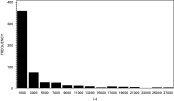
Fig. 1. The distribution of 4th-stage larvae among naturally infected lambs. The values on the horizontal axis represent the midpoints. Thus 1000 represents animals with values between 0 and 1999 4th-stage larvae.
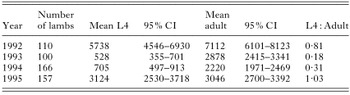
Table 1. Variation between years in the number of 4th-stage larvae and adult Teladorsagia circumcincta
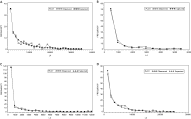
Fig. 2. The relationship between the observed distribution of 4th-stage larvae and that expected from a negative binomial distribution with the same mean and shape parameter. All samples came from sheep on the same field on the same farm in different years (A) 1992, (B) 1993, (C) 1994, (D) 1995.
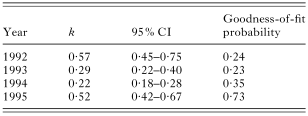
Table 2. Estimates and confidence intervals (CI) for the shape parameter (k) of the negative binomial distribution
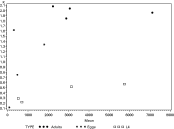
Fig. 3. The relationship between the shape parameter (k) and the mean of the negative binomial distribution for different life-cycle stages of T. circumcincta. The same animals were used to estimate the mean and shape parameters for the different life-cycles. Each life-cycle was examined in 4 successive years.
 You have
Access
- 57
- Cited by