Introduction
Trematodes represent one of the main parasitic problems of the gastrointestinal tract in cattle worldwide (Merachew and Alemneh, Reference Merachew and Alemneh2020). Among the most important genera included in this class are Clonorchis, Dicroelium, Fasciola, Fascioloides, Gigantocotyle and various species of paramphistomes (Arias et al., Reference Arias, Lomba, Dacal, Vázquez, Pedreira, Francisco, Piñeiro, Cazapal-Monteiro, Suárez, Díez-Baños, Morrondo, Sánchez-Andrade and Paz-Silva2011; Fairweather et al., Reference Fairweather, Brennan, Hanna, Robinson and Skuce2020). These parasite infections cause economic losses due to a decrease in production by affecting the health of the animal and the increase in costs associated with treatment and control, especially when anthelmintic resistance occurs (Novobilský and Höglund, Reference Novobilský and Höglund2015; Novobilský et al., Reference Novobilský, Amaya Solis, Skarin and Höglund2016). Fasciola hepatica is an important parasite because it causes a zoonotic disease, affecting animals and humans (Torgerson, Reference Torgerson2013), widely known as fasciolosis or bovine dystomatosis. The overall estimated prevalence in Mexican herds has been high (63.56%) and the annual losses caused by increasing costs in treatment have ranged between 64.45USD and 118.47USD per cow (Villa-Mancera and Reynoso-Palomar, Reference Villa-Mancera and Reynoso-Palomar2019). Losses range between 8% and 28% of meat yield, decreased milk production and liver seizure in slaughterhouses have been estimated (Torgerson, Reference Torgerson2013; Ojeda-Robertos et al., Reference Ojeda-Robertos, González-Garduño, Cornelio-Cruz, Peralta-Torres, Luna-Palomera, Machain-Williams, Zarza, Torres-Chablé, Reyes-Novelo, Baak-Baak and Chay-Canul2020). In the same trematode class, the Paramphistomidae family is formed by a large group of digenetic trematodes containing several genera. Parasites of this type that have been described, particularly in ruminants are Paramphistomum, Cotylophoron, Calicophoron, Ugandocotyle, Orthocoelium, Balanorchis and Gastrothylax. They are commonly referred to as paramphistomes (Eduardo, Reference Eduardo1982).
Control of this type of parasite is generally carried out with anthelmintic drugs. However, the treatment of cattle is done routinely without a previous diagnosis or knowledge of the efficacy of the product (Shokier et al., Reference Shokier, Aboelhadid and Waleed2013). In the southeast of Mexico, the most commonly used fasciolicides are clorsulon (CLORS), closantel (CLOS), nitroxinil (NITROX); rafoxanide (RAFOX) and triclabendazole (TCBZ) as indicated in worldwide (Kelley et al., Reference Kelley, Elliott, Beddoe, Anderson, Skuce and Spithill2016). TCBZ is one of the most widely used anthelmintic drugs for the control of fasciolosis and started to be used from the 1980s onwards (Rolfe and Boray, Reference Rolfe and Boray1987). Currently, many other anthelmintic drugs are recommended commercially; however, their efficacy towards trematodes has not been established and needs to be tested for their contribution to the development of resistance in these parasites, especially since populations of parasites resistant to flukicides have been widely reported (Fairweather et al., Reference Fairweather, Brennan, Hanna, Robinson and Skuce2020), making the control of fasciolosis difficult (Novobilský and Höglund, Reference Novobilský and Höglund2015). For this reason, the objective of this study was to evaluate the effectiveness of the main anthelmintic drugs used to control mixed fluke infection in cattle in an endemic area in the humid tropics of Mexico.
Materials and methods
Location
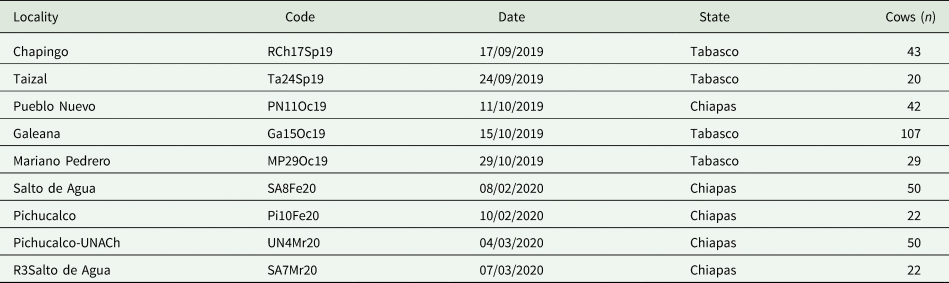
The study was carried out in an endemic area for flukes (F. hepatica and paramphistomes) from cattle, in Tabasco and Chiapas, Mexico (Table 1). The area has a warm humid climate with rain all year round, it has a precipitation range of 2500–4000 mm per year, and a temperature range that oscillates between 20°C and 28°C (CONAGUA, 2021).
Number of cattle sampled by municipality and state, in each farm

Faecal egg count
To obtain the faeces, the cows in each farm were moved to a handling chute. The extraction of each sample was carried out directly from the rectum of the animals, the samples were labelled with the identification of each animal and kept at 4°C, and transported to the laboratory for coprology analysis.
Out of each faecal sample, 10 g were weighed into a glass, the contents were mixed vigorously and emptied into sieves of different sizes (12, 50, 100 and 400 mesh) placed in series; afterwards, the sample was washed with running water to remove large debris until the sample was clean. In the 400-mesh (37 μ m) sieve, which corresponded to the last of the series, the contents were collected and placed in a glass, adjusting the volume to 100 mL. To read the samples, the contents of the beaker were shaken so that the sample was homogeneous and 5 mL of the contents were extracted with a pipette and placed in a Petri dish. To this sample, a drop of methylene blue was added to detect the trematode eggs. Of the 100 mL obtained, three repetitions of 5 mL each were carried out, so this was proportional to 1.5 g of faeces, and each egg found in 1.5 g represented 0.66 eggs per gram of faeces (EPG). To facilitate the reading, the faecal components were stained with methylene blue: the eggs of F. hepatica were yellowish and the paramphistome eggs colourless.
Species identification
The paramphistome adults recovered from the rumen at a local slaughterhouse were washed in water and fixed in formalin until processing. Sectioning specimens in the horizontal longitudinal plane was performed according to Jones (Reference Jones1990). After, the specimens were washed in running tap water and stained with acetic carmine dye for 15 min. Washed in distilled water and differentiated in 2% aqueous HCl solution until the body surface appeared pale pink, then again washed in distilled water. Dehydrated in a graded series of alcohols and cleared in beech wood creosote (Hycel, Mexico). Finally, they can be mounted on a slide in synthetic resins. The identification of the species was carried out with the keys proposed by Eduardo (Reference Eduardo1982) based on the morphology of the oesophagus, genital pore and acetabulum.
Anthelmintic products used
To evaluate the effectiveness of the main anthelmintic drugs used to control fluke infections in cattle, different formulations (TCBZ, IVM + CLOS, NITROX, IVM + CLORS) were tested in three farms to determine the efficacy of the main anthelmintics used in the region. In one farm (n = 8) TCBZ at 100 mg/mL by oral route (Endofluke, Bimeda, Dublin, Ireland,) was used. In two farms (n = 8, n = 11) IVM 2% + CLOS 10% (Closiver ADE + B12®; Andoci, Mexico) by subcutaneous route was used. IVM 1% + CLORS 10% (Biodec F; Biozoo, Jalisco, México) by subcutaneous route was used in one farm (n = 46). NITROX 34% (Trodax® Bovinos; Boehringer, México) in three farms was used (n = 7, n = 43, n = 7) and CLOS 15% (Closantil, Chinoin, Ags, México) by oral route in one farm was used (n = 8), by comparing FEC in treated and untreated animals (control), or by comparing FEC before and after treatment.
Effectiveness
The effectiveness of the anthelmintics was evaluated by recording the output in faeces of F. hepatica and paramphistome eggs for each anthelmintic by each farm. Only positive cows were considered to calculate the FEC at pretreatment by each trematode individually. In one farm it was not allowed to have a control group because the producer feared that the animals would continue to be parasitised; because of this, the effectiveness was calculated with two formulas indicated by Dobson et al. (Reference Dobson, Hosking, Jacobson, Cotter, Besier, Stein and Reid2012):


where T1 and T2 represent the FEC before and after the treatment with anthelmintic, while C2 represents the FEC of the control group (without deworming) on the sampling dates after deworming (Dobson et al., Reference Dobson, Hosking, Jacobson, Cotter, Besier, Stein and Reid2012).
Sampling of animals
In the two farms from Chiapas (PN11Oc19, SA8Fe20), two post-deworming samplings were carried out: the first 15 days and the second 30 days after applying the anthelmintic. In the Tabasco farm (Ga15Oc19) only one sampling was carried out, 15 days after deworming, to observe the reduction in egg count and thus determine the effectiveness of the anthelmintics for fluke control.
Statistical analysis
The data from each farm was processed in a database and the data was later analysed using the GLM procedure of the SAS software. The comparison between the means was done by the Tukey test.
The model used was

where Yijkl = response variable (F. hepatica and paramphistome egg count, egg count reduction, prevalence); μ = general mean; ρi = fixed effect of the farm (i = 1, 2, 3, 4); τj = fixed effect of the sampling (j = 1, 2, 3); ρ*τij = interaction between farm and sampling. ζ(ρ)ik = effect of treatment nested in ranch; ɛijkl = experimental error.
Results
Trematode prevalence
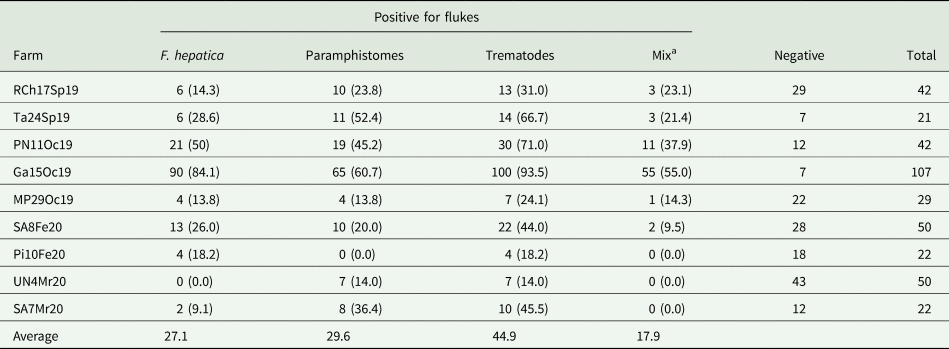
The prevalence per herd in the region showed high variability between farms (Table 2). The prevalence for F. hepatica was 27.1% and for paramphistomes 29.6%, with a range of 0–90% and 0–60.7%, respectively. The total prevalence of trematodes was 44.9%. Mixed infections were observed in 67% of the farms. Of the cattle infected with trematodes, 26.9% of the animals had mixed infections.
Number of positive animals (prevalence, %) to Fasciola hepatica and paramphistomes in cattle reared in the humid tropics of Mexico
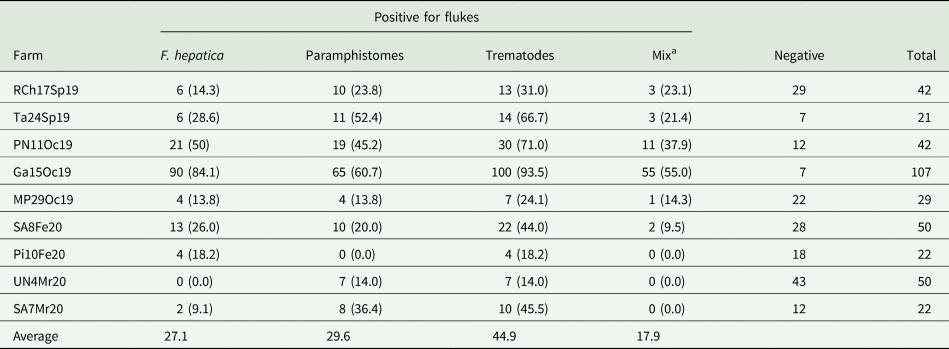
a Mixed infection was calculated as the number of animals with both species / total animals infected with any of the trematodes.
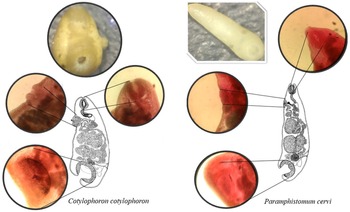
The species of parampisthomes found corresponded to Cotylophoron cotylophoron and Paramphistomum cervi (Fig. 1) according to their morphology. P. cervi has a conical body, measures 5.50 −13.23 mm long and 1.88–3.05 mm wide. Subterminal acetabulum, oesophagus 0.65–1.02 mm long, nearly straight or dorsoventrally folded. while C. cotylophoron is smaller, 4.82–8.93 mm long, 2.14–3.45 mm thick. Surface with papillae around oral opening, on rim of genital sucker and around acetabular opening. Sub terminal acetabulum, 1.51–2.34 mm. Pharynx 0.61–1.01 mm long.
Morphology of Cotylophoron cotylophoron (left) and Paramphistomum cervi (right) recovered from the rumen of bovines in Tabasco State, Mexico

Differential count of Fasciola hepatica and paramphistome eggs
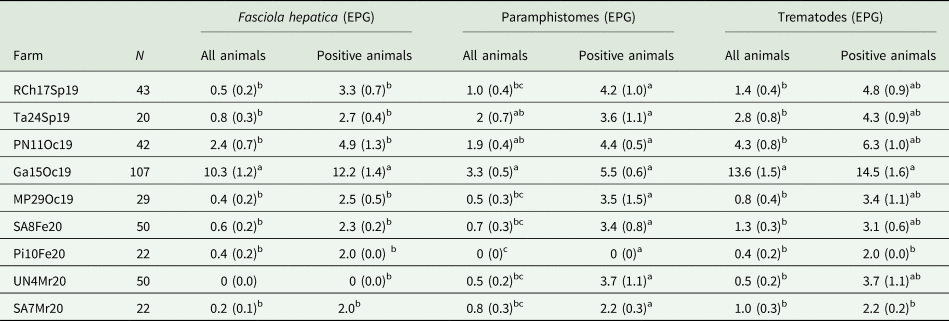
The sedimentation technique combined with methylene blue staining allowed the differentiation of F. hepatica eggs from those of paramphistomes. The fluke FEC showed differences between farms (P < 0.01). Of the farms sampled, the Ga15Oc19 farm had the highest number of trematode-positive cattle and also the highest FEC of F. hepatica and paramphistomes (Table 3), with a mean EPG value of 12.2 for F. hepatica and 5.5 for paramphistomes, considering only positive animals. On the other farms, FECs were found in a range of 0.0–4.9 EPG for F. hepatica and from 0 to 4.4 EPG for paramphistomes.
Faecal egg count mean (standard error, s.e.), by trematode type (Fasciola hepatica and paramphistomes) in grazing cattle in an endemic tropical region in Mexico

EPG, Eggs per gram of faeces. All animals: positive and negative animals. Positive: average EPG only of positive animals. N: number of cows. Different letters (a,b,c) in each column represent significant differences (P < 0.05).
Effectiveness
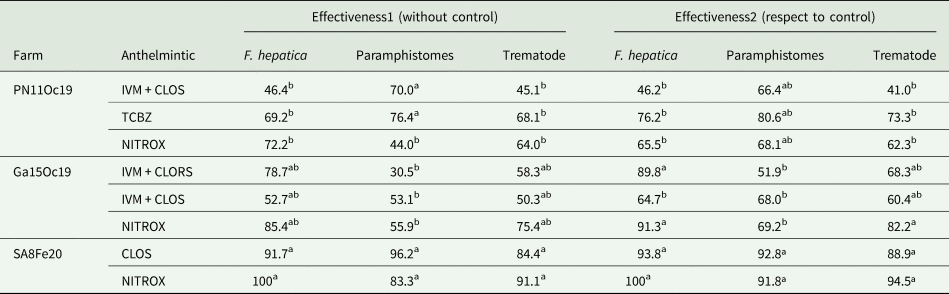
The effectiveness was very wide for both groups of trematodes. The highest effectiveness of anthelmintics was seen in farm SA8Fe20 with a range of 95.8–96.7% for F. hepatica and 83.8–92.3% for paramphistomes (Table 4). For F. hepatica, the lowest values were obtained with the mixture of IVM and CLOS in two farms and with TCBZ (46–69%), while greater effectiveness was observed with NITROX, in the range of 72–100%. In the case of IVM + CLORS, the values ranged from 79 to 90 in F. hepatica and from 30 to 52 in the paramphistomes.
Percentage of effectiveness of the anthelmintic used for the control of trematodes in each of the farms according to the formulas used 15 days post-treatment

Different letters (a, b) in each columns of the same variable represent statistical differences (P > 0.05). IVM, Ivermectin; CLOS, Closantel; CLORS, Clorsulon; TCBZ, Triclabendazole.
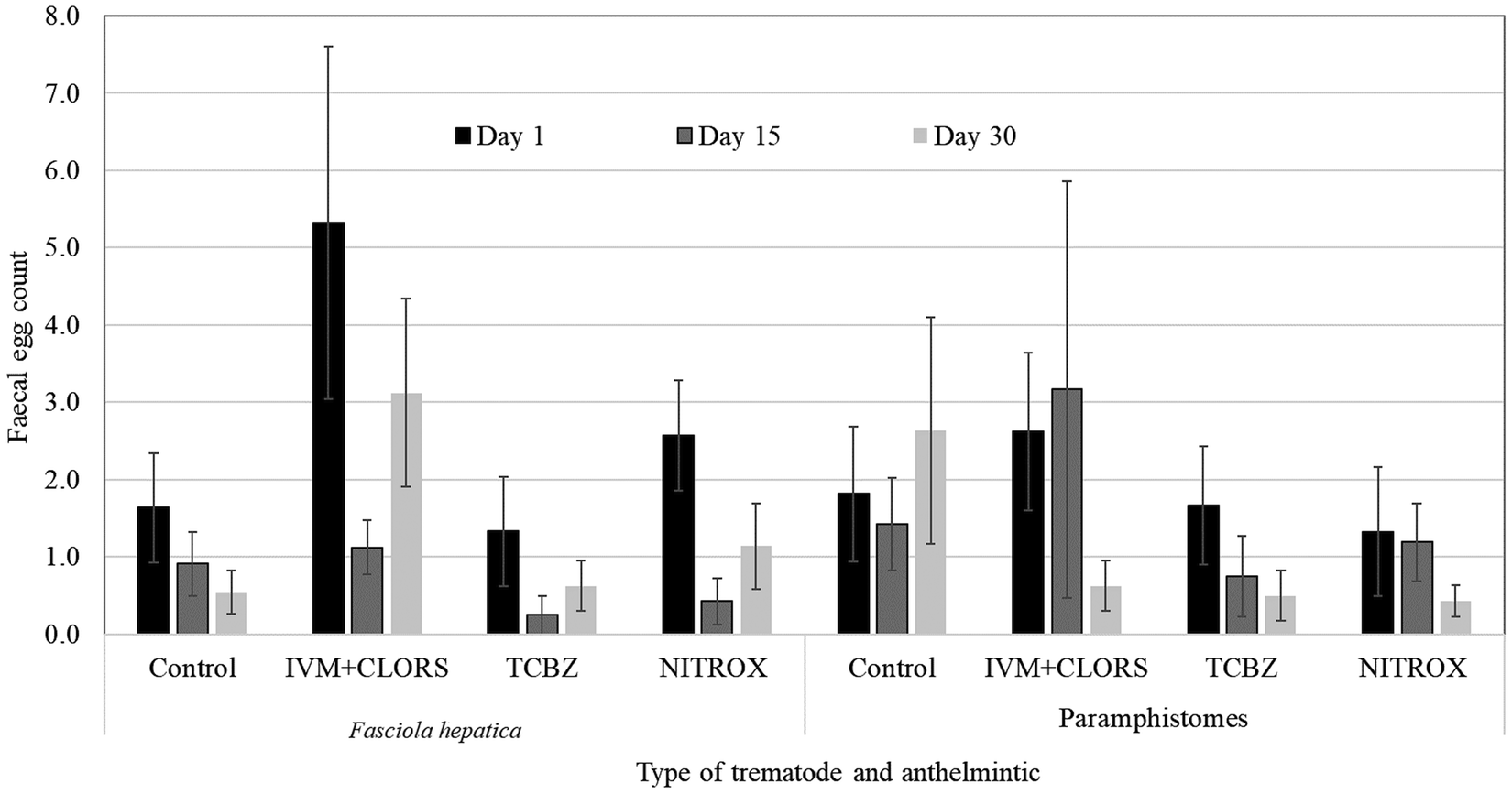
In the sampling before treatment, cows from PN11Oc19 showed a FEC in a range of 0.25–8 EPG (Fig. 2). In this farm not all anthelmintics used were effective. On day 15 after the application of the anthelmintic, the FEC of both F. hepatica and paramphistomes were not reduced below the threshold (95% effectiveness). A similar situation occurred on the third sampling (day 30), when FEC in some cases decreased, but without exceeding the expected effectiveness threshold.
Faecal count of trematode eggs (Fasciola hepatica and paramphistomes) by anthelmintic and sampling date in the PN11Oc19 farm. TCBZ, triclabendazole; IVM + CLORS, ivermectin + clorsulon; NITROX, nitroxynil.

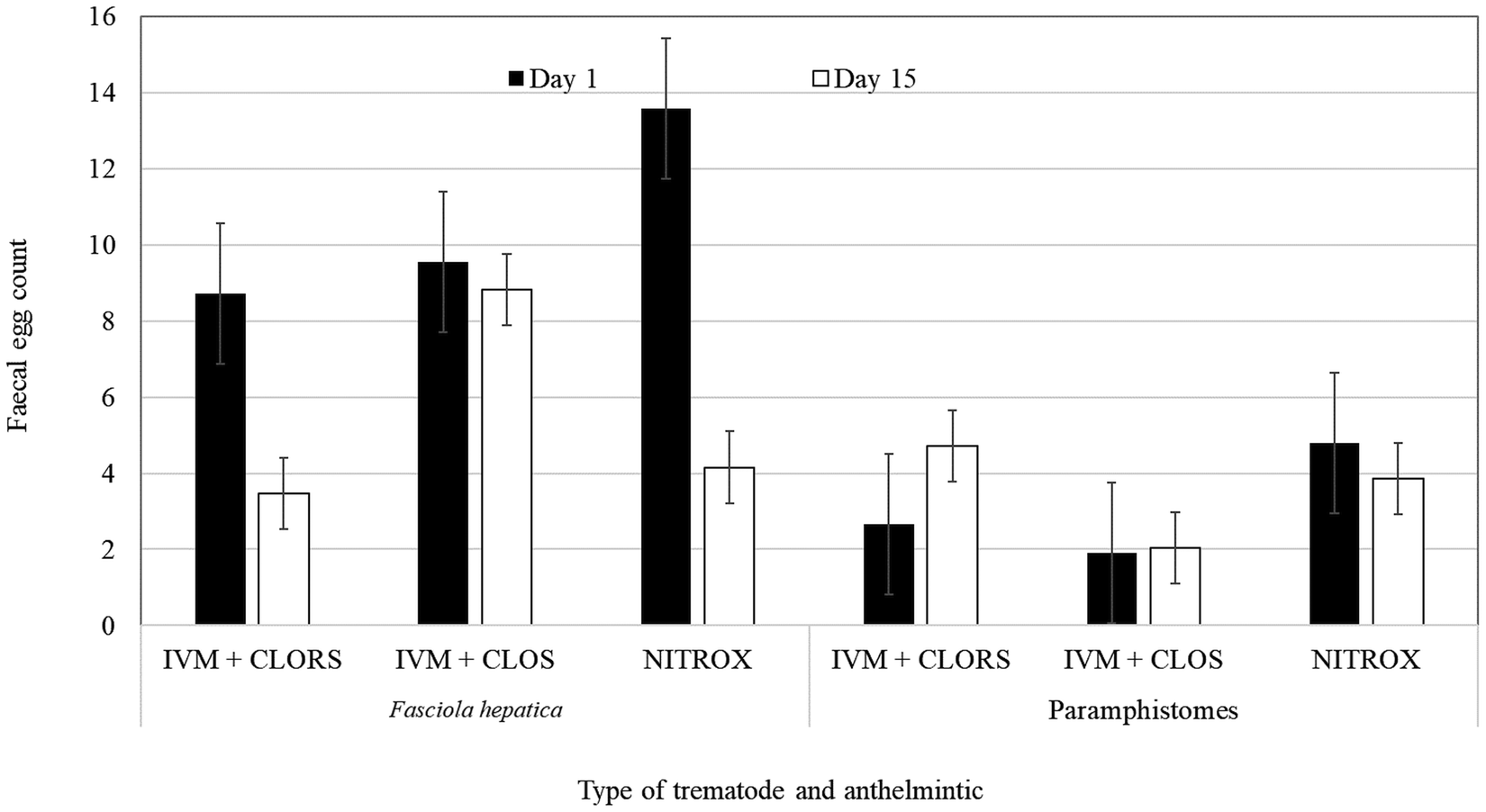
In the first sampling of the farm Ga15Oc19, FEC of F. hepatica was in a range of 8–14 EPG, while those of paramphistomes were in the range 2–7 EPG. On day15 after anthelmintic application the FEC of F. hepatica was reduced with the IVM + CLORS and NITROX treatments, but not with IVM + CLOS. On the other hand, the low effectiveness of the three chemicals used against paramphistomes was evident, when high FEC of these parasites was observed after anthelmintic treatment (Fig. 3).
Faecal count of trematode eggs (Fasciola hepatica and paramphistomes) by anthelmintic and sampling in the Ga15Oc19 farm. TCBZ, triclabendazole; IVM + CLOS, ivermectin + closantel; IVM + CLORS, ivermectin + clorsulon; NITROX, nitroxynil.

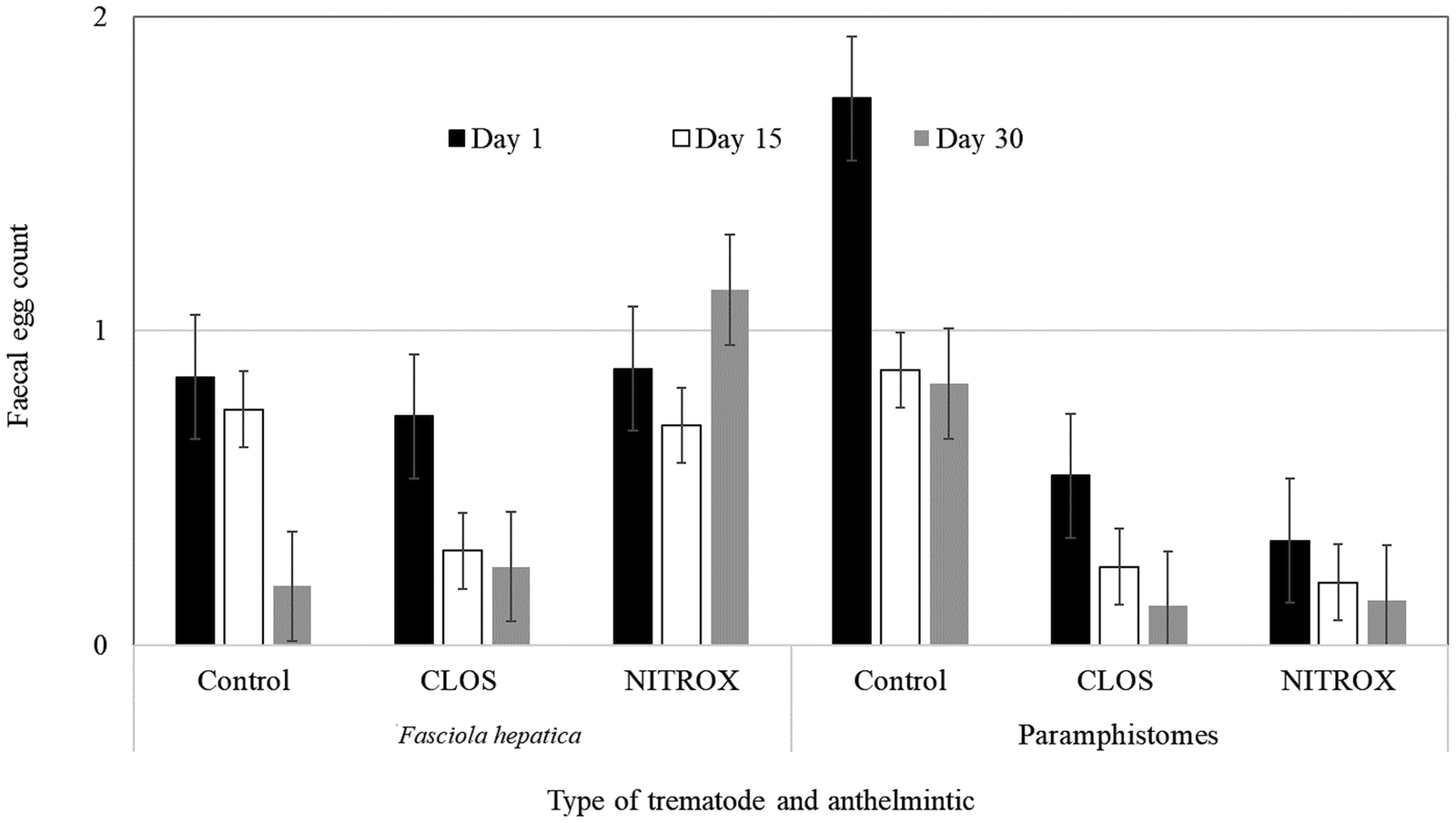
The FEC of F. hepatica and paramphistomes in farm SA8Fe20 had low values at the beginning of the study (0.8–1.7 EPG). However, it was possible to observe that FEC was not decreased by these drugs and the outputs were in the range 0.2–0.8 EPG at day 15 post-treatment, while at the third sampling (day 30) the FECs for both F. hepatica and paramphistomes did not show statistically significant differences (P < 0.05) concerning days 1 and 15 of sampling (Fig. 4).
Faecal egg count of trematode eggs (Fasciola hepatica and paramphistomes) by anthelmintic and sampling in the SA8Fe20 farm. CLOS, closantel; NITROX, nitroxynil.

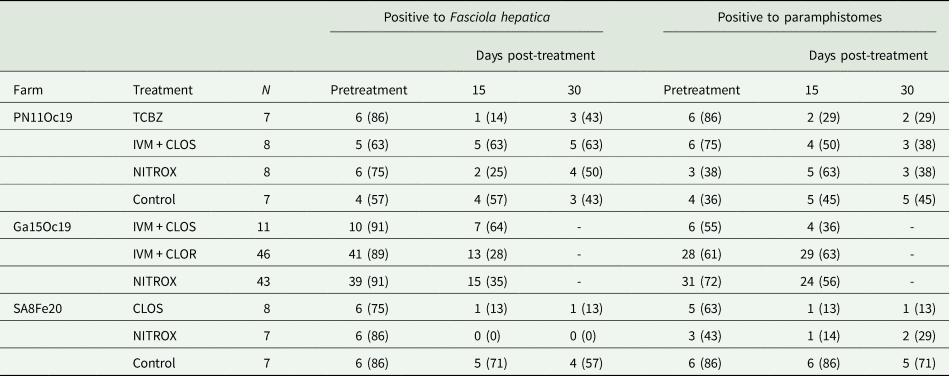
Besides, the number of fluke-positive cows after deworming ranged from 0% to 63% in F. hepatica with high variability between farms and in the case of paramphistomes, 13–63% of the cows were positive for these parasites (Table 5).
Number of positive cows to Fasciola hepatica and paramphistomes (%) before and after anthelmintic treatment

N: Number of positives cows to trematodes (F. hepatica or paramphistomes). IVM, Ivermectin; CLOS, Closantel; CLORS, Clorsulon; NITROX, Nitroxynil; TCBZ, Triclabendazole.
Discussion
Fasciolosis is a disease of great importance in animal and human health. In ruminants, F. hepatica reduces productivity by affecting food intake and live weight (Dorny et al., Reference Dorny, Stoliaroff, Charlier, Meas, Sorn, Chea, Holl, Van Aken and Vercruysse2011) and is one cause of liver seizure in slaughterhouses, causing economic losses and threatening public health (Merachew and Alemneh, Reference Merachew and Alemneh2020). Also, the immature forms of paramphistomes affect animal health during their migration to the target organ, causing severe damage to small intestine (Dorny et al., Reference Dorny, Stoliaroff, Charlier, Meas, Sorn, Chea, Holl, Van Aken and Vercruysse2011). Therefore, it is important to know how often mixed infections of F. hepatica and paramphistomes occur to take control measures. In the tropical region of Mexico, mixed infections are very common, and eggs of both trematodes were found in 26.9% of the parasitized animals using the sedimentation technique combined with methylene blue staining that allowed the differentiation of F. hepatica eggs (golden colour) and those of the paramphistomes (gauzy). Of the latter, the species observed in the region were C. cotylophoron and P. cervi, however in the faeces samples, the eggs were only identified and reported as a paramphistomes, in a similar way as indicated in other study (Nurhidayah et al., Reference Nurhidayah, Satrija, Satrija, Retnani, Retnani, Astuti, Murtini and Murtini2020) because it was not possible to identify eggs of each species.
The mean prevalence values of F. hepatica and paramphistomes (27–30%) in the study region are within the range observed in America (Paucar et al., Reference Paucar, Chávez, Casas and Suárez2010; Giraldo Forero et al., Reference Giraldo Forero, Díaz Anaya and Pulido Medellín2016), and also in Australia, where 39% prevalence of trematodes in cattle was determined by FEC and cELISA (Kelley et al., Reference Kelley, Rathinasamy, Elliott, Rawlin, Beddoe, Stevenson and Spithill2020). In paramphistomes, the prevalence (29%) was at the upper limit of that reported in Europe, where the information indicates a wide range, from 6.2% to 48.8% (Ferreras et al., Reference Ferreras, González-Lanza, Pérez, Fuertes, Benavides, Mezo, González-Warleta, Giráldez, Martínez-Ibeas, Delgado, Fernández and Manga-González2014; Naranjo-Lucena et al., Reference Naranjo-Lucena, Munita Corbalán, Martínez-Ibeas, McGrath, Murray, Casey, Good, Sayers, Mulcahy and Zintl2018). The prevalence of trematodes had an average of 45%, this was considered as the percentage of animals that presented F. hepatica or paramphistomes, which turns out to be a high value, although similar values are seen in the Amazon (Pinedo et al., Reference Pinedo, Chávez, Casas, Suárez, Sánchez and Huamán2010). Surprisingly, the values observed were lower than those indicated in a cold-climate country such as Ireland, where 61% of the cattle were positive for Calicophoron daubneyi and 68% positive for F. hepatica, with a co-infection between the two species of 46% (Jones et al., Reference Jones, Brophy, Mitchell and Williams2017). The prevalence was highly variable among the farms studied; however, at least one species of trematode was observed in all of them. For this reason, tropical areas have been considered endemic for both F. hepatica and other trematodes such as paramphistomes, which represents a risk to food safety and public health (Pinilla et al., Reference Pinilla, Florez Muñoz and Uribe Delgado2020). In Spain, the increase in paramphistomosis has been attributed to the absence of an effective treatment against this trematode, while in Uruguay it is recommended to reduce the risk of infection by improving management to avoid exposure to this type of parasite (Sanchís et al., Reference Sanchís, Sánchez-Andrade, Macchi, Piñeiro, Suárez, Cazapal-Monteiro and Arias2013). F. hepatica has also been indicated to be endemic to several dairy regions in Victoria, Australia and resistance to TCBZ has contributed to the high prevalence in herds (Kelley et al., Reference Kelley, Rathinasamy, Elliott, Rawlin, Beddoe, Stevenson and Spithill2020).
In other studies, trematodes have been identified as an economic and productive problem in bovine, in addition, the relationship of F. hepatica with human health makes it necessary to take control measures, as indicated in Peru, where prevalence values of 10.0 ± 2.9% are shown for F. hepatica and 28.4 ± 4.4% for the Paramphistomidae family (Paucar et al., Reference Paucar, Chávez, Casas and Suárez2010). However, the prevalence depends on the detection method, as reported in Colombia, where the prevalence of F. hepatica was 39.4% by the presence of eggs in the bile content, 32.4% by the presence of adult parasites in the bile ducts and 15.5% by the eggs in faecal matter (Giraldo Forero et al., Reference Giraldo Forero, Díaz Anaya and Pulido Medellín2016). Therefore, if this information is taken into account, it can be inferred that in the study region, the prevalence would be higher than that obtained through faecal sedimentation study, and the prevalence would be 50–60%. In other regions with a warm climate, such as the province of the upper Amazon, a high prevalence (44.2 ± 4.7%) of paramphistomes has been observed. The high degree of prevalence of paramphistomes was influenced by the favourable environmental conditions present in the study area, as well as by the lack of prevention and control strategies in the local bovine population (Pinedo et al., Reference Pinedo, Chávez, Casas, Suárez, Sánchez and Huamán2010). Also, in buffaloes, a higher prevalence of paramphistomes (62.93%) than F. hepatica (16%) was indicated, probably because buffaloes are found in higher-risk environments (Nurhidayah et al., Reference Nurhidayah, Satrija, Satrija, Retnani, Retnani, Astuti, Murtini and Murtini2020).
The FECs reported in bovines (mean and median) in the United Kingdom have been 26.01 and 5.20 EPG, respectively, but average values of 35.6 and 14.2 EPG have been indicated during winter and summer-autumn, respectively, with a range of 0.2–220 EPG (Sargison et al., Reference Sargison, Francis, Davison, Bronsvoort, Handel and Mazeri2016). These values exceed those observed in the present study, in which the average reached 12.2 EPG. Although the EPG value was low in the region, the excretion per animal considering the amount of faeces eliminated daily, is very high.
Many studies about chemical control and anthelmintic resistance in Fasciola are been done and have considered some components as: halogenated phenol (nitroxynil) (Aktaruzzaman et al., Reference Aktaruzzaman, Mohamed, -Ul-Alam, Islam and Howlader2015), salicylanides (closantel) (Malrait et al., Reference Malrait, Verschave, Skuce, Van Loo, Vercruysse and Charlier2015), benzimidazoles (triclabendazole) (Brockwell et al., Reference Brockwell, Elliott, Anderson, Stanton, Spithill and Sangster2014), sulphonamides (clorsulon) (Islam, Reference Islam2013) and phenoxyalkanes (diamphenethides) (Elelu and Eisler, Reference Elelu and Eisler2017). However, no products are currently licensed for the control of rumen fluke in cattle (Forbes, Reference Forbes2016), but there is documented evidence that effective drugs include the combination of oxyclozanide and levamisole (Rolfe and Boray, Reference Rolfe and Boray1987).
In the present study the effectiveness obtained against mature stages of trematodes was worrying since the reduction values of most of them was below 90%, which is the minimum that a product must have in order not to be considered as anthelmintic resistance (Kelley et al., Reference Kelley, Rathinasamy, Elliott, Rawlin, Beddoe, Stevenson and Spithill2020). Nitroxynil was one of the most effective anthelmintic products against F. hepatica and paramphistomes, and, as observed in a previous in vitro study, CLOS and nitroxynil showed good inhibitory effect on the development of paramphistome eggs (González-Garduño et al., Reference González-Garduño, Ortiz-Pérez, Alegría-Jiménez, Torres-Chable, Cruz-Tamayo and Zaragoza-Vera2020). Unlike the results obtained in this study, the reports in Fasciola indicate that NITROX, oxyclozanide, CLOS and TCBZ are effective against F. gigantica infection at 14 post-treatments (Nzalawahe et al., Reference Nzalawahe, Hannah, Kassuku, Stothard, Coles and Eisler2018). Additionally, the treatment with NITROX reduced the positive animals infected with F. hepatica (Romero et al., Reference Romero, Villaguala, Quiroz, Landaeta-Aqueveque, Alfaro and Pérez2019). In other study TCBZ was the most effective drug in both cattle and buffaloes with efficacy of 97.92% and 100%, respectively; Oxyclozanide and NITROX show efficacy upper to 90% at 21st day post-medication (Nzalawahe et al., Reference Nzalawahe, Hannah, Kassuku, Stothard, Coles and Eisler2018)
There were very notable differences between farms in the effectiveness of anthelmintic. Some of the reasons include the proper management of the dosage (underdosing or overdosing) and the excessive use of these chemicals, which promotes the development of anthelmintic resistance. It is pointed out that the low effectiveness of anthelmintic occurs mainly due to frequent treatments with the same products or with products from the same family or to incorrect calculations of the dose. Such disparate results have also been reported in other studies, and the variability may be very high, as was seen in a study in Spain with dairy cattle infected with C. daubneyi, where a reduction of 0–26% was observed with albendazole and netobimin, but 97–99% with CLOS and oxyclosanide (Arias et al., Reference Arias, Sanchís, Francisco, Francisco, Piñeiro, Cazapal-Monteiro, Cortiñas, Suárez, Sánchez-Andrade, Paz-Silva, Sanchis, Francisco, Francisco, Pineiro, Cazapal-Monteiro, Cortinas, Suarez, Sanchez-Andrade and Paz-Silva2013). However, another study in Belgium showed that CLOS was not efficient in three herds (Malrait et al., Reference Malrait, Verschave, Skuce, Van Loo, Vercruysse and Charlier2015) and in Sweden the first report of CLOS failure against F. hepatica was indicated in the same year (Novobilský and Höglund, Reference Novobilský and Höglund2015).
The high variability in the effectiveness of anthelmintic has been indicated for a long time and strong differences between cattle and sheep was indicates in CLORS against F. hepatica. The high effectiveness in cattle (98%) is opposite to that observed in sheep that only reached 30–60% (Fetterer et al., Reference Fetterer, Rew, Gasbarre and Ostlind1985). This anthelmintic is favourite by its mode of action by inhibiting glycolysis and blocking the main energy pathway. In an in vitro study it was confirmed that CLORS causes severe damage to the tegument of F. hepatica (Meaney et al., Reference Meaney, Fairweather, Brennan, McDowell and Forbes2003). Also, results in Bangladesh confirm the high variability in the effectiveness of the products when the study shown an efficacy of 92.57% with NITROX, followed by TCBZ at 91.55% and albendazole at 84.53% (Aktaruzzaman et al., Reference Aktaruzzaman, Mohamed, -Ul-Alam, Islam and Howlader2015). In addition to the low effectiveness observed in the present study in both F. hepatica and paramphistomes, high variability was observed in the number of positive animals (0–64%) for both parasites after deworming, so the product to be used should be tested before it uses to control F. hepatica or paramphistomes to avoid the development of anthelmintic resistance. Precise recommendations should also be made based on a diagnosis made by each farm.
Regarding the use of TCBZ, it was only used in one farm because it is not a very common product in the region. Also in Nigeria this product it is not commonly used (Islam, Reference Islam2013). However, in cattle in Australia, it was reported that F. hepatica was resistant to this product using FECRT by a coproantigen reduction test (CRT), and the results suggest that resistance is widespread in the southeast region of that country (Brockwell et al., Reference Brockwell, Elliott, Anderson, Stanton, Spithill and Sangster2014) and therefore other treatment alternatives, such as new drugs or vaccines, are required. Results in Chile also indicated low effectiveness with TCBZ (Romero et al., Reference Romero, Villaguala, Quiroz, Landaeta-Aqueveque, Alfaro and Pérez2019). However, in Mexico, high effectiveness of TCBZ, fosfatriclaben and CLOS against F. hepatica has been reported in dairy cows (Rojas-Campos et al., Reference Rojas-Campos, Vera-Montenegro, Flores-Ramos, Castillo, Hernández-Campos and Ibarra-Velarde2019); in sheep, the high fasciolicidal efficiency was observed in TCBZ (Arias-García et al., Reference Arias-García, Vera-Montenegro, Flores-Ramos, Castillo, Hernández-Campos and Ibarra-Velarde2020). Also in Bangladesh, 91.5% efficacy results were seen (Aktaruzzaman et al., Reference Aktaruzzaman, Mohamed, -Ul-Alam, Islam and Howlader2015). All these studies show high effectiveness, contrary to that obtained in this study region. In other countries, the control options depend on a wide number of products such as CLORS, NITROX, CLOS, albendazole or oxyclozanide (Kelley et al., Reference Kelley, Elliott, Beddoe, Anderson, Skuce and Spithill2016). Also, combinations of products have been used to control the immature stages of trematodes. High effectiveness of moxidectin + TCBZ has been indicated, unlike mixtures ivermectin + CLOS or ivermectin + CLORS (Geurden et al., Reference Geurden, Bartram, Van Brussel, Bo, Scott-Baird and Rugg2012). The mix of ivermectin + CLORS, NITROX and combination of both, against F. hepatica had shown 100% efficacy. While in paramphistomes the observed effectiveness was 80% at 60 days post-treatment (Islam, Reference Islam2013). This response coincides with that observed in the present study in which the greatest effectiveness of the products was in F. hepatica, while in paramphistomes the values were lower. However, in the opposite direction oxyclozanide was an effective trematocide against amphistomes with FECR of 99% reported in Tanzania (Nzalawahe et al., Reference Nzalawahe, Hannah, Kassuku, Stothard, Coles and Eisler2018).
In the present study, there are only results of mature states because in the case of paramphistomes the prepatent period becomes as long as 56–69 days, so more extensive studies are required to know the effect of anthelmintic in the immature stages of trematodes (Sanabria and Romero, Reference Sanabria and Romero2008). In F. hepatica, the prepatent period is 12–14 weeks (Kelley et al., Reference Kelley, Elliott, Beddoe, Anderson, Skuce and Spithill2016), so the study only concludes on the effect of mature stages of this species.
The presence of trematodes was observed in most farms; although the prevalence was highly variable. This indicates that F. hepatica and paramphistomes are endemic to the region and a suitable management programme is suggested to control infections caused by these parasites.
The most effective product in the control of trematodes was nitroxynil, while other products, such as clorsulon and triclabendazole, and mixtures of ivermectin with closantel and clorsulon, obtained values lower than 90%, which puts at risk the sustainable control of parasitosis caused by trematodes.
Data
Data availability by correspondence with the author.
Author contributions
González-Garduño and Ico-Gómez conceived and designed the study. Ortíz-Pérez and Salazar-Tapia led field work, Ico-Gómez conducted data gathering. González-Garduño and Flores-Santiago performed statistical analyses. Sosa-Pérez and Mosqueda-Gualito wrote the article.
Financial support
This work was supported by Research Institute and postgraduate studies in animal science at the Universidad Autónoma Chapingo (grant number 20010-C-67)
Conflict of interest
The authors declare there are no conflicts of interest.
Ethical standards
The procedures were carried out in accordance with the normative terms of the Mexican Official Laws, Regulations and Standards and other legal provisions are considered.