Introduction
The notion that alterations early in life are able to influence disease outcomes later in life has gone from being a hypothesis in the late 80sReference Barker1, Reference Wadhwa, Buss, Entringer and Swanson2 to a concept widely accepted today as ‘developmental programming,’ initially known as ‘fetal programming.’ It is now clear that events even in the periconceptional periodReference Sinclair, Allegrucci and Singh3, Reference Igosheva, Abramov and Poston4 and the neonatal period may have major influences on health of offspring in later life. Thus, this field of research is now referred to as ‘developmental origins of health and disease,’ and lately, many are using the term ‘early origins of health and disease,’ to encompass the first 1000 days of life, which span the period from conception to 2 years after birth. We have increased our knowledge on what to measure as surrogate markers, begun to elucidate potential roles of complex mechanisms, especially epigenetics and discover that the placenta is a critical player in developmental programming.
Studies conducted by Godfrey and BarkerReference Godfrey and Barker5 and the Harvard nurses studyReference Rich-Edwards, Stampfer and Manson6 provided early clues to the existence of developmental programming. For example, in the 1990s associations were shown between blood pressure and metabolic regulation of glucose and birth weight.Reference Curhan, Willett and Rimm7 These and other early studies such as those reporting increased obesity and diabetes in children affected by the Dutch Hunger Winter had the disadvantage of being retrospective.Reference Stein, Ravelli and Lumey8, Reference Roseboom, van der Meulen and Ravelli9
Powerful new cohort studies are currently under investigation and are producing exciting new data showing associations between maternal phenotype and nutrition, fetal and neonatal growth and subsequent offspring phenotype. These cohorts include the Southampton Women's study,Reference Harvey, Mahon and Kim10 Project Viva,Reference Salem, Adler, Lee and Smith11 lspacReference Cohen, Rifas-Shiman and Rimm12 and the Raine study.Reference Chivers, Hands and Parker13 Human epidemiological studies have addressed many issues of maternal phenotype in pregnancy including maternal body mass index (BMI) and maternal weight gain in pregnancy.Reference Oken, Kleinman and Belfort14–Reference Rasmussen, Catalano and Yaktine17
Because of legal, ethical and research methodological limitations, the use of animal models has become critical for the elucidation of the causative mechanisms that are involved in developmental programming. However, animal models also present limitations, in particular the extent to which it is possible to translate specific findings in different species to programming of human health. It is critical that we are knowledgeable about the challenges, mechanisms and outcomes in specific disease-related systems in order to select the most appropriate animal model for each research question being investigated. It is important that the investigator uses clear criteria to choose the animal models that throw the most light on mechanism depending on the research question being posed. To achieve this important aim, investigators need to be familiar with the physiology of the species chosen and the disease outcomes under study. Although the experimental species might not mimic the human situation exactly, much can be learned from the ways that different species solve the same developmental challenge. It is important to appreciate the pros and cons of each animal model.
Rodents are excellent models to study mechanistic pathways, as they lend themselves to complex genetic manipulations and are time- and cost-effective. However, they present limitations when it comes to integration of one or more diseases. For example, because of rodents’ lipid metabolism and clearance, knocking out genesReference Breslow18, Reference Daugherty19 and manipulation of dietsReference Ternel and Rudel20 are necessary to achieve lipid levels that are atherogenic and that mimic the human condition of atherosclerosis. Nevertheless, research using rodent models has undoubtedly increased our understanding of human pathophysiology, and at the moment they are the most practical models available for most mechanistic studies. However, in our attempts to understand the challenges, mechanisms and outcomes of developmental programming, investigation in a wide variety of animal models is required, some of which may be closer to the human conditions because of their size and rate of growth, which affect maternal nutritional demand, anatomy, reproductive physiology, degree of fetal, compared with postnatal, development and maternal and offspring behavioral patterns.
From Mice to Men
Comparative physiology is a very powerful approach to understanding developmental programming and enabling translation to human development and disease predisposition. There are great similarities in the challenges different species face in developing the ability for independent life. Following conception, adequate nutrition for the fetus – provided by the mother via the placenta – must be established to ensure normal growth and development. A wide range of organs, unused in fetal life but essential and common to all species, need to mature to survive the challenge of delivery into the postnatal world. However, there are many differences in timing and regulation of development of organ and whole animal function that need to be evaluated and taken into consideration. Most of these differences relate to differences between altricial, polytocousReference Jones and Ozanne21 species that are born in large litters at an immature development stage such as the rat or mouse and precocial, monotocousReference Boney, Verma, Tucker and Vohr22 species such as humans, sheep and non-human primates that are generally delivered in fewer numbers for each pregnancy and born after a greater degree of intrauterine development.
When comparing developmental programming from Mice to Men, it is important to continually define ‘relevant models.’ Relevance will clearly depend on the physiological question being asked. The specific hypothesis and aims of the study will influence what model to choose taking into account strengths and avoiding weaknesses of the chosen model system. When considering the suitability of a particular animal model, it must be remembered that all animal models are just that, only models. A particular model may have value when addressing one physiological system at a particular stage of development, but be inappropriate at other times in the life-course.
Animal models correctly used and interpreted are a strong, and often the only approach to understanding mechanism in an attempt to improve diagnosis, treatment and prevention, as well as develop interventions. Animal studies have several strengths that improve understanding of developmental programming when interpreted in association with information from human studies. Animal studies permit (1) better control of variables, (2) provide clear answers more rapidly and (3) allow a greater investigative burden on mothers and offspring than tolerated by pregnant women and their children.
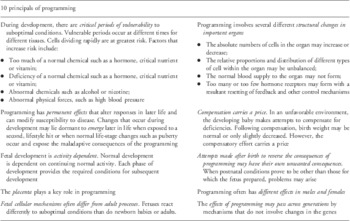
There are some fundamental general principles of programming that have been established in both altricial and precocial species (Table 1). Thus, in addition to the fundamental principle of critical windows of vulnerability that may differ from species to species, the principle of later-life emergence is a major characteristic of developmental programming. Although changes in the trajectory of development at the gene and cellular level may be established early in the life-course in response to a developmental challenge, their ultimate effects on the offspring often only emerge as an altered phenotype late in life – right up to the time of aging. Thus, life-course studies are needed as adverse outcomes may not be visible in the phenotype early in life. As rodents live much shorter lives, they are better suited for life-course studies from the practical point of view than precocial long-lived species. Studies of emergence of an altered phenotype at puberty require 5 weeks of postnatal study in rats, nine months in sheep and 2–4 years in non-human primates. Rapid emergence is not always a benefit. Although altricial species have the great advantage of rapid accumulation of adequate experimental numbers needed for statistical analysis, their small size presents a limitation to extensive sampling compatible with survival and longitudinal study. Larger animals allow more extensive, broader, longitudinal study within the same subject. Large animals also allow repeated within-subject study at different stages of early life that can address questions of childhood emergence better than smaller research species. For example, the evolution of altered peripheral glucose uptake is more easily observed in the same large animal model in which, for example, repeat metabolic assessments (intravenous glucose tolerance test and hyperinsulinemic, euglycemic clamps) and biopsies (liver, adipose tissue from several sites, muscle and kidney) can be taken. Most primate species have the strengths that they have (1) a single fetus and a discoid placenta similar to pregnant women and (2) have a much closer similarity in chromosomal and gene function to humans. For example, rhesus monkey and baboon RNA can be used with human gene array platforms to determine gene effects of altered maternal diets. The ability to obtain information on multiple systems within the same animal has the invaluable strength of removing the need to extrapolate data between animals and studies, which often use different approaches in different animals at different locations and times. However, in large animals phenotypic outcomes after pregnancy manipulations can take years to develop, and support of large animal models facilities are not only costly but also require highly specialized infrastructures and personnel that are trained in the experimental management of that species, in particular diseased animals.
Ten principals of programming

Given all the strengths and weakness in animal models, the best understanding of developmental programming on overall phenotype comes by merging multidisciplinary approaches at the gene, cellular, systems and behavioral levels and linking them with human studies.
Important issues for consideration in studies conducted before pregnancy and during pregnancy
Selection of species and strain of experimental animal is key to any study. Much attention needs to be given to selecting groups of mothers that have the same morphometric characteristics (e.g. height and weight, and markers of body composition such as BMI and fat composition by Dual Energy X-ray Absorptiometry) and their own developmental histories so that multi-generational effects from their own mothers do not influence outcomes. It is also important to avoid use of sibling mothers within the same group as they might have been similarly ‘programmed’ themselves for an abnormal phenotype. Influences of parity, maternal pre-pregnancy body composition and maternal age all will affect developmental programming of different physiological systems. In one interesting study in sheep, ewes that had been maintained on poor quality forage in mountain conditions for several generations were shown to be able to cope better with poor nutrition in pregnancy with fewer adverse effects on the course of pregnancy and pregnancy outcomes.Reference Burt, Hess, Nathanielsz and Ford23, Reference Vonnahme, Hess and Nijland24 These interesting adaptations may be due to either or both genetic stock selection or epigenetic processes. Nevertheless, in the context of model selection these studies show that maternal history is important in the choice of study subjects.
Rodents have many advantages especially when it comes to studies involving molecular biology approaches such as transgenic models. Transgenic knock-in and knock-out rodent models have provided much useful information, although manipulation of gene expression must be interpreted with caution as it might lead to compensatory responses in other systems – especially during the developmentally plastic periods of fetal life. Similar models in large animals are not practical at the present time.
The prenatal intrauterine environment differs greatly from the external environment experienced postnatally. Placental structure and function also differ across species in potentially significant ways. The placenta is the nutritional gateway to the fetus and there are many functional differences in placentation among species. The following potential differences in particular always need to be born in mind: (1) placental structure and nutrient transfer; (2) placental endocrinology – progesterone, corticotropin-releasing hormone, androgen and estrogen physiology; (3) inter-dependence of fetal and maternal hypothalamo–pituitary–adrenal axis and their interactions with the placenta. One of the most significant differences between species is the extent to which maternal glucocorticoids can cross the placenta and influence fetal development. Glucocorticoids are very important in general fetal maturation and the preparation the fetus makes for independent life; therefore, it is important to be familiar with the variability in profile of normal development of fetal adrenal secretion in the fetus and neonate in different species.
Developmental programming and metabolic disorders
The ‘Thrifty Phenotype hypothesis’ proposed by Hales and BarkerReference Hales and Barker25 suggested that poor nutrition during pregnancy may set in motion a set of fetal adaptive metabolic responses that increase its ability to generate glucose when substrate availability is poor. This increased ability to produce glucose potentially can be a beneficial adaptation by providing the offspring with an advantage if they are exposed to similar conditions of scarce food after birth. However, the same programming of metabolism is maladaptive if adequate, or even excessive, nutrient resources are available after birth and would explain their predisposition to obesity and metabolic disorders in the modern day setting of abundance of food. Dysfunctional development of both the pancreatic islet and peripheral insulin signaling have been implicated as mechanisms linking low birth weight and metabolic disorders, in particular type 2 diabetes. As fetal insulin is a major growth factor – as shown by the decrease in fetal growth following fetal pancreatectomy,Reference Fowden26 which can be restored with insulin replacement – altered function in fetal life is associated with altered fetal growth both intrauterine growth retardation (IUGR) and macrosomia, and ultimately impaired glucose tolerance during adult life.Reference Jones and Ozanne27
Although poor nutrition has been associated with IUGR and low birth weight, maternal overnutrition (an equally important nutritional challenge to undernutrition) in specific conditions, like obesity, can also result in macrosomic offspring that have a high correlation with metabolic disordersReference Boney, Verma, Tucker and Vohr28 during adulthood. The link between large babies and metabolic disorders has been studied extensively in human diabetic pregnancy, in particular in the Pima Indian population who experience a high prevalence of type 2 diabetes.Reference Dabelea, Knowler and Pettitt29 Furthermore, studies of fast catch-up growth in South Africa and obesity in India have shown that pre-adolescent children that were low weight at birth show very early signs of impaired glucose toleranceReference Crowther, Cameron, Trusler and Gray30 and insulin resistance.Reference Yajnik31
Many of these observations in humans have been reproduced in animal models in an attempt to elucidate the mechanisms responsible for those associations. Several of those studies have examined the pancreas, β-cell mass and secretion of insulin and glucose during fetal life,Reference Snoeck, Remacle, Reusens and Hoet32–Reference Boujendar, Arany, Hill, Remacle and Reusens34 as well as insulin sensitivity and diabetes in adulthood.Reference Ozanne, Olsen and Hansen35, Reference Petry, Dorling, Pawlak, Ozanne and Hales36 Insulin signaling profiles have shown altered expression of candidate proteins and enzymes (p110-β, protein kinase zeta) involved in insulin signaling at the post-receptor level.Reference Ozanne, Olsen and Hansen35, Reference Ozanne, Dorling, Wang and Nave37
Interestingly, many different challenges can result in similar offspring outcome phenotypes in animal models. Surgical interventions (bilateral uterine ligations to mimic IUGR due to disruption of placental blood flow), maternal chronic hypoxia, glucocorticoid exposure, environmental insults (stress, tobacco, endocrine-disrupting chemicals), maternal diet restrictions (caloric, iron and protein restriction) and overnutrition (high-fat diets and obesity), result in very similar phenotypes that include obesity, hypertension, insulin resistance, type 2 diabetes and cardiovascular disease in the offspring, suggesting common or shared mechanistic pathways. Several candidate mechanisms have been proposed that are either dependent on epigenetic mechanismsReference Wadhwa, Buss, Entringer and Swanson38, 39 or oxidative stress.Reference Sen and Simmons40
Epigenetic processes involving DNA methylation and methylation and histone acetylation and methylation, have been reviewed in detail elsewhere.41–Reference Gluckman, Hanson and Beedle43 Altered DNA methylation patterns of genes that are associated with cardiovascular disease, metabolism and inflammation (like PEPCK, INSIGF, IL10, LEP and ABCA1) have been shown in individuals that were exposed to famines in utero Reference Tobi, Lumey and Talens44 and other studies during the last years has shown similar histone and DNA changes in several tissues such as adipose tissues, pancreas and placenta in several animal models.
Increased oxidative stress has been associated with cardiovascular disease, inflammation and the metabolic syndrome, particularly through the increased production of reactive oxygen species (ROS). Human studies suggest that IUGR fetuses might be exposed to increased oxidative stress during pregnancyReference Karowicz-Bilinska, Kedziora-Kornatowska and Bartosz45, Reference Potdar, Singh and Mistry46 resulting in increased ROS.Reference Wang and Walsh47, Reference Karowicz-Bilinska, Suzin and Sieroszewski48 Mitochondria are the main producer of ROS. Increased ROS results in oxidative damage and altered adenosine triphosphate (ATP) production. Rat pups with IUGR have been shown to have increased ROS production with impaired ATP production, which results in mitochondrial dysfunction and ultimately affect insulin secretion in the β-cells of the pancreas.Reference Simmons, Suponitsky-Kroyter and Selak49 Decreased ATP production has also been shown to affect Glucose Transporter Type 4 activity.Reference Selak, Storey, Peterside and Simmons50
Looking towards the future
More than 60% of the world's mortality is due to chronic non-communicable diseases (NCDs).51 Cardiovascular diseases, cancer, diabetes and chronic obstructive pulmonary disease account for the majority of deaths. What is more alarming is that 80% of those deaths are occurring in the developing world, in countries that have been suffering from malnutrition and infectious diseases for generations. Successful interventions in maternal and child health, introduction of vaccines and effective prophylactic interventions and treatments, have increased the life span and quality of life for people in developing countries, as well as resulted in increased economic growth and job opportunities. Although most of the causes that link NCDs to the developing world are related to economics, globalization, lack of awareness of disease risk, not enough education and poor health systems infrastructure, from the early origins of health perspective, it is not difficult to postulate that poor access to food, clean environments and social determinants (poverty, stress, etc.) over generations have contributed to the current prevalence of NCDs in those regions.
Diseases that manifest in middle age, like cardiovascular and metabolic diseases, have their origins in early life and efforts are now being made to implement prevention and education programs as early as childhood and adolescence. However, the importance of developmental programming resulting from a poor intrauterine environment and its contribution to the current NCD epidemic must be better recognized. Current investments in women's health, particularly during times where a woman might become pregnant, must be broadened to include chronic diseases. The health status of a woman when she becomes pregnant has been shown to influence pregnancy outcomes. Therefore, before, during and after pregnancy care of women is critical not only for the woman's own health, but also for the long-term health of her offspring.
The area of developmental programming has caught the attention of the scientific community, research institutions and funders in the past few years. In a recent Institute of Medicine report on ‘Promoting cardiovascular health in the developing world,’52 a panel of experts provided recommendations and acknowledged the effects of early nutrition on cardiovascular health, encouraging promotion efforts during pregnancy and early childhood. National Institutes of Health for the past few years have conducted working groups53 and supported programs like the ‘The obese and diabetic intrauterine environment: Long-term metabolic and cardiovascular consequences of the offspring’54 and just recently, National Institute of Child Health and Human Development through their Vision process, identified the area of developmental origins of health and disease as one that can offer promising scientific opportunities during the next decade.55
The tremendous advances made during the past decades in the areas of genetics, systems biology, computational biology and technological imaging, as well as the use of multidisciplinary research teams provides opportunities for significant advances in the area of developmental programming. Existing birth cohorts in the world, particularly those from developing countries like the Cohort consortium,Reference Richter, Victora and Hallal56 the Matlab cohort in BangladeshReference Chowdury, Botlero and Koblinsky57 and the folic acid supplementation study cohort in ChinaReference Zhu and Ling58, Reference Huang, Li, Wang and Martorell59 provide opportunities to do prospective follow-up studies, as well as to design suitable potential interventions.
There are still many questions that need answers. For example, better understanding is needed of critical periods of development at which challenges initiate developmental changes leading to later-life disease. Such information is indispensable to development of effective interventions to prevent and potentially reverse pathophysiology. It is important to discover the contributions of gender, race, age and social determinants and conditions like autoimmune diseases and chronic infection diseases (tuberculosis, human immunodeficiency virus/acquired immunodeficiency syndrome). The effects on the fetus of commercial products like plastics, food additives, preservatives, cleaners, micronutrients, pesticides, air pollutants, climate change and emergent infectious diseases need further investigation.
For investigators looking for an exciting, interdisciplinary and vibrant field, the area of developmental programming is certainly a great candidate. From the discovery science perspective, it has the potential to bring animal modelers and comparative systems physiologists to work in tandem with molecular biologists utilizing tools like genomics, proteomics, metabolomics, imaging and computational modeling, which could perhaps be used to develop predictive algorithms to identify pathways or populations at risk. These multidisciplinary approaches are central to translation of research findings to the arena of improved human health.
For clinicians and population scientists, this area brings not only the opportunity to work closely with basic/translational scientists, but also to work with epidemiologists, nutritionists, endocrinologists, cardiologists, pulmonologists, oncologists and environmentalists. It opens the door to collaborations across the globe by leveraging resources and data from cohorts and repositories to develop future studies that could include many populations around the world.
From the public health perspective, it speaks to the opportunity to interface and work utilizing infrastructures and programs created around maternal and child health and infectious diseases, therefore leveraging existing investments, to develop integrative approaches focusing on women's health and children. Platforms like those developed to respond to the Millennium Development Goals, the President's Global Health Initiative and the Global Alliance for Clean Cookstoves open tremendous opportunities for integration of several disciplines.
In summary, understanding developmental programming from Mice to Men has the potential to improve the health of subsequent generations, as well as indicating diagnostic, preventative and therapeutic interventions in individuals already exposed to programming influences. Clearly, the need for better Women's Health lies at the core of this important social and biological issue. This review has not considered the potential for programming by paternal factors that clearly exist.Reference Friedlander, Paltiel and Manor60 However, the reality is that the major environmental influence each mammalian organism experiences during the first 1000 days is that provided by maternal nutrition and behavioral care.
Acknowledgments
The authors would like to acknowledge Allison Borst and Karen Moore for their assistance in the preparation of this manuscript.