Introduction
Use of liquid cattle manure as basal dressing for crops has beneficial effects on yield and macronutrients uptake due to the enhancement of soil fertility in terms of macronutrients, especially N (Beauchamp, Reference Beauchamp1986; Culley et al., Reference Culley, Phillips, Hore and Patni1981; Evans et al., Reference Evans, Goodrich, Munter and Smith1977; Grignani et al., Reference Grignani, Zavattaro, Sacco and Monaco2007; Kaffka and Kanneganti, Reference Kaffka and Kanneganti1996; Lithourgidis et al., Reference Lithourgidis, Matsi, Barbayiannis and Dordas2007; Matsi et al., Reference Matsi, Lithourgidis and Gagianas2003; Nevens and Reheul, Reference Nevens and Reheul2005; Randall et al., Reference Randall, Iragavarapu and Schmitt2000; Sutton et al., Reference Sutton, Nelson, Kelly and Hill1986; Zhang et al., Reference Zhang, Gavlak, Mitchell and Sparrow2006). Apart from macronutrients, liquid cattle manure also contains micronutrients essential for plant growth and it can serve as a valuable source of micronutrients either directly or indirectly through the increase of soil organic matter (Brock et al., Reference Brock, Ketterings and McBride2006; Evans et al., Reference Evans, Goodrich, Munter and Smith1977; Nikoli and Matsi, Reference Nikoli and Matsi2011). Although liquid cattle manure contains lower amounts of organic matter than solid manure (Sutton et al., Reference Sutton, Nelson, Kelly and Hill1986), repeated application into the soil for a long period or at high rates can increase soil organic matter, especially the dissolved fraction (Antil et al., Reference Antil, Gerzabek, Haberhauer and Eder2005a; Culley et al., Reference Culley, Phillips, Hore and Patni1981; Grignani et al., Reference Grignani, Zavattaro, Sacco and Monaco2007; Nikoli and Matsi, Reference Nikoli and Matsi2011).
The beneficial effects of liquid cattle manure on crop yield, macronutrients uptake by plants and soil available macronutrients are well documented in the literature, as is obvious from the considerable number of the relevant publications. However, manure effects on macro- and micronutrient concentrations in crops, micronutrients plant uptake, soil available micronutrients, and organic matter content have not been studied extensively and contradictory findings are reported. Maybe, long-term field experimentation is required for the clarification of these effects.
Certain risks that may arise upon the agronomic use of liquid cattle manure are soil salinisation, NO3 − loss in the deeper soil layers and macronutrient build up (especially P) (Beauchamp, Reference Beauchamp1986; Bechini and Marino, Reference Bechini and Marino2009; Culley et al., Reference Culley, Phillips, Hore and Patni1981; Evans et al., Reference Evans, Goodrich, Munter and Smith1977; Heathwaite et al., Reference Heathwaite, Griffiths and Parkinson1998; Sutton et al., Reference Sutton, Nelson, Kelly and Hill1986). Risks are usually associated with heavy application rates of liquid cattle manure, albeit risks from repeated annual applications at optimal rates for crops for a long period cannot be excluded. Furthermore, there is the possibility of Cu and Zn phytotoxicity, but this is associated mainly to manure containing hoof treatment solutions (McBride and Spiers, Reference McBride and Spiers2001).
Based on the above, the objectives of this study were: (a) to assess the effect of liquid dairy cattle manure application on certain nutritional parameters of corn growth, and particularly on macro- and micronutrient concentrations as well as on micronutrients uptake, in comparison to commercial inorganic fertilisers (applied at equal total N-P rates) in a three-year field experiment and (b) to evaluate the 11-year effect of manure application on soil fertility (particularly on micronutrients) and chemical properties (especially on organic C and total N); the field experiment reported in the current study was a continuation of a similar experiment, since 1996.
Materials And Methods
Background of the field and certain details of the present experiment
The experimental field of this study, had been used in a similar fertilisation experiment with liquid dairy cattle manure, initially with winter wheat (Triticum aestivum L.) and then with corn, since 1996. The site and certain characteristics of the soil and manure used for all experiments are reported by Matsi et al. (Reference Matsi, Lithourgidis and Gagianas2003). Briefly, the field is located at the Farm of the Aristotle University of Thessaloniki (22°59′6.17″ E, 40°32′9.32″ N) and the soil is a calcareous loam, classified as Typic Xerorthent.
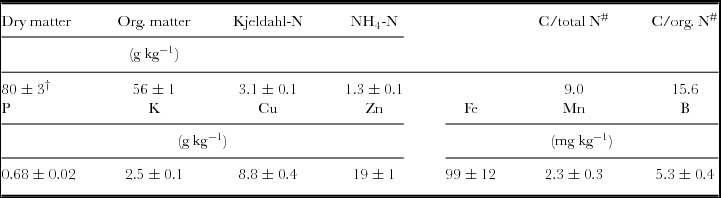
Liquid dairy cattle manure (excrement plus urine) was collected during winter and early spring in each year and stored in an open tank until its use. Manure was alkaline in reaction (pH 7.8 ± 0.1), contained bedding material and cleaning water, was not enriched with solutions that are used for cattle hoof bath and its composition is reported in Table 1. Manure analyses were repeated periodically during the whole period of the experimentation (data not shown) and showed that pH, dry and organic matter content, and total amounts of N, P, K, Cu, Zn, and B were almost constant and of the same magnitude to the mean values presented in Table 1. However, Fe and Mn concentrations varied considerably and in certain years were twice the presented values.
Composition‡ of the liquid dairy cattle manure.
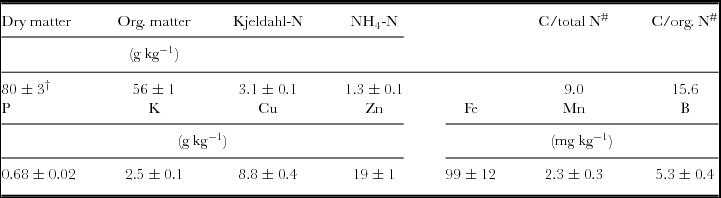
§Average values of the years 1996 and 1997 reported by Matsi et al. (Reference Matsi, Lithourgidis and Gagianas2003).
#The ratios were calculated using as organic C content of manure the half of organic matter content, because no organic C data are reported by Matsi et al. (Reference Matsi, Lithourgidis and Gagianas2003).
‡Expressed on wet weight basis.
†Mean and standard deviation.
The experimental field was cultivated initially with winter wheat from 1996 until 2000 and the results are reported by Matsi et al. (Reference Matsi, Lithourgidis and Gagianas2003). The field was left to fallow for one year (2001) and from 2002 until 2008 it was cultivated with corn. Results concerning the macronutrients for the period 2002–2005 are reported by Lithourgidis et al. (Reference Lithourgidis, Matsi, Barbayiannis and Dordas2007), whereas Nikoli and Matsi (Reference Nikoli and Matsi2011) reported results regarding the micronutrients for the period 2002–2006.
In the present study, corn data from the period 2006–2008 and soil data from the spring of 2009 are presented. Data of corn aboveground biomass and micronutrient plant concentration and uptake of 2006, which are reported by Nikoli and Matsi (Reference Nikoli and Matsi2011), were also included in this study. These data were taken from Agronomy Journal 103: 113–118 (2011), with permission (copyright of the American Society of Agronomy).
The size (5.6 m × 8.0 m, with a 2.0 m buffering zone) and the number (24) of the experimental plots were the same during the 11 years, arranged in a randomised complete block design, with four fertilisation treatments replicated six times. The treatments, which were applied on the same plots every year, were: (i) Manure, soil incorporation of liquid dairy cattle manure before seeding, without any starter or row fertiliser; (ii) N-single + P, application of N-P inorganic fertilisation for each crop prior to seeding; (iii) N-split + P, identical to N-single + P, but with split application of the N inorganic fertilisers; half prior to seeding and the other half broadcast applied at the tillering stage of wheat or side-dressed at the V8 growth stage of corn; (iv) Control, no manure or inorganic fertilisers application.
The applied N-P inorganic fertilisation consisted of 120 kg N ha−1 yr−1 and 26 kg P ha−1 yr−1 for wheat and 260 kg N ha−1 yr−1 and 57 kg P ha−1 yr−1 for corn in the form of ammonium sulfo-phosphate (20–10–0), super-phosphate (0–20–0) and ammonium nitrate (33.5–0–0) with single or split application of the N fertilisers. These fertilisation rates are the common N-P rates for each crop usually applied by farmers in the study area and are based on recommendations provided by research institutes. They do not represent fertilisation rates at a national level, given that such guidelines do not exist in Greece.
Liquid dairy cattle manure was applied at equal rates (based on its total N and P content) to the common N-P inorganic fertilisation for each crop, i.e. 40 Mg ha−1 yr−1 and 80 Mg ha−1 yr−1 (wet weight basis) for wheat and corn, respectively. The rate of manure application was calculated to be equal to the amounts of inorganic N-fertilisers for the two crops. However, it was also equal to the inorganic P-fertilisers rates, because the N/P ratios in manure and the inorganic fertilisation rates were similar (i.e. 4.6).
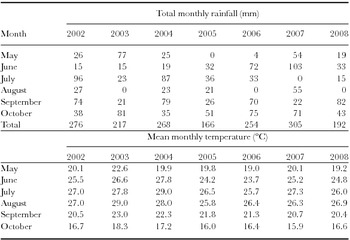
Conventional tillage practices including mouldboard plough, harrow disc, and cultivator were used before sowing in each growing season. Sowing took place within the third week of November for wheat and the last week of May for corn. In all plots, corn was sown at approximately 85 000 seeds ha−1 and the distance between rows was 80 cm. All fertilisers (inorganic and organic) were incorporated into the soil with a disc harrow a few days before sowing. Manure was surface applied with a liquid applicator (Zunhammer-Gülle Technik, Munich, Germany) and incorporated into the soil immediately after application. No irrigation was applied to wheat, albeit adequate water was applied to corn by surface irrigation. Weed control (including both grasses and broadleaf weeds) was achieved with appropriate herbicides registered for weed control in corn, such as atrazine applied pre-emergence at 2.25 kg active ingredient (a.i.) ha−1 and also with rimsulfuron (Rush 25 WG at 50 g a.i. ha−1) applied post-emergence. After harvest, straw was incorporated into the soil each year of the wheat cultivation period, whereas corn aboveground biomass was removed. In addition, weeds grown during the fallow year were removed. Certain climatic conditions concerning the whole cultivation period of corn are reported in Table 2.
Monthly total rainfall and mean temperature during the period 2002–2008.

Plant sampling and analyses of the present study
Corn aboveground biomass was collected from two rows of each plot (a 12.8 m2 area) at the R3 growth stage in the years 2006–2008. A sample of one kg of this biomass was dried at 65 °C and dry aboveground biomass yield was calculated.
The plant samples were ground and analysed in duplicate for total N by the Kjeldahl method (Bremner, Reference Bremner and Sparks1996). In addition, duplicate 0.5 g sub-samples were ashed at 500 °C for at least six hours; the ash was dissolved in HCl, filtered and analysed for P by the molybdenum blue-ascorbic acid method (Kuo, Reference Kuo and Sparks1996), K by flame emission spectroscopy, B by the azomethine-H method (Keren, Reference Keren and Sparks1996), and Cu, Zn, Fe, and Mn by atomic absorption spectrometry. Plant uptake of all nutrients was calculated (plant concentration of each nutrient times aboveground biomass yield).
Grain yield was determined by harvesting two middle rows of each plot (a 12.8 m2 area) by hand, at the end of October and adjusting grain moisture to 15%.
For corn collected at the R3 growth stage during the period 2002–2008, the apparent N recovery (ANR) for all fertilisation treatments and the mineral fertiliser equivalent (MFE) of manure were calculated, using the following equations:
ANR (%) = 100 × [NU+N (kg ha−1) - NU−N (kg ha−1)]/[N applied (kg ha−1)]
MFE (%) = 100 × ANRM/ANRIF
where NU+N is N uptake by corn for a given organic or inorganic fertilisation treatment, NU−N is N uptake by corn for the control treatment, ‘N applied’ is the total amount of N added to soil in the form of manure or as inorganic fertiliser (single or split application), and ANRM and ANRIF are the apparent N recoveries of manure and each of the two inorganic fertilisers treatments.
Soil sampling and analyses of the present study
In the spring of 2009, composite soil samples consisting of three subsamples each were collected from three soil depths (0–30, 30–60 and 60–90 cm) of each plot, air-dried, ground to pass a 2-mm sieve and analysed in duplicate for chemical properties.
All samples were analysed for soil available NO3-N by extraction with 2 M KCl (Mulvaney, Reference Mulvaney and Sparks1996) and determination by ultraviolet spectrometry and for electrical conductivity of the saturation extract (ECse). From the surface soil samples, available P was extracted with 0.5 M NaHCO3, pH 8.5 and determined by the molybdenum blue-ascorbic acid method (Kuo, Reference Kuo and Sparks1996), K was extracted with 1 M, CH3COONH4, pH 7 and determined by flame photometry (Thomas, Reference Thomas and Page1982), Cu, Zn, Fe, and Mn were extracted with DTPA (Lindsay and Norvell, Reference Lindsay and Norvell1978) and determined by atomic absorption spectrometry, and B was extracted with hot water and determined by the azomethine-H method (Keren, Reference Keren and Sparks1996). Moreover, pH was determined in water (1:2 soil to water ratio), Kjeldahl-N was measured (Bremner, Reference Bremner and Sparks1996), total organic C (TOC) was determined by the wet oxidation method (Walkley and Black, Reference Walkley and Black1934) and dissolved organic C (DOC) was extracted with water (Wright et al., Reference Wright, Provin, Hons, Zuberer and White2005) and determined employing a C analyser.
Statistical analysis
For each soil parameter determined once, ANOVA was conducted using SPSS, version 19. For each plant parameter, measured all years, repeated measures ANOVA was conducted using the three years as repeated measures. Bartlett's and Mauchly's tests were conducted to check for homogeneity of variances and covariances for each parameter. For those parameters for which significant differences were detected by the ANOVA, mean comparisons were conducted using the LSD test at p ≤ 0.05.
Results And Discussion
Effect of liquid dairy cattle manure on corn yield, nutrient content and uptake
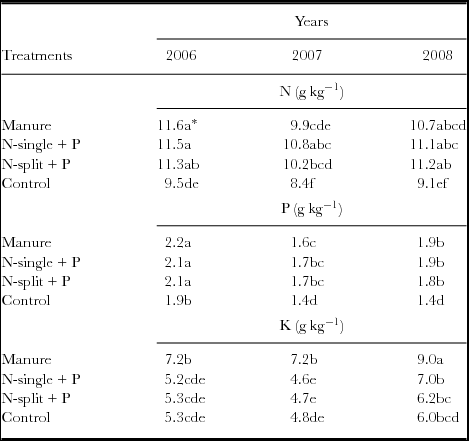
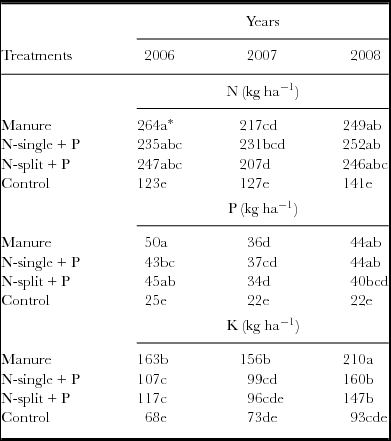
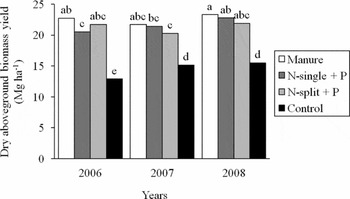
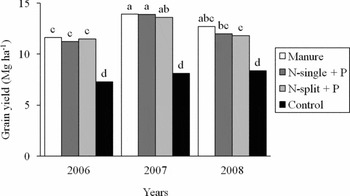
Corn dry aboveground biomass yield at the R3 growth stage (Figure 1) and grain yield (Figure 2) were affected by treatment (p ≤ 0.001), year (p ≤ 0.001), and in the former case by their interaction (p ≤ 0.038). As illustrated in Figures 1 and 2, both yields which were obtained from manure-treated plots increased (p ≤ 0.05) compared with control and ranged at levels similar to the inorganic fertilisation treatments, irrespectively of the N application time (single or split N application). The concentrations (Table 3) and plant uptake (Table 4) of the macronutrients were affected by treatment (p ≤ 0.001) and year (p ≤ 0.001). As for corn yields, similar increases (p ≤ 0.05) were obtained for N and P concentrations and uptake upon manure or inorganic fertilisers application, whereas for K there was an increase (p ≤ 0.05) only in manure-treated plots. This finding was expected, because manure contained K, whereas no K was applied with the inorganic fertilisers.
Macronutrient concentrations in corn at the R3 growth stage following application of liquid cattle manure or inorganic fertilisers the period 2006–2008.
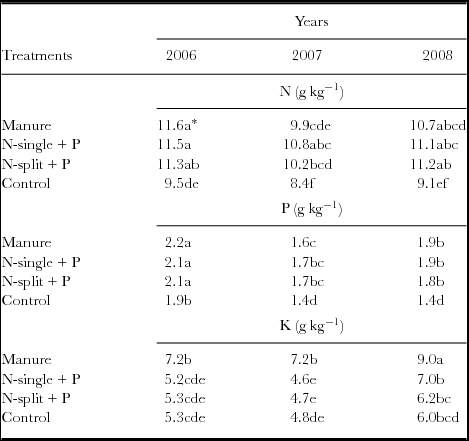
*Means followed by different letters, within the same parameter, are statistically different using the LSD test at p ≤ 0.05.
Macronutrients uptake by corn plants at the R3 growth stage following application of liquid cattle manure or inorganic fertilisers the period 2006–2008.
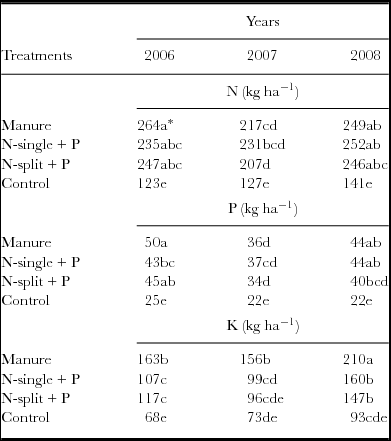
*Means followed by different letters, within the same parameter, are statistically different using the LSD test at p ≤ 0.05.
Dry aboveground biomass yield of corn at the R3 growth stage following liquid cattle manure or inorganic fertilisers application the years 2006–2008. Data of 2006 were taken from Agronomy Journal 103: 113–118 (2011), with permission, copyright American Society of Agronomy. Means indicated with different letters are statistically different using the LSD test at p ≤ 0.05.

Corn grain yield following liquid cattle manure or inorganic fertilisers application the years 2006–2008. Means indicated with different letters are statistically different using the LSD test at p ≤ 0.05.

Based on the above results as well as on those of Lithourgidis et al. (Reference Lithourgidis, Matsi, Barbayiannis and Dordas2007) for the years 2004 and 2005, manure application had similar to the inorganic fertilisation beneficial effects on corn yield and N, P and K uptake, but also on macronutrient concentrations for five consecutive years. In all years, the increased uptake was due to increase in both aboveground biomass yield and macronutrient concentrations. Similar findings with respect to crop yield and macronutrients uptake are reported in the literature (Beauchamp, Reference Beauchamp1986; Culley et al., Reference Culley, Phillips, Hore and Patni1981; Evans et al., Reference Evans, Goodrich, Munter and Smith1977; Kaffka and Kanneganti, Reference Kaffka and Kanneganti1996; Matsi et al., Reference Matsi, Lithourgidis and Gagianas2003; Sutton, et al., Reference Sutton, Nelson, Kelly and Hill1986; Zhang et al., Reference Zhang, Gavlak, Mitchell and Sparrow2006). However, the positive effect of liquid cattle manure applied at common rates on macronutrient concentrations in plant tissues, as it was proven herein, has not been documented adequately in the literature. Contradictory findings are reported even upon repeated heavy application rates (Evans et al., Reference Evans, Goodrich, Munter and Smith1977; Sutton et al., Reference Sutton, Nelson, Kelly and Hill1986).
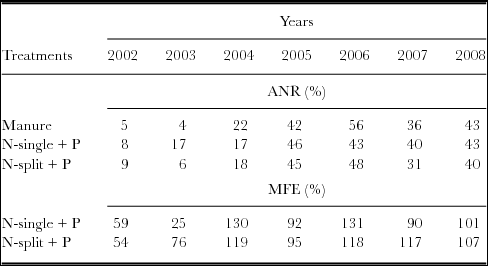
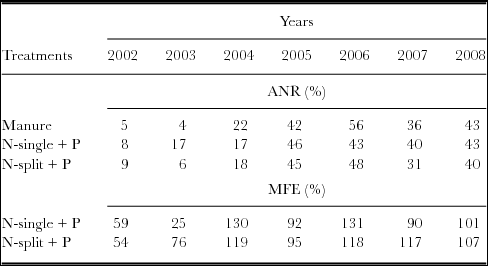
In agreement with the findings of Matsi et al. (Reference Matsi, Lithourgidis and Gagianas2003) for wheat and Lithourgidis et al. (Reference Lithourgidis, Matsi, Barbayiannis and Dordas2007) for corn, no significant differences were found regarding the crop yield, N concentration and uptake between single and split application of the N fertilisers. As shown in Table 5, the calculated ANR values for the two inorganic N fertilisation treatments ranged at similar levels in all years of corn cultivation period, except for the year 2003. In the specific year, as well as in 2002, the ANR from all treatments were low and this was attributed to the high residual soil available NO3-N in the spring of 2002. Moreover, in these two years, no response of corn to fertilisation, with respect to both yield and N uptake, was observed. From the year 2004 and afterwards, the ANR increased and in the period 2005–2008, it was stabilised at 43 ± 6% in all cases. The MFE of manure was similar to both N fertilisers treatments every year except 2003 and the average value over the period 2005–2008 was 106 ± 15%. This high MFE value was attributed to the fact that almost 30% of manure's total N was in NH4 form, as well as to a possible high mineralisation rate of manure's organic N after its soil incorporation.
The apparent N recovery (ANR) for all fertilisation treatments and the mineral fertiliser equivalent (MFE) of manure the period 2006–2008.
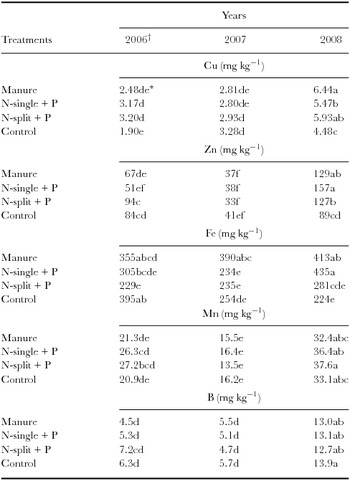
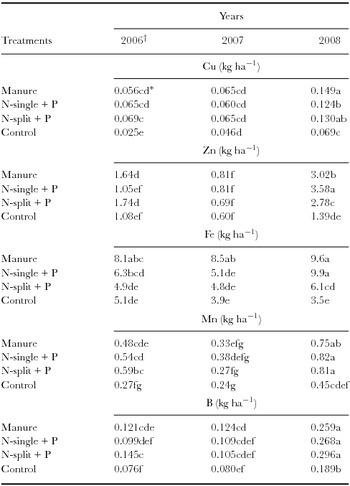
Except Fe, micronutrient concentrations in corn aboveground biomass at the R3 growth stage (Table 6) were affected only by year (p ≤ 0.001). Inconsistent and quite variable results are reported by Evans et al. (Reference Evans, Goodrich, Munter and Smith1977), concerning the micronutrient concentrations in corn after heavy application rates of liquid beef manure. Contrary to concentrations, all micronutrients uptake by corn (Table 7) were affected not only by year (p ≤ 0.001), but also by treatment (p ≤ 0.001) and for Cu and Zn by their interaction (p ≤ 0.001). In almost all cases, uptake in manure treatment increased (p ≤ 0.05) compared to control at levels similar to or higher than the inorganic fertilisers treatments. Based on these results as well as on those of Nikoli and Matsi (Reference Nikoli and Matsi2011) for the year 2005, manure application had beneficial effect on micronutrients uptake by corn for four consecutive years, which was exclusively due to the increase of aboveground biomass yield.
Micronutrient concentrations in corn at the R3 growth stage following application of liquid cattle manure or inorganic fertilisers the period 2006–2008.

*Means followed by different letters, within the same parameter, are statistically different using the LSD test at p ≤ 0.05.
†From Agronomy Journal 103: 113–118 (2011), with permission (copyright of the American Society of Agronomy).
Micronutrients uptake by corn plants at the R3 growth stage following application of liquid cattle manure or inorganic fertilisers the period 2006–2008.

*Means followed by different letters, within the same parameter, are statistically different using the LSD test at p ≤ 0.05.
†From Agron. J. 103: 113–118 (2011), with permission, copyright American Society of Agronomy.
Long-term impact of liquid dairy cattle manure on soil properties
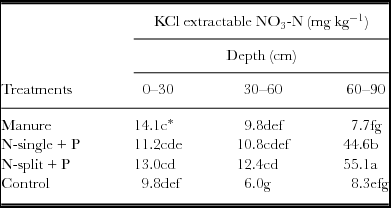
After 11 years of experimentation, soil available NO3-N was affected by treatment (p ≤ 0.001), depth (p ≤ 0.001), and their interaction (p ≤ 0.001) (Table 8). In agreement with the findings of other researchers (Jokela, Reference Jokela1992; Lithourgidis et al., Reference Lithourgidis, Matsi, Barbayiannis and Dordas2007; Matsi et al., Reference Matsi, Lithourgidis and Gagianas2003; Randall et al., Reference Randall, Iragavarapu and Schmitt2000), NO3-N in the 0–60 soil depth of manure treatment was greater (p ≤ 0.05) than control and similar to both inorganic fertilisers treatments. On the contrary, data obtained in the 60–90 cm soil depth were quite different. NO3-N content of the manure-treated plots was similar to control and lower (p ≤ 0.05) than the inorganic fertilisation treatments. In the later case, NO3-N concentrations were the highest among all treatments and depths and were comparable to those reported by Lithourgidis et al. (Reference Lithourgidis, Matsi, Barbayiannis and Dordas2007) for the year 2005 (i.e. 52 and 66 mg kg−1 for the single and split application of N fertilisers, respectively). Also, it is worth mentioning that NO3-N of the manure treatment was greater (p ≤ 0.05) than control in the year 2005 and not similar as reported herein. These results indicate that NO3-N accumulation in the deeper soil layers because of manure application at common rates for several years is minimum. However, NO3-N accumulation into the soil could be considerable in the case of repeated applications of N inorganic fertilisers.
Concentrations of available NO3-N in the 0–90 cm soil depth the year 2009, i.e. after liquid cattle manure or inorganic fertilisers application for 11 years.
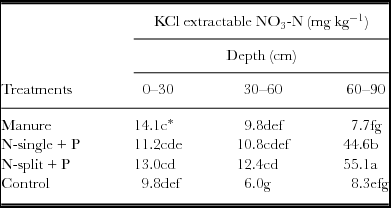
*Means followed by different letters are statistically different using the LSD test at p ≤ 0.05.
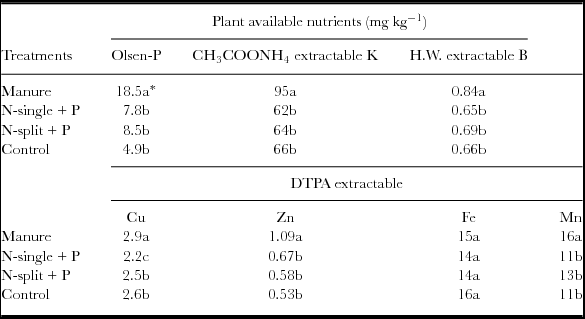
In agreement with findings of other researchers (Culley et al., Reference Culley, Phillips, Hore and Patni1981; Evans et al., Reference Evans, Goodrich, Munter and Smith1977; Randall et al., Reference Randall, Iragavarapu and Schmitt2000; Sutton et al., Reference Sutton, Nelson, Kelly and Hill1986; Zhang et al., Reference Zhang, Gavlak, Mitchell and Sparrow2006), soil available P and K in manure treatment increased (p ≤ 0.05) in comparison to all other treatments (Table 9). The same is reported by Lithourgidis et al. (Reference Lithourgidis, Matsi, Barbayiannis and Dordas2007) for both macronutrients in the years 2003–2005 and by Matsi et al. (Reference Matsi, Lithourgidis and Gagianas2003) for P in the years 1997–2000.
Concentrations of available P, K and micronutrients in the 0–30 cm soil depth the year 2009, i.e. after liquid cattle manure or inorganic fertilisers application for 11 years.
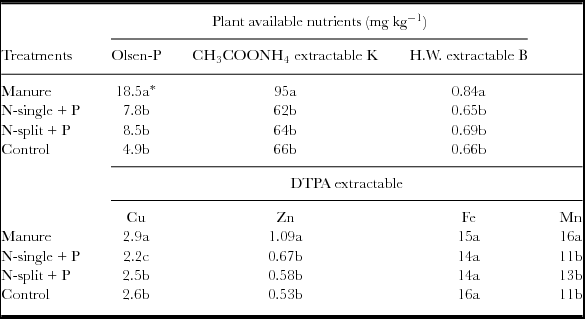
*Means followed by different letters, within the same column, are statistically different using the LSD test at p ≤ 0.05.
Consistent increase of K upon manure application was expected earlier than in the year 2003 and afterwards. Based on the rates and average composition of manure reported in Table 1, 100 and 200 kg K ha−1 yr−1 were applied in the manure-treated plots during 1996–2000 and 2002–2008, respectively, whereas no K was applied in the other treatments. Probably, illite of the soil clay regulated the K added through manure, since illite can release K into the soil solution, but also can adsorb soluble K (Brady and Weil, Reference Brady and Weil2008). Furthermore, maybe for this reason K remained below the critical levels of 170–250 mg kg−1 (Doll and Lucas, Reference Doll, Lucas, Walsh and Beaton1973) even in manure treatment during the whole period.
The greater P content of manure treatment than that of the inorganic fertilisation treatments was somehow unexpected, since P was applied at equal total amounts every year. This discrepancy was attributed to the different forms of P in manure and inorganic fertilisers, though variable findings concerning this issue are reported in the literature. Available P in soils treated with liquid cattle manure was found to be less than that in soils treated with triple superphosphate (Withers et al., Reference Withers, Clay and Breeze2001), but greater than that in soils treated with potassium di-hydrogen phosphate or mono-ammonium phosphate (Siddique and Robinson, Reference Siddique and Robinson2003; Tarkalson and Leytem, Reference Tarkalson and Leytem2009).
Although P of manure-treated plots in the year 2009 (Table 9) was above the sufficient value of 10 mg kg−1 (Thomas and Peaslee, Reference Thomas, Peaslee, Walsh and Beaton1973), it remained at levels similar to those determined in the previous period. The same was also true for NO3-N and K and no consistent build-up of the three macronutrients in the surface soil was obvious over years.
Soil available metal micronutrients (except Fe) and B in the year 2009 (Table 9) followed the same pattern as P and K. Thus, significant increases (p ≤ 0.05) were obtained upon liquid cattle manure addition for second time after the year 2007 (Nikoli and Matsi, Reference Nikoli and Matsi2011). Despite the increase, micronutrients remained at levels similar (for Cu, Zn and B) or a little higher (for Fe and Mn) than the critical levels reported by Sims and Johnson (Reference Sims, Johnson and Mortvedt1991) for various soils (i.e. 0.1–2.5, 0.2–2.0, 2.5–5.0, 1.0–5.0 and 0.1–2.0 mg kg−1, for Cu, Zn, Fe, Mn and B, respectively). Except Zn, micronutrients of the manure treatment in the year 2009 (Table 9) ranged at levels similar or lower than those reported for the year 2007 (i.e. 2.3–2.8, 17–22, 16–25 and 0.73–1.07 mg kg−1, for Cu, Fe, Mn and B, respectively). An increasing trend was evident for Zn through years (from 0.48 mg kg−1 in the year 2002 to 1.09 mg kg−1 in the year 2009) which was within the sufficiency range. Thus, no toxicity concentrations were evidenced after manure application for 11 years. Brock et al. (Reference Brock, Ketterings and McBride2006) reported similar results for Cu and Zn in the plough layer of 109 fields, after liquid cattle manure application from five to 40 years.
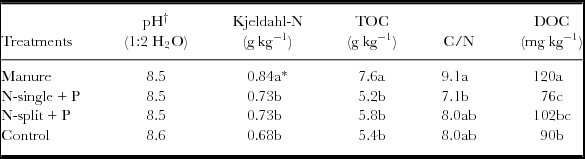
Apart from the micronutrients added to soil with manure, the increased concentrations of metal micronutrients, especially of Cu and Zn, could also be the result of organic matter addition. According to Japenga et al. (Reference Japenga, Dalenberg, Wiersma, Scheltens, Hesterberg and Salomons1992), metals can release from the solid soil phase into the soil solution through their complexation with the organic matter of liquid animal manure, particularly the dissolved fraction (almost 20%). This is supported by the positive effect (p ≤ 0.002) of manure on soil organic C (TOC and DOC) in the year 2009 (Table 10) as in the year 2007.
Certain chemical properties of the surface soil (0–30 cm) the year 2009, i.e. after liquid cattle manure or inorganic fertilisers application for 11 years.
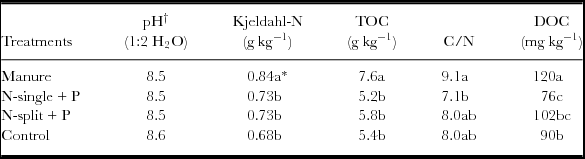
†No significant differences were detected by ANOVA.
*Means followed by different letters, within the same column, are statistically different using the LSD test at p ≤ 0.05.
As to soil organic C, treatment affected (p ≤ 0.001) total N which also increased (p ≤ 0.05) (Table 10), but the C/N ratio remained unchanged (Table 10) and were at levels common for cultivated soils (Brady and Weil, Reference Brady and Weil2008). Increases of soil organic C and total N upon liquid cattle manure application are reported in the literature and are usually associated with heavy application rates (Culley et al., Reference Culley, Phillips, Hore and Patni1981), which was not the case herein or long periods of application (Antil et al., Reference Antil, Gerzabek, Haberhauer and Eder2005a, Reference Antil, Gerzabek, Haberhauer and Ederb). Thus, the low organic matter content and the common application rates of the manure used in this study were considered the main reasons for observing increases in soil TOC and total N after almost a decade of experimentation.
In addition to the above, the difference in handling of crop residues could be another possible cause. As is previously reported, wheat straw was incorporated into the plots of all treatments after harvest, whereas corn residues were removed. Possibly the organic C added into the soil through wheat straw obscured the effect of manure, maintaining TOC in the year 2000 as in 1996 (7.5 ± 1.1 mg kg−1) (Matsi et al., Reference Matsi, Lithourgidis and Gagianas2003). The same is reported for the period 2002–2005 (Lithourgidis et al., Reference Lithourgidis, Matsi, Barbayiannis and Dordas2007) when corn residues were removed, albeit a non-significant decline of soil TOC was evident this period. So, it cannot be excluded that corn biomass removal contributed to the fact that the positive effect of manure on soil organic matter became evident in the years 2007 and 2009.
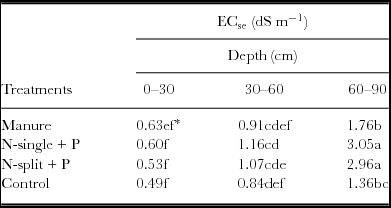
Soil pH remained unchanged upon organic or inorganic fertilisation (Table 10), whereas ECse (Table 11) was lower than the critical limit (4 dS m−1) for growth of most crops (Brady and Weil, Reference Brady and Weil2008) and similar findings are reported even upon heavy application rates of liquid beef manure (Evans et al., Reference Evans, Goodrich, Munter and Smith1977). In all cases ECse was affected by treatment (p ≤ 0.001), depth (p ≤ 0.001), and their interaction (p ≤ 0.001). In the 0–60 soil depth, ECse remained unchanged, whereas in the 60–90 cm soil depth followed the same pattern as the NO3-N concentration mentioned above. In the latter case, the ECse values in plots received the inorganic fertilisation were the highest (p ≤ 0.05) among all treatments and depths and were comparable to those reported by Lithourgidis et al. (Reference Lithourgidis, Matsi, Barbayiannis and Dordas2007) for the year 2005 (i.e. 2.82 and 2.19 dS m−1 for the single and split application of the inorganic N fertilisers, respectively). However, in the year 2005 the ECse values determined in the deepest soil layer of manure-treated plots were similar to those of both inorganic fertilisers treatments (Lithourgidis et al., Reference Lithourgidis, Matsi, Barbayiannis and Dordas2007), whereas in the year 2009 reported herein were similar to control. As for NO3-N, no significant differences were found, between the single and split application of the N inorganic fertilisers with respect to ECse, which is in line with the reports of Matsi et al. (Reference Matsi, Lithourgidis and Gagianas2003) and Lithourgidis et al. (Reference Lithourgidis, Matsi, Barbayiannis and Dordas2007).
Electrical conductivity in the 0–90 cm soil depth the year 2009, i.e. after liquid cattle manure or inorganic fertilisers application for 11 years.
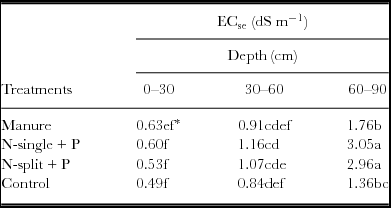
*Means followed by different letters are statistically different using the LSD test at p ≤ 0.05.
Conclusions
Repeated application of liquid cattle manure into the soil, at rates comparable to the common inorganic fertilisation rates for crops for 11 years, can enhance crop yield and macronutrient concentrations in plant tissues and uptake, at levels similar to the inorganic fertilisation. In addition, it can increase micronutrients plant uptake and maintain soil fertility with respect to both macro- and micronutrients and increase soil organic C and total N, without either causing nutrient build up or increasing soil salinity and NO3 − accumulation in the deeper soil layers. Unlikely to the liquid cattle manure, increases of soil salinity and NO3 − at considerable levels cannot be excluded in the case of inorganic fertilisers. Furthermore, since the manner of inorganic N fertilisers application (single or split) does not affect N plant concentration and uptake and soil available NO3-N, it is more cost effective to incorporate all N as a single preplant application.
Acknowledgements
The valuable assistance of Dr George Menexes in statistical analysis is greatly appreciated.