Introduction
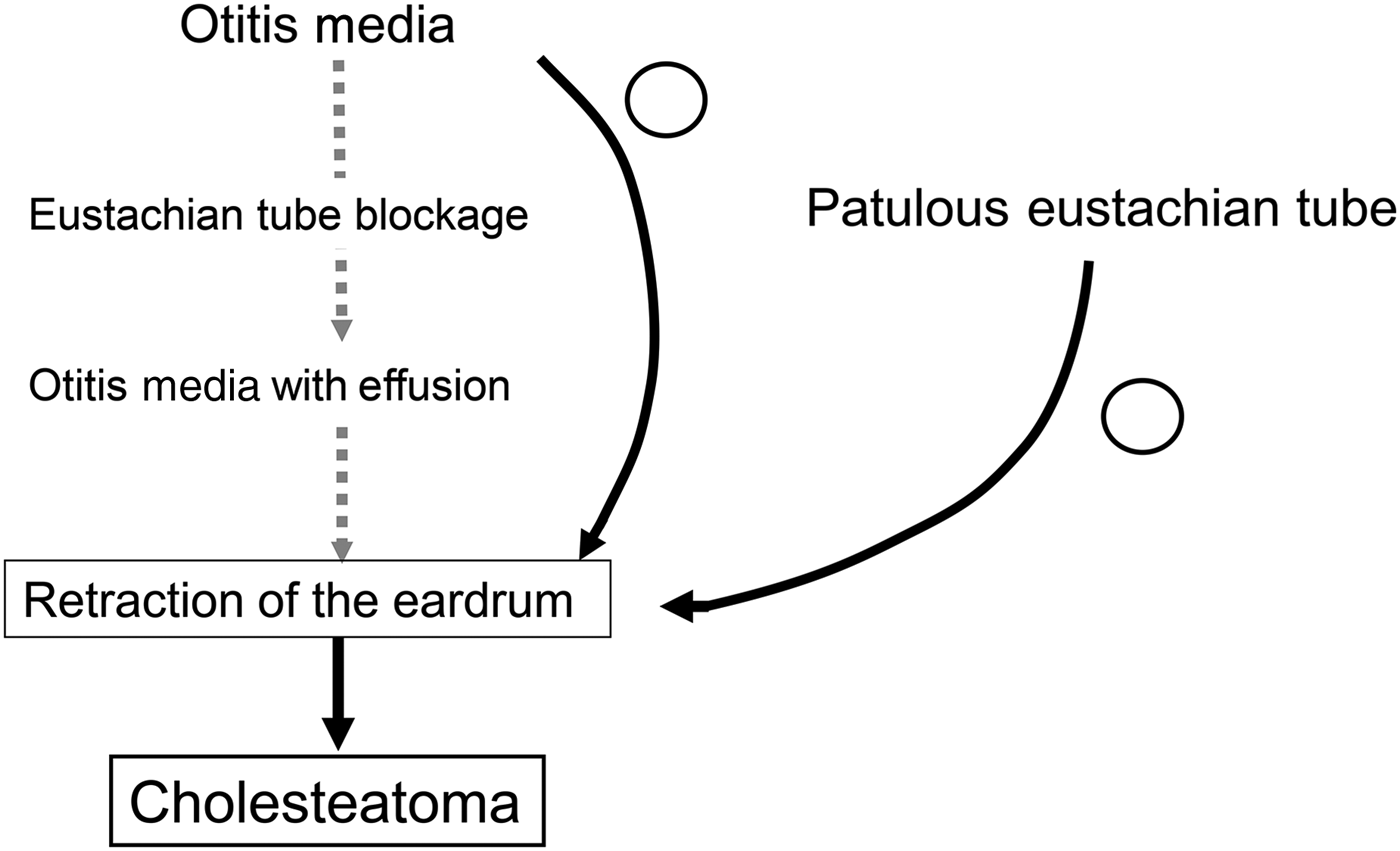
Retraction of the eardrum is widely recognised to constitute the initial step in the development of primary acquired cholesteatoma.Reference Bezold1, Reference Tos2 Blockage of the eustachian tube as a result of otitis media subsequently induces otitis media with effusion (OME). The concept that cholesteatoma develops in patients with sustained OME is widely accepted;Reference Sudhoff and Tos3–Reference Tos and Poulsen5 however, the progression from simple OME to the formation of cholesteatoma is not often directly observed in daily clinical practice. Furthermore, a patulous, rather than blocked, eustachian tube can also serve as a source for pathogens causing cholesteatoma,Reference Magnuson6 and early cholesteatoma formation is often noted in such patients. Therefore retraction of the eardrum is associated with multiple mechanisms and risk factors.
We conducted an epidemiological study to investigate the pathogenesis of cholesteatoma. A cohort study would be ideal for this purpose, as the study design allows researchers to prospectively assess potential risk factors. We initially considered joining the Hisayama study, a prospective cohort study of lifestyle-related diseases started in 1961;Reference Fujishima, Kiyohara, Kato, Ohmura, Iwamoto and Nakashima7, Reference Kiyohara, Ueda, Hasuo, Wada, Kawano and Kato8 however, cohort studies are time-consuming and costly, and, if the incidence of the disease is low, it would be impossible to find a reasonable number of patients in Hisayama, which has a population of only 8000. Epidemiological surveys of cholesteatoma are rare, and most previous reports have focused on surgically treated cases.Reference Takahashi, Kobayashi and Takasaka9–Reference Kemppainen, Puhakka, Laippala, Sipila, Manninen and Karma12 We therefore investigated the annual incidence of primary acquired cholesteatoma among patients treated both with and without surgery in a larger population of 1.4 million in the city of Fukuoka. In addition, we conducted a case–control study, because cohort studies require a much longer period of observation to obtain results, even if the incidence of cholesteatoma is high.
Methods
Epidemiological study
We collected the information for registered residents of Fukuoka City who were newly diagnosed with primary acquired cholesteatoma during the period of six months between July and December, 2008. We sent questionnaires to all otolaryngologists in Fukuoka City and surrounding towns. The surveyed area included 2 university hospitals, 20 general hospitals and 87 ENT clinics.
Case–control study
We enrolled patients with newly diagnosed primary acquired cholesteatoma treated at Kyushu University Hospital during the period of 2009–2011. We also collected control subjects diagnosed with diseases unrelated to cholesteatoma during the same period. There were 40 cholesteatoma cases and 175 control cases. We compared the profiles of the groups and found no significant differences in age or sex between the cholesteatoma and control subjects. A questionnaire survey was distributed to both groups. The items of the questionnaire were divided into three categories: environmental factors, past history of otitis media and past history of other diseases related to eustachian tube function. The SPSS® and JMP® statistical software programs were used for the statistical analysis.
Results
Epidemiological study
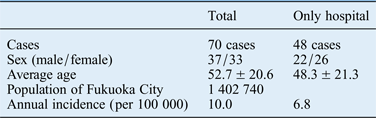
The population of Fukuoka City in 2008 was 1 402 740. We collected 70 cholesteatoma cases during this six-month period: 37 males and 33 females (Table I). The mean age was 52.7 ± 20.6, and the highest incidence of cholesteatoma was found among the subjects 60 years of age or older. The annual incidence of acquired cholesteatoma was 10.0 per 100 000 inhabitants.
Annual incidence of acquired cholesteatoma in fukuoka city

A total of 70 patients were newly diagnosed with acquired cholesteatoma during the study period. The annual incidence of cholesteatoma was 10.0 cases in a population of 100 000. Limiting the cases to only those reported by a hospital, which appeared to exhibit greater accuracy with respect to the diagnosis, the annual incidence of cholesteatoma was 6.8.
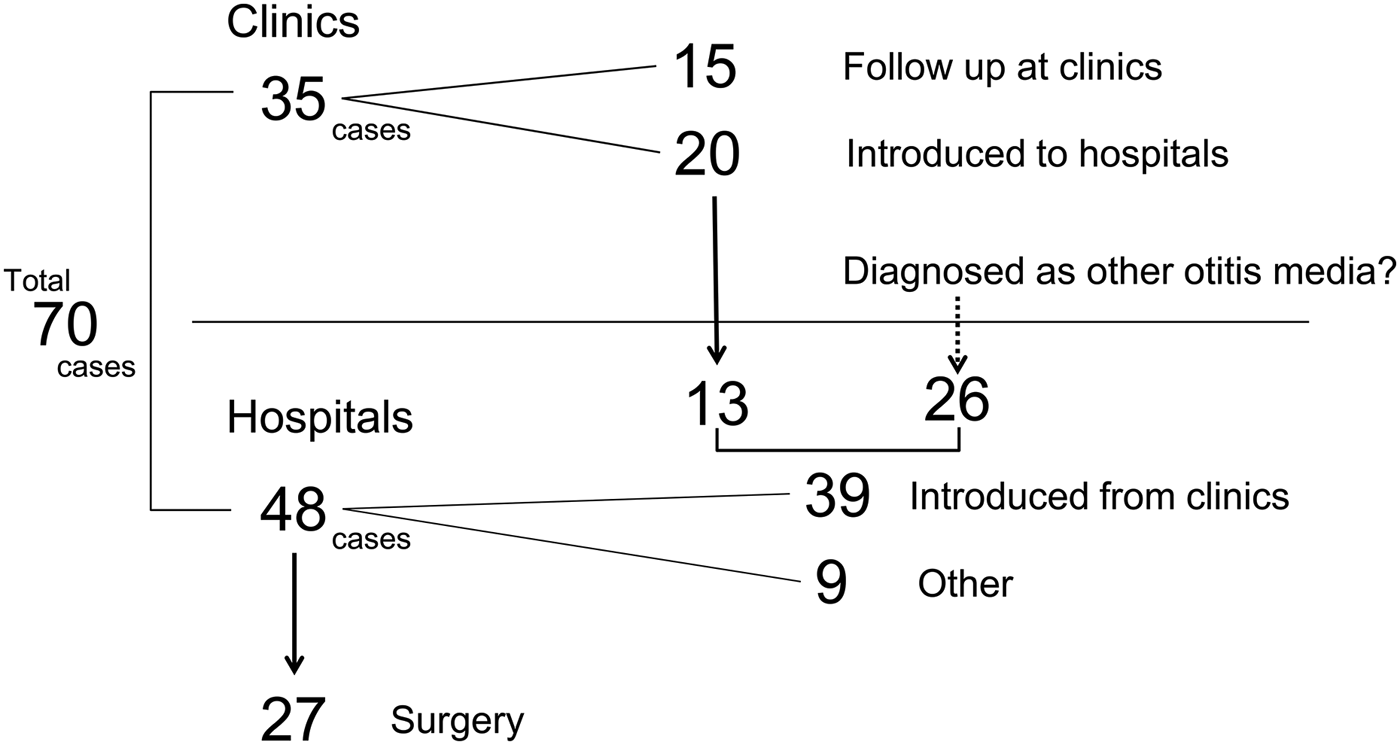
However, a more detailed investigation revealed the difficulty in diagnosing cholesteatoma. The clinics reported 20 patients newly diagnosed with cholesteatoma and referred to a hospital (Figure 1), whereas the secondary and tertiary referral hospitals reported a total of 39 cases referred from clinics. Only 13 of the 20 clinic cases were found among the 39 hospital cases, indicating that seven cases were missing or diagnosed with other diseases by otologists at the hospitals. The other 26 hospital patients were not diagnosed with cholesteatoma at a clinic and were instead referred to the hospital for different reasons (Figure 1). When only the 48 confirmed (by otologists) hospital cases were used in the analysis, the annual incidence of cholesteatoma was 6.8 cases per 100 000 population (Table I). Among these 48 patients, 27 underwent surgery within the period of 2008–2009.
The number of patients ‘referred from a clinic’ and ‘referred to a hospital’ did not match. A total of 70 cases of cholesteatoma were diagnosed during the study period. The clinics reported a total of 35 cases, including 20 patients referred to a hospital. In contrast, the hospitals reported a total of 48 cases, including 39 patients referred from a clinic. Only 13 of 20 patients were found among the 39 cases reported by hospitals.
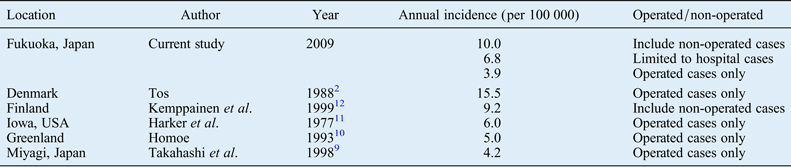
The annual incidence of acquired cholesteatoma was calculated to be 3.9 among the surgically treated cases, 6.8 among the hospital cases and 10.0 among all reported cases per population of 100 000 (Table II).
Annual incidence of cholesteatoma in this and previous studies
The annual incidence of acquired cholesteatoma in this study was 3.9 among the surgically treated cases, 6.8 among the hospital cases and 10.0 among the total number of cases in a population of 100 000. These values are not considerably higher than those previously reported among the surgically treated cases only.
Case–control study
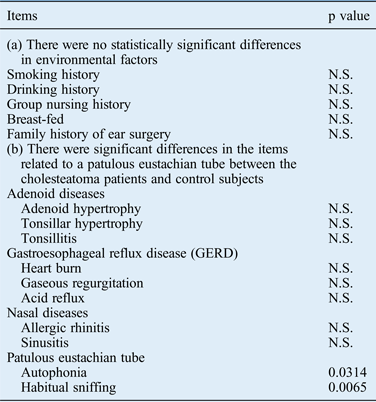
The questionnaire items were selected to investigate factors associated with the patient's environment or medical history. A history of smoking and alcohol consumption are risk factors associated with multiple diseases (Table III(a)). In addition, a history of breastfeeding or group nursing is a risk factor believed to be connected with the development of infantile recurrent otitis media,Reference Duffy, Faden, Wasielewski, Wolf and Krystofik13, Reference Casselbrant, Mandel, Fall, Rockette, Kurs-Lasty and Bluestone14 and a family history of ear surgery reflects a combination of potential genetic and environmental risk factors. We found no statistically significant differences in these environmental factors between the groups (Table III(a)).
Correlations between cholesteatoma and various risk factors
N.S. = nonsignificant;
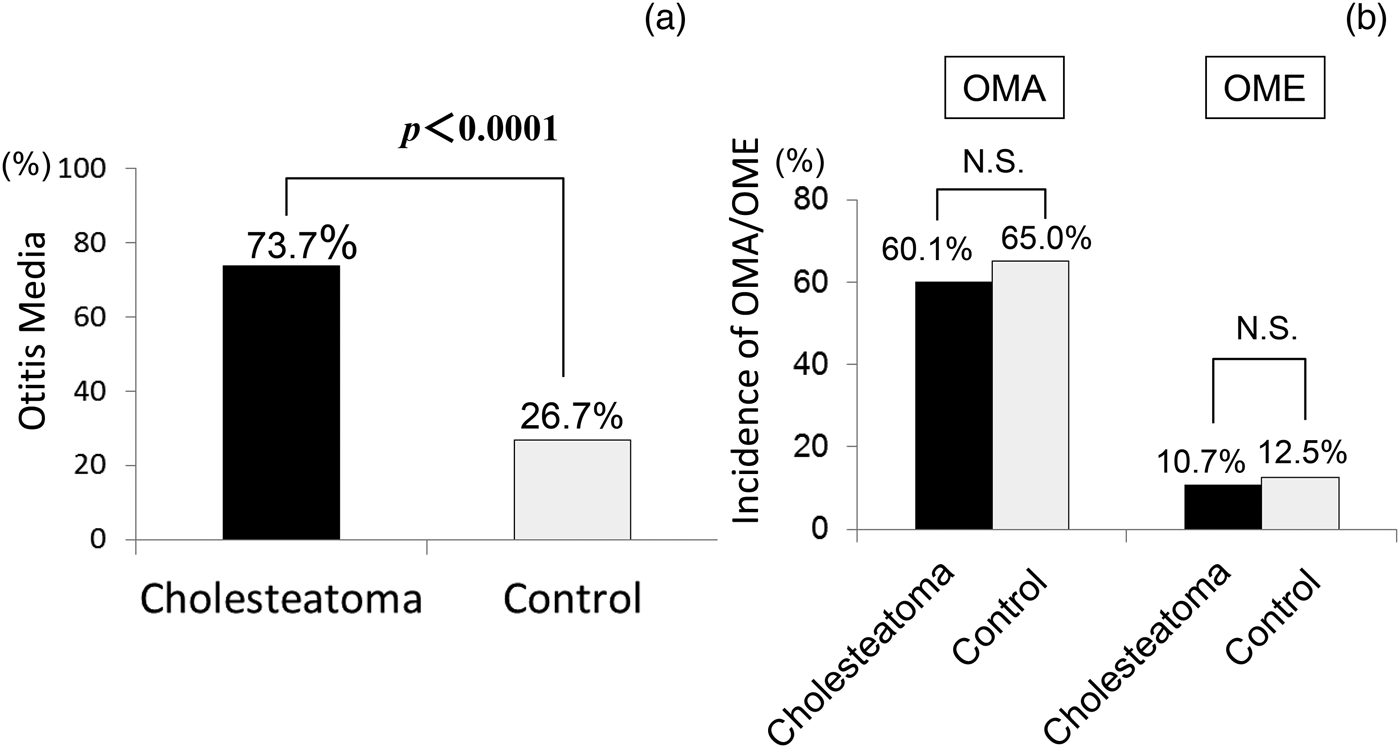
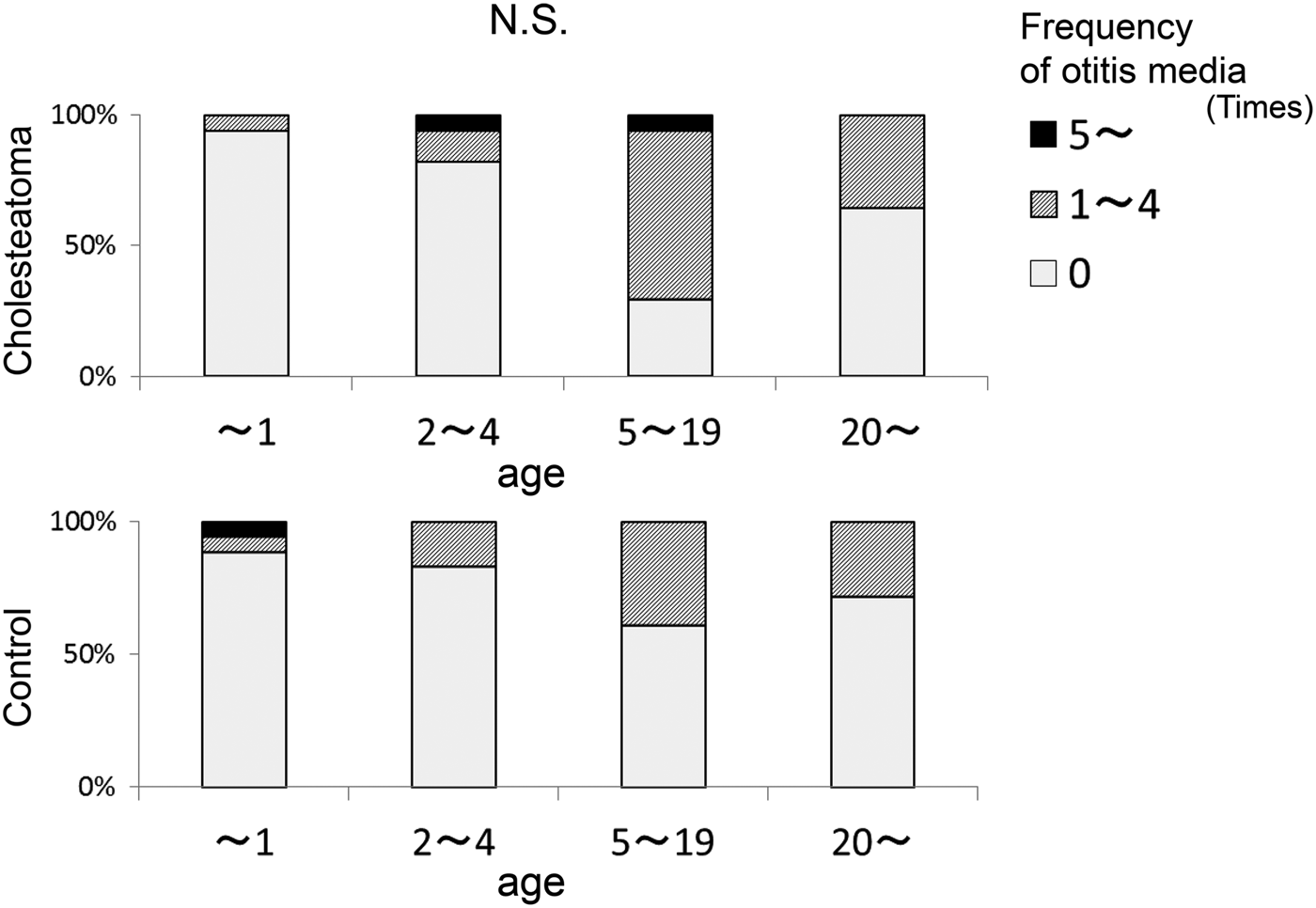
The results of the questionnaire showed that 73 per cent of the cholesteatoma patients had previously suffered from otitis media, in contrast to only 26 per cent of the control subjects (Figure 2(a)). This finding suggests that a past history of otitis media contributes to the pathogenesis of cholesteatoma. Among the patients with a history of otitis media, there was no tendency for those with cholesteatoma to have a greater incidence of otitis media with effusion (OME) (Figure 2(b)). Furthermore, we had expected that a history of frequently recurring otitis media would increase the risk of cholesteatoma. However, our results showed no significant differences in the rate of otitis media between the cholesteatoma cases and controls (Figure 3).
Past history of otitis media. (a) A total of 73 per cent of the cholesteatoma patients had a previous history of otitis media, compared to only 26 per cent of control subjects. (b) We expected that more cholesteatoma patients than control subjects would have a history of otitis media with effusion (OME); however, we found no statistical evidence suggesting that cholesteatoma was associated with OME.
Frequency of recurrence of otitis media. There were no significant differences in the frequency of otitis media between the cholesteatoma patients and control subjects.
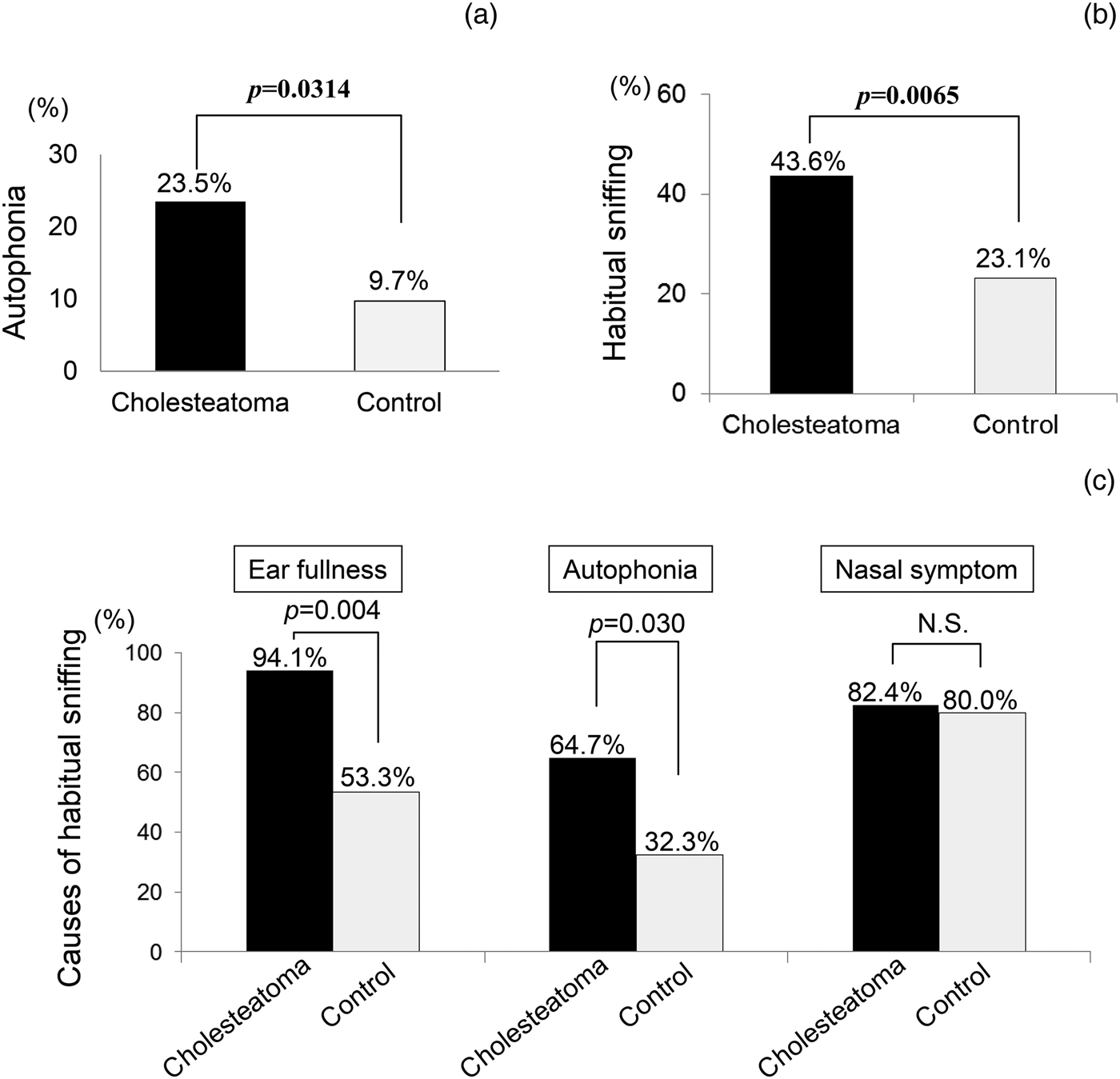
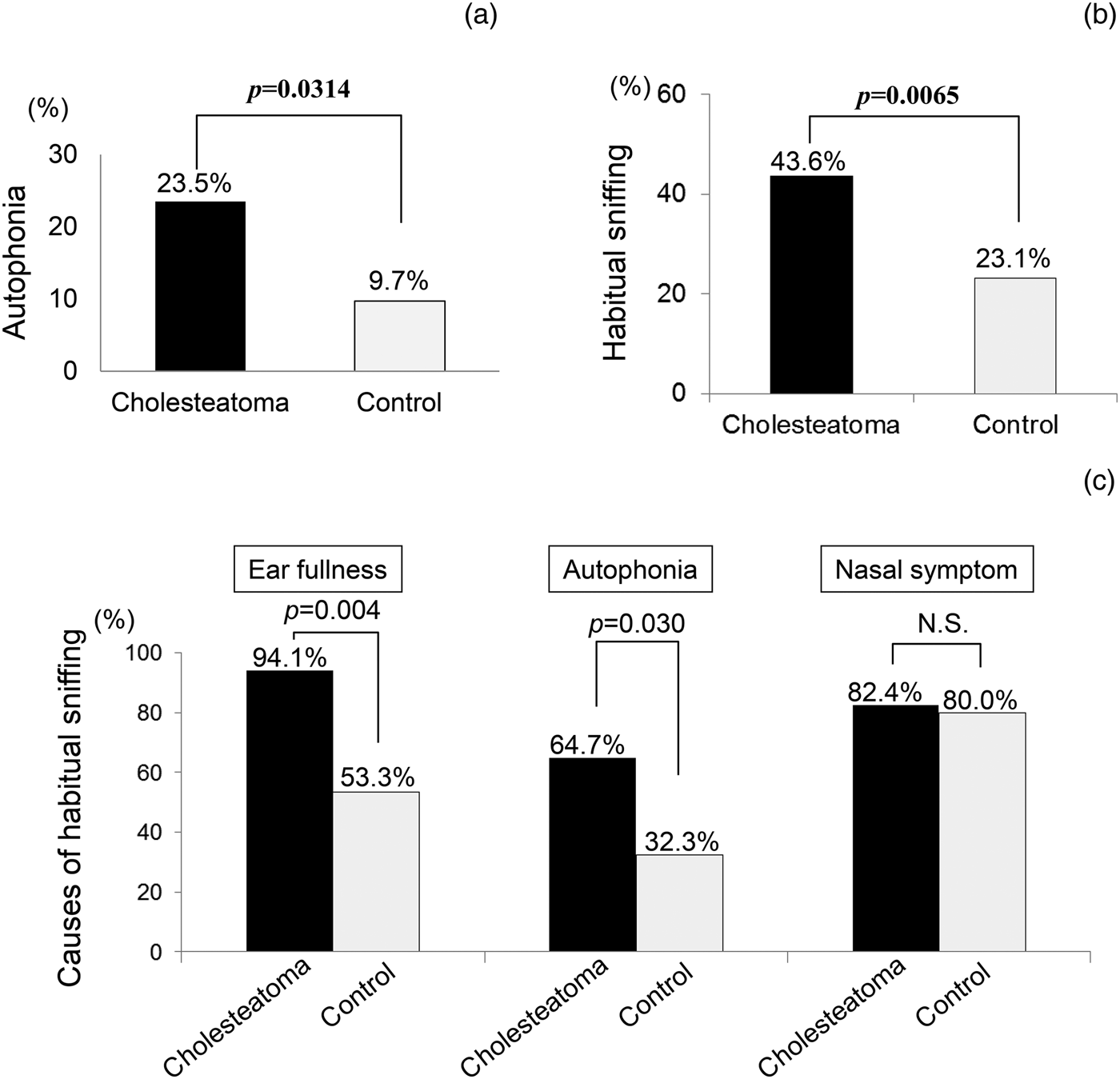
We also inquired about the subjects' past history of other diseases related to eustachian tube function (Table III(b)) and found no significant differences in the incidence of adenoid diseases, Gastroesophageal reflux disease (GERD) or nasal diseases that may cause eustachian tube blockage. On the other hand, there were statistically significant differences between the cholesteatoma group and control group with respect to items related to a patulous eustachian tube (Table III(b)). For example, 23 per cent of the cholesteatoma patients complained of autophonia, compared with only 9 per cent of the control subjects (Figure 4(a)). In addition, 43 per cent of the cholesteatoma patients reported experiencing ‘habitual sniffing’, compared with only 23 per cent of control subjects (Figure 4(b)). The presence of autophonia directly indicates a patulous eustachian tube, while habitual sniffing can be classified as either a nasal symptom or self-developed habit to overcome autophony by intentionally triggering eustachian tube blockage. The cause of sniffing was also investigated in the questionnaire. The number of patients who reported ‘ear fullness’ or ‘autophonia’, both of which indicate a patulous eustachian tube, as the reason for habitual sniffing was significantly high in the cholesteatoma group (Figure 4(c)). In contrast, there were no differences in nasal symptoms (Figure 4(c)) between the groups. Based on these results, a patulous eustachian tube is highly suspected to be a cause of habitual sniffing and subsequent cholesteatoma formation.
Relationship between a patulous eustachian tube and cholesteatoma. (a) A total of 23 per cent of the cholesteatoma patients reported ‘hearing their own breathing sounds’, compared to only 9 per cent of the control subjects. (b) A total of 43 per cent of the cholesteatoma patients reported ‘habitual sniffing’, compared with only 23 per cent of the control subjects. (c) Among the cases of habitual sniffing, the cause of sniffing was suspected to be a patulous eustachian tube in a significantly high number of cholesteatoma cases.
Discussion
There have been several epidemiological surveys of cholesteatoma. For example, Harker reported an annual incidence of cholesteatoma of 6.0 per 100 000,Reference Harker, McCabe, Sade and Abramson11 whereas Tos reported an annual incidence of cholesteatoma of 12.6 per 100 000.Reference Tos2 However, these surveys counted only surgically treated cases of cholesteatoma. The annual incidence of cholesteatoma observed in the present study is higher than that in previous reports of only surgically treated cases, although not considerably so. Applying our annual incidence to the population of 8000 in Hisayama, it would take 10 years to detect only five to eight cases of cholesteatoma. This number is too low to elucidate the pathogenesis of cholesteatoma using a prospective cohort study in the town of Hisayama.
The present results also suggest the difficulty in diagnosing cholesteatoma at clinics. In the current series, inflammation and otorrhoea were severe in many cases; therefore, these patients may have been diagnosed with otitis media at clinics without appropriate equipment, such as computed tomography. In addition, most previous reports of the epidemiology of cholesteatoma were limited to patients treated with surgery, which is considered to demonstrate a high level of reliability for diagnosis.
Using a case–control study, we attempted to elucidate the pathogenesis of cholesteatoma. It has been reported that retraction of the eardrum is caused by eustachian tube blockage as a result of otitis media. For example, Kemppainen found that 72 per cent of all cholesteatoma patients suffer from episodes of otitis media.Reference Kemppainen, Puhakka, Laippala, Sipila, Manninen and Karma12 Our findings confirm these results, in that 73 per cent of the cholesteatoma patients had a previous history of otitis media, compared with only 26 per cent of the control subjects.
It has also been proposed that otitis media with effusion (OME) is a direct precursor of cholesteatoma. Mohri reported that cholesteatoma develops directly from the retraction induced by otitis media associated with effusion. However, we found no statistical differences in the rates of otitis media acuta (OMA) and OME among the cholesteatoma cases in the present study. Since our study was based on a questionnaire distributed to the patients, it is possible that the accuracy of responses was low.
Nevertheless, our findings support the hypothesis that otitis media plays a role in the pathogenesis of cholesteatoma, although the underlying mechanism remains unclear.
Several previous studies have reported that a patulous eustachian tube contributes to the development of cholesteatoma. Kobayashi et al. reported that 27.7 per cent of cases of cholesteatoma involved habitual sniffing,Reference Kobayashi, Yaginuma, Takahashi and Takasaka15 whereas Ohta et al. found that the incidence of a patulous eustachian tube is significantly higher among patients with cholesteatoma than among those with chronic otitis media.Reference Ohta, Sakagami, Suzuki and Mishiro16 The present results also suggest that a patulous eustachian tube and habitual sniffing play a role in the pathogenesis of cholesteatoma.
• This is a research paper describing the epidemiological study of acquired cholesteatoma in Japan
• The annual incidence of cholesteatoma, including cases treated without surgery, was calculated to be 6.8–10.0 per 100 000, and this value was considered to not be high enough to perform a cohort study
• The results of the case–control study suggested that a past history of otitis media and habitual sniffing caused by a patulous eustachian tube play a role in the pathogenesis of cholesteatoma
Overall, based on the current findings, the pathogenesis of cholesteatoma appears to be multifactorial. At least two risk factors, otitis media and habitual sniffing due to a patulous eustachian tube, contribute to the onset of cholesteatoma (Figure 5).
Otitis media and a patulous eustachian tube may play a role in the pathogenesis of cholesteatoma. Although the underlying mechanisms remain unclear, otitis media and a patulous eustachian tube may be risk factors for cholesteatoma.
Conclusion
In the present epidemiological study, the annual incidence of cholesteatoma, including cases treated without surgery, was 6.8–10.0 in a population of 100 000 in Fukuoka City, Japan. Meanwhile, the results of the case–control study suggest that a past history of otitis media and habitual sniffing due to a patulous eustachian tube play a role in the pathogenesis of cholesteatoma.
Acknowledgements
We thank Dr Suminori Kono, Division of Public Health, Medical School of Kyushu University, for providing the study design for the epidemiological study. We also thank all otolaryngologists in Fukuoka City for their support in the present study.