



1 Introduction
The notion of fibring or combining logics arises naturally in a range of applications such as temporalization [Reference Finger and Gabbay11], modalization [Reference Fajardo and Finger10], formal representation of practical reasoning [Reference Governatori, Padmanabhan and Sattar15], software specification [Reference Diaconescu and Futatsugi8], etc. A prominent example of combining logics is the product of modal logics (see, e.g., [Reference Gabbay, Kurucz, Wolter and Zakharyaschev12, p. 126]), which we refer to as product logics. Since these are defined semantically, it is a nontrivial matter to axiomatize them, and some product logics are not even recursively enumerable (see, e.g., [Reference Gabbay, Kurucz, Wolter and Zakharyaschev12, Corollaries 7.14 and 7.16]). In spite of this, product logics have received considerable attention in the literature in both pure and applied contexts (see, e.g., [Reference Gabbay, Kurucz, Wolter and Zakharyaschev12, Reference Kurucz20] and the references therein).
Our interest in product logics stems from their connection to predicate modal logic. For a propositional modal logic
$\mathbf {L}$
 , let
$\mathbf {QLB}$
 denote the least predicate extension of
$\mathbf {L}$
 with the Barcan formula. In some cases, the product logic
$\mathbf {L}\times \mathbf {S5}$
 axiomatizes the one-variable fragment of
$\mathbf {QLB}$
 (see, e.g., [Reference Gabbay and Shehtman13, Theorem 13.8] or [Reference Gabbay, Kurucz, Wolter and Zakharyaschev12, Theorem 3.21]). Because of this, we restrict our attention to products of the form
$\mathbf {L}\times \mathbf {S5}$
 , where
$\mathbf {L}$
 is a Kripke complete propositional modal logic. Products of this form are relatively well behaved (see, e.g., [Reference Gabbay, Kurucz, Wolter and Zakharyaschev12, Section 6.5]).
If
$\mathbf {L}_1$
 and
$\mathbf {L}_2$
 are Horn axiomatizable logics, then
$\mathbf {L}_1\times \mathbf {L}_2$
 has a convenient axiomatization (see, e.g., [Reference Gabbay, Kurucz, Wolter and Zakharyaschev12, Theorem 5.9]). Since
$\mathbf {S5}$
 is Horn axiomatizable, this yields a convenient axiomatization of
$\mathbf {L}\times \mathbf {S5}$
 when
$\mathbf {L}$
 is Horn axiomatizable. Prominent examples of modal logics that are not Horn axiomatizable are the Gödel–Löb logic
$\mathbf {GL}$
 and the Grzegorczyk logic
$\mathbf {Grz}$
 , the frames of which are not even first-order definable (see, e.g., [Reference Chagrov and Zakharyaschev7, Theorems 6.7 and 6.8]). It is natural to consider whether
$\mathbf {GL}\times \mathbf {S5}$
 and
$\mathbf {Grz}\times \mathbf {S5}$
 admit finite axiomatizations. Indeed, this was left as an open problem in [Reference Gabbay and Shehtman13, p. 137].
Our main result establishes a finite axiomatization and decidability for both
$\mathbf {GL}\times \mathbf {S5}$
 and
$\mathbf {Grz}\times \mathbf {S5}$
 . By contrast, if
$\mathbf {L}_1,\mathbf {L}_2\in \{\mathbf {GL},\mathbf {Grz},\mathbf {GL.3},\mathbf {Grz.3}\}$
 , then
$\mathbf {L}_1\times \mathbf {L}_2$
 is undecidable [Reference Kurucz20, Theorem 34] (but the expanding product
$(\mathbf {L}_1\times \mathbf {L}_2)^{\text {EX}}$
 is decidable [Reference Kurucz20, Theorem 51]).
A convenient framework to study products and expanding relativized products with
$\mathbf {S5}$
 is the formalism of monadic modal logics, which we refer to as mm-logics. We can view product and expanding product logics as special mm-logics, with product logics characterized in particular by the presence of the monadic Barcan formula. In some cases, the minimal monadic extension
$\mathbf {ML}$
 of a propositional modal logic
$\mathbf {L}$
 and the monadic Barcan formula may suffice to axiomatize
$\mathbf {L}\times \mathbf {S5}$
 (e.g., when
$\mathbf {L}$
 is Horn axiomatizable). When this occurs, the logic
$\mathbf {L}\times \mathbf {S5}$
 is said to be product matching (see, e.g., [Reference Gabbay, Kurucz, Wolter and Zakharyaschev12, p. 223]). Thus, letting
$\mathbf {MLB}$
 denote the monadic extension of
$\mathbf {L}$
 together with the monadic Barcan formula,
$\mathbf {L}\times \mathbf {S5}$
 is product matching iff
$\mathbf {MLB}=\mathbf {L}\times \mathbf {S5}$
 .
It is well known that
$\mathbf {Grz}\times \mathbf {S5}$
 is not product matching [Reference Gabbay, Kurucz, Wolter and Zakharyaschev12, Theorem 5.17]. In contrast, we prove that
${\mathbf {GL}\times \mathbf {S5}}$
 is product matching, while
$\mathbf {Grz}\times \mathbf {S5}$
 can be axiomatized by adding to
$\mathbf {MGrzB}$
 the Gödel translation of the monadic Casari formula (in analogy with [Reference Bezhanishvili, Brantley and Ilin4, p. 443], we denote the resulting system by
$\mathbf {M}^+\mathbf {GrzB}$
 ). We establish these results by showing that the systems
$\mathbf {MGLB}$
 and
$\mathbf {M}^+\mathbf {GrzB}$
 have the finite model property (fmp for short). This, in turn, is done by first establishing the fmp for
$\mathbf {MGrzB}$
 , and then adjusting the proof accordingly for
$\mathbf {M}^+\mathbf {GrzB}$
 and
$\mathbf {MGLB}$
 . The fmp for
$\mathbf {MGrzB}$
 is obtained by an appropriate modification of the selective filtration strategy developed in [Reference Bezhanishvili and Khan6] (which in turn draws on [Reference Bezhanishvili, Brantley and Ilin4, Reference Gabbay, Kurucz, Wolter and Zakharyaschev12, Reference Grefe16]) to prove the fmp for
$\mathbf {MGrz}$
 . The fmp for
$\mathbf {MGL}$
 was proved in [Reference Japaridze17] (see also [Reference Japaridze18]) and that for
$\mathbf {M}^+\mathbf {Grz}$
 in [Reference Bezhanishvili, Brantley and Ilin4]. Since these constructions produce expanding relativized product frames, it follows that
$(\mathbf {GL}\times \mathbf {S5})^{\text {EX}} = \mathbf {MGL}$
 and
$(\mathbf {Grz}\times \mathbf {S5})^{\text {EX}} = \mathbf {M}^+\mathbf {Grz}$
 .
For
$\mathbf {MGrzB}$
 , the additional requirements imposed by the monadic Barcan formula may force the selection process to produce an infinite refutation frame. However, our key observation is that its depth remains bounded. In light of local tabularity of the logics
$\mathbf {MGrz}[n]$
 and
$\mathbf {MGL}[n]$
 of finite depth (see [Reference Bezhanishvili3, Sections 4.10 and 4.11]), this is sufficient to establish the fmp for
$\mathbf {MGrzB}$
 (as well as for
$\mathbf {M}^+\mathbf {GrzB}$
 and
$\mathbf {MGLB}$
 ), thus settling the questions raised at the end of [Reference Bezhanishvili and Khan6, Section 8].
Consequently, we obtain that
$ \mathbf {MGLB}=\bigcap _{n\ge 1} \mathbf {MGLB}[n] $
 and
$\mathbf {M}^+\mathbf {GrzB}=\bigcap _{n\ge 1} \mathbf {M}^+\mathbf {GrzB}[n]. $
 In addition, we observe that
$\mathbf {MGLB}[n]=\mathbf {GL}[n]\times \mathbf {S5}$
 and
$\mathbf {M}^+\mathbf {GrzB}[n]=\mathbf {Grz}[n]\times \mathbf {S5}$
 for each
$n\ge 1$
 . The latter is shown by proving that the embedding
$\mathbf {Grz}[n]\hookrightarrow \mathbf {GL}[n]$
 lifts to an embedding
${\mathbf {M}^+\mathbf {GrzB}[n]\hookrightarrow \mathbf {MGLB}[n]}$
 . This, together with the above, yields that the embedding
$\mathbf {Grz}\hookrightarrow \mathbf {GL}$
 also lifts to an embedding
$\mathbf {M}^+\mathbf {GrzB}\hookrightarrow \mathbf {MGLB}$
 , providing a version of [Reference Bezhanishvili, Brantley and Ilin4, Theorem 4.12] which includes the monadic Barcan formula. As a consequence, we obtain that
${\mathbf {GL}\times \mathbf {S5}} = \mathbf {MGLB}$
 and
$\mathbf {Grz}\times \mathbf {S5} = \mathbf {M}^+\mathbf {GrzB}$
 .
The article is structured as follows. In Section 2, we briefly recall product logics and mm-logics. In Section 3, we observe that
$\mathbf {GL}[n]\times \mathbf {S5}$
 is product matching, and that
$\mathbf {Grz}[n]\times \mathbf {S5} = \mathbf {M}^+\mathbf {GrzB}[n]$
 for all
$n\ge 1$
 . This we do by showing that the embedding
$\mathbf {Grz}[n]\hookrightarrow \mathbf {GL}[n]$
 lifts to an embedding
$\mathbf {M}^+\mathbf {GrzB}[n]\hookrightarrow \mathbf {MGLB}[n]$
 . In Section 4, we modify our selective filtration technique from [Reference Bezhanishvili and Khan6] to accommodate the monadic Barcan formula. In Section 5, we utilize the selective filtration technique from the previous section to prove the fmp for
$\mathbf {MGrzB}$
 , from which we derive the fmp for
$\mathbf {M}^+\mathbf {GrzB}$
 and
$\mathbf {MGLB}$
 . We use this to show that the embedding
$\mathbf {Grz}\hookrightarrow \mathbf {GL}$
 extends to an embedding
$\mathbf {M}^+\mathbf {GrzB}\hookrightarrow \mathbf {MGLB}$
 . The fmp of
$\mathbf {M}^+\mathbf {GrzB}$
 and
$\mathbf {MGLB}$
 is further utilized to prove that
$\mathbf {GL}\times \mathbf {S5}$
 is product matching, and that
${\mathbf {Grz}\times \mathbf {S5} = \mathbf {M}^+\mathbf {GrzB}}$
 . Finally, in Section 6 we prove that
$\mathbf {GL}\times \mathbf {S5}$
 axiomatizes the one-variable fragment of
$\mathbf {QGLB}$
 and
$\mathbf {Grz}\times \mathbf {S5}$
 that of
$\mathbf {Q}^+\mathbf {GrzB}$
 (the latter logic is obtained by adding to
$\mathbf {QGrzB}$
 the Gödel translation of Casari’s formula).
2 Preliminaries
In this section, we briefly recall products of modal logics and their relationship to mm-logics.
Definition 2.1 [Reference Gabbay and Shehtman13, Definition 3.6].
Let
$\mathfrak {F}=(X_1,R_1)$
 and
$\mathfrak {G}=(X_2,R_2)$
 be Kripke frames. The product of
$\mathfrak {F}$
 and
$\mathfrak {G}$
 is the frame

where the relations
$R_1^\vee , R_2^\vee $
 are defined on
$X_1\times X_2$
 as follows for any
$(x_1,x_2),(y_1,y_2)\in X_1\times X_2$
 :

As we pointed out in the introduction, we will only work with product frames
$\mathfrak {F}\times \mathfrak {G}$
 where
$\mathfrak {G}$
 is an
$\mathbf{S5}$
 -frame (i.e.,
$R_2$
 is an equivalence relation). It is then straightforward to check that
$R_2^\vee $
 is an equivalence relation. We thus simplify our notation and denote
$R_1^\vee $
 by R and
$R_2^\vee $
 by E. Let
$\mathfrak {F}\times \mathfrak {G}=(X_1\times X_2,R,E)$
 be a product frame. It is well known (see, e.g., [Reference Gabbay, Kurucz, Wolter and Zakharyaschev12, p. 222]) that the following first-order properties hold in
$\mathfrak {F}\times \mathfrak {G}$
 :
-
(LC) Left commutativity:
${(\forall a,b,c{\kern-1.5pt}\in{\kern-1.5pt} X_1{\kern-1.5pt}\times{\kern-1.5pt} X_2)(a{\kern-1.5pt}\mathrel {E}{\kern-1.5pt}b \text { and } b{\kern-1.5pt}\mathrel {R}{\kern-1.5pt} c) {\kern-2pt}\implies{\kern-2pt} (\exists d {\kern-1.5pt}\in{\kern-1.5pt} X_1 {\kern-1.5pt}\times{\kern-1.5pt} X_2)(a{\kern-1.5pt}\mathrel {R}{\kern-1.5pt} d \text { and } d{\kern-1.5pt}\mathrel {E}{\kern-1.5pt} c)}$
 .


-
(RC) Right commutativity:
${(\forall a,b,c{\kern-1.5pt}\in{\kern-1.5pt} X_1{\kern-1.5pt}\times{\kern-1.5pt} X_2)(a{\kern-1.5pt}\mathrel {R}{\kern-1.5pt}b \text { and } b{\kern-1.5pt}\mathrel {E}{\kern-1.5pt} c) {\kern-1.5pt}\implies{\kern-1.5pt} (\exists d {\kern-1.5pt}\in{\kern-1.5pt} X_1 {\kern-1.5pt}\times{\kern-1.5pt} X_2)(a{\kern-1.5pt}\mathrel {E}{\kern-1.5pt} d \text { and } d{\kern-1.5pt}\mathrel {R}{\kern-1.5pt} c)}$
.


These first-order properties can be expressed modally. To do so, we first supply the necessary syntactic details. We follow the convention that a modal logic
$\mathbf{L}$
 is formulated in the propositional language
$\mathcal {L}_\Diamond $
 with the modality
$\Diamond $
 , while
$\mathbf{S5}$
 is expressed in the propositional language
$\mathcal {L}_\exists $
 with the modality
$\exists $
 . As usual,
$\Box $
 and
$\forall $
 abbreviate
$\neg \Diamond \neg $
 and
$\neg \exists \neg $
 , respectively. Let
$\mathcal {L}_{\Diamond \exists }$
 denote the propositional language with two modalities
$\Diamond $
 and
$\exists $
 .
Definition 2.2 [Reference Gabbay, Kurucz, Wolter and Zakharyaschev12, p. 111].
The fusion
$\mathbf {L}\otimes \mathbf {S5}$
 is the least set of formulae in
$\mathcal {L}_{\Diamond \exists }$
 containing the theorems of
$\mathbf {L}$
 and
$\mathbf {S5}$
 and closed under Modus Ponens, substitution,
$\Box $
 -necessitation, and
$\forall $
 -necessitation.
Let

Motivated by the connection to predicate modal logic (see Section 6 for details), we refer to
$\text {com}^r$
 as the monadic Barcan formula and to
$\text {com}^l$
 as the converse monadic Barcan formula.
Definition 2.3. For a propositional modal logic
$\mathbf{L}$
 , let

We note that in the literature on product logics,
$\mathbf {ML}$
 is typically denoted by
$[\mathbf {L},\mathbf {S5}]^{\text {EX}}$
 and
$\mathbf {MLB}$
 by
$[\mathbf {L},\mathbf {S5}]$
 (see, e.g., [Reference Gabbay, Kurucz, Wolter and Zakharyaschev12]). Our terminology is motivated by the connection to predicate modal logic (see Section 6 for details). For the same reason, we call
$\mathbf {ML}$
 the monadic extension of
$\mathbf {L}$
 . In particular,
$\mathbf {MK}$
 is the monadic extension of the least propositional normal modal logic
$\mathbf {K}$
 .
Definition 2.4 [Reference Bezhanishvili, Brantley and Ilin4, Definition 2.13].
A monadic modal logic or mm-logic is a set of formulae in the language
$\mathcal {L}_{\Diamond \exists }$
 containing
$\mathbf {MK}$
 and closed under Modus Ponens, Substitution,
$\Box $
 -necessitation, and
$\forall $
 -necessitation.
The fusion
$\mathbf {L}\otimes \mathbf {S5}$
 is interpreted in a
$2$
 -frame
$\mathfrak {F}=(X,R,E)$
 , where R is a binary relation and E is an equivalence relation on X (see, e.g., [Reference Gabbay, Kurucz, Wolter and Zakharyaschev12, p. 21]). In the
$2$
 -frame
$\mathfrak {F}$
 , the relation R interprets the modality
$\Diamond $
 , while the equivalence relation E is reserved for the modality
$\exists $
 . Therefore, an
$(\mathbf {L}\otimes \mathbf {S5})$
 -frame is a
$2$
 -frame
$\mathfrak {F}=(X,R,E)$
 such that the reduct
$(X,R)$
 is an
$\mathbf {L}$
 -frame (meaning that
$(X,R) \models \mathbf {L}$
 ) and
$(X,E)$
 is an
$\mathbf {S5}$
 -frame (meaning that
$(X,E)\models \mathbf {S5}$
 ).
It is straightforward to verify (see, e.g., [Reference Gabbay, Kurucz, Wolter and Zakharyaschev12, p. 222]) that left and right commutativity are definable in
$\mathcal {L}_{\Diamond \exists }$
 by
$\text {com}^l$
 and
$\text {com}^r$
 . Consequently, an
$(\mathbf {L}\otimes \mathbf {S5})$
 -frame
$\mathfrak {F}=(X,R,E)$
 is an
$\mathbf {MK}$
 -frame iff it satisfies (LC), and an
$\mathbf {MKB}$
 -frame iff it additionally satisfies
$\text {com}^r$
 .
Definition 2.5 [Reference Gabbay, Kurucz, Wolter and Zakharyaschev12, p. 126].
For a Kripke complete propositional modal logic
$\mathbf {L}$
 , let
$\mathbf {L}\times \mathbf {S5}$
 denote the set of all formulae of
$\mathcal {L}_{\Diamond \exists }$
 valid in all product frames
$\mathfrak {F}\times \mathfrak {G}$
 , where
$\mathfrak {F}$
 is an
$\mathbf {L}$
 -frame and
$\mathfrak {G}$
 is an
$\mathbf {S5}$
 -frame. We call
$\mathbf {L}\times \mathbf {S5}$
 a product logic.
Since product frames
$\mathfrak {F}\times \mathfrak {G}$
 are
$\mathbf {MKB}$
 -frames, both
$\text {com}^l$
 and
$\text {com}^r$
 are provable in
$\mathbf {L}\times \mathbf {S5}$
 . Therefore,
$\mathbf {MLB}\subseteq \mathbf {L}\times \mathbf {S5}$
 (see, e.g., [Reference Gabbay, Kurucz, Wolter and Zakharyaschev12, Proposition 3.8]). However, the other inclusion may not hold.
Definition 2.6 [Reference Gabbay, Kurucz, Wolter and Zakharyaschev12, p. 223].
For a Kripke complete propositional modal logic
$\mathbf {L}$
 , we call
$\mathbf {L}\times \mathbf {S5}$
 product matching provided
$\mathbf {L}\times \mathbf {S5}=\mathbf {MLB}$
 .
Since we are interested in the logics
$\mathbf {Grz}\times \mathbf {S5}$
 and
$\mathbf {GL}\times \mathbf {S5}$
 , we recall the semantics for
$\mathbf {Grz}$
 and
$\mathbf {GL}$
 . It is well known that
-
• $\mathbf {Grz}$
is the logic of Noetherian posets, that is, posets without infinite ascending chains (see, e.g., [Reference Chagrov and Zakharyaschev7, Corollary 5.52(i)]); -
• $\mathbf {GL}$
is the logic of Noetherian strict orders, that is, strict orders without infinite ascending chains (see, e.g., [Reference Chagrov and Zakharyaschev7, Corollary 5.47(i)]).


We will also work with
$\mathbf {Grz}$
 and
$\mathbf {GL}$
 in the presence of the finite depth formulae, which are given by

These formulae express the finiteness of the depth of a transitive frame. To this end, we recall the following definition.
Definition 2.7. Let
$\mathfrak {F}=(X,R,E)$
 be an
$\mathbf {MK}$
 -frame with R transitive.
-
(1) A chain $x_1\mathrel {R}\dots \mathrel {R} x_n$
in
$\mathfrak {F}$
is a strict chain if
for any
${i\in \{1,\dots ,n-1\}}$
. The length of a strict chain refers to the cardinality of its underlying set. -
(2) The frame $\mathfrak {F}$
is of depth n, written
$d(\mathfrak {F})=n$
, provided it contains a strict chain of length n and no other strict chain in
$\mathfrak {F}$
has greater length.


The following result is a direct adaptation of a well-known result to the monadic setting.
Proposition 2.8 [Reference Chagrov and Zakharyaschev7, Proposition 3.44].
Let
$\mathfrak {F}=(X,R,E)$
 be an
$\mathbf {MK}$
 -frame with R transitive. Then
$\mathfrak {F}\models bd_n$
 iff
$d(\mathfrak {F})\leq n$
 .
For any logic
$\mathbf{L}$
 , we denote by
$\mathbf {L}[n]$
 the extension of
$\mathbf{L}$
 with the finite depth formula
$bd_n$
 . By Proposition 2.8,
$\mathbf {Grz}[n]$
 -frames are precisely the
$\mathbf {Grz}$
 -frames of depth at most n. Similarly,
$\mathbf {GL}[n]$
 -frames can be identified as
$\mathbf {GL}$
 -frames having depth at most n. In the next section we will show that
$\mathbf {GL}[n]\times \mathbf {S5}$
 and
$\mathbf {Grz}[n]\times \mathbf {S5}$
 are finitely axiomatizable for each
$n\geq 1$
 .
3 Axiomatizing
$\mathbf {Grz}[n]\times \mathbf {S5}$

As we pointed out in the introduction, product matching is not a common phenomenon. For our purposes, we recall that neither
$\mathbf {Grz}\times \mathbf {S5}$
 nor
$\mathbf {Grz}[n]\times \mathbf {S5}$
 (
$n\geq 2$
 ) is product matching (see [Reference Gabbay, Kurucz, Wolter and Zakharyaschev12, Theorem 5.17]). We will show that these product logics are finitely axiomatizable. In fact, we will prove that they can be axiomatized by adding the Gödel translation of the monadic Casari formula

which plays an important role in lifting the well-known translations

to the monadic setting [Reference Bezhanishvili, Brantley and Ilin4]. In this section, we concentrate on
$\mathbf {Grz}[n]\times \mathbf {S5}$
 , and deal with
$\mathbf {Grz}\times \mathbf {S5}$
 in Section 5.
Recall from Definition 2.3 that
$\mathbf {MGrz}$
 is the monadic extension of
$\mathbf {Grz}$
 , and that adding the monadic Barcan formula to
$\mathbf {MGrz}$
 results in the mm-logic
$\mathbf {MGrzB}$
 . We adopt the following from [Reference Bezhanishvili, Brantley and Ilin4, Definition 4.5]:
Definition 3.1. Let

Remark 3.2. The defining formula above is equivalent to the Gödel translation of the monadic Casari formula [Reference Bezhanishvili, Brantley and Ilin4, p. 441]. For simplicity, we will refer to it as the Casari formula.
To give a semantic characterization of the Casari formula, we recall that for a binary relation S on a set X, the S-image of
$x \in X$
 is the set
$S[x]:=\{y\in X\mid x\mathrel {S}y\}$
 . If S is an equivalence relation, then we refer to
$S[x]$
 as an S-cluster.
Definition 3.3 [Reference Bezhanishvili, Brantley and Ilin4, Definition 3.6(3)].
Let
$\mathfrak {F}=(X,R,E)$
 be an
$\mathbf {MK}$
 -frame. For
$x \in X$
 , we say that the E-cluster
$E[x]$
 is clean provided
$u,v\in E[x]$
 and
$uRv$
 imply
$u = v$
 . Otherwise, we say that the cluster
$E[x]$
 is dirty.
Example 3.4. A typical example of an
$\mathbf{MGrz}$
 -frame with a dirty cluster is the following frame:

Here,
$X=\{x,y\}$
 ,
$R=\{(x,x),(x,y),(y,y)\}$
 , and
$E=X^2$
 (where the circles represent reflexive points, the black arrow indicates the non-reflexive relation
$(x,y)$
 , and the blue curve depicts the equivalence relation E). Observe that this is in fact an
$\mathbf {MGrzB}$
 -frame which refutes the Casari formula. Indeed, let
$v$
 be a valuation for which
$v(p)=\{y\}$
 . Then
$y \models \Box p$
 , but
$y \not \models \Box \forall p$
 , so
$y\not \models \Box (\Box p \to \Box \forall p)$
 . Since
$x \mathrel {R} y$
 , we also have
$x\not \models \Box (\Box p \to \Box \forall p)$
 . Thus,
$x\models \Box \forall (\Box (\Box p\to \Box \forall p)\to \Box \forall p)$
 . On the other hand,
$x\not \models \Box \forall p$
 , showing that the Casari formula is refuted on this frame.
The next result was proved in [Reference Bezhanishvili, Brantley and Ilin4, Lemma 4.8] for descriptive
$\mathbf {MGrz}$
 -frames, but since
$\mathbf {MGrz}$
 -frames have no infinite ascending R-chains (so all nonempty subsets of
$\mathbf {MGrz}$
 -frames have maximal points), the same proof yields the following.
Theorem 3.5. Let
$\mathfrak {F}=(X,R,E)$
 be an
$\mathbf {MGrz}$
 -frame. Then
$\mathfrak {F}$
 validates the Casari formula iff all E-clusters in
$\mathfrak {F}$
 are clean.
Remark 3.6. Since each
$(\mathbf {Grz}\times \mathbf {S5})$
 -frame has only clean E-clusters, Theorem 3.5 shows that each such frame validates the Casari formula. On the other hand, the frame depicted in Example 3.4 is an
$\mathbf {MGrzB}$
 -frame that refutes the Casari formula. Since the depth of this frame is
$2$
 , we obtain yet another proof that neither
$\mathbf {Grz}\times \mathbf {S5}$
 nor
$\mathbf {Grz}[n]\times \mathbf {S5}$
 , for
$n\geq 2$
 , is product matching.
To prove that
$\mathbf {Grz}[n]\times \mathbf {S5} = \mathbf {M}^+\mathbf {GrzB}[n]$
 , we show that the embedding
$\mathbf {Grz}[n] \hookrightarrow \mathbf {GL}[n]$
 extends to yield the embeddings
$\mathbf {M}^+\mathbf {Grz}[n] \hookrightarrow \mathbf {MGL}[n]$
 and
$\mathbf {M}^+\mathbf {GrzB}[n] \hookrightarrow \mathbf {MGLB}[n]$
 . To recall the former, for each formula
$\varphi $
 , let
$\varphi ^+$
 denote the formula obtained by replacing every instance of
$\Box \psi $
 in
$\varphi $
 with
$\Box ^+\psi := \psi \wedge \Box \psi $
 . It is well known (see, e.g., [Reference Chagrov and Zakharyaschev7, Theorem 3.88]) that

thus yielding an embedding of
$\mathbf {Grz}$
 into
$\mathbf {GL}$
 , which further gives an embedding of
$\mathbf {Grz}[n]$
 into
$\mathbf {GL}[n]$
 for each
$n\ge 1$
 .
Definition 3.7 [Reference Gabbay, Kurucz, Wolter and Zakharyaschev12, p. 228].
A Kripke complete logic
$\mathbf {L}$
 is Horn axiomatizable if the class of
$\mathbf {L}$
 -frames can be axiomatized by closed formulae or by the formulae that correspond to first-order sentences of the form

where
$\psi (x,y,\vec{z})$
 is a positive formula.
The following result justifies the importance of Horn axiomatizable unimodal logics.
Theorem 3.8 [Reference Gabbay, Kurucz, Wolter and Zakharyaschev12, Theorem 5.9].
If
$\mathbf {L}_1$
 and
$\mathbf {L}_2$
 are Horn axiomatizable logics, then
$\mathbf {L}_1\times \mathbf {L}_2$
 is product matching. In particular, if
$\mathbf {L}$
 is Horn axiomatizable, then
$\mathbf {L}\times \mathbf {S5}$
 is product matching.
Remark 3.9. Theorem 3.8 implies that
$\mathbf {K}\times \mathbf {S5}$
 ,
$\mathbf {K4}\times \mathbf {S5}$
 ,
$\mathbf {S4}\times \mathbf {S5}$
 , and
$\mathbf {S5}\times \mathbf {S5}$
 are all product matching. However, the same conclusion cannot be made about
$\mathbf {Grz}\times \mathbf {S5}$
 and
$\mathbf {GL}\times \mathbf {S5}$
 because neither
$\mathbf {Grz}$
 nor
$\mathbf {GL}$
 is Horn axiomatizable (in fact, their classes of frames are not even first-order definable; see, e.g., [Reference Chagrov and Zakharyaschev7, Theorems 6.7 and 6.8]). Indeed, we already saw earlier in the section that
$\mathbf {Grz}\times \mathbf {S5}$
 is not product matching. Nevertheless, as we will see in Theorem 5.14(1),
$\mathbf {GL}\times \mathbf {S5}$
 is product matching, but the proof requires a different approach.
Since
$\mathbf {Grz}[n]\times \mathbf {S5}$
 is not product matching for
$n \ge 2$
 , we conclude from Theorem 3.8 that
$\mathbf {Grz}[n]$
 is not Horn axiomatizable. On the other hand, each
$\mathbf {GL}[n]$
 is Horn axiomatizable. To see this, note that
$\mathbf {GL}[n]=\mathbf {K4}+\neg \Diamond ^n \top $
 for each
$n \ge 1$
 . Indeed, for a Kripke frame
$\mathfrak F=(X,R)$
 , we have
$\mathfrak F\models \neg \Diamond ^n\top $
 iff
$R^n=\varnothing $
 . In particular,
$\mathfrak F\models \neg \Diamond ^n\top $
 implies that every point in
$\mathfrak F$
 is irreflexive. When
$\mathfrak F$
 is transitive, the condition
$R^n=\varnothing $
 also implies that
$d(\mathfrak {F})\leq n$
 , yielding that
$\mathfrak F \models \mathbf {K4}+\neg \Diamond ^n\top $
 iff
$\mathfrak F$
 is a transitive irreflexive frame of depth
$\le n$
 . Therefore,
$\mathbf{K4} + \neg \Diamond^n \top$
 is the logic of such frames (see, e.g., [Reference Chagrov and Zakharyaschev7, Theorem 6.15]). Since
$\mathbf {GL}[n]$
 is also the logic of such frames (see, e.g., [Reference Kracht19, p. 429]),
$\mathbf {GL}[n]=\mathbf {K4}+\neg \Diamond ^n \top $
 . Thus,
$\mathbf {GL}[n]$
 is Horn axiomatizable because so is
$\mathbf {K4}+\neg \Diamond ^n\top $
 . This together with Theorem 3.8 yields the following corollary.
Corollary 3.10.
$\mathbf {GL}[n]\times \mathbf {S5}$
 is product matching for each
$n\ge 1$
 .
To lift the translation
$\mathbf {Grz}[n] \hookrightarrow \mathbf {GL}[n]$
 to the monadic setting, we extend the reflexivization and irreflexivization operations from Kripke frames to
$\mathbf {MK}$
 -frames.
Let
$\mathfrak {F}=(X,R)$
 be a Kripke frame. We recall (see, e.g., [Reference Chagrov and Zakharyaschev7, p. 98]) that the reflexivization of
$\mathfrak F$
 is the Kripke frame
$\mathfrak {F}^r=(X,R^r)$
 , where
$R^r$
 is the reflexive closure of R; that is,

We also recall that the irreflexivization of
$\mathfrak F$
 is the Kripke frame
$\mathfrak {F}^{ir}=(X,R^{ir})$
 , where
$R^{ir}$
 is the irreflexive fragment of R; that is,

These notions naturally extend to
$\mathbf {MK}$
 -frames.
Definition 3.11. Let
$\mathfrak {F}=(X,R,E)$
 be an
$\mathbf {MK}$
 -frame. The reflexivization of
$\mathfrak F$
 is the frame
$\mathfrak {F}^r=(X,R^r,E)$
 and the irreflexivization of
$\mathfrak F$
 is the frame
$\mathfrak {F}^{ir}=(X,R^{ir},E)$
 .
Proposition 3.12. Let
$\mathfrak {F}=(X,R,E)$
 be an
$\mathbf {MK}$
 -frame.
-
(1) $\mathfrak {F}^r$
is also an
$\mathbf {MK}$
-frame. Moreover, if
$\mathfrak {F}$
validates
$\mathbf {B}$
, then so does
$\mathfrak {F}^r$
. -
(2) If all E-clusters in $\mathfrak {F}$
are clean, then
$\mathfrak {F}^{ir}$
is also an
$\mathbf {MK}$
-frame (with all E-clusters clean). Moreover, if
$\mathfrak {F}$
validates
$\mathbf{B}$
, then so does
$\mathfrak {F}^{ir}$
.


Proof. We need to check that the necessary commutativity conditions are satisfied. We will only verify left commutativity for the two claims above. Right commutativity is verified similarly.
(1) Suppose
$x\mathrel {E}y$
 and
$y\mathrel {R^r}z$
 for some
$x,y,z\in X$
 . We must find
$u\in X$
 such that
$x\mathrel {R^r}u$
 and
$u\mathrel {E}z$
 . From
$y\mathrel {R^r}z$
 it follows that
$y=z$
 or
$y\mathrel {R}z$
 . If
$y=z$
 , then we take
$u=x$
 ; and if
$y\mathrel {R}z$
 , such a u exists due to the fact that
$\mathfrak {F}$
 satisfies left commutativity.
(2) Suppose
$x\mathrel {E}y$
 and
$y\mathrel {R^{ir}}z$
 for some
$x,y,z\in X$
 . We must find
$u\in X$
 such that
$x\mathrel {R^{ir}}u$
 and
$u\mathrel {E}z$
 . From
$y\mathrel {R^{ir}}z$
 it follows that
$y\mathrel {R}z$
 and
$y\neq z$
 . Therefore,
$x\mathrel {E}y$
 and
$y\mathrel {R}z$
 , and since
$\mathfrak {F}$
 satisfies left commutativity, there is
$u\in X$
 such that
$x\mathrel {R}u$
 and
$u\mathrel {E}z$
 . Because
$\mathfrak {F}$
 only has clean E-clusters,
$y\mathrel {R}z$
 and
$y\neq z$
 imply that
 , and so
 . Thus,
$x\neq u$
 , and hence
$x\mathrel {R^{ir}}u$
 . It is clear that
$\mathfrak{F}^{ir}$
 has clean E-clusters.
Remark 3.13. The assumption in Proposition 3.12(2) is necessary. Indeed, in the
$\mathbf {MK}$
 -frame shown in Example 3.4,
$x\mathrel {E}y$
 and
$x\mathrel {R^{ir}}y$
 , but
$R^{ir}[y]=\varnothing $
 . Hence,
$\mathfrak {F}^{ir}$
 is not left commutative.
The same proof as in [Reference Chagrov and Zakharyaschev7, Lemma 3.86] yields the following lemma.
Lemma 3.14. Let
$\mathfrak {F}=(X,R,E)$
 be an
$\mathbf {MK}$
 -frame. Then for any
$\mathcal {L}_{\Diamond \exists }$
 -formula
$\varphi $
 ,

For the next result, which is a generalization of [Reference Bezhanishvili, Brantley and Ilin4, Lemma 4.10], we point out that every
$\mathbf {MGL}$
 -frame has only clean E-clusters. To see this, let
$\mathfrak {F}=(X,R,E)$
 be an
$\mathbf {MGL}$
 -frame and let
$u,v\in E[x]$
 . If
$u\mathrel {R}v$
 , then by left commutativity,
${R[x]\cap E[x]\neq \varnothing }$
 . Let
$x_1\in R[x]\cap E[x]$
 . Then
$x\neq x_1$
 since R is irreflexive. Continuing this process produces an infinite chain
$x\mathrel {R}x_1\mathrel {R}x_2\dots $
 in
$E[x]$
 , which is impossible (since R is a Noetherian strict order).
-
(1) If $\mathfrak {F}$
is an
$\mathbf {MGLB}[n]$
-frame, then
$\mathfrak {F}^r$
is an
$\mathbf {M}^+\mathbf {GrzB}[n]$
-frame. -
(2) If $\mathfrak {F}$
is an
$\mathbf {M}^+\mathbf {GrzB}[n]$
-frame, then
$\mathfrak {F}^{ir}$
is an
$\mathbf {MGLB}[n]$
-frame.


Proof. (1) Suppose
$\mathfrak {F}=(X,R,E)$
 is an
$\mathbf {MGLB}[n]$
 -frame. By Proposition 3.12(1),
$\mathfrak {F}^r$
 is an
$\mathbf {MKB}$
 -frame. Moreover,
$R^r$
 is a partial order since R is a strict order. Furthermore,
$\mathfrak {F}^r$
 has only clean E-clusters since
$\mathfrak {F}$
 does (as
$\mathfrak {F}$
 is an
$\mathbf {MGL}$
 -frame). We show that
$d(\mathfrak {F}^r)\leq n$
 . Suppose
$x_1\mathrel {R^r}\dots \mathrel {R^r} x_k$
 is a strict chain (see Definition 2.7(1)). Then
 , and so
 for each
$i\in \{1,.\dots ,k-1\}$
 . Hence,
$x_1\mathrel {R}\dots \mathrel {R}x_k$
 is a strict chain in
$(X,R)$
 . Since
$d(\mathfrak {F})\leq n$
 , we obtain
$k\leq n$
 , which yields that
$d(\mathfrak {F}^r)\leq n$
 . Therefore,
$\mathfrak {F}^r$
 is an
$\mathbf {MGrzB}[n]$
 -frame with all E-clusters clean. Thus,
$\mathfrak {F}^r$
 is an
$\mathbf {M}^+\mathbf {GrzB}[n]$
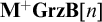 -frame by Theorem 3.5.
(2) Suppose
$\mathfrak {F}=(X,R,E)$
 is an
$\mathbf {M}^+\mathbf {GrzB}[n]$
 -frame. By Theorem 3.5,
$\mathfrak {F}$
 has only clean E-clusters, so by Proposition 3.12(2),
$\mathfrak {F}^{ir}$
 is an
$\mathbf {MKB}$
 -frame (with all E-clusters clean). Moreover,
$R^{ir}$
 is a strict order since R is a partial order. We show that
$d(\mathfrak {F}^{ir})\leq n$
 . Suppose
$x_1\mathrel {R^{ir}}\dots \mathrel {R^{ir}} x_k$
 is a strict chain. Then
$x_1\mathrel {R}\dots \mathrel {R} x_k$
 . To see that this is a strict chain, let
$x_{i+1}\mathrel {R}x_i$
 for some i. Then
$x_i=x_{i+1}$
 by antisymmetry of R, which is a contradiction since
$x_{i}\mathrel {R^{ir}} x_{i+1}\implies x_i\neq x_{i+1}$
 . Therefore,
$d(\mathfrak {F})\leq n$
 implies that
$k\leq n$
 . Thus,
$d(\mathfrak {F}^{ir})\leq n$
 , and hence
$\mathfrak {F}^{ir}$
 is an
$\mathbf {MGLB}[n]$
 -frame.
Remark 3.16. The same argument can be used to drop
$\mathbf{B}$
 from consideration and show that if
$\mathfrak {F}$
 is an
$\mathbf {MGL}[n]$
 -frame, then
$\mathfrak {F}^r$
 is an
$\mathbf {M}^+\mathbf {Grz}[n]$
 -frame, and if
$\mathfrak {F}$
 is an
$\mathbf {M}^+\mathbf {Grz}[n]$
 -frame, then
$\mathfrak {F}^{ir}$
 is an
$\mathbf {MGL}[n]$
 -frame.
By [Reference Bezhanishvili, Brantley and Ilin4, Theorem 4.12],
$\varphi \in \mathbf {M}^+\mathbf {Grz}\iff \varphi ^+\in \mathbf {MGL}$
 . To obtain a similar result for the logics in the previous lemma, we require the following.
Theorem 3.17 [Reference Bezhanishvili3, Sections 4.10 and 4.11].
For each
$n\ge 1$
 , the logics
$\mathbf {MGrz}[n]$
 and
$\mathbf {MGL}[n]$
 are locally tabular. Thus, each extension of
$\mathbf {MGrz}[n]$
 and
$\mathbf {MGL}[n]$
 has the fmp.
Remark 3.18. We recall that a
$2$
 -frame
$\mathfrak F' = (X',R',E')$
 is a p-morphic image of a
$2$
 -frame
$\mathfrak F = (X,R,E)$
 provided there is an onto map
$f\colon X \to X'$
 such that
$f(R[x])=R'[f(x)]$
 and
$f(E[x])=E'[f(x)]$
 for each
$x\in X$
 (see, e.g., [Reference Gabbay, Kurucz, Wolter and Zakharyaschev12, pp. 22–23]). By Theorem 3.17, for any
$\mathcal {L}_{\Diamond \exists }$
 -formula
$\varphi $
 , if
$\mathfrak {F}$
 is an
$\mathbf {MGrzB}[n]$
 -frame refuting
$\varphi $
 , there is a finite
$\mathbf {MGrzB}[n]$
 -frame
$\mathfrak {G}$
 , which is a p-morphic image of
$\mathfrak {F}$
 and also refutes
$\varphi $
 . Similar observations can be made for
$\mathbf {M}^+\mathbf {GrzB}[n]$
 and
$\mathbf {MGLB}[n]$
 . This will be used in Theorems 5.1, 5.5, and 5.10.
Theorem 3.19. For an
$\mathcal {L}_{\Diamond \exists }$
 -formula
$\varphi $
 ,

Proof. Let
$\varphi ^+\notin \mathbf {MGLB}[n]$
 . By Theorem 3.17, there is an
$\mathbf {MGLB}[n]$
 -frame
$\mathfrak {F}$
 such that
$\mathfrak {F}\not \models \varphi ^+$
 . Therefore, by Lemma 3.14,
$\mathfrak {F}^r\not \models \varphi $
 . By Lemma 3.15(1),
$\mathfrak {F}^r$
 is an
$\mathbf {M}^+\mathbf {GrzB}[n]$
 -frame. Thus,
$\varphi \notin \mathbf {M}^+\mathbf {GrzB}[n]$
 .
Let
$\varphi \notin \mathbf {M}^+\mathbf {GrzB}[n]$
 . By Theorem 3.17, there is an
$\mathbf {M}^+\mathbf {GrzB}[n]$
 -frame
$\mathfrak {F}$
 such that
$\mathfrak {F}\not \models \varphi $
 . By Lemma 3.15(2),
$\mathfrak {F}^{ir}$
 is an
$\mathbf {MGLB}[n]$
 -frame, and it is easy to see that
$(\mathfrak {F}^{ir})^r=\mathfrak {F}$
 . Therefore, by Lemma 3.14,
$\mathfrak {F}^{ir}\not \models \varphi ^+$
 . Thus,
$\varphi ^+\notin \mathbf {MGLB}[n]$
 .
Remark 3.20. Following the same line of reasoning (see Remark 3.16), we have

We are ready to prove the main result of this section.
Theorem 3.21.
$\mathbf {Grz}[n]\times \mathbf {S5}=\mathbf {M}^+\mathbf {GrzB}[n]$
 for each
$n \ge 1$
 .
Proof. As we already pointed out in Remark 3.6,
$\mathbf {M}^+\mathbf {GrzB}[n]\subseteq \mathbf {Grz}[n]\times \mathbf {S5}$
 . For the reverse inclusion, let
$\varphi \notin \mathbf {M}^+\mathbf {GrzB}[n]$
 . By Theorem 3.19,
$\varphi ^+\notin \mathbf {MGLB}[n]$
 . By Corollary 3.10, there is a
$(\mathbf {GL}[n]\times \mathbf {S5})$
 -frame
$\mathfrak {F}\times \mathfrak {G}$
 such that
$\mathfrak {F}\times \mathfrak {G}\not \models \varphi ^+$
 . Therefore,
$(\mathfrak {F}\times \mathfrak {G})^r\not \models \varphi $
 by Lemma 3.14. But
$(\mathfrak {F}\times \mathfrak {G})^r=\mathfrak {F}^r\times \mathfrak {G}$
 since for any
$(\mathbf {K}\times \mathbf {S5})$
 -frame
$\mathfrak {X}\times \mathfrak {Y}$
 we have
$(\mathfrak {X}\times \mathfrak {Y})^r=\mathfrak {X}^r\times \mathfrak {Y}.$
 To see this, let
$\mathfrak {X}=(X,R_X)$
 and
$\mathfrak {Y}=(Y,E_Y)$
 . Then
$\mathfrak {X}\times \mathfrak {Y}=(X\times Y, R, E)$
 and
$\mathfrak {X}^r\times \mathfrak {Y}=(X\times Y, R',E)$
 , where R,
$R'$
 , and E are defined as in Definition 2.1. It suffices to show that
$R' = R^r$
 . Let
$(x,y), (u,v)\in X\times Y$
 . Then,

Since
$\mathfrak {F}$
 is a
$\mathbf {GL}[n]$
 -frame,
$\mathfrak {F}^r$
 is a
$\mathbf {Grz}[n]$
 -frame (see the proof of Lemma 3.15(1)). Hence,
$\varphi $
 is refuted in a
$(\mathbf {Grz}[n]\times \mathbf {S5})$
 -frame. Thus,
$\varphi \notin \mathbf {Grz}[n]\times \mathbf {S5}$
 , and so
$\mathbf {Grz}[n]\times \mathbf {S5}=\mathbf {M}^+\mathbf {GrzB}[n]$
 .
4 Selective filtration for
$\mathbf{MGrzB}$

In this section, we show that
$\mathbf {MGrzB}$
 admits a form of selective filtration. This will be utilized in Section 5 to show that
$\mathbf{MGrzB}$
 has the fmp. With appropriate adjustments, we also establish the fmp for
$\mathbf {M}^+\mathbf {GrzB}$
 and
$\mathbf {MGLB}$
 . The selective filtration method employed here is a refinement of the construction developed in [Reference Bezhanishvili and Khan6], which itself synthesizes the approaches of [Reference Bezhanishvili, Brantley and Ilin4, Reference Gabbay, Kurucz, Wolter and Zakharyaschev12, Reference Grefe16]. The need of the refinement is due to the presence of the monadic Barcan formula, which requires that the selected frame satisfies not only the left but also the right commutativity condition. Due to this, the procedure may not terminate in finitely many steps (closing under left commutativity necessitates closing under right commutatvity and vice-versa; thus, these two processes alternate and trigger each other). Therefore, the selected frame
$\widehat {\mathfrak {F}}$
 will be countable, but not necessarily finite. However, the frame will be an
$\mathbf{MGrzB}$
 -frame with a uniform bound on its depth.
While our construction can be performed in any descriptive frame, it is sufficient to only work with canonical models (see, e.g., [Reference Chagrov and Zakharyaschev7, Section 5.1]).
Definition 4.1. Let
$\mathfrak {F}=(X,R,E)$
 be an
$\mathbf {MK}$
 -frame and
$v$
 a valuation. A subset
$U\subseteq X$
 is called definable in the model
$\mathfrak {M} :=(\mathfrak {F},v)$
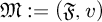 provided
$U=v(\varphi )$
 for some
$\mathcal {L}_{\Diamond \exists }$
 -formula
$\varphi $
 .
We will now restrict our attention to
$\mathbf{MGrzB}$
 and its extensions. For any extension
$\mathbf {M}$
 of
$\mathbf {MGrzB}$
 , let
$\mathfrak {M}_{\mathbf {M}} :=(\mathfrak {F}_{\mathbf {M}}, v_{\mathbf {M}})$
 be the canonical model of
$\mathbf{M}$
 , where
$\mathfrak {F}_{\mathbf {M}} :=(X_{\mathbf {M}}, R_{\mathbf {M}}, E_{\mathbf {M}})$
 is the canonical frame and
$v_{\mathbf {M}}$
 is the canonical valuation.
Let
$U\subseteq X_{\mathbf {M}}$
 . We recall (see, e.g., [Reference Esakia, Bezhanishvili and Holliday9, Definition 1.4.9]) that
$x \in U$
 is a maximal point of U provided
$x\mathrel {R_{\mathbf {M}}}y$
 implies
$x=y$
 for all
$y\in U$
 . Let
${\mathbf {max}}\hspace {2pt}U$
 denote the set of maximal points of U. It follows from the well-known Fine–Esakia principle (see, e.g., [Reference Esakia, Bezhanishvili and Holliday9, Corollary 3.5.7]) that for each definable subset
$U\subseteq X_{\mathbf {M}}$
 and
$x\in U$
 , we have
$R_{\mathbf {M}}[x]\cap \mathbf {max}\hspace {2pt}U \neq \varnothing $
 . In particular, it is not possible to “exit” U via
$R_{\mathbf {M}}$
 from a maximal point and re-enter it.
Lemma 4.2 [Reference Esakia, Bezhanishvili and Holliday9, Theorem 3.5.5].
If
$U \subseteq X_{\mathbf {M}}$
 is definable and
$x\in \mathbf {max}\hspace {2pt}U$
 , then there are no points
$y\notin U$
 and
$z\in U$
 such that
$x\mathrel {R_{\mathbf {M}}}y\mathrel {R_{\mathbf {M}}}z$
 .
We will work with the stronger notion of maximality, introduced in [Reference Bezhanishvili and Khan6]. To define strong maximality, let
$Q_{\mathbf {M}}$
 be the composition of
$R_{\mathbf {M}}$
 and
$E_{\mathbf {M}}$
 ; that is,

Clearly
$R_{\mathbf {M}}\subseteq Q_{\mathbf {M}}$
 , but this inclusion is in general strict. We will refer to the elements of
$Q_{\mathbf {M}} \setminus R_{\mathbf {M}}$
 as proper Q-relations (see Remarks 4.9 and 4.14).
Definition 4.3 [Reference Bezhanishvili and Khan6, Definition 6.13].
Let
$U\subseteq X_{\mathbf {M}}$
 . We call
$x\in \mathbf {max}\hspace {2pt}U$
 a strongly maximal point of U if for any
$y\in X_{\mathbf {M}}$
 ,

We let
${\mathbf {smax}}\hspace {2pt}U$
 denote the set of strongly maximal points of U.
The following, taken from [Reference Bezhanishvili and Khan6, Remark 6.14], is an illustrative example highlighting the difference between maximal and strongly maximal points.
Example 4.4. Consider the finite frame
$\mathfrak {F}=(X,R,E)$
 shown below, where R is represented by the arrows (indicating non-reflexive relations) and circles (indicating reflexive relations), and the E-clusters are depicted in blue. Since X is finite, there exists a valuation
$v$
 under which every subset of X is definable. Let
$U=\{a,b,c\}$
 (the dotted red curve on the diagram). Clearly
$a\in \mathbf {max}\hspace {2pt}U$
 , but
$a\notin \mathbf {smax}\hspace {2pt}U$
 since
$a\mathrel {Q}c$
 ,
$c\in U$
 , and
 .

While the notions of maximality and strong maximality differ in general, they agree for E-saturated definable subsets, where we recall that a subset V is E-saturated provided
$x \in V$
 and
$x \mathrel {E} y$
 imply
$y \in V$
 . Indeed, for such a definable subset V, we have
$\mathbf {smax}\hspace {2pt}V =\mathbf {max}\hspace {2pt}V$
 (see [Reference Bezhanishvili and Khan6, Proposition 6.15]). It is worth pointing out that the set U in the example above is not E-saturated.
We will utilize the following feature of strongly maximal points, which is crucial for our construction.
Theorem 4.5. Let U be a definable subset of
$X_{\mathbf {M}}$
 .
-
(1) [Reference Bezhanishvili and Khan6, Theorem 6.17] If $x\in U$
, then
$Q_{\mathbf {M}}[x]\cap {\mathbf {smax}}\hspace {2pt}U \neq \varnothing $
. -
(2) [Reference Bezhanishvili and Khan6, Lemma 6.18(2)] If $x\in \mathbf {smax}\hspace {2pt} U$
,
$x\mathrel {Q_{\mathbf {M}}}y$
, and
$y\mathrel {Q_{\mathbf {M}}}x$
, then
$x\mathrel {E_{\mathbf {M}}}y$
.


Consider
$\mathfrak {M}_{\mathbf {M}}=(\mathfrak {F}_{\mathbf {M}},v_{\mathbf {M}})$
 . Since the monadic Barcan formula and its converse are Sahlqvist, they are canonical (see, e.g., [Reference Gabbay, Kurucz, Wolter and Zakharyaschev12, p. 223]). Thus, the frame
$\mathfrak {F}_{\mathbf {M}}$
 satisfies both left and right commutativity.
Let
$\mathfrak {M}_{\mathbf {M}} \not \models \varphi $
 and let S be the set of subformulae of
$\varphi $
 . We will iteratively construct a new model
$\widehat {\mathfrak {M}}$
 such that
$\widehat {\mathfrak {M}}\not \models \varphi $
 . By Theorem 4.5(1), there is
$x\in \mathbf {smax}\hspace {2pt}v_{\mathbf {M}}(\neg \varphi )$
 . To initiate the construction of the model
$\widehat {\mathfrak {M}}$
 , we “select” x, label it
$\widehat {x}$
 , and proceed by selecting additional points. For
$t\in X_{\mathbf {M}}$
 , we label a selected copy by
$\widehat {t}$
 . New points in the selected model are introduced either as “witnesses” of formulae in S of the form
$\exists \psi ,\Diamond \psi $
 or as “witnesses” of left or right commutativity.
Define

The sets
$W_t^\exists $
 and
$W_t^\Diamond $
 let us keep track of the subformulae of
$\varphi $
 that demand the addition of a new witness from a point
$\widehat {t}$
 in the model
$\widehat {\mathfrak {M}}$
 . A point added to satisfy a subformula of the form
$\exists \psi $
 will be called an
$\exists $
 -witness, and a point added to satisfy a subformula of the form
$\Diamond \psi $
 a
$\Diamond $
 -witness.
We will drop the subscripts from
$\mathfrak {M}_{\mathbf {M}}=(\mathfrak {F}_{\mathbf {M}},v_{\mathbf {M}})$
 and
$\mathfrak {F}_{\mathbf {M}}=(X_{\mathbf {M}},R_{\mathbf {M}}, E_{\mathbf {M}})$
 , and simply write
$t\models \psi $
 to indicate
$\mathfrak {M},t\models \psi $
 . In doing so, no ambiguity will arise since statements about the model
$\widehat {\mathfrak {M}}$
 will be clearly indicated by the use of hats.
Define the equivalence relation
$\sim _S$
 by

-
(1) Initial step: Select $x\in \mathbf {smax}\hspace {2pt}v(\neg \varphi )$
and let $$ \begin{align*} X_0=\{\widehat{x}\}, R_0=X_0^2, E_0=X_0^2. \end{align*} $$
Set $\mathfrak {F}_0=(X_0,R_0,E_0)$
and note that
$\mathfrak {F}_0$
is a partially ordered
$\mathbf {MKB}$
-frame.Suppose a $(\mathbf {Grz}\otimes \mathbf {S5})$
-frame
$\mathfrak {F}_{k-1}=(X_{k-1},R_{k-1},E_{k-1})$
has already been constructed by taking copies of strongly maximal points in
$\mathfrak {F}$
, and satisfying the desiderata supplied by Lemma 4.17. We describe the construction of a
$(\mathbf {Grz}\otimes \mathbf {S5})$
-frame
$\mathfrak {F}_k=(X_k,R_k,E_k)$
extending
$\mathfrak {F}_{k-1}$
. -
(2) $\exists $
Step: Selecting
$\exists $
-witnesses. Set
$X_k^\exists =X_{k-1}, R_k^\exists =R_{k-1}, E_k^\exists =E_{k-1}$
.Suppose $\widehat {t}\in X_{k-1}$
and
$\exists \psi \in W_t^\exists $
. If there is already some
$\widehat {u}\in X_k^\exists $
such that
$\widehat {t}\mathrel {E_k^\exists }\widehat {u}$
and
$u\models \psi $
, there is nothing to do. Otherwise, we choose a witness using the following lemma.Lemma 4.6 [Reference Bezhanishvili and Khan6, Lemma 7.2].
Let $z\in {\mathbf {smax}}\hspace {2pt}U$
for some definable subset U. If
$\exists \psi \in W_z^{\exists }$
, then there is
$y \in {\mathbf {smax}}\hspace {2pt}(E[U]\cap v(\psi ))$
such that
$y \mathrel {E} z$
.Since $\widehat {t}\in X_{k-1}$
, and we only select strongly maximal points at each stage of the construction, it follows that
$t\in \mathbf {smax}\hspace {2pt} U$
for some definable subset U. Therefore, by Lemma 4.6, there is
$w\in \mathbf {smax}\hspace {2pt}(E[U]\cap v(\psi ))$
such that
$w\mathrel {E}t$
(in particular, note that
$w\models \psi $
and that
$E[U]\cap v(\psi )$
is definable). Add
$\widehat {w}$
to
$X_k^\exists $
, add
$(\widehat {t},\widehat {w})$
to
$E_k^\exists $
and generate the least equivalence relation. Add
$(\widehat {w},\widehat {w})$
to
$R_k^\exists $
. Repeat this process until all points in
$X_{k-1}$
have witnesses for subformulae of the form
$\exists \psi $
. -
(3) $\Diamond $
Step: Selecting
$\Diamond $
-witnesses. Set
$X_k^\Diamond =X_k^\exists , R_k^\Diamond =R_k^\exists , E_k^\Diamond =E_k^\exists $
.Suppose $\widehat {y}\in X_k^\exists $
and
$\Diamond \psi \in W_y^\Diamond $
. If there is already some
$\widehat {z}\in X_k^\Diamond $
such that
$\widehat {y}\mathrel {R_k^\Diamond } \widehat {z}$
and
$z\models \psi $
, there is nothing to do. Otherwise, we use the following lemma to find a witness.Horizontal step: Selecting $\Diamond $Lemma 4.7 [Reference Bezhanishvili and Khan6, Lemma 7.3].
For $\Diamond \psi \in W_y^{\Diamond }$
let $$ \begin{align*} A = v(\Diamond\psi)\cap\bigcap\big\{ v(\neg\Diamond\alpha)\mid \Diamond\alpha\in S,\, y\not\models \Diamond\alpha \big\}. \end{align*} $$
Then there is $z\in X$
such that the following conditions are satisfied:-
(1) $y\mathrel {Q}z$
,
$z\neq y$
, and
$z\in \mathbf {smax}\hspace {2pt}A\cap \mathbf {max}\hspace {2pt}v(\psi )$
. -
(2) $y\not \models \Diamond \alpha $
implies
$z\not \models \alpha $
for each
$\Diamond \alpha \in S$
. -
(3) If $y\mathrel {E}z$
, then there is
$u\in {\mathbf {smax}}\hspace {2pt}A \cap {\mathbf {max}}\hspace {2pt}v(\psi )$
such that
$y\mathrel {R}u$
and
$u\mathrel {E}y$
. -
(4) If $z\mathrel {Q}t$
and
, then
for all t.
-witnesses in E-clusters.We will select points u satisfying (H) $$ \begin{align} y\mathrel{R}u, y\mathrel{E}u, \text{ and } u\in\mathbf{smax}\hspace{2pt} A\cap\mathbf{max}\hspace{2pt} v(\psi). \end{align} $$
-
(h1) Suppose there is already some $\widehat {u}\in X_k^\Diamond $
such that (H) holds for u. -
(h2) Then add $(\widehat {y},\widehat {u})$
to
$R_k^\Diamond $
and take the reflexive–transitive closure. Further, add
$(\widehat {y},\widehat {u})$
to
$E_k^\Diamond $
and generate the least equivalence relation. -
(h3) If there is no such $\widehat {u}$
, then by Lemma 4.7(1) there is some
$z\in \mathbf {smax}\hspace {2pt}A\cap \mathbf {max}\hspace {2pt}v(\psi )$
such that
$y\mathrel {Q}z$
. If additionally we have
$y\mathrel {E}z$
, then by Lemma 4.7(3) there is u satisfying (H). We add
$\widehat {u}$
to
$X_k^\Diamond $
and introduce relations as in (h2).
Repeat the above steps until all such $\Diamond $
-witnesses for
$\widehat {y}$
from
$E[y]$
are added. Proceed to the next step.Vertical step: Selecting $\Diamond $Remark 4.8. This is the only step in the construction where a “horizontal” $R_k^\Diamond $
-arrow is drawn, that is, relations of the form
$\widehat {y}\mathrel {R_k^\Diamond }\widehat {u}$
and
$\widehat {y}\mathrel {E_k^\Diamond }\widehat {u}$
are introduced. Adding such horizontal arrows will not be required when dealing with
$\mathbf {M}^+\mathbf {GrzB}$
and
$\mathbf {MGLB}$
since our selection process for these systems only produces clean clusters (see Theorems 5.5 and 5.10).
-witnesses outside E-clusters.We will select points z satisfying (V)-
(v1) Suppose there is already some $\widehat {z}\in X_k^\Diamond $
such that (V) holds for z. Then add
$(\widehat {y},\widehat {z})$
to
$R_k^\Diamond $
and take the reflexive–transitive closure. -
(v2) If there is no such $\widehat {z}$
, then by Lemma 4.7(1) there is some
$z\in \mathbf {smax}\hspace {2pt}A\cap \mathbf {max}\hspace {2pt}v(\psi )$
such that
$y\mathrel {Q}z$
. Without loss of generality we may assume that
since the case
$y\mathrel {E}z$
is already considered in the horizontal step. Clearly z satisfies (V). We add
$\widehat {z}$
to
$X_k^\Diamond $
, add
$(\widehat {y},\widehat {z})$
to
$R_k^\Diamond $
and take the reflexive–transitive closure, and add
$(\widehat {z},\widehat {z})$
to
$E_k^\Diamond $
. -
(v3) If $z\mathrel {E}t$
and
$\widehat {t}$
has been previously introduced, then add
$(\widehat {z},\widehat {t})$
to
$E_k^\Diamond $
and generate the least equivalence relation.
Repeat the above steps until all $\Diamond $
-witnesses for
$\widehat {y}$
occurring outside
$E[y]$
are added. Repeat the horizontal and vertical steps for all points in
$X_k^\exists $
.Remark 4.9. The vertical step may involve turning a proper Q-arrow into an $R_k^\Diamond $
-arrow. This will be one of the two instances where this occurs (for the other instance, see Remark 4.14).Lemma 4.10 [Reference Bezhanishvili and Khan6, Lemma 7.4].
For $\widehat {u},\widehat {w}\in X_k^\Diamond $
,-
(a) $\widehat {u}\mathrel {E_k^\Diamond }\widehat {w}$
iff
$u\mathrel {E}w$
; -
(b) $\widehat {u}\mathrel {R_k^\Diamond }\widehat {w}$
implies
$u\mathrel {Q}w$
.
-
-
(4) Commutativity step: In this final step, we close the selected points under left and right commutativity.
-
(LC) Left commutativity: Set $X_k^L=X_k^\Diamond , R_k^L=R_k^\Diamond , E_k^L=E_k^\Diamond $
. Suppose
$\widehat {t}\mathrel {E_k^{\Diamond }}\widehat {u}$
and
$\widehat {u}\mathrel {R_k^{\Diamond }}\widehat {w}$
. We need to find some
$\widehat {s}$
such that
$\widehat {t}\mathrel {R_k^L}\widehat {s}$
and
$\widehat {s}\mathrel {E_k^L}\widehat {w}$
. In case
$\widehat {u}\mathrel {E_k^{\Diamond }}\widehat {w}$
, the choice of
$\widehat {s}$
is trivial since we can simply take
$\widehat {s}=\widehat {t}$
. Hence, suppose
. Then we can find
$\widehat {s}$
using the following.Since $\widehat {t}\mathrel {E_k^{\Diamond }}\widehat {u}$Lemma 4.11 [Reference Bezhanishvili and Khan6, Lemma 7.5].
Let $t\mathrel {Q}w$
and
$w\in \mathbf {smax}\hspace {2pt}U$
for some definable set U. Then there exists
$s\in \mathbf {smax}\hspace {2pt}E[U]$
such that
$t\mathrel {R}s$
and
$s\mathrel {E}w$
.
and
$\widehat {u}\mathrel {R_k^{\Diamond }}\widehat {w}$
, Lemma 4.10 gives that
$t\mathrel {E}u$
and
$u\mathrel {Q}w$
. Thus,
$t\mathrel {Q}w$
, where
$w\in \mathbf {smax}\hspace {2pt}U$
for some definable subset U (since every selected point is strongly maximal in some definable subset). Therefore, Lemma 4.11 applies, by which there is
$s\in \mathbf {smax}\hspace {2pt}E[U]$
such that
$t\mathrel {R}s$
and
$s\mathrel {E}w$
.
If $\widehat {s}$
is not already present, add it to
$X_k^L$
. Also add
$(\widehat {t},\widehat {s})$
to
$R_k^L$
and take the reflexive–transitive closure. In addition, add
$(\widehat {s},\widehat {w})$
to
$E_k^L$
and generate the least equivalence relation. Repeat this process for every instance of
$\widehat {t}\mathrel {E_k^{\Diamond }}\widehat {u}$
and
$\widehat {u}\mathrel {R_k^{\Diamond }}\widehat {w}$
until left commutativity is satisfied for all the points in
$X_k^{\Diamond }$
. We have the following analog of Lemma 4.10, the proof of which is similar to that of [Reference Bezhanishvili and Khan6, Lemma 4.6].Lemma 4.12. For $\widehat {u},\widehat {w}\in X_k^L$
,-
(1) $\widehat {u}\mathrel {E_k^L}\widehat {w}$
iff
$u\mathrel {E}w$
; -
(2) $\widehat {u}\mathrel {R_k^L}\widehat {w}$
implies
$u\mathrel {Q}w$
.
Proof. (1) The implication $\widehat {u}\mathrel {E_k^L}\widehat {w}\implies u\mathrel {E}w$
is clear since we introduce
$E_k^L$
-relations between points only if their original copies are E-related. Conversely, suppose
$u\mathrel {E}w$
. Since
$\widehat {u},\widehat {w}\in X_k^L$
, there are
$\widehat {t}, \widehat {s}\in X_k^{\Diamond }$
such that
$\widehat {w}\mathrel {E_k^L}\widehat {t}$
and
$\widehat {u}\mathrel {E_k^L}\widehat {s}$
(because each point that may be introduced via (LC) must involve creating an
$E_k^L$
-relation for left commutativity). Thus, by the forward implication,
$t\mathrel {E}w$
and
$u\mathrel {E}s$
, and hence
$t\mathrel {E}s$
. By Lemma 4.10, we deduce that
$\widehat {s}\mathrel {E_k^{\Diamond }}\widehat {t}$
, and so
$\widehat {t}\mathrel {E_k^L}\widehat {s}$
. Thus,
$\widehat {u}\mathrel {E_k^L}\widehat {w}$
.(2) This is immediate since an $R_k^L$
-relation is introduced between points only if their original copies are Q-related. -
-
(RC) Right commutativity: Set $X_k^R=X_k^{L}, R_k^R=R_k^{L}, E_k^R=E_k^{L}$
. Suppose
$\widehat {t}\mathrel {R_k^L}\widehat {w}$
and
$\widehat {w}\mathrel {E_k^L}\widehat {u}$
. We need to find
$\widehat {s}$
such that
$\widehat {t}\mathrel {E_k^R}\widehat {s}$
and
$\widehat {s}\mathrel {R_k^R}\widehat {u}$
. If
$\widehat {t}\mathrel {E_k^L}\widehat {w}$
, there is nothing to do since we can take
$\widehat {s}=\widehat {u}$
. Hence, suppose that
. We will find
$\widehat {s}$
using the following.Lemma 4.13. Let $t\in \mathbf {smax}\hspace {2pt}U$
for some definable set U. If
$t\mathrel {Q}u$
, then there is
$s\in \mathbf {smax}\hspace {2pt}(E[U]\cap V)$
such that
$s\mathrel {Q}u$
and
$s\mathrel {E}t$
, where $$ \begin{align*} V=\bigcap\{v(\Diamond\psi)\mid \Diamond\psi\in S, u\models\Diamond\psi\}. \end{align*} $$
Since $\widehat {t}\mathrel {R_k^{L}}\widehat {w}$Proof. Since $t\mathrel {Q}u$
, there is a with
$t\mathrel {R}a$
and
$a\mathrel {E}u$
. Because
$\mathfrak {F}$
satisfies right commutativity, there is b with
$t\mathrel {E}b$
and
$b\mathrel {R}u$
. The above intersection defining V is finite, and thus V is a definable set. Moreover, due to transitivity,
$b\in V \cap E[U]$
and
$E[U]\cap V$
is a definable set. By Theorem 4.5(1), we can choose
$s\in Q[b]\cap \mathbf {smax}\hspace {2pt}(E[U]\cap V)$
. We claim that s is the desired point. We first show that
$s\mathrel {E}t$
. Because
$t\mathrel {E}b$
and
$b\mathrel {Q}s$
, we have
$t\mathrel {Q}s$
. Since
$s\in E[U]$
, there is
$c \in U$
with
$c\mathrel {E}s$
. Therefore,
$t\mathrel {Q}c$
and
$c\in U$
. Because
$t\in \mathbf {smax}\hspace {2pt}U$
, we must have
$c\mathrel {E}t$
, which yields
$s\mathrel {E}t$
. Now observe that
$t\mathrel {Q}u$
and
$s\mathrel {E}t$
. Thus,
$s\mathrel {Q}u$
, concluding the proof.
and
$\widehat {w}\mathrel {E_k^{L}}\widehat {u}$
, we have
$t\mathrel {Q}w$
and
$w\mathrel {E}u$
by Lemma 4.12. This yields
${t\mathrel {Q}u}$
, and by construction,
$t\in \mathbf {smax}\hspace {2pt}U$
for some definable subset U. By Lemma 4.13, there exists
${s\in \mathbf {smax}\hspace {2pt}(E[U]\cap V)}$
with
$s\mathrel {Q}u$
and
$s\mathrel {E}t$
, where V is defined as above.
If $\widehat {s}$
is not already there, add
$\widehat {s}$
to
$X_k^R$
. Also, add
$(\widehat {s},\widehat {u})$
to
$R_k^R$
and take the reflexive–transitive closure, and add
$(\widehat {t},\widehat {s})$
to
$E_k^R$
and generate the least equivalence relation. Repeat until right commutativity is satisfied for all the points in
$X_k^{L}$
.Remark 4.14. In this step, a proper Q-arrow may be turned into an $R_k^R$
-arrow. This is the second instance in the construction where this occurs (see Remark 4.9 for the first instance).Lemma 4.15. For $\widehat {u},\widehat {w}\in X_k^R$
,-
(i) $\widehat {u}\mathrel {E_k^R}\widehat {w}$
iff
$u\mathrel {E}w$
; -
(ii) $\widehat {u}\mathrel {R_k^R}\widehat {w}$
implies
$u\mathrel {Q}w$
.
-
-





Set

and let
$\mathfrak {F}_k=(X_k,R_k,E_k)$
 .
For the reader’s convenience, we depict the various stages of the construction in the diagram below. As usual, circles indicate reflexive points, arrows represent non-reflexive relations in
$R_k$
 , and
$E_k$
 -clusters are in blue. At each stage, the newly added arrows and points are shown in red, while the arrows and points added in the preceding steps are gray and black, respectively.


Remark 4.16. Note that the frame obtained at the end is a
$(\mathbf {Grz}\otimes \mathbf {S5})$
 -frame. In particular, it does not satisfy left commutativity since the newly added point in the initial (left-most) cluster requests a witness for it. In general, the constructed frame is neither left nor right commutative. This is merely due to the fact that points introduced via (LC) and (RC) themselves may require further application of these steps. However, the left and right commutativity conditions are satisfied in the union of the frames
$\mathfrak {F}_k$
 (see Lemma 4.19).
Lemma 4.17. Suppose
$\widehat {u},\widehat {w}\in X_k$
 .
-
(1) $\widehat {u}\mathrel {E_k}\widehat {w}$
iff
$u\mathrel {E}w$
. -
(2) $\widehat {u}\mathrel {R_k}\widehat {w}$
implies
$u\mathrel {Q}w$
. -
(3) $\widehat {u}\mathrel {R_k}\widehat {w}$
implies (
$u\mathrel {R}w$
and
$u\mathrel {E}w$
) or (
$u\mathrel {Q}w$
and
). -
(4) $u=w$
iff
$\widehat {u}=\widehat {w}$
.


Proof. It is enough to show (3) since (1) and (2) are immediate from Lemma 4.15, and (4) is clear (we introduce a hatted point to
$X_k$
 only if it has not been added previously, and distinct points have distinct hatted versions in
$X_k$
 ). Let
$\widehat {u}\mathrel {R_k}\widehat {w}$
 . If
 , applying (1) and (2) yields
$u\mathrel {Q}w$
 and
 . Suppose that
$\widehat {u}\mathrel {E_k}\widehat {w}$
 . Then
$u\mathrel {E}w$
 by (1). Because we take the reflexive–transitive closure at each step, we have
$\widehat {u}\mathrel {R_k}\widehat {x}_1\mathrel {R_k}\dots \widehat {x}_{n-1}\mathrel {R_k}\widehat {w}$
 , where each
$R_k$
 -arrow is introduced in one of the steps of the construction. By (2),
$u\mathrel {Q}x_1\mathrel {Q}\dots x_{n-1}\mathrel {Q}w$
 . We claim that
$u\mathrel {E}x_i$
 for each
${1\leq i\leq n-1}$
 . We have
$u\mathrel {Q}x_i\mathrel {Q}w\mathrel {Q}u$
 , where
$w\mathrel {Q}u$
 follows from
$w\mathrel {E}u$
 . Therefore,
$u\mathrel {Q}x_i\mathrel {Q}u$
 , and since u is strongly maximal,
$u\mathrel {E}x_i$
 (see Theorem 4.5(2)). Thus,
$\widehat {u}\mathrel {R_k}\widehat {x}_1\mathrel {R_k}\dots \widehat {x}_{n-1}\mathrel {R_k}\widehat {w}$
 and
$\widehat {u}\mathrel {E_k}\widehat {x}_1\mathrel {E_k}\dots \widehat {x}_{n-1}\mathrel {E_k}\widehat {w}$
 , where the latter follows from (1). Applying (H) and Remark 4.8, we obtain
$u\mathrel {R}x_1\mathrel {R}\dots x_{n-1}\mathrel {R}w$
 , and hence
$u\mathrel {R}w$
 .
The following is a weakened version of [Reference Bezhanishvili and Khan6, Lemma 7.8]. In particular, the frame constructed in [Reference Bezhanishvili and Khan6, Lemma 7.8] is a finite
$\mathbf {MGrz}$
 -frame, while the frame produced by the modified construction is neither left nor right commutative.
Lemma 4.18.
$\mathfrak {F}_k=(X_k,R_k,E_k)$
 is a finite
$(\mathbf {Grz}\otimes \mathbf {S5})$
 -frame.
Proof. That
$\mathfrak {F}_k$
 is partially ordered with respect to
$R_k$
 is a consequence of the fact that we only choose strongly maximal points. The details can be found in [Reference Bezhanishvili and Khan6, Lemma 7.8] (in particular, the relevant part of [Reference Bezhanishvili and Khan6, Lemma 7.8] relies on [Reference Bezhanishvili and Khan6, Lemma 7.7(3)]; we use Lemma 4.17(3) in its place). Additionally,
$X_k$
 is obtained by adding finitely many points to
$X_{k-1}$
 , and hence is finite.
Now, define
$\widehat {\mathfrak {F}}=(\widehat {X},\widehat {R},\widehat {E})$
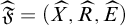 by setting

As a consequence of Lemma 4.18, we obtain the following lemma.
Lemma 4.19.
$\widehat {\mathfrak {F}}$
 is a countable partially ordered
$\mathbf{MKB}$
 -frame.
Proof. Since
$\widehat{\mathfrak{F}}$
 is partially ordered, it is sufficient to show that
$\widehat{\mathfrak{F}}$
 satisfies both left and right commutativity. For left commutativity, let
$\widehat {t}\mathrel {\widehat {E}}\widehat {u}$
 and
$\widehat {u}\mathrel {\widehat {R}}\widehat {w}$
 . By the definition of
$\widehat {\mathfrak {F}}$
 , there exists
$k<\omega $
 such that
$\widehat {t}\mathrel {E_k}\widehat {u}$
 and
$\widehat {u}\mathrel {R_k}\widehat {w}$
 . By construction, there exists
$\widehat {s}\in X_{k+1}$
 such that
$\widehat {t}\mathrel {R_{k+1}}\widehat {s}$
 and
$\widehat {s}\mathrel {E_{k+1}}\widehat {w}$
 . Hence,
$\widehat {t}\mathrel {\widehat {R}}\widehat {s}$
 and
$\widehat {s}\mathrel {\widehat {E}}\widehat {w}$
 . The proof for right commutativity is analogous.
To obtain a model based on
$\widehat {\mathfrak {F}}$
 , we define a valuation
$\widehat {v}$
 on
$\widehat {\mathfrak {F}}$
 by setting

for
$p\in S$
 and
$v(p)=\varnothing $
 otherwise. We abbreviate satisfaction
$\widehat {\mathfrak {M}},\widehat {t}\models \psi $
 in the model
$\widehat {\mathfrak {M}}=(\widehat {\mathfrak {F}},\widehat {v})$
 by
$\widehat {t}\models \psi $
 .
Lemma 4.20 (Truth lemma).
For any
$\widehat {t}\in \widehat {X}$
 and
$\psi \in S$
 ,

Proof. The proof is by induction on the complexity of
$\psi $
 . The base step is clear by the definition of
$\widehat {v}$
 . By the induction hypothesis, the claim is clearly true when
$\psi $
 is a Boolean combination of subformulae. We only need to show the above when
$\psi =\exists \delta $
 or
$\psi =\Diamond \delta $
 .
Suppose
$t\models \exists \delta $
 . If
$t\models \delta $
 , then
$\widehat {t}\models \delta $
 by the induction hypothesis, and so
$\widehat {t}\mathrel {\widehat {E}}\widehat {t}$
 implies
$\widehat {t}\models \exists \delta $
 . Suppose
$t\not \models \delta $
 . Then
$\exists \delta \in W_t^\exists $
 , and there is a least
$k<\omega $
 for which
$\widehat {t}\in X_k$
 . Hence, by construction, there is
$\widehat {z}\in X_{k+1}$
 such that
$\widehat {t}\mathrel {E_{k+1}}\widehat {z}$
 and
$z\models \delta $
 . By the induction hypothesis,
$\widehat {z}\models \delta $
 . Since
$E_{k+1}\subseteq \widehat {E}$
 , we have
$\widehat {t}\mathrel {\widehat {E}}\widehat {z}$
 and
$\widehat {z}\models \delta $
 . Thus,
$\widehat {t}\models \exists \delta $
 .
Conversely, suppose
$\widehat {t}\models \exists \delta $
 . Then there is
$\widehat {z}\in \widehat {X}$
 such that
$\widehat {t}\mathrel {\widehat {E}}\widehat {z}$
 and
$\widehat {z}\models \delta $
 . Take the least
$k<\omega $
 such that
$\widehat {t}\mathrel {E_k}\widehat {z}$
 . By Lemma 4.17(1),
$y\mathrel {E}z$
 , and by the induction hypothesis,
$z\models \delta $
 . Hence,
$y\models \exists \delta $
 .
Next suppose
$t\models \Diamond \delta $
 . The proof is similar to the case when
$t\models \exists \delta $
 . In particular, if
$t\models \delta $
 , then
$\widehat {t}\models \delta $
 by the induction hypothesis, implying that
$\widehat {t}\models \Diamond \delta $
 since
$\widehat {t}\mathrel {\widehat {R}}\widehat {t}$
 . Suppose
$t\not \models \delta $
 . Then
$\Diamond \delta \in W_t^\Diamond $
 , and there is a least
$k<\omega $
 such that
$\widehat {t}\in X_k$
 . By construction, there is
$\widehat {z}\in X_{k+1}$
 such that
$\widehat {t}\mathrel {R_{k+1}}\widehat {z}$
 and
$z\models \delta $
 . The induction hypothesis implies that
$\widehat {z}\models \delta $
 . Since
$R_{k+1}\subseteq \widehat {R}$
 , we have
$\widehat {t}\mathrel {\widehat {R}}\widehat {z}$
 and
$\widehat {z}\models \delta $
 . Thus,
$\widehat {t}\models \Diamond \delta $
 .
Conversely, suppose
$\widehat {t}\models \Diamond \delta $
 . Then there is
$\widehat {z}\in \widehat {X}$
 such that
$\widehat {t}\mathrel {\widehat {R}}\widehat {z}$
 and
$\widehat {z}\models \delta $
 . Choose the least
$k<\omega $
 such that
$\widehat {t}\mathrel {R_k}\widehat {z}$
 . Because we take the reflexive–transitive closure at each step, we have a chain

where the relation
$(\widehat {x}_j,\widehat {x}_{j+1})$
 is introduced to
$R_k$
 during the course of the construction. To see that
$t\models \Diamond \delta $
 , we first show the following.
Claim 4.21. For any
$j\geq 2$
 , we have
$x_j\models \Diamond \delta \implies x_{j-1}\models \Diamond \delta $
 .
Proof of the claim.
Suppose
$x_j\models \Diamond \delta $
 . If
$x_{j-1}\mathrel {R}x_j$
 , then
$x_{j-1}\models \Diamond \Diamond \delta $
 , which yields
$x_{j-1}\models \Diamond \delta $
 . Suppose
 . By Lemma 4.17(2),
$x_{j-1}\mathrel {Q}x_j$
 . Since
${x_{j-1}\mathrel {Q}x_j}$
 ,
 , and
$\widehat {x}_{j-1}\mathrel {R_k}\widehat {x}_j$
 , a proper Q-arrow was turned into a
$R_k$
 -arrow. This happens in only two stages of the construction: either in the vertical step to introduce
$\Diamond $
 -witnesses or in the commutativity step (RC) (see Remarks 4.9 and 4.14). We handle each case separately.
-
(1) Suppose $\widehat {x}_{j-1}\mathrel {R_k}\widehat {x}_j$
was introduced to add
$\widehat {x}_j$
as a vertical
$\Diamond $
-witness for
$\widehat {x}_{j-1}$
with respect to some
$\Diamond \psi \in S$
. Then by (V), we must have
$x_j\in \mathbf {smax}\hspace {2pt}A$
, where $$ \begin{align*} A = v(\Diamond\psi)\cap\bigcap\big\{ v(\neg\Diamond\alpha)\mid \Diamond\alpha\in S,\, x_{j-1}\not\models \Diamond\alpha \big\}. \end{align*} $$Hence, if $x_{j-1}\not \models \Diamond \delta $
, we must have
$x_j\not \models \Diamond \delta $
, which contradicts our assumption that
$x_j\models \Diamond \delta $
. Therefore,
$x_{j-1}\models \Diamond \delta $
.
-
(2) Suppose $\widehat {x}_{j-1}\mathrel {R_k}\widehat {x}_j$
was introduced to close under right commutativity. Then (RC) together with Lemma 4.13 implies that
$x_{j-1}\in V$
, where $$ \begin{align*} V=\bigcap\{v(\Diamond\psi)\mid \Diamond\psi\in S, x_j\models\Diamond\psi\}. \end{align*} $$Thus, since $x_j\models \Diamond \delta $
, we have
$x_{j-1}\models \Diamond \delta $
.


Now, applying Lemma 4.17(4) to
$\widehat {x}_{n+1}=\widehat {z}$
 yields
$x_{n+1}=z$
 , and by induction hypothesis we have
${z}\models \delta $
 . Thus,
$x_{n+1}\models \delta $
 , and by the repeated application of
$x_j\models \Diamond \delta \implies x_{j-1}\models \Diamond \delta $
 , we obtain
$x_1\models \Diamond \delta $
 . From
$\widehat {x}_1=\widehat {t}$
 it follows that
$x_1=t$
 by Lemma 4.17(4), and hence
$t \models \Diamond \delta $
 .
We next show that
$\widehat {\mathfrak {F}}=(\widehat {X},\widehat {R},\widehat {E})$
 has bounded depth. For this we require working with the quotient of
$\widehat {\mathfrak {F}}$
 by the equivalence relation
$\widehat {E}$
 . This generalizes the well-studied notion of a skeleton in modal logic (see, e.g., [Reference Chagrov and Zakharyaschev7, p. 68]). The skeleta of the above form were first considered in the setting of monadic intuitionistic logics (see, e.g., [Reference Bezhanishvili2, Reference Suzuki24]), and were appropriately redefined for mm-logics in [Reference Bezhanishvili, Brantley and Ilin4–Reference Bezhanishvili and Khan6].
Definition 4.22. The E-skeleton of a
$(\mathbf {K}\otimes \mathbf {S5})$
 -frame
$\mathfrak {F}=(X,R,E)$
 is the frame
$\mathfrak {F}_0=(X_0,R_0)$
 , where
$X_0$
 is the quotient of X by E. We denote elements of
$X_0$
 by
$[x]$
 , where
$x\in X$
 , and define

Remark 4.23. When
$\mathfrak {F}$
 is an
$\mathbf {MK}$
 -frame, the relation
$R_0$
 can be defined simply by taking

Indeed, it follows from the definition of Q that
${x\mathrel {Q}y}$
 implies
$[x]\mathrel {R}_0[y]$
 . Conversely, let
$[x]\mathrel {R}_0[y]$
 . Then
$x'\mathrel {R}y'$
 for some
${x' \in [x]} \text { and } {y' \in [y]}$
 . Therefore,
$x\mathrel {E}x'$
 ,
$x'\mathrel {R}y'$
 , and
$y'\mathrel {E}y$
 . Thus, left commutativity implies that
$x\mathrel {Q}y$
 .
In general, for a
$(\mathbf {K}\otimes \mathbf {S5})$
 -frame
$\mathfrak {F}=(X,R,E)$
 , the E-skeleton
$\mathfrak {F}_0=(X_0,R_0)$
 is neither reflexive nor transitive. However, we show that the E-skeleton of
$\widehat {\mathfrak {F}}$
 is indeed a poset. We will also work with the E-skeleta of the intermediate frames
$\mathfrak {F}_k$
 . For a point
$\widehat {u}$
 in
$\mathfrak {F}_k$
 , we sometimes need to distinguish between the point
$[\widehat {u}]$
 in
$(\mathfrak {F}_k)_0$
 and the point
$[\widehat {u}]$
 in
$\widehat {\mathfrak {F}}_0$
 (since these points arise from different equivalence relations). Whenever such a distinction is necessary, we write
$[\widehat {u}]_k$
 for the corresponding point in
$(\mathfrak {F}_k)_0$
 .
We recall (see, e.g., [Reference Chagrov and Zakharyaschev7, p. 362]) that a frame
$\mathfrak {F}=(X,R)$
 is acyclic if for any distinct
$x_1,x_2,\ldots \in X$
 with
$x_1\mathrel {R}x_2\mathrel {R}\dots $
 we have
 for
$j>i$
 (observe that each acyclic frame is antisymmetric).
Lemma 4.24.
-
(1) $(\mathfrak {F}_k)_0=((X_k)_0,(R_k)_0)$
is a reflexive and acyclic frame for each
$k<\omega $
. -
(2) $[\widehat {u}]_k\mathrel {(R_k)_0}[\widehat {w}]_k\implies [\widehat {u}]\mathrel {\widehat {R}_0}[\widehat {w}]$
for all
$k<\omega $
. -
(3) $\widehat {\mathfrak {F}}_0=(X_0,R_0)$
is a poset.


Proof. (1) Since
$R_k$
 is a partial order, it is reflexive, and so
$(R_k)_0$
 is reflexive. To see that
$(\mathfrak {F}_k)_0$
 is acyclic, let
$[\widehat {u}_1],[\widehat {u}_2],\dots \in (\mathfrak {F}_k)_0$
 be distinct with
$[\widehat {u}_1]\mathrel {(R_k)_0}[\widehat {u}_2]\mathrel {(R_k)_0}\dots $
 From
$[\widehat {u}_i]\mathrel {(R_k)_0}[\widehat {u}_{i+1}]$
 it follows that
$\widehat {t}\mathrel {R_k}\widehat {s}$
 for some
$\widehat {t}\in [\widehat {u}_i]$
 and
$\widehat {s}\in [\widehat {u}_{i+1}]$
 . By Lemma 4.17(1,2),
$u_i\mathrel {E}t \mathrel {Q} s\mathrel {E}u_{i+1}$
 , so
$u_i\mathrel {Q}u_{i+1}$
 . Thus,
$u_1\mathrel {Q}u_2\mathrel {Q}\dots $
 Suppose
$[\widehat {u}_j]\mathrel {(R_k)_0}[\widehat {u}_i]$
 for some
$j>i$
 . Arguing as above, we get
$u_j\mathrel {Q}u_i$
 (by transitivity of Q). Therefore,
$u_i\mathrel {Q}u_j\mathrel {Q}u_i$
 . By Theorem 4.5(2),
$u_i\mathrel {E}u_j$
 since each
$u_i$
 is strongly maximal. By Lemma 4.17(1),
$\widehat {u}_i\mathrel {E_k}\widehat {u}_j$
 , which contradicts that
$[\widehat {u}_i]$
 and
$[\widehat {u}_j]$
 are distinct in
$(\mathfrak {F}_k)_0$
 .
(2) From
$[\widehat {u}]_k\mathrel {(R_k)_0}[\widehat {w}]_k$
 it follows that
$\widehat {t}\mathrel {R_k}\widehat {s}$
 for some
$\widehat {t}\in [\widehat {u}]_k$
 and
$\widehat {s}\in [\widehat {w}]_k$
 . Therefore,
$\widehat {u}\mathrel {E_k}\widehat {t}\mathrel {R_k}\widehat {s}\mathrel {E_k}\widehat {w}$
 . Since
$E_k\subseteq \widehat {E}$
 and
$R_k\subseteq \widehat {R}$
 , we obtain
$\widehat {u}\mathrel {\widehat {E}}\widehat {t} \mathrel {\widehat {R}}\widehat {s} \mathrel {\widehat {E}} \widehat {w}$
 . Thus, by Lemma 4.19,
$\widehat {u}\mathrel {\widehat {Q}}\widehat {w}$
 , and hence
$[\widehat {u}]\mathrel {\widehat {R}_0}[\widehat {w}]$
 .
(3) By Lemma 4.19,
$\widehat {\mathfrak {F}}$
 is a partially ordered
$\mathbf{MKB}$
 -frame, so
$\widehat {Q}$
 is reflexive and transitive. Therefore, so is
$\widehat {R}_0$
 by Remark 4.23. To see that
$\widehat {R}_0$
 is antisymmetric, let
$[\widehat {x}]\mathrel {\widehat {R}_0}[\widehat {y}]\mathrel {\widehat {R}_0}[\widehat {x}]$
 . Then
$x\mathrel {Q}y\mathrel {Q}x$
 , and by the strong maximality of x, we conclude that
$x\mathrel {E}y$
 (see Theorem 4.5(2)). Therefore,
$\widehat {x}\mathrel {\widehat {E}}\widehat {y}$
 , and hence
$[\widehat {x}]=[\widehat {y}]$
 . Thus,
$\widehat {\mathfrak {F}}_0$
 is a poset.
Remark 4.25. Unlike
$\widehat {\mathfrak {F}}_0$
 , the frame
$(\mathfrak {F}_k)_0$
 may not be transitive since
$\mathfrak {F}_k$
 is not necessarily left commutative (see Remark 4.16).
To see that
$\widehat {\mathfrak {F}}$
 has bounded depth, observe that the projection map
$\pi \colon \widehat {\mathfrak {F}}\to \widehat {\mathfrak {F}}_0$
 , given by
$\widehat {x}\mapsto [\widehat {x}]$
 , collapses each chain C in
$\widehat {\mathfrak {F}}$
 to a chain
$C_0$
 in
$\widehat {\mathfrak {F}}_0$
 . Thus, to see that the depth of each chain C is bounded, it is enough to show that
$\widehat {\mathfrak {F}}_0$
 has bounded depth, and that the size of each set
$\pi ^{-1}[\widehat {y}]\cap C$
 is uniformly bounded for each
$[\widehat {y}]$
 in
$C_0$
 .
The proof of the following result is similar to [Reference Bezhanishvili and Khan6, Lemma 7.12]. The key difference is that the proof in [Reference Bezhanishvili and Khan6, Lemma 7.12] leverages the E-skeleta of the intermediate frames
$\mathfrak {F}_k$
 , which are left commutative, while the frames
$\mathfrak {F}_k$
 in the present construction are not.
Lemma 4.26. If
$\widehat {C}$
 is a strict
$\widehat {R}_0$
 -chain

in
$\widehat {\mathfrak {F}}_0=(\widehat {X}_0, \widehat {R}_0)$
 , then the length of
$\widehat {C}$
 is bounded by
$2^{|S|+1}$
 .
Proof. From
$[\widehat {y}_i]\mathrel {\widehat {R}_0}[\widehat {y}_{i+1}]$
 it follows that
$\widehat {y}_i\mathrel {\widehat {Q}}\widehat {y}_{i+1}$
 and
 (otherwise
$[\widehat {y}_i] = [\widehat {y}_{i+1}]$
 , contradicting that we have a strict chain). Let
$k<\omega $
 be the least number for which
$\widehat {y}_i\mathrel {Q_k}\widehat {y}_{i+1}$
 . From
 it follows that
 . Thus,
${\widehat {y}_i\mathrel {R_k}\widehat {t}}$
 ,
$\widehat {t}\mathrel {E_k}\widehat {y}_{i+1}$
 , and
 . In other words, we have
${[\widehat {y}_i]_k\mathrel {(R_k)_0}[\widehat {y}_{i+1}]_k}$
 and
${[\widehat {y}_i]_k\neq [\widehat {y}_{i+1}]_k}$
 in
$(\mathfrak {F}_k)_0$
 . Since
$\mathfrak {F}_k$
 is finite,
$(\mathfrak {F}_k)_0$
 is finite. Therefore, we may assume that
$[\widehat {y}_{i+1}]_k$
 is an immediate successor of
$[\widehat {y}_i]_k$
 in
$(\mathfrak {F}_k)_0$
 for otherwise we can decompose
$[\widehat {y}_i]_k\mathrel {(R_k)_0}[\widehat {y}_{i+1}]_k$
 further as
${[\widehat {y}_i]_k\mathrel {(R_k)_0}[\widehat {t}_1]_k\dots [\widehat {t}_{n-1}]_k\mathrel {(R_k)_0}[\widehat {t}_n]_k=[\widehat {y}_{i+1}]_k}$
 , where each
$[\widehat {t}_i]_k$
 is indeed an immediate successor. Thus, by Lemma 4.24(2), we can extend
$\widehat {C}$
 to a longer chain by including the points
$[\widehat {t}_1],\dots ,[\widehat {t}_{n-1}]$
 .
Since immediate successors in
$(\mathfrak {F}_k)_0$
 are determined by
$R_k^\Diamond $
 -arrows drawn to introduce vertical
$\Diamond $
 -witnesses, there must be
$\widehat {y}\in [\widehat {y}_i]_k$
 ,
$\widehat {z}\in [\widehat {y}_{i+1}]_k$
 , and
$\Diamond \psi \in W_y^\Diamond $
 such that
$\widehat {z}$
 is a vertical
$\Diamond $
 -witness for
$\widehat {y}$
 with respect to
$\Diamond \psi $
 . Because
$\widehat {y}\in [\widehat {y}_i]_k$
 and
$\widehat {z}\in [\widehat {y}_{i+1}]_k$
 , we have
$[\widehat {y}]=[\widehat {y}_i]$
 and
$[\widehat {y}_{i+1}]=[\widehat {z}]$
 in
$\widehat {\mathfrak {F}}_0$
 (by the definition of
$\widehat {E}$
 ). Therefore, by Lemma 4.24(2) we have
$[\widehat {y}]\mathrel {\widehat {R}_0}[\widehat {y}_{i+1}]$
 , and
$[\widehat {y}_{i+1}]=[\widehat {z}]$
 . This means that we can choose a representative
$\widehat {y}$
 for each
$[\widehat {y}_i]$
 such that the cluster
$\widehat {E}[\widehat {y}_{i+1}]$
 contains a vertical
$\Diamond $
 -witness
$\widehat {z}$
 for
$\widehat {y}$
 . Thus, we may assume that for each i there is
$\widehat {z}_{i+1}\in \widehat {X}$
 such that
$\widehat {y}_{i+1}\mathrel {\widehat {E}}\widehat {z}_{i+1}$
 ,
$\widehat {y}_i\mathrel {\widehat {R}}\widehat {z}_{i+1}$
 , and
$\widehat {z}_{i+1}$
 is added as a vertical
$\Diamond $
 -witness for
$\widehat {y}_i$
 with respect to some
$\Diamond \psi \in S$
 .
Now,
$[\widehat {y}_i]\widehat {R}_0[\widehat {y}_j]\implies y_i\mathrel {Q}y_j$
 by Lemma 4.19 and Remark 4.23. Let C be the Q-chain

in X. Note that
 for
$i\neq j$
 since
 (see Lemma 4.17(1)). Also, since
$\widehat {y}_{i+1}\mathrel {\widehat {E}}\widehat {z}_{i+1}$
 , we have that
$y_{i+1}\mathrel {E}z_{i+1}$
 . Since
$\widehat {z}_{i+1}$
 is a vertical
$\Diamond $
 -witness for
$\widehat {y}_i$
 , it must satisfy (V) and Lemma 4.7.
Define a function
$f\colon C\to \wp (S)$
 by

Let
$U\in \wp (S)$
 . We claim that
$|f^{-1}(U)|\leq 2$
 . Suppose
$|f^{-1}(U)|\geq 3$
 . This implies the existence of distinct
$y_i$
 ,
$y_j$
 ,
$y_k$
 for which
$f(y_i)=f(y_j)=f(y_k)=U$
 . By the definition of f, we must have
$y_i\mathrel {\sim _S}y_j\mathrel {\sim _S}y_k$
 . Without loss of generality, let
${i<j<k}$
 . Since
$y_{i+1}\mathrel {E}z_{i+1}$
 , we have
$z_{i+1}\mathrel {Q}y_j$
 and
$z_{i+1}\mathrel {Q}y_k$
 . Also, since
$y_i\mathrel {\sim _S}y_j$
 , we have
$z_{i+1}\mathrel {E}y_j$
 by Lemma 4.7(4). Similarly,
$z_{i+1}\mathrel {E}y_k$
 . Therefore,
$y_j\mathrel {E}y_k$
 , which is a contradiction to
 since
$j<k$
 . Consequently, C must have at most
$2\cdot 2^{|S|}$
 elements. Thus, the length of
$\widehat {C}$
 is at most
$2^{|S|+1}$
 .
Lemma 4.27. If
$\widehat {C}$
 is a strict
$\widehat {R}$
 -chain

in
$\widehat {X}$
 such that
$\widehat {x}_i\mathrel {\widehat {E}}\widehat {x}_j$
 for all i, j, then the length of
$\widehat {C}$
 is bounded by
$2^{|S|}$
 .
Proof. The proof is similar to [Reference Bezhanishvili and Khan6, Lemma 7.11], but we have to account for an additional case due to the right commutativity step. First, observe that it is enough to establish the above claim when
$\widehat {C}$
 is a chain where every relation
$\widehat {x}_i\mathrel {\widehat {R}}\widehat {x}_{i+1}$
 is introduced at some stage of the construction (otherwise, we can decompose
$\widehat {x}_i\mathrel {\widehat {R}}\widehat {x}_{i+1}$
 further into a strict chain
$\widehat {x}_i\mathrel {\widehat {R}}\widehat {y}_1\dots \widehat {y}_n\mathrel {\widehat {R}}\widehat {x}_{i+1}$
 , where the latter relations are indeed introduced through the course of the construction). Now,
$\widehat {x}_i\mathrel {\widehat {E}}\widehat {x}_j$
 and
$\widehat {x}_i\mathrel {\widehat {R}}\widehat {x}_j$
 together imply that
$\widehat {x}_i\mathrel {E_k}\widehat {x}_j$
 and
$\widehat {x}_i\mathrel {R_k}\widehat {x}_j$
 for some
$k<\omega $
 . By Lemma 4.17(3),
$x_i\mathrel {E}x_j$
 and
$x_i\mathrel {R}x_j$
 . Therefore, we obtain the chain C

in the canonical frame of
$\mathbf{M}$
 .
Claim 4.28.
 whenever
$i\neq j$
 .
Proof of the claim.
Fix i and without loss of generality assume that
$i<j$
 . Define

We observe that
-
(1) U is a definable subset of X and $x_i\in U$
. -
(2) For any k, we have $x_i\mathrel {\sim _S}x_k$
iff
$x_k\in U$
. -
(3) We have $\widehat {x}_i\mathrel {R_k}\widehat {x}_{i+1}$
and
$\widehat {x}_i\mathrel {E_k}\widehat {x}_{i+1}$
for some
$k<\omega $
. By construction, such relations are introduced only in the horizontal
$\Diamond $
step (see Remark 4.8). Hence, by (H), there is
$\Diamond \delta \in W_{x_i}^\Diamond $
such that
$\widehat {x}_{i+1}$
is a
$\Diamond $
-witness for
$\widehat {x}_i$
with respect to
$\Diamond \delta $
. In particular, this implies that
$x_i\models \Diamond \delta $
,
$x_i\not \models \delta $
, and
$x_{i+1}\models \delta $
. This shows that
$x_{i+1}\notin U$
, and hence that
.


We use the above to show that
 . Since
$\widehat {x}_i$
 is introduced in either the initial step,
$\exists $
 step,
$\Diamond $
 step, or one of the commutativity steps, we address each separately. In each case, we show that
$x_i\in \mathbf {max}\hspace {2pt}(E[W_1]\cap W_2)$
 for some definable subsets
$W_1,W_2$
 where
$W_2=U$
 or
$W_2=U\cap V$
 with V as in Lemma 4.13.
-
• If $\widehat {x}_i$
is introduced in the initial step, then we must have
$x_i\in \mathbf {max}\hspace {2pt}v(\neg \varphi )$
. Note that
$U\subseteq v(\neg \varphi )$
, and since
$x_i\in U$
by (1), we have
$x_i\in \mathbf {max}\hspace {2pt}U$
. Furthermore,
$U\subseteq E[U]$
, so
$x_i\in \mathbf {max}\hspace {2pt}(E[W_1]\cap W_2)$
, where
$W_1=W_2=U$
. -
• Suppose $\widehat {x}_i$
is introduced in the
$\exists $
step. By Lemma 4.6,
$x_i\in \mathbf {smax}\hspace {2pt}(E[B]\cap v(\psi ))$
for some definable subset B and
$\exists \psi \in S$
. Once again,
$U\subseteq v(\psi )$
, and thus
$E[B]\cap U\subseteq E[B]\cap v(\psi )$
. This implies that
$x_i\in \mathbf {max}\hspace {2pt}(E[W_1]\cap W_2)$
, where
$W_1=B$
and
$W_2=U$
. -
• Suppose $\widehat {x}_i$
is introduced in the
$\Diamond $
step. By (H) and (V),
$x_i\in \mathbf {max}\hspace {2pt} v(\psi )$
for some
$\Diamond \psi \in S$
. Because
$U\subseteq v(\psi )$
, and
$x_i\in U$
by (1), we have
$x_i\in \mathbf {max}\hspace {2pt}U$
. Thus, as in the first case,
$x_i\in \mathbf {max}\hspace {2pt}(E[W_1]\cap W_2)$
, where
$W_1=W_2=U$
. -
• Suppose $\widehat {x}_i$
is introduced in the left commutativity step. The points used to close under left commutativity must be chosen using Lemma 4.11. Therefore,
$x_i\in \mathbf {smax}\hspace {2pt}E[B]$
for some definable subset B. Since
$x_i \in U$
by (1), we have
${x}_i\in \mathbf {max}\hspace {2pt}(E[W_1]\cap W_2)$
, where
$W_1=B$
and
$W_2=U$
. -
• Finally, suppose $\widehat {x}_i$
is introduced in the right commutativity step. The points used to close under right commutatvity are chosen using Lemma 4.13. Therefore,
$x_i\in \mathbf {smax}\hspace {2pt}(E[B]\cap V)$
, where both
$B,V$
are definable subsets and V is constructed as in Lemma 4.13. Since
$x_i \in U$
by (1), we obtain
$x_i\in \mathbf {max}\hspace {2pt}(E[W_1]\cap W_2)$
, where
$W_1=B$
and
$W_2=U\cap V$
.


Now we show that
 . Suppose otherwise. We first show that
$x_j \in W_2$
 . This is clear by (2) if
$W_2=U$
 . Suppose
$W_2 = U \cap V$
 . Since
$x_i\models \Diamond \psi \iff x_j\models \Diamond \psi $
 for any
$\Diamond \psi \in S$
 and
$x_i \in W_2 \subseteq V$
 , we obtain that
$x_j\in V$
 (see Lemma 4.13). Thus,
$x_j\in U \cap V = W_2$
 .
Further,
$x_j\mathrel {E}x_i$
 and
$x_i{\kern-1pt}\in{\kern-1pt} E[W_1]$
 imply that
$x_j{\kern-1pt}\in{\kern-1pt} E[W_1]$
 . Hence,
${x_j{\kern-1pt}\in{\kern-1pt} E[W_1] \cap W_2}$
 . However,
$j>i+1$
 since
$x_{i+1}\notin W_2$
 (because
$x_{i+1}\notin U$
 ). Thus,
$x_i\mathrel {R}x_{i+1}\mathrel {R}x_j$
 , where
$x_i\in \mathbf {max}\hspace {2pt}(E[W_1]\cap W_2)$
 ,
$x_{i+1}\notin E[W_1]\cap W_2$
 , and
$x_j\in E[W_1]\cap W_2$
 . This contradicts that
$\mathfrak {M}=(\mathfrak {F},v)$
 is the canonical model of
$\mathbf{M}$
 (see Lemma 4.2).
Consequently, the chain C, and thus
$\widehat {C}$
 , can have at most
$2^{|S|}$
 points.
Remark 4.29. Lemma 4.27 will not be required for
$\mathbf {M}^+\mathbf {GrzB}$
 and
$\mathbf {MGLB}$
 since our selection process for these systems only produces clean clusters (see Theorems 5.5 and 5.10).
Combining Lemmas 4.26 and 4.27, we obtain the following theorem.
Theorem 4.30. The depth of
$\widehat {\mathfrak {F}}$
 is bounded by
$2^{2|S|+1}$
 .
Proof. Let

be a chain C in
$\widehat {\mathfrak {F}}$
 , and let C be indexed by
$I\subseteq \omega $
 . Define
$f\colon I\to I$
 by

Let
$s_0,s_1,\dots , s_m,\dots $
 be an enumeration of
$f(I)$
 such that
$s_i<s_j$
 whenever
$i<j$
 . Consider the corresponding chain

in
$\widehat {\mathfrak {F}}_0$
 . By Lemma 4.26, this chain (and hence
$f(I)$
 ) has size at most
$2^{|S|+1}$
 . For a fixed m, consider the chain
$C\cap [\widehat {x}_{s_m}]$
 . By Lemma 4.27,
$|C\cap [\widehat {x}_{s_m}]|\leq 2^{|S|}$
 . Now observe that

Thus,
$|C|\leq |f(I)|\cdot 2^{|S|}\leq 2^{2|S|+1}$
 , as required.
5 FMP and axiomatization
In this section, we use the selective filtration technique developed in the previous section to show that the mm-logics
$\mathbf {MGrzB}$
 ,
$\mathbf {M}^+\mathbf {GrzB}$
 , and
$\mathbf {MGLB}$
 have the fmp. We then use the fmp of the latter two to show that
$\mathbf {GL}\times \mathbf {S5}$
 and
$\mathbf {Grz}\times \mathbf {S5}$
 are finitely axiomatizable. This resolves the question of finite axiomatization for two of the logics from the list given in [Reference Gabbay and Shehtman13, p. 137].
The key feature of our construction is that, for each
${\varphi \notin \mathbf {M}}$
 , where
${\mathbf {MGrzB}\subseteq \mathbf {M}}$
 , it produces a countable
$\mathbf{MGrzB}$
 -frame of bounded depth refuting
$\varphi $
 . We then use Theorem 3.17 to produce a finite
$\mathbf{MGrzB}$
 -frame refuting
$\varphi $
 , thus yielding the following.
Theorem 5.1.
$\mathbf{MGrzB}$
 has the fmp.
Proof. Let
$\varphi $
 be an
$\mathcal {L}_{\Diamond \exists }$
 -formula such that
$\varphi \notin \mathbf {MGrzB}$
 . Then
$\varphi $
 is refuted in the canonical model
$\mathfrak {M}=(\mathfrak {F},v)$
 for
$\mathbf {MGrzB}$
 . Applying our construction from Section 4 to
$\mathfrak {M}$
 produces a countable model
$\widehat {\mathfrak {M}}=(\widehat {\mathfrak {F}},\widehat {v})$
 such that
$\widehat {\mathfrak {F}}\not \models \varphi $
 and
$\widehat {\mathfrak {F}}$
 is an
$\mathbf {MGrzB}[n]$
 -frame, where
$n=2^{2|S|+1}$
 and S is the set of subformulae of
$\varphi $
 . Since
$\mathbf {MGrzB}[n]$
 is locally tabular (see Theorem 3.17), there is a finite p-morphic image
$\mathfrak {G}$
 of
$\widehat {\mathfrak {F}}$
 such that
$\mathfrak {G}\not \models \varphi $
 (see Remark 3.18). Since
$\mathfrak {G}$
 is an
$\mathbf{MGrzB}$
 -frame, the result follows.
Our selection readily applies to
$\mathbf {M}^+\mathbf {GrzB}$
 as well. To see this, let
$\mathbf {M}\supseteq \mathbf {M}^+\mathbf {Grz}$
 and let
$\mathfrak {M}=(\mathfrak {F}_{\mathbf {M}}, v_{\mathbf {M}})$
 be the canonical model for
$\mathbf {M}$
 , where
$\mathfrak {F}_{\mathbf {M}}=(X_{\mathbf {M}},R_{\mathbf {M}},E_{\mathbf {M}})$
 is its canonical frame. As in the previous section, we drop the subscripts from
$\mathfrak {F}_{\mathbf {M}}=(X_{\mathbf {M}},R_{\mathbf {M}},E_{\mathbf {M}})$
 and denote the frame simply by
$\mathfrak {F}=(X,R,E)$
 .
Theorem 5.2 [Reference Bezhanishvili, Brantley and Ilin4, Lemma 4.8].
For any definable subset
$U\subseteq X$
 and
$x\in \mathbf {max}\hspace {2pt}E[U]$
 , the E-cluster
$E[x]$
 is clean.
From this result, we observe that if our construction involves selecting points only from the E-clusters of points that are maximal in E-saturated subsets, we can omit the Horizontal step of the construction, hence producing an
$\mathbf {MGrzB}$
 -frame with only clean E-clusters, that is, an
$\mathbf {M}^+\mathbf {GrzB}$
 -frame. Since our selection extracts only strongly maximal points, the following result shows that the E-clusters of strongly maximal points are clean.
Theorem 5.3. Let U be a definable subset of X. If
$x\in U$
 , then

Proof. First suppose that
$x\in \mathbf {smax}\hspace {2pt}U$
 . Let
$x\mathrel {R}y$
 and
$y\in E[U]$
 . Then
$y\mathrel {E}t$
 for some
$t\in U$
 . Therefore,
$x\mathrel {Q}t$
 and
$t\in U$
 . Since x is strongly maximal in U, we have
$x\mathrel {E}t$
 , and hence
$x\mathrel {E}y$
 . By Theorem 5.2,
$E[x]$
 is clean, so from
$x\mathrel {R}y$
 and
$x\mathrel {E}y$
 it follows that
$x=y$
 . Thus,
$x \in \mathbf {max}\hspace {2pt}E[U]$
 .
Conversely, suppose that
$x\in \mathbf {max}\hspace {2pt}E[U]$
 . Then
$x \in U$
 and
$U\subseteq E[U]$
 imply that
$x\in \mathbf {max}\hspace {2pt}U$
 . To show that
$x\in \mathbf {smax}\hspace {2pt}U$
 , let
$x\mathrel {Q}y$
 and
$y\in U$
 . Then
$x\mathrel {R}t$
 and
$t\mathrel {E}y$
 for some
$t\in X$
 . Since
$y \in U$
 , we obtain that
$x\mathrel {R}t$
 and
$t\in E[U]$
 . Because
$x \in \mathbf {max}\hspace {2pt}E[U]$
 , we must have
$x=t$
 , and thus
$x\mathrel {E}y$
 .
Remark 5.4. For
$\mathbf {MGrz}$
 , it is not necessary that
$x\in \mathbf {smax}\hspace {2pt} U\implies x\in \mathbf {max}\hspace {2pt} E[U]$
 . Indeed, consider the frame in Example 3.4, which is an
$\mathbf {MGrz}$
 -frame. Taking
$U=\{x\}$
 , we see that
$x\in \mathbf {smax}\hspace {2pt} U$
 , but
$x\notin \mathbf {max}\hspace {2pt} E[U]$
 since
$x\mathrel {R}y$
 and
$x\mathrel {E}y$
 .
Theorem 5.5.
$\mathbf {M}^+\mathbf {GrzB}$
 has the fmp.
Proof. Let
$\varphi \notin \mathbf {M}^+\mathbf {GrzB}$
 . Our construction from Section 4 produces an
$\mathbf {M}^+\mathbf {GrzB}[n]$
 -frame refuting
$\varphi $
 . The depth of the constructed frame
$\widehat {\mathfrak {F}}$
 is at most
$2^{|S|+1}$
 . Note that the upper bound for the depth of
$\widehat {\mathfrak {F}}$
 is lower here since the estimation of the depth of the frame
$\widehat {\mathfrak {F}}$
 reduces to knowing the depth of its E-skeleton
$\widehat {\mathfrak {F}}_0$
 , which can be deduced using Lemma 4.26. By the local tabularity of
$\mathbf {MGrzB}[n]$
 for
$n=2^{|S|+1}$
 (see Theorem 3.17), there is a finite p-morphic image
$\mathfrak {G}$
 of
$\widehat {\mathfrak {F}}$
 such that
$\mathfrak {G}\not \models \varphi $
 (see Remark 3.18). Since
$\mathfrak {G}$
 is an
$\mathbf {M}^+\mathbf {GrzB}$
 -frame, the result follows.
Our selection can be amended for
$\mathbf {MGLB}$
 , for which we define strong irreflexive maxima by analogy. To this end, let
$\mathfrak {M}=(\mathfrak {F}_{\mathbf {M}}, v_{\mathbf {M}})$
 be the canonical model for
$\mathbf {MGL}\subseteq \mathbf {M}$
 , where
$\mathfrak {F}_{\mathbf {M}}=(X_{\mathbf {M}},R_{\mathbf {M}},E_{\mathbf {M}})$
 is its canonical frame. Once again, we omit the subscripts when referring to
$\mathfrak {F}_{\mathbf {M}}=(X_{\mathbf {M}},R_{\mathbf {M}},E_{\mathbf {M}})$
 .
For
$U\subseteq X$
 , let
be the irreflexive maximum of U. It is well known (see, e.g., [Reference Abashidze1]) that if U is definable, then

Definition 5.6. For
$U\subseteq X$
 , let

be the strong irreflexive maximum of U.
-
(1) The set $\mu U$
is an analog of
$\mathbf {max}\hspace {2pt}U$
, while
$\mu ^s U$
is an analog of
$\mathbf {smax}\hspace {2pt}U$
. By definition,
${\mu ^sU\subseteq \mu U}$
and the inclusion can be proper. Indeed, consider the irreflexivization of Example 4.4. The result is an
$\mathbf {MGLB}$
-frame where
$a\in \mu U$
but
$a\notin \mu ^sU$
. -
(2) Suppose $x\in \mu E[U]$
for some definable subset U. Then we claim that
$E[x]$
is clean. Let
$u,v\in E[x]$
. If
$u\mathrel {R}v$
, then by commutativity,
$R[x]\cap E[x]\neq \varnothing $
. Hence,
$R[x]\cap E[U]\neq \varnothing $
, which contradicts
$x\in \mu E[U]$
. In particular, this shows that all points in
$E[x]$
must be irreflexive. Compare this observation with Theorem 5.2. -
(3) By analogy with [Reference Bezhanishvili and Khan6, Proposition 6.15(2)], we can show that $\mu $
and
$\mu ^s$
agree on E-saturated sets. Indeed, as we pointed out in (1), we always have the inclusion
$\mu ^s U\subseteq \mu U$
. For the other inclusion, suppose U is E-saturated and
$x\in \mu U$
. To show that
$x\in \mu ^s U$
, let
$x\mathrel {Q}y$
and
$y\in U$
. Then
$x\mathrel {R}t$
and
$t\mathrel {E}y$
for some
$t\in X$
. By (2),
$E[x]$
is clean and consists of irreflexive points. Therefore,
. On the other hand,
$t\in E[U]=U$
. Thus,
$t\in R[x]\cap U$
, which contradicts that
$x\in \mu U$
. Consequently,
$x\in \mu ^s U$
.


We have the following version of Theorem 4.5 for
$\mathbf {MGL}$
 .
Theorem 5.8. Let U be a definable subset of X.
-
(1) $U\subseteq \mu ^s U\cup Q^{-1}[\mu ^s U]$
. -
(2) If $x\in \mu ^s U$
and
$x\mathrel {Q}y$
, then
.


Proof. (1) Suppose
$x\in U$
 and
$x\notin \mu ^sU$
 . Then there is
$y\in U$
 such that
$x\mathrel {Q}y$
 . Since
$y\in E[U]$
 , we have
$y\in \mu E[U]$
 or
$y\in R^{-1}[\mu E[U]]$
 (see the paragraph before Definition 5.6). If the former holds, then
$y\in \mu ^s E[U]$
 by Remark 5.7(3), and thus
$y\in \mu ^s U$
 (since
$y\in U$
 and
$U\subseteq E[U]$
 ). If the latter holds, then
$y\mathrel {R}z$
 for some
${z\in \mu E[U]}$
 . From
$z\in E[U]$
 , we deduce that
$z\mathrel {E}t$
 for some
$t\in U$
 . Therefore,
${x\mathrel {Q}y\mathrel {Q}t}$
 , and it remains to show that
$t\in \mu ^sU$
 . To this end, we first show that
$t\in \mu U$
 . If
$R[t]\cap U\neq \varnothing $
 , then
$Q[z]\cap E[U]\neq \varnothing $
 since
$z\mathrel {E}t$
 , contradicting that
${z\in \mu ^s E[U]}$
 . Hence,
$t\in \mu U$
 , and it remains to show that
${Q[t]\cap U=\varnothing }$
 . If
$w\in Q[t]\cap U$
 , then
$w\in Q[z]\cap E[U]$
 since
$z\mathrel {E}t$
 . By Remark 5.7(3),
${z\in \mu E[U]=\mu ^s E[U]}$
 , so
$Q[z]\cap E[U]=\varnothing $
 . Therefore,
$Q[t]\cap U=\varnothing $
 , and thus
$t\in \mu ^s U$
 .
(2) If
$y\mathrel {Q}x$
 , then
$x\mathrel {Q}x$
 . Since
$x\in U$
 , we have
$Q[x]\cap U\neq \varnothing $
 , contradicting that
$x\in \mu ^s U$
 .
Similar to Theorem 5.3, in the canonical model of any extension
$\mathbf {M}$
 of
$\mathbf {MGL}$
 , points in the strong irreflexive maximum of a definable subset degenerate to those in the irreflexive maximum of its E-saturation.
Theorem 5.9. Let U be a definable subset of X. If
$x\in U$
 , then
Proof. First suppose that
$x\in \mu ^s U$
 . Since
$x\in U\subseteq E[U]$
 , Theorem 5.8 implies that
$x\in \mu ^s E[U]$
 or
$x\in Q^{-1}[\mu ^sE[U]]$
 . We show that the latter is impossible. Suppose
$x\mathrel {Q}y$
 and
$y\in \mu ^s E[U]$
 . Then we must have
$y\mathrel {E}t$
 for some
$t\in U$
 . Hence,
$x\mathrel {Q}t$
 and
$t\in U$
 , contradicting that
$x\in \mu ^s U$
 . Thus,
$x\in \mu^s E[U]=\mu E[U]$
 (see Remark 5.7(3)). For the converse, suppose that
$x\in \mu E[U]$
 . Then
$x\in\mu^s E[U]$
 . Since
$x\in U\subseteq E[U]$
 and
$x\in \mu ^sE[U]$
 , we must have
$x\in \mu ^s U$
 .
Due to these reasons, strong maximality was not observed in [Reference Bezhanishvili, Brantley and Ilin4], which only dealt with the systems
$\mathbf {M}^+\mathbf {Grz}$
 and
$\mathbf {MGL}$
 .
Theorem 5.10.
$\mathbf {MGLB}$
 has the fmp.
Proof. For
$\mathbf {MGLB}$
 , we work with the strong irreflexive maxima of definable subsets and repeat the same construction as in Section 4. We replace strongly maximal points with points in strong irreflexive maxima, and Theorem 4.5 with Theorem 5.8 (which yields the appropriate lemmas for witness extraction and commutativity). The E-clusters of such points are clean by Remark 5.7(2) and Theorem 5.9, which allows us to omit the Horizontal step. Once again, the depth of the constructed frame
$\widehat {\mathfrak {F}}$
 is at most
$2^{|S|+1}$
 . Due to the local tabularity of
$\mathbf {MGLB}[n]$
 for
$n=2^{|S|+1}$
 (see Theorem 3.17), there is a finite p-morphic image
$\mathfrak {G}$
 of
$\widehat {\mathfrak {F}}$
 such that
$\mathfrak {G}\not \models \varphi $
 (see Remark 3.18). Since
$\mathfrak {G}$
 is an
$\mathbf {MGLB}$
 -frame, the result follows.
As a direct consequence of Theorems 5.1, 5.5, and 5.10, we obtain the following theorem.
Theorem 5.11. The logics
$\mathbf {MGrzB}, \mathbf {M}^+\mathbf {GrzB}$
 , and
$\mathbf {MGLB}$
 are the following intersections:

Remark 5.12. It is known that
$\mathbf {MGL}, \mathbf{MGrz}$
 , and
$\mathbf {M}^+\mathbf {Grz}$
 have the fmp (see [Reference Bezhanishvili, Brantley and Ilin4, Reference Bezhanishvili and Khan6, Reference Japaridze17, Reference Japaridze18]). The selection procedure in the absence of the monadic Barcan formula is simpler since it is not necessary to revisit E-clusters that have been populated with enough witnesses. Hence, the size of E-clusters is finite. In contrast, with the construction proposed here, the requirement of right commutativity forces updates on previously constructed E-clusters, which may result in infinite E-clusters.
As was mentioned in the Introduction, the constructions proposed in [Reference Bezhanishvili, Brantley and Ilin4, Reference Japaridze17, Reference Japaridze18] produce expanding relativized product frames. This is not the case with the selection technique we develop here (and in [Reference Bezhanishvili and Khan6]); that is, the countermodel produced by the construction is not a product frame. Indeed, our construction does not prevent the existence of x and
$y \ne z$
 such that
$x\mathrel {R}y$
 ,
$x\mathrel {R}z$
 , and
$y\mathrel {E}z$
 .
Since the above three logics are finitely axiomatizable, as an immediate consequence of Theorem 5.11 we obtain the following result.
Theorem 5.13. The logics
$\mathbf {MGrzB}$
 ,
$\mathbf {M}^+\mathbf {GrzB}$
 , and
$\mathbf {MGLB}$
 are decidable.
We now use the fmp of the latter two logics to obtain finite axiomatizations for
$\mathbf {GL} \times \mathbf {S5}$
 and
$\mathbf {Grz} \times \mathbf {S5}$
 . In particular, we show that
$\mathbf {GL}\times \mathbf {S5}$
 is product matching, and that
$\mathbf {Grz}\times \mathbf {S5}=\mathbf {M}^+\mathbf {GrzB}$
 .
Theorem 5.14.
-
(1) $\mathbf {GL}\times \mathbf {S5}$
is product matching. -
(2) $\mathbf {Grz}\times \mathbf {S5}=\mathbf {M}^+\mathbf {GrzB}$
.


Proof. (1) The inclusion
$\mathbf {MGLB}\subseteq \mathbf {GL}\times \mathbf {S5}$
 always holds (see, e.g., [Reference Gabbay, Kurucz, Wolter and Zakharyaschev12, Proposition 3.8]). For the other inclusion, suppose
$\varphi \notin \mathbf {MGLB}$
 . By Theorem 5.10, there is a finite
$\mathbf {MGLB}$
 -frame
$\mathfrak {F}$
 such that
$\mathfrak {F}\not \models \varphi $
 . Let
$n=d(\mathfrak {F})$
 . Then
$\mathfrak {F}$
 is an
$\mathbf {MGLB}[n]$
 -frame, and thus
$\varphi \notin \mathbf {MGLB}[n]$
 . By Corollary 3.10,
$\varphi \notin \mathbf {GL}[n]\times \mathbf {S5}$
 . Since
$\mathbf {GL}\times \mathbf {S5}\subseteq \mathbf {GL}[n]\times \mathbf {S5}$
 , we conclude that
$\varphi \notin \mathbf {GL}\times \mathbf {S5}$
 .
(2) By Remark 3.6,
$\mathbf {M}^+\mathbf {GrzB}\subseteq \mathbf {Grz}\times \mathbf {S5}$
 . For the other inclusion, suppose
$\varphi \notin \mathbf {M}^+\mathbf {GrzB}$
 . By Theorem 5.5, there is a finite
$\mathbf {M}^+\mathbf {GrzB}$
 -frame
$\mathfrak {F}$
 such that
$\mathfrak {F}\not \models \varphi $
 . Let
$n=d(\mathfrak {F})$
 . Then
$\mathfrak {F}$
 is an
$\mathbf {M}^+\mathbf {GrzB}[n]$
 -frame, and hence
$\varphi \notin \mathbf {M}^+\mathbf {GrzB}[n]$
 . By Theorem 3.21,
$\varphi \notin \mathbf {Grz}[n]\times \mathbf {S5}$
 . Thus,
$\varphi \notin \mathbf {Grz}\times \mathbf {S5}$
 since
$\mathbf {Grz}\times \mathbf {S5}\subseteq \mathbf {Grz}[n]\times \mathbf {S5}$
 .
Recall that the translation of
$\mathbf {Grz}$
 into
$\mathbf {GL}$
 lifts to yield
${\varphi {\kern-1pt}\in{\kern-1pt} \mathbf {M}^+\mathbf {Grz}{\kern-2pt}\iff{\kern-2.5pt} \varphi ^+ {\kern-1.5pt}\in{\kern-1.5pt} \mathbf {MGL}}$
 [Reference Bezhanishvili, Brantley and Ilin4, Theorem 4.12]. We next show that the addition of the monadic Barcan formula preserves the faithfulness of this translation.
Theorem 5.15. For each
$\mathcal {L}_{\Diamond \exists }$
 -formula
$\varphi $
 ,

Proof. Suppose
$\varphi \notin \mathbf {M}^+\mathbf {GrzB}$
 . By Theorem 5.10, there is a finite
$\mathbf {M}^+\mathbf {GrzB}$
 -frame
$\mathfrak {F}$
 such that
$\mathfrak {F}\not \models \varphi $
 . Since
$\mathfrak {F}$
 is also an
$\mathbf {M}^+\mathbf {GrzB}[n]$
 -frame for some
$n<\omega $
 , we have
$\varphi \notin \mathbf {M}^+\mathbf {GrzB}[n]$
 . By Theorem 3.19,
$\varphi ^+\notin \mathbf {MGLB}[n]$
 . Since
$\mathbf {MGLB}\subseteq \mathbf {MGLB}[n]$
 , we conclude that
$\varphi ^+\notin \mathbf {MGLB}$
 .
Conversely, let
$\varphi ^+\notin \mathbf {MGLB}$
 . By Theorem 5.5, there is a finite
$\mathbf {MGLB}$
 -frame
$\mathfrak {F}$
 such that
$\mathfrak {F}\not \models \varphi ^+$
 . Because
$\mathfrak {F}$
 is a frame for
$\mathbf {MGLB}[n]$
 for some
$n<\omega $
 , we deduce that
$\varphi ^+\notin \mathbf {MGLB}[n]$
 . By Theorem 3.19,
$\varphi \notin \mathbf {M}^+\mathbf {GrzB}[n]$
 . Therefore,
$\varphi \notin \mathbf {M}^+\mathbf {GrzB}$
 since
$\mathbf {M}^+\mathbf {GrzB}\subseteq \mathbf {M}^+\mathbf {GrzB}[n]$
 .
6 Connection to predicate modal logic
In this final section, we make precise the connection between the logics discussed in the previous section and their predicate counterparts. To this end, recall that for a propositional modal logic
$\mathbf {L}$
 , its predicate extension
$\mathbf {QL}$
 is the set of formulae in a predicate modal language containing theorems of
$\mathbf {L}$
 , the axioms of the classical predicate calculus, and closed under Modus Ponens, generalization, uniform substitution, and necessitation. A predicate modal logic is a set
$\mathbf {Q}$
 of predicate modal formulae that contains
$\mathbf {QK}$
 and is closed under the aforementioned inference rules. We refer to [Reference Gabbay, Shehtman and Skvortsov14, Definition 2.6.1] for more details.
Next, we recall the Barcan formula

and its converse

Note that the latter is derivable in any predicate modal logic
$\mathbf {Q}$
 (see, e.g., [Reference Gabbay, Shehtman and Skvortsov14, Lemma 2.6.18]). In contrast, the former is not necessarily a theorem of
$\mathbf {Q}$
 . Therefore, we let
$\mathbf {QB}$
 denote the extension of
$\mathbf {Q}$
 by the Barcan formula.
In many cases, the monadic extension
$\mathbf {ML}$
 is easily shown to axiomatize the one-variable fragment of
$\mathbf {QL}$
 . However, showing that
$\mathbf {MLB}$
 axiomatizes the one-variable fragment of
$\mathbf {QLB}$
 is more subtle (see, e.g., Remark 6.6 below). This task of identifying one-variable fragments in the presence of the Barcan formula is considerably easier in the case of product logics. Indeed, if
$\mathbf {L}\times \mathbf {S5}$
 is product matching, we obtain that
$\mathbf {MLB}$
 axiomatizes the one-variable fragment of the predicate logic
$\mathbf {QLB}$
 (see [Reference Gabbay and Shehtman13, Theorem 13.8(1)], [Reference Gabbay, Kurucz, Wolter and Zakharyaschev12, Theorem 3.21] or, more generally, [Reference Bezhanishvili and Khan6, Theorem 5.4]).
We now use our criterion from [Reference Bezhanishvili and Khan6, Theorem 5.4] to show that
$\mathbf {M}^+\mathbf {GrzB}$
 and
$\mathbf {MGLB}$
 axiomatize the one-variable fragments of
$\mathbf {Q}^+\mathbf {GrzB}$
 and
$\mathbf {QGLB}$
 , respectively, where we let

From our results in the previous section it then follows that the one-variable fragments of
$\mathbf {Q}^+\mathbf {GrzB}$
 and
$\mathbf {QGLB}$
 are complete. This is in contrast with the full predicate logics being incomplete: the incompleteness of
$\mathbf {Q}^+\mathbf {GrzB}$
 follows from [Reference Skvortsov23, Theorem 3.1]; for the incompleteness of
$\mathbf {QGLB}$
 see [Reference Rybakov22, Theorem 5] and the references therein.
Recall that there is a Wajsberg-style translation that associates with each
$\mathcal {L}_{\Diamond \exists }$
 -formula
$\varphi $
 a monadic predicate formula
$\varphi ^t$
 (see, e.g., [Reference Gabbay and Shehtman13, Definition 13.4], [Reference Gabbay, Kurucz, Wolter and Zakharyaschev12, p. 143], or [Reference Bezhanishvili and Khan6, p. 10]).
Definition 6.1. For an mm-logic
$\mathbf {M}$
 and a predicate modal logic
$\mathbf {Q}$
 , we say that
$\mathbf {M}$
 axiomatizes the one-variable fragment of
$\mathbf {Q}$
 if for any
$\mathcal {L}_{\Diamond \exists }$
 -formula
$\varphi $
 , we have

To describe the semantic counterpart of this translation, we recall that a Kripke bundle is a triple
$\mathfrak {B}=(\mathfrak {F},\pi ,\mathfrak {F}_0)$
 , where
$\mathfrak {F}$
 and
$\mathfrak {F}_0$
 are propositional Kripke frames, and
$\pi \colon \mathfrak {F}\to \mathfrak {F}_0$
 is an onto p-morphism (see, e.g., [Reference Gabbay, Shehtman and Skvortsov14, Definition 5.2.5]). To see how predicate formulae are interpreted in a Kripke bundle, consult [Reference Gabbay, Shehtman and Skvortsov14, Definition 5.2.8].
By [Reference Bezhanishvili and Khan6, Proposition 4.3], there is a functor
$\mathscr {B}$
 which associates with each
$\mathbf {MK}$
 -frame
$\mathfrak {F}=(X,R,E)$
 the Kripke bundle
$\mathscr {B}(\mathfrak {F})=((X,R),\pi ,(X_0,R_0))$
 , where
$(X_0,R_0)$
 is the E-skeleton of
$\mathfrak {F}=(X,R,E)$
 (see Definition 4.22), and
$\pi \colon (X,R)\to (X_0,R_0)$
 is the quotient map
$x\mapsto [x]$
 . In [Reference Bezhanishvili and Khan6, Theorem 5.3] we showed that

For a product frame
$\mathfrak {F}\times \mathfrak {G}$
 , where
$\mathfrak {G}=(D,D^2)$
 is an
$\mathbf {S5}$
 -frame,
$\mathscr {B}(\mathfrak {F}\times \mathfrak {G})$
 can be identified with the predicate Kripke frame with constant domain
$(\mathfrak {F},D)$
 (see, e.g., [Reference Gabbay, Kurucz, Wolter and Zakharyaschev12, p. 149]), and our criterion from [Reference Bezhanishvili and Khan6, Theorem 5.4] reduces to the following.
Theorem 6.2. Let
$\mathbf {L}$
 be a Kripke complete propositional modal logic and
$\mathbf {Q}$
 a predicate modal logic. Then
$\mathbf {L}\times \mathbf {S5}$
 axiomatizes the one-variable fragment of
$\mathbf {Q}$
 provided
-
(1) $\varphi \in \mathbf {L}\times \mathbf {S5}\implies \varphi ^t\in \mathbf {Q}$
for any
$\mathcal {L}_{\Diamond \exists }$
-formula; -
(2) $\mathbf {Q}$
is sound with respect to the class
$\{\mathscr {B}(\mathfrak {F}\times \mathfrak {G})\mid \mathfrak {F} \text { is an }\mathbf {L}\text {-frame and } \mathfrak {G}=(D,D^2) \}$
.


Proof. Due to (1), we only need to show that
$\varphi \notin \mathbf {L}\times \mathbf {S5}\implies \varphi ^t\notin \mathbf {Q}$
 . Since
$\varphi \notin \mathbf {L}\times \mathbf {S5}$
 ,
$\varphi $
 is refuted on a product frame
$\mathfrak {F}\times \mathfrak {G}$
 , where
$\mathfrak {F}$
 is an
$\mathbf {L}$
 -frame and
$\mathfrak {G}=(D,D^2)$
 . By (2),
$\mathscr {B}(\mathfrak {F}\times \mathfrak {G})$
 is a predicate Kripke frame for
$\mathbf {Q}$
 , and by (*),
$\mathscr {B}(\mathfrak {F}\times \mathfrak {G})\not \models \varphi ^t$
 . Thus,
$\varphi ^t\notin \mathbf {Q}$
 .
Remark 6.3. Since we do not assume that
$\mathbf {Q}$
 is Kripke complete, the above theorem generalizes [Reference Gabbay, Kurucz, Wolter and Zakharyaschev12, Theorem 3.21] (as well as [Reference Gabbay and Shehtman13, Theorem 13.8(1)] because the only restriction we place is that
$\mathbf {L}$
 is Kripke complete.
In light of Theorem 6.2, we have the following.
-
(1) $\mathbf {M}^+\mathbf {GrzB}$
axiomatizes the one-variable fragment of
$\mathbf {Q}^+\mathbf {GrzB}$
. -
(2) $\mathbf {MGLB}$
axiomatizes the one-variable fragment of
$\mathbf {QGLB}$
. -
(3) $\mathbf {M}^+\mathbf {GrzB}[n]$
axiomatizes the one-variable fragment of
$\mathbf {Q}^+\mathbf {GrzB}[n]$
. -
(4) $\mathbf {MGLB}[n]$
axiomatizes the one-variable fragment of
$\mathbf {QGLB}[n]$
.


Proof. We prove (1). The proofs for (2) to (4) are similar. Since
${\mathbf {Grz}\times \mathbf {S5}=\mathbf {M}^+\mathbf {GrzB}}$
 , we view
$\mathbf {M}^+\mathbf {GrzB}$
 as the product logic
$\mathbf {Grz}\times \mathbf {S5}$
 . The first item of Theorem 6.2 is easily checked since the translations of all the axioms of
$\mathbf {M}^+\mathbf {GrzB}$
 are theorems of
$\mathbf {Q}^+\mathbf {GrzB}$
 . For the second item, if
$\mathfrak {F}\times \mathfrak {G}$
 is a product frame with
$\mathfrak {F}$
 a
$\mathbf {Grz}$
 -frame and
$\mathfrak {G}=(D,D^2)$
 , then
$\mathscr {B}(\mathfrak {F}\times \mathfrak {G})$
 is a predicate
$\mathbf {Grz}$
 -frame with constant domain. Hence,
$\mathscr {B}(\mathfrak {F}\times \mathfrak {G})$
 is a
$\mathbf {QGrzB}$
 -frame. Since
$\mathscr {B}(\mathfrak {F}\times \mathfrak {G})$
 is a Noetherian predicate Kripke frame, the Casari formula is intuitionistically valid in it [Reference Ono21, Theorem 3(2)]. The Gödel translation of the Casari formula is therefore valid in
$\mathscr {B}(\mathfrak {F}\times \mathfrak {G})$
 (see, e.g., [Reference Gabbay, Shehtman and Skvortsov14, Proposition 3.2.25]), and hence it is a
$\mathbf {Q}^+\mathbf {GrzB}$
 -frame. Thus, Theorem 6.2 applies to yield the result.
Remark 6.5. In the above proof, the finite axiomatization of
$\mathbf {Grz}\times \mathbf {S5}$
 was used in a crucial way to verify the first item of Theorem 6.2. In general, proving the implication
$\varphi \in \mathbf {L}\times \mathbf {S5}\implies \varphi ^t\in \mathbf {Q}$
 may not be a trivial matter.
Remark 6.6. In contrast,
$\mathbf {MGrzB}[n]$
 is not the one-variable fragment of any predicate modal logic. Indeed, the translations of the axioms of
$\mathbf {MGrzB}[n]$
 result in a predicate modal logic containing
$\mathbf {QGrzB}[n]$
 . However, by Theorem 6.4(3), the one-variable fragment of
$\mathbf {QGrzB}[n]$
 is axiomatized by
$\mathbf {M}^+\mathbf {GrzB}[n]$
 since
$\mathbf {QGrzB}[n]=\mathbf {Q}^+\mathbf {GrzB}[n]$
 . The latter equality follows from the fact that
$\mathbf {QGrzB}[n]$
 is Kripke complete: the predicate extension of any universal propositional modal logic together with the Barcan formula is Kripke complete (see, e.g., [Reference Gabbay, Shehtman and Skvortsov14, Theorem 7.4.7]), and
$\mathbf {Grz}[n]$
 is indeed a universal modal logic. Due to the Kripke completeness of
$\mathbf {QGrzB}[n]$
 , the Gödel translation of the Casari formula is provable in it since, as we pointed out in the proof of Theorem 6.4, it is valid in all Noetherian predicate Kripke frames.
It remains open whether
$\mathbf {MGrzB}$
 axiomatizes the one-variable fragment of
$\mathbf {QGrzB}$
 . The difficulty of determining this lies in the fact that for an
$\mathbf {MGrzB}$
 -frame
$\mathfrak {F}$
 , the set of formulae valid in the Kripke bundle
$\mathscr {B}(\mathfrak {F})$
 may not be closed under substitution (see, e.g., [Reference Gabbay, Shehtman and Skvortsov14, p. 350]). In particular, substitution instances of the Barcan formula need not be valid in
$\mathscr {B}(\mathfrak {F})$
 even if the Barcan formula is (a simple counterexample can be found in [Reference Suzuki25, p. 92]). This warrants investigating whether we can find a class
$\mathcal K$
 of
$\mathbf {MGrzB}$
 -frames such that
$\mathbf {MGrzB}$
 is complete with respect to
$\mathcal K$
 and for each
$\mathfrak {F} \in \mathcal K$
 , all substitution instances of the Barcan formula are valid in
$\mathscr {B}(\mathfrak {F})$
 .
Acknowledgments
We are grateful to the reviewers whose detailed comments have considerably improved the article. We are also thankful to Ilya Shapirovsky for helpful discussions.
Funding statement
The authors received no financial support for the research, authorship, and/or publication of this article.
AI declaration
The authors declare that no generative artificial intelligence tools were used at any stage during the preparation, writing, or proofreading of this article.


