Introduction
Eating locally is identified as one strategy to achieve sustainable food systems. In recent years, foodshed analysis (also called food self-sufficiency, food self-resilience and agri-ecological zone analysis) has emerged as one tool, among others, in food systems planning. The main methodological approach of a foodshed analysis is to measure the flow and direction of food, and compare local consumption to local food production. Foodshed analyses ultimately attempt to answer the question ‘What is the potential of the region (or city or other determined geographic scale) to feed itself?’ This paper synthesizes findings from a systematic review of foodshed analyses completed between 2000 and 2013.
The study of foodsheds is not a new avenue of inquiryReference Brinkley 1 . The term foodshed was used almost one century ago by HeddenReference Hedden 2 to describe the flow of food from producer to consumer in New York City. The term was re-introduced by GetzReference Getz 3 as a descriptor of the source of food flowing into urban areas. The foodshed concept has re-emerged in the past two decades, particularly as a response to the ecological and social destructiveness of the globalized, industrialized food system and to growing interest in the economic, environmental and social benefits of localized food systems. As noted by Kloppenburg, Hendrickson and StevensonReference Kloppenburg, Hendrickson and Stevenson 4 , the current emphasis on the foodshed is premised on the unity of place and people and of nature and society.
Foodshed analyses from around the world suggest that some metropolitan areas are already meeting much of their food demand from local sources. For example, Paris gets about half of its food from sources within 200 kmReference Atkins, Atkins, Lummel and Oddy 5 , Reference Billen 6 . Cuba, responding to trade embargos from the USA and the dissolution of the Soviet Union, produces much of its own foodReference Wright 7 . In the USA, American Farmland Trust 8 has estimated that much of the fresh food produced in the country––including over 90% of fruit, almost 80% of vegetables and 70% of dairy––is produced in counties near major urban areas. This finding suggests a great potential for relocalization.
Foodsheds can be viewed in three main ways: spatially, analytically and as a basis for action. First, the term foodshed has a spatial emphasis, referring to the geographic region that produces food for a particular population. The use of the term evokes an image of food items streaming into a particular place. In the current era, in which food is transported over long distances by plane, boat, train and truck, the boundary for a population center's actual foodshed is typically globalReference Pirog and Benjamin 9 . However, many users of the term intentionally use it, like the term watershed, to denote a spatial and natural-resource-based approach to ecosystem management. When used this way, the foodshed concept is used to imagine a relocalized food system, grounded in a particular social-geographic place.
Second, foodshed analysis provides an analytical tool, often used in examining food system sustainability and community self-reliance. It poses specific questions and gathers particular types of data and information about the connections between a region's food consumption, food production and natural resource base (most often, land is the only resource addressed but some analyses included water). This analytic approach enables the examination of complex issues, bringing previously separated discussions about nutritional needs, agricultural production and environmental impacts togetherReference Peters, Bills and Fick 10 , Reference Desjardins, MacRae and Schumilas 11 .
Finally, the foodshed can be used as a specific starting point for action, for fostering local food systems as alternatives to the global, industrialized food systemReference Kloppenburg, Hendrickson and Stevenson 4 . Foodshed-based action can range from education and organizing to policy development, analysis and implementation, and fostering social and cultural change.
The foodshed concept has been critiqued. The two main critiques are about the definition of local and the fetishization of local. Defining a foodshed has inherent difficulties. While foodsheds are often depicted as geographic areas on a map, for example a 100-mile radius around a population center, those boundaries may be in practice somewhat arbitrary. They might miss the importance of other influences on foodshed such as transportation infrastructure and political boundariesReference Feenstra 12 . The fetishism with the concept of local is also problematic. As a socially constructed scale, local has no inherent benefits. Research into the contribution of localization to the ecological sustainability of the food system is limited, inconclusive and even contradictoryReference Born and Purcell 13 – Reference Weber and Matthews 15 . In response to these critiques, proponents of the foodshed concept argue that the idea should be used to bring attention to the goals of community self-reliance and responsible inter-regional trade, not inflexible and defensive protectionismReference Ackerman-Leist 16 .
Understanding the spatial, analytical and action-based purposes of foodshed-based approaches, as well as their critiques, we conducted a review of 22 foodshed analyses conducted between 2000 and 2013. We examined the analyses for their similarities and differences and strengths and weaknesses, paying special attention to how they collectively contribute to an understanding about the feasibility of food system relocalization and their role in fostering action, particularly in informing policy.
Questions and Methods
For this review, we examined 22 foodshed analyses completed between 2000 and 2013 in North America. These 22 studies were the result of a comprehensive search for completed studies. We searched major academic journals likely to publish food systems studies (specifically: Applied Geography; Journal of Agriculture, Food Systems, and Community Development; Journal of Agriculture and Human Values; Journal of Environmental Planning; Journal of Hunger and Environmental Nutrition; Journal of Landscape and Urban Planning; and Journal of Renewable Agriculture and Food Systems), databases (specifically: Journal Storage and Science Direct) and Google Scholar. We used keywords: foodshed, food self-sufficiency, food self-resilience or agro-ecological zone studies/analyses/assessment. We then searched the references cited in articles found through the keyword search. In total, 22 completed studies were identified and subsequently included in the review.
To examine their similarities and differences, and strengths and weaknesses, the foodshed analyses were evaluated according to a specific set of variables, including authorship/type of publication, spatial extent, goals and questions, methods and data sources for assessing consumption/demand and production/capacity, analysis of pathways from production to consumption and findings. They were collectively examined for their analytical and action-based purposes, particularly their contribution to an overall understanding of the feasibility of food system relocalization in North America and their role in informing planning and policy.
Findings
Authorship, publication type and depth of analysis
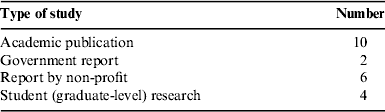
Foodshed assessments have been initiated by a variety of actors, including graduate students and researchers from diverse disciplines, staff at government agencies, and non-profits committed to farmland preservation and strengthening local food systems. Often, the type of authorship drives or influences the direction of the study and how the results are tabulated and discussed. We found this to be a strong determinant in whether the foodshed analysis was directly linked to policy analysis or not. For example, analyses initiated by academic researchers were often more focused on the analytical approach and findings, while studies conducted by advocacy organizations were more specifically linked to specific action, such as farmland preservation. As shown in Table 1, ten or almost half of the completed studies were conducted by academic researchers, six were led by non-profits, four by students and two by government agencies.
Foodshed studies and publication type.

Related to the authorship, the completed foodshed studies take a range of forms, from masters theses and articles published in academic journals, to reports published by non-profits and or government researchers. Some documents are brief, whereas others are hundreds of pages long. Some materials are very simple while others are designed and illustrated with photos, charts, graphs, maps and visualizations. In one case, a foodshed study for New YorkReference Peters, Bills, Lembo, Wilkins and Fick 17 is linked (or intended to be) to a web-based Local Foodshed Mapping Tool, for users to assess their own defined foodsheds. The form drives its audience and use, and vice versa. Articles in scholarly journals are aimed at other researchers, while government reports are intended for use by local planners and policy-makers.
Spatial extent
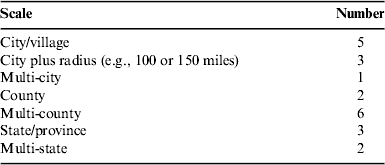
The studies differed in their boundary areas of consideration, ranging from a focus on one village (e.g., Shelburne Falls, Massachusetts) or city (e.g., Oakland, California) to examinations of multiple counties (e.g., Willamette Valley), single states (e.g., New York) and multi-state regions (e.g., the Midwest). As shown in Table 2, nine studies focused on city/village boundaries (with three of them considering a radius up to 150 miles around the city), one on a multi-city region, two in county limits, six on multi-county areas, three on state or provincial boundaries and two on multi-state regions. In some cases, both the target area for consumption and production were the same. For example, the studies of Detroit, San Francisco, Toronto, Western Washington and Western Lake Superior focused on assessing the capacity of the city or region to meet its own population's food needs. In other cases, the production region was broader than the consumption area in question, which was most often the largest city in the area. As an example of the latter, the Western Catskill study examined the potential for a relatively small rural region to serve as a foodshed for the New York City metropolitan areaReference Hoffmann 18 .
Foodshed studies and geographic boundaries.

Overall goals and questions
There was diversity in the specific goals and questions posed in the studies, which shaped how the studies approached defining and measuring both production and consumption. In some studies, the primary goal was to examine whether actual production was sufficient to meet actual eating patterns of the population in question (e.g., British Columbia, Massachusetts, San Francisco, Western Lake Superior, Western Washington, Wilamette Valley and Ventura County). Many of these studies also focused on examining theoretical consumption, based on projected population numbers and/or assumed dietary changes, such as adherence to federal nutrition guidelines, vegetarian diets or regionalized diets (e.g., New York and New England). In other cases, the focus was on estimating how much the region could potentially produce, if all suitable land was farmed with predictable yields (e.g., Shelbourne Falls, Pioneer Valley). Most of the studies adopted hybrid models, incorporating some or all of the variations among the comparisons between actual/theoretical consumption and actual/potential production.
The differences in the stated goals and questions were related to the author and spatial emphasis. City-focused studies, e.g., the Detroit, Oakland, and Toronto studies, all led by academic researchers, specifically sought to determine the percentage of fruits and/or vegetables that could be met through urban food production on public and private propertyReference Colasanti and Hamm 19 , Reference MacRae, Nasr, Kuhns, Baker, Christianson, Danyluk, Snider, Gallant, Kaill-Vinish, Michalak, Oswald, Patel and Wekerle 20 . The Hudson Valley region study, initiated by a local non-profit, Scenic Hudson, focused mainly on identifying at-risk farmland 21 . Among a wide range of questions, the Delaware Valley study, led by the regional planning agency, examined the transportation of food into and out of the region 22 . Finally, the New England study, a non-profit collaborative effort among various individuals and organizations, examined the implications of three different diets on the region's foodshed 23 .
Approach to consumption/demand estimates
As a baseline, many studies examined actual consumption based on the current population, sometimes subdivided by age and gender to account for different eating patterns. Owing to a lack of local-level data, consumption estimates were always derived from indirect measures from national or regional-level data sets, for example Loss-Adjusted Food Availability Data, the Food Commodity Intake Database, Food Expenditure Surveys, Consumer Price Index and Food and Nutrient Database for Dietary Studies (from the US Department of Agriculture) or the Canadian equivalent (from Statistics Canada).
Depending on the data source used, the consumption was estimated by either dollar value (food sales or purchases) or weight (e.g., pounds consumed). As an example of the former, HoffmannReference Hoffmann 18 estimated, using Consumer Expenditure data, that the roughly 20 million people in the New York City area and Western Catskill region spend an estimated US$77.4 billion per year on food. Consumer expenditures account for all costs of the food supply chain—of which the farm share is only a small percentage—and thus are not directly comparable to the dollar value of agricultural products produced locally. As an example of the latter, American Farmland Trust estimated, based on Loss-Adjusted Food Availability Data and the Food Commodity Intake Database, that San Francisco residents eat one million tons (907,000 metric tons) of food a year, while the entire Bay Area population consumes 6.4 million tons (5.8 million metric tons) 24 .
In addition to questions about general food consumption, some studies focused on consumption of particular kinds of food or by subpopulations. For example, the Western Washington study included an emphasis on organic food consumption, noting that residents consume approximately 109,000 tons (about 100,000 metric tons) of organic foods each year 25 . The research team also attempted to obtain data about organic sales from grocers and distributers. A representative from Safeway, a major grocery retailer, estimated that about 6–7% of all produce sales in Western Washington were for organic produce. Food expenditures made away from home were also considered in some analyses. The Catskill region study noted that New Yorkers tend to spend over one-third of their money for food on purchases made away from home, often on processed itemsReference Hoffmann 18 .
Other studies attempted to examine food purchases by subgroups. The Delaware Regional Valley foodshed study included a discussion of how many residents use USDA Food and Nutrition assistance programs, such as Supplemental Nutrition Assistant Program (SNAP), Women in Children (WIC) and the National School Lunch Program (NSLP) 22 . The study identified an apparent connection between income, access to healthy foods and incidence of diet-related diseases, noting that lower income residents face barriers to purchasing locally produced foods.
These estimates were then converted into annual dietary requirements. For example, Peters et al.Reference Peters, Bills, Lembo, Wilkins and Fick 17 ,Reference Peters, Bills, Lembo, Wilkins and Fick 26 calculated that the Human Nutritional Equivalent (HNE), or the amount of food needed to meet all nutritional requirements for the average New Yorker for 1 year, was 2750 pounds (1247 kg). Most studies then converted consumption estimates to the amount of production land needed to produce the overall amount of food. The studies made significantly different land requirements estimates, due to different assumptions, methods and data sources, as well as the variation of land productivity by region. On the lower end, the Shelburne study estimated that one resident's annual dietary requirements require 0.24 acres (0.097 ha) of productive land 27 . On the higher end, the British Columbia study estimated a per-person land need of 1.29 acres (0.524 ha) of land 28 .
In most of the foodsheds examined, shifts in consumption patterns toward federal guidelines would require less land for animals and less land overall, but would necessitate more local fruit and vegetable production. This follows national-level research indicating that Americans do not meet the federal dietary recommendations. To do so, they would need to substantially lower their intake of added fats, refined grains and added sugars, and increase their consumption of fruits, vegetables, whole grains and milk productsReference Kantor 29 , Reference Wells and Buzby 30 . However, the land requirements for different diets following nutritional guidelines vary. Peters et al.Reference Peters, Bills, Lembo, Wilkins and Fick 26 compared 42 diets, most of them following nutrition guidelines and found a fivefold difference in the associated land requirements. While vegetarian diets generally required less land, some high-fat vegetarian diets required more land than low-fat meat-based diets. They argued that a range of diet scenarios should be considered in foodshed studies.
Intentionally localized diets were also examined, although not deeply or widely. The New England Food Vision took this to the farthest extent and examined the implications of a ‘regional resilience’ diet based on 70% regional sources, including more local fruit and reduced meat consumption 23 . It was determined that the 70% regional diet would require a dramatic reallocation of New England farm acreage, and an additional 1 million acres of farmland. No other studies described the implications of a potential regional diet in detail.
Approach to production/capacity
Agricultural production and current and/or potential farmland land were important aspects of determining a region's current or potential production. There was no consistent method of identifying actual agricultural production per unit of land or amount of land in production across studies. Some studies used USDA farm gate data (in dollars) or farm production data (in weight) to estimate local production, whereas others used local production data when available, for example from County Agriculture Commissioners or Extension offices.
Others estimated production by multiplying the area of current land in production by an average yield, which requires determining (or estimating) both the amount of land in production and the average yield. Since there are no national spatial data on location of farmland, research teams used geographic information systems (GIS) to link farm data with other spatial data to identify current farmland in their own region of study. Yield estimates were derived from state-level, regional or local data sources, such as Extension offices. Some studies tried to account for differences in production practices (e.g., organic, sustainable) and their impact on yield; for example, the Franklin County study explicitly assumed the use of sustainable agricultural practices (such as rotational grazing or multi-species grazing), which it noted have a higher caloric yieldReference Elizres and Lane 31 . Meanwhile, the Willamette Valley study used 2004–2008 annual organic agriculture production yields for the region from Oregon State University and Oregon Agricultural Information NetworkReference Giombolini, Chambers, Schlegel and Dunne 32 . Among the analyses, a variety of strategies were suggested for increasing yield, ranging from incorporating more sustainable practices, growing more vegetables and other items requiring less land, and using season-extending practices such as hoophouses.
Yield estimates may over- or underestimate production and miss important nuances. For example, estimates of aggregated wheat production may indicate an ability of the Midwest region of the USA to meet all local wheat demand, although it is not well suited to meet the demand specifically for pasta wheat. As one way to deal with that uncertainty, the Ventura County study examined a range of production scenarios involving various levels of crop diversificationReference Mertens and Silverman 33 .
While some studies focused only on the actual foodshed, others attempted to examine the potential foodshed, by identifying all potentially farmable land. To do so, research teams followed the approaches similar to land suitability inventories, described in other food systems planning literatureReference Mendes, Balmer, Kaethler and Rhoads 34 , Reference Kremer and DeLiberty 35 . GIS was used to map lands with particular suitability characteristics, such as agricultural soils, complementary land use, minimum slope and minimum parcel size (e.g., 5 or 10 acres). In the analyses of cities, an adapted version was used to identify private and public lands suitable for urban agriculture.
The Pioneer Valley study identified 100,000 additional acres (over 40,000 ha) of potential farmlandReference Blum-Evitts 36 . Meanwhile, the village and city-based foodshed studies, including Oakland, Toronto, Detroit and Shelburne Falls, noted the potential to grow a much higher percentage of food—particularly fruits and vegetables––in open spaces of private yards, commercial business and publicly owned lands, and on non-traditional cultivation sites such as rooftops and balconies. The Oakland study argued that the city's 1200 acres (485 ha) of public open space could potentially produce as much as 12,320 tons (11,176 metric tons) of food or 13.2% of the annual vegetable needs of the cityReference McClintock, Cooper and Khandeshi 37 . While these studies made suggestions about bringing land into production, there was no robust discussion about the specific strategies to do so, other than the Hudson Valley report's suggestion that New York City and other funders purchase farmland development rights.
Analysis of pathways from production to consumption
None of the studies were able to definitively trace locally produced food from origin to consumption, citing the unavailability of such data. The Delaware Valley Regional Planning Council's (DVRPC) foodshed study 22 included the most comprehensive attempt to analyze these connections by focusing on transportation of food. The study team completed a comprehensive analysis of food freight patterns in the region. Federal Highway Administration data (aggregated from a larger scale) was used to estimate that in 2002, 16 million tons (14 metric tons) of food moved into the region, 14 million tons (12.7 metric tons) moved within and 8 million tons (7.25 metric tons) left, suggesting that the Delaware River Valley region is predominantly consumption-based. The team also conducted seven supply-chain case studies of specific foods from international, domestic and local sources, revealing the intricacies of their movement patterns. Their study revealed data challenges due to trade secrecy and lack of transparency, and also revealed the dependence of the region on food from far-away places and low fuel prices. In another approach to examining transportation, Peters, Bills and Fick assumed an optimized transportation system and used a GIS-based model to determine the shortest route between production and consumptionReference Peters, Bills and Fick 10 . While their approach enabled scenario testing, it did not reflect actual transportation practices.
Other studies made more limited attempts to examine the pathways from production to consumption by estimating direct sales. In the Pioneer Valley, it was noted that 13% of food-related farm sales are sold directly to consumers through farmers markets, community-supported agriculture (CSA) programs and farm standsReference Blum-Evitts 36 . The Western Washington study estimated that direct-to-consumer sales in Western Washington were valued at approximately US$350 million or almost 6% of the total market value of edible crops sold 25 . In these examples, the direct sales numbers only account for food sold directly to the end consumer, thus missing sale to wholesalers, retailers or institutions.
Owing to data limitations and complexity, no study provided specific evidence of exactly how much or what kinds of foods produced locally are actually consumed locally, nor a comprehensive understanding of the local supply chains. Instead, the discussions were more about the amount of food produced locally that theoretically could be consumed locally—if the distribution mechanisms allowed this. Thus, they provided a simple mass-balance analysis and not a flux analysis.
Discussion: Common Themes and Limits
When we set out to conduct this review of foodshed studies, our goal was to conduct a meta-analysis that would allow us to answer the basic question of, ‘Is there a scale at which regions can be food self-sufficient?’ Owing to the variation in questions and methods used in the completed analyses, it was not possible to conduct a formal meta-analysis. Some of the variations are because the analyses were initiated and conducted by a wide range of authors, and for different specific purposes. However, some broad themes emerged regarding the feasibility of relocalizing foodsheds.
Taken together, the analyses indicate that relocalization is possible, at least to some extent. Particularly in California and the Midwest (both agricultural areas), current production exceeds local consumption. The San Francisco foodshed (defined by a 150 mile radius from the city) produces more than 20 times the amount consumed by city residents and over three times the amount consumed by the whole Bay Area population 24 . Meanwhile, the Midwest region was calculated to have a self-sustainability index of 9.3, meaning that the region has 9.3 times the amount of cropland needed to feed the populationReference Hu, Wang, Arendt and Boeckenstedt 38 . This suggests already existing capacity to relocalize foodsheds in these areas.
In most cases, the foodshed in question did not have enough farmland or production to be food self-sufficient when the production and consumption regions were equal. For example, the Western Washington region was found to have a mass balance of 43%—meaning that for every 100 tons of food consumed in the region, only 43 tons are produced there 25 . This suggests that capacity (i.e., more land in production) and/or productivity would need to increase to meet demand. Pioneer Valley, comprised of three counties in Massachusetts, was found to not be food self-sufficient under current conditions, even with the region's extensive farmland resourcesReference Blum-Evitts 36 . When the analyses looked at production areas larger than the consumption area, the ability to be self-sufficient increased. The Greater Toronto area was unable to meet any of its food needs within its own boundary, only partially within a 100 mile (62 km) radius, and almost fully at a 250 mile (400 km) radiusReference Forkes 39 . As emphasized in the Philadelphia studyReference Kremer and DeLiberty 35 , however, as the production area in consideration expands, there may be ‘competition’ with other population centers. Taken together, these studies demonstrate that relocalization will depend on, at least in part, more farmland near urban areas.
Although the analyses provide contributions to our understanding of the feasibility of foodshed relocalization, they have important limits, particularly in terms of data and their narrow vision of food production. First, foodshed analyses suffer from a lack of standardized and scale-relevant data on consumption, production and pathways. A limit to using the national-level data sources to estimate consumption is that they do not reflect local differences in eating patterns, e.g., among residents of New York City and in rural areas of New York state, or among subpopulations with varying cultural and socioeconomic backgrounds. Potential strategies for more accurately estimating local consumption in future studies include obtaining data from industry such as grocers or restaurants, conducting surveys or focus groups of residents, or analyzing residents’ credit card transactions receipts. Each choice has its own costs and limits.
Theoretically, measuring production is easier and more accurate because it is routinely and systematically gathered through the Census of Agriculture. However, the census does not account for small-scale production and gardens, which can be a significant amount of production in regions. The largest data gap was about the pathways between production and consumption. Current studies only look at mass (or dollar) balances but cannot determine whether the specific mass or sales of food grown locally is actually consumed locally. Without knowledge on pathways, it is possible for a foodshed to have a positive net balance on paper but, in reality, to export all it produces, thus being a net-importer. In the case of the Wilamette ValleyReference Giombolini, Chambers, Schlegel and Dunne 32 , 92% of the wheat produced in the state was exported in 2007, suggesting that the local demand for wheat is not actually being met by local production.
To address these gaps, enhanced data collection regarding pathways of food is needed. Such data collection could potentially occur through the US Department of Agriculture in the Census of Agriculture or via labeling requirements, similar to Country of Origin labeling. Considering the unlikely availability of such data anytime soon, along with industry concern over the secrecy of trade practices, researchers will need to be creative. Again, interviews, surveys and focus groups may provide a lens. Case studies and examination of transportation and freight data may also provide insight into the issue.
The second major limitation is that these studies generally maintained a narrow focus on farmland, and did not include other potentially important sources of food, including fisheries and indigenous hunting/gathering grounds and practices. An exception was the New England foodshed study, which included a robust discussion of fisheries and hunting and their role in supporting a more regionalized diet. The studies with boundaries larger than one city or village did not include urban or other small-scale agriculture, a potentially critical part of production, in their examination of production. Depending on their specific goals, future studies should include a more comprehensive examination of food production.
Conclusion: Foodsheds as Tools for Policy and Planning
Even with their analytical limits, foodshed analyses are potentially significant tools for action. The 22 analyses varied in their specific references to action in terms of land-use planning and economic development, among other areas. In general, the analyses conducted by advocacy organizations or by government agencies contained more direct discussion of specific actions. However, all foodshed studies can serve as a basis for action, if employed to do so. In particular, foodshed analyses can serve as tools in awareness-raising, establishing baselines and evaluating progress toward goals, and in policy analysis and scenario planning around the goals of regional sustainability and resiliency.
In terms of general awareness-raising, foodshed studies can be used to highlight challenges and threats to food systems sustainability and community self-reliance, including loss of, or lack of, farmland and unhealthy or non-localized eating patterns. These problem statements can help provide information for goal-setting on issues such as the preservation of farmland, agricultural production and local food procurement. At the same time, foodshed studies can provide a baseline by which to assess future progress toward goals. For example, the Hudson River foodshed study noted that only 11% of existing farms in the region have been conserved 21 . The authors called on New York City, among other actors, to help pay US$720 million to conserve about 16,000 acres (64 ha) of the highest priority farmlands. Thus, a goal and baseline (and strategies) were established. Foodshed studies could be used more extensively in this manner in farmland preservation planning across North America.
Another policy area where foodshed studies can inform goal-setting and assessments is in local food consumption. Increasingly, local and state governments, school districts, and private organizations are supporting institutional procurement policies that encourage purchases of locally grown food products 40 . These policies include setting target percentages of local foods, mandating geographic price preferences, or giving state agencies and others discretion in purchasing local foods. As an example of a statewide policy, the Illinois Local Food, Farms, Jobs Act of 2009 set a target for all state agencies to purchase 20% of their food from local sources by 2020. At the city-level, New York recently established Local Food Procurement Guidelines which allow city agencies to give a price preference to New York State food products, if they fall within 10% of the lowest bidder. Meanwhile, in 2008 Toronto agreed to develop a plan to achieve 50% local food purchasing as soon as possible, by aggressively increasing the percentage of food it buys for its daycares, shelters and senior homes. Similar policies are being pursued by Food Policy Councils and other actors in cities and regions across North America. Foodshed analysis can be used to inform policy goals, measure the baseline and evaluate progress in this emerging policy area.
Perhaps the most powerful use of foodshed analysis is in informing policy analysis and scenario planning. Many of the foodshed studies connected their findings to policy recommendations. For example, the Western Washington study provided a set of recommendations under the themes of halting farmland loss, increasing the agricultural land base and increasing crop production 25 . The Western Lake Superior study argued for action to make farming economically viable and for the development of middle infrastructure 41 . The Willamette Valley study called for similar actions and noted the need for collaboration by different facets of the communityReference Giombolini, Chambers, Schlegel and Dunne 32 .
However, the foodshed studies only included broad recommendations and did not engage in in-depth analysis of various specific policy scenarios. We recommend that future foodshed studies demonstrate the implications of different policy directions. Examples of policy areas where foodshed studies can provide insight include farmland protection, agricultural subsidies and household food security. First, regarding farmland protection, foodshed studies can be used to examine the impacts of land use and zoning tools—including Purchase and Transfer of Development Rights, programs, farmland zoning, growth management, minimum lot size and large lot zoning—on the amount of farmland and production capacity. Second, regarding the impacts of different agricultural subsidies, foodshed studies can be used to compare the differences in production under various subsidy scenarios, including expanding subsidies for fruit and vegetable production, organic and other sustainable practices and the use of season-extending practices such as hoophouses. Finally, foodshed studies can inform policy analysis around various approaches to fostering food security in food insecure populations. For example, foodshed studies can examine the implications of expanding or reducing nutrition incentives such as Double Up Food Bucks, a program implemented in some communities to double the value of Supplemental Nutrition Assistance Program (SNAP) benefits when used for fresh, locally grown fruits and vegetables at farmers’ markets.
A challenge regarding the utility of foodshed analysis in policy-making is that food policy occurs at multiple scales and across many sectors. Many cities, counties and regions lack an established authority over food policy, or a coalition or non-profit that advocates on food policy. The absence of these kinds of structures is a challenge to developing policy action on food system relocalization. One promising trend is that Food Policy Councils are being established at various scales across the nation 42 . Meanwhile, jurisdictions, e.g., Seattle and New York, have hired Food Systems Planners or similar positions. While these actors are likely initiators of and audiences for foodshed analyses, it remains to be seen if these actors have the appetite and influence to initiate policy-making around foodshed relocalization.
A final note of caution is that while useful in policy-making as described above, foodshed studies have their limits. One major limit is they can make a complex problem seem unrealistically simple. The relocalization of foodsheds is not as simple as manipulating numbers on a mass balance spreadsheet or even protecting more farmland via policy and regulation. Instead, the relocalization of foodsheds in North America requires significant policy, business, behavioral, cultural and economic shifts, in everything from production practices and supply chains to shopping and eating habits. As such, foodshed analysis should be viewed as only one tool among a range of tools and approaches to foster and examine relocalization. A related limit is that foodshed analysis can tempt users into an over-focus on numbers and increasing production to realize a positive mass balance. Increasing food production has its own environmental and other impacts, and those must be considered as part of a broader discussion about local and regional sustainability and resilience.
Future Research Agenda
The emergence of foodshed studies comes at a time when interest in the economic, environmental and social benefits of localized food systems is increasing. This review reveals that foodshed analysis is a promising analytical and action-oriented tool. Foodshed studies conducted between 2000 and 2013 experimented with various approaches to estimating production and consumption. They provided more questions than answers and, as such, establish an enormous research agenda for the next decade. Without validated and replicable approaches, the ability of foodshed studies to set baselines, propose and test policies and scenarios, and track changes will be limited. To better examine relocalization as a tool for food system sustainability and self-reliance, systematic ways to measure and/or model production, consumption and the pathways between are needed. Also needed are models to examine the economic, environmental and social impacts of relocalization.
Recognizing that foodshed analysis is variable and cannot conform to a predetermined methodological or theoretical framework, models will need to be flexible and allow for tailoring by communities, but also enable comparisons across studies, regions and scenarios. The further development of foodshed analysis as a tool requires collaboration among agricultural economists, community ecologists, demographers, freight analysts, land-use planners and public health analysts, among others.