1 Introduction
For second language learners, the advent of the internet as a tool of communication opens the door to online intercultural exchange with native speakers. While the number of online exchange projects has increased dramatically in recent years, many did not end up with results as exciting and positive as anticipated (Groenke, Reference Groenke2010; Ingram, Hathorn & Evans, Reference Ingram, Hathorn and Evans2000; O’Dowd & Ritter, Reference O’Dowd and Ritter2006; Ware, Reference Ware2005). Besides, there has been a constant debate on these projects’ productiveness and their efficacy in cultivating an online environment with real educational value (Garrison & Cleveland-Innes, Reference Garrison and Cleveland-Innes2005; McLoughlin & Luca, Reference McLoughlin and Luca2000).
Gao, Wang and Sun (Reference Gao, Wang and Sun2009) defined productive online discussion as one that engages students in meaningful learning which leads to effective knowledge acquisition. Among the discussion of an optimal online or offline learning environment, higher-order thinking has been considered one of the crucial characteristics as well as goals to be achieved, and questioning is often found essential in facilitating higher-order thinking (Bloom, Englehart, Furst, Hill & Krathwohl, Reference Bloom, Englehart, Furst, Hill and Krathwohl1956; Chin & Langsford, Reference Chin and Langsford2004). However, the area of questioning and computer-mediated communication is still underreported (AbuSeileek & Qatawneh, Reference AbuSeileek and Qatawneh2013).
Furthermore, while there is a fast growing body of literature in the field of online exchange and second language education, there is a paucity of documented projects involving Chinese English learners and English-speaking Chinese learners in synchronous online communication. Considering the huge number of English learners in China and the fast growing population of Chinese language learners around the world, there is an obvious research gap to be filled. In addition, not much exploration was found regarding an online exchange independent from language curricula. Given the nature of language and culture learning and the pervasiveness of outside-class intercultural communication in this digital era, it is timely to examine whether language learners are able to have a truly productive and meaningful online discussion in a more open and natural environment without real-time instructor moderation, and what it in turn implies for facilitating and promoting a cognitively engaging exchange space for language learners.
Guided by the social constructivist theory (Vygotsky, Reference Vygotsky1978), this study focused on the self-generated questions found in chat logs from a small-scale synchronous online exchange project involving six language-learning dyads from China and the U.S. It is important to note that this project was entirely independent from the curricula on both sides. Within a certain timeframe, participants chose the specific time and place for their online text chat. The discussion focused on these research questions: (1) Did participants seem to have productive discussion measured by their use of higher-order thinking questions (as described in Bloom’s Taxonomy, 1956; Anderson & Krathwohl, Reference Anderson and Krathwohl2001; Krathwohl, Reference Krathwohl2002)? (2) Were there differences in terms of question usage across dyads, languages, and groups of participants? If so, what might be the reasons?
2 Literature review
2.1 Online intercultural exchange
Nowadays, more and more people endorse Kramsch’s (Reference Kramsch1993) idea that teaching culture has to be an interpersonal process with meaning emerging only through social interaction. Such a proposition is well in line with a social constructivist approach in which learning is a learner-generated, social, and collaborative process (Vygotsky, Reference Vygotsky1978). Following this trend, online intercultural exchange projects are gaining increased popularity in second language education in recent years. These projects have evolved from mainly asynchronous communication to multimodal environments that involve both synchronous and asynchronous communication (Guth & Helm, Reference Guth and Helm2010; Guth & Helm, Reference Guth and Helm2012; Lamy & Hampel, Reference Lamy and Hampel2007).
While asynchronous communication is regarded as a better tool by some researchers for deeper learning because of its flexibility of access and time for reflection (Abrams, Reference Abrams2003; AbuSeileek & Qatawneh, Reference AbuSeileek and Qatawneh2013; Anderson, Reference Anderson1996; Collison, Elbaum, Haavind & Tinker, Reference Collison, Elbaum, Haavind and Tinker2000; Green, Reference Green1998; Im & Lee, Reference Im and Lee2004), other researchers have suggested that its lack of spontaneous feedback may prevent people from moving to a more profound analysis of a topic (Pilkington, Reference Pilkington2004), and that the community-nurturing characteristic of synchronous communication is helpful in encouraging deeper reflection of issues (Salmon, Reference Salmon2000; Schwier & Dykes, Reference Schwier and Dykes2004).
So far, the major proportion of data in the literature was collected from asynchronous communication such as forum postings and emails, and most of the models used today have not yet been able to provide an efficient and systematic way for researchers to observe and analyze learner interaction in synchronous online exchange characterized by spontaneity and fluidity (Wang, Reference Wang2005). Furthermore, despite the popularity and potential of online intercultural exchange projects, researchers caution against oversimplification and assumptions about their effectiveness and productiveness for language and culture learning. In his proposal of a social-realist approach to online foreign language education, O’Dowd (Reference O’Dowd2007) called for an extensive systematic movement and change in order to get the best out of new technologies for students’ language learning. To achieve this goal, educators need to be well informed on findings from empirical studies focusing on diverse aspects in online communication. For instance, the question of whether synchronous online exchanges would end up with superficial conversations with little educational value can only be answered by investigating the actual exchange process itself. In such an investigation, the use of self-generated questions is no doubt an important factor to explore.
2.2 Questioning for productive discussion
Cognitive process is one of the major aspects examined in recent research on promoting online discussions (Gao, Wang & Sun, Reference Gao, Wang and Sun2009), in which questioning is a topic seen repeatedly. Many researchers believed that the level of thinking that occurs was influenced by the level of questions asked (Chin & Langsford, Reference Chin and Langsford2004; Cox, Carr & Hall Reference Cox, Carr and Hall2004; Elder & Paul,Reference Elder and Paul1998; King, Reference King1990; Qatipi, Reference Qatipi2011; Savage, Reference Savage1998; Taba, Reference Taba1966). Gao, Zhang and Franklin (Reference Gao, Zhang and Franklin2013) further elaborated on this idea by suggesting that information was more likely to be understood and retained from a discussion when individual learners were actively engaged in cognitive efforts such as questioning.
Furthermore, some studies found that online discussions very often failed to support a high level of knowledge construction (Kanuka & Anderson, Reference Kanuka and Anderson1998) or truly conversational modes of learning (Thomas, Reference Thomas2002). Efforts have been taken to find out ways to better understand the online communication process and to foster and support higher-order thinking of the participants. Using questions was one of the major strategies found to be essential for increasing interaction and language output as well as critical thinking within an online communication system (Lai, Reference Lai2006). Different models and approaches have been put forward for creating a productive and meaningful online exchange, and the use of questions is often one of the main components (Garrison, Anderson & Archer, Reference Garrison, Anderson and Archer2000, Reference Garrison, Anderson and Archer2001; Lipman, Reference Lipman1991; Newman, Webb & Cochrane, Reference Newman, Webb and Cochrane1997).
For instance, Garrison and his colleagues (2000) proposed an analytical framework known as “Community of Inquiry.” Their approach was later used by McLoughlin and Mynard (Reference McLoughlin and Mynard2009) in their small-scale study into the efficacy of online discussion forums in facilitating higher-order thinking. Evidence of higher-order thinking processes was indeed found from participants’ online postings when the correct conditions were present. In order to better understand the dynamics and productiveness in online interaction, it would be worthwhile to also look for evidence of higher-order thinking in synchronous communications. This served as the starting point of the present study.
In addition to the Community of Inquiry model (Garrison et al., Reference Garrison, Anderson and Archer2000, Reference Garrison, Anderson and Archer2001), effort was also taken by Gao, Wang, and Sun (Reference Gao, Wang and Sun2009) to provide a more systematic and comprehensive framework for understanding how learning occurs through online discussion. In the productive online discussion model they have developed, facilitating thinking and discussions by raising questions was listed among the most desired learner actions.
Empirical studies were also found investigating the effect of questioning and instructional devices such as question prompts in directing student thinking through productive discussion in an online or offline learning environment (Choi, Land & Turgeon, Reference Choi, Land and Turgeon2005; Ge, Chen & Davis, Reference Ge, Chen and Davis2005; Yang, Newby & Bill, Reference Yang, Newby and Bill2005) as well as how question types influenced the quantity and quality of undergraduate students’ online discussions (Bradley, Thom, Hayes & Hay, Reference Bradley, Thom, Hayes and Hay2008). These studies indicated that students’ critical thinking skills could be fostered and demonstrated through structured online exchange. Additionally, the use of questions was often found in these studies to be an important factor that instructors could work on to promote a more productive and effective exchange between language learners. However, as some studies found that when students were asked to generate questions on their own, factual rather than thought-provoking questions were generally posed (King, Reference King1990), the present study sought to verify such a claim and to find out whether and how language learners would actively participate in this small-scale project by using self-generated questions.
In addition, to date, little research was found investigating the use of questions in synchronous online intercultural exchange between language-learning dyads, let alone projects involving Chinese English learners and U.S. Chinese learners. Thus, in order to better understand the characteristics of online learning and the potential of synchronous communication for substantive learning in language and culture education for learners across the globe, there is a practical need to study what these two groups of learners would be actually doing in the collaborative online space.
3 Methodology
3.1 Participants
The participants were six English major students enrolled in a General English class at a university in Southern China and six students enrolled in a third-year Chinese Language and Culture class at a public university in the U.S., ranging in age from 18 to 22. The students from the U.S. were native English speakers, and the students from China were native Chinese speakers.
A pre-survey was conducted to elicit information about the participants’ foreign language and culture learning background and their expectations towards the project. The results indicated that the Chinese participants had all studied English as a subject in school for twelve to thirteen years, and none of them had been to the U.S. Compared to the rather homogeneous language-learning experiences of their counterparts in China, the U.S. participants had a more diverse background in Chinese language and culture learning. The number of years they had spent studying Chinese ranged from three to seven years. Three of them had studied Chinese for four years. While two participants had never been to China before, the other four had all visited China.
3.2 Procedures and data
The desired outcomes for this exchange project were greater cross-cultural understanding and language development. The project itself lasted for six weeks, and it consisted of two main steps. Participants first used an online collaboration tool (Google-forms) for questionnaires (see Appendix) composed of word associations, sentence completion, and situation questions (similar to the initial stage in the Cultura model (García & Crapotta, Reference García and Crapotta2007)). They then had synchronous discussions within dyads using instant chatting tools (Wechat or QQ).
After completing the pre-survey, the participants were asked to answer the questionnaires in their native language. Afterwards, the participants were able to read, compare, and reflect on the answers given by all the participants, which had been complied into a spreadsheet. In order to provide a richer input for the online discussion, the questionnaire was also sent to other students from both sides who were interested in answering the questionnaires but not able to participate in the subsequent exchange. A total of 31 responses were collected, 14 of them from U.S. students, and the rest from Chinese students.
In the second stage, dyads were randomly arranged with one Chinese student and one American student in each dyad. No additional criteria were used to match the participants. It is believed that, in a natural intercultural exchange environment, people are most often brought together by common interests instead of other considerations such as class credits or level of language proficiency. After all, no matter which language, English or Chinese in this case, was used in the communication, each dyad would always have a native speaker in that language. Participants then chatted with their partners about a particular word association, sentence or situation they had chosen by using instant online chatting tools. They were required to use text chat only. In order to make the project beneficial to language learners on both sides, each dyad was asked to finish discussion of four topics in four weeks’ time, two in Chinese and two in English. Upon completion of the four topics, a post-survey was given to collect participants’ evaluation and suggestions for the project. The data collected from the post-surveys would be analyzed in a separate study.
Due to different reasons such as incomplete data because of technical issues, analyses were conducted on 20 chat logs. English was the main language in twelve chat logs, and Chinese was used in the other eight. Code-switching is a common phenomenon in all the chat logs. The chat logs were analyzed in two ways. First, descriptive statistics such as counts and frequencies of questions used were calculated in light of the research questions. Second, a qualitative examination was conducted on a chat discussion for a clearer picture of how questions were actually used to engage participants in complex cognitive processes.
3.3 Question types and coding scheme
Bloom and his co-researchers (1956) outlined six hierarchical levels of thinking within the cognitive domain: knowledge, comprehension, application, analysis, synthesis, and evaluation. Despite some controversies (Anderson & Krathwohl, Reference Anderson and Krathwohl2001), the first three levels are often viewed as constituting lower-order thinking and the last three as constituting higher-order thinking (Notar, Wilson & Montgomery, Reference Notar, Wilson and Montgomery2005; Schrire, Reference Schrire2006).
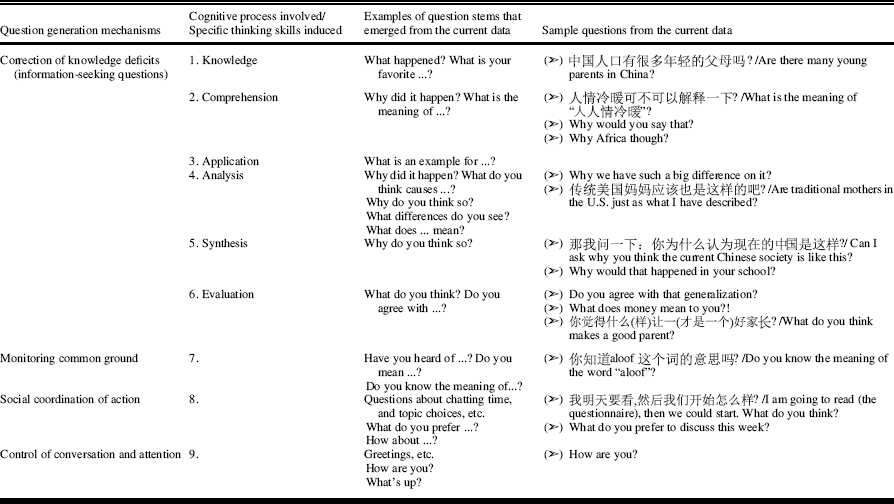
A higher-order thinking question is defined as a productive question that requires significantly more complex thinking that can stimulate mental activities and take students forward in their thinking to construct understanding (Applegate, M., Quinn & Applegate. A., Reference Applegate, Quinn and Applegate2002; Chin & Langsford, Reference Chin and Langsford2004). The classification scheme of questions (see Table 1) for the current study was thus created by combining Graesser, Rus and Cai’s (Reference Graesser, Rus and Cai2008) question classification schemes and Bloom’s (1956; Krathwohl, Reference Krathwohl2002) taxonomy. English translation is provided hereafter for all the Chinese examples, indicated by a slash (/). All the examples and excerpts are presented as they were in the original chat logs.
Question classification scheme and examples from current study

Numbers 1–9 are used to represent and code the nine question types (see Table 1). Given that it would be much harder to decide and speculate on the intention of the questioner, and the current focus was to see if and how questions were used to engage participants from both sides, both question stems and responses solicited were thus used for question classification. In addition, a question can sometimes be a hybrid of two or more categories. In this case, if a question is a combination of categories under the same level of thinking such as analysis and synthesis, it would only be coded once; if it is a hybrid under different levels of thinking, such as comprehension and synthesis, it would be coded twice, one under each category. The six dyads are denoted by A to F in this paper.
4 Data analyses
The total number of questions was 331 among which there were 208 “sincere information-seeking questions” (Types 1 to 6) and 123 other types of questions (Types 7 to 9). In other words, non-content-related questions took up about 37% of the total questions utilized across all the dyads, while information-seeking questions were the majority (67%). Among all the information-seeking questions, there were 130 lower-order thinking questions (Type 1 to 3) and 78 higher-order thinking questions (Types 4 to 6).
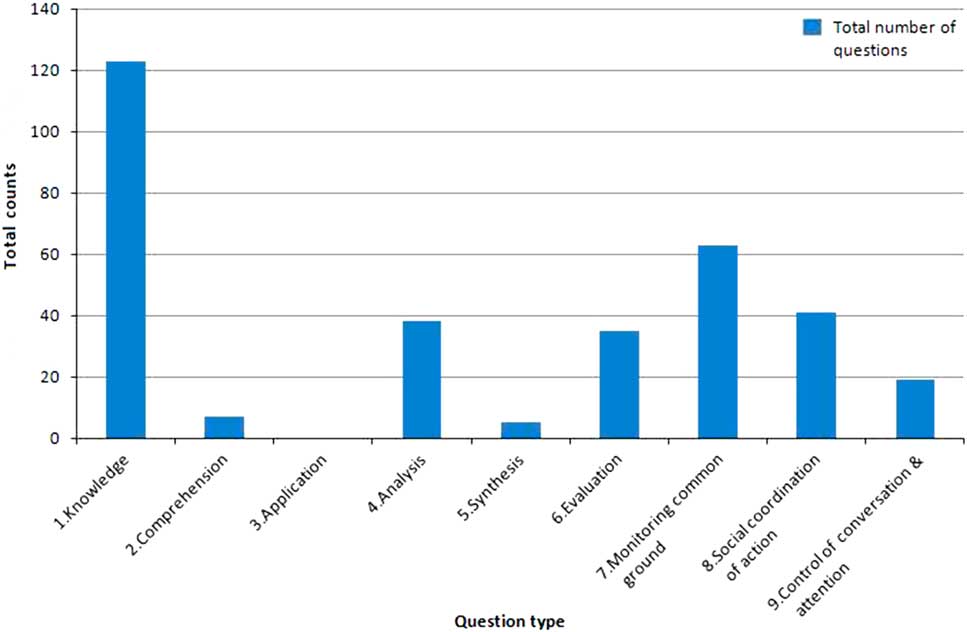
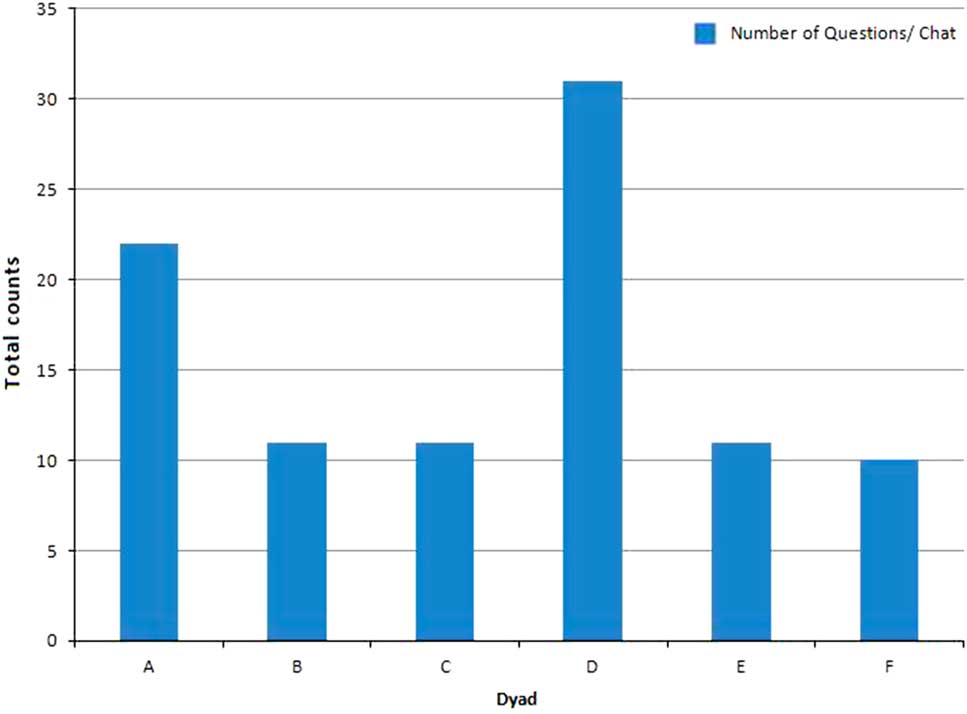
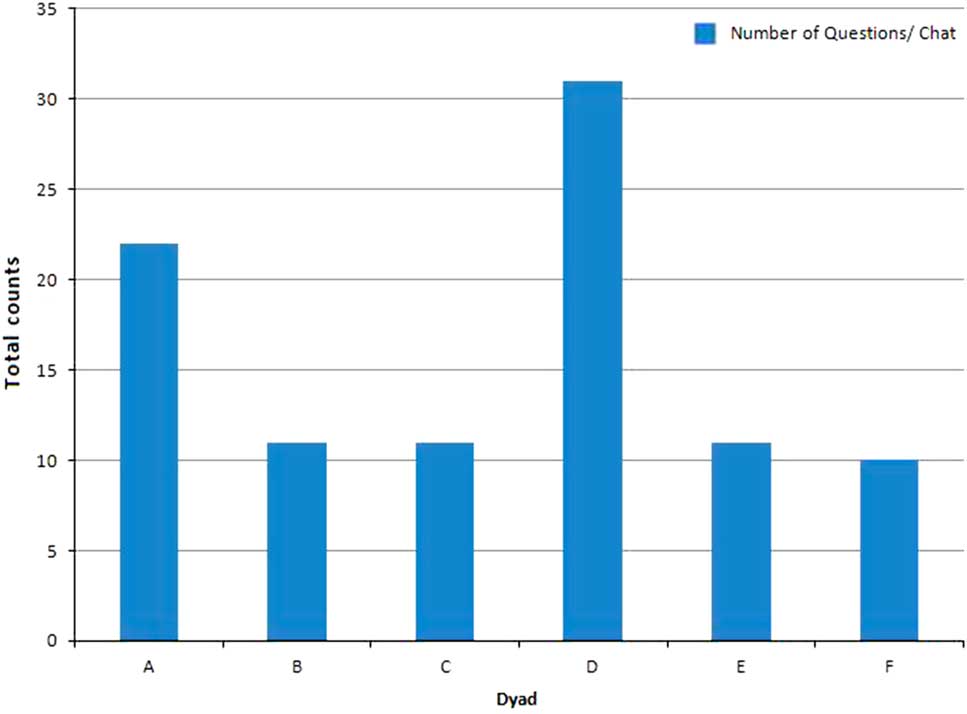
Type 1 questions (Knowledge, 123 in total) and Type 7 questions (63) for monitoring common ground in the conversation outnumbered other types of questions (Figure 1). When asking questions, participants asked for factual and procedural knowledge most often. They also asked many clarification and confirmation questions in order to make sure they were on the same knowledge base with their partners and they understood each other correctly. No question was categorized under Type 3 (Application: carrying out or using a procedure in a given situation (Krathwohl, Reference Krathwohl2002)). Moreover, Dyad A and Dyad D used many more questions (Figure 2) in each chat on average than the other four dyads.
Number of questions in each question type

Average number of questions per chat by each dyad (A to F)
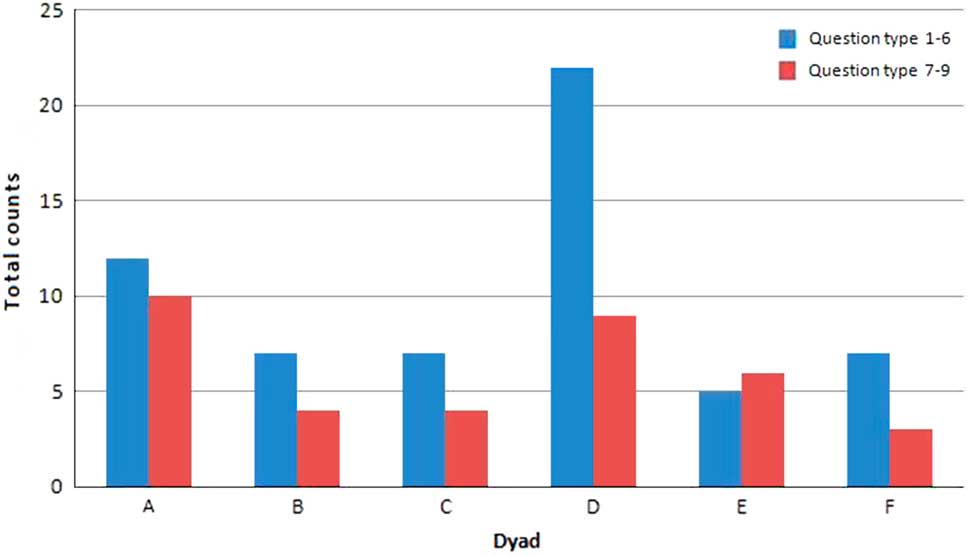
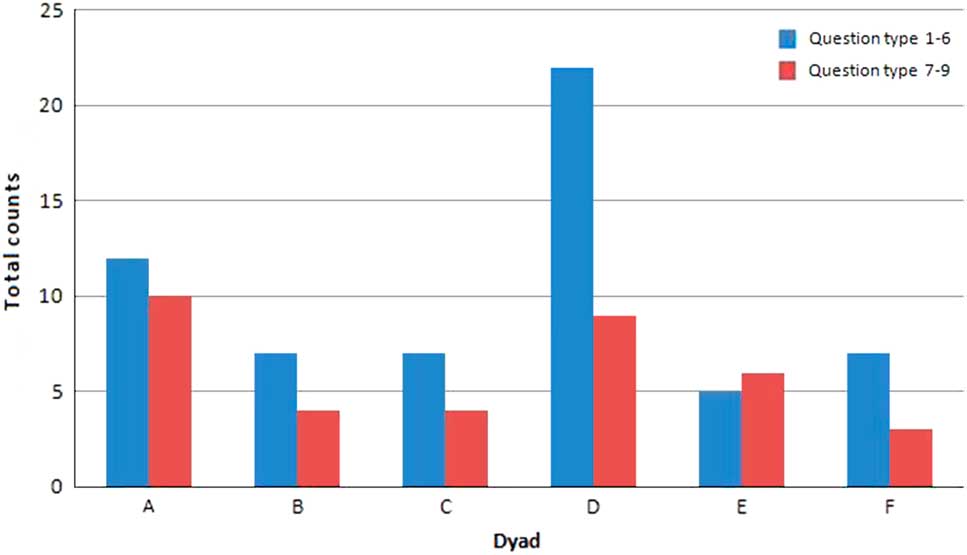
Further analysis was carried out centering on the first six types of questions (Types 1 to 6). Figure 3 suggested that, on average, except for Dyad E, all the other dyads asked more Type 1 to 6 questions than Type 7 to 9 questions in each chat. For example, Dyad D asked an average of twenty-two information-seeking questions and nine other types of questions in each chat, and Dyad F asked seven information-seeking questions and three other questions.
Comparison between use of information-seeking questions and other types of questions per chat by each dyad
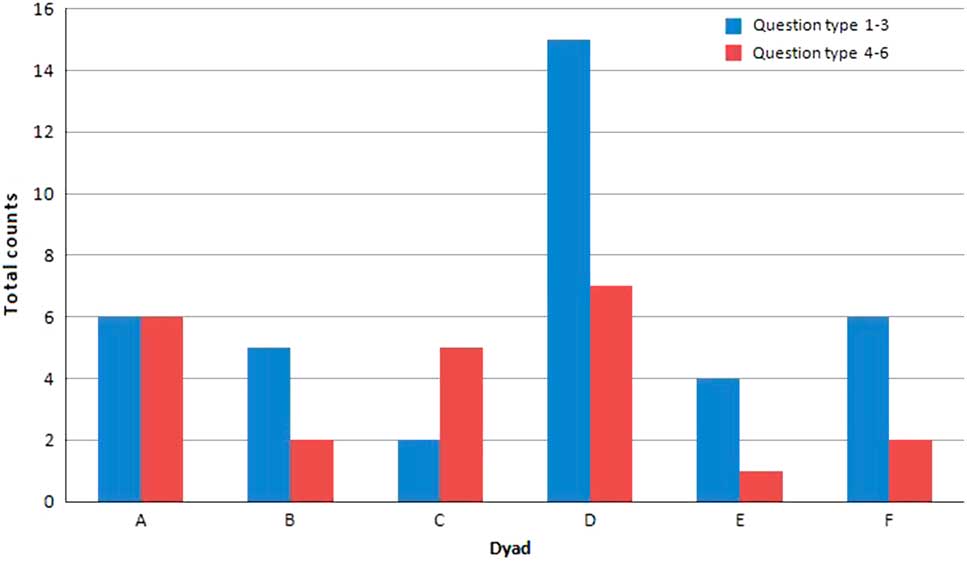
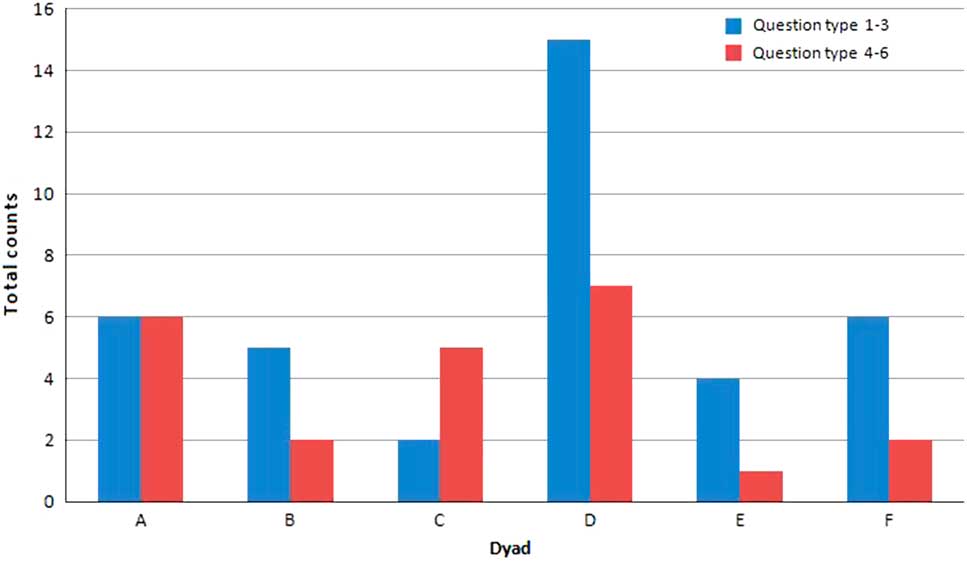
Data analyses focusing on question Types 1 to 6 revealed more interesting phenomena. For instance, despite the fact that no question was grouped under Type 3 (Application), which is understandable considering the nature of online discussions and topics involved in this project, there was still a much higher total number of lower-order thinking questions (Type 1 and Type 2) than higher-order thinking questions (Type 4 to 6). On average, except for Dyad C and Dyad A, all other dyads asked more lower-order thinking questions than higher-order thinking questions in each chat (Figure 4), corroborating King’s (Reference King1990) findings on learner self-generated questions.
Use of lower-order vs. higher-order thinking questions per chat by each dyad
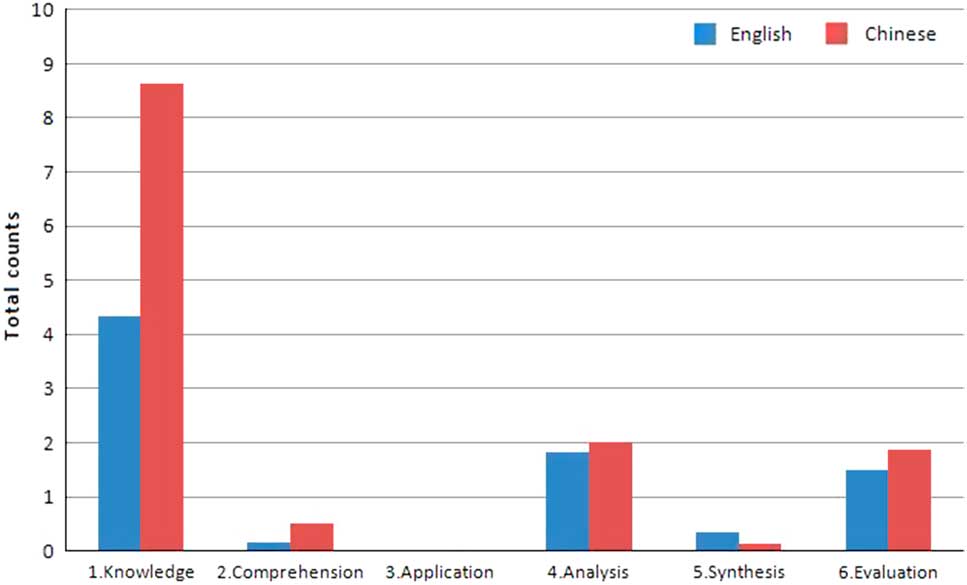
When the primary language used in each chat was taken into account, participants generated an average of eight information-seeking questions in each chat when English was used, and they had an average of thirteen questions per chat when Chinese was used. However, a closer look at the data (Figure 5) revealed that big differences in numbers only existed in question Type 1 (Knowledge) and Type 2 (Comprehension), which were both regarded as lower-order thinking questions in the current study. Therefore, participants’ use of information-seeking questions in their synchronous chat did not seem be much different in terms of levels of thinking involved when different languages were used.
Use of Type 1 to 6 questions per chat across languages
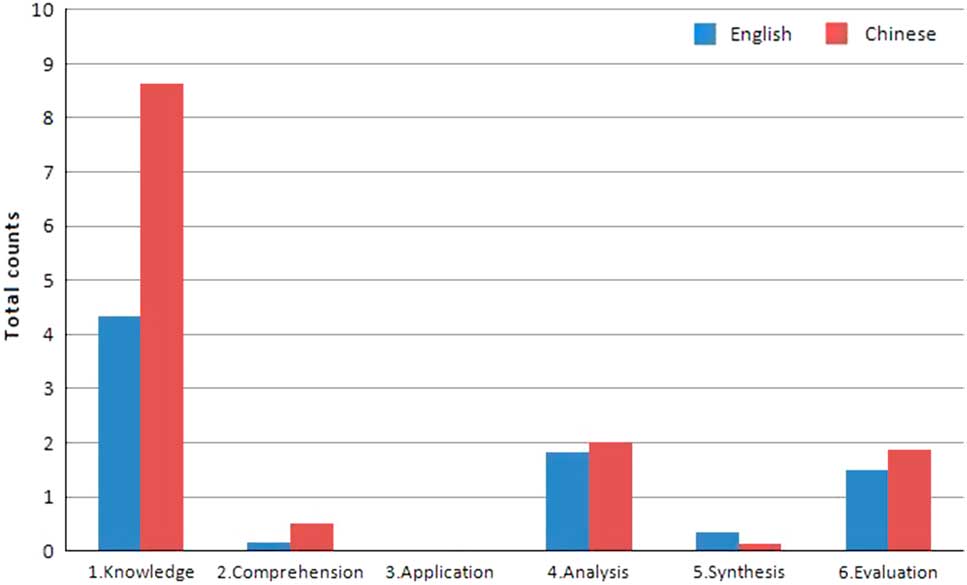
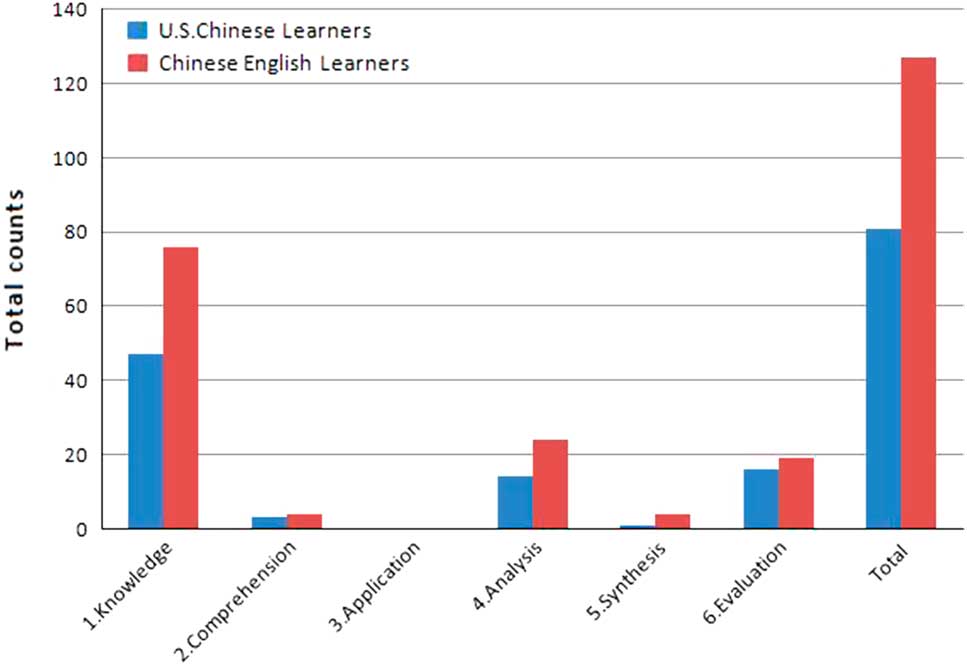
Figure 6 demonstrated the general differences between Chinese and U.S. participants in using information-seeking questions. It suggested that Chinese participants asked more questions (127 in total) across all six question types compared to their partners from the U.S. (81 in total).
Use of Type 1 to 6 questions by U.S. and Chinese participants

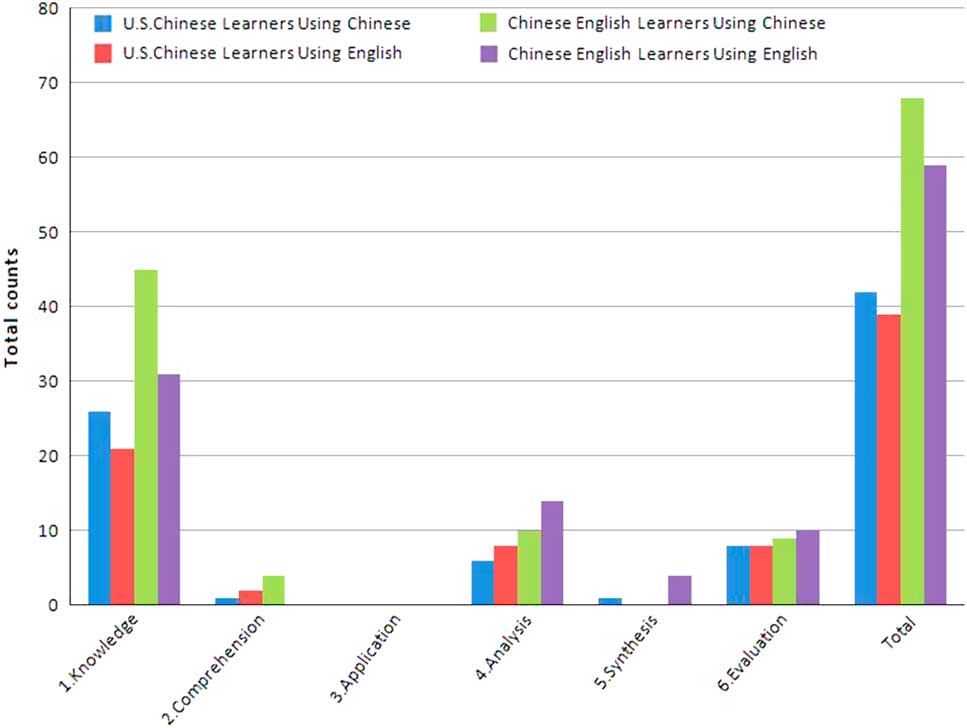
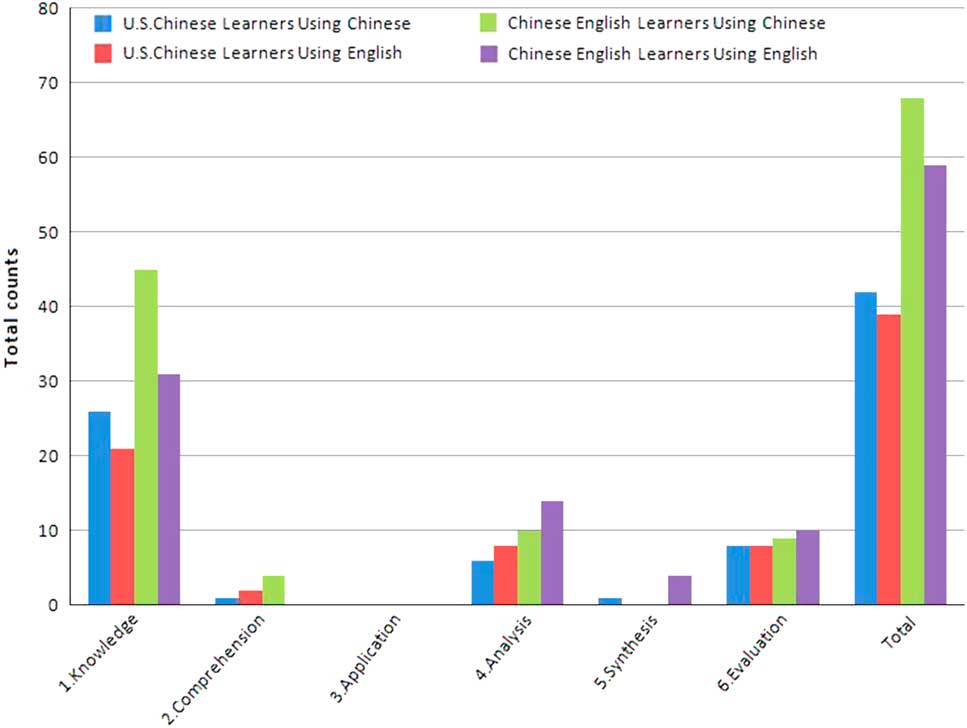
A finer-grained analysis (Figure 7) showed that, while U.S. participants’ use of questions did not vary consistently across languages and question types, the Chinese participants asked more lower-order thinking questions when the exchange language was Chinese and more higher-order thinking questions when the language used was English.
Use of Type 1 to 6 questions by U.S. and Chinese participants across languages
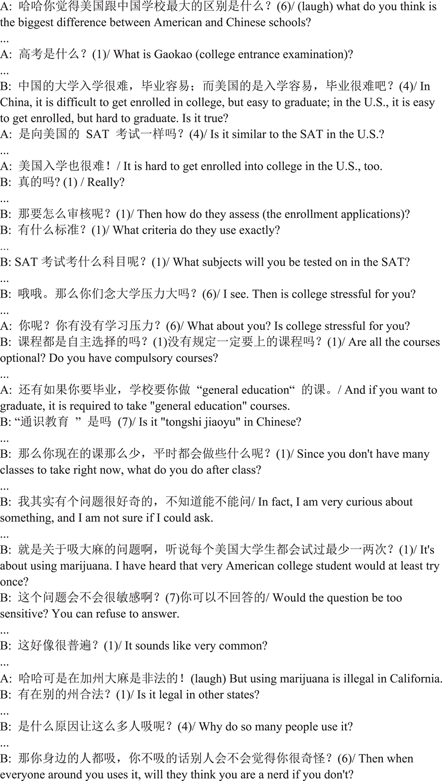
In addition to statistics that suggested participants’ general pattern of question use, examination of the actual questions raised in a chat discussion revealed a clearer picture of how questions were used to guide and sustain the online interaction, to explore topics of common interest, to demonstrate sensitivity towards intercultural and interpersonal relationship, and more importantly, to engage participants in complex cognitive processes. Take the following excerpt (see Table 2) as an example. Except for a few essential statement sentences for the context, only questions are retained in this excerpt. The number in the parentheses denotes the question type for each question.
Excerpt of a chat discussion in Chinese on “School”

In this discussion, A was a female student from the U.S. and B was a male student from China. While Type 1 questions were used by both sides for information regarding school life, such as college entrance examinations, curriculum, and after-class activities, higher-order thinking questions (Type 4 to 6) were also frequently raised to have their discussion partners analyze, compare, evaluate, and synthesize what they had known about the topic and reflect on their self-knowledge as well.
For instance, A asked B for his opinion on the biggest difference between American and Chinese schools. Unless B already had an answer ready from previous thinking, he might need to first think of a list of factors about schools: he then had to reflect on and compare, according to that list, what he knew about schools in China and what he had learned from different resources about schools in the U.S; and he needed to decide which difference seemed to be the most prominent. Although it only took a few seconds before he typed in an answer, valuable learning and thinking already occurred in such a highly complicated cognitive and psychological process. Additionally, in this online exchange, B would have to take into consideration the linguistic and pragmatic factors when formulating his answers. In this sense, the use of this self-generated question not only benefited A in her second language learning and culture understanding, but also helped B in improving his home language skills and cross-cultural communication skills.
At the end of the excerpt, B asked A what will others think of her if she does not use marijuana. It was another cognitively intense question which required A to think about the then situation of marijuana use among young people and what people might think of someone who did differently. It might lead A towards other hidden questions as well, such as “if people think of you like that, how do you feel?”
This short excerpt was just one of the examples demonstrating how a dyad in a synchronous discussion learned about language and culture in a productive online environment by using self-generated questions. Higher-order thinking questions were used skillfully and spontaneously to engage both parties in critical thinking in the discussion on a seemingly casual topic.
5 Discussion
The above data analyses gave a glimpse of what was going on during language learners’ synchronous online text communication in this small-scale exchange project. While participants frequently used non-content-related questions (Type 7 to 9) to gauge, assess, confirm, or ratify what each other knew about a topic (Graesser et al., Reference Graesser, Rus and Cai2008), negotiate about topic choice and chat time, and establish social relationship, they did self-generate many higher-order thinking questions. Although similar counts of questions were calculated across languages, difference emerged when the data were further broken down between Chinese participants and U.S. participants. Chinese English learners asked more questions than their U.S. counterparts across all six types of information-seeking questions.
One possible explanation for this phenomenon may come from the participants’ target language and culture learning backgrounds. Given that none of the Chinese participants had been to the U.S., which implied that most of the information they had obtained about the U.S. was secondary, and they were all English major students, it should not be surprising to find them highly motivated and very curious about the U.S. culture and school life. In contrast, although the U.S. participants were also eager to learn because they volunteered to participate, two thirds of them had been to China before and spent some time there. As a result, they may have comparatively fewer questions regarding specific topics.
In addition, it was speculated that the reason why Chinese students were asking more lower-order thinking questions when using Chinese and more higher-order thinking questions when using English (Figure 7) had something to do with Chinese participants’ awareness of their partners’ Chinese language proficiency. While the Chinese participants had an average of twelve years of systemic English learning, the American students had been exposed to Chinese language for a shorter time. When Chinese was used, being cognizant of the fact that their U.S. counterparts might not be able to understand and answer linguistically and cognitively demanding questions, students from China probably tended not to ask as many higher-order thinking questions as they did when English was used.
There is no doubt that participant idiosyncrasies including language proficiencies, past experiences in language and cultural learning, and their communication and discussion styles played a very important role throughout the entire exchange process, and one can never be too cautious when interpreting findings in a study with such a small number of participants. However, since a substantial number of higher-order thinking questions were indeed found in most of the chats, participants did seem to be able to practice higher-order thinking in this sense. A closer examination of the chat logs like the excerpt analyzed above indicated that, by using questions involving or requiring the exercise of analysis, synthesis, and evaluation skills, participants had the opportunities to reflect on, analyze, and even challenge their own cultural beliefs, put their ideas into words for their partners, and process the response they received while thinking about the direction for subsequent discussion. During this process, learners not only practiced essential language skills, especially when their foreign language was used, but also had a genuine and worthwhile learning experience in which the learner’s personal world (reflective and meaning-focused) was active and linked with the shared world (collaborative and knowledge-focused) (Garrison et al., Reference Garrison, Anderson and Archer2000; Garrison et al., Reference Garrison, Anderson and Archer2001) in the online exchange environment.
However, since immediate external support or moderation was not present during the actual exchange process, from time to time, some participants did seem to feel a bit frustrated and wish for some timely help in order to have a more productive online discussion. Take Dyad E as an example. One time, a learner in this dyad said with a crying emoticon, “Oh, A., I don’t know what else I can talk about this topic now.” Then her partner responded, “That’s true ...”. In another chat within the same dyad, one of them said, “ ” /“I think I am done with this topic. I don’t know what else to discuss.” In still another chat, one of them said, “is there anything else? I don’t really know what to discuss haha.” and her partner responded, “... me too. So is this topic over?” Interestingly, the above data analyses indicated that Dyad E not only used a comparatively low number of questions per chat on average compared to other dyads (Figure 2) but also happened to have the lowest number of higher-order thinking questions per chat (Figure 4). Their discussion on each different topic was generally rather brief as well.
In addition, one Chinese participant responded to the question in the post-survey, “Do you have any comments about the project or suggestions for making it more helpful for language learners in the future?” by saying, “it will be better if the discussions are in details”. Although the identity of the respondent was unknown and could not be linked to specific chats, he/ she, like Dyad E, expressed the desire of finding ways or getting help to have more in-depth discussion with his/her partner, which, unfortunately, only came to the researcher’s attention at the end of the project via the post-survey. While it did not mean that the lack of a third party presence would necessarily do harm to the online exchange, considering the need to cultivate a relaxing and comparatively more private space for synchronous chat, prior training on discussion skills and supporting materials like question prompts (Ge et al., Reference Ge, Chen and Davis2005) may be considered as valuable alternatives to provide help for learners while maintaining learner autonomy during the online communication process.
6 Limitations
This study has several limitations. First, this online exchange project had only twelve participants, six from each side, which affects the generalizability of the research findings. Second, due to the descriptive nature of the current study, no causal relationship could be established between factors discussed above. Third, given the busy schedule of participants from both sides, the actual online discussion lasted for four weeks. While a longer exchange may be more desirable for language and culture learning, it was unrealistic for a project like this, considering the need to make the tasks and schedule manageable and flexible enough so that it would not work against participants’ academic schedules. Fourth, the different ways of using questions in different cultures have not been addressed in this study. Besides, there is still much to be explored in terms of participants’ preferences in using questions when discussing different types of topics.
7 Conclusion and future studies
The current study makes a small contribution to the field of computer-mediated communication between language learners by reporting on an online intercultural exchange project. Based on the use of questions recorded in chat logs, higher-order thinking questions were found to be frequently used in the process of online discussion to engage learners from both sides in critical inquiry and self-reflection. Differences in question use were found across dyads, languages, and groups of participants, which could be attributed to various factors such as participant idiosyncrasies including level of language proficiency, past experiences in language and cultural learning, and their communication and discussion styles.
Looking at the use of questions not only helped us gain a bettering understanding of the dynamics in synchronous online chatting, but also provided us with empirical evidence of the significance of questioning in productive online discussion, and the educational value of synchronous text chat in language and culture learning. Findings about participants’ use of questions in their synchronous chats also highlighted the importance of providing them necessary training in advance on questioning skills or convenient and easy-to-use rubrics or prompts for them to use at their own discretion during online communication. Related supporting materials or instructions can be provided as handouts or online so that learner autonomy could be preserved while external help is available when it is needed. In addition, while this project was independent from the curricula on both sides, language instructors and project coordinators were by no means dispensable. On the contrary, careful planning, implementation, coordination, and sufficient support are essential in ensuring intercultural exchange projects like this to achieve the desirable outcomes for language learners.
Future studies are expected to include more participants and incorporate the two surveys as part of the data for analyses. Besides, it is hoped that more advanced behavior tracking tools could be used in the future to capture the nuances of participant behavior, in order to obtain a more comprehensive and in-depth understanding of the dynamics in the online learning and exchange processes.
Acknowledgements
I would like to thank Dr. Dorothy M. Chun for her guidance and support in the process of my implementing the exchange project and writing this manuscript, and Ms. Wenwen Hu for her help in recruiting participants from China. I would also like to thank the editor(s) and the anonymous reviewers for their constructive feedback on earlier versions of this manuscript.
Appendix
Questionnaire
Word Associations (Please write down at least the first two words that come to your mind when seeing each of the following terms.)
City/
Success/
Work/
Family/
Money/
School/
Sentence Completions
A good parent is someone .../ 
A rude person is someone .../ 
A good student is someone .../
My greatest worry is .../
A good job .../
I can’t stand it when .../
Reactions to Situations (Please write down your reaction.)
You are walking down the street in a big city. A stranger approaches you with a big smile./
 ,

You see a mother in a supermarket slap her child./ 


You see a student next to you cheating at an exam./
You have been waiting in line for ten minutes. Someone cuts the line in front of you./


Your parents criticize you in front of your friends./