




No CrossRef data available.
Voice and Inequality: The Transformation of American Civic Democracy
Published online by Cambridge University Press: 10 June 2004
Abstract
An abstract is not available for this content. As you have access to this content, full HTML content is provided on this page. A PDF of this content is also available in through the ‘Save PDF’ action button.
Information
- Type
- Editor's Note
- Information
- Copyright
- 2004 by the American Political Science Association
Introduction
About a century ago, the American Political Science Association (APSA) was launched at a December 1903 meeting held at Tulane University during the joint conventions of the American Economics Association (AEA) and the American Historical Association (AHA).1
This essay is an expanded version of my presidential address at the 2003 annual meeting of the American Political Science Association, on the occasion of the centenary of the founding of the association.
American Political Science Association 1905, 11.
Much has changed over the past century. An association that started with founding participants numbering in the dozens now boasts about 14,000 members. An association once closely focused on the formal arrangements of law and government now encompasses a much broader understanding of politics; and presidential addresses over the decades document the emergence of behavioralism, systems theories, and rational choice to coexist with new variants of institutional analysis. An association that originally functioned through 10 scholarly and governing committees now has 47 program divisions, 35 organized sections, 55 related groups, and 42 committees devoted to governance, awards, and representation. Each year, some 700 people, about one of every 20 members, participate in the voluntary leadership of APSA and its sections. Last but not least, an association founded by white men now includes a rainbow of persons, and it has just witnessed the first instance of a woman president handing off the gavel to a female successor.
Despite the many changes over the decades, there have been important continuities—so many that Goodnow and his colleagues would surely recognize us today as inheritors of the association and disciplinary vision they launched. Now, as then, organized political science encompasses normative theory as well as empirical research. Now, as then, APSA features comparative research, area studies, and a focus on international politics as well as studies of American politics; and our membership is international. APSA fosters both pedagogy and research. We nurture ties to neighboring disciplines and proudly include scholars who started elsewhere in our ranks. Now, as then, we aim to link responsible citizenship in the larger society to scholarly studies of government and politics. In the words of Pendleton Herring, delivered in his APSA presidential address 50 years ago: “[A]s we…develop political science as a discipline we both serve our professional needs and perform the vital function of helping our democracy to know itself better.”3
Herring 1953, 971.
Above all, as Goodnow put it in his first presidential address, APSA aspires to be “inclusive.” We do not define political science narrowly, and yet we still seek to nurture solidarity and fellowship, especially by sponsoring “annual sessions” that “offer a common meeting ground in more ways than one for those whose work is mainly or largely political rather than economic or historical.”4
Goodnow 1905, 36, 45.
The centenary of APSA, a thriving voluntary membership group, is a fitting time to reflect on the changing shape of the American civic democracy of which we are a part. U.S. democracy has long been considered distinctive—and a model of sorts for the rest of the world. This is somewhat owing to the U.S. Bill of Rights and electoral contests; perhaps even more so, it is because Americans have long been portrayed as preeminent organizers and joiners of voluntary associations that shape and supplement the activities of government. In the 1890s, Lord Bryce—who later served as the fourth president of APSA—observed that “associations are created, extended, and worked in the United States more…effectively than in any other country.”5
Bryce 1895, 278.
Tocqueville 1969 [1835–1840]; Almond and Verba 1963. See also Schlesinger 1944.
Although American voluntary groups have always been celebrated, their characteristics and political effects are not well understood. Our vision of voluntary associations of the past has been especially hazy—and as a result we are ill equipped to grasp the momentous reorganization of U.S. civic life that has taken place in our time. Between the late 1960s and the 1990s, Americans launched more nationally visible voluntary entities than ever before in the nation's history. They thus remained preeminent civic organizers. But late-twentieth-century Americans ceased to be such avid joiners—especially because they pulled back from organizing and participating in membership associations that built bridges across places and brought citizens together across lines of class and occupation.
In this essay, I will:
- succinctly characterize the great civic reorganization of our time, delineating it against the backdrop of the history of American civic democracy;
- suggest why our contemporary great civic transformation occurred;
- reflect on the implications of recent reorganizations for the broader workings of U.S. democracy.
I will rely on previous studies by scholars of many method ological and theoretical persuasions. Yet given my proclivities as an historical-institutionalist, I will highlight what we can learn by focusing on the changing universe of voluntary and interest group organizations as such.7
Organizations concen trate resources, voice, and clout in democratic politics—so we should care as much about the organizational as we do the individual level of politics. We should focus on the strategies used by civic organizers as well as on the responses of masses of citizens. I will also explore interactions between organized voluntary entities and the changing institutions and policies of government. Social movements and voluntary groups influence politics and government, to be sure—yet the opposite is also true. Access to politics and partnerships with government spur group formation and influence changing forms of voluntary organization.A Great Civic Transformation
I begin by characterizing the universe of U.S. voluntary associations as of the middle of the twentieth century and then describe the major reorganizations that occurred from the 1960s to the 1990s.
American civil society at mid-century
In mid-twentieth-century American civil society, business associations coexisted with broad-based, popularly rooted voluntary membership associations. In terms of sheer numbers of groups, business associations predominated. Groups representing businesses or businesspeople constituted about half of all nationally visible associations in 1950 and more than 40 percent in 1960.8
This situation helps explain why political scientists saw business dominance within the Washington lobbying community at mid-century.9Baumgartner and Leech 1998.
Yet if we examine voluntary groups with large individual memberships, we see another side of mid-century civic life. Compared with citizens of Britain and Germany—the two other advanced-industrial nations surveyed in Almond and Verba's book The Civic Culture—mid-twentieth-century Americans of both genders and all educational levels were more likely to join and hold office in voluntary associations.10
What is more, Americans were involved in distinctive types of groups. Americans, Britons, and Germans joined occupationally based associations at roughly equal levels (although the British were more often members of labor unions and did not join farm groups). And respondents of all three nationalities were comparably involved in social and charitable groups. But Americans were unusually likely to claim one or more memberships in church-related associations, civic-political groups, and fraternal groups—and were also significantly involved in cooperative and military veterans' associations. The “fraternal” category especially stands out, in that Almond and Verba tallied it only for the U.S. case.11Almond and Verba 1963, 302, Table 2.
As late as the early 1960s, in short, Americans were avid participants in “fellowship associations”—groups emphasizing and expressing solidarity among citizens, or among “brothers” or “sisters” who see themselves as joined in shared moral undertakings. In 1955, more than two dozen very large membership federations enrolled between 1 percent and 12 percent of American adults apiece.12
For a list, see Skocpol 2003, 130–1, Table 4.1. The 1 percent of adults threshold refers to men or women alone, for groups that (in practice or formally) consisted of one gender. Almond and Verba 1963, chapter 11.
On service clubs, see Charles 1993.
Most of the business associations that were so numerous in the 1950s and early 1960s grew up over the course of the twentieth century; and the same was true of professional associations, also numerous by mid-century. But massive, popularly rooted fellowship federations had much deeper historical roots. They started to proliferate in the fledgling United States between the Revolution and the Civil War and then experienced explosive growth in the late nineteenth century, as civic organizers—some of whom had met during the Civil War struggles—fanned out across the United States, organizing state and local chapters in every nook and cranny of a growing nation. Millions of nineteenth-century Americans joined women's federations, fraternal and veterans' groups, and reform crusades. By the early twentieth century, the kinds of membership groups that had the most consistent presence, apart from churches, in towns and cities of all sizes were chapters of nation-spanning fellowship federations.14
Of course, particular voluntary federations rose and fell over time. But as the United States industrialized between the 1870s and the 1920s—an epoch during which business and professional groups and labor unions grew in this country as they did in other industrializing nations—fellowship federations remained a strong presence. In addition to the Civil War, World Wars I and II promoted the growth of fellowship federations, which worked closely with the federal government to mobilize Americans for wars.15
Skocpol et al. 2002.
Although fellowship associations may seem to have been apolitical, in fact they were often involved in public affairs. Half to two-thirds of the 20 largest membership associations of the 1950s were directly involved in legislative campaigns or public crusades of one sort or another.16
Skocpol 2003.
The roots of this go back to the early twentieth century. See Skocpol 1992.
Davis 1948.
Contemporary civic reorganizations
Although business groups and popular membership federations held sway in U.S. civil society as of the mid-twentieth century, sudden and remarkable changes occurred thereafter. Three intertwined transformations remade the American civic universe between the 1960s and the 1990s.
First, while business groups continued to proliferate in absolute terms, they lost proportional ground in the universe of nationally visible voluntary associations. The total number of U.S. national associations expanded from about 6,000 in 1960 to reach a new plateau of about 23,000 in 1990 and after. Yet as this expansion happened, the share of business associations shrank from 42 percent to 17.5 percent, while associations devoted to addressing issues in the realms of “social welfare” and “public affairs” burgeoned from 6 percent to 17 percent of all nationally visible associations.20
Skocpol 2003.
Second, previously hefty blue-collar trade unions and fellowship federations went into sharp decline. This fact has been empirically documented both in my own research and in the research of Robert Putnam.22
As Putnam has argued, all kinds of membership associations experienced a considerable drop from the 1960s on. Tellingly, however, as Figure 1 shows, the post–World War II declines have been greatest for blue-collar trade unions and chapter-based voluntary federations, especially once-vibrant women's associations and fraternal groups. Elite professional societies have experienced much less membership decline than have most popularly rooted membership associations. And if we take into account affiliations with recently proliferating specialized professional organizations, educated Americans have certainly increased their overall involvement with professional membership groups.23
The third and final contemporary transformation involves shifts in the structures of voluntary groups and institutions. Although thousands of new, nationally visible groups were created between the 1960s and the 1990s, many—such as public law groups, think tanks, foundations, and political action committees—are not membership groups at all.24
Others are staff-centered associations that recruit masses of individual adherents through the mail. With a few exceptions—such as the 35-million-member AARP—most contemporary mailing-list groups have followings in the tens of thousands to hundreds of thousands, not millions.25When very small groups are factored in, this means that median or mean membership sizes have dropped sharply. A study (Smith 1992) of all nonprofit associations listed in the Encyclopedia of Associations found a median membership size of about 10,000 in 1962, whereas by 1988 the median membership was only 1,000, with about half of the 1988 groups reporting no members at all. Examining only associations in the Encyclopedia that claimed members, Putnam (2000) found a drop from an average membership of 111,000 in 1956 to an average of 13,000 in 1998. In addition, I looked (Skocpol 1999) more closely at data on “social welfare” and “public interest” associations founded between 1960 and 1989, groups that survived to be listed in the 1998Encyclopedia of Associations. These groups had time to build memberships if they were trying to do so, yet only tiny fractions had more than 100,000 members, while more than 70 percent either had none or fewer than 1,000 members (in some instances, “memberships” under 1,000 may refer to other organizations, not individuals).
Recently proliferating associations have other telling features. Even when they claim substantial numbers of adherents, most recently founded associations rarely have chapters—or they have very sparse networks of subnational affiliates.26
In addition, many recently founded or recently growing groups are heavily invested in professional staffing. There are as yet no definitive studies on staffing levels for all groups across time. But there are suggestive studies of environmental groups and other kinds of public interest associations, showing a sharp trend toward expanded professional staffs.27Over the past four decades, in sum, American associational life has become more pluralistic and less business-focused, yet it has shifted away from popularly rooted membership associations and toward professionally managed organizations, many with no members or chapters at all.
To the degree that there is any exception to the civic trans-formations I have just recounted, it is on the conservative side of U.S. civil society. Professionally managed advocacy groups have proliferated across the board, but conservatives have, at the same time, done more than liberals to renew or reinvent massively large, popularly rooted federations. The National Right to Life Committee, the Christian Coalition, and the National Rifle Association are all extensive chapter-based membership federations that have flourished in recent times. Inspired by moral and ideological world views, they have recruited people across class lines (through church networks or sports clubs, for example), linking local units to one another and into the penumbra of the Republican Party.28
The one unabashedly liberal membership federation to experience comparable massive growth in recent decades is the National Education Association, a teachers' union.The Roots of Civic Reorganization
Why did America's associational universe change so sharply in the late twentieth century? Some scholars argue that gradual changes in the choices made by masses of Americans are the principal reason for civic shifts.29
This argument is most fully developed in Putnam 2000.
Support for the proposition that civic reorganization was relatively sudden and elite-led is provided by data that allow us to look in detail at the specific civic affiliations of relatively privileged Americans. Questions repeated on national surveys cover only a short stretch of recent time and are very general, referring only to broad types of associations. But my research associates and I have discovered that some U.S. states have collected over many decades information on the specific, named groups with which their elected officeholders have claimed affiliations. Massachusetts, in particular, has collected such data every year in exactly the same format since 1920. We coded all group affiliations at five-year intervals for Massachusetts state senators—cohorts of 40 men (and recently a few women), almost all of whom come from a business or professional background. From the 1920s through 1960, four-fifths or more of these elite individuals claimed affiliations with cross-class fraternal, veterans', and other fellowship associations. But after 1965, both younger and older state senators—especially those newly elected to office—stopped claiming such affiliations and instead proclaimed their ties to advocacy groups and nonprofit cultural or social-service institutions.30
Skocpol 2003.
Ibid.
Additional data about the affiliations of state senators in North Carolina, Illinois, and Maine confirm this picture, showing similar rapid transitions from affiliations with membership associations to affiliations with nonmembership groups and institutions.
When a fundamental reorganization occurs as rapidly as it did in late-twentieth-century America, a combination of causal forces—not just a single causal factor—is usually at work. In this case, a critical event, the Vietnam War, coincided with converging social, political, and technological trends to spur civic reorganization. The Vietnam War mattered because it broke the tradition of cross-class male solidarity that had nourished traditional fellowship federations. Vietnam was a losing war, and unpopular with young, highly educated Americans. It drove a wedge in the associational world between social strata and between younger and older men. As for the broader trends that engendered civic transformation, let me discuss each set of developments in turn.
Rights revolutions and civic transformation
The key social changes that propelled civic reorganization in late-twentieth-century America were associated with the “rights revolutions” of the 1960s and 1970s. Because most traditional U.S. fellowship federations were racially exclusive and gender-segregated, new attitudes and practices about race and gender hit them like a tornado. Virtually all fellowship federations at mid-century had explicit or implicit racial exclusion built into their constitutions, membership requirements, and organizational practices. In addition, especially among whites, longstanding, chapter-based membership associations were typically either gender-specific or organized into separate sections for men and their female relatives. Traditional gender roles tended to be assumed, with women not only organizing their own voluntary associations but also serving as helpmates to male organizations.
In a 1997 survey, a representative sample of Americans told sociologist Robert Wuthnow about the kinds of associations they would be “very unlikely” to join. Ninety percent said that they would not join groups “with a history of racial discrimination,” and a clear majority (58 percent) also said that they would be very unlikely to join an association that “accepts only men or women.”33
Wuthnow 1998, 243, note 51.
Farley 1996.
The civil rights struggle and other rights revolutions also raised questions about forms of organization favored by old-line chapter federations. Across much of U.S. civic history, membership associations trumpeted constitutions paralleling U.S. government and celebrated representative modes of decision making. But such structures traditionally embodied compromises between the racially segregationist South and the rest of the nation. Movements aiming to enhance the rights of minorities and promote value changes were naturally skeptical of existing majoritarian practices and organizational arrangements. To this day, many Americans whose youthful political consciousness was shaped by the rights struggles tend to think of majoritarian institutions as cumbersome, bureaucratic, and unresponsive—remembering that in the 1960s and 1970s such institutions often were obdurate when first faced with demands for racial and gender equality.
Instead of the old majoritarian, federated ways of doing things, the new rights movements depended initially on activist cadres and, later, on professionals—types of leaders who could readily get out in front of laggard majorities. Old-line membership federations such as African American churches, the National Association for the Advancement of Colored People, and the General Federation of Women's Clubs played visible roles in the rights revolutions of the mid-1950s to the mid-1970s. But even in an era of popular protests, the key roles were often played by newly launched vanguard organizations, such as the Southern Christian Leadership Conference (SCLC), founded in 1957; the Student Nonviolent Coordinating Committee (SNCC), founded in 1960; the National Organization for Women (NOW), founded in 1966; the Women's Equity Action League (WEAL), founded in 1968; and the National Abortion and Reproductive Rights Action League (now called NARAL Pro-Choice America), created in 1973 as a reorientation of an earlier group. Of the above-named organizations, SCLC was a coordinating group of activist African American ministers, and SNCC was a coordinating group of student civil rights activists.36
On mass protests and leadership organizations in the civil rights struggles, see Morris 1984 and McAdam 1982.
Gelb and Palley 1982, 15.
A new political opportunity structure
This brings us to the second set of factors that propelled civic reorganization. National government activism of broader scope and greater intensity spurred the formation and professionalization of voluntary groups.38
For an argument similar to the one developed here, see Baumgartner et al. 2003.
A sudden “bulge” of important federal legislative enactments started in the late 1950s and peaked in the 1960s and early 1970s.39
The legislative “bulge” is documented with slightly different data in Mayhew 1991, chapter 4, and Howell et al. 2000.
Baumgartner and Jones 1993, chapter 9; Baumgartner and Mahoney (forthcoming); Baumgartner et al. 2003; Campbell 2003; Imig 1996; Pratt 1976; Pratt 1993, chapter 9; Van Tassel and Meyer 1992.
Skrentny (2002, 142) argues that “the mass mobilization of the black civil rights movement helped create agencies for civil rights [enforcement] that obviated any similar need” for other categories of people. “A nonparticipatory minority-rights politics became possible, where self-appointed leaders could pressure and have impact.” In turn, Minkoff (1995) shows that minority-rights advocacy and advocacy-service organizations mostly prolifeated after the great civil rights legislation and key administrative innovations of 1964 to 1970, just as Skrentny's account would lead us to expect. See also Costain 1992 and Schlozman 1990.

After liberal rights and public interest associations emerged in large numbers in the 1960s and 1970s, business associations and conservative public interest groups proliferated during the 1980s.43
Berry 1997, chapter 2.
Late-twentieth-century changes in the structures and activities of the federal government similarly encouraged the professionalization of associations.
One inducement to add professionals to group staffs is perhaps obvious. From the 1960s, the federal courts showed a new willingness to entertain class action suits, and they became intensely involved in adjudicating issues arising from legislation on federal rights, the environment, and social regulation.45
Melnick 1994.
The professionalization of Congress likewise proceeded apace from the 1960s through the 1980s. During this period, congressional representatives were increasingly likely to be college graduates; and thousands of new employees staffed the offices of individual members, providing expert assistance to congressional committees and subcommittees, which grew in number after reorganizations in the early 1970s.46
Many of these new congressional employees were professionals, college-educated students, or former students—persons with the skills and expertise needed to help representatives cope with the intensive and specialized legislative environment.At the same time, the “age of improvement” brought changes in the federal bureaucracy. National government employment did not increase very much—even after the mid-1960s, it increased at a much less spectacular rate than federal spending and regulations did.47
Heclo 1978.
Ibid, 99.
Not surprisingly, reorganization of federal employment.49
Compare the trend in associational proliferation displayed in Figure 2 to the trends of growth in congressional personal staff and committee staff documented in Ornstein et al. 2000 (combining the totals given on pages 131 and 135). For the second half of the twentieth century, the correlation (r) between the increase in national associations and the growth of congressional staff members is 0.94.
In Baumgartner and Jones 1993, compare the trends in Tables 9.2 and 9.3. For similar developments in the health policy arena, see Peterson 1993.
During the “age of improvement,” finally, the federal government engaged in administration “by remote control”52
The phrase is from Heclo 1978, 92.
Many unanticipated civic effects followed from the indirect administration of expanded federal and state programs in late-twentieth-century America. Local chapters of old-line voluntary membership federations became less engaged in the provision of social services through mutual aid or voluntary community efforts. Meanwhile, proliferating professionally run nonprofits expanded their staffs—and aimed to recruit civically active politicians, businesspeople, and public figures to their supervisory boards. It is not incidental, I would suggest, that from the mid-1960s on, prestigious forms of civic activity in localities across the United States became less a matter of joining and leading a membership association and more a matter of either working with or serving on the board of a nonprofit service agency. Social service employees, occasional volunteers for local agencies, and members of the boards of service agencies—these are the kinds of people we usually consider the preeminent civic activists today.54
This generalization may not hold for areas of the United States where churches are the preeminent community institutions. However, if current proponents of expanded public subsidies for “faith-based” social services have their way, an unanticipated effect may be the spread of professionalism into the religious sector as well, displacing the centrality of membership-based fellowship.
Interestingly, the stress I have placed on changing political opportunities can help us to understand why conservatives remained more reliant on traditional forms of voluntarism. Back in the 1965–1980 period, when professional advocacy was taking hold as a prestigious associational model, conservatives often felt excluded from the Washington “establishment.” Although this would change later, conservatives originally did not see as many opportunities as liberals did to mount lawsuits or lobby Congress and executive agencies. Instead, organizers in the Christian right, the anti–gun control movement, and the pro-life movement, and around the populist edges of the Republican Party, experimented with melding new methods of professional advocacy and fund-raising with membership federations networked across many congressional districts.
In very recent times, nonconservatives have begun to feel excluded from centers of power. Thus it is perhaps not surprising that we see new experiments with federated community organization and popular mobilization in, for example, the labor movement and the environmental movement.
New technologies and models of association building
New technologies and models of association building constitute the third and final set of trends propelling civic reorganization in the late twentieth century. Obviously, the current vogue for professionalized, staff-led civic associations has been shaped by changes parallel to those affecting political parties since the 1950s—an era during which decentralized party organizations have largely been displaced by a coterie of professional fund-raisers, pollsters, and media managers.55
Like old-line politicians who relied upon state and local party networks to pull as many eligible voters to the polls as possible, the organizers of old-line U.S. voluntary federations took it for granted that the best way to gain national influence was to recruit mass memberships and spread a network of chapters. There were good reasons why this model came to be taken for granted in classic civic America from the mid-nineteenth century to the 1960s. After the start-up phase, the budgets of voluntary federations usually depended heavily on membership dues. Supporters had to be continuously recruited through person-to-person contacts. And if leverage over government was desired, a voluntary federation had to be able to influence legislators, citizens, and newspapers across many legislative districts. For these reasons, classic civic organizers with national ambitions moved quickly to recruit activists and members in every state and across as many towns and cities as possible. Like Frances Willard of the Woman's Christian Temperance Union—who was always on the train and hardly ever “at home” in Evanston, Illinois56
Bordin 1986, chapter 8.
Today, nationally ambitious civic entrepreneurs proceed in quite different ways. When Marian Wright Edelman got the inspiration to found the Children's Defense Fund, she turned to private foundations for funding and then recruited an expert staff of researchers and lobbyists.57
Ever since the Ford Foundation launched the trend in the late 1950s, foundation grants have been especially important to the funding of U.S. public interest associations, encouraging their professionalization and allowing many of them to avoid reliance on membership dues.58For overviews of the activities of U.S. foundations, see Kiger 2000; Dowie 2001; Foundation Center 2002. On the extent and effects of foundation funding of associations, see Berry 1977; Gelb and Palley 1982; Jenkins 1998; Jenkins and Halcli 1999.
Walker 1991, chapter 5.
Alternatively, contemporary advocacy groups can use patron support to get started and then turn to computerized direct-mail solicitations to develop continuing support from individual adherents. To name just a few examples, this technique has been effectively used by Common Cause, big environmental groups, the Concord Coalition, and Mothers Against Drunk Driving. Civic entrepreneurs need generous seed grants to start direct-mail solicitation, because appropriate lists must be purchased and hundreds of thousands of letters repeatedly mailed.60
For the start-up grants used by Common Cause, see McFarland 1984.
For good overviews of direct-mail techniques, see Berry 1997; Bosso 1995; Godwin 1992; Godwin and Mitchell 1984; Johnson 1998.
Ready access to national media outlets is the final circumstance allowing advocacy associations to forgo recurrent contacts among leaders and members. Rather than coming up through small media markets, elite television, newspaper, and magazine reporters today are often recruited directly from universities and operate from the start out of major metropolitan centers.62
This transition is described in Fallows 1996.
The very model of civic effectiveness has, in short, been upended since the 1960s. No longer do civic organizers think of constructing vast federations and recruiting interactive citizen-members. When a new cause appears, activists envisage opening a national office and managing association-building as well as national projects from the center. Contemporary organization-building techniques encourage public interest groups—just like trade and professional associations—to concentrate their efforts in efficiently managed headquarters located close to the federal government and the national media. Even a group aiming to speak for large numbers of Americans does not need “members” in any meaningful sense of the word.
Civic Transformation and American Democracy
If the United States in our time has experienced a great civic reorganization from membership federations to professionally managed groups—so what? More than a few analysts hold that recent reorganizations have been for the best.63
Our democracy has been enlarged, say the optimists, by social movements and advocacy groups fighting for social rights and fresh understandings of the public interest. Americans are reinventing community, too—joining flexible small groups and engaging in ad hoc volunteering, while supporting expert advocates who speak for important values on the national stage.Many of these points strike me as reasonable responses to pessimists who declare that contemporary civil society is falling apart.64
Putnam (2000) is the best-known pessimist. See also Council on Civil Society 1998; National Commission on Civic Renewal 1998.
But if we consider U.S. democracy in its entirety, and bring issues of power and social leverage to the fore, then optimists are surely overlooking the downsides of our recently reorganized civic life. Too many valuable aspects of the old civic America are not being reproduced or reinvented in the new public world largely run by elite trustees and professional staffers. Justifiably pleased with advances in social rights and citizen advocacy since the 1960s, optimists have failed to notice that more voices are not the same thing as increased democratic capacity. Furthermore, optimists do not see—indeed, most are hardly willing to imagine—that gains in racial and gender equality could be accompanied by erosions of cross-class fellowship and democratic participation and representation. Let me elaborate briefly on these worrisome developments.
Dwindling avenues for participation
As long-standing popularly rooted unions and fellowship federations have faded while professionally run public interest associations—along with business and professional groups—have proliferated, avenues for citizen participation have become more constricted. We can see this by contrasting the modi operandi and class appeal of these two types of associations.
Scholars studying political participation have established that a combination of resources, motivation, and mobilization explains variations in who participates, how, and at what levels.66
Models to this effect are developed, for example, in Burns et al. 2001; Rosenstone and Hansen 1993; Verba and Nie 1972; Verba et al. 1995.
Along with unions and farm groups, traditional U.S. fellowship federations have been organizational mechanisms for widely distributing civic skills and motivation. Back in 1892, Walter B. Hill published a humorous piece in The Century Magazine purporting to explain to a foreign friend how the United States could encourage every boy to aspire to be president and “every American girl to be the [p]resident's wife” when, in fact, there were not that many public offices to go around. The “great American safety valve,” he wrote, is that “we are a nation of presidents” with “an enormous supply of official positions” at the local, state, and national level in a “thousand and one societies.”67
Hill 1892, 384.
Hill's observations about “the significance of the non-political office-holding class in our country” identified a crucial aspect of traditional American civic life.68
Ibid., 383.
As they cycled millions of Americans through official responsibilities, classic voluntary federations taught people how to run meetings, handle moneys, keep records, and participate in group discussions. So many officers and activists were required that there were plenty of opportunities for men and women from blue-collar and lower-level white-collar occupations.69
See Skocpol 2003 for discussion of an especially pertinent study by Douglas Rae.
Not only did popularly rooted unions, farmers' groups, and cross-class federations spread civic skills widely in the population; they also conveyed politically relevant knowledge and motivation. Many membership organizations were directly involved in electoral or legislative campaigns. But even associations that largely stayed out of politics conveyed knowledge and motivation that could be transferred to other endeavors. The constitutions of voluntary federations taught people about parliamentary rules of discussion; about legislative, judicial, and executive functions; about elections or other forms of representative governance; and about the relationship between taxation and collective services. All traditional voluntary associations reinforced ideals of good citizenship, stressing that members in good standing should understand and obey laws, volunteer for military service, engage in public discussions—and, above all, vote. Alan Gerber and Don Green show that people are more likely to turn out to vote in response to face-to-face appeals, and America's traditional popular associations routinely provided such appeals.70
Gerber and Green 2000.
Additionally, fellowship federations, in particular, stressed people's value as citizens, quite apart from their roles in the market economy. “As I looked over this audience tonight,” explained William Jennings Bryan in a 1903 speech to the Modern Woodmen of America, a fraternal group of which he was a member, “I could not help thinking of the representative character of the men here assembled…. [I]n the camp we learn that worth does not depend upon the amount of money a man has, that it does not depend upon the degrees he receives from a college, that it does not depend on his pedigree or the distinction of his ancestors. We learn in the camp…to measure men by the manner in which they discharge the duties of citizenship, and this fraternity and fraternities like it have been doing…wonderful work, not only here, but everywhere, in bringing the people together and making them know each other.”71
Quoted from a widely distributed pamphlet (n.d.) apparently published by the Modern Woodmen of America, called “W. J. Bryan's Speech at the M.W.A. Class Adoption in Lincoln, Nebraska, on May 6, 1903.” From my personal collection of ephemera.
Contrast the workings of traditional, popularly rooted associations with today's professionally run associations. To be sure, as the Children's Defense Fund exemplifies, certain kinds of advocacy groups can enlarge our democracy by speaking on behalf of vulnerable groups that could not otherwise gain voice. Nevertheless, in an associational universe dominated by business groups and professionally managed public interest groups, the mass participatory and educational functions of classic civic America are not reproduced. Because patron grants and computerized mass mailings generate money more readily than modest dues repeatedly collected from millions of members, and because paid experts are more highly valued than volunteer leaders for the public functions of today's public interest groups, the leaders of these groups have little incentive to engage in mass mobilization and no need to share leadership and organizational control with state and local chapters.72
The theoretical framework offered in Moe 1980 has helped me formulate the arguments offered here.
In the case of mailing-list organizations, most adherents are seen as consumers who send money to buy a certain brand of public interest representation. Repeat adherents, meanwhile, are viewed as potential big donors.73
My discussion draws on ideas in Bosso 2002 and Jordan and Maloney 1997.
Indeed, the focus on donors is critical to understanding the socioeconomic moorings of many public interest associations. Professional advocacy organizations have become more and more money-hungry operations. This tendency interacts with the increasing inequalities in wealth and income in the United States since the 1970s.74
On rising inequalities, see Danziger and Gottschalk 1995; Mishel et al. 2003.
Another important difference between traditional fellowship federations and contemporary public interest associations is worth underlining. In the past, ordinary Americans joined voluntary membership federations not only because of their political clout—that did matter to many people—but also in search of sociability, recreation, cultural expression, and social assistance. Recruitment occurred through peer networks, and people usually had a mix of reasons for joining. Men and women could be drawn in, initially, for nonpolitical reasons yet later end up learning about public issues or picking up skills or contacts that could be relevant to legislative campaigns or electoral politics or community projects. People could also be drawn in locally yet end up participating in statewide or national campaigns.
But today's public interest associations are much more specialized and explicitly devoted to particular causes—like saving the environment, or fighting for affirmative action, or opposing high taxes, or promoting “good government.” People have to know what they think and have some interest in national politics and the particular issue before they send a check. Today's advocacy groups, in short, are not very likely to entice masses of Americans indirectly into democratic politics.
For the reasons just discussed, adherents of contemporary public interest associations are heavily skewed toward the highly educated upper-middle class. Of course, well-educated and economically privileged Americans have always been differentially engaged in voluntary associations. But there used to be many federations seeking huge numbers of members; and in a country with thin strata of higher-educated and wealthy people, mass associations could thrive only by reaching deeply into the population. Nowadays, we live in a country where the top quarter of the population hold college degrees, because higher education expanded enormously in the late twentieth century.75
Mare 1995; National Center for Education Statistics 2001.
Available evidence on the membership size and characteristics of professionally run public interest associations is congruent with this interpretation. In 1980, Americans with college degrees constituted 10.7 percent of the national electorate, and those with postgraduate education constituted another 5.5 percent—adding up to 16.2 of the national electorate at that time. Around then, data were collected on the membership sizes and characteristics of a number of public interest advocacy groups, including Common Cause, the good-government association; NARAL; and five major environmental associations. As Figure 3 shows, in six cases out of seven, associational memberships in the tens of thousands to hundreds of thousands were highly skewed toward Americans with college or postgraduate degrees. Of all the groups included in Figure 3, only the largest group, the National Wildlife Federation, had significant chunks of its membership in the “high school graduate or less” and “some college” categories. At the time, this association placed relatively little emphasis on policy appeals to members, and it offered social incentives through a relatively dense nationwide network of state and local chapters. It was also the only major environmental association that relied heavily on material “selective” benefits to attract members. The others stressed policy representation (although the Sierra Club also offered opportunities for social activities to some of its members through a modest-sized network of chapters).76
Shaiko 1999, chapter 5.

Normative as well as cognitive factors, finally, illuminate the link between citizens' associations and the well-educated. The proliferation of citizens' associations run by experts has developed hand in hand with new understandings of what it means for the best-educated Americans to be civically involved and responsible.77
The following interpretation relies on Brint 1994.
Frank and Cook 1995, chapter 8.
Understandably, higher-educated Americans today are likely to see themselves as individually meritorious experts who can best contribute to national or local well-being by working with other professional specialists to tackle complex technical or social problems. For reasons of cultural affinity as well as cognitive sophistication, therefore, support for public interest advocacy associations that especially proliferated between the 1960s and the 1990s has come disproportionately from higher-educated Americans, whose ranks expanded markedly in the same era.
Upward-tilted public agendas and policy making
Apart from the participatory effects of recent civic transformations, what about their broader impact on agendas of public discussion and public policy making? Here the evidence is spotty, and some of what I will say should be seen as posing hypotheses.
Even for the middle class, professionally led associations with virtual constituencies may not deliver as much representational clout as we sometimes imagine. In a conceptually very interesting comparison of “pro-life” and “pro-choice” mobilizations in U.S. abortion controversies, sociologist John McCarthy first measures public “sentiments” as reflected in national opinion surveys.79
At the time he wrote, such results showed that pro-choice sentiments were considerably stronger in the U.S. public, yet organized mobilization magnified the pro-life impact on public agendas and legislation far beyond what was achieved by the more popular pro-choice efforts. To see why, McCarthy argues, we must notice the gap between social movements that can build on already existing social institutions and social networks—as the pro-life movement and other contemporary New Right movements can—and “thin infrastructure” movements run by “professional social movement organizations” that use direct-mail techniques. Although McCarthy does not deny that such “thin infrastructure” organizations can make some headway in translating widespread mass sentiment into publicity and legislative results, he sees them as far less effective, relative to the proportion of citizens who may hold a given position, than movements that can build on already organized, network-rich institutions and associations.80McCarthy 1987.
More telling is the impact of recent civic reorganizations on America's capacity to use government for socioeconomically redistributive purposes. The decline of blue-collar trade unions is surely a case in point. Unions mobilize popular constituencies electorally as well as in workplaces to demand an active government role in social redistribution. A recent study investigating variations among nations and across the U.S. states argues that union decline helps to explain shrinking electorates. “Rates of unionization are important determinants of the size of the electorate,” explain Benjamin Radcliff and Patricia Davis, “and, thus, the extent to which the full citizenry is engaged in collective decisions…Declines in labor organization…mean that the electorate will increasingly over-represent higher-status individuals. The result, presuming that elected officials are more responsive to those who vote than those who do not, will be public policies less consistent with the interests of the working class.” Furthermore, “given that unions also contribute to the maintenance of left party ideology, a declining labor movement implies that left parties may move toward the center. Shrinking union memberships… thus contribute to a further narrowing of the ideological space.”81
Radcliff and Davis 2000, 140.
The dwindling of once-huge cross-class membership federations has also affected representation and public discussions. Ideologically, traditional voluntary federations downplayed partisan causes and trumpeted values of fellowship and community service, so their decline clears the way for alternative modes of public discourse less likely to facilitate social inclusion or transpartisan compromises. Modern advocacy associations often use “rights talk” and champion highly specialized identities, issues, and causes. Stressing differences among groups and the activation of strong sentiments shared by relatively homogeneous followings, advocacy group tactics may promote further artificial polarization and excessive fragmentation in American public life.82
In the eloquent phrasing of Karen Paget, the proliferation of advocacy groups can add up to “many movements” but “no majority.”83Paget 1990, 115.
Historically, popular and cross-class voluntary membership federations championed inclusive public social provision—but contemporary advocacy groups plus business and professional associations are much less likely to do so. Consider contrasts in the associational politics surrounding the enactment of the G.I. Bill of 1944 and the defeat of the Clinton proposal for universal health insurance coverage in 1993–1994. Benefits for World War II veterans and universal health coverage were both popular causes, if we judge only by mass public opinion. But when it came to translating popular will into legislation, the latter cause lost steam—in part because the organized civic universe of the 1940s was so different from that of the 1990s.
Back in the 1940s, a large national fellowship federation, the (otherwise conservative) American Legion, drafted, lobbied for, and helped to implement a G.I. Bill that was one of the most generous and inclusive federal social programs everenacted.84
For further details and references, see Skocpol 1997.
By contrast, in the early 1990s when the Clinton administration tried to devise a proposal for universal health insurance coverage, highly specialized professional and advocacy associations influenced the drafting of legislation in ways that defied broad public preferences. As a result, the proposed legislation was far too complex and regulatory for ordinary citizens to understand, and mass associations were not much involved in the ensuing political struggles. Instead, hundreds of lobbying business and professional groups mobilized to defeat any possibilities for extended health coverage.85
See Skocpol 1996 for the full story.
Perhaps the most intriguing evidence on the distributive effects of recent civic changes appears in Jeffrey Berry's book The New Liberalism. As Berry's longitudinal research shows, professionally run public interest groups have increasingly made quality-of-life causes such as environmentalism more visible; and they have often prevailed after going head-to-head with business interests in legislative battles. But Berry also offers some more discouraging data. Recent gains by citizens' associations have crowded out advocacy by unions and other groups speaking for the interests and values of blue-collar Americans. Furthermore, Berry shows that liberal-leaning citizen advocacy groups have become less likely over time to ally with traditional liberal groups on behalf of redistributive social programs. “Liberal citizen groups,” he says, “have concentrated on issues that appeal to their middle-class supporters…. [A]s the new left grew and grew, the old left was…increasingly isolated.”86
Berry 1999, 57. A similar conclusion emerges from a study by sociologists Craig Jenkins and Abigail Halcli (1999, 230, 240) of the up to 1 percent of all private foundation grants that channel resources to “previously unorganized or politically excluded” groups. Social movement philanthropy swelled from 21 grants totaling just over a quarter of a million current dollars in 1960 to 3,418 grants channeling more than 88 million current dollars in aid to various causes in 1990. Nevertheless, as the volume of gifts increased, the overall philanthropic effort shifted away from programs intended to further minority rights and economic justice, and toward more middle-class causes such as environmentalism, consumer rights, peace and world order, and women's rights.
Berry's findings are echoed in new research that Kristin Goss and I are currently doing on the changing universe of female-led voluntary associations. If we look at public opinion, American women in the present as well as the past care to an unusual degree about public policies providing support for families, children, and communities. Prior to the mid-1960s, classic women's fellowship associations regularly championed such causes. But most of the new women's associations founded and active since the 1960s tend to focus on reproductive rights, women's health, or other issues of special concern to middle-class employed career women.87
Preliminary findings and arguments appear in Goss and Skocpol 2003.
Challenges for Political Scientists
The bottom line of the arguments I have presented is this: Variety and voice have surely been enhanced in the new American civic universe forged by the organizing upsurges of the 1960s to the 1990s. But the gains in voice and public leverage have mainly accrued to the top tiers of U.S. society—while Americans who are not wealthy or higher-educated now have fewer associations representing their values and interests, and enjoy dwindling opportunities for active participation.
So how can political scientists contribute to civic revitalization? One part of the answer to this question is close to home. We can work to ensure that our own membership association, the American Political Science Association, remains vital, inclusive, and united into the future. We have an excellent professional staff, yet members paying dues and volunteering their time and insights remain essential to our governance. Our officers should remain ever vigilant to maintain this situation, and everyone should take it as a matter of pride to pitch in for our association. What is more, all of us should take care that any organizational reforms we adopt do not undo the conditions that have allowed us to remain unified with increasing diversity. Many other professional associations have not done as well as we are doing, and the dangers of factionalization and fragmentation are very real.
Additionally, we political scientists can contribute to civic revitalization in America and beyond by continuing to make civic engagement central in our research and teaching. Many of us do this as individuals, of course. And the association, as such, currently has relevant task forces looking at issues of civic engagement, work and family life, and inequality in American democracy.
Research by individuals and by task forces needs to continue to probe the ways in which the institutions and policies of government directly and indirectly influence civic associations and patterns of participation in elections and voluntary groups. I have suggested here that government institutions and policies often have pervasive, though unintended, effects on civic life—especially via the incentives and disincentives they create for civic organizers. Much more can be learned about the impact of government through studies using various methodologies to range across time and across countries.
The same is true for understanding the impact of innovations such as the Internet. The Internet holds the promise of allowing civic interaction not bound by meetings in particular times and places—yet it also may magnify the adverse side effects of interjecting too much intentionality into civic life. It may favor educated elites who know what they are looking for in politics before they get involved with others. There are many research issues here, and political scientists can strive to be at the forefront of discerning the impact of new technologies on civic life and democratic politics.
Finally, we political scientists need to remember that we are citizens as well as professionals. I have argued that recent civic transformations have promoted an over-professionalization of voluntary associations, with corresponding deficits in opportunities for nonelite citizens to participate and gain adequate political representation. Following the new social movements of the 1960s and 1970s, much of civic life inadvertently became more oligarchic, as new conceptions of leadership took hold, stressing expertise, management from centralized offices, and elites who speak for other citizens rather than speaking with them.
As professionals ourselves, we need to recognize the limitations of too much professionalization. We can and should look for ways to meld the best of traditional civic America with the gains of voice and expertise brought by recent changes. In our activities as citizens, let each of us consider what we can do personally—by organizing and joining together with our fellow citizens from all walks of life, and by imagining new modes of popular involvement that hold the promise of revitalizing civic democracy.
References
Aldrich John H.1995.
Why Parties? The Origin and Transformation of Political Parties in America.
Chicago:
University of Chicago Press.
Almond Gabriel A., and
Sidney Verba.
1963.
The Civic Culture: Political Attitudes and Democracy in Five Nations.
Princeton:
Princeton University Press.
American Political Science Association.
1905.
The organization of the American Political Science Association.
In Proceedings of the American Political Science Associationw. Vol. 1, First Annual Meeting, 1904.
Lancaster, Pa.:
Wickersham Press,
5 15.
Baumgartner Frank R., and
Bryan D. Jones.
1993.
Agendas and Instability in American Politics.
Chicago:
University of Chicago Press.
Baumgartner Frank R., and
Beth L. Leech.
1998.
Basic Interests: The Importance of Groups in Politics and in Political Science.
Princeton:
Princeton University Press.
Baumgartner Frank R.,
Beth L. Leech, and
Christine Mahoney.
2003.
The co-evolution of groups and government.
Paper delivered at the annual meeting of the American Political Science Association, Philadelphia, 28–31 August.
Available at polisci.la.psu.edu/faculty/Baumgartner/Baumgartner-et-al-2003.pdf. Accessed June 2003.
Baumgartner Frank R., and
Christine Mahoney.
Forthcoming. Social movements, the rise of new issues, and the public agenda.
In Routing the Opposition: Social Movements, Public Policy, and Democracy,
eds. David S. Meyer,
Valerie Jenness, and
Helen Ingram.
Beer Samuel H.1978.
In search of a new public philosophy.
In The New American Political System,
ed. Anthony King.
Washington, D.C.:
American Enterprise Institute,
5 44.
Bennett Michael J.1996.
When Dreams Came True: The G.I. Bill and the Making of Modern America.
Washington, D.C.:
Brassey's.
Berry Jeffrey M.1977.
Lobbying for the People: The Political Behavior of Public Interest Groups.
Princeton:
Princeton University Press.
Berry Jeffrey M.1997.
The Interest Group Society,
3d ed.
New York:
Longman.
Berry Jeffrey M.1999.
The New Liberalism: The Rising Power of Citizen Groups.
Washington, D.C.:
Brookings Institution Press.
Berry Jeffrey M.2001.
Building an effective lobby.
Paper presented at the annual meeting of the American Political Science Association, San Francisco, 30 August–2 September.
Bordin Ruth.
1986.
Frances Willard: A Biography.
Chapel Hill:
University of North Carolina Press.
Bosso Christopher J.1995.
The color of money: Environmental groups and the pathologies of fund raising.
In Interest Group Politics,
eds. Allan J. Cigler and
Burdett A. Loomis.
4th ed.
Washington, D.C.:
CQ Press,
101–30.
Bosso Christopher J.2003.
Rethinking the concept of membership in mature advocacy organizations.
Policy Studies Journal 31:
3,
397 411.Google Scholar
Brint Steven.
1994.
In an Age of Experts: The Changing Role of Professionals in Politics and Public Life.
Princeton:
Princeton University Press.
Bryce James.
1895.
The American Commonwealth,
3d ed.
Vol. 2. New York:
Macmillan.
Burns Nancy,
Kay Lehman Schlozman, and
Sidney Verba.
2001.
The Private Roots of Public Action: Gender, Equality, and Political Participation.
Cambridge:
Harvard University Press.
Campbell Andrea Louise.
2003.
How Policies Make Citizens: Senior Political Activism and the American Welfare State.
Princeton:
Princeton University Press.
Charles Jeffrey A.1993.
Service Clubs in American Society: Rotary, Kiwanis, and Lions.
Urbana:
University of Illinois Press.
Conway M. Margaret, and
Joanne Connor Green.
1995.
Political action committees and the political process in the 1990s.
In Interest Group Politics,
eds. Allan J. Cigler and
Burdett A. Loomis.
4th ed.
Washington, D.C.:
CQ Press,
155–73.
Conway M. Margaret, and
Joanne Connor Green.
1998.
Political action committees and campaign finance.
In Interest Group Politics,
eds. Allan J. Cigler and
Burdett A. Loomis.
5th ed.
Washington, D.C.:
CQ Press,
193 214.
Costa Dora L., and
Matthew E. Kahn.
2003.
Understanding the American decline in social capital, 1952–1998.
Kyklos 56:
1,
17 46.Google Scholar
Costain Anne N.1981.
Representing women: The transition from social movement to interest group.
Western Political Quarterly 34:
1,
100–13.Google Scholar
Costain Anne N.1992.
Inviting Women's Rebellion: A Political Process Interpretation of the Women's Movement.
Baltimore:
Johns Hopkins University Press.
Council on Civil Society.
1998.
A Call to Civil Society: Why Democracy Needs Moral Truths.
New York:
Institute for American Values.
Crawford Susan, and
Peggy Levitt.
1999.
Social change and civic engagement: The case of the PTA.
In Civic Engagement in American Democracy,
eds. Theda Skocpol and
Morris P. Fiorina.
Washington, D.C., and New York:
Brookings Institution Press and Russell Sage Foundation,
249–96.
Crenson Matthew A., and
Benjamin Ginsberg.
2002.
Downsizing Democracy: How America Sidelined Its Citizens and Privatized Its Public.
Baltimore:
Johns Hopkins University Press.
Danziger Sheldon, and
Peter Gottschalk.
1995.
America Unequal.
New York and Cambridge:
Russell Sage Foundation and Harvard University Press.
Dowie Mark.
2001.
American Foundations: An Investiga tive History.
Cambridge:
MIT Press.
Edelman Marian Wright.
1987.
Families in Peril: An Agenda for Social Change.
Cambridge:
Harvard University Press.
Fallows James M.1996.
Breaking the News: How the Media Undermine American Democracy.
New York:
Pantheon Books.
Farley Reynolds.
1996.
The New American Reality: Who We Are, How We Got Here, Where We Are Going.
New York:
Russell Sage Foundation.
Fiorina Morris P.1999.
Extreme voices: A dark side of civic engagement.
In Civic Engagement in American Democracy,
eds. Theda Skocpol and
Morris P. Fiorina.
Washington, D.C., and New York:
Brookings Institution Press and Russell Sage Foundation,
395 425.
Foundation Center.
2002.
Statistics on foundations. Available at fdncenter.org/fc_stats.Accessed 29 September 2003.
Fox Sherwood Dean.
1952.
Voluntary associations and social structure.
Ph.D. diss., Department of Social Relations, Harvard University.
Frank Robert H., and
Philip J. Cook.
1995.
The Winner-Take-All Society.
New York:
Free Press.
Gale Research Company.
1998.
Encyclopedia of Associations.
34th ed.
Detroit:
Gale Research.
Gamm Gerald, and
Robert D. Putnam.
1999.
The growth of voluntary associations in America, 1840–1940.Journal of Interdisciplinary History 29:
4,
511–57.Google Scholar
Gelb Joyce, and
Marian Lief Palley.
1982.
Women and Public Policies.
Princeton:
Princeton University Press.
Gerber Alan S., and
Donald P. Green.
2000.
The effects of canvassing, telephone calls, and direct mail on voter turnout: A field experiment.
American Political Science Review 94:
3,
653–63.Google Scholar
Godwin R. Kenneth.
1992.
Money, technology, and political interests: The direct marketing of politics.
In The Politics of Interests: Interest Groups Transformed,
ed. Mark P. Petracca.
Boulder, Colo.:
Westview Press,
308–25.
Godwin R. Kenneth, and
Robert Cameron Mitchell.
1984.
The implications of direct mail for political organizations.
Social Science Quarterly 65:
3,
829–39.Google Scholar
Goodnow Frank J.1905.
The work of the American Political Science Association.
In Proceedings of the American Political Science Association. Vol. 1, First Annual Meeting, 1904.
Lancaster, Pa.:
Wickersham Press,
35 46.
Goss Kristin A., and
Theda Skocpol.
2003.
Changing agendas: The impact of feminism on American politics. Unpublished typescript.Google Scholar
Granberg Donald, and
Donald Denny.
1981.
The National Abortion Rights Action League and the National Right to Life Committee: Initial report of comparisons of two opposing social movement organizations.
Unpublished typescript, Center for Research in Social Behavior,
University of Missouri–Columbia.
Guth James L.,
John C. Green,
Lyman A. Kellstedt, and
Corwin E. Smidt.
1995.
Onward Christian soldiers: Religious activist groups in American politics.
In Interest Group Politics,
eds. Allan J. Cigler and
Burdett A. Loomis.
4th ed.
Washington, D.C.:
CQ Press,
55 76.
Hausknecht Murray.
1962.
The Joiners: A Sociological Description of Voluntary Association Membership in the United States.
New York:
Bedminster Press.
Hayes Michael T.1986.
The new group universe.
In Interest Group Politics,
eds. Allan J. Cigler and
Burdett A. Loomis.
2d ed.
Washington, D.C.:
CQ Press,
133–45.
Heclo Hugh.
1978.
Issue networks and the executive establishment.
In The New American Political System,
ed. Anthony King.
Washington, D.C.:
American Enterprise Institute,
87 124.
Herring Pendleton.
1953.
On the study of government.
American Political Science Review 47:
4,
961–74.Google Scholar
Hill Walter B.1892.
The great American safety-valve.
The Century Magazine 44:
3,
383–4.Google Scholar
Howell William,
Scott Adler,
Charles Cameron, and
Charles Riemann.
2000.
Divided government and the legislative productivity of Congress, 1945–94.
Legislative Studies Quarterly 25:
2,
285 312.Google Scholar
Imig Douglas R.1996.
Poverty and Power: The Political Representation of Poor Americans.
Lincoln:
University of Nebraska Press.
Jenkins J. Craig.1998.
Channeling social protest: Foundation patronage of contemporary social movements.
In Private Action and the Public Good,
eds. Walter W. Powell and
Elisabeth S. Clemens.
New Haven:
Yale University Press,
206–16.
Jenkins J. Craig, and
Abigail Halcli.
1999.
Grassrooting the system? The development and impact of social movement philanthropy, 1953–1990.
In Philanthropic Foundations: New Scholarship, New Possibilities,
ed. Ellen Condliffe Lagemann.
Bloomington:
Indiana University Press,
229–56.
Johnson Paul E.1998.
Interest group recruiting: Finding members and keeping them.
In Interest Group Politics,
eds. Allan J. Cigler and
Burdett A. Loomis.
5th ed.
Washington, D.C.:
CQ Press,
35 62.
Jordan Grant, and
William Maloney.
1997.
The Protest Business? Mobilizing Campaign Groups.
Manchester:
Manchester University Press.
Kiger Joseph C.2000.
Philanthropic Foundations in the Twentieth Century.
Westport, Conn.:
Greenwood Press.
Loomis Burdett A., and
Allan J. Cigler.
1998.
Introduction: The changing nature of interest group politics.
In Interest Group Politics,
eds. Allan J. Cigler and
Burdett A. Loomis.
5th ed.
Washington, D.C.:
CQ Press,
1 32.
Mare Robert D.1995.
Changes in educational attainment and school enrollment.
In State of the Union: America in the 1990s. Vol. 1, Economic Trends,
ed. Reynolds Farley.
New York:
Russell Sage Foundation,
155 213.
Mayhew David R.1986.
Placing Parties in American Politics: Organization, Electoral Settings, and Government Activity in the Twentieth Century.
Princeton:
Princeton University Press.
Mayhew David R.1991.
Divided We Govern: Party Control, Law-making, and Investigations, 1946–1990.
New Haven:
Yale University Press.
McAdam Doug.
1982.
Political Process and the Development of Black Insurgency 1930–1970.
Chicago:
University of Chicago Press.
McCarthy John D.1987.
Pro-life and pro-choice mobilization: Infrastructure deficits and new technologies.
In Social Movements in an Organizational Society: Collected Essays,
eds. Mayer N. Zald and
John D. McCarthy.
New Brunswick, N.J.:
Transaction Books,
49 66.
McFarland Andrew S.1984.
Common Cause: Lobbying in the Public Interest.
Chatham, N.J.:
Chatham House.
Melnick R. Shep.
1994.
Between the Lines: Interpreting Welfare Rights.
Washington, D.C.:
Brookings Institution Press.
Minkoff Debra C.1995.
Organizing for Equality: The Evolution of Women's and Racial-Ethnic Organizations in America, 1955–1985.
New Brunswick:
Rutgers University Press.
Minkoff Debra C.1997.
Producing social capital: National social movements and civil society.
American Behavioral Scientist 40:
5,
606–19.Google Scholar
Mishel Lawrence,
Jared Bernstein, and
Heather Boushey.
2003.
The State of Working America 2002/2003.
Economic Policy Institute.
Ithaca:
Cornell University Press.
Mitchell Robert C.,
John D. McCarthy, and
K. Pearce.
1979.
The National Abortion Rights Action League: Report on a membership survey. Unpublished report,
Washington, D.C.
Moe Terry M.1980.
The Organization of Interests: Incentives and the Internal Dynamics of Political Interest Groups.
Chicago:
University of Chicago Press.
Morris Aldon D.1984.
The Origins of the Civil Rights Movement: Black Communities Organizing for Change.
New York:
Free Press.
National Center for Education Statistics.
2001.
Digest of Education Statistics, 2000.
Washington, D.C.:
U.S. Government Printing Office.
Available at nces.ed.gov/pubs2001/digest/. Accessed March 2003.
National Commission on Civic Renewal.
1998.
A Nation of Spectators: How Civic Disengagement Weakens America and What We Can Do about It.
College Park:
National Commission on Civic Renewal, University of Maryland.
Available at www.puaf.umd.edu/Affiliates/CivicRenewal/finalreport/table_of_contentsfinal_report.htm. Accessed 6 October 2003.
Norris Pippa.
2002.
Democratic Phoenix: Reinventing Political Activism.
Cambridge:
Cambridge University Press.
Ornstein Norman J.,
Thomas E. Mann, and
Michael J. Malbin.
2000.
Vital Statistics on Congress 1999–2000.
Washington, D.C.:
AEI Press.
Paget Karen.
1990.
Citizen organizing: Many movements, no majority.
The American Prospect,
1 June,
115–28.Google Scholar
Patterson Kelly.
1998.
The political firepower of the National Rifle Association.
In Interest Group Politics,
eds. Allan J. Cigler and
Burdett A. Loomis.
5th ed.
Washington, D.C.:
CQ Press,
119–42.
Peterson Mark A.1993.
Political influence in the 1990s: From iron triangles to policy networks.
Journal of Health Politics, Policy and Law 18:
2,
395 438.Google Scholar
Pratt Henry J.1976.
The Gray Lobby.
Chicago:
University of Chicago Press.
Pratt Henry J.1993.
Gray Agendas: Interest Groups and Public Pensions in Canada, Britain, and the United States.
Ann Arbor:
University of Michigan Press.
Putnam Robert D.2000.
Bowling Alone: The Collapse and Revival of American Community.
New York:
Simon and Schuster.
Radcliff Benjamin, and
Patricia Davis.
2000.
Labor organization and electoral participation in industrial democracies.
American Journal of Political Science 44:
1,
132–41.Google Scholar
Ricci David M.1993.
The Transformation of American Politics: The New Washington and the Rise of Think Tanks.
New Haven:
Yale University Press.
Rich Andrew, and
R. Kent Weaver.
1998.
Advocates and analysts: Think tanks and the politicization of expertise.
In Interest Group Politics,
eds. Allan J. Cigler and
Burdett A. Loomis.
5th ed.
Washington, D.C.:
CQ Press,
235–53.
Rosenstone Steven J., and
John Mark Hansen.
1993.
Mobilization, Participation, and Democracy in America.
New York:
Macmillan.
Rothenberg Lawrence S.1992.
Linking Citizens to Government: Interest Group Politics at Common Cause.
Cambridge:
Cambridge University Press.
Schier Steven E.2000.
By Invitation Only: The Rise of Exclusive Politics in the United States.
Pittsburgh:
University of Pittsburgh Press.
Schlesinger Arthur M., Sr.1944.
Biography of a nation of joiners.
American Historical Review 50:
1,
1 25.Google Scholar
Schlozman Kay Lehman.
1990.
Representing women in Washington: Sisterhood and pressure politics.
In Women, Politics, and Change,
eds. Louise A. Tilly and
Patricia Gurin.
New York:
Russell Sage Foundation,
339–82.
Schudson Michael.
1998.
The Good Citizen: A History of American Civic Life.
Cambridge:
Harvard University Press.
Shaiko Ronald G.1999.
Voices and Echoes for the Environment: Public Interest Representation in the 1990s and Beyond.
New York:
Columbia University Press.
Skerry Peter.
1997.
The strange politics of affirmative action.
The Wilson Quarterly 21:
1,
39 46.Google Scholar
Skocpol Theda.
1992.
Protecting Soldiers and Mothers: The Political Origins of Social Policy in the United States.
Cambridge:
Belknap Press, Harvard University Press.
Skocpol Theda.
1996.
Boomerang: Clinton's Health Security Effort and the Turn against Government in U.S. Politics.
New York:
W. W. Norton.
Skocpol Theda.
1997.
The G.I. Bill and U.S. social policy, past and future.
Social Philosophy and Policy 14:
2,
95 115.Google Scholar
Skocpol Theda.
1999.
Advocates without members: The recent transformation of American civic life.
In Civic Engagement in American Democracy,
eds. Theda Skocpol and
Morris P. Fiorina.
Washington, D.C., and New York:
Brookings Institution Press and Russell Sage Foundation,
461 509.
Skocpol Theda.
2000.
The Missing Middle: Working Families and the Future of American Social Policy.
A Century Foundation Book.
New York:
W. W. Norton.
Skocpol Theda.
2003.
Diminished Democracy: From Membership to Management in American Civic Life.
Norman:
University of Oklahoma Press.
Skocpol Theda,
Marshall Ganz, and
Ziad Munson.
2000.
A nation of organizers: The institutional origins of civic voluntarism in the United States.
American Political Science Review 94:
3,
527–46.Google Scholar
Skocpol Theda,
Ziad Munson,
Andrew Karch, and
Bayliss Camp.
2002.
Patriotic partnerships: Why great wars nourished American civic voluntarism.
In Shaped by War and Trade: International Influences on American Political Development,
eds. Ira Katznelson and
Martin Shefter.
Princeton:
Princeton University Press,
134–80.
Skrentny John D.2002.
The Minority Rights Revolution.
Cambridge:
Belknap Press, Harvard University Press.
Smith David Horton.
1992.
National nonprofit, voluntary associations: Some parameters.
Nonprofit and Voluntary Sector Quarterly 21:
1,
81 94.Google Scholar
Smith Steven Rathgeb, and
Michael Lipsky.
1993.
Nonprofits for Hire: The Welfare State in the Age of Contracting.
Cambridge:
Harvard University Press.
Talbert Jeffrey C., and
Matthew Potoski.
2002.
The changing public agenda over the postwar period.
In Policy Dynamics,
eds. Frank R. Baumgartner and
Bryan D. Jones.
Chicago:
University of Chicago Press,
189 204.
Tocqueville Alexis de.
1969 [1835–1840].
Democracy in America,
ed. J. P. Mayer, trans.
George Lawrence.
Garden City, N.Y.:
Doubleday, Anchor Books.
Van Tassel David D., and
Jimmy Elaine Wilkinson Meyer, eds.
1992.
U.S. Aging Policy Interest Groups: Institutional Profiles.
Westport, Conn.:
Greenwood Press.
Verba Sidney, and
Norman H. Nie.
1972.
Participation in America: Political Democracy and Social Equality.
New York:
Harper and Row.
Verba Sidney,
Kay Lehman Schlozman, and
Henry E. Brady.
1995.
Voice and Equality: Civic Voluntarism in American Politics.
Cambridge:
Harvard University Press.
Walls David.
1993.
The Activist's Almanac: The Concerned Citizen's Guide to the Leading Advocacy Organizations in America.
New York:
Fireside.
Walker Jack L., Jr.1991.
Mobilizing Interest Groups in America: Patrons, Professions, and Social Movements.
Ann Arbor:
University of Michigan Press.
Wuthnow Robert.
1994.
Sharing the Journey: Support Groups and America's New Quest for Community.
New York:
Free Press.
Wuthnow Robert.
1998.
Loose Connections: Joining Together in America's Fragmented Communities.
Cambridge:
Harvard University Press.
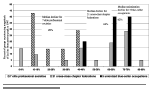
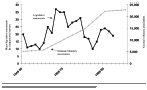
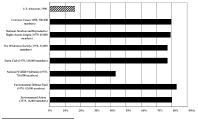
 You have
Access
- 77
- Cited by