





Introduction
Chronic Disease Management (CDM) has become a priority for the Health Service Executive (HSE) in the Republic of Ireland (ROI), with recent initiatives focused on transitioning the long-term management of specified chronic respiratory conditions (asthma and chronic obstructive pulmonary disease (COPD)) from tertiary care to the primary care and community setting. This transition has been supported by the roll-out of the Chronic Disease Management (CDM) programme, where primary care physicians (PCPs) receive defined funding to provide scheduled, twice yearly CDM reviews for eligible patients. National data arising from the first 4 years of CDM has demonstrated significant improvements in visit-to-visit clinical parameters for enrolled patients HSE (HSE, 2025). To promote and support accurate diagnostic and therapeutic standards in the community, CDM management has been further enabled by the expansion of an Enhanced Community Care (ECC) service, where PCPs are supported by direct-access community specialist teams (CST) and services (Figure 1).
Interface between CDM and ECC describing flow of patient care through primary and tertiary care services.

In Ireland ECC was first rolled out in 2022 to empower PCPs to lead on diagnosis and management of patients with suspected or confirmed asthma or COPD. ECC provides direct access to PCPs to community-based resources such as pulmonary rehabilitation (PR), pulmonary function testing (PFTs), clinical nurse specialists (CNSs) or advanced nurse practitioners (ANPs) and, if required, provides a direct conduit to specialist physician review. The primary goal of these services is to support PCPs to expand their scope of practice in respiratory CDM, ensure patients receive timely and effective care in the community, while also reducing dependence on the hospital outpatient settings.
While the CDM and ECC programmes combine to offer a robust framework for chronic respiratory disease management, it remains unclear whether PCPs feel adequately informed, supported or up to date on the latest standard-of-care management or guidelines for asthma or COPD, to allow them make the best use of these newly established programmes.
We sought to explore PCPs early experiences, priorities, and self-reported confidence in managing asthma and COPD within the CDM-ECC model. We also sought to assess PCP’s perceived 1) educational priorities and 2) areas in need of improvement in ECC, to inform the continuous improvement of a pivotal evolution in how population health is delivered in Ireland.
Methods
An open, cross sectional survey was designed in Qualtrics XM (Qualtrics (Provo, UT, USA) and distributed freely amongst PCPs practising in the ROI, guided by the Checklist for Reporting Results of Internet E-Surveys design (Eysenbach, Reference Eysenbach2004). The survey was developed by the research team and tested in iterative phases for accuracy, fluency, and accurate functioning of randomization of response features, skip logic and text piping. Surveys were distributed via email or QR code accessible to PCP faculties, shared at education sessions and PCP messaging forums. PCPs were encouraged to re-distribute the survey amongst their colleagues to maximize reach and representation. No monetary or non-monetary incentives to participation were provided. No identifiable data were collected, no metadata was captured, and no cookies were used. Due to the nature of the distribution, a total recipient list was not available, and therefore response rates were not calculable. Similarly, unique visitor status could not be verified. Answers could be reviewed and amended, but only within the unique survey session. Completion was defined as a responder completing all required items, based on their answers. This study was deemed exempt from the need for ethical by the institutional Research Ethics Committee of St Vincent’s University Hospital, Dublin, Ireland. Regardless, consent to participation was sought on the first survey page, as a mandatory pre-requisite for survey completion for all responders (supplemental).
The survey included open and closed ended questions focusing on some key areas of ECC:
-
1. Perceived effect of formal CDM participation on patient outcomes and personal practice.
-
2. Current accessibility to specific elements of the ECC programme.
-
3. PCP perception of effectiveness of components of the ECC programme.
-
4. PCP baseline knowledge and confidence in diagnosing, differentiating, and managing COPD/asthma.
-
5. Perceived, barriers to delivering effective care in the community, areas in need of improvement within ECC services, and future educational priorities for PCPs.
A maximum of 42 survey items were delivered in 5 blocks of questions, with skip logic and branching reducing the number of items by up to 15, depending on prior responses. Results were expressed as descriptive statistics (n/n, percentages) for multiple choice questions (MCQs). When asked to rate endorsement on a scale, ratings were captured on a scale of 1–10 and reported as median and interquartile range (IQR) with a higher score reflective of greater endorsement. Open-ended feedback was thematically analysed to identify common concerns and suggestions for improvement. Incomplete questionnaires were included with reported results based on number of responders for each individual item, meaning denominators vary across questions and this is reported throughout. Missing data were not imputed. Results are reported based on the number of responders for the item being reported. Comparisons of ordinal scores between groups were performed using two-sided Mann–Whitney U test, also called the Wilcoxon rank-sum test, treating the feedback categories as ordered ranks. All analyses were performed in R (Version 2026.04.0, The R Foundation for Statistical Computing).We used the STROBE reporting guidelines to draft this manuscript (Von Elm et al., Reference Von Elm, Altman, Egger, Pocock, Gøtzsche and Vandenbroucke2007), and the STROBE reporting checklist when editing, included as supplementary material.
Results
Between April 18th and December 4th 2024, 112 PCPs responses were provided. Completion rate was 82%, with a median completion time of 10 minutes. 97% reported their practice was actively registered to practice within the national CDM programme. Respondents from all 9 community health organizations (CHO; administrative sub-regions of community health delivery in the ROI) networks nationally, with two areas (CHO6, 38% & CHO2, 28%) most frequently represented. Respondents were more commonly practising in an urban location (62%) with over 65% of those surveyed having at least 10 years of experience in PCP practice. Quality of response was rated as good.
General perceptions and access to services
Since instituting the CDM programme, 87% of those surveyed believe that outcomes for patients with COPD and asthma have improved overall. However, while 97% reported signing up to CDM provision agreements, only 33% felt delivering the programme had significantly improved their approach to managing asthma and COPD.
Of those surveyed, 82% report having access to a local integrated care hub (ICH), through which access to multidisciplinary services is provided in the community. However, only 51% of those believe that the referral criteria for these hubs had been well communicated to PCPs. Via the CST, respondents (n = 68) reported having direct access to spirometry (85%), respiratory CNS or ANPs (81%), consultant led clinic (75%), PR (71%), respiratory specialist physiotherapist (37%) and virtual case discussion (19%).
The overall impression of the role of the ICH was positive with 87% of PCPs rating the service provided by the integrated care team as at least good to excellent. 84% describe the quality of the care delivered by the ICH is generally superior to that which is provided in the traditional hospital outpatient setting, with a further 14% reporting that it is at least similar to what is being provided in a hospital setting. Similarly, 99% of respondents who had access to community-based CNS-led clinics believed the quality of the service delivered by the CNS is at least similar, if not superior, to what is being provided in the hospital setting (25% generally similar quality, 74% generally superior quality). On subgroup analysis, urban PCPs were significantly more likely to rate the ICH service favourably in comparison to their rural counterparts (good/excellent 91.3% vs 81.2%; median ordinal score 4 (IQR (3–4) vs 3 (IQR 3–4); Mann–Whitney U test p = 0.02).
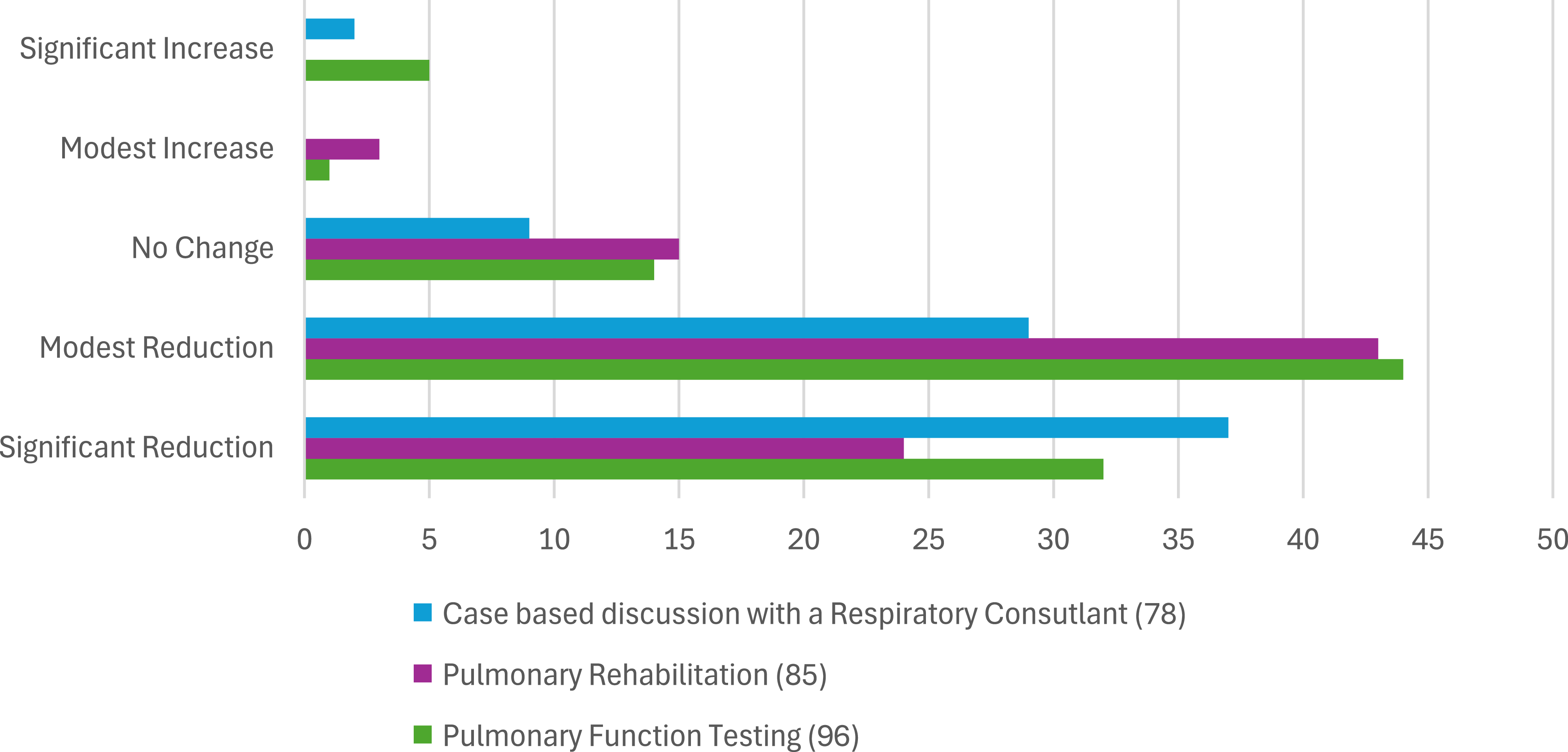
Many PCPs believe that increased access to advanced diagnostics and services traditionally provided in the hospital care setting, such as PFTs and PR, could significantly reduce the need for referral to a traditional hospital outpatient setting for specialist review (Figure 2). Despite this, many expressed a lack of confidence in understanding the indications for PR or interpreting PFT reports.
Responder feedback on the perceived impact that increased access to specific community specialist services would have on the number of referrals made to a hospital outpatient clinic.

Barriers to effective care
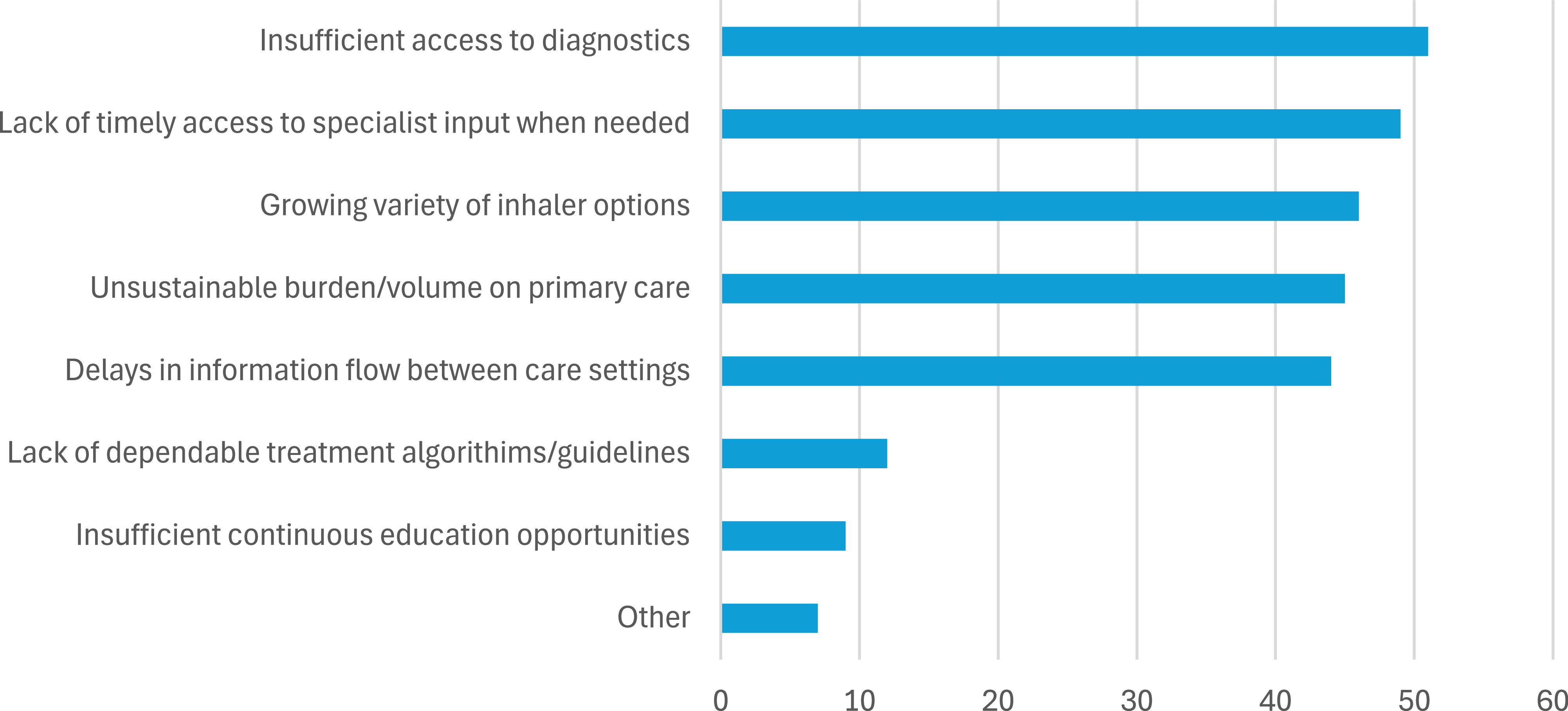
While the CDM programme aims to bridge the gap between primary and secondary care, PCPs continue to rely heavily on hospital based programmes for CDM due to perceived gaps in delivering care effectively in primary care (Figure 3). The three most commonly cited were insufficient access to diagnostics (52%), lack of timely accessibility to specialist input when needed (50%) and growing variety of inhaler options (47%). This lack of access undermines the potential for PCPs to provide evidence-based care within the community, with 46% identifying this as a key limitation in their ability to manage asthma and COPD effectively.
Responder feedback on the top three perceived barriers to delivering effective management of asthma/COPD in primary care.

Timely access to specialist input when required remains a priority for PCPs. The most common reason why PCPs seek specialist respiratory opinion are for support to confirm the correct diagnosis (68%), access to diagnostics (66%) and support regarding appropriate pharmacological management (64%). When offered the choice of the former specialist care system of hospital outpatient referrals with the associated prolonged wait times and longer term follow up vs the new system of timely access to specialist opinion and referral back to PCP-led CDM care, 96% favoured the latter.
Confidence in abilities and knowledge base
A recurring theme throughout the questionnaire was a perceived lack of confidence among PCPs in their knowledge of current COPD and asthma management guidelines, as well as in interpreting and acting on diagnostic results. As previously referenced, only 33% of PCPs subjectively believe participating in formal CDM has definitely improved their approach to and knowledge of asthma and COPD care, with a further 36% reporting it probably had. Despite this, Likert scores across all domains of asthma/COPD skills were modest. Self-reported knowledge of asthma and COPD management guidelines were 7 (IQR 6–7) and 7 (IQR 6–7) respectively, reflecting modest confidence by PCPs (Figure 4).
Self-reported PCP confidence and knowledge across key CDM domains (Likert scale 0–10): Distribution of responses to five Likert-scale items assessing PCP confidence and knowledge. (A) Confidence in asthma management guidelines (n = 96); (B) Confidence in COPD management guidelines (n = 96); (C) Knowledge of pulmonary rehabilitation indications (n = 94); (D) Confidence in spirometry interpretation without a specialist text report (n = 95); (E) Knowledge of ambulatory and domiciliary oxygen indications (n = 94). Scores range from 0 (not at all confident/informed) to 10 (extremely confident/informed).

Respondents cited utilizing a variety of resources to guide referral criteria and for referencing treatment algorithms. Condition specific international guidelines (i.e., GINA and GOLD (Agustí et al., Reference Agustí, Celli, Criner, Halpin, Anzueto, Barnes, Bourbeau, Han, Martinez, Montes de Oca, Mortimer, Papi, Pavord, Roche, Salvi, Sin, Singh, Stockley, López Varela, Wedzicha and Vogelmeier2023; GINA, 2025)) seem to be accessed more commonly than Irish College of General Practitioners dedicated guidelines. Many PCPs expressed strong interest in centralized, HSE-endorsed resources, such as clinical guidelines and access to service information (8 (IQR 7–10)).
Self-reported confidence in PR referral and PFT interpretation was low, suggesting meaningful gaps in PCP’s readiness to independently apply key CDM interventions. While most PCPs (79%) believe direct access to specialist services such as PFTs and PR could reduce the need for hospital referral, many expressed a lack of confidence in understanding the indications for PR or interpreting PFT reports (median 5 (IQR 4–6) and 3 (IQR 2–5) respectively). Similarly, when considering the indications for ambulatory or domiciliary oxygen, PCPs rated their confidence as 5 (IQR 3–6).
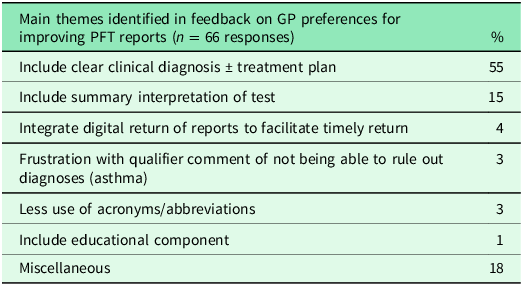
Respondents expressed a lack of confidence in independently interpreting PFTs without a text report provided by a specialist (3 (IQR 2–5) a finding that persisted even in the subset of practices equipped with their own on-site spirometer. For those who reported having spirometers in their practice (n = 27) vs those not reporting a spirometer in practice (n = 68) confidence in interpreting spirometry without a summary text report did not differ on a 10-point scale (median 3[IQR 3–5] vs 3[IQR 2–5], p = 0.7 by Mann–Whitney U test). When asked how typical PFT reports provided by the lab could be improved, the focus of respondents feedback were centred around the lack of clear interpretation of the results and recommendations for treatment by a specialist physician. Possible improvements referenced included clear and concise interpretation of results with a focus on diagnosis, amongst others (Table 1). This finding underscores a critical gap in educational resources and training, as many PCPs identified the need for structured summaries and interpretative guidance to enhance the clinical applicability of PFT data. As reflected in all other domains of the survey, delays in communication links was highlighted as another issue with PFT results.
Thematic analysis of PCP feedback on desired improvements to community pulmonary function test reporting (among responders who had access to, and received reports from community spirometry clinics)

Table 1. Long description
A table titled “Main themes identified in feedback on GP preferences for improving PFT reports (n = 66 responses)” with two columns: Main themes and Percentage (%). The table has seven rows detailing the main themes and their corresponding percentages. Row 1: Include clear clinical diagnosis ± treatment plan, 55 percent. Row 2: Include summary interpretation of test, 15 percent. Row 3: Integrate digital return of reports to facilitate timely return, 4 percent. Row 4: Frustration with qualifier comment of not being able to rule out diagnoses (asthma), 3 percent. Row 5: Less use of acronyms/abbreviations, 3 percent. Row 6: Include educational component, 1 percent. Row 7: Miscellaneous, 18 percent.
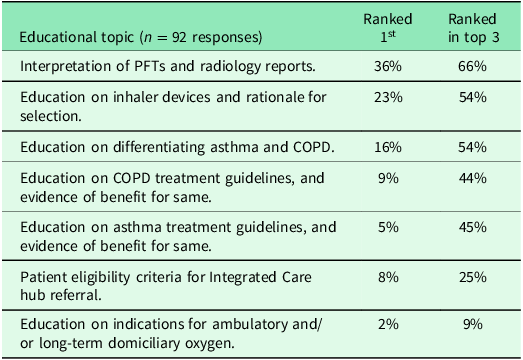
Continuous professional development (CPD) was a top priority amongst PCPs, with 61% of respondents indicating that current educational opportunities were insufficient. Many PCPs expressed strong interest in receiving regular CPD-approved teaching sessions on CDM topics (8 (IQR 7–10)). Priority areas for improved education included interpretation of pulmonary function tests, education on inhaler devices and rationale for selection, and differentiating COPD and asthma (Table 2). Evidence suggests that providing direct access to spirometry within primary care settings facilitates earlier diagnosis of COPD, thereby enabling the timely initiation of treatment and preventative interventions aimed at reducing subsequent disease burden.
PCP-reported priority educational topics of interest as determined by ranking 1–7

Table 2. Long description
A table with 92 responses on educational topics ranked by primary care providers. The table has two columns: Ranked 1st and Ranked in top 3, and seven rows with educational topics. Row 1: Interpretation of PFTs and radiology reports, 36 percent, 66 percent. Row 2: Education on inhaler devices and rationale for selection, 23 percent, 54 percent. Row 3: Education on differentiating asthma and COPD, 16 percent, 54 percent. Row 4: Education on COPD treatment guidelines, and evidence of benefit for same, 9 percent, 44 percent. Row 5: Education on asthma treatment guidelines, and evidence of benefit for same, 5 percent, 45 percent. Row 6: Patient eligibility criteria for Integrated Care hub referral, 8 percent, 25 percent. Row 7: Education on indications for ambulatory and/or long-term domiciliary oxygen, 2 percent, 9 percent.
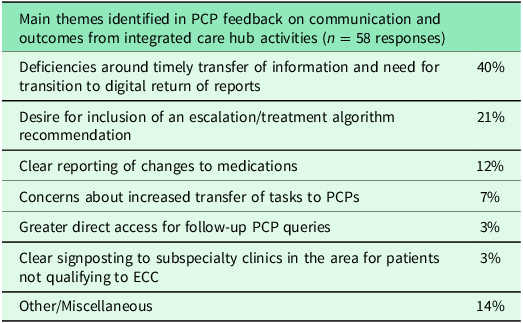
Methods of communication with PCPs was a particular area of interest within the survey. Historically communication between secondary and primary settings is poor with online health-link services designed to help address any delays between sites. However, respondents report ongoing frustration with delays in communication with many referencing a preference for online communication as standard. Clear diagnosis, concise plans and advice on future management or treatment escalation were common themes mentioned by numerous respondents as priorities for documentation to optimize communication between healthcare settings (Table 3). Improvements in communication streams and content could contribute to overall satisfaction with the programme.
PCP-reported feedback on improving feedback/correspondence (Question ‘In your opinion, how could correspondence to GPs be improved/made more useful to you? (i.e., what is often missing, that if included would support your ongoing management of patients?)’)

Table 3. Long description
A table titled “Main themes identified in PCP feedback on communication and outcomes from integrated care hub activities (n = 58 responses)” with six rows and two columns. The columns are labeled “Main themes identified in PCP feedback on communication and outcomes from integrated care hub activities (n = 58 responses)”and percentages. Row 1: Deficiencies around timely transfer of information and need for transition to digital return of reports, 40 percent. Row 2: Desire for inclusion of an escalation/treatment algorithm recommendation, 21 percent. Row 3: Clear reporting of changes to medications, 12 percent. Row 4: Concerns about increased transfer of tasks to PCPs, 7 percent. Row 5: Greater direct access for follow-up PCP queries, 3 percent. Row 6: Clear signposting to subspecialty clinics in the area for patients not qualifying to ECC, 3 percent. Row 7: Other/Miscellaneous, 14 percent.
Discussion
We present the results of an in-depth survey of primary care physicians in Ireland to examine the perceived strengths and weaknesses in the newly emerging community chronic respiratory disease management and care models. Overall, the integration of CDM and ECC into primary care services appears to have been well received by primary care providers, however respondents identified key areas that may require further improvement it is clear there are areas of the programme requiring substantial improvement to enhance the experience for both PCPs and patients alike.
The Irish Government has provided the strategic mandate for shifting chronic care to the community, with the combination of CDM and ECC underscoring this to community-centred approach (Burke et al., Reference Burke, Barry, Siersbaek, Johnston, Ní Fhallúin and Sláintecare2018). Prior studies have highlighted the value of embedding respiratory specialists into PCP practices with demonstratable improvement in guideline integration (Patel et al., Reference Patel, Pye, Edgar, Beadle, Ellis, Sitch, Dickens and Turner2024). Adherence with ECC has been recognized as a cornerstone of the government’s initiative to improve care for individuals with chronic conditions in Ireland and deliver services closer to patients’ home Nevertheless, our findings highlight that several persistent barriers may need to be addressed to fully realize the intended benefits of these novel care models.
Overall, we have found that PCPs generally perceive the quality of care delivered by the ICHs to be high when such services are available. The majority of those surveyed report having access to some, but not all, CST services, however respondents were predominantly centred in urban locations. The survey also highlights significant self-declared knowledge gaps among PCPs in regards to referral criteria to local hubs, and inconsistent access to specialist support when required. These findings offer valuable insights into how PCPs are adapting to these enhanced care models, underscoring the need for ongoing support and continued feedback and feedforward to maximize the effectiveness of these services. Notably, urban PCPs reported significantly more favourable impressions than rural PCPs, a finding that likely reflects the uneven geographic distribution of access to integrated care resources across Ireland. This disparity warrants attention from programme planners, as equitable access to community respiratory services for rural PCPs and their patients will be essential to the long-term success of the CDM model.
PCPs have identified multiple barriers to effective care (Figure 3). Despite efforts of the ECC programme to mitigate many of these challenges, insufficient access to diagnostics remains the most frequently cited obstacle. Referrals to outpatient settings are often made based on access, or lack thereof, to core diagnostic and ancillary services, which have been shown repeatedly to substantially enhance patient care (Vestbo et al., Reference Vestbo, Anderson, Calverley, Celli, Ferguson, Jenkins, Knobil, Willits, Yates and Jones2009; Arnold et al., Reference Arnold, Dolezal and Cooper2020; Lindenauer et al., Reference Lindenauer, Stefan, Pekow, Mazor, Priya, Spitzer, Lagu, Pack, Pinto-Plata and ZuWallack2020). Expanding local access to such services for PCPs may have the potential to reduce outpatient referrals significantly, while simultaneously promoting greater patient engagement and improved clinical outcomes, with experience so far suggesting these services are often considered superior to that of the hospital setting, though objective outcome data will be needed to confirm this.
Unsustainable burden on primary care (46%) was also highlighted and is an important factor to consider when discussing a community model of care as a whole. The inception of the CSTs/ECC was designed to address some of these issues in order to create more streamlined care for patients. However, it seems these issues continue to be at the forefront of PCPs concerns and impact greatly on day-to-day running of an efficient community-based service. While not fully explored as part of this survey, capacity constraints and their consequent impact on provision of CDM services has been previously recognized as an area of concern amongst PCPs in Ireland (Buckley et al., Reference Buckley, Flynn and Foley2024).
Perhaps of most value, this survey has equipped us with a clear list of PCP priorities in terms of desired CPD topics: 1) the differentiation of asthma and COPD, 2) inhaler device selection, and 3) interpretation of spirometry reports. By streamlining education opportunities for PCPs, and strategically focusing on areas of identified knowledge deficits, it may be possible to more effectively address and mitigate some of the perceived shortcomings within the programme. Admittedly, these specific topics, while once perceived as straightforward, are areas of shifting evidence even for specialists, with features once perceived as robust differentiators between asthma and COPD (such as bronchodilator responsiveness, peak flow variability), increasingly shown to be less specific than once thought (Beasley et al., Reference Beasley, Hughes, Agusti, Calverley, Chipps, Del Olmo, Papi, Price, Reddel, Müllerová and Rapsomaniki2024; Halpin, Reference Halpin2024). Improving education streams between services and strengthening specialist physician support may play a critical role in enhancing the capacity of PCPs and ensure the effective implementation of this promising initiative.
With this in mind, it is telling that in open ended responses regarding how PFT reporting could be improved for PCPs, a clear theme that was observed was a desire for definitive clinical diagnoses to be provided in the report and a frustration with the inclusion of qualifying statements in the reports such as ‘a negative bronchodilator response cannot rule out asthma’. Fundamentally, these responses may reflect a gap in the reciprocal understanding of scopes of practice between PCPs and specialist services, which can lead to confusion and tensions. PCPs refer for diagnostic testing to get a clear insight into a clinical diagnosis and move forward decisively with treatment. The pitfalls and challenges around sensitivity and specificity of guideline-endorsed diagnostic methods are an inconvenience that frustrate even respiratory specialists, and asthma is a condition for which repeated testing is often needed to establish a correct diagnosis (Kaicker et al., Reference Kaicker, Dang and DUrzo2014; Aaron et al., Reference Aaron, Vandemheen, FitzGerald, Ainslie, Gupta, Lemière, Field, McIvor, Hernandez, Mayers, Mulpuru, Alvarez, Pakhale, Mallick and Boulet2017; Louis et al., Reference Louis, Satia, Ojanguren, Schleich, Bonini, Tonia, Rigau, Ten Brinke, Buhl, Loukides, Kocks, Boulet, Bourdin, Coleman, Needham, Thomas, Idzko, Papi, Porsbjerg, Schuermans, Soriano and Usmani2022). Moreover, the CDM framework advocates for confirmatory spirometry testing for asthma, specifically advising this approach to PCPs, who then face the decision of holding off on treatment at a possible risk to their patients while awaiting objective testing, or empirically initiate treatment which inevitably can confound or undermine the sensitivity of the testing being sought (Juniper et al., Reference Juniper, Kline, Vanzieleghem, Ramsdale, O’Byrne and Hargreave1990; Louis et al., Reference Louis, Satia, Ojanguren, Schleich, Bonini, Tonia, Rigau, Ten Brinke, Buhl, Loukides, Kocks, Boulet, Bourdin, Coleman, Needham, Thomas, Idzko, Papi, Porsbjerg, Schuermans, Soriano and Usmani2022). This creates further frustration for PCPs as delays in communication loops and inconclusive testing may undermine clinical confidence in progressing with treatment. Alternative and more pragmatic strategies, similar to those advocated by the British Thoracic Society, which encourages treatment based on an appropriate clinical picture coupled with more readily available point of care testing (e.g., blood eosinophil counts, fraction of exhaled nitric oxide), while awaiting confirmatory tests, may be a more deliverable and practicable approach for PCPs (NICE, 2024). Indeed, adopting more pragmatic ways to diagnose asthma in primary care could free up spirometry capacity, so patients who need COPD assessment – where spirometry is virtually mandatory (Agustí et al., Reference Agustí, Celli, Criner, Halpin, Anzueto, Barnes, Bourbeau, Han, Martinez, Montes de Oca, Mortimer, Papi, Pavord, Roche, Salvi, Sin, Singh, Stockley, López Varela, Wedzicha and Vogelmeier2023) – can be tested within a reasonable timeframe. This need is underscored by Irish data showing that fewer than 20% of patients coded as having COPD in the community setting (HSE, 2025), and only ∼50% of hospitalized cohorts (Cronin et al., Reference Cronin, Sweeney, Moloney, McCarthy and Franciosi2025), have any record of prior spirometry.
The apparent knowledge gap around key interventions such as PR and PFTs highlights the need for ongoing training supports in this area, with PCPs ranking their confidence in interpreting investigations provided via the CDM programme poorly. Rochester et al. identified numerous barriers to effective PR delivery including socioeconomic and geographical constraints as well as poor referral knowledge in referral criteria and pathways (Rochester Reference Rochester2024). Similarly, a study by Watson et al. found that PCPs with a post-qualifying respiratory qualification referred n = more frequently to PR than those without (Watson et al., Reference Watson, Jordan, Adab, Vlaev, Enocson and Greenfield2022), reinforcing the value in structured education processes improving referral pathways.
Consequently, it is unlikely these issues can be addressed by simply tweaking or refining algorithms and referral pathways alone, but rather require a customized approach to CPD opportunities for PCPs for CDM topics, which provides the appropriate level of understanding of asthma and COPD overlap, shared treatable traits which overlap both conditions, and the limitations of physiologic tests in providing a definitive diagnosis. Certainly, CPD interventions have been shown to be useful in improving rates of vaccination uptake amongst COPD patients in primary care, however it’s impact on reducing COPD exacerbations is unclear (Cross et al., Reference Cross, Liang, Thomas, Zairina, Abramson and George2022).
Communication was highlighted by a number of respondents as a significant barrier when attempting to deliver effective, community based patient care. Notably, 45% of PCPs identified delays in information flow between care settings as a key concern. PCPs emphasized the need for better communication between primary and secondary care, particularly in relation to diagnostics. Specific concerns included long delays in receiving PFT reports and referral feedback, both of which were reported to impede timely and effective clinical decision-making. Such delays can ultimately result in confusion over treatment plans, hinder the implementation of specialist recommendations and contribute to unnecessary additional workload on already strained resources. This communication gap has emerged as a constant source of frustration for PCPs, highlighting the ongoing need for more efficient, integrated communication systems. Poor communication systems have been consistently highlighted as a patient safety concern across all facets of healthcare. Integration of a respiratory specialist into the community care model has been shown to improve communication channels, thus improving patient care (Litchfield et al., Reference Litchfield, Bentham, Lilford, McManus, Hill and Greenfield2015; Sampson et al., Reference Sampson, Barbour and Wilson2016). Streamlining these processes is essential to not only improved workflow efficiency but also to alleviate pressure on PCPs and Deficits in communication and information transfer between hospital based care and PCPs are common and contribute to adverse events for patients (Kripalani et al., Reference Kripalani, Lefevre, Phillips, Williams, Basaviah and Baker2007). Additionally, a large cross-sectional study across 34 countries found that loss of information during primary to secondary care transitions is associated with delayed diagnoses and increased rate of adverse events (Scaioli et al., Reference Scaioli, Schäfer, Boerma, Spreeuwenberg, van den Berg, Schellevis and Groenewegen2019). Adoption of an integrated electronic patient record could negate some of these failings of standard paper based communication systems, a recommendation which aligns with the digital integration priorities identified by PCPs in our survey.
The barriers identified in this survey including limited diagnostic access, communication deficits and educational gaps can be addressed by targeted policy and service design interventions. Firstly, in regards to diagnostic access, ensuring community based spirometry access is equitable across both rural and urban centres may address the disparity recognized in our subgroup analysis and aligns with international evidence supporting the role of open access spirometry in facilitating earlier and more accurate diagnosis of COPD in primary care (Kim and Han, Reference Kim and Han2025). Secondly, to address educational gaps, and given the strong PCP interest in CPD expressed in this survey, there is a clear appetite for CPD-accredited curriculum for respiratory CDM which could be developed and rolled out by the HSE. Additionally, the role of the respiratory CNS and ANP in delivering education in the primary care setting could be explored.
Additional community-based initiatives are currently underway, reflecting the HSE’s continued commitment to shifting care delivery from hospital settings to the community wherever possible. This includes the community virtual ward, which offers an alternate care pathway for patients with chronic respiratory diseases to be managed in their homes. This has demonstrated the feasibility of remote monitoring, highlights the value of early intervention and once again reduces burden of care on the hospital setting, while retaining access to specialist physicians. Collectively, these community-based models represent a strategic shift towards integrated, accessible, patient-centred respiratory care in Ireland.
Ultimately, the goal of providing community based chronic disease management is to enhance the patient experience, restructure community care for patients with chronic diseases and allow optimization of specialist hospital-based services for those who are in greatest need. Overall PCPs’ feedback has been positive with the majority of responses reflecting an overall satisfaction with the initial phases of the CDM programme implementation. Insights from PCPs highlight some areas for improvement, particularly in relation to education and access to resources. To realize the full potential of the CDM programme, it will be important that the HSE continues to prioritize the delivery of comprehensive training and ongoing professional development for PCPs. The CDM programme is a valuable asset for community health services and patients alike and it’s effective implementation has the potential to contribute to improvements across multiple domains of CDM, thereby contributing to enhanced patient outcomes.
Limitations
Our study has a number of key limitations. Primarily, a formal response rate could not be calculated due to the nature of the distribution strategy employed, which precludes identification of a defined sampling frame. Readers should note that not all PCPs may have been reached through the survey distribution, which may limit the generalizability of our findings. Furthermore, the voluntary and open nature of participation introduces the possibility of selection bias with respondents may disproportionately represent PCPs who are more engaged with the CDM programmes, potentially overstating both satisfaction and dissatisfaction relative to the broader PCP population. All responses are self-reported and subject to subjective interpretation of scale anchors, particularly for questions assessing clinical confidence and knowledge. Objective measures were not included. Additionally, incomplete questionnaires were partially analysed on an sectional basis, meaning denominators vary across responses and findings should be interpreted accordingly. The predominantly urban sample and the concentration of responses in two CHO regions (CHO2&6) may further limit the generalizability of findings to rural or less resourced settings. Taken together, these findings should be interpreted as exploratory.
Conclusion
In Ireland the development and alignment of the CDM programme with ECC services has introduced specialist supports into community care, allowing PCPs to access diagnostics and treatment for chronic respiratory diseases without requiring hospital-based referrals. This system provides the emerging framework and potential for a PCP-led model of care for asthma and COPD, elements of which could be adopted in other healthcare systems internationally. Our survey suggests broadly favourable early perceptions of these models of care, with PCPs endorsing a positive effect of formal PCP-led CDM on patient care. Nonetheless, there appears to be a disconnect between the availability of these services and PCPs’ confidence in maximizing their independent use of them. These findings are exploratory and should be interpreted in the context of the study’s methodological limitations with longitudinal and objective evaluation required to confirm whether these perceptions translate into measurable improvements in patient outcomes. Addressing these challenges through targeted training and infrastructure improvements will be essential to enhance care quality and support PCPs in delivering evidence-based chronic disease management.
Supplementary material
The supplementary material for this article can be found at https://doi.org/10.1017/S1463423626101807.
Data availability statement
Data will be made available upon reasonable request.
Author contributions
HOB and ANF conceptualized and designed the initial study format and survey. JL and JMC tested the survey and contributed to iterative adjustment and edits. ANF, OOC, DF and SMW distributed the survey. HOB and AF performed data analysis. All authors edited, reviewed and approved the final manuscript.
Funding statement
This research received no specific grant from any funding agency, commercial or not-for-profit sectors.
Competing interests
None.
Ethical standards
Written informed consent was obtained from all subjects.




 Open access

