Introduction
Tympanoplasty is the procedure performed for repair of tympanic membrane perforations. Its rate of success differs greatly with many factors.Reference Bayramoglu, Ardic, Kara, Ozüer, Katircioğlu and Topuz1 One of these factors is mastoid pneumatisation. The mastoid air cells represent the pneumatisation of the mastoid part of the temporal bone, and they are of variable size and extent. Mastoid air cells are an air reservoir for the middle-ear cavity and are thought to be one of the sources for middle-ear aeration.Reference Lee, Shin and Lee2 A decrease in the mastoid air cells was thought to be related to atelectatic ear diseases.Reference Bellucci3,Reference McGrew, Ackson and Glasscock4 However, the role of mastoid pneumatisation in success of tympanoplasty is a matter of debate and controversy and has not been fully discussed because only a few studies have looked at this issue. Therefore, the objective of our study was to investigate the effect of pre-operative mastoid pneumatisation on the success of tympanoplasty by analysing individual studies.
Materials and methods
Literature search
A comprehensive electronic search of PubMed Medline, Scopus, Web of Science and Cochrane Library was conducted in August 2020 for articles from 1990 to 2020. Only studies in English concerning the effect of mastoid pneumatisation on tympanoplasty success were included using a combination of the following key words: mastoid pneumatisation, tympanoplasty success, chronic suppurative otitis media, drum perforation and middle-ear aeration. Article selection and screening proceeded according to the search strategy based on Preferred Reporting Items for Systematic Reviews and Meta-analysis criteria. Cited references in the screened articles were also assessed for relevance to maximise sensitivity.
Study selection criteria
Over 235 articles were found. After removal of 71 duplicates, they were narrowed to about 164 articles. After exclusion of 61 non-relevant articles, 103 relevant articles were found. By application of inclusion criteria, five articles were found meeting the inclusion criteria and underwent the meta-analysis.
There were five articles (Table 1) that were included for further steps of data collection, analysis and reporting because they fulfilled the following inclusion criteria: they were published in English language, they were conducted on human patients, they were concerned with evaluating pre-operative mastoid pneumatisation on tympanoplasty success, they were not a laboratory study and they were not an opinion study.
Included articles

Outcome measures
Information was gathered from each individual study on the effect of pre-operative mastoid pneumatisation on tympanoplasty success assessed by graft uptake and air–bone gap (ABG) improvement.
Data analysis
Statistical analysis was done using MedCalc© (version 19.1) statistical software. Studies included in the meta-analysis were tested for heterogeneity of the estimates using the following tests: Cochran Q chi-square test (a statistically significant test (p < 0.1) denoted heterogeneity among the studies) and I-square (I2) index. Event rates were calculated for each study along with its 95 per cent confidence interval (95 per cent CI). Estimates from the included studies were pooled using both the DerSimonian Laird random-effects method and the Mantel–Haenszel fixed-effects method. Owing to the presence of significant heterogeneity among the studies, the random-effects estimates were considered. Publication bias was examined. Two-sided p-value less than 0.05 denoted statistical significance.
Results
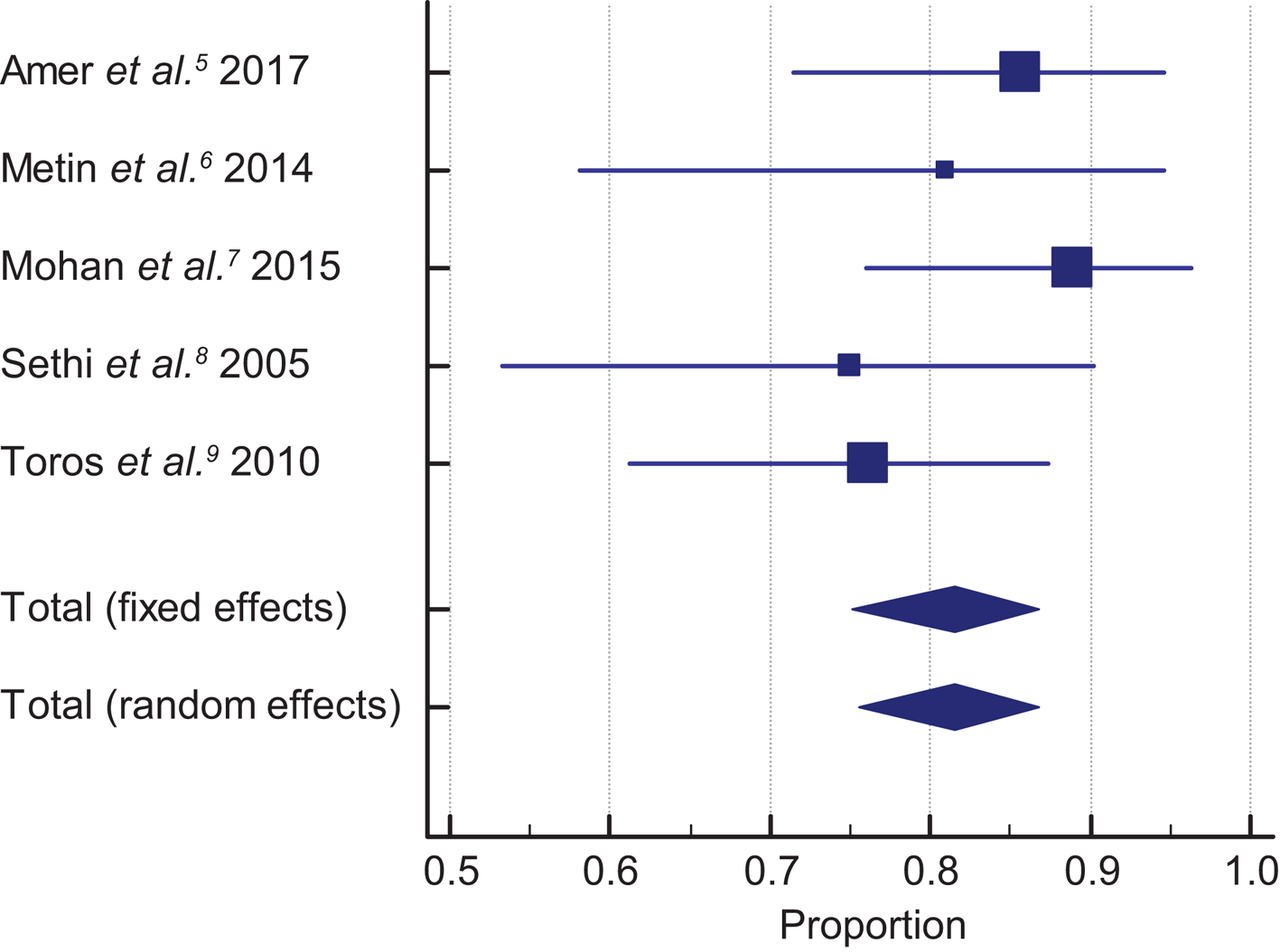
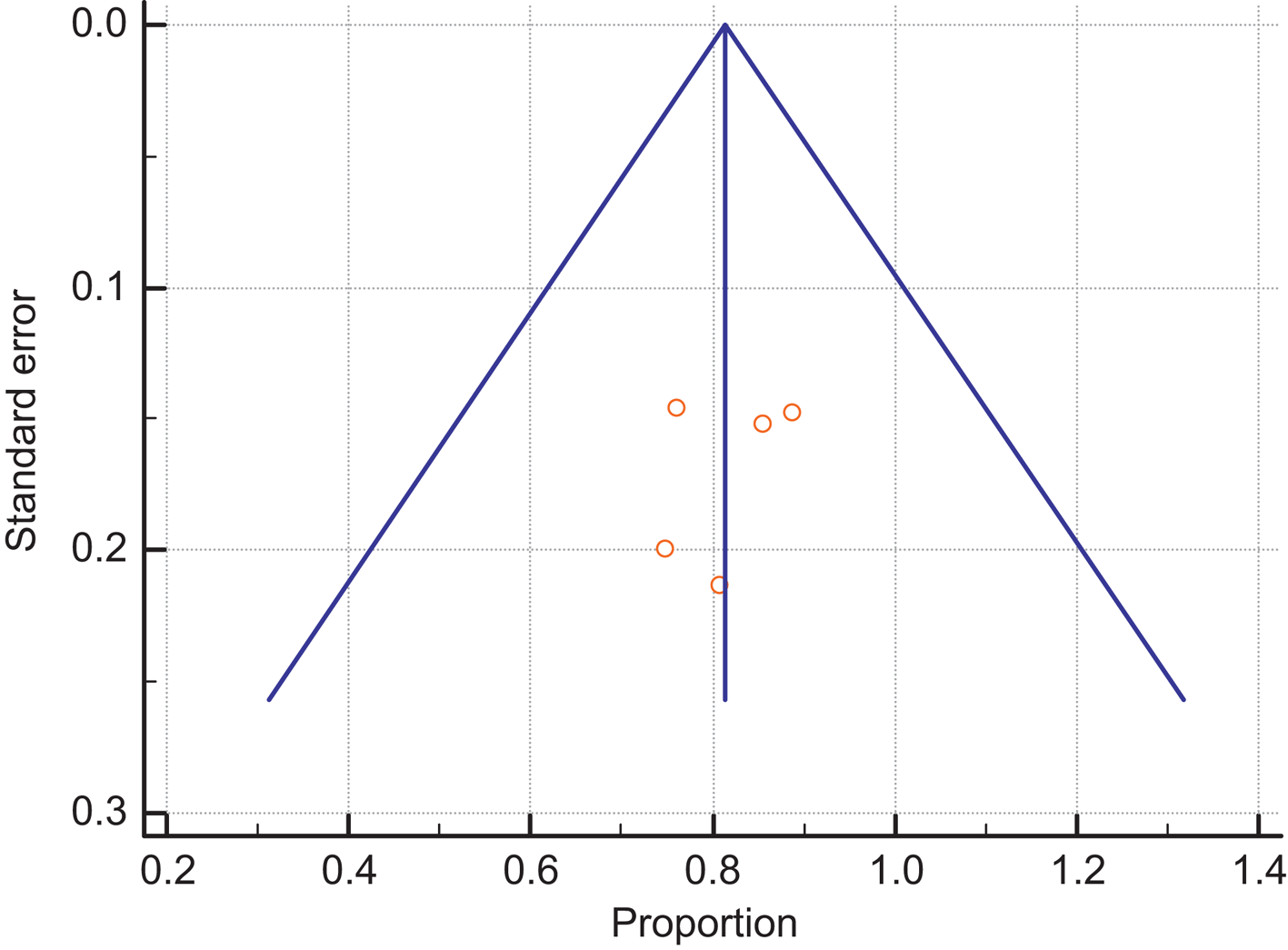
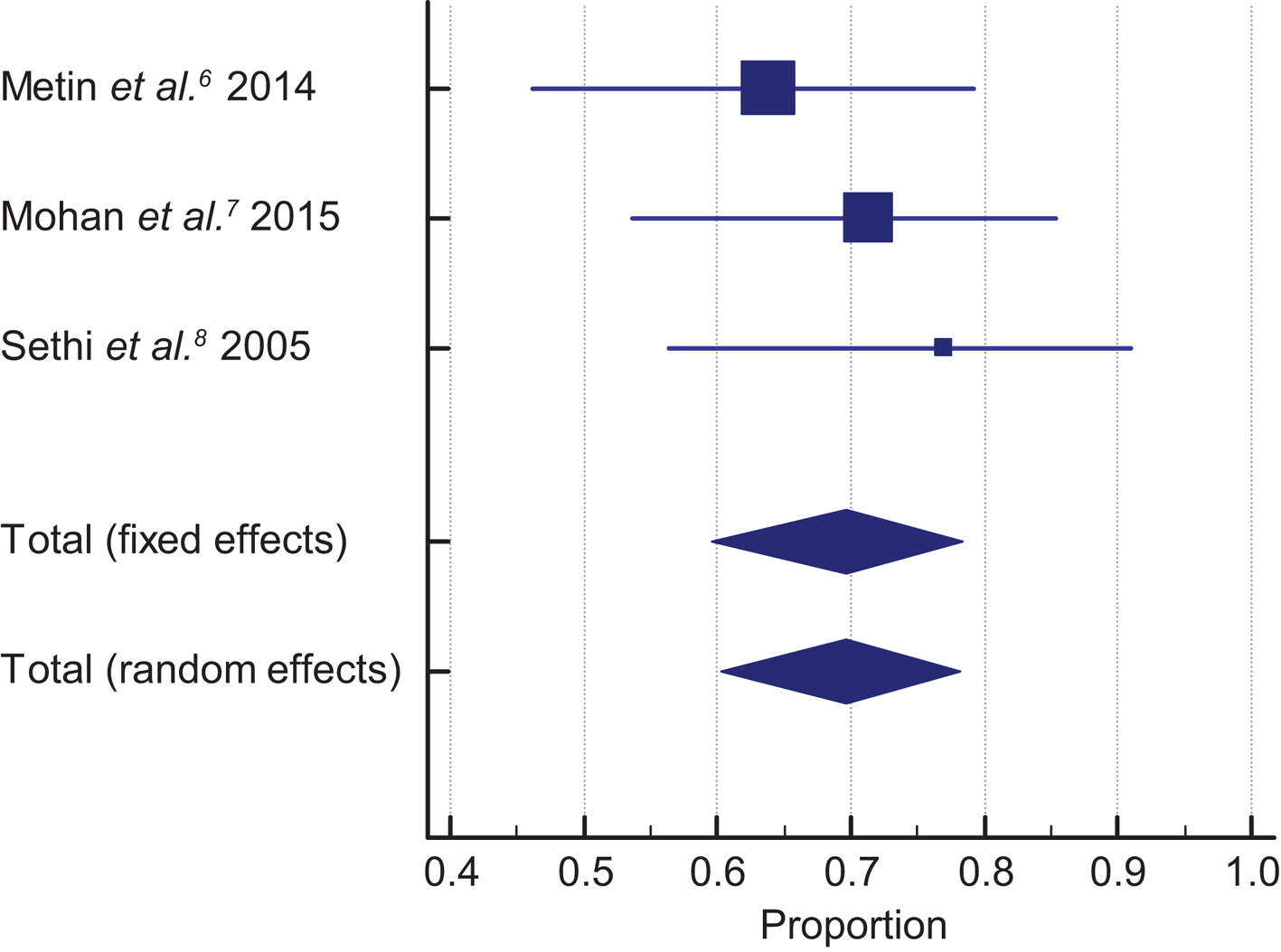
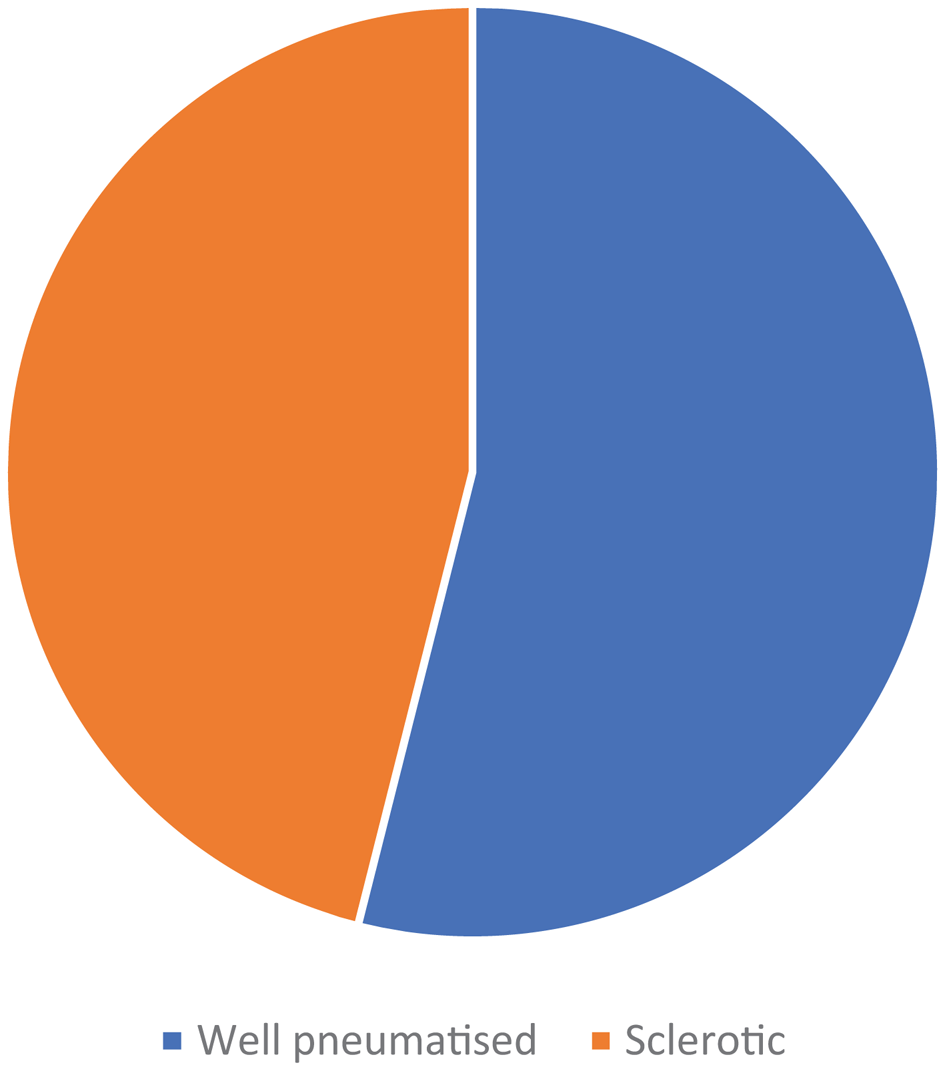
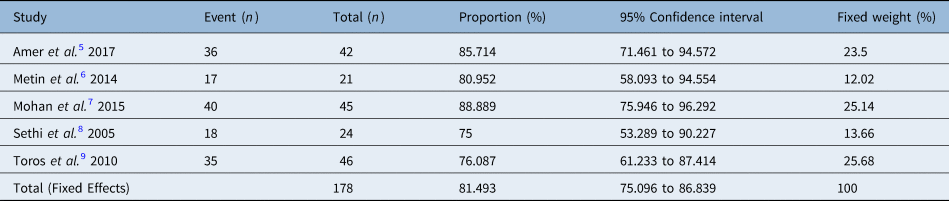
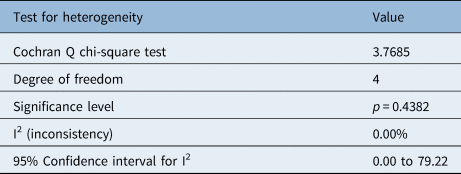
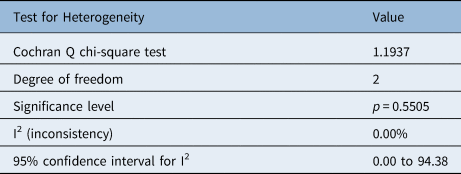
Meta-analysis for the graft success was performed using these 5 studies with a total number of patients (178) in the well pneumatised mastoid group (Table 2 and 3, Figures 1 and 2) and 3 studies in the sclerotic mastoid group with 97 patients (Table 4 and 5, Figures 3 and 4). Results showed no significant difference between the two groups: well pneumatised or sclerotic mastoid in the success rate of tympanoplasty (Figure 5).
Forest plot for tympanoplasty success in the well pneumatised mastoid group.

Funnel plot for publication bias in the studies included for tympanoplasty success in the well pneumatised mastoid group.

Forest plot for tympanoplasty success in the sclerotic mastoid group.

Funnel plot for publication bias of tympanoplasty success in the sclerotic mastoid group.

Success rate in both the well pneumatised mastoid group and sclerotic mastoid group.

Tympanoplasty success in well pneumatised mastoid

Heterogeneity tests for well pneumatised mastoid

Tympanoplasty success in sclerotic mastoid

Heterogeneity tests for sclerotic mastoid

Meta-analysis for improvement of ABG was not possible because of the small number of included studies, study heterogeneity and lack of clarity of patient follow up. As such, it was not possible to combine data from the different studies to gain any meaningful aggregate descriptive statistics. Sethi et al. found that in the well pneumatised group 66 per cent had an ABG of 20 dB or less while in the poorly pneumatised mastoid group 80 per cent had an ABG of 20 dB or less, so there was no statistically significant difference between the two groups after eight weeks.Reference Sethi, Singh, Agarwal and Sareen8 Also, according to Metin et al., there was no statistically significant difference between the well and poorly pneumatised groups in terms of audiometry results after one year of follow up.Reference Metin, Kaptan, Dogan, Yazici, Bayraktar and Gocmen6
Discussion
Mastoid air cells are important in middle-ear physiology because they act as an air reservoir and regulator for middle-ear pressure.Reference Tumarkin10,Reference Holmquist11 Their volume ranges between 5.8 and 12.2 ml as measured by computed tomography scan on healthy ears.Reference Colhoun, O'Neill, Francis and Hayward12 Mastoid air cell pneumatisation is associated with various factors involving overall growth of the skull, height of the individual, genetic factors and Eustachian tube function.Reference Graham and Brackmen13 There are many studies on the association of otological disorders such as congenital cholesteatoma and Ménière's disease with the degree of mastoid pneumatisation.Reference Iino, Imamura and Hiraishi14,Reference Schneider-Arnold15 However, a limited number of studies were available for the relationship between mastoid pneumatisation and the success rate of tympanoplasty.
Factors associated with the success of tympanoplasty are a matter of debate and controversy. Mastoid pneumatisation is one of these factors.Reference Lee, Jun and Kim16 To date, our study is the first meta-analysis study to look at this important issue in the literature.
Our study showed no significance difference between the two groups (well pneumatised group vs sclerotic mastoid group) in the graft uptake rate in tympanoplasty, although the well pneumatised group had a higher success rate. Our result agreed with Amer et al. Reference Amer, El-Anwar, Abdelhady, Abdulmonaem and Elgerby5 (2017), Metin et al. Reference Metin, Kaptan, Dogan, Yazici, Bayraktar and Gocmen6 (2014), Sethi et al. Reference Sethi, Singh, Agarwal and Sareen8 (2005), Toros et al. Reference Toros, Habesoglu, Habesoglu, Bolukbasi, Naiboglu and Karaca9 (2010) and Yegin et al. Reference Yegin, Çelik, Şimşek, Olgun, Karahasanoğlu and Çolak24 (2016). However, Mohan et al. Reference Mohan, Sharma and Srivastava7 (2015) found that graft uptake rate in cases of tubotympanic chronic suppurative otitis media was better and statistically significant in well pneumatised mastoids when compared with sclerotic mastoids.
• There was no significant effect of mastoid pneumatisation on graft uptake rate
• There was no significant effect of mastoid pneumatisation on air–bone gap change post-operatively
• Further studies are needed to assess the relationship between mastoid pneumatisation and the success rate of tympanoplasty
In terms of ABG change, there was no significant difference between the well pneumatised group and the sclerotic mastoid group concerning ABG improvement in studies performed by Metin et al., Sethi et al. and Toros et al.Reference Metin, Kaptan, Dogan, Yazici, Bayraktar and Gocmen6,Reference Sethi, Singh, Agarwal and Sareen8,Reference Toros, Habesoglu, Habesoglu, Bolukbasi, Naiboglu and Karaca9
Holmquist and Bergström preferred not to intervene with well pneumatised mastoid during surgery.Reference Holmquist and Bergström17 Bonding advocated that problems with the mastoid cell system might be the cause of unsuccessful tympanomastoidectomy in children.Reference Bonding18 However, Palva and Virtanen, Siedentop et al. and Gimenez et al. did not agree with that in their studies.Reference Palva and Virtanen19–Reference Gimenez, Marco-Algarra, Carbonell, Morant and Cano21 Holmquist reported a success rate of 70 per cent with well pneumatised mastoid air cells as compared with a 57 per cent success rate with poorly pneumatised mastoid air cells.Reference Holmquist22 McGrew et al. supported performing mastoidectomy with tympanoplasty over performing tympanoplasty alone to decrease the progression of disease and the need for surgical revision.Reference McGrew, Ackson and Glasscock4 Jackler and Schindler strongly supported mastoidectomy with myringoplasty in sclerosed mastoids.Reference Jackler and Schindler23
Metin et al. observed that graft success in tympanoplasty was greater with diploic mastoiditis than pneumatic mastoids, so they suggested that there was no relationship between tympanoplasty success and the degree of mastoid pneumatisation.Reference Metin, Kaptan, Dogan, Yazici, Bayraktar and Gocmen6 Balyan et al. concluded that mastoidectomy was not necessary for treatment of patients with non-cholesteatomatous chronic otitis media and that it added extra effort and risk, without giving better chance for graft success or functional hearing results.Reference Balyan, Celikkanat, Aslan, Taibah, Russo and Sanna25 Gimenez et al. Reference Gimenez, Marco-Algarra, Carbonell, Morant and Cano21 found no relationship between myringoplasty results and the degree of mastoid pneumatisation. Recent data showed that a cavity would be of no benefit at all as it does not form a reliable pressure buffer.Reference Doyle26,Reference Miura, Takahashi, Honjo, Hasebe and Tanabe27 Yegin et al. concluded that the degree of mastoid pneumatisation did not affect the success rate of type 1 tympanoplasty.Reference Yegin, Çelik, Şimşek, Olgun, Karahasanoğlu and Çolak24
Conclusion
Although the pneumatised group showed better graft uptake rate than the non-pneumatised group, there was no statistically significant difference between the two groups in the success rate of tympanoplasty.
Competing interests
None declared