



1 Introduction
Finding uniform bounds for problems and quantities (e.g., consistency testing or counting of solutions) is one of the central questions in differential algebra. In [Reference van den Dries and Shmidt27], it was demonstrated that, in commutative algebra, one can show the existence of such bounds as a consequence of theorems about nonstandard extensions of standard algebraic objects. This approach was successfully applied in the differential algebra context in [Reference Harrison-Trainor, Klys and Moosa11] and [Reference Golubitsky, Kondratieva, Ovchinnikov and Szanto8, Section 6] for establishing, for example, the existence of a uniform bound in the differential Nullstellensatz. Furthermore, in [Reference Simmons and Towsner26], the authors used methods of proof theory to extract explicit bounds based on nonstandard existence proofs.
The present paper can be viewed as an alternative approach, in which we derive the existence of a computable uniform bound for an object from the existence of an algorithm for computing the object. More precisely, let T be a complete decidable theory. The most relevant examples for us would be the theory of differentially closed fields in zero characteristic with m commuting derivations and the theory of existentially closed difference fields, others include algebraically closed and real closed fields. Consider an algorithm A performing computations in a model of T that is restricted to using only definable functions when working with elements of the model (for formal definition, we refer to Section 4.1) and required to terminate for every input.
We show that there is a computable upper bound for the size of the output of A in terms of the input size of A. We apply this to the Rosenfeld–Gröbner algorithm [Reference Boulier, Lazard, Ollivier and Petitot3] that decomposes a solution set of a system of polynomial PDEs into components and is such an algorithm. This allows us to show that there is a uniform upper bound for the number of components of any differential-algebraic variety defined by a system of polynomial PDEs. We also show how this bound for the number of components leads to a uniform upper bound for the elimination problem in systems of polynomial PDEs with delays.
A bound for the number of components of varieties defined by polynomial ODEs appeared in [Reference Li, Ovchinnikov, Pogudin and Scanlon18], as did a bound for the elimination problem for polynomial ODEs with delays. These bounds are based on the application of the Rosenfeld–Gröbner algorithm, which, if applied in this situation to ODEs, outputs equations whose order does not exceed the order of the input. This allowed to restrict to a finitely generated subring of the ring of differential polynomials and use tools from algebraic geometry. It is nontrivial to generalize this to polynomial PDEs, because the orders in the output of the Rosenfeld–Gröbner can be greater than the orders of the input. Another key ingredient in the ODE case to obtain the bound in [Reference Li, Ovchinnikov, Pogudin and Scanlon18] was an analysis of differential dimension polynomials. A significant difference of our present PDE context with the ordinary case is that these polynomials behave less predictably under projections of varieties (compare [Reference Li, Ovchinnikov, Pogudin and Scanlon18, Lemma 6.16] and Lemma 6.6). To overcome this difficulty, we use again our bound for the Rosenfeld–Gröbner algorithm.
We believe that our method can also be applied to obtain bounds for other algorithms in differential algebra, such as [Reference Bächler, Gerdt, Lange-Hegermann and Robertz1, Algorithm 3.6], and for algorithms from other theories, e.g., [Reference Gerdt, Robertz and Bradford7, Algorithm 3] for systems of difference equations. Because the reducibility of a polynomial can be expressed as a first-order existential formula, it seems plausible that the same methods could be applied to other algorithms dealing with difference [Reference Gao, Luo and Yuan5] and differential-difference [Reference Gao, Van der Hoeven, Yuan and Zhang6] equations that use factorization, because the corresponding theories satisfy the requirements of our approach [Reference Léon Sánchez14, Reference Léon Sánchez and Moosa16, Reference Moosa and Scanlon23]. However, we leave these for future research.
The paper is organized as follows. Section 2 contains definitions and notation used in Section 3 to state the main results. Bounds for an algorithm working with a model of a theory T are established in Section 4. These results are applied to differential algebra in Section 5. Further applications to delay PDEs are given in Section 6.
2 Basic notions and notation
Definition 2.1 (Differential-difference rings)
-
• A
 $\Delta $
-
$\sigma $
-ring
$(\mathcal R, \Delta , \sigma )$
is a commutative ring
$\mathcal R$
endowed with a finite set
$\Delta =\{\partial _1,\ldots ,\partial _m\}$
of commuting derivations of
$\mathcal {R}$
and an endomorphism
$\sigma $
of
$\mathcal {R}$
such that, for all i,
$\partial _i\sigma =\sigma \partial _i$
.
-
• When
$\mathcal R$
is additionally a field, it is called a
$\Delta $
-
$\sigma $
-field. -
• If
$\sigma $
is an automorphism of
$\mathcal R$
,
$\mathcal R$
is called a
$\Delta $
-
$\sigma ^\ast $
-ring. -
• If
$\sigma = \operatorname {id}$
,
$\mathcal {R}$
is called a
$\Delta $
-ring or differential ring. -
• For a commutative ring
$\mathcal {R}$
,
$\langle F\rangle $
denotes the ideal generated by
$F \subset \mathcal {R}$
in
$\mathcal {R}$
. -
• For
$\Delta =\{\partial _1,\ldots ,\partial _m\}$
, let
$\Theta _\Delta =\{\partial _1^{i_1}\cdot \cdots \cdot \partial _m^{i_m}\mid i_j\geqslant 0,\, 1\leqslant j\leqslant m\}$
. -
• For
$\theta = \partial _1^{i_1}\cdot \cdots \cdot \partial _m^{i_m}\in \Theta _\Delta $
, we let
$\operatorname {\mathrm {ord}} \theta = i_1+\cdots +i_m$
. For a nonnegative integer B, we denote
$\Theta _\Delta (B):=\{\theta \in \Theta _{\Delta }\mid \, \operatorname {\mathrm {ord}}\theta \leqslant B\}$
. -
• For a
$\Delta $
-ring
$\mathcal {R}$
, the differential ideal generated by
$F\subset \mathcal {R}$
in
$\mathcal {R}$
is denoted by
$\langle F\rangle ^{(\infty )}$
; for a nonnegative integer B, we introduce the following ideal of
$\mathcal {R}$
:
$$ \begin{align*}\langle F\rangle^{(B)} := \langle \theta(F)\mid \,\theta\in\Theta_\Delta(B)\rangle.\end{align*} $$












Definition 2.2 (Differential polynomials)
Let
 $\mathcal {R}$
be a
 $\Delta $
-ring. The differential polynomial ring over
 $\mathcal {R}$
in
 $\boldsymbol {y}=y_1,\ldots ,y_n$
is defined as
 $$ \begin{align*} \mathcal{R}\{\boldsymbol{y}\}_\Delta :=\mathcal{R} [\theta y_s\mid \theta\in\Theta_\Delta;\, 1\leqslant s\leqslant n]. \end{align*} $$
The structure of a
 $\Delta $
-ring is defined by
 $\partial _i(\theta y_s):=(\partial _i\theta )y_s$
for every
 $\theta \in \Theta _\Delta $
.
Definition 2.3 (Differential-difference polynomials)
Let
 $\mathcal {R}$
be a
 $\Delta $
-
 $\sigma $
-ring. The differential-difference polynomial ring over
 $\mathcal {R}$
in
 $\boldsymbol {y}=y_1,\ldots ,y_n$
is defined as
 $$ \begin{align*} \mathcal{R}[{y}_\infty] := \mathcal{R}[\theta\sigma^iy_s\mid \theta \in \Theta_\Delta;\,i\geqslant0;\,1\leqslant s\leqslant n]. \end{align*} $$
The structure of
 $\Delta $
-
 $\sigma $
ring is defined by
 $\sigma (\theta \sigma ^jy_s):=\theta \sigma ^{j+1}y_s$
and
 $\partial _i(\theta \sigma ^jy_s):=(\partial _i\theta )\sigma ^jy_s$
for every
 $\theta \in \Theta _\Delta $
and
 $j \geqslant 0$
.
A
 $\Delta $
-
 $\sigma $
-polynomial is an element of
 $\mathcal {R}[\boldsymbol {y}_\infty ]$
. Given
 $B\in \mathbb N$
, let
 $\mathcal {R}[\boldsymbol {y}_B]$
denote the polynomial ring
 $$ \begin{align*}\mathcal{R}[\theta\sigma^jy_s\mid \theta\in\Theta_\Delta(B); 0\leqslant j\leqslant B; 1\leqslant s\leqslant n].\end{align*} $$
The notions from logic that we use are described in detail in [Reference Marker19]. In particular, we will use the notions of a first-order language [Reference Marker19, Definition 1.1.1], structure [Reference Marker19, Definition 1.1.2], formula [Reference Marker19, Definition 1.1.5], theory [Reference Marker19, Section 1.2, p. 14], model [Reference Marker19, Section 1.2, p. 14], compactness [Reference Marker19, Section 2.1], complete theory [Reference Marker19, Definition 2.2.1], decidable theory [Reference Marker19, Definition 2.2.7], quantifier elimination [Reference Marker19, Definition 3.1.1], and
 $\aleph _0$
-saturation [Reference Marker19, Definition 4.3.1].
3 Main results
For clarity, we gather our main results in one section.
Theorem 3.1 (Upper bound for irreducible components for PDEs)
There exists a computable function
 $\operatorname {\mathrm {Components}}(m, n)$
such that, for every differential field k of zero characteristic with a set of m commuting derivations
 $\Delta $
and finite
 $F\subset k\{y_1,\ldots ,y_n\}_{\Delta }$
with
 $\max \{\operatorname {\mathrm {ord}} F,\deg F\}\leqslant s$
, the number of components in the variety defined by
 $F = 0$
does not exceed
 $\operatorname {\mathrm {Components}}(m, \max \{n,s\})$
.
Additional details and proof are given in Theorem 5.13.
Theorem 3.2 (Upper bound for elimination in delay PDEs)
For all nonnegative integers r, m, and s, there exists a computable
 $B=B(r,m, s)$
such that, for all:
-
• nonnegative integers q and t,
-
•
$\Delta $
-
$\sigma $
-fields k with
$\operatorname {\mathrm {char}} k =0$
and
$|\Delta |=m$
, and -
• sets of
$\Delta $
-
$\sigma $
-polynomials
$F\subset k[\boldsymbol {x}_{t},\boldsymbol {y}_{s}]$
, where
$\boldsymbol {x} =x_1,\ldots ,x_q$
,
$\boldsymbol {y}=y_1,\ldots ,y_r$
, and
$\deg _{\boldsymbol {y}}F\leqslant s$
,





we have
 $$ \begin{align*}&\big\langle \sigma^i(F)\mid i\in \mathbb{Z}_{\geqslant 0} \big\rangle^{(\infty)}\cap k[\boldsymbol{x}_\infty]\ne\{0\}\\ &\qquad\qquad\qquad\qquad\qquad\iff \langle \sigma^i(F)\mid i\in [0,B] \big\rangle^{(B)}\cap k[\boldsymbol{x}_{B+t}]\ne\{0\}.\end{align*} $$
Corollary 3.3 (Effective Nullstellensatz for delay PDEs)
For all nonnegative integers r, m, and s, there exists a computable
 $B=B(r,m, s)$
such that, for all:
-
•
$\Delta $
-
$\sigma $
-fields k with
$\operatorname {\mathrm {char}} k =0$
and
$|\Delta |=m$
, and -
• sets of
$\Delta $
-
$\sigma $
-polynomials
$F\subset k[\boldsymbol {y}_{s}]$
, where
$\boldsymbol {y}=y_1,\ldots ,y_r$
, and
$\deg F\leqslant s$
,




the following statements are equivalent:
-
(1) There exists a
$\Delta $
-
$\sigma ^*$
field L extending k such that
$F=0$
has a sequence solution in L. -
(2)
$1 \notin \langle \sigma ^i(F)\mid i\in [0,B] \big \rangle ^{(B)}$
. -
(3) There exists a field extension L of k such that the polynomial system
$\big \{\sigma ^i(F)^{(j)}=0\mid i,j \in [0,B]\big \}$
in the finitely many unknowns
$\boldsymbol {y}_{B+s}$
has a solution in L.





The two preceding theorems are proved using our main technical result about algorithms performing computations in complete decidable theories. Stating it precisely requires defining admissible algorithms carefully, so we postpone it until Section 4 and give here a simplified and informal version of the statement.
Theorem 3.4 (Algorithm yields a bound, stated precisely as Theorem 4.5)
There exists a computable function with input:
-
• a complete decidable theory T,
-
• an algorithm
$\mathcal {A}$
performing computations in a model of T restricted to using only definable functions when working with elements of the model, and -
• positive integer
$\ell $


that computes a number N such that for every model M of T and every
 $\mathbf {a} \in M^\ell $
, the size of the output of
 $\mathcal {A}$
with input
 $\mathbf {a}$
does not exceed N.
For the application of this to the Rosenfeld–Gröbner algorithm, see Theorem 5.10.
4 Bounds for the output size of algorithms over complete theories
In this section, we will use the formalism of oracle Turing machines [Reference Papadimitriou24, Section 14.3]. Roughly speaking, an oracle Turing machine is a Turing machine with an extra tape for performing queries to an external oracle. An oracle is not considered to be a part of the machine.
4.1 Setup
To consider an algorithm dealing with elements of a (not necessarily computable) model of a theory T, we will “encapsulate” the elements of the model given to the algorithm into an oracle that allows to perform only first-order operations with them as defined below. Alternatively, one could adapt other approaches used to formalize computations in real numbers [Reference Blum, Cucker, Shub and Smale2, Section 3] or in arbitrary structures (see [Reference Goode9, Section 1] and [Reference Chapuis and Koiran4, Section 2.2]).
Definition 4.1 (T-oracle)
Let
 $\mathcal {L}$
be a language and T be a theory in
 $\mathcal {L}$
. For elements
 $a_1, \ldots , a_\ell $
of a model M of T, any oracle that supports the following queries: given a formula
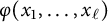 $\varphi (x_1, \ldots , x_\ell )$
, the oracle returns the value
 $\varphi (a_1, \ldots , a_\ell )$
in M (can be true or false), will be denoted by
 $\mathcal {O}_{M}(a_1, \ldots , a_\ell )$
and called an evaluation oracle.
Definition 4.2 (Total algorithm over T)
An oracle Turing machine
 $\mathcal {A}$
will be called a total algorithm over T if, for all positive integers
 $\ell $
, every model M of T, and every
 $a_1, \ldots , a_\ell \in M$
, the machine with every input and oracle
 $\mathcal {O}_M(a_1, \ldots , a_\ell )$
is guaranteed to terminate.
4.2 Auxiliary bound and result
Lemma 4.3 There is an algorithm that takes as input:
-
• language
$\mathcal {L}$
; -
• a complete decidable theory T given by a Turing machine checking correctness of sentences in the theory;
-
• a total algorithm
$\mathcal {A}$
over T; -
• positive integers
$\ell $
and N; and -
• a string
$\mathcal S$
in the input alphabet of
$\mathcal {A}$
;


and computes
-
• a first-order formula
$\varphi = \varphi _{T, \mathcal {A}}(\ell , \mathcal {S}, N)$
in
$\mathcal {L}$
in
$\ell $
variables; and -
• a number
$\mathcal {N} := \mathcal {N}_{T, \mathcal {A}}(\ell , \mathcal {S}, N)$




such that, for any model M of T and tuple
 $\mathbf {a} \in M^\ell $
, the following are equivalent:
-
(1) the sentence
$\varphi (\mathbf {a})$
is true in M; and -
(2) algorithm
$\mathcal {A}$
with input
$\mathcal {S}$
and oracle
$\mathcal {O}_M(\mathbf {a})$
terminates after performing at most N queries to the oracle;


and if these statements are true, then the number of steps performed by
 $\mathcal {A}$
with input
 $\mathcal {S}$
and oracle
 $\mathcal {O}_M(\mathbf {a})$
does not exceed
 $\mathcal {N}$
.
Proof We describe an algorithm for computing
 $\varphi _{T, \mathcal {A}}(\ell , \mathcal {S}, N)$
and
 $\mathcal {N}_{T, \mathcal {A}}(\ell , \mathcal {S}, N)$
. Fix some
 $\mathcal {L}, T, \mathcal {A}, \ell $
, and
 $\mathcal {S}$
.
We will describe an algorithm that, for a given positive integer s, computes first-order formulas
 $\psi _s$
and
 $q_s$
in
 $\mathcal {L}$
in the variables
 $\mathbf {x} = (x_1, \ldots , x_\ell )$
and a positive integer
 $\mathcal {N}_s$
such that, for every model M of T and every
 $\mathbf {a} \in T^\ell $
,
-
•
$\psi _s(\mathbf {a})$
is true in M iff algorithm
$\mathcal {A}$
with input
$\mathcal {S}$
and oracle
$\mathcal {O}_M(\mathbf {a})$
will perform at least s queries; -
• if
$\psi _s(\mathbf {a})$
is true in M, then the result of the sth query will be
$q_s(\mathbf {a})$
; and -
• if algorithm
$\mathcal {A}$
with input
$\mathcal {S}$
and oracle
$\mathcal {O}_M(\mathbf {a})$
performs at most s queries, then the number of steps performed does not exceed
$\mathcal {N}_s$
.


Fix some
 $s \geqslant 1$
and assume that the algorithm have computed
 $\psi _1, \ldots , \psi _{s - 1}$
,
 $q_1, \ldots , q_{s - 1}$
, and
 $\mathcal {N}_{0}, \ldots , \mathcal {N}_{s - 2}$
. Assume that
 $\mathcal {A}$
with input
 $\mathcal {S}$
has performed
 $s - 1$
queries. Then, whether or not an sth query will be performed is determined by the results of the first
 $s - 1$
queries. Fix some
 $\mathbf {r} \in \{\mathrm {True}, \mathrm {False}\}^{s - 1}$
. It will represent possible results of the first
 $s - 1$
queries. Consider the following formula in
 $\mathcal {L}$
:
 $$ \begin{align*} \psi_{\mathbf{r}}(\mathbf{x}) := \psi_{s - 1}(\mathbf{x}) \wedge \bigwedge\limits_{i = 1}^{s - 1} \left( q_i(\mathbf{x}) \iff r_i \right), \end{align*} $$
where we assume
 $\psi _0 = \mathrm {True}$
. The algorithm uses the algorithm for checking correctness of sentences in T to check whether the sentence
 $\exists \mathbf {x}\; \psi _{\mathbf {r}}(\mathbf {x})$
is false in T. If it is, then there is no oracle of the form
 $\mathcal {O}_M(\mathbf {a})$
such that
 $\mathcal {A}$
will perform at least
 $s - 1$
queries on it with the results being
 $r_1, \ldots , r_{s - 1}$
.
In the case of
 $\exists \mathbf {x}\; \psi _{\mathbf {r}}(\mathbf {x})$
is true in T, the algorithm will run
 $\mathcal {A}$
with input
 $\mathcal {S}$
and an oracle
 $\mathcal {O}_{\mathbf {r}}$
that works as follows. For the first
 $s - 1$
queries,
 $\mathcal {O}_{\mathbf {r}}$
will return
 $r_1, \ldots , r_{s - 1}$
. For all subsequent queries, it always returns True. The algorithm will stop the execution of
 $\mathcal {A}$
if
 $\mathcal {A}$
makes an sth query to the oracle, and denote the formula in the query by
 $q_{\mathbf {r}}$
.
Because
 $\exists \mathbf {x}\;\psi _{\mathbf {r}}(\mathbf {x})$
is true in T,
 $\mathcal {O}_{\mathbf {r}}$
gives the same responses to the first
 $s - 1$
queries as some oracle of the form
 $\mathcal {O}_M(\mathbf {a})$
. Because
 $\mathcal {A}$
must terminate in finite time for every such oracle, one of the following must happen:
-
(1)
$\mathcal {A}$
will perform an sth query. -
(2)
$\mathcal {A}$
will terminate after performing only
$s - 1$
queries.


In the former case, as described above, the algorithm will define a formula
 $q_{\mathbf {r}}$
to be the sth query. In the latter case, the algorithm will define
 $\mathcal {N}_{\mathbf {r}}$
to be the number of steps performed by
 $\mathcal {A}$
. Then, the algorithm computes
 $$ \begin{gather*} \psi_s(\mathbf{x}) := \bigvee\limits_{q_{\mathbf{r}} \text{ is defined}} \psi_{\mathbf{r}}(\mathbf{x}),\quad q_s(\mathbf{x}) := \bigwedge\limits_{q_{\mathbf{r}}\text{ is defined}} (\psi_{\mathbf{r}}(\mathbf{x}) \implies q_{\mathbf{r}}(\mathbf{x})),\\ \mathcal{N}_{s - 1} := \max\left(\mathcal{N}_{s - 2}, \sum\limits_{\mathcal{N}_{\mathbf{r}} \text{ is defined}} \mathcal{N}_{\mathbf{r}}\right), \end{gather*} $$
where we assume
 $\mathcal {N}_{-1} = -\infty $
. If the set
 $\{\mathbf {r}\mid q_{\mathbf {r}} \text { is defined}\}$
is empty, the algorithm sets
 $\psi _s(\mathbf {x}) = \operatorname {False}$
and
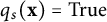 $q_s(\mathbf {x}) = \operatorname {True}$
. Finally, the algorithm returns
 $\varphi _{T, \mathcal {A}}(\ell , \mathcal {S}, N) := \lnot \psi _{N + 1}$
and
 $\mathcal {N}_{T, \mathcal {A}}(\ell , \mathcal {S}, N) := \mathcal {N}_N$
.▪
Lemma 4.4 Let T be a theory and M an
 $\aleph _0$
-saturated model. Let
 $U_1 \supset U_2 \supset U_3 \supset \cdots $
be a sequence of definable sets in
 $M^n$
such that
 $\bigcap \limits _{i = 1}^\infty U_i = \varnothing $
. Then, there exists N such that
 $U_N = \varnothing $
.
Proof Assume the contrary, that is, that
 $U_i \neq \varnothing $
for every
 $i \geqslant 1$
. We will show that
 $\bigcap \limits _{i = 1}^\infty U_i \neq \varnothing $
.
We show that a collection of formulas
 $\{x \in U_i\}_{i = 1}^\infty $
is finitely satisfiable. Indeed, let
 $S \subset \mathbb {Z}_{> 0}$
be a finite set and
 $N = \max S$
. Then,
 $\bigcap _{i \in S} U_i = U_N \neq \varnothing $
. Due to compactness, the countable collection
 $\{x \in U_i\}_{i = 1}^\infty $
is satisfiable in some elementary extension of M. Because M is
 $\aleph _0$
-saturated, this collection is satisfiable in M. Therefore,
 $\bigcap \limits _{i = 1}^\infty U_i \neq \varnothing $
.▪
4.3 Main result
Theorem 4.5 There exists a computable function
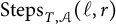 $\operatorname {\mathrm {Steps}}_{T, \mathcal {A}}(\ell , r)$
with input:
-
• a complete decidable theory T (given by an algorithm for checking correctness of sentences);
-
• a total algorithm
$\mathcal {A}$
over T; and -
• positive integers
$\ell $
and r


that computes a number N such that for every model M of T, every
 $\mathbf {a} \in M^\ell $
, and every string
 $\mathcal {S}$
in the alphabet of
 $\mathcal {A}$
of size at most r, the number of steps performed by
 $\mathcal {A}$
with input
 $\mathcal {S}$
and oracle
 $\mathcal {O}_M(\mathbf {a})$
does not exceed N.
Remark 4.6 Let the intermediate result at step n for a total algorithm
 $\mathcal {A}$
with given input and oracle be the content of all the cells of the tape that have been read by the Turing machine. Because a Turing machine can read at most one cell at each step, the number of these cells cannot exceed n. Therefore, the intermediate result at step n can be encoded using
 $n \log \ell $
bits, where
 $\ell $
is the cardinality of the alphabet of
 $\mathcal {A}$
. In particular, if a binary alphabet is used, the bit size of the intermediate result never exceeds the total number of steps in the algorithm.
Proof We will describe an algorithm for computing
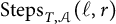 $\operatorname {\mathrm {Steps}}_{T, \mathcal {A}}(\ell , r)$
. We fix T,
 $\mathcal {A}$
,
 $\ell $
, and r. We will consider
 $\mathcal {S}$
of length at most r and describe how to compute a bound for the number of steps given that the input is
 $\mathcal {S}$
. Taking the maximum over all
 $\mathcal {S}$
of length at most r (there are finitely many of them), we obtain
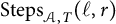 $\operatorname {\mathrm {Steps}}_{\mathcal {A}, T}(\ell , r)$
.
The algorithm will compute
 $\varphi _i := \varphi _{T, \mathcal {A}}(\ell , \mathcal {S}, i)$
for
 $i = 1, 2, \ldots $
using the algorithm from Lemma 4.3. For each
 $\varphi _i$
, the algorithm will check whether the formula is equivalent to
 $\mathrm {True}$
in T using the decidability of T.
If this is true, the algorithm stops and returns
 $\mathcal {N}_{T, \mathcal {A}}(\ell , \mathcal {S}, i)$
(see Lemma 4.3). It remains to show that the described procedure terminates in finitely many steps. Let M be an
 $\aleph _0$
-saturated model of T (it exists, for example, due to [Reference Marker19, Theorem 4.3.12]). For every
 $i = 1, 2, \ldots $
, we introduce a definable set
 $$ \begin{align*} U_i := \{\mathbf{a} \in M^\ell \mid \varphi_i(\mathbf{a}) = \mathrm{False}\}. \end{align*} $$
Notice that
 $U_i = \varnothing $
if and only if
 $(\varphi _i \iff \mathrm {True})$
in T. Then, the definition of
 $\varphi _i$
’s implies that
 $U_1 \supset U_2 \supset \cdots $
. Assume that
 $\bigcap _{i = 1}^\infty U_i$
is not empty and choose an element
 $\mathbf {a}$
in it. Then,
 $\mathcal {A}$
will not terminate in finitely many steps with input
 $\mathcal {S}$
and oracle
 $\mathcal {O}_M(\mathbf {a})$
. Thus,
 $\bigcap _{i = 1}^\infty U_i = \varnothing $
. Lemma 4.4 implies that there exists N such that
 $U_N = \varnothing $
. Then, our algorithm will terminate after checking whether
 $\varphi _N$
is equivalent to True.▪
5 Applications to differential algebra
In this section, we will apply the results of Section 4 to the theory of differentially closed fields with several commuting derivations.
5.1 Preparation
Notation 5.1 Let m be a positive integer.
-
• The language of partial differential rings with m commuting derivation is denoted by
$ \mathcal {L}_{m} := \{+, -, \cdot , 0, 1, \partial _1, \ldots , \partial _m\}$
. We add a separate functional symbol for subtraction for convenience. -
• The theory of partial differentially closed fields with m commuting derivations of characteristic zero is denoted by
$\operatorname {DCF}_{m}$
. Recall that
$\operatorname {DCF}_m$
is complete [Reference McGrail21, Corollary 3.1.9] and, with this, is decidable by [Reference Marker19, Lemma 2.2.8] and [Reference McGrail21, Lemma 3.1.2, p. 890].



Notation 5.2 Let
 $m, n$
, and h be positive integers and k a differential field with a set of m commuting derivations
 $\Delta =\{\partial _1, \ldots , \partial _m\}$
.
-
•
$\operatorname {\mathrm {Pol}}_k(m, n, h)$
denotes the space of all differential polynomials over k in n variables of order at most h and degree at most h. -
• The dimension of
$\operatorname {\mathrm {Pol}}_k(m, n, h)$
(which does not depend on k) will be denoted by
$\operatorname {\mathrm {PolDim}}(m, n, h)$
.



Notation 5.3 Let m,
 $\ell $
, and n be positive integers.
-
• Let
$\mathcal {L}_m(x_1, \ldots , x_\ell )\{y_1, \ldots , y_n\}_\Delta $
denote the ring of differential polynomials in differential variables
$y_1, \ldots , y_n$
with respect to m derivations with the coefficients being terms in the language
$\mathcal {L}_m$
in
$x_1, \ldots , x_\ell $
(that is, elements of
$\mathbb {Z}\{x_1, \ldots , x_\ell \}_\Delta )$
.This is a computable differential ring with m commuting derivations. In what follows, we will assume that the algorithms use dense representation to store these polynomials (that is, store all the coefficients up to certain order and certain degree).
-
• Let k be a differential field with m derivations and
$\mathbf {a} \in k^\ell $
. Then, for
$T \in \mathcal {L}_m(x_1, \ldots , x_\ell )\{y_1, \ldots , y_n\}_\Delta $
, we define
$T(\mathbf {a}) \in k\{y_1, \ldots , y_n\}_\Delta $
to be the result of evaluating the coefficients of T at
$\mathbf {a}$
.








Definition 5.4 A differential ranking for
 $k\{z_1,\ldots ,z_n\}_\Delta $
is a total order
 $>$
on
 $Z := \{\theta z_i\mid \theta \in \Theta _\Delta ,\, 1\leqslant i\leqslant n\}$
satisfying, for all i,
 $1\leqslant i\leqslant m$
:
-
• for all
$x \in Z$
,
$\partial _i(x)> x$
, and -
• for all
$x, y \in Z$
, if
$x>y$
, then
$\partial _i(x)> \partial _i(y)$
.


Notation 5.5 For a
 $\Delta $
-field k and
 $f \in k\{z_1,\ldots ,z_n\}_\Delta \backslash k$
and differential ranking
 $>$
,
-
•
$\operatorname {\mathrm {lead}}(f)$
is the element of Z of the highest rank appearing in f. -
• The leading coefficient of f considered as a polynomial in
$\operatorname {\mathrm {lead}}(f)$
is denoted by
$\operatorname {\mathrm {in}}(f)$
and called the initial of f. -
• The separant of f is
$\frac {\partial f}{\partial \operatorname {\mathrm {lead}}(f)}$
. -
• The rank of f is
$\operatorname {\mathrm {rank}}(f) = \operatorname {\mathrm {lead}}(f)^{\deg _{\operatorname {\mathrm {lead}}(f)}f}$
. The ranks are compared first with respect to
$\operatorname {\mathrm {lead}}$
, and in the case of equality with respect to
$\deg $
. -
• For
$S \subset k\{z_1,\ldots ,z_n\}_\Delta \backslash k$
, the set of initials and separants of S is denoted by
$H_S$
.




Remark 5.6 (Defining a ranking)
In general, there are uncountable many differential rankings already for
 $m = 2$
and
 $n = 1$
. However, [Reference Rust, Reid and Küchlin25, Theorem 29] implies that any differential ranking can be defined by
 $m(m + 1)n$
real numbers together with
 $n^2$
integers not exceeding m and one permutation on n elements. We define a function
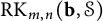
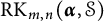 $\operatorname {\mathrm {RK}}_{m, n}(\boldsymbol {\alpha }, \mathcal {S})$
taking as input a tuple
 $\boldsymbol {\alpha }$
of
 $m(m + 1)n$
real numbers and a binary string
 $\mathcal {S}$
(of length at most
 $(n^2 + n)\log _2(\max (n, m))$
) encoding the integers and the permutation and returning the corresponding binary predicate on the derivatives as in [Reference Rust, Reid and Küchlin25, Definition 28]. The relevant properties of this encoding for us will be that, for fixed
 $\mathcal {S}$
:
-
(1) the statement that
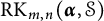
$\operatorname {\mathrm {RK}}_{m, n}(\boldsymbol {\alpha }, \mathcal {S})$
defines a ranking is a first-order formula in
$\boldsymbol {\alpha }$
in the language of ordered fields; and -
(2) for every two derivatives
$\theta _1 z_i$
and
$\theta _2 z_j$
, the fact that
$\theta _1 z_i < \theta _2 z_j$
with respect to
$\operatorname {\mathrm {RK}}_{m, n}(\boldsymbol {\alpha }, \mathcal {S})$
is also a first-order formula in
$\boldsymbol {\alpha }$
in the language of ordered fields.


Definition 5.7 (Characteristic sets)
-
• For
$f, g \in k\{z_1,\ldots ,z_n\}_\Delta \backslash k$
, f is said to be reduced w.r.t. g if no proper derivative of
$\operatorname {\mathrm {lead}}(g)$
appears in f and
$\deg _{\operatorname {\mathrm {lead}}(g)}f <\deg _{\operatorname {\mathrm {lead}}(g)}g$
. -
• A subset
$\mathcal {A}\subset k\{z_1,\ldots ,z_n\}_\Delta \backslash k$
is called autoreduced if, for all
$p \in \mathcal {A}$
, p is reduced w.r.t. every element of
$\mathcal A\setminus \{p\}$
. One can show that every autoreduced set is finite [Reference Kolchin13, Section I.9]. -
• Let
$\mathcal {A}=A_1<\cdots <A_r$
and
$\mathcal {B} = B_1<\cdots <B_s$
be autoreduced sets ordered by their ranks (see Notation 5.5). We say that
$\mathcal {A} < \mathcal {B}$
if-
–
$r> s$
and
$\operatorname {\mathrm {rank}}(A_i)=\operatorname {\mathrm {rank}}(B_i)$
,
$1\leqslant i\leqslant s$
, or -
– there exists q such that
$\operatorname {\mathrm {rank}}(A_q) <\operatorname {\mathrm {rank}}(B_q)$
and, for all i,
$1\leqslant i< q$
,
$\operatorname {\mathrm {rank}}(A_i)=\operatorname {\mathrm {rank}}(B_i)$
.
-
-
• An autoreduced subset of the smallest rank of a differential ideal
$I\subset k\{z_1,\ldots ,z_n\}_\Delta $
is called a characteristic set of I. One can show that every nonzero differential ideal in
$k\{z_1,\ldots ,z_n\}_\Delta $
has a characteristic set. -
• A radical differential ideal I of
$k\{z_1,\ldots ,z_n\}_\Delta $
is said to be characterizable if I has a characteristic set C such that
$I=\langle C\rangle ^{(\infty )}:H_C^\infty $
.

















The Rosenfeld–Gröbner algorithm [Reference Boulier, Lazard, Ollivier and Petitot3, Theorem 9] takes as input a finite set F of differential polynomials and a differential ranking and outputs autoreduced sets
 $\mathcal {C}_1,\ldots ,\mathcal {C}_N$
such that
 $$ \begin{align} \sqrt{\langle F\rangle^{(\infty)}} = \bigcap_{i=1}^N\langle \mathcal{C}_i\rangle^{(\infty)}:H_{\mathcal{C}_i}^\infty, \end{align} $$
and that, for each i,
 $1\leqslant i \leqslant N$
,
 $\mathcal {C}_i$
is a characteristic set of
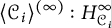 $\langle \mathcal {C}_i\rangle ^{(\infty )}:H_{\mathcal {C}_i}^\infty $
. The representation (5.1) can be used, for example, for membership testing, estimating the number of irreducible components (used in Theorem 5.13) or the Kolchin polynomial (used in Section 6) of a differential-algebraic variety.
With the next Proposition 5.9, we express how we will call the Rosenfeld–Gröbner algorithm. This algorithm depends on the choice of a differential ranking. The reader may wish to make one such choice once and for all, thereby ignoring the potential ambiguity. However, because such a choice may affect the size of the output and the efficiency of any given implementation of the algorithm, one may prefer to allow for these other orderings.
We will express this dependence by seeing the algorithm as a total algorithm relative to the two-sorted theory
 $\operatorname {\mathrm {DCF}}_m\oplus \operatorname {\mathrm {RCF}}$
which is a disjoint union of
 $\operatorname {\mathrm {DCF}}_m$
and the complete decidable theory with quantifier elimination of real closed fields
 $\operatorname {\mathrm {RCF}}$
[Reference Marker19, Theorem 3.3.15 and Corollary 3.3.16]. Then, we will use the characterization of differential rankings via real numbers from Remark 5.6.
Lemma 5.8 Theory
 $\operatorname {\mathrm {DCF}}_m\oplus \operatorname {\mathrm {RCF}}$
is decidable and complete.
Proof In order to prove the completeness and decidability, we will prove that there is an algorithm for quantifier elimination in
 $\operatorname {\mathrm {DCF}}_m\oplus \operatorname {\mathrm {RCF}}$
based on the existence of such algorithms for
 $\operatorname {\mathrm {DCF}}_m$
(follows from decidability; see Notation 5.1 and quantifier elimination [Reference McGrail21, Theorem 3.1.7]) and
 $\operatorname {\mathrm {RCF}}$
. It is sufficient to perform quantifier elimination for a formula of the form
 $$ \begin{align*} \exists x \in S\colon L_1\wedge \cdots \wedge L_N, \end{align*} $$
where S is one of the sorts (corresponding to
 $\operatorname {\mathrm {DCF}}_m$
or
 $\operatorname {\mathrm {RCF}}$
) and
 $L_1, \ldots , L_N$
are literals. (See [Reference Marker19, Lemma 3.1.5].) By reordering
 $L_1, \ldots , L_N$
if necessary, we will further assume that there exists
 $N_0$
such that
 $L_1, \ldots , L_{N_0}$
are in the signature of the sort S and
 $L_{N_0 + 1}, \ldots , L_N$
are in the signature of the other sort. Then,
 $$ \begin{align*} \left(\exists x \in S\colon L_1\wedge \cdots\wedge L_N\right) \iff \left(\exists x \in S \colon L_1\wedge \cdots \wedge L_{N_0}\right) \wedge \left( L_{N_0 + 1}\wedge \cdots \wedge L_{N}\right), \end{align*} $$
and, for
 $\exists x \in S \colon L_1\wedge \cdots \wedge L_{N_0}$
, the algorithm for the corresponding sort S can compute an equivalent quantifier-free formula.
The resulting theory is decidable, because the correctness of each sentence can be checked by performing quantifier elimination after which the formula will become just true/false.▪
Proposition 5.9 There is a computable function that, for a given positive integer m, computes a total algorithm
 $\mathcal {RG}_{m,}$
over
 $\operatorname {\mathrm {DCF}}_m \oplus \operatorname {\mathrm {RCF}}$
such that, for every differential field k with m derivations and
 $\mathbf {a} \in k^\ell $
and any
 $\mathbf {b} \in \mathbb {R}^s$
, the input–output specification of
 $\mathcal {RG}_{m}$
with oracle
 $\mathcal {O}_{k \oplus \mathbb {R}}(\mathbf {a}, \mathbf {b})$
is the following:
-
Input: finite subsets A and S of
$\mathcal {L}_m(x_1, \ldots , x_\ell )\{y_1, \ldots , y_n\}_\Delta $
and a binary string
$\mathcal {S}$
; -
Output: if
$\operatorname {\mathrm {RK}}_{m, n}(\mathbf {b}, \mathcal {S})$
(see Remark 5.6) defines a differential ranking, return a list of tuples
$C_1, \ldots , C_N$
from
$\mathcal {L}_m(x_1, \ldots , x_\ell )\{y_1, \ldots , y_n\}_\Delta $
such thatis the output of the Rosenfeld–Gröbner algorithm [Reference Boulier, Lazard, Ollivier and Petitot3, Theorem 9] with input
$$ \begin{align*} C_1(\mathbf{a}), \ldots, C_N(\mathbf{a}) \end{align*} $$
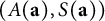
$(A(\mathbf {a}), S(\mathbf {a}))$
with respect to the ranking
$\operatorname {\mathrm {RK}}_{m, n}(\mathbf {b}, \mathcal {S})$
. Otherwise, return
$\varnothing $
.







Proof [Reference Boulier, Lazard, Ollivier and Petitot3, Theorem 9] states that the only operations performed by the Rosenfeld–Gröbner algorithm with the elements of the ground differential field are arithmetic operations, differentiation, and zero testing. Algorithm
 $\mathcal {RG}_{m}$
is constructed to work exactly in the same way as the Rosenfeld–Gröbner algorithm with the only difference that the elements of the ground differential field will be represented as
 $L(\mathbf {a})$
, where
 $L \in \mathcal {L}_m(x_1, \ldots , x_\ell )\{y_1, \ldots , y_n\}_\Delta $
. The arithmetic operations and differentiations can be performed with L, zero testing can be performed using the k-component of the oracle, and the queries to the ranking can be performed using the
 $\mathbb {R}$
-component of the oracle, so
 $\mathcal {RG}$
will be able to perform the same computations as the Rosenfeld–Gröbner algorithm.
Due to [Reference Boulier, Lazard, Ollivier and Petitot3, Theorem 5], the Rosenfeld–Gröbner algorithm is guaranteed to terminate on every input. Hence, the same is true for
 $\mathcal {RG}_{m}$
.▪
5.2 Bounds
Theorem 5.10 (Upper bound for Rosenfeld–Gröbner algorithm)
There exists a computable function
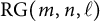 $\operatorname {RG}(m, n, \ell )$
such that, for every differential field k with m derivations and subsets
 $A, S \subset \operatorname {\mathrm {Pol}}_k(m, n, n)$
with
 $|A|, |S| \leqslant \ell $
, and every differential ranking, the Rosenfeld–Gröbner algorithm [Reference Boulier, Lazard, Ollivier and Petitot3, Theorem 9] on A and S will produce at most
 $\operatorname {RG}(m, n, \ell )$
components with all the orders and degrees of the differential polynomials occurring in the algorithm not exceeding
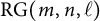 $\operatorname {RG}(m, n, \ell )$
.
Proof We fix integers m, n, and
 $\ell $
and compute the total algorithm
 $\mathcal {RG}_{m}$
over
 $\operatorname {\mathrm {DCF}}_{m} \oplus \operatorname {\mathrm {RCF}}$
from Proposition 5.9. Let
 $\mathbf {a}$
be the set of all the coefficients of A and S. Then,
 $|\mathbf {a}| \leqslant N := 2\ell \operatorname {\mathrm {PolDim}}(m, n, n)$
. The sets A and S can be presented as evaluations of subsets
 $\widetilde {A}, \widetilde {S} \subset \mathcal {L}_m(x_1, \ldots , x_N)\{y_1, \ldots , y_n\}_\Delta $
at
 $\mathbf {a}$
such that the orders and degrees of
 $\widetilde {A}, \widetilde {S}$
in
 $y_1, \ldots , y_n$
do not exceed n and every coefficient is a single variable
 $x_i$
. Let the ranking be defined as
 $\operatorname {\mathrm {RK}}(\mathbf {b}, \mathcal {S})$
(see Remark 5.6), where
 $\mathbf {b}$
is a tuple of
 $m(m + 1)n$
real numbers and
 $\mathcal {S}$
is a binary string of length at most
 $(n^2 + n) \log _2 \max (n, m)$
. Then, the tuple
 $(\widetilde {A}, \widetilde {S}, \mathcal {S})$
can be encoded as a binary string of the length bounded by a computable function
 $S(m, n, N)$
.
We run
 $\mathcal {RG}_{m}$
with the input
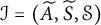 $\mathcal {I} = (\widetilde {A}, \widetilde {S}, \mathcal {S})$
and oracle
 $\mathcal {O}(\mathbf {a}, \mathbf {b})$
. Theorem 4.5 implies that the number of steps and, consequently, the bit size of all the intermediate results (see Remark 4.6) will not exceed
 $\operatorname {\mathrm {Steps}}_{\mathcal {RG}_{m}, \operatorname {\mathrm {DCF}}_m \oplus \operatorname {\mathrm {RCF}}}(N, S(m, n, N))$
.
Because each component takes at least one bit, a polynomial of degree d or order d has at least d coefficients (due to the dense representation of the polynomials; see Notation 5.2) requiring at least one bit each, the number of components, the degrees, and orders do not exceed the bit size of the intermediate results. Therefore, we can set
 $\operatorname {RG}(m, n, \ell ) = \operatorname {\mathrm {Steps}}_{\mathcal {RG}_{m}, \operatorname {\mathrm {DCF}}_{m} \oplus \operatorname {\mathrm {RCF}}}(N, S(m, n, N))$
.▪
Corollary 5.11 There exists a computable function
 $\operatorname {CharSet}(m, n, \ell )$
such that, for every computable differential field k with m derivations and subsets
 $A, S \subset \operatorname {\mathrm {Pol}}_k(m, n, n)$
with
 $|A|, |S| \leqslant \ell $
, and every differential ranking, the ideal
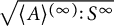 $\sqrt {\langle A\rangle ^{(\infty )} \colon S^{\infty }}$
can be written as an intersection of at most
 $\operatorname {CharSet}(m, n, \ell )$
characterizable differential ideals defined by their characteristic sets with respect to the ranking of order and degree not exceeding
 $\operatorname {CharSet}(m, n, \ell )$
.
Proof Theorem 5.10 implies that there exists a representation
 $$ \begin{align*} \sqrt{\langle A\rangle^{(\infty)} \colon S^\infty} = (\langle C_1\rangle^{(\infty)} \colon H_{C_1}) \cap\cdots\cap (\langle C_N\rangle^{(\infty)} \colon H_{C_N}), \end{align*} $$
where
 $H_{C_i}$
is the product of the initials and separants of
 $C_i$
, and
 $C_i$
is the characteristic presentation [Reference Boulier, Lazard, Ollivier and Petitot3, Definition 8] of
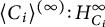 $\langle C_i\rangle ^{(\infty )} \colon H_{C_i}^\infty $
for every
 $1 \leqslant i \leqslant N$
. As noted in [Reference Boulier, Lazard, Ollivier and Petitot3, p. 108] a characteristic set of
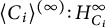 $\langle C_i\rangle ^{(\infty )} \colon H_{C_i}^\infty $
can be obtained from
 $C_i$
by performing reductions until it will become autoreduced. Because differential reduction is a part of the Rosenfeld–Gröbner algorithm, it can also be performed by a total algorithm over
 $\operatorname {\mathrm {DCF}}_m \oplus \operatorname {\mathrm {RCF}}$
. Therefore, as in the proof of Theorem 5.10, Lemma 4.5 implies that
 $\langle C_i\rangle ^{(\infty )} \colon H_{C_i}^\infty $
has a characteristic set with degrees and order bounded by a computable function of the degrees and orders of
 $C_i$
. The latter are bounded by a computable function
 $\operatorname {RG}$
due to Theorem 5.10. Composing these two bounds, we obtain a desired function
 $\operatorname {CharSet}(m, n, \ell )$
.▪
Lemma 5.12 There exists a computable function
 $\operatorname {PrimeComp}(m, n)$
such that, for every partial differential field k with m derivations, every ranking, and every characterizable differential ideal I defined by a characteristic set
 $C \subset \operatorname {\mathrm {Pol}}_k(m, n, n)$
with respect to this ranking, we have
-
(1) the number of prime components of I does not exceed
$\operatorname {PrimeComp}(m, n)$
; and -
(2) every prime component of I has a characteristic set with respect to the ranking with orders and degrees bounded by
$\operatorname {PrimeComp}(m, n)$
.


Proof Let H be the product of the initials and separants of C. Theorem 4 of [Reference Boulier, Lazard, Ollivier and Petitot3] implies that the number of prime components of
 $\langle C\rangle ^{(\infty )} \colon H^\infty $
is equal to the number of prime components of the algebraic ideal
 $(\langle C\rangle ^{(\infty )} \colon H^\infty ) \cap R_n$
, where
 $R_n$
is the ring of differential polynomials of order at most n. Because the degrees of elements of C are bounded by n, the Bézout inequality implies that there is a computable bound D for the degree of the radical ideal
 $I \cap R_n$
(defined, e.g., as the degree of the corresponding affine variety [Reference Heintz12, p. 246]) in terms of m and n, so this gives a bound for the number of components.
Let
 $P_1, \ldots , P_\ell $
be the prime components of I. For every
 $1 \leqslant i \leqslant \ell $
,
 $P_i \cap R_n$
is a prime algebraic ideal, and its zero set can be defined by equations of degree at most
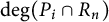 $\deg (P_i\cap R_n)$
due to [Reference Heintz12, Proposition 3]. Therefore, for each
 $2 \leqslant i \leqslant \ell $
, we can choose a polynomial in
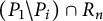 $(P_1 \setminus P_i) \cap R_n$
of degree at most
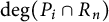 $\deg (P_i \cap R_n)$
. Their product Q has degree at most
 $\deg (I\cap R_n) \leqslant D$
. Observe that
 $$ \begin{align*} P_1 = P_1 \colon Q^\infty \subset I \colon Q^\infty = (P_1 \colon Q^\infty) \cap \cdots \cap (P_\ell \colon Q^\infty) = P_1. \end{align*} $$
Thus, applying Corollary 5.11 to a pair
 $(C, HQ)$
and using that
 $|C| \leqslant \operatorname {\mathrm {PolDim}}(m, n)$
, we show that
 $P_1$
has a characteristic set with orders and degrees bounded by
 $\operatorname {CharSet}(m, D + n, \operatorname {\mathrm {PolDim}}(m, n))$
.▪
Theorem 5.13 (Upper bound for the components of a differential variety and their number)
There exists a computable function
 $\operatorname {\mathrm {Components}}(m, n)$
such that, for all nonnegative integers m, n, and h and a partial differential field k with m derivations and finite set
 $F \subset \operatorname {\mathrm {Pol}}_k(m, n, h)$
:
-
(1) the number of components in the variety defined by
$F = 0$
does not exceed
$\operatorname {\mathrm {Components}}(m, \max \{n,h\})$
; and -
(2) for every differential ranking and every component X of the variety
$F = 0$
, X has a characteristic set with respect to the ranking with orders and degrees bounded by
$\operatorname {\mathrm {Components}}(m, \max \{n,h\})$
.




Proof Consider any differential ranking. By replacing F with the basis of its linear span, we will further assume that
 $|F| \leqslant \operatorname {\mathrm {PolDim}}(m, n, h)$
(see Notation 5.2). Corollary 5.11 implies that
 $\sqrt {\langle F \rangle ^{(\infty )}}$
can be represented as an intersection of at most N characterizable ideals with characteristic sets
 $C_1, \ldots , C_N$
of order and degree at most N, where
 $$ \begin{align*} N := \operatorname{CharSet}(m, \max\{n,h\}, \operatorname{\mathrm{PolDim}}(m, n, h)). \end{align*} $$
Lemma 5.12 applied to each of
 $C_1, \ldots , C_N$
implies that the number of components of the variety defined by
 $F = 0$
does not exceed
 $N\cdot \operatorname {PrimeComp}(m, N)$
, and each of them has a characteristic set with orders and degrees not exceeding
 $\operatorname {PrimeComp}(m, N)$
.▪
Remark 5.14 It was shown in [Reference Harrison-Trainor, Klys and Moosa11, Theorem 6.1] that there exists a (not necessarily computable) bound for the degrees and orders of a characteristic set of a prime differential ideal. The second part of Theorem 5.13 implies that there is a computable bound.
6 Application to delay PDEs
In this section, we will show how Theorem 5.13 applies to the problem of elimination of unknowns in delay PDEs.
The proof of the main result of this section, Theorem 6.23 (Effective elimination theorem for delay PDEs) inherited from [Reference Li, Ovchinnikov, Pogudin and Scanlon18], had only two missing ingredients closely related to each other: the bound on the number of components of the variety defined by a system of differential algebraic PDEs and bounds on the coefficients of Kolchin polynomials under projection in the PDE case. Now that we have obtained the former in Theorem 5.13 together with a bound for characteristic sets, it is possible to obtain the latter in Lemma 6.6 and finish the proof. Therefore, Section 6 can be thought of as a motivation for the rest of the paper and is an interesting example of a problem from differential-difference algebra that motivated a purely differential algebraic result.
6.1 Bounds for Kolchin polynomials for algebraic PDEs
Definition 6.1 Let K be a differentially closed
 $\Delta $
-field containing a
 $\Delta $
-field k. We say that
 $X \subset K^n$
is a
 $\Delta $
-variety over k if there exists
 $F \subset k\{y_1,\ldots ,y_n\}_\Delta $
such that
 $$ \begin{align*} X =\{\boldsymbol{a}\in K^n\mid \forall\,f \in F\ f(\boldsymbol{a})=0\}. \end{align*} $$
We write
 $X = \mathbb {V}(F)$
. The
 $\Delta $
-variety
 $K^n$
is denoted by
 $\mathbb {A}^n$
. A
 $\Delta $
-variety
 $\mathbb {V}(F)$
is called irreducible if the differential ideal
 $\sqrt {\langle F\rangle ^{(\infty )}}$
is prime.
For a subset
 $Y \subset K^n$
, the smallest
 $\Delta $
-variety
 $X \subset K^n$
containing Y is called the Kolchin closure of Y and denoted by
 $\overline {Y}^{\operatorname {Kol}}$
.
Definition 6.2 We will say that a
 $\Delta $
-variety
 $X \subset \mathbb {A}^n$
is bounded by N if
 $N \geqslant \max (n, m)$
(
 $m=|\Delta |$
) and X can be defined by equations of order and degree at most N.
Notation 6.3 For a numeric polynomial
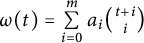 $\omega (t) = \sum \limits _{i = 0}^{m} a_i \binom {t + i}{i}$
, we set
 $$ \begin{align*} |\omega| := \sum\limits_{i = 0}^{m} |a_i|. \end{align*} $$
Definition 6.4 The generic point
 $(a_1,\ldots ,a_n)$
of an irreducible
 $\Delta $
-variety
 $X=\mathbb {V}(F)$
, where
 $F\subset k\{\boldsymbol {y}\}_\Delta $
, is the image of
 $\boldsymbol {y}$
under the homomorphism
 $K\{\boldsymbol {y}\}_\Delta \to K\{\boldsymbol {y}\}_\Delta \big /\sqrt {\langle F\rangle ^{(\infty )}}$
.
Definition 6.5 The Kolchin polynomial of an irreducible
 $\Delta $
-variety
 $V=\mathbb {V}(F)$
, where
 $F \subset k\{\boldsymbol {y}\}_\Delta $
, is the unique numerical polynomial
 $\omega _V(t)$
such that there exists
 $t_0\geqslant 0$
such that, for all
 $t \geqslant t_0$
and the generic point
 $\boldsymbol {a}$
of V,
 $\omega _V(t)=\operatorname {\mathrm {trdeg}} k(\boldsymbol {a}_{t})/k$
, where
 $\boldsymbol {a}_{t}=\big (\theta (\boldsymbol {a}):\theta \in \Theta _\Delta (t)\big )$
. For the proof of the existence, see [Reference Mikhalev, Levin, Pankratiev and Kondratieva22, Theorem 5.4.1].
Lemma 6.6 There exists a computable function
 $\operatorname {\mathrm {KolchinProj}}(N)$
such that, for every:
-
• differential variety
$X \subset \mathbb {A}^n$
bounded by N, -
• irreducible component
$X_0 \subset X$
, and -
• linear projection
$\pi \colon \mathbb {A}^n \to \mathbb {A}^\ell $
,


we have
 $|\omega _{Y}| \leqslant \operatorname {\mathrm {KolchinProj}}(N)$
, where
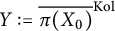 $Y := \overline {\pi (X_0)}^{\operatorname {Kol}}$
.
Proof By performing a linear change of variables, we reduce the problem to the case in which
 $\pi $
is the projection to the first
 $\ell $
coordinates. Consider a ranking such that:
-
•
$y_{\ell + i}$
is greater than every derivative of
$y_{j}$
for every
$i> 0$
and
$1 \leqslant j \leqslant \ell $
; and -
• the restriction of the ranking on
$y_1, \ldots , y_\ell $
is an orderly ranking (that is, a ranking such that
$\operatorname {\mathrm {ord}}\theta _1> \operatorname {\mathrm {ord}}\theta _2 $
implies, for all i and j,
$\theta _1 y_i> \theta _2 y_j$
).


Theorem 5.13 implies that
 $X_0$
has a characteristic set
 $\mathcal {C}$
with respect to this ranking with the order bounded by a computable function of N. Because a characteristic set of Y can be obtained from
 $\mathcal {C}$
by selecting the polynomials only in the first
 $\ell $
variables, there is a characteristic set of Y with respect to the orderly ranking with the order bounded by a computable function of N. Then, [Reference León Sánchez15, Proposition 3.1] and [Reference León Sánchez15, Fact 2.1] imply that
 $|\omega _Y|$
is bounded by a computable function of N.▪
Proposition 6.7 There exists an algorithm that, for every computable function
 $g(n)\colon \mathbb {Z}_{\geqslant 0} \to \mathbb {Z}_{\geqslant 0}$
, produces a number
 $\operatorname {\mathrm {Len}}_g$
such that, for every sequence of Kolchin polynomials
 $$ \begin{align*} \omega_0> \omega_1 > \cdots > \omega_\ell \end{align*} $$
such that
 $|\omega _i| < g(i)$
for every
 $0 \leqslant i \leqslant \ell $
, we have
 $\ell < \operatorname {\mathrm {Len}}_g$
.
Proof By replacing
 $g(n)$
with
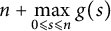 $n + \max \limits _{0 \leqslant s \leqslant n} g(s)$
, we can further assume that
 $g(n)$
is increasing and
 $g(n) \geqslant n$
. Definition 2.4.9 and Lemma 2.4.12 of [Reference Mikhalev, Levin, Pankratiev and Kondratieva22] define a computable order-preserving map c from the set of all Kolchin polynomials
 $\mathcal {K}$
to
 $\mathbb {Z}_{\geqslant 0}^{m + 1}$
(considered with respect to the lexicographic ordering). For
 $v = (v_0, \ldots , v_m) \in \mathbb {Z}_{\geqslant 0}^{m + 1}$
, we define
 $|v| = v_0 + \cdots + v_m$
. For every function
 $g\colon \mathbb {Z}_{\geqslant 0} \to \mathbb {Z}_{\geqslant 0}$
, we define
 $$ \begin{align*} \widetilde{g}(n) := \max\limits_{\omega \in \mathcal{K},\; |\omega| \leqslant g(n)} |c(\omega)|. \end{align*} $$
Note that if
 $g(n)$
was computable, then
 $\widetilde {g}(n)$
is also computable.
The sequence
 $\omega _0> \omega _1 > \cdots $
gives rise to a sequence
 $c(\omega _0)>_{\operatorname {lex}} c(\omega _1) >_{\operatorname {lex}} \cdots $
in
 $\mathbb {Z}_{\geqslant 0}^{m + 1}$
with
 $|c(\omega _i)| \leqslant \widetilde {g}(i)$
for every i. Main Lemma of [Reference McAloon20] implies that there is an algorithm to compute the maximal length of such a sequence, so there is an algorithm to compute a bound on
 $\ell $
from g.▪
6.2 Trains of varieties, partial solutions, and their upper bounds
Lemma 6.8 For every
 $\Delta $
-
 $\sigma $
-field k of characteristic zero, there exists an extension
 $k \subset K$
of
 $\Delta $
-
 $\sigma $
-fields, where K is a differentially closed
 $\Delta $
-
 $\sigma ^*$
-field.
Proof The proof follows [Reference Li, Ovchinnikov, Pogudin and Scanlon18, Lemma 6.1] mutatis mutandis as follows. We will show that there exists a
 $\Delta $
-
 $\sigma ^\ast $
-field
 $K_0$
containing k. The proof of [Reference Levin17, Proposition 2.1.7] implies that one can build an ascending chain of
 $\sigma $
-fields
 $$ \begin{align} k_0 \subset k_1 \subset k_2 \subset \cdots \end{align} $$
such that, for every
 $i \in \mathbb {N}$
, there exists an isomorphism
 $\varphi _i\colon k \to k_i$
of
 $\sigma $
-fields,
 $\sigma (k_{i + 1}) = k_i$
, and
 $\varphi _i = \sigma \circ \varphi _{i + 1}$
, for every
 $i \in \mathbb {N}$
. We transfer the
 $\Delta $
-
 $\sigma $
-structure from k to
 $k_i$
’s via
 $\varphi _i$
’s. Then,
 $\varphi _i = \sigma \circ \varphi _{i + 1}$
implies that the restriction of
 $\Delta $
on
 $k_{i + 1}$
to
 $k_i$
coincides with the action of
 $\Delta $
on
 $k_i$
. We set
 $K_0 := \bigcup \limits _{i \in \mathbb {N}} k_i$
. Because the action of
 $\Delta $
and
 $\sigma $
is consistent with the ascending chain (6.2),
 $K_0$
is a
 $\Delta $
-
 $\sigma $
-extension of
 $k_0 \cong k$
. It is shown in [Reference Levin17, Proposition 2.1.7] that the action of
 $\sigma $
on
 $K_0$
is surjective. Corollary 2.4 of [Reference Léon Sánchez14] implies that
 $K_0$
can be embedded in a differentially closed
 $\Delta $
-
 $\sigma ^\ast $
-field K.▪
Notation 6.9 Within Sections 6.2 and 6.3, we fix a ground
 $\Delta $
-
 $\sigma $
field k and a differentially closed
 $\Delta $
-
 $\sigma ^\ast $
-field K given by Lemma 6.8 applied to k. All varieties in Sections 6.2 and 6.3 are considered over K.
Definition 6.10 (Partial solutions)
-
• For
$\Delta $
-
$\sigma $
-rings
$\mathcal R_1$
and
$\mathcal R_2$
, a homomorphism
$\phi : \mathcal R_1\longrightarrow \mathcal R_2$
is called a
$\Delta $
-
$\sigma $
-homomorphism if, for all i,
$\phi \partial _i=\partial _i\phi $
and
$\phi \sigma =\sigma \phi $
. -
• Let
$\mathcal R$
be a
$\Delta $
-
$\sigma $
-ring containing a
$\Delta $
-
$\sigma $
-field k. Let
$k[\boldsymbol {y}_\infty ]$
be the
$\Delta $
-
$\sigma $
-polynomial ring over k in
$\boldsymbol {y}= y_1,\ldots ,y_r$
. Given a point
$\boldsymbol {a}=(a_1,\dots ,a_r)\in \mathcal {R}^r$
, there exists a unique
$\Delta $
-
$\sigma $
-homomorphism over k,Given
$$ \begin{align*}\phi_{\boldsymbol{a}}: k[\boldsymbol{y}_\infty]\longrightarrow\mathcal R \quad \text{with}\ \ \phi_{\boldsymbol{a}}(y_i)=a_i\ \text{and}\ \phi_{\boldsymbol{a}}|_k=\operatorname{\mathrm{id}}.\end{align*} $$
$f\in k[\boldsymbol {y}_\infty ]$
,
$\boldsymbol {a}$
is called a solution of f in
$\mathcal R$
if
$f\in \operatorname {\mathrm {Ker}}(\phi _{\boldsymbol {a}})$
.
-
• For a
$\Delta $
-
$\sigma $
-k-algebra
$\mathcal {R}$
and
$I= \mathbb {N}$
or
$\mathbb {Z}$
, the sequence ring
$\mathcal {R}^I$
has the following structure of a
$\Delta $
-
$\sigma $
-ring (
$\Delta $
-
$\sigma ^\ast $
-ring for
$I=\mathbb {Z}$
) with
$\sigma $
and
$\Delta $
defined byFor a k-
$$ \begin{align*}\sigma\big((x_i)_{i\in I}\big):=(x_{i+1})_{i\in I} \quad\text{and}\quad \partial_j\big((x_i)_{i\in I}\big):=(\partial_j(x_{i}))_{i\in I}.\end{align*} $$
$\Delta $
-
$\sigma $
-algebra
$\mathcal {R}$
,
$\mathcal {R}^I$
can be considered a k-
$\Delta $
-
$\sigma $
-algebra by embedding k into
$\mathcal {R}^I$
in the following way:For
$$ \begin{align*}a\mapsto (\sigma^i(a))_{i\in I},\ \ a \in k.\end{align*} $$
$f\in k[\boldsymbol {y}_\infty ]$
, a solution of f with components in
$\mathcal {R}^I$
is called a sequence solution of f in
$\mathcal {R}$
.
-
• Given
$f\in \mathcal {R}[\boldsymbol {y}_\infty ]$
, the order of f is defined to be the maximal
$\operatorname {\mathrm {ord}}\theta +j$
such that
$\theta \sigma ^jy_s$
effectively appears in f for some s, denoted by
$\operatorname {\mathrm {ord}}(f)$
. -
• The relative order of f with respect to
$\Delta $
(resp.
$\sigma $
), denoted by
$\operatorname {\mathrm {ord}}_\Delta (f)$
(resp.
$\operatorname {\mathrm {ord}}_\sigma (f)$
), is defined as the maximal
$\operatorname {\mathrm {ord}}\theta $
(resp. j) such that
$\theta \sigma ^jy_s$
effectively appears in f for some s. -
• Let
$F=\{f_1,\ldots ,f_N\} \subset k[\boldsymbol {y}_\infty ]$
, where
$\boldsymbol {y}= y_1,\ldots ,y_r$
, be a set of
$\Delta $
-
$\sigma $
-polynomials. Suppose
$h=\max \{\operatorname {\mathrm {ord}}_\sigma (f) \mid f \in F\}$
. A sequence of tuples
$(\overline {a}_1,\ldots ,\overline {a}_r)\in {K^{\ell +h}\times \cdots \times K^{\ell +h}}$
is called a partial solution of F of length
$\ell $
if
$(\overline {a}_1,\ldots ,\overline {a}_r)$
is a
$\Delta $
-solution of the system in
$\boldsymbol {y}_{\infty ,\ell +h-1}$
:where
$$ \begin{align*} \{\sigma^i (F)=0 \;|\; 0\leqslant i\leqslant\ell-1\}, \end{align*} $$
$\boldsymbol {y}_{\infty ,\ell +h-1}=\{\theta \sigma ^iy_s\mid \theta \in \Theta _\Delta ;\,0\leqslant i \leqslant \ell +h-1;\,1\leqslant s\leqslant r\}$
.













We associate the following geometric data with the above set F of
 $\Delta $
-
 $\sigma $
-polynomials:
-
• the
$\Delta $
-variety
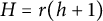
$X\subset \mathbb A^H$
defined by
$f_1=0,\ldots ,f_N=0$
regarded as
$\Delta $
-equations in
$k[\boldsymbol {y}_{\infty ,h}]$
with
$H={r}(h+1)$
, and -
• two projections
$\pi _1,\pi _2:\mathbb A^H\longrightarrow \mathbb A^{H-r}$
defined by
$$ \begin{align*}\pi_1(a_1,\ldots,\sigma^h(a_1);\ldots; &a_r,\ldots,\sigma^h(a_r))\\&:=(a_1,\sigma(a_1),\ldots,\sigma^{h-1}(a_1);\ldots; a_r,\ldots,\sigma^{h-1}(a_r)),\\ \pi_2(a_1,\ldots,\sigma^h(a_1);\ldots; &a_r,\ldots,\sigma^h(a_r))\\&:=(\sigma(a_1),\ldots,\sigma^{h}(a_1);\ldots; \sigma(a_r),\ldots,\sigma^{h}(a_r)). \end{align*} $$




Let
 $\sigma (X)$
denote the
 $\Delta $
-variety in
 $\mathbb A^H$
defined by
 $f_1^{\sigma },\ldots ,f_N^{\sigma }$
, where
 $f_i^{\sigma }$
is the result by applying
 $\sigma $
to the coefficients of
 $f_i$
.
Definition 6.11 A sequence
 $p_1,\ldots ,p_\ell \in \mathbb A^H$
is a partial solution of the triple
 $(X,\pi _1,\pi _2)$
if:
-
(1) for all i,
$1\leqslant i \leqslant \ell $
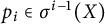
, we have
$p_i\in \sigma ^{i-1}(X)$
, and -
(2) for all i,
$1\leqslant i<\ell $
, we have
$\pi _1(p_{i+1})=\pi _2(p_i)$
.



A two-sided infinite sequence with such a property is called a solution of the triple
 $(X,\pi _1,\pi _2)$
.
Lemma 6.12 For every positive integer
 $\ell $
, F has a partial solution of length
 $\ell $
if and only if the triple
 $(X,\pi _1,\pi _2)$
has a partial solution of length
 $\ell .$
The system F has a sequence solution in
 $K^{\mathbb Z}$
if and only if the triple
 $(X,\pi _1,\pi _2)$
has a solution.
Proof As in [Reference Li, Ovchinnikov, Pogudin and Scanlon18, Lemma 6.5].▪
Definition 6.13 For
 $\ell \in \mathbb N$
or
 $+\infty $
, a sequence of irreducible
 $\Delta $
-subvarieties
 $(Y_1,\ldots ,Y_\ell )$
in
 $\mathbb {A}^H$
is said to be a train of length
 $\ell $
in X if:
-
(1) for all i,
$1\leqslant i\leqslant \ell $
, we have
$Y_i\subseteq \sigma ^{i-1}(X)$
, and -
(2) for all i,
$1\leqslant i<\ell $
, we have
$\overline {\pi _1(Y_{i+1})}^{\operatorname {\mathrm {Kol}}}=\overline {\pi _2(Y_i)}^{\operatorname {\mathrm {Kol}}}$
.



Lemma 6.14 For every train
 $(Y_1,\ldots ,Y_\ell )$
in X, there exists a partial solution
 $p_1,\ldots ,p_\ell $
of
 $(X,\pi _1,\pi _2)$
such that, for all i, we have
 $p_i\in Y_i$
. In particular, if there is an infinite train in X, then there is a solution of the triple
 $(X,\pi _1,\pi _2)$
.
Proof We prove it as in [Reference Li, Ovchinnikov, Pogudin and Scanlon18, Lemma 6.7], as follows. To prove the existence of a partial solution of
 $(X,\pi _1,\pi _2)$
with the desired property, it suffices to prove the following claim.
Claim There exists a nonempty open (in the sense of the Kolchin topology) subset
 $U\subseteq Y_\ell $
such that, for each
 $p_\ell \in U$
,
 $p_\ell $
can be extended to a partial solution
 $p_1,\ldots ,p_\ell $
of
 $(X,\pi _1,\pi _2)$
with
 $p_i\in Y_i$
, for every
 $1 \leqslant i \leqslant \ell $
.
We will prove the claim by induction on
 $\ell $
. For
 $\ell =1$
, take
 $U=Y_1$
. Because each point in
 $Y_1$
is a partial solution of
 $(X,\pi _1,\pi _2)$
of length 1, the claim holds for
 $\ell =1$
. Now, suppose we have proved the claim for
 $\ell -1$
. So, there exists a nonempty open subset
 $U_0\subseteq Y_{\ell -1}$
satisfying the desired property. Because
 $Y_{\ell -1}$
is irreducible,
 $U_0$
is dense in
 $Y_{\ell -1}.$
So,
 $\pi _2(U_0)$
is dense in
 $\overline {\pi _2(Y_{\ell -1})}^{\operatorname {\mathrm {Kol}}}=\overline {\pi _1(Y_{\ell })}^{\operatorname {\mathrm {Kol}}}$
. Because
 $U_0$
is
 $\Delta $
-constructible (that is, solution set of a quantifier-free formula with parameters in K or, equivalently, a finite union of
 $\Delta $
-closed and
 $\Delta $
-open sets),
 $\pi _2(U_0)$
is
 $\Delta $
-constructible too. So,
 $\pi _2(U_0)$
contains a nonempty open subset of
 $\overline {\pi _1(Y_{\ell })}^{\operatorname {\mathrm {Kol}}}$
.
Because
 $\pi _1(Y_{\ell })$
is
 $\Delta $
-constructible and dense in
 $\overline {\pi _1(Y_{\ell })}^{\operatorname {\mathrm {Kol}}}$
,
 $\pi _2(U_0)\cap \pi _1(Y_{\ell })\neq \varnothing $
is
 $\Delta $
-constructible and dense in
 $\overline {\pi _1(Y_{\ell })}^{\operatorname {\mathrm {Kol}}}$
. Let
 $U_1$
be a nonempty open subset of
 $\overline {\pi _1(Y_{\ell })}^{\operatorname {\mathrm {Kol}}}$
contained in
 $\pi _2(U_0)\cap \pi _1(Y_{\ell })$
and
 $$ \begin{align*}U_2=\pi_1^{-1}(U_1)\cap Y_{\ell}.\end{align*} $$
Then,
 $U_2$
is a nonempty open subset of
 $Y_{\ell }$
. We will show that, for each
 $p_\ell \in U_2$
, there exists
 $p_{i}\in Y_i$
, for
 $i=1,\ldots ,\ell -1$
, such that
 $p_1,\ldots ,p_{\ell }$
is a partial solution of
 $(X,\pi _1,\pi _2).$
Because
 $\pi _1(p_\ell )\in U_1\subset \pi _2(U_0)$
, there exists
 $p_{\ell -1}\in U_0$
such that
 $\pi _1(p_\ell )=\pi _2(p_{\ell -1}).$
Because
 $p_{\ell -1}\in U_0$
, by the inductive hypothesis, there exists
 $p_{i}\in Y_i$
, for
 $i=1,\ldots ,\ell -1$
, such that
 $p_1,\ldots ,p_{\ell -1}$
is a partial solution of
 $(X,\pi _1,\pi _2)$
of length
 $\ell -1$
. So,
 $p_1,\ldots ,p_{\ell }$
is a partial solution of
 $(X,\pi _1,\pi _2)$
of length
 $\ell $
.▪
For two trains
 $Y=(Y_1,\ldots ,Y_\ell )$
and
 $Y'=(Y^{\prime }_1,\ldots ,Y^{\prime }_\ell )$
, denote
 $Y\subseteq Y'$
if
 $Y_i\subseteq Y^{\prime }_i$
for each i. Given an increasing chain of trains
 $Y_{i}=(Y_{i,1},\ldots ,Y_{i,\ell })$
,
 $$ \begin{align*}\bigg(\overline{\cup_iY_{i,1}}^{\operatorname{\mathrm{Kol}}},\ldots,\overline{\cup_iY_{i,\ell}}^{\operatorname{\mathrm{Kol}}}\bigg)\end{align*} $$
is a train in X that is an upper bound for this chain. (For each j,
 $\overline {\cup _iY_{i,j}}^{\operatorname {\mathrm {Kol}}}$
is an irreducible
 $\Delta $
-variety in
 $\sigma ^{j-1}$
(X).) So, by Zorn’s lemma, maximal trains of length
 $\ell $
always exist in X.
For
 $\ell \in \mathbb N$
, consider the product
 $$ \begin{align*} \textbf{X}_\ell:=X\times\sigma(X)\times\cdots\times \sigma^{\ell-1}(X) \end{align*} $$
and denote the projection of
 $\textbf {X}_\ell $
onto
 $\sigma ^{i-1}(X)$
by
 $\varphi _{\ell ,i}$
. Let
 $$ \begin{align*} \mathbf{W}_\ell(X,\pi_1,\pi_2):=\{p\in \textbf{X}_\ell: \pi_2(\varphi_{\ell,i}(p))=\pi_1(\varphi_{\ell,i+1}(p)), i=1,\ldots,\ell-1\}. \end{align*} $$
Lemma 6.15 For every irreducible
 $\Delta $
-subvariety
 $W\subset \mathbf {W}_\ell $
,
 $$ \begin{align*}\bigg(\overline{\varphi_{\ell,1}(W)}^{\operatorname{\mathrm{Kol}}},\ldots,\overline{\varphi_{\ell,\ell}(W)}^{\operatorname{\mathrm{Kol}}}\bigg)\end{align*} $$
is a train in X of length
 $\ell $
. Conversely, for each train
 $(Y_1,\ldots ,Y_\ell )$
in X, there exists an irreducible
 $\Delta $
-subvariety
 $W\subseteq \mathbf {W}_\ell $
such that
 $Y_i=\overline {\varphi _{\ell ,i}(W)}^{\operatorname {\mathrm {Kol}}}$
for each
 $i=1,\ldots ,\ell $
.
Proof The proof follows [Reference Li, Ovchinnikov, Pogudin and Scanlon18, Lemma 6.8]. The first assertion is straightforward. We will prove the second assertion by induction on
 $\ell $
. For
 $\ell = 1$
,
 $\mathbf {W}_1= X$
, and we can set
 $W = Y_1$
.
Let
 $\ell> 1$
. Apply the inductive hypothesis to the train
 $(Y_1, \ldots , Y_{\ell - 1})$
and obtain an irreducible subvariety
 $Y' \subset \mathbf {W}_{\ell -1} \subset \mathbf {X}_{\ell - 1}$
. Then, there is a natural embedding of
 $Y' \times Y_\ell $
into
 $\mathbf {X}_\ell $
. Denote
 $(Y' \times Y_\ell ) \cap \mathbf {W}_\ell $
by
 $\widetilde Y$
. Because
 $Y'\subset \mathbf {W}_{\ell -1}$
,
 $$ \begin{align*} \widetilde Y = \{ p \in Y' \times Y_\ell \:|\: \pi_2\left( \varphi_{\ell, \ell - 1}(p) \right) = \pi_1\left( \varphi_{\ell, \ell}(p) \right) \}. \end{align*} $$
Let
 $$ \begin{align} Z := \overline{\pi_2\left( \varphi_{\ell - 1, \ell - 1}(Y') \right)} = \overline{\pi_1(Y_\ell)}. \end{align} $$
Then, we have a
 $(k, \Delta )$
-isomorphism
 $$ \begin{align*} R_{Y'}\otimes_{R_Z}R_{Y_\ell} \to R_{\widetilde{Y}} \end{align*} $$
under the
 $(k,\Delta )$
-algebra homomorphisms
 $i_1:R_Z \to R_{Y'}$
and
 $i_2:R_Z \to R_{Y_\ell }$
induced by
 $\pi _2\circ \varphi _{\ell - 1, \ell - 1} $
and
 $\pi _1$
, respectively. Equality (6.3) implies that
 $i_1$
and
 $i_2$
are injective. Denote the fields of fractions of
 $R_{Y'}$
,
 $R_{Y_\ell }$
, and
 $R_Z$
by E, F, and L, respectively. Let
 $\mathfrak {p}$
be any prime differential ideal in
 $E \otimes _L F$
,
 $$ \begin{align*}R := (E \otimes_L F) / \mathfrak{p},\end{align*} $$
and
 $\pi \colon E \otimes _L F \to R$
be the canonical homomorphism. Consider the natural homomorphism
 $i \colon R_{Y'}\otimes _{R_Z}R_{Y_\ell } \to E \otimes _L F$
. Because
 $1 \in i(R_{Y'}\otimes _{R_Z}R_{Y_\ell })$
, the composition
 $\pi \circ i$
is a nonzero homomorphism. Because
 $i_1$
and
 $i_2$
are injective, the natural homomorphisms
 $i_{Y'} \colon R_{Y'} \to R_{Y'}\otimes _{R_Z}R_{Y_\ell }$
and
 $i_{Y_\ell } \colon R_{Y_\ell } \to R_{Y'}\otimes _{R_Z}R_{Y_\ell }$
are injective as well. We will show that the compositions
 $$ \begin{align*}\pi\circ i \circ i_{Y'} \colon R_{Y'} \to R\quad \text{and}\quad \pi\circ i \circ i_{Y_\ell} \colon R_{Y_\ell} \to R\end{align*} $$
are injective. Introducing the natural embeddings
 $i_E \colon E \to E\otimes _L F$
and
 $j_{Y'} \colon R_{Y'} \to E$
, we can rewrite
 $$ \begin{align*} \pi\circ i \circ i_{Y'} = \pi \circ i_E \circ j_{Y'}. \end{align*} $$
The homomorphisms
 $i_E$
and
 $j_{Y'}$
are injective. The restriction of
 $\pi $
to
 $i_E(E)$
is also injective, because E is a field. Hence, the whole composition
 $\pi \circ i_E \circ j_{Y'}$
is injective. The argument for
 $\pi \circ i \circ i_{Y_\ell }$
is analogous. Let
 $$ \begin{align*}S :=\big(R_{Y'}\otimes_{R_Z}R_{Y_\ell}\big)\big/ \bigl(\mathfrak{p}\cap \big(R_{Y'}\otimes_{R_Z}R_{Y_\ell}\big)\bigr),\end{align*} $$
which is a domain, and the homomorphisms
 $\pi \circ i \circ i_{Y'}: R_{Y'}\to S$
and
 $\pi \circ i \circ i_{Y_\ell } : R_{Y_\ell }\to S$
are injective. Let
 $F \subset k\{\textbf {W}_\ell \}$
be such that
 $S = k\{\textbf {W}_\ell \}/\sqrt {\langle F\rangle }^{(\infty )}$
. We now let W be the
 $\Delta $
-subvariety of
 $\textbf {W}_\ell $
defined by
 $F =0 $
. For every i,
 $1 \leqslant i < \ell $
, the homomorphism
 $$ \begin{align*}\varphi_{\ell, i}^\sharp = (\pi\circ i \circ i_{Y'})\circ\varphi_{\ell - 1, i}^\sharp : R_{Y_i}\to R_{Y'}\to S \end{align*} $$
is injective as a composition of two injective homomorphisms. Hence, the restriction
 $\varphi _{\ell , i} \colon W \to Y_i$
is dominant.▪
Lemma 6.16 Let
 $(X, \pi _1, \pi _2)$
be a triple with X bounded by n. Then, for every
 $\ell $
, the number of maximal trains of length
 $\ell $
in X does not exceed
 $\operatorname {\mathrm {Components}}(m,\ell n)$
.
Proof By Lemma 6.15, the number of maximal trains of length
 $\ell $
in X is equal to the number of irreducible components of
 $\textbf {W}_\ell $
. By Theorem 5.13, this number does not exceed
 $\operatorname {\mathrm {Components}}(m,\ell n)$
.▪
Definition 6.17 Let
 $(X, \pi _1, \pi _2)$
be a triple and
 $\omega (t)$
be a numeric polynomial. We define
 $B(X, \omega ) \in \mathbb {Z} \cup \{\infty \}$
as the smallest value that is greater than the length of any train in X with Kolchin polynomials at least
 $\omega $
.
Lemma 6.18 Let X be a differential variety bounded by n such that
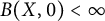 $B(X, 0) < \infty $
. Then,
 $B(X, \omega _X)$
does not exceed the number of components of X plus one.
Proof Denote the number of components in X by N, and assume that there is a train
 $(Y_1, \ldots , Y_{N + 1})$
with the Kolchin polynomial at least
 $\omega _X$
. Then, each of
 $Y_1, \sigma ^{-1}(Y_2), \ldots , \sigma ^{-N}(Y_{N + 1})$
must be a component of X, so there exist
 $1 \leqslant i < j \leqslant N + 1$
such that
 $Y_j = \sigma ^{j-i}Y_i$
. Thus, there exists an infinite train
 $(Y_1,\ldots ,Y_i,Y_{i+1},\ldots , Y_{j-1}, \sigma ^{j - i }(Y_i), \sigma ^{j - i}(Y_{i + 1}), \ldots )$
in X. This contradicts to
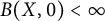 $B(X, 0) < \infty $
.▪
Lemma 6.19 There exists a computable function
 $\operatorname {\mathrm {Iter}}(n, D)$
such that, for every triple
 $(X, \pi _1, \pi _2)$
such that
-
•
$B(X, 0) < \infty $
, and -
• X is bounded by n,
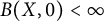
and every numeric polynomial
 $\omega _1(t)> 0$
, there exists a numeric polynomial
 $\omega _2(t) \geqslant 0$
such that
-
•
$\omega _2(t) < \omega _1(t)$
; -
•
$|\omega _2| \leqslant \operatorname {\mathrm {Iter}}(n, B(X, \omega _1))$
; and -
•
$B(X, \omega _2) \leqslant \operatorname {\mathrm {Iter}}(n, B(X, \omega _1))$
.



Proof The proof follows [Reference Li, Ovchinnikov, Pogudin and Scanlon18, Lemma 6.20]. Let
 $B_1 := B(X, \omega _1)$
, and let T be the number of maximal trains of length
 $B_1$
in X. We set
 $B_2 := B_1 + T$
. Lemma 6.16 implies that T is bounded by
 $\operatorname {\mathrm {Components}}(m,nB_1)$
. Consider the fibered product
 $\mathbf {W}_{B_1}(X, \pi _1, \pi _2)$
, and, for each irreducible component W in it, denote the corresponding train by
 $Y_W$
. We set (assuming
 $\max \varnothing = 0$
)
 $$ \begin{align*} \omega_2 := \max \bigl\{ \omega_{Y_W} \mid \omega_{Y_W} < \omega_1, W\text{ is a component of }\mathbf{W}_{B_1} \bigr\}. \end{align*} $$
We will show that
 $B(X, \omega _2) \leqslant B_1 + T$
. Assume that there is a maximal train
 $(Y_1, \ldots , Y_{B_2})$
in X with the Kolchin polynomial at least
 $\omega _2$
. Introduce
 $T + 1$
trains
 $Z^{(1)},\ldots ,Z^{(T + 1)}$
of length
 $B_1$
in
 $X,\sigma (X),\ldots ,\sigma ^{T}(X)$
, respectively, such that, for each j,
 $$ \begin{align*} Z^{(j)}=\big( Z^{(j)}_1,\ldots,Z^{(j)}_{T}\big) := (Y_j, \ldots, Y_{j + B_1 - 1}). \end{align*} $$
Then, for each j, consider a maximal train
 $\tilde {Z}^{(j)}$
of length
 $B_1$
containing
 $Z^{(j)}$
. So,
 $\sigma ^{-j+1}(\tilde {Z}^{(j)})$
is a maximal train of length
 $B_1$
in X. There are two cases to consider:
 $$ \begin{align} \big\{\omega_{Y_W}(t)\:\big|\: \omega_{Y_W}(t)<\omega_1(t),\; W \text{ is a component of } \mathbf{W}_{B_1}\big\}=\varnothing. \end{align} $$
In this case,
 $\tilde {Z}^{(1)}$
is a train in X with Kolchin polynomial at least
 $\omega _1$
. This contradicts the definition of
 $B(X, \omega _1)$
.
 $$ \begin{align} \big\{\omega_{Y_W}(t)\:\big|\:\omega_{Y_W}(t)<\omega_1(t),\; W \text{ is a component of } \mathbf{W}_{B_1} \big\}\neq\varnothing. \end{align} $$
By the definition of
 $B(X, \omega _1)$
, for every j,
 $\omega _{\sigma ^{-j+1}(\tilde {Z}^{(j)})}(t) < \omega _1(t)$
. This implies that, for each j,
 $$ \begin{align*} \omega_{\sigma^{-j+1}(\tilde{Z}^{(j)})}(t)=\omega_{2}(t). \end{align*} $$
Because there are only T maximal trains in X of length
 $B_1$
, there exist
 $a < b$
such that
 $$ \begin{align*} \sigma^{-a+1}(\tilde{Z}^{(a)})=\sigma^{-b+1}(\tilde{Z}^{(b)}) =: Z. \end{align*} $$
Because
 $\omega _{Z} = \omega _{2}$
, there exists
 $\ell $
such that
 $\omega _{Z_\ell } = \omega _2$
. Because
 $$ \begin{align*} \omega_{\sigma^{-a+1}({Z}^{(a)}_\ell)} = \omega_{2} \quad \text{ and }\quad \sigma^{-a+1}({Z}^{(a)}_\ell) \subseteq Z_\ell, \end{align*} $$
we have
 $ \sigma ^{-a+1}({Z}^{(a)}_\ell ) = Z_\ell $
. Similarly, we can show
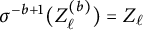 $ \sigma ^{-b+1}({Z}^{(b)}_\ell ) = Z_\ell $
. Hence,
 $$ \begin{align*} \sigma^{-a+1}(Y_{a + \ell - 1}) = \sigma^{-a+1}({Z}^{(a)}_\ell) = \sigma^{-b+1}({Z}^{(b)}_\ell) = \sigma^{-b+1}(Y_{b+\ell - 1}). \end{align*} $$
Thus, we have
 $ Y_{b+\ell -1}=\sigma ^{b-a}(Y_{a+\ell -1}) $
. This contradicts the fact that
 $B(X, 0) < \infty $
.
It remains to show that
 $|\omega _2|$
is bounded by a computable function of n and
 $B_1$
. Let W be a component of
 $\mathbf {W}_{B_1}$
such that
 $\omega _{Y_W} = \omega _2$
. Let
 $Y_W = (Y_{W, 1}, \ldots , Y_{W, B_1})$
. There exists
 $1 \leqslant i \leqslant B_1$
such that
 $\omega _{Y_i} = \omega _2$
. Because
 $Y_i$
is the Kolchin closure of a linear projection of a component of
 $\mathbf {W}_{B_1}$
and
 $\mathbf {W}_{B_1}$
is bounded by
 $B_1n$
, Lemma 6.6 implies that
 $|\omega _2|$
is bounded by a computable function of n and
 $B_1$
.
Taking
 $\operatorname {\mathrm {Iter}}(n, D)$
to be the maximum of the computable bounds for
 $B(X, \omega _2)$
and
 $|\omega _2|$
, we conclude the proof.▪
Definition 6.20 Let n be a positive integer and
 $\omega (t)$
be a numeric polynomial such that
 $\omega> 0$
. We define
 $B(n, \omega ) \in \mathbb {Z} \cup \{\infty \}$
as the smallest value such that, for every affine differential variety X bounded by n, if there exists a train in X with Kolchin polynomial at least
 $\omega $
of length at least
 $B(n, \omega )$
, then there exists an infinite train in X.
Proposition 6.21
 $B(n, 0)$
is bounded by a computable function
 $A(n)$
.
Proof We recursively define the following function
 $G(n)$
on nonnegative integers:
 $$ \begin{align*} &G(0) := \max\bigl(\operatorname{\mathrm{Components}}(n,n) + 1, \operatorname{\mathrm{KolchinProj}}(n) \bigr),\\ &G(j + 1) := \operatorname{\mathrm{Iter}}(n, G(j)),\ \ j\geqslant 0. \end{align*} $$
Consider a variety X bounded by n such that there is no infinite train in X, that is,
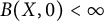 $B(X, 0) < \infty $
. Lemma 6.18 implies that
 $B(X, \omega _X) - 1$
does not exceed the number of components of X. Hence, Theorem 5.13 implies that
 $B(X, \omega _X) \leqslant \operatorname {\mathrm {Components}}(n,n) + 1$
. Lemma 6.6 implies that
 $|\omega _X| \leqslant \operatorname {\mathrm {KolchinProj}}(n)$
. Repeatedly applying Lemma 6.19, we obtain a sequence of numeric polynomials
 $$ \begin{align*} \omega_0 := \omega_X> \omega_1 > \omega_2 > \cdots \end{align*} $$
such that, for every
 $1 \leqslant i \leqslant L$
, we have
 $B(X, \omega _i) \leqslant G(i)$
and
 $|\omega _i| \leqslant G(i)$
. Because the Kolchin polynomials are well ordered, there exists L such that
 $\omega _L = 0$
. Proposition 6.7 implies that
 $L \leqslant \operatorname {\mathrm {Len}}_G$
. Hence,
 $B(X, 0) \leqslant G(\operatorname {\mathrm {Len}}_G)$
, where the right-hand side is a computable function of n. Set
 $A(n):=G(\operatorname {\mathrm {Len}}_G)$
, then
 $B(n,0)\leqslant A(n)$
.▪
Corollary 6.22 For all r, m, and
 $s\in \mathbb {Z}_{\geqslant 0}$
, and a set of
 $\Delta $
-
 $\sigma $
polynomials
 $F \subset k[\boldsymbol {y}_{s}]$
with
 $|\Delta |=m$
,
 $\deg F\leqslant s$
, and
 $|\boldsymbol {y}|= r$
,
 $F = 0$
has a sequence solution in
 $K^{\mathbb Z}$
if and only if
 $F = 0$
has a partial solution of computable length
 $A(\max \{r,m,s\})$
.
Proof The proof is as in [Reference Li, Ovchinnikov, Pogudin and Scanlon18, Corollary 6.21], as follows. Let
 $X\subset \mathbb A^H$
be the
 $\Delta $
-variety defined by
 $F=0$
regarded as a system of
 $\Delta $
-equations in
 $\boldsymbol {y}, \sigma (\boldsymbol {y}),\ldots , \sigma ^h(\boldsymbol {y})$
, where
 $H=n(h+1)$
. By Lemmas 6.12 and 6.14,
 $F = 0$
has a partial solution of length D (resp.
 $F = 0$
has a solution in
 $K^{\mathbb Z}$
) if and only if there exists a train of length D in X (resp. there exists an infinite train in X). By Proposition 6.21, if there exists a train of length
 $D := A(\max \{r,m,s\})$
in X, then there exists a infinite train in X. So, the assertion holds.▪
6.3 Upper bound for delay PDEs
We now state and prove the main result of this section which generalizes [Reference Li, Ovchinnikov, Pogudin and Scanlon18, Theorem 3.1] to delay PDEs.
Theorem 6.23 (Effective elimination for delay PDEs)
For all nonnegative integers r, m, and s, there exists a computable
 $B=B(r,m,s)$
such that, for all:
-
• nonnegative integers q and t,
-
•
$\Delta $
-
$\sigma $
-fields k with
$\operatorname {\mathrm {char}} k =0$
and
$|\Delta |=m$
, and -
• sets of
$\Delta $
-
$\sigma $
-polynomials
$F\subset k[\boldsymbol {x}_{t},\boldsymbol {y}_{s}]$
, where
$\boldsymbol {x} =x_1,\ldots ,x_q$
,
$\boldsymbol {y}=y_1,\ldots ,y_r$
, and
$\deg _{\boldsymbol {y}}F\leqslant s$
,


we have
 $$ \begin{align*}\big\langle \sigma^i(F)\mid i\in \mathbb{Z}_{\geqslant 0} \big\rangle^{(\infty)}\cap k[\boldsymbol{x}_\infty]\ne\{0\} \iff \langle \sigma^i(F)\mid i\in [0,B] \big\rangle^{(B)}\cap k[\boldsymbol{x}_{B+t}]\ne\{0\}.\end{align*} $$
Proof The proof closely follows [Reference Li, Ovchinnikov, Pogudin and Scanlon18, Theorem 6.22]. The “
 $\impliedby $
” implication is straightforward. We will prove the “
 $\implies $
” implication. For this, let
 $A :=A(\max \{r, m, s\})$
from Corollary 6.22, and let B be a computable bound obtained from [Reference Gustavson, Kondratieva and Ovchinnikov10, Theorem 3.4] with
 $$ \begin{align*}m\leftarrow m, \ \ n\leftarrow r(A + s + 1),\ \ h\leftarrow s,\ \ \text{and}\ \ D \leftarrow s.\end{align*} $$
By assumption,
 $$ \begin{align}1 \in \big\langle \sigma^i(F)\mid i\in \mathbb{Z}_{\geqslant 0} \big\rangle^{(\infty)}\cdot k(\boldsymbol{x}_\infty)[\boldsymbol{y}_\infty]. \end{align} $$
Suppose that
 $$ \begin{align}\langle \sigma^i(F)\mid i\in [0, A] \big\rangle^{(B)}\cap k[\boldsymbol{x}_{B+t}]=\{0\}. \end{align} $$
If
 $$ \begin{align*}1 \in \big\langle \sigma^i(F)\mid i\in [0, A] \big\rangle^{({B})}\cdot k(\boldsymbol{x}_{B+t})[\boldsymbol{y}_{\infty,A + s}],\end{align*} $$
then there would exist
 $c_{i, j}\in k(\boldsymbol {x}_{B+t})[\boldsymbol {y}_{\infty ,A + s}]$
such that
 $$ \begin{align} 1 = \sum\limits_{\theta\in\Theta_{\Delta}(B)} \sum\limits_{j = 0}^A \sum\limits_{f\in F} c_{i, j}\theta(\sigma^j(f)). \end{align} $$
Multiplying equation (6.6) by the common denominator in the variables
 $\boldsymbol {x}_{B+t}$
, we obtain a contradiction with (6.5). Hence, by [Reference Gustavson, Kondratieva and Ovchinnikov10, Theorem 3.4],
 $$ \begin{align*}1 \notin \big\langle \sigma^i(F)\mid i\in [0, A] \big\rangle^{(\infty)}\cdot k(\boldsymbol{x}_{B+t})[\boldsymbol{y}_{\infty, A + s}].\end{align*} $$
By Lemma 6.8, there exists a differentially closed
 $\Delta $
-
 $\sigma ^*$
-field extension
 $L \supset k(\boldsymbol {x}_{\infty })\supset k(\boldsymbol {x}_{B+t})$
. Then, differential Nullstellensatz implies that the system of differential equations
 $$ \begin{align*} \{\sigma^i(F)=0\mid i\in [0, A]\} \end{align*} $$
in the unknowns
 $\boldsymbol {y}_{\infty , A + s}$
has a solution in L. Then, the system
 $F = 0$
has a partial solution of length
 $A + 1$
in L. Now, from (6.4), we see that the system
 $F=0$
has no solutions in
 $L^{\mathbb {Z}}$
. Together with the existence of a partial solution of length
 $A + 1$
, this contradicts to Corollary 6.22.▪
Acknowledgment
We are grateful to the referees for numerous insightful comments, which helped us substantially improve the paper.


