INTRODUCTION
Trypanosoma cruzi, the causative agent of Chagas disease, represents an important health problem in Central and South America. The development of a persistent inflammatory cardiomyopathy is the most serious long-term sequel of chronic T. cruzi infection, and a fully effective treatment is not yet available for this phase of the infection. Treatment for Chagas disease is based on benznidazole (BNZ) and nifurtimox, which are capable of reducing parasitism and eliminating acute-phase symptoms in children (Sosa Estani et al. Reference Sosa Estani, Segura, Ruiz, Velazquez, Porcel and Yampotis1998) and adults (Cançado, Reference Cançado, Cancado and Chuster1985). In spite of its frequent adverse effects, many researchers in the field also recommend treatment with BNZ in adult patients during the chronic phase of T. cruzi infection (Viotti et al. Reference Viotti, Vigliano, Armenti and Segura1994, Reference Viotti, Vigliano, Lococo, Alvarez, Petti, Bertocchi and Armenti2009; Fabbro et al. Reference Fabbro, Arias, Streiger, Bizai, del Barco and Amicone2006; Sosa-Estani et al. Reference Sosa Estani, Viotti and Segura2009; Bern, Reference Bern2011).
Another drug that has been used as monotherapy for acute and chronic T. cruzi infections is 4-hydroxypyrazol (3, 4-d) pyrimidine, allopurinol (AL), that is used as an alternative substrate of hypoxanthine-guanine phospho-ribosyltransferase (HGPRT), causing truncation and death of the T. cruzi parasites (Marr, Reference Marr1991). Although varying degrees of effectiveness in preventing electrocardiographic abnormalities in chronic Chagas disease patients have been reported (Gallerano et al. Reference Gallerano, Marr and Sosa1990; Apt et al. Reference Apt, Arribada, Zulantay, Sanchez, Vargas and Rodriguez2003, Reference Apt, Arribada, Zulantay, Solari, Sánchez, Mundaca, Coronado, Rodríguez, Gil and Osuna2005), the findings were controversial, likely due to different regional susceptibilities of different parasite strains (Rassi et al. Reference Rassi, Luquetti, Rassi, Rassi, Rassi, García da Silva and Rassi2007). In the murine experimental system, AL administered either alone or in combination with clomipramine has been shown to prevent the development of cardiac tissue damage (Gobbi et al. Reference Gobbi, Lo Presti, Fernandez, Enders, Fretes, Gea, Paglini-Oliva and Rivarola2007, Reference Gobbi, Baez, Lo Presti, Fernández, Enders, Fretes, Gea, Paglini-Oliva and Rivarola2010). The combination of trypanocidal drugs for the treatment of T. cruzi infection might improve the efficacy of parasite control and would probably reduce the adverse effects (Viotti et al. Reference Viotti, Vigliano, Lococo, Alvarez, Petti, Bertocchi and Armenti2009; Rodrigues Coura and Borges-Pereira, Reference Rodrigues Coura and Borges-Pereira2011).
We have recently conducted a biological and molecular characterization of the T. cruzi isolate, TcN, from an endemic area of Nicaragua. This parasite, genotyped as TcI, is virulent in the acute and chronic phases in C3H/HeN-infected mice, and mainly invades cardiac and skeletal muscles (Grosso et al. Reference Grosso, Búa, Perrone, Gonzalez, Bustos, Postan and Fichera2010). In the present study, we aimed to evaluate the effect of a combined treatment with a lower dose of BNZ and AL in different schedules of administration, in experimental models of acute and chronic T. cruzi infection with TcN.
materials and methods
Chemical compounds
The following compounds were used in this study: BNZ (N-benzyl-2-nitro-1-imidazole-acetamide) (Roche Labs), AL (4-hydroxypyrazol (3, 4-d) pyrimidine) (Gador Lab, Buenos Aires, Argentina), fetal bovine serum (FBS) (Gibco, Rockville, MD, USA), horse serum (Internegocios SA, Córdoba, Argentina), tryptose (Difco, Detroit, MI, USA), 10% formaldehyde solution, haematoxylin–eosin and collagen-Masson's trichrome stains, guanidine (Sigma Chemical Co., St Louis, MO, USA) and EDTA (GE Healthcare Life Sciences, USA).
Parasites
TcN was obtained from the intestinal content of a Triatoma dimidiata vector captured in an urban endemic area of Nicaragua (Grosso et al. Reference Grosso, Búa, Perrone, Gonzalez, Bustos, Postan and Fichera2010). Trypomastigotes were obtained from cell cultures using kidney epithelial cells of the African green monkey, VERO cells (ABAC, Pergamino, Argentina). Epimastigotes were grown in Brain Heart Infusion culture medium.
Infection of mice and treatment scheme
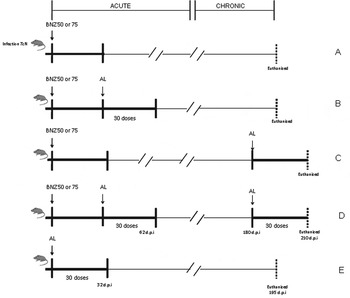
Nine groups, with 10 one-month-old male C3H/HeN mice each, were inoculated intraperitoneally with 1000 culture-derived trypomastigotes of the TcN isolate and treated with different combinations of 30 doses of BNZ (50 or 75 mg kg−1 day−1) and 30 doses of AL (64 mg kg−1 day−1) as represented in Fig. 1. Drugs were given directly into the mouth of each mouse by using a top cut tip. Briefly, treatment with BNZ at 50 or 75 mg kg−1 day−1 was started 2 days post-infection (dpi) (Fig. 1A–D). AL was administered, either immediately following BNZ treatment (Fig. 1B, ALSq) or in the chronic phase (Fig. 1C, ALChr). Two additional groups, one receiving AL immediately after the end of BZN, as well as in the chronic phase (Fig. 1D, ALSq/Chr), and the other receiving AL alone started 2 dpi (Fig. 1E, AL) were also evaluated. Uninfected and T. cruzi-infected mice left untreated and uninfected mice treated with BNZ or AL served as controls. All procedures involving experimental protocols in animals were conducted in accordance with ethical legislation and regulatory entities established in Argentina and International Guidelines.
Different schedules of a sequential combined treatment with benznidazole and allopurinol in experimental models of acute and chronic Trypanosoma cruzi infection with the TcN isolate. Animals were inoculated with 1000 trypomastigotes of TcN. Treatment with BNZ at 50 or 75 mg kg−1 day−1 was started at 2 days post-infection (A–D). ALSq=AL administered immediately following BNZ treatment (B). ALChr=AL administered following BNZ treatment in the chronic phase (C). ALSq/Chr=AL administered immediately following BNZ treatment and in the chronic phase (D). AL treatment alone (E). The animals were euthanized after 6/7 months of follow-up for qPCR, ELISA and histopathological studies.

Course of infection
The course of infection was assessed by monitoring parasitaemia and survival rates. Parasitaemia (n=5 mice per day) was scored as previously described (Brener, Reference Brener1962). The area beneath the parasitaemia curves was determined using Graph Prism 5.0. Mice survival rates were daily checked.
Parasitaemia detected by real-time PCR
One volume of blood, collected from euthanized infected and uninfected mice, at the endpoint, after completion of drug treatments at 7–8 months post-infection (n=5 samples per treatment) was mixed with an equal volume of guanidine-HCl 6 m, EDTA 0·1 m, pH 8, kept at room temperature for 1 week and then at 4 °C until use. DNA was isolated from 0·2 mL of guanidine-EDTA buffer B mixture using Illustra blood Mini columns (GE Healthcare Life Sciences) and eluted in 0·2 mL, according to the manufacturer's protocol. A bacterial commercial plasmid, pQE (Qiagen, USA), obtained from a midi-preparation and purified by the Qiagen Plasmid Midi kit (Qiagen), was used as an internal standard of DNA extraction. Purified plasmid DNA was linearized with PvuII restriction enzyme and 2 ng were added to each GE sample before extraction. An ABI 7500 thermocycler (Applied Biosystems, Carlsbad, CA, USA) was used to amplify a T. cruzi satellite DNA flanked by the Sat Fw and Sat Rv oligonucleotides highly conserved in the parasite genome (Duffy et al. Reference Duffy, Bisio, Altcheh, Burgos, Diez, Levin, Favaloro, Freilij and Schijman2009). Duplicated samples were run with a commercial kit, SYBR® GreenER® qPCR SuperMix Universal (Invitrogen, Life Technologies, USA). DNA amplifications were performed using 8 μL of mouse DNA extracted as template in a 20 μL final volume. An initial step of 50 °C for 2 min was run for UDG activation, followed by a step of 95 °C, 10 min for UDG inactivation and hot-start DNA polymerase activation. The qPCR DNA amplification was achieved after 40 cycles (95 °C, 15 sec; 60 °C, 60 s). Another qPCR was performed to amplify the internal standard plasmid with primers pQE rev: 5′-GTTCTGAGGTCATTACTGG and pQE Fw: 5′-CGGATAACAATTTCACACAG. The parasite load was normalized according to the amounts of pQE DNA recovery. Epimastigotes of the TcN isolate, DTU TcI were used as standard in artificially spiked mouse blood. The parasite curve, negative samples and non-template DNA were included in each determination.
Measurement of antibody response
Blood from treated and untreated mice (n=5 samples per treatment) was collected from the orbital venous sinus (500 μL) at 6/7 months post-infection. Sera samples were analysed for IgG antibody levels by use of an Enzyme Linked Immunosorbent Assay (ELISA). A lysate preparation derived from epimastigotes of the T. cruzi Tulahuen strain, (20 μg mL−1), was used as the source of antigen. Briefly, flat-bottomed (96-well) plates were coated overnight at 4 °C with 50 μL/well of antigen diluted in carbonate buffer pH 9·6. Plates were blocked for 1 h at RT with 100 μL/well of 5% skimmed milk in PBS. After being washed 3 times with PBS-0·05% Tween20 (PBS-T), plates were incubated with serum samples (1 : 50–1 : 400 dilution, 50 μL/well) for 30 min at 37 °C. After washing with PBS-T, 50 μL/well of horseradish peroxidase-labelled goat anti-mouse IgG (Jackson) was added for 30 min at RT. The reaction was developed with 50 μL/well of o-phenylenediamine dihydrochloride, and stopped with 2 N sulphuric acid. Optical density was read at 490 nm with an ELISA microplate reader (Dynatech). A cut-off value for significant decreases in antibody levels was set up as the mean minus 2 standard deviations of optical density obtained from the sera of infected untreated control mice.
Histopathological studies
Mice treated in the acute phase and untreated animals were euthanized after 6 months of follow-up (Fig. 1). Groups treated (n=8–10 mice per treatment) in both acute and chronic phases were euthanized after completion of treatment (Fig. 1). Hearts were removed from treated infected and untreated mice, fixed in 10% formaldehyde solution and embedded in paraffin. Five-micron tissue sections were stained with haematoxylin–eosin and collagen-Masson's trichrome stain and evaluated by light microscopy, recording the number of parasite nests, the extent of infection and fibrosis. The extent of the infection was evaluated as previously described (Gupta and Garg, Reference Gupta and Garg2010). Briefly, 8 different areas of the heart (left and right atria, upper and lower halves of each ventricular wall and septum) were scored according to the extension of inflammation as: (0) – absent/none; (1) – focal or mild myocarditis with only 1 foci; (2) – moderate with multiple inflammatory foci; (3) – extensive with inflammatory foci or disseminated inflammation with minimal necrosis and preservation of tissue integrity; and (4) – severe with diffused inflammation, interstitial oedema and loss of tissue integrity. Fibrosis was scored on a scale of 0–3 according to the damage recorded by microscopy: (0) – absent/mild; (1) – short and less than 4 foci of fibrosis that do not compromise the wall; (2) moderate – diffuse connective tissue that partially compromises the wall; (3) – severe and diffuse connective tissue that compromises the whole wall. A numeric sum for each heart section represents an estimate of the inflammation or fibrosis index.
Statistical analysis
The morphometric results of the different treatment protocols were compared by analysis of variance (ANOVA) followed by Bonferroni's test using the GraphPad PRISM 5.0 software. Parasitaemia detected by qPCR was analysed by the non-parametric Kruskal–Wallis test and Dunnett's test. Differences between groups were considered significant at P<0·05.
RESULTS
Course of infection of T. cruzi Nicaragua in untreated mice and mice treated with a sequential combination of benznidazole and allopurinol
The effects of a sequential combined treatment with BNZ administered early in the acute infection followed either by AL in the acute phase, AL in the chronic phase or AL in both phases were evaluated in TcN-infected mice (Fig. 1). The rationale was that the combination of AL with BNZ, in different schedules of administration, might allow a decrease in the dose of BNZ without affecting parasite control, and eventually, AL might also act synergistically with BNZ.
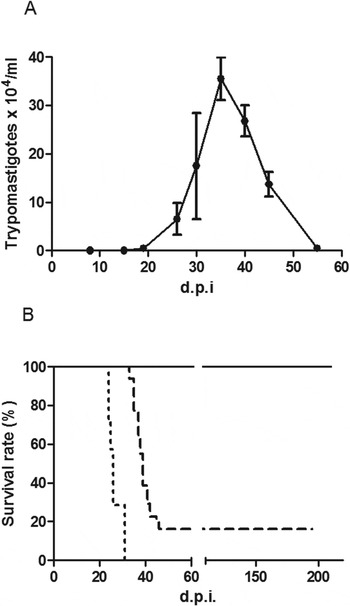
Parasitaemia in mice inoculated with 1000 trypomastigotes of the TcN isolate peaked at 30–35 dpi and decreased by 45–50 dpi (Fig. 2A). A 15% survival rate was recorded during the acute phase. All groups of TcN-infected mice treated with different combinations of BNZ and AL, as well as uninfected controls treated with BNZ or BNZ plus AL survived, while all animals treated with AL alone died by 30 dpi (Fig. 2B).
Parasitaemia levels and survival rates of C3H/HeN mice infected with trypomastigotes of TcN and subjected to different treatment schedules. (A) Parasitaemia (n=5 mice per day; total mice=30) was scored as previously described (Brener, Reference Brener1962). The area beneath parasitaemia curves was determined using Graph Prism 5.0. (B) Mice survival rates were checked daily. The solid line indicates the survival rate of infected mice treated with BNZ 50 or 75 mg kg−1 day−1 alone or in combination with AL 64 mg kg−1 day−1. The dotted line indicates survival rate of infected mice treated with allopurinol 64 mg kg−1 day−1 alone. The cut lines correspond to infected control mice.

Parasitaemia-DNA in drug-treated TcN-infected mice
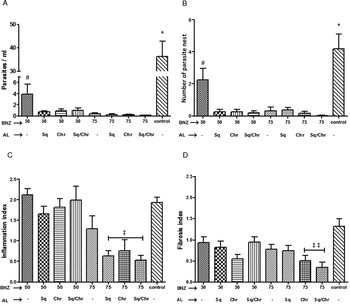
Parasitaemia quantified by DNA amplification significantly decreased in all tested treatment schedules compared with untreated infected mice (Fig. 3A). Blood parasites in mice treated with BNZ at the 50 mg kg−1 day−1 dose were significantly higher than in animals treated with BNZ at 75 mg kg−1 day−1. The addition of AL to BNZ at the 50 mg kg−1 day−1 dose induced a significant reduction in parasite load comparable to that observed in mice treated with BNZ at 75 mg kg−1 day−1 (Fig. 3A). Parasite levels in mice treated with BNZ at 75 mg kg−1 day−1 followed by AL, in any combination, were not different from those observed in mice treated with BNZ alone at 75 mg kg−1 day−1.
Evaluation of parasitaemia, inflammation and fibrosis in mice infected with TcN isolate and treated with a combination of BNZ and AL. Infected mice were treated with BNZ and AL, in different administration schemes, as described in Fig. 1. Data represent (A) quantitative PCR amplification of a satellite DNA. (B) Amastigote quantification in heart tissues by staining with haematoxylin–eosin. (C) Morphometric quantification of inflammatory cells in heart tissues by staining with haematoxylin–eosin. (D) Morphometric quantification of fibrosis in heart tissues stained with collagen-Masson's trichrome. (*) P<0·05 vs all treatments; (#) P<0·05 vs all treatments; (‡) P<0·0·5 vs BNZ 75 mg kg−1 day−1, BNZ 50 mg kg−1 day−1 in any combination with AL and control infected untreated mice (‡ ‡) P<0·05 vs BNZ 75 mg kg−1 day−1 alone, BNZ 75 mg kg−1 day−1 ALSq, BNZ 50 mg kg−1 day−1 alone or with ALSq or with ALSq/Chr. ALSq=sequential addition of AL (64 mg kg−1 day−1) after BNZ treatment (50 or 75 mg kg−1 day−1); ALChr=addition of AL after BNZ treatment (50 or 75 mg kg−1 day−1); ALSq/Chr=sequential addition of AL after BNZ treatment (50 or 75 mg kg−1 day−1) and AL addition at the chronic phase of the infection; Control=infected untreated mice.

Humoral immune responses specific for T. cruzi following chemotherapy
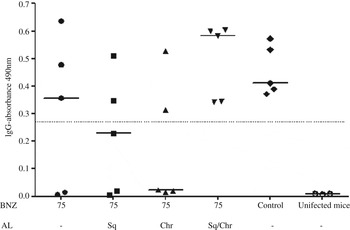
IgG levels specific for an epimastigote lysate preparation were measured in mice infected with TcN treated with BNZ 75 mg kg−1 day−1, BNZ 75 mg kg−1 day−1 plus ALSq, BNZ 75 mg kg−1 day−1 plus ALChr, or BNZ 75 mg kg−1 day−1 plus ALSq/Chr; untreated TcN-infected mice and uninfected mice. Forty to 60% of mice treated with BNZ 75 mg kg−1 day−1, BNZ 75 mg kg−1 day−1 plus ALSq or BNZ 75 mg kg−1 day−1 plus ALChr showed a decrease in T. cruzi-specific antibodies, compared with infected untreated mice (Fig. 4). Conversely, no changes in ELISA titres were observed in mice treated with BNZ 75 mg kg−1 day−1 plus ALSq/Chr (Fig. 4).
Trypanosoma cruzi-specific antibody levels in TcN-infected mice treated with a sequential combined treatment of BNZ and AL. Serum samples from TcN-infected mice treated with BNZ 75 mg kg−1 day−1 with or without AL, infected untreated control mice and uninfected mice were analysed for IgG antibody levels specific for T. cruzi antigens by ELISA. Each dot represents antibody levels from individual mice. Horizontal lines show median values. The cut-off value for significant changes in antibody levels, as described in the Materials and Methods section is represented by the horizontal dotted line. Sq=sequential addition of AL (64 mg kg−1 day−1) after BNZ treatment (75 mg kg−1 day−1); Chr=addition of AL after BNZ treatment (75 mg kg−1 day−1); Sq/Chr=sequential addition of AL after BNZ treatment (75 mg kg−1 day−1) and AL addition at the chronic phase of the infection; Control=infected untreated mice.

Parasite nests, inflammatory lesions and fibrosis in the hearts of TcN-infected mice treated with different combinations of BNZ and AL
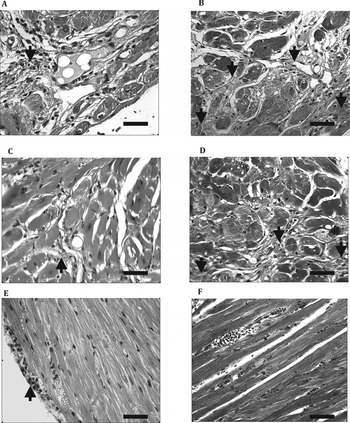
The presence of parasite nests in heart tissues determined by light microscopy correlated with blood parasite levels by qPCR, showing that treatment with BNZ at 75 mg kg−1 day−1, BNZ at 75 mg kg−1 day−1 plus AL, or BNZ at 50 mg kg−1 day−1 plus AL, also resulted in a reduction of intracellular parasite nests compared with animals treated with BNZ at 50 mg kg−1 day−1 and untreated animals (Fig. 3B). The myocardium of untreated infected mice showed extensive and multiple inflammatory foci of mononuclear cell infiltrates (Fig. 3C, Fig. 5A). Profuse necrotic areas with structural alterations and extensive fibrotic foci with partial wall compromise were also observed (Figs 3D and 5B). In contrast, all drug-treated mice had lower mononuclear cell infiltrates and fewer structural changes (Fig. 5C–F). A significant decrease of inflammatory cells in heart tissues was only achieved after treatment with BNZ at 75 mg kg−1 day−1 with any of the 3 combinations with AL (Figs 3C, 5E and F). Fibrotic foci were only reduced in animals treated with BNZ at 75 mg kg−1 day−1 in combination with AL, administered either in the chronic phase or in both phases but not when AL was administered following BNZ in the acute phase of the infection (Fig. 3D).
Histopathological analysis of heart tissues in chronically TcN-infected mice treated with a sequential combination of BNZ and AL. (A and B) Untreated mice showing severe inflammatory cell infiltrates and interstitial oedema. (C and D) Mice treated with BNZ 75 mg kg−1 day−1, showing slight inflammatory cell infiltrates and interstitial oedema. (E and F) Mice treated with BNZ 75 mg kg−1 day−1 plus AL, showing no alterations in tissues and slight inflammatory foci. (A, C and E) Haematoxylin–eosin stains. (B, D and F) Collagen-Masson's trichrome stain. Arrows in A, C and E indicate inflammatory cell infiltrate. Arrows in B and D indicate fibrosis foci. Scale bars=250 μm. ALSq=sequential addition of AL (64 mg kg−1 day−1) after BNZ treatment (50 or 75 mg kg−1 day−1); ALChr=addition of AL after BNZ treatment (50 or 75 mg kg−1 day−1); ALSq/Chr=sequential addition of AL after BNZ treatment (50 or 75 mg kg−1 day−1) and AL addition at the chronic phase of the infection.

DISCUSSION
Our studies attempted to find new chemotherapeutic schemes to modify Chagas cardiomyopathy, characterized by parasite persistence with a chronic inflammatory process. One of the main drawbacks in the use of BNZ in the chronic phase of T. cruzi infection is the appearance of adverse effects (Viotti et al. Reference Viotti, Vigliano, Lococo, Alvarez, Petti, Bertocchi and Armenti2009), which might be reduced with the administration of lower doses. Herein, we report that treatment with BNZ at a lower dose than previously reported (Garcia et al. Reference Garcia, Ramos, Senra, Vilas-Boas, Rodrigues, Campos de Carvalho, Ribeiro-Dos-Santos and Soares2005; Bustamante et al. Reference Bustamante, Presti, Rivarola, Fernández, Enders, Fretesm and Paglini-Oliva2007, Reference Bustamante, Bixby and Tarleton2008; Caldas et al. Reference Caldas, Talvani, Caldas, Carneiro, de Lana, da Matta Guedes and Bahia2008; Miyamoto et al. Reference Miyamoto, Gomes, Marangon, de Araújo, Bahia, Martins-Filho, de Lana and de Ornelas Toledo2008; da Silva et al. Reference da Silva, Batista Dda, Oliveira, de Souza, Hammer, da Silva, Daliry, Araujo, Britto, Rodrigues, Liu, Farahat, Kumar, Boykin and Soeiro Mde2012), in combination with AL, reduced the levels of parasitaemia in blood and tissues.
The use of BNZ at a concentration of 100 mg kg−1 day−1 in experimental mouse models with different parasite strains showed variable results from complete to partial elimination of parasite load (Garcia et al. Reference Garcia, Ramos, Senra, Vilas-Boas, Rodrigues, Campos de Carvalho, Ribeiro-Dos-Santos and Soares2005; Bustamante et al. Reference Bustamante, Presti, Rivarola, Fernández, Enders, Fretesm and Paglini-Oliva2007, Reference Bustamante, Bixby and Tarleton2008; Caldas et al. Reference Caldas, Talvani, Caldas, Carneiro, de Lana, da Matta Guedes and Bahia2008; Miyamoto et al. Reference Miyamoto, Gomes, Marangon, de Araújo, Bahia, Martins-Filho, de Lana and de Ornelas Toledo2008; da Silva et al. Reference da Silva, Batista Dda, Oliveira, de Souza, Hammer, da Silva, Daliry, Araujo, Britto, Rodrigues, Liu, Farahat, Kumar, Boykin and Soeiro Mde2012). In this study, we found that BNZ can be reduced to a dose of 75 mg kg−1 day−1 without affecting the control of the infection. Moreover, BNZ can be reduced to a 50 mg kg−1 day−1 dose when AL is added in any combination without increasing parasite levels in blood and tissues. A tendency to a lower degree of fibrosis was also found with BNZ at 50 mg kg−1 day−1 followed by AL in the chronic phase.
A beneficial effect of the combined treatment with BNZ and AL was also demonstrated by the lower parasite-specific antibody levels observed in mice treated with BNZ 75 mg kg−1 day−1 plus ALSq or BNZ 75 mg kg−1 day−1 plus ALChr. Of note is the finding that antibody levels remained unchanged in mice treated with BNZ 75 mg kg−1 day−1 followed by AL in the acute phase and AL in the chronic phase of the infection. This might be due to higher levels of drug-induced antigen release upon administration of 2 courses of AL. A boost in humoral and cellular T cell responses was observed early after treatment of chronically T. cruzi-infected subjects with BNZ (Cooley et al. Reference Cooley, Etheridge, Boehlke, Bundy, Weatherly, Minning, Haney, Postan, Laucella and Tarleton2008; Laucella et al. Reference Laucella, Mazliah, Bertocchi, Alvarez, Cooley, Viotti, Albareda, Lococo, Postan, Armenti and Tarleton2009) or with a combination of AL and BNZ (Perez-Mazliah et al. Reference Perez-Mazliah, Alvarez, Cooley, Lococo, Bertocchi, Petti, Albareda, Armenti, Tarleton, Laucella and Viotti2013). Therefore, a longer time might be needed for antibody clearance in this treatment schedule. The sequential administration of AL in the acute phase or in the chronic phase of the infection was thought to target parasites that might have survived the first round of BNZ treatment. We were also interested to see whether the administration of 2 rounds of AL might be more effective. The combination of BNZ at 75 mg kg−1 day−1 with AL, given either in the chronic phase or sequentially after BNZ in the acute phase, as well as in the chronic phase, was the most effective at controlling the infection and reducing inflammation and fibrosis.
The cardioprotective effect of AL has been reported in previous studies (Pacher et al. Reference Pacher, Nivorozhkin and Szabó2006) and might be related to the reduction of oxidative stress via a scavenging mechanism (Osarogiagbon et al. Reference Osarogiagbon, Choong, Belcher, Vercellotti, Paller and Hebbel2000; Namazi, Reference Namazi2004) by suppressing TNF-α production in the heart (Pissetti et al. Reference Pissetti, Correia, de Oliveira, Llaguno, Balarin, Silva-Grecco and Rodrigues2011). Perez-Mazliah et al. (Reference Perez-Mazliah, Alvarez, Cooley, Lococo, Bertocchi, Petti, Albareda, Armenti, Tarleton, Laucella and Viotti2013) have recently reported that the combination of AL and BNZ for treatment of chronic Chagas disease in humans induced significantly altered T and B cell responses compatible with a reduction in parasite burden. Moreover, AL was able to reduce T cell activation and cytokine production by human T cells in vitro (Perez-Mazliah et al. Reference Perez-Mazliah, Albareda, Alvarez, Lococo, Bertocchi, Petti, Viotti and Laucella2012). Altogether, these findings might support the application of a combined treatment of BNZ and AL in the chronic phase of the infection, even when some degree of tissue damage has already been developed.
To our knowledge, this is the first study to demonstrate a positive effect of a low dose of BNZ combined with AL to control T. cruzi infection and the development of tissue damage in a mouse experimental model. These findings provide support for the potential use of new therapeutic regimens in human chronic Chagas disease.
ACKNOWLEDGEMENTS
We thank Dr Mónica Esteva, Head of the Research Department Instituto Nacional de Parasitología Buenos Aires, Argentina for her help with ELISA techniques, to Dr Jaime Alvarez Rey, Assistant Professor at the University of Miami, USA for his critical review of the manuscript. We thank Claudia Nose for her help with artwork, to the staff of the animal facility of INP, America M. Gabi and Asencio Beatriz and Leticia Orellana for their excellent technical assistance. Thanks also to Dr Alicia Fuchs for the scholarships from the Centro de Altos Estudios en Ciencias Humanas y de la Salud, Universidad Abierta Interamericana.
J.B., S.A.L. and L.E.F. are members of the Research Career of the Consejo Nacional de Investigaciones Científicas y Técnicas (CONICET), Argentina. A.R. is a pathologist and Head of the Clinic, Pathology and Treatment Department of the Instituto Nacional de Parasitología, ANLIS C. G. Malbrán.
FINANCIAL SUPPORT
This work was partly supported by the Instituto Nacional de Parasitología, ANLIS C. G. Malbrán and by the Centro de Altos Estudios en Ciencias Humanas y de la Salud Universidad Abierta Interamericana.