


Highlights
-
• The electronic medical record holds promise as a tool for functional neurological disorder research.
-
• Functional neurological disorder case definition validation and improved coding practices must be prioritized.
-
• Thirty-two diagnostic codes have been used for the study of functional neurological disorder, and validation of a case definition has been rarely attempted.
Introduction
Functional neurological disorder (FND) is a common neuropsychiatric disorder that lies at the intersection of the mind, brain and body and causes various disabling neurological symptoms. Reference Edwards and Bhatia1,Reference Gilmour and Lidstone2 Estimates on the prevalence of FND range widely, from 50 to 1600/100,000, with 60–75% of cases occurring in women, with age of onset reported from the 1st to 10th decade of life and a peak in midlife. Reference Carson, Lehn, Hallett, Stone and Carson3–Reference Finkelstein, Diamond, Carson and Stone5 It has been shown that roughly one-third of patients presenting to outpatient general neurology clinics in Scotland had symptoms “not at all” or only “somewhat” explained by non-functional neurological disease, many of which may represent functional neurological symptoms. Reference Carson, Ringbauer, Stone, McKenzie, Warlow and Sharpe6–Reference Stone, Carson and Duncan8 As a result, in the USA, the annual cost is estimated to exceed $5.3 billion. Reference Herbert, Kim, Hassan, Wilkinson-Smith and Waugh9 Although FND is common, it is often overlooked and can be challenging to identify due to its heterogeneous expression. FND is categorized, but not limited to, four main subtypes: functional (dissociative) seizures (FDS), functional movement disorder (FMD), persistent postural-perceptual dizziness (PPPD) and functional cognitive disorder (FCD). Reference Hallett, Aybek, Dworetzky, McWhirter, Staab and Stone10
Historical names for FND have included “hysteria,” Reference Raynor and Baslet11 “conversion disorder,” Reference Levenson, Sharpe, Hallett, Stone and Carson12 “pseudoseizures,” “psychogenic illness,” Reference Raynor and Baslet11 “shell shock,” “medically unexplained” Reference Gilmour and Jenkins13 and “somatization,” among others. A long-standing but incorrect view is that physical functional symptoms are the direct materialization of unconscious thoughts (the term “conversion” refers to this notion). Today, the understanding of FND has gradually shifted to focus on mechanisms of symptoms, which is reflected in the more recently used term “functional neurological disorder.” Reference Levenson, Sharpe, Hallett, Stone and Carson12 Despite a growing understanding of the pathophysiological mechanisms of FND and increased recognition of positive signs that can be used to diagnose FND accurately, there remains a concern around misdiagnosis. Previous studies show that FND patients are often grouped under general codes such as “somatoform disorders,” coded for individual symptoms, such as “convulsions,” or not coded at all, which may indicate a degree of lack of knowledge of appropriate codes. Reference Herbert, Kim, Hassan, Wilkinson-Smith and Waugh9,Reference Wiggins, Court and Sawyer14,Reference Robbins, Larimer, Bourgeois and Lowenstein15 Lack of confidence in diagnosis from clinicians related to lack of knowledge of the disorder, stigma on the part of clinicians and stigma on the part of patients may also contribute to inconsistency of coding and possible misdiagnosis. Reference MacDuffie, Grubbs and Best16 Misdiagnosis of a functional disorder tends to generate lower levels of concern from clinicians than missing the diagnosis of an alternate nonfunctional neurological disease, likely due to the incorrect view that other neurological diseases are always more serious. Reference Walzl, Carson and Stone17
Electronic medical records (EMRs) and diagnostic coding systems such as the International Classification of Diseases (ICD) have become increasingly beneficial tools for research. EMRs are large digital databases that hold extensive health data on patients who have contacted healthcare services. Reference Ehrenstein, Kharrazi, Lehmann, Taylor, Gliklich, Leavy and Dreyer18 Diagnostic codes exist within classification systems, translating clinical EMR data into a coding scheme that is used to identify patients with different diagnoses for reimbursement, administration and research purposes. Reference O’Malley, Cook, Price, Wildes, Hurdle and Ashton19 Case definitions can combine diagnostic codes, lab results, medications and other health data that are used as a criterion to define individuals with a disease. Diagnostic codes and case definitions should be validated against a gold standard to ensure patients are identified accurately. Reference McBrien, Souri and Symonds20 This is especially relevant when coding for FND, given its history of misclassification.
The potential consequences of failing to diagnose and accurately code FND are large. Appropriate treatment for a patient can only be assigned through the correct diagnosis. With appropriate treatment, one can limit iatrogenic harm and take steps to recovery. Reference Espay, Aybek and Carson21 Misdiagnosis can also have negative psychosocial and socioeconomic effects. Untreated FND can be disabling, leaving up to 35% of patients without work and 26% relying on disability benefits. Reference Aybek, Lidstone and Nielsen22,Reference Carson, Stone and Hibberd23 In addition, the underutilization of codes is problematic for large-scale research on FND epidemiology. Although FND is common, data is difficult to find due to the lack of research on this disorder. Reference Stephen, Fung, Perez and Espay24
In this scoping review, we aim to assess if EMR case definitions for FND or its subtypes have been created and/or validated. We will investigate what yet-to-be-validated definitions/codes have been used in EMR studies and how the EMR is being used to further our understanding of this important condition. This is a crucial step toward confidently harnessing the power of the EMR for further studies on FND.
Methods
A scoping review was conducted following the Preferred Reporting Items for Systematic Reviews and Meta-Analyses extension for Scoping Reviews guidelines to understand how EMRs are used to identify patients with FND, specifically in conjunction with ICD codes and case definitions. No ethics approval was needed for this project, as all data were obtained from publicly available sources.
Search strategy
MEDLINE (1946–present), EMBASE (1974–present) and APA PsycInfo (1806–present) were searched on May 14, 2024, for relevant literature using a search strategy that was drafted in collaboration with and reviewed by all study authors and again with a revised search strategy on April 29, 2026. The search strategy was created using MeSH terms and keywords for two main concepts of “Functional Neurological Disorder” and Database Research and joined with Boolean terms “AND” and “OR” (Supplemental Methods). References of included papers were also hand-searched.
Eligibility criteria
Included studies met the following criteria: (1) original research, (2) focused on patients with FND or its subtypes, (3) used the EMR to identify patients with FND, (4) published after 2000 given the timeline of usage of EMRs and recent coding schemes and (5) published in English or French. Studies were excluded if they were reviews, case reports, conference abstracts or editorials.
Study selection
One author (I.K.) performed the literature search. All relevant literature gathered by the search strategy was imported into Covidence, with duplicates removed. Two independent authors (G.S.G. and I.K.) screened titles to ensure they aligned with the research question. Following title screening, the remaining abstracts were independently screened in duplicate using the inclusion/exclusion criteria. Abstracts selected by either or both authors were included in the full-text review. Both reviewers independently reviewed the full texts of the articles. The reasons for exclusion during full-text review were recorded. Meetings were held periodically between both reviewers, and disagreements were resolved by consensus.
Data extraction
Data from all included studies were extracted by one author (I.K.) and input into a standardized data extraction form. A second author (G.S.G.) reviewed the table to ensure its accuracy. The standardized data extraction form included study authors, year of publication, journal, language, country, EMR database/setting, study design, sample size, date range of EMR review, objectives/purpose of reporting, main findings, gaps identified/future directions and limitations. The FND subtype that each article focused on was also recorded. The diagnostic code(s) and/or case definition(s) were extracted, and it was specifically noted if and how the case definition was validated by the study authors and how useful the code(s) were deemed to be.
Data synthesis
Data were tabulated, and counts of general study characteristics and common patient characteristics were recorded. Given the heterogeneity of the included studies, a narrative synthesis was used to present notable findings.
Results
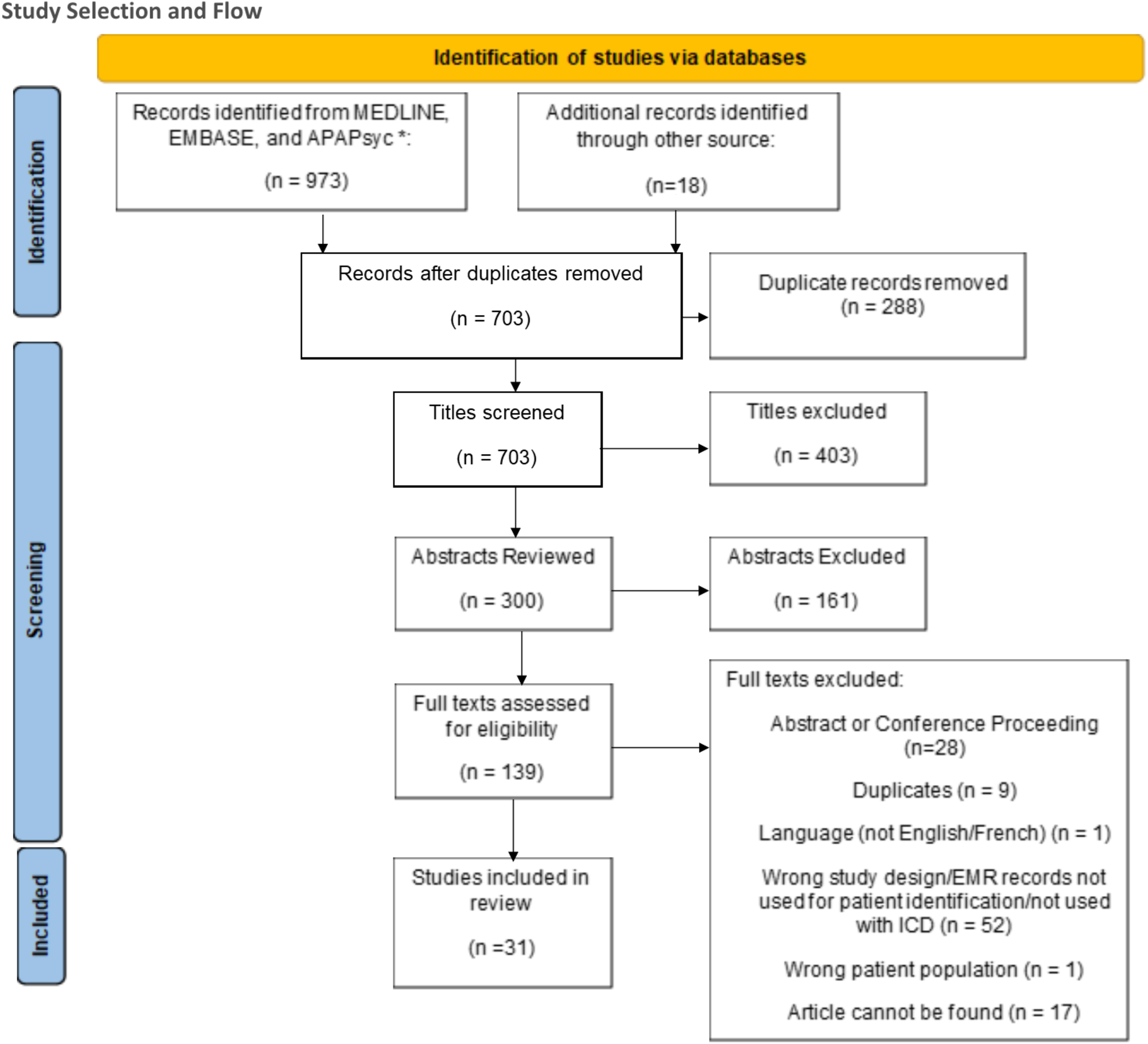
The search identified 973 articles. After removing duplicates, 703 article titles were then screened based on the eligibility criteria, narrowing the number of articles down to 300. 300 abstracts were reviewed, leaving 138 for full-text review. Additionally, two articles were found by hand searching references from included studies, and 16 more after adjusting the search strategy with additional relevant terms. After the final screening process, 31 articles met the inclusion criteria for data extraction (Figure 1).
PRISMA diagram. EMR = electronic medical record; ICD = International Classification of Diseases; PRISMA = Preferred Reporting Items for Systematic Reviews and Meta-Analyses.

Figure 1. Long description
A flowchart illustrating the study selection and screening process for a review on functional neurological disorder. The process begins with the identification of studies via databases. Records identified from MEDLINE, EMBASE, and APAPsyc total 973, with an additional 18 records identified through other sources. After removing 288 duplicate records, 703 records remain. Titles of these records are screened, resulting in the exclusion of 403 titles. Abstracts of the remaining 300 records are reviewed, leading to the exclusion of 161 abstracts. Full texts of the remaining 139 records are assessed for eligibility. During this assessment, 28 records are excluded as abstracts or conference proceedings, 9 as duplicates, 1 due to language, 52 due to wrong study design or EMR records not used for patient identification or not used with ICD, 1 due to wrong patient population, and 17 because the articles cannot be found. Ultimately, 31 studies are included in the review.
Study characteristics
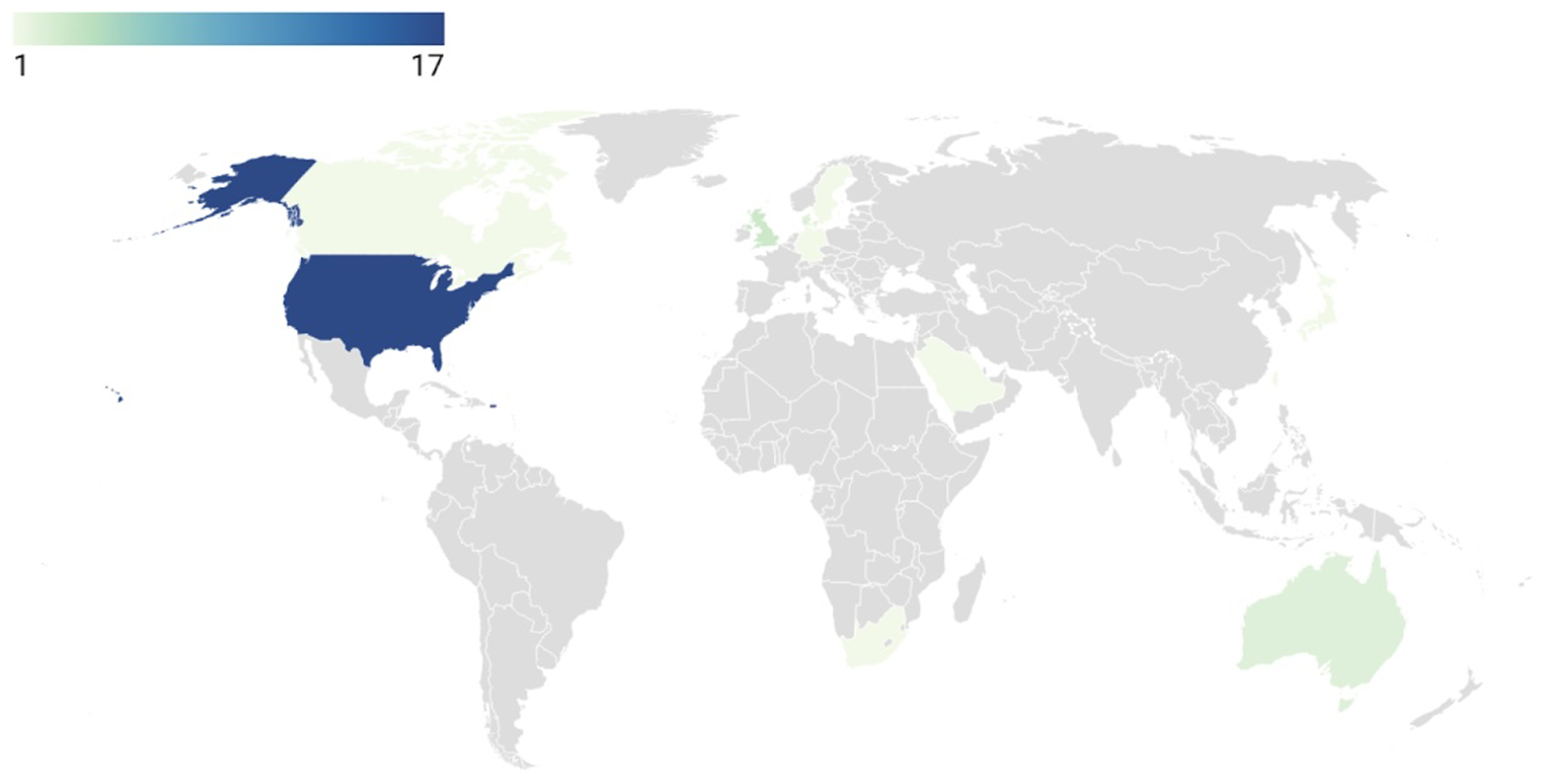
See Supplemental Table 1 for detailed study characteristics. Of the 31 studies included in the study, the majority were conducted in the USA (n = 17) (Figure 2). The second most frequently occurring setting was in Europe, including the United Kingdom, Denmark, Sweden and Germany (n = 8). All included studies ranged in publication year from 2013 to 2024, most of which were published in 2020 or later (n = 20). Included studies pulled data from four types of databases: hospital databases (n = 9), specialized clinic registries (n = 8; movement disorder clinics, epilepsy centers), national databases (n = 8; e.g., Danish Psychiatric Central Research Registry, Japan Medical Data Center) and “other” (n = 6; including regional and other miscellaneous databases).
Geographical distribution of included studies. Countries are shaded according to the number of studies identified (1 = light green to 17 = dark blue). Gray areas represent countries with no eligible studies or no available data.

Patient characteristics
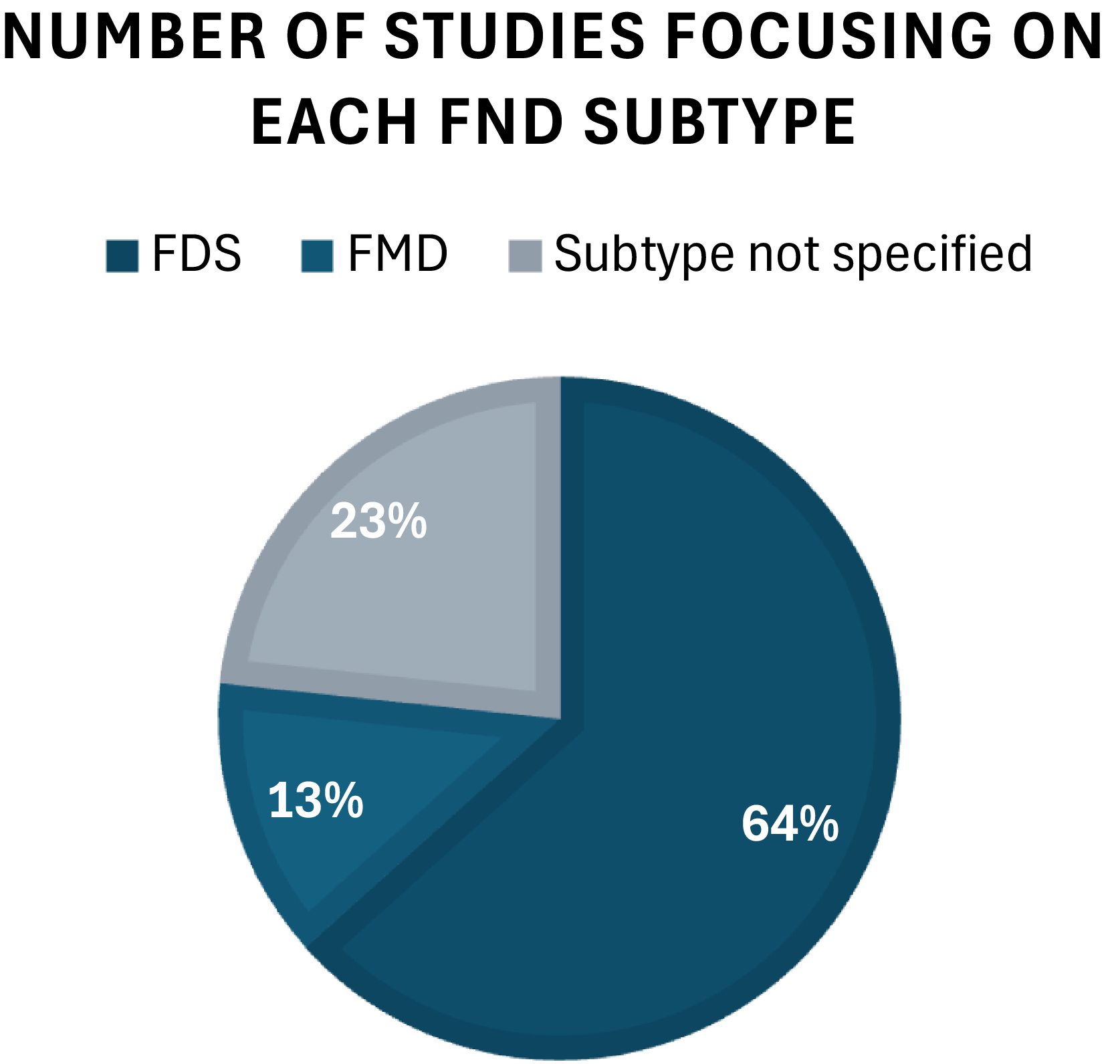
Most studies investigated patients with FDS (n = 18), while a small minority focused on patients with FMD (n = 5). FND subtypes remained unspecified in many articles (n = 8) (Figure 3). Patients with subtypes of PPPD and FCD were not specifically identified as a primary focus in any of the studies included. Population-specific studies were identified among the included articles, most commonly focusing on pediatric cases (n = 9) or veterans (n = 5). The remaining studies (n = 17) included adult populations only. Across all studies that considered sex (n = 28), females were reported to make up the majority of FND patients.
Subtypes identified in included studies. FDS = functional (dissociative) seizures; FMD = functional movement disorder; FND = functional neurological disorder.

Diagnostic code usage
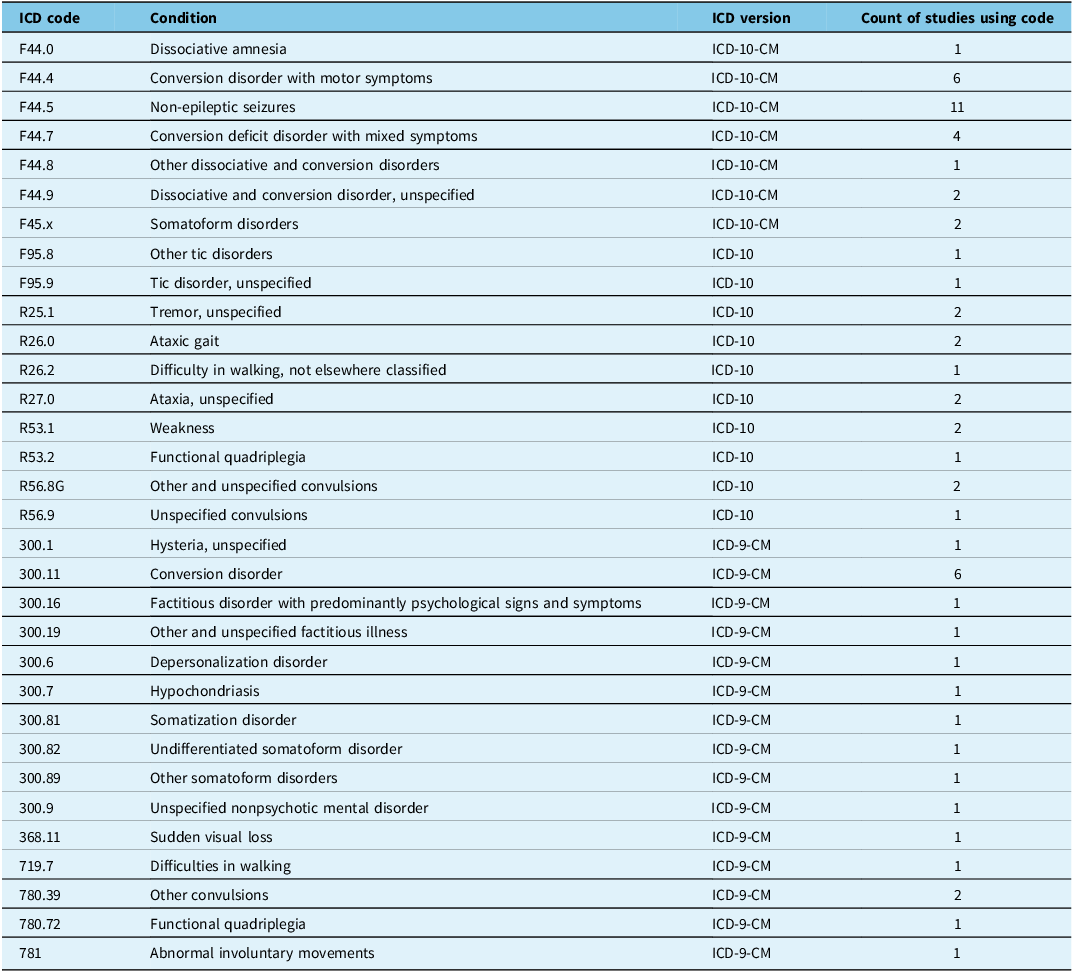
All codes and their usage are listed in Table 1. Thirty-two unique codes from the ICD-10 and ICD-9 classifications were used to capture the diagnosis of patients with FND, with many studies using multiple codes for identification. Generally, ICD-10-CM F44.x codes, referring to dissociative and conversion disorders, were most commonly used (n = 21), while ICD-9-CM 300.x codes referring to neurotic disorders (n = 8) and ICD-9 780.x codes labeled as “general symptoms” (n = 4) were also somewhat frequently documented. Specifically, ICD-10-CM codes F44.4 (conversion disorder with motor symptoms) (n = 6), F44.5 (non-epileptic seizures) (n = 11) and F44.7 (conversion deficit disorder with mixed symptoms) (n = 4) were most frequently used. Among specific ICD-9 codes, 300.11 (conversion disorder with seizures) (n = 5) was the most commonly documented.
ICD codes to identify functional neurological disorder in included studies

Table 1. Long description
A table with four columns and twenty rows. The columns are labeled ICD code, Condition, ICD version, and Count of studies using code. The table lists various ICD codes, their corresponding conditions, the ICD version, and the count of studies using each code. The conditions include dissociative amnesia, conversion disorder with motor symptoms, non-epileptic seizures, and others. The ICD versions include ICD-10-CM and ICD-9-CM. The count of studies using each code varies, with some codes being used in multiple studies.
ICD = International Classification of Diseases.
Many studies noted the current lack of agreed-upon diagnostic codes as problematic, suggesting that their search strategies were purposefully conservative or broad to achieve their aims. Reference Macchi, Kletenik, Olvera and Holden25 For example, Stephen et al. used a deliberately conservative definition of FND to avoid misclassification, while Ahmedani et al. purposefully cast a wide net for codes to avoid misdiagnosis and gain a more complete picture. Reference Stephen, Fung, Lungu and Espay26,Reference Ahmedani, Osborne and Nerenz27
Case definitions
Alternate approaches to identify FND patients used various data-driven identification methods (e.g., keyword searches, natural language processing [NLP] algorithms), occasionally in conjunction with ICD codes. Seven studies reported conducting searches for FND-related keywords and other indicators through electroencephalogram (EEG) reports, case notes or clinical files. Reference Robbins, Larimer, Bourgeois and Lowenstein15,Reference O’Connell, Nicholson, Wessely and David28,Reference Christopher, Pretorius, Moodley, Joubert and Arendse29 Although some studies did not specifically indicate which keywords or indicators were searched for to rule in patients, those that did showed varied results. For example, studies searched for words such as “psychogenic,” “functional,” “somatization,” “conversion,” “dissociative” and “Hoover’s sign” in health records. Reference Herbert, Kim, Hassan, Wilkinson-Smith and Waugh9 To differentiate those with epilepsy alone from those with comorbid epilepsy and FDS, another study used the number of patient-reported allergies in EEG notes. Reference Robbins, Larimer, Bourgeois and Lowenstein15 Case notes or correspondence with evidence of functional motor symptoms or a diagnosis of FMD were used by another study to identify FND. Reference O’Connell, Nicholson, Wessely and David28
Documentation and charts were reviewed manually in eight studies and using specialized technology/algorithms in seven studies. The latter included the Epic SlicerDicer data exploration tool, Reference Margolesky, Puentes and Espay30 Voogo (EMR mining tool), Reference Altalib, Elzamzamy and Pugh31 NLP tools trained with FND-related vocabulary Reference Hamid, Fodeh and Lizama32–Reference Ali, Bornovski and Gopaul34 and algorithms using ICD codes, keywords and EEG procedural terminology codes together. Reference Goleva, Lake, Torstenson, Haas and Davis35,Reference Fox, Goleva, Haas and Davis36 Epic’s Slicer Dicer tool, integrated into the EMR, was used to retrieve medical records of Movement Disorders specialists’ patients with specific ICD codes mentioned earlier, which was then followed by manual data extraction. Reference Margolesky, Puentes and Espay30 The Voogo tool operated by retrieving patients with neurologists’ progress notes that contained keywords indicative of FDS such as “nonepileptic seizure” and “FDS.” These notes were then classified into categories indicating diagnostic certainty, as predefined under the International League Against Epilepsy (ILAE) criteria. Reference Altalib, Elzamzamy and Pugh31 Another NLP tool was trained on clinical notes manually classified into ILAE categories and human suggestions on which language and patterns constitute the presence of FDS. Reference Hamid, Fodeh and Lizama32 This tool was used in various studies based on its ability to detect keywords and read patterns in clinical notes and, with that, distinguish those with “definite” or “probable” FDS from those without FDS. Reference Hamid, Fodeh and Lizama32–Reference Ali, Bornovski and Gopaul34 In some cases, ICD codes and Current Procedural Terminology (CPT) codes were used alongside algorithmic models, which were based on identifying keywords in clinical documentation, similar to those mentioned above. Reference Goleva, Lake, Torstenson, Haas and Davis35,Reference Fox, Goleva, Haas and Davis36 For example, an inclusion criteria used in a study by Goleva et al. required at least one of the keywords “psychogenic non-epileptic,” “pseudoseizure,” “psychogenic seizure,” “non-epileptic seizure” or “FDS”; at least one of ICD codes 300.11, 780.39, R56.9 or F44.5; at least one of CPT codes Group 95812-95830 or Group 95950-95967; and potentially the inclusion of additional genotyping data or “EEG” written in a chart. Reference Goleva, Lake, Torstenson, Haas and Davis35
In a Japanese study, FDS patients were identified by an initial diagnosis of epilepsy, which preceded a diagnosis of dissociative disorder, following the Japan Epilepsy Society’s definition of FDS. Reference Inaida, Kanemoto and Tanaka37 Multiple studies (n = 3) outlined extensive criteria for FND patient identification, including some form of relevant healthcare utilization (e.g., an encounter with a neurology specialist, admission to a neurology ward), often in conjunction with ICD codes for FND and occasionally phenomenology-related diagnostic codes. Reference Macchi, Kletenik, Olvera and Holden25,Reference Christopher, Pretorius, Moodley, Joubert and Arendse29,Reference Kholi and Vercueil38
Case definition validation
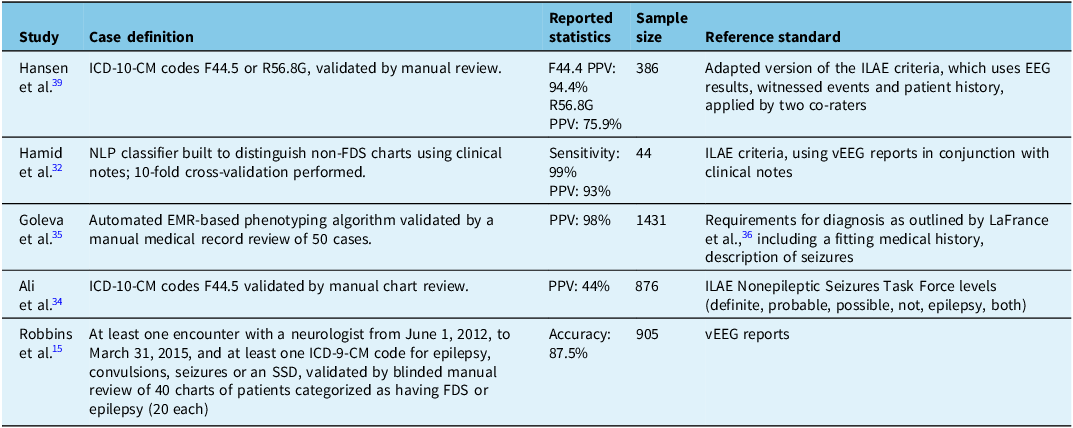
Five of the 33 included studies validated the case definitions used, as shown in Table 2.
Case definitions and validation for functional neurological disorder in included studies

Table 2. Long description
A table comparing case definitions and validation for functional neurological disorder in studies. The table has five rows and five columns. Column headers are Study, Case definition, Reported statistics, Sample size, and Reference standard. Row 1: Study, Hansen et al.; Case definition, ICD-10-CM codes F44.5 or R56.8G, validated by manual review.; Reported statistics, F44.4 PPV: 94.4 percent, R56.8G PPV: 75.9 percent; Sample size, 386; Reference standard, Adapted version of the ILAE criteria, which uses EEG results, witnessed events and patient history, applied by two co-raters. Row 2: Study, Hamid et al.; Case definition, NLP classifier built to distinguish non-FDS charts using clinical notes; 10-fold cross-validation performed.; Reported statistics, Sensitivity: 99 percent, PPV: 93 percent; Sample size, 44; Reference standard, ILAE criteria, using vEEG reports in conjunction with clinical notes. Row 3: Study, Goleva et al.; Case definition, Automated EHR-based phenotyping algorithm validated by a manual medical record review of 50 cases.; Reported statistics, PPV: 98 percent; Sample size, 1431; Reference standard, Requirements for diagnosis as outlined by LaFrance et al., including a fitting medical history, description of seizures. Row 4: Study, Ali et al.; Case definition, ICD-10-CM codes F44.5 validated by manual chart review.; Reported statistics, PPV: 44 percent; Sample size, 876; Reference standard, ILAE Nonepileptic Seizures Task Force levels (definite, probable, possible, not, epilepsy, both). Row 5: Study, Robbins et al.; Case definition, At least one encounter with a neurologist from June 1, 2012, to March 31, 2015, and at least one ICD-9-CM code for epilepsy, convulsions, seizures or an SSD, validated by blinded manual review of 40 charts of patients categorized as having FDS or epilepsy (20 each).; Reported statistics, Accuracy: 87.5 percent; Sample size, 905; Reference standard, vEEG reports.
EEG = electroencephalogram; EMR = electronic medical record; FDS = functional (dissociative) seizures; ICD = International Classification of Diseases; ILAE = International League Against Epilepsy; NLP = natural language processing; PPV = positive predictive value; SSD = somatic symptom disorder; vEEG = video electroencephalogram.
Hansen et al. identified cases by searching the Danish National Patient Registry for pediatric patients who had an incident diagnosis using codes F44.5 or R56.8G and then validated the FDS case definition by having two co-raters apply the ILAE criteria, which uses EEG results, witnessed events and patient history to determine which individuals have FDS. Inter-rater reliability was tested, and accuracy was compared with the documented diagnostic codes, giving a positive predictive value (PPV) of 94.4% for ICD-10 code F44.4 and 75.9% for R56.8G. Reference Hansen, Rask, Rodrigo-Domingo, Pristed, Christensen and Nielsen39
Hamid et al. used a specially developed NLP classifier to distinguish whether an individual had “probable” or “definite” FDS according to the ILAE criteria, based on clinical notes. The NLP classifier performed with a sensitivity of 99% and a PPV of 93%. Reference Hamid, Fodeh and Lizama32
In a study by Goleva et al., an automated EMR-based phenotyping algorithm developed to identify FDS patients without concurrent epilepsy was validated by a manual medical record review of 50 algorithm-identified cases. The algorithm had a PPV of 98%. Reference Goleva, Lake, Torstenson, Haas and Davis35
Ali et al. manually reviewed a sample of 876 veterans coded with ICD-10 F44.5 using the ILAE criteria to classify FDS patients. Results indicated a low precision rate of 44%. Reference Ali, Bornovski and Gopaul34
Robbins et al. primarily identified FDS patients using text phrases from EEG reports that were diagnostic for FDS. Forty charts of patients categorized as having FDS or epilepsy (20 from each) were manually checked in a blinded fashion by a neurologist to ensure that patients were accurately classified. Of the 40 charts reviewed, 5 were found to be miscategorized (12.5%). Reference Robbins, Larimer, Bourgeois and Lowenstein15
Themes for EMR-based FND research
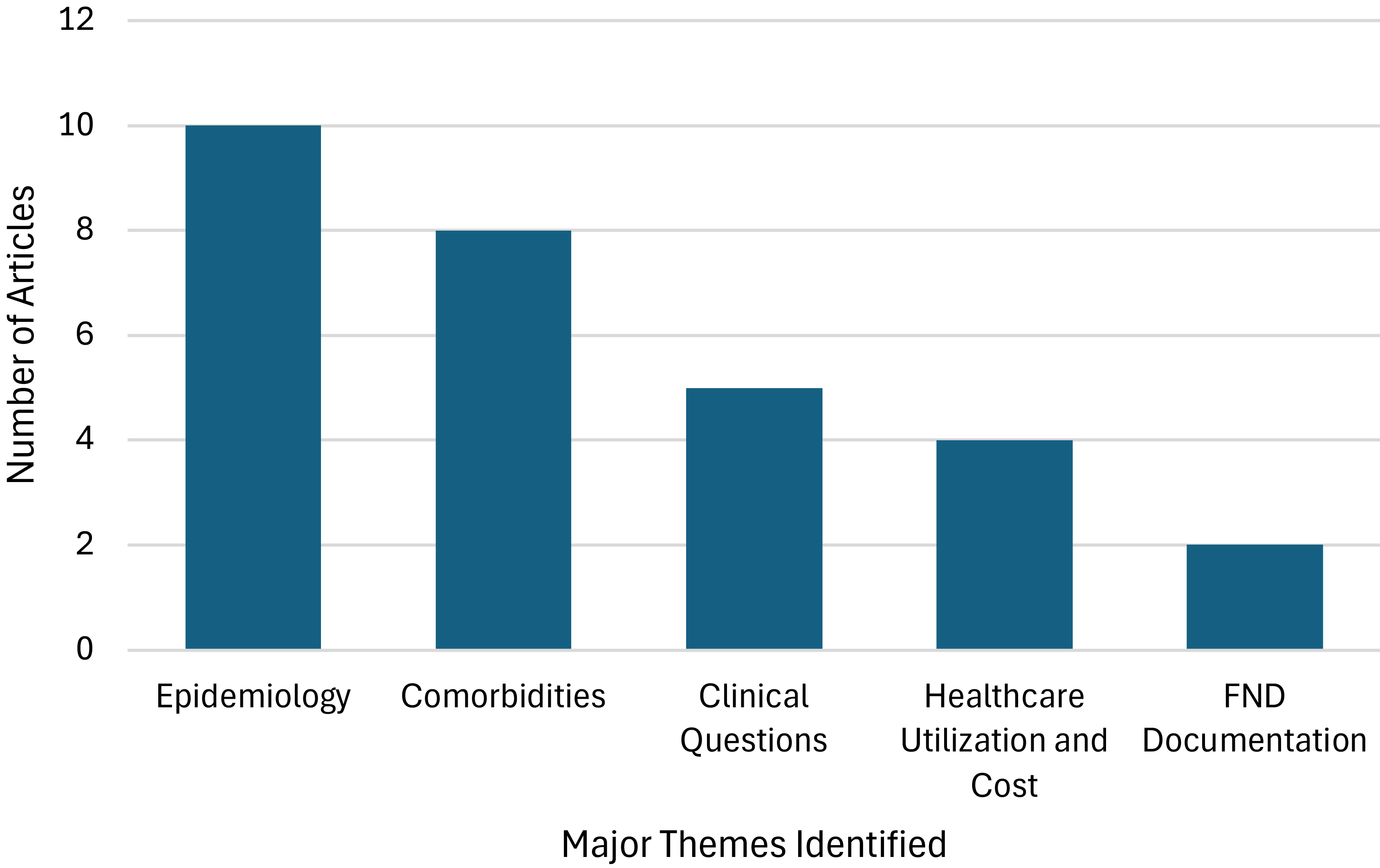
The included studies fall into five major themes for diagnostic code usage in FND research: (1) epidemiology and clinical manifestations (n = 10); Reference Wiggins, Court and Sawyer14,Reference O’Connell, Nicholson, Wessely and David28,Reference Christopher, Pretorius, Moodley, Joubert and Arendse29,Reference Goleva, Lake, Torstenson, Haas and Davis35,Reference Inaida, Kanemoto and Tanaka37,Reference Hansen, Rask, Rodrigo-Domingo, Pristed, Christensen and Nielsen39–Reference Luthy, Moss, Torok, McLeod and Wilson43 (2) comorbidities with FND, including Parkinson Disease, Ehlers–Danlos syndrome, cerebrovascular disease, epilepsy and psychiatric disorders (n = 8); Reference Macchi, Kletenik, Olvera and Holden25,Reference Margolesky, Puentes and Espay30,Reference Goleva, Lake, Torstenson, Haas and Davis35,Reference Fox, Goleva, Haas and Davis36,Reference Hansen, Rask, Christensen, Rodrigo-Domingo, Christensen and Nielsen44–Reference Faiman, Hodsoll, Jasani, Young and Shotbolt47 (3) investigating specific clinical questions such as associations between rates of violence and FND and the frequency of FND in sexual orientation and gender identity minority youth after the COVID-19 pandemic (n = 5); Reference Robbins, Larimer, Bourgeois and Lowenstein15,Reference Tan, Sanfilippo and Colman48–Reference Popkirov, Jungilligens, Grönheit and Wellmer51 (4) assessing healthcare utilization and costs (n = 4); Reference Stephen, Fung, Lungu and Espay26,Reference Ahmedani, Osborne and Nerenz27,Reference Merkler, Parikh and Chaudhry52,Reference Kyle and Wu53 and (5) FND documentation practices (n = 2) (Figure 4). Reference Herbert, Kim, Hassan, Wilkinson-Smith and Waugh9,Reference Altalib, Elzamzamy and Pugh31 The studies evaluating documentation suggested that poor documentation practices and ICD code usage may reflect fear of legal implications for misdiagnosis and misconceptions around a lack of reimbursement for the visit.
Distribution of major themes of electronic medical record-based FND research. FND = functional neurological disorder.

Discussion
We conducted a scoping review to explore the current state of case definitions for FND research using EMR data. We assessed what specific case definitions and diagnostic codes are currently being used in EMR studies and identified themes in how EMR studies were used to study FND. Our review found that although there had been attempts at case definition validation, it had not been extensive. Only 5 out of 31 included studies attempted to validate case definitions. Across studies, over 20 different diagnostic codes were used to identify FND patients, most commonly F44.x ICD-10-CM codes and 300.x ICD-9 codes. ICD-10-CM F44.5 was used most often (conversion disorder with seizures) (n = 12), in alignment with FDS being the most frequently studied subtype. Similarly, case definitions varied across included studies, highlighting the lack of a standardized case definition for FND. We found the main usages of the EMR for FND were to study its epidemiology and clinical manifestations (n = 8) and to highlight comorbidities (n = 8).
In our scoping review, the high number of codes used reflected inconsistency in case identification, as well as evolving coding systems over time. The variability in coding may indicate poor quality of codes or disagreement over how FND should be identified. Included studies support this finding. Ali et al. reported a precision rate of 44% for the identification of FDS with F44.5. Reference Ali, Bornovski and Gopaul34 Robbins found that only 9.7% of patients with EEG-confirmed FDS had an ICD diagnosis that reflected its psychiatric nature. Reference Robbins, Larimer, Bourgeois and Lowenstein15 Most patients were vaguely coded under “other convulsions” (ICD-9-CM 780.39). Reference Macchi, Kletenik, Olvera and Holden25 Further, Macchi et al. mentioned using alternative approaches to identify FND due to there being “no specific diagnostic code for functional movement disorder.” Reference Macchi, Kletenik, Olvera and Holden25 These findings may be interpreted in several ways, possibly reflecting hesitancy and mistrust from healthcare providers and researchers regarding the coding of FND, a lack of knowledge and/or education regarding appropriate diagnostic codes, challenges with diagnostic ambiguity in some cases, and stigma may be playing a role. This finding highlights the need for standardized coding practices, with education aimed at improving the recognition and coding of FND.
Among the included studies, various case definitions were used to identify patients, highlighting either a lack of standardized diagnostic criteria for FND or inconsistent data-based identification strategies. Ali et al. state that using different classification systems, such as the ILAE, ICD and Diagnostic and Statistical Manual of Mental Disorders (DSM), to identify FDS may lead to errors in coding due to the different diagnostic criteria used in each system. Reference Ali, Bornovski and Gopaul34 Furthermore, although the time period of interest for this study was selected based on the timeline of usage of EMRs and recent coding schemes, it should be noted that the DSM-IV 54 transitioned to DSM-5 Reference Nissen, Quint, Morales and Douglas55 in 2013. Reference Wasserman56 With this change came an evolution in diagnostic practices, with the transition away from requiring the identification of a preceding psychological stressor for diagnosis of FND in DSM-IV to instead grounding the diagnosis in the presence of positive neurological signs reflecting a shift toward a neurology-based, phenomenological framework rather than one dependent on psychodynamic inference. The absence of standardized diagnostic criteria may reflect confusion among healthcare providers regarding FND-related concepts and terminology. Reference Kholi and Vercueil38 Further, most case definitions identified in our study were based on FND-related keyword searches in the EMR. Among these case definitions, those involving NLP algorithms and software such as EPIC were most successful. However, such models are not widely available. Our study’s findings support expanding the availability and usage of machine learning-based case definitions for FND. This could be done by taking steps to standardize health data infrastructure to include NLP algorithms across various platforms such as hospitals, primary care clinics and specialists’ clinics, supporting healthcare providers in making diagnoses based on patterns in clinical notes. Further, additional efforts might be made to advance validation of these case definitions via research and to train healthcare providers on machine learning models to more seamlessly integrate such technologies into the standard practice of diagnosing FND.
Case definitions were rarely validated in the included studies, identifying a major gap in current research. Validation increases the credibility of EMR research by quantifying how correct the data is and ensuring that case definition tools can be reliably applied to a wide variety of EMRs for research or surveillance. Reference Harrison, Weber, Jakob and Chute57 Amid efforts to standardize FND identification, case definition validation is essential. Among the limited studies that attempted to validate case definitions, most were done manually with the assistance of the ILAE criteria, with one study using a machine learning algorithm. Reference Goleva, Lake, Torstenson, Haas and Davis35 However, manual review is notably time-consuming. In the future, validation of machine learning algorithms using internal validation within the database may be most useful.
Included studies suggest that using EMR for FND research holds great potential, particularly with respect to studying epidemiology, underlining the utility of the EMR for gathering population-level data. Wasserman frames EMR data as a “goldmine” for epidemiological studies, with patient samples and information that can be directly used for measures such as prevalence. 58 EMR data were also used to answer specific clinical questions, demonstrating its versatility as a tool that can also be applied to targeted research areas. Additionally, the focus on FND documentation patterns and stigma highlights the potential of EMR data to identify gaps in practice.
A major limitation of this study was that all studies of individual subtypes of FND identified were focused on FDS and FMD, while failing to identify other major subtypes. This may simply reflect a lack of research using EMR data on other FND subtypes, as discussed. Further, the quality of literature was not assessed in this study, in keeping with the methodology of a scoping review. As a result of the requirement that papers be written in English or French, most studies were conducted in Western countries, which led to little insight into coding and identification of FND in non-English parts of the world. However, given that our study focused on ICD codes, which have been translated into 43 languages and used in at least 120 countries, we believe the trends we identified may be consistent internationally. Additionally, most included studies were published after 2020, reflecting an up-to-date look at the current state of FND coding in the EMR.
Conclusion
This scoping review summarizes the literature identifying FND in the EMR with case definitions and ICD codes. Our findings reveal that multiple case definitions were used to identify FND patients with varying success, pointing to the absence of a standardized criterion. Similarly, diagnostic codes were used inconsistently and ineffectively, indicating poor quality of existing ICD code usage. Both case definitions and diagnostic codes were rarely validated, highlighting a major gap in current methods of FND identification in the EMR. However, despite these setbacks, EMR data remain a useful tool for FND research. EMR data are currently an untapped source for studying FND; with standardized case definitions and consistent validation, its potential for FND research is great. Next steps should include increasing the usage of machine learning tools to identify FND patients, based on promising findings in this review. Given that only two major subtypes of FND were identified in the study, future research should explore whether FND case definition creation and validation should be subtype-specific or based on general FND. Finally, of greatest concern are the poor and inconsistent coding practices shown for FND. Future efforts should focus on tackling stigma by physicians to remove barriers to diagnosis and improve coding practices. This may be achieved by improving education on FND and reimbursement. Despite the inconsistency of coding and case definitions, the potential usage of EMR data for studying FND highlighted in this scoping review only scratches the surface of its full potential.
Supplementary material
The supplementary material for this article can be found at https://doi.org/10.1017/cjn.2026.10648.
Acknowledgments
None.
Author contributions
Research project: A. Conception, B. Organization, C. Execution; Statistical analysis: A. Design, B. Execution, C. Review and critique; Manuscript preparation: A. Writing of the first draft, B. Review and critique; IK: 1B, 1C, 2A, 2B, 2C, 3A; JKH: 1A, 2A, 2C, 3B; NL: 1A, 2A, 2C, 3B; GG: 1A, 1B, 1C, 2A, 2B, 2C, 3B
Funding statement
This study received funding from the University of Calgary Medical Group.
Competing interests
Inam Khalfan received funding from the O’Brien Summer Studentship. Dr Na Li is co-founder and chief scientific officer of FedEMR.ai, a University of Calgary–originated federated learning platform. Dr Gabriela Gilmour received research support from the Hotchkiss Brain Institute and honoraria from GeriMedRisk and the International Parkinson and Movement Disorders Society. Dr Jessalyn Holodinsky reports no relevant disclosures.
Ethical standards
This paper does not contain clinical studies or patient data. No approval by an Institutional Review Board was required.


 Open access

