


1. Introduction
A long-standing problem in nonlinear elasticity is the existence of a minimizer of the neo-Hookean energy
 \begin{equation*}
E(u) = \int_{\Omega} |Du(x)|^2 + H(\operatorname{det} Du(x)) \,dx,
\end{equation*}
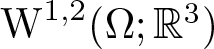
in a suitable, physically sound, subclass of 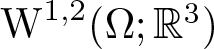 $\textrm{W}^{1,2}(\Omega;\mathbb{R}^3)$. Here
 $u \colon \Omega \to \mathbb{R}^3$ represents a deformation of a body whose reference configuration is
 $\Omega$, an open domain in
 $\mathbb{R}^3$. One of the main difficulties is that the class of functions where we wish to find a minimizer should not be so big that it contains functions that represent impossible configurations, yet it must not be too small as to exclude physically tenable configurations. The class must also have sufficiently nice mathematical properties so that we can apply techniques from the calculus of variations. In this paper, we consider a function space
 $\mathcal A_{0}$ and the weak closure of some of its important subclasses that satisfy the above requirements and show that the minimum of E on each of these spaces is attained. Moreover, we show that if a minimizer u of E in any of these classes satisfies condition (INV), then it enjoys extra good properties.
The neo-Hookean energy is the most widely used form of the polyconvex energies
 \begin{equation*}
I(u) = \int_{\Omega} W(x,Du(x)) \,dx
\end{equation*}
for hyperelastic materials, where W is the stored-energy density function. The analysis of minimizers of I in suitable function spaces using techniques from the calculus of variations goes back to [Reference Ball1, Reference Conti and De Lellis12, Reference Giaquinta, Modica and Souček19, Reference Müller37–Reference Malý40, Reference Sivaloganathan and Spector43, Reference Šverák45]. It has long been recognised that choosing a function space to minimise I on is a crucial part of the problem, due to the need to respect certain physical properties that are particular to elasticity. One of the main attributes of a real material is that no interpenetration of matter should occur, which translates into the mathematical requirement that our configuration u should be one-to-one (almost everywhere) and that its inverse u −1 should exist in a suitable sense and be sufficiently regular. Moreover, compressing the volume of an elastic body to zero or stretching it to be infinitely large should require infinite energy, and hence we shall postulate that  $H\colon (0,\infty) \to [0,\infty)$ in (2.1) is a convex function satisfying
 \begin{equation*}
\lim_{t\to\infty} \frac{H(t)}{t} = \lim_{s\to 0} H(s) = +\infty.
\end{equation*}
By convention, we let 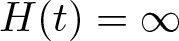 $H(t) = \infty$ if
 $t \le 0$, which implies that we must have
 $\operatorname{det} Du \gt 0$ a.e., meaning that u with finite energy
 $E(u) \lt \infty$ cannot be orientation-reversing on any small volume in the reference configuration. For more on local and global invertibility of Sobolev maps in nonlinear elasticity, see [Reference Ball2, Reference Barchiesi, Henao and Mora-Corral6, Reference Henao and Mora-Corral26, Reference Henao, Mora-Corral and Oliva27, Reference Krömer33].
Another big consideration we must take into account is the formation of cavities, which could be an obstacle to the lower semicontinuity of E (and hence to applying the direct method [Reference Ball and Murat5, Reference Kristensen34]). Since a 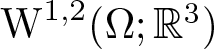 $\textrm{W}^{1,2}(\Omega;\mathbb{R}^3)$ function for
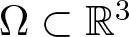 $\Omega\subset\mathbb{R}^3$ need not be continuous, it is conceivable that a minimizer of E could exhibit some form of discontinuity. Indeed, in [Reference Ball3], it was shown (in the axisymmetric case) that there could be an energetically favourable state that is discontinuous even for simple homogeneous Dirichlet boundary data. Since then, cavitation has become a topic of interest, see e.g. [Reference Cañulef Aguilar and Henao10, Reference Gent18, Reference Henao21, Reference Henao and Mora-Corral23, Reference Henao, Mora-Corral and Xu28, Reference Henao and Serfaty29, Reference Horgan and Polignone32, Reference Kumar and Lopez-Pamies35, Reference Müller and Spector39, Reference Mora-Corral41–Reference Sivaloganathan and Spector44] and references therein. Even though the class of functions used in this paper excludes the formation of cavities, notions from the theory of cavitations are extremely useful in proving that cavities cannot occur, one of which is the condition (INV).
The condition (INV), introduced in [Reference Müller and Spector39] by Müller and Spector in the  $\textrm{W}^{1,p}$ case with
 $p \gt n-1$ (where n is the dimension of the domain), has proved to be a very important notion in elasticity. Intuitively speaking, a Sobolev map u satisfies (INV) if the content inside each ball stays inside and the content outside stays outside after being mapped by u. This is strongly related to the invertibility of u and is preserved under the weak
 $\textrm{W}^{1,p}$ limit. Conti and De Lellis [Reference Conti and De Lellis12] extended the notion to
 $\textrm{W}^{1,2}$ case (for n = 3) and showed that many properties of (INV) for p > 2 continue to hold, but their generalised condition (INV) is no longer preserved by the
 $\textrm{W}^{1,2}$ weak limit. Indeed, they constructed a sequence of bi-Lipschitz homeomorphisms whose weak limit u in
 $\textrm{W}^{1,2}$ fails to satisfy (INV) and reverses the orientation on a set of positive measure, and u −1 is not a
 $\textrm{W}^{1,1}_{loc}$ function (u −1 has a jump discontinuity, which means that u put matters from different parts of the body into contact with one another, violating the non-interpenetration of matter). Hence, the failure if (INV) in the limit does lead to pathological behaviours we wish to avoid. However, in [Reference Doležalová, Hencl and Malý14] Doležalová, Hencl, and Malý showed that if we restrict our attention to maps that can be obtained as the limit of a sequence of maps
 $(u_j)_j$ that (i) are homeomorphisms; and (ii) satisfy
 $\sup_{j} \int_\Omega (\operatorname{det} Du_j(x))^{-2}\,dx \lt \infty$, then condition (INV) does pass to the limit.
In this work, we prove the lower semicontinuity of E on the weak closure  $\overline{\mathcal A}$ of any subclasses
 $\mathcal A$ of
 $\mathcal A_0$, the class of functions satisfying the divergence identities (2.5),Footnote 1 where all members of
 $\overline{\mathcal A}$ have positive Jacobian, such as
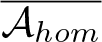
 $\overline{{\mathcal A}_{dif}}$ and
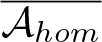 $\overline{{\mathcal A}_{hom}}$.Footnote 2 Consequently, it follows that E has a minimizer in each of these spaces. One of our main results overlaps with a recent work by Doležalová, Hencl, and Molchanova [Reference Doležalová, Hencl and Molchanova15, Theorem 5.5] which implies that E admits a minimizer on
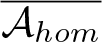 $\overline{{\mathcal A}_{hom}}$, provided that the distortion function
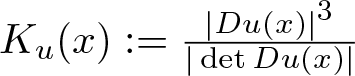 $K_u(x) := \frac{|Du(x)|^3}{|\operatorname{det} Du(x)|}$ is bounded by
 $E(u)$. The originality of our result is the following:
• We show (Theorem 4.4) that minimizers of E in
 $\overline{\mathcal A_{hom}}$, whose existence is first proved in [Reference Doležalová, Hencl and Molchanova15, Theorem 5.5] by Doležalová, Hencl, and Molchanova, have Sobolev inverses.
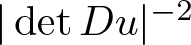
• We provide an existence theorem (Theorem 4.3) for the neo-Hookean energy that does not require the term in the Jacobian to grow like
$|\operatorname{det} Du|^{-2}$, an assumption that rules out the canonical example for the compressible neo-Hookean materials
\begin{equation*}
W(Du) = \frac{\mu}{2} |Du|^2 + \mu \ln\left(\frac{1}{\operatorname{det} Du}\right) + \frac{\lambda}{2}(\operatorname{det} Du - 1)^2
\end{equation*}used in the literature [Reference Ciarlet11, Section 4.10] (see also [Reference Blatz9]).Footnote 3 Our proof without that assumption requires methods completely different from those provided in [Reference Doležalová, Hencl and Molchanova15].
• Our propositions are constructed with the goal of explicitly characterising the function space
$\overline{\mathcal A_0}$ in which a minimizer of E is attained. One wants to work in a weakly closed function space that is explicitly described since there are advantages in knowing what each element of the space looks like, as will be discussed in Section 3.2. In particular, assuming that the term in the Jacobian of the neo-Hookean energy grows sufficiently fast, we conjecture that the space
$\mathcal A_0$ is sequentially weakly closed in
$\textrm{W}^{1,2}(\Omega; \mathbb{R}^3)$. If it is proved in a later work that the sign of the Jacobian and condition (INV) are preserved in the weak limit of sequences in
$\mathcal A_0$, Theorem 4.2 (ii)–(iii) and Lemma 3.1 immediately imply that
$\overline{\mathcal A_0} = \mathcal A_0$.




2. Preliminaries
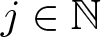
In this article, we will work with a thick Dirichlet boundary condition b that can be extended to a homeomorphism on a slightly larger domain. Equivalently, we let  $\widetilde\Omega, \Omega \subset \mathbb{R}^n$ be open Lipschitz domains such that
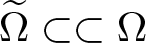 $\widetilde\Omega \subset\subset \Omega$ (in particular, we assume that
 $\widetilde\Omega$ and Ω have finite perimeters) and let
 $b\colon \Omega \to \mathbb{R}^n$ be a fixed
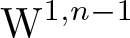 $\textrm{W}^{1,n-1}$ orientation-preserving homeomorphismFootnote 4 onto its range that satisfies the divergence identity (2.5) (this is the case if b is a bi-Lipschitz orientation-preserving homeomorphism, for example). We shall write
 \begin{equation*}
\widetilde\Omega_b := b(\widetilde\Omega)\ \text{and }\ \Omega_b := b(\Omega).
\end{equation*}
We will require that the Sobolev functions u in our class of interest satisfy u = b on  $\Omega\backslash\widetilde\Omega$. The energy functional used throughout this article is the (n − 1) neo-Hookean energy
 \begin{equation}
E(u) := \int_{\Omega} |Du(x)|^{n-1} + H(\operatorname{det} Du(x)) \,dx,
\end{equation}
where  $H\colon (0,\infty) \to [0,\infty)$ is a convex function satisfying
 \begin{equation}
\lim_{t\to\infty} \frac{H(t)}{t} = \lim_{s\to 0} H(s) = +\infty.
\end{equation}
For the definition and properties of the approximate derivative of a measurable function u defined on (a subset of)  $\mathbb{R}^n$, we refer to [Reference Evans and Gariepy16, Reference Federer17] or [Reference Müller and Spector39]. We shall use, in particular, that if u is approximately differentiable at x 0, then u is defined and is approximately continuous at x 0. It is well-known that a Sobolev function u is approximately differentiable a.e. and that its approximate differential coincides a.e. with its distributional derivative
 ${\it{Du}}$. Note that we do not identify functions that coincide almost everywhere. Following [Reference Henao and Mora-Corral25], we shall give the following definition.
Definition 2.1. For a Sobolev function  $u \in \textrm{W}^{1,n-1}(\Omega;\mathbb{R}^n)$ such that
 $\operatorname{det} Du \gt 0$ a.e., we define the geometric image of a measurable set
 $E \subset \mathbb{R}^n$ under
 ${\it{u}}$ to be
 \begin{equation*}
\operatorname{im}_G(u, E) := u(E \cap \Omega_0),
\end{equation*}
where Ω0 is the set of points 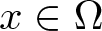 $x \in \Omega$ that satisfy
(a) the approximate differential of
${\it{u}}$ at
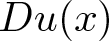
$x$ exists and equals
$Du(x)$,(b)
$\operatorname{det} Du(x) \gt 0$, and(c) there exists
$w \in C^1(\mathbb{R}^n;\mathbb{R}^n)$ and a compact set
${\it{K}}$ of density
$1$ at
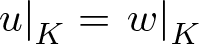
$x$ such that
$\left.u\right\vert_K = \left.w\right\vert_K$ and
$\left.Du\right\vert_K = \left.Dw\right\vert_K$.







This definition of the geometric image is slightly different from the one used in [Reference Müller and Spector39] and [Reference Conti and De Lellis12]; however, Ω0 is of full measure in Ω, so our definition of the geometric image is equivalent to the other definition up to an  $\mathcal{L}^n-$null set (see [Reference Henao and Mora-Corral25, Lemma 2.5]).
An important property of the geometric image is that whenever  $u \in \textrm{W}^{1,n-1}(\Omega;\mathbb{R}^n)$ with
 $\operatorname{det} Du \gt 0$ a.e. is also one-to-one a.e., we have
 $\left.u\right\vert_{\Omega_0}$ is one-to-one (see [Reference Henao and Mora-Corral24, Lemma 3]) and the change of variables formula (or the area formula)
 \begin{equation*}
\int_E (\varphi\circ u)(x) \operatorname{det} Du(x) \,dx = \int_{\operatorname{im}_G(u,E)} \varphi(y) \,dy
\end{equation*}
holds, where 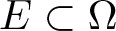 $E\subset \Omega$ is a measurable set and
 $\varphi\colon \mathbb{R}^n \to \mathbb{R}$ is a measurable function (see, for example, [Reference Müller and Spector39, Proposition 2.6]). For any such u, we may define its inverse to be the function
 $u^{-1} \colon \operatorname{im}_G(u,\Omega) \to \mathbb{R}^n$ mapping y to the unique point
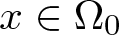 $x\in\Omega_0$ such that
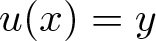 $u(x) = y$. The change of variables formula takes the more general form
 \begin{equation}
\int_E (\varphi\circ u)(x) |\operatorname{det} Du(x)| \,dx = \int_{\mathbb{R}^n} \varphi(y)\, {\mathcal N}_E(y) \,dy,
\end{equation}
where
 \begin{equation*}
{\mathcal N}_E(y) := \# \{x \in E : u \text{ is approximately differentiable at}\ x\ \text{and } u(x) = y \},
\end{equation*}
if we only assume that  $u\colon\Omega\to\mathbb{R}^n$ is approximately differentiable a.e. and whenever either integral exists (see [Reference Federer17] or [Reference Müller and Spector39]). Here
 $\# A$ denotes the cardinality of A.
Definition 2.2. Let  $u\in\textrm{W}^{1,n-1} \cap \textrm{L}^{\infty}(\Omega;\mathbb{R}^n)$ and
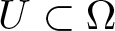
 $U\subset\subset \mathbb{R}^n$ be a good open set Footnote 5 with respect to
 $u$. We may define the degree
 $\deg(u,\partial U, \cdot)$ to be the unique
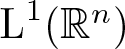 $\textrm{L}^{1}(\mathbb{R}^n)$ functionFootnote 6 such that
 \begin{equation}
\int_{\mathbb{R}^n} {\operatorname{div}}\, g(y) \deg(u,\partial U, y) \,dy = \int_{\partial U} g(u(x)) \cdot (\operatorname{cof} Du(x))[\nu(x)] \,d{\mathcal H^{n-1}}(x)
\end{equation}
for each vector field  $g\in C^1(\mathbb{R}^n;\mathbb{R}^n)$.
 $\deg(u,\partial U, \cdot)$ is integer-valued a.e. The topological image of
 $u$,
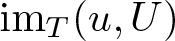 $\operatorname{im}_T(u, U)$, is the set of points where
 \begin{equation*}
A_{u,U} := \{y \in \mathbb{R}^n : \deg(u,\partial U, y) \ne 0 \}
\end{equation*}
has density  $1$, i.e.,
 \begin{equation*}
\operatorname{im}_T(u, U) := \left\{y \in \mathbb{R}^n : \lim_{r\searrow 0} \frac{\mathcal{L}^n(B(y,r) \cap A_{u,U})}{\mathcal{L}^n(B(y,r))} = 1. \right\}
\end{equation*}
Definition 2.3. A function  $u\in\textrm{W}^{1,n-1} \cap \textrm{L}^{\infty}(\Omega;\mathbb{R}^n)$, is said to satisfy condition (INV) if for every
 $x_0\in \Omega$, the following conditions hold for a.e.
 $r\in (0,\operatorname{dist}(x_0,\partial \Omega))$.
(i)
$u(x) \in \operatorname{im}_T(u,B(x_0,r))$ for a.e.
$x \in B(x_0,r)$.(ii)
$u(x) \notin \operatorname{im}_T(u,B(x_0,r))$ for a.e.
$x \in \Omega\backslash B(x_0,r)$.




Following [Reference Conti and De Lellis12], the topological image of a point 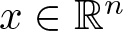 $x\in\mathbb{R}^n$ is defined as
 \begin{equation*}
\operatorname{im}_T(u,\{x\}) := \bigcap_{r\in R_x} \operatorname{im}_T(u,B(x,r)),
\end{equation*}
where Rx is the set of good radii Footnote 7, which is a subset of full measure in  $(0,\operatorname{dist}(x,\partial \Omega))$. An equivalent definition is given in [Reference Henao and Mora-Corral25, Definition 2.18] when u satisfies condition (INV).
Based on the idea presented in [Reference Giaquinta, Modica and Souček19] and [Reference Müller37], we work with maps satisfying the divergence identities.
Definition 2.4. A Sobolev function  $u\in \textrm{W}^{1,n-1}(\Omega;\mathbb{R}^n)$ with
 $\operatorname{det} Du \in\textrm{L}^{1}_{loc}(\Omega)$ is said to satisfy the divergence identities if
 \begin{equation}
\int_{\Omega} ({\operatorname {div}}\, g)(u(x)) \phi(x) \operatorname{det} Du(x) \,dx = - \int_{\Omega} g(u(x)) \cdot (\operatorname{cof} Du(x))[D\phi(x)] \,dx
\end{equation}
for every  $\phi\in C^1_c(\Omega)$ and every
 $g\in C^1_c(\mathbb{R}^n;\mathbb{R}^n)$.
See [Reference Barchiesi, Henao, Mora-Corral and Rodiac8] for a more recent work that employs this notion. We will show below (in Lemma 3.1) that, for a.e. injective maps, the divergence identities are equivalent to condition (INV) together with  $\operatorname{Det} Du = (\operatorname{det} Du)\mathcal{L}^n$.
There are a few ways to formulate the divergence identities in the literature. In particular, they are equivalent to the statements that the surface energy of u is zero, i.e.  $\mathcal E(u)=0$ (or
 $\overline{\mathcal{E}}(u)=0$, see [Reference Henao and Mora-Corral23, Section 4] and also [Reference Llavona36, Corollary 1.6.5]), where
 \begin{equation*}
\mathcal E(u) := \sup_{\left\lVert f \right\rVert_\infty \le 1} \int_{\Omega} D_x f(x,u(x)) \cdot \operatorname{cof} Du(x) + {\operatorname{div}}\,_y\ f(x,u(x)) \operatorname{det} Du(x) \,dx,
\end{equation*}
and the supremum is taken over all  $f \in C^1_c(\Omega \times \mathbb{R}^n; \mathbb{R}^n)$, whereas
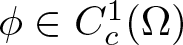
 $\overline{\mathcal{E}}$ is defined analogously but restricting f to be of the form
 $f(x,y) = \phi(x)g(y)$ for
 $\phi\in C^1_c(\Omega)$ and
 $g\in C^1_c(\mathbb{R}^n;\mathbb{R}^n)$. Note that by taking
 $g(y) = \frac{1}{n}y$, the expression (2.5) can be used to define the distributional determinant of Du:
 \begin{equation*}
\left\langle \operatorname{Det} Du, \phi \right\rangle := -\frac{1}{n} \int_{\Omega} u(x) \cdot (\operatorname{cof} Du(x))[D\phi(x)] \,dx
\end{equation*}
whenever  $u \in \textrm{W}^{1,n-1}\cap \textrm{L}^{\infty}(\Omega;\mathbb{R}^n)$. When
 $\operatorname{Det} Du$ can be identified with a Radon measure µ, we shall write
 $\operatorname{Det} Du(E)$ for a measurable set E to denote
 $\mu(E)$.
3. Divergence identities, regularity, and weak convergence
We begin by stating a result that relates the divergence identities (2.5) and other properties of u, namely, the regularity of its inverse, its geometric image, its distributional Jacobian, and condition (INV).
Lemma 3.1. Let  $u\in \textrm{W}^{1,n-1}(\Omega;\mathbb{R}^n)$ and suppose that
 $u=b$ in
 $\Omega\backslash\widetilde\Omega$,
 ${\it{u}}$ is one-to-one a.e.,
 $\operatorname{det} Du \in \textrm{L}^{1}_{loc}(\Omega)$,
 $\operatorname{det} Du \gt 0$ a.e. Then the following are equivalent.
(i)
$u$ satisfies the divergence identities (2.5).(ii)
$u^{-1} \in \textrm{W}^{1,1}(\Omega_b ; \mathbb{R}^n)$ and
$\operatorname{im}_G(u,\Omega) = \Omega_b$ a.e.(iii)
$u\in \textrm{L}^{\infty}(\Omega;\mathbb{R}^n)$,
${\it{u}}$ satisfies condition (INV) and
$\operatorname{Det} Du = (\operatorname{det} Du)\mathcal{L}^n$.


Remark: A priori, we only require that  $\operatorname{det} Du \in \textrm{L}^{1}_{loc}(\Omega)$, but whenever any of the equivalent statements hold, we actually have
 $\operatorname{det} Du \in \textrm{L}^{1}(\Omega)$. Indeed, this immediately follows from (ii) and the change of variable formula
 \begin{equation*}
\int_\Omega \operatorname{det} {Du}(x) \,dx = \int_{\operatorname{im}_G(u,\Omega)}1 \,dy = |\Omega_b| \lt \infty.
\end{equation*}
Lemma 3.1 is not entirely new. The equivalence  $(i) \iff (ii)$ is already stated in [Reference Barchiesi, Henao, Mora-Corral and Rodiac8, Lemma 2.10] for the case n = 3, where the implication
 $(ii) \implies (i)$ is proved in detail (however, their technique applies to any
 $u \in \textrm{W}^{1,n-1}(\Omega;\mathbb{R}^n)$). Its converse
 $(i) \implies (ii)$ is also sketched there.
A weaker form of  $(i) \iff (iii)$ is known in the literature and can be found in [Reference Henao and Mora-Corral25]. In particular, the implication
 $(iii) \implies (i)$ follows from [Reference Henao and Mora-Corral25, Lemma 5.3]) and its partial converse is also proved there. Our main contribution is thus proving that
 $(i) \implies (iii)$, hereby strengthening [Reference Henao and Mora-Corral25, Lemma 5.3], and completing the sketch of
 $(i) \implies (ii)$ in [Reference Barchiesi, Henao, Mora-Corral and Rodiac8].
We shall first prove the following lemma which is then used to prove Lemma 3.1. Here, we outline how to adapt the argument from [Reference Barchiesi, Henao and Mora-Corral6, Theorem 4.1]Footnote 8, which is stated for  $p \gt n-1$, to the case
 $p=n-1$.
Lemma 3.2. Let  $u\in \textrm{W}^{1,n-1}(\Omega;\mathbb{R}^n)$ and suppose that
 $u=b$ in
 $\Omega\backslash\widetilde\Omega$,
 ${\it{u}}$ is one-to-one a.e.,
 $\operatorname{det} Du \in \textrm{L}^{1}_{loc}(\Omega)$,
 $\operatorname{det} Du \gt 0$ a.e. Suppose that
 $u$ satisfies the divergence identities (2.5), then
 $\operatorname{im}_G(u,\Omega) = \Omega_b$ a.e. and, in particular,
 $u\in\textrm{L}^{\infty}(\Omega,\mathbb{R}^n)$.
Proof. Let U be an arbitrary good open set such that  $\widetilde\Omega \subset\subset U \subset\subset \Omega$.Footnote 9 We shall follow closely the proof of [Reference Barchiesi, Henao and Mora-Corral6, Theorem 4.1] and consider a family
 $\{\phi_\delta \}_{\delta \gt 0}\subset C^1_c(\Omega)$ such that
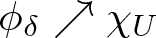 $\phi_\delta \nearrow \chi_U$ pointwise on Ω as
 $\delta \searrow 0$ and
 \begin{align*}
\lim_{\delta\to 0} \int_\Omega g(u(x)) \cdot (\operatorname{cof} Du(x))[D\phi_\delta(x)] \,dx = - \int_{\partial U} g(u(x)) \cdot (\operatorname{cof} Du(x))[\nu(x)] \,d{\mathcal H^{n-1}}(x)
\end{align*}
for any arbitrary  $g\in C^1_c(\mathbb{R}^n;\mathbb{R}^n)$, where
 $\nu(x)$ is the outward unit normal at
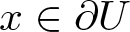 $x\in \partial U$ (see the proof of [Reference Henao and Mora-Corral23, Theorem 2] for the existence of
 $\{\phi_\delta \}_{\delta \gt 0}$). Thus, we have
 \begin{align}
\int_{\mathbb{R}^n} {\operatorname{div}}\, g(y) \deg(u, \partial U, y) \,dy &= \int_{\partial U} g(u(x)) \cdot (\operatorname{cof} Du(x))[\nu(x)] \,d\mathcal H^{n-1}(x) \nonumber \\
&= - \lim_{\delta\to 0} \int_\Omega g(u(x)) \cdot (\operatorname{cof} Du(x))[D\phi_\delta(x)] \,dx \nonumber \\
&= \lim_{\delta\to 0} \int_\Omega ({\operatorname{div}}\, g)(u(x)) \phi_\delta(x) \operatorname{det} Du(x) \,dx
\end{align}
 \begin{align}
&\qquad\quad\qquad= \int_U ({\operatorname{div}}\, g)(u(x)) \operatorname{det} Du(x) \,dx \\
&\qquad\quad\qquad= \int_{\mathbb{R}^n} {\operatorname{div}}\, g(y)\, {\mathcal N}_U(y) \,dy, \nonumber
\end{align}
where we used the divergence identities in (3.1), the dominated convergence theorem in (3.2), and the change of variables formula (2.3) for the last equality. This shows that  $\deg(u, \partial U, \cdot) - {\mathcal N}_U = c$ a.e. for some constant
 $c \in \mathbb{Z}$ (since both functions are integer-valued). We may then argue as in the proof of [Reference Barchiesi, Henao and Mora-Corral6, Theorem 4.1] to conclude that
 \begin{equation*}
\deg(u, U, \cdot) = {\mathcal N}_U \ \text{a.e.}\quad\text{and}\quad \operatorname{im}_T(u,U) = \operatorname{im}_G(u,U) \ \text{a.e.}
\end{equation*}
Since b is a homeomorphism and u coincides with b on  $\partial U$, we have
 $\operatorname{im}_T(u,U) = b(U)$. Then, since u is one-to-one a.e. and u coincides with b on
 $\Omega\backslash U$,
 \begin{equation*}
{\operatorname {im}}_G(u,\Omega) = {\operatorname {im}}_G(u,U) \cup {\operatorname {im}}_G(u,\Omega\backslash U) \overset{\text{a.e.}}{=} b(U) \cup b(\Omega\backslash U) = b(\Omega) = \Omega_b.
\end{equation*}
This completes the proof.
Now we are ready to prove Lemma 3.1.
Proof of Lemma 3.1
 $(i)\implies (iii)$: Suppose that u satisfies the divergence identities. According to Lemma 3.2, we have
 $\operatorname{im}_G(u,\Omega) = \Omega_b$ a.e., hence
 $u \in \textrm{L}^{\infty}(\Omega;\mathbb{R}^n)$, in particular. To show that u satisfies (INV), we consider a fixed
 $x_0 \in \Omega$. Using Proposition A.6 ([Reference Barchiesi, Henao and Mora-Corral6, Theorem 4.1]), it follows that for a.e.
 $r \in (0, \operatorname{dist}(x_0,\partial\Omega))$, since each
 $B(x_0,r)$ is a good open set in the sense of that theorem, we have
 \begin{equation*}
\deg(u, B(x_0,r) , \cdot) = {\mathcal N}_{B(x_{\tiny{\rm{0}}},r)} \ \text{a.e.}\quad\text{and}\quad \operatorname{im}_T(u,B(x_0,r)) = \operatorname{im}_G(u,B(x_0,r)) \ \text{a.e.}
\end{equation*}
Hence, as in [Reference Barchiesi, Henao and Mora-Corral6, Lemma 5.1],  $u(x) \in A_{u,B(x_{\tiny{\rm{0}}},r)}$ (defined as in Definition 2.2) for a.e.
 $x\in B(x_0,r)$. By applying Lebesgue differentiation theorem to
 $\chi_{A_{u,B(x_{\tiny{\rm{0}}},r)}}$ and using that
 $\operatorname{det} Du \gt 0$ a.e. and Federer’s change of variable formula (see, e.g., [Reference Henao and Mora-Corral25, Proposition 2.3 and Lemma 2.5]), we find that
 $u(x) \in \operatorname{im}_T(u,B(x_0,r))$ for a.e.
 $x \in B(x_0,r)$ as wanted. The proof that
 $u(x) \notin \operatorname{im}_T(u,B(x_0,r))$ for a.e.
 $x \in \Omega\backslash B(x_0,r)$ is similar, noting that
 ${\mathcal N}_{B(x_{\tiny{\rm{0}}},r)}(u(x)) = 0$ for a.e.
 $x\in \Omega\backslash B(x_0,r)$ since u is one-to-one a.e. Hence condition (INV) is satisfied. The fact that
 $\operatorname{Det} {Du} = (\operatorname{det} {Du})\mathcal{L}^n$ follows from Proposition A.5 ([Reference Henao and Mora-Corral25, Lemma 5.3]).
 $(iii) \implies (i)$: This is an immediate consequence of Proposition A.5 ([Reference Henao and Mora-Corral25, Lemma 5.3]).
 $(i)\implies(ii)$: We have already seen that (i) implies
 $\operatorname{im}_G(u,\Omega) = \Omega_b$ a.e. according to Lemma 3.2, so we only need to prove the Sobolev regularity of u −1. We shall follow the argument made in [Reference Barchiesi, Henao, Mora-Corral and Rodiac8] (see [Reference Barchiesi, Henao, Mora-Corral and Rodiac7, Proposition 4.12] for the axisymmetric case). Indeed, since we have shown that (i) implies condition (INV), we may apply [Reference Henao and Mora-Corral26, Theorem 3.4] (note also that
 $\widetilde u$ that appears in the theorem coincides with u since we already proved that (i) implies
 $\operatorname{Det} Du = (\operatorname{det} Du)\mathcal{L}^n$, i.e. u opens no cavities) to a good open set U such that
 $\widetilde\Omega \subset\subset U \subset\subset \Omega$ and see that
 \begin{equation*}
Du^{-1}\llcorner b(U) = (Du \circ u^{-1})^{-1}\mathcal{L}^n \llcorner b(U).
\end{equation*}
(here  $Du^{-1}$ on the left hand side denotes the distributional derivative of u −1, which, a priori, is not necessarily a function). In particular, this shows that
 $Du^{-1}\in\textrm{L}^1(b(U);\mathbb{R}^{n\times n})$ due to the change of variable formula
 \begin{equation*}
\int_{b(U)} (Du \circ u^{-1}(y))^{-1} \,dy = \int_U (Du(x))^{-1} |\operatorname{det}(Du(x))| \,dx = \int_U |\operatorname{cof} Du(x)| \,dx
\end{equation*}
and the fact that  $u\in\textrm{W}^{1,n-1}(\Omega; \mathbb{R}^n)$. Since Du −1 is integrable on two overlapping open sets b(U) and
 $\Omega_b\backslash\overline{\big(\widetilde{\Omega}_b \big)}$, it follows that
 $Du^{-1} \in \textrm{L}^{1}(\Omega_b; \mathbb{R}^{n\times n})$ and we are done.
 $(ii) \implies (i)$: See [Reference Barchiesi, Henao, Mora-Corral and Rodiac8, Lemma 2.10] (see also the proof of [Reference Henao and Mora-Corral24, Theorem 2]).
Next, we shall prove the main convergence result that is adapted to the function space we are working with in this work. This lemma will be used in the proof of Theorem 4.2.
Lemma 3.3. Let  $(u_j)_j$ be a sequence in
 $\textrm{W}^{1,n-1}(\Omega;\mathbb{R}^n)$ such that
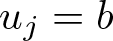 $u_j=b$ in
 $\Omega\backslash\widetilde\Omega$. Assume further that
(i)
$u_j$ is one-to-one a.e.,
$\operatorname{det} Du_j \gt 0$ a.e.,(ii)
$u_j$ satisfies the divergence identities (2.5) for each
$j\in\mathbb{N}$, and(iii)
$\sup_j E(u_j) \lt \infty$.



Suppose, further, that there exists  $u \in \textrm{W}^{1,n-1}(\Omega;\mathbb{R}^n)$ with
 $\operatorname{det} Du \ge 0$ a.e. such that
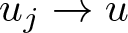 $u_j \to u$ a.e. Then
(a)
${\it{u}}$ is one-to-one a.e.,
$\operatorname{det} Du \gt 0$ a.e.,(b)
$\operatorname{im}_G(u,\Omega) = \Omega_b$ a.e., and(c)
$\operatorname{det} Du_j \overset{w}{\rightharpoonup} \operatorname{det} Du$ in
$\textrm{L}^{1}$.




Proof. From assumption (iii) that the energy  $E(u_j)$ is uniformly bounded and (2.2),
 $(\operatorname{det} Du_j)_j$ is equi-integrable by the de la Vallée Poussin criterion. A general argument (see, for example, the proof of [Reference Müller and Spector39, Theorem 5.1]) shows that the weak
 $\textrm{L}^{1}$ limit (after passing to a subsequence) of
 $(\operatorname{det}{Du}_j)_j$ exists and is (strictly) positive a.e. Hence, according to Proposition A.2 ([Reference Henao and Mora-Corral23, Theorem 2]), u is one-to-one a.e. and
 \begin{equation*}
\operatorname{det} Du_j \overset{w}{\rightharpoonup} |\operatorname{det} Du | \quad \text{in}\ \textrm{L}^{1},
\end{equation*}
Since we assume that  $\operatorname{det} Du \ge 0$ a.e., it follows that
 $|\operatorname{det} Du | = \operatorname{det} Du$, and hence (a) and (c) are proved.
To prove (b),Footnote 10 we will now show that
 \begin{equation*}
\chi_{\operatorname{im}_{\tiny{G}}(u,\Omega)} = \chi_{\Omega_b} \ \text{a.e.}
\end{equation*}
According to Lemma 3.1, we know that  $\chi_{\operatorname{im}_{\tiny{G}}(u_j,\Omega)} = \chi_{\Omega_b}$ for each j. Thus, for any
 $\psi\in C_c(\mathbb{R}^n)$, by Egorov’s theorem and
 $\operatorname{det}{Du}_j\overset w\rightharpoonup\operatorname{det}Du$ from (c), we have
 \begin{align*}
\lim_{j\to\infty} \int_{\mathbb{R}^n} \chi_{\Omega_b}(y) \psi(y) \,dy &= \lim_{j\to\infty} \int_{\Omega} \psi(u_j(x)) \operatorname{det} Du_j(x) \,dx \\
&= \int_{\Omega} \psi(u(x)) \operatorname{det} Du(x) \,dx \\
&= \int_{\mathbb{R}^n} \chi_{\operatorname{im}_{\tiny{G}}(u,\Omega)}(y) \psi(y) \,dy,
\end{align*}
and hence  $\chi_{\operatorname{im}_{\tiny{G}}(u,\Omega)} = \chi_{\Omega_b}$ a.e.
4. Main results
From this point onward, we shall further assume that  $\widetilde\Omega_b$ and
 $\Omega_b$ are Lipschitz domains (so, in particular, they have finite perimeters). Note that this is automatically the case if b is a bi-Lipschitz orientation-preserving homeomorphism since we assume that
 $\widetilde\Omega$ and Ω are Lipschitz domains.
Let  $\mathcal A$ be any subset of
 $\textrm{W}^{1,n-1}(\Omega;\mathbb{R}^n)$. We shall denote the (sequential) weak
 $\textrm{W}^{1,n-1}$ closure of
 $\mathcal A$ by
 \begin{equation*}
\overline{\mathcal A} := \Big\{u \in \textrm{W}^{1,n-1}(\Omega;\mathbb{R}^n) : \text{There are } u_j \in \mathcal A \text{ such that } u_j \overset{w}{\rightharpoonup} u \Big\}.
\end{equation*}
Note that  $\overline{\mathcal A}$ is sequentially closed, i.e. if
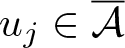 $u_j \in \overline{\mathcal A}$ and
 $u_j \overset{w}{\rightharpoonup} u$ in
 $\textrm{W}^{1,n-1}$, then
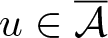 $u \in \overline{\mathcal A}$. This is due to the fact that weakly converging sequences are bounded and that the weak topology on a norm-bounded set in
 $\textrm{W}^{1,n-1}(\Omega;\mathbb{R}^n)$, a reflexive and separable Banach space, is metrizable (see also [Reference Doležalová, Hencl and Molchanova15, Theorem 5.1] for a proof using a diagonalization argument for a similar statement).
4.1. Weak lower semicontinuity of E and the existence of minimizers
According to Lemma 3.2 and Lemma 3.3, we see that one-to-one a.e., orientation-preserving maps in  $\textrm{W}^{1,n-1}(\Omega;\mathbb{R}^n)$ and that the weak limit of sequences of such maps, provided that we fix a Dirichlet condition b on
 $\Omega\backslash\widetilde\Omega$, enjoy many nice properties. This inspire us to define the following space of functions
 $\mathcal A_0 \subset \textrm{W}^{1,n-1}(\Omega;\mathbb{R}^n)$, which we will show in Theorem 4.2 that it is a natural space to work with.
Definition 4.1. Let  $E$ be an energy functional of the form (2.1), where
 ${\it{H}}$ satisfies (2.2). Define
 $\mathcal A_0 := \Big\{u \in \textrm{W}^{1,n-1}(\Omega ; \mathbb{R}^n) : u$ is one-to-one a.e., det
 $Du \gt 0 \ \text{a.e., }$
 $u = b \ {\textrm{on }}\Omega\backslash\widetilde\Omega,$
 $u$ satisfies the divergence identities (2.5) and
 $E(u) \le E(b)\Big\}.$
From the definition of  $\mathcal A_0$, any
 $v \in \mathcal A_0$ automatically satisfies the divergence identities (2.5) and
 $\operatorname{det} Dv \ge 0$ a.e., but this is not a priori true for all
 $u \in \overline{\mathcal{A}}_0$, i.e. u may not satisfy the divergence identities and
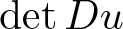 $\operatorname{det} Du$ could be negative on a set of positive measure.Footnote 11
Having defined the space  $\mathcal A_0$, we will now show that the neo-Hookean energy E is lower semicontinuous on the weak closure of any subspace
 $\mathcal A \subset \mathcal A_0$, provided that it satisfies one important condition, namely,
 $\operatorname{det} Du \ge 0$ a.e. for every
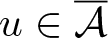 $u\in \overline{\mathcal{A}}$.
Theorem 4.2. Let  $E$ be an energy functional of the form (2.1), where
 $H$ satisfies (2.2). Suppose that
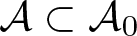 $\mathcal A \subset \mathcal A_0$ satisfies
 \begin{equation}
\operatorname{det} Du \ge 0 \quad\text{a.e. for every}\ u\in \overline{\mathcal{A}},
\end{equation}
then the following hold:
(i)
${\it{E}}$ is sequentially weakly lower semicontinuous on
$\overline{\mathcal A}$.(ii)
\begin{align*} \\[-43pt]\!\overline{\mathcal A} \subset \Big\{u \in \textrm{W}^{1,n-1}(\Omega& ;\mathbb{R}^n) : u \ {\textrm{is one-to-one a.e., }} \operatorname{det} Du \gt 0 \ \text{a.e., }\nonumber \\u & = b \ {\textrm{on }}\Omega\backslash\widetilde\Omega,\ \operatorname{im}_G(u,\Omega) \!=\! \Omega_b\ \text{a.e., and}\ E(u) \le E(b)\Big\}.\end{align*}(iii) If
$u \in \overline{\mathcal A}$ satisfies condition (INV), then
${\it{u}}$ has all the equivalent properties stated in Lemma 3.1.


Proof. (i): Let  $(u_j)_j$ be a sequence in
 $\overline{\mathcal A}$, i.e. each uj is a limit of some sequence in
 $\mathcal A$. By Lemma 3.3, each uj is one-to-one a.e., satisfies
 $\operatorname{det} Du_j \gt 0$ a.e. and
 $\operatorname{im}_G(u_j,\Omega) = \Omega_b$ a.e. for all
 $j\in\mathbb{N}$. Suppose that
 $u_j \overset{w}{\rightharpoonup} u$, from (2.2),
 $(\operatorname{det} {Du}_j)_j$ is weakly compact in
 $\textrm{L}^{1}$, so for any arbitrary subsequence of
 $(u_j)_j$, we may extract a further subsequence
 $(u_{j_k})_k$ such that
 $\operatorname{det} Du_{j_k} \overset{w}{\rightharpoonup} \theta$ for some
 $\theta \in \textrm{L}^{1}(\Omega;\mathbb{R}^{n\times n})$ and
 $u_{j_k} \to u$ a.e.
Since u also belongs to  $\overline{\mathcal A}$ (see the discussion prior to this theorem), Lemma 3.3 implies that u is one-to-one a.e. and
 $\operatorname{det} Du \gt 0$ a.e. According to Proposition A.1 ([Reference Müller and Spector39, Lemma 4.1])Footnote 12, we see that
 \begin{equation*}
\theta = |\operatorname{det} Du| = \operatorname{det} Du \quad \text{a.e.}
\end{equation*}
This shows that  $\operatorname{det} Du_{j_k} \overset{w}{\rightharpoonup} \operatorname{det} Du$ and thus also for the whole sequence, i.e.
 $\operatorname{det} Du_{j} \overset{w}{\rightharpoonup} \operatorname{det} Du$. We have shown that the Jacobian is weakly continuous in the class
 $\overline{\mathcal A}$, therefore E is weakly lower semicontinuous on
 $\overline{\mathcal A}$ as a consequence of the classical result [Reference Ball, Currie and Olver4, Theorem 5.4] by Ball-Currie-Olver.
(ii): Let 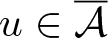 $u\in\overline{\mathcal A}$. From Lemma 3.3, we know that u is one-to-one a.e.,
 $\operatorname{det} Du \gt 0$ a.e., and
 $\operatorname{im}_G(u,\Omega) = \Omega_b$ a.e. The fact that u = b on
 $\Omega\backslash\widetilde\Omega$ is obvious. The inequality
 $E(u) \le E(b)$ is the consequence of the sequential weak lower semicontinuity of E that was proved in (i).
(iii): Suppose that  $u \in \overline{\mathcal A}$ satisfies condition (INV). From (ii), we know that
 $\operatorname{im}_G(u,\Omega) = \Omega_b$ a.e., thus
 \begin{equation}
\operatorname{Per}(\operatorname{im}_G(u,\Omega)) = \operatorname{Per}(\Omega_b) \lt \infty.
\end{equation}
By Proposition A.3 ([Reference Conti and De Lellis12, Theorem 4.2], see also [Reference De Lellis and Ghiraldin13]), it follows that 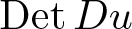 $\operatorname{Det} Du$ is a Radon measure and
 \begin{equation}
\operatorname{Det} Du = (\operatorname{det} Du)\mathcal{L}^n + \sum_{\xi \in \mathcal C} \mathcal{L}^n(\operatorname{im}_T(u,\{\xi\}))\, \delta_\xi,
\end{equation}
for some (at most) countable set  $\mathcal C$, the set of points in which u opens up cavities, that is contained in Ω. Here δξ denotes the Dirac mass at ξ. In fact, from the assumption that b satisfies the divergence identities, Lemma 3.1 (iii) says that b cannot open any cavity, and thus we must have
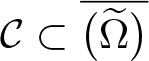 $\mathcal C \subset \overline{\big(\widetilde\Omega \big)}$ since u coincides with b on
 $\Omega\backslash\widetilde\Omega$.
We will now show that all the cavities must have zero volume. Indeed, taking an arbitrary good open set U such that  $\widetilde\Omega\subset\subset U \subset\subset \Omega$,
 \begin{align}
\mathcal{L}^n(\Omega_b) &= \mathcal{L}^n(\Omega_b \backslash b(U)) + \int_{U} \operatorname{det} Db(x) \,dx \nonumber\\
&= \mathcal{L}^n(\Omega_b \backslash b(U)) + \operatorname{Det} Db(U) \nonumber\\
&= \mathcal{L}^n(b(\Omega \backslash U)) + \operatorname{Det} Du(U),
\end{align}
where the last equality follows from Proposition A.4 ([Reference Henao and Mora-Corral25, Proposition 2.17]), i.e.
 \begin{equation*}
\operatorname{Det} Db(U) = \mathcal{L}^n(\operatorname{im}_T(b,U)) = \mathcal{L}^n(\operatorname{im}_T(u,U)) = \operatorname{Det} Du(U)
\end{equation*}
because  $\left.u\right\vert_{\partial U} = \left.b\right\vert_{\partial U}$. Recalling that b and u agree on
 $\Omega \backslash U$, we substitute that into (4.4) to get
 \begin{align*}
\mathcal{L}^n(\Omega_b) &= \mathcal{L}^n(\operatorname{im}_G(u,\Omega\backslash U)) + \int_{U} \operatorname{det} {Du}(x) \,dx + \sum_{\xi \in \mathcal C} \mathcal{L}^n(\operatorname{im}_T(u,\{\xi\})) \\
&= \mathcal{L}^n(\operatorname{im}_G(u,\Omega)) + \sum_{\xi \in \mathcal C} \mathcal{L}^n(\operatorname{im}_T(u,\{\xi\})) \\
&= \mathcal{L}^n(\Omega_b) + \sum_{\xi \in \mathcal C} \mathcal{L}^n(\operatorname{im}_T(u,\{\xi\})),
\end{align*}
where we used the fact that 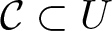 $\mathcal C \subset U$ in the first equality, thus
 \begin{equation*}
\sum_{\xi \in \mathcal C} \mathcal{L}^n(\operatorname{im}_T(u,\{\xi\})) = 0.
\end{equation*}
The above equality and (4.3) show that  $\operatorname{Det} Du = (\operatorname{det} Du)\mathcal{L}^n$. Since we already know that u satisfies (INV), we have fulfilled condition (iii) in Lemma 3.1, and hence the rest of the equivalent conditions in Lemma 3.1 also hold.
A subclass  $\mathcal A$ of
 $\mathcal A_0$ is required to satisfy condition (4.1) in order that Theorem 4.2 holds. Although it has not been proved yet if we may take
 $\mathcal A = \mathcal A_0$ in the theorem, there are some important subclasses of
 $\mathcal A_0$ that are known to satisfy condition (4.1), and we strongly believe that
 $\operatorname{det} Du \gt 0$ a.e. for every
 $u \in \overline{\mathcal A_0}$. First of all, a remarkable result by Hencl and Onninen in [Reference Hencl and Onninen31] implies that if each member of the sequence
 $(u_j)_j$ is a
 $\textrm{W}^{1,n-1}$ homeomorphism whose Jacobian is non-negative a.e., then
 $u_j \overset{w}{\rightharpoonup} u$ in
 $\textrm{W}^{1,n-1}$ is enough to guarantee that
 $\operatorname{det} Du \ge 0$ a.e. In particular, this gives us the following existence theorem.
Theorem 4.3. Let  $b\in\textrm{W}^{1,n-1}(\Omega;\mathbb{R}^n)$ be an orientation-preserving homeomorphism satisfying the divergence identities (2.5), and let
 $E$ be an energy functional of the form (2.1), where
 ${\it{H}}$ satisfies (2.2). For any nonempty subclass
 $\mathcal A \subset \mathcal A_0$ such that
 $\operatorname{det} Du \ge 0$ a.e. for every
 $u\in \overline{\mathcal{A}}$, the energy functional
 ${\it{E}}$ admits a minimizer in
 $\overline{\mathcal{A}}$. In particular, let
-
\begin{equation*}\begin{aligned}
\mathcal A_{dif} := \Big\{u \in \textrm{W}^{1,n-1}(\Omega;\mathbb{R}^n) : u \ &\textrm{is}\ a\ C^1\ {\textrm{diffeomorphism,}}\ \operatorname{det} Du \gt 0 \ \text{a.e., } \\
&\quad {u = b} \ \textrm{on}\ \Omega\backslash\widetilde\Omega\ \textrm{and}\ {E(u)} \le E(b)\Big\} \text{ and}
\end{aligned}
\end{equation*}
-
\begin{equation*}
\begin{aligned}
\mathcal A_{hom} &:= \Big\{u \in \textrm{W}^{1,n-1}(\Omega;\mathbb{R}^n) : {u} \ {\textrm{is a homeomorphism,}}\ \operatorname{det} Du \gt 0 \ \text{a.e.,}\\
&u\ \textrm{satisfies Lusin's condition}\ \textrm{(N)},\ {u = b}\ \textrm{on }\Omega\backslash\widetilde\Omega \textrm{ and } {E(u)} \le E(b) \Big\},
\end{aligned}
\end{equation*}


then  ${\it{E}}$ has a minimizer in
 $\overline{\mathcal A_{hom}}$ if
 ${\it{b}}$ is a homeomorphism that satisfies Lusin’s condition (N) and
 $E$ has a minimizer in
 $\overline{\mathcal A_{dif}}$ if
 $b$ is a
 $C^1$ diffeomorphism.
Moreover, if a minimizer  ${\it{u}}$ of
 ${\it{E}}$ in any of the above classes satisfies condition (INV), then it also satisfies the divergence identities (2.5),
 $\operatorname{Det} Du = (\operatorname{det} Du)\mathcal{L}^n$ and
 $u^{-1} \in \textrm{W}^{1,1}(\Omega_b;\mathbb{R}^n)$.
Remark: Suppose that udif and uhom are minimizers of E in the classes  $\overline{\mathcal A_{dif}}$ and
 $\overline{\mathcal A_{hom}}$, respectively. Clearly, we have
 \begin{equation*}
E(u_{hom}) \le E(u_{dif})
\end{equation*}
since  $\mathcal A_{dif} \subset \mathcal A_{hom}$. However, it is still not known if the inequality is strict or not. The same remark also applies to the inequality
 \begin{equation*}
\inf_{\overline{\mathcal A}} E \le \inf_{\mathcal A} E,
\end{equation*}
where  $\mathcal A\subset \mathcal A_0$.
Proof. Let  $\mathcal A$ be a subclass of
 $\mathcal A_0$ such that
 $\operatorname{det} Du \ge 0$ a.e. for every
 $u\in \overline{\mathcal{A}}$. Due to the bound on the energy
 $\sup_{u\in\overline{\mathcal A}} E(u) \le E(b)$,
 $\overline{\mathcal A}$ is weakly compact in
 $\textrm{W}^{1,n-1}(\Omega;\mathbb{R}^n)$, and hence the sequential weak lower semicontinuity of E implies that E admits a minimizer in
 $\overline{\mathcal A}$. A minimizer u has the properties stated in Theorem 4.2 (iii), provided that u satisfies (INV).
Now, we observe that  ${\mathcal A}_{dif}\subset{\mathcal A}_{hom}\subset{\mathcal A}_0$. Indeed, the fact that Lipschitz maps (hence also C 1 maps) satisfy Lusin’s condition (N) is well-known (see e.g. [Reference Evans and Gariepy16]), and hence
 ${\mathcal A}_{dif}\subset{\mathcal A}_{hom}$. As for
 ${\mathcal A}_{hom}\subset{\mathcal A}_0$, this is a consequence of [Reference Henao and Mora-Corral25, Theorem 5.5]. If b satisfies Lusin’s condition (N), then
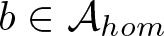 $b\in{\mathcal A}_{hom}$, and if we assume further that b is a C 1 diffeomorphism, then
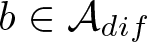 $b\in{\mathcal A}_{dif}$. Therefore
 ${\mathcal A}_{hom}$ and
 ${\mathcal A}_{dif}$ are nonempty, provided that b has enough regularity.
To see that  $\operatorname{det} Du \ge 0$ a.e. for every u in
 $\overline{{\mathcal A}_{dif}}$ and
 $\overline{{\mathcal A}_{hom}}$, we note that each member
 $u\in\overline{{\mathcal A}_{hom}}$ (and hence also each
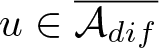 $u\in\overline{{\mathcal A}_{dif}}$) is a weak
 $\textrm{W}^{1,n-1}$ limit of a sequence of homeomorphisms with a.e. positive Jacobians, and hence [Reference Hencl and Onninen31, Theorem 1] implies that the Jacobian of u is also positive a.e.
Our belief that also  $\mathcal A_0$ satisfies (4.1) is supported by a recent work [Reference Henao and Kalayanamit22], where a planar version of the divergence identities (2.5) is used to show that limits of sequences of the class of orientation-preserving generalised axisymmetric maps Footnote 13 on a domain
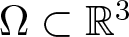 $\Omega \subset \mathbb{R}^3$ has non-negative Jacobian. We are working on extending the technique from [Reference Henao and Kalayanamit22] to prove that the same is true of all sequences in
 $\mathcal A_0$, which will imply that Theorem 4.2 holds for
 $\mathcal A = \mathcal A_0$. This would show that E is weakly lower semicontinuous on the class
 $\overline{\mathcal A_0}$.
Furthermore, another recent result [Reference Doležalová, Hencl and Malý14] suggests that, under a stronger coercivity assumption on H than (2.2), condition (INV) holds for all 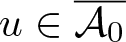 $u \in \overline{\mathcal A_0}$. If this were proved, Theorem 4.2 (ii)–(iii) will then imply that each
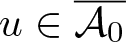 $u \in \overline{\mathcal A_0}$ satisfies all the requirements for membership in
 $\mathcal A_0$, and hence
 $\overline{\mathcal A_0} = \mathcal A_0$. All in all, an important virtue of Theorem 4.2 is that it provides a strategy for proving that the space
 $\mathcal A_0$ itself is sequentially weakly closed in
 $\textrm{W}^{1,n-1}(\Omega;\mathbb{R}^n)$ and that a minimizer exists for the neo-Hookean energy in this explicitly characterised space.
4.2. On condition (INV)
One of the consequences of Theorem 4.3, namely, the existence of a minimizer of E in 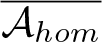 $\overline{\mathcal A_{hom}}$, is first proved by Doležalová, Hencl, and Molchanova in [Reference Doležalová, Hencl and Molchanova15, Theorem 5.5], but using a different approach and with an extra assumption that the distortion function
 $K_u(x) := \frac{|Du(x)|^n}{|\operatorname{det} Du(x)|}$ is bounded by E(u).Footnote 14 Here, we wish to emphasise three main strengths of our approach compared to theirs.
Firstly, Theorem 4.2 shows that the weak lower semicontinuity of E on  $\overline{{\mathcal A}_{hom}}$ is not reliant on condition (INV), but is a consequence of the fact that each
 $u\in{\mathcal A}_{hom}$ satisfies the divergence identities (2.5). In [Reference Doležalová, Hencl and Molchanova15], the bound on the distortion function
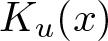 $K_u(x)$ ensures that the weak limit u of a minimizing sequence
 $(u_j)_j$ of E in
 ${\mathcal A}_{hom}$ satisfies (INV) (see [Reference Doležalová, Hencl and Malý14, Theorem 3.1]), which is an important ingredient of the proof in [Reference Doležalová, Hencl and Molchanova15, Lemma 4.2] of the weak lower semicontinuity of E. Since Lemma 3.3 does not rely on the weak limit u of
 $(u_j)_j$ satisfying (INV), we are able to find a minimizer of E in
 $\overline{{\mathcal A}_{hom}}$ without assuming any bound regarding the distortion function.
Secondly, our approach is adapted to minimising the neo-Hookean energy in other spaces beside  $\overline{{\mathcal A}_{hom}}$, the space whose elements are implicitly described as limits of homeomorphisms. For example, it is shown in [Reference Henao and Kalayanamit22] that, for a domain Ω in
 $\mathbb{R}^3$, the class of orientation-preserving generalised axisymmetric maps satisfies condition (4.1), so if we denote
 \begin{equation*}{\mathcal A}_{axi}:=\{u\in{\mathcal A}_0:u\ \text{is a generalised axisymmetric map}\},\end{equation*}
then Theorem 4.3 implies that E has a minimizer in  $\overline{\mathcal A_{axi}}$.Footnote 15
Thirdly, our approach is formulated in such a way as to facilitate the explicit characterisation of  $\overline{\mathcal A_0}$ in mind. Ideally, one wants to work in a weakly closed function space that is explicitly described since there are advantages in knowing what each element of the space looks like, e.g. working in
 $\text{BV}(\Omega;\mathbb{R}^n)$ when trying to minimise an energy that grows linearly in
 $|Du|$. Indeed, there are examples of problems in the calculus of variations beside the minimisation of the neo-Hookean energy whose progresses are hindered by our inability to explicitly characterise the weak closures of known spaces. One such problem is the Hardt–Lin problem [Reference Hardt and Lin20] whose main difficulty lies in characterising the weak
 $\textrm{W}^{1,2}$ closure of
 $\textrm{W}^{1,2}_{g}(\Omega; \mathbb{S}^2) \cap C^0(\overline\Omega; \mathbb{S}^2)$, the space of unit-valued continuous maps with Dirichlet boundary g. From Theorem 4.2 (ii)–(iii), we have
 \begin{equation}
\overline{\mathcal A_0}\backslash \mathcal A_0 = \{u \in \overline{\mathcal A_0} : u \text{ does not satisfy condition (INV)} \},
\end{equation}
hence if we can prove that a coercivity condition on H stronger than (2.2) implies that (INV) holds for all  $u \in \overline{\mathcal A_0}$, as suggested to be true by [Reference Doležalová, Hencl and Malý14, Reference Henao and Kalayanamit22] (see the discussion at the end of the last section), then Theorem 4.3 proves the existence of a minimizer of E in the explicitly characterised space
 $ \mathcal A_0 = \overline{\mathcal A_0}$. Note in passing that it would also follow that
 $\overline{{\mathcal A}_{axi}}={\mathcal A}_{axi}$ under the same assumption,Footnote 16 so E has a minimizer in
 ${\mathcal A}_{axi}$.
While one may hope that every 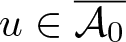 $u \in \overline{\mathcal A_0}$ satisfies (INV) so that (4.5) is an empty set and hence u has the nice properties guaranteed by Lemma 3.1, this is not true in general under the hypothesis (2.2). Indeed, Conti and De Lellis in [Reference Conti and De Lellis12] shows that condition (INV) does not pass to the limit for a sequence
 $(u_j)_j$ of bi-Lipschitz maps in
 $\textrm{W}^{1,n-1}(\Omega;\mathbb{R}^n)$ with
 $\sup_j E(u_j) \lt \infty$, where H satisfies (2.2). Their counterexample to the stability of condition (INV) has since been a major obstacle in minimising the neo-Hookean energy in natural spaces. However, in a recent work [Reference Doležalová, Hencl and Malý14], Doležalová, Hencl, and Malý have shown that by assuming that H satisfies a stronger coercivity condition, condition (INV) does pass to the limit for any sequence
 $(u_j)_j$ of homeomorphisms with a fixed Dirichlet boundary condition such that
 $\sup_{j}E(u_j) \lt \infty$. The additional conditions assumed in [Reference Doležalová, Hencl and Malý14] are the following:
There exist some c > 0 such that
 \begin{equation}
c^{-1}H(t) \le H(2t) \le c H(t)
\end{equation}
and some C > 0 such that
 \begin{equation}
H(t) \ge \frac{C}{t^\alpha} \quad\text{for all}\quad t \gt 0,
\end{equation}
where 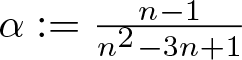 $\alpha := \frac{n-1}{n^2-3n+1}$. In particular, when n = 3, we have α = 2.
Our last result is an application of Theorem 4.3 for  $\mathcal A = \mathcal A_{hom}$, with an extra assumption that H satisfies (4.6) and (4.7) so that each
 $u\in\overline{{\mathcal A}_{hom}}$ satisfies condition (INV). This result closely mirrors [Reference Doležalová, Hencl and Molchanova15, Theorem 5.5] by Doležalová, Hencl, and Molchanova (stated with a less restrictive Dirichlet boundary condition than ours). The novelty of Theorem 4.4 is the extra properties of u that follow from Theorem 4.2 (iii), in particular the Sobolev regularity of u −1.
Theorem 4.4. Let  $b \in \textrm{W}^{1,n-1}(\Omega;\mathbb{R}^n)$ be an orientation-preserving homeomorphism satisfying Lusin’s condition (N) and
 $E$ be an energy functional of the form (2.1), where
 ${\it{H}}$ satisfies (2.2), (4.6) and (4.7). Then each function in
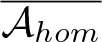 $\overline{\mathcal A_{hom}}$ satisfies all the equivalent conditions in Lemma 3.1, and
 ${\it{E}}$ admits a minimizer in
 $\overline{\mathcal A_{hom}}$.
In particular, for the  $n=3$ case, the energy functional
 \begin{equation*}
E(u) = \int_\Omega |Du(x)|^2 + H(\operatorname{det} Du(x)) \,dx,
\end{equation*}
admits a minimizer in 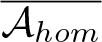 $\overline{\mathcal A_{hom}}$, the weak closure of the class
 \begin{align*}
\mathcal A_{hom} = \Big\{u &\in \textrm{W}^{1,2}(\Omega;\mathbb{R}^3) : u \ \ {\textrm{is a homeomorphism,}}\ \operatorname{det} Du \gt 0 \ \text{a.e.,}\\
&u\ {\textrm{satisfies Lusin's condition}}\ {\textrm{(N)}},\ {{u = b}} \ \textrm{on }\Omega\backslash\widetilde\Omega\ \textrm{and } {{E(u)}} \le E(b) \Big\},
\end{align*}
and for each  $u \in \overline{\mathcal A_{hom}}$,
 ${\it{u}}$ satisfies the divergence identities (2.5),
 ${\it{u}}$ satisfies condition (INV),
 $\operatorname{Det} Du = (\operatorname{det} Du)\mathcal{L}^3$,
 $\operatorname{im}_G(u,\Omega) = \Omega_b$ a.e. and
 $u^{-1} \in \textrm{W}^{1,1}(\Omega_b;\mathbb{R}^3)$.
Proof. Since  $b\in{\mathcal A}_{hom}$,
 $\overline{{\mathcal A}_{hom}}$ is nonempty and we can apply Theorem 4.3. From [Reference Doležalová, Hencl and Malý14, Theorem 1.1], each element of
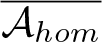 $\overline{{\mathcal A}_{hom}}$ satisfies condition (INV), and hence Theorem 4.2 (iii) holds.
It was shown in [Reference Doležalová, Hencl and Molchanova15, Theorem 5.5] that, under the assumptions (4.6) and (4.7), the minimizer of E in 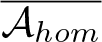 $\overline{{\mathcal A}_{hom}}$ satisfies Lusin’s condition (N) as well.
As mentioned in [Reference Doležalová, Hencl and Malý14], the coercivity condition (4.7) can be relaxed to a uniform  $\textrm{L}^{\frac{1}{n-1}}$ bound on the distortion function, which is defined as follows: Let
 $K_u(x) := \frac{|Du(x)|^n}{|\operatorname{det} Du(x)|}$ be the distortion function of a Sobolev function u, where we set
 $K_u(x) = 1$ if
 $\operatorname{det} Du(x) = 0$ (here
 $|Du(x)|$ denotes the operator norm of the matrix Du(x)). [Reference Doležalová, Hencl and Malý14, Theorem 3.1] states that for a sequence of Sobolev homeomorphisms uj with uniformly bounded energy (
 $\sup_{\scriptstyle{j}} E(u_{\scriptstyle{j}}) \lt \infty$), if the sequence
 $(K_{u_{\scriptstyle{j}}})_j$ is bounded in the
 $\textrm{L}^{\frac{1}{n-1}}$ norm, then condition (INV) passes to the limit. Indeed, the fact that
 $\sup_j \left\lVert K_{u_j} \right\rVert_{\mathrm{L}^{{{\frac{\tiny{\rm{1}}}{\tiny{{n}}-\tiny{{\rm{1}}}}}}}} \lt \infty$ follows from
 $\sup_{\scriptstyle{j}} E(u_{\tiny{j}}) \lt \infty$ and (4.7) is a consequence of the Hölder-Young inequality
 \begin{align*}
\int_\Omega K_u^{\frac{1}{n-1}}(x) \,dx &= \int_\Omega |Du(x)|^{\frac{n}{n-1}}\ |\operatorname{det} Du(x)|^{-\frac{1}{n-1}} \,dx \\
&\le \frac{1}{p} \int_\Omega |Du(x)|^{n-1} \,dx + \frac{1}{q} \int_\Omega |\operatorname{det} Du(x)|^{-\frac{n-1}{n^2-3n+1}} \,dx,
\end{align*}
where 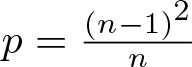 $p = \frac{(n-1)^2}{n}$ and
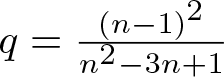 $q = \frac{(n-1)^2}{n^2-3n+1}$. In particular, for n = 3, we have
 $\alpha := \frac{n-1}{n^2-3n+1} = 2$.
Acknowledgements
I am grateful to the anonymous referee for the valuable comments which help organising the paper better. I thank Marco Barchiesi, Duvan Henao, Carlos Mora-Corral, and Rémy Rodiac for our discussions and suggestions. Also, I am indebted to Jan Kristensen for introducing me to this beautiful area of mathematics, the calculus of variations.
Appendix 1. Appendix
Here, we collect some important results in the literature that are used in this paper, stated without proofs.
Proposition A.1. ([Reference Müller and Spector39], Lemma 4.1)
Assume that  $u_j \overset{w}{\rightharpoonup} u$ in
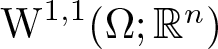 $\textrm{W}^{1,1}(\Omega;\mathbb{R}^n)$, each
 $u_j$ is one-to-one a.e., and there exist a function
 $\theta \in \textrm{L}^{1}(\Omega)$ and a measurable set
 $V \subset \mathbb{R}^n$ such that
 \begin{align*}
| \operatorname{det} Du_j | &\overset{w}{\rightharpoonup} \theta \quad\ \ \text{in } \textrm{L}^{1}(\Omega) \text{ and} \\
\chi_{\operatorname{im}_{\tiny{G}}(u_j,\Omega)} &\to \chi_V \quad\text{in } \textrm{L}^{1}_{loc}(\mathbb{R}^n).
\end{align*}
Suppose that  $\theta \gt 0$ a.e., then
 \begin{align*}
\operatorname{det} Du &\ne 0 \quad\quad\quad\ \,\text{a.e. and} \\
\chi_V &= \chi_{\operatorname{im}_{\tiny{G}}{(u,\Omega)}} \quad\text{a.e.}
\end{align*}
Moreover, if  ${\it{u}}$ is one-to-one a.e., then
 $\theta = |\operatorname{det} Du|$ a.e.
Proposition A.2. ([Reference Henao and Mora-Corral23], Theorem 2 (i),(ii))
For each 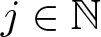 $j \in \mathbb{N}$, let
 $u_j, u \colon \Omega \to \mathbb{R}^n$ be approximately differentiable a.e. on Ω,
 $\operatorname{det} Du_j \in \textrm{L}^{1}(\Omega)$,
 $\sup_j \left\lVert \operatorname{cof} Du_j \right\rVert_{\textrm{L}^{1}(\Omega;\mathbb{R}^{n \times n})} \lt \infty $. Assume that for each
 $j\in \mathbb{N}$,
 $u_j$ is one-to-one a.e.,
 $\operatorname{det} Du_j \gt 0$ a.e. and
 $u_j$ satisfies the divergence identities (2.5). Suppose that there exists
 $\theta \in \textrm{L}^{1}(\Omega)$ such that
 $\theta \gt 0$ a.e.,
 \begin{align*}
u_j \to u \quad\text{a.e. }\quad \text{and}\quad \operatorname{det} Du_j \overset{w}{\rightharpoonup} \theta \quad\text{in } \textrm{L}^{1}(\Omega),
\end{align*}
then
(i)
$\theta = | \operatorname{det} Du |$ a.e.(ii)
${\it{u}}$ is one-to-one a.e.


Proposition A.3. Let  $\Omega \subset \mathbb{R}^n$ be a bounded open domain and
 $u \in \textrm{W}^{1,n-1} \cap\textrm{L}^{\infty}(\Omega;\mathbb{R}^n)$. Suppose that condition (INV) holds, that
 $\operatorname{det} Du \gt 0$ a.e., and
 $\operatorname{Per}(\operatorname{im}_G(u,\Omega)) \lt \infty$, then
 \begin{equation*}
\operatorname{Det} Du = (\operatorname{det} Du)\mathcal{L}^n + \sum_{\xi \in {\mathcal C}} \mathcal{L}^n(\operatorname{im}_T(u,\{\xi \})) \delta_\xi,
\end{equation*}
where  ${\mathcal{C}}$ is the (at most countable) set of points
 $\xi \in \Omega$ such that
 $\mathcal{L}^n(\operatorname{im}_T(u,\{\xi \})) \gt 0$.
Proof. This follows from the proof of [Reference Conti and De Lellis12, Theorem 4.2] for the case n = 3. See also [Reference Henao and Mora-Corral25, Theorem 4.6] and [Reference Henao and Mora-Corral25, Remark 4.7].
Proposition A.4. ([Reference Henao and Mora-Corral25], Theorem 2.17 (iv)–(v))
Suppose that  $u \in \textrm{W}^{1,n-1}\cap \textrm{L}^{\infty}(\Omega;\mathbb{R}^n)$ satisfies condition (INV) and
 $\operatorname{det} Du \gt 0$ a.e. Let
 ${\it{U}}$ be a good open set, then
 \begin{equation*}
\deg(u, U, \cdot) = \chi_{\operatorname{im}_{\tiny{T}}(u,U)} \quad\text{a.e. } \quad\text{and }\quad \operatorname{Det} Du(U) = \mathcal{L}^n( \operatorname{im}_T(u,U) ).
\end{equation*}
Proposition A.5. ([Reference Henao and Mora-Corral25], Lemma 5.3)
Suppose that  $u \in \textrm{W}^{1,n-1}\cap \textrm{L}^{\infty}(\Omega;\mathbb{R}^n)$ satisfies condition (INV) and
 $\operatorname{det} Du \gt 0$ a.e. Then the following are equivalent:
(i)
$\operatorname{im}_T(u,U) = \operatorname{im}_G(u, U)$ a.e. for each good open set
$U$.(ii)
$\operatorname{Det} Du = (\operatorname{det} Du)\mathcal{L}^n$.(iii)
${\it{u}}$ satisfies the divergence identities (2.5).


Proposition A.6. ([Reference Barchiesi, Henao and Mora-Corral6], Theorem 4.1 and Equation 5.1)
Let  $u \in \textrm{W}^{1,p}(\Omega; \mathbb{R}^n)$,
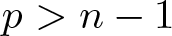 $p \gt n-1$,
 $\operatorname{det} Du \in \textrm{L}^{1}_{loc}(\Omega)$ with
 $\operatorname{det} Du \gt 0$ a.e. Suppose that
 $u$ satisfies the divergence identities (2.5), then for all good open set
 ${\it{U}}$,
 \begin{equation*}
\deg(u, U, \cdot) = {\mathcal N}_U \quad\text{a.e.}
\end{equation*}
and
 \begin{equation*}
\operatorname{im}_T(u, U) = \operatorname{im}_G(u, U) \quad\text{a.e.}
\end{equation*}
This result can be adapted to the case 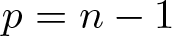 $p=n-1$ too, even though it is stated for
 $p \gt n-1$ in [Reference Barchiesi, Henao and Mora-Corral6]. This is because the proof relies only on the fact that the degree satisfies the relation (2.4) and not on the continuity of u on
 $\partial U$. The necessary change is that
 $\deg(u,\partial U,y)$ in the definition of
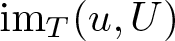 $\operatorname{im}_T(u,U)$ must be understood in terms of (2.4) instead of the classical Brouwer degree (they coincide a.e. and for almost every U whenever
 $\left.u\right\vert_{\partial U}\in C(\partial U;\mathbb{R}^{n-1})$). See the proof of Lemma 3.2 on how the argument in [Reference Barchiesi, Henao and Mora-Corral6, Theorem 4.1] can be adapted for the case
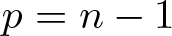 $p = n-1$.