Shoulder complaints (SCs) constitute the second largest group of musculoskeletal disorders after low back pain (19). Musculoskeletal disorders in general account for the second largest share in healthcare costs in the Netherlands (16). Additionally, Swedish insurance data show that, in 1994, approximately 18 percent of total paid sick leave for musculoskeletal disorders were related to neck–shoulder problems (17). Hence, the economic burden in terms of costs of healthcare use and costs due to work absenteeism underlines the need for a cost-effectiveness analysis of the interventions involved.
SCs are characterized by pain in the area between the base of the neck and the elbow, at rest or when elicited by movement of the upper arm. The self-reported point prevalence of shoulder pain in the Netherlands is 20.9 percent (19). Approximately half of the newly presented episodes in general practice are reported to last at least 6 months, and 40 percent of the newly presented episodes result in disability in terms of activities of daily living after 1 year (21).
The minority (less than 25 percent) of the patients in whom low back pain develops into a chronic condition generate more than 80 percent of the total costs (11;24). In view of this finding, preventing a chronic condition in the early stages may be an efficient cost-reducing tool. Because approximately half of the newly presented episodes of SCs also develop into a chronic condition lasting more than 6 months, it is likely that costs of SCs are not normally distributed either, with a minority of the patients generating a majority of the total costs. Hence, an early intervention preventing chronic SCs may reduce total costs related to SCs by reducing costs generated in the chronic stage of SCs by a minority of patients.
The education and activation program (EAP) is a newly developed early intervention to prevent the development of chronic SCs. The EAP aims to prevent the development of inadequate cognitions and maladaptive behaviors known to play a role in the persistence of musculoskeletal disorders (15;20;25). Trained general practitioners (GPs) administer the EAP in addition to usual care (UC).
A successful EAP should reduce the proportion of patients with chronic SCs reporting not to be recovered after 26 weeks. Even a small reduction in this proportion should result in a reduction of total costs, especially because patients with chronic SCs are likely to generate the majority of the total costs related to SCs.
A cost-effectiveness analysis should provide more information on the effect of an EAP on total costs related to SCs. We conducted a cost-effectiveness analysis alongside a randomized clinical trial comparing the effectiveness of the EAP in addition to usual care (EAP group) with that of usual care alone (UC group) in terms of preventing chronicity in patients with acute SCs.
The aim of the cost-effectiveness analysis described in this study was to compare the total costs generated over a period of 26 weeks in both study groups. Additionally, the observed difference in costs was related to the clinical effectiveness (patient-perceived recovery after 26 weeks) in the two study groups, using bootstraps.
METHODS
Study Design
The design of the randomized clinical trial on which the cost-effectiveness study was based has previously been described in detail (6). After inclusion in the study, patients with an episode of SCs that had lasted no longer than 3 months were randomly allocated to either the EAP group or the UC group. Before randomization and 26 weeks after randomization, patients were assessed for clinical outcomes.
Patients
The study population included patients older than 18 years, living in the south of the Netherlands, and suffering from SCs that had lasted up to 3 months. Only newly presented episodes of SCs were considered, that is, patients who had not consulted their general practitioner (GP) in the previous 3 months for SCs and had not been treated for their SCs in the preceding 3 months. Reasons for exclusion were as follows: other episodes of SCs in the 12 months preceding the consultation with the GP, prior fractures and/or surgery of the shoulder, actual or suspected referred pain from internal organs, SCs with a confirmed extrinsic cause, inability to complete a questionnaire independently, and presence of dementia or other severe psychiatric abnormalities.
Treatments
Patients in the UC group received usual care (UC) according to the Dutch College of General Practitioners guidelines for SCs (version 1999) (28). This care consists of a wait-and-see policy during the first 2 weeks with information and advice about shoulder complaints, possibly supplemented with analgesics or nonsteroidal anti-inflammatory drugs. If this approach has little or no effect, up to three corticosteroid injections can be given. Physiotherapy is considered for complaints persisting after 6 weeks or more. If the SCs persist, referral to a hospital-based specialist may be considered.
Patients in the EAP group received UC and an additional EAP. The aim of this program was to prevent the development of inadequate cognitions and maladaptive behaviors by maintaining or inducing proper cognitions and stimulating adequate behavior. Education was used to maintain or induce the proper cognitions (e.g., ideas and expectations about origin, duration, and treatment effects). Adequate behavior was stimulated by means of advice on activities of daily living, using principles of operant conditioning (9). The program consisted of a minimum of two sessions and a maximum of six follow-up sessions over a period of 6 weeks. Each session could last up to 20 minutes.
The EAP was administered by specially trained GPs or a specially trained ambulant therapist (C.D.B.) if no trained GP was available in the area where the patient lived. UC was administered by the patient's own GP unless the GP had been trained to provide the EAP. In that case, UC was administered by a colleague of the GP, to avoid contamination of the UC treatment.
Clinical Outcomes
The clinical effectiveness after 26 weeks was measured using “patient-perceived recovery.” This combined outcome measure considers patients to be recovered when they either report to be “much improved” or “very much improved” on a 7-point scale or they report to be cured on a dichotomous question (“Are you fully recovered from your shoulder complaints?” Yes/no.) (21). The EQ-5D was used to rate generic health-related quality of life for the cost-effectiveness analysis (5). Data recorded at baseline included demographic variables and specific disease variables such as pain intensity (10-point visual analogue scale), onset (quick or slow), affected shoulder, and prior episodes of SCs lasting at least 1 week.
Costs
Cost data were collected from a societal perspective, using a cost diary assessing direct healthcare costs and direct non–health-related costs (12). The diary was presented in a booklet form covering a period up to 6 weeks. Patients were asked to complete four cost diaries prospectively in four periods, lasting a total of up to 24 weeks after inclusion in the study. Cost data of the final cost diary were extrapolated to calculate the costs of the last 2 weeks to report costs over a period of 26 weeks (6 months) and be consistent with the clinical outcomes.
Direct healthcare costs included treatment by a GP, physiotherapist, manual therapist, occupational therapist, “Mensendieck” or “Cesar” exercise therapist, or complementary health therapist (e.g., acupuncturist); visits to a consultant in orthopedic surgery, neurology, rheumatology, or rehabilitation medicine; professional home care; prescribed medication; and hospitalization. Direct non-healthcare costs included costs of paid and unpaid help, purchased aids, and over-the-counter medications.
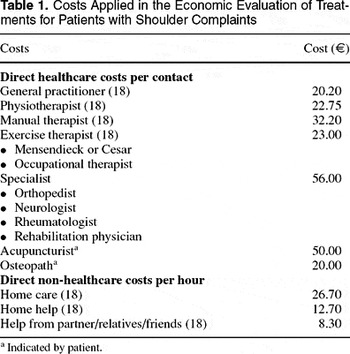
The costs of direct healthcare utilization were calculated by multiplying the number of visits with the rates presented in Table 1 (18). The additional direct healthcare costs of prescribed medication were based on the rates used by the Dutch Health Care Insurance Board (23).

The costs of direct non-healthcare utilization were calculated by multiplying the hours of home care, home help, or help from partner/relatives/friends with the rates presented in Table 1 (18). The additional direct non-healthcare costs of over-the-counter medication were based on the prices used by the Health Care Insurance Board (23).
Indirect costs refer to the value of the production lost due to SCs-related absence from paid and unpaid work. Indirect costs for paid work were calculated using the friction cost method (with a friction period of 154 days) (13). For unpaid work, such as housework, costs were estimated at a shadow price of €8.30 (18).
The costs of the EAP are part of the direct healthcare costs. The calculation of the costs of the EAP used only the frequency and duration of the consultations by the ambulant therapist, because no data were available for the GPs providing the EAP.
Costs of the individual EAP administered by the ambulant therapist are based on the total duration of the program, where 10 minutes equal a regular consultation in general practice at a rate of €20.20. Costs of treatments administered by the trained GPs are based on the mean treatment duration of the EAP administered by the ambulant therapist at a rate of €20.20 per 10 minutes.
Analyses
Clinical outcome measures were analyzed according to the intention-to-treat principle. Between-group changes since baseline of continuous outcome variables were analyzed using an independent samples t-test for changes since baseline. The Chi-squared test was used for categorical outcome variables. Additional analysis was conducted on imputed data. The “last observation carried forward” method was used to impute missing values in clinical outcomes.
The primary cost-effectiveness analysis was performed on imputed cost data. Missing cost data were replaced using last value carried forward imputation for individual cost data. Cost data for patients who returned less than one cost diary and patients for whom the first cost diary was missing were excluded from the analysis. Because we expected the majority of the costs to be incurred during the first cost period, missing the first cost diary would result in bias, and imputation using last value carried forward was not possible for this cost diary.
Because cost data per patient are typically highly skewed, we used bootstrap estimation to derive a 95 percent confidence interval for the mean difference in total costs due to SCs and the mean difference in clinical effectiveness between the groups (3;8). Bootstrap estimation is based on random sampling (1,000 replications) with replacement of several of the patients in the trial, using the original data (4).
The incremental cost-effectiveness ratios (ICER), calculated by dividing the difference in direct costs for the two treatment groups by the difference in effect between the two groups, were calculated for each bootstrap replicate (7). The bootstrapped cost-effect pairs were graphically represented on a cost-effectiveness plane (2). Acceptability curves show the probability that a treatment is cost-effective at a specific ceiling ratio (22).
We performed a sensitivity analysis on total costs, excluding the indirect costs, to evaluate the effect of these indirect costs on the cost-effectiveness. Furthermore, a sensitivity analysis was applied to patients who completed all cost diaries.
RESULTS
Patients
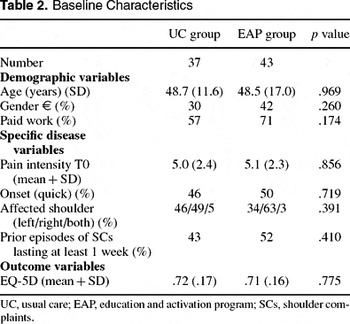
In the randomized clinical trial, fifty-two patients were allocated at random to the UC group and fifty-six to the EAP group. Returning less than one cost diary and/or not returning the first cost diary resulted in the exclusion from the cost analysis of fifteen patients in the UC group and thirteen patients in the EAP group. Imputed cost data were available for thirty-seven patients in the UC group and forty-three patients in the EAP group. Baseline characteristics of patients included in the cost analysis were not significantly different between treatment groups (Table 2), and baseline characteristics of patients excluded from the cost analysis were not significantly different from those of patients included in the cost analysis (not presented).

Cost Diaries
Complete cost data were available for twenty-seven (52 percent) patients in the UC group and thirty-two (57 percent) patients in the EAP group. Overall, 326 of 432 (75 percent) cost diaries were completed and returned.
Clinical Outcomes
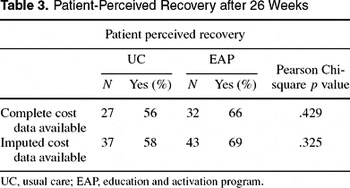
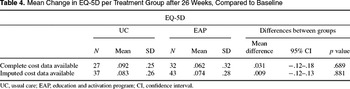
The comparison of patient-perceived recovery between treatment groups showed no significant difference for patients for whom complete cost data were available (Table 3). Nor was there a significant difference in patient-perceived recovery between the treatment groups for patients for whom imputed cost data were available. Similar results were found for changes in the EQ-5D score (Table 4). Mean changes in EQ-5D were very small in both treatment groups, suggesting that the EQ-5D is not sensitive enough to detect changes in generic health-related quality of life in this population.


Costs
EAP Costs
EAP administered by the ambulant therapist consisted of an average of 2.0 visits (SD = .8) and .7 consultations by phone (SD = .7). The average time invested in a patient (both visits and consultations by phone) was 55 minutes (SD = 31). The ambulant therapist administered the EAP to thirty-three patients, of whom twenty-five were included in the cost analysis. Mean costs per person of the EAP administered by the ambulant therapist were €111 (SD = 63). These costs were also used to calculate the costs of the EAP administered by the trained GPs.
Direct Healthcare and Direct Non-healthcare Costs
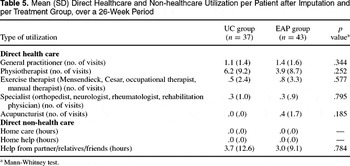
The volumes per treatment group for the various categories of direct healthcare and non-healthcare utilization after imputation are shown in Table 5. The volumes were comparable for the two treatment groups, and there were no statistically significant differences between the groups. Use of home care or home help was reported in neither of the study groups.

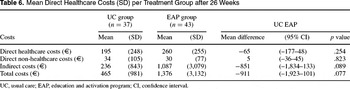
Mean direct healthcare costs, direct non-healthcare costs, and indirect costs after 26 weeks did not differ significantly between the UC group and the EAP group for complete cases (not presented). Imputation of missing cost data (Table 6) also failed to show a significant difference between treatment groups, although the difference in mean total costs came close to the level of significance (p=.077).

Cost-Effectiveness Analysis
Total costs after imputation were used for further cost-effectiveness analysis. The ICER for the comparison of patient-perceived recovery between UC and EAP was €8,501. This implies that an investment of €8,501 is needed for every additional recovered patient in the EAP group, compared with the UC group, after 26 weeks.
Mean ICER after 1,000 bootstrap replications was €7,933 (95 percent confidence interval [CI], €675–€15,192). The majority (82 percent) of the cost-effect pairs for patient-perceived recovery are located in the northeast quadrant of the cost-effectiveness plane, suggesting that EAP is more effective but at higher costs. Sixteen percent of the cost-effect pairs are located in the northwest quadrant, suggesting that the EAP is less effective at higher costs (inferior).
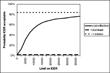
Figure 1 shows the incremental cost-effectiveness acceptability curve for patient-perceived recovery. This curve shows the probability that the EAP is cost-effective at a certain cost ceiling ratio. For example, at a cost ceiling ratio of €10,000, the probability that the EAP is cost-effective is 53 percent. The results of the cost-effectiveness study for the EQ-5D are not presented in this study, because the minimal changes in clinical effectiveness of this outcome variable provide no additional information when analyzed in a cost-effectiveness analysis.

Cost-effectiveness acceptability curve for patient-perceived recovery. ICER, incremental cost-effectiveness ratios.
Sensitivity Analysis
Indirect Costs
Indirect costs were strongly influenced by a minority of the patients. Seventy percent of the indirect costs (mainly due to production losses) were generated by three patients in the EAP group, whereas three patients in the UC group generated 83 percent of the indirect costs.
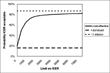
Omitting indirect costs from the bootstrap analysis reduced the mean ICER of patient-perceived recovery to €164 (95 percent CI, €-201; €529). The majority of the cost-effect pairs for patient-perceived recovery are located in the northeast quadrant of the cost-effectiveness plane (68 percent), and 13 percent of the cost-effect pairs were located in the inferior northwest quadrant. The cost-effectiveness acceptability curve without the indirect costs is presented in Figure 2. Without indirect costs, the probability that the EAP is cost-effective was 82 percent at a cost ceiling ratio of €10,000.

Cost-effectiveness acceptability curve for patient-perceived recovery without indirect costs. ICER, incremental cost-effectiveness ratios.
Complete Cost Diaries
Bootstrap analysis of cases that completed and returned all cost diaries shows that the majority (76 percent) of the cost-effective pairs are located in the northeast quadrant of the cost-effectiveness plane for total costs. The ICER for patient-perceived recovery increased to €12,517.
DISCUSSION
Our comparison of total costs between treatment groups showed no significant difference (p = .077) after 26 weeks, although mean total costs in the EAP group were considerably higher. These higher mean costs are illustrated by an ICER for patient-perceived recovery of €8,501, suggesting that an additional €8,501 is needed to help one additional patient in the EAP group recover after 26 weeks.
The majority (82 percent) of the cost-effect pairs after bootstrap analysis are located in the northeast quadrant of the cost-effectiveness plane, suggesting greater effect but at higher costs. The cost-effectiveness acceptability curve shows that considerable investments are needed to increase the probability that the EAP is cost-effective. To achieve a probability of 53 percent that the EAP is cost-effective would require an investment of €10,000 to help one additional patient in the EAP group recover.
The EAP is an early intervention intended to prevent the development of chronic SCs. Additional costs incurred for all patients with a new episode of SCs should be compensated by costs avoided in the future by patients likely to develop chronic SCs at baseline. In this study, however, the future was restricted to a period of 26 weeks. Avoided costs after this period are not known from the literature or recorded in this study. Although our conclusions are based on a period of 26 weeks, it should be noted that accounting for the costs avoided after this period might have altered the conclusions.
Bergman et al. (1) calculated an ICER for patient-perceived recovery of €19,773 for every additional recovered patient treated with manipulative therapy as an add-on to usual care, compared with usual care only. In this perspective, the mean ICER of € 7933 we found after bootstrap analysis is fairly low. No other data on cost-effectiveness in relation the patient perceived recovery were found in the literature.
We believe, however, that final conclusions on the cost-effectiveness of the EAP should be based on common sense rather than comparison with other studies, especially because the outcome measure chosen in this study has rarely been used in cost-effectiveness studies and the literature offers few opportunities for comparison. Additional costs of €10,000 to achieve a probability of 53 percent that the EAP is cost-effective are simply too high for such a low probability. Furthermore, these additional costs are needed to help only one additional patient in the EAP group recover. This is, however, not a clinically relevant improvement. Achieving a clinically relevant improvement, which was defined in the randomized clinical trial that this cost-effectiveness study accompanied as a number needed to treat (NNT) of 4.5, would require an even greater investment (6). Clinical outcomes (Table 3) show even more clearly that this clinical effectiveness was not achieved in the present study (NNT = 9). Based on this, we consider EAP not to be cost-effective when compared with usual care.
The EQ-5D does not seem to be sensitive enough to detect changes in generic health-related quality of life in patients with SCs. Other studies using the EQ-5D for patients with SCs have found similar results (1;10).
Not all cost diaries were completed and returned. With an overall return rate of 75 percent, imputation was needed to complete cost diaries lost to follow-up. The problem of loss to follow-up of cost diaries is well-known and imputation is considered to be feasible and valid (12). Missing values were imputed using the “last observation carried forward” method. This strategy may have caused a slight overestimation of the costs, because it can be expected that costs fall over time as patients improve. This effect is delayed by the “last observation carried forward” method.
Mean indirect costs (due to work absenteeism) were higher in the EAP group, but these costs were strongly influenced in both study groups by a minority of the patients. The sensitivity analysis showed that omitting these costs from the bootstrap analysis reduced the mean ICER to only €164. The probability that the EAP is cost-effective at a cost ceiling ratio of €10,000 thereby increased to 82 percent. This sensitivity analysis shows the drastic impact of indirect costs on the results of the cost-effectiveness analysis. We believe, however, that omitting indirect costs from the cost-effective analysis results in an incomplete view of the costs related to SCs. This study shows that indirect costs are likely to exceed total costs in conditions with relatively low direct costs and in conditions with a high proportion of patients not engaged in paid work.
Patients were included in this study regardless of their risk status at baseline. The reason for this approach was the absence of a valid prediction instrument at the start of this study. Selecting patients with an elevated risk of developing chronic SCs may improve the clinical effectiveness and cost-effectiveness of the EAP. Additional costs of the EAP at the start of a new episode of SCs would only be incurred for patients most likely to generate costs in the future without the EAP. A recent study shows, however, that it remains difficult to predict the long-term outcome of SCs in general practice (14).
The quality of the EAP administration has been studied in another study using video analyses of consultations with standardized patients. This study showed that the quality of EAP administration by the GPs was not as good as expected. Furthermore, the GPs in the UC group also appeared to administer features exclusively attributed to the EAP. This reduced the difference between treatment groups and possibly explains the smaller clinical effectiveness.
CONCLUSION
There was no significant difference in mean total costs between the EAP and UC treatment groups. Bootstrap analysis showed that considerable costs are needed to increase the probability that the EAP is cost-effective. Indirect costs strongly affect the outcome of the cost-effectiveness analysis.
In view of the clinical relevance of the outcomes and the considerable costs needed to achieve this, it can be concluded that the EAP is not cost-effective at this moment. Selecting patients with an elevated risk of developing chronic SCs may improve the cost-effectiveness, but no valid prediction instrument is currently available.
POLICY IMPLICATIONS
Based on the results presented in this study, it should be concluded that the EAP is not ready to be implemented in daily practice. The cost-effectiveness of the EAP may improve when patients with an elevated risk of developing SCs can be detected in the early stages of the SCs. These patients are most likely to benefit from the EAP. Further study is, however, needed to be able to select these patients in the early stages of the SCs and to evaluate the effect of the EAP on this selection of patients.
CONTACT INFORMATION
Camiel De Bruijn, MSc (camieldebruijn@hetnet.nl), Department of General Practice and Care and Public, Health Research Institute, Faculty of Medicine, Maastricht University, P.O. Box 616, 6200 MD, Maastricht, The Netherlands; Institute for Rehabilitation Research, P.O. Box 192, 6430 AD, Hoensbroek, the Netherlands
Marielle Goossens, PhD (M.Goossens@DEP.unimaas.nl), Department of Medical, Clinical and Experimental Psychology, Rob de Bie, PhD (RA.deBie@EPID.unimaas.nl) Department of Epidemiology, Faculty of Health Sciences, Andre Ament, PhD (A.Ament@BEOZ.unimaas.nl), Department of Health Organization, Policy and Economics, Maastricht University, P.O. Box 616, 6200 MD, Maastricht, The Netherlands
Jacques Geraets, PhD (j.j.x.r.geraets@wxs.nl), Department of General Practice and Care and Public, Health Research Institute, Faculty of Medicine, Maastricht University, P.O. Box 616, 6200 MD, Maastricht, The Netherlands; Institute for Rehabilitation Research, P.O. Box 192, 6430 AD, Hoensbroek, the Netherlands
Geert-Jan Dinant, MD, PhD (geertjan.dinant@hag.unimaas.nl), Department of General Practice and Care and Public Health Research Institute, Faculty of Medicine, Care and Public Health Research Institute (CAPHRI), Maastricht University, P.O. Box 616, 6200 MD, Maastricht, The Netherlands
This study is part of the Dutch Shoulder Disability Study, a comprehensive prognostic cohort study on shoulder complaints, with randomized controlled interventions in subcohorts. The Dutch Shoulder Disability Study is funded by the Netherlands Organisation for Scientific Research (NWO, grant no. 904-65-901).