Introduction
The private wealth management industry (PWMI) provides advice on accumulating, nurturing, and growing wealth, and transferring personal wealth between generations. Wealth management embraces a wide range of services including brokerage, banking, lending, insurance and other protection product advice, and concierge-type services – e.g. yacht broking and art storage (Maude, Reference Maude2006). The PWMI has historically operated as an apparatus of white privilege and is institutionally designed in such a way as to preserve it (Allen, Reference Allen1987). Access to financial advice is not generally considered an integral aspect of the financial exclusion debate (Kempson et al., Reference Kempson, Whyley, Collard and Caskey2000). Yet less affluent citizens are excluded from the services of wealth managers because they lack sufficient wealth to meet the required threshold to become customers (usually in excess of $1million excluding their main residence), and because of the prohibitive cost of fees. Social policy scholars should be interested in the operation of the PWMI because the distribution of economic resources in society is an important debate within the discipline (Rowlingson and McKay, Reference Rowlingson and McKay2011). Yet the industry avoids scrutiny because of an over-riding emphasis on the experiences of poor people rather than engaging with inequality across a broader range of groups including affluent citizens and households. Policymakers interpret poverty as a social problem but wealth is not seen in this way (Orton and Rowlingson, Reference Orton and Rowlingson2007). A more inclusive approach to understanding economic inequality requires a productive engagement with debates about the ‘deserving’ (Rowlingson and Connor, Reference Rowlingson and Connor2011) and ‘undeserving’ rich and the contribution of tax and inheritance regimes as well as the politics, policies, and the policy process that sustain them (Glennerster, Reference Glennerster2012). There needs to be greater critical engagement with the ideology that underpins the rewarding of individual merit through hard work, effort, and risk-taking including the desirability of providing incentives for wealth creation and what form they should take (McNamee and Miller, Reference McNamee and Miller2014). Whether the characteristics and behaviour of the rich are appropriate models for the rest of society to emulate is also a point of debate (Sayer, Reference Sayer2014).
An important addition to the debate on wealth inequality and social policy in the US is the racial wealth gap. The combination of racial inequality and wealth inequality generates a dangerous and destructive cocktail of ‘toxic inequality’ (Shapiro, Reference Shapiro2017). Successive public policies preserve racial wealth inequality (Coates, Reference Coates2014) yet deep structural inequities are often over-looked as explanations of racial wealth disparities with more emphasis being placed on cultural factors, individual life choices, and personal achievements. The wealthy are depicted as deserving of their wealth through their own efforts, while the lack of wealth among poor people is attributable to their unwillingness to make the most of their opportunities. Yet there is considerable and mounting evidence that structural inequalities are responsible for the US racial wealth gap. Economic inequalities arising from class inequalities have accumulated over the course of American history and reflect a legacy of economic oppression resulting in racial discrepancies in wealth holdings that advantage whites in the form of better schools, more desirable residences, higher wages, and more opportunities to save and invest (Oliver and Shapiro, Reference Oliver and Shapiro2006; Conley, Reference Conley2009, Herring and Henderson, Reference Herring and Henderson2016). Racial wealth inequality ‘captures inequality that is the product of the past, often passed down from generation to generation’ resulting in the ‘sedimentation of racial inequality’ (Oliver and Shapiro, Reference Oliver and Shapiro2006:2). It is also important to recognise prosperous groups of people of colour that are not exceptions but form extensive and cohesive groups with distinct traditions and a strong sense of identity. These groups have been marginalised within debates focusing on economic and wealth inequality because they do not fit the stereotype of the rich in mainstream culture or suffer the disadvantages of being poor (see Harmon, Reference Harmon2010; Nash and Strobel, 2006; Oliver and Shapiro, Reference Oliver and Shapiro2006; Birmingham, Reference Birmingham1977).
Most policy interventions relating to the racial wealth gap have focused on increasing the wealth available to low-income families (Kijakazi, Reference Kijakazi2016; Sullivan et al., Reference Sullivan, Meschede, Dietrich, Shapiro, Traub, Ruetschlin and Draut2016; Lui, Reference Lui2009; Nembhard and Chiteji, Reference Nembhaard and Chiteji2006). The focus of this paper is different because it centres on the next stage of development involving the process of managing wealth and the structures and policies that are required to facilitate this process in recognition that some minorities have sufficient wealth to invest (Credit Suisse Research Institute, 2014). This article examines the role of the PWMI in maintaining the racial wealth gap by addressing three research questions: how does the PWMI contribute to the racial wealth gap and reinforce white supremacy; how and in what ways are the technologies within PWMIs related to the racial wealth gap; how do the combined effects of PWMIs reproducing whiteness and being embedded in whiteness act as a barrier to developing a wider understanding of the savings and investment behaviour of people of colour? The paper therefore contributes to a broader theoretical understanding of economic distribution that focuses on race and racism in social policy.
The paper has five sections. The first section outlines the methodology used in the article. The second section provides a detailed overview of some of the explanations of the racial-wealth gap to contextualize the subsequent discussion. Section three focuses on analysing how and in what ways whiteness is embedded into the operation of the PWMI. Section four examines how the reward structures operating in the industry have served as a (dis)incentive to broaden the client base and reinforce whiteness. Section five addresses the deficit in knowledge of the savings and investment behaviour of people of colour that has arisen within the PWMI due to the neglect of this market. The final section contains the conclusions.
Methodology
The paper uses four sources of data. An analysis of the 2016 Federal Reserve Board Consumer Finance Survey provides data on the extent of wealth holding and the composition of wealth portfolios across racial and ethnic groups. A second source of data is a content analysis of papers published in the Journal of Wealth Management 2004–2013. Search terms used for the analyses included ethnicity, race, culture, and cultural or national differences in article titles and abstracts. Global surveys conducted by wealth managers PriceWaterhouseCooper, Capgemini, Credit Suisse, and Deloitte report segmentation strategies used in the industry and these were analysed to assess the extent and how variables relating to ethnicity, race, and culture were reported. These surveys also report how categories of the wealthy change over time. Finally, academic textbooks designed to provide guidance for wealth management practitioners were analysed to assess how, and the extent to which, the dominant emphasis was on white, Anglo-Saxons of protestant descent as measured by pages devoted to ethnicity and race, and countries outside of the Anglo-Saxon world.
The extent of the US racial wealth gap
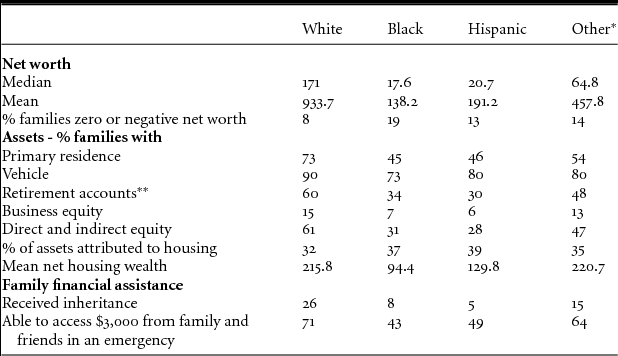
Wealth is widely defined as assets (e.g. cash in banks, stocks, bonds and real estate), minus debts (e.g. home mortgages, auto loans, credit card debt and student loans). From the outset, it is important to distinguish between wealth in terms of financial assets required to keep families above the asset poverty line (usually defined as funds to support a household for three months), and wealth in terms of transformative assets, which are financial resources that offer long-term advantages and can be life-changing. The typical US white household has more than one month's income in savings that they are able to access in an emergency, compared to twelve days for the average Latino household, and five days for the average African-American family (Pew Charitable Trust, 2015). Financial assistance from friends and relatives is also more limited within minority populations (see Table 1). Racial and ethnic variations in long-term wealth are more significant. The 2016 Federal Reserve Board Survey of Consumer Finances demonstrates that the median net worth for whites was 9.7 times that of blacks; 8.2 times more than Hispanics, and 2.6 times more than minorities in the ‘other’ category (see Table 1). In all groups, the median is significantly lower than the mean, which indicates the concentration of wealth in the upper half of the distribution. Moreover, the percentage of families with zero or negative net worth is much higher in minority groups; in the black sample, it is more than double the percentage of whites (19 per cent and 8 per cent respectively). Other notable differences among minority populations include the low rate of homeownership and housing equity, which is much higher for whites. Minorities also have lower levels of retirement accounts, business equity, direct and indirect equity, and inheritance, all of which contribute to the racial wealth gap. If current trends persist it will take an estimated 228 years for African-American families to accumulate the same amount of wealth as whites, and for Latino families, it will take 84 years (Asante-Muhammed et al., Reference Asante-Muhammed, Collins, Hoxie and Nieves2016).
Household financial asset profile 2016 (in thousands of $ or %)

*other= Asian, American Indian, Alaska Native, Native Hawaiian, Pacific Islander, other races and respondents reporting more than one racial identity.
**IRA's and 401(k) plans
Source: Federal Reserve Board, Survey of Consumer Finances.
Various explanations are relevant in explaining the racial wealth gap. The historical legacy of 250 years of slavery, 90 years of Jim Crow, 60 years of separate but equal, and 30 years of racist housing policy has left a legacy of moral debt (Oliver and Shapiro, Reference Oliver and Shapiro2006). The limited accumulation of housing wealth among minorities is attributable to limited access to credit (redlining), higher interest rates, and house price inflation in the 1970s and 1980s that benefitted those that already had homes and created large assets. The recent 2007/8 global financial crisis also had a more negative impact on the housing equity of minorities (McKernan et al., Reference McKernan, Ratcliffe, Steuerle and Zhang2013). Inequalities in inheritance reproduce racial inequality because minorities have lower levels of inheritance, and the value of their inheritances is lower – ten times higher for whites than for blacks (Natella et al., Reference Natella, Meschede and Sullivan2014). Inheritance enables individuals to purchase homes and fund higher education, and these ‘transformative assets’ which are unearned inherited wealth lift families economically and socially beyond where their own achievements would take them, and in turn transform their own wealth trajectories (Shapiro, Reference Shapiro2004). Low levels of business equity among people of colour can be attributed to less emphasis on entrepreneurship due to a lack of access to capital, the higher cost of capital compared to whites, a higher risk of business failure, and consumer racism (Farlie and Robb, 2008). Public policy decisions account for a substantial proportion of the US racial wealth gap because incentives to help families save and build assets (e.g. tax breaks on retirement savings and home mortgage interest deductions) disproportionately benefit individuals and families with assets. Moreover, the wealth gap between whites and elites is increasing, and closing this gap is usually a priority that reflects the dominance of whites and their group interests in political and policymaking circles. The US Racial and Wealth Audit (Shapiro et al., Reference Shapiro, Meschede and Sulliva2015) assesses the impact of housing, education and labour market policies on the racial wealth gap, and evaluates how alternative policies could equalise outcomes and reduce the gap. If public policies could eliminate variations in home ownership rates, the wealth gap could shrink by 31 per cent between white and African-Americans, and 28 per cent between whites and Latinos, and potentially more if the return on homeownership equalised. Eliminating disparities in the financial returns of a college degree would result in a 10 per cent reduction in the wealth gap between whites and African-Americans and a 6 per cent reduction between whites and Latinos. If public policy successfully equalised the rate of return on each dollar of income from African-American and Latino households, so the conversion rate was the same as white households, the wealth gap would decrease by 43 per cent between African-Americans and whites, and 50 per cent between whites and Latinos.
Recent research assessing the relative importance and interaction of factors that are responsible for wealth inequality has demonstrated a great deal of complexity among different ethnic groups and variations across geographical locations. Herring and Henderson (Reference Herring and Henderson2016) maintain that cultural factors, including having a female-headed household and spending patterns, account for little of the racial wealth gap between African-Americans and the white population. Far more significant are differences in income, lower rates of return on equity, homeownership, business ownership, education, and income. In their study of racial wealth inequalities in Greater Boston, Meschede et al. (Reference Meschede, Hamilton, Munoz, Jackson and Darity2016) demonstrate that large racial wealth differences existed even after controlling for demographic and economic status and that significant ethnic differences exist within the black community. For example, Dominicans have low asset levels and high levels of debt, whereas black Caribbeans have relatively high levels of wealth. Some groups have a long history of settlement in particular locations and have benefitted from investment opportunities over generations (e.g. homeownership) that have increased their wealth.
Wealth management as an apparatus of white privilege
The Racial Wealth Audit confirms that converting income into wealth and equalising the rate of conversion among different minority groups has the greatest potential to alleviate racial wealth inequity. By implication, these findings acknowledge the importance of sourcing appropriate investment advice as a precursor to building and managing wealth. A barrier in this respect is that whiteness is deeply embedded in the PWMI which, over time, has exacerbated the racial wealth gap. Whiteness is embedded in the PWMI in several ways. Most high-net-worth individuals reside in the white-dominated landscapes of the US, and Western Europe (Deloitte, 2011) and are therefore highly concentrated in countries that have benefited from the structural advantages of whiteness created by histories of Empire, conquest, slavery, exploitation, discrimination and the application of differing citizenship rights (Lipsitz, Reference Lipsitz1998). The location of PWMI mirrors that of high-net-worth individuals and is highly concentrated in North America and northern and western Europe, countries that have historically cultivated a reputation as white-dominated, civilised, politically stable safe places to invest. In the US, half of all personal advisers are concentrated in five states (New York, California, Illinois, Texas and Florida) (Bureau of Labor Statistics, 2016). One consequence is that the technologies and products that dominate the industry reflect the industry's long history of managing the wealth of white individuals and households to the almost exclusion of others. The images projected by PWMI in their promotional literature underscore their distinct cultural traditions; banking practices that reflect the social norms of eighteenth century polite society (tradition, civility and discretion) and, latterly, servicing the nouveaux riche including businessmen and women, and sporting and media personalities (Bulmer and Stotvig, Reference Bulmer and Stotvig1997).
The PWMI socially engineers its workforce so that it closely aligns with the characteristics of its clients: which include being white, wealthy (or the potential to be so through inheritance), having access to influential social networks, and political elites (Cassis et al., Reference Cassis, Cotterell, Fraser and Fraser2009). Most wealth managers are white and male from a narrow range of social and educational backgrounds that enhance the reputation, culture, and exclusivity of their employer (Pak, Reference Pak2013; McDowell, Reference McDowell2011). The PWMI functions as a powerful network and a self-reinforcing monopoly that reproduces itself from one generation to the next. Whites who hold lucrative jobs informally refer their friends who in turn refer their friends and this self-reinforcing process locks-in racial inequality (Roithmayr, Reference Roithmayr2014). Yet elitism among recruits is contrary to how wealth management companies present themselves in their promotional literature that emphasises hiring individuals from different nations, educational backgrounds and life experiences. Leading US investment banks have enjoyed long-standing historical ties with status-heavy Ivy League universities that intensified from the 1980s onwards when Wall Street banks began recruiting graduates in larger numbers. Recruitment teams sent to elite universities are predominantly white and sometimes include a token African-American, Asian or Latino. Investment banks have been slow to recruit applicants from black colleges over the Ivy League, which minimises the opportunities for people of colour to become wealth managers. Even within the historically white financial services industry, financial advice stands out for its lack of diversity. Approximately 6 per cent of those employed in the industry are African-American (or black) and 7.1 per cent are Hispanic, which is far less than their proportion within the population. By contrast, Asians are slightly over-represented (Bureau of Labor Statistics, 2016). Investment banks have naturalised themselves as destinations for elite graduates who are ‘smart’, and have ‘deep talent’, the global crème de la crème who are worthy of advising super-rich clients. Companies provide a mechanism for maintaining the elite status of already privileged recruits by offering avenues to wealth that are often unavailable through other careers (Ho, Reference Ho2009: 30).
Investment banks share common features with elite members’ clubs, where those lacking in the right connections are never approached to become members, and women, blacks, Jews, gays and new money are routinely excluded (Kendall, Reference Kendall2008). In-house training programmes socialise new entrants into their institution's white, Western roots and career progression is dependent on how well they internalise and demonstrate their commitment to this form of institutionalised whiteness. Whites actively ‘police’ the boundaries of the industry by supporting the dominant ideology and culture of whiteness and protect their privileged position within. Managerial multiculturalism will likely make white power and white privilege stronger, by strengthening the ideology of whiteness rather than meaningfully desegregating its ranks. Ely and Thomas (Reference Ely and Thomas2001) have demonstrated how work groups make sense of their cultural diversity and how this shapes members' identity, intergroup relations and conduct. Working in the PWMI is a negative experience for some minorities; university connections are important in gaining access to jobs, but they are also important networking devices within the workplace, and those from black colleges may have fewer (if any) mentors (Ho, Reference Ho2009). The lack of diversity, inequality in career opportunities, and pay practices result in a revolving door of African-American employees in the top wealth management companies and several successful class action suits against well-established wealth management companies have been undertaken by African-American and Hispanic employees (see Touryalai, Reference Touryalai2016). The adoption of multicultural managerialism in the PWMI is little more than a token gesture that superficially conceals the industry's deep structures of whiteness, which routinely marginalises and excludes people of colour.
Financial exclusion and structural (dis)incentives to service the minority market
A central concern of social policy is extending financial inclusion to ensure that all citizens have fair and equal access to financial services that meet their needs (Kempson et al., Reference Kempson, Whyley, Collard and Caskey2000). This philosophy is oppositional to how the PWMI operates: where financial exclusion is a mechanism of selecting ‘desirable’ clients who have significant wealth to invest and are able to afford large fees, and of rejecting the rest. The outcome is that a ‘culture of smartness . . . naturalises imperialist practices, and produces financial dominance’ (Ho Reference Ho2009: 72). The increasing concentration of global wealth has resulted in the PWMI placing more emphasis on refining the segmentation of the top echelons of the super-rich that generate large commissions and fees (see PriceWaterhouseCooper, 2009) rather than extending the industry's reach among the relatively less affluent, which could help to close the racial wealth gap. Some wealth managers are critical of the industry's unsophisticated approach to consumer segmentation (Maude, Reference Maude2006). A recent survey of wealth managers in 238 private banks, boutiques, local onshore wealth managers, universal global banks and family offices across 40 countries concluded that most wealth managers do not focus on the needs of different clients and that ‘few wealth managers are truly client-centric’ (PriceWaterhouseCooper, 2009: 20). Likewise, professional texts offering expertise in advising ultra-affluent clients are so embedded in whiteness that it is almost invisible (Pompion, Reference Pompion2009); resulting in a caricatured version of reality (see Armstrong, 2010). White wealth managers define boundaries that perform a powerful gatekeeping function and determine who can access the special ‘insider’ professional knowledge to preserve the exclusivity of the industry and legitimise the large fees that they charge for their services. Client wealth is the basis of rewards structures in the PWMI and is classified as assets under management (AUM). The wealthiest individuals have access to the most experienced wealth managers who have a good reputation for growing wealth; they can command more time from their advisor because they generate larger amounts of commission (PWC, 2009).
There are significant gaps in our understanding of how the PWMI interacts with people of colour. However, some wealth managers have made efforts to attract high-net-worth minority consumers and leading research providers in the marketplace do produce regular publications that focus upon the ethnic market (e.g. the Spectrem Group produce an Ethnic Segmentation Series). Research conducted by Spectrem has demonstrated that minorities with a net worth of $1–5 million are not avid users of financial advisors of any persuasion (African-Americans 21 per cent, Hispanics 17 per cent, and Asians 17 per cent) compared to 27 per cent of other affluent investors which suggests a degree of self-exclusion by opting out and engaging in self-directed investing. Of those minorities that sought financial advice different institutions were preferred: African-Americans prefer to use financial planning firms (50 per cent) and brokerage firms (23 per cent), while Asians favour brokerage firms (41 per cent) followed by financial planning firms (38 per cent) and bank-based wealth managers (15 per cent). Moreover, African-Americans are more likely to use more than two financial advisers and make recommendations to someone that they know; while Hispanics make infrequent use of advisers and usually focus on one-off investment transactions. Overall, 75 per cent of whites are satisfied with the service they receive from financial advisers compared with 42 per cent for Asians, 55 per cent for African-Americans, and 67 per cent for Hispanics (Spectrem, 2015). Specialist African-American financial advisory firms that target the African-American market are attracting media attention, on the grounds that consumers will have more affinity dealing with advisors from the same ethnic/racial group. However, whether it is necessary to have ethnic advisers for ethnic clients in order to establish a greater degree of trust is a point of debate. Research indicates that only 8 per cent of Hispanics and 12 per cent of African-Americans share this view. Of far more importance was engaging companies and advisers that have the support of the local community and especially the church (Britton, Reference Britton2014).
Research has indicated that lower income African-Americans (salary less than $75,000) rarely engage with financial professionals because they believe they do not possess sufficient assets, and because of the high fees charged for investment advice. When questioned about which attributes they value from financial professionals, being given information at an appropriate level taking into account their financial experience and knowledge, is important, and so is being treated with respect (Prudential, 2016). However, the rewards systems in the PWMI can operate as a structural disincentive to service the minority market as one wealth manager explains: ‘Because of the wealth disparity problem, you have to get more clients if they are going to be all African American or minority, in order to get to the same numbers [in AUM]. You will have to get double or triple the number of people, which ends up making you work harder and more’ (Skinner, Reference Skinner2015). The weaker financial position of people of colour results in their exclusion from specialist investment advice. Yet these are the very people that would derive most benefit from wealth management services and this group of citizens exist in large numbers.
Whiteness and the (mis)mapping of saving and investing behaviour
The embeddedness of the PWMI in Anglo-Saxon whiteness results in gaps in understanding the saving and investing behaviour of individuals that deviate from these norms. Products in the PWMI reflect the needs of white, Western consumers and these practices have become naturalised within the industry to such an extent that it is almost invisible. An appreciation of the impact of culture on savings and investing behaviour of people of colour is in its infancy in the PWMI (Natella et al., Reference Natella, Meschede and Sullivan2014). The authors’ analysis of ten years of articles in the Journal of Wealth Management (2004-2013) indicates that none of the articles in the sample mentioned the concept of culture or cross-cultural differences. Yet preliminary findings suggest that culture is an important variable in understanding diverse patterns of savings and investment behaviour (Credit Suisse Research Institute, 2014). Dominant practices within the PWMI have resulted in a misleading separation of the economic from the social by reducing decision-making behaviour to a rational, utility-maximising calculus shaped by exogenously determined preferences, free of any significant social attachments (Peck, Reference Peck2005). What are regarded as ‘rigorous’ models within the PWMI are often based on a limited number of assumptions intended to demonstrate regularities in mathematical terms. A strong critique of the PWMI's idealised models of savings and investing behaviour is that they should be grounded in a parallel discourse related to the relevant cultural, geographical and historical contexts in order to avoid the ‘strait-jacket of the mathematical mainstream’ (Martin, Reference Martin1999: 74). All markets reflect social and political relations and the influence of norms, culture, class, gender and race.
The modelling of savings and investor behaviour within the PWMI is built on investor types that draw on influences from behavioural economics, denoting that a person's psychological makeup is reflected in their economic choices rather than on a more complete ontology of the consumer. Investor categories depict spatially indifferent populations and underpin a view of globalisation that favours convergence and homogeneity over heterogeneity. Behavioural economics is often presented as an advance on mainstream economics and, within the PWMI, it is depicted as a more sophisticated and relevant approach to understanding savings and investing behaviour (Capgemini, 2012) and is diffused by the publication of influential texts (see Thaler and Sunstein, Reference Thaler and Sunstein2008). Yet it is important to recognise that culture is rarely considered an important variable within behavioural economics (for exceptions see Olsen & Cox, Reference Olsen and Cox2001; Nofsinger, Reference Nofsinger2005; Frankfurter and McGoun, Reference Frankfurter and McGoun2000; Durand et al., Reference Durand, Newby and Sanghani2008). This particular sub-discipline might therefore be legitimately accused of importing ‘old’ or ‘inappropriate’ technology and modes of thinking that reinforce whiteness and are somewhat removed from the complex realities of consumers’ reflexive investment decisions (see, for example, de Bondt, Reference De Bondt, Knorr Cetina and Preda2005).
Wealth managers navigate a path to protect their clients’ investments from the negative effects of risk and uncertainty in financial markets. In theory, wealth managers profile investors according to their alleged appetite for risk and then assign them to conservative, moderate, or aggressive investor types according to the types of investments they favour – e.g. stocks and stock trading, equity-linked investments, structured savings products, structured investment products and derivatives, mutual funds and unit trusts, property management and investment, and a range of alternative investments (Campbell and Viceira, Reference Campbell and Viceira2002). But in practice, more than half of wealth managers fail to do so. When questioned on what basis they segment their clients, responses include: current assets (86 per cent), potential assets (53 per cent), geography (50 per cent), investment style (46 per cent), attitude toward risk (43 per cent), profitability (33 per cent), income levels (23 per cent), product mix usage (19 per cent), language (18 per cent), and age/stage in the lifecycle (18 per cent); culture does not feature and although geography makes an appearance it usually refers to the operational challenges of servicing spatially dispersed clients (PWC, 2013).
Large variations in attitudes towards saving, investing and investment choices have been detected between ethnic groups and racial groups. Blacks and Hispanics devote a larger share of expenditure to conspicuous consumption (clothing, jewellery and cars) than comparable groups of whites. These findings are consistent across virtually all sub-populations, they are consistent over time, and are large (Charles et al., Reference Charles, Hurst and Roussanov2009). There is little knowledge of the stock market among the black community and weak demand for securities. But, over time, incomes rise and this group acquires more familiarity with common stock resulting in more being included in their portfolios (Brimmer, Reference Brimmer1988). Hispanics are also more likely than other minority groups to repatriate savings to their country of origin to support family and build homes for their retirement (Nembhard and Chiteji, Reference Nembhaard and Chiteji2006).
African-Americans as a group emerge as particularly conservative investors; they are less inclined to hold risky assets; they favour investments with a guaranteed rate of return; and are more likely to invest a greater proportion of their wealth in home-ownership. Moreover, this finding is true for both low- and high-income African-American households. One explanation of the risk-aversion observed among African-Americans is the absence of financial support from family and a lack of inheritance wealth to act as a buffer should risky investments fail. Racial and ethnic differences in housing equity narrows among households in the higher income quartiles but non-housing equity widens as income increases. Choudhury (Reference Choudhury2002) notes that
[at] every income quartile and educational level, the percentage of black and Hispanic households that own risky, higher-yielding assets is considerably smaller than the percentage of white households. Most households in each group own liquid assets, ownership of stocks, bonds, IRAs, and other assets varies widely. About 36 per cent of white households report owning stocks; the mean value of those stocks is $24,933. However, less than 10 per cent of black and Hispanic households report owning stock, resulting in much lower mean holdings: $3,387 and $1,608, respectively.
The lack of diversification of investment portfolios results in the investment of approximately 60 per cent of the net worth of African-American households in their primary residence, which is around twice the amount of all other ethnicities. Lower rates of investment in financial markets will, over time, result in slower wealth creation and capital accumulation in minority households (Blau and Graham, Reference Blau and Graham1989) and partly explain why the investment return on a dollar of income is five times higher for whites than it is for African-Americans and Latinos (Shin, Reference Shin2015).
One of the reasons cited for the absence of diversified portfolios among African-Americans is that they lack sufficient knowledge to assemble profitable portfolios rather than an absence of interest in doing so. Moreover, there is a steep learning curve to navigate in obtaining trustworthy sources of financial advice and many African-Americans receive investment advice from accountants that prepare their annual taxes and people who sell them insurance rather than from certified financial advisors. The Association of African-American Financial Advisors is attempting to recruit more people of colour into the industry for this reason. Potentially, one way to overcome the problem of accessing quality financial advice is for financial planners to reach out to African-American religious and community organisations using peers within the same ethnic/racial group to (re)build their trust in investing. However, the extent to which financial professionals can be trusted is a point of debate. For example, in 2005, Wells Fargo deliberately used community organizations in its strategy to target African-Americans through their Wealth Building Strategies seminars in which the company presented itself as ‘the nation's leading originator of home loans to ethnic minority customers’. The bank engaged African-American public figures to educate other African-Americans on building ‘generational wealth’. However, the outcome was somewhat different: the ‘wealth building’ seminars were a façade for wealth theft. In 2010, the Justice Department filed a discrimination suit against Wells Fargo for diverting African-Americans into predatory loans regardless of their creditworthiness. The bank and several others that had endorsed the same strategy were required to pay compensation but the damage had already occurred (Coates, Reference Coates2014). Discriminatory, sub-prime mortgage lending along racial lines was still being perpetrated by Wells Fargo as recently as 2012 (Shin, Reference Shin2015), and has resulted in the Justice Department changing its approach and using the concept of disparate impact, rather than outright discrimination, in its judgments, to include a wider range of perspectives (McElwee, Reference McElwee2015). It is also noteworthy that wealth theft is not a uniquely African-American problem. The Madoff Ponzi scheme scam is particularly instructive for understanding the dynamics between trust and culture in the PWMI. The perpetrator explicitly styled himself as an American-Jewish type and exploited stereotypes to inspire trust in his advice as a benefactor and protector of Jews as a distinct category of the white ‘other’ (Berkowitz, Reference Berkowitz2012). US history is therefore replete with examples of financial advisers and financial managers duping non-whites, and a significant reduction in the racial wealth gap is unlikely to occur without the introduction of policies to address this deep-seated lack of trust.
Policy implications
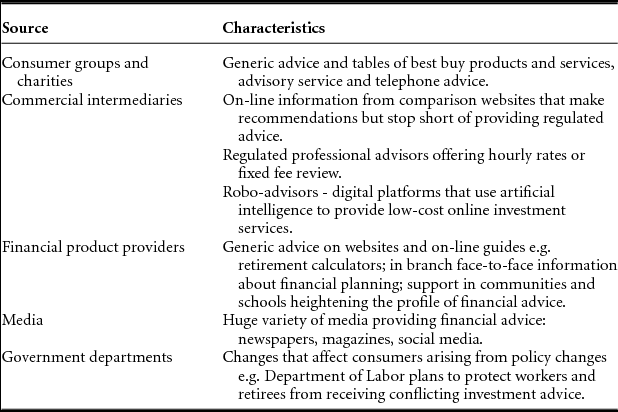
The US minority population is projected to become the majority by 2044 (Colby and Ortman, 2015): the wealth of the US is, and will increasingly be, tied to the wealth of minorities. It is important to address racial inequalities in accessing investment advice, because it has implications for financial well-being throughout the life course and especially in connection with retirement planning. This raises the issue of what role public policy should play in the financial advice field, whether it should become a provider of investment advice to create a more level playing field, or adopt a facilitating role and endeavour to make the existing market work better for everyone. In addressing this debate it may be instructive to learn from experiences in the UK, where the government established a Money Advice Service (MAS) in 2011 precisely to try to help those in the ‘middle’ because wealthy people could afford private financial advice and debt advice for poorer people already existed. There was a gap in advice for those with small amounts of money who might want to learn to budget better or save/invest more. The goals of the service were to promote awareness of the benefits of financial planning, promoting awareness of the financial advantages and disadvantages of particular products and services, promoting the benefits of risks of different kinds of financial dealings, providing educational materials and other education activities, and providing information and advice direct to the public. Financial institutions provide the funding for the MAS. After four years of operation, an independent review of the service (HM Treasury, Reference Treasury2015) concluded that, as a provider of financial and investment services direct to the public, the outcomes were disappointing. MAS has low brand recognition and its website is far less successful in attracting consumers than commercial sites. Another concern is that MAS duplicates many of the activities undertaken by financial institutions. There are many providers of investment advice in the marketplace (see Table 2). Moreover, consumers did not particularly value the perceived ‘impartiality’ of MAS or its unique role as the only government-backed truly independent source of help that was on the consumer's side.
Landscape of financial advice

The outcome of the review recommended several ways of repositioning MAS away from its original focus on providing financial and investment advice towards a new remit as a strategic hub promoting innovation in the industry to make the market work better for consumers. Three functions for the MAS were proposed: an advocate of policy change by addressing market failures; providing a consumer education function and heightening the profile of financial planning among consumers; and identifying ‘gaps’ in existing provision and developing strategies to deal with them. The racial wealth gap clearly falls into the category of market failure and a gap in policy that needs to be rectified. One proposal is establishing a modest budget for the seed corn funding of new or innovative developments in areas of priority need. Not-for-profit bodies are eligible to bid for funds where a strong cost-benefit case could be demonstrated (e.g. specific apps or edutainment). This aligns with the recommendation of policymakers in the US that the knowledge and perspectives of people of colour should be fully integrated into the process of designing interventions and solutions in the asset building field (Kijakazi, Reference Kijakazi2016). A second strategy involves encouraging intermediaries to develop services to fill identifiable gaps. In practice, this is already occurring in the US: for example, the Prudential has identified carers and ex-service personnel as specific cases that have fallen through the net (Prudential, 2016) but more effort is required. Other areas could include the post-retirement market where retirees are likely to make further decisions years or even decades on from their initial savings and investment decisions. The role of government as a co-ordinating body could facilitate the wider dissemination of important findings. A third function is filling identified gaps that other organisations are unwilling to meet by commissioning work from experts in the field and ensuring the findings and recommendations are widely distributed.
A final proposal is the introduction of a quality mark based on consumer-oriented quality criteria (clarity and simplicity, honesty and balance, availability and ease of use, openness about commercial models, comprehensiveness, clarity on risks benefits and costs and charges). The aim is to make financial products more understandable by using must-know features, adopting plain English in communications (or other languages where appropriate), providing simple product information, and making product comparisons easier in the expectation that, collectively, these features will increase consumer trust. Implementing such a scheme requires a strong set of quality criteria and the need to exercise judgement especially in defining good providers. The policing of accreditations occurs through surveillance mechanisms including the use of expert panels, mystery shoppers, and consumer feedback through social media. The benefits of this approach are fourfold: it facilitates industry agreement and understanding of what represents good practice in the provision of consumer information and guidance; it fits more closely with consumers’ actual behaviour; providers are encouraged to improve their content in order to receive the quality mark; and the mark helps consumers quickly identify trustworthy information about financial providers.
Conclusion
Examining the racial wealth gap through the lens of the PWMI and whiteness enhances our understanding of the relationship between wealth inequality, racial inequality and social policy. The closure of the racial wealth gap in the US is partly dependent on the diffusion of financial inclusion, specifically providing accessible and affordable investment management advice that is trustworthy. The inclusion of previously excluded groups requires very substantial reform of the financial system. Wealth management advice should be an integral feature of an inclusive financial system on a par with affordable access to a bank account and credit facilities. The current system of for-profit investment advice is unlikely to be able to resolve the racial wealth gap since it was not established for that purpose. The primary emphasis in the wealth management industry is to service the wealthy and, although services have diffused down to less affluent groups in society over time, the structure and scope of the industry is nowhere near suitable for the task in hand. Moreover, the historical dominance of whiteness within the PWMI has resulted in an absence of knowledge about the investment behaviour of different ethnic and racial groups, and the influence of distinctive social and cultural norms. Many people of colour will be unlikely to be able to pay the commissions charged by commercial wealth managers, and wealth managers may be unwilling to service the minority market because of the lack of commercial incentives to do so. This article therefore advocates a more joined-up approach to public and social policy that would effectively co-ordinate the landscape for financial advice, and function as a standard-setter that directly addresses this increasingly important aspect of economic life.