1. Introduction
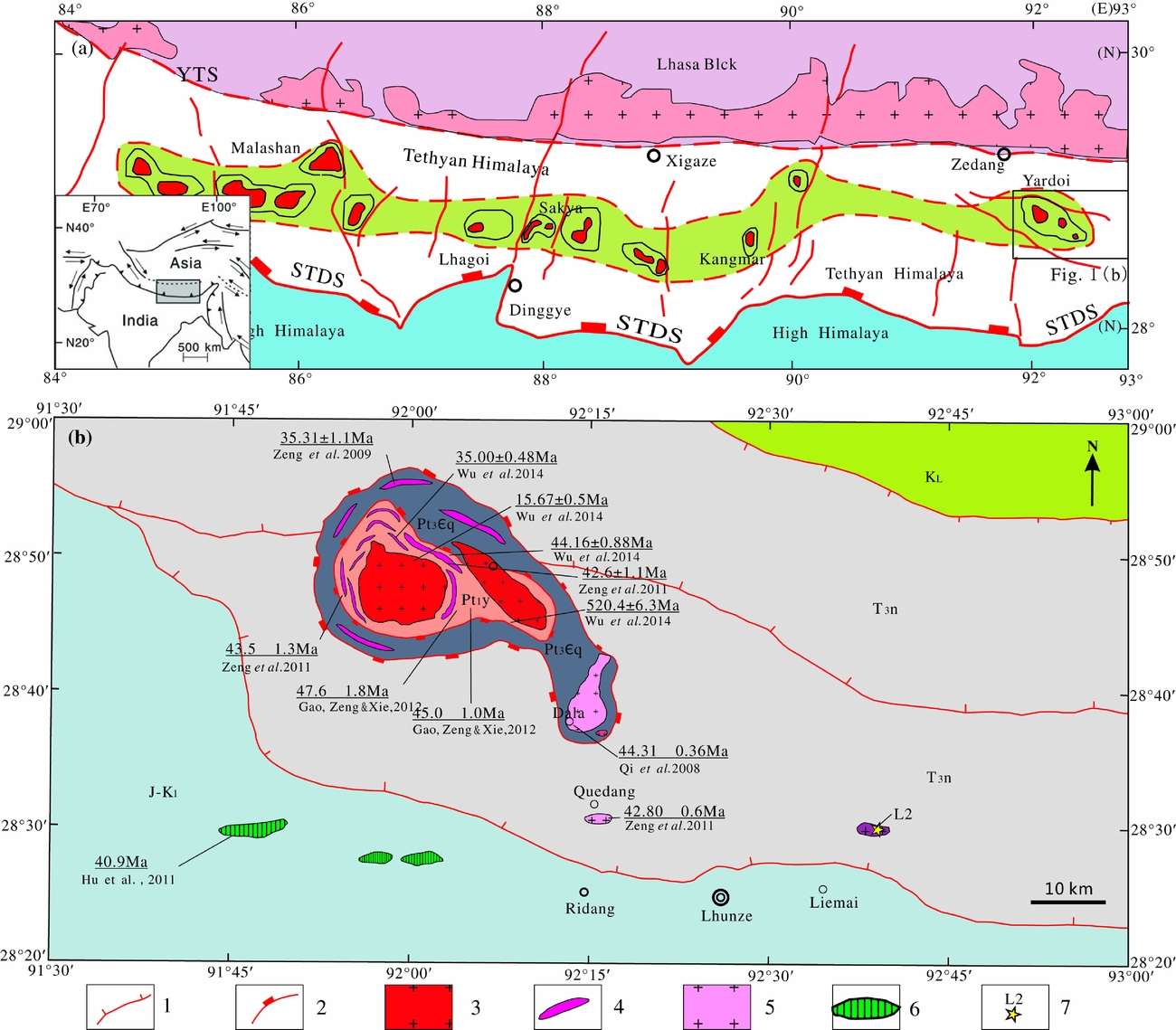
The India–Eurasia continent–continent collision may be divided into three stages: main collision (41–65 Ma), later collision (26–40 Ma) and post-collision (0–25 Ma) (Ding et al. Reference Ding, Kapp, Zhong and Deng2003; Mo et al. Reference Mo, Zhao, Deng, Dong, Zhou, Guo and Wang2003; Hou et al. Reference Hou, Mo, Yang, Wang, Pan, Qu and Nie2006). Intensive crustal anatexis of the Himalayan Orogenic Belt led to the formation of two subparallel leucogranitic belts separated by the southern Tibetan detachment system (STDS): the High Himalayan Gneiss Dome (NHGD) in the south and North Himalayan Gneiss Dome (NHGD) in the north (Fig. 1a). These leucogranites are important ‘lithoprobes’ and ‘windows’ for investigating the tectonomagmatic evolution history of the Himalayan Orogenic Belt (Mo et al. Reference Mo, Zhao, Deng, Dong, Zhou, Guo and Wang2003; Liao et al. Reference Liao, Mo, Pan, Zhu, Wang, Jiang and Zhao2007) and for understanding crustal thickening, anatexis and plateau uplift during continental collisions (Zhang et al. Reference Zhang, Harris, Parrish, Zhang and Zhao2004, Reference Zhang, Ding, Yang, Xu, Cai and Liu2012; Zeng et al. Reference Zeng, Liu, Gao, Xie and Wen2009; Xie et al. Reference Xie, Zeng, Liu and Gao2010). Cenozoic magmatism in the Himalayas produced mainly Oligocene–Miocene leucogranites that occur in in two subparallel belts in the Tethyan and High Himalayas (Wu et al. Reference Wu, Zhao, Liu and Ji2015), along with minor middle Eocene (42–46 Ma) granites in the Tethyan Himalaya. The leucogranites mainly intruded in the central part of the Tethyan Himalaya Metamorphic Domes, such as the Lhagoi, Kangmar and Yardoi domes. A small proportion of the leucogranites occur as individual intrusions or dykes intruded into the Tethyan Himalaya low-grade metamorphic rocks, such as Changguo, Qiazuweng, Peikucuo, Zharizhongshi and Xiaru in the west and Dala and Quedang in the east (Fig. 1a).
Simplified geological map of (a) the Himalayan Orogenic Belt, southern Tibet (Zeng et al. Reference Zeng, Gao, Xie and Liu-Zeng2011) and (b) simplified geological map of the Yardoi area showing the Yardoi gneiss dome (recompiled from 1:250 000 Longzi regional geological map). 1, thrust fault; 2, detachment fault; 3, early–middle Miocene leucogranites; 4, Eocene two-mica granite dykes; 5, early Eocene leucogranites granite; 6, rhyolitic subvolcanic rock; 7, sampling position and number. J–K1 – Lower Cretaceous – Triassic limestone, sandstone, conglomerate; T3n – Upper Triassic sandstone and slate of Langxuejie Group, Nieru Formation; KL – Cretaceous tectonic complex; Pt3Єq – schist in Qudegong Formation; Pt1y – gneiss and amphibolite in Yatuizhala Formation.
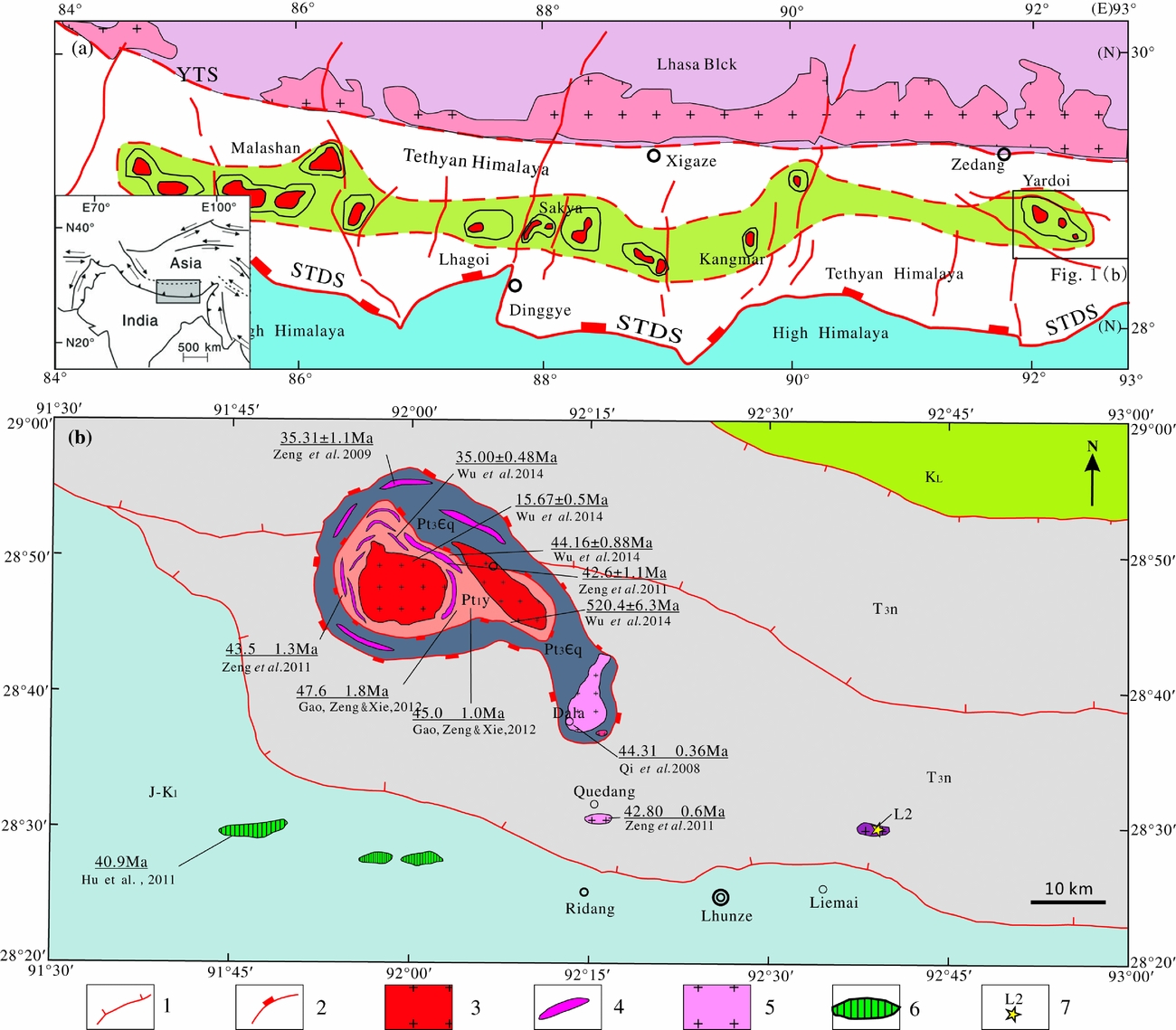
The Yardoi Dome is one such important window for studying collisional orogeny and deep processes in the Tethyan Himalaya Tectonic Belt (Wu et al. Reference Wu, Ye, Wu and Zhao2014). Studies of the formation and evolution of the Yardoi Dome reveal at least three partial melting events. The first event corresponds to the main stage of collision, as represented by the formation of two-mica granites with crystallization ages of 43–45 Ma (Aikman, Harrison & Lin, Reference Aikman, Harrison and Lin2008; Qi et al. Reference Qi, Zeng, Meng, Xu and Li2008; Zeng et al. Reference Zeng, Gao, Xie and Liu-Zeng2011; Wu et al. Reference Wu, Ye, Wu and Zhao2014) and associated subvolcanic rocks with a crystallization age of 40.9 Ma (Hu et al. Reference Hu, Zeng, Qi, Hou and Gao2011). The second event was recorded by the intrusion of leucogranitic dykes at c. 35 Ma, which induced activity along the southern Tibetan detachment system (STDS) (Gao et al. Reference Gao, Zeng, Liu and Xie2009; Zeng et al. Reference Zeng, Liu, Gao, Xie and Wen2009; Wu et al. Reference Wu, Ye, Wu and Zhao2014). The third event was represented by the formation of large-scale leucogranite intrusions in the central Yardoi Dome at c. 15 Ma (Wu et al. Reference Wu, Ye, Wu and Zhao2014). The metamorphic ages of gneiss and garnet amphibolite within the Yardoi Dome are 47.6 Ma and 43.5–45.0 Ma, respectively (Zeng et al. Reference Zeng, Gao, Xie and Liu-Zeng2011; Gao, Zeng & Xie, Reference Gao, Zeng and Xie2012).
Currently, the tectonic setting and origin of the Tethyan Himalaya leucogranites is controversial. Some researchers have proposed a mechanism of partial melting of the metasedimentary rocks of the high Himalayan crystalline rock series to create the leucogranites (Harris & Inger, Reference Harris and Inger1992; Harrison et al. Reference Harrison, Grove, Mckeegan, Coath, Lovera and Fort1999; Guo & Li, Reference Guo and Li2007; Huang et al. Reference Huang, Zhao, Zhu, Liu, Hu, Dong and Zhang2013). Others have argued that leucogranites originated primarily from amphibolite-dehydrated melting and secondly from metapelite partial melting under crustal thickening conditions (Gao et al. Reference Gao, Zeng, Liu and Xie2009; Zeng et al. Reference Zeng, Liu, Gao, Xie and Wen2009, Reference Zeng, Gao, Xie and Liu-Zeng2011; Gao, Zeng & Hu, Reference Gao, Zeng and Hu2010; Xie et al. Reference Xie, Zeng, Liu and Gao2010; Gao, Zeng & Xie, Reference Gao, Zeng and Xie2012). Nevertheless, the crystallization age of the leucogranite is apparently younger than the metamorphic age of the para-metamorphic gneiss. With higher temperatures and slower cooling within the metamorphic dome, melt crystallization may lag behind partial melting, giving rise to a younger leucogranite crystallization age than metamorphic age. Whereas magma intruded into the upper cooler sedimentary rocks, crystallization occurred rapidly and its crystallization age is a better representation of the age of partial melting. Understanding the leucogranite that intruded into the Tethyan Himalaya low-grade metamorphic rocks is therefore important to constrain the age of partial melting and the relationship with metamorphism and deep processes (Wu et al. Reference Wu, Zhao, Liu and Ji2015).
New SHRIMP zircon U–Pb data imply that multi-phased magmatic thermal events and intense ductile shearing occurred in the Yardoi Dome of the Eastern Tethyan Himalaya Belt, which recorded the structural deformation and thermal history caused by northwards subduction of the Indian Continental Plate (Qi et al. Reference Qi, Zeng, Meng, Xu and Li2008; Zeng et al. Reference Zeng, Gao, Hou and Tang2012; Wu et al. Reference Wu, Ye, Wu and Zhao2014). The Yardoi Dome is therefore a key area for understanding the geological tectonic-thermal events that occurred during the Cenozoic collisional orogeny.
In this contribution, we present new field-based geological, geochemical and laser ablation inductively coupled plasma mass spectrometry (LA-ICP-MS) U–Pb zircon age data for the Liemai muscovite-granite of the Yardoi Dome. We discuss new evidence of the ages, petrogeochemistry, source region features, tectonic environment and formation mechanisms. This contribution provides insights into the petrogenesis of these granites and provides new constraints on the Eocene tectonic evolution of the Tethyan Himalaya leucogranite.
2. Geological background and sample descriptions
The Yardoi Dome is located at the easternmost end of the Tethyan Himalaya Orogenic Belt (Fig. 1a) and consists of: leucogranitic sill and sheared muscovite-granite in the core; and three litho-tectonic units separated by two detachment faults of high-graded garnet-bearing metapelite, amphibolite and graphite schist in the margin. Leucogranite dykes intruded into the garnet graphite schist and gneiss in the margin and rim of this dome (Zeng et al. Reference Zeng, Gao, Xie and Liu-Zeng2011). Previous studies divided the supracrustal rock sequences of the Yardoi Dome into three major units, including: (1) high-grade metamorphic rock units in the core; (2) intermediate-grade metamorphic rock units in the middle; and (3) sedimentary rocks and intrusive granites along the margin. These rock units are separated by ductile or brittle-ductile detachment faults (Zhang, Guo & Zhang, Reference Zhang, Guo and Zhang2007) (Fig. 1b). The margin of the Yardoi Dome consists of upper Permian or Upper Triassic Tethys marine clastic sedimentary rocks, accompanied by mafic dykes composed of diabase, sillite and leucogranite.
High-resolution zircon dating indicated four periods of tectonic magmatic events that took place in the Yardoi Dome. The ancient age of the zircon (c. 520.4–536 Ma) revealed the magmatic emplacement of the Pan-African Orogeny in the crystalline basement of the Himalayan block. The other isotopic ages of the zircons revealed tectonic-thermal events during the Cenozoic collisional orogeny. The inner core of Yardoi Dome comprises a two-mica granite pluton with a crystallization age of c. 43–45 Ma, indicative of the initial time of the northwards subduction of the Indian Continental Plate. Zircons aged c. 35 Ma may represent partial melting of dominantly garnet amphibolites under thickened crustal conditions, and those of age c. 15 Ma represent the epoch of the emplacement of the core granite and the formation of the Yardoi Dome (Wu et al. Reference Wu, Ye, Wu and Zhao2014).
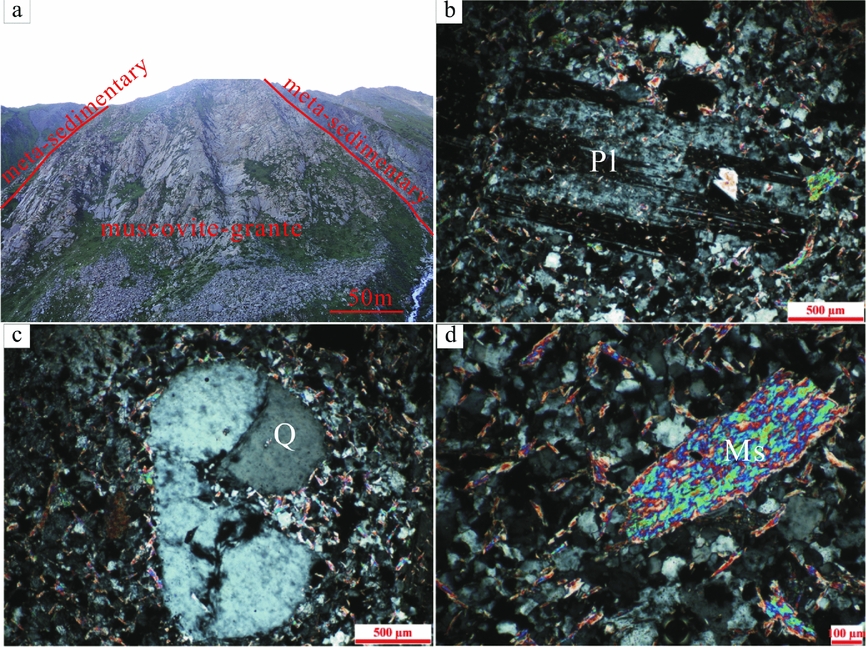
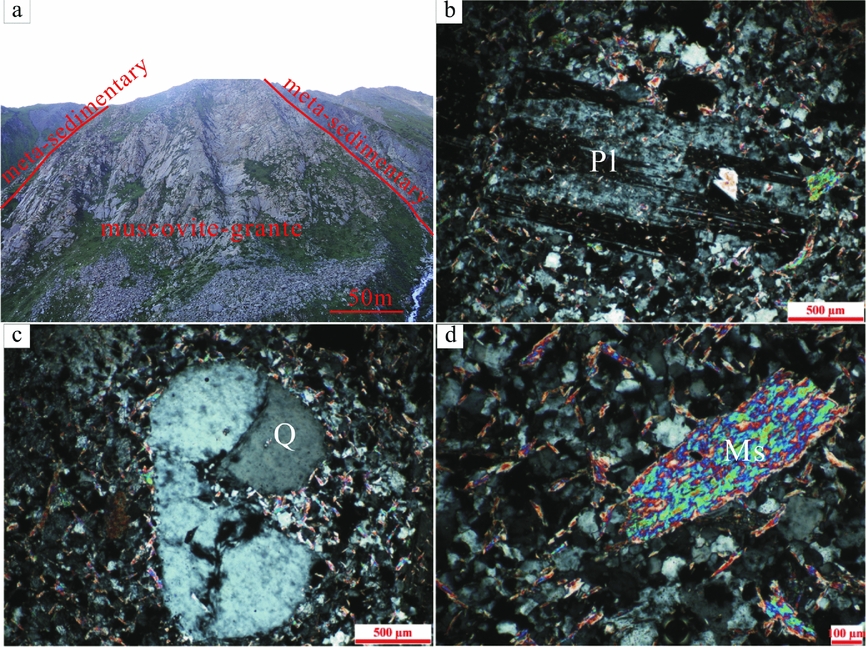
The Liemai pluton is located within the Tethyan Himalaya Belt, SE of the Yardoi Dome. The Liemai muscovite-granite is located north of Yu village, Liemai town, Lhunze county, with geographic coordinates of 92° 40′ E, 28° 27′ N. It is approximately 25 km from Lhunze county. The Liemai leucogranite has a N–S width of 500 m. The Liemai pluton is intruded into sandstone and slate of the Tethyan sedimentary sequence to the SE of the Yardoi Dome. Some intensely deformed dykes, varying in width from several centimetres to metres, intrude into the Triassic metasedimentary rocks in this region. The country rocks are fine-grained, medium- to thick-bedded metamorphic quartz sandstones of the Langjiexue Group Nieru Formation (T3n), intercalated with dark-grey silty sericite slates (Fig. 1b). Detailed field investigations indicate that the pelitic sediments were intruded by the leucogranites and also the presence of metamorphism, with grade increasing towards the granite core. The lack of sillimanite or migmatite in the metasedimentary wall-rocks implies relatively lower metamorphic grade. A suite of muscovite-granites from Liemai was collected for petrological, geochemical and geochronological studies. The muscovite-granite shares the same porphyritic texture and comprises phenocrysts of plagioclase (5%), muscovite (5%) and quartz (1%) (Fig. 2). The plagioclase phenocrysts have an euhedral tabular shape with sericitization. Quartz occurs as anhedral granular aggregates, whereas the muscovite phenocrysts occur as subhedral flakes. The matrix has a fine-grained granitic texture, consisting mainly of quartz (c. 45%), muscovite (c. 20%), K-feldspar (c. 15%) and plagioclase (c. 10%).
Photograph and micrographs of muscovite-granite from Liemai. (a) Field characters of Liemai leucogranite (lens to the west). Phenocrysts of (b) plagioclase, (c) quartz and (d) muscovite. Ms –muscovite; Pl – plagioclase; Q – quartz.
3. Analytical methods
3.a. Major- and trace-element geochemistry
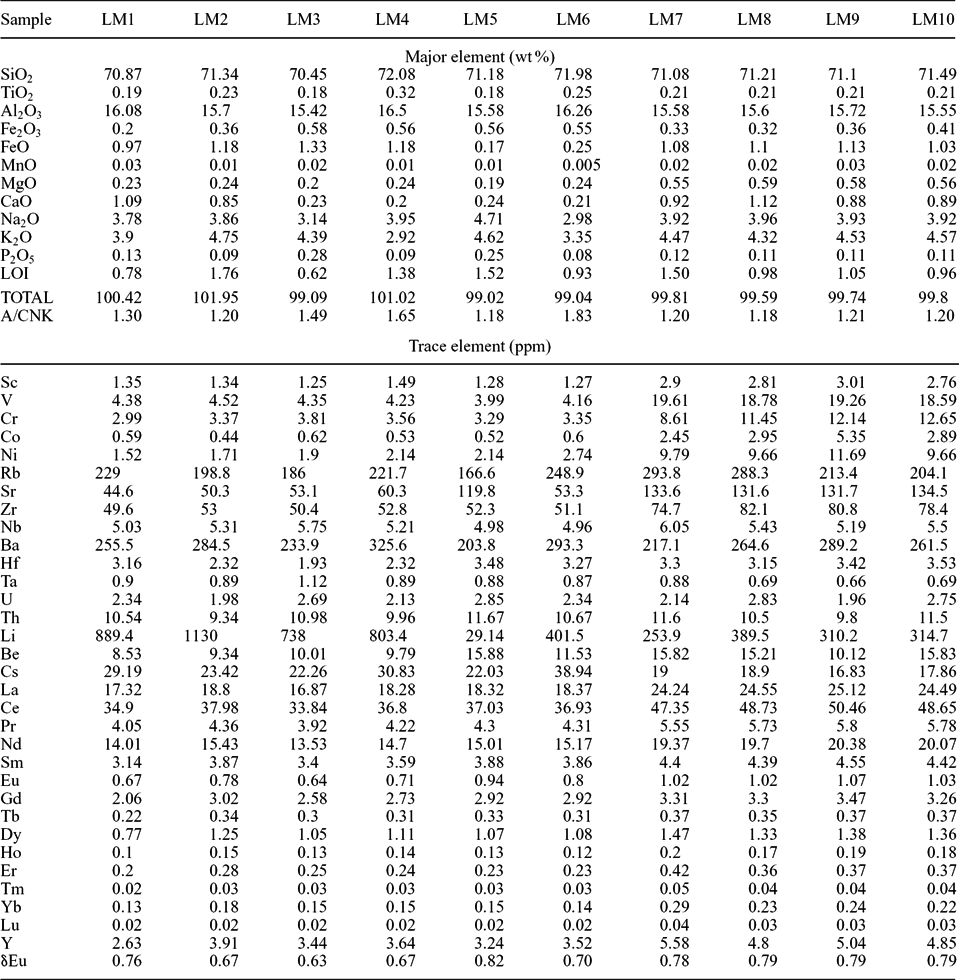
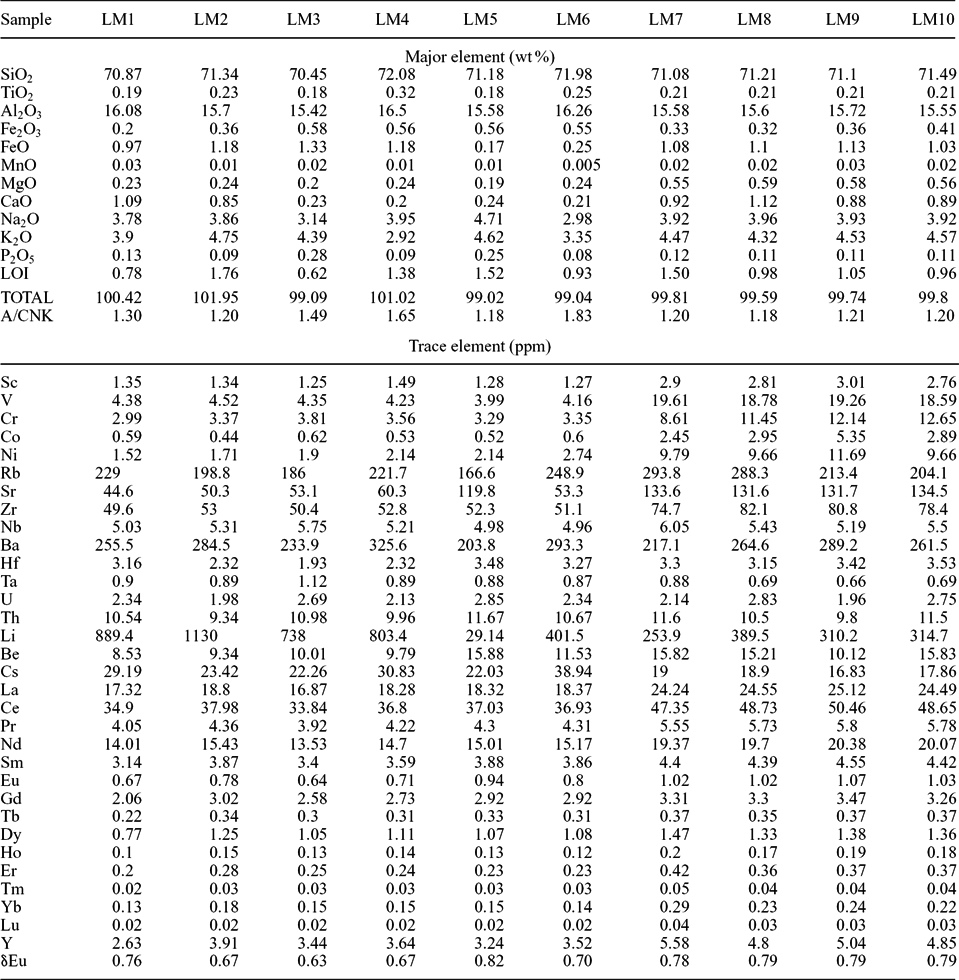
Whole-rock major- and trace-element compositions (Table 1) were determined at the Ministry of Land and Resources (MLR) Wuhan Mineral Resources Supervision and Test Center. Rock samples were carefully selected and sawed into slabs. The central parts were crushed and ground to finer than 200 mesh (c. 80 μm) for the bulk-rock analyses. The major components of these samples were analysed using an automatic X-ray fluorescence (XRF) spectrometer, Thermo ArlAdvant XP+. Sample powders were made into glass disks after fusion with lithium metaborate. Samples and flux materials were mixed at a 1:10 ratio and fused at 1100 °C in a Pt-Au crucible for 20–40 min. Trace elements, including rare Earth and refractory elements, were analysed using an XSeries II ICP mass spectrometer. Loss on ignition (LOI) values were obtained by using an electronic analytical balance after ignition at 1000 °C. The analytical precisions for all major-element abundances were better than 2–3 wt%. The analytical uncertainties for the trace elements were 10% (for those with abundances of less than 10 ppm) and c. 5% (for those with concentrations of more than 10 ppm)
Whole-rock major- (wt%) and trace-element (×10–6) compositions of Liemai granites
3.b. Zircon U–Pb dating
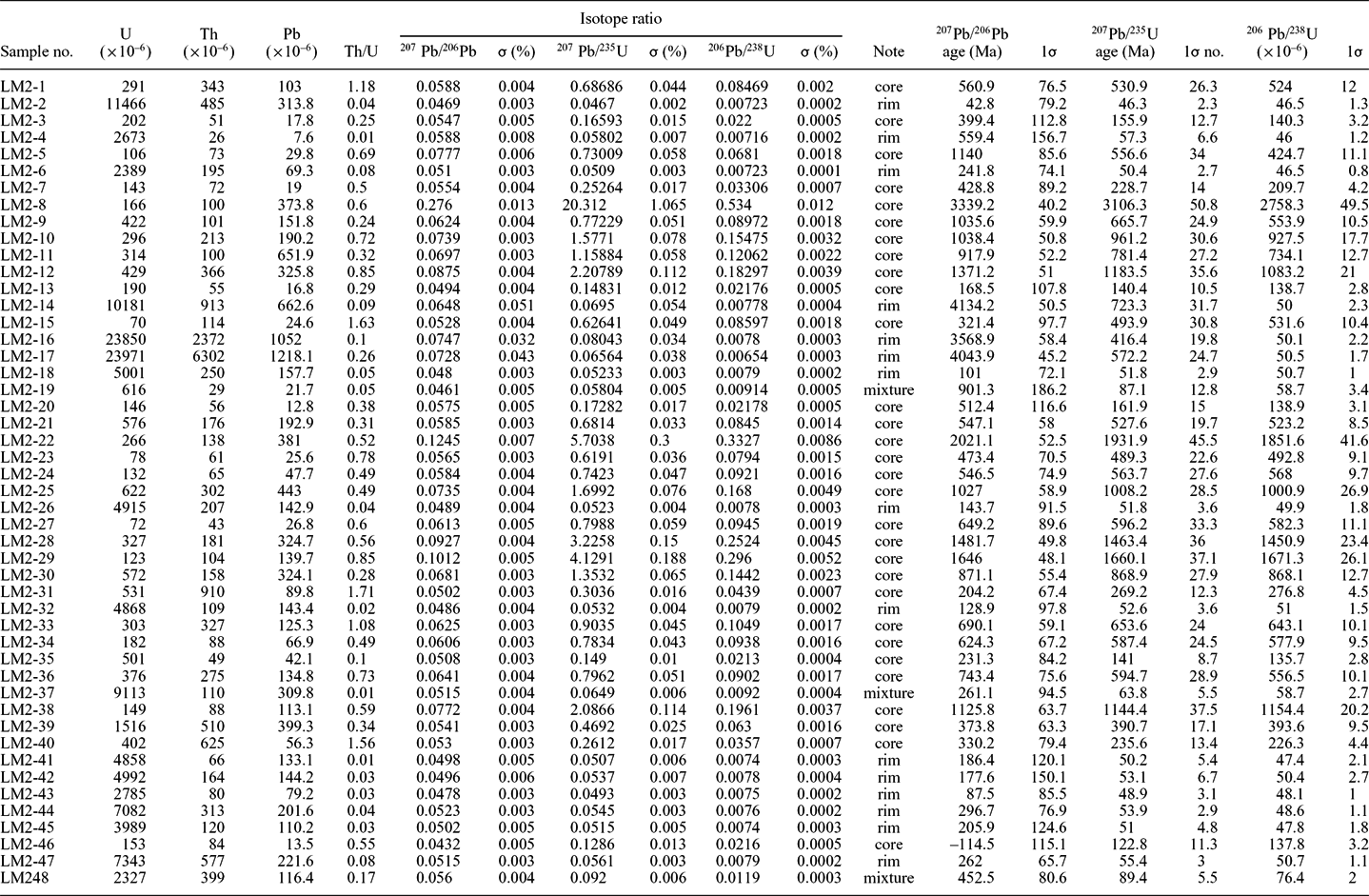
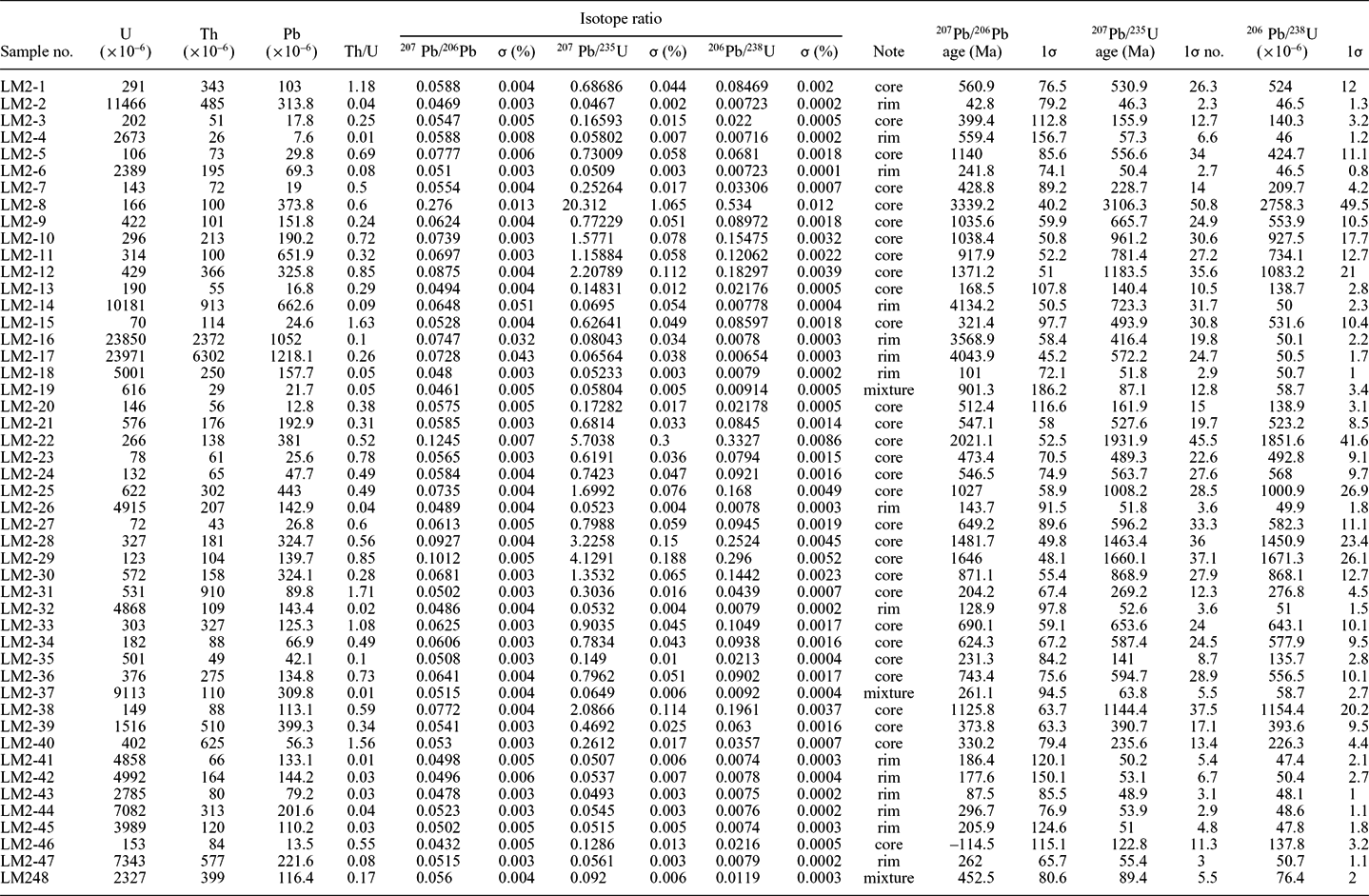
Separation of zircon crystals was completed in the laboratory of the Hebei Institute of Regional Geological Survey. Leucogranite samples were first crushed and then gravity sorted. Transparent, colourless, crackless and well-crystallized zircon grains were handpicked under a binocular microscope. The crystals were then mounted on epoxy discs and polished to reveal their internal growth textures and morphology, followed by examination using cathodoluminescence (CL) imaging and scanning electron microscope (SEM). U–Pb dating was conducted on selected zircon crystals using a LA-MC-ICP-MS at the State Key Laboratory of Geological Processes and Mineral Resources (GPMR) at the China University of Geosciences. The diameter of the laser beam was 32 μm, and the spot ablation depth was 20–40 μm. The Harvard University 91500 zircon was chosen as the correction standard. Detailed analytical data showing individual analyses with a 1σ error are listed in Table 2. The resultant data were processed offline using the ICP-MS Data Cal 4.3 program (Liu et al. Reference Liu, Gao, Hu, Gao, Zong and Wang2010). The age calculation and the plotting of concordia diagrams were performed using Isoplot 4.0.
U–Th–Pb composition of zircons from Liemai granite measured by LA-ICP-MS
3.c. Zircon Hf isotopic composition
Hf isotopic analyses were performed on the same spots or age domains as the age determinations of the concordant grains, based on the CL images after the U–Pb isotopic analyses. The in situ zircon Hf isotope measurements were performed on a LA-MC-ICP-MS in the GPMR. The beam size was 44 μm. The standard sample and data processing software were the same as used for zircon U–Pb dating. Details of the Hf isotopic analytical method are given by Hu et al. (Reference Hu, Liu, Gao, Liu, Zhang, Tong and Zhou2012). Each measurement comprised a 10 s pre-ablation, a 45 s ablation and a 30 s washout delay. The isobaric interference of 176Lu and 176Yb on 176Hf was corrected by monitoring the signal intensity of 175Lu, 173Yb and 172Yb of the individual spot.
4. Results
4.a. Whole-rock geochemical compositions
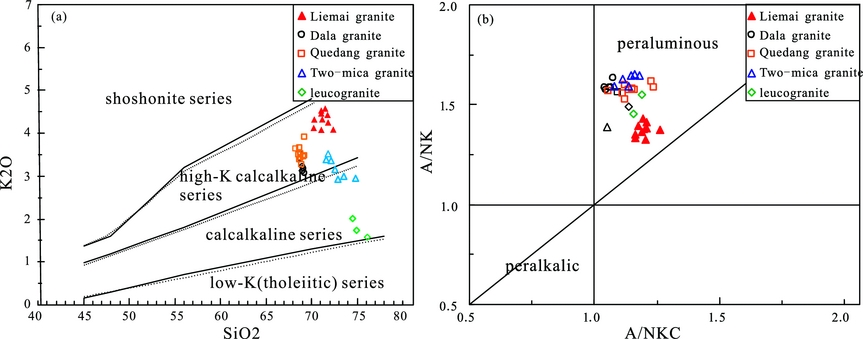
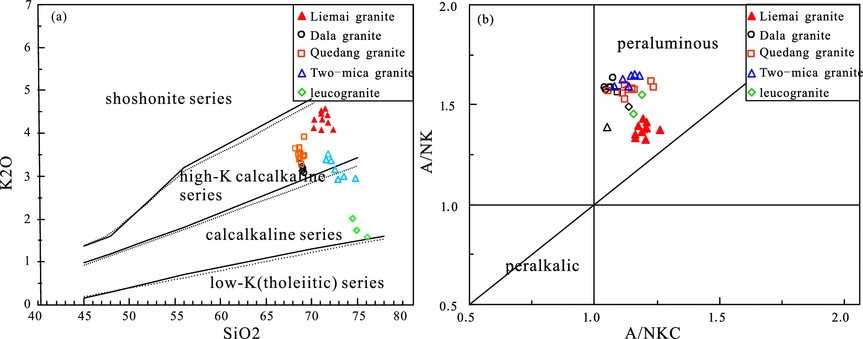
Whole-rock major- and trace-element data are provided in online Supplementary Table S1 (available at http://journals.cambridge.org/geo). The Liemai muscovite-granites are relatively enriched in silicon and aluminium (SiO2 = 70.45–72.08%; Al2O3 = 15.42–16.26%), but are depleted in magnesium and calcium (MgO < 0.6%, CaO = 0.2–1.12%). All samples are plotted in the area of high-K calc-alkaline series (Fig. 3a). The Liemai granite is peraluminous, as suggested by the presence of certain minerals (e.g. muscovite, A/CNK>1.1 and corundum in its CIPW norm) (Fig. 3b). These features show that the Leimai granite is an S-type granite that was possibly derived from partial melting of metasedimentary rocks. The Liemai muscovite-granites are therefore high-K calc-alkaline peraluminous in nature, different from granites from the middle and core parts of the Dala, Quedang and Yardoi domes where the latter have a lower CaO content and CaO/Na2O ratios (<0.3) but higher K2O/Na2O ratios (>1.0).
(a) K2O–SiO2 and (b) A/NK-A/CNK diagrams for typical granites from the Yardoi area (data sources: Dala granite from Xie et al. Reference Xie, Zeng, Liu and Gao2010; Quedang granite from Gao, Zeng & Hu, Reference Gao, Zeng and Hu2010; two-mica granite and leucogranite from Gao et al. Reference Gao, Zeng, Liu and Xie2009).
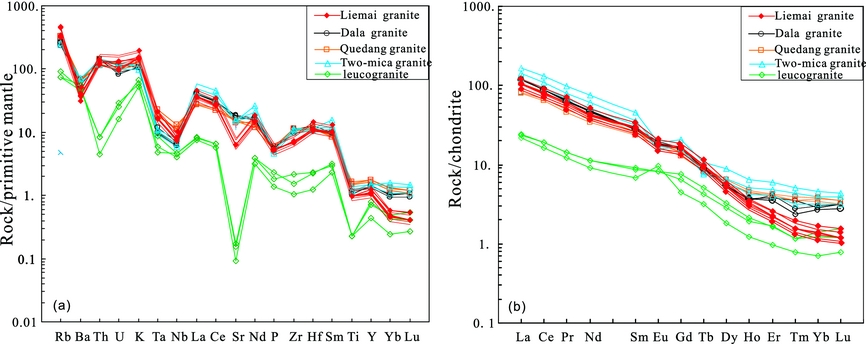
On the primitive-mantle-normalized multi-element spider diagrams (Fig. 4a), samples from the Liemai muscovite-granites appear as right-sloping multiple-peak-valley patterns, similar to the two-mica granites of the Dala, Quedang and Yardoi domes. However, they are distinct from leucogranites exposed in the core of the Yardoi Dome. The Liemai muscovite-granites are enriched in LILEs (e.g. Rb, K and Ba) and radioactive elements (e.g. U and Th) but are depleted in Ti, Y, Yb and Lu. Elements such as Rb, Th, K, La, Nd, Hf and Y have an obvious positive anomaly, whereas Ba, Nb, Sr, P and Ti have an obvious negative anomaly. In contrast to the two-mica granite from the margin of the Yardoi Dome, the Liemai muscovite-granites have a relatively high Rb content (204.1×10⁻⁶–293.8×10⁻⁶) and Rb/Sr ratios (1.52–2.20) but a relatively low Sr content (<134.6×10⁻⁶) and Sr/Y ratios (23.94–27.73), thus reflecting high amounts of mica minerals.
(a) Primitive mantle-normalized trace elements and (b) chondrite-normalized REE distribution patterns for granites and metamorphic rocks from the Yardoi area. Primitive mantle and chondritic normalization values from Pearce, Harris & Tyndall (1984) and Sun & McDonough (Reference Sun, McDonough, Saunders and Norry1989), respectively.
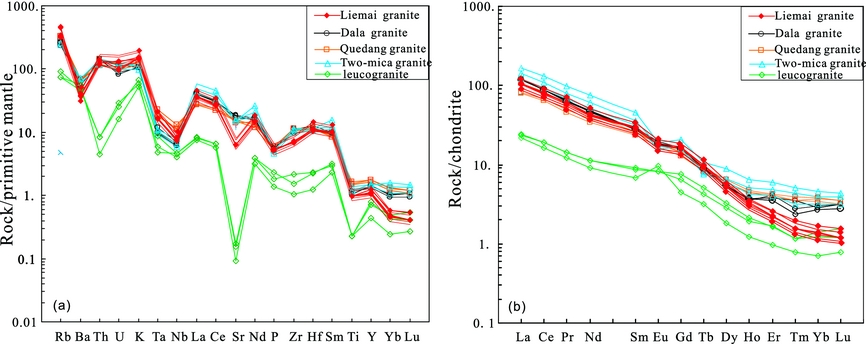
The Liemai muscovite-granites have lower total rare Earth elements (REEs) ranging over 108.08–113.47 ppm. The REE patterns decline to the right with higher (La/Yb)n ratios (59.96–79.85) and slightly negative Eu anomalies (δEu = 0.63–0.82; Fig. 4b).
The ratios vary from 16.57 to 17.91 for light and heavy REEs (LREE and HREE). The (La/Gd)N ratios range from 6.28 to 6.51, reflecting the obvious fractionation between LREE and HREE. The LREE patterns are strongly concentrated with respect to the HREE. The Liemai muscovite-granites are distinct from the Miocene leucogranites at Dala and Quedang granites and two-mica granites from the Yardoi Dome. The Liemai granites have medium Sr/Y (23.9–27.7) and La/Sm ratios (5.5–5.6) and high Sm/Yb ratios (15.1–20), indicating a magmatic source with residual phases of amphibole and/or garnet.
4.b. Zircon geochronology
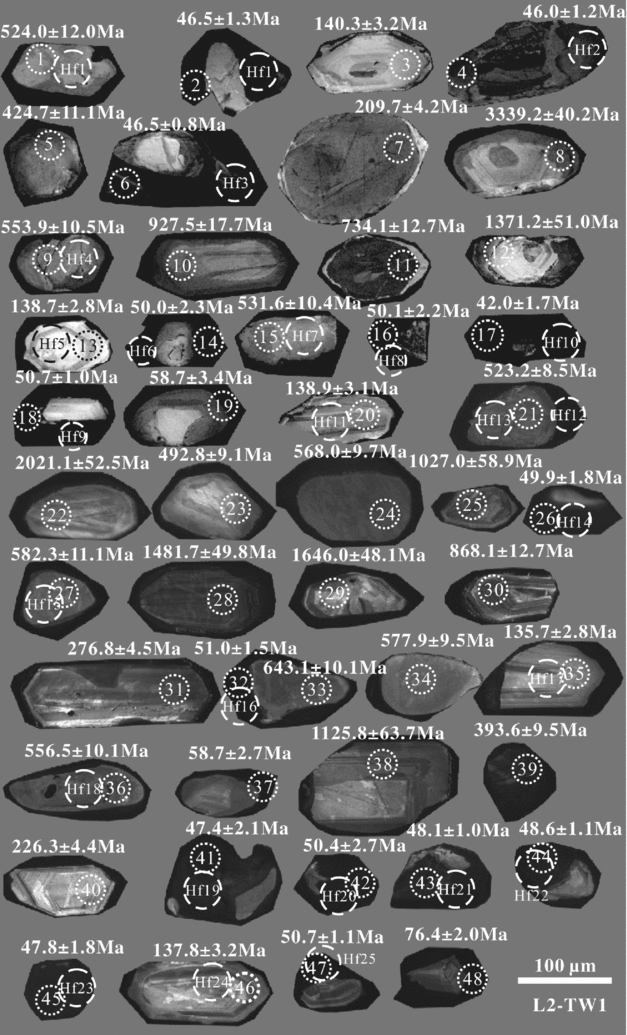
U–Pb ages were determined on zircons separated from the Liemai muscovite-granite samples. The results are listed in online Supplementary Table S2. Zircons are commonly 50–200 μm in length and have prismatic euhedral-subhedral shapes (Fig. 5), with length-to-width ratios of 1:1 to 2:1, up to 3:1 in some individual zircons. The zircon crystals commonly have a core–rim structure, and some grains have a dark and complex internal texture and overgrown rims (Fig. 5) under the CL imager. Zircon rims have varying widths and weak CL without oscillatory zoning structures. The darker colour of the zircon rims has a strong association with high U and Th concentrations and resultant metamictization (Wu et al. Reference Wu, Zhao, Liu and Ji2015), suggestive of a magmatic origin by anatectic partial melting (Wu & Zheng, Reference Wu and Zheng2004). The inherited zircon cores are light in colour, sub-rounded or irregular in shape, and have a strong CL and internal embayed dissolution phenomenon. A few inherited zircon cores have magmatic oscillatory zoning. Zircon crystals with relatively wider cores and rims were selected for U–Pb dating by LA-ICP-MS. The analytical results are listed in Table 2.
Cathodoluminescence (CL) images and LA-ICP-MS U–Pb ages of zircons from Liemai muscovite-granites (large white circles denote the spot Hf analysis, while the smaller dash-dot circles represent U–Pb dating spot).
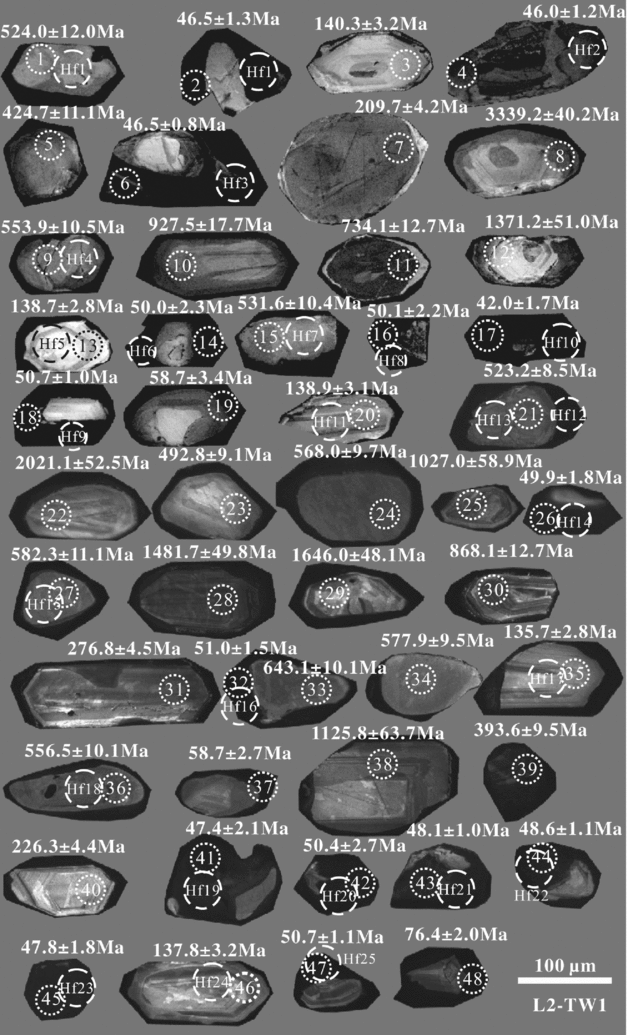
Eighteen analyses were performed on the rim, but the results of several analytical spots (nos 19, 37 and 48) were excluded from calculations due to probable mixing with inherited zircon cores. The other 15 effective analyses show high U and Th concentrations in the zircon rims, ranging from 2785×10−6 to 23850×10−6 and 26×10−6 to 2372×10−6. The low Th/U ratios of the zircon rims (< 0.1) combined with internal textural characteristics are consistent with an anatectic melting origin for the leucogranite. Some spots (nos L2-14, -16 and -17) are characterized by high U concentrations. In CL images the rims are commonly black due to their high U content; however, the nearly constant 206Pb/238U ages with large variations in U contents (10181–23971 ppm) indicates that the U–Pb system was not substantially affected by the high U concentrations. In addition, these spots are also characterized by low Th/U ratios; the well-developed oscillatory zoning indicates that they grew from granitic melts.
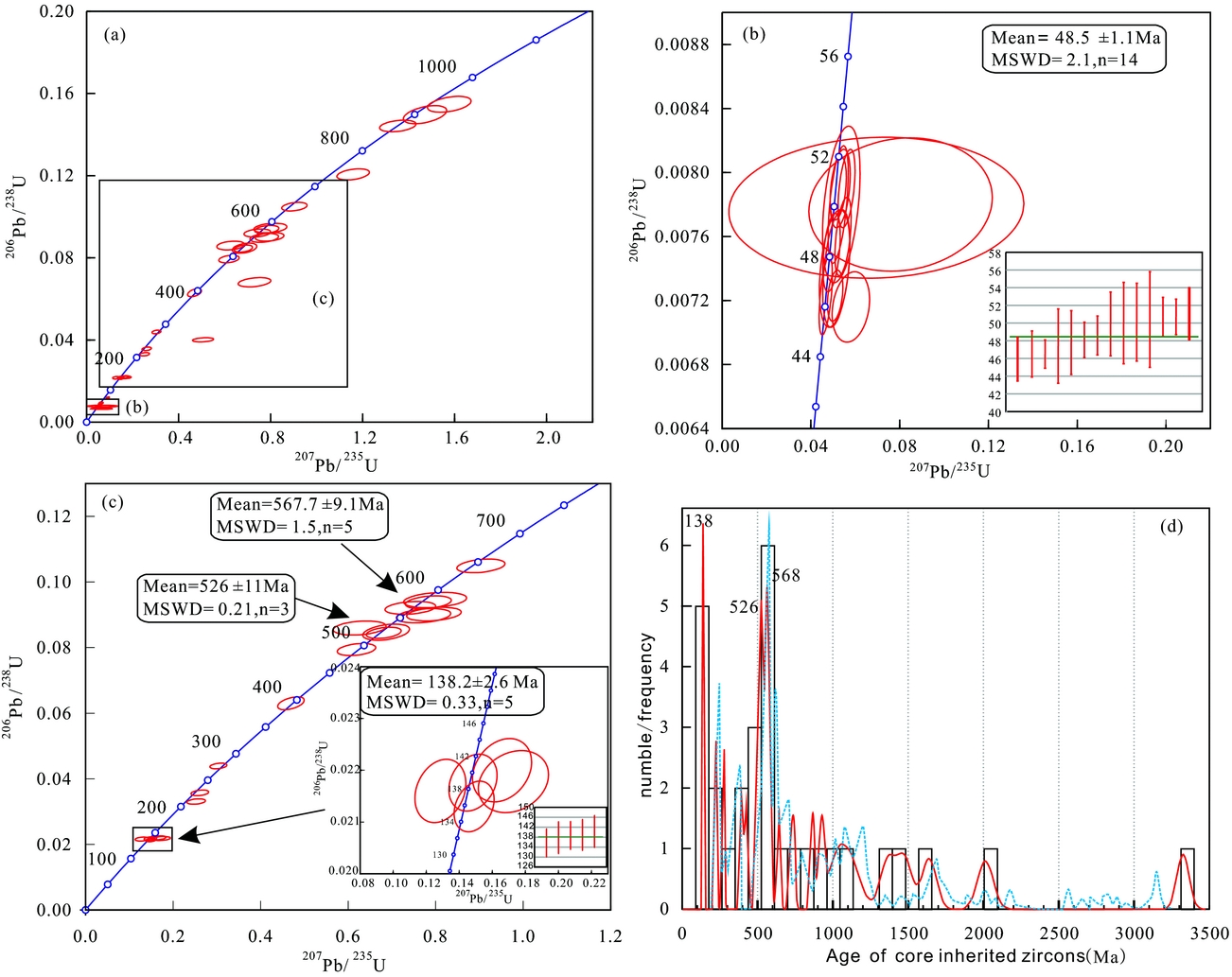
Among 15 analyses of spots with oscillatory zoning, 14 spots have a relatively high concordance (≥95%) and a relative narrow range of 206Pb/238U ages, varying from 47.4 ± 2.1 Ma to 51.0 ± 1.5 Ma (Fig. 6b; Table 2), with a weighted average age of 48.5 ± 1.1 Ma (n = 14; MSWD=2.1). This group of ages is relatively concentrated on the concordia diagrams (Fig. 6) and is considered highly reliable. These ages are interpreted as crystallization ages for the Liemai muscovite-granites.
U–Pb Concordia diagrams for zircons from Liemai muscovite-granites: (a) zircon U–Pb concordia diagrams; (b) concordia diagram for zircon rims; (c) concordia diagram for inherited zircon cores; and (d) distribution curves of inherited zircon cores and detrital zircons.
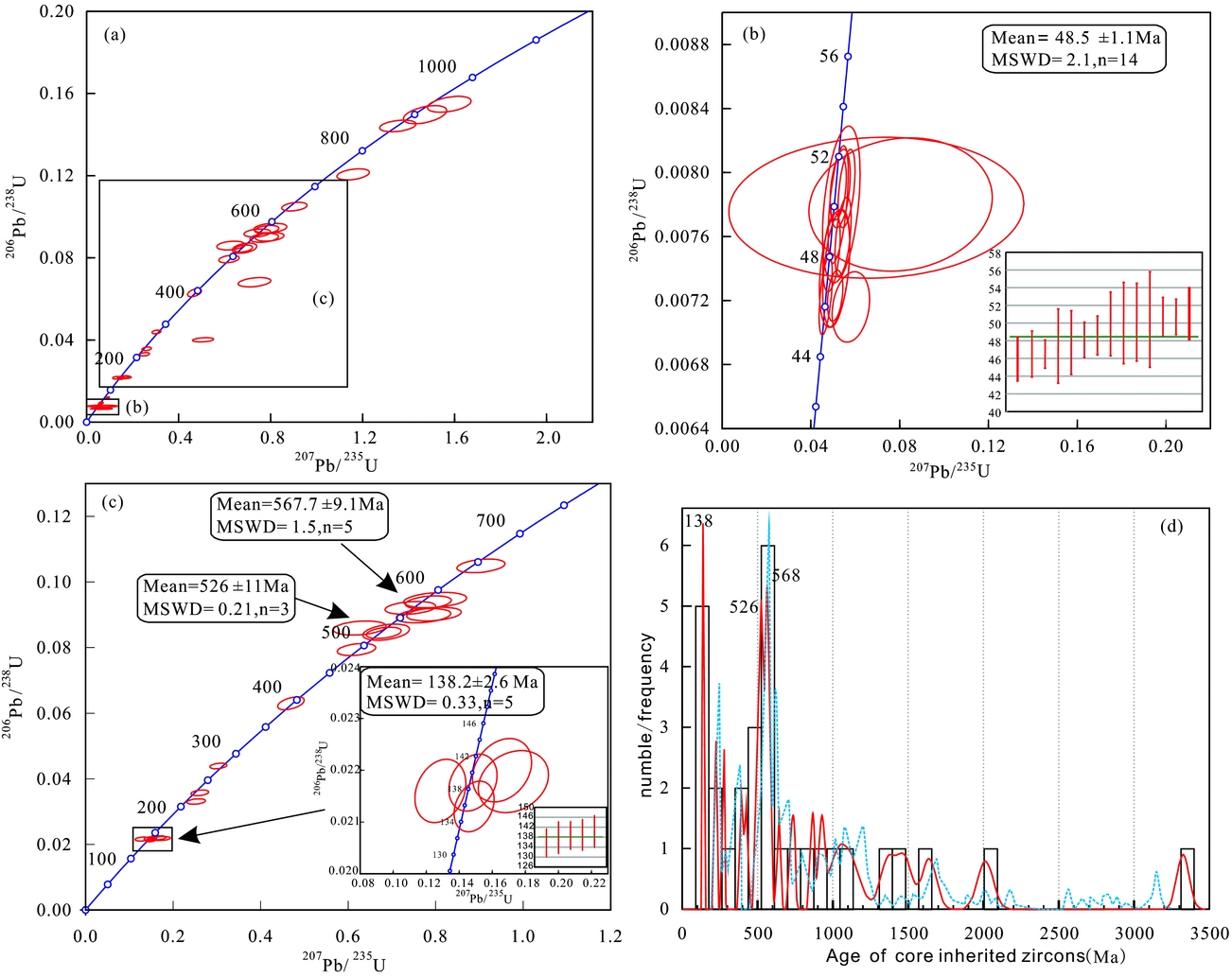
According to the results of 30 analyses, inherited zircon cores have relatively lower U and Th concentrations, varying from 70×10−6 to 622×10−6 and from 43×10−6 to 910×10−6, respectively, with Th/U ratios greater than 0.1 (0.1–1.71). 206Pb/238U data are used for inherited zircons having ages lower than 1000 Ma, whereas 207Pb/206Pb data are used for inherited zircons having ages greater than 1000 Ma. The age span is considerable in the inherited zircon cores, ranging from 135.7 ± 35.7 Ma to 3339.2 ± 40.2 Ma (Fig. 6d; Table 2).
The inherited zircon cores have three age peaks: 138, 526 and 568 Ma. Analytical spot nos 3, 13, 20, 35 and 48 of the inherited zircon cores have clear oscillatory zoning, with U and Th concentrations varying from 146×10−6 to 501×10−6 and 49×10−6 to 84×10−6, respectively. The Th/U ratios are greater than 0.1 (0.10–0.55), and the 206Pb/238U ages are concentrated within a range of 135.7–140.3 Ma. Zircon inherited cores are clustered around c. 138 Ma on the 206Pb/238U concordia diagram, with a weighted mean age of 138.2 ± 2.6 Ma (MSWD=0.33) (Fig. 6c). This group of ages is relatively concentrated on the concordia diagram, reflecting high reliability and indicating that the source of the Liemai muscovite-granite contained Late Jurassic – Early Cretaceous zircons.
The other peak age of the inherited zircon cores are 523 Ma and 582 Ma. The oscillatory zoning of the inherited zircon cores of these ages is implicit. These inherited zircon cores have U and Th concentrations of 70×10−6 to 576×10−6 and 43×10−6 to 343×10−6, respectively, with Th/U ratios varying from 0.31 to 1.63. The resultant 206Pb/238U may be divided into two groups. The 206Pb/238U ages of analytical spot nos 1, 15 and 21 are between 523.2 and 531.6 Ma, with a weighted mean age of 526 Ma (n = 3; MSWD=0.21). The 206Pb/238U ages of analytical spots 9, 24, 27, 34 and 36 range from 553.9 ± 10.1 Ma to 582.3 ± 11.1 Ma and are concentrated around 568 Ma, with a weighted mean age of 567.7 ± 9.1 Ma (n = 5; MSWD=1.50) (Fig. 6c). The 523–582 Ma age indicates that the source rocks of the Liemai leucogranite contained early Palaeozoic – Neoproterozoic zircon crystals. The other inherited zircon cores have ages of 643–3339.2 Ma, reflecting multiple sources of inherited zircons. The oldest (age 3339 Ma) is obtained from analytical spot no. 9, which suggests that it was crystallized as early as during Palaeoarchean time. The inherited zircon grains might be derived from its source or captured from the wall rocks during the ascent of the granitic magma.
4.c. Zircon Hf isotope characteristics
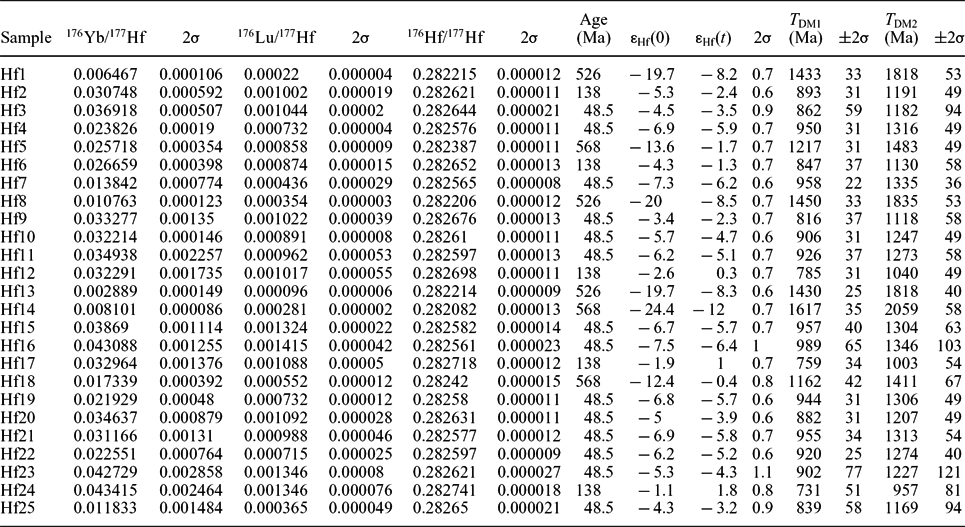
Based on the U–Pb dating results, a total of 14 representative analytical spots on rims and 11 on inherited zircon cores were selected and measured for in situ Lu–Hf isotopic compositions using LA-MC-ICP-MS. The analytical results are listed in Table 3. All zircon crystals have 176Lu/177Hf ratios less than 0.002, reflecting extremely low accumulations of the radioactive Hf isotope after zircon crystallization (Wu et al. Reference Wu, Li, Zheng and Gao2007). Zircon rims dated to 48.5 Ma have relatively homogeneous Hf isotope compositions, with 176Hf/177Hf ratios that vary between 0.282561 and 0.282676. Their initial Hf isotope compositions (ε Hf(t)) range from –6.4 to –2.3, with an average of –4.9. The two-stage depleted mantle model ages (T DM2) range from 1118 to 1346 Ma, which indicate that they may be derived from products of Mesoproterozoic crustal reworking. Inherited zircon cores that date to 138 Ma have little variation in their 176Hf/177Hf ratios (0.282621–0.282741). Their initial Hf isotope compositions (ε Hf(t)) vary from –2.4 to 1.8, with an average of –0.6. The two-stage depleted mantle Hf model ages vary from 1430 to 1450 Ma, which indicates that its source rocks were Mesoproterozoic. Inherited zircon cores dated to 526 Ma have indistinguishable 176Hf/177Hf ratios (0.282206–0.282215). Their initial Hf isotope compositions (ε Hf(t)) vary from –8.5 to –8.2. Hf model ages vary from 1430 to 1450 Ma, indicating that its source rocks were Mesoproterozoic crustal rocks.
Hf isotopic composition of zircons from Liemai granite

ε Hf(t) = 10 000×{[(176Hf/177Hf)S − (176Lu/177Hf)S × (eλt − 1)]/[(176Hf/177Hf)CHUR,0 − (176Lu/177Hf) CHUR × (eλt − 1)] –1}, T DM1 = (1/λ) × ln{1+ [(176Hf/177Hf)S− (176Hf/177Hf)DM] / [(176Lu/177Hf)S − (176Lu/177Hf)DM]}, T DM2 = T DM1 − (T DM1 − t) × [(f cc − f s)/(f cc − f DM)] and fLu/Hf = (176Lu/177Hf)S/(176Lu/177Hf) CHUR − 1, where λ = 1.867×10⁻¹¹ (a–1) (Söderlund et al. Reference Söderlund, Patchett, Vervoort and Isachsen2004); (176Lu/177Hf)S and (176Hf/177Hf)S are the measured values of the samples; (176Lu/177Hf)CHUR = 0.0332, (176Hf/177Hf)CHUR,0 = 0.282772, (176Lu/177Hf)DM = 0.0384 and (176Hf/177Hf)DM = 0.28325 (Griffin et al. Reference Griffin, Pearson, Belousova, Jackson, Van Achterbergh, O'Reilly and Shee2000); (176Lu/177Hf)mean crust = 0.015; f cc = [(176Lu/177Hf)mean crust/(176Lu/177Hf)CHUR] − 1; f s = fLu/Hf; and f DM = [(176Lu/177Hf)DM/(176Lu/177Hf) CHUR] − 1.
5. Discussion
5.a. Chronology of the granite
Tethyan Himalayan leucogranites (THL) are predominantly muscovite-biotite leucogranites and muscovite-tourmaline leucogranites. Previous studies have shown that these leucogranites have variable crystallization ages ranging over 8–45 Ma for the THL. Leucogranites with ages of 26–46 Ma are mainly distributed in the Tethyan Himalaya (Wu et al. Reference Wu, Zhao, Liu and Ji2015). Magmatic activities around the Yardoi Dome were constrained to 45–15 Ma and may be divided into three periods: (1) 45–40 Ma: includes the Dala, Quedangyan, two-mica granitic dykes and rhyolitic subvolcanic rocks intruded into the central Yardoi Dome (Aikman, Harrison & Lin, Reference Aikman, Harrison and Lin2008; Qi et al. Reference Qi, Zeng, Meng, Xu and Li2008; Hu et al. Reference Hu, Zeng, Qi, Hou and Gao2011; Zeng et al. Reference Zeng, Gao, Xie and Liu-Zeng2011; Wu et al. Reference Wu, Ye, Wu and Zhao2014); (2) c. 35 Ma: formation of granitic dykes within the Yardoi Dome (Gao et al. Reference Gao, Zeng, Liu and Xie2009; Zeng et al. Reference Zeng, Liu, Gao, Xie and Wen2009; Wu et al. Reference Wu, Ye, Wu and Zhao2014); and (3) c. 15 Ma: formation of leucogranite within the core of the Yardoi Dome (Wu et al. Reference Wu, Ye, Wu and Zhao2014). Zircon rims from the Liemai muscovite-granites, which intruded in the eastern dome, show ‘black zircon’ characteristics that are consistent with those of zircons from the Himalayan leucogranites. The LA-ICP-MS analytical results showed that zircon rims have a relatively limited range of ages of 47.4–51.0 Ma, with a weighted mean age of 48.5 ± 1.1 Ma (MSWD=1.6), reflecting the crystallization and intrusion ages of the Liemai muscovite-granites. These ages are consistent with the metamorphic age (47.6 Ma) of the biotite-bearing granitic genesis from the Yardoi Dome (Gao, Zeng & Xie, Reference Gao, Zeng and Xie2012). This age has changed the intrusion age of the Himalayan leucogranite by 3 Ma, indicating the existence of magmatic activity in the Himalayan region as early as 48.5 Ma.
5.b. Source region of granite
It is generally accepted that the High Himalayan leucogranites were derived from metamorphic mudstones of the High Himalayan Crystallization System (HHCS) (Harris & Inger, Reference Harris and Inger1992; Harrison et al. Reference Harrison, Grove, Mckeegan, Coath, Lovera and Fort1999; Guo & Li, Reference Guo and Li2007; Huang et al. Reference Huang, Zhao, Zhu, Liu, Hu, Dong and Zhang2013), whereas the source of the Tethyan Himalaya leucogranite (THL) remains controversial. The source may be similar to the Miocene leucogranites (Zhang et al. Reference Zhang, Harris, Parrish, Zhang and Zhao2004, Reference Zhang, Harris, Parrish, Zhang, Zhao and Li2005; Liao et al. Reference Liao, Mo, Pan, Zhu, Wang, Jiang and Zhao2007; Yu et al. Reference Yu, Zeng, Liu, Gao and Xie2011; Gao et al. Reference Gao, Zeng, Hou, Guo, Tang, Xie and Wang2013).
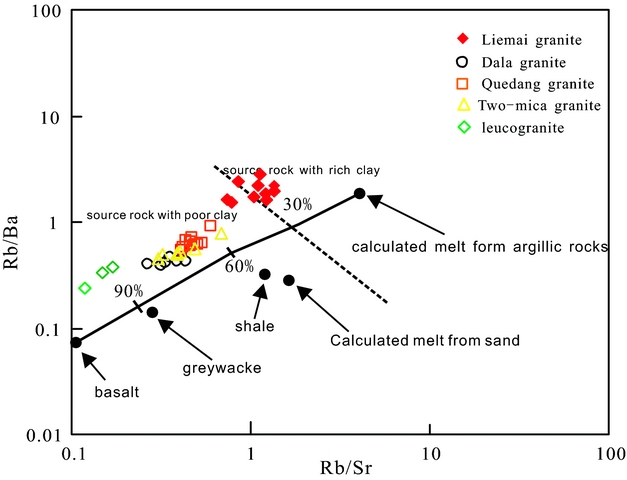
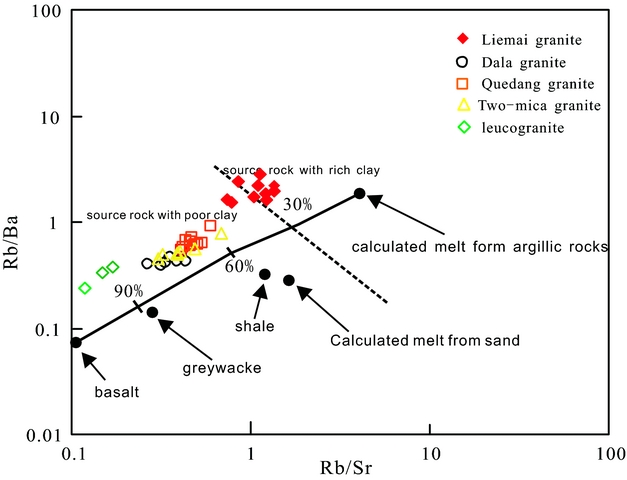
The Eocene two-mica granites of Yardoi gneiss dome possibly represent the partial melting products from amphibolite with minor contributions from metapelite under contraction and thickening conditions (Gao et al. Reference Gao, Zeng, Liu and Xie2009; Zeng et al. Reference Zeng, Liu, Gao, Xie and Wen2009, Reference Zeng, Gao, Xie and Liu-Zeng2011). The aluminium saturation index of the Liemai muscovite-granites (A/CNK) is greater than 1.1. The CIPW calculation has over 2% corundum (2.68–3.06%). These features indicate that the Liemai muscovite-granites belong to muscovite-bearing K-rich strong peraluminous S-type granites that originate from the crust. The CaO/Na2O ratio may be used as a source composition tracer (Sylvester, Reference Sylvester1998). Partial melting of pelite that is enriched in clay but depleted in plagioclase may generate melt with relatively low CaO/Na2O ratios (<0.3). Melts of sandstone enriched in plagioclase but depleted in clay minerals generally have relatively higher CaO/Na2O ratios (>0.3). The aluminous felsic melt derived from partial melting of pelite under conditions of water saturation usually has a high Sr/Ba ratio (0.5–1.6) and low CaO/Na2O ratio. The Liemai granites have CaO/Na2O ratios ranging from 0.22 to 0.28 and Sr/Ba ratios from 0.5 to 0.6, indicating that the source of granite is a plagioclase-depleted but clay-mineral-enriched pelite region. On a Rb/Ba – Rb/Sr diagram (Fig. 7), granites from near the Yardoi Dome have an apparent linear correlation. Compared to the Dala and QueDang granites, the Liemai muscovite-granites tend to plot in a clay-mineral-rich source region. The rim with oscillatory zoning of zircons from Leimai granite has ε Hf(t) ranging from –6.4 to –2.3, with an average of –4.9. These observations indicate an origin from recycled old crust, which is distinct from the high Himalayan leuocogranite (Huang et al. Reference Huang, Zhao, Zhu, Liu, Hu, Dong and Zhang2013).
Plot of Rb/Ba v. Rb/Sr for Liemai muscovite-granites (after Sylvester, Reference Sylvester1998).
S-type granites commonly have inherited zircon crystals. In situ U–Pb dating and Lu–Hf isotope analyses of the inherited zircons are important for identifying the granite source materials and constraining the nature and source of crustal materials (Zhao, Zheng & Dai, Reference Zhao, Zheng and Dai2013). The Liemai muscovite-granite contains a large amount of inherited zircon. LA-ICP-MS U–Pb dating of the inherited zircons shows a remarkable range spanning 135.7–3339.2 Ma, reflecting multiple sources of inherited zircon. Inherited zircon cores have a prominent peak age of 135–140 Ma, with a weighted mean age of 138.2 Ma. These inherited zircon cores have bright colours on CL imagery and are characterized by apparent oscillatory zoning and high Th/U ratios, indicating a magmatic origin. The Longzi-Qiaga rhyolitic subvolcanic rocks and Dala and Quedang two-mica granites from the southern Yardoi Dome contain inherited zircon with ages that vary over the range 126–144 Ma (Hu et al. Reference Hu, Zeng, Qi, Hou and Gao2011; Zeng et al. Reference Zeng, Gao, Xie and Liu-Zeng2011; Wu et al. Reference Wu, Ye, Wu and Zhao2014). Biotite-bearing granitic gneiss from the Yardoi Dome also contains inherited zircons with ages of 135.2 ± 1.6 Ma and 136.1 ± 1.4 Ma (Gao, Zeng & Xie, Reference Gao, Zeng and Xie2012). In addition, inherited zircons with ages of 131–142 Ma are found in two-mica granites and granitic gneiss from the Ranba Dome in the western Tethyan Himalaya (Liu et al. Reference Liu, Wu, Ji, Wang and Liu2014). These data indicate that inherited zircon crystals were common parts of granites and metamorphic rocks surrounding the Yardoi Dome during Late Jurassic – Early Cretaceous time and may be pervasive in the Eocene Tethyan Himalaya leucogranites and high-grade metamorphic rocks from the central Yardoi Dome. No similar ages have been recorded in zircons from the High Himalayan sedimentary rock series, excluding it as a possible source for the Tethyan Himalaya leucogranite.
Zircon Hf isotope has widely been used in source discrimination of some important geochemical reservoirs (such as depleted mantle, chondrite and crustal) (Griffin et al. Reference Griffin, Pearson, Belousova, Jackson, Van Achterbergh, O'Reilly and Shee2000; Wu et al. Reference Wu, Li, Zheng and Gao2007). Low 176Hf/177Hf ratios and ε Hf(t) values in zircons are considered to be derived from or contaminated by crust, whereas rocks with higher 176Hf/177Hf ratios and ε Hf(t) values demonstrate significant input of depleted mantle material or juvenile crust, which means that the mantle material played a vital role in the formation of the granites (Kinny & Maas, Reference Kinny and Maas2003).
The newly produced zircon rim yields negative zircon ε Hf(t) values spread over a range of –6.4 to –2.3, and T DM2 of 1118–1346 Ma. All the data points fall within the lower crust region. Hf isotope composition of inherited zircon cores have variable ε Hf(t) from –12 to –0.4, and all the data points except three (0.3, 1, 1.8) lie near the chondrite evolution line, above the evolution curve of the lower crust and below the evolution curve of chondrite. These data indicate that the Liemai muscovite-granite is derived mainly from anatexis/reworking of the ancient crust. The wide range of ε Hf(t) values might reflect inherited zircon components or mixing of old and juvenile crustal material. The other age peaks of inherited zircon cores vary from 523 to 582 Ma and have two populations: 526 ± 11 Ma and 567.7 ± 9.1 Ma. Slightly younger zircon ages have been reported in granitic gneiss of the Yardoi Dome (Gao, Zeng & Xie, Reference Gao, Zeng and Xie2012) and in eyeball-shaped mylonites of the southeastern Yardoi Dome (520.4 ± 6.3 Ma) and Dala granites (536 ± 12.3 Ma) (Wu et al. Reference Wu, Ye, Wu and Zhao2014). The frequency distribution patterns of inherited zircon crystals from the Liemai muscovite-granites are consistent with those of leucogranites from the Ramba Dome (Liu et al. Reference Liu, Wu, Ji, Wang and Liu2014). Furthermore, the age spectrum of this sample is close to that of the surrounding Tethyan sedimentary strata (Aikman, Harrison & Lin, Reference Aikman, Harrison and Lin2008; Liu et al. Reference Liu, Wu, Ji, Wang and Liu2014). Generally speaking, incomplete melting of source rocks or assimilation of country rocks are the two possibilities for the origin of the inherited zircon. However, remnants of the source usually do not survive during the long process of fractionation. The close affinity between the inherited zircons and the surrounding country rocks also suggests that the inheritable zircons were probably captured from country-rock xenoliths during magma ascent towards the surface. In addition, the zircon grains usually show sharp and regular boundaries between the inherited cores and the overgrowths, indicating limited dissolution of the inherited zircons.
Based on the above analyses, inherited zircon crystals from the Liemai muscovite-granite are not from metapelite of the High Himalayan Crystallization Series. The presence of zircons inherited from the country rocks indicates a certain degree of crustal assimilation during magma evolution.
The Liemai muscovite-granites are similar to the previously reported North Himalayan granites in that they contain high concentrations of SiO2, low concentrations of MgO, CaO, and Fe2O3, have low CaO/Na2O and Al2O3/TiO2 ratios, and have negative ε Hf(t) values, indicating that they formed from magmas derived from a metasedimentary-dominated source region. The Eocene Tethys–Himalaya leucogranite and gneiss of the Yardoi Dome have similar detrital zircon records. Under the condition of crust thickening induced by the India–Eurasia collision, granitic gneiss and mylonite were assimilated in the deep crust and partially melted, forming the Tethyan Himalaya Eocene leucogranite.
5.c. Tectonic environment and petrogenesis
The dehydrated partial melting of muscovite is an important mechanism for the formation of the Tethyan Himalaya Miocene leucogranite (Zhang et al. Reference Zhang, Harris, Parrish, Zhang and Zhao2004, Reference Zhang, Harris, Parrish, Zhang, Zhao and Li2005; Qi et al. Reference Qi, Zeng, Meng, Xu and Li2008; Yu et al. Reference Yu, Zeng, Liu, Gao and Xie2011; Zeng et al. Reference Zeng, Gao, Hou and Tang2012; Gao & Zeng, Reference Gao and Zeng2014). The Dala and Quedang two-mica granites within and surrounding the Yardoi Dome were formed under conditions of crustal thickening, mainly by the dehydrated partial melting of amphibolite within crustal mafic lithologies, in combination with subsidiary partial melting of metapelite (Gao et al. Reference Gao, Zeng, Liu and Xie2009; Zeng et al. Reference Zeng, Liu, Gao, Xie and Wen2009, Reference Zeng, Gao, Xie and Liu-Zeng2011; Xie et al. Reference Xie, Zeng, Liu and Gao2010). Although strongly peraluminous granite located at different temporal-spatial conditions within the Tibetan Plateau may not be identical in terms of its genetic mechanism and tectonic significance, all granites were products of middle–upper crust anatectic melting under conditions of relatively low temperature and high pressure during the collision – post-collision phase (Mo, Reference Mo2009).
Zircon U–Pb dating results have shown that metamorphism of garnet amphibolite and gneiss from the Yardoi Dome occurred during 47.6–45.0 Ma (Gao, Zeng & Xie, Reference Gao, Zeng and Xie2012).
The Liemai muscovite-granite has a crystallization age that is consistent with the metamorphism of the gneiss but is apparently earlier than garnet amphibolite metamorphism. It indicates that earlier partial melting, as represented by the Liemai granite, was mainly metapelite partial melting, accompanied by a lower degree of melting of mafic lithologies. This difference is also reflected in the geochemistry of the Liemai muscovite-granite and in the Dala and Quedang two-mica granite. The features of the Liemai muscovite-granite, such as the high Rb concentration, low Sr concentration, high Rb/Sr ratio (Rb/Sr>1.0), and low Ca and Sr concentration, show an elevated amount of negative Eu anomalies, a characteristic effect induced by fractional crystallization of plagioclase. Magmatic differentiation preceded by plagioclase fractional crystallization therefore probably played a critical role in the production of peraluminous leucogranitic melts, which is generally considered a product of the dehydrated partial melting of muscovite from metapelite. During the early stages of partial melting, clay-rich pelite is more vulnerable to partial melting because Rb has an affinity to mica minerals and Sr tends to concentrate in feldspar minerals. This would lead to the dehydrated partial melting of muscovite, which would increase the Rb/Sr ratio of the melt (Zeng, Asimow & Saleeby, Reference Zeng, Asimow and Saleeby2005). Garnet remains in the residues lead to the depletion of HREE in melt, whereas concentrations in residual gneiss and amphibolites may lead to melts highly enriched in HREE, gneiss and amphibolites. As the partial melting of mafic lithology increases, the plagioclase melts and forms two-mica granite.
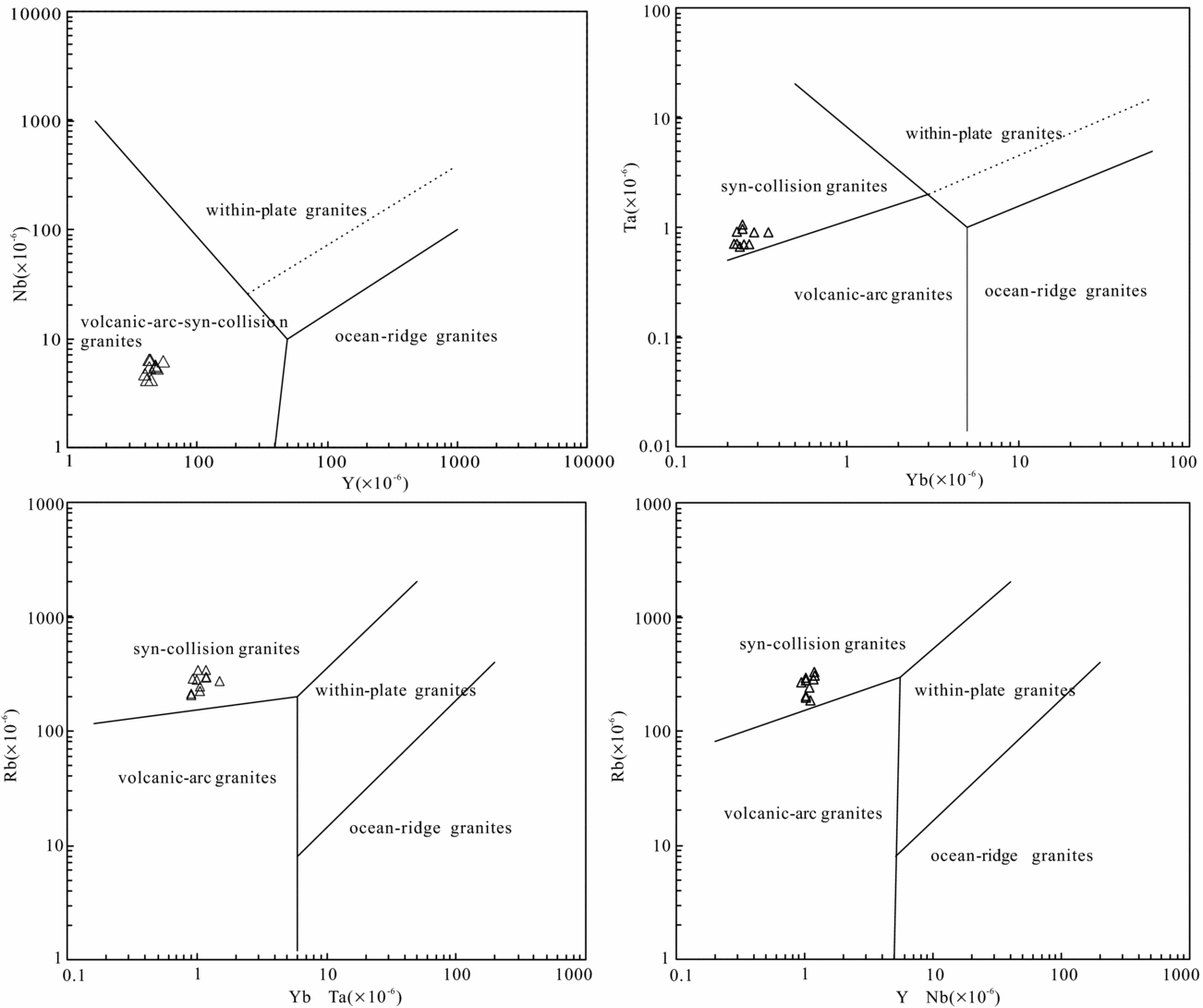
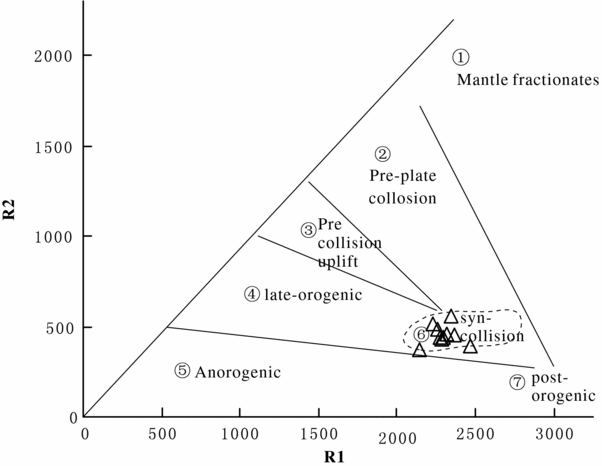
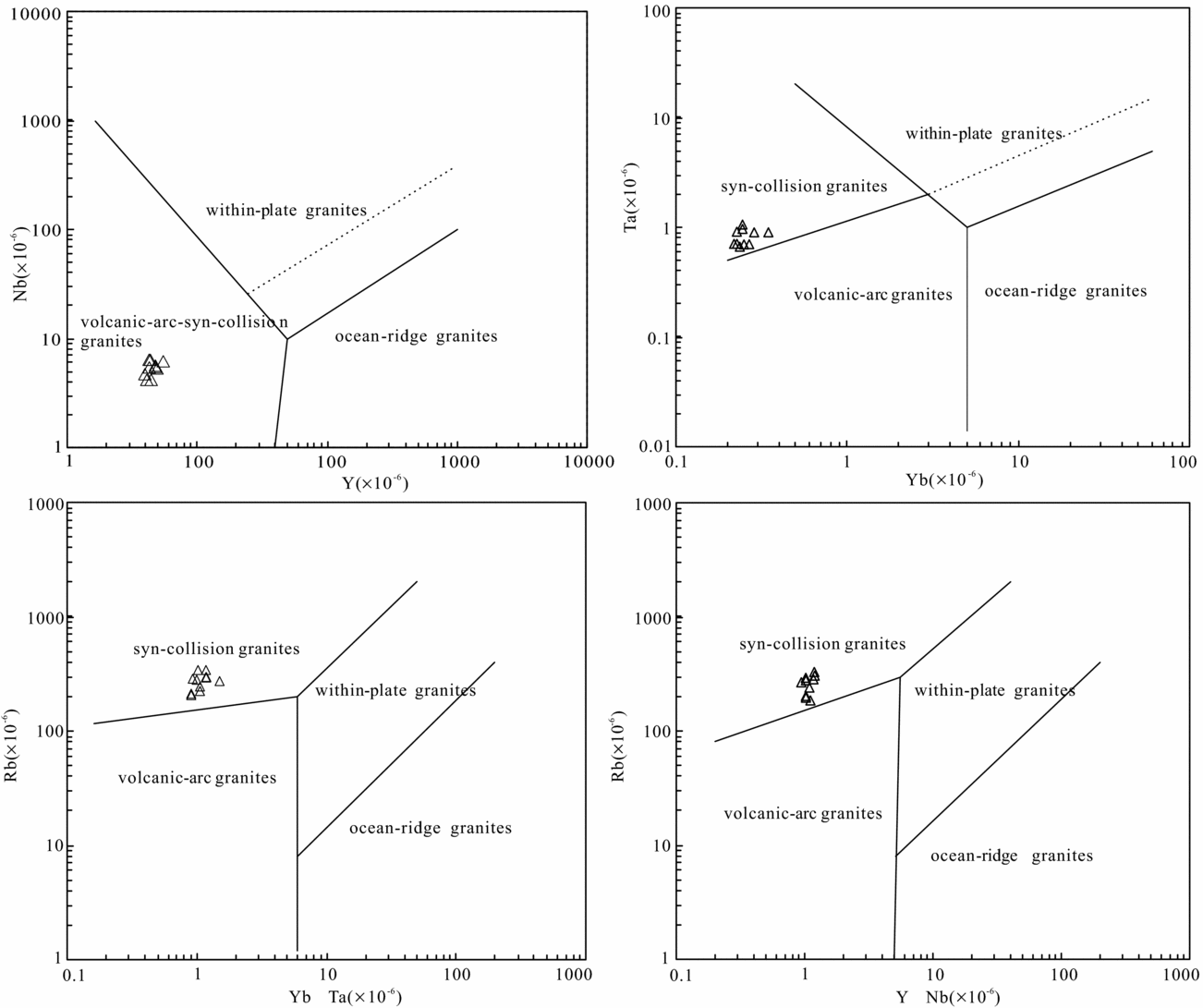
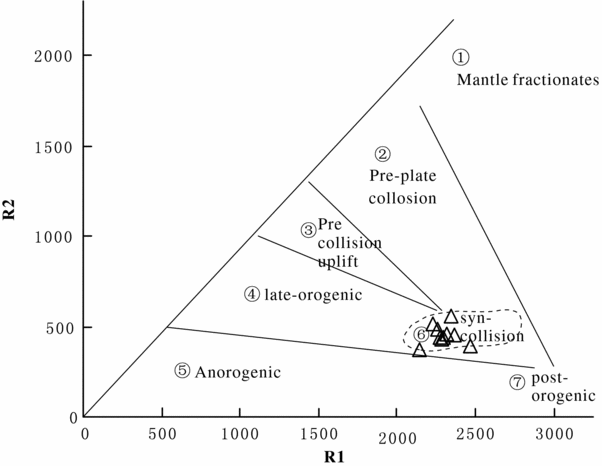
Previous studies have shown that the initial India–Eurasia collision occurred at c. 65 Ma and continued until 41 Ma (Ding et al. Reference Ding, Kapp, Zhong and Deng2003; Mo, Reference Mo, Zhao, Deng, Dong, Zhou, Guo and Wang2003; Hou et al. Reference Hou, Mo, Yang, Wang, Pan, Qu and Nie2006). Ji et al. (Reference Ji, Wu, Chung, Wang, Liu, Li and Wang2016) proposed that the extensive early Cenozoic tectonomagmatic evolution of southern Tibet can be described by the Neo-Tethyan slab break-off model. Based on the ages of the gabbros which come from partial melting of the asthenosphere followed by rapid magma ascent with negligible crustal contamination, Ji et al. (Reference Ji, Wu, Chung, Wang, Liu, Li and Wang2016) inferred that break-off occurred at c. 45 Ma. The break-off model may account for coeval tectonomagmatic activities in southern Tibet. The Liemai muscovite-granite intruded into the Tethyan Himalaya terrane, which is the footwall of the subduction zone. Zircon U–Pb dating reveals an intrusion age of the granite of 48.5 Ma, in accordance with the main collision stage. In addition, on the trace-element tectonic environment discrimination diagram (Fig. 8) and R1–R2 multiple cation parameters tectonic discrimination diagram (Fig. 9), all samples plot in the syn-collision granite area, further confirming that the Liemai muscovite-granites were formed during continental collision.
Trace-element discriminant diagrams for tectonic settings (after Pearce, Harris & Tindle, Reference Pearce, Harris and Tindle1984).
Discriminant diagrams of tectonic setting for R1 v. R2.
The Himalayan orogenic belt experienced earlier dominantly contraction and thickening and later contemporaneous contraction and extension. Such a change in the tectonic regime was accompanied by a transition in the partial melting of the deep crustal rocks (Zeng et al. Reference Zeng, Gao, Tang, Hou, Guo, Hu, Mukherjee, Carosi, Van der Beek, Mukherjee and Robinson2015).
Intense crustal shortening during the main collision stage led to temperature and pressure increases in the deep crust, which induced the generation of peraluminous granites which experienced intensive partial melting under contraction and thickening conditions. Combined with zircon U–Pb dating and the tectonic environment, the Liemai muscovite-granite is genetically related to the main stage of the India–Eurasia collision when crustal thickening induced partial melting, and is a response of the footwall of the subduction zone to continental collision. We demonstrate that Liemai muscovite-granite in the Eastern Tethyan Himalayan underwent early Eocene intense anatexis under contraction and thickening conditions due to shallow subduction of the Indian continent beneath southeastern Tibet.
6. Conclusions
The U–Pb ages of zircon rims from the Liemai muscovite-granite are 48.5 ± 1.1 Ma and are crystallization ages. This age is c. 2 Ma older than the previously published ages of the Tethyan Himalaya leucogranite. The initial Hf isotope ε Hf(t) is between –6.4 and –2.3, indicating a crustal origin. The rocks are peraluminous high-K calc-alkaline granites, with REE distribution patterns and trace-element concentrations comparable to those of Eocene leucogranites from the Yardoi Dome.
Inherited zircon cores from the Liemai muscovite-granite have a wide range of U–Pb ages that span 135.7–3339.2 Ma, which is interpreted as a result of various source regions.
The Liemai muscovite-granites were formed in a collisional environment. These magmas were derived mainly from the anatexis of ancient crustal materials under contraction and thickening conditions due to subduction of the Indian continent beneath southeastern Tibet. Crustal thickening and increasing pressure and temperature induced partial melting of middle–lower crustal material. Anatectic magmatism has been attributed to break-off of the Neo-Tethyan slab.
Acknowledgements
We thank Dr Jiang Junsheng for help with the LA-ICP-MS analysis, and special thanks are extended to Dr Tian Kan for help with Hf analysis. The research was financially supported by the National Natural Science foundation of China (grant no. 41402098), the Geological Survey Project of Chinese (grant nos 1212011220664 and 1212011121250) and the Research Foundation of Chengdu University of Technology (No. 2017YG07).
Supplementary material
To view supplementary material for this article, please visit https://doi.org/10.1017/S0016756817000966