Introduction
Natural enemies of pests in crops are often supported by undisturbed native habitat adjacent to or near cropped fields (Miliczky and Horton Reference Miliczky and Horton2005). Such areas, serving as a source reservoir of natural enemies transitioning to croplands, augment existing biocontrols, populate new crops or repopulate a crop following extinction (Duelli et al. Reference Duelli, Studer, Marchand and Jakob1990; Olszak Reference Olszak1991; Ekbom et al. Reference Ekbom, Irwin and Roberts2000). Also, noncrop habitat may harbour natural enemies of a crop pest at times when the pest is in limited supply in the crop, or the source habitat may be essential for nectar, water, alternate prey hosts, or refugia for mating, oviposition, or overwintering (van Emden Reference van Emden1965; Sotherton Reference Sotherton1984; Letourneau Reference Letourneau1998; Starý and Pike Reference Starý and Pike1999; Landis et al. Reference Landis, Wratten and Gurr2000; Brewer and Noma Reference Brewer and Noma2010; Werling et al. Reference Werling, Meehan, Gratton and Landis2011).
One of the most common native habitats adjacent to or in proximity of agricultural lands in eastern Washington, United States of America is sagebrush steppe (Pike et al. Reference Pike, Starý, Graf, Allison, Boydston and Miller1997; Miliczky and Horton Reference Miliczky and Horton2007). The structure and species composition of sagebrush-dominated communities differ greatly depending on eco-region, elevation, soils, moisture regimes, and fire history (Oregon Department of Fish and Wildlife 2006). In Washington, the dominant vegetation is typically made up of various shrubs such as common sagebrush (Artemisia tridentata Nuttall; Asteraceae), antelope bitterbrush (Purshia tridentata (Pursh) de Candolle; Rosaceae), rabbitbrush (Chrysothamnus Nuttall; Asteraceae), winter fat (Atriplex Linnaeus; Chenopodiaceae) or other species of sagebrush (e.g., Artemisia arbuscula Nuttall, Artemisia rigida (Nuttall) Gray). Native perennial bunch grasses sometimes play a prominent role in undisturbed communities, including bluebunch wheatgrass (Pseudoroegneria spicata (Pursh) Löve; Poaceae), whereas introduced annual grasses, Idaho fescue (Festuca idahoensis Elmer), needlegrasses (Stipa Linnaeus spp.), and Sandberg's bluegrass (Poa secunda Presl) are found in more disturbed communities. Additionally annual and perennial forbs occur in considerable variety throughout the communities (Wooten Reference Wooten2003). Rabbitbrush (Chrysothamnus) in Washington's sagebrush steppe represents one natural plant type from which aphid parasitoids of merit may source and is the target of study here (see objectives below).
Rabbitbrush is widely distributed across the arid western United States of America (United States Department Agriculture 2012), including eastern Washington's naturally low-rainfall, intensively-farmed dryland and irrigated areas. As a semi-deciduous shrub, it is sometimes mistaken for sagebrush. It favours sunny, open sites, is particularly common in recently disturbed areas, and is known for its bright yellow flowers in late summer and early fall.
In harvested potato fields and other annual crops with minimal vegetation present, overwintering survival of natural enemies is expected to be low. Because crops are often subject to a wide range of pesticides, refugia and perimeter areas outside treated areas are critical for natural enemy conservation. The vast majority of predators and parasitoids overwinter in field margins or outside of cultivated areas and disperse into spring-planted annual crops after establishment in the spring. The sage-rabbitbrush steppe habitats in proximity to crops in eastern Washington are a potential refuge or bio-corridor for conservation of biological control agents.
Green peach aphid, Myzus persicae (Sulzer) (Hemiptera: Aphididae), a nonnative species in North America is a well recognised pest of potatoes and a number of other crops in the region. It feeds on a wide range of plants and is parasitised by both introduced (Aphidius colemani Viereck, Aphidius ervi Haliday) and native parasitoid species (Aphidius matricariae Haliday, Diaeretiella rapae (M'Intosh), Ephedrus californicus Baker, Lysiphlebus testaceipes (Cresson), Praon occidentale Baker, Praon unicum Smith) (Hymenoptera: Braconidae: Aphidiinae). Of interest here is whether any of these parasitoids might also use rabbitbrush aphids.
The objectives of this study were to (1) determine the aphid parasitoids (Hymenoptera: Braconidae: Aphidiinae) associated with aphids colonising two common native steppe plants, gray rabbitbrush, Chrysothamnus nauseosus (Pallas ex Pursh) Britton (Asteraceae) and green rabbitbrush, Chrysothamnus viscidiflorus (Hooker) Nuttall (Asteraceae), (2) define the parasitoids’ host preferences, seasonal occurrence, and population densities, and (3) establish which, if any, of these parasitoids also attack crop-infesting aphids such as green peach aphid. Extensive field collections, lab-holdings, and rearings were used to explore and characterise the fauna.
Materials and methods
Plant habitat and locations sampled
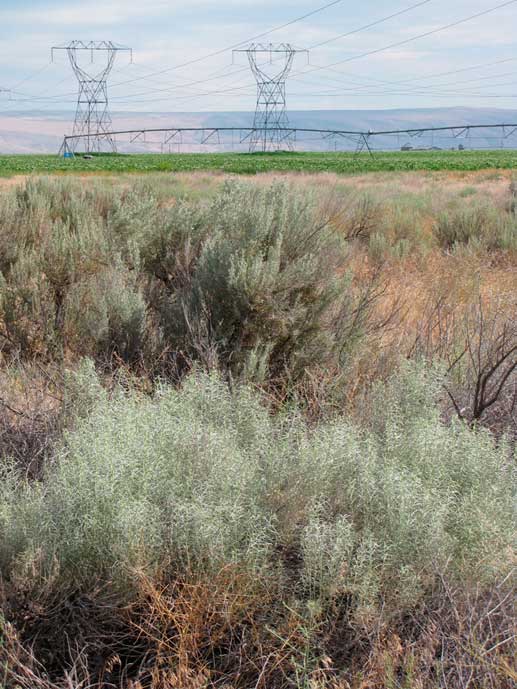
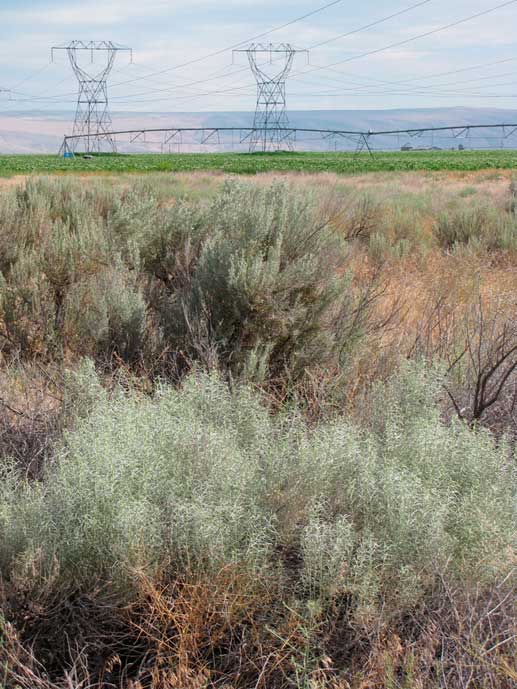
Field samples of aphids and parasitoids from green and gray rabbitbrush were taken mainly from spring to fall, 2010 and 2011 (a few collections taken in earlier years), from native steppe or noncrop lands. Aphids were first detected on rabbitbrush around mid-May. Sample sites were centred on tracts of sagebrush steppe with rabbitbrush, with most sites typically <15 km from croplands (some sites were immediately adjacent to a crop, see Fig. 1). The majority of sampling in Washington State was done in Benton, Grant, and Yakima counties, with a few samples taken in Asotin, Columbia, Franklin, Klickitat, Lincoln, Walla Walla, and Whitman counties.
Rabbitbrush sample site adjacent to commercial potato field (Chrysothamnus nauseosus in foreground; potato field in background). Location: 29 SW, Grant County, Washington State, 2011.
Sampling and collection methods
Aphid-infested plants in the field were sampled using pruners. All growth forms of rabbitbrush were examined for aphids. Plants with aphids on basal stems were also checked for sub-surface aphids (Aphis chrysothamni Wilson). Plant foliage samples consisting of 10–15 cm pieces were cut in the field and placed in round containers (∼20 cm diameter × 13 cm in height) with a mesh lid and transported to the laboratory. At the laboratory, samples were subdivided, with part used to obtain aphids for mounting and identification (aphids were recovered from plant material by hand or Berlese funnel extraction), and part held for rearing of parasitoids. Aphids for identification were preserved in 95% ethanol; aphids retained for parasitoid development and recovery were held indoors at ∼22 ± 2°C for 4 weeks, with samples checked regularly for emerging parasitoids. Collected parasitoids were preserved in 95% ethanol.
Identification of aphids and parasitoids
Aphid voucher specimens from each collection were cleared and slide mounted following standard methods (www.zoology.ubc.ca/~mawe/bcaphid/) and identified to species using keys by Corpuz-Raros and Cook (Reference Corpuz-Raros and Cook1974) and Blackman and Eastop (Reference Blackman and Eastop2006), and by comparison with paratypes and species vouchers from Utah State University and Washington State University (WSU) holdings. Slide-mounted voucher specimens are deposited in WSU collections, Prosser, Washington, United States of America unless otherwise indicated.
Parasitoid vouchers from each collection were cleared and slide mounted whole or dissected following standard methods (see Fulbright et al. Reference Fulbright, Pike and Starý2007), and identified to species using keys by Smith (Reference Smith1944), Pike et al. (Reference Pike, Starý, Miller, Miller, Allison, Graf and Boydston2000b), and Fulbright et al. (Reference Fulbright, Pike and Starý2007), and by comparison with paratypes and species vouchers from WSU holdings. Illustrations of parasitoids were drawn from images taken with a DEC13MTM digital eyepiece camera through a Zeiss AxiolabTM compound microscope (model 450907) (Carl Zeiss, Göttingen and Jena, Germany); morphological measurements (in mm) and character ratios were derived from image-measuring software by D. Allison (Pike et al. Reference Pike, Foottit, Miller, Idechiil and Allison2005). Descriptive morphology follows Sharkey and Wharton (Reference Sharkey and Wharton1997) and Huber and Sharkey (Reference Huber and Sharkey1993). Voucher specimens are deposited in WSU collections unless otherwise indicated.
Results
Summary of Parasitoids Reared from Aphids of Green (GN) and Gray Rabbitbrush (GY)
Aphidius ervi Haliday – United States of America, Washington, Walla Walla Co., Hwy 125, field across from poplar farm, 21-VII-10, from Pleotrichophorus pycnorhysus (Knowlton and Smith) on GN (10E087, author's collection code).
Aphidius ohioensis Smith – all from aphids on GY unless otherwise indicated: United States of America, Washington, Benton Co., Case Rd. on Rattlesnake Ridge, 15-VIII-10, from Uroleucon escalantii (Knowlton) on GN (11E085), Rothrock Rd., 7- and 12-VII-11 from U. escalantii (11E055, 11E066, 11E067), and Snively Rd., 8-VI-95, from U. escalantii (95G148); Franklin Co., intersection of Frontier and Kruser Rds., 24-V-10, from Aphis middletonii Thomas, P. pycnorhysus and U. escalantii (11E016); Grant Co., 29 SW, 12-VII-11, from A. chrysothamni Wilson, Pleotrichophorus oestlundi (Knowlton) and U. escalantii (11E061); Klickitat Co., Box Springs, 29-VI-97, from U. escalantii on Chrysothamnus sp. (97G178); Yakima Co., near Union Gap, 23-X-95, from Pleotrichophorus wasatchii (Knowlton), P. sp., and U. escalantii on Chrysothamnus sp. (95G719), Snow Mtn. Ranch, 14-VI-11, from U. escalantii (11E004), Pleotrichophorus elongatus (Knowlton) and U. escalantii (11E008), and P. oestlundi and U. escalantii (11E002), Snow Mtn. Ranch, along Ditch Bank Trail, 12-VIII-11, from P. oestlundi and U. escalantii (11E083, 11E084), Blue Light Rd., 22-VI-10, from P. sp. and U. escalantii on GN (10E064), Vernita Bridge HW-Hanford Rd., 1-VII-10, from U. escalantii (10E072, 10E073), Hwy 241, 7-VII-10, from U. escalantii on GN (10E075, 10E076, 10E080).
Diaeretiella rapae (M'Intosh) (new aphid host records) – United States of America, Washington, Walla Walla Co., Hwy 125, field across from poplar farm, 21-VII-10, from P. pycnorhysus on GN (10E087).
Ephedrus californicus Baker (new aphid host records) – United States of America, Washington, Yakima Co., Snow Mtn. Ranch, 14-VI-11, from P. pycnorhysus and U. escalantii on GN (11E007).
Lysaphidus adelocarinus (Smith) (new aphid host records) – all from aphids on Chrysothamnus sp. unless otherwise indicated: United States of America, Washington, Benton Co., North Crosby Rd., 19-V-10, from P. oestlundi (10E007), Foster Wells Rd., 25-V-10, from P. oestlundi on GY (10E018), Case Rd. on Rattlesnake Ridge, 15-VIII-10, from U. escalantii on GN (10E085); Klickitat Co., Alderdale and Mabton-Bickleton Rd., 28-IV-95, from P. oestlundi (95G012), Hwy 14, 1 mile west of Alderdale, from P. elongatus and P. oestlundi on GY (95G026).
Lysaphidus ramithyrus (Smith) (new aphid host records, except P . elongatus) – all from aphids on GY unless otherwise indicated: United States of America, Washington, Benton Co., Rattlesnake Ridge, 20-V-10, from A. middletonii (10E009), Roza Research Farm WSU IAREC, 5-VII-11, from P. elongatus (11E045), Case Rd. on Rattlesnake Ridge, 15-VIII-10, on GN from U. escalantii (11E085) and P. pycnorhysus (10E086), Rattlesnake Ridge, 20-V-10, from P. elongatus (10E008); Franklin Co., intersection of Frontier and Kruser Rds., 24-V-10, from A. middletonii, P. pycnorhysus, and U. escalantii (11E016), Rotha Rd., 6-X-10, host unknown (10G032); Grant Co., 29 SW, 21-VI-11, from A. chrysothamni (11E022), A. chrysothamni and P. oestlundi (11E023), P. oestlundi (11E018, 11E019), and P. pycnorhysus on GN (11E020), 12-VII-11, from P. oestlundi and U. escalantii (11E060) and A. chrysothamni, P. oestlundi and U. escalantii (11E061), 20-VII-11, from A. chrysothamni and P. oestlundi (11E069), Hwy 24 N of Vernita Bridge, 21-VI-11, from P. oestlundi on GN (11E026,11E031); Klickitat Co., near. Glenwood, 18-VI-11, on GN from P. elongatus and Pleotrichophorus packi (Knowlton) (11E011), P. elongatus and U. escalantii (11E013), and A. chrysothamni, P. elongatus and P. wasatchii (Knowlton) (11E012), Hwy 14, 22-VI-10, from P. oestlundi and P. pycnorhysus (10E071), 2 miles west of Sundale, 30-V-99, from P. sp. (99G040); Kittitas Co., Yakima Canyon, 11-IX-95, from A. chrysothamni, P. oestlundi, and U. escalantii on Chrysothamnus sp. (95G549); Lincoln Co., Lake Roosevelt, Goldsmith Campground., 31-VII-97, from P. elongatus and U. escalantii on Chrysothamnus sp. (97G306); Walla Walla Co., Hwy 125, field across from poplar farm, 21-VII-10, from P. pycnorhysus on GN (10E087); Yakima Co., Cowiche Mill Rd., 14-VI-11, from P. elongatus (11E010), Snow Mtn. Ranch, 14-VI-11, from U. escalantii (11E004), P. elongatus and U. escalantii (11E008), P. oestlundi and U. escalantii (11E001, 11E002), and 21-VII-11, from U. escalantii (11E072), Snow Mtn. Ranch, along Ditch Bank Trail, 12-VIII-11, from P. oestlundi and U. escalantii (11E083, 11E084), Mud lake Rd. and Hwy 410, 15-VI-10, from P. pycnorhysus (10E056), Hwy 12 several miles west of Hwy 410, 16-VIII-95, from A. chrysothamni and P. sp. (95A030).
Lysiphlebus testaceipes (Cresson) (new aphid host records) – all from aphids on GY unless indicated otherwise: United States of America, Washington, Asotin Co., Asotin Creek Rd., site no. 2, on Chrysothamnus sp. from A. chrysothamni, 13-VI-95 (95T088) and 22-VIII-95 (95T469); Grant Co., 8-IX-97, from A. chrysothamni (97K009), 29 SW, 21-VI-11, from A. chrysothamni (11E022), 12-VII-11, from A. chrysothamni and P. oestlundi (11E062), 20-VII-11, from A. chrysothamni (11E068) and A. chrysothamni and P. oestlundi (11E069); Yakima Co., Hwy 12 several miles west of Hwy 410, 16-VIII-95, from A. chrysothamni and P. sp. (95A030).
Praon cowiche Hollingbery and Pike, new species (Figs. 2–9)
Diagnosis
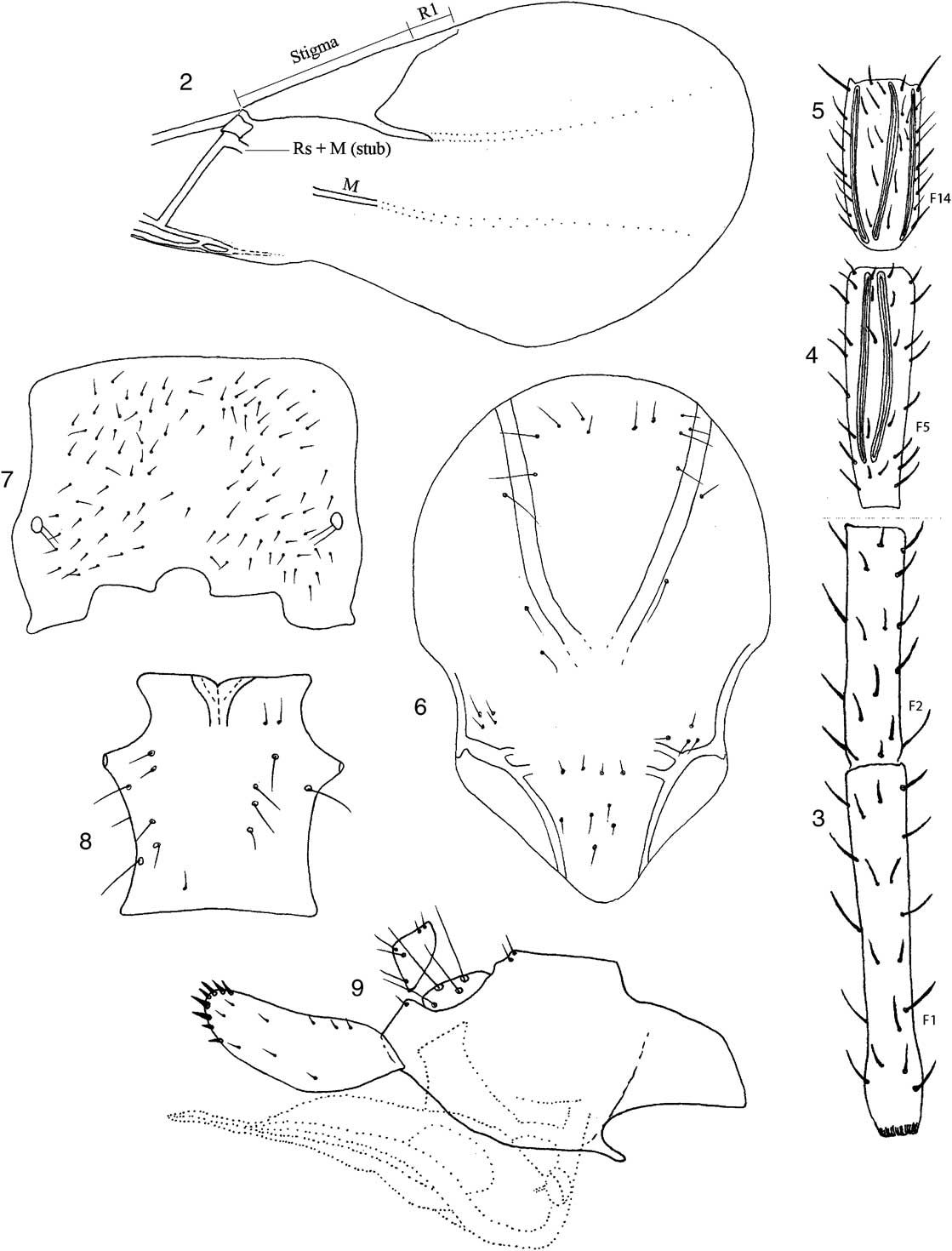
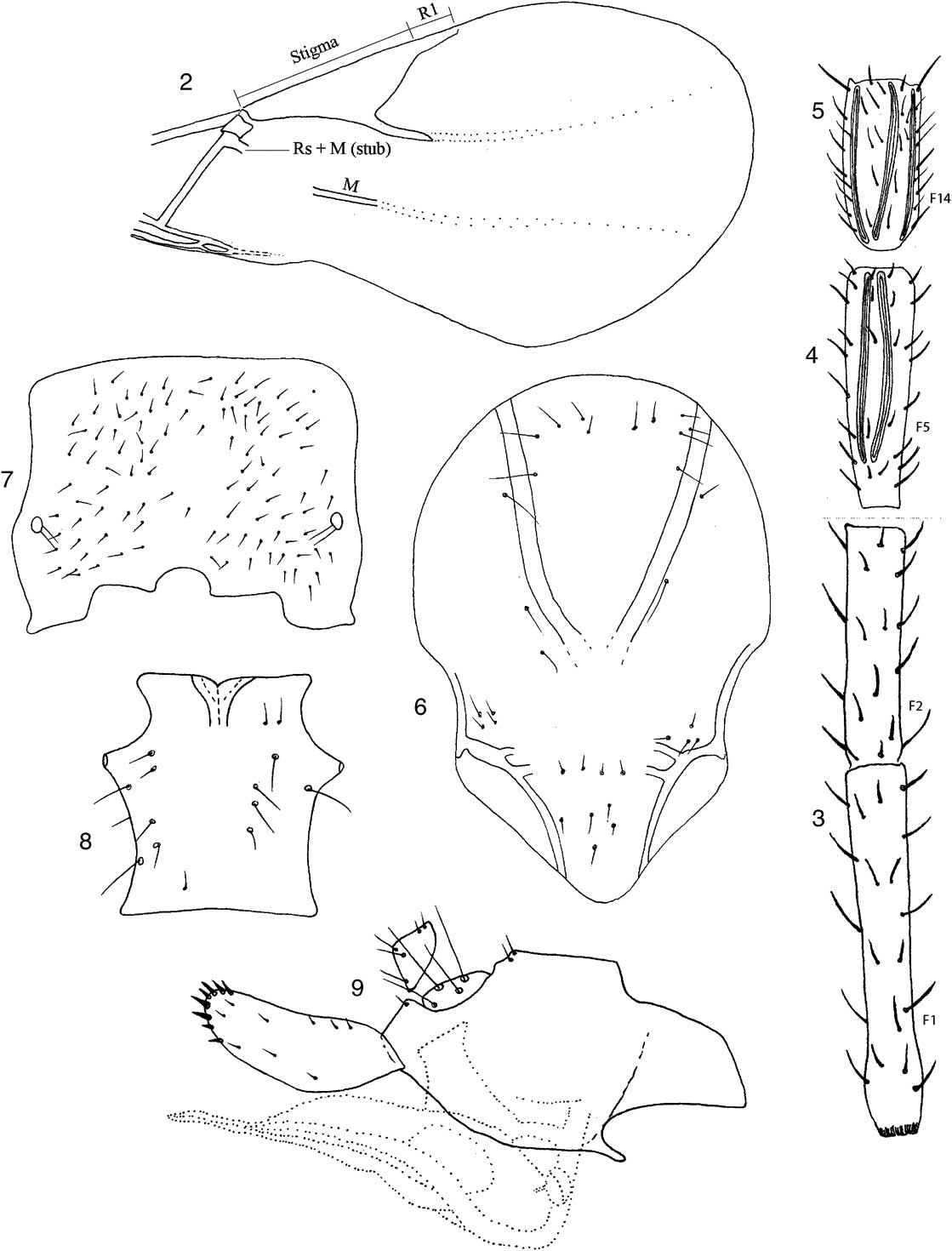
Praon cowiche (female) is characterised by a 16–17 segmented antenna, filiform (only slightly thickened to apex) with flagellomere placodes F1, F2, and F5 = 0, 0, and 2–4, respectively; forewing stigma length about 3.5 times width; R1 (=metacarpus) short, about a quarter of stigma length. The most similar Praon is Praon artemisicola Pike and Starý, but the latter species is easily distinguished by nonoverlapping differences in antennal segments (P. artemisicola 13–14 versus P. cowiche 16–17), F1 length/width ratio (P. artemisicola 4 versus P. cowiche ∼7), and F2 placodes (P. artemisicola 1 versus P. cowiche 0). Also, P. artemisicola uses a variety of aphid hosts (Pseudoepameibaphis tridentatae (Wilson), Flabellomicrosiphum Gillette and Palmer sp., Obtusicauda filifoliae (Gillette and Palmer), Epameibaphis atricornis Gillette and Palmer, rarely Pleotrichophorus Börner sp.) on sage (Pike et al. Reference Pike, Starý, Graf, Allison, Boydston and Miller1997), while P. cowiche is known only from aphids (P. elongatus, P. oestlundi, P. pycnorhysus, and U. escalantii) on green and gray rabbitbrush. To distinguish P. cowiche from other aphidiines attacking aphids on rabbitbrush, see key below.
Etymology
The species is named cowiche (indeclinable noun in apposition) after its type locality, first discovered near Cowiche, Washington at the base of Cowiche Mountain. Cowiche Mountain and South Fork Cowiche Creek are part of the Snow Mountain Ranch land owned by the Cowiche Canyon Conservancy. The name is attributed to E. Hollingbery and K. Pike.
Description
Female (measured features and ratios provided as mean [range]).
Colour: body variably pale brown, typical of many Aphidius Nees von Esenbeck spp., with legs, petiole, and metasomal tergite II somewhat lighter.
Body: length 2.3 mm (2.1–2.5 mm). Head: width across eyes 0.40 mm (0.39–0.43 mm); distance between tentorio-line 0.14 mm; maxillary palp 4-segmented and labial palp 3-segmented; antenna 16–17 segmented, filiform, very slightly thickened to apex; flagellomere 1 (=F1) length 7.1 (6.5–8.0) times width, longest setae equal to segment diameter, and without placodes; F2 length/width 4.8 (4.1–5.2); F5 length/width 3.2 (3.1–3.3). Mesonotum: notaulices distinct on disc (Fig. 6). Legs: profemur length 0.37 mm (0.33–0.40 mm) with fine setae, the longest about 0.45× femur width; metafemur length 0.39 mm (0.34–0.43 mm); protibia length 0.46 mm (0.40–0.51 mm); metatibia length 0.59 mm (0.42-0.67 mm). Forewing (Fig. 2): pterostigma length 0.38 mm (0.35–0.40 mm) and width 0.11 mm (0.10–0.11 mm); R1 0.09 mm (0.07–0.10 mm); stigma length/width 3.53 (3.40–3.81). Propodeum (Fig. 7): smooth, without carina, but with numerous fine setae. Metasoma: petiole length/width at spiracles ∼1.0, dorsal surface relatively smooth; petiole spiracular tubercles conspicuously pronounced (Fig. 8); ovipositor sheath length ∼3.0× width at mid-point (Fig. 9).
Praon cowiche new species (illustrations not to equal scale). 2, forewing; 3–5, antennal flagellomeres 1, 2, 5, and preapical; 6, mesonotum; 7, propodeum; 8, petiole; 9, female genitalia.
Male
Similar to female, but with 17–18 antenna segments.
Aphid hosts
Pleotrichophorus elongatus, P. oestlundi, P. pycnorhysus, and U. escalantii.
Distribution and field information
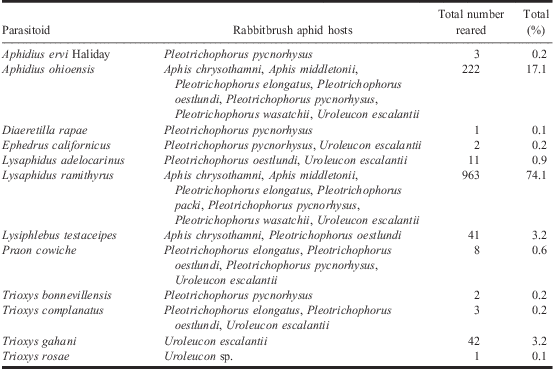
Praon cowiche is known presently from rabbitbrush habitat in eastern Washington State (Benton, Klickitat, and Yakima Counties), associated with aphids of C. nauseosus and C. viscidiflorus. Active adults occur (based on rearings) from April to July. The parasitoid is relatively uncommon; pooled parasitoid rearings across all sampled locations, 2010–2011, showed <1% of aphids attacked by P. cowiche (Table 1).
Parasitoids of rabbitbrush aphids and numbers collected through rearings, Washington State.

Material examined
Holotype, female (slide mount): United States of America, Washington, Yakima Co., Snow Mtn. Ranch (46°39′31.83′′ N 120°45′19.38′′ W, elevation 571 m), 14-VI-11, collectors E. Hollingbery and D. Graf (11E007, deposited in the National Museum of Natural History Aphidoidea Collection (Beltsville, Maryland, United States of America); holotype designation on slide marked in bold red capital letters). Reared from a mixed aphid colony of P. pycnorhysus and U. escalantii on green rabbitbrush, C. viscidiflorus. Paratypes (paratype designation on slide in bold blue capital letters; all collected by E. Hollingbery unless otherwise indicated): United States of America, Washington, Benton Co., Case Rd., 15-VII-10, from P. pycnorhysus and U. escalantii on GN, collectors E. Hollingbery and D. Graf (10E083, 1 female), IAREC Roza unit, 4-V-95, from P. elongatus on GY, collector G. Graf (95G020, 1 male); Klickitat Co., Alderdale and Mabton-Bickleton Rd., 38-IV-95, from P. oestlundi on Chrysothamnus sp., collector G. Graf (95G012, 1 male); Yakima Co., Snow Mtn. Ranch, 1-VI-10, from P. sp. on GY (10E026, 1 female) and P. pycnorhysus on GN (10E027, 1 male), 10-VI-10, from U. escalantii on GN (10E037, 1 female), and 14-VI-11, on GN (11E007, 1 male).
Trioxys bonnevillensis Smith (new aphid host records) – United States of America, Washington, Yakima Co., Snow Mtn. Ranch, 1-VI-10, from P. pycnorhysus on GN (10E027).
Trioxys complanatus Quilis (new aphid host records) – United States of America, Washington, Klickitat Co., Alderdale and Bickleton-Mabton Rd., 28-Apr-95, from P. oestlundi on Chrysothamnus sp. (95G012); Yakima Co., Snow Mtn. Ranch, 14-VI-11, from P. elongatus and U. escalantii on GY (11E008).
Trioxys gahani Smith (new aphid host record) – United States of America, Washington, Grant Co., HW 24 North of Vernita Bridge, 7-VII-10, from U. escalantii on GY (10E078); Klickitat Co., 2 miles west of Sundale, 20-V-99, from P. sp. on GY (99G040).
Trioxys rosae Pike and Starý (new aphid host records) – United States of America, Washington, Yakima Co., Snow Mtn. Ranch, 14-VI-11, from P. oestlundi and U. escalantii on GY (11E001), and 21-VII-11, from U. escalantii on GY (11E074).

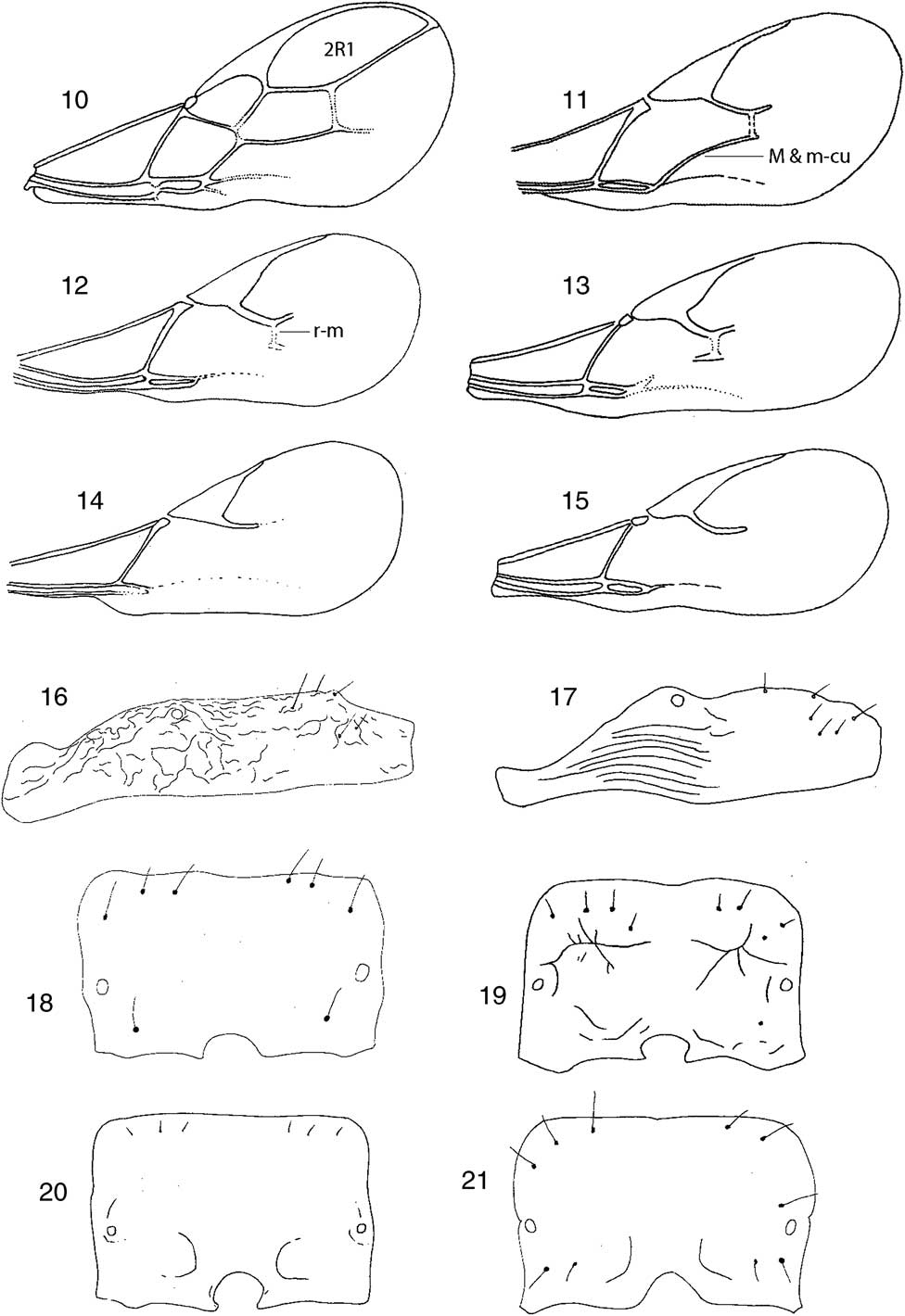
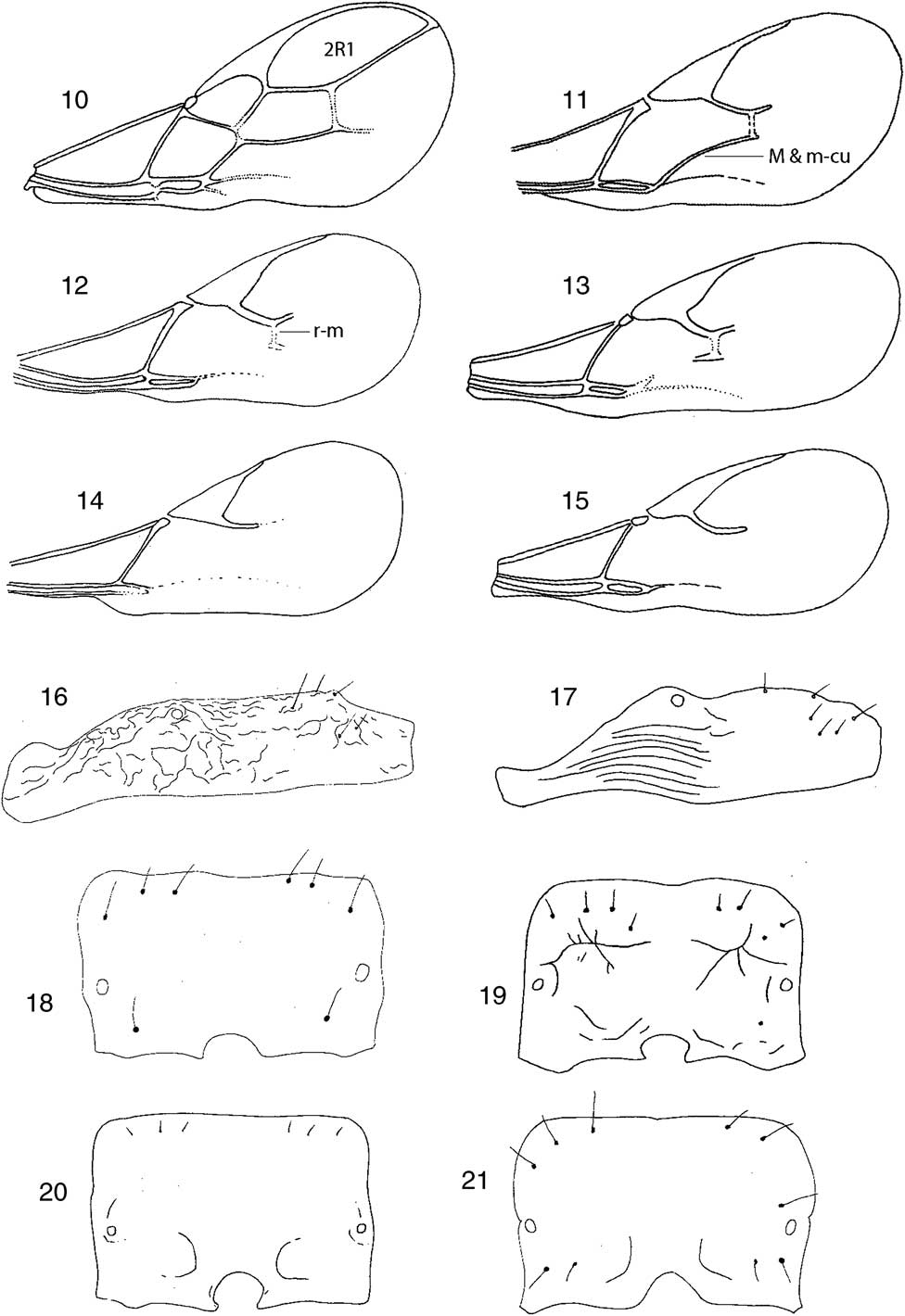
Various features of aphid parasitoids of rabbitbrush aphids (illustrations not to equal scale). Forewing: 10, Ephedrus californicus; 11, Aphidius ohioensis; 12, Lysiphlebus testaceipes; 13, Lysaphidus adelocarinus; 14, Trioxys gahani; 15, Diaeretiella rapae. Petiole: 16, Aphidius ervi; 17, A. ohioensis. Propodeum: 18, Trioxys bonnevillensis; 19, Trioxys complanatus; 20, T. gahani; 21, Trioxys rosae. Trioxys drawings after Fulbright et al. (Reference Fulbright, Pike and Starý2007).
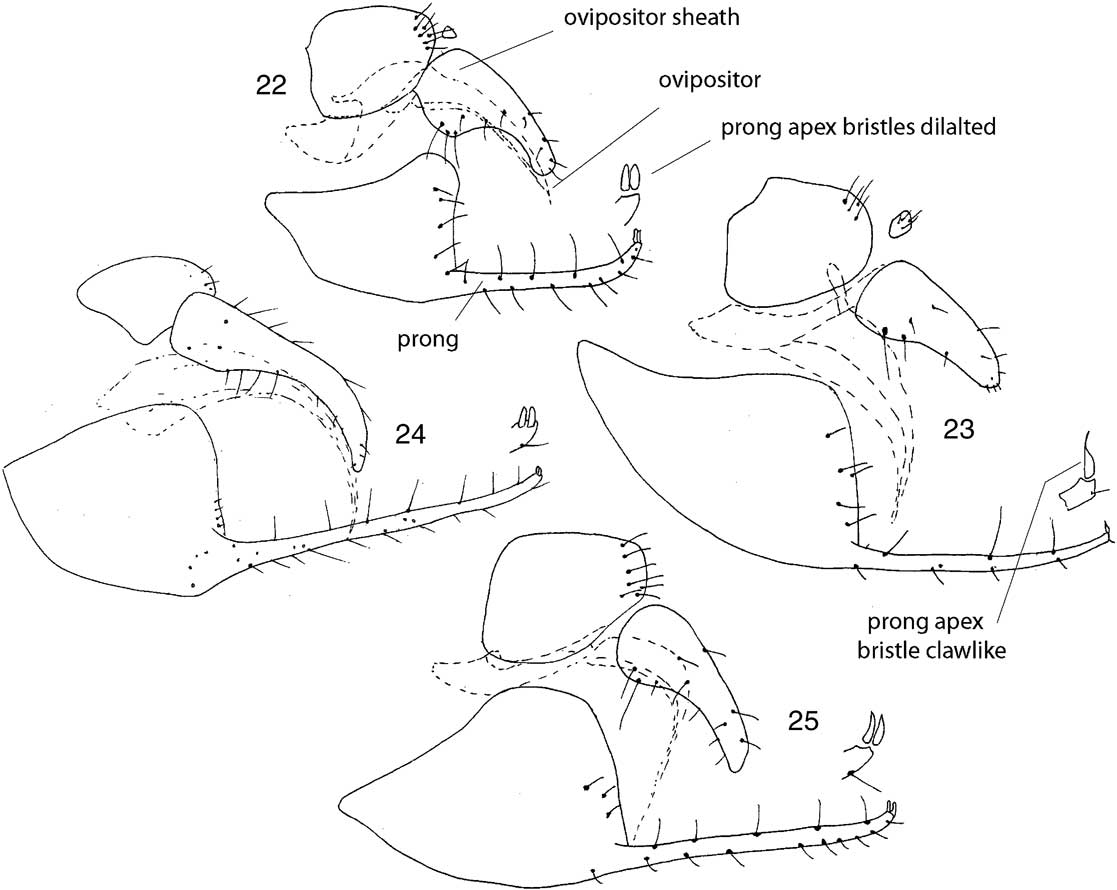
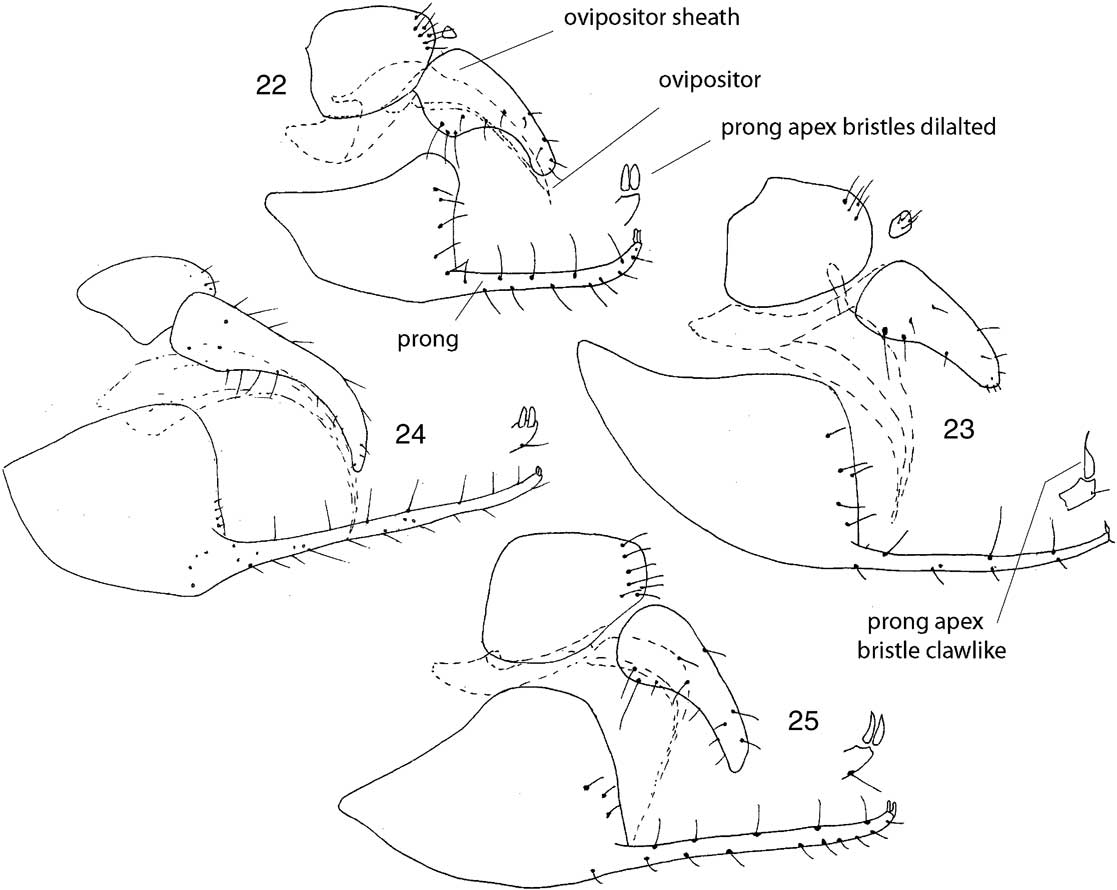
Trioxys female genitalia (includes metasomal sternite prong, close-up of bristle(s) at prong apex, ovipositor, and ovipositor sheath). 22, Trioxys bonnevillensis; 23, Trioxys complanatus; 24, Trioxys gahani; 25, Trioxys rosae. Drawings after Fulbright et al. (Reference Fulbright, Pike and Starý2007).
Aphid-parasitoid-rabbitbrush listing
[*=parasitoid reared or at times reared from a collection of mixed aphids – association shown considered valid; aphids collected from green (GN) or gray rabbitbrush (GY)].
Aphis chrysothamni (Gillette and Palmer) – A. ohioensis* (GY), L. ramithyrus* (GY), L. testaceipes* (GY).
Aphis (Protaphis) middletonii Thomas (=Aphis armoraciae Cowan, =Aphis maidiradicis Forbes, =Aphis menthaeradicis Cowan) – A. ohioensis* (GY), L. ramithyrus* (GY).
Pleotrichophorus elongatus (Knowlton) – A. ohioensis* (GY), L. ramithyrus* (GY and GN), P. cowiche* (GN), T. complanatus*.
Pleotrichophorus oestlundi (Knowlton) – A. ohioensis* (GY), L. adelocarinus (GY), L. ramithyrus* (GY), L. testaceipes* (GY), P. cowiche* (GY), T. complanatus (Chrysothamnus sp.), T. rosae (GY).
Pleotrichophorus packi (Knowlton) – L. ramithyrus* (GN).
Pleotrichophorus pycnorhysus (Knowlton and Smith) – A. ervi (GN), A. ohioensis* (GY), D. rapae (GN), E. californicus* (GN), L. ramithyrus* (GY and GN), P. cowiche* (GY), T. bonnevillensis (GN).
Pleotrichophorus sp. – T. gahani (GY).
Pleotrichophorus wasatchii (Knowlton) – A. ohioensis* (Chrysothamnus sp.), L. ramithyrus* (GN).
Uroleucon escalantii (Knowlton) – A. ohioensis* (GY and GN), L. adelocarinus (GN), L. ramithyrus* (GY and GN), P. cowiche* (GY and GN), T. complanatus (GY), T. gahani (GY), T. rosae (GY).
Summary
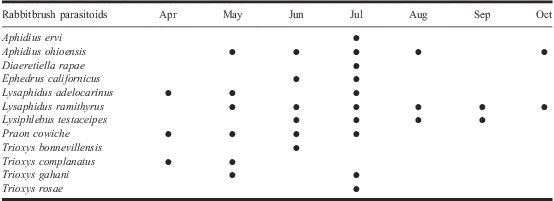
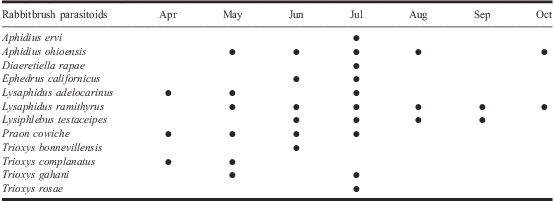
The aphid parasitoid fauna associated with green and gray rabbitbrush is relatively diverse: in total 12 species of parasitoids were found associated with eight species of rabbitbrush aphids. Aphidius ohioensis and L. ramithyrus were the two most abundant species comprising 17.1% and 74.1% of the total parasitoids collected (Table 1); the adults were found from May to October (Table 2) with the main activity period (∼84% of reared totals for each species) occurring in June and July (pooled average, 2010–2011). Lysaphidus ramithyrus was found to parasitise all species of aphids on rabbitbrush, whereas, A. ervi, D. rapae, E. californicus, T. bonnevillensis, T. complanatus, and T. rosae were rarely encountered (Table 1).
Months of adult parasitoid activity associated with rabbitbrush aphids in Washington State.
The aphidiine parasitoids as a group are highly mobile, efficient at finding host aphids (Unruh and Messing Reference Unruh and Messing1993), with some species known as key players in the bioregulatory control of selected agriculturally important aphid pests (LaSalle Reference LaSalle1993). Four (A. ervi, D. rapae, E. californicus, and L. testaceipes) of the 12 parasitoids reared from rabbitbrush aphids are well recognised in crop settings and are parasitic against green peach aphid in potatoes and a number of other agriculturally important aphid pests. The parasitism of aphids in neighbouring potatoes in this study was not characterised because of a lack of aphids in fields (<0.2 aphids/plant common, see Wohleb Reference Wohleb2011).
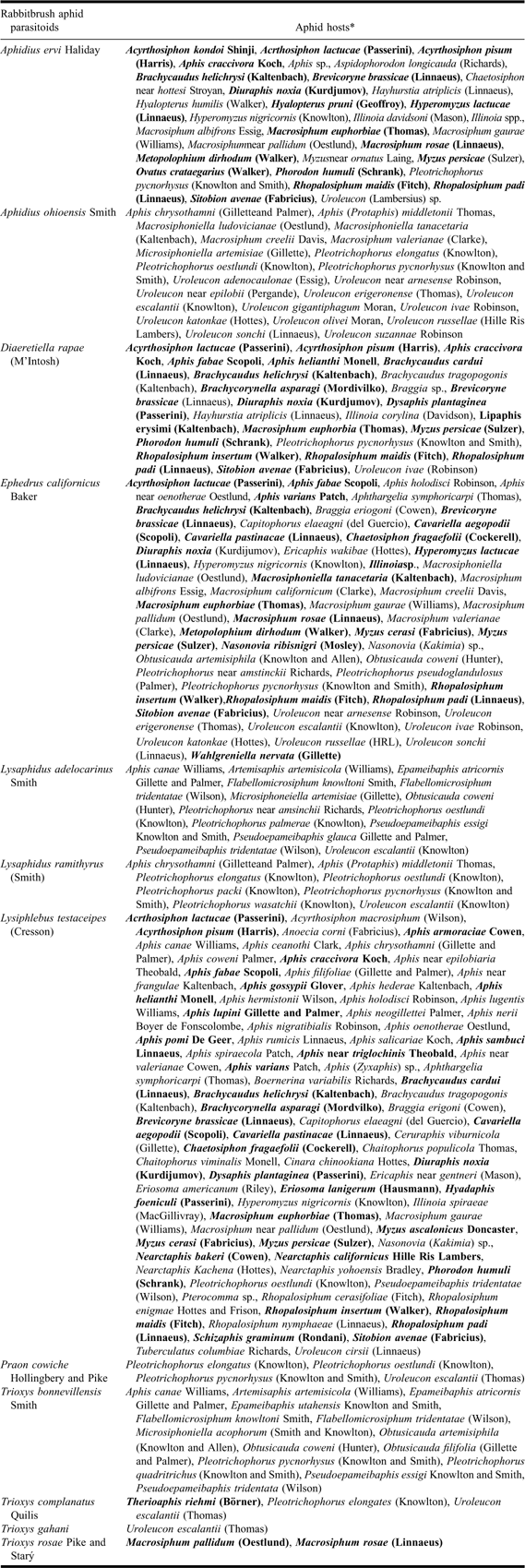
Table 3 summarises the full aphid host range of the parasitoids reared from rabbitbrush, with the pest or potential pest aphids shown in bold. Since a positive link exists between parasitoids of value and aphid pests in neighbouring croplands, conserving tracts of native biota containing rabbitbrush has at least some merit. The contribution of rabbitbrush habitat, however, as a source reservoir for parasitoids of value may be minor based on the low number reared; collectively, they comprised <4% of the total parasitoids recovered. It is unclear why their occurrence is low, it might be that they are poorly attracted or poorly adapted to Chrysothamnus-feeders or to the sage-rabbitbrush steppe environment in general. Further research is needed to clarify the field dynamics of the parasitoids, particularly the frequency and extent of transitional movement between native habitats and agro-ecosystems and introduced landscapes.
Aphid hosts of parasitoids known to attack rabbitbrush aphids in Washington State (pest or potential pest aphids in agriculture shown in bold).
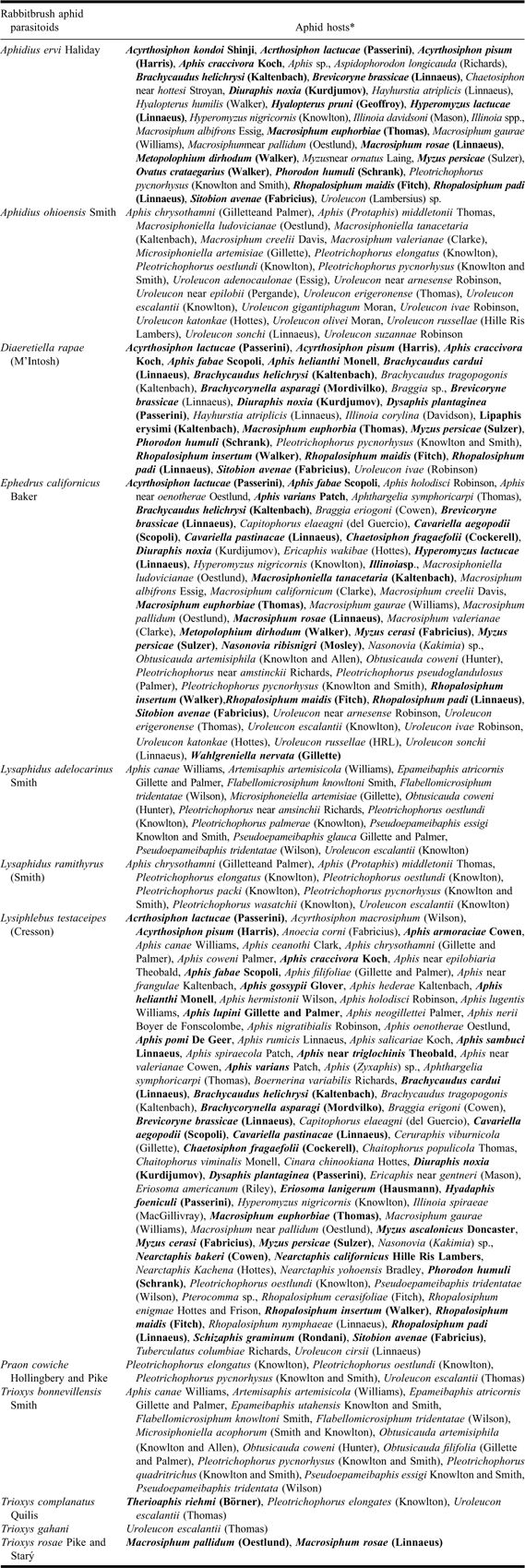
*After Pike et al. (Reference Pike, Starý, Graf, Allison, Boydston and Miller2000a).
Acknowledgements
We thank Carol von Dohlen, Utah State University for the loan of aphid voucher specimens, Petr Starý, Academy of Sciences of the Czech Republic, for helpful comments on Praon spp., and Betsy Bloomfield, Cowiche Canyon Conservancy, Yakima, Washington, for allowing access to sample on Conservancy lands. This project was funded in part by Washington State University and the United States Department Agriculture – National Institute of Food and Agriculture Risk Assessment and Mitigation Program.