Introduction
Coastal marine ecosystems experience a variety of environmental stressors, such as anthropogenic induced pollution, environmental degradation and change (Cooper et al., Reference Cooper, Gilmour and Fabricius2009; Dsikowitzky et al., Reference Dsikowitzky, Nordhaus, Jennerjahn, Khrycheva, Sivatharshan, Yuwono and Schwarzbauer2011). Heavy exploitation of the coastal resources leads to overfished fish stocks, altered population sizes and species composition, as well as changed habitats. By 2025, 2.75 billion people worldwide are expected to live close to the coast (Palm et al., Reference Palm, Kleinertz and Rückert2011), increasing the urgent need for a better and sustainable use of the coastal resources. This requires increased understanding and the development of new methodologies to assess and visualize regional environmental conditions and change.
It has been difficult to demonstrate the environmental status of any coastal marine habitat, due to the complexity and natural variability of such systems. According to Kurtz et al. (Reference Kurtz, Jackson and Fisher2001), monitoring systems are required, as it is impossible to measure and interpret all the various influencing factors within an ecosystem. So far, many environmental assessment studies have focused on descriptive methodologies with no clear purpose and using uncorrelated methods (Downs et al., Reference Downs, Woodley, Richmond, Lanning and Owen2005), without further potential for practical applications. As summarized by Palm & Rückert (Reference Palm and Rückert2009) and reviewed by Palm (Reference Palm and Mehlhorn2011), the status of a marine environment and environmental change can either be studied directly, by using, for example, water quality parameters such as phosphate, nitrate and dissolved organic carbon (DOC), or indirectly by using bioindicators. Such indicator organisms react sensitively to specific environmental conditions. Their occurrence or abundance can be used to describe the current status of the environment, and even environmental change.
Because of the direct linkage and dependence of parasites with multiple-host life cycles to the surrounding animal communities (Hechinger et al., Reference Hechinger, Lafferty, Huspeni, Andrew and Armand2007), these organisms have been considered as sensitive bioindicators for aquatic ecosystem health (Overstreet, Reference Overstreet1997; Dzikowski et al., Reference Dzikowski, Paperna and Diamant2003). Fish parasites have been used as biological and environmental indicators (for a review see Palm, Reference Palm and Mehlhorn2011), especially for environmental change and pollution (Diamant et al., Reference Diamant, Banet, Paperna, von Westernhagen, Broeg, Kruener, Koerting and Zander1999; Dzikowski et al., Reference Dzikowski, Paperna and Diamant2003; Palm & Rückert, Reference Palm and Rückert2009) or environmental stress (Landsberg et al., Reference Landsberg, Blakesley, Reese, McRae and Forstchen1998). Sures (Reference Sures2001, Reference Sures2003) used acanthocephalan parasites to detect heavy metal pollution, because acanthocephalans accumulate 1000 times higher amounts of heavy metals in contrast to their host tissues. Sasal et al. (Reference Sasal, Mouillot, Fichez, Chifflet and Kulbicki2007) utilised fish parasites to detect anthropogenic influences (urban and industrial pollution) in coral reef lagoons, and Lafferty et al. (Reference Lafferty, Shaw and Kuris2008b) suggested that they are a convenient method to assess spatial variation of their final host distribution. Heteroxenous fish parasites (multiple hosts) with complex life cycles can be used to indicate food-web relationships in unaffected marine habitats (e.g. Palm, Reference Palm1999; Klimpel et al., Reference Klimpel, Rückert, Piatkowski, Palm and Hanel2006; Lafferty et al., Reference Lafferty, Allesina, Arim, Briggs, De Leo, Dobson, Dunne, Johnson, Kuris, Marcogliese, Martinez, Memmott, Marquet, McLaughlin, Mordecai, Pascual, Poulin and Thieltges2008a). While the occurrence of endoparasites often decreases in polluted waters (Nematoda: Kiceniuk & Khan, Reference Kiceniuk and Nraigu1983), ectoparasitic parasites such as monogeneans can increase (Monogenea: Khan & Kiceniuk, Reference Khan and Kiceniuk1988; Trichodina: Khan, Reference Khan1990; Palm & Dobberstein, Reference Palm and Dobberstein1999; Ogut & Palm, Reference Ogut and Palm2005). Ectocommensals with direct life cycles, such as trichodinid ciliates, favour polluted waters and can indicate high bacterial load (Palm & Dobberstein, Reference Palm and Dobberstein1999; Ogut & Palm, Reference Ogut and Palm2005), in contrast to many endoparasites with complex life cycles that favour stable and non-polluted waters, where the full range of their required hosts is present (Lafferty et al., Reference Lafferty, Shaw and Kuris2008b).
The Indonesian coastal marine habitat has one of the highest aquatic biodiversities on Earth (Yuniar et al., Reference Yuniar, Palm and Walter2007; Palm, Reference Palm and Mehlhorn2011). This includes fish species as well as their parasite fauna, though not more than about 4% of the estimated fish parasite fauna in Indonesia has been explored (Jakob & Palm, Reference Jakob and Palm2006). Palm & Rückert (Reference Palm and Rückert2009) applied a method to visualize environmental differences by using fish parasites. They used the star-graph method according to Bell & Morse (Reference Bell and Morse2003). The authors also sampled Epinephelus coioides, from the wild and coastal mariculture in Lampung Bay, Sumatera, and from inside the anthropogenic influenced Segara Anakan lagoon in Central Java. As exemplified by Palm et al. (Reference Palm, Kleinertz and Rückert2011) from a mariculture facility in the Thousand Islands, six different parasite metrics from Epinephelus fuscoguttatus demonstrated a significant change in parasite composition and abundance over six consecutive years. The authors suggested that groupers might also be useful biomarkers to monitor environmental change in the wild. Kleinertz et al. (Reference Kleinertz, Damriyasa, Hagen, Theisen and Palm2012) have shown regional differences in the parasite composition of free-living Epinephelus areolatus from Indonesian waters using the same methodology.
Fish parasites of groupers (e.g. Cromileptes altivelis, E. areolatus, E. fuscoguttatus) from tropical marine waters have been of special interest in recent years. The groupers are of high commercial value and, consequently, of importance for fisheries as well as finfish mariculture (Rimmer et al., Reference Rimmer, McBride and Williams2004). This steadily growing business is also playing a significant role in the Indonesian economy, ensuring food availability and improving the living standards of the coastal communities (Rückert et al., Reference Rückert, Klimpel and Palm2010). Grouper (Epinephelus spp.) mariculture production in Indonesia has increased 340% from 2004 to 2009 (DJPB, 2009).
Taxonomical and ecological studies on fish parasites from Indonesia have been intensified in recent years (e.g. Palm et al., Reference Palm, Waeschenbach and Littlewood2007, Reference Palm, Damriyasa, Linda and Oka2008, Reference Palm, Kleinertz and Rückert2011; Yuniar et al., Reference Yuniar, Palm and Walter2007; Palm, Reference Palm2008, Reference Palm and Mehlhorn2011; Bray & Palm, Reference Bray and Palm2009; Kuchta et al., Reference Kuchta, Scholz, Vlcková, Ríha, Walter, Yuniar and Palm2009; Rückert et al., Reference Rückert, Hagen, Yuniar and Palm2009a, Reference Rückert, Klimpel, Mehlhorn and Palmb, Reference Rückert, Klimpel and Palm2010; Kleinertz, Reference Kleinertz2010, Kleinertz et al., Reference Kleinertz, Damriyasa, Hagen, Theisen and Palm2012, Dewi & Palm, Reference Dewi and Palm2013; Kuhn et al., Reference Kuhn, Hailer, Palm and Klimpel2013), taking into account the high parasite biodiversity at this tropical location. The purpose of the present study is an assessment of the fish parasite fauna of E. coioides, a widely distributed and rapidly developing mariculture species in Indonesia, from additional sampling sites. We have correlated the observed parasite fauna with regional differences in the sampled regions. Being aware that limited sample replications of theoretically ‘impacted’ versus ‘healthy’ environments can be tested in Indonesia, we herewith apply ecological and parasitological parameters that were used to monitor regional differences and environmental change by Palm & Rückert (Reference Palm and Rückert2009) and Palm et al. (Reference Palm, Kleinertz and Rückert2011). The use of grouper fish parasites as an early warning system for environmental change in Indonesian coastal ecosystems is discussed.
Materials and methods
Collection and examination of fish
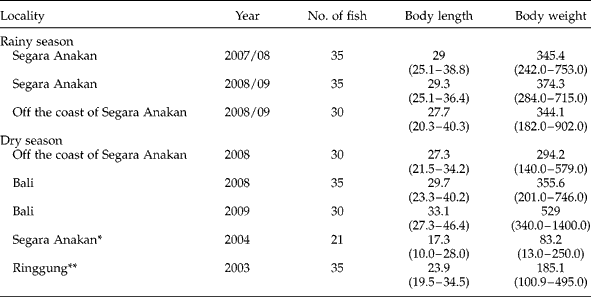
Samples were taken within the framework of the SPICE project (Science for the Protection of Indonesian Coastal Marine Ecosystems) during the rainy season 2007/08 and 2008/09, and dry seasons 2008 and 2009. A total of 195 E. coioides (Hamilton, 1822) were studied from Javanese (Segara Anakan lagoon) (108°46′–109°03′E; 08°35′–08°48′S) and Balinese waters (114°25′53″–115°42′400′E; 8°30′40″–08°50′48″S) in Indonesia (fig. 1, table 1). Additional data were calculated based on Yuniar (Reference Yuniar2005; dry season 2004) and Rückert (Reference Rückert2006; dry season 2003) and Rückert et al. (Reference Rückert, Hagen, Yuniar and Palm2009a) for comparison (also see table 1).
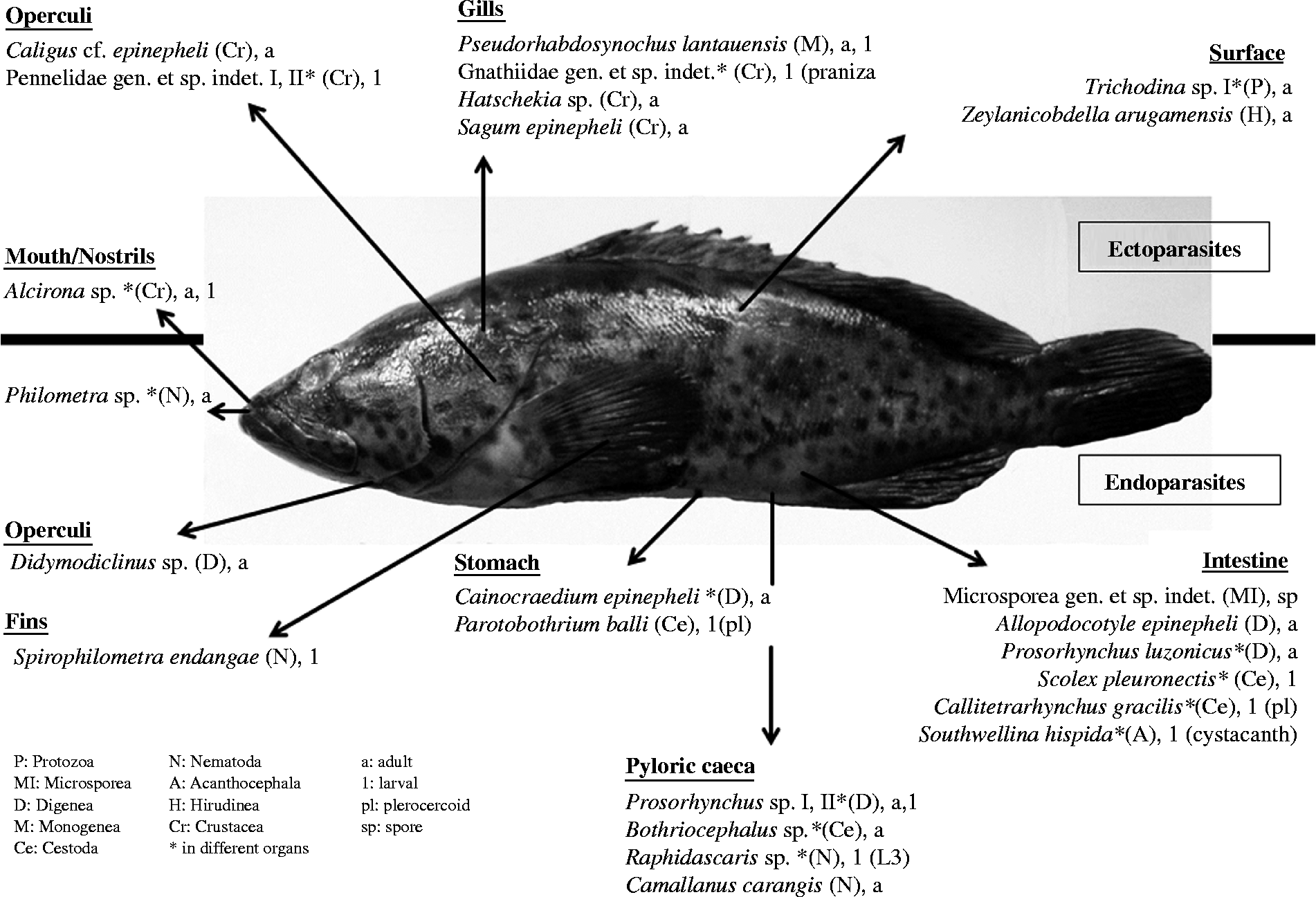
The occurrence of ectoparasites and endoparasites from the grouper fish Epinephelus coioides from Indonesian waters during 2007–2009.

The mean body length (cm) and body weight (g) of wild Epinephelus coioides sampled from Indonesian waters in the rainy and dry seasons from 2007 to 2009 for comparison with *Yuniar (Reference Yuniar2005) and **Rückert (Reference Rückert2006); measurements of body length and weight shown in brackets.
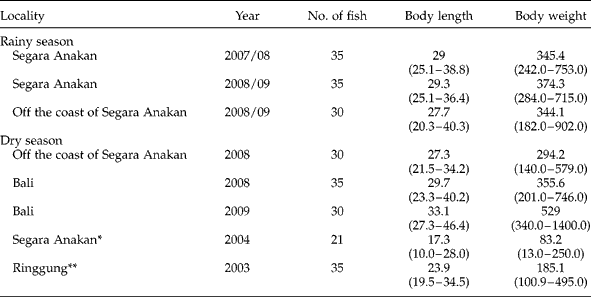
Live fish were obtained from local fishermen using fish traps in Segara Anakan lagoon and from Balinese waters. Groupers from the coastal zone off Segara Anakan were bought at the fish market and were separated into plastic bags directly after the catch. Fish were transported immediately to the laboratory, or kept on ice and then frozen (~ − 20°C) until subsequently dissected at the Faculty of Biology, Jenderal Soedirman University, Purwokerto (UNSOED) and the Faculty of Veterinary Medicine, Udayana University, Jimbaran, Bali. Total fish length (L T), weight (W T) and liver weight (W L) were measured to the nearest 1.0 cm and 1.0 g (table 1) prior to the parasitological examination (see Rückert et al., Reference Rückert, Hagen, Yuniar and Palm2009a).
Smears were taken from the gills, surface and the inner opercula of the living fish. The skin, fins, eyes, gills, nostrils, mouth- and gill-cavity were examined for ectoparasites. Inner organs such as the digestive tract, liver, gall bladder, spleen, kidneys, gonads, heart and swim bladder were separated and transferred into saline solution for microscopical examination under the stereomicroscope (Zeiss Stemi DV4; Carl Zeiss, Oberkochen, Germany) in order to allow a quantitative parasitological examination of each organ; belly flaps and musculature (fillets) were examined on a candling table. Isolated parasites were fixed in 4% borax-buffered formalin and preserved in 70% ethanol. Smears from the gills, surface and opercula were stained using silver nitrate (AgNO3) impregnation, after Klein (Reference Klein1926, Reference Klein1958): slides were rinsed and covered with 5% silver nitrate solution and impregnated for 30 min in the dark; the AgNO3 was removed and the slides were covered with distilled water and exposed to ultraviolet light for 40–50 min. Smears were dried after exposure. Finally, the musculature was sliced into 0.5- to 1-cm-thick fillets and pressed between two Petri dishes to identify and isolate parasites from the musculature. Nematoda were dehydrated in a graduated ethanol series and transferred to 100% glycerine (Riemann, Reference Riemann, Higgins and Thiel1988). Digeneans, monogeneans and cestodes were stained with acetic carmine, dehydrated, cleared with eugenol and mounted in Canada balsam, whereas crustaceans were dehydrated and transferred directly into balsam. The identification of parasites was based on original descriptions given in Palm et al. (Reference Palm, Kleinertz and Rückert2011).
Parasitological parameters
A variety of ecological parameters were evaluated to indicate regional differences, such as the different diversity indices (Shannon–Wiener, Evenness and Simpson index), fish ecological indices (such as the hepatosomatic index) and parasitological parameters (such as ectoparasite/endoparasite ratio and different prevalences of infection of metazoan parasites) (see Palm & Rückert, Reference Palm and Rückert2009; Palm, Reference Palm and Mehlhorn2011; Palm et al., Reference Palm, Kleinertz and Rückert2011).
Parasitological calculations were made according to Bush et al. (Reference Bush, Lafferty, Lotz and Shostak1997). The present study applies the method by Palm & Rückert (Reference Palm and Rückert2009) and Palm et al. (Reference Palm, Kleinertz and Rückert2011) to monitor the parasite community of groupers from Indonesia. This is based on the assumption that certain parasite prevalence data and parameters are characteristic for undisturbed environmental conditions with scenarios of high parasite diversity. The Berger–Parker index characterizes the dominance of a respective parasite species within the sample BP = N max/N, with N max being the number of specimens of the most dominant species in relation to the total number of parasites within the sample (N) (Munkittrik et al., Reference Munkittrik, Van der Kraak, McMaster, Portt, Van den Heuval and Servos1994). The diversity of the collected metazoan endoparasite fauna of each fish species was determined by using the Shannon–Wiener diversity index (H′) and, according to Kleinertz et al. (Reference Kleinertz, Damriyasa, Hagen, Theisen and Palm2012), the Evenness index (E) of Pielou (Magurran, Reference Magurran1988) and other parameters were tested (see below). Microsporean parasites were not considered because it was not possible to calculate their intensity. In the case of trichodinid ciliates, the calculations given in table 2 refer to the density, based on counts from slides with mucous smears obtained from about 1 cm2 of gill surface area. The ratio of ecto- to endoparasites was calculated (Ec/En ratio (R) = number of ectoparasite species/number of endoparasite species), with trichodinid ciliates treated as present or absent in this calculation. Species groups (higher taxa such as Nematoda indet.) that could not be further identified and might represent other recorded taxa were omitted from the calculations (see Palm et al., Reference Palm, Kleinertz and Rückert2011). The hepatosomatic index was calculated as a descriptor of a possible pollution impact to the fish host, which may affect increasing liver weights (W L) in relation to the total weight (W T) of the host (HSI = W L/W T× 100) (Munkittrik et al., Reference Munkittrik, Van der Kraak, McMaster, Portt, Van den Heuval and Servos1994). The Simpson diversity index was also considered as a bioindicator  $$\left [D = 1/ \sum _{i = 1}^{ s }( n _{i}/ N )^{2}\right ] $$, excluding the data for the trichodinids (see the explanation above, only density was recorded), with s= the total number of parasite species collected within the sample (ecto- and endoparasites included), N= the total number of parasite individuals collected within the sample, n i= number of specimens of a single species i.
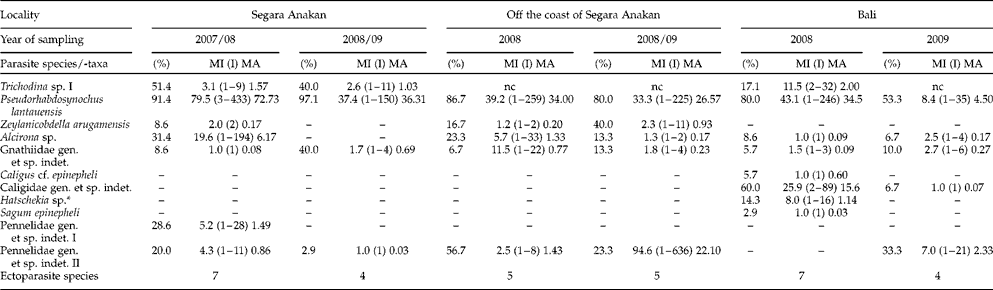
The prevalence (%), intensity (I), mean intensity (MI) and mean abundance (MA) of ectoparasites from Epinephelus coioides in Javanese (in and off the coast of the Segara Anakan) and Balinese waters.
* New host record. nc, not calculated.
Visual integration
The visual integration of the calculated ecological indicators follows Palm & Rückert (Reference Palm and Rückert2009) for the prevalence of trichodinids, ectoparasite/endoparasite ratio and endoparasite diversity after Shannon–Wiener. The Simpson diversity index, Evenness index and hepatosomatic index were added according to Kleinertz et al. (Reference Kleinertz, Damriyasa, Hagen, Theisen and Palm2012). In addition, the prevalences of five different parasite species were used to distinguish among the sampling sites: Scolex pleuronectis and Terranova sp. (according to Lafferty et al., Reference Lafferty, Shaw and Kuris2008b; Palm et al., Reference Palm, Kleinertz and Rückert2011), Raphidascaris sp. (Nematoda: Kiceniuk & Khan Reference Kiceniuk and Nraigu1983; Palm et al., Reference Palm, Kleinertz and Rückert2011), Zeylanicobdella arugamensis (Grosser et al., Reference Grosser, Heidecke and Moritz2001) and Trichodina sp. (Khan, Reference Khan1990; Palm & Dobberstein, Reference Palm and Dobberstein1999; Ogut & Palm, Reference Ogut and Palm2005). Values that indicate unnatural environmental conditions are orientated towards the centre of the star graph. Values representing natural and unaffected environmental conditions are arranged towards the frame of the star graph. Based on Palm & Rückert (Reference Palm and Rückert2009), Palm et al. (Reference Palm, Kleinertz and Rückert2011) and Kleinertz et al. (Reference Kleinertz, Damriyasa, Hagen, Theisen and Palm2012), we adjusted the parameter ranges to values that represent all available samples of E. coioides.
Data analysis
Univariate and multivariate statistical analyses were conducted with the programs STATISTICA (release 6, StatSoft Inc., Tulsa, Oklahoma, USA) and PRIMER (release 6, Primer-E Ltd. 6.1.11, Ivybridge, Devon, UK), respectively. Homogeneously distributed (Levene's test) and normally distributed data (Shapiro test) were tested for significant differences with the t-test or with one- or two-factorial analyses of variances (ANOVA), using Tukey's HSD test for post-hoc comparisons. The chi-square test was used to compare each year and sampling site with another for all parameters showing parasite prevalences and ectoparasite/endoparasite ratios (see Palm et al., Reference Palm, Kleinertz and Rückert2011). All tests were considered statistically significant at P< 0.05.
In order to compare the parasite communities, abundance data were square-root transformed. A similarity matrix was constructed using the Bray–Curtis similarity measure. The relation between samples based on the comparison of similarity matrices was displayed using cluster analysis and multi-dimensional scaling (MDS) with stress value estimation: < 0.05, excellent; < 0.2, reliable; >0.2, start of loss of accuracy. One-way analyses of similarity were applied to identify the differences in parasite species composition between the sampling sites (routine ANOSIM, values close to 1 indicate high differences and close to 0 indicate high similarity between species compositions). Routine SIMPER analysis was applied to test which parasite species contributed most to the shown differences between the sampling sites (Clarke & Warwick, Reference Clarke and Warwick1994; see also Nordhaus et al., Reference Nordhaus, Hadipudjana, Janssen and Pamungkas2009). SIMPER analysis was used to determine which species was most responsible for the differences that have been seen between sites with Bray–Curtis analysis (according to Bell & Barnes, Reference Bell and Barnes2003; see also Kleinertz et al., Reference Kleinertz, Damriyasa, Hagen, Theisen and Palm2012).
Results
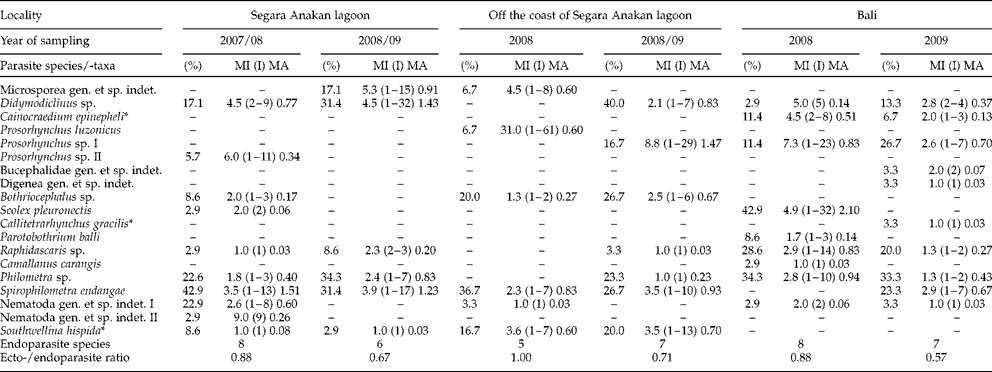
In both years, during rainy season 2007/08, 2008/09 and dry seasons 2008 and 2009, fish parasitological studies on E. coioides in Segara Anakan lagoon, off the coastal zone of Segara Anakan lagoon and Balinese waters revealed 25 different parasite species, belonging to the following taxa: one Ciliata, one Microsporea, five Digenea, one Monogenea, four Cestoda, four Nematoda, one Acanthocephala, one Hirudinea and seven Crustacea (fig. 1, tables 2 and 3). Four new host and locality records were established for E. coioides (tables 2 and 3) mainly in Balinese waters. Information on prevalence, intensity, mean intensity and mean abundance of the collected parasite species is summarized in tables 2 and 3. To analyse the parasite composition and ecological status at the respective sampling sites, the ecological parameters as suggested by Palm & Rückert (Reference Palm and Rückert2009) and Palm et al. (Reference Palm, Kleinertz and Rückert2011) were considered as given below (table 4). Regional differences for E. coioides were found in terms of endoparasite diversity, total diversity (Shannon–Wiener), Simpson index and Evenness between Bali and in the Segara Anakan lagoon (table 4, figs 2, 3 and 4; for regional comparison see fig. 5).
The prevalence (%), intensity (I), mean intensity (MI) and mean abundance (MA) of endoparasites from Epinephelus coioides in Javanese (in and off the coast of the Segara Anakan) and Balinese waters.
* New host record.
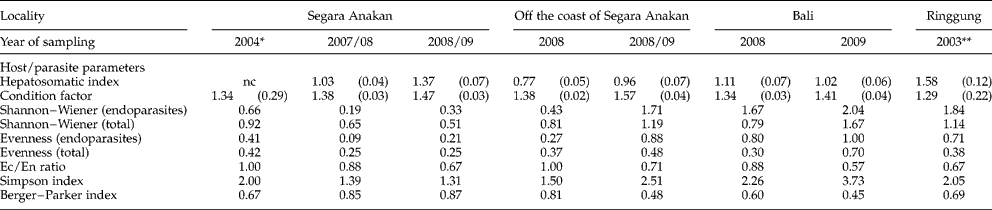
Mean values (±SD) of hepatosomatic index and condition factor for the free-living Epinephelus coioides together with parasite species diversity in Javanese (in and off the coast of the Segara Anakan) and Balinese waters from 2007 to 2009 for comparison with modified data from *Yuniar (Reference Yuniar2005), **Rückert (Reference Rückert2006) and Rückert et al. (Reference Rückert, Hagen, Yuniar and Palm2009a).
Ec/En ratio, ectoparasite/endoparasite ratio; nc, not calculated.
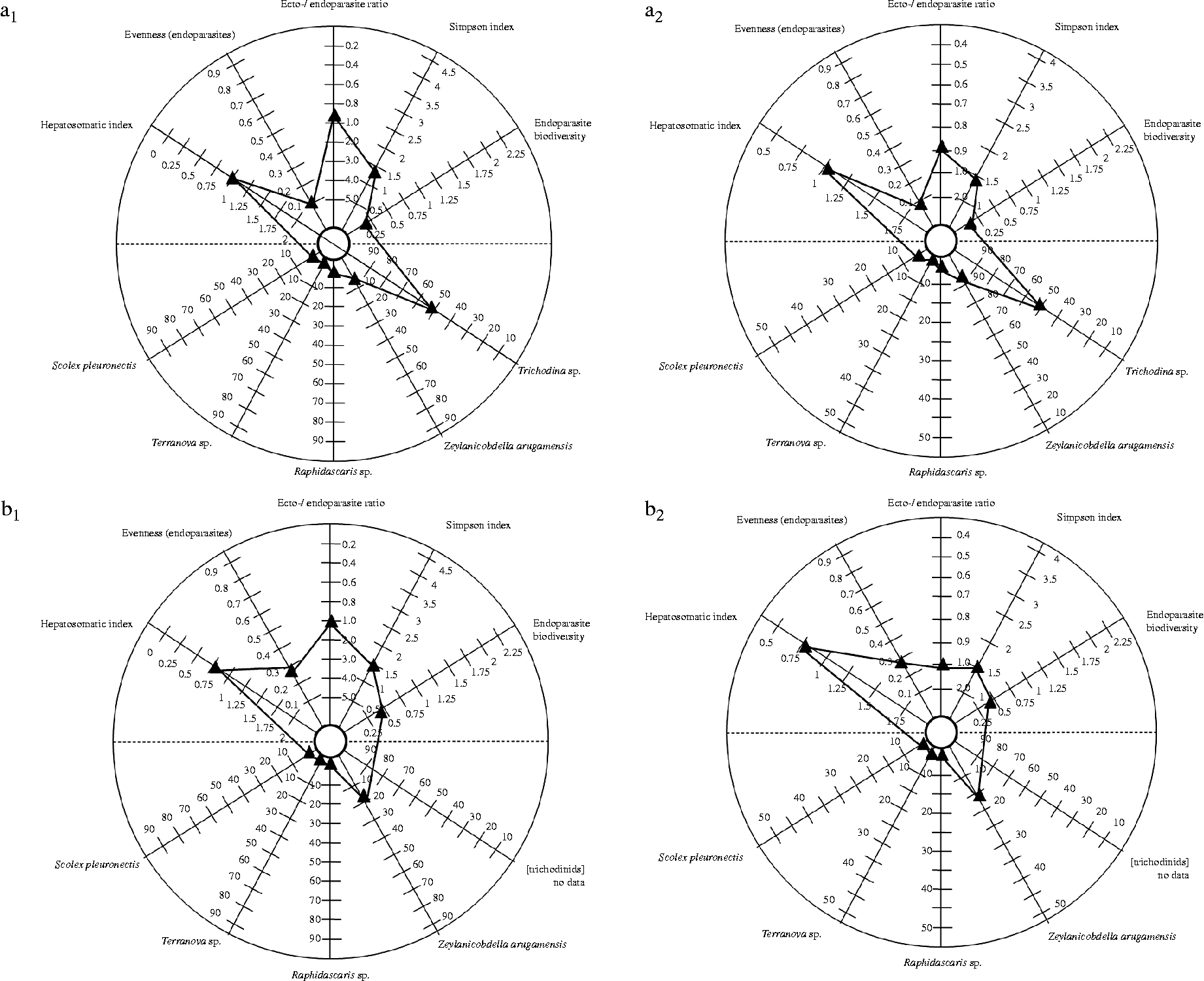
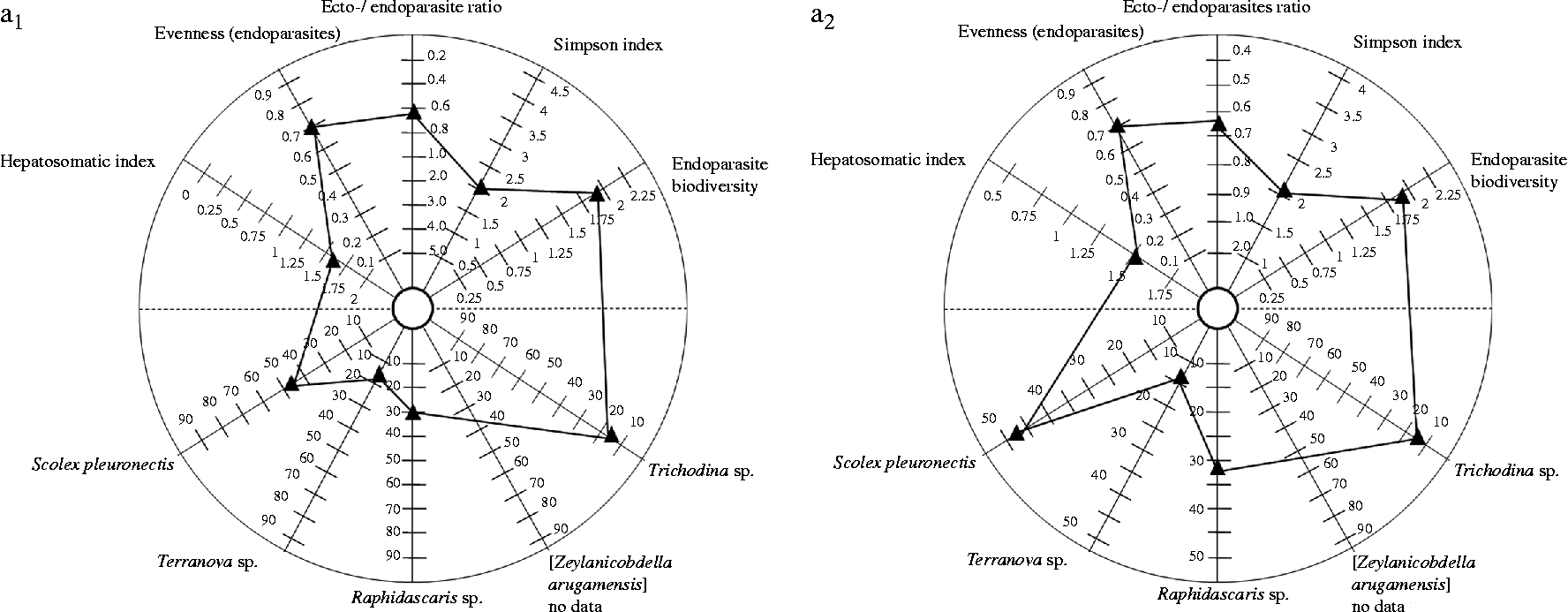
Visual integration of environmental indicators for free-living Epinephelus coioides from Javanese waters: (a1, a2) Segara Anakan during the rainy season 2007/08 and (b1, b2) off the coast of Segara Anakan lagoon during the dry season 2008, with normal integration (1) and adjusted parameter range (2). Host/parasite parameters are given in the upper half and prevalences (%) of parasite species in the lower half of each star graph.
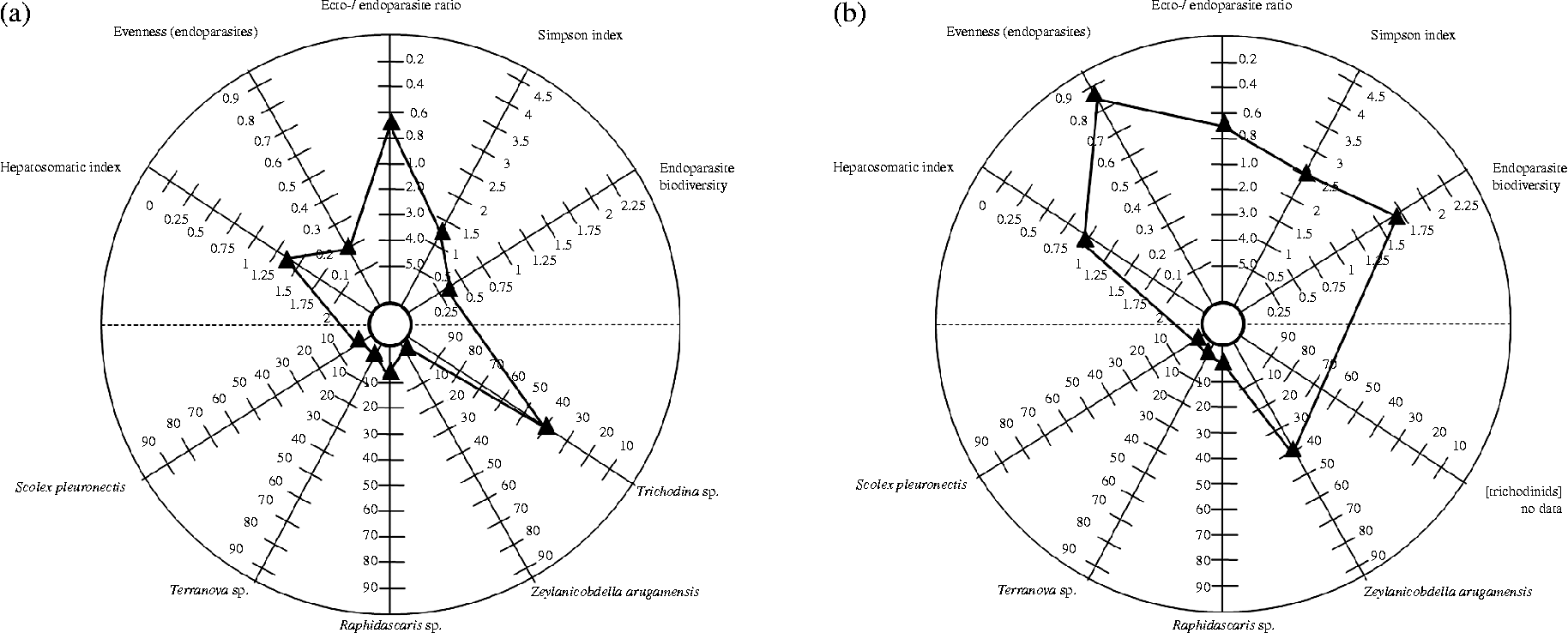
Visual integration of environmental indicators for free-living Epinephelus coioides from Javanese waters: (a) Segara Anakan during the rainy season 2008/09 and (b) off the coast of Segara Anakan during the rainy season 2008/09. Host/parasite parameters are given in the upper half and prevalences (%) of parasite species in the lower half of each star graph.
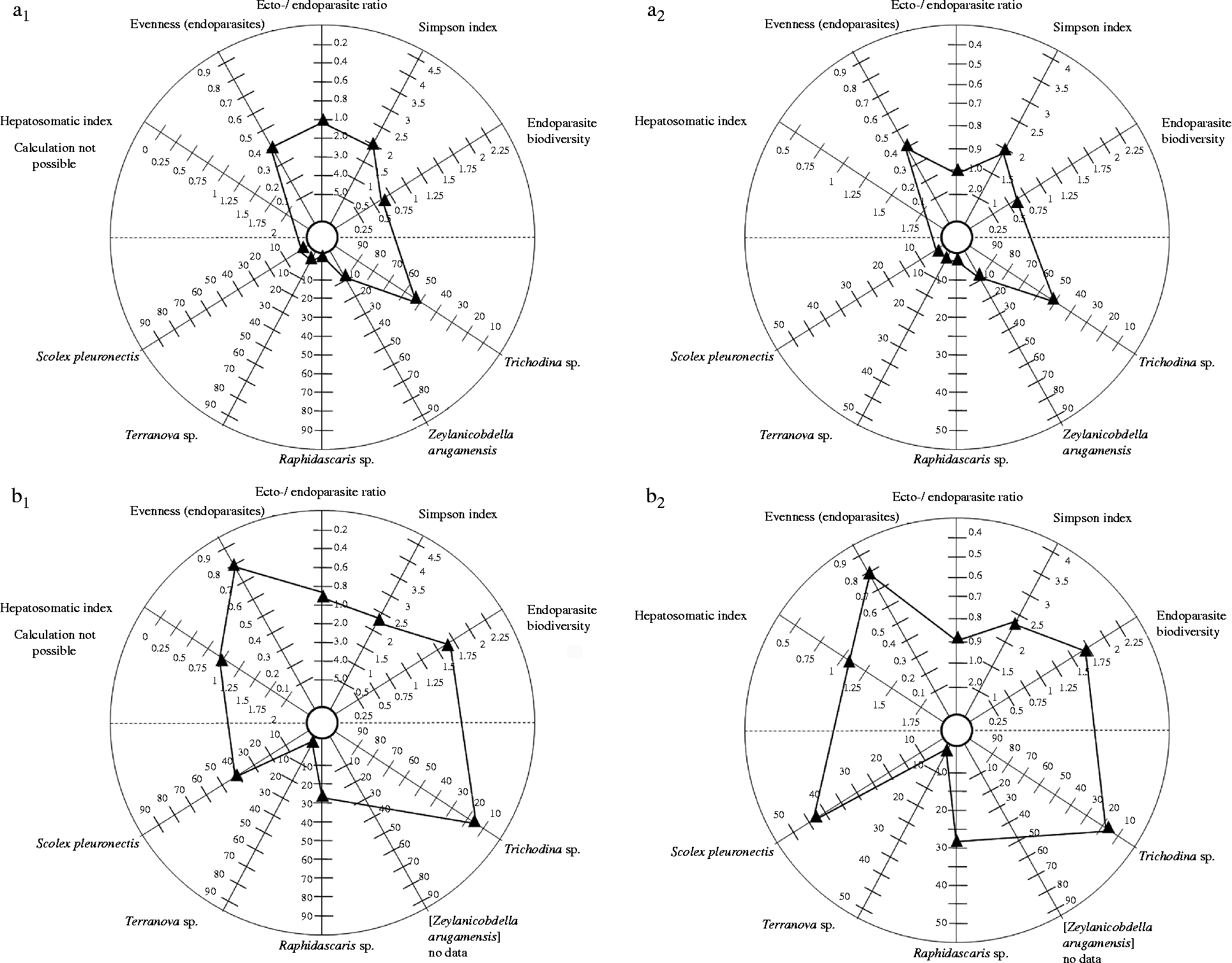
Visual integration of environmental indicators for free-living Epinephelus coioides from Javanese and Balinese waters: (a1, a2) Segara Anakan during the dry season 2004 (data modified after Yuniar, Reference Yuniar2005) and (b1, b2) off the coast of Bali during the dry season 2008, with normal integration (1) and adjusted parameter range (2). Host/parasite parameters are given in the upper half and prevalences (%) of parasite species in the lower half of each star graph.
Parasite diversity and infection levels
The parasite species richness in Bali (up to 17 taxa, calculated and pooled in the fish samples for both years) was higher than that in fish off the coast of the Segara Anakan lagoon (14 taxa). For each single sample, the highest species richness of 15 taxa was recorded from both Bali in 2008 and Segara Anakan lagoon in 2007/08 during the rainy season. The lowest species richness of 10 taxa was recorded in fish from both the Segara Anakan lagoon 2008/09 during the rainy season and off the coast of this lagoon in 2008 during the dry season (tables 2 and 3).
The lowest ectoparasite richness (four taxa) was found in the second year (2008/09) of samples from both Segara Anakan lagoon and Bali, and highest (seven taxa) for the same samples in the first year (2007/08) (table 2). The endoparasite richness was highest (eight taxa) in fish from Segara Anakan lagoon and Bali in the first year (2007/08), and lowest (five taxa) in the first sample from off the coast of Segara Anakan lagoon (table 3). Ectoparasite/endoparasite ratios, calculated by using the numbers of ectoparasite species vs. the numbers of endoparasite species, ranged from 0.6 to 1.0 (table 3). Regional differences of the ectoparasite/endoparasite ratio were not significant.
The endoparasite diversity (Shannon–Wiener index) of E. coioides of the present study ranged from 0.19 in Segara Anakan lagoon to 2.04 in Bali (table 4). The Simpson diversity index for the whole parasite community was lower for grouper parasites in Segara Anakan lagoon (1.39) compared with Bali (3.73) (table 4). The highest Evenness value (1.00) for endoparasites was recorded for Bali, compared with the lowest value (0.09) in Segara Anakan lagoon. The Berger–Parker index was lowest in Balinese waters (0.45) and highest in Segara Anakan lagoon (0.87) (table 4). The hepatosomatic index ranged from 0.77 off the coast of Segara Anakan to 1.37 in Segara Anakan lagoon (table 4), with a significant difference (ANOVA: F= 3.74, P< 0.001).
The most predominant parasites, occurring at all sampling sites, were the monogenean Pseudorhabdosynochus lantauensis 53.3–97.1%, the nematode Spirophilometra endangae 23.3–42.9%, the digenean Didymodiclinus sp. 2.9–40.0%, the nematodes Philometra sp. 22.6–34.3% and Raphidascaris sp. 2.9–28.6%, and the isopod Alcirona sp. 6.7–31.4%. The prevalence of infection of the larval tetraphyllidean cestode Scolex pleuronectis as well as the larval nematode Raphidascaris sp. was different between the different regions during the first year (2007/08). The prevalence for both parasite taxa was significantly higher in Balinese waters compared to Segara Anakan lagoon: 42.9 versus 2.9% and 28.6 versus 2.9%, P= 0.000 and 0.003 (table 3). The larval nematode Terranova sp. could only be isolated from E. coioides from Ringgung (Rückert, Reference Rückert2006; Palm & Rückert, Reference Palm and Rückert2009) at a prevalence of 14.3%, resulting in significant regional differences between all sampled groupers of the present study with n= 30–35 fish per location and year (see table 1) in contrast to those from Ringgung with n= 35 (P= 0.020–0.025). The prevalence of infection of the leech Z. arugamensis was significantly different during the second year of investigation (2008/09) between Segara Anakan lagoon and off the coast of Segara Anakan, with 0% versus 40.0% in 2008/09, P= 0.000. The same trend was observed in the first year (2007/08), with no significant difference (8.6% versus 16.7%, P>0.05) (table 2). The prevalence of infection with the ciliate Trichodina sp. was significantly higher for fish in Segara Anakan lagoon compared to Balinese coastal waters, with 51.4% and 40.0% versus 17.1%, P= 0.003 for 2007/08 and P= 0.034 for 2008/09 (table 2).
Regional parasite composition and visual integration
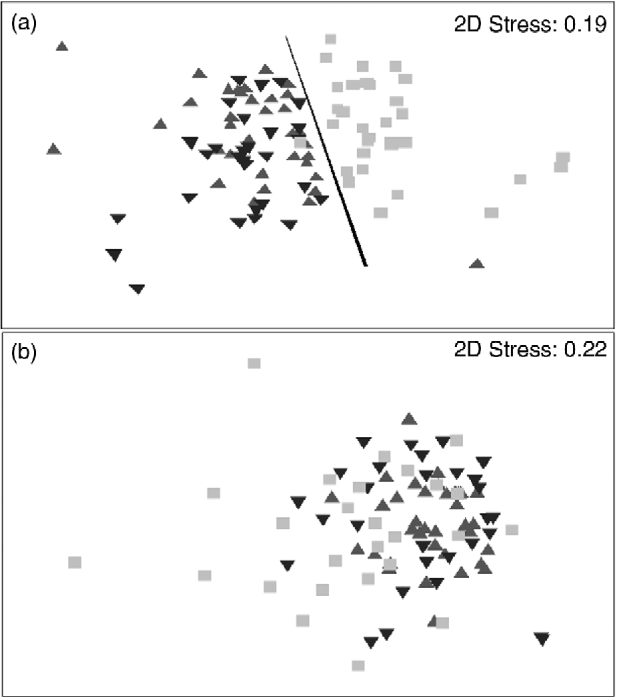
Significant regional differences in species composition were not found between the sampled E. coioides from Balinese and Javanese coastal waters in either year. Highest differences regarding to ANOSIM analyses were found between samples from Bali in 2008 and off the coast of Segara Anakan in 2008, with ANOSIM: R= 0.399, P= 0.01, and between samples from Bali in 2008 and Segara Anakan lagoon in 2007/08, with ANOSIM: R= 0.342, P= 0.01. There was a distinct separation between the parasite composition of the sampled E. coioides from Segara Anakan region (both sites) compared to those from Balinese waters in the first sample with ANOSIM: R= 0.332, P= 0.01 (fig. 6a). In the following year, the parasite composition was different, without an obvious regional separation, with ANOSIM: R= 0.217, P= 0.01 (Fig. 6b). With regard to SIMPER analysis, the parasite species contributing most to the regional differences in Segara Anakan lagoon in 2007/08 were P. lantauensis, 76.80%; S. endangae, 7.71%; Alcirona sp., 4.19%; and Pennelidae gen. et sp. indet. I, 3.26%, being also present in the samples from the other sampling sites. Off the coast of Segara Anakan lagoon in 2008, the species contributing most were P. lantauensis, 67.68%; Pennelidae gen. et sp. indet. II, 20.70%; and S. endangae, 5.55%. Those from Bali in 2008 were P. lantauensis, 53.36%; Caligidae gen. et sp. indet., 22.49%; S. pleuronectis, 11.91%; and Philometra sp., 6.59%.
Ten parasite bioindicators are visualized within a star graph according to Bell & Morse (Reference Bell and Morse2003), Palm & Rückert (Reference Palm and Rückert2009) and Palm et al. (Reference Palm, Kleinertz and Rückert2011), to illustrate regional differences between the sampling sites. The presented data demonstrate the natural range of these parameters and parasite prevalences according to habitat and region, allowing an adjustment of the scale to be utilized in the visual integration of the parasite parameters. According to the newly collected and already published data of E. coioides parasites from Indonesia, the hepatosomatic index among the sampling sites ranged from 0.77 to 1.58, the Evenness from 0.09 to 1.00, the ectoparasite/endoparasite ratio from 0.57 to 1.00, the Simpson index from 1.31 to 3.73 and the endoparasite diversity according to Shannon–Wiener from 0.19 to 2.04. The prevalence of infection for S. pleuronectis was 0–42.9%; for Terranova sp., 0–14.3%, Raphidascaris sp., 0–31.4%; Z. arugamensis, 0–40.0% and for Trichodina sp. 14.3–52.4%. Figure 2a1, b1 and fig. 3a, b illustrate the parasite parameters by utilizing a prevalence range from 0 to 100% and the range for the ecological parasite parameters according to Palm & Rückert (Reference Palm and Rückert2009) and Palm et al. (Reference Palm, Kleinertz and Rückert2011), with most of the indicators oriented towards the centre of the star graph in Segara Anakan lagoon and towards the middle in the sample off the coast of Segara Anakan lagoon. According to the parasitological data of E. coioides from Indonesia recorded here, the star graphs with adjusted parameter range are given in fig. 2a2, b2. The regional differences in the parasite infection of E. coioides between inside Segara Anakan lagoon in 2004 (Yuniar, Reference Yuniar2005; Rückert et al., Reference Rückert, Hagen, Yuniar and Palm2009a), Bali (present study) and Ringgung 2003 (Rückert, Reference Rückert2006) are given in fig. 4a1, a2, b1, b2 and fig. 5a1, a2 with and without adjustment of the parameter range, respectively.
Visual integration of environmental indicators for free-living Epinephelus coioides from Sumatera waters: (a1, a2) for cultured Epinephelus coioides from Balai Budidaya Laut during the dry season 2003 (data modified after Rückert (2006) and Rückert et al. (2009a)), with normal integration (1) and adjusted parameter range (2). Host/parasite parameters are given in the upper half and prevalences (%) of parasite species in the lower half of each star graph.
Discussion
Grouper parasites
To our knowledge, up to 2009, 28 parasitological studies had been recorded for E. coioides worldwide, revealing a total of 57 different parasite species/taxa, belonging to the Ciliata (4), Microsporidia (1), Myxozoa (1), Digenea (7), Monogenea (13), Cestoda (6), Nematoda (13), Acanthocephala (2), Hirudinea (1) and Crustacea (9) (Kleinertz, Reference Kleinertz2010). Of these records, 77% originate from Indonesian waters; with the present study adding four new host records (see tables 2 and 3). The 25 different parasite species recorded here cover 57% of all previous records from Indonesian waters and 44% of the worldwide records for this host. Kuchta et al. (Reference Kuchta, Scholz, Vlcková, Ríha, Walter, Yuniar and Palm2009) stated that only four bothriocephalideans have been reported so far from Indonesia. Palm & Rückert (Reference Palm and Rückert2009) added Botriocephalus sp. from E. coioides from Segara Anakan lagoon; it was also recorded within the present study but so far not identified to the species level. This provides further evidence for the high parasite biodiversity in Indonesian waters (Palm et al., Reference Palm1999; Palm, Reference Palm2000; Carpenter & Springer, Reference Carpenter and Springer2005; Yuniar et al., Reference Yuniar, Palm and Walter2007), encouraging further parasitological studies within the region. Most recently, Justine et al. (Reference Justine, Beveridge, Boxshall, Bray, Moravec, Trilles and Whittington2010) added one more parasite record, Argathona rhinoceros, for E. coioides from New Caledonian waters.
Parasite infection according to region and year of sampling
As already stated by Williams et al. (Reference Williams, MacKenzie and McCarthy1992) and Arthur (Reference Arthur, Flegel and MacRae1997), the parasite species composition of distinct fish species reflects differences in food sources, feeding preferences and habitats. Consequently, fish parasites are useful for a range of different applications, such as biological-, accumulation-, effect- and ecosystem-indicators (Palm, Reference Palm and Mehlhorn2011). According to the selected parasite parameters, the infracommunity of E. coioides parasites in Segara Anakan lagoon was significantly different from the other regions studied so far in Indonesia. Segara Anakan can be considered an extreme habitat, with a low stability within the lagoon on the ecosystem and biogeochemical level (Jennerjahn et al., Reference Jennerjahn, Nasir and Pohlenga2009, see below). In addition, it is an area with a high load of organic contaminants (Dsikowitzky et al., Reference Dsikowitzky, Nordhaus, Jennerjahn, Khrycheva, Sivatharshan, Yuwono and Schwarzbauer2011). High water mass exchange rates between Segara Anakan lagoon and the coastal region, regularly changing salinities depending on seasons, and possibly natural migration of the sampled fish result in a low parasite load, especially of the endohelminths in E. coioides (see data for the first year, 2007/08). This is clearly visualized in the resulting star graphs, with most parasite parameters oriented towards the centre (figs 2a1, a2, b1, b2, 3a, 4a1, a2).
A comparison of parasite data revealed the highest richness in 2007/08 with 15 species in the lagoon compared to 12 species during rainy season 2008/09 off the coast. Both values were higher compared to the data from the dry season 2008 off the coast of Segara Anakan and during the rainy season 2008/09 in the lagoon. Groupers off the coast of Segara Anakan were bought on the fish market as dead specimens, and it is possible that the fish from the first sample might have originated as living specimens from inside the lagoon. According to ANOSIM, in the second year, the parasite fauna was different from samples in the lagoon, representing the situation of coastal fish in other regions. A comparison with published data from Ringgung, Lampung Bay, Sumatera in 2003 (Rückert, Reference Rückert2006; Palm & Rückert, Reference Palm and Rückert2009) revealed a low endoparasite diversity according to Shannon–Wiener: 0.30/0.19–0.66 and high ectoparasite/endoparasite ratio, with 0.85/0.67–1.00 in the lagoon, followed off the coast of Segara Anakan lagoon at Teluk Bay with 1.71; 0.71 and Lampung Bay with 1.84; 0.67. Highest endoparasite diversity according to Shannon–Wiener: 1.86/1.67–2.04 and a low ectoparasite/endoparasite ratio with 0.73/0.57–0.88 were recorded for E. coioides off the Balinese coast, a region that was considered of high environmental quality by Kleinertz et al. (Reference Kleinertz, Damriyasa, Hagen, Theisen and Palm2012). The cluster analyses and multi-dimensional scaling plots likewise illustrated these differences; however, they are far less sensitive than the applied star graph method (compare fig. 6 with figs 2, 3, 4 and 5).
A multi-dimensional scaling plot of the parasite community of Epinephelus coioides from Javanese and Balinese waters in (a) 2007/08 and (b) 2008/09.  , Segara Anakan; ▾, off the coast of Segara Anakan;
 , Bali.
During the present study there was only small variability, without any significance, between both years in Segara Anakan lagoon (2007/08 versus 2008/09). However, according to Khrycheva (Reference Khrycheva2009), two fatal oil tanker accidents happened in 2002 and 2004 within the lagoon. Our first data of E. coioides from the lagoon originated from the dry season 2004 (fig. 4a1, a2), the rainy season 2004/05 and the dry season 2006 (Yuniar, Reference Yuniar2005; Palm & Rückert, Reference Palm and Rückert2009). The diversity based on the Shannon–Wiener and Simpson indices, as well as the Evenness, were higher during the dry season 2004 compared to 4 years later. However, the ectoparasite/endoparasite ratio changed slightly throughout the different samples, from 1.00 in the dry season 2004 and rainy season 2004/05, to 0.80 in the dry season 2006, 0.88 in the rainy season 2007/08 and 0.67 in the rainy season 2008/09. Having similar parasite species throughout the years might indicate a potential recovery towards the natural parasite fauna of E. coioides in the lagoon after both pollution events.
Visual integration
By using the star graph method to integrate different fish parasitological parameters into the same figure, Palm & Rückert (Reference Palm and Rückert2009) and Kleinertz et al. (Reference Kleinertz, Damriyasa, Hagen, Theisen and Palm2012) visualized regional differences within Indonesian waters, and Palm et al. (Reference Palm, Kleinertz and Rückert2011) visualized annual changes. Ten different parameters were chosen to describe the parasite communities of E. coioides at the sampling sites. The hepatosomatic index describes a possible pollution impact to the fish host (Munkittrik et al., Reference Munkittrik, Van der Kraak, McMaster, Portt, Van den Heuval and Servos1994). The Evenness for endoparasites, Simpson index and endoparasite biodiversity according to Shannon–Wiener are used in order to describe natural environmental conditions (Palm & Rückert, Reference Palm and Rückert2009; Rückert et al., Reference Rückert, Hagen, Yuniar and Palm2009a; Palm, Reference Palm and Mehlhorn2011; Palm et al., Reference Palm, Kleinertz and Rückert2011; Kleinertz et al., Reference Kleinertz, Damriyasa, Hagen, Theisen and Palm2012). The prevalence of trichodinid ciliates describes bacteria-enriched waters (Palm & Rückert, Reference Palm and Rückert2009). Different leeches have been used as a kind of substandard sensitive marker for definite chemical parameters (Grosser et al., Reference Grosser, Heidecke and Moritz2001). The authors noted a high sensitivity of these organisms, especially to hypoxic water conditions, high phosphate, heavy metal and organic pollutant concentrations. In the case of our model, we utilized the leach Z. arugamensis, a regular parasite in our samples. We are aware that leeches may fall off the fish host during sampling and might not be considered a good bioindicator in all cases. However, Z. arugamensis is firmly attached to the groupers, needs to be pulled off with the help of forceps and can be counted, especially after collecting the fish in separate plastic bags. The cestode S. pleuronectis and the nematode Raphidascaris sp. are also common in Indonesian waters, and have been recorded for E. coioides in Segara Anakan lagoon (Yuniar, Reference Yuniar2005; Rückert et al., Reference Rückert, Klimpel, Mehlhorn and Palm2009b). Groupers represent intermediate hosts in the life cycle of Raphidascaris sp., becoming infected via abundant amphipods as first intermediate hosts. Rückert (Reference Rückert2006) concluded that epinephelids can also be final hosts for these nematodes. Terranova sp., with a possible zoogeographical restriction, has to be considered for the Segara Anakan region (Palm et al., Reference Palm, Kleinertz and Rückert2011).
Segara Anakan lagoon can be considered an extreme habitat for the fish as well as the parasite fauna. The lagoon has high freshwater influx, mostly from Citanduy River (Holtermann et al., Reference Holtermann, Burchard and Jennerjahn2009), is governed by tides (Jennerjahn et al., Reference Jennerjahn, Nasir and Pohlenga2009) and can be divided into two major water bodies, mainly connected via a single water-exchange channel. Each of the parts has a direct connection to the ocean (Holtermann et al., Reference Holtermann, Burchard and Jennerjahn2009). Jennerjahn et al. (Reference Jennerjahn, Nasir and Pohlenga2009) observed spatio-temporal variations in the distribution of dissolved nutrients in Segara Anakan lagoon, probably the result of seasonally varying interactions of natural (hydrology, geomorphology, soils, vegetation) and anthropogenic (land use, urbanization) factors. The lagoon has been facing a number of environmental problems for decades, because of resource exploitation (Jennerjahn et al., Reference Jennerjahn, Nasir and Pohlenga2009) such as overfishing, logging of mangrove wood, high sediment input by the Citanduy River because of poor upland agricultural practices, agricultural runoff, potential pesticide and oil pollution (White et al., Reference White, Marosubroto and Sadorra1989; Jennerjahn et al., Reference Jennerjahn, Nasir and Pohlenga2009; Dsikowitzky et al., Reference Dsikowitzky, Nordhaus, Jennerjahn, Khrycheva, Sivatharshan, Yuwono and Schwarzbauer2011). Due to all those facts, we can expect that the high hydrological variability in Segara Anakan lagoon has an important impact on the associated biotics. Consequently, the observed parasite parameters of E. coioides in the lagoon, with the characteristic shape of the star graph (figs 2a1, a2, b1, b2, 3a), represent a heavily disturbed ‘natural habitat’. This is in contrast to the coastal zones of Bali, Lampung Bay and even off the coast of Segara Anakan at Teluk Bay, with stable hydrological conditions and less disturbed environments. Thus, our samples represent the greatest possible range of the respective parasite parameters under natural conditions in Indonesia. This leads to the adjustment of the scales that have been used to place the observed parasite parameters into the star graph system for E. coioides (see figs 2 and 3). One open question still remains, on how the recorded parasite species react to defined polluted conditions. This will allow final adjustment of the still theoretical range of parameters that we have applied so far for E. coioides parasites as environmental indicators in Indonesian coastal ecosystems.
It can be concluded that the presented methodology to visualize fish parasite parameters can distinguish definitive environmental conditions in Indonesian waters under high biodiversity scenarios. So far, regional differences (Palm & Rückert, Reference Palm and Rückert2009, Kleinertz et al., Reference Kleinertz, Damriyasa, Hagen, Theisen and Palm2012; the present study) and long-term annual changes inside a mariculture farm in the Thousand Islands (Palm et al., Reference Palm, Kleinertz and Rückert2011) and inside the heavily disturbed ‘natural habitat’ of Segara Anakan have been found. According to these data, free-living E. coioides had a high parasite load, similar to those of E. fuscoguttatus (Rückert et al., Reference Rückert, Klimpel and Palm2010) and E. areolatus (Kleinertz et al., Reference Kleinertz, Damriyasa, Hagen, Theisen and Palm2012). Regular parasitological monitoring of these commercially important fish species will be able to detect environmental conditions and change, possibly serving as an early warning system in Indonesian coastal habitats. We are aware that it is difficult to link directly all observed parasite parameters, without replicates and experiments, to define environmental or anthropogenic factors at all sampling sites and times. However, the star graph system allows direct statements to be made about otherwise highly complex biological scenarios, supporting decision making on the future use of the Indonesian coastal ecosystems.
Acknowledgements
We are thankful to the Indonesian State Ministry of Research and Technology (RISTEK) for the support and research permit (No. Surat Izin: 0037/FRP/SM/II/09). We are thankful for institutional support to the Leibniz Center for Tropical Marine Ecology, GmbH, Bremen, Germany, and the Jenderal Soedirman University (UNSOED), Purwokerto, Java (Professor Dr E. Yuwono). Special thanks to Mr Andih Rinto Suncoko and Mr Edwin Hermawaran from UNSOED for their personal initiative and organizational support during fieldwork. This is publication No. 4 under the Memorandum of Understanding between the Faculty of Veterinary Medicine, UDAYANA University, Bali, and the Faculty of Agricultural and Environmental Sciences, Aquaculture and Sea-Ranching, University Rostock, Germany, in order to promote fish parasite and biodiversity research in Indonesia.
Financial support
Financial support was provided by the German Federal Ministry for Education and Science (BMBF Grant Nos. 03F0471 A and 03F0641D) (S.K., H.W.P.) within the framework of the joint Indonesian–German research programme SPICE II and III-MABICO (Science for the Protection of Indonesian Coastal Marine Ecosystems).
Conflict of interest
None.