


These two books, both by distinguished authors, are excellent. Though they are written by and for physicists, they are an invaluable resource for philosophers interested in the grand theme of how classical physical phenomena emerge from the quantum realm. Both individually and taken together, they are fine representatives of the present state of knowledge about this theme, and about many more specific topics falling under it. They are also pedagogic, though aimed at an advanced level—graduate students and beyond, in physics and mathematics. Thus, they are packed with sophisticated expositions of such topics as quantum Brownian motion, and decoherence in quantum field theory (Joos 2003), the rigorous definition of macroscopic observables and of their evolution laws in quantum statistical physics (Sewell 2002), and the rigorous treatment of open quantum systems (Joos 2003; Sewell 2002). So overall, they provide an invaluable overview of a large and lively research area of physics.
But the books are also different in several ways. The first book, by Joos et al., has six authors, all theoretical physicists based in Germany and part of the ‘Heidelberg school’ of decoherence physics, which has grown up in the last twenty-five years under the tutelage of Heinz-Dieter Zeh. The second book is a monograph: Sewell is a British mathematical physicist, most of whose work has been in the algebraic approach to quantum statistical mechanics.
Other, less obvious, differences follow on from these. By and large, the material in Decoherence is both more familiar and more accessible to philosophers of physics. And for reviewing the books for philosophers of physics, it will be a convenient strategy to spell out the three reasons for this contrast. But as we shall see, Quantum Mechanics being more difficult need not mean it is less valuable.
First, decoherence processes of the kinds that Joos et al., mostly discuss are now well-known to philosophers of quantum theory, not least through the work of the Heidelberg school itself (and the acclaimed first edition of this book) and of the ‘Los Alamos school’ of Zurek and coauthors. Indeed, Joos’ own Chapter 3, “Decoherence through Interaction with the Environment,” places the decoherence process most familiar to philosophers of quantum theory—quantum Brownian motion—at center stage. And this chapter is the heart of the book. At 140 pages, it is by far the longest chapter, although four other chapters also weigh in mightily, at forty or more pages, viz., the chapters by Giulini, Kiefer, Kupsch, and Zeh. In all, there are nine chapters and seven appendices, each of about ten pages.
On the other hand, many of the topics in quantum statistical physics, which Sewell discusses—e.g., the BCS theory of superconductivity, and recent models of lasers—will be more challenging for philosophers of physics. Indeed, the challenge is due not only to the fact that most of the philosophical literature on statistical physics concentrates on the heroic struggles, circa 1850–1920, of the founding figures such as Boltzmann, Gibbs and the Ehrenfests (an understandable concentration, since many issues in classical statistical physics, such as irreversibility, remain controversial), but also to the advanced treatment of such topics. This is especially true of some topics in the second half of his book. Here, some chapters represent what is surely the first account in a monograph, rather than in a learned journal, of several results to which Sewell was a major contributor. In particular, Chapter 9 reviews Sewell's mid-1990s results: Several of the striking features of superconductivity can be derived in a model-independent way from precise and general assumptions, especially one about ‘off-diagonal long-range order’ (first articulated by Yang).
The second reason why Decoherence is easier than Quantum Mechanics is that it is less mathematical. The emphasis is on models and calculations rather than general theorems—reflecting the contrasting cultures of theoretical physics and mathematical physics. Admittedly, Quantum Mechanics begins with a self-contained introduction to algebraic quantum theory (especially of infinite systems); this, together with the fact that Sewell always develops only as much mathematics as he needs for his physics, means that his 300 page book provides a masterly overview of his field. Nevertheless, Sewell's book is a work of mathematical physics. So philosophers (and others!) reading this book will want (and need) to supplement it, from its references or from other advanced textbooks, more than they will in the case of Decoherence. Here is one example from the theory of open quantum systems, which is the topic that forms the strongest overlap of the two books: viz., Stinespring's (1955) characterization of completely positive maps. Sewell's report of this theorem (79–80, 88) is perceptibly briefer, more abstract, and less physical than Kupsch's report (321–322, 354).
The third reason why Decoherence is easier for philosophers of quantum theory is that these authors conceive the interpretative problems of quantum theory in the same terms as do philosophers; and in several places, they discuss the problems—which Sewell does not. The main example is the measurement problem: Does the appearance of a single, approximately classical, macroscopic world require any fundamental nonunitary quantum evolution? That is, Does it require any strictly isolated quantum system to evolve nonunitarily from a pure state to an ignorance-interpretable mixture? The authors of Decoherence admit at the outset (indeed, even in the prefaces to both editions) to disagreeing about several issues that this question raises. But, their disagreement on so controversial a question is not only understandable, but also, their admission is both refreshing and helpful, since their opening summary of exactly how they disagree orients the reader to the different viewpoints adopted in the chapters that follow.
To summarize brutally: Three of the six authors—Joos, Kiefer and Zeh—agree in giving a strong no to the question. Decoherence allows one to avoid both any kind of axiomatic restriction on observables, and also a primitive interpretation of the quantum state in terms of probabilities of classical events. More specifically, all the different components of the reduced state of an open quantum system (the components of the ‘improper mixture’, in d'Espagnat's terminology) are equally real, and so are to be given some sort of Everettian interpretation (22 and 43). (Indeed, Zeh was one of the first to formulate a version of what is now called the ‘many minds’ interpretation; cf. 31.) The other three authors—Giulini, Kupsch and Stamatescu—dissent from this strong no in various ways. In particular, Stamatescu discusses the possibility of a yes, in that his chapter is a detailed review of stochastic collapse models, especially spontaneous localization models: a review that emphasizes the comparison with environmental decoherence. But even he is no advocate of these models (379–381).
On the other hand, Sewell does not go into these interpretative controversies, though, of course, his material raises them. Even by the end of Chapter 2, he has developed the operator-algebraic description of macroscopic observables (in terms of inequivalent representations, etc.) and related material, such as how time correlation functions can decay to give irreversible laws. But unlike Joos et al., he does not pursue the interpretative issues. For example, both books cite Hepp's well-known 1972 paper applying macroscopic observables to describe the measurement process (Joos 2003, 340–341, 365, 387; Sewell 2002, 42–44). But only Deco herence registers doubts about what this description achieves—in particular, Bell's doubts in a paper from 1975. But even a philosopher has to admit that Sewell's austerity is, as the English say, ‘fair enough’. No author can discuss everything, and Sewell has plenty of other fish to fry: fish for which he is a master chef.
To whet philosophers’ appetites for Sewell's offerings, let me finally report Sewell's “rather general scheme for … deriving the irreversible deterministic macroscopic dynamical laws of many-particle systems, such as those of hydrodynamics or heat conduction, from their underlying quantum dynamics” (87). This scheme forms a girder across the rest of the book: It is realized in detail, in several later cases. The first (94–106) is a toy-model, reminiscent of quantum Brownian motion: a massive particle at one end of a semi-infinite chain of much lighter particles, with harmonic nearest-neighbor interactions. Chapters 7, 10, and 11 describe much more advanced cases.
Sewell takes the macroscopic picture to be given by a classical dynamical system
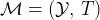 $\mathstrut{\cal M} =(\mathstrut{\cal Y} ,\,T) $
, where
 $\mathstrut{\cal Y} $
is a topological space and
 $\{ T(t) \mid t\in \mathstrut{\Bbb R} _{+}\} $
is a one-parameter semigroup of transformations of
 $\mathstrut{\cal Y} $
.
 $\mathstrut{\cal M} $
is to correspond to the dynamics of a one-parameter family
 $Y_{\Omega }$
of finite sets of observables of a quantum system Σ, where Σ's evolution will be given by a one-parameter group
 $\alpha (\mathstrut{\Bbb R}) $
of automorphisms of Σ's algebra of observables. So we write
 $Y_{\Omega }=\{ Y^{(1) }_{\Omega },\,\ldots ,\,Y^{(k) }_{\Omega }\} $
.
Here Ω is a ‘large’, dimensionless, positive parameter, whose magnitude provides a measure of the observables’ macroscopicality. We then require that there is a set Δ of states of Σ such that:
a. For each state
 $\phi \in \Delta $
, the means and dispersions of
$Y_{\Omega }$
converge to limits
$Y(\phi) \equiv Y$
and 0, respectively, as
$\Omega \rightarrow \infty $
.
b. As φ runs through Δ, the resultant range of the limiting values
$Y\equiv Y(\phi) $
is just the classical phase space
$\mathstrut{\cal Y} $
. (So
$\mathstrut{\cal Y} $
is a subset of
$\mathstrut{\Bbb R} ^{k}$
.)c. The classical dynamical semigroup
$T(\mathstrut{\Bbb R} _{+}) $
of
$\mathstrut{\cal M} $
is induced by the evolution of Σ from states in Δ, on a ‘macroscopic’ time scale
$\Omega ^{\gamma }$
, with
$\gamma > 0$
. To be precise, we require that the mean and dispersion for a state
$\phi \in \Delta $
of the k macroscopically time-evolved observables
$\alpha (\Omega ^{\gamma }t) Y_{\Omega }$
should converge to
$T(t) Y$
and 0, respectively, as
$\Omega \rightarrow \infty $
.


Agreed, one can follow the legacy of Bell's critique of Hepp, and raise some doubts about this scheme. In particular, is it enough—as Sewell himself believes (4)—to obtain classicality in a limit of infinite macroscopicality? Indeed, the community of physicists and philosophers working on the emergence of the classical world certainly should raise, and pursue, such doubts. But large open questions, both technical and conceptual, arise in that effort: The emergence of the classical world will no doubt remain a lively and controversial research area for some time to come. In the meantime, it is an impressive achievement of Sewell and the authors he reports, to have rigorously realized this sort of scheme in several cases.
To conclude, I admit that for philosophers, these books are daunting. Witness the abstractness of Sewell's scheme and the technicality of its notions; and more generally, my mentions of specialist fields like operator algebras and superconductivity. One could spend a lifetime in one such field: Indeed, many physicists have! But, the reassuring message is that it is not only philosophers who will find these books daunting. The books show how, by the physics community's own lights, we are still far from fully understanding how the classical world emerges; and how, in order to develop such an understanding, we must expect to draw on large and diverse fields of physics, and be ready to adopt approaches that differ considerably one from another—both conceptually and in terms of formalisms. Indeed, this need for a variety of approaches is evident not only from the wide scope of each book on its own; but also from the contrasting contents, and styles of thought, of the pair of them. In short: To get a better understanding of the emergence of the classical world, one could hardly do better than to study these books—both of them!


