Foster care is undoubtedly a disputed area in policy and practice. On the one hand, there is admiration for, and gratitude towards, those people who come forward as carers for children whose circumstances have reached a level of concern that precludes care by their birth parents or in their birth families. There is a strong sense of rescue in such a position, which may include providing protection and safety for children at significant risk. On the other hand, foster care can be seen as indicative of the cruel and persecuting position that the State takes when it fails to support families and, as a consequence, removing children and placing them with foster carers is likely to have a negative impact on those children as they experience disadvantage and marginalisation that results from poor quality, unstable placements and disconnected services. Somewhere in between, there is a professional framework that seeks to assess, plan and make responsible decisions with, and for, parents and families about their children. Social work is a core part of this, but there are significant contributions made by other professional groups representing such disciplines as health and the law. And finally, there are researchers providing an evidence base of what works, what does not and how we might best approach these complex and challenging questions. These different perspectives drive the focus of this paper and offer a framework for the core issues from a lifetime perspective.
The Drivers for Human Survival
The human species has evolved through its capacity to form social groupings that enable survival to be based on a cooperative effort between individuals. The family group is one significant part of this and extends into the local community and beyond. This results in individuals and groups being able to identify resources, problem-solve, identify threat and risk, and ward off aggressors – other human groups or other species in search of their own food or scarce resources. Nurturing the young is an important part of this in humans – protecting them, enabling their growth and socialising them into being able to relate to, and work with, others in this cooperative venture that enables lessons learnt in one generation to be passed to the next. Other species also have these processes embedded in their instinct towards raising the next generation, but these are not as deeply rooted, as detailed, or as long lasting as they are in the human species. The connection between parents and their children is typically thought of as lifelong and builds on a deep level of commitment and responsibility from the parents towards the child, but as the child matures is increasingly co-constructed between the child and their parents and others.
The concept of resilience and its continuing development has helped shape this framework. Its development is now considered to have entered its fourth phase, after identifying key features of resilience in the first phase, setting those concepts within an enhanced multi-dimensional dynamic framework and, in the third, delivering and evaluating resilience focused interventions. This fourth phase has seen highly detailed, multi-dimensional analysis of these interacting, dynamic factors with a major investigation into the epigenetic and neurobiological processes as they develop over time. One of the most important developments has been the move away from seeing resilience as a personality trait signifying the character and even moral worth of the individual.
Values, Beliefs, Culture and Religion
We know that across the human species there is wide variation about how family and community life operates in practice. This results from an extensive variety of local interpretations that become embedded in beliefs and values, culture, religion, law and language, and are reinforced in various ways to ensure survival, stability and continuity. However, it is also very clear that these issues are subject to dispute and contest. While considerable effort is devoted to ensuring that tradition informs the present and has continuity into the future, considerable effort is also put into ensuring that current ways of problem solving are “fit for purpose”. What worked in the past may be seen to be no longer working in the present, or into the future, and new problems continually surface. New solutions may need to be found to ensure adaptation to the problems evolving in the present and anticipated into the future. It is important to note that this suggests a degree of evidence and objectivity in problem solving and this is the case as science increasingly plays its part. But disputes about tradition, beliefs and values lend themselves to more instinctive responses to threat (flight, flight or freeze) both at an individual level and at a societal level in the form of group dispute, conflict and war. These disputes can be highly significant and in themselves can pose serious threats to human survival.
One of the key features of interpersonal issues is their dynamic and relational drivers. Human relationships have many elements to them. From birth, we are born with the powerful instinct to seek care, with the assumption that there will be a direct, immediate and sustained response – the care seeking and care giving dynamic. The detail of this relational dynamic, which is very much a part of the concept of resilience, has also been articulated through the concept of attachment and has a robust, evidence-based framework (Cassidy & Shaver, Reference Cassidy and Shaver2018). The strength of the internal and interactional development of the care seeking and care giving relationship is clearly demonstrated. A significant determining factor will be the experiences of the parents from their own care seeking and care giving and the ways these have become embedded into the parents' working models of the way that the “world” works, both the communication of needs, thoughts and feelings and the anticipated responses from others. One part of this can be insensitivity to what is being communicated and this may include the dynamic of taking a dominant or submissive position – taking control or giving way (Heard & Lake, Reference Heard and Lake2009; McCluskey, Reference McCluskey2005). A care seeking and care giving relationship or episode that becomes unduly influenced by the dominance or submission dynamic can influence the ways problems are identified and explored and the solutions proposed and implemented. This can significantly impact on family dynamics and relationships and have additional influences up to the community level and beyond. Working together cooperatively and in a spirit of partnership requires sensitivity, trust and a perspective that acknowledges the experience and views of others – the opposite of what drives the dominant–submissive dynamic. It is also generally expected that where cooperation and partnerships become established through experience, they will continue and become the basis for addressing issues as they emerge in the future. The dynamics of resilience can be heavily influenced by the presence of beliefs and expectations of a cooperative venture to problem solve in the interests of the individual, family, community and beyond.
Family Breakdown and the Position of Children
Over the last century, Western societies have become focused on finding solutions to the emerging problems of family breakdown. There are many aspects to this including the issues that arise when marriage, powerfully designed and expected to last for life, breaks down. In the first instance, the solutions were largely focused on the rights of the man and the continuity of his rights to title, social standing, property and children. This might be seen as a particularly powerful implementation of the dominant–submissive dynamic with the man in the dominant position and his wife and children in the submissive position: “You do what I believe in and what I say is right!” This belief system, typically reinforced in law, has undergone a major change in many developed countries in equalising the role of marriage partners, again set out in law. Following this, the position of children has come to be more prominent – particularly their needs, wishes and feelings and rights. Over generations, children have been largely seen as the property of the man, or possibly the couple, with a powerful expectation that they will be, and can only be, socialised into the beliefs, values and traditions of the man and his position in society. As a part of these beliefs and values, there was, and still is, a prevailing expectation that when a family finds itself in difficulty, and this affects the care of children, it is for the family to step in and provide a solution. Where this was not possible, the children may have been “cared for” in institutions or in local informal arrangements, and for some, usually new-born babies, through adoption.
Over the last 100 years, there have been increasing expectations that the State will provide part of the solution in being active through supporting families through universal, State-sponsored services such as education, health, housing or income support. In situations where neither State provided services nor the family could establish a suitable arrangement for a child, other solutions were found such as the removal of children to other countries or the provision of local state-regulated services such as foster care, or religious or voluntary services, for example, children's homes or schools. We have discovered that many of these so-called “solutions” resulted in the abuse and/or neglect of children they were meant to protect.
The Evolution of the State's Role in Providing Foster Care
In the United Kingdom, one of the significant turning points in the development of the State's role in relation to children and foster care was the Inquiry undertaken following the death of Dennis O'Neil, a 12-year-old boy placed with his brother in foster care by Newport Council in May 1944. In January 1945, Dennis died at the hands of his foster parents, Reginald and Esther Gough, at their farm as a result of multiple injuries and serious neglect. In the criminal trial, Terence, his brother, testified that they were fed three slices of bread and butter a day plus tea – their only food. They stole whatever they could from the foster carers’ pantry. Dennis would attempt to suck milk from the teats of the cows on the farm and every night both boys were thrashed on their hands and/or legs – up to 100 blows each. This might be seen as a particularly grim and extreme example of the dominant–submissive dynamic. The inquiry resulted in the beginning of the more robust State control of foster care, weekly supervision visits of foster carers and the children placed with them, an investigation into the background of foster carers in determining their safety and suitability and regular medical examinations of the child.
The development of foster care since that time has been heavily influenced by the identification of the numbers and types of abuse experienced by children in their own families. This began with the “battered baby” syndrome (Kempe, Silverman, Steele, Droegemueller, & Silver, Reference Kempe, Silverman, Steele, Droegemueller and Silver1962), which developed into the broader definition of physical abuse. Sexual abuse started to be identified from the 1980s onwards and was followed by the identification of neglect and then emotional abuse. A significant part of these developments in the United Kingdom were the publication of formal inquiries into the deaths or abuse of children, often accompanied by media exposure and substantial critical public comment. Over time, the needs, welfare and rights of children have emerged as a substantial concern with considerable focus in evolving policy and practice. Much of this has been accompanied, and driven, by extensive exploration in psychology and other health and social sciences disciplines into the detail of the impact on children's development resulting from abuse and neglect. The State has come to be seen as having a primary duty to protect, intervene and provide when children are at risk, and its role extends to early supportive interventions with the birth parents, the temporary provision of foster care, the intervention of the courts when early interventions are not sufficient or effective, and the possibility of placing children in alternative family placements – again typically foster care or, in some countries, adoption. While there has been a general movement in this direction in most developed countries, the detail varies from country to country; adoption is one very clear example, as is the use of group care and overarching frameworks such as social pedagogy. Foster care is undoubtedly another example, and the perspective on what it is, and what it intended to do, is local to any specific country.
Is the Current Model of Foster Care Fit for Purpose?
The two articles published in Children Australia indicate some key questions in the current debate on fostering (Ainsworth & Hansen, Reference Ainsworth and Hansen2014; McSherry & Fargas Malet, Reference McSherry and Fargas Malet2017). The adequacy, efficacy and effectiveness of foster care as a solution has also been recently tested in England by the House of Commons Education Select Committee's Inquiry (The Education Committee, 2017) into, and report on, foster care and the Department of Education's “Fostering Stocktake”. Both Inquiries consider a range of concerns about the effectiveness of the system:
• What drives planning and decision making in the placement of children?
• The recruitment and retention of foster carers.
• The position and status of foster carers and their skills and knowledge.
• The compromise that results when the supply of placements is driven by those that are available rather than by the needs of the child.
• The number of placement moves that many children in foster care experience.
• The poor outcomes for many children in foster care – physical, emotional, behavioural, cognitive and social in both the short and longer term.
• The impact of the experience of foster care into adulthood.
• The views and experiences of young people themselves and what might make a positive difference.
Although not explicitly explored in these reviews, the contextual factors of poverty and deprivation on families, the severe stress caused by low income, poor housing, inadequate health care and education, and the impact that discrimination has on some social groups, are undoubtedly a part of the more general debate. Foster care cannot be properly explored without recognising it as a multi-dimensional, systemic set of individual, family, community and societal issues, and this connects foster care to the evolution of resilience as a multi-dimensional, dynamic and interactional concept.
The Profile of Children in Foster Care
The profiles of children placed in foster care are diverse – their ages from birth up to 18 years and beyond, their needs and circumstances and their experiences of abuse and neglect or other adversities unique in each case. Alongside this, the purpose and duration of the placement, the type of foster care and the expected and actual outcomes will vary. At best, these issues will be addressed in the plan for the child, but there is often considerable uncertainty, including unknown factors that come to play their part in how the pathway for the child evolves.
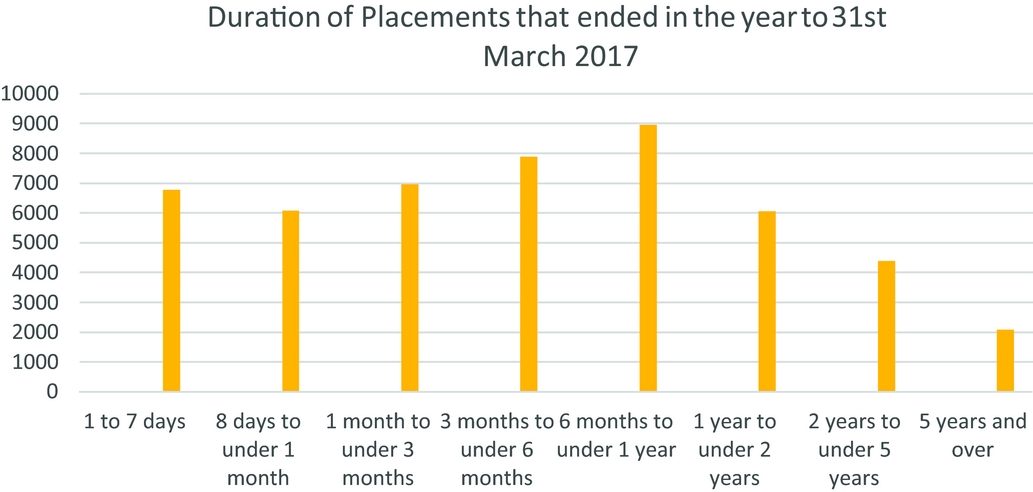
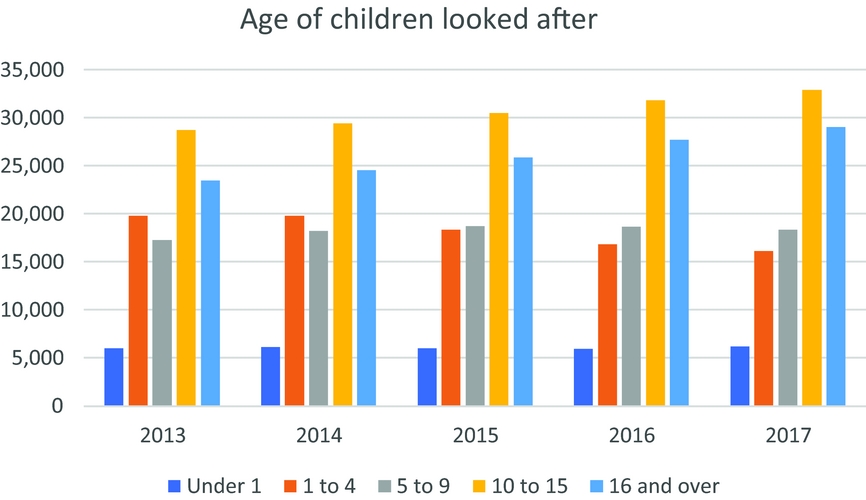
In England on 31 March 2017, there were 72,670 children cared for by the State with 53,420 in foster care (73.5%). Of those children, the majority (68%) had one placement, 21% had two placements and 10% had three or more placements. The duration of those placements varied significantly from 1 week to over 5 years, although there is a sharp drop in the number that last a year or more. What the basic statistics do not tell us is whether placements were intended to be short-term, with the child either returning home to the birth parent/s, to extended birth family members, or to end, for a small number, with adoption (Figures 1 and 2).
FIGURE 1Department of Education, Children looked after statistics for year ending 31 March 2017.
FIGURE 2Department of Education, children looked after statistics for year ending 31 March 2017.
The age range of children is also wide, but the largest proportion of children looked after in the course of 2017 were over 10 years and represented 60% of the total, although some of these children will have entered care under 10 years of age and other children will have entered care for the first time when they were over 10 years. This proportion compares to an earlier study by Sinclair, Baker, Lee and Gibbs (Reference Sinclair, Baker, Lee and Gibbs2007) with data from the early 2000s for some 7400 children in 13 local authorities, collected for a 1-year period, showing 57% were over 11 years of age. In that study, the children were identified as belonging to one of a number of groups, each identified by a set of characteristics. The under 11s were termed “Young Entrants” where the primary issue was the abuse and neglect they had experienced and the focus of the plan was identifying and enabling a long-term placement for the child including, where this was appropriate, a return home to their parents.
The over 11s were broken down into five groups. The largest group (26%) were termed “Adolescent Graduates” and had entered care under the age of 11 years and remained in care after their 11th birthday. This group made up around six out of ten of those looked after when over the age of 11 years and under the age of 16 years. On average their current placement was more than five and a half years since their last entry to care. In keeping with this, their average length of stay in their latest placement was just under 3 years. This average, however, conceals large variations. Just under a fifth (19%) had spent less than 6 months in their latest placement. At the other end of the spectrum, just under a fifth (19%) had spent 5 years or more in their current placement. Although these children were, in effect, being brought up in care, many of them were not in stable and secure placements, and if they were, they would be confronted by the care system's plan for them to move on as they legally leave care at 18 years. It was also notable that in comparison to “Young Entrants” they had more difficulties at school and their behaviour created a range of difficulties for themselves and the adults who were caring or responsible for them.
The second group of over 11s was those young people who came into care as a result of identified abuse or neglect and represented 9% of the sample. If instability marked out one feature of the adolescent entrants group, it was particularly marked for this group. Nearly half (49%) had been in their latest placement for no more than 6 months, and only 18% had been in their placement for more than 2 years. They were also more challenging in their behaviour and were struggling to settle in education. The third group were termed “Adolescent Entrants” and entered care as a result of significant instability in their birth families. They represented 14% of the sample. It was a group for whom, again, placement stability was poor with 60% having their previous placement lasting less than 6 months and only 12% more than 2 years. Again, behavioural issues were highly significant as well as serious issues in maintaining a settled school life. The fourth group at 5% were young people seeking asylum with their immigration status highly significant in terms of stability, but typically the group were highly motivated to learn and settle and, despite the traumatic impact of their journey, did not demonstrate the same degree of behavioural problems or difficulties at school. The final group were termed “Disabled Young People” and represented 3% of the sample. As a group they were older and had been cared for longer, although for 40% this meant residential care. Disability was not confined to this group, but the nature of the disability marked out a particular care pathway for the young people in this group.
The issue of placement stability and continuity identified in this study is a policy and practice issue of significant concern and something that is commonly identified as a risk factor when considering the outcomes for young people from their experience of the care system and, specifically, from foster care (Ward, Reference Ward2009). This is clearly an area of concern identified in the Ainsworth and Hansen (Reference Ainsworth and Hansen2014) review, drawing on evidence from the MidwestFootnote 1 and the Northwest study (Pecora et al., Reference Pecora, Kessler, Williams, Downs, English, White and O'Brien2010) of young people leaving care. The Midwest study (Pecora et al., Reference Pecora, Kessler, Williams, Downs, English, White and O'Brien2010, p. 83) contains a very powerful summary statement:
If the outcomes of these young adults were assessed through the same lens that most U.S. parents would use to view the progress of their own children, the findings presented here should be very troubling. On many dimensions that would be of concern to the typical parent, these young people are faring poorly as a group. In comparison with their peers, they are, on average, less likely to have a high school diploma, less likely to be pursuing higher education, less likely to be earning a living wage, more likely to have experienced economic hardships, more likely to have had a child outside of wedlock, and more likely to have become involved with the criminal justice system.
In a focused study of the employment status from the Midwest sample at age 24 (Hook & Courtney, Reference Hook and Courtney2011), only 50% were employed and 30% were searching for employment, and of those in employment, 22% were earning a level of income that would be regarded as below the “poverty line”. The factors that influenced these outcomes were poor educational attainment, the absence of a high school degree and a poor reading comprehension score; a criminal conviction and/or imprisonment for 60% of the men; having a child for woman by the age of 24 yearsFootnote 2. The young person's ethnicity, particularly African-American, was also significant and, last, the characteristics of the care arrangements such as group care or continuing to live with foster carers until age 21. A further study to age 30 (Stewart, Kum, Barth, & Duncan, Reference Stewart, Kum, Barth and Duncan2014) reinforced the disadvantaged position of care leavers. Their rates of employment at age 24 were 6–12% lower than young people from low income families and 27– 31% in comparison to a national sample. At age 30, this had reduced further at 15% lower than the low-income group as well as being some US$165 less in earnings than the low-income group. They had also been employed on a less stable basis with the average being 30% of the quarters for the year from which the data was gathered. The overall conclusion from the study was that the young people leaving care needed access to support and services well into their 20s, and given the likelihood that young people who have always lived with their parents commonly and reliably receive ongoing practical, emotional and social support, this cannot come as a surprise.
The issues identified in relation to employment have been replicated by many other studies, including a systemic review of the international evidence on a wider group of outcomes published in 2017 (Gypen, Vanderfaeillie, De Maeyer, Belenger, & Van Holen, Reference Gypen, Vanderfaeillie, De Maeyer, Belenger and Van Holen2017). The review explores the evidence in relation to education, employment, income, housing, mental health, alcohol and substance abuse and criminality, showing a clear, overall picture of the increased risk of significantly poor outcomes for those in care. However, it should also be noted that in all of these evaluations there are clearly a number of young people who are optimistic in their approach to life with high aspirations, and there was strong evidence that they had established a positive approach to life for themselves through education, employment and housing, including maintaining strong relationships with members of their birth family or other significant adults. It is clearly important to keep the range of experience and outcomes for young people in care after and leaving care in mind, but the overall conclusion that the experience of care and foster care is in itself a risk, and, for many, a significant risk that cannot be ignored. The challenge in weighing the positive and negative benefits of “out-of-home care” are set out in a systematic review (Maclean, Sims, O'Donnell, & Gilbert, Reference Maclean, Sims, O'Donnell and Gilbert2016) with many issues raised about bias in the samples explored in the review. These troubling perspectives are supportive of the argument in the paper by Ainsworth and Hansen (Reference Ainsworth and Hansen2014) that the foster care system needs a radical overhaul. But, the challenge by McSherry and Fargas Malet (Reference McSherry and Fargas Malet2017) to this, amounting to “throwing out the baby with the bathwater”, is important, especially if the primary focus is on children remaining with their parents or birth family. The fundamental questions are what have we learnt from the evidence and what does this suggest for the design of the care, and particularly the foster care system, into the future?
The Multiple Objectives of the Care and Foster Care System
Although there is not an agreed or detailed definition of the objectives of the care system, preventing harm to children, ensuring they are safe and promoting their development in line with the general expectation that applies to most children are common objectives. This is typically agreed to require a stable and secure family life with a reasonable level of sensitive and committed parenting enabling access to resources that facilitate participation in community life, these being friendships, school and education, health care, leisure and recreation and adaptation to the different stages in the child's development at least until the child reaches adulthood. There is the strongest argument in this for a set of relationships that is driven by the dynamic of “care seeking” and “care giving” that enables and develops sensitive and thoughtful engagement, participation and cooperation.
The development of the care system in each country has, at best, focused on the fundamental recognition of the duty and responsibility of the State towards children at risk of abuse or neglect or family breakdown. That duty and responsibility is typically set out in State law and very often reflects international agreements such as the United Nations Convention on the Rights of the Child or the European Convention on Human Rights. At the same time, the State has a duty, variously interpreted, to support families and not to interfere in the way that a family choses to run its affairs unless a threshold is reached that is a threat or risk to the child's safety and wellbeing. It may be that there can be a voluntary agreement between the family and the State about the provision of direct services to address the crisis and that can include the child/children being placed voluntarily in foster care until the issues that generate the crisis, are positively addressed. It may also be that the crisis in the family is assessed as being at such a level that the risk to the child/children is not amenable to change within the child's developmental timescale and an alternative long-term placement is required. When that is the case, it is usually the courts that test the evidence and sanction the plan for the child. That may result in significant opposition from the parents or the wider family who, from their point of view, see State interference as unfair and unjust. While these two models –“supportive engagement” and “oppressive and persecutory disengagement” – are somewhat simplistic, they do play a very significant part in creating the challenging context within which the child's needs and circumstances are thought about and acted upon. While objectivity and evidence should drive planning and decision making for the family and the child/children, complexity, challenge and dispute are core features of much practice. And we also need to add the challenge of predicting what will happen into the future – even over the short term.
The challenge for policy makers, legislators and professionals is creating and enabling a system that delivers this, and there are a number of critical factors.
Parenting and Family Life
Parenting and family life is a priority for the human species as identified above. It shapes the context into which every individual is born and we would not survive, develop or progress without the enabling structure that this provides. As also identified, there is significant variation in what this means for any one individual – the values and beliefs, structure and resources, history and tradition of the society they are born into. But, this variation does not mean that “anything goes”. The protection and promotion of the wellbeing of family members within an intimate and personal set of relationships on a 24/7 basis is both a belief and a set of values that is powerfully embedded from the research evidence. One of the core outcomes from this is the way that it enables and promotes a set of enduring connections between people and the resources to which they have access. As a part of this, new relationships and connections are enabled, particularly where they are driven by a sense of cooperative effort, problem solving and outcome. We have come to know that this begins from birth and becomes embedded inside individuals in their capacity to relate, learn, problem solve and adapt. There are many dimensions to this, but they all revolve around the same set of core issues in being at the heart of the survival and resourcing of human groupings. There are multiple pathways that any one individual may take as circumstances change, the unexpected emerges and learning and adaption are required, but feeling and being meaningfully connected to “others” is a fundamental part of learning and change.
The core issue for the foster care system is whether this is a primary driver when it comes to identifying what must be at the heart of that system. Within that there is a question about the degree to which the “enduring nature of family life” is created and enabled within that set of relationships and connections for the child. And while some of this must focus on the present, there is a critical question about how the placement is envisaged into the future, and particularly when the role of the State in arranging that placement comes to an end. The transition from childhood to adulthood is complex for most families and requires resources, degrees of adaptability and the management of a range of risk factors including the unanticipated and unexpected. Whatever response the young person and the family make, this will develop out of existing, longstanding sets of values, beliefs and commitments including the things that have not worked out so well. While this may also be the case in foster care, there are significant degrees of risk that this will not or cannot happen with the consequence that, at a high-risk stage of developmental transition, the young person will, to all effects, be abandoned.
The Child from Birth to 18 and Beyond
Every child is different in terms of who they are as an individual, their genetic inheritance, their epigenetic evolution, their experiences over their lifetime and the circumstances that have played a part in who they have become. There are ages and stages in development which are particularly sensitised to needing input or experience from other people, or are affected by the absence of that input or the presence of threat as in abuse. For babies and toddlers, developmental immaturity means that there are significant limits to what they are able to provide for themselves in terms of food, warmth and protection from infection. But, they also need the presence and sensitive engagement of adult carers as described above. We also know that there are degrees of individual adaptability (plasticity) in the absence of needed resources and varying degrees of capacity to respond to changing and improved circumstances. Human beings are highly adaptable over the life course, but age, stage and opportunity are significant factors in determining the degree to which this is possible in a helpful way. And if there is one consideration that should always be taken into account, it is “the earlier the better”. The challenge in repairing developmental pathways that have been influenced by significant early adversity is a serious one. Human adaptability is not an argument for a “wait and see” approach. The Adverse Childhood Experiences study (Felitti et al., Reference Felitti, Anda, Nordenberg, Williamson, Spitz, Edwards and Marks1998; Wade, Becker, Bevans, Ford, & Forrest, Reference Wade, Becker, Bevans, Ford and Forrest2017) has clearly identified the degrees and nature of risk and, in combination, the significant adverse impact over the life course including death.
Assessing and formulating a view about a child across all domains of development in order to identify the core issues that needs to be addessed in the child's plan is crucial. It is also important to note that the assessment cannot meaningfully be formulated unless it combines a view from the outside (parents, carers and professionals) and a view from the inside (what the child thinks and feels themselves).
When children have been abused or neglected, the impact and consequences need to be explored and understood, particularly the ways that the child has adapted his own systems to surviving that abuse and neglect. The range of issues can be huge. For example, when a baby is born addicted to heroin, with low birth weight and poor antenatal care, its biological systems will have adapted to the presence of heroin during pregnancy and after birth those systems will “expect” heroin to be present. A drug withdrawal programme will be necessary (Giby, Vaillancourt, Varughese, Vadeboncoeur, & Poulio, Reference Giby, Vaillancourt, Varughese, Vadeboncoeur and Pouliot2014) that will facilitate the baby's biological systems to return to a steady state in the absence of opiates. This will run alongside ensuring the baby has access to breast or substitute milk and other interventions to address low birth weight and any other identified issues. The adaptability of the baby's systems to these interventions should ensure that there is minimal direct impact on the baby's development. However, there may be issues that have an impact through the cascading effects of the risks associated with drug use in pregnancy, for instance, the likelihood of the mother's homelessness, malnutrition, domestic violence and criminality. The baby is absolutely dependent on the explicit availability and engagement of health services in the short term to address opiate withdrawal and the availability of milk, whoever this might come from. The bigger question will be establishing the conditions and resources that ensure that the baby is not subject to further risks and this will absolutely centre on the availability of parenting and a family life that meets the needs of the child in the immediate future and for the rest of his life. That nurturing may be with the birth mother or father or with other family members or, in some cases, with “stranger” carers as in foster care or adoption. Above all, the core drivers must be the establishment of a care seeking and care giving set of relationships that are sensitive, responsive and enable the child to establish a secure and valued sense of themselves and in the minds of others that continues and evolves over their lifetime.
A very different set of issues will arise with a 12-year-old girl who tells a teacher about being sexually abused in her family. Formulating a view about the impact of 12 years of experience and the consequences on her development alongside the primary responsibility to keep her safe will be challenging. The immediacy of the professional response to the horrors and trauma of sexual abuse will need to be set alongside an acknowledgement that experience, in itself, does not predict response. While it is commonly recognised that traumatic experience will lead to adaptive responses, whether these are positive or negative over the short- or long-term needs to be explored. The natural response of any individual to threat is to protect themselves – flight, fight or freeze – but the way in which that happens depends on a range of factors, some of which will be inside them as an individual and some will be in the hands of others, such as the presence of a supportive, engaged and benevolent system of resources, for example, a teacher at school.
With the 12-year-old, there will a range of related issues. The detail of the allegations will need to be explored. There may be a criminal investigation alongside a child protection investigation. Decisions and plans will need to be made about the immediate care for the young person. What is presently happening for the young person will need to be set within the context of what has happened in the past and over time, and whether these experiences were abusive and/or neglectful or there have been other sources of stress in the family or elsewhere. Again, the impact on the 12-year-old's development will be a core issue in identifying how to design an intervention to facilitate recovery in the here and now as well as over the longer term. The intervention will need to combine both those issues that are “inside” the child and the creation of a supportive, engaged and benevolent system of resources that are most likely to offer the equivalent of a family life – in some circumstances with the “other” birth parent, or the wider birth family or foster care.
The Contribution of Foster Care
In both of these examples, there is a fundamental question about the contribution that foster care can make to the safety and development of these two children. And as noted, this will be driven by the assessment and planning undertaken by professionals with a focus on current and past issues, and then the long term. For the baby, there will be an urgent need to identify and arrange the basis of parenting and a family life that will endure and a legal framework that will secure this. For the 12-year-old, there is a similar set of questions and needs but the issues are different and, in some ways, more challenging. She will already have a family, although the safety and meaning of that family to her is likely to be complex and will need to be fully understood. Her development will be closely linked to her experiences, both what has positively enabled that and what has had a negative impact and what any of this might mean for the future. There will be particular issues about how she has adapted to the threat and experience of sexual abuse and matters related to this. And then, there are the questions that need to be addressed if alternative care, or particularly foster care, is required. While some of this will centre on the basics of the family life “on offer”, there will be a significant set of questions about the foster carers having the commitment, skills and knowledge to create a relationship with the girl when there are likely to be so many issues for her about her experiences (what has happened, what is going to happen, why me?) and her trust in others (what will they do to me?). Her sense of a safe and meaningful connectedness to the world around her and how this might be re-established or repaired is a key issue. This will revolve around the relationships she has with others and they with her, and the dimensions of care seeking and care giving and the presence of the dominant and the submissive. Fundamental to this will be her carers, those who take on the parenting role in keeping her safe, meeting her needs as a 12-year-old, re-building her trust in others and establishing a set of connections that form the basis for her personal, social, cultural and economic capital (Ward, Reference Ward2011; Zarrett & Eccles, Reference Zarrett and Eccles2006) in the immediate term and into her future as an adult. Every part of this process raises important but complex questions, but the underlying assumption is that it is the primary responsibility of State services to enable those relationships and connections that are created in foster care to endure. Young people whether they are 18, 25, 30 or older, and beyond cannot be reasonably expected to “thrive” if they are disconnected from the world around them and their access to personal, social and cultural economic capital is almost non-existent. It is here that the risk of the cascading effect of the absence of opportunity and capital leads to adaptation through high risk behaviours and circumstances, such as domestic violence, drug and alcohol misuse, homelessness, and physical, mental health problems and criminality.
Foster care is an opportunity to re-establish a framework of resources that enable recovery for the child with safe care, daily routines of food, hygiene, friendships, interests and recreation, and school and close personal relationships – the normality of family life. But, the challenge will be in addressing the child's adaptation to the adversities of their past experiences to enable them to re-adapt and feel confident that it is indeed an opportunity that is “on their side”, these being the dynamics of the care seeking and care giving relationship. The identification of the risks in establishing these processes will be critical, and one of the key questions to ask will be, “what is going to happen in the future?” Currently, the answer to that question is “you are expected to go it alone” when the formal role of the State comes to an end. The creation of a family life for the child in foster care is a temporary arrangement and in that sense is very different to what “family life” traditionally and fundamentally means – a lifelong commitment with access to personal, cultural, social and economic capital in some form.
There are a number of policy developments in different countries that have attempted to address these issues, by enabling children to remain with their foster carers after 18, and providing mentoring, assistance and guidance, giving access to accommodation, income and education support. These undoubtedly do provide levels of resources and connectedness that can be very helpful. But the research evidence clearly identifies the high levels of risk that many young people experience and the poor outcomes that result from this.
The foster care system at its best provides invaluable opportunities and resources to children, so we must not “throw the baby out with bathwater”. This is not to dismiss the importance of the child's birth family if the family can build or re-build an environment that is safe and adequate in the way that it functions. But, we have still not adequately addressed the long-term issues that are at the heart of what we believe and are committed to – “family is for life” – and the transition to adulthood cannot mean the abandonment of that young person to a disconnected world of relationships and resources. Among the other challenges the foster care system is faced with, this must be at the top of the agenda for reform.





 You have
Access
Foster care is undoubtedly a disputed area in policy and practice. On the one hand, there is admiration for, and gratitude towards, those people who come forward as carers for children whose circumstances have reached a level of concern that precludes care by their birth parents or in their birth families. There is a strong sense of rescue in such a position, which may include providing protection and safety for children at significant risk. On the other hand, foster care can be seen as indicative of the cruel and persecuting position that the State takes when it fails to support families and, as a consequence, removing children and placing them with foster carers is likely to have a negative impact on those children as they experience disadvantage and marginalisation that results from poor quality, unstable placements and disconnected services. Somewhere in between, there is a professional framework that seeks to assess, plan and make responsible decisions with, and for, parents and families about their children. Social work is a core part of this, but there are significant contributions made by other professional groups representing such disciplines as health and the law. And finally, there are researchers providing an evidence base of what works, what does not and how we might best approach these complex and challenging questions. These different perspectives drive the focus of this paper and offer a framework for the core issues from a lifetime perspective.
The Drivers for Human Survival
The human species has evolved through its capacity to form social groupings that enable survival to be based on a cooperative effort between individuals. The family group is one significant part of this and extends into the local community and beyond. This results in individuals and groups being able to identify resources, problem-solve, identify threat and risk, and ward off aggressors – other human groups or other species in search of their own food or scarce resources. Nurturing the young is an important part of this in humans – protecting them, enabling their growth and socialising them into being able to relate to, and work with, others in this cooperative venture that enables lessons learnt in one generation to be passed to the next. Other species also have these processes embedded in their instinct towards raising the next generation, but these are not as deeply rooted, as detailed, or as long lasting as they are in the human species. The connection between parents and their children is typically thought of as lifelong and builds on a deep level of commitment and responsibility from the parents towards the child, but as the child matures is increasingly co-constructed between the child and their parents and others.
The concept of resilience and its continuing development has helped shape this framework. Its development is now considered to have entered its fourth phase, after identifying key features of resilience in the first phase, setting those concepts within an enhanced multi-dimensional dynamic framework and, in the third, delivering and evaluating resilience focused interventions. This fourth phase has seen highly detailed, multi-dimensional analysis of these interacting, dynamic factors with a major investigation into the epigenetic and neurobiological processes as they develop over time. One of the most important developments has been the move away from seeing resilience as a personality trait signifying the character and even moral worth of the individual.
Values, Beliefs, Culture and Religion
We know that across the human species there is wide variation about how family and community life operates in practice. This results from an extensive variety of local interpretations that become embedded in beliefs and values, culture, religion, law and language, and are reinforced in various ways to ensure survival, stability and continuity. However, it is also very clear that these issues are subject to dispute and contest. While considerable effort is devoted to ensuring that tradition informs the present and has continuity into the future, considerable effort is also put into ensuring that current ways of problem solving are “fit for purpose”. What worked in the past may be seen to be no longer working in the present, or into the future, and new problems continually surface. New solutions may need to be found to ensure adaptation to the problems evolving in the present and anticipated into the future. It is important to note that this suggests a degree of evidence and objectivity in problem solving and this is the case as science increasingly plays its part. But disputes about tradition, beliefs and values lend themselves to more instinctive responses to threat (flight, flight or freeze) both at an individual level and at a societal level in the form of group dispute, conflict and war. These disputes can be highly significant and in themselves can pose serious threats to human survival.
One of the key features of interpersonal issues is their dynamic and relational drivers. Human relationships have many elements to them. From birth, we are born with the powerful instinct to seek care, with the assumption that there will be a direct, immediate and sustained response – the care seeking and care giving dynamic. The detail of this relational dynamic, which is very much a part of the concept of resilience, has also been articulated through the concept of attachment and has a robust, evidence-based framework (Cassidy & Shaver, Reference Cassidy and Shaver2018). The strength of the internal and interactional development of the care seeking and care giving relationship is clearly demonstrated. A significant determining factor will be the experiences of the parents from their own care seeking and care giving and the ways these have become embedded into the parents' working models of the way that the “world” works, both the communication of needs, thoughts and feelings and the anticipated responses from others. One part of this can be insensitivity to what is being communicated and this may include the dynamic of taking a dominant or submissive position – taking control or giving way (Heard & Lake, Reference Heard and Lake2009; McCluskey, Reference McCluskey2005). A care seeking and care giving relationship or episode that becomes unduly influenced by the dominance or submission dynamic can influence the ways problems are identified and explored and the solutions proposed and implemented. This can significantly impact on family dynamics and relationships and have additional influences up to the community level and beyond. Working together cooperatively and in a spirit of partnership requires sensitivity, trust and a perspective that acknowledges the experience and views of others – the opposite of what drives the dominant–submissive dynamic. It is also generally expected that where cooperation and partnerships become established through experience, they will continue and become the basis for addressing issues as they emerge in the future. The dynamics of resilience can be heavily influenced by the presence of beliefs and expectations of a cooperative venture to problem solve in the interests of the individual, family, community and beyond.
Family Breakdown and the Position of Children
Over the last century, Western societies have become focused on finding solutions to the emerging problems of family breakdown. There are many aspects to this including the issues that arise when marriage, powerfully designed and expected to last for life, breaks down. In the first instance, the solutions were largely focused on the rights of the man and the continuity of his rights to title, social standing, property and children. This might be seen as a particularly powerful implementation of the dominant–submissive dynamic with the man in the dominant position and his wife and children in the submissive position: “You do what I believe in and what I say is right!” This belief system, typically reinforced in law, has undergone a major change in many developed countries in equalising the role of marriage partners, again set out in law. Following this, the position of children has come to be more prominent – particularly their needs, wishes and feelings and rights. Over generations, children have been largely seen as the property of the man, or possibly the couple, with a powerful expectation that they will be, and can only be, socialised into the beliefs, values and traditions of the man and his position in society. As a part of these beliefs and values, there was, and still is, a prevailing expectation that when a family finds itself in difficulty, and this affects the care of children, it is for the family to step in and provide a solution. Where this was not possible, the children may have been “cared for” in institutions or in local informal arrangements, and for some, usually new-born babies, through adoption.
Over the last 100 years, there have been increasing expectations that the State will provide part of the solution in being active through supporting families through universal, State-sponsored services such as education, health, housing or income support. In situations where neither State provided services nor the family could establish a suitable arrangement for a child, other solutions were found such as the removal of children to other countries or the provision of local state-regulated services such as foster care, or religious or voluntary services, for example, children's homes or schools. We have discovered that many of these so-called “solutions” resulted in the abuse and/or neglect of children they were meant to protect.
The Evolution of the State's Role in Providing Foster Care
In the United Kingdom, one of the significant turning points in the development of the State's role in relation to children and foster care was the Inquiry undertaken following the death of Dennis O'Neil, a 12-year-old boy placed with his brother in foster care by Newport Council in May 1944. In January 1945, Dennis died at the hands of his foster parents, Reginald and Esther Gough, at their farm as a result of multiple injuries and serious neglect. In the criminal trial, Terence, his brother, testified that they were fed three slices of bread and butter a day plus tea – their only food. They stole whatever they could from the foster carers’ pantry. Dennis would attempt to suck milk from the teats of the cows on the farm and every night both boys were thrashed on their hands and/or legs – up to 100 blows each. This might be seen as a particularly grim and extreme example of the dominant–submissive dynamic. The inquiry resulted in the beginning of the more robust State control of foster care, weekly supervision visits of foster carers and the children placed with them, an investigation into the background of foster carers in determining their safety and suitability and regular medical examinations of the child.
The development of foster care since that time has been heavily influenced by the identification of the numbers and types of abuse experienced by children in their own families. This began with the “battered baby” syndrome (Kempe, Silverman, Steele, Droegemueller, & Silver, Reference Kempe, Silverman, Steele, Droegemueller and Silver1962), which developed into the broader definition of physical abuse. Sexual abuse started to be identified from the 1980s onwards and was followed by the identification of neglect and then emotional abuse. A significant part of these developments in the United Kingdom were the publication of formal inquiries into the deaths or abuse of children, often accompanied by media exposure and substantial critical public comment. Over time, the needs, welfare and rights of children have emerged as a substantial concern with considerable focus in evolving policy and practice. Much of this has been accompanied, and driven, by extensive exploration in psychology and other health and social sciences disciplines into the detail of the impact on children's development resulting from abuse and neglect. The State has come to be seen as having a primary duty to protect, intervene and provide when children are at risk, and its role extends to early supportive interventions with the birth parents, the temporary provision of foster care, the intervention of the courts when early interventions are not sufficient or effective, and the possibility of placing children in alternative family placements – again typically foster care or, in some countries, adoption. While there has been a general movement in this direction in most developed countries, the detail varies from country to country; adoption is one very clear example, as is the use of group care and overarching frameworks such as social pedagogy. Foster care is undoubtedly another example, and the perspective on what it is, and what it intended to do, is local to any specific country.
Is the Current Model of Foster Care Fit for Purpose?
The two articles published in Children Australia indicate some key questions in the current debate on fostering (Ainsworth & Hansen, Reference Ainsworth and Hansen2014; McSherry & Fargas Malet, Reference McSherry and Fargas Malet2017). The adequacy, efficacy and effectiveness of foster care as a solution has also been recently tested in England by the House of Commons Education Select Committee's Inquiry (The Education Committee, 2017) into, and report on, foster care and the Department of Education's “Fostering Stocktake”. Both Inquiries consider a range of concerns about the effectiveness of the system:
• What drives planning and decision making in the placement of children?
• The recruitment and retention of foster carers.
• The position and status of foster carers and their skills and knowledge.
• The compromise that results when the supply of placements is driven by those that are available rather than by the needs of the child.
• The number of placement moves that many children in foster care experience.
• The poor outcomes for many children in foster care – physical, emotional, behavioural, cognitive and social in both the short and longer term.
• The impact of the experience of foster care into adulthood.
• The views and experiences of young people themselves and what might make a positive difference.
Although not explicitly explored in these reviews, the contextual factors of poverty and deprivation on families, the severe stress caused by low income, poor housing, inadequate health care and education, and the impact that discrimination has on some social groups, are undoubtedly a part of the more general debate. Foster care cannot be properly explored without recognising it as a multi-dimensional, systemic set of individual, family, community and societal issues, and this connects foster care to the evolution of resilience as a multi-dimensional, dynamic and interactional concept.
The Profile of Children in Foster Care
The profiles of children placed in foster care are diverse – their ages from birth up to 18 years and beyond, their needs and circumstances and their experiences of abuse and neglect or other adversities unique in each case. Alongside this, the purpose and duration of the placement, the type of foster care and the expected and actual outcomes will vary. At best, these issues will be addressed in the plan for the child, but there is often considerable uncertainty, including unknown factors that come to play their part in how the pathway for the child evolves.
In England on 31 March 2017, there were 72,670 children cared for by the State with 53,420 in foster care (73.5%). Of those children, the majority (68%) had one placement, 21% had two placements and 10% had three or more placements. The duration of those placements varied significantly from 1 week to over 5 years, although there is a sharp drop in the number that last a year or more. What the basic statistics do not tell us is whether placements were intended to be short-term, with the child either returning home to the birth parent/s, to extended birth family members, or to end, for a small number, with adoption (Figures 1 and 2).
Department of Education, Children looked after statistics for year ending 31 March 2017.
Department of Education, children looked after statistics for year ending 31 March 2017.
The age range of children is also wide, but the largest proportion of children looked after in the course of 2017 were over 10 years and represented 60% of the total, although some of these children will have entered care under 10 years of age and other children will have entered care for the first time when they were over 10 years. This proportion compares to an earlier study by Sinclair, Baker, Lee and Gibbs (Reference Sinclair, Baker, Lee and Gibbs2007) with data from the early 2000s for some 7400 children in 13 local authorities, collected for a 1-year period, showing 57% were over 11 years of age. In that study, the children were identified as belonging to one of a number of groups, each identified by a set of characteristics. The under 11s were termed “Young Entrants” where the primary issue was the abuse and neglect they had experienced and the focus of the plan was identifying and enabling a long-term placement for the child including, where this was appropriate, a return home to their parents.
The over 11s were broken down into five groups. The largest group (26%) were termed “Adolescent Graduates” and had entered care under the age of 11 years and remained in care after their 11th birthday. This group made up around six out of ten of those looked after when over the age of 11 years and under the age of 16 years. On average their current placement was more than five and a half years since their last entry to care. In keeping with this, their average length of stay in their latest placement was just under 3 years. This average, however, conceals large variations. Just under a fifth (19%) had spent less than 6 months in their latest placement. At the other end of the spectrum, just under a fifth (19%) had spent 5 years or more in their current placement. Although these children were, in effect, being brought up in care, many of them were not in stable and secure placements, and if they were, they would be confronted by the care system's plan for them to move on as they legally leave care at 18 years. It was also notable that in comparison to “Young Entrants” they had more difficulties at school and their behaviour created a range of difficulties for themselves and the adults who were caring or responsible for them.
The second group of over 11s was those young people who came into care as a result of identified abuse or neglect and represented 9% of the sample. If instability marked out one feature of the adolescent entrants group, it was particularly marked for this group. Nearly half (49%) had been in their latest placement for no more than 6 months, and only 18% had been in their placement for more than 2 years. They were also more challenging in their behaviour and were struggling to settle in education. The third group were termed “Adolescent Entrants” and entered care as a result of significant instability in their birth families. They represented 14% of the sample. It was a group for whom, again, placement stability was poor with 60% having their previous placement lasting less than 6 months and only 12% more than 2 years. Again, behavioural issues were highly significant as well as serious issues in maintaining a settled school life. The fourth group at 5% were young people seeking asylum with their immigration status highly significant in terms of stability, but typically the group were highly motivated to learn and settle and, despite the traumatic impact of their journey, did not demonstrate the same degree of behavioural problems or difficulties at school. The final group were termed “Disabled Young People” and represented 3% of the sample. As a group they were older and had been cared for longer, although for 40% this meant residential care. Disability was not confined to this group, but the nature of the disability marked out a particular care pathway for the young people in this group.
The issue of placement stability and continuity identified in this study is a policy and practice issue of significant concern and something that is commonly identified as a risk factor when considering the outcomes for young people from their experience of the care system and, specifically, from foster care (Ward, Reference Ward2009). This is clearly an area of concern identified in the Ainsworth and Hansen (Reference Ainsworth and Hansen2014) review, drawing on evidence from the MidwestFootnote 1 and the Northwest study (Pecora et al., Reference Pecora, Kessler, Williams, Downs, English, White and O'Brien2010) of young people leaving care. The Midwest study (Pecora et al., Reference Pecora, Kessler, Williams, Downs, English, White and O'Brien2010, p. 83) contains a very powerful summary statement:
If the outcomes of these young adults were assessed through the same lens that most U.S. parents would use to view the progress of their own children, the findings presented here should be very troubling. On many dimensions that would be of concern to the typical parent, these young people are faring poorly as a group. In comparison with their peers, they are, on average, less likely to have a high school diploma, less likely to be pursuing higher education, less likely to be earning a living wage, more likely to have experienced economic hardships, more likely to have had a child outside of wedlock, and more likely to have become involved with the criminal justice system.
In a focused study of the employment status from the Midwest sample at age 24 (Hook & Courtney, Reference Hook and Courtney2011), only 50% were employed and 30% were searching for employment, and of those in employment, 22% were earning a level of income that would be regarded as below the “poverty line”. The factors that influenced these outcomes were poor educational attainment, the absence of a high school degree and a poor reading comprehension score; a criminal conviction and/or imprisonment for 60% of the men; having a child for woman by the age of 24 yearsFootnote 2. The young person's ethnicity, particularly African-American, was also significant and, last, the characteristics of the care arrangements such as group care or continuing to live with foster carers until age 21. A further study to age 30 (Stewart, Kum, Barth, & Duncan, Reference Stewart, Kum, Barth and Duncan2014) reinforced the disadvantaged position of care leavers. Their rates of employment at age 24 were 6–12% lower than young people from low income families and 27– 31% in comparison to a national sample. At age 30, this had reduced further at 15% lower than the low-income group as well as being some US$165 less in earnings than the low-income group. They had also been employed on a less stable basis with the average being 30% of the quarters for the year from which the data was gathered. The overall conclusion from the study was that the young people leaving care needed access to support and services well into their 20s, and given the likelihood that young people who have always lived with their parents commonly and reliably receive ongoing practical, emotional and social support, this cannot come as a surprise.
The issues identified in relation to employment have been replicated by many other studies, including a systemic review of the international evidence on a wider group of outcomes published in 2017 (Gypen, Vanderfaeillie, De Maeyer, Belenger, & Van Holen, Reference Gypen, Vanderfaeillie, De Maeyer, Belenger and Van Holen2017). The review explores the evidence in relation to education, employment, income, housing, mental health, alcohol and substance abuse and criminality, showing a clear, overall picture of the increased risk of significantly poor outcomes for those in care. However, it should also be noted that in all of these evaluations there are clearly a number of young people who are optimistic in their approach to life with high aspirations, and there was strong evidence that they had established a positive approach to life for themselves through education, employment and housing, including maintaining strong relationships with members of their birth family or other significant adults. It is clearly important to keep the range of experience and outcomes for young people in care after and leaving care in mind, but the overall conclusion that the experience of care and foster care is in itself a risk, and, for many, a significant risk that cannot be ignored. The challenge in weighing the positive and negative benefits of “out-of-home care” are set out in a systematic review (Maclean, Sims, O'Donnell, & Gilbert, Reference Maclean, Sims, O'Donnell and Gilbert2016) with many issues raised about bias in the samples explored in the review. These troubling perspectives are supportive of the argument in the paper by Ainsworth and Hansen (Reference Ainsworth and Hansen2014) that the foster care system needs a radical overhaul. But, the challenge by McSherry and Fargas Malet (Reference McSherry and Fargas Malet2017) to this, amounting to “throwing out the baby with the bathwater”, is important, especially if the primary focus is on children remaining with their parents or birth family. The fundamental questions are what have we learnt from the evidence and what does this suggest for the design of the care, and particularly the foster care system, into the future?
The Multiple Objectives of the Care and Foster Care System
Although there is not an agreed or detailed definition of the objectives of the care system, preventing harm to children, ensuring they are safe and promoting their development in line with the general expectation that applies to most children are common objectives. This is typically agreed to require a stable and secure family life with a reasonable level of sensitive and committed parenting enabling access to resources that facilitate participation in community life, these being friendships, school and education, health care, leisure and recreation and adaptation to the different stages in the child's development at least until the child reaches adulthood. There is the strongest argument in this for a set of relationships that is driven by the dynamic of “care seeking” and “care giving” that enables and develops sensitive and thoughtful engagement, participation and cooperation.
The development of the care system in each country has, at best, focused on the fundamental recognition of the duty and responsibility of the State towards children at risk of abuse or neglect or family breakdown. That duty and responsibility is typically set out in State law and very often reflects international agreements such as the United Nations Convention on the Rights of the Child or the European Convention on Human Rights. At the same time, the State has a duty, variously interpreted, to support families and not to interfere in the way that a family choses to run its affairs unless a threshold is reached that is a threat or risk to the child's safety and wellbeing. It may be that there can be a voluntary agreement between the family and the State about the provision of direct services to address the crisis and that can include the child/children being placed voluntarily in foster care until the issues that generate the crisis, are positively addressed. It may also be that the crisis in the family is assessed as being at such a level that the risk to the child/children is not amenable to change within the child's developmental timescale and an alternative long-term placement is required. When that is the case, it is usually the courts that test the evidence and sanction the plan for the child. That may result in significant opposition from the parents or the wider family who, from their point of view, see State interference as unfair and unjust. While these two models –“supportive engagement” and “oppressive and persecutory disengagement” – are somewhat simplistic, they do play a very significant part in creating the challenging context within which the child's needs and circumstances are thought about and acted upon. While objectivity and evidence should drive planning and decision making for the family and the child/children, complexity, challenge and dispute are core features of much practice. And we also need to add the challenge of predicting what will happen into the future – even over the short term.
The challenge for policy makers, legislators and professionals is creating and enabling a system that delivers this, and there are a number of critical factors.
Parenting and Family Life
Parenting and family life is a priority for the human species as identified above. It shapes the context into which every individual is born and we would not survive, develop or progress without the enabling structure that this provides. As also identified, there is significant variation in what this means for any one individual – the values and beliefs, structure and resources, history and tradition of the society they are born into. But, this variation does not mean that “anything goes”. The protection and promotion of the wellbeing of family members within an intimate and personal set of relationships on a 24/7 basis is both a belief and a set of values that is powerfully embedded from the research evidence. One of the core outcomes from this is the way that it enables and promotes a set of enduring connections between people and the resources to which they have access. As a part of this, new relationships and connections are enabled, particularly where they are driven by a sense of cooperative effort, problem solving and outcome. We have come to know that this begins from birth and becomes embedded inside individuals in their capacity to relate, learn, problem solve and adapt. There are many dimensions to this, but they all revolve around the same set of core issues in being at the heart of the survival and resourcing of human groupings. There are multiple pathways that any one individual may take as circumstances change, the unexpected emerges and learning and adaption are required, but feeling and being meaningfully connected to “others” is a fundamental part of learning and change.
The core issue for the foster care system is whether this is a primary driver when it comes to identifying what must be at the heart of that system. Within that there is a question about the degree to which the “enduring nature of family life” is created and enabled within that set of relationships and connections for the child. And while some of this must focus on the present, there is a critical question about how the placement is envisaged into the future, and particularly when the role of the State in arranging that placement comes to an end. The transition from childhood to adulthood is complex for most families and requires resources, degrees of adaptability and the management of a range of risk factors including the unanticipated and unexpected. Whatever response the young person and the family make, this will develop out of existing, longstanding sets of values, beliefs and commitments including the things that have not worked out so well. While this may also be the case in foster care, there are significant degrees of risk that this will not or cannot happen with the consequence that, at a high-risk stage of developmental transition, the young person will, to all effects, be abandoned.
The Child from Birth to 18 and Beyond
Every child is different in terms of who they are as an individual, their genetic inheritance, their epigenetic evolution, their experiences over their lifetime and the circumstances that have played a part in who they have become. There are ages and stages in development which are particularly sensitised to needing input or experience from other people, or are affected by the absence of that input or the presence of threat as in abuse. For babies and toddlers, developmental immaturity means that there are significant limits to what they are able to provide for themselves in terms of food, warmth and protection from infection. But, they also need the presence and sensitive engagement of adult carers as described above. We also know that there are degrees of individual adaptability (plasticity) in the absence of needed resources and varying degrees of capacity to respond to changing and improved circumstances. Human beings are highly adaptable over the life course, but age, stage and opportunity are significant factors in determining the degree to which this is possible in a helpful way. And if there is one consideration that should always be taken into account, it is “the earlier the better”. The challenge in repairing developmental pathways that have been influenced by significant early adversity is a serious one. Human adaptability is not an argument for a “wait and see” approach. The Adverse Childhood Experiences study (Felitti et al., Reference Felitti, Anda, Nordenberg, Williamson, Spitz, Edwards and Marks1998; Wade, Becker, Bevans, Ford, & Forrest, Reference Wade, Becker, Bevans, Ford and Forrest2017) has clearly identified the degrees and nature of risk and, in combination, the significant adverse impact over the life course including death.
Assessing and formulating a view about a child across all domains of development in order to identify the core issues that needs to be addessed in the child's plan is crucial. It is also important to note that the assessment cannot meaningfully be formulated unless it combines a view from the outside (parents, carers and professionals) and a view from the inside (what the child thinks and feels themselves).
When children have been abused or neglected, the impact and consequences need to be explored and understood, particularly the ways that the child has adapted his own systems to surviving that abuse and neglect. The range of issues can be huge. For example, when a baby is born addicted to heroin, with low birth weight and poor antenatal care, its biological systems will have adapted to the presence of heroin during pregnancy and after birth those systems will “expect” heroin to be present. A drug withdrawal programme will be necessary (Giby, Vaillancourt, Varughese, Vadeboncoeur, & Poulio, Reference Giby, Vaillancourt, Varughese, Vadeboncoeur and Pouliot2014) that will facilitate the baby's biological systems to return to a steady state in the absence of opiates. This will run alongside ensuring the baby has access to breast or substitute milk and other interventions to address low birth weight and any other identified issues. The adaptability of the baby's systems to these interventions should ensure that there is minimal direct impact on the baby's development. However, there may be issues that have an impact through the cascading effects of the risks associated with drug use in pregnancy, for instance, the likelihood of the mother's homelessness, malnutrition, domestic violence and criminality. The baby is absolutely dependent on the explicit availability and engagement of health services in the short term to address opiate withdrawal and the availability of milk, whoever this might come from. The bigger question will be establishing the conditions and resources that ensure that the baby is not subject to further risks and this will absolutely centre on the availability of parenting and a family life that meets the needs of the child in the immediate future and for the rest of his life. That nurturing may be with the birth mother or father or with other family members or, in some cases, with “stranger” carers as in foster care or adoption. Above all, the core drivers must be the establishment of a care seeking and care giving set of relationships that are sensitive, responsive and enable the child to establish a secure and valued sense of themselves and in the minds of others that continues and evolves over their lifetime.
A very different set of issues will arise with a 12-year-old girl who tells a teacher about being sexually abused in her family. Formulating a view about the impact of 12 years of experience and the consequences on her development alongside the primary responsibility to keep her safe will be challenging. The immediacy of the professional response to the horrors and trauma of sexual abuse will need to be set alongside an acknowledgement that experience, in itself, does not predict response. While it is commonly recognised that traumatic experience will lead to adaptive responses, whether these are positive or negative over the short- or long-term needs to be explored. The natural response of any individual to threat is to protect themselves – flight, fight or freeze – but the way in which that happens depends on a range of factors, some of which will be inside them as an individual and some will be in the hands of others, such as the presence of a supportive, engaged and benevolent system of resources, for example, a teacher at school.
With the 12-year-old, there will a range of related issues. The detail of the allegations will need to be explored. There may be a criminal investigation alongside a child protection investigation. Decisions and plans will need to be made about the immediate care for the young person. What is presently happening for the young person will need to be set within the context of what has happened in the past and over time, and whether these experiences were abusive and/or neglectful or there have been other sources of stress in the family or elsewhere. Again, the impact on the 12-year-old's development will be a core issue in identifying how to design an intervention to facilitate recovery in the here and now as well as over the longer term. The intervention will need to combine both those issues that are “inside” the child and the creation of a supportive, engaged and benevolent system of resources that are most likely to offer the equivalent of a family life – in some circumstances with the “other” birth parent, or the wider birth family or foster care.
The Contribution of Foster Care
In both of these examples, there is a fundamental question about the contribution that foster care can make to the safety and development of these two children. And as noted, this will be driven by the assessment and planning undertaken by professionals with a focus on current and past issues, and then the long term. For the baby, there will be an urgent need to identify and arrange the basis of parenting and a family life that will endure and a legal framework that will secure this. For the 12-year-old, there is a similar set of questions and needs but the issues are different and, in some ways, more challenging. She will already have a family, although the safety and meaning of that family to her is likely to be complex and will need to be fully understood. Her development will be closely linked to her experiences, both what has positively enabled that and what has had a negative impact and what any of this might mean for the future. There will be particular issues about how she has adapted to the threat and experience of sexual abuse and matters related to this. And then, there are the questions that need to be addressed if alternative care, or particularly foster care, is required. While some of this will centre on the basics of the family life “on offer”, there will be a significant set of questions about the foster carers having the commitment, skills and knowledge to create a relationship with the girl when there are likely to be so many issues for her about her experiences (what has happened, what is going to happen, why me?) and her trust in others (what will they do to me?). Her sense of a safe and meaningful connectedness to the world around her and how this might be re-established or repaired is a key issue. This will revolve around the relationships she has with others and they with her, and the dimensions of care seeking and care giving and the presence of the dominant and the submissive. Fundamental to this will be her carers, those who take on the parenting role in keeping her safe, meeting her needs as a 12-year-old, re-building her trust in others and establishing a set of connections that form the basis for her personal, social, cultural and economic capital (Ward, Reference Ward2011; Zarrett & Eccles, Reference Zarrett and Eccles2006) in the immediate term and into her future as an adult. Every part of this process raises important but complex questions, but the underlying assumption is that it is the primary responsibility of State services to enable those relationships and connections that are created in foster care to endure. Young people whether they are 18, 25, 30 or older, and beyond cannot be reasonably expected to “thrive” if they are disconnected from the world around them and their access to personal, social and cultural economic capital is almost non-existent. It is here that the risk of the cascading effect of the absence of opportunity and capital leads to adaptation through high risk behaviours and circumstances, such as domestic violence, drug and alcohol misuse, homelessness, and physical, mental health problems and criminality.
Foster care is an opportunity to re-establish a framework of resources that enable recovery for the child with safe care, daily routines of food, hygiene, friendships, interests and recreation, and school and close personal relationships – the normality of family life. But, the challenge will be in addressing the child's adaptation to the adversities of their past experiences to enable them to re-adapt and feel confident that it is indeed an opportunity that is “on their side”, these being the dynamics of the care seeking and care giving relationship. The identification of the risks in establishing these processes will be critical, and one of the key questions to ask will be, “what is going to happen in the future?” Currently, the answer to that question is “you are expected to go it alone” when the formal role of the State comes to an end. The creation of a family life for the child in foster care is a temporary arrangement and in that sense is very different to what “family life” traditionally and fundamentally means – a lifelong commitment with access to personal, cultural, social and economic capital in some form.
There are a number of policy developments in different countries that have attempted to address these issues, by enabling children to remain with their foster carers after 18, and providing mentoring, assistance and guidance, giving access to accommodation, income and education support. These undoubtedly do provide levels of resources and connectedness that can be very helpful. But the research evidence clearly identifies the high levels of risk that many young people experience and the poor outcomes that result from this.
The foster care system at its best provides invaluable opportunities and resources to children, so we must not “throw the baby out with bathwater”. This is not to dismiss the importance of the child's birth family if the family can build or re-build an environment that is safe and adequate in the way that it functions. But, we have still not adequately addressed the long-term issues that are at the heart of what we believe and are committed to – “family is for life” – and the transition to adulthood cannot mean the abandonment of that young person to a disconnected world of relationships and resources. Among the other challenges the foster care system is faced with, this must be at the top of the agenda for reform.