The common beliefs, on which all men base their proofs . . .
[include] that everything must be affirmed or denied, and that
a thing cannot at the same time be and not be. . . . For every
demonstrative science investigates with regard to some subject
its essential attributes, starting from the common beliefs.
—Aristotle, Metaphysics, §3.2 (Reference Ross and McKeon1941a)Aristotle endorsed a binary logic in which every proposition must be afforded one of two truth values: true or false, 1 or 0. He also suggested that subjectivities can be produced by actions over time, that “we are what we repeatedly do,” in Will Durant's apt summary of Aristotelian ethics (Durant Reference Durant1927, 87).Footnote 1 This essay argues that the former notion is refuted by the latter's veracity. Gender is an aspect of identity that, as Judith Butler shows, is highly performative. Many acts through which people perform gender, however, are vague. I contend that such vagueness leads gender to constitute a multidimensional sorites paradox, the seeming aporia of which is resolvable through fuzzy logic.
This article takes a pluralistic approach, drawing on diverse areas of scholarship. I begin by discussing the range of terminology used to describe gender before explicating Helen Daly's analysis of sex categories in the Olympics, arguing that Daly does not fully convey the soritical form of female testosterone concentrations and that fuzzy logic provides a suitable resolution of the resulting paradox. Following this, I introduce Wittgensteinian linguistics as a theoretical lens through which I conduct a close reading of two popular television texts: RuPaul's Drag Race and There's Something about Miriam. Their content illustrates that gender is performative, and that people's use of gendered language largely supports this view. I then model these findings as a special case of the sorites paradox and interpret the fuzzy logic solution. The overall aim of this article, therefore, is to show that gender can be appropriately construed as a multidimensional sorites paradox.
I. Gender Categories
Sex and gender categories are indeterminate (Daly Reference Daly2015, 708). That is, the words male and female each permit borderline cases where it is unclear whether a person falls within the region of that term's application (Fausto-Sterling Reference Fausto-Sterling2000, 3). Many prima facie convincing criteria for demarcating men and women break down under scrutiny. Intersex individuals often show ambiguous genitalia, for example, and some possess neither entirely XX nor XY chromosomes (Dreger Reference Dreger2000, 37; Hird Reference Hird2006, 41). Similarly, numerous people do not exhibit behavioral or cognitive patterns common to males or females, and many classify themselves as nonbinary (Nicholas Reference Nicholas2019, 169). Others show incongruence between their physical appearance and activities engaged in (Daly Reference Daly2017, 83), or between their external presentation and internal identity. Consequently, the diversity of gender can be difficult to capture in binary terms.
Further complicating this supposed dichotomy is the extensive range of terminology used to describe members of gender groups. Elizabeth Cralley and Janet Ruscher contend that whereas terms such as female and woman are relatively neutral, others such as lady and girl may be demeaning when applied to adults in certain professional settings (Cralley and Ruscher Reference Cralley and Ruscher2005, 300). Moreover, some words—chick, gal, bitch, sister, and so forth—are more colloquial and express contextual meanings that may differ greatly between social groups and individual speakers (Kutner and Brogan Reference Kutner and Brogan1974, 481). Each gender-related term connotes a specific combination of membership characteristics. Age, for instance, may be crucial for determining whether an individual can be suitably described as a lady but have less relevance when using the word female.
Even the more generic terms female and woman seem to refer to somewhat different concepts. A discrepancy between these words has been noted for some time in academic publications (for example, Kelly Reference Kelly1895), and popular media sources have recently drawn attention to the topic (for example, Safire Reference Safire2007; Young Reference Young2016). Notably, the term female often emphasizes physiological and anatomical characteristics, and woman is commonly used to refer to people who display appropriate sociocultural attributes, at least within feminist circles (Mikkola Reference Mikkola2019, §1.1). Sylvia Nannyonga-Tamusuza, for example, uses the expression womanly-male to describe a person “who is biologically male, but behaves as a ‘woman’” and manly-female to describe the converse (Nannyonga-Tamusuza Reference Nannyonga-Tamusuza2009, 368). However, it is unclear to what extent this linguistic distinction is recognized in ordinary parlance. Talia Mae Bettcher posits that the majority of English speakers “would define ‘woman’ as ‘adult female human being’,” thereby equivocating the terms (Bettcher Reference Bettcher, Power, Halwani and Soble2012, 236). Even so, many feminist scholars have differentiated between these two words when theorizing what being a woman requires.
One admirable attempt to provide an account of the category woman is that of Jacob Hale, who lists thirteen defining attributes. The first five are physiological: absence of a penis alongside presence of breasts, reproductive organs common to women, “normal” hormone levels, and XX chromosomes (Hale Reference Hale1996, 108–09). The remainder include gender identity, roles (both occupational and leisurely), and presentation (both physical and behavioral) all in line with being a woman, as well as having engaged in a sexual relationship with a man, providing textual clues that one is a woman, and having a history consistent with the gender woman (110–13). Thus, although womanhood has a hefty biological component, it is clearly not reducible to the possession of physiological qualities on this account. Hale claims that in dominant North American culture in the mid-1990s, the first “cluster is more heavily weighted than any of the other defining characteristics” (107). Given the increased visibility of transgender presentations over the past two decades (Nicholas Reference Nicholas2019, 169), such physiological qualities may be weighted somewhat less heavily in the contemporary notion of womanhood than before the turn of the century, even though they are still deemed important. Hale emphasizes that none of the characteristics described are necessary or sufficient for womanhood, but that being a woman requires adequate satisfaction of at least some such factors (Hale Reference Hale1996, 107).
The discrepancy between concepts of female and woman can be considered primarily a result of differences in the relative weighting of components that determine a person's gender membership. Although the term female may place greater importance than woman on physiological factors like those in Hale's first cluster, the concept of femaleness does not wholly disregard the sociocultural attributes Hale gives in the second. This interpretation seems plausible given how the terms have been merged in some recent feminist scholarship. For instance, Bettcher remarks that “we can have trans women/females with penises and trans men/males with vaginas” (Bettcher Reference Bettcher, Power, Halwani and Soble2012, 241), and Maheshvari Naidu, in her interrogation of gender portrayals in Hinduism, explicitly states that she “use[s] the terms [female and woman] interchangeably within the context of the paper” (Naidu Reference Naidu2008, 21). Hence, these words may highlight different attributes of gender, but nonetheless rest on many of the same characteristics. The distinction between them is not clear-cut, and the complexity of gender is just as difficult to express using the male/female binary as it is with man/woman.
II. The Linear Sorites Paradox
Daly notes that this ambiguity poses a difficulty for professional sporting competitions that rely on specifying a strict boundary for who can compete in female events (Daly Reference Daly2015, 709). In 2019, South African runner Caster Semenya lost a challenge she posed to the International Association of Athletics Federations (IAAF) a year earlier regarding the eligibility of athletes with atypical sex characteristics to compete in female events (CAS 2019; IAAF 2019). In particular, Semenya disputed the criterion that athletes must have a testosterone concentration “within the normal female range” to participate, arguing that it discriminated against women with certain biological traits (CAS 2019, 2). The typical range of serum testosterone for women is 0.06 to 1.68 nmol/L, whereas the normal range for men is 7.7 to 29.4 nmol/L; heightened testosterone concentration is known to confer a significant competitive advantage (5). The judicial panel upheld the IAAF's decision to limit entry to female events using the criterion of testosterone levels, asserting that “differential treatment on the basis of a particular protected characteristic is valid if it is a necessary, reasonable and proportionate means of attaining a legitimate objective” (4), in this case, “the right of female athletes . . . to compete against other female athletes” (3).
Being female involves a plethora of variables, but the IAAF's gender demarcation hinges on determining what it means for a person to be female with respect to testosterone alone. Daly recognizes that this approach is complicated by the sizeable number of athletes who, like Semenya, have testosterone concentrations between typical male and female ranges (Daly Reference Daly2015, 710). Such amounts, she claims, constitute borderline cases: a central feature of the sorites paradox (710–11). Though Daly does not express this as a formal sorites argument, it can be done:
P. 1: An adult with a testosterone concentration of 1 nmol/L is female with respect to testosterone.
P. 2: If an adult with a testosterone concentration of 1 nmol/L is female with respect to testosterone, then so is an adult with a testosterone concentration of 1.01 nmol/L.
P. 3: If an adult with a testosterone concentration of 1.01 nmol/L is female with respect to testosterone, then so is an adult with a testosterone concentration of 1.02 nmol/L.
. . .
P. 901: If an adult with a testosterone concentration of 9.99 nmol/L is female with respect to testosterone, then so is an adult with a testosterone concentration of 10 nmol/L.
C: An adult with a testosterone concentration of 10 nmol/L is female with respect to testosterone.
This argument is paradoxical since despite having apparently acceptable premises and reasoning, a seemingly unacceptable conclusion follows (Sainsbury Reference Sainsbury2009, 1). The first premise appears uncontroversial since 1 nmol/L falls near the middle of the female range. One might object that female is necessarily complex and hence irreducible to a single aspect such as testosterone concentration. However, it is perfectly appropriate to partition other terms in this way—for example, by saying that someone is “athletic when it comes to running events.” Although the phrase “Andrea is female with respect to testosterone” does, perhaps, sound unusual, there seems no obvious reason to deny that it expresses a meaningful statement. The second and subsequent premises also appear tenable. Women vary significantly in their hormone levels, so it seems absurd that a fraction of a nanomole could make the difference between somebody being female or not with respect to testosterone. And thus, by simple modus ponens reasoning, the argument concludes that a person with a testosterone concentration of 10 nmol/L must be deemed female, despite this level falling well within the typical male range.
There are three main strategies for resolving a paradox. We might deny that the conclusion really is unacceptable, but this looks to be nearly impossible here since it requires us to accept that somebody with a testosterone level in the vicinity of the male average is somehow still female with respect to testosterone.Footnote 2 Alternatively, we could either deny that one (or more) of the premises holds or challenge the reasoning of the argument. These latter two approaches are the more common and plausible methods.
Perhaps the most intuitive resolution to the sorites paradox is the epistemic theory that states that there exists a certain value n for which a person with n nmol/L is female with respect to testosterone but a person with n+0.01 nmol/L is not. Thus, one conditional premise is false. We cannot know which premise this is, however, since we are necessarily ignorant about the limits of vague descriptions (in this case, that somebody is “female with respect to testosterone”). Timothy Williamson argues that since the meaning of words must be somehow determined by the way they are used, previous expression of vague terms within a language creates the boundary for their correct application (Williamson Reference Williamson1994, 205). A hypothetical omniscient speaker, says Williamson, would know precisely where to draw the line based on past linguistic usage (199). Since we do not have exact information about when female has been used to refer to individuals with different testosterone levels—or what algorithm to apply for deriving meaning from use (206)—we cannot know what n is. But we know it falls somewhere within the borderline cases and can, therefore, make an approximation for pragmatic purposes. This appears to be the approach taken by the IAAF, which set its most recent testosterone threshold for competing in certain female events at precisely 5 nmol/L (IAAF 2018, 3).Footnote 3
If we take the epistemic approach to address uncertainty when using the word female, Daly claims “we must choose between explaining the indeterminacy badly or not at all” (Daly Reference Daly2015, 715). She argues that given the practical difficulties of applying epistemicism, we should prefer a semantic theory of vagueness holding that certain words do not have determinate meanings; hence, we can carefully construct precise definitions for use in specific contexts like professional sporting events (716). Additionally, Daly notes that epistemicism may raise normative problems since we cannot decide to use words in morally preferable ways if their meaning is already determined (718). But despite Daly's criticisms, epistemicism might still provide an accurate account of vagueness even if it is not a useful or desirable one. Daly does not adequately explain why the semantic theory trumps epistemicism purely on the basis of veracity with regard to demarcating female athletic events.Footnote 4
There are, however, internal difficulties with epistemicism. In particular, the idea that meaning is determined by use is complicated by there being multiple speech communities (Endicott Reference Endicott2000, 109; Collins Reference Collins2018, 35). Consider the word female as it is used generally, involving many factors other than testosterone. Different subsets of language users apply the word female to different cases; thus, its meaning differs among groups. Young people may tend to use the term more liberally toward transgender individuals with masculine appearances, for instance, whereas older English speakers might reserve their use for individuals whose physiology more closely aligns with typical female characteristics. Differences may also exist between geographical regions or cultural groups. As such, the speech communities that, according to epistemicism, determine meaning through their use do not themselves have precise borders (Burkitt Reference Burkitt1999, 18; Endicott Reference Endicott2000, 108). Since people may belong to several linguistic groups, it is impossible to judge which “language” is being spoken in a particular case, and hence whether a vague term is being used correctly (Endicott Reference Endicott2000, 108).
III. The Fuzzy Logic Solution
Epistemicism's strict determinacy appears incompatible with the diversity of language, but an alternative solution to the paradox holds more promise at accommodating this complexity. Rejecting classical logic—which insists that all meaningful statements have a truth value of 0 or 1—in favor of fuzzy logic—which allows for an inclusive continuum of truth values from 0 to 1—provides a way to challenge the reasoning of the sorites argument. One simple point in support of allowing intermediate truth values is that they represent certain experiences better than binary logic can. The effects of alcohol consumption, for instance, are felt in degrees such that the statement “it is somewhat true that Bryan is drunk” may accurately describe cases where it is unclear whether Bryan is drunk or not (Collins Reference Collins2018, 38). Furthermore, Mark Sainsbury observes that when assessing a vague statement, it often feels natural to say it is “to some extent true” or contains “a certain amount of truth” (Sainsbury Reference Sainsbury2009, 57). The idea that truth comes in degrees thus aligns with many intuitive responses to vague predicates.
Another benefit of fuzzy logic is that it is consistent with Nicholas J. J. Smith's notion of vagueness as closeness (Smith Reference Smith2005; Reference Smith2008; Reference Smith, Cintula, Fermüller and Noguera2015). Smith contends that a satisfactory definition of vagueness should explain why borderline cases, blurred boundaries, and sorites paradoxes arise from vague predicates, not simply assert that vagueness is constituted by sorites-susceptibility or other such phenomena (Smith Reference Smith2005, 160–61). The best candidate for providing this sort of explanation, he argues, is defining vagueness in terms of closeness (183). In Smith's simplified description, “a predicate F is vague just in case for any objects a and b, if a and b are very similar in respects relevant to the application of F, then the sentences Fa and Fb are very similar in respect of truth” (Smith Reference Smith2008, 7).Footnote 5 Characterizing vagueness in this way captures the idea that a minute change in some property cannot produce a significant difference in the truth value of an associated vague claim, yet enough successive changes may be sufficient to do so (Smith Reference Smith2005, 174). For example, no single instance of removing a grain creates a major difference to the truth of the claim “this collection is a heap,” but if enough grains are sequentially removed, the combination of these minuscule changes may eventually make the claim false (174). Thinking of vagueness in terms of closeness, according to Smith, thereby “explain[s] why the sorites paradox is compelling, and also why it is mistaken” better than alternative conceptualizations do (175).
Under fuzzy logic, there is no single premise in the sorites argument that is entirely flawed: all are true, but the second and subsequent premises are true only to a certain high degree (MacFarlane Reference MacFarlane, Dietz and Moruzzi2010, 440). Due to the large number of premises, the truth value of the statement “a person with n nmol/L is female with respect to testosterone” decreases by a small amount as the argument proceeds until it eventually becomes 0. And thus, the conclusion is totally false, despite all conditional premises being mostly true.
This logical approach, however, is not without serious difficulties, perhaps most of all the problem of artificial precision. Smith describes this line of criticism as “the major reason given . . . for dissatisfaction with theories of vagueness based on fuzzy logic” (Smith Reference Smith, Cintula, Fermüller, Godo and Hájek2011, 1) and notes that after decades of debate it remains “a common objection” (Smith Reference Smith and Dietz2019, 31). Rosanna Keefe summarizes the problem as follows:
The degree theorist's assignments impose precision in a form that is just as unacceptable as a classical true/false assignment. In so far as a degree theory avoids determinacy over whether a is F, the objection here is that it does so by enforcing determinacy over the degree to which a is F. All predications of “is red” will receive a unique, exact value, but it seems inappropriate to associate our vague predicate “red” with any particular exact function from objects to degrees of truth. For a start, what could determine which is the correct function, settling that my coat is red to degree 0.322 rather than 0.321? (Keefe Reference Keefe1998, 571)
As this excerpt makes clear, it appears implausible that a vague statement—“Keefe's coat is red,” “that is a heap,” “this person is female with respect to testosterone,” and so forth—should possess a single precise fuzzy truth value between 0 and 1 (Smith Reference Smith, Cintula, Fermüller, Godo and Hájek2011, 2). In the remainder of this section, I consider three ways of interpreting fuzzy logic to evade the problem of artificial precision and argue that fuzzy plurivaluationism offers the most convincing solution.
Fuzzy epistemicism merges insights from classical epistemicism and many-valued logic to form a hybrid theory of vagueness (MacFarlane Reference MacFarlane, Dietz and Moruzzi2010, 438). The crux of this approach is in claiming that each vague sentence really does possess a distinct fuzzy truth value, but we are ignorant of what this value is (Smith Reference Smith, Cintula, Fermüller, Godo and Hájek2011, 4). In a similar fashion to how Williamson and other advocates of the traditional epistemic theory argue that we are unable to confidently assert whether the truth value of a borderline case is 0 or 1, since there is no knowable function to precisely relate meaning and use, fuzzy epistemicism holds that we cannot know whether a vague claim about a borderline case is true to degree 0.694, 0.721, or some other intermediate value. Hence, the best we can do is approximate the truth value in cases where a predicate is not clearly true or false: we cannot specify what it is exactly, nor should we futilely aim to.
This approach fails to satisfactorily resolve the problem of artificial precision since it neglects to describe how a unique function between usage and meaning could bestow a distinct fuzzy truth value on some vague predicate (Smith Reference Smith, Cintula, Fermüller, Godo and Hájek2011, 18). As Keefe and others stipulate, the contention is not simply about whether we can calculate the exact truth value of a borderline case, but how there could be some specific fuzzy truth function for a vague predicate such as “is female with respect to testosterone” in the first place (Haack Reference Haack1979, 443; Keefe Reference Keefe1998, 521; Reference Keefe2000, 113–14; Smith Reference Smith2008, 279; Reference Smith, Cintula, Fermüller, Godo and Hájek2011, 18; Marra Reference Marra2014, 1016). Though fuzzy epistemicism correctly highlights the difficulty of specifying truth values, it “misses the point of the problem” (Smith Reference Smith, Cintula, Fermüller, Godo and Hájek2011, 18).
Furthermore, by positing that each vague sentence possesses a unique truth value, even if we cannot identify it, fuzzy epistemicism struggles to account for the diversity of language use across different speech communities much better than its classical analogue. Though intermediate truth values may represent borderline cases more verisimilarly than absolute truth or falsity, numerous vague expressions can be truer when spoken in certain social groups than in others. For instance, remarking that a person “has a feminine appearance” relies on different characteristics—such as styles of dress or make-up—depending on the sociocultural setting in which the claim is made. It seems questionable, therefore, that a distinct numerical fuzzy truth value could capture the truth of such contextually contingent expressions where any of several discordant language variants (geographical, cultural, occupational, and so on) may be equally said to apply.
Another method aimed at addressing the problem of artificial precision is to envisage truth not as an interval of real numbers, but an ordinal scale. According to this view, all that is meaningful about fuzzy truth values is their relative ordering (Goguen Reference Goguen1969, 332; Hájek Reference Hájek1999, 162–63; Smith Reference Smith2012, 349). The numerical value assigned to a certain vague predicate is arbitrary (Hyde Reference Hyde2008, 207). Given two borderline red coats a and b, where a is slightly redder than b, we could just as legitimately assign truth values to the predicate “is red” of 0.812 and 0.795, respectively, as 0.687 and 0.623. So long as the ordering of truth values remains consistent, any endpoint-fixing transformation of the interval [0, 1] will suffice (Smith Reference Smith, Cintula, Fermüller, Godo and Hájek2011, 4). Hence, this approach maintains that vague statements do not possess unique fuzzy truth values, and thus the artificial precision problem is circumvented.
A major difficulty with using an ordinal scale to measure truth is that it is inconsistent with Smith's definition of vagueness as closeness. Central to the idea of closeness is the notion that objects similar in relevant respects, such as two borderline heaps that differ by one grain, are also similar in degrees of truth, in this case for the predicate “is a heap.” This condition cannot be satisfied if truth is measured ordinally since it would not be meaningful to say that two claims are close in terms of truth, only that one is truer than the other (Smith Reference Smith, Cintula, Fermüller, Godo and Hájek2011, 18). As a result, the use of ordinal truth values cannot be reconciled with the closeness conceptualization of vagueness.
Additionally, representing truth in this way is little better than fuzzy epistemicism at accommodating contextual variation in language use. Although the ordinal method avoids the need to specify a distinct fuzzy truth value, it requires there to be a unique, consistent ordering of values. For vague descriptions that rely on multiple criteria such as “having a feminine appearance,” different weightings of constituent attributes may generate disparate orderings of truth across sociocultural groups. Wearing skirts rather than trousers, for example, is critical to being seen as feminine in some cultures, yet relatively less important in others. Given this, the order of truth values corresponding to appearances ranging in femininity may alternate depending on the context in which the claim is being considered. Since it is often unclear which sociocultural dialect applies at a given time, measuring truth on an ordinal scale fails to adequately account for contextual variation in meaning.
A more promising conceptualization of truth is fuzzy plurivaluationism. Rather than maintain there is a single function associating the possession of some property (for example, number of hairs) with the fuzzy truth value of a vague claim (for example, “that person is bald”), this theory posits there is a plurality of equally acceptable ways to model such a relationship (Smith Reference Smith, Cintula, Fermüller, Godo and Hájek2011, 18). That is not to say any model will suffice: if a person is 6’8”, the truth value for the predicate “is tall” must be 1 and “is short” must be 0, for instance (Smith Reference Smith2008, 286). The principle of closeness also needs to be maintained such that similar vague cases possess similar truth values (287). An acceptable model, then, is one that is not ruled out due to constraints imposed by relevant facts (in particular, previous use of vague terminology).
This approach accommodates linguistic diversity more readily than the previous two methods. According to fuzzy plurivaluationism, multiple truth-value models correspond to each of the numerous sociocultural language variants that may be spoken on a given occasion and to the different ways of integrating their linguistic histories. Hence, a vague claim does not have a single fuzzy truth value, but one for each admissible model (Smith Reference Smith, Cintula, Fermüller, Godo and Hájek2011, 11). If all acceptable interpretations generate the same truth value, we could speak as if there were only a single model according to which the claim has one exact value (Smith Reference Smith2008, 287–88). Likewise, if all permissible models give similar intermediate truth values for a vague claim, we could speak as if there were just one model according to which it is “somewhat true” or “mostly true.” But this would merely be a convenient simplification of a more complex reality.
Fuzzy plurivaluationism evades the problem of artificial precision since it does away with precision more generally. On this view, there is not a unique acceptable model that bestows a distinct fuzzy truth value on a vague claim, but instead a multiplicity of models that may generate somewhat different numeric values for a particular statement. When Keefe queries, “what could determine which is the correct function, settling that my coat is red to degree 0.322 rather than 0.321?” (Keefe Reference Keefe1998, 571), the fuzzy plurivaluationist may concur that nothing can determine which function is correct: there are many acceptable functions, none more correct than the others. It is therefore not the case that “all predications of ‘is red’ will receive a unique, exact value” (571). Precision applies only within a particular model, so by rejecting the idea that there is a single correct model of truth values for vague predicates, fuzzy plurivaluationism dispenses with the problem of artificial precision.
Fuzzy plurivaluationism thus looks to be a preferable variant of fuzzy logic to fuzzy epistemicism or representing truth ordinally. This theory, however, has been heavily criticized by a number of scholars—as has fuzzy logic in general.Footnote 6 At the very least, though, fuzzy plurivaluationism provides a promising approach to resolving the sorites paradox and understanding the phenomenon of vagueness. Many-valued logic captures the intuitive notion that truth can sometimes come in degrees, and fuzzy plurivaluationism embraces the sociocultural variation in speech that other theories of vagueness struggle to accommodate.
IV. Use of Female and other Gendered terms
Although the classical epistemic approach to the sorites paradox is unconvincing, the use theory of meaning it draws from is worth retaining. Ludwig Wittgenstein is among the major proponents of this idea, arguing in Philosophical Investigations that naturally developed words gain meaning not through the mental representations people associate with them, but from their usage throughout a language (Wittgenstein Reference Wittgenstein and Anscombe1953, §43). Wittgenstein explains this via the word game, which is surprisingly difficult to define with any precision, and yet, crucially, we can still use the word successfully without an exact definition (§§66–69). If we want to work out the meaning of a vague word, appealing to a dictionary would be unsatisfactory since the definitions it expresses are static and based only on historical use. Doing this would, in W. V. O. Quine's words, “put the cart before the horse” (Quine Reference Quine1951, 24). Further, lexicographical definitions are insensitive to the nuanced applications of vague terms by different speech communities within a broader language group and are regularly revised to account for adjusted use of a word. Hence, to explore the meanings of vague terminology across diverse contexts, it is imperative to examine how such words are actually used.
Reality television is a germane venue for analyzing the usage of gendered language for two primary reasons. First, it has been used productively in recent research to glean insights into how gender is negotiated and performed (for example, Alderson Reference Alderson2014; Alexander and Woods Reference Alexander and Woods2019). As Brenda Weber writes: “gender as an analytic is imbricated in reality television programs as a form of entertainment, a political ideology, and a set of interrelated cultural texts” (Weber Reference Weber and Weber2014, 1). Second, popular television shows offer a means of exploring the variety of gendered language utilized in different settings, including not only prosaic terms like female and woman but also colloquialisms and slang. In the absence of detailed quantitative data about how such terminology is employed, reality television may offer fruitful qualitative information across diverse sociocultural groups. In what follows, therefore, I conduct a close reading of two reality television texts that explore aspects of gender to establish how gendered language is used, and thus what some of the primary meanings of these words are according to certain English speakers.
The opening episode of the 2019 season of RuPaul's Drag Race (Smothers Reference Smothers2019) exhibits a liberal use of gender-specific language, suggesting an extensive range of possible application for these terms. The first contestant describes the other drag artists as “bitches” and “hoes”; the next two on set refer to themselves as “she”; subsequent performers greet each other using phrases such as “hey girl” and “hi sisters.” Despite their off-stage male identities, none hesitate to embrace their drag presentations as legitimate feminine personas. There is an explicit denial of biological essentialism; one competitor even self-identifies as “Venus with a penis.” Further references to femininity follow, with performers calling each other “aunty,” “niece,” “darling,” “women,” and “ladies.” Interestingly, however, the terminology shifts when contestants “turn into boys,” as one participant phrases it, by removing their clothing and make-up. This suggests that removal of hyperbolic feminine appearances and modes of performance is sufficient to warrant a complete shift to male (pro)nouns. It is not so much that the contestants are reverting to their temporarily camouflaged male identities, but rather are “all becoming boys,” as another puts it. Male and female personalities may even coexist within the same person, as expressed by RuPaul's well-known catchphrase: “gentlemen, start your engines, and may the best woman win.” Gender, then, is portrayed as a fluid quality that can change swiftly and intentionally: appropriate application of gendered language changes depending on the identity a person is currently presenting through their appearance and behavior.
This use of language closely aligns with Butler's theory of performativity. In short, Butler argues that gender is not a stable identity category reliant on fixed attributes, but a feature of social reality constituted by repeated acts (Butler Reference Butler1988, 520). Rather than seeing gender as arising from some combination of physiological features or other necessary criteria, gender ought to be thought of as a continued display of accepted cultural behaviors disguising the fact that, at its core, gender has no essence or pre-existing identity (Butler Reference Butler1990, 173). This makes drag a potential means of subverting hegemonic norms by revealing the performative nature of gender categories through imitation (Butler Reference Butler1993, 125). In RuPaul's Drag Race, the contestants emulate and exaggerate feminine modes of appearance, speech, and social conduct. Frequent use of terms like women and ladies therefore suggests that feminine performances are sufficient to warrant the use of such terminology. Moreover, the scene in which contestants de-drag and “become boys” for a short while before returning to their feminine personas suggests that altering the style of gender performance justifies a concomitant linguistic change. Hence, the show offers a practical illustration of Simone de Beauvoir's famous expression that “one is not born, but rather becomes, a woman” (Beauvoir Reference Beauvoir and Parshley1993, 281).
Reservations should be made, however, about extrapolating use—and therefore meaning—of gendered language beyond RuPaul's Drag Race and other drag communities. Though Butler's performative theory provides an eloquent conceptual account of gender for discussion in feminist and queer circles, words like female and woman may nonetheless be used differently among other groups of English speakers. Gender is conceptualized through language by many people in ways suggesting that a rigid set of biological and psychological qualities determines whether gendered terms apply to an individual: that is, mainstream discourse often reinforces an essentialist view of gender (Heyman and Giles Reference Heyman and Giles2006, 300). Consequently, the meaning of such words within more general speech communities may rest on anatomical or physiological criteria, contrary to the performative definitions expressed in RuPaul's Drag Race.
The controversial 2004 television series There's Something about Miriam (Blumenfeld and Hay Reference Blumenfeld and Hay2004) offers an interesting case study of gendered language. In the show, six bachelors compete to earn the affections of Miriam, a transgender model implied to be cisgender until the final selection ceremony. The first episode has the host and contestants refer to Miriam using terms such as girl, her, and woman. Curiously, however, Miriam divulges to the audience that “I'm not a real woman. I wasn't born as a girl; I was born as a man,” directly rejecting Beauvoir's maxim. The contestants’ speech implies that Miriam's outward display is feminine enough to warrant female terminology, yet Miriam suggests that possessing certain male biological features may negate an otherwise adequate performance of a “real” woman. In subsequent episodes, some of the men suspect Miriam may be transgender, and this doubt is reflected by changes in their language. “Do you still think she's a man?” one contestant asks another, before gesturing a possible hand movement to determine what lies between Miriam's legs. The final episode opens with the host stating that the finale will involve Miriam disclosing to the men “the person that they've been wooing actually started life as a man” (my emphasis), in stark contrast to the female-specific terms used earlier. Miriam eventually admits this by stating: “I am not a woman; I was born as a man.” Following this, one contestant declares, somewhat unsurely, that “Miriam is a, uh, is a man,” and another remarks that “as a man, she's very attractive.” A third says “good luck to her. If she wants to be a girl, yeah, she can be a girl—he should be a girl.” Thus, as Miriam's innate biological qualities come to the fore, the language used by everyone—including Miriam—shifts from exclusively feminine to a confused amalgam of male and female terminology, suggesting an essentialist theory of gender underlying linguistic expression.
Taken together, these two shows illustrate the polysemy of words such as female and woman due to the social, cultural, and temporal diversity of speech communities. RuPaul's Drag Race endorses a fluid and almost exclusively performative framework for determining word use, but There's Something about Miriam presents a more uncertain set of criteria, with a person's external presentation and internal biological qualities both deemed relevant. These contrasting uses of the same words show the plurality of meanings affixed to them by different groups of speakers. In general, however, the application of gendered words appears to rely heavily on performative criteria: ways of dressing, body language, vocal styles, and so forth. Hence, to the extent that meaning supervenes on use, performative qualities are necessary (if not entirely sufficient) for the correct application of gender-specific terms within many language groups.
V. Modeling the Multidimensional Paradox
Words like female or woman can, therefore, be considered multidimensional, correctly referring to a person if and only if they demonstrate a sufficient number of feminine attributes, which include various aspects of gender performance. Physical appearance, for example, relates to clothing types, hairstyles, make-up, and many other factors. Behavior may involve certain forms of movement and body language, as well as patterns of social interaction. Additionally, if gender-specific words are considered within the realm of essentialist speakers, physiological attributes such as hormone levels and chromosomes may be deemed particularly relevant. Even people who are incontrovertibly described as female, however, deviate from the mean to some degree on certain dimensions. There is no clear boundary to many of these attributes; descriptions such as “having a feminine appearance” or “behaving like a woman” are vague. Thus, any model accounting for the application of gender-specific language must be sensitive to both the multiplicity and indeterminacy of gender.
In light of these desiderata, Daly suggests modeling gender using her “many strands” approach (Daly Reference Daly2017), but this method focuses largely on practicality over veracity. Daly's model views sex and gender as being comprised of numerous criteria, including primary and secondary sex characteristics as well as gender identity, performance, and attribution (Daly Reference Daly2017, 84). Each factor can be visualized as a single thread, the color of which changes depending on whether a person is more male or female for that aspect (84). A person's overall sex or gender can then be conceived as the braided combination of these threads, allowing for individuals to vary in the colors they possess and hence their overall gender constitution (84). Since certain threads matter in different contexts—gender identity is central in many environments, but chromosomes may be more important in, say, medical research (85)—Daly claims that “we can use the many strands model to develop a meaning of woman for a particular context to solve a particular problem” by omitting irrelevant strands as required (87). The difficulty with this, however, is that we can redefine words only for pragmatic reasons within specific domains requiring a precise, technical definition, such as the Olympics. More generally, the meaning of words is determined by their overall use within a speech community, which depends on the intersection of multiple vague criteria, not merely a combination of distinct selected components as the many-strands model purports.
Daly's account is not aimed primarily at explaining how we actually do use gendered words like female and woman in practice, but how we could use them productively. Indeed, she even states that the many-strands model “is especially designed to make . . . hard decisions easier by providing a process to clarify what matters” (79). Moreover, Daly asserts that her model “does not aim to get at the true nature of sex/gender . . . but only to represent it well for some purpose” (80). She persuasively argues that the many-strands model can more effectively guide our application of gendered terminology in some contexts than three conventional models that view sex and gender as a binary set, continuous spectrum, or range of discrete categories. When working out whether transgender women should be admitted to a women's college, for example, Daly explains that using the many-strands model involves deciding which components of sex and gender are relevant to the present case and how they should be weighted, unlike other approaches that do not allow for flexibility of the term woman (88–90). Crucially, Daly does not claim that this process resembles the way most speakers typically use gendered language. In fact, she remarks that “of the three [models] in regular use, the most common, by far, is the ‘binary’ model” (81). Thus, although the many-strands model provides a useful framework for applying gendered words in settings that require careful and consistent application, if we aim to elucidate what such terms ordinarily mean as a function of how they are used, we require an alternative approach.
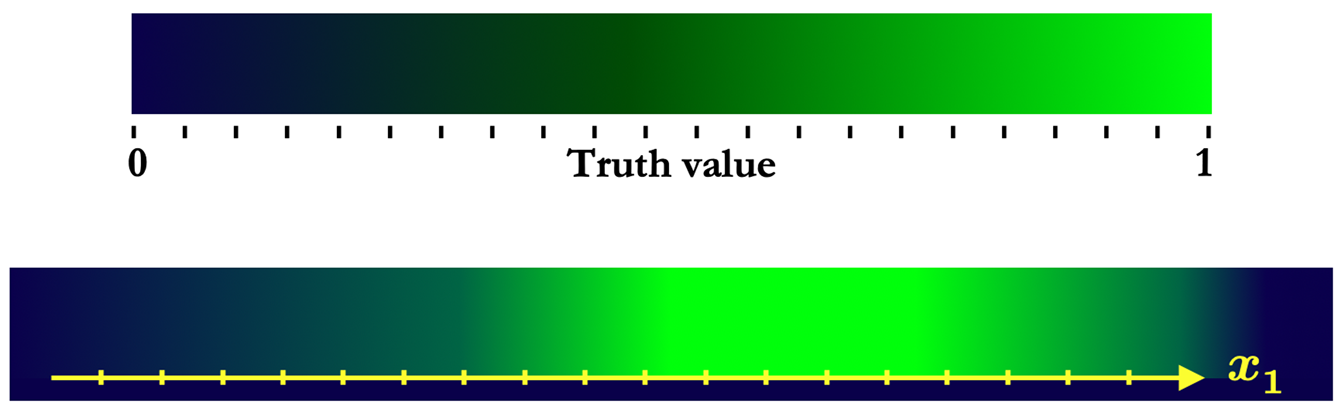
With this in mind, a preferable way to think about gender is to consider it a special case of the sorites paradox. Each of the relevant dimensions can be thought of as forming a traditional sorites argument such as that outlined previously for testosterone levels. For instance, somebody who applies make-up in the style and frequency of a typical woman within their sociocultural community can be considered female with respect to wearing make-up, as would somebody who does virtually the same except for some minute difference; one extra day per year spent without mascara surely could not matter. Yet, if this process is extended, a person who never wears make-up must apparently be deemed female on this dimension. The same is true for other vague aspects of gender. Fuzzy logic can resolve each of these single paradoxes such that an individual P who is a borderline case for being judged female according to a certain dimension x 1 may have a truth value between 0 and 1 for the claim “P is female with respect to x 1.” Figure 1 illustrates this:
Truth value with respect to a single dimension x 1.

Here we see a representation of how the truth value of “P is female with respect to x 1” changes as a function of P's level of a certain gender characteristic.Footnote 7 Let x 1 denote any single vague attribute of gender. The green region shows cases where there is ubiquitous agreement that a person who exhibits such a level of x 1 is female on that dimension. For example, somebody whose manner of dressing coincides with accepted types of female appearance in their sociocultural context would fall within this region and therefore have a truth value of 1 for the claim “P is female with respect to clothing.” An individual whose garment choices deviate noticeably from the norm may fall within the penumbral region between green and blue, and hence generate an intermediate truth value for the statement “Q is female with respect to clothing.” A person whose style of clothing is plainly inconsistent with accepted conventions of female appearance would fall within the blue region such that “R is female with respect to clothing” has a truth value of 0. It is difficult, if not impossible, to accurately quantify many vague performative measures of femaleness like clothing choices. Nevertheless, so long as borderline cases exist, this model provides a framework for interpreting them according to fuzzy logic.
Not every attribute of gender can be expressed as a sorites series in this way. Sex chromosome arrangements, for instance, comprise several discrete categories rather than a linear continuum from one gender to another.Footnote 8 These nonsoritical aspects can, however, still be integrated into this model as components of broader subsuming features with sufficient variation such as “genetics,” which is itself a subset of “biology.” An individual with neither XX nor XY chromosomes but whose phenotype is similar to a typical female would have a higher truth value for the statement “is female with respect to biology” than a person with the same sex chromosomes but a more unusual genetic expression. Although encompassing terms like biology, appearance, and behavior cannot be divided indefinitely into more specific soritical characteristics, they can still be split into multiple components, each of which can be used to represent varying degrees of femaleness with respect to that particular feature.
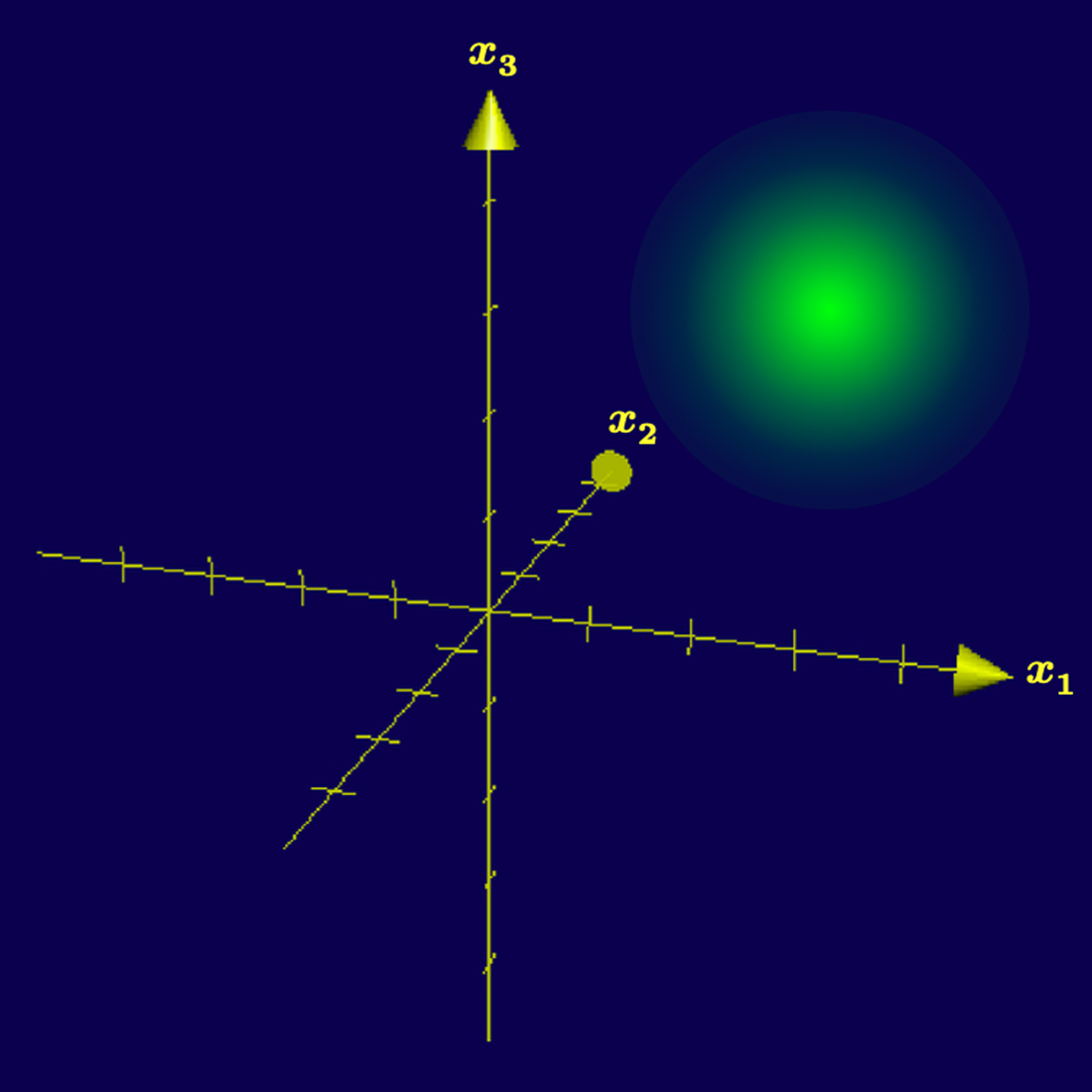
Extending this unidimensional model into three dimensions (see Figure 2), and thereby including three dimensions of femaleness—say, appearance, social conduct, and self-identification—generates a fuzzy sphere of application to the claim “P is female with respect to x 1, x 2, and x 3.” Somebody whose gender performance coincides with those of individuals commonly referred to as female would fall within the green area on each dimension; hence, it would be entirely true that such a person is female with respect to the conjunction of those attributes. An individual who deviated on one or more dimensions would fall somewhere in the turquoise or blue area. That is, the truth value reduces as a function of a person's divergence from the center of the distribution.
Truth value with respect to three dimensions x 1, x 2, and x 3.

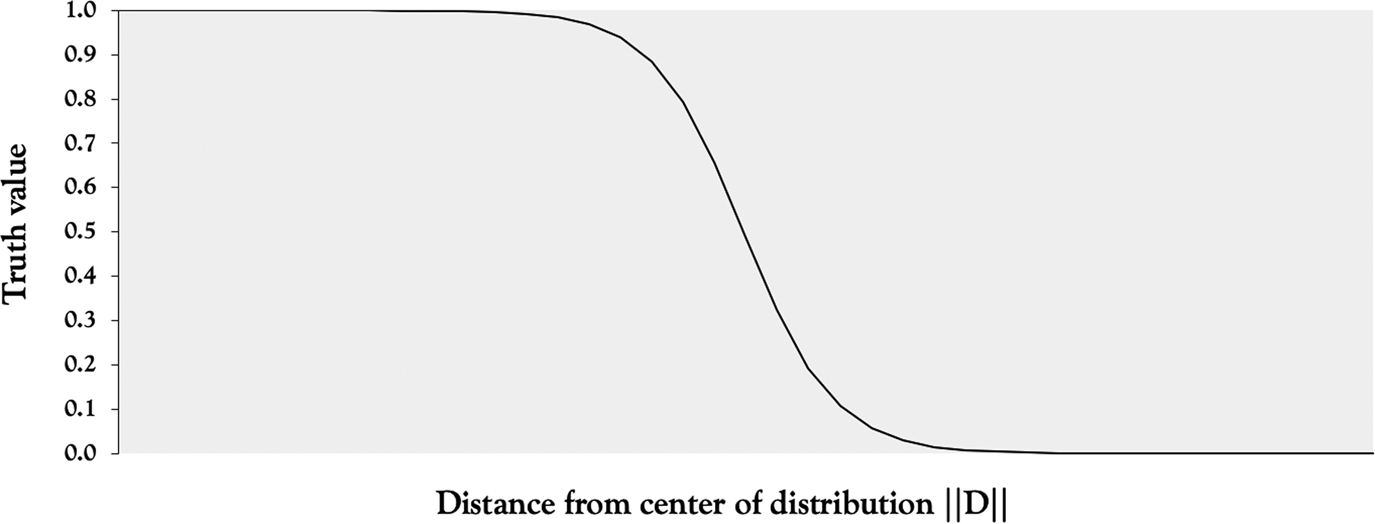
There are many more than three aspects relevant to femaleness, especially given how broad gender concepts can be divided into numerous subcategories. Thus, a three-dimensional model provides only a grossly simplified illustration of how the truth value of the application of terms such as female and woman may change depending on a person's characteristics. More generally, an individual's degree of femaleness can be thought to decrease as a function of their combined divergence from the female norm across all relevant features. With n dimensions, this divergence value can be calculated as the magnitude of the vector between the center of the distribution and a person's position in n dimensions. Setting the central point of the distribution of femaleness to coincide with the coordinates (x 1, x 2, . . ., x n) = (0, 0, . . ., 0) allows the magnitude of the divergence vector to be expressed as 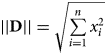 $\vert {\vert {\bf D} \vert } \vert = \sqrt {\mathop \sum \limits_{i = 1}^n x_i^2 } $. A more general representation for the change in truth value of the claim “P is female” as a function of P's overall gender expression is shown in Figure 3.
Truth value with respect to all n dimensions.

Notably, the truth value of the claim “P is female” does not decrease from 1 as soon as P differs at all from the female norm. It is only when a person's combined deviation reaches some sufficient amount that “P is female” takes on an intermediate truth value. Moreover, this model does not exclude the possibility that “P is female” and “P is male” may simultaneously have truth values above zero. Given that some individuals display female characteristics on certain dimensions and male attributes on others, there seems no reason to deny that a person may fall within the outer intersecting edges of the regions in n dimensions corresponding to the application of each gender term. People who do not display performances in line with either male or female norms—especially those who class themselves as agender (Nowakowski Reference Nowakowski2019, 3)—may sit outside the center of each distribution and hence have low or zero truth values for being male or female.
As a final point, fruitfulness is among the primary virtues good theories ought to possess (Keas Reference Keas2018, 2762), and Thomas Kuhn even describes it as being “of special importance” (Kuhn Reference Kuhn1977, 322).Footnote 9 One way in which the soritical account of gender satisfies this desideratum is by providing a novel way to interpret Gilles Deleuze and Félix Guattari's concept of a “line of flight” (Deleuze and Guattari Reference Deleuze and Guattari1988, 117). Throughout their various works, the pair theorize several lines corresponding to different types of relations between an individual and society (Potts Reference Potts2001, 148; Windsor Reference Windsor2015, 158). Molar lines represent the dominant social forces that define, categorize, and regulate, and lines of flight are the trajectories people take to resist societal impositions (Potts Reference Potts2001, 149). Edward Thornton notes that translations of the French ligne de fuite can be misleading; fuite refers specifically to fleeing or escaping, not a maneuver through the air (Thornton Reference Thornton2018, 16). Individuals who do not conform to gender expectations oppose hegemonic social norms through their performance. In Deleuzoguattarian terms, they “deterritorialize” by disrupting the supposed boundaries of gender categories (Deleuze and Guattari Reference Deleuze and Guattari1988, 277; Sotirin Reference Sotirin and Stivale2011, 121). A person's combined discrepancy from social norms thus constitutes a “vector of escape”—an alternative translation of ligne de fuite—from the binary two-sex model and the gender expectations it entails. Queer individuals, especially, may transgress hegemonic regimes via their fluid gender expression and inability to be classified according to accepted categories of male and female (Jagose Reference Jagose1996, 3; Saunders Reference Saunders2008, 115–17). Hence, people whose gender performances are difficult to gauge using rigid identity concepts can be thought to enact a line of flight through their departure from the nexus of typical gender expressions.
VI. Moving Forward
Gender is a highly contested topic in the contemporary culture wars, and any hope of productive conversation requires a shared understanding of language.Footnote 10 This paper has argued that many speech communities use gendered words in ways endorsing the centrality of performances to gender. Since numerous ways of performing gender are vague in much the same way that many physiological characteristics are, the claim that a person is male or female with respect to a single attribute can be thought of as a sorites paradox; all elements of gender, taken together, constitute a multidimensional paradox. Fuzzy logic resolves this by rejecting the dichotomous notion of truth put forward by classical logic, and with it the crude absolutism of widespread beliefs about gender membership. Many individuals may perform various culturally accepted aspects of gender in conflicting ways and hence be male or female—as the terms are currently used—only to a certain degree. The soritical model accounts for the multiplicity of factors involved in gender categories while retaining adaptive flexibility for linguistic changes based on social, cultural, and temporal differences between speakers. Conceptualizing gender as a multidimensional sorites paradox thus provides an apposite framework for making sense of the vagueness inherent within identity concepts so essential to our lives.
Acknowledgments
Many thanks to Karen Saunders for her tireless enthusiasm and support, Doug Campbell for his helpful advice, the entire Grace-Kemp lab for their encouragement (and office space), and two Hypatia referees for their valuable comments.
Rory W. Collins recently completed his undergraduate studies at the University of Canterbury in New Zealand, triple-majoring in philosophy, English, and psychology. He was previously Co-Editor-in-Chief of the Undergraduate Philosophy Journal of Australasia, a peer-reviewed journal publishing high-quality work from emerging scholars worldwide. His research interests are diverse and interdisciplinary, and he has written articles on topics from performance-enhancing drugs to sixteenth-century French literature to psychoanalysis. rorycollins97@gmail.com