Introduction
As a contribution to understanding the world biogeography of seed dormancy, genera such as Ilex with a cosmopolitan distribution merit study to determine if the kind of dormancy in individual species is correlated with geography. The Ilex genus (Aquifoliaceae) consists of more than 500 species of dioecious shrubs and trees, some of which are deciduous and others evergreen (Cuénoud et al., Reference Cuénoud2000). The present distribution of Ilex includes Asia, Europe, North and South America, a few Pacific islands, northeastern Australia, sub-Saharan Africa and Madagascar (Loizeau et al., Reference Loizeau2005). According to Cuénoud et al. (Reference Cuénoud2000), Ilex already had a cosmopolitan distribution long before the end of the Cretaceous period.
The embryo in seeds of Ilex species is differentiated but small (underdeveloped) (Martin, Reference Martin1946; Hu, Reference Hu1975; Ng, Reference Ng1991; Young and Young, Reference Young and Young1992; Chien et al., Reference Chien2011), and it grows inside the seed prior to radicle emergence (e.g. Hu, Reference Hu1975; Chien et al., Reference Chien2011). Thus, seeds have morphological dormancy. Furthermore, the embryo in Ilex seeds has low growth potential, i.e. physiological dormancy (PD), and warm and/or cold stratification treatments are required to overcome the physiological inhibition of germination (Barton and Thornton, Reference Barton and Thornton1947; Nikolaeva et al., Reference Nikolaeva, Rasumova, Gladkova and Danilova1985; Tsang and Corlett, Reference Tsang and Corlett2005; Tezuka et al., Reference Tezuka2013).
The presence of both morphological and physiological dormancy in the same seed is called morphophysiological dormancy (MPD), and it has been reported in at least 90 families, including Aquifoliaceae (Baskin and Baskin, Reference Baskin and Baskin2014). In seeds with MPD, embryo growth may occur at the same time that PD is being broken (Baskin and Baskin, Reference Baskin and Baskin1994) or after part or all of the PD is broken (Baskin and Baskin, Reference Baskin and Baskin1990). Depending on the species, PD is broken by warm and/or cold stratification, and embryo growth occurs during warm or cold stratification (Nikolaeva, Reference Nikolaeva and Khan1977; Baskin and Baskin, Reference Baskin and Baskin2014). Thus, depending on the temperature requirements to break PD and promote embryo growth and response of seeds to gibberellic acid (GA3), nine levels of MPD have been described: non-deep simple, intermediate simple, deep simple, non-deep simple epicotyl, deep simple epicotyl, deep simple double, non-deep complex, intermediate complex and deep complex (see Baskin and Baskin, Reference Baskin and Baskin2014). In the simple levels of MPD, embryos grow at temperatures suitable for warm stratification (≥15°C), and in the complex levels of MPD embryos grow at temperatures suitable for cold stratification (ca 0 to 10°C).
Seeds of Ilex aquifolium, I. glabra, I. montana, I. opaca, I. verticillata and I. vomitoria from temperate areas of the Northern Hemisphere have deep simple MPD (Nikolaeva et al., Reference Nikolaeva, Rasumova, Gladkova and Danilova1985) and require both warm and cold stratification for dormancy break and germination. On the other hand, seeds of I. maximowicziana from the tropical and subtropical parts of Taiwan have non-deep simple MPD (Chien et al., Reference Chien2011) and require only warm stratification for embryo growth and germination. Seeds of I. asprella, I. graciliflora, I. hanceana, I. pubescens and I. viridis collected in the region of Hong Kong and incubated in a greenhouse there began to germinate after 8–9 weeks (Tsang and Corlett, Reference Tsang and Corlett2005) and are presumed to have non-deep simple MPD. Also, seeds of I. glabra from the southeastern USA germinated to 24, 56 and 70% after 49, 69 and 102 days incubation at 15°C, respectively, suggesting that the seeds had non-deep simple MPD (Hughes, Reference Hughes1964).
In South America, Ilex is represented by ca 250 species (Giberti, Reference Giberti, Winge, Ferreira, Mariath and Tarasconi1995), and seven occur in Argentina: I. affinis, I. argentina, I. brasiliensis, I. brevicuspis, I. dumosa var. guaranina, I. paraguariensis var. paraguariensis and I. theezans (Giberti, Reference Giberti, Zuloaga, Morrone and Belgrano2008), all of which are distributed in the subtropical region of the country (Keller and Giberti, Reference Keller and Giberti2011). Seed dormancy in South American species of Ilex is attributed to the presence of underdeveloped embryos, and seed germination is delayed for 3 to 9 months with germination percentages often being very low (Fontana et al., Reference Fontana, Prat Krikum and Belingheri1990; Cuquel et al., Reference Cuquel, Carvalho and Chama1994; Dolce et al., Reference Dolce, Mroginski and Rey2010, Reference Dolce, Mroginski and Rey2011). Thus, MPD is present and difficult to break. Several studies have been conducted on seed germination of these species, particularly I. paraguariensis (known locally as yerba mate, from which a hot beverage with the same name is made from the leaves), but the majority of them have been concerned with in vitro cultivation of embryos with the main objective of improving vegetative propagation of this species (Sansberro et al., Reference Sansberro1998, Reference Sansberro, Rey and Mroginski2001; Dolce et al., Reference Dolce, Mroginski and Rey2010, Reference Dolce, Mroginski and Rey2011, Reference Dolce2015; Wendling et al., Reference Wendling2013). Only a little attention has been given to the other species of Ilex (Dolce et al., Reference Dolce2015). No studies on Ilex species from Argentina have been concerned with identifying the level of MPD in the seeds and determining the environmental conditions required to break it. Development of effective dormancy-breaking protocols for plant propagation from seeds of these species is of high commercial and medicinal value in that the non-cultivated species serve as sources of resistance to disease and pests in interspecific hybridization with I. paraguariensis (Sansberro et al., Reference Sansberro, Rey and Mroginski2001) and therefore are an important genetic resource for this crop (Dolce et al., Reference Dolce2015).
The main objective of our study was to determine the level of MPD in seeds of Ilex argentina, I. brasiliensis, I. brevicuspis, I. dumosa var. guaranina, I. paraguariensis var. paraguariensis and I. theezans. As (1) the six species are distributed in the subtropical zone of Argentina, and (2) seeds of other species of Ilex that have been investigated have underdeveloped embryos, we hypothesized that seeds of the Argentinian species have non-deep simple MPD. To test this hypothesis, we determined the effects of (1) different alternating temperature regimes, (2) a sequence of simulated natural habitat temperatures, and (3) cold stratification on embryo growth and seed germination. We also tested the effects of GA3 pre-treatments on dormancy break and seed germination.
Materials and methods
Study species
Ilex argentina Lillo, I. brasiliensis (Spreng.) Loes., I. brevicuspis Reissek, I. dumosa var. guaranina (Reissek) Loes., I. paraguariensis var. paraguariensis (A. St.-Hil.) and I. theezans Mart. ex Reissek. are shrubs or trees up to 25 m in height. Flowering typically occurs from October to March and fruiting from January to April (summer–autumn), depending on the species. The fruit is a drupe, and each fruit contains an average of four to five pyrenes, each of which consists of a seed surrounded by a woody endocarp (hereafter seeds). The fruits are red or black and are mainly consumed by birds. All the species are native to Argentina, Brazil, Paraguay and Uruguay (Giberti, Reference Giberti, Zuloaga, Morrone and Belgrano2008). In Argentina, they are distributed in the Paranaense and Yungas (only I. argentina) eco-regions, where the climate is mainly subtropical (Cabrera, Reference Cabrera1971).
In Argentina, Paraguay, southern Brazil and Uruguay, I. paraguariensis is economically the most important perennial crop, and its leaves are used to prepare a traditional beverage called ‘mate’, which is appreciated for its flavour, stimulating properties (contains caffeine and theobromine) and content of vitamins, folic acid and many polyphenolic compounds (Filip et al., Reference Filip2001). Mate also is used as a phytotherapeutic drug against obesity, colon cancer and other illnesses (Filip et al., Reference Filip2001; Schinella et al., Reference Schinella, Fantinelli and Mosca2005; de Mejía et al., Reference de Mejía2010). The other Argentinian Ilex species also have important phytochemical properties similar to those in I. paraguariensis and are used as substitutes or adulterants of yerba mate.
Fruit collection and seed and embryo traits
Mature fruits of each species were collected from at least 10 individuals growing at the Estación Experimental Agropecuaria Cerro Azul– Instituto Nacional de Tecnología Agropecuaria in the locality of Cerro Azul (EEA Cerro Azul, INTA), Misiones, Argentina (27°39′ S; 55°26′ W) in April 2011 for I. brasiliensis, I. paraguariensis var. paraguariensis (hereafter I. paraguariensis) and I. theezans and in January–February 2012 for I. argentina, I. brevicuspis and I. dumosa var. guaranine (hereafter I. dumosa). Seeds were manually separated from the pulp, and those that floated on water were discarded (<20%); only those that sank were used in the germination studies. Seeds were dried and stored at 5°C before studies were initiated (≤15 days).
Seed mass was estimated by weighing four replicates of 100 seeds each, and seed moisture content (MC) was assessed gravimetrically by drying three replicates of 25 seeds each at 103°C for 17 h. Seed viability was assessed in five replicates of 20 seeds per species using the tetrazolium chloride (TZ) staining technique (ISTA, 2008). Embryo (E) and seed (S) lengths were determined for 20 fresh seeds of each species. Seeds were allowed to imbibe water for 24 h, and then they were cut in half longitudinally using a razor blade under a dissecting optical microscope (Leica ES2 Stereomicroscope, Meyer; 10× magnification). Seed and embryo images were obtained using a digital camera coupled to the microscope (Sony Cyber-shot DSC HX100 V 16M), and embryo and seed lengths were measured using the image analysis software ImageJ 1.x (National Institutes of Health, Bethesda, MD, USA). Seed length was measured excluding the thickness of the endocarp, and the embryo (E): seed (S) ratio was calculated for each seed.
Effect of temperature on germination and embryo growth
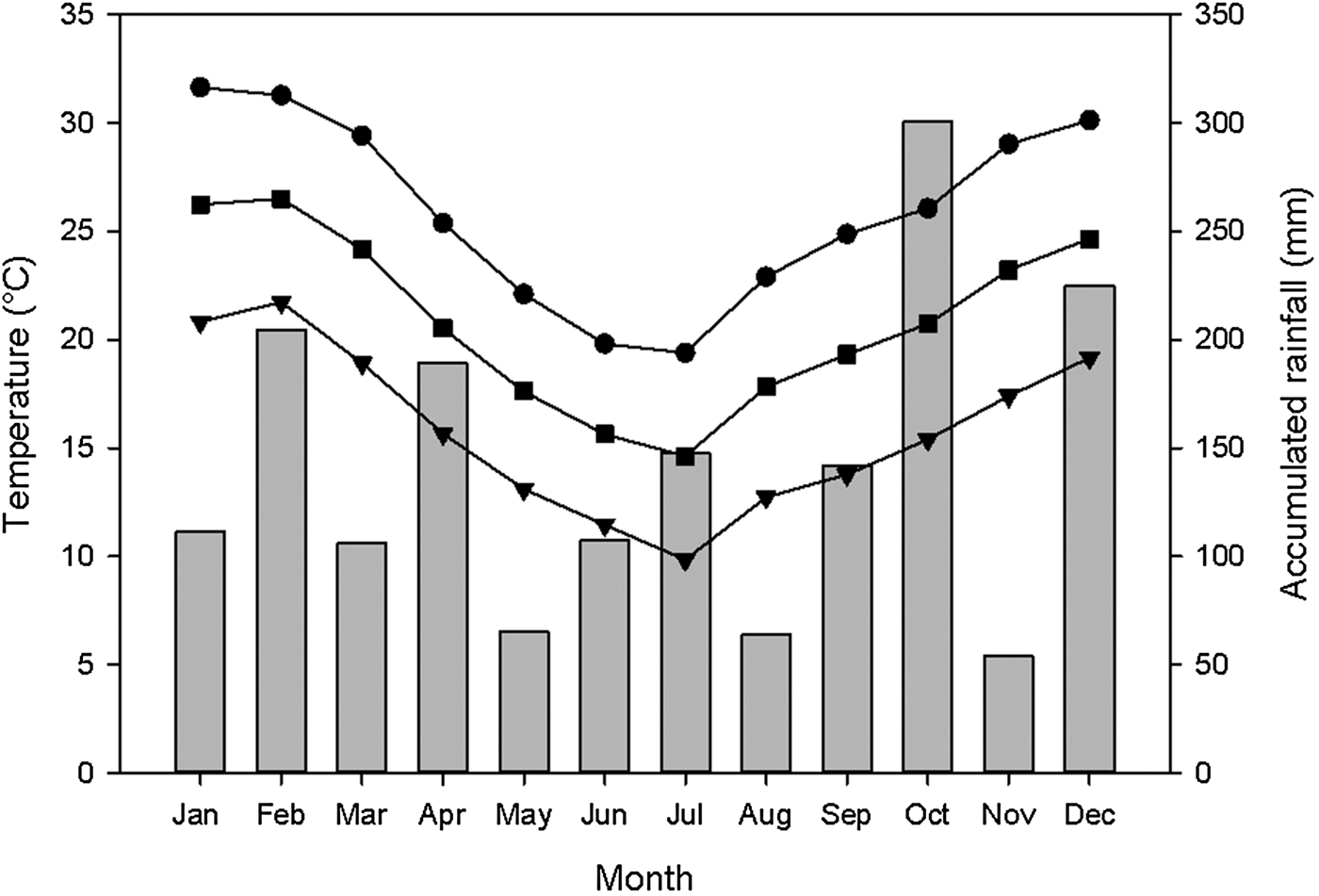
To determine the effect of temperature on seed germination, four replicates of 50 fresh seeds each of each species were sown in 90-mm diameter plastic Petri dishes on sterilized sand moistened with distilled water and incubated at 12 h/12 h alternating temperature regimes of 15/5, 20/10, 25/15 and 30/20°C and at a constant temperature of 25°C. At the alternating temperatures, a daily photoperiod of 12 h (30 μmol m–2 s–1, 400–700 nm of cool white fluorescent light; hereafter light) was given during the high temperature period. Additionally, a move-along experiment was performed to evaluate the effects of starting the dormancy-breaking protocol with cold vs warm stratification. Four replicates of 50 seeds each for each species were sown in 90-mm diameter plastic Petri dishes on sterilized sand moistened with distilled water and incubated in light in two temperature sequences: (1) 15/5°C for 12 weeks → 25/15°C for 8 weeks → 30/20°C for 12 weeks → 20/10°C for 8 weeks, and (2) 30/20°C for 12 weeks → 20/10°C for 8 weeks → 15/5°C for 12 weeks → 25/15°C for 8 weeks. These temperatures approximate those that could occur at Cerro Azul in winter (15/5°C), spring (25/15°C), summer (30/20°C) and autumn (20/10°C) (Fig. 1). The control seeds were incubated continuously at 15/5, 20/10, 25/15 and 30/20°C. Germination was defined as radicle emergence ≥1 mm, and the number of germinated seeds was monitored weekly for 40 weeks. At the end of the germination tests, when no additional germination had occurred for 2 weeks, a cut test was carried out to determine the viability of remaining seeds (soft or firm), and the final germination percentage was calculated on the basis of the total number of firm (viable) seeds.
Monthly mean (■), maximum (●) and minimum (▾) daily temperatures and accumulated rainfall (grey bars) for the period 2010 to 2012 at Cerro Azul, Misiones, Argentina.

To determine the effect of temperature on embryo growth, extra dishes of 20 seeds each were incubated at the temperatures described above, and at bi-weekly intervals the E:S ratio was determined. The critical E:S ratio to which embryos must grow before the radicle emerges (i.e. when the endocarp had split but no radicle protrusion had occurred) was also determined.
Effect of cold stratification on germination and embryo growth
To evaluate the effect of cold stratification on germination, four replicates of 50 seeds for each species were sown in 90-mm diameter plastic Petri dishes on sterilized sand moistened with distilled water and stored at 5°C in darkness for 0 (control), 4, 8 and 12 weeks. After each treatment, seeds were incubated for 20 weeks in light at 25/15°C and germination was monitored weekly. Results are expressed as germination percentages (%).
The E:S ratio was determined for 20 seeds immediately after each cold stratification treatment and at bi-weekly intervals during the incubation period at 25/15°C for each treatment.
Effect of gibberellic acid on germination
The effect of GA3 on germination was evaluated in seeds soaked in 0 (water control), 26, 260 and 2600 µM solutions of GA3 (95% purity, Sigma, USA) for 24 h at room temperature. These are the concentrations of GA3 used by Chien et al. (Reference Chien2011) for I. maximowicziana. After soaking in GA3, seeds were sown in 90-mm diameter plastic Petri dishes on sterilized sand moistened with distilled water and incubated in light at 25/15°C for 30 weeks. Germination was monitored weekly, and germination percentages were calculated for each treatment.
Statistical analysis
To test for significant effects of incubation temperature, cold stratification and concentration of GA3 on seed germination at the end of the experiment, we used a generalized linear model in R (R Core Team, 2016) with a binomial distribution and logit link function. The number of germinated seeds divided by the total number of viable seeds was used as the dependent variable; incubation temperatures, duration of cold stratification and concentration of GA3 were treated as fixed factors. Significance was tested with a Type II Likelihood Ratio Test (car package; Fox and Weisberg, Reference Fox and Weisberg2011) and differences among treatments were tested with the lsmeans function (Lenth, Reference Lenth2016). The effects of incubation temperatures and cold stratification on E:S ratio were analysed by a one-way analysis of variance (ANOVA). When significant differences (P < 0.05) were detected, a post-hoc DGC (named for the authors Di Rienzo, Guzman and Casanoves) multiple comparison test was used to determine differences among treatment means (Di Rienzo et al., Reference Di Rienzo, Guzmán and Casanoves2002, Reference Di Rienzo2014).
Results
Seed and embryo traits
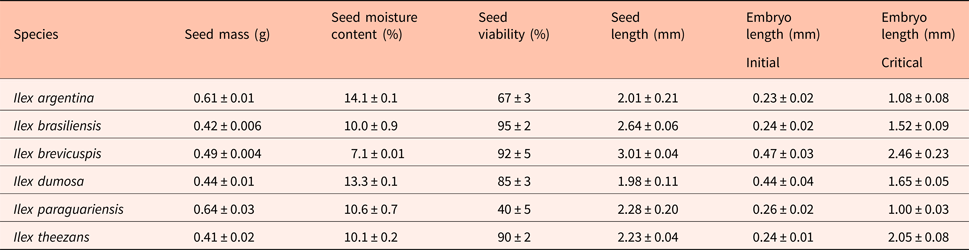
Fresh seed mass of I. brasiliensis, I. brevicuspis, I. dumosa and I. theezans varied between 0.41 and 0.49 g, while that of I. argentina and I. paraguariensis was 0.61 and 0.64 g, respectively (Table 1). Seed MC varied from 7.1% in I. brevicuspis to 14.1% in I. argentina. Both TZ and cut tests indicated high seed viability for I. brasiliensis, I. brevicuspis, I. dumosa and I. theezans (≥85%), whereas 67 and 40% of the I. paraguariensis and I. argentina seeds, respectively, were viable. All species had small, heart-shaped (rudimentary) embryos that occupied a small cavity in the endosperm at the micropyle end of the seed, and initial embryo length varied from 0.23 mm for I. argentina to 0.47 mm for I. brevicuspis. The critical embryo length for germination ranged from 1.00 mm for I. paraguariensis to 2.46 mm for I. brevicuspis. Thus, embryo length increased about 3.75- to 8.54-fold prior to germination, depending on the species.
Measurements (mean ± 1SE) of various seed traits of the six Ilex species and embryo length of fresh seeds (initial) and embryo length before radicle emergence (critical)

Effect of temperature on germination and embryo growth
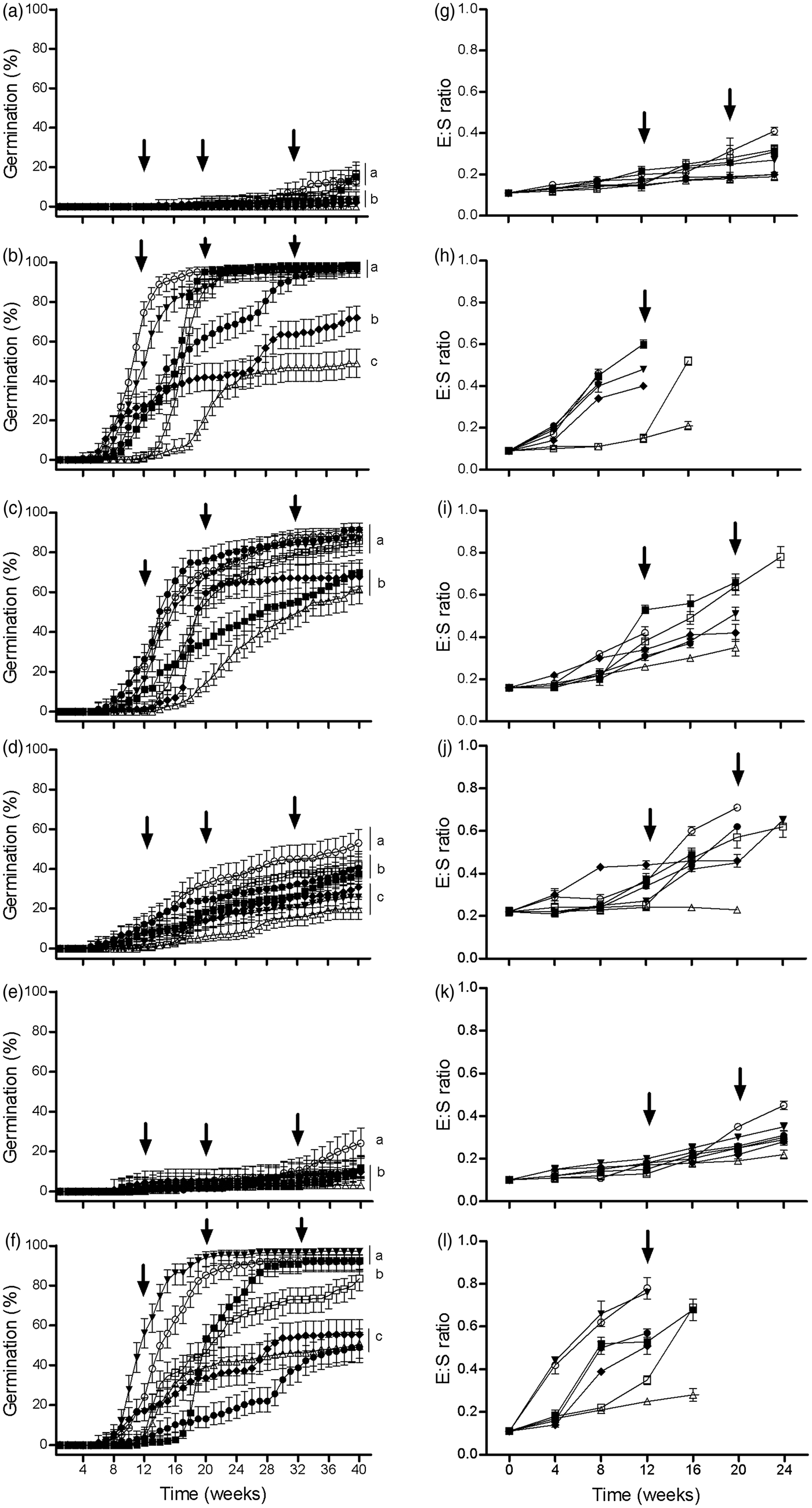
Incubation temperature had a significant effect on the final seed germination percentage for the study species (P < 0.05; Fig. 2). For I. argentina, final germination percentages were low in all treatments, with seeds incubated continuously at 25/15°C showing the highest germination percentage (17%); at 15/5°C germination was null (Fig. 2a). Seeds of I. brasiliensis and I. brevicuspis incubated continuously at 20/10, 25/15 and 30/20°C germinated to 96–98% (Fig 2b, c), while those of I. dumosa and I. paraguariensis germinated to a maximum of only 53 and 25%, respectively, at 25/15°C (Fig. 2d, e). Germination of I. theezans seeds was significantly higher at 20/10 and 25/15°C (≥93%) than at the other temperature regimes (Fig. 2f). Germination percentages of I. brasiliensis and I. theezans seeds increased when they were moved from high → low temperatures. Germination percentages of I. argentina, I. brasiliensis, I. brevicuspis and I. theezans seeds increased when they were moved from low → high temperatures; however, they did not differ significantly from those at continuous (control) temperature regimes (Fig. 2b, c, f).
Cumulative germination percentage and E:S ratio of I. argentina (a,g), I. brasiliensis (b,h), I. brevicuspis (c,i), I. dumosa (d,j), I. paraguariensis (e,k) and I. theezans (f,l) incubated for 40 weeks at continuous 30/20°C (●), 25/15°C (○), 20/10°C (▾), 15/5°C (∆), 25°C (♦), and at move-along 30/20°C (■) and 15/5°C (□). Different lower case letters indicate significant differences between means (α = 0.05) at the end of the experiment. Each value of germination is the mean (±95% binomial confidence intervals), and each value of E:S ratio is the mean (±1SE). Arrows indicate times when seeds were moved to the next temperature in the sequence.

E:S ratio in fresh seeds of I. argentina and I. paraguariensis was 0.11 ± 0.01 and 0.10 ± 0.01, respectively, and the critical E:S ratio for germination was 0.41 ± 0.01 and 0.45 ± 0.02, respectively, which was reached after 24 weeks at 25/15°C (Fig. 2g, k). For I. brasiliensis, the initial E:S ratio was 0.09 ± 0.01, and the critical E:S ratio was 0.60 ± 0.02, which was reached just before seeds were moved from 30/20 to 20/10°C (Fig. 2h). On the other hand, the E:S ratio for fresh seeds of I. brevicuspis was 0.16 ± 0.01, and the critical E:S ratio was 0.78 ± 0.05, which was reached 4 weeks after seeds were moved from 25/15 to 30/20°C, in the low → high temperature move-along sequence (Fig. 2i). However, at the end of weeks 8 and 12 embryos of I. brasiliensis and I. brevicuspis, respectively, were longer at 25/15 and 30/20°C than in the other treatments, and 16–20% of the seeds had germinated (Fig. 2h, i). For I. dumosa, initial and critical E:S ratios were 0.22 ± 0.02 and 0.71 ± 0.01, respectively, whereas for I. theezans they were 0.11 ± 0.01 and 0.78 ± 0.05, respectively. The critical embryo size for I. dumosa and I. theezans was reached after 20 and 12 weeks of incubation at 25/15°C, respectively (Fig. 2j, l).
Effect of cold stratification on seed germination and embryo growth
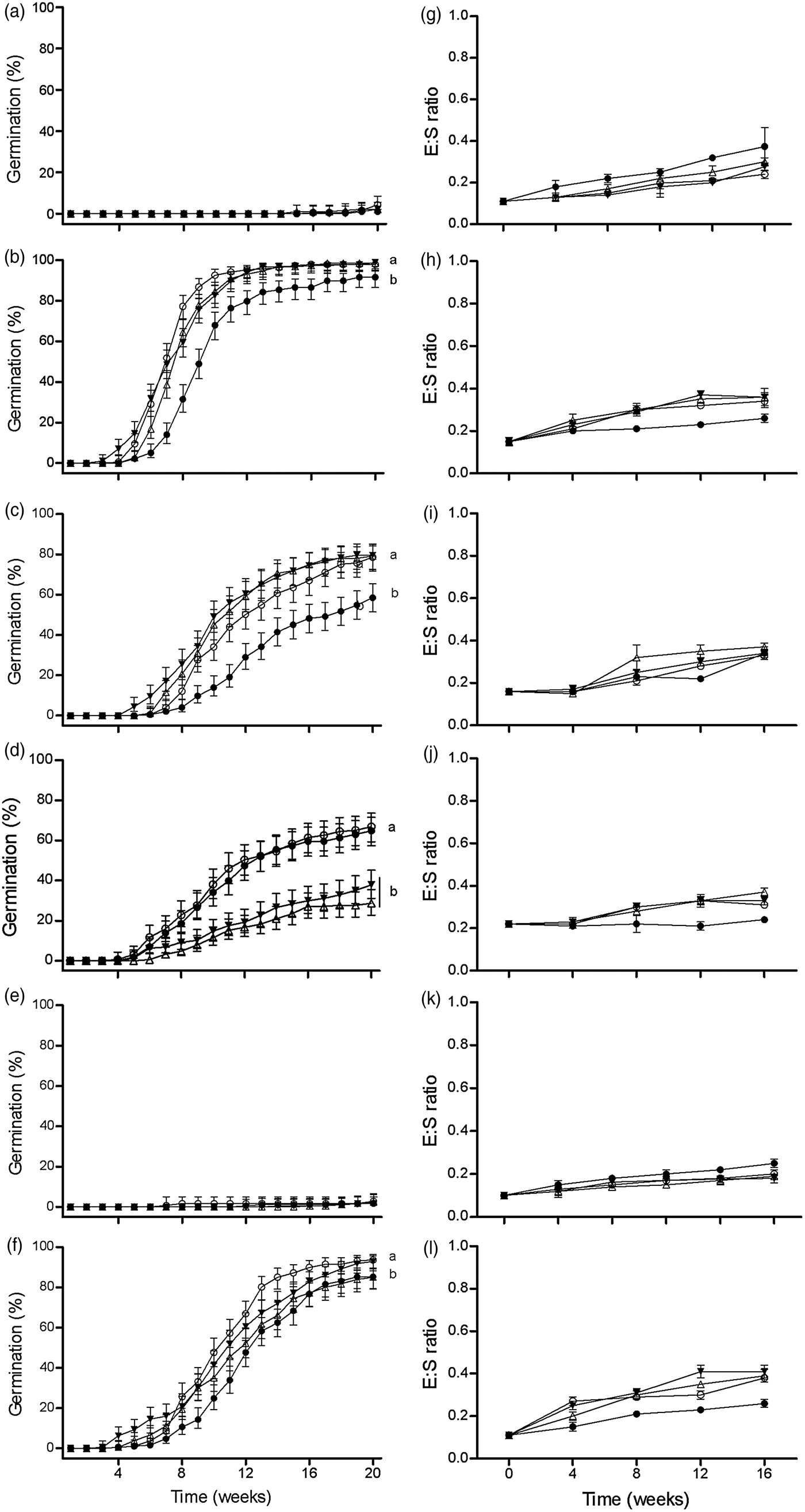
In all treatments, germination of I. argentina and I. paraguariensis seeds was ≤2% (Fig. 3a, e), while seeds of I. brasiliensis and I. brevicuspis stratified for 4, 8 and 12 weeks germinated to a higher percentage than the control (Fig. 3b, c). In contrast, germination of I. dumosa seeds was higher after 0 and 4 weeks than after 8 and 12 weeks of cold stratification (Fig. 3d). Germination of I. theezans seeds was higher after 4 and 8 weeks of cold stratification (>90%; Fig. 3f) than after 0 and 12 weeks of cold stratification.
Effect of cold stratification at 5°C for 0 (●), 4 (○), 8 (▾) and 12 (∆) weeks on seed germination percentage and E:S ratio of I. argentina (a,g), I. brasiliensis (b,h), I. brevicuspis (c,i), I. dumosa (d,j), I. paraguariensis (e,k) and I. theezans (f,l) incubated for 20 weeks at 25/15°C. Different lower case letters indicate significant differences between means (α = 0.05) at the end of the experiment. Each value of germination is the mean (±95% binomial confidence intervals), and each value of E:S ratio is the mean (±1SE).

After 24 weeks of incubation at 25/15°C, the maximum E:S ratio prior to radicle emergence for I. argentina and I. paraguariensis was in the control (0.37 ± 0.09 and 0.28 ± 0.01, respectively; Fig. 3g, k). For I. brasiliensis, I. brevicuspis, I. dumosa and I. theezans the maximum E:S ratio was 0.36 ± 0.04, 0.37 ± 0.02, 0.37 ± 0.02 and 0.39 ± 0.02, respectively (Fig. 3h, i, j, l), for seeds cold stratified for 12 weeks. Thus, the E:S ratio increased about 1.68- to 3.54-fold prior to germination, depending on the species.
Effect of GA3 on seed germination
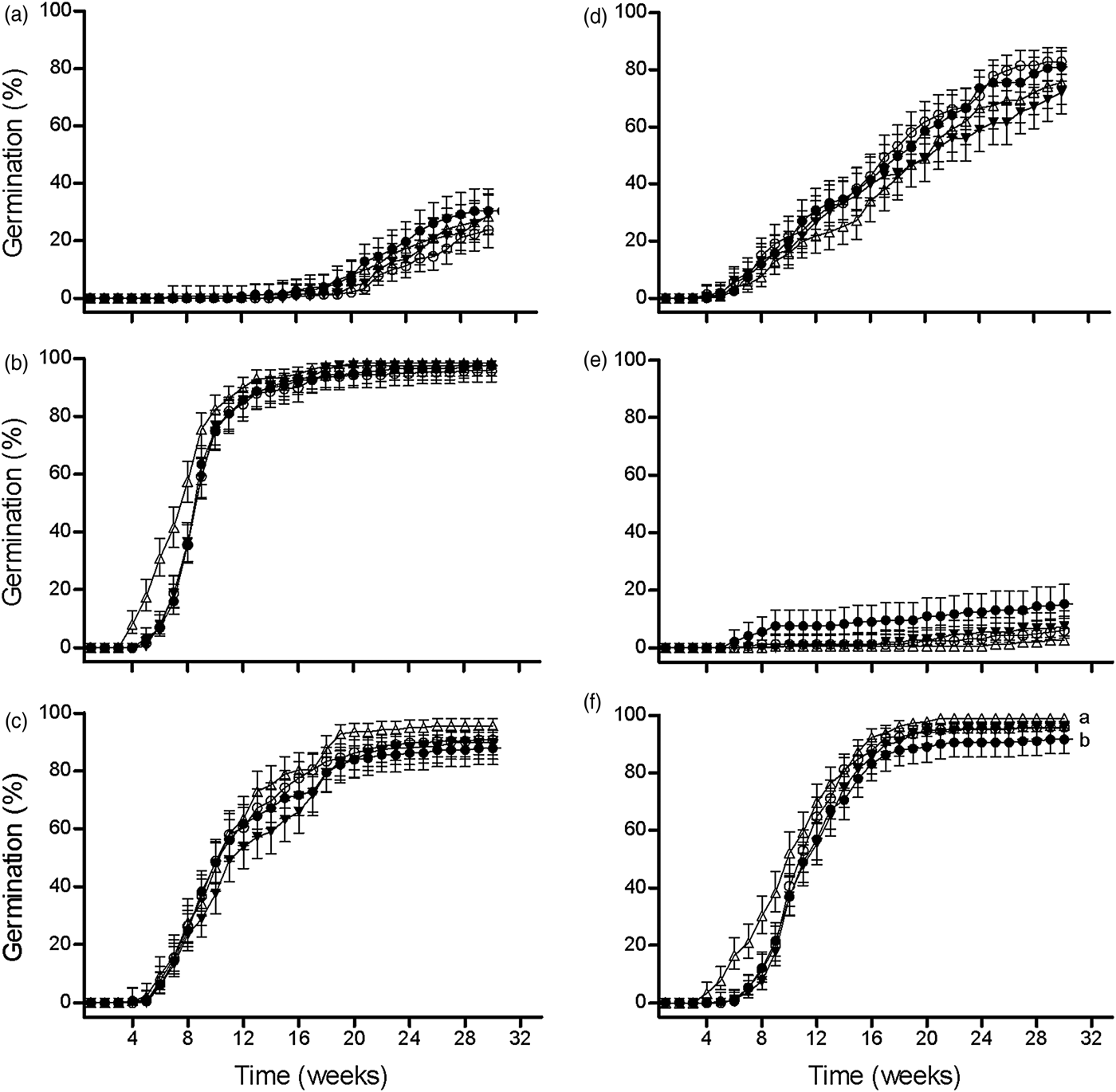
Control and treated seeds did not differ in final germination percentage (Fig. 4). Germination was >80% for I. brasiliensis, I. brevicuspis, I. dumosa and I. theezans, whereas it was <35% for I. argentina and <10% for I. paraguariensis. Germination of I. theezans seeds treated with 2600 µM GA3 was significantly (barely) higher than that of seeds in the other treatments (Fig. 4f).
Germination percentage of I. argentina (a), I. brasiliensis (b), I. brevicuspis (c), I. dumosa (d), I. paraguariensis (e) and I. theezans (f) seeds soaked in water (0, ●) and in 26 (○), 260 (▾) and 2600 (∆) μM solutions of GA3 for 24 h at room temperature and then incubated for 30 weeks at 25/15°C. Different lower case letters indicate significant differences between means (α = 0.05) at the end of the experiment. Each value of germination is the mean (±95% binomial confidence intervals).

Discussion
At the time of seed dispersal, embryos of the six Ilex species were small, heart-shaped, under-developed and occupied a small cavity in the endosperm. Regardless of incubation temperature, little or no germination occurred for any species until ≥6 weeks, indicating that seeds were dormant. Before germination, seeds of all species exhibited a 1.68- to 3.54-fold increase in the E:S ratio, and this growth occurred only during incubation at warm-stratifying temperatures (Fig. 2). Thus, seeds of the six Ilex species had simple MPD, but there were large differences among the species with regard to the speed of dormancy break during warm stratification.
Seeds of I. brasiliensis, I. brevicuspis and I. theezans germinated to ≥80% after 12, 24 and 16 weeks, respectively, with 50% of the seeds germinating after 10–12, 14–16 and 12–14 weeks, respectively. Furthermore, the E:S ratio of I. brasiliensis, I. brevicuspis and I. theezans had doubled after 4, 10 and 2 weeks, respectively. The responses of seeds of these three species to incubation temperatures were similar to those of I. maximowicziana from northern (subtropical) Taiwan in that 50% of the I. maximowicziana seeds (final germination was 95–100%) had germinated at 20/10, 25/15 and 30/20°C after 10–13 weeks (Chien et al., Reference Chien2011). Furthermore, like embryos in seeds of I. maximowicziana those in seeds of I. brasiliensis, I. brevicuspis and I. theezans did not grow during cold stratification but did so when seeds were subsequently incubated at 25/15°C. GA3 did not significantly increase final germination percentages of seeds of these three species, except for 2600 µM GA3. However, similar to the responses of I. maximowicziana, GA3 treatment increased germination of I. brasiliensis and I. theezans seeds during the first 12 weeks of incubation at 25/15°C. Cold stratification increased final germination percentages of seeds of I.brasiliensis and I. brevicuspis but not those of I. theezans. As (1) warm stratification was the only condition required for embryo growth and germination, and (2) seeds germinated to high percentages in 12–24 weeks, depending on the species, seeds of I. brasiliensis, I. brevicuspis and I. theezans have non-deep simple MPD, as hypothesized.
However, contrary to our hypothesis, seeds of I. dumosa, I. argentina and I. paraguariensis do not have non-deep simple MPD. Fresh seeds of I. dumosa reached a maximum germination of only 53% after 40 weeks of incubation at 25/15°C. However, seeds in the control for the cold stratification experiment of I. dumosa reached 64% germination after 20 weeks, and those in the control for the GA3 experiment reached 81% germination after 30 weeks. As the tests for the fresh, cold-stratified and GA3-treated seeds were started in March, April and May, respectively, it is clear that after-ripening occurred during seed storage. It should be noted that I. dumosa seeds tested in March, April and May required 38, 12 and 18 weeks of warm stratification, respectively, to reach 50% germination. In seeds with intermediate PD, a period of after-ripening (or warm stratification) decreases the length of the treatment required to break dormancy (Nikolaeva, Reference Nikolaeva and Shapiro1969). In the temperate zone, cold stratification for up to 20 or more weeks is required to break intermediate PD, but a period of dry after-ripening (or warm stratification) can greatly decrease the length of this treatment required to break dormancy (e.g. Baskin et al., Reference Baskin, Baskin and McCann1988). In the case of I. dumosa, after-ripening decreased the length of the warm stratification period required to break dormancy. Thus, we conclude that seeds of I. dumosa have intermediate simple MPD. In seeds with intermediate PD, GA3 may, or may not, be effective in breaking dormancy (Baskin and Baskin, Reference Baskin and Baskin2014); it was not effective for I. dumosa seeds.
Several pieces of evidence indicate that seeds of I. argentina and I. paraguariensis have deep simple MPD. Firstly, embryo growth was slow. In both I. argentina and I. paraguariensis, 12 weeks of warm stratification were required for the E:S ratio to double, after which another 12-week period was required for it to double again (Fig. 2). Secondly, after 40 weeks of incubation, only 15 and 21% of the I. argentina and I. paraguariensis seeds had germinated (Fig. 2). For I. paraguariensis seeds collected in five different years in Argentina, the first seeds to germinate (at room temperature) did so after 120 days (17.2 weeks). Furthermore, some new seedlings appeared on day 360 (Fontana et al., Reference Fontana, Prat Krikum and Belingheri1990). Thirdly, scarified seeds of I. paraguariensis germinated between days 120 and 360 (Fontana et al., Reference Fontana, Prat Krikum and Belingheri1990). Fourthly, embryos in seeds of I. argentina and I. paraguariensis did not grow during cold stratification but grew slowly after seeds were transferred to 25/15°C (Fig. 3). Finally, treatment with GA3 did not promote germination (Fig. 4).
In temperate regions, deep PD is broken by cold stratification for up to 20 or more weeks, and GA3 does not promote germination (Nikolaeva, Reference Nikolaeva and Shapiro1969; Baskin and Baskin, Reference Baskin and Baskin2014). However, deep PD has been found in seeds of Leptecophylla tameiameiae (Ericaceae) from the montane zone in Hawaii (Baskin et al., Reference Baskin2005). In L. tameiameiae, dormancy was broken by warm stratification, but 56 weeks were required for 50% of the seeds to germinate; some seeds had not germinated after 162 weeks when the study ended. Thus, we conclude that seeds of I. argentina and I. paraguariensis have deep simple MPD that is broken by warm stratification, and the germination percentages for these two species are low in our study because seeds were incubated for only 40 weeks. It should be noted that I. argentina belongs to the same clade as the temperate zone I. opaca (Gottlieb et al., Reference Gottlieb, Giberti and Poggio2005), whose seeds have deep simple MPD and require a long period of both warm and cold stratification for embryo growth and germination (Ives, Reference Ives1923; Barton and Thornton, Reference Barton and Thornton1947). Furthermore, the first seeds of I. chapaensis, I. ficoidea and I. kwangtungensis from Hong Kong germinated (in a greenhouse) only after 67, 46 and 49 weeks, respectively (Tsang and Corlett, Reference Tsang and Corlett2005), suggesting that they also had deep simple MPD that was broken by long periods of warm stratification.
Breaking of non-deep simple MPD in temperate regions requires about half the time as the breaking of deep simple MPD. In seeds with non-deep simple MPD, the PD component can be broken during summer with embryo growth and germination occurring in autumn (e.g. Baskin and Baskin, Reference Baskin and Baskin1990), or PD can be broken during winter with embryo growth and germination occurring in spring (e.g. Walck et al., Reference Walck, Baskin and Baskin1999). On the other hand, seeds with deep simple MPD require exposure to both summer and winter for dormancy break to occur and thus germinate in spring. For example, in seeds of Jeffersonia diphylla with deep simple MPD, part of the PD is broken in summer, embryo growth occurs in autumn, the second part of PD is broken in winter and seeds germinate in spring (Baskin and Baskin, Reference Baskin and Baskin1989). What our study has revealed about MPD in Ilex species in the subtropical regions of Argentina is that, as expected, seeds of all species required warm stratification for embryo growth and germination and thus have simple MPD. However, unexpectedly, seeds of some species require extensive periods of warm stratification before they germinate and thus have intermediate or deep simple MPD.
In relatively stable warm climates, it is not surprising that seeds require long periods of warm stratification for dormancy break, e.g. L. tameiameiae with deep PD in Hawaii, because this is a mechanism that can spread germination of a seed cohort over time. However, heretofore embryo growth and germination have not been studied in seeds of subtropical species that require more than about half a year of warm stratification to germinate. Our study contributes to a better understanding of the world biogeography of seed dormancy in Ilex in that we now know that some Ilex species in temperate as well as subtropical regions have deep simple MPD. We previously knew that seeds of some Ilex species in temperate regions had deep simple MPD broken by warm plus cold stratification and that about one year was required for germination. Now, we know that in subtropical regions there are Ilex species such as I. argentina, I. paraguariensis and I. chapaensis whose seeds require a year or more to germinate, but this dormancy is broken by extended periods of warm stratification, instead of warm plus cold stratification. The results of our study suggest that more attention now needs to be given to Ilex in the temperate zone to determine if there are species whose seeds have non-deep simple and intermediate simple MPD, in which the PD part of MPD is broken by cold stratification.
Acknowledgments
We especially acknowledge Ing. Agr. Sergio D. Prat Kricun and Ing. Agr. Luis D. Belingheri for the creation and maintenance of field collection of Ilex species from South America now available at the EEA Cerro Azul-INTA, Misiones. We also thank Professor Silvia Sühring and Professor Fernando Biganzoli for statistical assistance and Professor Jerry M. Baskin for a careful and critical reading of the manuscript. This work was supported by The National Institute of Agricultural Technology Project (INTA-AERG-PE 231221).