As the Soviet troops marched toward East-Central Europe in the spring of 1944, Budapest city officials in the Hungarian capital were more concerned with segregating Jews from non-Jews than they were with fending off the Soviet threat. Until May 1944, Hungary was noticeably ‘lagging behind’ other states in the region, such as Slovakia, the Czech Protectorate and Poland, in terms of its compliance with the Nazi ‘Final solution of the Jewish question’ (Endlösung der Judenfrage). Even after the German occupation of the country on 19 March the same year, the segregation of Budapest Jews proceeded slowly. In contrast to the majority of places in East-Central Europe, including provincial Hungary, mass deportations had never taken place from the Hungarian capital, not even after the local extreme right – the so called Arrow Cross, or in Hungarian Nyilas Party – took power after replacing Horthy with a coup on 15 October 1944. Even after the segregation maps were drawn, the government did not set up a task force to check regularly the enforcement of discriminatory laws in each segregated Jewish apartment building. As a consequence, ordinary people – both Jews and non-Jews – could to some extent influence how the measures would affect them, and the relative weakness of municipal and state authorities on the local level also enabled non-Jewish actors to enhance the power of their position. One significant such group were the non-Jewish building superintendents (házmester or házfelügyelő in Hungarian) of what became known as ‘yellow-star houses’, designated apartment buildings into which Jews were finally segregated in June 1944. This article discusses the appropriation and control of these apartment buildings by superintendents, with a closer focus on District VII in downtown Budapest, where a large proportion of such segregated houses were located.
The major sources of my article are the testimonies recorded during specific vetting processes which were intended to clear Budapest superintendents to determine whether they would be allowed to continue their work after the war. The vetting process was initiated by the decree of Zoltán Vas, the Communist mayor of Budapest on 16 May 1945.Footnote 1 Shortly thereafter, designated officials of the newly formed Superintendents’ and Assistant Superintendents’ Trade Union and representatives of the five leading ‘democratic’ parties formed vetting committees.Footnote 2 The mayor's decree dovetailed with the country-wide policy of the 1944–45 provisional government dominated by the Communist Party and its allies. The new political elite aimed to purge the administration of those who ‘violated the rights of Hungarian people’, in other words, those who collaborated with the occupational and Arrow Cross authorities in one way or another, and its orders resulted in tribunals of almost 60,000 office holders in the five years following the war.Footnote 3 Reflecting the weakening of ‘people's courts’ by mid-1945 and the incongruence of Communist Party politics in general at the time, the majority of Horthy-era bureaucrats were able to remain in office, especially if they were superintendents.Footnote 4 Nevertheless, all the Budapest superintendents had to testify before vetting committees and prove that they did not commit grave atrocities during the Nazi occupation if they wanted to retain their positions. The testimonies, which often contain concise descriptions of brutal, violent events show that this formerly insignificant job entailing the management of the daily affairs of an apartment building proved to be decisive to the lives of many from June 1944 to January 1945. Even before the implementation of the four anti-Jewish laws that the Hungarian parliament passed between 1938 and 1942, the majority of superintendents were not Jewish, but after 1942, all the Jews were excluded from the profession. By 1944, superintendents eventually became the semi-official local enforcement branch of anti-Semitic policies as a result of their considerable autonomy within apartment buildings.
The documentation of the vetting process reveals that, after the Nazi occupation of Hungary on 19 March 1944, superintendents were not only implicated in enforcing anti-Semitic discrimination, but were sometimes involved in aggravating these policies while at the same time enjoying the benefits of persecution. By contrast, some superindendents helped certain Jews to survive. The acknowledgment that popular complicity, the experience of persecution and survival rates varied house by house offers a disconcerting perspective on the Budapest Holocaust, as it throws local actors and their responsibilities into relief. The analysis of the micro levels of the Budapest Holocaust offers a unique perspective on politics, state power and popular responsibility during the persecution of Hungarian Jews, even though it is not intended to exhaust fully any of these themes, and such analysis should be read together with other works on the period in question.
It seems that the past few years have produced several works which have described and engaged with the spatiality of the Holocaust and social history in general.Footnote 5 A shift from focusing on the concentration camps to the urban aspect of the ‘Final solution’ manifested itself in a number of monographs published recently about individual cities, ghettos and the specifically urban transformations caused by the Holocaust in East-Central European cities. Works on the Warsaw and Łódź ghettos, as well as on Białystok, Budapest and Breslau – to mention but a few – have investigated from different theoretical and methodological perspectives how community building, formal and informal networks within city populations and urban administrations changed under Nazi rule.Footnote 6 Such novel approaches have not only highlighted new details about the Holocaust, but have also offered a vantage point for reinterpreting conventional wisdom by emphasizing acts of resistance, co-operation and collaboration by everyday people, as well as the socially and spatially divergent experience of urban populations during World War II.
In a recent monograph Holocaust City: The Making of a Jewish Ghetto, Tim Cole has demonstrated how considerations of space played a primary role during the persecution of Budapest Jews during the German occupation. He maintained that the concentration of Jewry was far from being a quick and automatic process, and that the difficulty of designating Jewish and non-Jewish spaces within the city contributed to the belated establishment of the ghettos.Footnote 7 Cole extensively analysed debates on racial urban planning between various administrative bodies, primarily the Ministry of Interior and the municipal government.
Shifting attention to the investigation of everyday life during the Holocaust raises the question of the population's co-operation, collaboration and responsibility for the persecution of Jewry. As Alf Lüdtke has pointed out in connection with Nazi rule in Germany, ‘inquiry into the history of everyday life points out the extent to which most “average people” actually clung to the Nazi regime in their concern to survive’.Footnote 8 With regard to the Hungarian context, István Deák has argued that historiography and popular propaganda during the Communist period castigated ‘Hitlerite fascists’ and the Hungarian political elite for the genocide of Hungarian Jewry while tacitly exonerating the rest of the country from charges of collaboration.Footnote 9 At times, Jews even vanished from history and commemoration or appeared disguised as the ‘victims of Fascism’ or as ‘anti-Fascists’, given the retroactive teleology of official historiography to portray twentieth-century Hungarian history as a constant fight between Fascists and anti-Fascists.Footnote 10 The paradigm of minimal responsibility for everyday people remained salient after 1989, even as the upsurge of memory from survivors over the past two decades, along with acts of commemoration and historical research into the responsibility of wider strata of Hungarian society, have modified the static image of ‘Nazi bureaucrats and their Hungarian allies vs. Jews’.Footnote 11 Nevertheless, only a few works similar to Jan T. Gross’ Neighbors, and his Fear, which controversially implicated the Polish people in the persecution of Jews in Poland, have appeared with regard to Hungary.Footnote 12
An inquiry into the local level highlights the fact that the architectural diversity of the urban environment was a key factor in shaping the outcome of radically anti-Semitic policies. Looking at how everyday people translated official policies to the level of interactions within apartment buildings shows that urban space was not only crucial for municipal officials turned makeshift urban planners, but even for their tacit acolytes, probably a large percentage of the Hungarian population, who interpreted, censored and recast politics on a smaller scale.
Budapest, Judapest and anti-Semitic discrimination
In common with many other cities in Nazi-occupied Europe, discrimination was also articulated in spatial terms in Budapest soon after the Wehrmacht occupied the country and its capital. The municipality restricted Jewish access to street life from April 1944, and after 21 June they had to move to designated yellow-star houses where they remained confined except for a few hours of shopping time every day.Footnote 13 Social networks within the segregated residential community and its relations with the superintendent acquired more significance than ever before.
Ironically, the spatial concentration of residents in 1944 proved that apartment buildings – largely erected during the late nineteenth and early twentieth century to celebrate and showcase the modernization of the Hungarian metropolis – could be used as effective prisons as well.Footnote 14 The possibility of social control was historically coded in the architecture of Central European apartment buildings. Péter Hanák has argued that the floor plan of the buildings allowed for social mixing, proximity and a relative lack of intimacy between various, mostly middle-class, groups, as they housed apartments of various sizes and quality. The commotion within the nearly ubiquitous inner courtyard was visible to all residents, as most apartments opened on to this relatively small, rectangular space.Footnote 15
Apartment buildings, microcosms of downtown society itself, had always housed a socially and denominationally heterogeneous population, with the majority built in the second half of the nineteenth century.Footnote 16 As a result of late nineteenth-century assimilation and social and economic modernization, Jews settled all around the capital, a predominantly Catholic city.Footnote 17 The constant move of the Jewry ‘out of the ghetto’ is evident from both these factors and is reflected in the distorted anti-Semitic perceptions of the city as ‘Judapest’, in which the spatial dispersion of Jews appeared as a sign of their conquest of the Hungarian capital.Footnote 18
After 1920, Regent Miklós Horthy's newly established authoritarian regime included Jews among the scapegoats blamed for the devastating territorial losses suffered as a result of the Trianon peace treaty (1920).Footnote 19 Nevertheless, apart from the numerus clausus discriminatory law, which strove to peg Jewish enrolment at universities to their proportion in the total population,Footnote 20 no major attempts were made to turn back the clock of assimilation and acculturation until the late 1930s. Besides domestic developments, the fate of Jews was connected to foreign policy concerns. Hungarian diplomacy in the inter-war period and during World War II was preoccupied with regaining the territories ceded to neighbouring countries; this policy resulted in the alliance with Nazi Germany and the gradual radicalization of anti-Semitic policies.Footnote 21
Based on religion (1938), and later on race (1939, 1941, 1942) the four anti-Jewish laws radically restricted the Jewish presence in workplaces and forbade marriage between Christians and Jews (1941). Spatially diverse residential patterns, religious differences within Judaism, mixed marriages and conversions to Christian denominations led to a diverse group of some 246,000 Budapest residents affected by these laws when the Nazis occupied Hungary in 1944.Footnote 22 The harshness of anti-Semitic measures was thrown into especially harsh relief by late nineteenth- and early twentieth-century historical development. During this period, Hungarian Jews had become more thoroughly assimilated to the dominant, national and nationalistic culture than other branches of Central and Eastern European Jewry.Footnote 23 The major change in the situation of Jews in Hungary came with the Nazi occupation of the country on 19 March 1944, which directly affected 815,000 Jewish citizens.Footnote 24
The road to the yellow-star houses
Although Nazi urban planning conjures up associations with either monumental, planned cities similar to Albert Speer's – never fully realized – master plan for the city of Berlin, or alternatively the hermetically sealed ghettos of East-Central and Eastern Europe, the case of Budapest offers an alternative vision, since neither the Nazis nor their local allies could reshape the city according to their own designs, given that they ruled the Hungarian capital for little less than a year in 1944–45 and during the last stage of World War II. This meant that Nazis had considerably less time and capacity to segregate Jews than they did, for example, in Poland, where they were present from the very beginning of the war.
Segregating Jews in Budapest posed similar challenges to those faced in other larger cities in the region – such as Warsaw and Ło đ z – where the selection, concentration and deportation of tens of thousands of Jews proceeded at a far slower pace than the transformation of provincial areas into ‘Jew-free’ (Judenrein) zones. There were nevertheless important differences between the Hungarian and other East-Central European Holocausts as well as between the Holocaust in Budapest and in the Hungarian countryside. Even though the Nazis attempted the ghettoization and deportation of the provincial Jews of Hungary at a time when they were losing out in the war and had much less power than in 1939–41, this last phase of the Holocaust was characterized by a heretofore unprecedented speed and scale of deportations. For the first time, Gestapo commander Adolf Eichmann directed the operations personally, left his Berlin office and moved to Hungary, where he established good connections with leading Hungarian officials, primarily secretaries of state of the Ministry of Interior László Endre and László Baky, which ensured co-operation with the enormous local bureaucracy.Footnote 25 Eichmann and his Hungarian allies scheduled the deportation of Budapest Jews to take place after deportations from the countryside. Nevertheless, the changing political and military situation along with the difficulties posed by the spatial dispersion of Budapest Jews and disputes with various local authorities, rendered plans for a large-scale deportation from the capital impossible. In Budapest there were at least six authorities – the SS, the Ministry of Interior, the city council, the so-called Judenrat or Jewish Council forged by the Nazi authorities and Regent Horthy – which had different plans regarding the Jews of the city, slowing down the planned ghettoization and deportation process significantly.Footnote 26 Whereas the Ministry of Interior and the SS advocated setting up ghettos quickly, the city council wanted stabilization and normalization; when Horthy finally used his political power in July 1944, he personally intervened to prevent deportations from Budapest. At that point, however, the Jews of the capital already had to relocate to the yellow-star houses.Footnote 27
While the debates about segregation had been going on between various administrative bodies since April 1944, the German and Hungarian army deployed in the east was gradually pushed back from the Soviet territories, so that by late August 1944, the army had to prepare to fight on the home front, which further limited the time for separating Jews and non-Jews. As Eichmann's special squad consisted of only around 150–200 menFootnote 28 who had less power in Budapest than they had previously had in the countryside, and given the protracted debates about segregation, a peculiar situation came about, which left considerable space for both residents and various municipal and ministerial authorities to articulate their distinct interests and achieve their diverse goals. Moreover, this situation allowed for developing and implementing personal survival strategies, such as hiding or acquiring false papers.
Though the municipality removed a limited number of Jews from their apartment buildings in early April and a plan was drafted in early May to segregate Budapest Jews, this was not carried out and no substantial action was taken to set up ghettos. Meanwhile, by late June 1944, local municipalities and their faithful acolytes, the gendarmes, managed to deport virtually all the Jews from the countryside to concentration camps, primarily to Auschwitz-Birkenau.
In Budapest, however, the city administration tacitly acknowledged the impossibility of completely segregating Jews and non-Jews due to the high level of residential mixing. The designation of 2,639 yellow-star houses represented a compromise between spatial dispersion and ghettoization. The main objective of this project was to concentrate Jews in separate, decrepit and old houses, preferably off the principal and visible avenues and streets. Policy makers aimed thereby to reduce the cost of moving for non-Jews and to provide them with more preferable housing that would serve as an incentive to relocate.Footnote 29 Furthermore, the establishment of yellow-star houses created a situation in which non-Jewish superintendents were charged with policing the exclusively Jewish residents of the apartment building.
Ruling the yellow-star houses in Budapest, 1944
In the last days of November in the evening, Mrs Dobozi burst into our apartment and started shouting that the Arrow Cross militia is down in the courtyard collecting Jews, and that we also have to get out of the apartment. Just like my husband, I was trembling with fear. We were crying and begging Mrs Dobozi who told us to give either gold or diamond to save ourselves . . . Later on, I came to know that there was no Arrow Cross raid that night. Mrs Dobozi was only frightening us.Footnote 30
This testimony comes from the files of the Justificatory Vetting Committee of Superintendents and Assistant Superintendents in 1945, only a few months after the end of Arrow Cross rule in Budapest. Mrs Sándor Dobozi, aged 36 in 1945, was one of the 25 superintendents who were denounced by residents in District VII. Though the role of superintendent was usually regarded as a low-ranking occupation in Budapest society, the testimonies against Mrs Dobozi and other superintendents perplexingly suggest otherwise.
The vetting committee files reveal little of her background. Like three out of four accused superintendents, she came from a rural, provincial family to Budapest. Born in a village in the Northern Great Plain in eastern Hungary in 1909, she probably moved to the capital along with many destitute country girls who became domestic servants in middle-class households as early as their mid- to late teens.Footnote 31 Documents show that in the following years she managed to establish herself in Budapest, got married and in 1942 the Jewish owner of an inner-city apartment building on Cserhát Street hired her as a superintendent.
The occupation that the couple chose was one of the avenues of social mobility for uneducated, first-generation residents in inter-war Budapest. Although the position offered only a meagre salary, it came with one-room official quarters on the ground floor and with the possibility of engaging in another, usually artisanal occupation as well. The owners of buildings or their house managers, who were often lawyers, hired superintendents directly. As a rule, they retained their positions even after the Nazi occupation in March 1944. They could be both men and women, generally conceiving of their job as a family operation, sharing most of the responsibilities between spouses. For men, it was often the case that their wives ended up fulfilling their obligations, especially when they were away at the front after 1941.
Superintendents acted as important middlemen, negotiating between tenants, owners and state and municipal officials from the mid-nineteenth century until around 1965, when residents were first allowed to own a key to the main gate of the apartment building, and when the position of block superintendent (tömbházfelügyelő) came into being. Until then, they were charged with opening the gates of buildings at dawn and closing them at night. Entering and exiting was only possible through their consent after a given hour and those arriving home too late had to pay a fee. Superintendents also had to register guests who visited residents.Footnote 32 In addition, they had to keep the building clean and arrange garbage removal, along with taking care of small repairs within apartments.
Superintendents were famously familiar with gossips, secrets and everyday practices of the tenants, and it was precisely this surplus information that made the job attractive and a possible source of social mobility. Being gatekeepers and keepers of secrets resulted in perks and a peculiar position of power even during times of peace. As urban intermediaries, superintendents also had to face mockery, scorn and conflicts. In a 1947 poem entitled ‘After the closing of the gates’, one superintendent boasted about his power over residents, though he also referred to the hard feelings tenants harboured against him: ‘I know [the residents] whose morals are loose . . . / I know who are cheating on their husbands and wives . . . / No idea do residents have / that I can see everything / angry as they are with you, supers / I notwithstanding keep all secrets to myself / not telling a person about them.’Footnote 33
Ironically, the amateur poet wrote about the extraordinary power of the superintendent at a time when the post-war leftist leadership of the profession's trade union strove to dispel the negative prejudices against the occupation by casting it as an ordinary working-class position. In their view, superintendents were none other than exploited workers, the victims of greedy and arrogant landlords and authorities, who had always been part of the exploited classes and the victimized, even during World War II. This myth ran counter to other contemporary assessments. Back in September 1945, even a journalist working for the official publication of the newly formed trade union had to acknowledge that the recent past of the profession was ‘dirty and smeared’, which was the reason for substituting the more neutral version of superintendent, házfelügyelő, for the discredited házmester as the official designation of the profession.Footnote 34
By 1947, however, the representative body of superintendents became active in the Communist campaign against the ‘enemies of people’, which was in effect a campaign against the enemies of the Communist Party. By definition, the allies of Communists could not be former Nazis, which left no room for discussions about the collaboration of superintendents with the Nazis and the Arrow Crossmen; on the contrary, the union started to champion its members as anti-fascist martyrs.Footnote 35 This reconceptualization of the superintendents’ role in the recent past and the attempts at their collective rahabilitation probably contributed to the mild sentences that the condemned received during the vetting processes investigated in this article.Footnote 36
Based on written denunciations by residents, the vetting processes led to investigations against 25 superintendents mostly active in the inner parts of District VII, where around one fifth of the yellow-star houses – about 400 – were located. The average age of the accused male superintendents in District VII was 49, with the youngest being 33 and the oldest 71. The age of women superintendents ranged between 34 and 50, with an average of 42 years.Footnote 37
The power of superintendents gradually increased as anti-Semitic measures became harsher throughout 1944, and not even the most benevolent ones could avoid at least minimal co-operation with the extreme right regimes after the Nazi occupation in March 1944. With the advent of harsher anti-Semitic discrimination in April 1944, the gate-keeping and administrative function of superintendents became a source not just of control, but also domination, as superintendents could denounce, loot or exploit Jewish residents.
An excerpt from the vetting proceedings of Mrs Sándor Dobozi shows how space was central to social control and power during the Budapest Holocaust. The superintendent's apartment was placed on the ground floor of the building so that she could easily oversee what was going on in both the courtyard and on the street. Only Mrs Dobozi was privy to information on the Arrow Cross militia's raids, and by blackmailing Jews in return for protection, she transformed the asymmetry of information to her own advantage on a regular basis, which was a common practice among denounced superintendents in District VII.Footnote 38
Smaller buildings, dating back to the eighteenth and early nineteenth centuries would not have allowed for such concentration and control of residents, yet by 1944, these buildings had vanished from downtown Budapest. The newer, more functional apartment buildings, inspired by the architectural modernism of the 1920s and 1930s, were also less easy to control, as they had neither an inner courtyard nor an open, transparent stairwell. Given, however, that these buildings represented the high-end of the housing market – with bathrooms, central heating and a functional floor plan – city officials did not designate them as yellow-star houses in District VII. Instead, they selected from the older, nineteenth-century buildings constructed in a historicist style with a lower comfort level.
A brief comparison of District VII yellow-star houses and modernist yellow-star houses in District V, where those with international protective passes were segregated, offers a good vantage point from which to highlight the differences between the two types of buildings and the negative and positive attitudes of superintendents toward Jews. Popular writer and journalist Ernő Szép published his memoir, entitled The Smell of Humans in 1945, at the time when the vetting of superintendents started. In it, he told the story of his survival in a modernist apartment building designated as a yellow-star house. Though the apartments were overcrowded, his building had a rooftop terrace and it represented the peak of the Budapest housing market. Furthermore, Szép was lucky as one of the superintendents turned out to be a dedicated anti-Nazi, who was lenient in enforcing anti-Semitic regulations. Consequently, one of the two superintendents of the building even condoned sunbathing on the rooftop: ‘You can imagine what a blessing this was . . . Bathing suits were taken out, there was even a shower up there, just like at the beach.’Footnote 39 Szép's provocative description of the agency of Jews and superintendents to turn anti-Semitic policies on their head suggests that life in such a building was less miserable than at locations where superintendents used their position to dominate residents.
Most victimized Jews did not have the chance to obtain housing in these modernist buildings and they generally had worse relations with their superintendents than Szép. In District VII, where the Arrow Cross administration established the Pest ghetto in late November 1944, there were more than 2,800 apartment buildings,Footnote 40 and all their superintendents had to undergo the vetting process, including Mrs Dobozi. The fact that there were only 25 accusations by Jews helps to show that the 1944 relationship between superintendents and the residents of their buildings is more complicated than a victimizer–victimized relationship, as it was based on mutual interdependence, and often a mutually beneficial situation, despite the fact that superintendents were significantly more powerful than ‘their’ Jews, and could often override agreements and turn them into win–lose situations.
Nevertheless, it is highly likely that there were more conflicts between superintendents and residents than the scarcity of accusations suggests. Naturally, the possibility cannot be excluded that many superintendents adopted a neutral attitude towards anti-Semitic discrimination, and memoirs such as Szép's prove that some even helped Jews in 1944. Nevertheless, many Jews who had conflicts with their superintendents did not survive the Holocaust or did not return to Budapest from deportation. Furthermore, in the specific social and political environment of 1945, residents only pressed charges against a few select superintendents. In terms of the Hungarian politics of the time, this behaviour made sense, given the reluctance of all the influential political parties – especially the Communist Party – to address specifically Jewish grievances, or to treat grievances as specifically Jewish.Footnote 41 In addition, surviving middle-class Jews time and again found themselves in the position of the enemy according to the left-wing rhetoric of the day. Besides, former Arrow Cross Party members, especially the younger ones, were gradually rehabilitated, often and ironically enough through finding their way into the Communist movement, while survivors of persecution and those Hungarians who helped the persecuted received neither financial nor symbolic restitution.Footnote 42
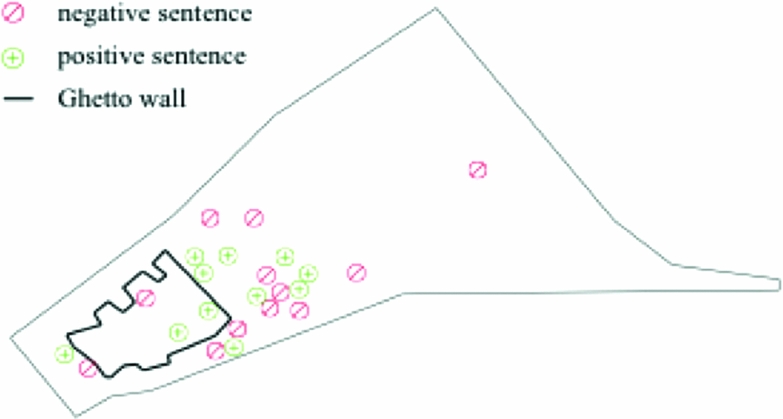
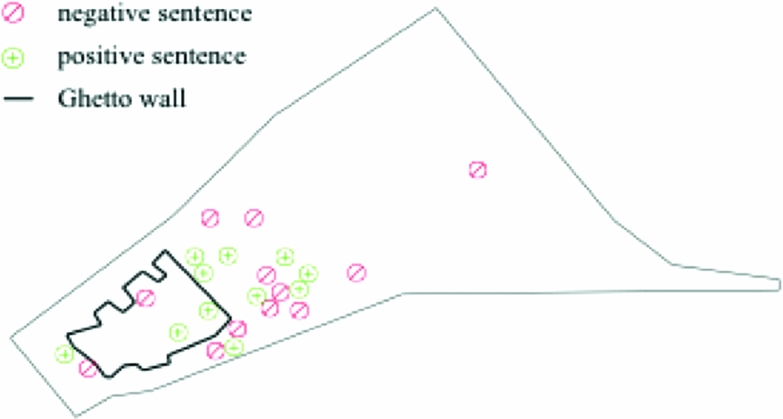
Moreover, residents might have been discouraged from filing their accusations, because as the vetting processes went on, it became increasingly clear that superintendents would either remain unpunished or would get away with mild censure. This situation is illustrated by the case of the 18 men and 8 women accused in District VII, approximately half of whom worked in yellow-star houses in 1944.Footnote 43 Even though residents generally accused superintendents of a domineering attitude and the looting of residents’ possessions, the makeshift committees only condemned 9 out of 25 superintendents, mostly by banning them from their jobs for a few years (see Figure 1). Two more received a reprimand from the committee, but were allowed to remain in their positions. Interestingly, women were more likely to receive rigorous sentences than men: the committees banned 5 out of 8 women from their jobs during the 1945 vetting process, while only 4 out of 17 men received the same punishment; 3 superintendents received other, milder forms of censure.Footnote 44
The outcome of vetting committee proceedings containing accusations of the superintendent in Budapest, District VII. Note: Negative sentence denotes the condemnation of superintendents, while positive sentence refers to those who could remain in their position. Only those cases are marked in which the outcome of the vetting process is known. Source: BFL XVII/997.
The archival documents of the Dobozi trial do not contain the final sentence that she received. It is clear, however, that in 1945 she listed her occupation as a merchant and claimed that as early as 1937 she had possessed 3,000 pengős, which equalled more than £100 or $500, a small fortune at the time. During the trial, however, residents maintained that she had only had ‘an unpolished tailor desk, a cupboard with a missing door and a small bed’ when she had taken up the superintendent position in 1942.
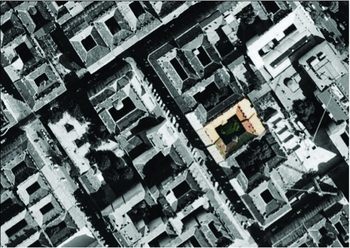
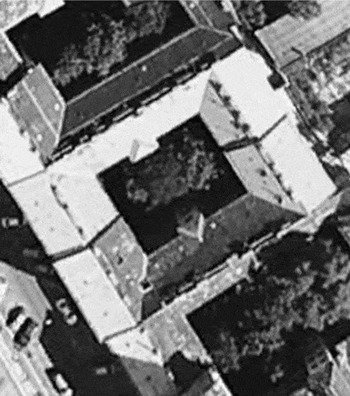
She and her husband, a tailor, lived in the superintendent's quarters of a late nineteenth-century apartment building, which formed a rectangular bloc with the neighbouring 17 Cserhát Street house (see Figures 2, 3 and 4). As middle-aged Jewish men who resided in the building were either drafted into the Labour Battalions within the Hungarian army or went into hiding, it was mostly Jewish women, the elderly and children who remained in the house and who were exposed to her authority. Thus, it is not surprising that six out of eight witnesses testifying against Mrs Dobozi at the vetting committee trial on 27 September 1945 were women. Considering the distinct predominance of women among superintendents, this case therefore illustrates a common situation when the everyday reality in yellow-star houses was largely a ‘women against women’ affair. It is important to note, however, that even though eight witnesses testified against Mrs Dobozi, four pleaded that she treated Jews favourably.
The Cserhát 17–19 apartment bloc and its surroundings. Source: Google 3D, 2010.

The Cserhát 17–19 apartment bloc. Source: Google Earth, 2010.

The Cserhát 19 building where Mrs Dobozi was the superintendent. Her living quarters are indicated with an arrow. Source: Google 3D, 2010.

At the trial, residents charged Mrs Dobozi with looting their property the previous year and accused her of profiting financially from their discrimination. Jews like Mrs László Weiner were hard-pressed for money, as they could not hold a formal job for almost a year during the Nazi occupation. According to Mrs Weiner, following the 15 October radio proclamation of the Arrow Cross government takeover, Mrs Dobozi, who always had an eye on her new pieces of furniture, went up to Mrs Weiner, and asked her to give the bed to her. Mrs Weiner told the superintendent to take it ‘on condition that if God helps me to come back, I want my furniture rendered’. As Mrs Weiner was short of money at the time, she had to borrow 1,000 pengős – approximately half a year's rent – from the superintendent, yet she stipulated that it was not a quid pro quo for the furniture. Another resident of the house, Mrs Áron Stein, filed a similar complaint. She claimed to have lost her jewellery as an unwarranted exchange for a minor loan the superintendent had provided for her.Footnote 45 These complaints highlighted the major accusations during the trials, in which verbal abuse and anti-Semitism as well as the unfair enrichment of the superintendents at the expense of inhabitants came up repeatedly.
Superintendents like Mr and Mrs Dobozi apparently had a longer history of profiting from anti-Semitic discrimination: residents charged the couple with acquiring the trade permits and goods of Jewish businessmen who had to close their businesses in the early 1940s. József Freund, a 46-year-old tradesman, claimed that Mrs Dobozi blackmailed him into giving her four metres of fine silk with threats that troubles would ensue if he did not obey. Such behaviour on behalf of the superintendent, however, is part of a larger phenomenon of mass lootings that swept through the city at that time. In fact, the real opportunity for superintendents – and for many Budapest Christians – to become rich fast came in late 1944, at a time when the war situation was worsening and the city was subject to regular bombings and came under siege. The extent of lootings was so great that even the extreme right press constantly featured articles condemning the practice. Arrow Cross leaders, reported the journalist of Esti Újság (Evening News), were furious as they regarded ‘Jewish property’ as ‘national property’, which unauthorized Christians were taking away.Footnote 46
When Jews were ghettoized during late November and early December 1944, they could only take a limited amount of their property with them, which Arrow Cross militias were likely to plunder upon arrival. As Jews were fearful about the ghetto, they tended to leave their sealed belongings in their former apartments or entrusted them to superintendents, a practice which resulted in widespread corruption and looting. Residents of the house on Cserhát Street, for example, remembered that the superintendent's husband, ‘Mr Dobozi, ostensibly claimed that he will never ever take a needle in his hand again (despite the fact that he is a tailor), as he will be able to live off his property until he dies.’ Residents noted how the Dobozis transformed their one-room home ‘into a museum-piece apartment’.Footnote 47 The unfair exchanges and forced deals between Jews and superintendents took place in the dim courtyards of the buildings and within homes, without any public control over the superintendent's actions; naturally, effective legal protection for Jews was also unavailable at that point.
Oral history interviews and vetting committee testimonies suggest that the elderly and especially women fared worse if the superintendents used their position to bully residents. For example, a resident in the Dobozis’ Cserhát Street building, Zoltán Friedmann, charged the superintendent on behalf of his parents, who did not survive the Holocaust. According to his fairly general testimony, the Nazis deported them after a forced march to the Austrian border, while Mrs Dobozi looted their abandoned properties. When Mrs Béla Eisenstein, another resident of the Cserhát Street building questioned Mrs Dobozi about why she was taking away a rug from a Jewish apartment, she replied that the owners had given it to her as a present.Footnote 48
The 1944 conflicts documented in the Dobozi trial were primarily between middle-aged Jewish wives and mothers and their children on the one hand and the superintendent on the other. These resulted from Mrs Dobozi's extortion efforts, looting and cruelty as well as her whole-hearted co-operation with anti-Semitic authorities such as the Arrow Cross government. In 1945, those residents who drafted an accusation against Mrs Dobozi claimed that ‘she kept the residents of their house under terror, strolled with a stick all day, beating up the children’.Footnote 49
Particular cruelty against Jewish children can be explained by the fact that whereas before the occupation they used to play in the streets and city parks, now they were restricted to the inner courtyard space. As a child resident of a former Pest yellow-star house remembered 61 years later: ‘Since it was also prohibited to go out to the streets, we played in the stairwell all the time.’Footnote 50 While the adult Jews tended to stay in their apartments, their children might have become the most visible ‘others’ in the eyes of Mrs Dobozi, who had no children. Being doubly powerless as youngsters and as discriminated Jews, and being visibly at hand, children easily became the primary targets of the superintendent's anger.
Confirming that the superintendent was highly aggressive with Jewish children, Freund claimed that Mrs Dobozi would beat them whenever she could with a ‘cane stick’. A woman of similar age, Mrs Béla Fried – whose husband co-authored the petition against Mrs Dobozi – also emphasized the superintendent's cruelty to children: according to her, one day the superintendent hit Fried's daughter with a cane on her wrist. When Mrs Fried tried to question the superintendent, she cursed her as ‘a rotten communist’.Footnote 51 The defence of Mrs Dobozi was not documented during the trial, thus it is impossible to tell what she had to say about these accusations, some of which seemed to be the products of the post-war political-ideological context rather than a desire to give an unbiased reconstruction of the past. While it is impossible to know whether Mrs Dobozi really cursed Jews as ‘Communists’ in 1944, based on multiple testimonies it is likely that she made several anti-Semitic statements. Moreover, based on other residents’ testimonies, her generally hostile attitude towards the Jewish elderly, women and children seems entirely plausible.
Regarding the testimonies of residents siding with the superintendent, it is similarly difficult to verify to what extent these statements were influenced by the post-war political context. It is clear, however, that Mrs Dobozi could also use her power of control over the building's entrance to save lives. Four witnesses claimed that the superintendent supported them during the period of persecutions, but only one of them directly contradicted the testimony of previous witnesses on her cruelty. Illés Schmertzmann, the tradesman who owned the building, claimed to have been hidden and catered for by Mrs Dobozi for 11 days, along with his wife and two children. A 63-year-old resident, István Ruszter also claimed that he was rescued by Mrs Dobozi, who hid him in the company of nine other Jews in a Christian apartment. On another occasion, she saved one of Ruszter's daughters by hiding her in a wardrobe, while she rescued his other daughter during an Arrow Cross raid. Simon Steinberg, a tradesman, claimed that Mrs Dobozi rescued his parents by smuggling them out of the house and escorting them to the train station.
Not even the horrifying months during the second half of 1944 turned the social hierarchy upside down, and formerly rich or renowned Jews could retain and capitalize on their higher social status when dealing with superintendents, whose job in normal times involved a servile respect towards residents and authorities.Footnote 52 This might explain why the owner of the building, who had previously hired the superintendent, received preferential treatment.
Many 1945 vetting committee testimonies confirm that superintendents were more likely to favour well-off Jews. The well-established lawyer Tivadar Soros could rely on the help of a downtown superintendent to furnish him with Christian identification papers, as Soros worked for years as the manager of that building, in which position he served as the superior of the superintendent.Footnote 53 Disguised as a Christian wine-dealer, he could find refuge in a downtown apartment building. Though he had little to fear in comparison with the majority of Budapest Jews in the city because he was Christian on paper, Soros felt that bribing the superintendent was a necessary precaution. ‘Since the superintendent in a Budapest apartment house knew everything that was going on, he soon found out about [my] wine business too, and so he also had to receive his quota.’Footnote 54
Mrs Dénes Koros was a superintendent in District VII, working and living in 11 Hársfa Street. Her responsibility and the motivations behind her actions in 1944 are hard to assess based on the vetting committee testimonies, given the contradictory statements on her actions. According to two tenants’ testimonies, she helped renowned actress Hilda Gobbi, and a former coal supplier of the superintendent's family Béla Jutasi, along with musician Béla Berkei, to survive. The Koroses had significant power in 1944 as the superintendent's husband was a state detective, while she acquired Jewish businesses in the previous years. Gobbi noted that she went into hiding after the Nazi occupation and only the Koroses knew where she was. The couple brought her personal belongings to the actress's hiding place and were in touch by phone as well. Jutasi noted that when the Gestapo was looking for him, he and his family found refuge at the Koroses for six weeks, and that they also supported them with food.Footnote 55
The testimonies recorded at different stages of the post-war period for and against Mrs Koros suggest, however, that some tenants changed their minds about her responsibility in 1944 during the months following their liberation from Arrow Cross rule. About two months after the Soviet takeover of Budapest, at the end of March 1945, the owners of the apartment building received a letter signed by 12 tenants. In this petition, 11 men, along with Hilda Gobbi, requested the removal of Mrs Dénes Koros from her position. On 26 May, however, the same residents withdrew their statement, and at a subsequent vetting committee hearing on 15 August, two of them, Hilda Gobbi and Béla Berkei, provided testimonies that were in favour of Mrs Koros, as summarized above.Footnote 56 Even in that hearing, however, only three residents had a positive testimony to put forward, including Gobbi and Berkei, while seven women provided a negative assessment of the superintendent's 1944 activities.
Mrs Imre Halmi complained that Mrs Koros chased her out of a neighbourhood pub upon discovering from her window that Mrs Halmi was not wearing the obligatory yellow star. Another resident, Mrs Pál Freifeld, connected the suicide of her acquaintance to the superintendent being vetted:
Fearing of the Nyilas, on the second day of the szállassy [sic] rule, my acquaintance Mrs Windler, . . . committed suicide. Shortly before that she told me that several superintendents [including Mrs Koros] were standing in the street, blocking people with a yellow star from shopping in the grocery store, and called them the most disgusting names.Footnote 57
Another tenant, Mrs Pál Bruckner, also complained about Mrs Koros’ brutality in enforcing anti-Semitic policies. Primarily, she accused the superintendent of denouncing her husband to the police:
when my husband was home from labour service, the armed Arrow Cross militia burst into our building, and my husband [along with others] wanted to flee through the courtyard of the neighbouring building . . . Mrs Koros, however, was clandestinely observing them . . . and shouted at [him]: ‘You rotten Jew, you'd rather have to sew your yellow star than trying to escape.’ . . . Mrs Koros called the detectives the following day.Footnote 58
Both the negative and positive testimonies prove that Mrs Koros played a significant role in 1944, and that her actions directly influenced the chances of survival of many tenants in her building. It remains uncertain why the leftist Gobbi and other tenants changed their minds about the superintendent and it is also unclear whether she really supported them during the persecution. Despite the ambiguities around her role, Mrs Koros’ file points to the importance of post-war negotiations between residents and superintendents, as well as the influence of the new political regime in terms of assessing the recent past. Furthermore, the fact that both Mrs Dobozi and Mrs Koros could acquire the support of some Jews in the house during the vetting process proves that their cruelty and domination was not necessarily based on a coherent ideological conviction, but more on materialistic goals or even private sympathies and antipathies.
Taken together, these stories correspond to arguments in recent scholarship about the opportunistic – and not ideologically motivated – involvement of everyday people in the anti-Semitic discrimination against European Jewry prior to and during World War II. Based on the analysis of denunciation letters sent to the Gestapo in the 1930s, Robert Gellately has concluded that ‘selfish motives’ were driving three-fourths of the accusers, to the extent that the top-level Nazi leadership – including Herman Göring and Minister of Interior Wilhelm Frick – had to intervene to stop widespread and often ungrounded accusations.Footnote 59 The research of Vicki Caron on France and Mária M. Kovács on Hungary have highlighted how certain middle-class professional groups exploited the official ideology of anti-Semitism to settle personal power struggles, thus showing how Jew-hatred alone cannot account for Jewish–non-Jewish relations during the persecution.Footnote 60
Though it is clear from the Budapest vetting committee records and memoirs that many superintendents were anti-Semitic, their actions were motivated by a variety of reasons, including material concerns, gender dynamics and pre-war relations with Jewish residents. Most Jews did not have the means and social capital to go into hiding like Soros or to obtain better, more modern housing as Ernő Szép did. Consequently, the majority of Budapest Jewry was confined in older yellow-star houses where they were at the mercy of the superintendent.
In December 1944, Jews from the yellow-star houses were herded into the ghettos. Superintendents who profited financially from the inhabitants’ deprivation could not enjoy their good fortune for long, because the Soviet troops had taken Budapest by mid-January 1945. The important lesson from 1944 in terms of urban policy was that superintendents could mediate and alter central policies of discrimination on the micro level. The Budapest example shows that not only were segregation policies inconsistent and contradictory, but their execution also varied from house to house. The fact that discrimination was contingent upon localized personal and spatial characteristics, as well as pre-1944 social relations between superintendents and Jews, highlights the importance of re-examining the urban specificities of Jewish segregation in Europe, and points to the advantages of investigating local actors who interpreted and executed discriminatory policies.