


INTRODUCTION
Elinor and Vincent Ostrom have profoundly influenced our understanding of institutional order, collective action, and governance systems. Over time, their work (recognized, among other awards, by the 2009 Nobel Prize in Economic Sciences for Elinor and the APSR 2005 John Gaus Award for Scholarship in Public Administration for Vincent) has been approached from different disciplinary and thematic angles; it has been seen as contributing to the study of an array of topics, including institutional diversity, common-pool resources, metropolitan governance, and institutional design. Yet, one aspect unites all these contributions and gives them a special coherence and relevance for political sciences: the attempt to go beyond traditional dichotomies, such as “market versus state” or “public versus private,” that underlie not only the academic study of governance and politics but also public discourse and policy practice. The Ostroms’ work has identified a domain of complex social settings and institutional arrangements with features that elude the standard typologies framed by the public/private dualism. This is a domain characterized by hybridity, heterogeneity, and institutional diversity of mixed arrangements, quasi-markets, and quasi-governments combining features that are not adequately captured by the regular conceptual frameworks. At the same time, we realize ever more clearly that this complexity is an inescapable and defining component of what has traditionally been considered the realm of political and public affairs. Moreover, its existence is not of mere academic interest. In recent decades, recognition of its importance in public administration and public policy—as illustrated by the “Reinventing Government” and the new public management interest in public-private partnerships, quasi-markets, quasi-governments, and co-governance—has been growing to a point that many authors speak about a “paradigm change” (Bransden and Pestoff 2006; Bransden, Pestoff, and Verschuere 2012; Lynn 2006; Toonen Reference Toonen2010).
The varieties of possible institutional arrangements within this hybrid and heterogeneous space challenge our institutional imagination to go beyond existing theories in either political science or economics. One of the Ostroms’ main contributions was to develop a sophisticated framework for understanding and evaluating such arrangements. Yet, despite their efforts in highlighting the importance of this domain, as well as in giving it one of the first, if not the first, conceptual articulation, their theoretical instruments are still not as widely appreciated as they should be. Network theory or various disparate models borrowed from the microeconomics of industrial organization and pivoting on the principal-agent problem seem to be prevailing. These models are not inappropriate or incorrect, but we argue that their relevance and usefulness can be fully grasped only when the Ostromian alternative is introduced into the picture. The complexity of the subject matter requires not only a multitude of carefully chosen models but also a consolidated overall framework for putting all the pieces together.
This article is first and foremost an attempt to shed light on the Ostromian alternative and to what it can deliver. It claims that the Ostroms have crafted the basic building blocks for a systematic approach to the domain of hybridity and heterogeneity and that they have spelled out the logic that unites these blocks in a potential theoretical system (Aligica and Boettke Reference Aligica and Boettke2011; McGinnis Reference McGinnis2011; Munger Reference Munger2010; Oakerson and Parks Reference Oakerson and Parks2011; E. Ostrom Reference Ostrom2005; V. Ostrom Reference Ostrom1999; Poteete, Janssen, and Ostrom 2010; Sabetti Reference Sabetti, Sproule-Jones, Allen and Sabetti2008; Wagner Reference Wagner2005). Nonetheless, this is still a work in progress, and various aspects of this project continue to be in intermediate stages of development. Following that very logic, in this article we further develop two of those aspects. First, we identify one important, implicitly present but explicitly missing, element of this system: a theory of value or, more precisely, a theory of the heterogeneous and ambiguous nature of social valuation. Second, we illustrate how the logical analysis of the problem of the conversion of heterogeneous private values into public value, a process essential for the very construction of social order, leads naturally to the Ostromian theme of co-production, a concept that emerges in our reconstruction as pivotal to their system in more than one way. We then demonstrate how, via the theory of co-production, we are in a position to understand the nature and significance of polycentricity, the capstone of the Ostromian system. Last but not least, the article shows that when all of these analytical and theoretical pieces are seen in their logical and theoretical conjunction, the “value heterogeneity–co-production–polycentricity” axis is revealed as the backbone of a flexible but robust theoretical framework—one that is well equipped to organize empirical data, generate theoretical conjectures, and inspire normative and institutional design insights regarding an entire series of phenomena emerging above and beyond the conventionally conceptualized boundaries of the public and private sectors.
WHAT IS AT STAKE ?
A theory of value seems to be the natural complement of any approach based on a taxonomy or theory of public or private goods. This fact was recognized early in the public choice literature (Buchanan [Reference Buchanan1968] 1999, 120). But once introduced into the picture, value theory changes in significant ways our understanding of the nature of goods and especially of the private/public goods distinction. The fact that preferences about both private and public goods are heterogeneous and incommensurable is an implicit underlying theme in much of the Bloomington School's work (McGinnis and Ostrom 2012). Yet, so far, it has not been fully articulated explicitly, even though it is one of its defining features. Although both the Rochester and the Virginia schools of public choice have often focused on the problem of aggregating individual preferences into a single representative perspective (in most cases following the mechanics of formal voting systems or showing some interest in the informal cultural mechanisms that create focal points), the Bloomington School takes value heterogeneity for granted, without assuming that it can (or in most cases should) be aggregated away; it asks instead what are the institutional arrangements that make it possible for people with different values to peacefully coexist and self-govern. As V. Ostrom (Reference Ostrom1997, 4) asked, given a world constituted by patterns of dominance in which some exercise power over others, “is it possible to conceive of binding and workable relationships being achieved by mutual agreement among colleagues working with one another?” Furthermore, “is it possible to use problem-solving modes of inquiry to achieve a more steady course, by using political processes to craft common knowledge and shared communities of understanding, establish patterns of social accountability, and maintain mutual trust?” (18–19).
This approach changes and redefines the very idea of how a “good political system” looks. One is not looking for the best way to aggregate values into a single coherent system, but instead for the best way in which heterogeneous, incommensurable, and incomparable values can coexist and, if not enrich, at least not undermine each other. From the Bloomington perspective, the systemic centripetal aggregation of values is more of a tool of last resort, for some values and some limited cases, rather than the main concern with most values, most of the time. Going beyond the ideal-theory or general social choice approach, the Ostroms and their collaborators have identified one principle or institutional formula that creates the conditions for coping with this challenge: polycentricity. It is an institutional arrangement involving a multiplicity of decision centers acting independently but under the constraints of an overarching set of norms and rules that restrict externalities and create the conditions for an emergent outcome to occur at the level of the entire system via a bottom-up competitive process.
The key to the Ostromian system is that the problems of (belief and value) heterogeneity and polycentricity are correlated. To understand the operating principles of polycentricity and its normative significance becomes a critical task. It entails developing a descriptive theory of the nature of “public values,” how they materialize in various “state of affairs” in the public realm, how they interact and evolve in time, and how they relate to the variety of private values and preferences. In this respect, this article contributes to the development of this theory of value heterogeneity, which looms in the background of the public/private distinction with all its normative and institutional implications.
This perspective combines positive and normative theorizing. One of the most neglected facets of the theory of collective goods is the crucial role played by subjectivity: The extent to which a “good” is deemed to be rivalrous and whether it generates externalities depend on the subjective value estimations of the agents involved —and is not something intrinsic to the nature of the good itself. For instance, people subjectively decide whether something “is of their concern” (i.e., whether someone else's activities create externalities for them). We may often feel that this or that situation is not a case of externalities. We may even invoke objective, absolute criteria, “out there.” Yet, as positive social scientists, we have to accept, as a basic corollary of methodological individualism and of the subjectivity of values, that only the individual decides whether something is or is not of his or her concern. This is a fact, but one that also has significant normative implications. In practice, it is of course the case that certain values are imposed on individuals, regardless of what they think is of their concern. This is precisely why we need to understand the details of the social and political process by which some values, but not others, end up being generally enforced and embedded into practice. Hence, the first important matter at stake in this article is to bring back and into the open a certain type of subjective value theory as a key component of institutional theory and analysis.
Second, a value-based approach puts us in the position to reconsider the problem of the creation of “public value” in governance systems, especially with respect to co-production: the situation in which the consumer's input is a necessary part of the production process. We need to understand not only the concept of public value but also how it is created; that is, we need to better understand the social-economic-political processes by which groups and societies create state of affairs deemed valuable by some (preferably many) of their members. The theory of co-production is one of the relatively well-developed attempts to delve into the “how” question (Bransden and Pestoff 2006; Oakerson and Parks Reference Oakerson and Parks2011; Parks et al. Reference Parks, Baker, Kiser and Oakerson1981). Yet, it presently contains at its core a technical public choice ambiguity that has somehow escaped notice for the past 30 years: It assumes that agents work to maximize total output (i.e., they all altruistically work for the public good), neglecting the fact that agents may also maximize individual profit. It is realistic to assume that sometimes individuals try to maximize total output or collective benefits and sometimes try to maximize individual profits. Hence it is important to look at the second scenario not only for theoretical reasons but also because it is likely that individual profit maximization is a plausible behavioral pattern in many real-life situations. This article addresses this task, thereby obtaining what may be considered a novel and unfamiliar type of market failure that so far has been neglected by the literature and that, we argue, is an important but ignored legacy of the Ostroms’ work.
This type of market failure is related to the well-known team production problem (Alchian and Demsetz Reference Alchian and Demsetz1972; Miller Reference Miller1992), but it differs in one important regard. Whereas team production involves cooperation for the goal of producing something for an outside consumer, in the case of co-production the good is consumed by the members of the production team. For this reason, the problem of monitoring can be solved more easily in the case of co-production because the agents have a vested interest in having the good produced in the appropriate quantities and qualities. This brings us back to the problem of polycentricity. As E. Ostrom (Reference Ostrom2005 chap. 9) and others (e.g., Leeson Reference Leeson2011) have noted, one of the important features of polycentric arrangements is precisely their ability to solve monitoring and enforcement problems. We thus get a very different result from the team production problem. Whereas in the case of team production, Alchian and Demsetz (Reference Alchian and Demsetz1972) argue that the top-down organized firm is created to solve the monitoring problem, in the case of co-production, the monitoring problem is solved more effectively by the polycentric arrangements. This is why the recognition of the co-production aspect of production (seen as the process of constructing a public good or service; McGinnis Reference McGinnis2011, 179) and provision (seen as the process of selecting the bundle of public goods or services for a collective consumption unit; McGinnis Reference McGinnis2011, 179) of many public goods undermines the case for an overly centralized public administration. In effect, as the article helps clarify, advocates of centralization confuse co-production with team production and, consequently, inappropriately apply the firm model to public administration. All these arguments bring a new light to the problem of choosing the optimal scale for the production or provision of various public goods and enhance the case for the separation of public goods provision and production. Features defining the “third sector” such as hybridity and heterogeneity thus become more intelligible.
Last but not least, all of these analytical and theoretical insights, seen in their logical and theoretical conjunction on the value heterogeneity–co-production–polycentricity axis, help us get a better sense of the analytical and normative potential of the Ostromian theoretical framework. They constitute a strong argument supporting the efforts to theoretically capture and precisely apply this potential. These also happen to be very timely efforts, because the increasingly salient phenomena emerging in public administration and business at the boundary between the public and the private sector, being far from trivial, are in fact changing under our eyes the contours and configurations of the political and public domain. As such, they are increasingly capturing the attention of both scholars and decision makers.
VALUES, EVALUATION, NORMATIVE HETEROGENEITY
The semantic ambiguity surrounding the concept of values is notorious: values as norms, values as intuitions, values as cultural ideals, values as beliefs, values as generalized attributes, values as transcendental, values naturalized. At first glance, our discussion seems to be destined to focus on abstract normative principles. However, a discussion about values is as much a discussion about possible states of affairs (i.e., possible features or states of the world) as it is about principles.
Let us focus more precisely on “public values creation,” the process of generating something that is “publicly valuable.” A society or community engages in a collective process by which a certain input (of resources, time, energy, ideas) is transformed into an output of public relevance. The output may always be evaluated in light of some basic values or normative principles. One may use “public values are created” as shorthand for saying that the output (goods, services, or a certain state of affairs produced by combining ideas and circumstances via exchange) meets certain normative criteria. If the criteria are not met, value has not been created. The better the output satisfies those criteria, the more value has been created.
This may sound too abstract and general, so let us illustrate this concept with an example of a collective action problem. Before the mid-1970s, the Washington State Pacific salmon fisheries were centrally managed, and as E. Ostrom (Reference Ostrom1999, 40) notes, they faced a typical knowledge problem: The “centrally regulated system had focused on aggregations of species and spent little time on the freshwater habitats that are essential to maintain the viability of salmon fisheries over the long term (40).” In the mid-1970s, the management system changed when a major court decision granted “Indian tribes that had signed treaties more than a century before” the right “to 50 per cent of the fish that passed through the normal fishing areas of the tribes.” Consequently, this new law “required the state to develop a ‘co-management’ system that involves both the state of Washington and the 21 Indian tribes in diverse policy roles related to salmon” (40). The change created a new system of incentives at the local level. On the one hand, the state's continued involvement assured the individual tribes that free-riding by other tribes was not going to be tolerated and, therefore, that their conservation efforts were worthwhile. On the other hand, the co-management system gave individual tribes an important economic stake in the resource, which, in turn, stimulated them to solve the aforementioned knowledge problem.
In this case, the resource (the salmon) was successfully transformed into a valuable item by the change in institutional structure. The pre-1970s state of affairs was inferior to the later state of affairs, as judged by both the Indian tribes and the state officials. The concrete mechanism by which the change occurred involved a more effective incentive for the local actors to gather the relevant information and act on this information. The example also highlights the importance of a fruitful interaction between a higher level governance authority (in this case, the state of Washington) and the local actors. McGinnis (Reference McGinnis1999) provides numerous other similar examples.
In brief, from this perspective, to create (public) value is to create a state of affairs in a social system that is considered (from a given perspective) to be an improvement over the previous state. But this simplicity is deceptive. We start to understand why if we unpack the notion of (public) value in the logical components of its conceptual space (Baier and Rescher Reference Baier and Rescher1969).
The process of evaluation may be conceptualized through a framework with four elements: (1) V, the value; (2) E, the evaluator; (3) S, the observed system (interpreted by E as a “value bearer”); and (4) A, the state of affairs of S.
V, the Value
When evaluating and designing institutional arrangements, E. Ostrom (Reference Ostrom, Batie and Mercuro2008) considers values such as efficiency, resilience, fairness, and participation rate. Similarly, Jorgensen and Bozeman (Reference Jorgensen and Bozeman2007) suggest an entire list of attributes: stability, social cohesion, common good, responsiveness, adaptability, productivity, and effectiveness.
We make no attempt to delve into the philosophical complexities of this discussion. It is nonetheless useful, given its implicit role in the discussion, to briefly focus on the distinction between personal preferences (values in the common economic sense) and social norms (values in the broader normative sense). When we are talking about public values, in this context we are by necessity placing ourselves in the realm of the discussion about social norms, rather than mere personal preferences. However, this distinction between personal preferences and moral values is often fuzzy and ever changing because preferences can become moralized or norms can devolve back into mere personal preferences (Rozin Reference Rozin, Brandt and Rozin1997; 1999). One way to make sense of this fuzziness is to see social norms as a subset of preferences, a special kind of preferences about other people's behavior (see Fig. 1). Namely they are preferences about other people's behavior that one wants everyone else to have as well (i.e., it is unacceptable for anyone not to have them). One thus could see how moral phenomena are intrinsically connected (both ontologically and analytically) to individual preferences (Buchanan and Tullock, [Reference Buchanan and Tullock1962] 1999, 27–30) and that the two could be addressed in conjunction in various models of complementarity or tradeoffs. Our approach is to follow Buchanan and Tullock's classic discussion of the matter in the Calculus of Consent and to identify the values, in the normative sense, as a very special kind of preference, precisely for the purpose of being able to use the rational choice apparatus in understanding them.
Social norms as a special subset of preferences about other people's behavior

For the current discussion, further delving into the ontological nature and epistemological status of values is irrelevant. What is important to note is that, when we talk about value creation, we are not talking about creating or reinventing new foundational normative principles. We are talking about new states of affairs A (induced by production, exchange, or mere reconfiguration) in the light of a value V.
E, the Evaluator
The second element in the puzzle is the holder of values, the actor making the normative judgment. Who is assessing and considering the state of affairs as valuable? The evaluator may be either an individual or a collective actor (a family, a corporation, a state, or the like).
Once the evaluator is a collective entity, the problem gains additional, multiple dimensions. Moreover, what is at stake is rarely a good-or-bad, yes-or-no matter. There are different levels or degrees of realization of the favored state of affairs; that is, the evaluator has a certain “aspiration level,” L, relative to each value (Baier and Rescher Reference Baier and Rescher1969). For example, if the value under consideration is equity, one would ask how equitable an individual, an institution, or a policy has to be for the evaluator to declare that the value has been instantiated. Similarly, if the value is universal education or the eradication of poverty, the aspiration level to which E subscribes is the level of education or affluence whose achievement by everyone would constitute the realization of the state of affairs that E favors. Hence the aspiration level of value V from evaluator E's perspective needs to be specified, because the failure to do so may lead to unnecessary confusion. In brief, the evaluator element is a source of multiple heterogeneities.
A, the State of Affairs
Assertions such as “This public service agency is responsive” or “This public policy advances the public good” or “This public transportation system is resilient” define a situation in which a public value is identified and asserted regarding a state of the world, in a specific domain. By action, individual and collective, the world (or, more precisely, a specific aspect of it) changes in such a way that these possible states of affairs are realized—in the context of our analysis, that means to create and to produce value.
S, the Observed System
When talking about a relevant state of affairs, one needs to be precise about the type of entity whose features are constituted in a state of affairs favored by E, the evaluator. A, the state of affairs, is a feature of an observed system, S (a state, municipality, individual, group, public service, organization, etc.). For instance, we may look at individuals not as evaluators but as the intended value bearers, as observed systems. They might be further identified by sex, age, education, or social role. The state of affairs. A, deemed valuable regarding them is a certain mindset, feature, capability, or resource reflecting a certain value, V. One may also distinguish, as in the case of evaluators, between individual and collective actors. Institutions and policies may also be seen as observed systems. Also institutions and policies may be seen as observed systems. The adjectives “individual,” “institutional,” or “policy” specify the nature of the value bearer, S. For instance, the evaluator E may have in mind the realization of a certain state of affairs in which certain individuals are acting fairly. Or equity, as one of E's institutional values, might mean that E favors a state of affairs constituted by certain institutions that generate fair outcomes in a systematic fashion. The first approach is an ethical perspective focusing on changing the values that guide individual choices irrespective of the imposed structure of penalties and rewards, whereas the second one is an institutional perspective focusing on the incentive structure within which individuals act irrespective of the moral norms to which individuals adhere. Such a difference of approach can obviously lead to very different normative positions and evaluations, although they are partly complementary.
To make sense of such differences of nuance, we can describe the matter as an evaluator E having a certain perspective P on S, the observed system. Although different evaluators, E1 and E2, may agree about the physical identification of the observed system (for instance, they may agree that the “system” consists of the individuals in a certain geographical region), they may nonetheless have different perspectives on it. The issue of perspectives can sometimes take more radical forms of framing. For instance, E1 may see all the individual value bearers as belonging to the same group, whereas E2 may separate them into two categories—the “natives” and the “immigrants”—and apply different value standards to “immigrants.” A Marxist evaluator will perceive employers of various corporations as belonging to a single class and focus on the presumed conflict between owners of capital and workers. To a liberal evaluator, defining the observed system in such a manner makes little sense (Baier and Rescher Reference Baier and Rescher1969). Thus, the same reality can be perceived not only from slightly different perspectives but also can be organized in radically different ways.
Perspectives also matter in regard to institutional and policy values. Institutions can be of different types: governments, corporations, churches, clubs, universities, and so on. Here too we can specify the evaluator's perspective. For example, universal elections with secret ballots and respect for democratic procedures may be among E's institutional values, but he or she may apply them only to the sovereign state level and not to corporate management or non-Western underdeveloped societies. The same “observed systems” (as value bearers) can be at the same time citizens, employees, and members of churches. The perspective on them, and the values considered relevant, obviously differ depending on the context.
These considerations may seem pedantic, but they are essential for understanding the magnitude of the challenge posed by any attempt to collectively generate states of affairs that are considered “publicly” or “collectively” valuable. Summarizing, we can view this process as an interaction between the evaluator E and the observed system S, with the evaluator having values V and a certain aspiration level L for each value, as well as a perspective P about the observed system and its state of affairs A:
 \begin{eqnarray*}
E(V(L),P(S_A )) \leftrightarrow S_A
\end{eqnarray*}
This synthetic formula illustrates the complexity of any discussion about values in general and public or collective values in particular. A large number of combinations are possible even under ceteris paribus conditions. The questions of interest are as follows: What is public value and what is private value in situations that are structurally defined by such a complex mesh of variables? How do we draw the line between public and private in deliberation, preference aggregation, and social action and construction?
Let us consider as an example the situation mentioned by Rozin (Reference Rozin, Brandt and Rozin1997; 1999), in which a certain value V, such as an environmental concern or vegetarianism, has not (yet) gained universal acceptance. Nonetheless, people who adhere to it do so very strongly and in a moralized fashion. Things are obviously at the borderline between private and public. Suppose there is a sharp public divide on this value (i.e., an even bimodal distribution of value V among evaluators E). Is 51% adherence sufficient to make it “public”? Considering different levels of aspirations, different perspectives, and even different observed systems makes the matter even more complicated. When does a private preference about the behavior of others become a public value that needs universal enforcement? Where stands the threshold by which one can decide that this or that state of affairs needs to be generated because it is of “public value”? Mobilizing in our help the notion of catastrophe or extinction (usually in combination with a version of the precautionary principle) is tempting but misleading: It may have a powerful rhetorical impact but no relevant operational or analytic traction for the vast number of real-life relevant cases.
Similarly, when the observed system is a socioeconomic class or an ethnic group, it may be hard to decide whether we are dealing with a public value bearer or a private one. By contrast, the distinction between a private or public evaluator seems much more straightforward. However, even here, the distinction is not perfect. Is a nongovernmental organization (NGO) a private or a public entity? By what criteria? The classic distinction between excludable and nonexcludable goods also seems fairly straightforward. Yet, even it includes a gradualist quantitative aspect (some goods are easier to exclude than others, rather than being purely excludable or nonexcludable).The availability or nonavailability of the so-called property rights technologies that are able to implement exclusion (Anderson and Hill Reference Anderson and Hill2001) may make the difference. Moreover, as we have already mentioned, whether something counts as an externality has a subjective element to it.
These are basic, even simplistic examples, all of which point out to one conclusion: The answer to the question—what makes something “public”?—may differ depending on whether we focus on the value V, on the value bearer S and its state of affairs A, or on the evaluator E. If we look at the various possible combinations of all these elements, if we add perspectives and levels of aspirations, we understand why the usual approaches based on game theory are good starting points for a discussion that nonetheless has to go well beyond the boundaries set up by them.
These are not mere exploratory conjectures. Studies of preference formation, deliberation, aggregation, public interest, voting, and bureaucratic mechanisms in democratic systems (Bozeman Reference Bozeman2007; Gaus Reference Gaus2011; Knight and Johnson Reference Knight and Johnson2011; Kukathas Reference Kukathas1999) have revealed from multiple angles that the line between public and private, or collective and individual, is actually much fuzzier. Using the “stylized facts” of game theory to define, identify, and disentangle public goods and public value production situations works only up to a point. There are many consequential situations in which the private/public distinction is not easily discernible. In such cases, one needs to move beyond formally preset models and identify and unpack the variety of mechanisms and processes that always seem to be strongly driven by circumstantial details. As Bozeman (Reference Bozeman2002; 2007, 13), whose work has been extensively dedicated to the in-depth exploration of the problem of public value, has explained, what is the public interest and what is public, and what is not, “changes not only case by case but also with the same case as time advances and conditions change.” The idea of public and, by extension, of private is dynamic. As Bozeman elaborates, this suggests “the relevance of learning and empiricism” and of the ongoing processes of social discovery, construction, and reconstruction, out of which various formulas of “the public” emerge (13). As a major philosophical reference point he identifies the pragmatist philosophy of John Dewey, an author whose works V. Ostrom has considered of defining importance as well. What both Ostrom and Bozeman note is precisely that “the public” is not something static, ex ante, and objectively defined, but rather emerges as a result of an ongoing social-political process of inquiry and negotiation.
The intuition that value heterogeneity and ambiguity require a matching type of institutional heterogeneity to accommodate them in a process in which social discovery, social choice, and social production of publicly valuable states of affairs are intertwined is prima facie plausible. Yet, the case needs to be detailed, illustrated, and analytically articulated. The question is how is that process happening, more precisely? What are the social and institutional forms that discovery, production, provision, and consumption take in given, specific circumstances? The types of channels, processes, and mechanisms connecting and forging the realm of subjective preferences and values and the realm of institutional polycentricity that constructs them as “public” need to be pinpointed and analyzed.
A good starting point is to say that there are multiple ways in which social actors and groups engage in this process of shaping and reconfiguring the state of affairs of their social environment. On top of the public values/private values divide, one may use a typology distinguishing among four types of economic processes (production, provision, exchange, and consumption) and two levels at which these processes can occur (individual or collective). The divide with respect to values decides which services and goods should be available to all out of some normative consideration, whereas the typology describes the detailed ways in which the economic processes involved may work. As one may see, the combinatorial potential is huge. Each combination, including the variety of possible institutional arrangements involved in each of the basic types, has significant operational and institutional consequences. Many of them deserve to be isolated and analyzed in depth. In the Ostroms’ research program, several such combinations have emerged as highly salient. In the next section we focus on one of them: the case of co-production. This is a phenomenon of major (but relatively neglected) importance, which may be used as an excellent illustration of the broader class of phenomena that link the realm of the private and subjectivity on the one hand, and that of the public and its institutional architecture, on the other hand.
Before moving ahead, let us note that we are getting closer to the domain of one of the most profound problems in social science: How does “the public” emerge from “the private”? How is “the private” grounded in “the public”? What is involved in individuals’ and groups’ efforts to create states of the world of “public value” out of the apparent chaos of heterogeneity? As V. Ostrom (Reference Ostrom1997, 147) put it, “The conduct of public affairs requires the pooling, rearranging, and compromising of existing interests—in the constitution of common knowledge, shared communities of understanding, patterns of social accountability, and mutual trust—that are subject to challenge and to being reestablished and reaffirmed through processes of conflict resolution.” With such questions we are at the fons et origo of social order where, as Vincent Ostrom put it, following John Searle's work, which he greatly admired, social reality is constituted and “brute facts” make room for “institutional facts” (Ostrom Reference Ostrom1997, 25). On the one hand, we have intentionality and subjectivity, and on the other hand we have the entire realm of the intersubjective that has given way to “the objective facts of the worlds that are facts only by human agreement” (Searle Reference Searle1995: 2006, 1–2). These are states of affairs that are not a matter of “mine and yours,” subjective values, preferences, or evaluations. Yet they are anchored in the subjectivity of values and preferences. The Ostroms’ investigations have prepared the path for one way of dealing with this problem, one way of studying how humans cross the bridge from the conceptual, mental, and psychological to the social and institutional. By exploring co-production, we get closer to understanding one possible path on that bridge.
CO-PRODUCTION
The Ostroms’ extensive empirical studies of governance and public administration revealed an entire series of cases wherein the collaboration between those who supplied a service and those who used it was the factor determining the effective delivery of the service. It became clear that, in many instances, the users of services also functioned as co-producers and as major sources of its value. Without the informed and motivated efforts of service users, “the service may deteriorate into an indifferent product with insignificant value.” In co-production the consumer is a necessary part of the production process. Consumer's input is essential “if there [is] to be any production at all” (Parks et al. Reference Parks, Baker, Kiser and Oakerson1981, 1001–2). Such cases are excellent vehicles illustrating the processes taking place at the ambiguous interface between public and private.
Examples abound: The production of certain services—from education and health care to police and fire protection and the justice system—depends in an essential way on the inputs of beneficiaries. Police cannot catch criminals if citizens are unwilling to provide them with any clues. The effectiveness of fire protection services depends on the citizens’ efforts to prevent fires. The justice system cannot function if no one is willing to be a witness. A professor cannot teach an unwilling or completely apathetic student. A doctor often needs the patient's inputs in the process of diagnosis and definitely his or her cooperation in treatment. It is thus obvious that in such cases, and in many others like them, the framework of standard consumer theory (Jehle and Reny Reference Jehle and Reny2011), which assumes a radical separation between producer (usually conflated with the provider) and consumer, is deficient. The Bloomington scholars (Parks et al. Reference Parks, Baker, Kiser and Oakerson1981) addressed this deficiency by building a theory of co-production, which was later elaborated and applied to a variety of cases and settings (Bransden and Pestoff 2006; Bransden, Pestoff, and Verschuere 2012; Oakerson and Parks Reference Oakerson and Parks2011).
The Model and Some of Its Consequences
First, some terminology: The producer that the standard consumer theory assumes to be fully responsible for production is called the “regular producer,” and the consumer's input in the production process is taken into consideration by means of the “consumer producer” concept.
The theory is built in terms of the following factors: Q, the quantity produced; R, regular producer inputs; w, wage rate for regular producers (or their marginal cost); C, consumer producer inputs; and o, opportunity cost for consumers to become involved in the production process. Parks et al. (Reference Parks, Baker, Kiser and Oakerson1981) consider two types of production functions:
(a) substitution: Q=αR+βC;
(b) interdependency: Q=kC αR 1−α.
The optimal co-production is found by maximizing Q subject to the budgetary constraint:
 \begin{eqnarray*}
B = wR + oC
\end{eqnarray*}
In the case of the substitution production function, optimal production is done either entirely by the regular producer (i.e., standard theory of production) or entirely by the consumer producer (i.e., self-sufficiency). The more interesting case is that of interdependency. The optimal co-production is
 \begin{eqnarray*}
\left\{ {\begin{array}{c}
{C = \frac{{\alpha B}}{o}} \\[6pt]
{R = \frac{{(1 - \alpha )B}}{w}} \\
\end{array}} \right.
\end{eqnarray*}
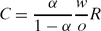 \begin{eqnarray*}
C = \frac{\alpha }{{1 - \alpha }}\frac{w}{o}R
\end{eqnarray*}
The parameter α describes the technical details of the co-production process, whereas w and o describe the relative costs involved in the regular production process and in the consumer contribution to the production process. We see that, as expected, the higher the opportunity cost of contributing, the lower the consumer participation is relative to regular production. Several simple predictions follow: Higher income individuals are less likely to participate in co-production (because they have higher opportunity costs); technologies that make customers’ involvement easier increase their participation ratio (because they decrease the opportunity costs); and higher wage costs for regular production increase consumer participation (because regular production decreases and consumers compensate to some extent).
The real problem, of course, is that one does not know the value of parameter α. In case of purely private co-production (such as concerts, customer service, websites, or health care), the competition between different regular producers is bound to gradually structure the co-production process, by means of a trial-and-error process (Alchian Reference Alchian1950), somewhat close to its optimal form. However, this process is not perfect in the Parks et al. (Reference Parks, Baker, Kiser and Oakerson1981) sense, because regular producers maximize profit, QP–wR, rather than output Q. This means that regular producers have an incentive to over-involve their customers in the production process by under-producing themselves. This leads to a very interesting insight that may well be interpreted as an unexplored type of market failure. In fact, this phenomenon takes place at the boundary between a market failure and what Bozeman (Reference Bozeman2002, 150–51) calls “public-value” failure; although the logic of model construction differs from Bozeman's, who builds a list of “public-value” failure heuristic criteria by mirroring the logic of market failure, this type may well be considered an addition or complement to Bozeman's list.
Figure 2 shows the difference between the produced output under profit maximization (solid line), computed numerically assuming that the price is equal to the marginal cost, P=w, and the optimal production under output maximization (dashed line). Lowering the opportunity cost pushes the actual output closer (but not identical) to the optimal output, because the regular producer can profit more if it stimulates the co-production partner and consumer, but the extent to which it can do so depends on the consumer's opportunity cost.
Co-production underproduction (solid line: profit maximization; dashed line: output maximization). (a) The opportunity cost of the consumer producer is large; (b) the opportunity cost of the consumer producer is small
For a given wage w, the profit-maximization regular producer output is R′, whereas the optimal regular producer output is R*. The respective consumer producer output is C′ and C*, determined from the budgetary constraint. The co-production deadweight loss is thus
 \begin{eqnarray*}
Q^* - Q' = \frac{k}{{o^\alpha }}\left[ {(B - wR^* )^\alpha R^{*\,1 - a} - (B - wR')^\alpha R'^{1 - \alpha } } \right]
\end{eqnarray*}
Let us also look at the effects of a budget reduction (or increase) for a given level of the opportunity cost faced by the consumer producer (Fig. 3). An interesting result is that, for a given level of w, the effect of the budget reduction is smaller on the profit-maximization regular producer output than on the total output-maximization regular producer output: δR′<δR*. Consequently, this leads to a more optimistic view of what happens when government spending is reduced. Intuitively, this happens because, under profit maximization, the regular producers tend to over-involve the consumer, and thus, the budget reduction has less of an effect. To give a concrete example, assuming realistically that professors are profit maximizers (rather than altruistically doing everything in their power to get the maximum educational output out of their students; i.e., professors are shirking to some extent), students have to spend more time studying (and less time doing other things) than would be optimal. The effect is that if professors’ wages are cut, the effect on educational output is not as large as it would have been in the situation of idealized, nonshirker professors. The same effect holds for all public services involving co-production, such as police, health care, and so on. This may seem like an obvious effect, but it is missing from previous accounts of co-production because they assumed that all the agents are engaged in output maximization rather than in profit maximization. It opens the door for more concrete studies. For example, how important is this co-production inefficiency for explaining why in the past decades the quality of education in the United States has been stagnant, despite a large increase in the education budget?
The effect of a budget reduction, with the opportunity cost of the consumer producer held fixed (thicker line = bigger budget; solid lines: profit maximization; dashed lines: output maximization)
Keeping in mind the co-production deadweight loss can also lead to a more nuanced view of privatization. A disadvantage of privatization, as we can see, is that the profit maximization output may be lower than the efficient output. So if government failures (Winston Reference Winston2006) are kept at bay by various political mechanisms, such as transparency and accountability, and a public interest focus is successfully pursued, it may be the case that the production or provision of certain services may be more efficient in a collective governance than in a fully privatized arrangement.
And thus we have come to illuminate from a unique angle the contours and the texture of the “third sector.” Its position and significance become more evident. As Brandsen and Pestoff (2006, 492) intuited, “The concept of co-production potentially offers a means of capturing a significant part of the quality of this dynamic” concerning “the role of the third sector in public service provision and the manner in which such services are produced.” Indeed, the third sector may be a means to elude government failures and pursue a public interest agenda, and this co-production analysis shows why it may be a more efficient form of provision and production of public services than either the state or the profit-seeking firms.
Reframing the Decentralization Debate
As Oakerson and Parks (Reference Oakerson and Parks2011) have noted in their works that further develop and apply these notions, the discusssion about the third sector is related to the important distinction between political fragmentation and functional fragmentation. The first deals with the geographical separation of public administrative bodies, each of which “provides and produces all local services for its citizens”; the latter deals with specialized profit or nonprofit enterprises, each of which “provides and produces each distinct service for all citizens” (151). As we discuss in the next section, functional fragmentation is often more efficient than political fragmentation. This is another reason why privatization often looks like a good idea, but it is also a reason for relying on the third sector (which is also compatible with functional fragmentation). The advantage of functional fragmentation is that it is more competitive. Political fragmentation has only “voting with your feet” Tiebout competition between geographical areas (which often involves prohibitive transaction costs and cannot deal with the problem of bundling many public services together). Functional fragmentation involves, however, competition inside each geographical area. For example, the competition of NGOs for private donors is imperfect (due to the “warm glow giving” phenomenon [Andreoni Reference Andreoni1990]), but it is probably still a lot more effective than Tiebout competition. The situation of a government monopoly producer is probably even less effective because the monopoly eliminates the incentive to find more efficient co-production structures and may also further reduce output.
If we compare the co-production market failure to the better known team production market failure (Alchian and Demsetz Reference Alchian and Demsetz1972), which has opened the door for an entire literature on principal-agent problems (Miller Reference Miller1992), we see that much of the discussion about centralization or decentralization has been going on under the unstated assumption that the production of public goods by the public administration at various levels is a form of team production, in which the “team” is made up of various administrative units and citizens are passive receivers of the services—rather than a form of co-production, in which the citizens are critical elements of the production processes. The arguments for centralization are very similar in form to Alchian and Demsetz's theoretical explanation that firms (i.e., islands of nonmarket centralized management) emerge because of the necessity for monitoring. A centralized public administration is supposed to be more efficient for a similar reason, because it would be able to stir and monitor the use of resources in a preferred direction, rather than allowing them to be wasted by the decentralized administration, which is supposedly duplicating efforts (Aligica and Boettke Reference Aligica and Boettke2009; Oakerson and Parks Reference Oakerson and Parks2011).
Moreover, from a team production perspective, it would appear that privatization, or functional fragmentation more generally, makes monitoring more difficult and thus decreases efficiency. From a co-production perspective, we get the exact opposite result. Rules need enforcement in order to be “in-use” rather than merely “in-form” (i.e., to be really guiding and shaping the practice as opposed to just being evoked but not applied), but for enforcement itself to be more than just “in-form,” monitors also need monitoring. This seems to create a paradoxical infinite regress of monitors of monitors of monitors, and so on. Co-production solves this problem by creating a “circle” of rules rather than a linear hierarchy. For instance, to use a common-pool resources management example from E. Ostrom (Reference Ostrom2005, 265), in a group of agents where the agents themselves take turns at being monitors, the problem is diminished to manageable levels because each monitor will now have a vested interest in making sure that the rules are followed and thus will not need outside monitoring. More generally, all systems of rules are ultimately built on a foundation of self-governing rules, and such self-governing rules exist as a result of the agents’ self-interest in having them enforced (Leeson Reference Leeson2011).
These self-governing rules are important as the foundation, but they are not the only types of rules. The point is that systems that depart at great lengths from self-governance tend not only to lack legitimacy but also to be rife with corruption, rent-seeking, and widespread inefficiencies simply because the monitors and enforcers have less of an intrinsic interest in doing their job properly and thus it becomes more costly to make sure that they are indeed doing their job. It is thus always important to consider the incentive structure of those responsible for monitoring and enforcement, as well as for rule design in general (E. Ostrom Reference Ostrom2005, 260–61; Ostrom and Ostrom Reference Ostrom and Ostrom2004). Economies of scale considerations have to be analyzed not only under realistic assumptions about the efficiency of the monitoring system at large scales but also under the co-production framework, rather than just assuming that the public producer can work independently of the consumer's inputs. Both these considerations work in the direction of favoring more functional decentralization for production and of separating production and provision, while at the same time trying to find the appropriate balance or relationship within the triad of production–provision-consumption.
The Ostroms linked the problem of co-production (as they did with social dilemmas in commons or collective action) to the observation that, even in the case of public goods and services that the market and the state cannot supply efficiently, people can nonetheless develop complex institutional arrangements to produce and distribute them, even when no single center of authority is responsible for coordinating all relationships in such a “public economy.” The Bloomington scholars have extensively demonstrated the limits of having a single governing body at a fixed geographic scale and of assigning to this governing body a host of responsibilities to manage many different common-pool resources and public goods (Boettke, Palagashvili, and Lemke 2013; McGinnis Reference McGinnis1999; Oakerson Reference Oakerson1999; Oakerson and Parks Reference Oakerson and Parks2011; E. Ostrom Reference Ostrom1972; Ostrom, Bish, and Ostrom 1988). There is no one-size-fits-all solution. Depending on the exact nature of the good, the structure of the most effective co-production process (i.e., the process that creates the highest public value) can vary.
Democracy as a Rules Co-production Process
This analysis puts us in the position to approach from a fresh angle a peculiar but crucial type of “production”—the production of good rules for system governance. From such a perspective, representative democracy may be seen as an exemplary case of co-production. Representatives are in the position of the regular producers, whereas citizens are in the position of the consumer producers. Democracy as an ideal is the view that the production of rules in all their aspects, including monitoring and enforcing, must involve the “customers” of those rules in various ways and capabilities. Dahl (Reference Dahl1989, 89) offers one way to formulate the problem when he writes that, ideally, democracy
expands to maximum feasible limits the opportunity for persons to live under laws of their own choosing. . . .But to live in association with others necessarily requires that they must sometimes obey collective decisions that are binding on all members of the association. The problem, then, is to discover a way by which the members of an association may make decisions binding on all and still govern themselves. Because democracy maximizes the opportunities for self-determination among the members of an association, it is the best solution.
We can articulate the problem even more specifically by noting that a social system is a complex web of laws, contracts, and cultural norms that can be seen as emerging from a co-production process involving the state and civil society, with R and C now representing the quality of rules instead of quantity variables as before. The formal rules create constraints for the types of contracts that can be enacted and may determine changes in the social norms (assuming that social norms adapt over the long term on roughly rule-utilitarianism grounds; i.e., people tend to subscribe to those norms that, on average, give them benefits in the existing technological and legal environment, and deleterious social norms are gradually weeded out). Conversely, the social norms create constraints on the realm of formal rules by making certain laws difficult or impossible to enforce or by preventing them from “sticking” due to legitimacy issues (Boettke, Coyne, and Leeson 2008; Crawford and Ostrom Reference Crawford and Ostrom1995).
Regardless of whether we consider the simple representative democracy model or the complex social system model, the co-production perspective leads to the same conclusion: It is likely that the quality of rules increases if the competition between rule creators is increased. As such, we can interpret the majority of typical public choice problems as co-production of rules failures. A social order that has multiple rule creators acting as centers of power and authority in overlapping jurisdictions creates the conditions for improving the rules of the co-production process. We have thus reached the very concept of polycentricity, the capstone of the Ostromian system.
POLYCENTRICITY
Putting these considerations together (i.e., the fact that different public goods, social dilemmas, and collective action situations are best managed at different scales, and the fact that public/private co-production is necessary for their effective management), we reach the concept of polycentricity, defined by E. Ostrom (Reference Ostrom2005, 283) in the following way:
By polycentric I mean a system where citizens are able to organize not just one but multiple governing authorities at differing scales. . . . Each unit exercises considerable independence to make and enforce rules within a circumscribed domain of authority for a specified geographical area. In a polycentric system, some units are general-purpose governments while others may be highly specialized. . . . In a polycentric system the users of each common-pool resource would have some authority to make at least some of the rules related to how that particular resource will be utilized.
We have already noted that heterogeneity may occur in all aspects of the evaluation process: There are a variety of values, often conflicting or involving tradeoffs, with which the observed system can comply. As such, public value creation has an unavoidable subjective element. As we have seen, this subjective element is instantiated by the fact that there always exist a variety of evaluators that judge the same system or the same state of affairs. Moreover, even if different evaluators agree about a particular value, they can nonetheless have different aspiration levels in its regard, or they can look at the same system from different perspectives. Such differences obviously have large consequences for the evaluation process and, consequently, for the proposed approaches for creating more public value. As such, we have to face Dahl's dilemma about how to reconcile such deep heterogeneities with the inevitability of “collective decisions that are binding on all members of the association.” The better this dilemma is addressed, the better the system fares in creating public value not just from one single privileged point of view (often arbitrarily privileged), but from as many different points of view as possible.
We can look at polycentricity as a structural solution to this problem. People with different values and perspectives, once allowed the freedom, gather and cooperate in particular co-production processes for the provision of public goods at different levels and in different circumstances. Indeed aggregation continues to be a problem, yet, now it is dispersed at multiple levels, segmented into a multitude of possible solutions.
The key challenge, of course, when one contemplates the possibility of such freedom to fashion a variety of arrangements at different levels, is how to prevent the entire system from disintegrating into complete chaos. The theory of polycentricity addresses precisely this issue of how to structure a variety of public goods co-production processes. Figure 4 showcases the “logical structure of polycentricity” as systematized by Aligica and Tarko (Reference Aligica and Tarko2012), highlighting the necessary and sufficient conditions for defining functional polycentricity patterns:
\begin{eqnarray*}
&&\underbrace {P_1 \& P_2 \& (A_1 \# A_2 )}_{{\rm multiplicity\, of}\atop{\rm decision\, centers}}\\
&&\quad\& \underbrace {P_3 \& ({B}_1 \# {B}_2 )\& ({C}_1 \# {C}_2)\& ({D}_1 \# {D}_2 \# {D}_3 )}_{{\rm insitutional/cultural\, framework}\atop{\rm (overarching\, system\, of\, rules)}}\\
&&\quad\& \underbrace {(E_1 \# E_2 \# E_3 )\& (F_1 \# F_2 )\& (G_1 \# G_2 )}_{{\rm spontanous\, order,}\atop{\rm evolutionary\, competition}}
\end{eqnarray*}The logical structure of polycentricity (adapted from Aligica and Tarko Reference Aligica and Tarko2012)
This combinatorial potential demonstrates that there are a large variety of possible successful polycentric systems: There are many ways in which the earlier described freedom of organization can be successfully structured. What all these systems have in common is (P1), the active exercise of diverse opinions; (P2), autonomous decision-making layers; and (P3), rules-incentives compatibility (i.e., the members of the system do not see the rules as deliberately frustrating their goals). The first element avoids “institutional monocropping” and creates the conditions for a resilient and adaptable system (E. Ostrom, Reference Ostrom, Batie and Mercuro2008). The second one addresses the monitoring and enforcement problem; by allowing a certain amount of self-governance, the monitors have a vested interest in enforcing the rules. The third element involves the co-production phenomenon head-on. Whether or not users see the rules as compatible with their own interests is determined by their values and perspectives, and allowing the variety of co-production systems to coexist maximizes the incentive compatibility.
As the figure highlights, the other necessary conditions—the existence of an overarching system of rules (although not necessarily enforced by a single actor) and the conditions for evolutionary competition (spontaneous order)—can be achieved in practice in a variety of ways. The structuring of the co-production diversity and the avoidance of chaos are realized thanks to the overarching system of rules. This element is indeed the main difference between polycentricity and anarchy. As Oakerson and Parks (2011, 154) put it,
Polycentric governance depends on two institutional conditions related to the design of governmental arrangements: the first is the existence of multiple independent centers of authority; the second is that their independence must not be absolute. All authority must be subjected to limits, and it must be possible to introduce new limits. Such limits exist in recognition of interdependencies among clustered and nested communities and serve to qualify the independence of various centers of authority.
In addition to having an overarching system of rules that is not illegitimate in flagrant ways (as a result of severe conflicts with members’ interests), polycentricity also involves the following conditions: a clearly specified jurisdiction (although this jurisdiction is not necessarily territorial, as in the case of the scientific community or the internal rules of multinational corporations); a clear process of rule design (although it is not always the case that the members themselves are involved in rule design, as with the common law justice system in which many rules are created by an outside legislative body); and a clear process of collective choice (depending on the case, it may or may not be possible for a variety of individual decisions to coexist; e.g., in the case of a market system they do, but in the case of democratic decisions about public goods they cannot and thus one has to rely on voting). These conditions also allow us to map the configurations that endanger a successful polycentric system: the breakdown of polycentricity giving way either to a monocentric system (authoritarian or not) or to chaotic violent anarchy. Certain varieties of polycentricity are closer to these breakdown conditions than others: Aligica and Tarko (Reference Aligica and Tarko2012) single out the following: A1, B1, C2, D3, E2, F2, G2. Systems with these characteristics, although they are still polycentric, are more vulnerable.
In brief, the notion of polycentricity has a descriptive, heuristic, and analytical capacity; it helps us articulate a series of insights regarding the combinatorial structural conditions for an institutional order able to cope with the challenges of heterogeneity, collective action, and co-production. At the same time, it reframes the entire nature of normative debates by challenging what exactly it is to be debated. Elaborating several implications pertaining to this normative facet helps fully articulate its applied level, the practical significance of the Ostromian system, and thus brings a last important point in our case for its superiority as a theoretical framework.
SOME NORMATIVE FACETS AND IMPLICATIONS
The most constructive way of addressing the normative angle is to use as a vehicle the problem of the “presumed conflict between private interests and public interest or the public good” (Jackson and King Reference Jackson and King1989, 1145). Jackson and King map out the realm of typical concerns about this nexus of normative themes, noting three major areas:
The first is the concept of public, or collective, good and the accompanying distribution of individual preferences about the proper amount of that good. Second is the normative discussion about the public interest or the public good, which usually debates public decisions according to some singularly defined objective or outcome, such as larger defense expenditures, cleaner air, or a more progressive income distribution. Lastly, there are private, or particularistic, interests created by any governmental activity.
The initial part of this article addressed the first area of concern. The third area is the realm of public choice, which this article has left in the background but which is an integral part of the Ostromian approach (Ostrom and Ostrom Reference Ostrom and Ostrom2004; V. Ostrom Reference Ostrom1999). The second area of concern is the most interesting one for our purposes: It is the one that illuminates best the specific tones of the Ostromian perspective. For authors such as Jackson and King and many proponents of deliberative democracy models, it mainly involves a public debate (public deliberation) that establishes a certain normative “consensus,” “convergence,” or “normalization” in regard to the public values that should be of most concern.
By contrast, the polycentric approach is concerned with the possibility of creating valued states of affairs from as many normative perspectives as possible. Rather than asking only which voting system or deliberation and aggregation procedures leave the least number of people unsatisfied with the result, we have to ask this more general question: Which structure of political units, each with its own collective choice system, leaves the least number of people unsatisfied with the production and provision of public goods, club goods, and common-pool resources?
Complicating the matter even more is the fact that this “optimal political structure” cannot be fixed once and for all, because technological changes and organizational innovations can severely alter the economies of scale with respect to some of those nonprivate goods. Thus, the even more general question is which political structure is best able to adapt to such changes and constantly remodel itself in a way that constantly approximates the optimal structure. E. Ostrom's arguments about the long-term resilience of polycentric systems have to be seen precisely in this light. The reason why polycentric systems are more resilient is that they are better at solving this adaptability problem, and they are good at solving it because they cope better with the knowledge and incentives problems (Pennington Reference Pennington2011).
The polycentric approach thus no longer takes for granted that the existing heterogeneity of values (regarding the “right” or “just” or “efficient” functioning of the social system) has to be funneled into a single normative position at the collective level. Instead, it recognizes that the necessity for such centripetal dynamics is a consequence of the existing institutional structure, and if this structure is changed, some heterogeneity of values would persist at the collective level, in the form of a diversity of communities and sometimes overlapping communities and “clubs” (Boudreaux and Holcombe Reference Boudreaux and Holcombe1989; Buchanan Reference Buchanan1965; Leeson Reference Leeson2011). Thus, rather than taking the level of aggregation for granted and assuming that some mechanism of consensus generates the normative guidelines, the problem of finding the optimal aggregation levels now becomes a major area of concern. The way in which the level of preference aggregation is set in regard to different public issues and the way in which different levels of aggregation interact have significant consequences both in terms of efficiency and resilience, as well as other social values such as fairness or autonomy. Thus, this normative discussion is not something that can be easily separated from the other two areas mentioned earlier.
There is yet another, perhaps simpler way of expressing this important normative insight: The main focus is not on the question of how to determine which values should be imposed on everybody. The focus is instead on the complementary question of how to decide about which matters we can agree to disagree. It is easier to answer the latter question and to let the fundamental values emerge implicitly than it is to decide what the fundamental values are and let the agreement to disagree be the subtext. Doing so is also more in tune with how social dilemmas are actually solved in real life and how political compromises are reached. In a sense one may say that societies do not solve so much social choice problems as they solve polycentricity problems, and the social choice solutions operate in the space created by the polycentric arrangements in place.
Perhaps the clearest and most telling example of this approach is the issue of religious freedom. Under an institutional system in which state and church are not separated, the underlining religious diversity has to be funneled at the collective level into a single acceptable religion (i.e., all citizens are members of the state church). The separation of church and state, allowing a multitude of churches to coexist on the same territory, is a type of institutional reform that eliminates the necessity of the “debate” and processes leading to homogenization: It preserves, rather than “solves,” the heterogeneity of religious beliefs and values. This can be seen as a paradigmatic example of the polycentric approach, and the claim is that other public issues (not every one, but more than are at present addressed in this way) can also be addressed in a similar manner. What religious freedom has done was to switch an issue from the realm of political consolidation to functional fragmentation.
Thus, when one thinks about the presumed conflict between private interests and public interest or about the public good and public value creation failures, one must also consider the possibility that the conflict can be eliminated by maintaining a diversity of suppliers of nonprivate goods and a diversity of co-production processes, often overlapping on the same territory and creating redundancies. Sometimes the best solution to collective choice problems and the production of states of affairs that are publicly valuable from a variety of normative perspectives is not to find a better voting system, but to find a better way to organize the aggregation levels. Existing governing bodies are often given too many responsibilities in regard to public goods production, which would be most effectively managed at different scales. Some collective action problems emerge simply as a result of this contradiction between the optimal levels of managing resource A and resource B. When both are put as the responsibility of the same governing body with some, often far from optimal scale, public value is lost regardless of how well the distribution problems (e.g., in terms of fairness) and the public choice problems (e.g., transparency of government and limiting rent-seeking) are addressed. It is for this reason that many Bloomington school scholars have often emphasized the difference between public goods production and provision.
Another effect of this approach is to change the emphasis from the procedural details of the aggregation procedures (a discussion about how) to the discussion about what has to be aggregated (Burnheim Reference Burnheim2006, 3–4). The crucial issue thus becomes how to define the scope of “legitimate material interest.” According to Burnheim, the basic idea is that “[n]obody should have any input into decision making where they have no legitimate material interest,” thereby avoiding the situation in which “people are exercising authority over others, without warrant and without regard of their proper autonomy, by virtue of their political power. By ‘material’ I mean to exclude interests that people have simply because of their intrusive desires about how others should fare, while by ‘legitimate’ I mean to exclude material interests that are not based on entitlements that are morally sound.”
The great innovation of the Ostroms’ approach is to move this discussion from the purely normative (i.e., a debate on which entitlements are “morally sound”) back into the arena in which the empirical and historical realities take center stage. Polycentricity can be seen as an institutional mechanism for establishing what Burnheim has called the “legitimate material interest” across many types of public issues, in an evolving and self-improving manner.
As we have noted, the polycentric structure can be justified and legitimized based not only on democratic considerations but also on efficiency and resilience considerations. This approach avoids the vagueness that is usually associated with purely normative approaches and does away with the need for a definitive, purely theoretical answer, thereby opening the door for a trial-and-error approach even in regard to this most general aspect of the problem. The evolution of the institutional system happens as a result of the interaction between bottom-up emergent processes (out of which the market is only the best known example) and top-down decision making that involves “human agents [who] frequently try to use reason and persuasion in their efforts to devise better rules (for themselves and their supporters or for a broader community)” (E. Ostrom Reference Ostrom, Batie and Mercuro2008, 58).
In brief, the consequence of taking seriously coproduction and polycentricity is that one ends up with a very different approach to the problem of how optimal political structures should be looking like. That opens up the way to a truly institutionalist normative political economy. The optimal structure involves (1) separating the provision and production of public goods (because the economies of scale of production and provision often differ greatly); (2) decentralizing production on functional rather than political grounds (because of the co-production aspect and the fact that various goods are best produced at very different scales, while the political units have a fixed scale, so service bundling is inefficient) by means of either privatizations or the involvement of the third sector; (3) maintaining a role for the political units mainly in provision rather than production (perhaps with some exceptions such as the production of defense) such that the redistributive aspects of the welfare state can be maintained (e.g., via various voucher systems that secure provision but not production, and preserving the competitive framework for production); and (4) organizing the political units in a polycentric structure responsible for (a) creating a resilient and adaptive ecosystem of rules and (b) settling debates about provision aspects (what should or should not be provided) by an agreeing-to-disagree process that maintains the learning by trial-and-error capacity of the entire system.
CONCLUSIONS
Revisiting the Ostromian Bloomington School institutional theory, in this article we tried to reconstruct its underlying logic along the value heterogeneity–co-production–polycentricity axis. We approached the task under the assumptions that the Ostroms have crafted the basic building blocks for a systematic approach to the domain of institutional hybridity, diversity, quasi-markets, and quasi-governments and that they have spelled out the logic that unites those blocks in a comprehensive theoretical system. Recognizing that their system is still a work in progress and following that very logic, we tried to reinforce the emerging theoretical framework in three major ways: (1) We made explicit and articulated the elements of a theory of value heterogeneity as a foundational component of the entire Ostromian approach. (2) We clarified a technical ambiguity in the construction of the co-production model that connects the domain of individual subjective values with the domain of institutions and social order and we elaborated the implications. (3) In the light of first two points, we reconsidered the issue of polycentricity, the capstone of the Ostromian system, emphasizing several critical features that pertain both to its positive-analytical dimension and to its normative one. In all this, we tried to make a step further in the direction of integrating the three building blocks.
Probably the most interesting result of these efforts is that, in their light, the very notion of public choice gains a new connotation. Seen from the Bloomington School's perspective, the discipline of public choice is about a truly public, collective social process. Public choice is not only a theory that applies the logic of individual decision making in public or nonmarket settings, or something concerned merely with the collective deliberations and choices regarding public goods and social dilemmas in different social, bureaucratic, and political ecologies. It is also about the ways in which individual preferences, values, and decisions shaped by “ecological rationality” principles intertwine and co-evolve with the institutionally constructed environment and governance system. It is about the phenomenon thus generated, in which the “public” is not something ex ante, but is something that emerges as a result of an ongoing, collective process of adjustment, inquiry, negotiation, discovery, learning, and coordination. In a sense, with the Ostroms’ Bloomington School, public choice gets endogenized and naturalized.
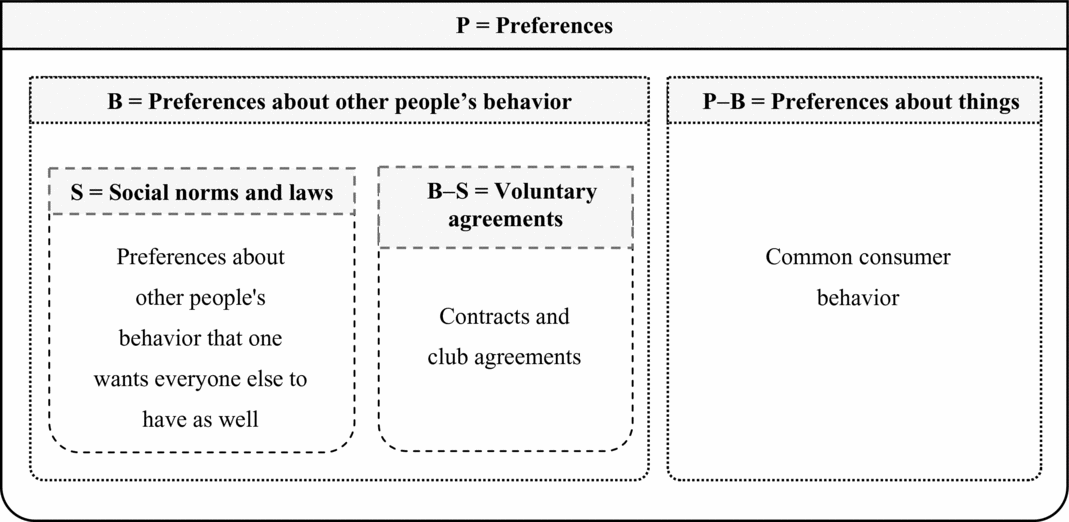
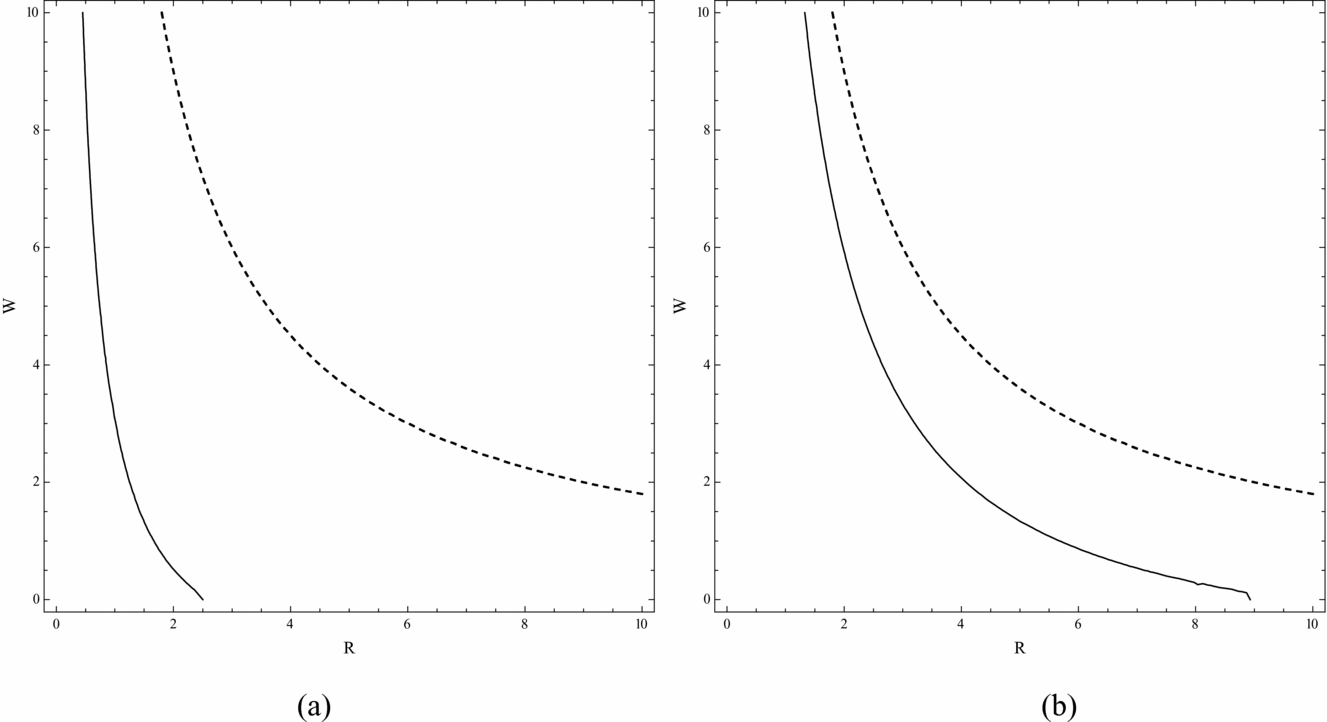
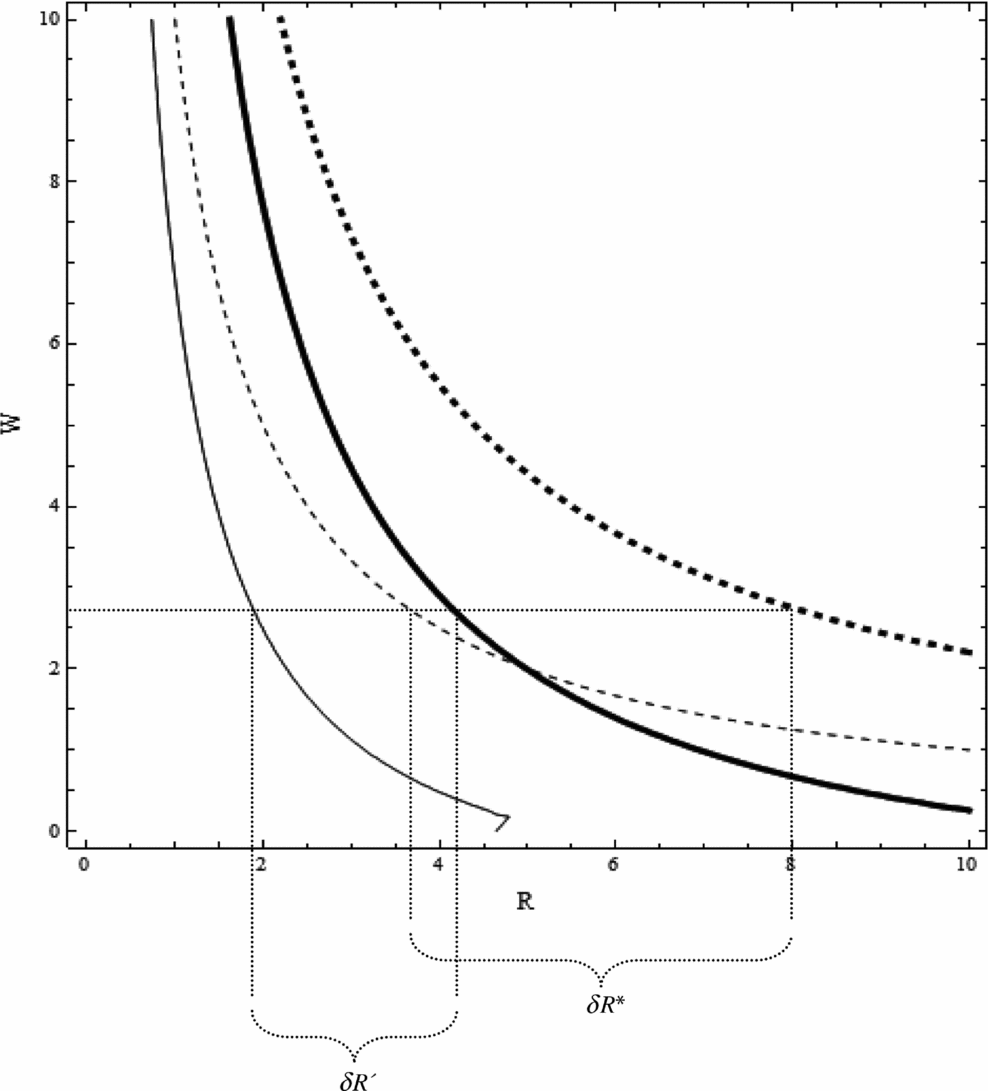
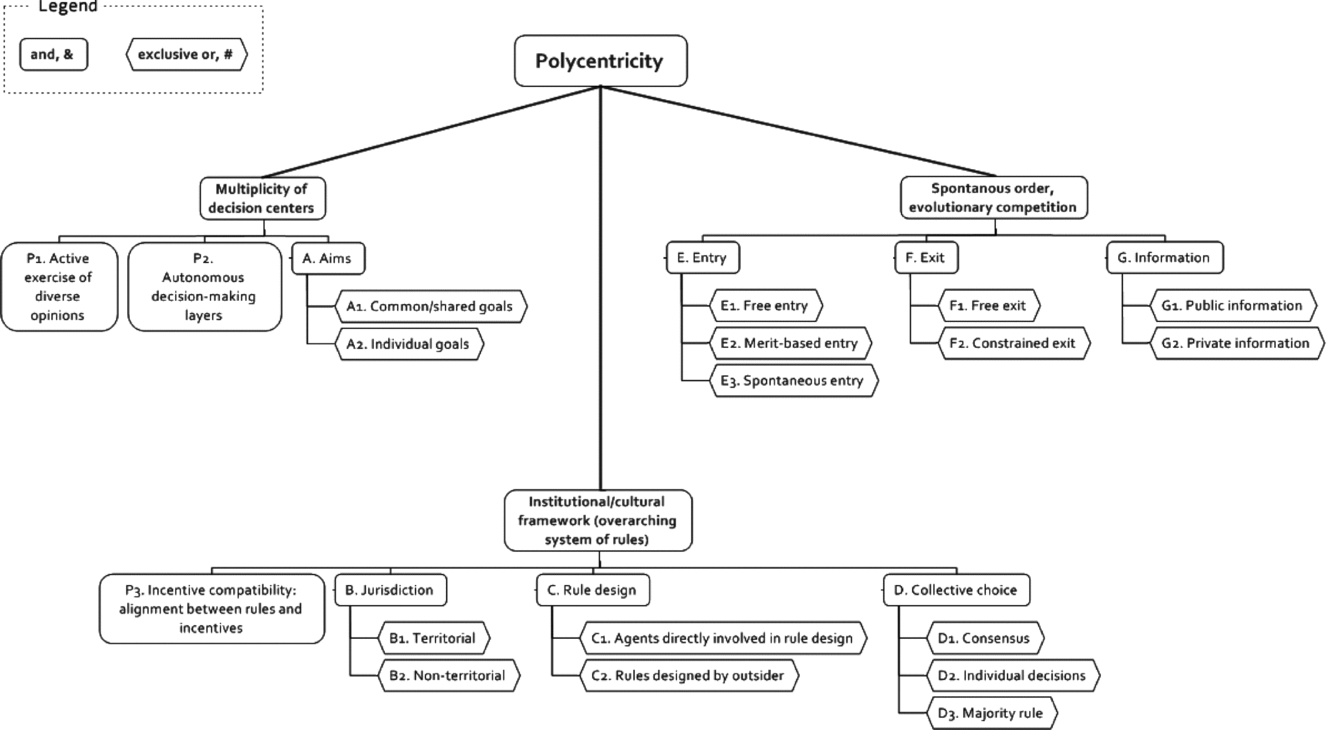



Comments
No Comments have been published for this article.