Single ventricle congenital heart disease (CHD) describes a group of heart lesions that have only one functional ventricle while the other is small and underdeveloped. A range of lesions fall into this category with the most well-known being hypo-plastic left heart syndrome. Infants with single ventricle heart disease often have small head circumferences at birth compared to infants without CHD. Reference Daymont, Neal, Prosnitz and Cohen1–Reference Shillingford, Ittenbach and Marino3 Furthermore, head circumferences in these infants are smaller than those in infants with other types of CHD. Reference Manzar, Nair, Pai and Al-Khusaiby4 Infants with hypo-plastic left heart syndrome exhibit impaired fetal head growth late in gestation, microcephaly at birth, and have white matter abnormalities documented by neuroimaging and neuropathology. Reference Hangge, Cnota and Woo5,Reference Hinton, Andelfinger and Sekar6 These abnormalities of head size and white matter are thought to result from abnormal in utero hemodynamics, vascular resistance, and altered cerebral blood flow and metabolism. Reference Limperopoulos, Tworetzky and McElhinney7,Reference Donofrio, Bremer and Schieken8
Patients with single ventricle CHD typically undergo three stage surgical palliation, with the second stage being the bidirectional Glenn procedure. Reference Feinstein, Benson and Dubin9 After the bidirectional Glenn, the superior caval vein drains directly into the pulmonary arteries, resulting in passive return of blood from the head and upper body to the lungs. Head circumferences in patients who have undergone the bidirectional Glenn have anecdotally demonstrated a rapid increase after surgery, often crossing multiple percentile lines on traditional standardised growth charts. Etiologies of accelerated head growth are postulated to be secondary to increased central venous pressure, cerebral ventriculomegaly, or “normalization” of head growth that was suppressed in utero and in the perinatal period. Reference Morgan, Wolf and Le10,Reference Ravishankar, Zak and Williams11
Neurodevelopmental delays observed in the single ventricle CHD population are multi-factorial in nature and origin. Reference Marino, Lipkin and Newburger12 Studies have proposed an association between head circumference and developmental outcomes, noting that a larger head circumference prior to the bidirectional Glenn may correlate with higher scores on sub-sequent neurodevelopmental assessments. Reference Miller, Zak and Shrader13,Reference Medoff-Cooper, Irving and Hanlon14
The primary aim of this study was to characterise the average trajectory of head circumference growth after bidirectional Glenn surgery in single ventricle CHD. We hypothesised that infants would demonstrate a significant increase in head circumference growth curve z-scores during the 12-month period after bidirectional Glenn. A secondary aim of the study was to evaluate the association between head circumference growth and sub-sequent motor developmental outcomes as measured by the Bayley Scales of Infant Development Third Edition (Bayley-III) Psychomotor Developmental Index approximately 12 months after bidirectional Glenn.
Material and methods
Study design
This retrospective cohort study was approved by the Institutional Review Board at Cincinnati Children’s Hospital Medical Center. Patients with any type of single ventricle CHD who underwent bidirectional Glenn surgery from January 2010 to October 2016 and sub-sequently received follow-up care at the Heart Institute Kindervelt Neurodevelopmental and Educational Clinic were included. Because of their increased risk for developmental delay, all children with single ventricle CHD are referred to this clinic for an initial visit at 9–12 months of age. Patients with genetic variances, including variants of unknown significance, were included. Patients with structural brain abnormalities, grade III–IV intra-ventricular haemorrhage, other significant intra-cerebral haemorrhage or stroke (hemorrhagic or ischemic), or obstructive hydrocephalus identified on head imaging were excluded. Additional exclusion criteria included insufficient head circumference data (no head circumference measurements post-bidirectional Glenn) and patient death within 12 months post-bidirectional Glenn. Medical diagnoses (cardiac, neurologic, and developmental) along with surgical and cardiac catheterisation history were obtained from the electronic medical record. An early bidirectional Glenn was defined as surgery at less than 120 days of age and late bidirectional Glenn was defined as surgery at greater than 180 days of age.
Growth parameters
Anthropometric data including weight, head circumference, and length at birth and at time of bidirectional Glenn were collected. Available weight and head circumference measurements at every sub-sequent patient encounter (including any clinical encounter throughout the medical centre documented in the medical record) were collected for the duration of the study period. Associated growth percentiles and z-scores were calculated using World Health Organisation growth curves for age and gender. 15 For reference, a z-score of zero is equivalent to the 50th percentile on the growth curve and a z-score of 1 or −1 represents a difference of one standard deviation above or below the mean. For pre-term infants, percentiles and z-scores were adjusted for gestational age and calculated using Fenton growth curves. Reference Fenton and Kim16 The distribution of longitudinally measured head circumference percentiles was evaluated. Accelerated head growth was defined as a change in head circumference of more than one z-score from the time of bidirectional Glenn (designated as “baseline” for analysis purposes) to 12 months after bidirectional Glenn.
Developmental assessment and neuroimaging
The Bayley Scores of Infant Development, Third Edition (Bayley-III) is a standardised assessment tool that is commonly used in high risk populations to assess development. The Bayley-III Reference Bayley17 was administered by a trained occupational therapist or physical therapist as part of the Neurodevelopmental Clinic’s care protocol for this cohort. In this study, the primary developmental outcome was the Psychomotor Developmental Index score on the Bayley-III administered approximately 12 months after bidirectional Glenn (range of 9–18 months after bidirectional Glenn) at the time of the child’s clinically indicated follow-up visit. Population-normed standardised scores for age include a composite score mean (standard deviation) of 100 (15) and scaled score of 10 (3). Reference Bayley17 Not all patients had a Psychomotor Developmental Index score available due to variation in the timing of clinical follow-up appointments and the relatively narrow window of time (9–18 months after bidirectional Glenn) designated in our study protocol to evaluate neurodevelopmental outcome relative to a specified period of head growth and stabilisation. Analysis of the Bayley-III Mental Developmental Index, which includes cognitive and language domains, was not included in our analysis due to the small number of patients with available scores in the designated time period. In our clinical model, the Mental Developmental Index is typically administered by a psychologist during a separate visit when the patient is older, at approximately 24–36 months of age.
When available in the medical record, reports of brain imaging obtained as part of clinical care, including head computed tomography (CT) or brain magnetic resonance imaging (MRI), were reviewed for structural abnormalities or forms of injury that would exclude participation in the study. Head ultrasounds that were obtained as standard protocol at birth and when clinically indicated were also reviewed. In cases where the extent or type of injury was not clear from the radiology report, a paediatric neurologist who was blinded to head circumference and developmental outcomes reviewed the images for clarification.
Statistical analysis
Statistical analyses were conducted using SAS® version 9.4 (SAS Institute Inc., Cary, NC) software. Data distributions were evaluated using frequencies with percentages, means with standard deviations or 95% confidence intervals (CI), and medians with inter-quartile ranges. To determine if head circumference z-scores increased after bidirectional Glenn (indicating significant growth beyond expected age-related growth), we evaluated the change in z-scores over time between pre- and 12 months post-bidirectional Glenn. We performed repeated measures analysis using General Linear Models with an identity link function and utilised Generalised Estimating Equations with an exchangeable correlation structure to account for potential correlation induced by repeated measures. Time was categorised into baseline (time of bidirectional Glenn), 0–2 months, 2–4 months, 4–6 months, 6–8 months, 8–10 months, and 10–12 months post-surgery. Because children could have multiple measurements within a time category, we averaged the measurements over each time interval category. For example, if an infant had three head circumference measurements between 2 and 4 months, then the measurement that was used in analysis for that time category was the average of those three measurements. We graphically displayed the mean head circumference z-scores between birth and 12 months post-bidirectional Glenn with 95% CI at each time point. Group comparisons were performed using Chi-squared test or Fisher’s Exact test for categorical variables as appropriate and Student’s t-test or Wilcoxon Rank Sums test for continuous variables as appropriate.
Results
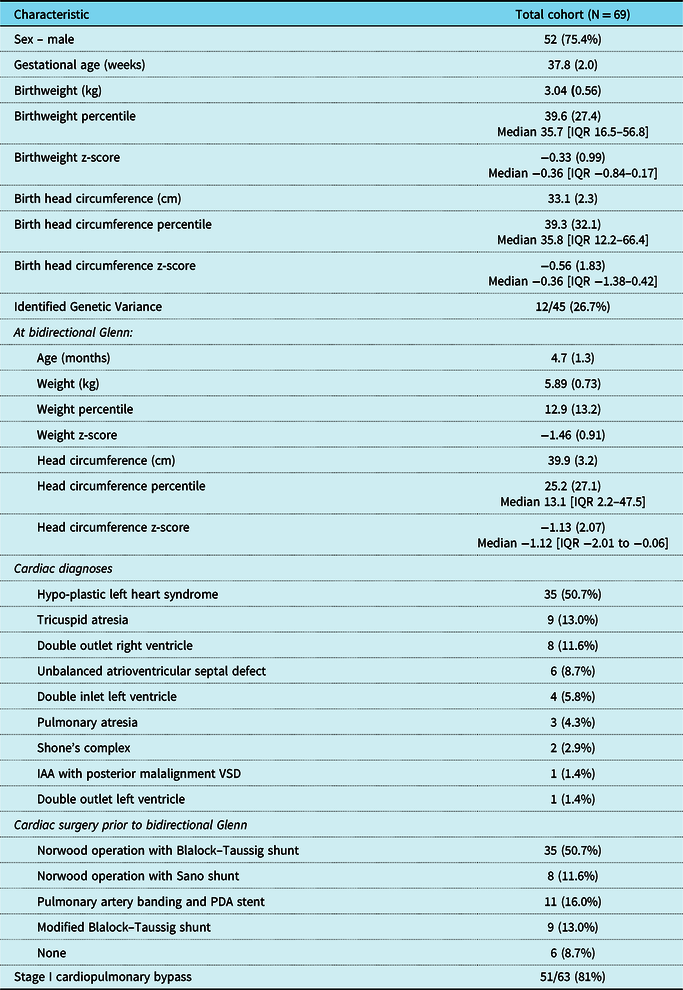
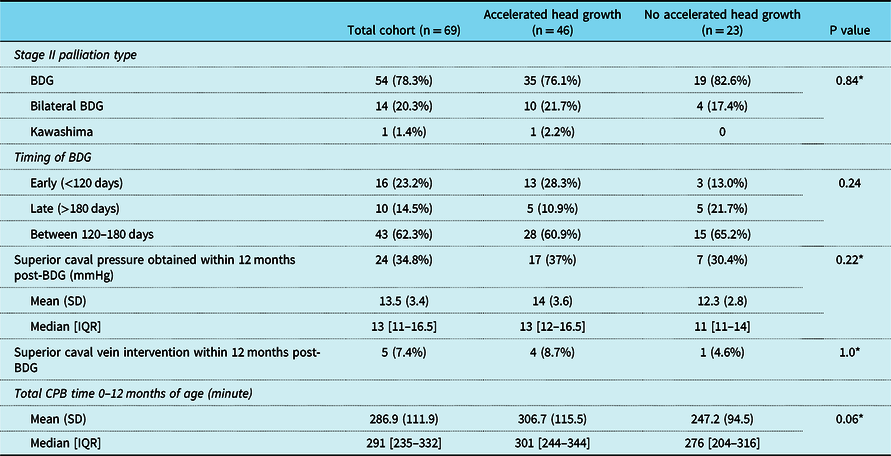
Of 86 screened single ventricle patients, 69 patients met inclusion criteria. The most common reasons of exclusion was insufficient data due to patients receiving primary cardiology care at an outside institution or loss to follow-up and death within 12 months of bidirectional Glenn. There was no difference in baseline characteristics of gestational age and birth anthropometrics between the included and excluded patients. Baseline patient characteristics and Stage I palliation for the included cohort can be found in Table 1. The mean (standard deviation) gestational age of the cohort was 37.8 (2.0) weeks and 75% were male. The mean birth weight was 3.04 kg (0.56) and birth head circumference was 33.1 cm (2.3) with gestational age-adjusted z-scores of −0.33 (0.99) and −0.56 (1.83), respectively. The most common cardiac diagnosis was hypo-plastic left heart syndrome, representing 50.7% of the cohort (Table 1). One patient underwent cardiac transplantation 5 months after bidirectional Glenn; therefore, head circumference measurements were analysed only from the time of bidirectional Glenn to the time of transplant. Stage II palliation surgical characteristics and haemodynamics within 12 months post-bidirectional Glenn are found in Table 2. The majority of patients (66/69, 96%) underwent a pre-Glenn cardiac catheterisation with mean arterial oxygen saturation of 75.6% (5.0).
Patient characteristics

Data presented as N (%) or mean (SD), median [inter-quartile range-IQR]. IAA = Interrupted Aortic Arch; PDA = Patent Ductus Arteriosus; VSD = Ventricular Septal Defect
Surgical characteristics and haemodynamics within 12 months post-bidirectional Glenn

Data presented as N (%) or mean (SD), median [inter-quartile range-IQR]. BDG = bidirectional Glenn, CPB = cardiopulmonary bypass
* Fisher’s Exact test or Wilcoxon Rank Sums test
Head circumference
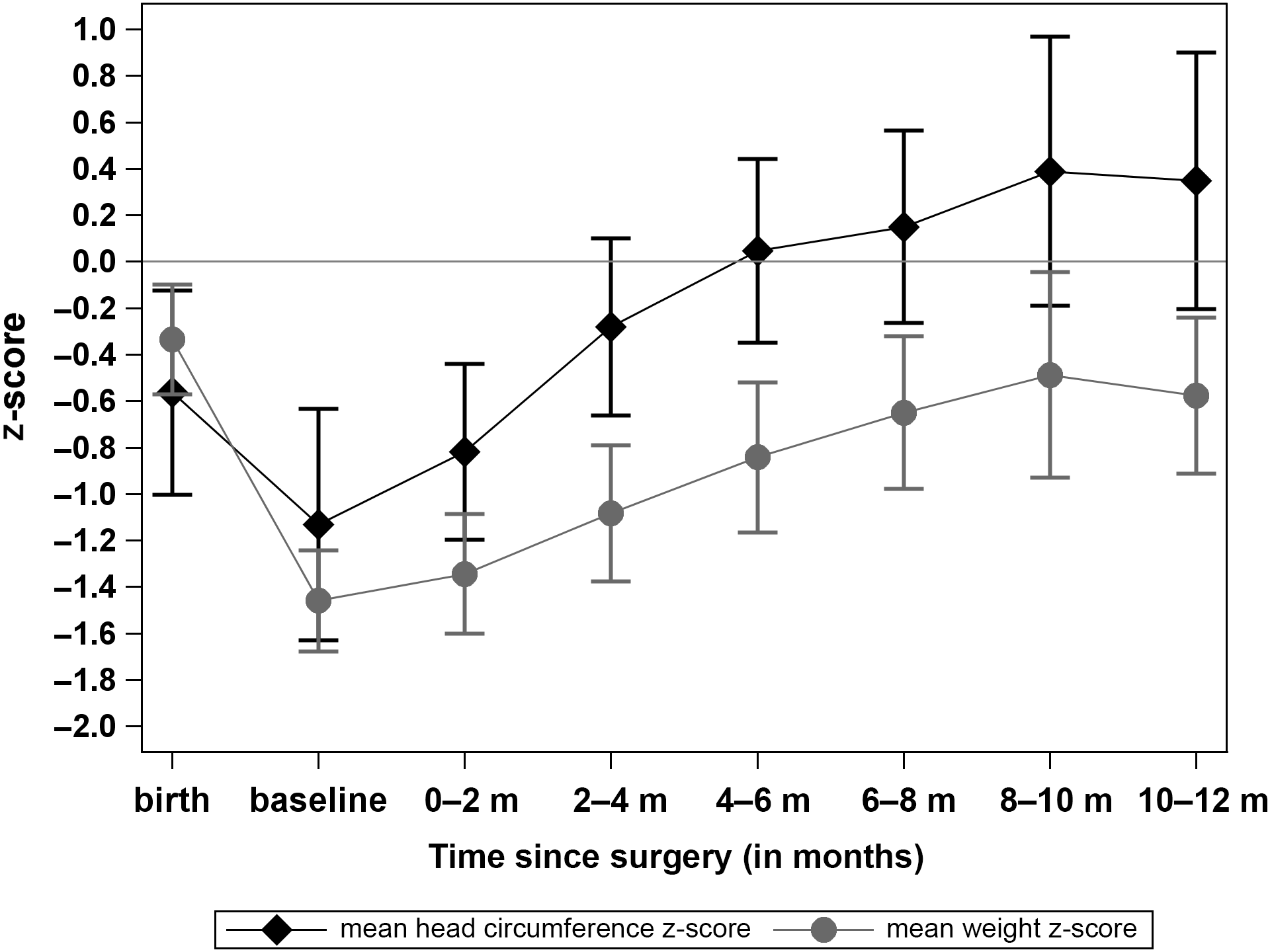
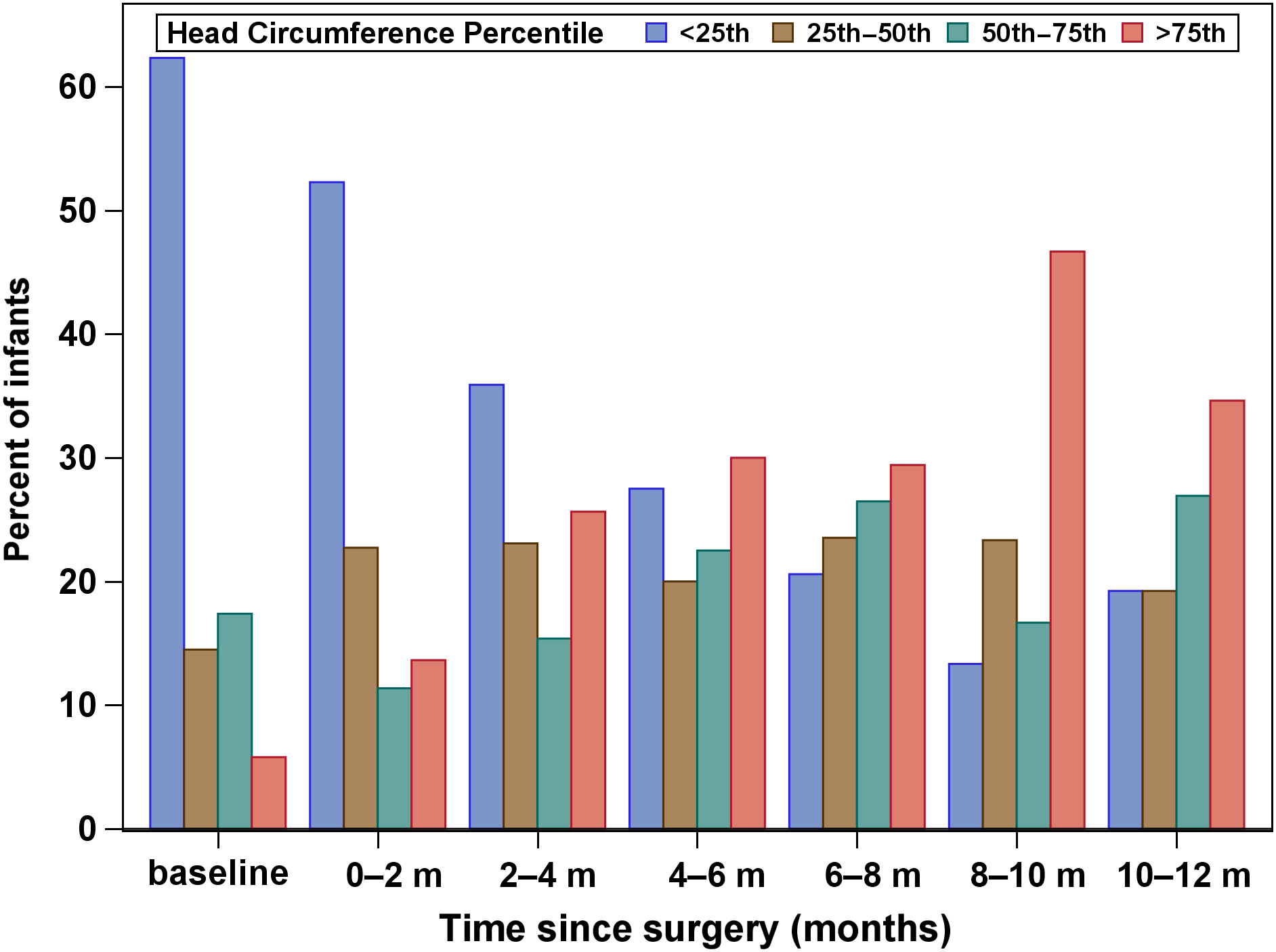
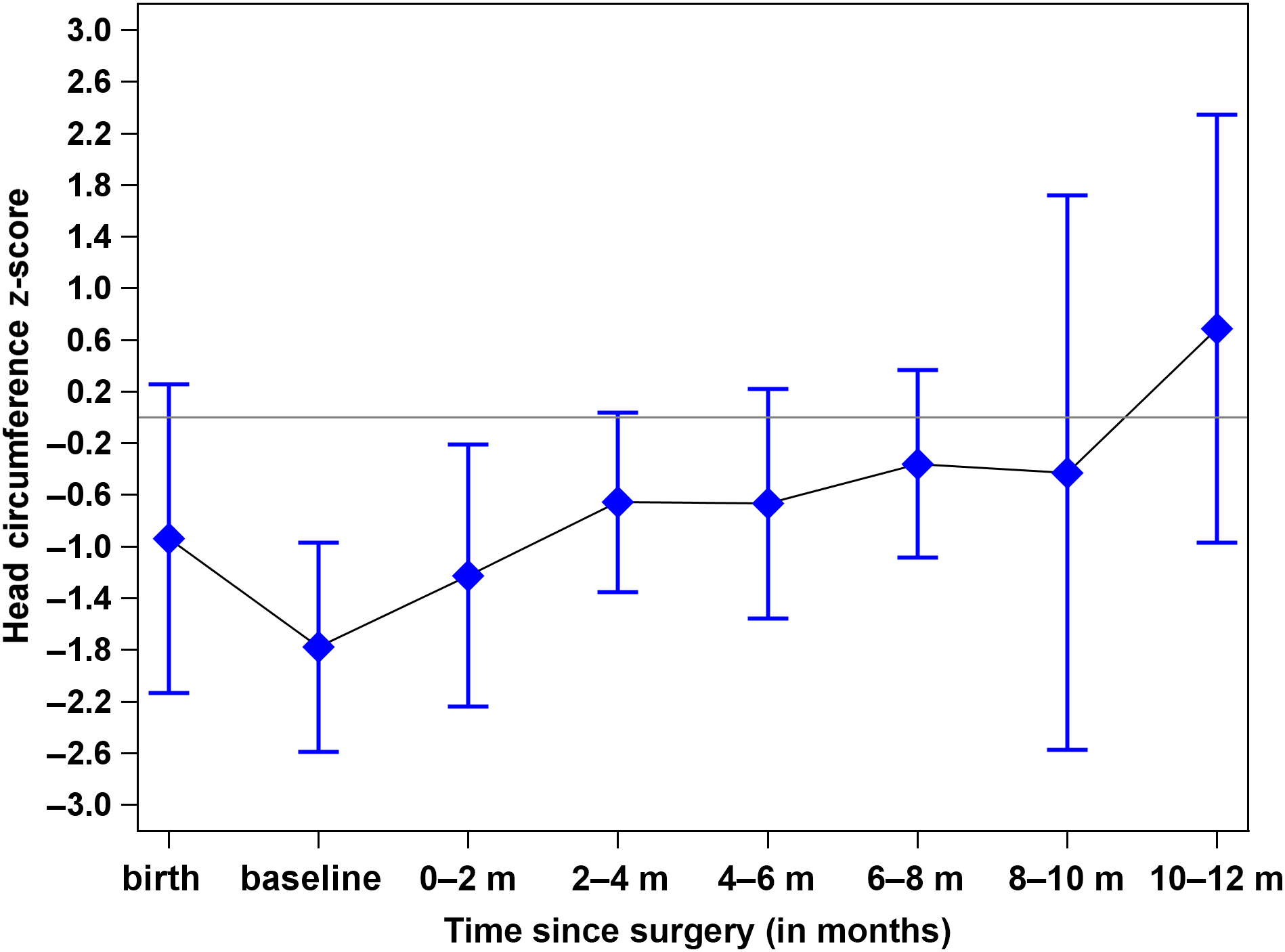
At the time of bidirectional Glenn, the mean age was 4.7 (1.3) months and the mean head circumference was 39.9 (3.2) cm with a z-score of −1.13 (2.07). Figure 1 shows the trajectories of both mean head circumference and mean weight z-scores at birth, baseline, and up to 12 months after bidirectional Glenn. Mean head circumference z-score increased from −1.13 (95% CI −1.63, −0.63) to +0.35 (95% CI −0.20, 0.90) from baseline to 12 months post-surgery. Results from the Generalised Estimating Equations indicated that the increase in mean head circumference z-score over time in our cohort was statistically significant (p < 0.0001). The change in mean body weight z-score during the 12 months post-bidirectional Glenn demonstrated a similar pattern of increase to head circumference. In Figure 2, the distribution of infants categorised by quartile of head circumference percentile is plotted from baseline to 12 months post-surgery in 2-month time intervals. From bidirectional Glenn up to 2 months post-surgery, over one-half of patients had head circumferences in the lowest quartile. By 8–10 months post-bidirectional Glenn, over one-half of patients had head circumference measurements above the 50th percentile for age.
Head circumference and weight z-score patterns. Mean (95% confidence interval) head circumference and weight z-score trajectory at birth, baseline (time of bidirectional Glenn), and up to 10–12 months post-bidirectional Glenn of all patients.

Distribution of head circumference by percentile. Distribution of head circumference percentiles (n = 69) within the first 12 months after bidirectional Glenn (baseline). Legend: Blue = 0–25th percentile for age, Brown = 25th–50th percentile for age; Green = 50th–75th percentile for age; Red = 75th–100th percentile for age.

Forty-six of 69 (66.7%) patients demonstrated accelerated head growth. There was no difference in type of Stage II palliation (bidirectional Glenn, bilateral bidirectional Glenn, or Kawashima) between those with and without accelerated head growth (Table 2). Additionally, timing of bidirectional Glenn was not significantly different between these two groups. Twenty-four (34.8%) patients underwent a cardiac catheterisation within our follow-up period of 12 months post-bidirectional Glenn. The mean superior caval vein pressure measured during that catheterisation was 13.5 (3.4) mmHg with no difference between those with and without accelerated head growth. Only five (7.2%) patients required superior caval vein intervention within 12 months after bidirectional Glenn, four of which occurred within 3 months post-surgery. All five patients underwent catheterisation based intervention (four balloon angioplasties and one stent placement) and two required sub-sequent surgical Glenn revision.
Genetic testing was performed when clinically indicated and with parent/caregiver consent. Forty-five patients (65%) had genetic testing with chromosomal analysis and/or single nucleotide polymorphism microarray. Twelve of these patients (26.7%) were found to have a genetic variance. Of these patients, one had 22q11 deletion syndrome, one had Kabuki Syndrome, and five had variants of unknown clinical significance not associated with known syndromes or characteristics. The remaining patients had chromosomal duplications or deletions associated with the following: carriers for non-ketotic hyper-glycinemia (n = 2), Hereditary Liability to Pressure Palsies (n = 1), and CHD and developmental delay (n = 2). We performed a sub-analysis of head circumference growth including only patients with any identified genetic variance (Fig 3). Infants with any identified genetic variance had similar mean head circumference z-scores at birth when compared to infants who had no genetic testing or normal findings on testing [−0.94 (1.9) versus −0.49 (1.8) respectively; p = 0.44]. No significant differences were seen between groups regarding head circumference z-scores at the time of bidirectional Glenn [−1.78 (1.3) versus −1.0 (2.2), p = 0.44] or at 12 months post-surgery [0.69 (1.0) versus. 0.29 (1.4), p = 0.25]. However, a small number of these patients did not demonstrate an increase in head circumference z-score. The genetic diagnoses for patients without an increase in head circumference z-score were the following: 9p24 deletion (carrier of non-ketotic hyper-glycinemia), 20q13.2 duplication (associated with CHD, facial dysmorphology, developmental delay, and skeletal anomalies), and homozygosity of chromosome 10 (unknown clinical significance).
Head circumference z-score pattern in patients with genetic variances. Head circumference trajectory at birth, baseline (time of bidirectional Glenn), and up to 12 months post-bidirectional Glenn in patients with genetic variances (n = 12). Head circumference z-scores are presented as mean (95% confidence interval).

Developmental assessment
Thirty-seven patients (54%) underwent Bayley-III Psychomotor Developmental Index assessments at 9–18 months after bidirectional Glenn, corresponding with the Neurodevelopmental Clinic’s protocol of assessing motor development between 1 and 2 years of age. The mean Psychomotor Developmental Index standard score for the cohort was 90.7 (12) with scaled scores for fine motor and gross motor of 9.9 (1.9) and 6.7 (2.5) respectively. There was no significant difference in mean Psychomotor Developmental Index composite score for those with accelerated head growth (n = 25) and those without accelerated head growth (n = 12) [89.9 (10.7) versus 92.5 (14.8); p = 0.54]. Fine motor and gross motor scaled scores were not significantly different in patients with accelerated head growth compared to those without [fine motor: 9.9 (1.9) versus 9.8 (3.0) p = 0.84; gross motor: 6.7 (2.4) versus 7.8 (2.2) p = 0.20]. There was no correlation between head circumference z-score at the time of bidirectional Glenn and motor developmental outcomes (p = 0.59) nor between head circumference z-score 12 months after bidirectional Glenn and motor developmental outcomes (p = 0.76).
Of patients with a documented genetic variance, only three underwent Psychomotor Developmental Index assessments within our follow-up period with a composite standard score median of 82 (range 49–103). Thirty-four patients with negative genetic testing had developmental assessments with a composite standard score median of 91 (range 70–107). Fine motor median scaled scores for those with an identified genetic variance and those with no genetic variance were 7 (range 2–8) and 7 (range 2–12) respectively. Gross motor median scaled scores for those with an identified genetic variance and those with no genetic variance were 7 (range 1–13) and 10 (range 7–14) respectively.
Neuroimaging
Of the 86 screened patients, one patient was excluded for a large parenchymal haemorrhage that was demonstrated on neuroimaging prior to bidirectional Glenn. Of the included 69 patients, 23 patients underwent head CT or brain MRI at any time point from birth to 12 months post-bidirectional Glenn. Seven patients (10%) underwent neuroimaging by head CT (n = 2) or brain MRI (n = 5) after bidirectional Glenn. Indications for neuroimaging included: clinician concern of increasing head circumference (4), gross motor delay (1), history of cardiac arrest (1), and follow-up for history of mild ischemic event (1). All four patients who underwent imaging due to increasing head circumference were noted to have some degree of ventriculomegaly, suggestive of diffuse cerebral volume loss. They also had enlargement of extra-axial fluid spaces. In three of these four patients, this imaging pattern, coupled with the pattern of rapid head growth, caused concern for communicating hydrocephalus and they were referred to neurosurgery. When evaluated by neurosurgery, none met criteria for a clinical diagnosis of hydrocephalus or required neurosurgical intervention.
Discussion
This study provided objective data to quantify an anecdotally observed clinical phenomenon that head circumference often increases rapidly and significantly in children with single ventricle CHD after bidirectional Glenn surgery. Our clinical data outlines the natural history and expected trajectory of head growth following bidirectional Glenn. Consistent with prior studies, we found that patients with single ventricle CHD had small head circumferences at birth which remained small at time of bidirectional Glenn, indicating sub-optimal head growth in utero and in early infancy. Reference Daymont, Neal, Prosnitz and Cohen1–Reference Shillingford, Ittenbach and Marino3 In fact, head circumference z-score for age at time of bidirectional Glenn was lower than z-score for age at birth in our cohort, indicating a slower rate of head growth in the first few months of life in single ventricle infants relative to the general population. After the bidirectional Glenn, there was a significant increase in head circumference growth up to 12 months post-surgery.
A few studies have demonstrated an increase in head circumference post-operatively at a single time point after bidirectional Glenn. A study by Ackerman et al evaluated occipital frontal circumference measured on cranial imaging as a surrogate for head circumference and found a significant increase in occipital frontal circumference in patients who underwent superior cavopulmonary anastomosis from the 8th percentile pre-surgery to 33rd percentile post-surgery. Reference Ackerman, Kralik and Daniels18 Another study demonstrated a significant increase in head circumference from the 7th percentile to 20th percentile from a pre-bidirectional Glenn to pre-Fontan assessment; however, the longitudinal trend in the months following bidirectional Glenn was not analysed. Reference Trachsel, Balmer and Wahlander19 Increases in cerebral ventricular volume post-bidirectional Glenn have also been described. Reference Morgan, Wolf and Le10 The aetiology of increasing head circumference after bidirectional Glenn has not been well elucidated. Some studies suggest that increase in head circumference size may be secondary to increased central venous pressure due to circulatory changes of Glenn physiology. Reference Morgan, Wolf and Le10,Reference Ackerman, Kralik and Daniels18 However, an exact correlation between superior caval vein pressure and head circumference percentile in this population could neither be established nor could it be supported by our study data. Reference Trachsel, Balmer and Wahlander19 Other postulated mechanisms include increased central venous pressure secondary to acute neurologic injury from surgery or a “normalisation” of head growth (i.e., “catch up” growth). Reference Morgan, Wolf and Le10,Reference Ravishankar, Zak and Williams11
Other studies did not specifically evaluate patients with genetic variances. We demonstrated that on average, infants with any identified genetic variance exhibited increasing head circumference measurements after the bidirectional Glenn in a similar pattern to the whole cohort. However, there were a few of these patients (3 of 12, 25%) who did not demonstrate head growth in the follow-up period and for which genetic variances could be postulated to have impacted head growth. Larger cohort studies in the future will be important to evaluate the influence that genetic variances have on head growth in this population.
Almost 70% of patients demonstrated accelerated head growth; however, there was no difference in Stage II surgical procedures or superior caval vein pressures post-bidirectional Glenn, which were within expected ranges of bidirectional Glenn physiology. Additionally, only a small subset of patients required superior caval vein intervention due to clinical suspicion and echocardiography findings. The rapid change from pre-operative relative microcephaly to normalised head circumferences at 10–12 months post-Glenn may result in concerned clinicians recommending neuroimaging. However, the need for this type of imaging is not supported by data in our cohort. While it should be noted that the subset of infants undergoing neuroimaging in our study was relatively small (10%), all patients within this subset demonstrated some degree of diffuse parenchymal volume loss and ventriculomegaly (ex vacuo). This is consistent with previously published data that described similar findings in 10–20% of single ventricle patients. Reference Fogel, Li and Elci20 In the few patients for whom communicating hydrocephalus could not be excluded, referral to Neurosurgery was placed. Importantly, no patient required neurosurgical intervention or long-term neurosurgical follow-up. Thus, the rapid increase in head circumference over the first 12 months after bidirectional Glenn is likely an expected clinical finding in this population and does not require additional intervention.
Our data indicate that a small but meaningful proportion of single ventricle CHD patients undergo additional procedures and sub-specialty referrals that unnecessarily increase medical costs without changing clinical management. Although detailed cost analysis is not the purpose of this study, understanding factors that can compound healthcare costs in this population is valuable. For example, in addition to direct costs of brain MRI, specialised sedation and cardiac anesthesia are often necessary to obtain satisfactory imaging quality and act as cost multipliers. These patients often times will also require prolonged post-sedation monitoring or a short stay of observation in the hospital. Finally, in addition to direct healthcare costs, the indirect costs incurred by unnecessary testing and sub-specialty referral include increased psychological stress for the patient and family, parent/guardian time away from work or other dependent children, etc. The risk/benefit ratio of neuroimaging in complex cardiac physiology must be carefully considered; if data obtained is not expected to change immediate clinical management, then it may not be justified. More rigorous pre- and post-operative imaging paradigms may be warranted when considering the rate of neuroimaging abnormalities identified in the single ventricle population in later years is up to 11 times higher than a comparable control population. Reference Bellinger, Watson and Rivkin21
This study provides objective evidence of a common pattern of head growth in infants with single ventricle CHD. The significant increase in head growth that is expected in this population within 12 months after bidirectional Glenn does not connote an increased risk of additional significant neurological abnormalities or need for neurosurgical interventions. Neuroimaging for increasing head circumference alone, in the absence of other symptoms, and sub-sequent referrals to Neurology or Neurosurgery sub-specialists may not be indicated within the first year after bidirectional Glenn surgery. However, if there are any concurrent symptoms concerning for increased intra-cranial pressure, including protracted vomiting, lethargy, altered mental status, sunsetting eye position, or bulging fontanelle, then further workup and referrals should be pursued. Establishing an expected trajectory of head circumference growth and a specific growth curve for this population post-bidirectional Glenn would assist clinicians in their management and justify a limited diagnostic testing approach, thus reducing unnecessary testing and sub-specialty consultation with concurrent reductions in financial, time, and emotional costs. Conversely, this information can guide appropriate testing and referral choices when patients demonstrate any deviations from this pattern of head circumference growth.
The neurodevelopmental results in our cohort are consistent with what has been described in the literature when compared to other types of CHD, which typically demonstrate average Bayley scores with mild motor deficits. Reference Mussatto, Hoffmann and Hoffman22 There is conflicting data regarding the impact that changing head circumference might have in modulating the risk for impaired neurodevelopment. Some studies demonstrated a positive correlation between pre-bidirectional Glenn head circumference and cognitive and motor scores on the Bayley-III. Reference Miller, Zak and Shrader13,Reference Medoff-Cooper, Irving and Hanlon14 Another study demonstrated no correlation between head circumference z-score and neurodevelopmental outcome. Reference Ravishankar, Zak and Williams11 Our study found no difference in motor outcomes as measured by the Psychomotor Developmental Index of the Bayley-III among patients with accelerated head growth compared to those without accelerated head growth. Thus, in our cohort, head circumference growth alone was not a predictor of sub-sequent motor developmental outcomes. Instead, motor developmental delay is more likely a result of heterogeneous brain injury and environmental risk factors that have been described previously, including length of hospital stay, modality of feeding, prematurity, low birth weight, and genetic disorders. Reference Marino, Lipkin and Newburger12,Reference Mussatto, Hoffmann and Hoffman22,Reference Newburger, Sleeper and Bellinger23
There is a significant increase in mean head circumference z-score in infants with single ventricle CHD during the first 12 months post-bidirectional Glenn and z-scores appear to stabilise around 10 months of age. Accelerated head growth does not appear to be associated with a change in short-term motor developmental outcomes. These results could inform the development of disease-specific head circumference growth guidelines for clinical use. Future studies that prospectively measures long-term head circumference and developmental outcomes at consistent intervals using a standardised approach and/or large multi-site collaborative studies could develop a post-bidirectional Glenn head circumference growth curve for single ventricle infants. These types of studies would also provide a more systematic approach to assess for relationships between head circumference growth and both near and long-term developmental outcomes (including language and cognition) in this population of at-risk patients.
Limitations
This study was limited by its retrospective and single centre nature. Data collection was dependent on frequency and timing of head circumference measurements during routine clinical care and measurements were obtained by different individuals and subject to variation. However, multiple values within a 2-month time period were averaged to ameliorate this problem and this variation is typical of clinical practice and may add to the generalisability of the study. Additionally, sample size was reduced for available head circumference measurements at the 10–12-month time period post-bidirectional Glenn and with further sub-group analyses (i.e., those with genetic variances, neurodevelopmental assessments), which limited our ability to perform certain statistical analyses. The study was not powered to conduct multiple sub-group testing as this would increase the risk of Type I error.
Neuroimaging was available in only a small subset of patients; however, this is consistent with clinical practice at many institutions and increases the applicability of the findings. Additionally, neurodevelopmental testing was not available for all patients during the follow-up period and testing may have been more likely to have been administered in infants with clinical concerns for developmental delay or increasing head circumference, leading to a risk of selection bias. We did not take into account other risk factors that affect neurodevelopment, such as length of hospital stay or post-operative complications, as this was not the primary aim of the study and limited by small sub-group sizes. Future research could prospectively and systematically assess head circumference, neurodevelopmental outcomes, and neuroimaging on a broader sample of single ventricle patients while adjusting for the impact of risk factors.
Conclusion
Infants with single ventricle CHD on average experience a period of accelerated head growth within the first 12 months after the bidirectional Glenn. This pattern of head circumference growth after bidirectional Glenn can be used as a reference in the clinical setting to guide patient care and utilisation of medical resources and sub-specialty referral. Future multi-centre studies have the potential to validate this data and lead to the development of specific head circumference growth curves in this population. Accelerated head growth can be expected in many single ventricle infants after bidirectional Glenn and does not appear to be associated with an increased risk of motor developmental delays at 9–18 months post-operatively. Multiple patients at our centre underwent neuroimaging and/or consultation with Neurology and Neurosurgery sub-specialties related to clinicians’ concerns about a rapid increase in head circumference percentiles; however, no patient required neurosurgical intervention. Thus, clinical standard of care does not necessarily warrant neuroimaging early in the post-bidirectional Glenn course.
Acknowledgements
None
Financial support
This research received no specific grant from any funding agency, commercial or not-for-profit sectors.
Conflicts of interest
None.