Introduction
The literature on migrant care work in developed economies emphasises an international pattern of increasing reliance on both new and existing populations of migrants in long-term care to provide a source of low-paid labour as a response to the growing demand for care workers (Simonazzi, Reference Simonazzi2009; Michel and Peng, Reference Michel and Peng2017). As in other Organisation for Economic Co-operation and Development (OECD) countries with ageing populations, in Australia there has also been a significant policy focus on meeting projected demands for an increased aged-care workforce. The supply of, and demand for aged-care workers has been the subject of several government inquiries over the last decade, with recommended workforce strategies addressing attraction and retention issues, current and future skill demands, and pay and working conditions (Productivity Commission, 2011; Senate Community Affairs Reference Committee, 2017; Tune, Reference Tune2017; Department of Health, 2018b). Yet while there have been some employer calls for increased migration to help meet current and future demand (Adamson et al., Reference Adamson, Cortis, Brennan and Charlesworth2017), none of these government inquiries were charged with investigating nor made any recommendations about migration strategies to support an increased aged-care workforce.
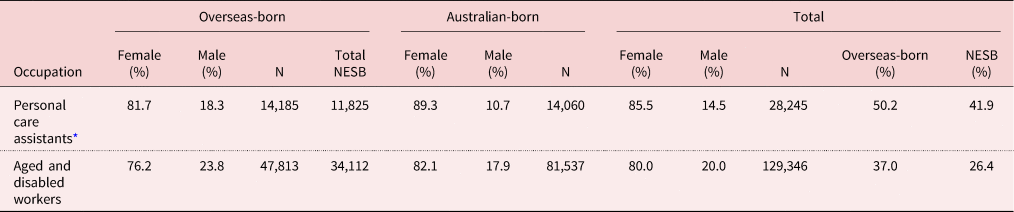
This lack of attention to migration in the Australian aged-care workforce context is perhaps surprising, given a growing proportion of frontline aged-care workers are migrants. Australian Bureau of Statistics (ABS) Census data indicate that of personal care assistants (PCAs), the main occupation in residential aged care, the proportion of overseas-born workers grew from 43.7 per cent in 2011 to 50.2 per cent in 2016. Of aged and disabled care workers, the main occupation in home-based care, the proportion of migrants grew from 33.0 per cent in 2011 to 37.0 per cent in 2016. The 2016 profile of these two occupations in Table 1 suggests a highly feminised workforce with a higher proportion of male workers among the overseas-born than in the Australian-born population of aged-care workers. What is striking is the relatively large proportion of migrant workers who were born outside the main English-speaking background (ESB) countries, described here as non-English-speaking background (NESB) migrants.
Frontline care occupations by birthplace and sex

Note: NESB: non-English-speaking background.
Source: Australian Bureau of Statistics (ABS) Census 2016 (*Census data for this six-digit occupational grouping is not publicly available and was purchased by the authors from the ABS).
Simonazzi (Reference Simonazzi2009: 225) suggests there are two main groups of migrants who work in paid care: those who have migrated to engage in care work and those who have ‘ended up’ in care work because this was the only work available. Unlike many other developed countries, in Australia there have been no ‘front-door’ visa pathways for aged-care workers, whose work is deemed ‘low-skilled’ (Howe et al., Reference Howe, Charlesworth and Brennan2019). The Australian situation has been described as ‘migrants working in aged care’ rather than ‘migrant aged-care workers’ as historically most migrant aged-care workers have been long-standing migrants with permanent residence (Howe, Reference Howe2009: 388). However, over the last decade much has changed in Australia's migration and aged-care regimes. Despite a long history of permanent migration mainly from the United Kingdom (UK) and other European countries, there has been rapid shifts both towards migration from NESB countries and towards temporary migration as the norm (Mares, Reference Mares2016). As in Table 1, a growing proportion of the frontline aged-care workforce is made up of migrant workers from NESB countries. There is also evidence of an increasing number of newer migrants working in the care sector who arrived on temporary visas (Eastman et al., Reference Eastman, Charlesworth and Hill2018a).
In this paper, we investigate differences in migrant status for both NCWs and PCAs against two key poor job quality indicators: casual status and underemployment. These workers are the non-nursing, personal care workers in long-term care (OECD, 2019). In Australia, they make up 84 per cent of direct care workers in home-based services and 70 per cent in residential services (Mavromaras et al., Reference Mavromaras, Knight, Isherwood, Crettenden, Flavel, Karmel, Moskos, Smith, Walton and Wei2017). While their tasks can vary, HCWs and PCAs provide ‘hands-on’ care and support with the activities of daily living to increasingly frail service users with complex care needs, often in conditions of understaffing and a lack of time to care (Meagher et al., Reference Meagher, Cortis, Charlesworth and Taylor2019).
We use data from the 2016 National Aged Care Workforce Census and Survey (NACWCS) to focus on differences between Australian-born workers, those born in ESB countries and those born in NESB countries. Our rationale for doing so lies in international evidence outlined below that points to differences in the working conditions between diverse groups of migrants, including in care work, that suggests in Australia NESB migrant workers may also experience some significant disadvantages in employment. Our focus on casual contract status and underemployment draws on employment relations and job quality literature that suggests these dimensions of poor job quality can contribute to employment precarity.
In the next section, we set out the framings for our analysis, drawing on a brief review of literature that highlights how regimes of care, employment and migration shape conditions for migrant care workers. We also outline relevant scholarship on the dimensions of job quality used in our analysis. After outlining our methods, we describe key findings of our analyses of the NACWCS, focusing on casual status and underemployment. In particular, we explore the extent to which any disadvantage for migrant aged-care workers is ‘washed out’ over time, both in terms of years spent in Australia and with the current employer.
Migrant care workers and employment conditions
Care, migration and employment regimes in international context
A number of scholars have drawn attention to the intersecting regimes of care, employment and migration in understanding how the conditions of work for migrant care workers are produced (Van Hooren, Reference Van Hooren2012; Williams, Reference Williams2012; Bauer and Österle, Reference Bauer and Österle2013). In many instances, the convergence of these policy and regulation regimes has produced a precarious labour market for migrant workers, predominantly women. In Europe and North America, migrant status is seen to intersect with and contribute to the gendered precarity of care work, particularly for temporary and undocumented migrants (Simonazzi, Reference Simonazzi2009; Shutes and Chiatti, Reference Shutes and Chiatti2012; Michel and Peng, Reference Michel and Peng2017). There has been far less focus, however, on the experience of permanent migrants, which remains the predominant grouping of migrant workers in the Australian aged-care workforce.
There is agreement in the international literature that migrant workers are significantly disadvantaged in the long-term care labour market. There is evidence of disadvantage for foreign-born care workers throughout OECD countries, including ‘shorter contracts, more irregular hours, broken shifts, lower pay and in lower classified functions than non-migrant care workers’, and in the UK, that migrant workers are more likely to earn less than the minimum wage, and more likely to be located in the lower-paid private sector (Columbo et al., Reference Colombo, Llena-Nozal, Mercier and Tjadens2011: 175–176).
There is also some broad evidence of variation in the employment experiences of different groups of migrant workers based on their country of origin. For example, in the European context, non-European Union (EU) nationals generally have been found to have worse labour market outcomes than EU migrant workers (Peracchi and Depalo, Reference Peracchi and Depalo2006). In the Netherlands ‘non-Western’ migrants appear to have poorer contracts and working conditions compared with migrants from Western countries (European Foundation for the Improvement of Living and Working Conditions, 2007: 47). A number of Australian studies also provide evidence that migrant workers from NESB countries experience significant disadvantages in employment (Ho and Alcorso, Reference Ho and Alcorso2004; Colic-Peisker, Reference Colic-Peisker2011; Boese et al., Reference Boese, Campbell, Roberts and Tham2013).
In a qualitative Irish study, the experiences of migrant care workers were found to differ significantly according to their country of origin, with non-Irish European care workers experiencing the least disadvantage (Doyle and Timonen, Reference Doyle and Timonen2009). Differences between locally born workers and migrant care workers who come from countries outside the dominant local language or ethnic group have also been identified in England (Stevens et al., Reference Stevens, Hussein and Manthorpe2012) and in Sweden (Jönson and Giertz, Reference Jönson and Giertz2013). This latter study found the experiences of Nordic-born migrant care workers were similar to Swedish-born care workers. However, non-Nordic-born migrant workers were more likely to report they were in temporary employment, had a higher workload and less influence over their working conditions than Nordic-born workers (Jönson and Giertz, Reference Jönson and Giertz2013). Though they do not specifically consider migrant status, in their analysis of pay variance in the social care sector in the UK, Hussein and Manthorpe (Reference Hussein and Manthorpe2014) found that black and minority ethnic groups earn significantly less as professional and direct care workers.
Job quality and care labour in the Australian context
Work conditions are directly linked with the quality of aged-care services. The settings necessary to provide for effective care relationships between frontline workers and service users require a stable workforce and decent working conditions (Armstrong, Reference Armstrong, Baines and Armstrong2016). In Australia, there is significant evidence that aged-care workers are concerned about low pay rates and poor working conditions, including not having enough time to care (Mavromaras et al., Reference Mavromaras, Knight, Isherwood, Crettenden, Flavel, Karmel, Moskos, Smith, Walton and Wei2017; Meagher et al., Reference Meagher, Cortis, Charlesworth and Taylor2019). Poor job quality directly impacts not only the continuity and consistency of formal care for older Australians, it also presents a major barrier to attraction and retention of aged-care workers into the future (Senate Community Affairs Reference Committee, 2017).
Our specific focus in this paper on contract status and having sufficient hours of work in the current job draws broadly on the job quality literature which assesses job quality from the perspective of the worker (Green, Reference Green2009; Burchell et al., Reference Burchell, Sehnbruch, Piasna and Agloni2014). The job quality approach we draw in here focuses on more intrinsic or ‘objective’ features of the job such as wages, contract status and working time in terms of the quantum, scheduling and autonomy over hours (Charlesworth et al., Reference Charlesworth, Welsh, Strazdins, Baird and Campbell2014). This approach recognises that job quality is also shaped by the socio-spatial location of the worker, including gender and migration status (Noack and Vosko, Reference Noack and Vosko2011).
In Australia, what is known as ‘casual’ employment is significant in international comparison and widely seen as a characteristic of precarious or vulnerable employment (Vosko et al., Reference Vosko, MacDonald and Campbell2009). Casual employees currently comprise 25 per cent of all employees (ABS, 2018a). They are excluded from many of minimum labour standards protections for permanent employees. While casual employees are entitled to an hourly rate of pay (with an additional ‘loading’ of 25 per cent in lieu of paid leave), they have no right to job security, to a regular schedule of hours or to secure employment with an employer (Campbell et al., Reference Campbell, Macdonald, Charlesworth, O'Sullivan, Lavelle, McMahon, Ryam, Murphy, Turner and Gunnigle2019). Casual employees may be employed full-time or part-time.
In Australia, the rate of time-related underemployment is focused in the main on part-time workers (both casual and permanent), who would prefer to work more hours and are available to work more hours in the reference week or in the four following weeks (ABS, 2018b). This measure of underemployment includes both permanent and casual part-time workers. Underemployment is a significant and gendered problem in service industries linked to low weekly hours (Campbell et al., Reference Campbell, Macdonald, Charlesworth, O'Sullivan, Lavelle, McMahon, Ryam, Murphy, Turner and Gunnigle2019). In general terms, the fewer weekly hours part-time workers have, the more likely they are to want to work more hours (Wilkens and Lass, Reference Wilkins and Lass2018).
Migrant status may also affect opportunities for securing quality jobs in the Australian aged-care sector. A recent Australian study exploring the experiences of Asian migrant workers found that PCAs from Southern Asia were more likely to be employed on a casual contract while migrants from both South-East Asia and Southern Asia were more likely than Australian-born workers and other migrants to be underemployed (Isherwood and King, Reference Isherwood and King2017). Building on this study, we focus on differences between Australian-born, ESB migrant and NESB migrant workers in respect of contract status and underemployment. We compare the experience of these three groups in each of the HCW and PCA occupations.
The study
Data were gathered as part of the 2016 NACWCS, the fourth NACWCS conducted by the National Institute of Labour Studies on behalf of the Australian Department of Health. All aged-care-funded residential and home care support providers were invited to participate. Each organisation was sent a package, which included the employer census, a set of surveys for direct care workers (stratified according to care places/client numbers) and information about how to distribute the surveys to obtain a random sample of workers (Mavromaras et al., Reference Mavromaras, Knight, Isherwood, Crettenden, Flavel, Karmel, Moskos, Smith, Walton and Wei2017: 4–8). Responses were received from a total of 8,885 frontline workers in residential facilities (a response rate of 50%) and 7,024 workers in community outlets (a response rate of 26%) (Mavromaras et al., Reference Mavromaras, Knight, Isherwood, Crettenden, Flavel, Karmel, Moskos, Smith, Walton and Wei2017: 8). This included 2,759 PCAs in residential facilities and 4,355 home care workers (HCWs) in community-based outlets. Sampling weights were constructed and applied to the worker survey data based on data on direct care worker numbers and occupational categories provided by residential and community-based outlets (for details on the weighting approach used, see Mavromaras et al., Reference Mavromaras, Knight, Isherwood, Crettenden, Flavel, Karmel, Moskos, Smith, Walton and Wei2017: 168–172). These weighted data are used in the analyses reported in this paper.
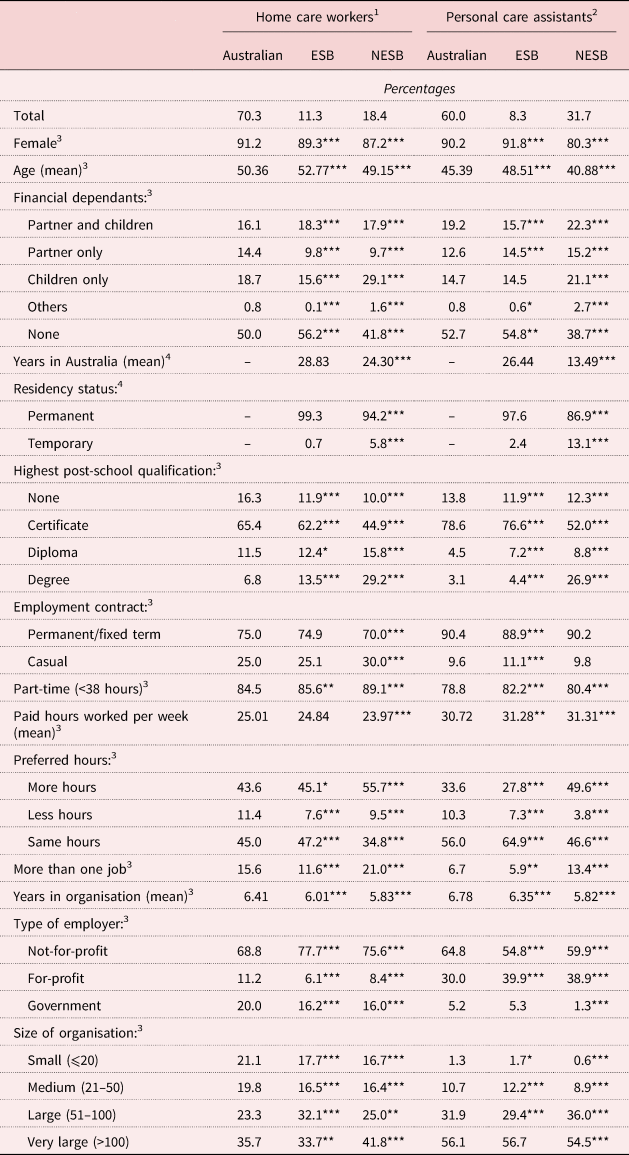
There are some relevant limits to the 2016 NACWCS data-set. Firstly, while aged-care employer reliance on agency and brokered employment is increasing (Mavromaras et al., Reference Mavromaras, Knight, Isherwood, Crettenden, Flavel, Karmel, Moskos, Smith, Walton and Wei2017: 61, 127), the NACWCS includes only workers in a direct employment relationship with the facilities surveyed. Secondly, compared to the Census data in Table 1, the NACWCS sample has both a lower proportion of PCAs and HCWs born overseas and a lower proportion born in NESB countries (see Table 2). Finally, given our focus on underemployment, including its association to hours worked, the NACWCS data both overrepresents those PCAs working longer weekly hours and underrepresents those working shorter hours compared to 2016 Census data (Eastman et al., Reference Eastman, Charlesworth and Hill2018b, Reference Eastman, Charlesworth and Hill2018c).
Comparison of socio-demographic and occupational characteristics by country of birth: home care workers and personal care assistants
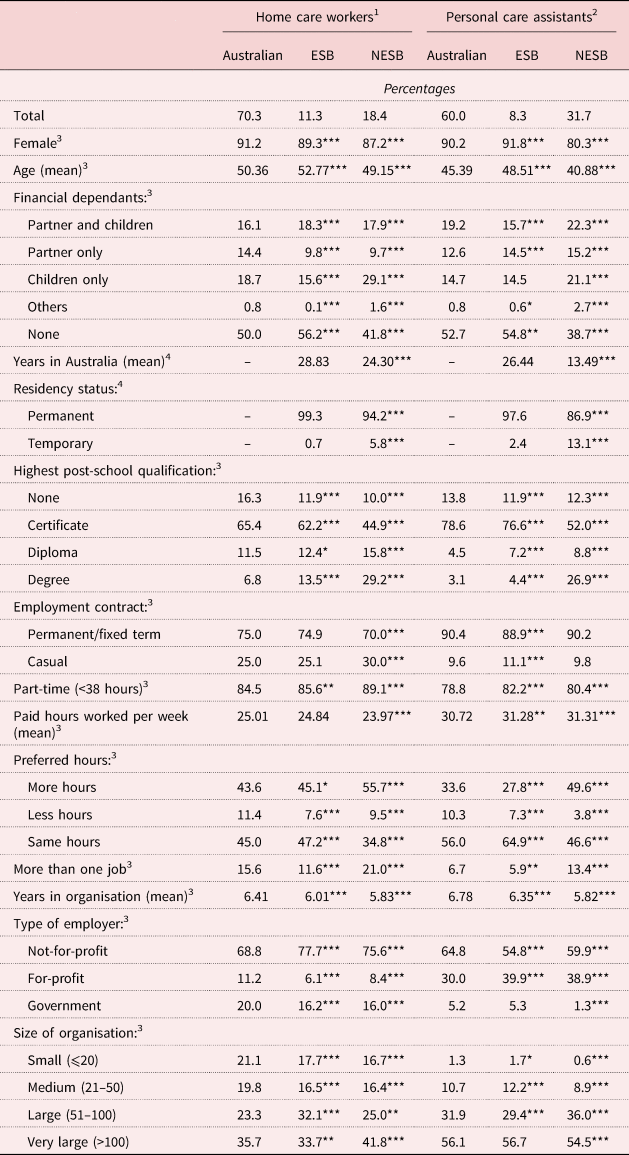
Notes: 1. N = 4,355. 2. N = 2,759. 3. Australia is the reference category. 4. English-speaking background (ESB) is the reference category. NESB: non-English-speaking background.
Significance levels: * p < 0.05, ** p < 0.01, *** p < 0.001.
Analysis approach
We draw on two key job quality indicators in the NACWCS employee survey. Firstly, we examine contract status (measured by the question: ‘What best describes your form of employment?’, with options of casual, permanent (full- or part-time), fixed-term contract); secondly, we examine underemployment as measured by a preference for more weekly hours of work in the current job (derived from the questions ‘How many hours on average do you usually work each week in this job?’ and ‘How many hours (per week) would you like to work in this job?’). One solution to having insufficient hours of work is to pursue more hours in the current job. Another solution is to take on another job (Chalmers and Campbell, Reference Chalmers and Campbell2008: 493). We therefore also consider the relationship of wanting more hours of work to hours of work in the current aged-care job and also to multiple job-holding, which is strongly linked with underemployment (Wilkins and Lass, Reference Wilkins and Lass2018).
Analyses were initially conducted to compare the socio-demographic and occupational characteristics of workers depending on their country of birth. Significance testing (using chi-square analysis and analysis of variance) was carried out on differences in respect to each of these characteristics for Australian-born, ESB and NESB workers (where the Australian-born were the reference category). In respect to characteristics which only pertain to overseas-born workers such as years in Australia and residency status, ESB is the reference category.
Logistic regression was then used to examine the impact of a number of predictors on the likelihood of casual employment and underemployment. Separate analyses were conducted for all HCWs and PCAs (including migrant and Australian-born workers) and for migrant workers (from ESB and NESB countries). A range of variables identified in previous research as having an association with employment conditions in the care sector were used as predictor variables in the analyses. These included: socio-demographic variables (country of birth, sex, age, qualifications, financial dependants); job characteristics (tenure, usual paid hours, holding more than one job); and organisational characteristics (type of employer and size of agency). The logistic regression analyses were conducted using a direct entry method in IBM SPSS Statistics 24.0. This is because it could be assumed that over time workers would be more likely to move from casual to ongoing part-time work and also to increase their hours of work and thus be less likely to want more hours of work or have more than one job.
We also explore the extent to which time spent in Australia washes out any disadvantage for ESB and NESB workers and the association, if any, temporary migrant status has with casual status and underemployment. Thus, in the regression model for migrant workers only, we have additional variables relating to migrant status: temporary residency, years in Australia, and an interaction term for NESB status and years in Australia (NESB × Years in Australia). We also examine tenure with the current employer as another likely mitigating factor over time to any disadvantage identified.
Findings
Socio-demographic and occupational characteristics
Table 2 sets out the key socio-demographic and employment characteristics of the HCW and the PCA respondents by country of birth. While our analyses of each group are separate, there are notable differences between the HCW and PCA respondents. On average, regardless of their country of birth, HCWs are older than PCAs and more likely to have a diploma or a degree. HCWs are also much more likely to be employed on casual contracts and to work fewer hours per week than PCAs. Perhaps as a consequence of this latter factor, HCWs are more likely to want more hours of work in their current job and to hold more than one job. Reflecting diverse aged-care sector ownership profiles, HCWs and PCAS are differently distributed across types of employer, with government and not-for-profit employment more important for HCWs and for-profit employment more important for PCAs. Finally, HCWs are also more likely than PCAs to be based in smaller aged-care organisations.
Inter-group differences were found with regards to both socio-demographic and occupational characteristics. For example, while all groups of aged-care workers are overwhelmingly female, NESB and ESB HCWs and NESB PCAs are significantly more likely to be male than Australian-born workers. HCWs and PCAs born in NESB countries were younger on average, with those born in ESB countries older than their Australian-born counterparts.
NESB migrant workers (and especially when working as a PCA) had been in Australia for a shorter period than ESB migrants. A larger proportion of NESB than ESB workers hold a temporary visa, particularly in the case of PCAs. Another distinguishing feature of the NESB workforce is the high level of formal qualifications held, both relative to the Australian-born and to the ESB aged-care workforce. NESB HCWs are more than four times as likely to hold a degree and NESB PCAs almost nine times as likely to hold a degree than those born in Australia.
NESB HCWs and ESB PCAs were more likely to be on a casual contract of employment than their Australian-born peers. Most of the HCWs and PCAs worked less than full-time. However, workers from migrant backgrounds were more likely to work on a part-time basis. The lowest average paid weekly hours were worked by NESB HCWs (23.97 hours) while migrant PCAs worked slightly more hours on average than their Australian-born peers.
Underemployment is a marked feature of frontline aged-care work. Migrant HCWs were much more likely than their Australian-born peers to want more weekly hours of work than they currently had. Indeed, well over half of NESB HCWs wanted more hours of work (55.7%). While NESB PCAs were working almost one hour more a week on average than Australian-born PCAs, they were still significantly more likely to want more hours of work (49.6%) than their Australian-born peers (33.6%), while ESB PCAs were significantly less likely to do so (27.8%).
Underemployment in frontline aged-care work is also reflected in the high rate of multiple job-holding. The rate for NESB HCWs and PCAs was much higher than that of their Australian-born or ESB-born peers. While there are various assessments of multiple job-holding in Australia reflecting different methodologies, it is estimated that in 2016 around 8 per cent of workers held more than one job (Cassells et al., Reference Cassells, Duncan, Mavisakalyan, Phillimore, Seymour and Tarverdi2018: 18). The rate for NESB HCWs (21%) is more than two and a half times that national average.
Migrant HCWs were less likely than Australian-born HCWs to work for for-profit employers, while migrant PCAs were more likely to do so. What is striking is the relatively low level of government employment for migrant HCWs and particularly for NESB PCAs. Finally, migrant HCWs and NESB PCAs were less likely to work for small or medium-sized employers.
Selected employment conditions of migrant workers: multivariate analyses
In the following multivariate analyses, we explore the factors associated with casual employment and underemployment separately for HCWs and PCAs, firstly for all workers (exploring the differences between ESB and non-ESB workers with their Australian-born peers) and then for our sample of migrant workers (identifying differences between ESB and NESB workers).
Casual employment
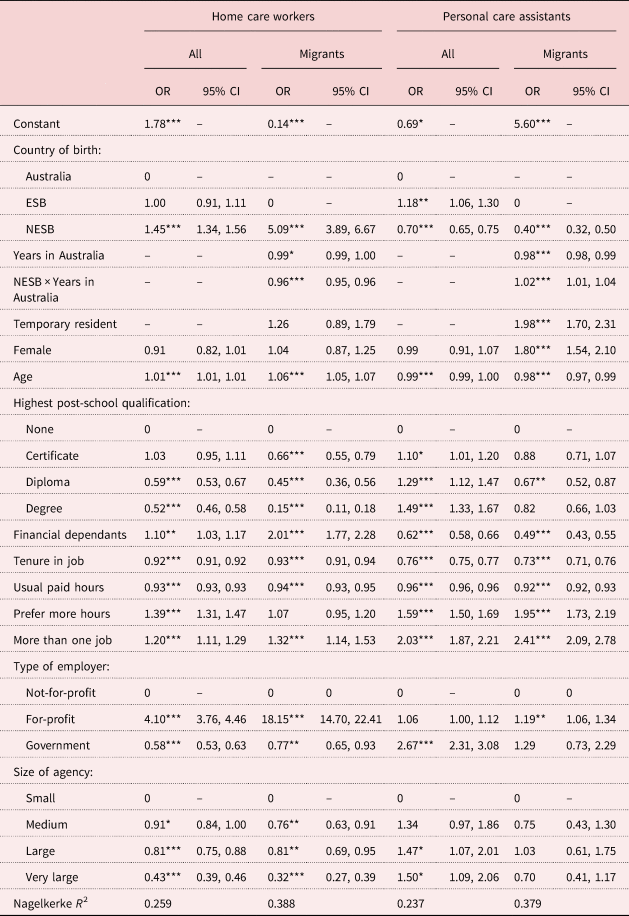
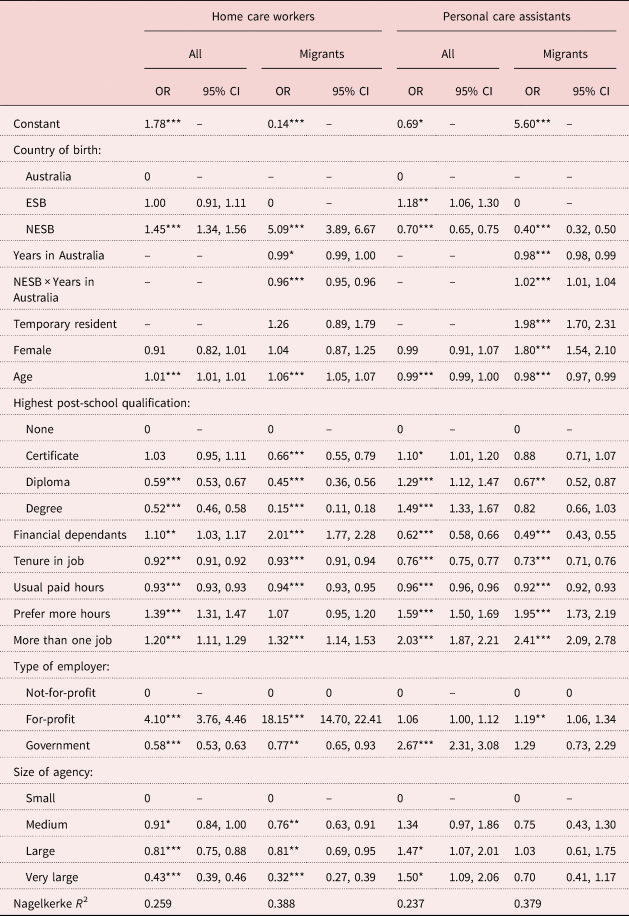
Table 3 sets out the factors associated with the likelihood of being on casual contract for both HCWs and PCAs.
Casual employment: home care workers and personal care assistants
Notes: OR: odds ratio. CI: confidence interval. ESB: English-speaking background. NESB: non-English-speaking background.
Significance levels: * p < 0.05, ** p < 0.01, *** p < 0.001.
One of the main factors associated with increased odds of HCWs being on a casual contract is being born in a NESB country. Controlling for all other factors in the model, NESB HCWs are 1.45 times more likely to be in casual employment than Australian-born workers. However, for ESB workers there is no significant difference in the likelihood of being on a casual contract.
When we look at outcomes for migrant HCWs, NESB workers are over five times more likely than their ESB counterparts to be casually employed. Time spent in the host country can lessen employment disadvantages for migrant workers. While overall, migrant HCWs are 0.99 times less likely to be on a casual contract with each additional year in Australia, this effect is stronger for NESB HCWs (odds ratio (OR) = 0.96) when compared to their ESB counterparts. Being a temporary resident was not found to impact significantly upon the likelihood of casual employment for migrant HCWs.
For migrant HCWs, in addition to NESB status the likelihood of being on a casual contract was most strongly associated with working in a for-profit organisation (OR = 18.15) and having financial dependants (OR = 2.01).
For PCAs, being an ESB migrant was significantly associated with being on a casual contract, with this group 1.18 times more likely to be casually employed than Australian-born workers. On the other hand, NESB PCAs are 0.70 times less likely to be casual than Australian-born workers.
When comparing the effect of country of birth on the casual status of migrant workers only, we found that NESB PCAs are 0.40 times less likely to be casual than ESB PCAs. At the same time, while overall length of time in Australia reduces the likelihood of a migrant worker being on a casual contract (OR = 0.98), NESB PCAs were 1.02 times more likely to be casual with each additional year in Australia when compared to ESB PCAs. For migrant PCAs, other factors most strongly associated with increased odds of being on a casual contract included being on a temporary visa (OR = 1.98), wanting more hours in their current job (OR = 1.95) or holding more than one job (OR = 2.41).
Underemployment
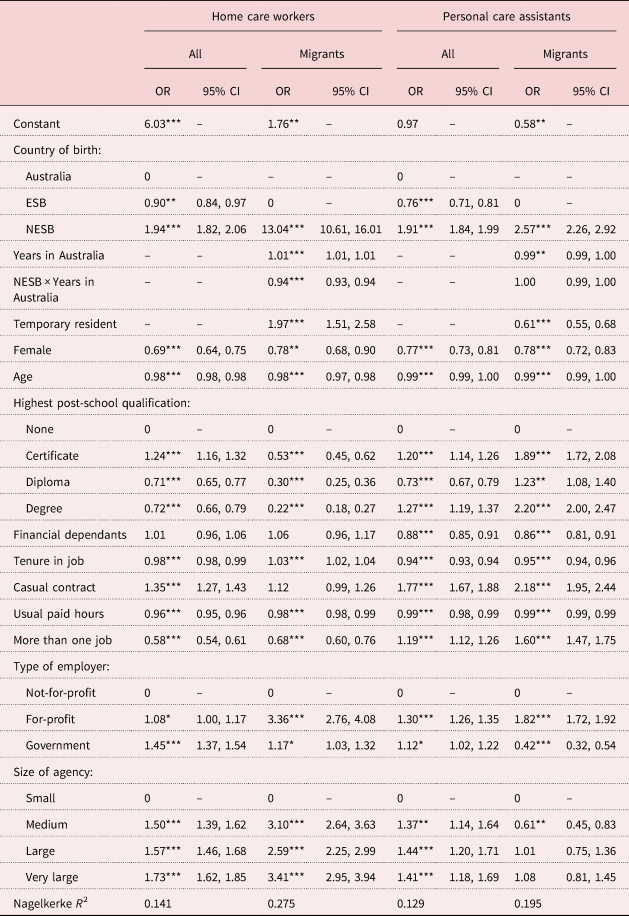
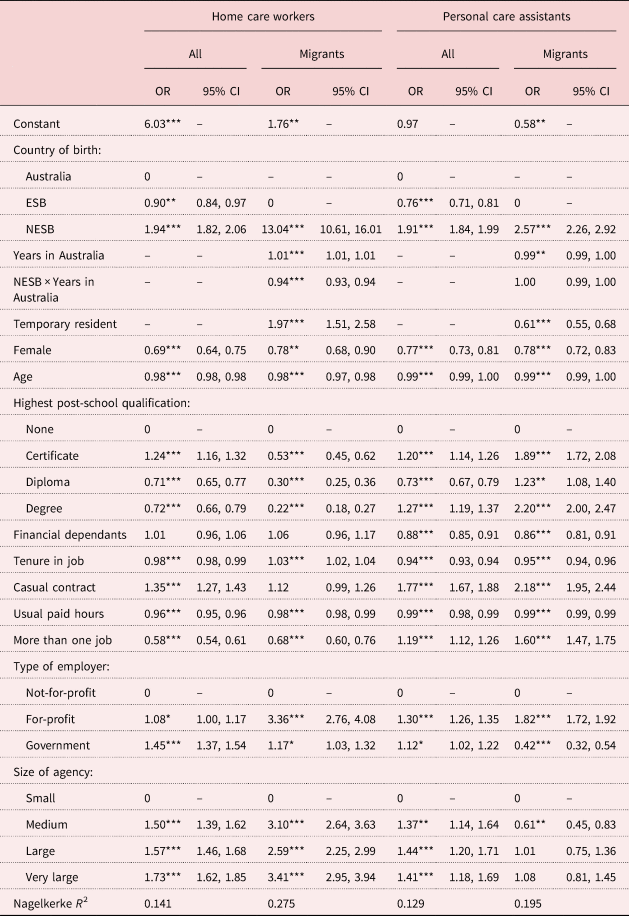
Table 4 sets out factors associated with the likelihood of wanting more hours of work in the current job for both HCWs and PCAs.
Underemployment: home care workers and personal care assistants
Notes: OR: odds ratio. CI: confidence interval. ESB: English-speaking background. NESB: non-English-speaking background.
Significance levels: * p < 0.05, ** p < 0.01, *** p < 0.001.
While NESB HCWs are almost twice as likely to be underemployed than Australian-born workers (OR = 1.94), ESB HCWs are less likely to be underemployed than their Australian peers (OR = 0.90).
For migrant HCWs, the strongest predictor associated with increased odds of underemployment is being born in a NESB country. NESB HCWs are around 13 times more likely to want more hours than ESB HCWs. Overall, the likelihood of underemployment for migrant HCWs increased slightly with each additional year living in Australia (OR = 1.01). At the same time for NESB HCWs, years in Australia has a comparatively beneficial effect, with this group 0.94 times less likely to be underemployed with each additional year in Australia than ESB HCWs. Being on a temporary visa almost doubled the likelihood of a migrant HCW wanting more hours (OR = 1.97). In addition, migrant HCWs working for a for-profit employer or in medium to very large organisations were around three times more likely to be underemployed.
For migrant PCAs, one of the key factors associated with increased odds of underemployment was being born in an NESB country. NESB PCAs were 2.57 times more likely to be underemployed than ESB PCAs. While, with each additional year in Australia migrant PCAs were 0.99 times less likely to be underemployed, no differences were found between NESB and ESB PCAs. Being a temporary resident also decreased the odds (OR = 0.61) of a migrant PCA wanting more paid hours. Other factors most strongly associated with underemployment for migrant PCAs included being on a casual contract (OR = 2.18), working for a for-profit employer (OR 1.82) and holding a post-school qualification (especially a degree; OR = 2.20).
Discussion
Our analysis points to some significant differences between migrant HCWs and PCAs and their Australian-born counterparts in respect of the two key dimensions of poor job quality we investigated. Secure contract status and having sufficient hours of work are crucial to economic security for workers and in aged care, more specifically, better quality jobs are related to lower rates of employee turnover and improved employee wellbeing (Burgess et al., Reference Burgess, Connell, Nankervis, Dhakal and Fitzgerald2018).
There are significant differences between ESB and NESB workers within each occupation in respect of exposure to casual status and underemployment. This finding resonates with earlier studies that suggest it is particular groups of migrants – those who are the most ‘different’ from the local norm – who are most likely to experience such disadvantage (Doyle and Timonen, Reference Doyle and Timonen2009; Stevens et al., Reference Stevens, Hussein and Manthorpe2012; Jönson and Giertz, Reference Jönson and Giertz2013). What is distinctive about our findings here, however, is that the migrant aged-care workers in Australia are overwhelmingly permanent residents, rather than temporary migrants as is the case in many of the European studies above. Nevertheless, it is striking that in our study, being on a temporary visa was associated for PCAs with being casually employed and for HCWs with underemployment, which points to the additional layer of vulnerability that temporary migrants experience (Howe and Owens, Reference Howe and Owens2016).
Casual status
ESB PCAs and, to a greater degree, NESB HCWs were significantly more likely to be on a casual contract than other groups. Our findings contrast with the Swedish study outlined above that found that while non-Nordic migrant care workers, including both HCWs and residential workers, were more likely to be in temporary employment than native or Nordic migrants, these effects disappeared after controlling for variables such as gender, age, education and years in the occupation (Jönson and Giertz, Reference Jönson and Giertz2013: 816). In our study these effects remained even after controlling for such characteristics.
Casual status in Australia, as in most countries, carries with it a range of disadvantages for workers, linked both to pay insecurity and to working time insecurity (Campbell and Burgess, Reference Campbell and Burgess2018; Campbell et al., Reference Campbell, Macdonald, Charlesworth, O'Sullivan, Lavelle, McMahon, Ryam, Murphy, Turner and Gunnigle2019). The consequences, however, of casual employment are different for HCWs and PCAs. As Fudge (Reference Fudge, Fudge and McCrystal2012: 17) argues, the institutional setting in which work is performed shapes both the nature and the scope of labour regulation. The location of the work undertaken by HCWs in clients’ homes makes it very different from the institutional workplaces around which labour regulation and its enforcement have been built, including in residential aged care (Charlesworth, Reference Charlesworth, Fenwick and Van Goethem2017: 143). The funding and organisation of work carried out in these two different locations also means that casual HCWs are far more likely to have short and episodic hours of work built around individual client visits, while casual PCAs in institutional settings are more likely to have shifts of several consecutive hours. The relatively predicable organisation of working time in institutional workplaces provides the basis for better working time and pay security than is the case for HCWs (Charlesworth, Reference Charlesworth, Fenwick and Van Goethem2017: 143–144).
Underemployment
We found that NESB HCWs and PCAs were significantly more likely than their Australian-born or ESB counterparts to want more hours of work in their current job than they currently had. This strong association may also be due to the relative lack of family networks and other economic supports for more recently arrived NESB migrants, particularly women (Ressia et al., Reference Ressia, Strachan and Bailey2017), and the fact that the process of upward mobility takes longer for ‘visible’ skilled women migrants than for ‘non-visible’ skilled women (Webb, Reference Webb2015: 42). Wanting more hours of work in the current job is a significant driver for holding a second job (Bamberry and Campbell, Reference Bamberry and Campbell2012) and, in the case of aged care, may also reflect relatively low rates of pay which combined with the lack of longer-hour part-time or full-time work, is particularly difficult for migrants without family and economic capital.
Time spent in Australia
One of the key issues we explored in this study is the extent to which increased exposure to casual status and underemployment decreased with time spent in Australia. The literature suggests that time spent in a host country has a mitigating effect on employment disadvantage (Demireva, Reference Demireva2011; Correa-Velez et al., Reference Correa-Velez, Barnett and Gifford2015). For example, a European study (Peracchi and Depalo, Reference Peracchi and Depalo2006) found that while initially migrants, particularly female migrants, had lower employment rates than locally born workers, these differences progressively diminished over time, particularly for non-EU migrants. Our analysis supports the general trend of such findings as generally time in Australia reduced the likelihood of being on a casual contract for migrant workers.
Some differences were identified depending on country of birth. NESB HCWs when compared to their ESB peers were less likely to be on a casual contract with each year in Australia. However, for NESB PCAs, the likelihood of being on a casual contract actually increased with each year spent in Australia. The differences in employer practice in the two sectors may provide at least a partial explanation. Typically, home care employers start workers off on casual contracts and are most likely to offer part-time status to workers who are willing to work additional hours which the comparatively higher underemployment of NESB HCWs suggests may be the case. In the residential care sector, where PCAs generally have a lower rate of casual employment, NESB PCAs have both a shorter tenure with their employer and are more likely to hold a second job than ESB PCAs, which may mean casual workers may not be offered or be available for regular part-time work.
In terms of underemployment, we found that for migrant HCWs the effect of time in terms of years in Australia was paradoxical. With each year in Australia, migrant HCWs were more likely to be underemployed (although compared to EBS workers, NESB HCWs experienced lower odds of underemployment with more time in Australia). In contrast, migrant PCAs were less likely to be underemployed with increasing time spent in Australia, with no difference observed between ESB and NESB migrants. This may be because the institutional location of residential aged care provides more opportunities to access additional hours for workers with longer tenure, whether through increased regular hours of work or being able to access additional shifts when other staff are absent.
Further factors influencing the employment conditions of migrant workers
Consistent with the poorer job quality faced by migrant social care workers in for-profit employers in the UK (Hussein and Manthorpe, Reference Hussein and Manthorpe2014; Hussein, Reference Hussein2017), we found that for-profit employment was associated with a higher likelihood of being on a casual contract and underemployment for NESB migrants, particularly HCWs. While much lower than in the UK (Marczak and Wistow, Reference Marczak, Wistow, Gori, Jose-Luis Fernandez and Wittenberg2016), for-profit employment in Australia is increasing in both sectors, particularly when measured by numbers of clients or numbers of beds rather than size of organisation, as in Table 2. In 2017/18, 17 per cent of home care packages and 47 per cent of residential care places were delivered by for-profit providers (Department of Health, 2018a). Given our findings, a rise in casualisation with associated underemployment may well result for migrant frontline aged-care workers with further projected increases in for-profit employment (Davidson, Reference Davidson, Cahill and Toner2018).
In addition, we found that for migrant PCAs the likelihood of underemployment increased with holding post-school qualifications. Why this might be the case is not entirely clear. Australian studies focused on those with permanent migrant status suggest that women with high levels of education may end up in care work because of perceived language difficulties, the lack of recognition of overseas qualifications, as well as wanting work that accommodates family responsibilities in a context where few other supportive networks exist (O'Dwyer and Colic-Peisker, Reference O'Dwyer and Colic-Peisker2016; Hamilton et al., Reference Hamilton, Hill and Adamson2019). At the same time, the lack of such networks and economic resources can make migrant aged-care workers more dependent on obtaining sufficient hours of paid work to meet financial obligations.
Conclusion
Our study is important for two main reasons. Migrants, particularly NESB migrants, are a growing proportion of the Australian frontline aged-care workforce, and in their direct engagement with aged-care recipients make a substantial contribution to the quality of aged-care services, as in other countries (Walsh and Shutes, Reference Walsh and Shutes2013). Thus, the extent to which job and working time insecurity are more prevalent for migrant aged-care workers risks undermining not only the wellbeing of migrant workers but also that of the older people with whom they work (Walsh and Shutes, Reference Walsh and Shutes2013: 414).
Both casual status and underemployment have a material effect on low-paid workers in terms of having access to sufficient predictable income and also to on-the-job training, which is crucial in gaining any career progression (Chalmers et al., Reference Chalmers, Campbell and Charlesworth2005: 51). For migrant workers, such effects are exacerbated by the precarity inherent in the migrant experience, particularly for newer migrants and those on temporary visas (Howe and Owens, Reference Howe and Owens2016). Recent shifts in migration policy have emphasised temporary over permanent migration and have made it more difficult for those on temporary visas to transition to permanency, especially for those assessed as ‘low skilled’, such as frontline care workers (Howe et al., Reference Howe, Charlesworth and Brennan2019). A 2016 ABS survey of recent Australian migrants shows that frontline care workers who had arrived in the last five years were far more likely to be on temporary visas than those who had arrived a decade before. Moreover, migrant care workers born in India, the Philippines, Nepal, Sri Lanka and Bangladesh were three times as likely to enter on a temporary visa compared to care workers born in other countries (Eastman et al., Reference Eastman, Charlesworth and Hill2018a).
Our analysis shows that, despite having access to the same formal minimum labour standards as other locally born and ESB migrants, NESB frontline aged-care workers are more likely to be exposed to two key dimensions of poor job quality in casual status and underemployment. This suggests that there may be well be ‘racialised hierarchies’ in access to better or worse conditions in care work in Australia as elsewhere (Walsh and Shutes, Reference Walsh and Shutes2013: 396). Relying on highly qualified migrants to undertake undervalued and relatively poorly paid work may also negatively impact on migrant worker wellbeing and ultimately care quality (Ngocha-Chaderopa and Boon, Reference Ngocha-Chaderopa and Boon2016: 42).
Further, the poorer outcomes documented in our study for migrant workers located in for-profit employers and for those on temporary visas may well be exacerbated with the increased marketisation of aged care in Australia and the policy shift towards ‘permanent’ temporary migration (Mares, Reference Mares2016). The growing proportion of recent migrants in frontline aged-care work thus has implications not only for quality of the jobs held by frontline aged-care migrant workers but also for the quality of services. The relatively poorer conditions experienced by migrant aged-care workers, particularly those born in NESB countries, works not only to normalise inadequate conditions of work in the sector but also undercuts good-quality relationship-based care through increased staff turnover and poor continuity of care. Discontent with hours and shifts and with pay are two key reasons HCWs and PCAs cite for leaving their last aged-care employer (Mavromaras et al., Reference Mavromaras, Knight, Isherwood, Crettenden, Flavel, Karmel, Moskos, Smith, Walton and Wei2017: 35, 94).
Despite the projected demand for an increased number of workers in aged care (Productivity Commission, 2011; Department of Health, 2018b), employers in the sector have exhibited a strong preference to employ individual workers for less than full-time hours. Over recent years, there has also been employer lobbying for migrant workers to meet the demand for aged-care workers not currently filled by local workers (Adamson et al., Reference Adamson, Cortis, Brennan and Charlesworth2017). The persistence and extent of underemployment in aged care is perplexing and points to the need for strategies that would enhance attraction and retention through improvements in the wages and working conditions of all aged-care workers, regardless of whether they are Australian-born or a permanent or temporary migrant (Howe et al., Reference Howe, Charlesworth and Brennan2019: 241).
There are two possible limitations to our analysis. Firstly, NESB migrant frontline aged-care workers are not a homogenous group. While our paper does not analyse the intra-group differences between NESB migrants, such an analysis is a crucial one to take up in further research. A study drawing on the 2012 NACWCS data found distinct differences between Asian PCAs, with increased precarity for those from Southern Asia, for whom casual work and underemployment were higher (Isherwood and King, Reference Isherwood and King2017: 203). In further research, it may be useful to examine intra-group differences between NESB HCWs as well as the extent to which disadvantage washes out over time for NESB workers from diverse birthplaces. Surprisingly, in Australia there is little qualitative work on migrant aged-care workers. One recent Australian study found that many educated migrant women working in frontline care work found this work both ‘meaningful’ and ‘accessible’, notwithstanding the wider context of gendered and racialised discourses about migrant women being ‘well suited’ to the care sector (Hamilton et al., Reference Hamilton, Hill and Adamson2019). Further qualitative research specifically investigating the employment experiences of migrant aged-care workers is also warranted. This would provide an important perspective on the findings in this paper, drawing out diverse lived experiences of NESB migrant worker disadvantage in Australian aged-care employment.
Financial support
This work draws on research conducted as part of Australian Research Council-funded projects FT120100346, DP170100022 and LP150100330.
Ethical standards
Ethical approval for the 2016 NACWCS was granted by the Flinders University Human Research Ethics Committee.