The devastating earthquake and tsunami that struck northeastern Japan on March 11, 2011, has refocused attention on disasters in Japan, and recurrent natural disasters across the globe have underlined the importance of understanding the economic impact of such calamities and how economies and societies can recover from them. Scholarly analysis of these disasters, however, has tended to focus more on short-term relief and reconstruction, and, in the case of 2011 Japan, on environmental implications, and rather less on prospects for longer-term economic recovery.
This article considers a historical example of a major natural disaster in Japan—the Great Kantō Earthquake (Kantō Daishinsai) of September 1, 1923—from which economic recovery was relatively rapid. While study of the Kantō disaster is of interest in itself, this case study may also help us better to analyze the recovery process. Economists' understanding of this process remains limited (Cavallo and Noy Reference Cavallo and Noy2010; Hallegatte and Przyluski Reference Hallegatte and Przyluski2010; Noy Reference Noy2009), but it is apparent that central to recovery is the relationship between disasters of this kind and the working of the market, that is, the system whereby individuals and groups engage in exchange, bringing together production and consumption. In any economy in which most economic activity is based on market transactions, market dislocation is the inevitable consequence of a natural disaster that leads to large-scale physical destruction and human casualties.
Japan in 1923 was no stranger to natural disasters. Although historical memories of disaster may weaken over time (Smits Reference Smits2011), their very frequency has reinforced cultural and institutional memories about how best to deal with them (Duus Reference Duus and Kingston2012, 175). However, the scale of the 1923 disaster was particularly great. Even for Japanese who remembered the great Nōbi earthquake of 1891 or, conceivably, the Ansei catastrophes of the early 1850s, the destruction and number of casualties of September 1923 were unprecedented, making it the largest natural calamity in Japan's modern history (Clancey Reference Clancey2006; Samuels Reference Samuels2013). Moreover, Japan in 1923 was still a “semi-industrial” economy. Much economic activity remained “traditional,” and the economy as a whole was highly dependent on agriculture, small-scale business, and self-employment. Japan's per capita income was far below those of the richest industrial economies of the West, and Japan accounted for a very small fraction of the world's manufacturing production (Kenwood and Lougheed Reference Kenwood and Lougheed1992, 171; Maddison Reference Maddison2006, 206, 466). If we accept that richer, larger economies are more likely to cope well with natural disasters (Cavallo and Noy Reference Cavallo and Noy2010, 12–13), then we would also expect semi-industrialized Japan to find it harder to recover.
However, historical assessment of the impact of the disaster on Japan's longer-term economic growth and development has been relatively positive. While constructing a baseline from which to measure long-term effects is problematic, there is general agreement that in many respects the impact of the disaster on the economy was of limited duration (Katō Reference Katō, Hayashi and Usami1976; Watanabe Reference Watanabe1978). Financial dislocation persisted for several years, culminating in the financial crisis of 1927, but there is little reason to question the overall story about the economic recovery. Perhaps because of this, much of the recent scholarship on the disaster has focused on its social, political, and cultural aspects rather than on its economic consequences (e.g., Aldrich Reference Aldrich2012a; Borland Reference Borland2005, Reference Borland2006; Hanes Reference Hanes2000; Imai Reference Imai2007; Kitahara Reference Kitahara2011; Schenking Reference Schenking2006, Reference Schenking2008, Reference Schenking2013; Weisenfeld Reference Weisenfeld2012).
In the immediate aftermath of the disaster, however, few predicted such a positive scenario. Pessimism was generated not just by the sheer scale of physical destruction, but by the recognized potential of market transactions to diffuse more widely its impact. Despite its “relative backwardness,” Japan had long been developing sophisticated market institutions. There were complex markets for labor, capital, raw materials and energy, agricultural products, and intermediate and final manufactured goods. By 1923, Japan's domestic markets were relatively integrated and centralized, and the country had become increasingly integrated into the international economy. Because market institutions are also social institutions, transmission of the effects of the disaster depended not merely on factors such as loss of supply or physical damage, but also on individual psychology and the culturally and socially conditioned responses of people and organizations.
Scholars have highlighted aspects of the immediate disruption to market transactions (Kimura Reference Kimura2011; Shimizu and Fujimura Reference Shimizu and Fujimura2010), and the concerns expressed at the time of the disaster seemed frequently to border on panic. The location directly affected by the earthquake, namely Japan's largest metropolitan area, embracing the country's political capital, its economic and financial center, and its main export port, magnified the potential for wider transmission of the impact of the destruction. For some contemporaries it was difficult to imagine a scenario more likely to jeopardize the hard-won economic gains of previous decades. “The disaster . . . apparently arrested, as was apprehended at the time, the progress of national development” (Bureau of Social Affairs 1926, preface, n.p.). This profound concern was strongly associated with a fear that market dislocation would jeopardize longer-term recovery, and a shared belief that the state must intervene to compensate for the inability of individuals and businesses to cope on their own, and to constrain the “unreliable” market-based responses to the emergency. Two weeks after the disaster, on September 16, emergency regulations stated:
What calls for special apprehension is that taking advantage of this unparalleled natural calamity that has befallen the nation, individual merchants . . . may indulge in the practice of cornering or secretly hoarding the stocks of necessities of living for the selfish purpose of profiteering at the expense of the numberless sufferers. (Bureau of Social Affairs 1926, 552)
A 1924 report from the Tokyo Chamber of Commerce stated that the disaster “has almost completely destroyed the foundations of the capital's economic organisation,” while “the rights and relationships of those engaged in commerce have been thrown into extreme confusion and disorder” (Nōshōmushō Shōmukyoku Reference Nōshōmushō1924, 24, 30).
In this article, I suggest that contemporary fears that unchecked dislocation of markets was potentially disastrous were both understandable and legitimate. In line with the now accepted distinction between direct and indirect costs of disasters (Hallegatte and Przyluski Reference Hallegatte and Przyluski2010, 3), I present historical evidence showing that the scale and nature of short-term market disruption was far greater than that stemming simply from physical destruction. I show how the collective and individual responses of government, producers, traders, and consumers could magnify the problems. The article also suggests, however, that the existence of an integrated market economy such as Japan had developed by the 1920s offered some benefits in the wake of the disaster. Market-based transactions could help in alleviating immediate suffering, procuring reconstruction goods, and rebuilding production. Judicious intervention by the state in the process of market stabilization following the catastrophe may also have enhanced the chances of longer-term recovery. Focusing on market institutions therefore allows us to some extent to reconcile the profound concerns of contemporaries with the more positive long-term economic story. It can thereby help us understand the broader process of recovery from disasters in Japan itself, and in developing economies more resembling prewar Japan.
In line with this focus, the remainder of the paper seeks to answer four main questions. Firstly, on what scale and in what ways did physical destruction undermine the ability of markets to work as normal? Secondly, how far and in what ways did the Japanese state intervene to address the consequent problems and stabilize market transactions? Thirdly, where markets continued to work with and without intervention, how did those involved respond to the crisis environment? The final question relates to what have been called “ripple effects,” namely how far the existence of integrated markets spread the impact beyond the devastated area.
The Disaster and the Market
The 1923 earthquake, estimated at 7.9 on the Moment Magnitude scale (Mw) with an epicenter just south of the capital area, occurred just before noon on September 1, 1923. In the words of one contemporary, “the quivering, shaking, rattling became in an instant like a raging tempest” (Dahlmann, Reference Dahlmann1924, 7). Seismologists recorded over 900 aftershocks over the next few days, and the devastation has been well documented in photographs and written assessment (see, e.g., Naimushō Shakaikyoku 1926). The majority of deaths that occurred were caused not by the earthquake and associated tsunami, but by the more than 130 separate fires that took hold within minutes of the earthquake, merging into devastating conflagrations and firestorms. Estimates of the human loss varied considerably, but the final figure given by the authorities was over 156,000 killed, injured, or missing (Bureau of Social Affairs 1926, 43, 53). Large swathes of the urban area were left almost devoid of recognizable buildings; many remaining structures were unusable. All but tiny patches of urban Yokohama ceased to exist (Imai Reference Imai2007; Norma Reference Norma2008). In the months after the earthquake, the population of the metropolitan area dropped by nearly three-quarters of a million, as survivors fled to friends, relatives, and their rural furusato. By the end of October 1923, over 45,000 people had taken ships from Kantō to Kōbe (Kōbe Suijō Keisatsusho Kōsaikai 1924, 223).
Calculating the value of what was lost has proved an inexact science. Tomikashi (Reference Tomikashi1982, Reference Tomikashi1983) and Matsuda (Reference Matsuda1983) concur with Ōkawa's estimate of the value of losses at around 1.6 percent GNP, but some more recent estimates have put it somewhat higher. Tokyo city government estimated that the total material losses, at some 5.5 billion yen, were “at least sevenfold those of San Francisco in 1906,” comprising mainly about 2.7 billion yen worth of buildings and furniture, and around 2.37 billion yen worth of factories, merchandise, and warehoused goods (Bureau of Social Affairs 1926, 466–69). The Home Ministry's enumeration of the physical destruction shows that all the major department stores were wiped out, while 5,748 bank or company buildings in Tokyo and Yokohama were wholly or partially destroyed. Loss of production facilities included 1,438 flour milling establishments, 264 dyeing workshops, 366 confectionery producers, and over 400 factories engaged in lumber processing or wood/bamboo manufacturing (Bureau of Social Affairs 1926, 83–85, 180). The authorities in Tokyo estimated that over three-quarters of machinery capacity was lost or damaged, as was over two-thirds of the capital's capacity for the production of food and drink (Tomikashi Reference Tomikashi1983, 2). The scale of destruction alone had the capacity to change dramatically the demand and supply curves for a whole range of goods, and to engineer acute shortages and consequent price rises.
Evaluations of the direct physical loss underestimate the costs to the economy, which were increased considerably by the indirect effects of the damage, and by the market dislocation that ensued. These additional problems had two main sources. One was the extensive damage inflicted on the infrastructure necessary for production and the performance of market transactions. The second was the temporary breakdown of both formal and informal institutions that had previously helped to minimize the transaction costs in different markets.
Efficient markets and commercial transactions are dependent on the provision of both informational and physical (transport) infrastructure, as well as on the provision of basic utilities. Such provision was badly damaged by the September 1 disaster, with “all communication and traffic systems within the city limits having been entirely dislocated and completely paralysed by the quake for several days following” (Bureau of Social Affairs 1926, 67). Gas and electricity supplies were reduced or nonexistent, and in many areas there was a danger of acute water shortages (Jiji Shinpōsha Keizaibu 1924, 529–53; Tōkyō-fu 1925, 3:69). For around a week, there was virtually no communication between the devastated area and other parts of Japan. Hundreds of post offices, tens of thousands of telegraph poles, and miles of wiring were destroyed. Much of the national postal, telephone, and telegraph network was routed through Tokyo, so the destruction affected users across the country. Full resumption of telephone services, increasingly used by business, was expected to take up to two years. Businessmen in Tsu, in Mie Prefecture, some 300 kilometers away from Tokyo, reported in late November that there were still huge delays in phone communication, and that telegraphs were taking up to three days to arrive, which rather defeated their purpose (Nōshōmushō Shōmukyoku Reference Nōshōmushō1924, 224).
Damage to the transport facilities on which both information flow and market transactions were dependent impeded for months any resumption of normality. Rail routes into the Kantō region had been cut, including the key Tōkaidō and Nakasendō lines. Great lengths of track, including rails, sleepers, and points, were unusable. Physical destruction of rolling stock ran to over 100 steam engines and thousands of passenger and freight wagons (Jiji Shinpōsha Keizaibu 1924, 179–84). When lines did begin to be restored, both freight and passengers were often compelled to take circuitous indirect routes, frequently on single-track lines, leading to major delays. Prioritization in transport was given to emergency goods, but delays and lack of rolling stock led to stockpiling at stations, and many goods were lost, damaged, or unusable due to the inadequate transport network (Tetsudōshō 1927, 109ff.). The stockpiling of goods at many stations due to shortage of capacity clogged further transport facilities beyond the disaster area. At the end of January 1924, it was estimated that there were still nearly three-quarters of a million tons of freight sitting in station yards across Japan, some two-thirds of it destined for Tokyo (Nōshōmushō Shōmukyoku Reference Nōshōmushō1924, 5). Road transport proved a poor substitute.
Deficiencies in land communications meant that users looked to sea transport. Many ship owners sharply increased their prices to capitalize on the shortage of vessels and the sudden increase in demand. The cost of carrying coal from Wakamatsu port, in northern Kyūshū, to Yokohama rose by 100 percent. Charter prices for ships rose 30 percent. Even when goods arrived by sea, destruction of facilities in the capital area meant an acute shortage of docking space at both Yokohama and Shibaura, and of the lighters and barges required to unload cargoes from larger vessels. The cost of a lighter to carry freight over the short distance between Tokyo and Yokohama more than doubled, and some other shipping costs went up even more (Jiji Shinpōsha Keizaibu 1924, 223–25; Nōshōmushō Shōmukyoku Reference Nōshōmushō1924, 6, 21).
The detrimental effect to market infrastructure of this physical damage is easily comprehended. Less obvious, but potentially just as damaging, was the disruption to the financial, social, and organizational framework within which markets had to operate. With the destruction of stocks and capacity, businesses lost their assets and had no means of reestablishing an income stream. Their inability to pay their bills jeopardized the livelihood of others. Many businesses were not covered by insurance. Even when they were, there was considerable uncertainty over insurers' obligations, and the possible scale of any payouts (Tōkyō Shōgyō Kaigisho Hō VI, 10, November 1923, 8–13). In fact, most insurance contracts excluded loss or damage caused by earthquakes. “It was extremely unlucky,” commented the Home Ministry, in something of an understatement, “that the existence of the exclusion clause was unknown to most of the assured” (Bureau of Social Affairs 1926, 472). The resolution of insurance issues took many months; the prime minister's appeal in mid-September 1923 to insurers to “evince a self-sacrificing spirit” since their fundamental rationale was to safeguard “the stability of public welfare” (Bureau of Social Affairs 1926, 473) does not seem to have been particularly well received.
At the same time, the loss of personnel and retail outlets itself undermined the capacity to undertake transactions. Sales took place in the informal markets that sprang up, but one survey conducted in November 1924, over a year after the disaster, found that the number of people employed in commerce in Tokyo city and the six affected prefectures was down by almost a quarter, and employment in some other sectors was down by up to 16 percent (Shakaikyoku 1924, 122). Much of the documentation relating to the issue of credit and other legal arrangements for commercial activities had been destroyed, and banks were among the many businesses that had problems in identifying who their creditors and debtors were. Many businesses, small and large, found it impossible to obtain the credit that they needed to tide themselves over the crisis period. Others were compelled to abandon longstanding commercial relationships with businesses that no longer existed, or could not maintain supplies. Turning to new partners posed its own challenges in establishing a relationship of trust. The lack of credit combined with the lack of confidence led to a renewed dependence on cash dealings; for a while hard cash replaced many bills of exchange and other forms of credit and payment methods throughout the disaster area.
Loss of business and personal documentation was just one of the things that contributed to confusion over the rights and relationships between commercial actors and an overwhelming lack of trust and business confidence. The organizations that helped businesses, large and small, to coordinate their activities and protect their collective interests were in some cases unable to continue functioning, whether due to the destruction of facilities, death or injury of individuals, or inability to communicate. Many of the main business organizations in Kantō, such as the Yokohama Silk Exporters' Association, acted rapidly to resume such activities as were possible, but this was often due to the initiative of particular individuals and in the face of great difficulties. It was particularly hard for many of the small and medium-sized businesses that comprised the vast majority of business undertakings in 1920s Japan to obtain support and coordinate their efforts for recovery. Many family businesses had lost both home and business premises, and stock, and faced a bleak future. The foundations essential to market operation in the Kantō area thus appeared distinctly shaky in the early days after the disaster, and the state of “extreme confusion and disorder” seemed likely to spread to other parts of the country.
Government Intervention to Stabilize Markets
Analysts of disasters have long argued that effective governing institutions are a major element in post-disaster reconstruction, both through direct intervention and indirectly through shaping the private-sector response (Noy Reference Noy2009, 227). In Japan, the state's responsibilities to support citizens exposed to disasters was well established by the late nineteenth century, and in 1923 the central and municipal authorities were quick to step in to try to minimize the threat of political, economic, and social disorder, although they initially failed to control the violence against ethnic minorities and political dissenters. The government's initial attempts to regulate market transactions were made with a view to short-term relief and reconstruction, rather than from any concern with longer-term economic stability, but there is little doubt that the authorities at all levels were aware of the potential severity of the economic problems. In fact, many of the ensuing interventions accorded with more recent post-disaster policy prescriptions.
In conjunction with the imposition of martial law and the establishment of the Emergency Disaster Relief Board (Rinji Shinsai Kyūgo Jimukyoku), the authorities took extensive measures for requisitioning essential commodities to deal with the crisis. The Emergency Requisitioning Ordinance of September 2, the day after the earthquake, allowed the commandeering (with payment) of food, building materials, sanitation materials, transport, and any other designated commodities, as well as labor. On September 6, sales of rice resumed at prefectural and municipal markets (Bureau of Social Affairs 1926, 67). An Emergency Goods Provision Ordinance (Rinji Busshi Kyōkyū Rei) later in the month aimed at ensuring the supply of necessary goods over a more prolonged period. The military was involved in transport and distribution, the Foreign Ministry undertook negotiations with other countries, and three of the big trading houses—Mitsui, Mitsubishi, and Suzuki—worked on the transactions (Fukkōkyoku Keiribu 1926). The objective was not to replace the market or specifically to lower prices, but to ensure supplies.
As the urgency of requisitioning for immediate relief began to subside, the authorities became aware that the sympathy and support that many survivors seemed prepared to exhibit when the emergency was at its height (see, e.g., Davison Reference Davison1931, 40) were in some cases being overruled by a basic human instinct to profit from the misfortunes of others. As long as the government's role in transactions was restricted to emergency provision for the relief effort, retail and private market transactions, normally unregulated, had the potential to exacerbate rather than ameliorate some shortages. Ceilings were therefore placed on the price of some traded goods, and on September 7 the government instituted an anti-profiteering ordinance. Anyone found guilty of profiteering in necessary commodities (what was necessary not always being spelled out) could be punished by up to three years' imprisonment or a fine of up to 3,000 yen. Excessive profit was deemed to be “for the time being a rise of over 30% compared with the pre-quake price” (Keishichō 1925, 605). Despite the ordinance, there were continuing complaints that a growing number of merchants “were greedy for excess profits,” and policemen were advised that the worst cases of profiteering should be dealt with very strictly to deter others tempted to behave in a similar fashion (Keishichō 1925, 614, 619). Police authorities had some flexibility in applying the ordinance, and some were accused of being overzealous. The writer Kita Sadakichi described how the police beat up a woman selling nashi (Japanese pears) in front of his house, trampling her merchandise, and hit and kicked a rice merchant who was selling potatoes from Kawagoe at a lower price than that in the public market (Kita Reference Kita1923, 262). Efforts to capitalize on rising prices and shortages continued to occur, adding to the frictions and uncertainties already generated by the catastrophe. One individual was reported to have been seriously injured in a case of profiteering related to a box of Morinaga caramels (Jiji Shinpōsha Keizaibu 1924, 626). By the end of October 1923 there had been 422 arrests for profiteering; most cases were related to the pricing of construction materials, followed by foodstuffs (Keishichō 1925, 622). It is difficult to judge exactly how effective the anti-profiteering legislation was. Overenthusiastic claims on the part of the police were to be expected, but the available evidence is insufficient to indicate how many actual violations were detected. The limited price rises for provision goods (kyōkyū busshi), discussed later in this paper, may suggest that some sellers were deterred from raising their prices unduly, but may also indicate that the government was effective in ensuring supplies of these goods.
Easing of shortages was the objective of an additional measure, the suspension or reduction of import tariffs on a range of goods for six months through the end of March 1924. The main items for which tariffs were suspended were foodstuffs, such as grain, meat, eggs, and condensed milk; household necessities; and materials for reconstruction, such as lumber. This was a more indirect way than the requisitioning and anti-profiteering measures of trying to influence the availability of goods for sale in the market, and the prices that those goods would command. It meant that those involved in transactions relating to these goods could choose how to respond to the incentives offered by the tariff suspension. There is no doubt that in the case of commodities such as timber suspension of the import tariff helped encourage imports of badly needed goods, in the process preventing prices from rising unduly (Nōshōmushō Sanrinkyoku Reference Nōshōmushō1924). At the same time, the measure was also relatively undiscriminating, and concerns were expressed that increased imports would damage domestic producers by undercutting their prices.
Addressing the credit and liquidity problems consequent to the disaster was also identified as a government responsibility. A one-month moratorium for the settlement of commercial bills and repayment of debts was introduced for those living or running a business in the affected area. The objective of the moratorium was to address the difficulties that many victims of the quake experienced in obtaining funds to pay their bills and the reluctance of banks and financial institutions to advance credit given the uncertainties of the situation. The moratorium was followed by so-called “earthquake bills,” whereby the Bank of Japan was obliged to purchase commercial bills accepted by banks in order to provide the banks with greater liquidity. As Shimizu and Fujimura (Reference Shimizu and Fujimura2010, 308) point out, however, while this measure was successful in reengineering the resumption of credit and protecting the financial system, a dangerous element of moral hazard was introduced, as the Bank of Japan had no way of discriminating sound bills from unsound ones. The net result was a delay in much-needed restructuring of weak financial institutions, and a major shake-out through the financial crisis of 1927 (Nihon Ginkō Hyakunenshi Hensan Iinkai 1983).
Finally, the government demonstrated its commitment to rebuilding as fast as possible the nation's transport and communications structure and restoring water and energy supplies. With much of the infrastructure state-owned, the obligation to rebuild lay clearly with the government. Without rapid state action, goods could not be transported from one place to another, and the flow of information essential to the efficient functioning of markets was impeded. Without clean water and sewage, the health of survivors was in jeopardy. Even where the private sector was involved, as in the case of energy, a coordinating role by the state was needed to help surviving businesses reengage in production or obtain essential inputs. In restoring the infrastructure required for the functioning of markets, the government's achievements were impressive. Within a week there was a limited resumption of postal services in central Tokyo, and by the middle of September all delivery offices in the city were offering some kind of service (Yūseishō Yūmukyoku 1991, 122). Much of the telegraph system was working by the end of October, and full service resumed by mid-December. The Kantō telephone service was gradually rebuilt from late September on, and telephone contact with other cities recommenced from mid-October on (Jiji Shinpōsha Keizaibu 1924, 184–88). The Tōkaidō line reopened on September 28. Through the rapid restoration of the transport and information infrastructure, therefore, the Japanese authorities in 1923 delivered on one of the key economic interventions called for by research on post-disaster recovery (e.g., Dacy and Kunreuther Reference Dacy and Kunreuther1969, 59, 112; Patel Reference Patel, Patel and Revi2010, 9–10).
Relying on the Market
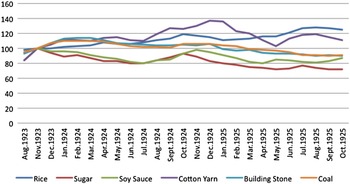
The fundamental issue for market operation after September 1 was the major shifts in supply and demand generated by the disaster. While the government showed itself willing to curb free market responses to this changed situation, it never sought to dispense with market activity. Producers, traders, and consumers continued to respond to market signals according to what they deemed to be their own best interests, whether or not a market was subject to any official regulation. Government intervention merely constrained some opportunities and changed the incentive structure. This fundamental issue was highlighted by the leading Tokyo-based economic journal, Tōyō Keizai Shinpō, which on resuming publication in early October emphasized the existence of shortages of a whole range of goods, and the upsurge in demand for many items, including daily necessities, winter clothing, and goods needed to rebuild housing, transport, and other infrastructure. “Prices must, of course, be expected to rise. The issue is merely the extent of that rise.” (Tōyō Keizai Shinpō 1067, October 1, 1923, 407). Despite the government's best efforts and its control of wholesale markets, retail activity in the immediate aftermath of the disaster proved particularly difficult to control (see, e.g., Jiji Shinpōsha Keizaibu 1924, 397ff.). A survey of the retail prices of forty-four commodities showed that half experienced a price rise during the two weeks leading up to October 1, including cotton, charcoal, matches, and many foodstuffs (Tōkyō Shōgyō Kaigisho Hō VI, 10, November 1923, 41). However, overall price data suggest that despite the potential for instability in markets and prices, the price movements for most products were far less significant than the scale of the disaster and the fears of contemporaries might lead us to expect. One factor limiting price rises suggested by disaster researchers is that individuals may exhibit a form of post-disaster economic behavior characterized by unusual altruism (Dacy and Kunreuther Reference Dacy and Kunreuther1969, 70). While the price data have to be interpreted with care, and prices for different goods are influenced by a range of short- and long-term factors, the price indices shown in Figures 1 and 2 do suggest that government efforts to control prices and increase supplies may have made a contribution to constraining price rises.
Price indices of major provision goods (kyōkyū busshi) (Nov. 1923 = 100) (data from Fukkōkyoku Keiribu 1926, 470–71).

Price indices of general goods (ippan busshi) (Nov. 1923 = 100) (data from Fukkōkyoku Keiribu 1926, 470–71).

A closer look at what happened in the markets for some of these goods can show better how individuals and groups responded to changed conditions resulting from the disaster itself and the attempts at regulation. In the case of rice, for example, the requisitioning policy introduced on September 2 had as its immediate objective the procuring of supplies for survivors from neighboring areas, such as Saitama. The authorities also purchased rice from the Osaka market, using the armed forces and requisitioned shipping to get it to Tokyo (Bureau of Social Affairs 1926, 318–19). In Osaka, rice prices shot up when the market reopened after three days' holiday on September 5, but fell back after the introduction of the Anti-Profiteering Ordinance two days later. The imposition of price ceilings on different grades of rice appeared to help prices to stabilize when wholesale rice trading in Tokyo resumed later in September (Tōyō Keizai Shinpō 1067, October 1, 1923, 409). However, despite concerns that suspending import tariffs for food grains would undercut Japanese agricultural production, that damage to infrastructure and marketing institutions and organizations would impede recovery, and the fact that electricity shortages impeded the production of polished rice, it does seem that the interventions may have helped curb damaging short-term price rises and ensure supplies to the affected area. Probably more important in the longer term, though, was the fact that by mid-October a run of good weather was suggesting a harvest above the long-term average (Tōyō Keizai Shinpō 1069, October 13, 1923, 590).
Instability in the market for wood products proved somewhat more intractable. Tokyo was primarily a city of wood, and the post-quake fires had consumed acres of wooden buildings. Of the 420 lumber wholesalers affiliated with the Tokyo Lumber Wholesalers' Federation, only two were completely unscathed, and losses of stocks were immense. In Yokohama, for example, estimates suggested that over 80 percent of wood stocks had been destroyed (Nōshōmushō Sanrinkyoku Reference Nōshōmushō1924, 13, 22). Sawmill capacity in Tokyo fell by around 95 percent (Jiji Shinpōsha Keizaibu 1924, 33). Despite the extensive use of wooden building materials making the capital area acutely vulnerable to fires, the cities of Tokyo and Yokohama, especially when it came to residential construction, were largely rebuilt in wood (Clancey Reference Clancey2006, 222). Timber was seen as a key reconstruction material and prioritized by the government in the emergency requisitioning and tariff measures as it sought to secure much-needed supplies from both domestic and foreign sources. Securing these supplies, however, took time. Large-scale domestic purchases were hindered by transport difficulties, while supplies from North America encouraged by the tariff suspension could not arrive for several months. The immediate shortage pushed up prices. The government tried to impose price ceilings, but these were difficult to enforce. It was reported that many traders made huge profits, not least by using false names to avoid the restrictions of the Anti-Profiteering Law (Jiji Shinpōsha Keizaibu 1924, 608). Outside the Kantō area, the promise of a quick and easy profit encouraged new participants to enter the market as middlemen, and by the end of December the number of wood retail merchants was twice the pre-quake number. Provincial timber producers across Japan tried to capitalize on the situation by selling their existing stocks of timber, felling immature trees, and planting large numbers of new seedlings. In the wake of this flurry of activity, timber prices began to level off as early as December 1923, and a downward trend was confirmed as the North American supplies encouraged by the tariff suspension began to arrive. Short-term profits came at a cost, however. As shortage turned to surplus, many domestic producers who had ploughed their capital into new forest land and mortgaged their futures by felling immature trees were badly hit, to the point of bankruptcy. A potential bonanza had rapidly turned sour (Nōrinshō Sanrinkyoku Reference Nōshōmushō1924).
The instability in the market for timber spread to other wood-based products, including charcoal and paper. Estimates suggest that some three-quarters of the area's stocks of firewood, charcoal, and charcoal briquettes were destroyed in the disaster (Nōshomushō Sanrinkyoku Reference Nōshōmushō1924, 20). Transport difficulties and increased demand for wood for construction further constrained the availability of firewood and charcoal. Fuel for cooking and heating was therefore in short supply. By mid-December, with the weather getting colder, some charcoal prices were up around 50 percent compared to the pre-quake level. Both the central authorities and those in charge of Tokyo's public markets resorted to sending representatives to obtain charcoal direct from producers to secure the capital's supply, alleviate shortages, and stabilize prices. In December 1923, Emergency Relief Board purchases of charcoal from Tōhoku, Kyūshū, and China amounted to nearly half a million yen. By the following March, helped by the onset of warmer weather, wholesale prices of charcoal and firewood had returned to pre-disaster levels (Bureau of Social Affairs 1926, 329; Nōrinshō Sanrinkyoku Reference Nōshōmushō1924, 129), but the ability of middlemen to retain a high profit margin meant that retail prices were slower to decline (Nōrinshō Sanrinkyoku Reference Nōshōmushō1924, 67, 130). Paper producers dependent on supplies of wood pulp also found themselves competing for scarce supplies of wood and limited shipping capacity. The market dislocation spread further, in unanticipated ways. The bleach industry, whose products were largely consumed by paper producers, took a considerable short-term hit (Jiji Shinpōsha Keizaibu 1924, 616–17).
The dramatic reduction in supplies and simultaneous increase in local demand shown in the cases of rice and wood were potentially good for producers and bad for consumers. Some other goods experienced a sudden reduction in demand and excess supplies, a situation likely to lead to falling prices and difficulties for producers. Demand for many luxury consumer goods, for example, collapsed. More surprisingly, perhaps, so did the demand for coal, one of the capital's basic energy sources. This was because coal was mainly used not for domestic purposes, but by manufacturing. Shortages consequent to the loss of coal stocks from the disaster were heavily outweighed by the cessation of much of Kantō's factory production, particularly in heavy industry, leading to a temporary collapse in demand (Tōyō Keizai Shinpō 1079, January 5, 1924, 24). The situation was potentially highly damaging for coal producers in the Jōban (northeast) and Hokkaidō areas, for whom Kantō manufacturing was the prime destination. Fearing that tariff suspension would lead to their being undercut by non-Japanese producers, for example those in Fushun (Manchuria), these Japanese producers lowered their sales prices in response to the crisis. However, just as the producer price was heading downwards, increased shipping costs (most coal was transported by sea) made it increasingly uneconomical for producers to market their coal. Coal producers across Japan sought to shore up prices through strategies such as curtailing production, but small producers in particular for a time faced major problems in securing capital and disposing of their products at a reasonable market price (Jiji Shinpōsha Keizaibu 1924, 547ff.).
With or without government intervention, therefore, producers, consumers, and commercial actors in Japan responded in diverse ways to the changed market signals and incentive structures consequent to the disaster. The long history of market transactions and the sophistication of market institutions could serve both to mitigate the effects of the disaster and to magnify them. Moreover, because Japan was an integrated and complex market economy with the devastated area at its center, it was inevitable that the effects of the disruption would be more widely transmitted not just across different industries, but also geographically, as suggested by some of the examples already discussed. It is these geographical ripple effects that are the focus of the final section.
The Spread of Market Dislocation: From Regional to National Instability
By 1923, Tokyo was not only the country's political center; the Tokyo and Yokohama metropolitan areas were more and more the national commercial hub of an increasingly centralized Japanese economy. The informational network—post, telegraph, and telephone—was increasingly routed through Tokyo, as were many transport connections between different parts of the country. Yokohama, building on its dominance of the silk trade, was by far the country's largest export port, while Tokyo was a significant location of manufacturing production, a major supplier or producer of goods for northern Japan, and a center of consumption. Most major financial institutions and trading companies had their headquarters in Tokyo or Yokohama, even those originating in other parts of Japan. The economic dominance of Kantō was not total. Osaka remained the key industrial center at a time when cotton exports were growing rapidly, and its manufacturing contributed to its position as Japan's largest city in the late 1920s (Abe Reference Abe2006, 270). The Kansai area was still the main supplier and producer for most of western Japan, and Kōbe remained the major import port. However, this was in some respects a transitional period between the pattern of two regional economies, but with Osaka as the powerhouse, that had characterized the late nineteenth century, and the Tokyo-centered economy that increasingly prevailed later in the twentieth century (Mosk Reference Mosk2001). Dislocation of the information and transport hub affected communications across the nation, and devastation in Kantō had the potential to affect the functioning of markets throughout the country and to influence the geographical balance of market operation within Japan's national economy. The destruction of much of the economic capacity of the capital region had national, and not just regional, implications.
Evidence collected by the Ministry of Agriculture and Commerce from local chambers of commerce across the country following the disaster details the impact of the disruption in different localities (Nōshōmushō Shōmukyoku Reference Nōshōmushō1924). Even allowing for possible exaggeration by local representatives, these reports suggest that in the short term market activities in many parts of Japan were profoundly impacted by the disaster, in ways that could be damaging to a region's economic prosperity, but could also be beneficial and offer new opportunities. These ripple effects were not limited to large economic hubs, such as Osaka or Kōbe, but were also felt in remote rural regions. Geographic distance from the devastation was no guarantee of insulation. While regions closest to the capital area were more likely to experience a greater impact, even distant parts of the archipelago felt at least some effects of the disaster in the Tokyo metropolitan area.
The ways in which the ripples spread through the operation of markets were diverse. If we take as one example the Shizuoka area, relatively close to Tokyo, we find that although the prefecture suffered some significant direct physical damage from the tremor and the tsunami, its subsequent economic problems were greatly magnified by more indirect impacts of the dislocation in the metropolitan districts to which the Shizuoka economy was so closely tied. Shizuoka's two main export products, tea and lacquerware, were shipped exclusively through the port of Yokohama, and producers in Shizuoka incurred large stock losses through the fire. Obtaining reimbursement for the destroyed stocks proved problematic, and without payment producers lacked the credit to make or market further goods, or generate income from replacement exports. Domestic demand for these core products temporarily collapsed, so the loss of exports could not be compensated for by sales within Japan. Like many other regions, Shizuoka also suffered from rising prices of building materials, as limited supplies were siphoned off to Tokyo and Yokohama. Construction in the prefecture was further hindered by a shortage of skilled construction workers, since these workers could earn significantly higher wages by joining the rebuilding effort in Tokyo (Nōshōmushō Shōmukyoku Reference Nōshōmushō1924, 165–73). Some agriculturists engaged in sericultural by-employment suffered, as for a time little raw silk was exported, and the low cocoon prices offered by filatures left producers unable to dispose of their stocks (Bureau of Social Affairs 1926, 258, 269). These disruptions proved to be relatively short term, but there was one more lasting effect. Deprived of the services of Kantō intermediaries through whom they had traditionally marketed products such as lacquerware and dolls to domestic markets, some Shizuoka producers resorted to direct marketing techniques. This shift appears to have accentuated a trend towards more direct dealings between producer and consumer and was sustained even after the immediate crisis was over (Nōshōmushō Shōmukyoku Reference Nōshōmushō1924, 165–73).
The impact of the disaster on Hokkaidō's coal producers has already been mentioned, and despite its distance from Tokyo this northern region felt the economic impact of the disaster in a variety of ways. Hokkaidō had long been tied to both domestic and overseas markets through the axis of Tokyo. Most producer and consumer goods purchased in the island were supplied from Kantō, while locally produced goods from Hokkaidō and the Tōhoku region were marketed through Kantō. Goods destined for these northern areas, or supplied by them, traveled over long distances, whether by rail or sea. As we have seen, shipping capacity was diminished through destruction and requisitioning, and costs rose. Rail problems led to a massive piling up in Aomori of goods destined for Hokkaidō, and of Hokkaidō products destined for areas further south (Tetsudōshō 1927). Northeastern Japan was also negatively affected by the upsurge of demand in the Tokyo-Yokohama area for some key reconstruction products, and the rising prices that went with it, drawing into the capital area goods and labor that might otherwise have been consumed or utilized in the regions that produced them. For a time after the quake, Hokkaidō, a major domestic source of timber, actually suffered from a shortage of wood (Nōshōmushō Sanrinkyoku Reference Nōshōmushō1924, 75ff.; Nōshōmushō Shōmukyoku Reference Nōshōmushō1924, 43–97).
Hokkaidō farmers were also among those who feared that tariff suspension would undercut domestic production. Hokkaidō was the center of Japan's small dairy industry, and the influx of condensed milk for baby food from the United States, both through aid and through tariff exemptions, generated vocal protests from the region (Jiji Shinpōsha Keizaibu 1924, 248). The Sapporo Chamber of Commerce argued in December 1923 that the tariff suspension “must impede the development of the nation's industry, [and] must be abolished just as soon as circumstances may allow” (Nōshōmushō Shōmukyoku Reference Nōshōmushō1924, 66). Wheat consumption in Japan was also growing at this time, and agricultural representatives did not hesitate to voice their anxieties about the suspension and reinstatement of the tariff on wheat and wheat flour, as did soybean producers (Teikoku Nōkai Hō 14, 4, February 15, 1924, 25–26).
Regions in the western half of Japan traditionally within the economic remit of the Kansai plain were also affected. These areas had fewer direct commercial dealings with Kantō, and the ripple effect was therefore more limited, but there is evidence that even here suppliers increased their output in response to price rises in the disaster area. As far away as Shikoku and Kyūshū, chambers of commerce reported an increase in cash dealings, and fewer longer-term credit transactions, suggesting that the lack of confidence and the liquidity problems had spread out from the center to distant parts of the country. While the reality of commercial transactions and business trust in Kyūshū may have changed little, there seems little doubt that the psychological impact of the shock in such an era of financial centralization was a major one (Nōshōmushō Shōmukyoku Reference Nōshōmushō1924, 299, 309–46).
But what of the Kansai area that seemed best placed to seize the economic initiative and gain from the disaster to its main competitor? One Diet member, Kiyose Ichirō, openly argued that the capital should be moved to Osaka (Ekonomisuto 1, 12, September 15, 1923, 36), and in the immediate aftermath of the disaster a great deal of economic activity shifted out of the Kantō region. Much of it moved to Kansai, and some transferred to the area around Nagoya. Many domestic and foreign firms shifted their head of operations westwards out of Tokyo and Yokohama. Most regarded the move as a temporary measure, but return to Tokyo or Yokohama was contingent not only upon physical rebuilding, but upon the recovery of the supporting infrastructure and institutions, resolution of the credit flow problems, and resolution of any insurance liability issues. The fact that in the immediate aftermath of the disaster consumers who had previously purchased their goods from Kantō needed to find substitutes offered further opportunities. Reports suggest that many consumers in Kantō and northern Japan turned to producers in the Kansai region, who faced the prospect of a bonanza as their Kantō competitors were temporarily removed from the market. Despite problems with communications and transport, Kansai businessmen proactively sought to take over markets in the northern half of Japan previously dominated by producers in Tokyo and did, indeed, increase their sales substantially (e.g., Nōshōmushō Shōmukyoku Reference Nōshōmushō1924, 97, 105, 111).
The potential for one region's disaster to become another region's opportunity is particularly obvious in the case of the port of Kōbe. There was a long and well-known history of competition between Japan's two main international trading ports, Yokohama and Kōbe (American Bankers Association 1923, 10). In 1923, on the eve of the disaster, Kōbe, which imported raw cotton for the Osaka manufacturers, was the leading import port and held the largest share of total trade by volume, but Yokohama, which exported the raw silk so crucial to Japan's balance of trade, held the largest share by value (Tōyō Keizai Nenkan 1923, 1924). Kōbe, which had long campaigned in vain for formal recognition as Japan's second silk-exporting port, saw the destruction of Yokohama as an opportunity for increasing its share of this lucrative trade. Raw silk could still be shipped from the main area of production in Shinshū, and the increasing importance of silk production in western central Japan, such as in Gifu, strengthened Kōbe's case. Some regarded as deplorable attempts by Kōbe to benefit from Yokohama's tragedy (e.g., Ōtsuka Reference Ōtsuka1924, 12), but the months after the earthquake were characterized by a sustained campaign by Kōbe interests to get a more permanent share of this valuable export trade, and a counter-campaign by those in Yokohama who were seriously concerned that Kōbe was trying to encroach on the port's traditional dominance (Jiji Shinpōsha Keizaibu 1924, 485–528).
In fact, contemporary reports suggest overwhelmingly that while there was a shift in the economic balance towards the Kansai and Nagoya areas immediately after the disaster, it was relatively short-lived. Traders and producers in these areas were unable to capitalize on their temporary advantage, particularly as rebuilt transport and information systems confirmed Tokyo as the core. Although some firms, such as the confectioner Juchheim, never returned to Kantō, the relatively rapid return to Tokyo or Yokohama of most of those who had moved west offers further support for the positive role of government in relation to infrastructure and financial support. Kōbe was able to claim that it had retained a portion of the trade that had moved from Yokohama in 1923 (Kōbe Chamber of Commerce 1929, 13), but the lobbying from Yokohama and the rapid reconstruction of advanced port facilities there helped Yokohama to retain its preeminence in the export of raw silk. The potential for change existed, but the will for change was more limited.
One key factor, perhaps, is the evidence that many economic actors took a conservative view of the situation, expressing themselves desirous of returning to the old (pre-quake) ways of doing things. The nature of Japan's domestic markets and patterns of consumption posed practical problems for both producers and consumers. An east-west divide was reflected in comments from northeastern Japan that the quality and nature of the goods that could be obtained from the western half of the country were different from those in the east, and hence it was impossible to purchase exactly what was required. Variation in local products and the persistence of niche markets also meant that production for the Kantō and northeastern markets by manufacturers who traditionally sold their products in western Japan required considerable product modification. Businessmen in Hiroshima, for example, emphasized that it would be easy to send more charcoal to Kantō, but different specifications for the Tokyo market would mean changing their furnace design, which was both difficult and costly (Nōshōmushō Shōmukyoku Reference Nōshōmushō1924, 283–84).
At the core of the conservative views articulated by many was a feeling on both sides that familiar ways of doing things with familiar trading partners were the basis of commercial trust, and creating such relationships with new partners, often using different commercial practices, was a long and difficult process. A report from the Chamber of Commerce in Yamagata in mid-January 1924 noted how differences in the commercial practices of Kansai merchants led to mistakes in transactions and disparities between sample goods and those that then arrived. Yamagata merchants were among those who raised serious questions about the commercial morality of producers and traders from the Kansai area (Nōshōmushō Shōmukyoku Reference Nōshōmushō1924, 112). Kansai traders for their part insisted on cash transactions rather than credit in their dealings with new and unknown business partners, fueling an openly stated desire by some northeasterners to return to dealing with Kantō and the old ways of doing things. This desire to return to the status quo ante may well have been confirmed by an innate need for stability at a time of enormous uncertainty. Whatever the case, the disaster failed to reverse or shift the growing economic dominance of the capital region. Had the devastation continued to incapacitate Kantō for a more sustained period, then things might have been different. As it was, consumers and commercial actors in the affected area and across the northern half of Japan, desirous of a return to stability in the wake of such an enormous economic shock, became powerful advocates of the rapid rebuilding of the Kantō metropolitan area.
Conclusion
Events following the Great Kantō Earthquake of 1923 demonstrate clearly the capacity of such catastrophes to disrupt normal market-based economic activity in diverse ways, and the intense alarm that this can provoke. This dislocation proved relatively short-lived, but identifying the key causal factors behind the rapid recovery is not easy. We also need to locate the crisis in the broader economic trajectory of interwar Japan. The disaster hit when the economy was struggling to adjust to the collapse of the First World War boom. Prices had been falling steadily through the first eight months of 1923, and there was overcapacity in many industries. Low incomes and a recessionary situation had constrained consumer demand. Under such circumstances, the reconstruction effort could be seen as potentially increasing demand and removing surplus inefficient capacity. As in 2011, reconstruction could offer a stimulus to a stagnating economy (Cuker Reference Cuker and Kingston2012).
There were widespread expectations in 1923 that the government could, and should, intervene for both relief and reconstruction. The government measures were in part the outcome of a longer-term learning process, with the authorities claiming that experience in supplying cereals in the Rice Riots of 1918 informed the measures taken in 1923 (Bureau of Reconstruction 1929, 148). They may also have paved the way for interventions later in the interwar period. However, measuring the effectiveness of the government's contribution is extremely difficult. Even at the time, it was subject to criticisms of inadequacy. Businessmen in Osaka felt that more needed to be done to support regions with close trading relations with the devastated areas (Satoi Reference Satoi1965, 601), while other commentators called for administrative control of supply and demand beyond the quake-hit areas to limit price instability (Tōyō Keizai Shinpō 1067, October 1, 1923, 411–12). We do know that wholesale prices for most goods showed only limited rises in the months after September 1923 (Tōyō Keizai Shinpō 1080, January 12, 1924), and then declined again, so measures to limit price rises and increase supplies of needed goods may have played some part in this. Moreover, a number of the measures taken by the Japanese authorities in 1923, such as infrastructure reconstruction and provision of liquidity, were those that economists specializing in disasters have identified as important for short-term relief and longer-term recovery.
Whatever the case, government action was not by itself sufficient to put the market economy back on track. Equally important was the reestablishment of market institutions and commercial trust. The direct economic effects of physical destruction and human casualties were exacerbated by the shock, the lack of information, and the stress and uncertainty that followed the disaster. A telegram from the Tokyo Chamber of Commerce that arrived in Hiroshima on September 4 (cited in Hiroshima Shōkō Kaigisho 1982, 131) referred to the intense anxiety in people's hearts (jinshin no fuan). Similar uncertainty was suggested by a survey of businesses in central Fukushima Prefecture undertaken in April 2011, in which nearly a quarter of the respondents reported that their business operations had been damaged by “rumors” (Fukushima-ken Chūbu Keieisha Kyōkai 2011, 1). In 1923, this uncertainty and insecurity strengthened a desire to return where possible to pre-disaster ways of doing things. It undermined trust and produced a lack of confidence that made market transactions more difficult. The responses of individuals or groups, including the economically rational responses of individuals to short-term market signals relating to profit maximization, on occasion threatened to undermine more coordinated and considered responses geared to collective long-term interests of sufferers and the community as a whole. Daniel Aldrich's (Reference Aldrich2012b) work has shown the importance of social capital in post-disaster recovery, but understanding how economic trust was reestablished requires further research.
A number of these features of 1923 resonate with Japan's recurrent experience of natural disasters throughout the modern period. An inclination on the part of some to hoard necessities and raise prices, conspicuous “non-market rational” behavior, the importance of the private-sector response, and assumptions about the need for official intervention to compensate for market deficiencies and constrain market behavior are recurrent themes in Japan's post-disaster situations, up to and including the Tōhoku disaster of March 2011, when reports of the selfless behavior of Tōhoku shopkeepers refusing to increase their prices for scarce essentials coexisted with others detailing hoarding in Tokyo. The east-west divide and the regional issues provoked by the geographic ripple effects in 1923 reemerged in a different form in the acute energy supply problems after March 11, 2011. It does seem, however, that the more complex and integrated a market system is, the greater the likelihood that the impact of a disaster will be communicated well beyond the disaster area. The 1923 disaster disrupted the U.S. silk industry, but in most respects its impact was national. The global supply chain problems generated by Japanese natural disasters since 2000 have provided a further demonstration of the ways in which a shock to production and marketing in one good or one region can spread to a host of others. While every disaster is distinct, and the 1923 one was set apart even in disaster-prone Japan by its scale and its location, it can nevertheless provide us with insights on the shared aspects of impact and response that are likely to be of importance in post-disaster economic recovery.
Despite extensive analysis of exogenous shocks and the fluctuating fortunes of the Japanese economy in the interwar period, the market instability immediately following the Great Kantō Earthquake has received relatively little attention, and we still know relatively little about the process of Japan's post-disaster recovery. This paper has suggested that while the 1923 disaster had a limited impact on Japan's longer-term economic trajectory, part of its economic historical importance lies in the fact that it can tell us a great deal about the ways in which individuals, organizations, and officialdom respond to a devastating disaster, and help us better to understand the process of transition from immediate relief to longer-term recovery. A considerable amount of research is still needed to identify the causal factors in this transition, but the evidence strongly suggests that market stability mattered for that process, and that understanding these processes of stabilization is likely to be of wider significance.
Acknowledgments
Preliminary research for this paper was conducted when I was a visiting professor at the Institute of Social Science, University of Tokyo. I am grateful to the Institute for its generous support. I would like to thank seminar participants at the University of Tokyo, the Bank of Japan, the Nissan Institute (Oxford University), and other venues for their helpful comments on the presentations on which this paper is based. I am also grateful to Anne Kaneko for providing me with the findings of the April 2011 Fukushima business survey, and to Tanaka Hikaru for help with data collection.