


Introduction
Evidence from prevalence studies suggests higher rates of post-traumatic stress disorder (PTSD) in psychiatric and forensic populations than in the general population (Mueser et al., Reference Mueser, Salyers, Rosenberg, Ford, Fox and Cardy2001; Spitzer et al., Reference Spitzer, Dudeck, Liss, Orlob, Gillner and Freyberger2001). Lifetime rates of PTSD in the United States general population have been found to range between 7.8% and 9.2% (Breslau, Davis, Andreski and Peterson, Reference Breslau, Davis, Andreski and Peterson1991; Kessler, Sonnega, Bromet, Hughes and Nelson, Reference Kessler, Sonnega, Bromet, Hughes and Nelson1995). A number of studies in psychiatric populations have reported rates of current PTSD to be between 14% and 43% (McFarlane, Bookless and Air, Reference McFarlane, Bookless and Air2001; Mueser et al., Reference Mueser, Salyers, Rosenberg, Ford, Fox and Cardy2001; Neria, Bromet, Sievers, Lavelle and Fochtmann, Reference Neria, Bromet, Sievers, Lavelle and Fochtmann2002), although Frame and Morrison (Reference Frame and Morrison2001) found a likely PTSD rate of 67% in a sample of 60 inpatients following discharge, and 50% at 4–6 month follow-up. It is suggested that PTSD rates in forensic populations may surpass these, as committing an offence has been identified as a source of trauma (Kruppa, Hickey and Hubbard, Reference Kruppa, Hickey and Hubbard1995). There has been limited research on forensic populations, but a small number of studies have indicated current and lifetime PTSD rates of between 22% and 56% (Gray et al., Reference Gray, Carman, Rogers, MacCulloch, Hayward and Snowden2003; Kruppa et al., Reference Kruppa, Hickey and Hubbard1995; Pollock, Reference Pollock1999; Spitzer et al., Reference Spitzer, Dudeck, Liss, Orlob, Gillner and Freyberger2001).
There is now a substantial body of literature supporting the idea that trauma and psychosis are linked through a number of possible relationships (Morrison, Frame and Larkin, Reference Morrison, Frame and Larkin2003; Read, van Os, Morrison and Ross, Reference Read, van Os, Morrison and Ross2005). In particular, cognitive models of psychosis have been instrumental in explaining how these relationships might occur. For example, people who have been through traumatic events may develop beliefs about the self, world and others, such as “I am vulnerable” and “People can't be trusted” (Morrison, Reference Morrison2001; Garety, Kuipers, Fowler, Freeman and Bebbington, Reference Garety, Kuipers, Fowler, Freeman and Bebbington2001), which may leave them vulnerable to psychosis. Much of the literature has focused on the high rates of childhood sexual abuse found in psychiatric populations (Mueser et al., Reference Mueser, Trumbetta, Rosenberg, Vidaver, Goodman, Osher and Auciello1998), but most studies to date have been correlational, and do not indicate a causal relationship (Read, Goodman, Morrison, Ross and Aderhol, Reference Read, Goodman, Morrison, Ross, Aderhol, Read, Mosher and Bentall2004). However, Read et al. (Reference Read, Goodman, Morrison, Ross, Aderhol, Read, Mosher and Bentall2004) argue that even when other possible mediating factors, such as poverty, ethnicity, substance misuse and parental mental heath were controlled for, strong relationships remained between child abuse and psychosis. Furthermore, prospective studies in the general population found that early childhood trauma increased the risk for positive psychotic symptoms, including delusions and hallucinations (Janssen et al., Reference Janssen, Krabbendam, Bak, Hanssen, Vollebergh, de Graaf and van Os2004).
Although current definitions of PTSD have evolved to include a range of stressors, some critics have argued that they fail to consider psychological threats and other psychologically traumatic events as stressors (Jung, Reference Jung2001; Morrison et al., Reference Morrison, Frame and Larkin2003). Consequently, many of the experiences suffered by psychiatric and forensic patients, such as symptoms of psychosis, may not be recognized as a source of trauma or as potentially leading to PTSD (Frame and Morrison, Reference Frame and Morrison2001; McGorry et al., Reference McGorry, Chanen, McCarthy, Van Riel, McKenzie and Singh1991; Priebe, Broker and Gunkel, Reference Priebe, Broker and Gunkel1998). Definitions of schizophrenia and psychosis have similarly attracted criticism due to evidence suggesting similarities and overlaps with symptoms associated with other diagnoses, particularly PTSD (Jung, Reference Jung2001; Morrison et al., Reference Morrison, Frame and Larkin2003). For example, intrusions and flashbacks in PTSD have been compared to the positive symptoms of hallucinations and delusions in psychosis (Ehlers and Steil, Reference Ehlers and Steil1995). Similarly, numbing and detachment in PTSD have been compared to the negative symptoms of psychosis, such as withdrawal and neglect (McGorry, Reference McGorry1991). Following these criticisms, some authors have argued for the need to deconstruct diagnostic approaches (Bentall, Reference Bentall and Bentall1990), and have proposed alternative descriptions including traumatic psychosis (Kingdon and Turkington, Reference Kingdon, Turkington, Wykes, Tarrier and Lewis1999), and PTSD with psychotic features (Jung, Reference Jung2001).
Common processes in PTSD and psychosis
Recent research has suggested several cognitive and behavioural processes that may contribute to the development and maintenance of PTSD and psychosis following trauma. For example, selective attention to threat has been shown to be similar in PTSD and paranoia (Larkin, Morrison and Frame, Reference Larkin, Morrison and Frame2007). Furthermore, the interpretation of a post-traumatic intrusion as culturally acceptable or not might determine a diagnosis of PTSD or psychosis. For instance, if there is a clear link between an intrusive experience and recent trauma, an interpretation of PTSD is more likely to be made by the professional and/or client; but if the link to trauma is less obvious and the interpretation made is culturally unacceptable, then a diagnosis of psychosis is more likely (Morrison et al., Reference Morrison, Frame and Larkin2003).
Morrison et al. (Reference Morrison, Frame and Larkin2003) proposed that the similar processes involved in PTSD and psychosis might provide evidence for the notion that some psychotic symptoms are trauma-induced. Ehlers and Clark (Reference Ehlers and Clark2000) suggested traumatic events might be processed in a way that leads an individual to experience a sense of persistent threat. This threat could be external (the world is a dangerous place) or internal (I am vulnerable), and is created in part by negative appraisals of the trauma, and from poorly constructed memories of the traumatic event. This sense of threat is accompanied by intrusions (flashbacks, negative thoughts), arousal (being on edge, jumpy), and strong emotions (sadness, anger, guilt), and is maintained by a number of unhelpful cognitive and behavioural strategies (avoidance of trauma reminders, emotional numbing and negative symptoms). Steel, Fowler and Holmes (Reference Steel, Fowler and Holmes2005) highlighted the role of contextual integration and schizotypal personality traits in the development of trauma-related intrusions. They suggested that the strength of contextual integration during information processing is key to understanding the relationship between trauma and psychosis.
The role of appraisals of intrusions has also been highlighted as important in cognitive models of psychosis (Garety et al., Reference Garety, Kuipers, Fowler, Freeman and Bebbington2001; Morrison, Reference Morrison2001). For example, when faced with a negative event (distressing intrusive images), individuals are more likely to attribute the event to an external cause (MI5 are trying to brainwash me) in order to protect self-esteem. This is particularly likely when there is a discrepancy between ideal and actual self (Bentall, Reference Bentall, David and Cutting1994). This interpretation is likely to be distressing to the individual and would be viewed as culturally unacceptable, leading to the possible activation of unhelpful cognitive and behavioural strategies, including selective attention and the use of safety behaviours (Morrison et al., Reference Morrison, Frame and Larkin2003).
The need to create meaning for negative life events has also been suggested in models of PTSD and persecutory delusions. In PTSD, it is suggested that previously held assumptions about the self and world are shattered following trauma (Janoff-Bulman, Reference Janoff-Bulman1992). This has the effect of triggering a search for meaning in the trauma survivor. In models of persecutory delusions, it is suggested that delusions arise out of attempts to make sense of anomalous events (Maher, Reference Maher1974; Garety et al., Reference Garety, Kuipers, Fowler, Freeman and Bebbington2001).
Recent research
The research in this area is still in its infancy and, to date, the cognitive factors involved in PTSD and psychosis have not been extensively investigated. However, Chisholm, Freeman and Cooke (Reference Chisholm, Freeman and Cooke2006) investigated predictors of PTSD in patients who had experienced psychotic symptoms. They found that 61% presented with symptoms indicative of PTSD and that feelings of helplessness, losing control, a lack of social support and the content of persecutory delusions influenced the rate of traumatic stress responses, as well as having a history of previous trauma and psychotic episodes. A study by Larkin et al. (Reference Larkin, Morrison and Frame2007) assessed rates of trauma symptoms and delusional ideation in paramedics, using postal questionnaires. The findings suggested a likely PTSD rate of 51%. Highly traumatized paramedics (scoring 40 or more on the Davidson Trauma Scale) held their delusional beliefs with more conviction and preoccupation, and experienced more distress than less traumatized colleagues. Negative cognitions about the self (related to trauma) predicted the conviction, preoccupation and distress associated with delusional ideas, and self-blame was associated with paranoia.
The findings suggest that the experience of trauma may lead to delusional interpretations of anomalous events (intrusions). Additionally, beliefs about the self as incompetent or vulnerable make it difficult to recover a sense of self-efficacy (Janoff-Bulman, Reference Janoff-Bulman1979), leading to a persistent sense of threat. Larkin et al., (Reference Larkin, Morrison and Frame2007) suggested that if these findings were to be replicated in a sample of psychiatric inpatients, this would serve to increase our understanding of the mediating factors involved in the development and maintenance of psychosis and PTSD.
Aims of the present study
The present study aims to explore the relationships between trauma and delusional ideation in a sample of forensic inpatients, with a diagnosis of schizophrenia. This population have previously been identified as both a vulnerable and neglected group in the area of trauma research (Mueser et al., Reference Mueser, Salyers, Rosenberg, Ford, Fox and Cardy2001; Spitzer et al., Reference Spitzer, Dudeck, Liss, Orlob, Gillner and Freyberger2001). It is thought that rates of trauma and PTSD may be under-reported in psychiatric and forensic populations due to a lack of routine assessment of abuse and trauma, as well as confusion arising from the similarity of symptom presentation in PTSD and psychosis (Lothian and Read, Reference Lothian and Read2002; Read and Fraser, Reference Read and Fraser1998). Additionally, many offenders initially enter the legal system rather than the medical system, where trauma history may go unrecognized (Kluft, Reference Kluft, Michelson and Ray1996).
The psychological factors that are examined include trauma-related cognitions thought to be predictive of PTSD, and the influence of these cognitions on delusional ideation and paranoia. It is hypothesized that there will be a higher rate of delusional ideation in highly traumatized patients compared to less traumatized patients, according to the trauma measure. It is also hypothesized that negative beliefs about the self, self-blame and negative beliefs about the world (related to traumatic events) will be associated with paranoia and delusional ideation.
Method
Participants
The 30 male and 4 female participants were recruited from low and medium secure units, and all had a diagnosis of schizophrenia. The most common index offence was manslaughter (17.6%), followed by malicious wounding (14.7%), and assault (14.7%). Other offences included: arson (11.8%); threat to harm (2.9%); criminal damage (2.9%); rape or attempted rape (5.9%); and armed robbery (8.8%). Seven patients (20.6%) had not committed any offence. Their mean age was 35 years (SD = 11.06, range 20–40). The average time that participants had been in the secure unit was 16 months (SD = 11.70, range .25–48). The majority of participants were single (82%) and of white British origin (76%). Inclusion criteria required the participants to be aged 18–65, and able to read and write. Participants were excluded if they were deemed too “unwell” or unable to consent to the study by their clinical team, and if they had a learning disability, a diagnosis of bipolar disorder or psychosis due to substance misuse.
Materials
A number of self-report questionnaires were used to assess trauma symptoms, trauma-related cognitions, delusional ideation and paranoia. The Worst Memories Scale (Bowe, Morrison and Morley, Reference Bowe, Morrison and Morley2002), a brief visual analogue scale, was used to determine which trauma caused most distress for participants. The trauma-related measures were then completed, based on participants' worst trauma. All participants were asked to complete the measures in the order given below.
The Davidson Trauma Scale (DTS). The DTS (Davidson et al., Reference Davidson, Book, Colket, Tupler, Roth, David, Hertzberg, Mellman, Beckham, Smith, Davison, Katz and Feldman1997) is a 17-item scale measuring each DSM-IV symptom of PTSD on a 5-point frequency and severity scale over the previous week. The total DTS score ranges from 0–136 and sub-scores can be computed for 3 symptom clusters: a) intrusions, b) avoidance/numbing, c) hyperarousal. The most clinically accurate cut-off point for presence of PTSD in this population is 40 (Davidson et al., Reference Davidson, Book, Colket, Tupler, Roth, David, Hertzberg, Mellman, Beckham, Smith, Davison, Katz and Feldman1997). The DTS has been shown to be sensitive to variations in symptom severity, can distinguish between those with PTSD and those without, between treatment-responders and treatment non-responders, and demonstrates a lowering of scores over time with clinical improvement. The DTS also possesses good reliability (r = 0.86) and internal consistency (r = 0.99). Concurrent validity was obtained against the Structured Clinical Interview for DSM-III-R (SCID), with a diagnostic accuracy of 83% at a DTS score of over 40 (Davidson et al., Reference Davidson, Book, Colket, Tupler, Roth, David, Hertzberg, Mellman, Beckham, Smith, Davison, Katz and Feldman1997).
Posttraumatic Cognitions Inventory (PTCI). The PTCI (Foa, Ehlers, Clark, Tolin and Orsillo, Reference Foa, Ehlers, Clark, Tolin and Orsillo1999) is a 36-item scale measuring trauma-related thoughts and beliefs during the previous month. For each item, the participant indicates their agreement with each statement on a 7-point scale. The PTCI is thought to compare favourably with other trauma-related measures and is able to discriminate between traumatized individuals with and without PTSD, even after controlling for depression and anxiety. Foa et al. (Reference Foa, Ehlers, Clark, Tolin and Orsillo1999) found high internal consistency of the three subscales (Cronbach's alpha: Negative cognitions about the self = 0.97; Negative cognitions about the world = 0.88; Self-blame = 0.86). The scale also showed good test-retest reliability (Negative cognitions about the self = 0.86; Negative cognitions about the world = 0.81; Self-blame = 0.80).
Peters Delusion Inventory (PDI). The PDI-21 (Peters, Joseph and Garety, Reference Peters, Joseph and Garety1999) was derived from the 40-item version and is designed to measure delusional ideation in the normal population, but has also been used with psychiatric inpatients. The multidimensionality of delusions is incorporated by including measures of distress, preoccupation and conviction. For each item, the participant scores “1” if the belief is endorsed and “0” if the belief if not endorsed. If the belief is endorsed, the participant is asked to rate on a scale of 1–5 the degree of distress, preoccupation and conviction with which the belief is held. The range of possible scores is 0–336, where higher scores are associated with greater delusional ideation. The PDI-21 has been found to have good internal consistency (Cronbach's alpha = 0.82) and correlations revealed good test-retest reliability (PDI Yes/No: r = 0.78; Distress: r = 0.81; Preoccupation: r = 0.81; Conviction: 0.78). Construct validity was also established.
Paranoia Scale (PS). The Paranoia Scale (Fenigstein and Vanable, Reference Fenigstein and Vanable1992) is a 20-item scale designed to measure paranoid thought in the general population, but has also been validated on patients with a diagnosis of schizophrenia. The scale consists of 20 statements about paranoia that can be agreed with on a 5-point scale. The scale has demonstrated internal consistency (Cronbach's alpha = .84), test-retest reliability (correlation = .70), and construct validity. It was included in the present study to provide a more robust measure of paranoia (in addition to the paranoia items on the PDI).
Procedure
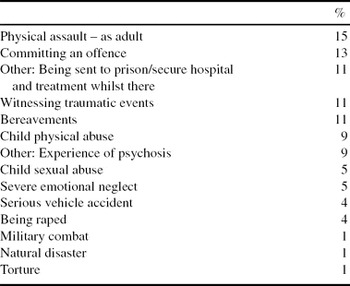
Approval for the study was granted by the multi-site research ethics committee and by the research and development departments at each of the five secure service sites. A total of 108 forensic patients were invited to take part in the research. Of those, 36 provided written informed consent, and two patients withdrew prematurely, providing a final sample of 34 (31% response rate). Patients meeting the inclusion criteria were identified via their clinical teamFootnote 1 and were given written information about the study, including purpose, requirements of participants, confidentiality arrangements and the complaints procedure. All those approached were given information about the support systems put in place (speaking to the researcher, a member of their clinical team or the psychology department), should they wish to discuss any issues, such as distress. Patients were followed up one week later by the researcher to invite them to participate and to ask any questions about the study. If patients agreed, they were seen on the ward and asked to sign an informed consent form. Participants were asked to look at a list of traumatic events (see Table 1) and tick any that they had ever experienced. The list was comprised of traumatic events identified in DSM-IV, and other events reported to be traumatic in the literature. Participants then completed the range of measures.
Variety and % of all traumatic events experienced by participants (N = 34)

Data analysis
Data were screened for approximation to a normal distribution by the use of Kolmorgorov-Smirnov (K-S) tests, followed by visual inspection and calculation of skewness and kurtosis. K-S tests indicated that four variables required statistical transformation, since they were marginally outside the range of −2 and +2. The DTS total score and PDI subscale “preoccupation” were square root transformed. The PTCI subscale “negative cognitions about the self” and the PDI subscale “distress” were normalized using logarithmic transformation. Consequently, parametric statistics were used for all data analyses.
Results
Worst traumatic event
All participants in the sample identified experiencing at least one traumatic event in their lifetime and the mean number of traumas experienced was four (SD = 2.63, range 1–12). Table 1 shows the percentages and variety of traumatic events experienced by participants. The most common traumatic events experienced by participants included being physically assaulted as an adult, committing an offence, being sent to prison or a secure hospital, witnessing traumatic events, and being bereaved.
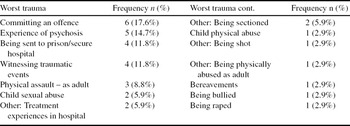
The most frequently reported worst traumatic event was committing an offence (17.6%), followed by the experience of psychosis (14.7%), particularly paranoia and hearing voices. The category “witnessing a traumatic event” was cited by 11.8% of the sample, and included witnessing car accidents, physical and sexual assaults, and the death of someone close. The types of reported worst traumatic events are displayed in Table 2. It should be noted that numbers in some of the categories, such as those involving acts of child abuse, may seem lower due to them being separated out for the purposes of specificity. For example, some people may have included being raped as child sexual assault and would have recorded it as such.
Worst traumatic event reported by patients (N = 34)

Thirteen patients (38%) scored 40 or more on the DTS, indicating likely PTSD. Of this sub-sample, 3 patients cited the experience of psychosis as their “worst traumatic event”. Although a score of 40 or more is thought to be the most clinically accurate cut-off point for likely PTSD, scores of 20 or more indicate moderate levels of PTSD symptomatology (Davidson et al., Reference Davidson, Book, Colket, Tupler, Roth, David, Hertzberg, Mellman, Beckham, Smith, Davison, Katz and Feldman1997). The number of patients scoring 20 or above was 28 (82%). The most frequently reported worst trauma in this sub-sample was the patient's offence (17.9%), followed by the experience of psychosis (14.3%), and witnessing traumatic events (14.3%).
Associations between trauma, delusional ideation, and paranoia
In order to determine if mean scores on delusional ideation and paranoia were different according to the level of trauma symptoms as determined by DTS scores, an independent t-test was performed. The DTS total score (cut-off of 40) was used as the grouping factor and PS total, PDI distress, PDI preoccupation and PDI conviction subscales were the dependent variables. There was a significant difference between the two groups on PDI distress (t (32) = 2.77, p < .01), PDI preoccupation (t (32) = 2.27, p < .05) and paranoia (t (32) = 2.54, p < .05). A non-significant trend was revealed for the variable PDI conviction (t (32) = 1.68, n.s.). The findings suggest that more traumatized participants experienced more distress from their delusional ideas, and were more preoccupied with them than less traumatized participants. More traumatized participants also had greater levels of paranoia than less traumatized participants.
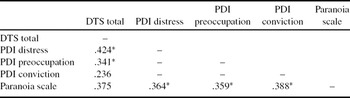
Associations between traumatization (DTS total), delusional ideation (PDI subscales: distress, preoccupation and conviction), and paranoia (PS total) were examined using Pearson's correlations (see Table 3). With an alpha level of .05, there were significant and positive correlations between DTS total score and PDI distress (r = .424, N = 34, p < .05), preoccupation (r = .341, N = 34, p < .05) and paranoia total score (r = .375, N = 34, p < .05). PDI conviction was not significantly associated with DTS score. The findings suggest that as the level of traumatization increases, distress and preoccupation associated with delusional ideation increase. Additionally, paranoia appears to increase with level of traumatization.
Correlations between traumatization (DTS scores) and delusional ideation and paranoia (PDI and PS scores)

*p < .05
Association between trauma-related cognitions, delusional ideation, and paranoia
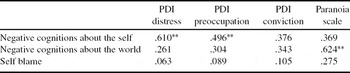
Associations between trauma-related cognitions (PTCI subscales: negative cognitions about the self, world and self-blame) and delusional ideation (PDI subscales: distress, preoccupation, conviction) and paranoia (PS) were examined using Pearson's correlations (see Table 4). A significance level of p < .01 was adopted due to a large number of correlations being conducted. Negative cognitions about the self were positively and significantly correlated with PDI distress (r = .610, N = 34, p < .01) and PDI preoccupation (r = .496, N = 34, p < .01). Negative cognitions about the world were positively and significantly correlated with paranoia (r = .624, N = 34, p < .01). Self-blame was not significantly correlated with any aspect of delusional ideation or paranoia. The findings suggest that patients holding negative cognitions about the self experienced high distress levels from their delusional ideas, and were highly preoccupied with them. Patients with negative cognitions about the world following trauma had high levels of paranoia.
Correlations between post-trauma cognitions (PTCI subscales) and delusional ideation (PDI) and paranoia (PS)

** p < .01
Discussion
Prevalence of trauma symptoms
This study found that 38% of forensic inpatients scored 40 or more on the DTS, suggesting a level of traumatic reaction likely to be indicative of PTSD (Davidson et al., Reference Davidson, Book, Colket, Tupler, Roth, David, Hertzberg, Mellman, Beckham, Smith, Davison, Katz and Feldman1997). This finding is consistent with previous studies that have found lifetime PTSD rates in adult forensic patients of between 32% and 36% (Gray et al., Reference Gray, Carman, Rogers, MacCulloch, Hayward and Snowden2003; Kruppa et al., Reference Kruppa, Hickey and Hubbard1995; Pollock, Reference Pollock1999; Spitzer et al., Reference Spitzer, Dudeck, Liss, Orlob, Gillner and Freyberger2001). Papanastassiou, Waldron, Boyle and Chesterman (Reference Papanastassiou, Waldron, Boyle and Chesterman2004) found a lifetime rate of 58%, although the total sample in that study was comprised of perpetrators of homicide, and a different measure was used to assess PTSD. Furthermore, 82% of patients scored 20 or more on the DTS, suggesting a high level of traumatic stress symptoms that may not have been high enough to indicate PTSD.
The finding that all 34 participants in the sample had experienced at least one traumatic event in their lifetime exceeds rates reported by other studies, which range from 64% to 93% in forensic inpatients (Barnard, Hankins and Robbins, Reference Barnard, Hankins and Robbins1992; Gray et al., Reference Gray, Carman, Rogers, MacCulloch, Hayward and Snowden2003; Mueser et al., Reference Mueser, Trumbetta, Rosenberg, Vidaver, Goodman, Osher and Auciello1998; Spitzer et al., Reference Spitzer, Dudeck, Liss, Orlob, Gillner and Freyberger2001). The higher rate found in the present study may be due to sampling biases. Although prior experience of trauma was not highlighted in the inclusion criteria, consultant psychiatrists may have suggested patients with a known trauma history. Furthermore, patients were given a comprehensive list of traumatic events, including the experience of psychosis and being sent to prison or a secure hospital. Breslau (Reference Breslau2002) suggests using a list of events compared to a single question increases the prevalence estimates of trauma and the number of traumas reported per person.
The number of women in the study was small due to the population in secure services being predominantly male (Department of Health, 2002), but many of the women approached declined to participate in the study. Previous research on rape and domestic abuse suggests that women may feel ashamed, guilty or fearful; may want to protect their perpetrators, especially if they have ongoing relationships with them; are reluctant to discuss unpleasant memories; or fear negative responses, such as disbelief, horror or blame (Della Femina, Yaeger and Lewis, Reference Della Femina, Yaeger and Lewis1990; Dill, Chu and Grob, Reference Dill, Chu and Grob1991; Symonds, Reference Symonds1979). This has been found to be the case more so for males (Briere, Reference Briere1992) although the population in secure services was much larger to begin with, and not all men had experienced or at least disclosed experiencing sexual abuse.
Worst traumatic events
The finding that committing an offence was the most frequently reported worst trauma fits with previous studies that found the offence to be a major contributor to PTSD symptomatology (Kruppa et al., Reference Kruppa, Hickey and Hubbard1995; Pollock. Reference Pollock1999; Spitzer et al., Reference Spitzer, Dudeck, Liss, Orlob, Gillner and Freyberger2001). The experience of psychosis as a highly traumatic event is also supported by a number of studies (Frame and Morrison, Reference Frame and Morrison2001; Kennedy et al., Reference Kennedy, Dhaliwal, Pedley, Sahner, Greenberg and Manoochehr2002; Shaw, McFarlane and Bookless, Reference Shaw, McFarlane and Bookless1997). Experiences of child sexual abuse were rated as the worst trauma by only 6%, with child physical abuse being rated by only 3% of participants, but previous studies have reported between 34% and 53% of people with psychosis have experienced childhood sexual or physical abuse (Greenfield, Strakowski, Tohen, Batson and Kolbrener, Reference Greenfield, Strakowski, Tohen, Batson and Kolbrener1994; Mueser et al., Reference Mueser, Trumbetta, Rosenberg, Vidaver, Goodman, Osher and Auciello1998; Ross, Anderson and Clark, Reference Ross, Anderson and Clark1994). It could be argued that recency effects accounted for this finding; that is, participants may have been more concerned with being sent to prison, or their psychotic symptoms than their past experiences of child abuse. Alternatively, the rate of childhood trauma could be said to be higher if the separated categories of child sexual abuse are combined. For example, combining the categories of “being raped”, “being bullied”, “child physical abuse” and “child sexual abuse” bring the figure to just under 15%, which places it in the top three worst traumas. It should be noted that rates of childhood sexual abuse in males may be highly underreported (Mendel, Reference Mendel1995) due to feelings of shame and embarrassment.
Relationships between trauma and delusional ideation
The positive and significant association between rate of trauma symptoms and delusional ideation (specifically distress and preoccupation), including paranoia, is consistent with findings from a study by Larkin et al. (Reference Larkin, Morrison and Frame2007) on paramedics. This suggests that the more traumatized a person is, the more likely they are to be distressed and preoccupied with their delusional ideas. It is not clear whether high levels of traumatization may lead to the development of delusional ideation and paranoia, since this study was exploratory in nature and does not propose a causal relationship. A number of studies, however, have pointed towards traumatic events preceding psychotic symptoms in psychiatric patients (Honig et al., Reference Honig, Romme, Ensink, Escher, Pennings and DeVries1998; Romme and Escher, Reference Romme and Escher1989).
The finding that a higher rate of trauma symptoms was associated with paranoia suggests that highly traumatized participants have attempted to make sense of their experiences by attributing culturally unacceptable explanations to them. It is likely, therefore, that following trauma, a strong sense of threat leads to high levels of paranoia (Freeman and Garety, Reference Freeman, Garety and Morrison2000), which may serve as a safety behaviour (Larkin et al., Reference Larkin, Morrison and Frame2007).
Relationships between trauma-related cognitions and delusional ideation
The finding that negative cognitions about the self were associated with high rates of distress and preoccupation on the PDI is also consistent with findings from Larkin et al.'s (Reference Larkin, Morrison and Frame2007) study on paramedics. It is possible that patients in the sample had negative views about themselves (related to trauma) because many had committed an offence. They may have had lower self-esteem or feelings of guilt and shame resulting from their offence, especially in the case of sexual offenders against children (Proeve and Howells, Reference Proeve and Howells2002). Since committing an offence was reported as the worst trauma in the majority of cases, this suggestion is plausible. Furthermore, Ehlers and Clark (Reference Ehlers and Clark2000) suggest that individuals who do not recover from traumatic events tend to negatively appraise them. For example, patients who may have committed an offence and found this to be traumatic appear to have made internal attributions for this event. Subsequent intrusions, such as memories of the offence, may have been avoided, leading to a sense of ongoing threat, reinforcing negative beliefs about the self as inadequate or vulnerable. It is therefore possible that delusional interpretations were made of the intrusions in an attempt to distance them from the self (Ehlers and Steil, Reference Ehlers and Steil1995; McFarlane, Reference McFarlane1992; Spurell and McFarlane, Reference Spurell and McFarlane1995).
The finding that negative cognitions about the world were associated with paranoia suggests that some patients perceived an external threat, leading them to become paranoid about others and the world. It seems plausible that paranoia was functional for those patients as a safety behaviour, particularly given that they were in secure services. Freeman, Garety, Kuipers, Fowler and Bebbington (Reference Freeman, Garety, Kuipers, Fowler and Bebbington2002) suggested that persecutory delusions are attempts to make sense of anomalous experiences, such as intrusions. In their search for meaning, individuals draw on pre-existing beliefs about the self, world and others. It is possible that participants in the present study may have held pre-existing beliefs about the world as a dangerous place. This suggestion would make sense, given that participants were inpatients in secure services, and may have experienced negative events in the psychiatric and forensic systems.
Study limitations and implications for future research
The findings indicate significant associations between particular trauma-related cognitions and delusional ideation and paranoia; however, generalization of the findings is limited due to a number of methodological issues. The sample size restricted the type of analyses that were possible, so that it was not feasible to ascertain the post-trauma factors that predicted distress, preoccupation, conviction or paranoia. This would have required a multiple regression analysis with a much larger sample size (Tabachnick and Fidell, Reference Tabachnick and Fidell1996). The sample was also highly selected, since all participants were volunteers and had been referred via their clinical team. Most of the participants were considered to be relatively well at that time so did not score highly on the delusion and paranoia measures. If patients that were considered less well had participated, it is possible that scores on these two measures might have been higher. Alternatively, those that did not participate may not have been distressed by their experiences, so the selected sample may have been unusual in their presentation. It is also important to note that this was a cross-sectional study, so findings cannot be generalized to other populations.
Approximately two-thirds of patients asked declined to participate in the study. The most common reason for not participating was that many patients had previously taken part in research that had been either too time consuming or had resulted in negative experiences for them. Some patients stated they did not want to discuss events that had happened a long time ago and wanted to move on. Other patients wanted to be paid for participation, which was not possible. The implication of these factors is that some of those patients who were not suggested by the clinical teams or did not consent could potentially be suffering with PTSD symptomatology, which could go unrecognized (Weisaeth, Reference Weisaeth1989).
The measures used in the current study were chosen for their demonstrated reliability and validity with particular populations, but they nevertheless presented some difficulties. Some of the symptoms included in the DTS could arguably have occurred due to other factors; for example, sleep problems could be due to medication, and not considering oneself to have future goals and aspirations could be due to being in forensic services. Furthermore, the DTS does not consider multiple traumas, therefore it was not possible to estimate lifetime PTSD. Given that people with psychosis have usually experienced multiple or cumulative traumas (Mueser et al., Reference Mueser, Trumbetta, Rosenberg, Vidaver, Goodman, Osher and Auciello1998; Resnick, Bond and Mueser., Reference Resnick, Bond and Mueser2003), a measure such as the Clinician-Administered PTSD Scale (CAPS: Blake et al., Reference Blake, Weathers, Nagy, Kaloupek, Klauminzer, Charney and Keane1990) may have been more appropriate, but would have been much more time-consuming. The DTS cannot provide a diagnosis of PTSD, so the present findings can only suggest likely rates of PTSD or high rates of PTSD symptomatology. The sole use of self-report measures may also have led to social desirability biases or an exaggeration or minimization of symptoms for personal gain (Briere, Reference Briere1992). It is suggested that future research uses a combination of self-report and clinician-administered measures in order to overcome some of these issues. Furthermore, a brief measure of psychotic symptoms would have been useful.
Clinical implications
The findings highlight the need for routine screening upon admission to hospital or prison, in order to identify trauma histories. Ideally, this would be done at the initial stages of admission, so that trauma symptomatology could be identified as early as possible. A range of treatment options could then be offered to patients to exist alongside treatment related to the patient's offence, or psychotic symptoms. Read, Hammersley and Rudegeair (Reference Read, Hammersley and Rudegeair2006) recommend that professionals are given the opportunity to access training programmes covering why, how, and when to ask about trauma. They state that although the introduction of policies and guidelines is a move in the right direction, research shows that change is unlikely to occur without training. The identification of trauma is also important for assessing risk. For example, Read, Agar, Barker-Collo, Davies and Moskowitz (Reference Read, Agar, Barker-Collo, Davies and Moskowitz2001) indicated that child sexual abuse was a better predictor of suicidality than depression. Rogers, Gray, Williams and Kitchiner (Reference Rogers, Gray, Williams and Kitchiner2000) suggested that PTSD could act as a stressor to relapse when it occurs with another serious mental health problem such as psychosis. The identification of trauma histories in forensic populations would seem to be particularly important for the safety of patients and others.
The association between trauma and delusional ideation and paranoia indicates that symptoms may overlap with each other and that trauma symptoms could potentially be diagnosed as psychotic symptoms. There needs to be further recognition of these issues rather than categorization of symptoms into one diagnosis or another (Bentall, Reference Bentall and Bentall1990; Jung, Reference Jung2001; Morrison, Renton, Dunn, Williams and Bentall, Reference Morrison, Renton, Dunn, Williams and Bentall2004).
Conclusions
This study found high rates of trauma exposure in a sample of secure service inpatients, but it was not possible to determine the true prevalence of PTSD in this population. Committing an offence appeared to be the worst trauma for a majority of patients, followed by the experience of psychosis. Participants scoring 40 or more on the DTS were found to experience more distress and were more preoccupied with their delusional ideas than participants scoring below 40. Participants holding negative views about the self following trauma were more distressed and preoccupied about their delusional ideas, and participants with negative cognitions about the world held higher levels of paranoia than other participants. Although the findings may not be generalizable due to the reasons outlined above, they provide some support for the suggestion that trauma is associated with a tendency to make delusional interpretations of anomalous or negative events. This evidence provides further support for common cognitive factors involved in the development and maintenance of PTSD or psychosis, following traumatic events. It is possible that for some individuals, traumatic events make them more likely to experience psychotic symptoms. For others, the experience of psychosis or committing an offence may be traumatic in itself. PTSD and psychotic symptoms may also interact to exacerbate an individual's symptoms (Morrison et al., Reference Morrison, Frame and Larkin2003; Mueser et al., 2002). Much more research needs to be carried out in order to discover more about the relationships between trauma and psychosis and to draw out the common development and maintenance processes.



Comments
No Comments have been published for this article.