I Introduction – the purpose of regulation
A significant share of modern legislation focuses on setting rules for economic activities and thus makes up a major part of “regulation”. In turn, regulation is supported by a set of procedures, mechanisms, institutions and actions (many of which again are created through legislation), which are increasingly being called “regulatory delivery”. “Effective regulation” can be understood as regulations and a regulatory system that achieve their objectives. This requires, first, that these regulations (laws, legislation, etc) have objectives that are sufficiently defined and anchored in reality so that they indeed can be achieved – and this is far from being always the case.Footnote 1 There can be no “effectiveness” for regulations that “shoot at the moon”, or are meant essentially as symbols – which does not mean they do not have effects, but that they cannot be deemed effective. The specific focus of this article is to look at what makes effective regulatory delivery, ie whether there are features of institutions and practices that allow to increase effectiveness, independently of the design of the rules themselves.
Regulation aims at achieving policy objectives, particularly addressing “market failures” – prohibiting or constraining operations that create significant negative externalities, reducing transaction costs by establishing uniform requirements for products.Footnote 2 Regulation can also focus on specific market imperfections, eg mandate the disclosure of specific information in a standardised way, “nudge” people towards more utility-maximising behaviour,Footnote 3 or intervene to limit the power of dominant market actors.Footnote 4
Legislation and regulation have goals that may overlap but are distinct: regulation “predominantly functions as a market intervention aiming for a correction”, whereas legislation “serves other and broader functions” – institutional as well as symbolic.Footnote 5 While “from a constitutional [and symbolic] point of view (…) the only right measure for the quality of legislation is its ability to express law” and “the extent to which (…) constitutional principles are met”, regulation treats legislation as a means to other ends, and assessing its quality requires an instrumental perspective.Footnote 6
These two perspectives can lead to conflicting views on regulatory delivery. From an instrumental perspective, it may make sense to be responsive and risk-proportionate, but this may conflict with other values expressed by legislation. Voermans reminds us that there can be no politically neutral consensus on the right approach, but rather one can look at the adequacy of a given approach (or programme) to a clearly stated political objective (ibid).
II The imperfection of norms and the importance of implementation
Baldwin discusses the question of rule-design, and questions the possibility of finding an “optimal” degree of rule precision.Footnote 7 He also emphasises the importance, alongside the rule’s design and contents, of questions of “form, force and type of sanction” as well as “how such problems [of rule inclusiveness] may be dealt with during the compliance-seeking process”.Footnote 8 Solving over- and under-inclusiveness can be done by devolving discretion “down to enforcers so that issues of inclusiveness are dealt with by selective enforcement”.Footnote 9 This, however, relies on “high levels of enforcer discretion”, raising the twin risks of capture or abuse. Selectivity of enforcers “depends on regulatory styles and traditions”.Footnote 10 In addition, it is also essential to consider which enforcement tools and methods will be used.Footnote 11
As Morgan and Yeung put it: “rules are not self-executing”.Footnote 12 To a large extent, they add, rules are “indeterminate”, ie their application depends on subjective and contingent factors.Footnote 13 Black concludes: “legal rules, and particularly regulatory rules, perform social management and instrumental functions (…) and their success is measured in terms of the extent to which they ensure that the substance of policy is achieved (…) Under-inclusion can represent ‘missed targets’; over-inclusion, excessive intrusion”.Footnote 14 Overall, there is always an “imperfect correlation between proxy requirements and actual hazards”.Footnote 15
The observation of inspections and enforcement practices suggests that the theoretical impossibility of designing “optimal” rules is validated by experience.Footnote 16 Even very specific and precise norms end up not working uniformly in practice because of differences in enforcement methods. While some agencies and officers will register a violation and impose a sanction for even the slightest variations from the norm, regardless of whether it corresponds to a real risk to the public welfare, and of the consequences of the sanctions, others will apply a “risk proportionate” enforcement approach.
If only highly damaging rigidity can minimise discretion, and if even in such cases discretion can never really be fully avoided, then understanding how to organise discretion is indispensable. This is particularly true considering the very real and considerable pitfalls of unfettered, uncontrolled discretion – regulatory capture on the one hand, abuse and rent-seeking on the other (and corruption and ineffectiveness in both cases). The importance of regulatory discretion also speaks in favour of adequate professionalism of inspection and enforcement staff.
III A theoretical view of compliance and behaviour change
A common view underpinning (consciously or not) public demands for “more inspections”, “more checks”, “more enforcement”, “more licenses” etc in relation to perceived risks (after an incident or in view of an “emerging risk”) is that people comply with rules only if they are under supervision and there is a realistic threat of punishment for violations. This view is held even more widely and strongly in regard to businesses, which are seen by many as purely profit-driven – “amoral calculators”. The specific mistrust of businesses is often associated in the political field with radical left or anti-capitalist views, but the overall belief that people comply only under pressure and supervision is frequent in conservative perspectives too. Interestingly, such a perspective is also that of the compliance model proposed in 1968 by Gary Becker – the first formalised compliance model, and still an influential one.Footnote 17
This view is strengthened by human proclivity to estimate probabilities from negative experience and not from statisticsFootnote 18 and has been developed in works attempting to model compliance based on neoclassical economics.Footnote 19 In these models, the costs of compliance are weighed against the potential gains of non-compliance, minus the costs of possible sanctions multiplied by the probability of detection.
Other authors have researched and underlined the importance of psychological factors. As Hodges puts it: “the science of cognitive and behavioural psychology has undergone revolutionary development in the past few decades”.Footnote 20 Contrasting with the “deterrence” model, “psychology posits decision-making that is based on multiple factors other than costs and benefits” (regardless of whether one speaks of monetary benefits, or “immaterial” ones such as reputation etc).Footnote 21 TylerFootnote 22 developed such a complex approach with “procedural justice” at its core.Footnote 23 Tyler does not negate other insights on economic or social drivers of legal compliance, but subsumes them in a more comprehensive vision – while suggesting that “psychological” and “social” factors (ethics, legitimacy, procedural justice) may be stronger than “economic” (deterrence) ones.
Tyler summarises deterrence’s impact and limitations as follows:Footnote 24 “the key factor limiting the value of deterrence strategies is the consistent finding that deterrence effects, when found, are small in magnitude. (…) Unfortunately from a policy perspective, certainty more strongly influences people’s behavior than severity, and certainty is the more difficult to change. (…) To influence people’s behavior, risk estimates need to be high enough to exceed some threshold of psychological meaningfulness”.Footnote 25 This means that, in practice, deterrence is impossible to achieve in most cases: the resources required (and the adverse effects on privacy etc) would be far too high.
Models of compliance have gradually moved away from a narrow, deterrence-based vision to a more complex, multi-factor model. Indeed, the deterrence model appears overly simplistic – “it assumes that all businesses make all decisions based solely on objective economic rationality (…) [and] that an organisation can be treated as a single entity”.Footnote 26 Rather, firms are made up of many individuals, and human decisions are shaped by their “cognitive development and “moral understanding”, their “sense of justice”, as well as “exemplars of a social norm or custom”.Footnote 27 Decisions are often taken on the basis of the “fast heuristic approach”, which “involves impulsiveness and intuition”, than using the “slower system that is capable of reasoning [and] is cautious”.Footnote 28
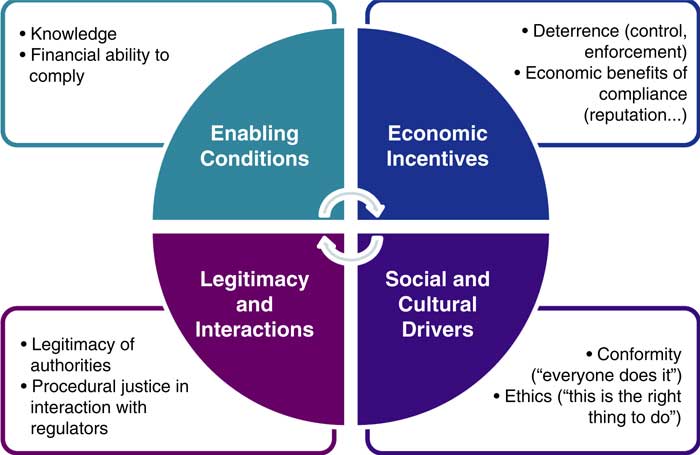
Drawing on this, we propose to categorise the different foundationsFootnote 29 of compliance in four groups:
— enabling conditions: knowledge and understanding of rules, financial and technical ability to comply without putting the business viability in jeopardy;
— economic incentives: deterrence (probability of detection primarily, amount of potential sanctions as a secondary aspect – and also risk of reputation loss), potential economic benefits of compliance (improved reputation leading to improved market position, or compliance investments resulting in higher productivity, reduced losses etc);Footnote 30
— social and cultural drivers: group conformity (other group members or models behave in a compliant way), group ethical values (ethical values aligned with the values of the regulation and/or posit legal compliance as an absolute good);
— legitimacy and interactions – individual psychological drivers: legitimacy of authorities (influenced by social and cultural drivers, but also directly by individual experience), procedural justice (or lack thereof) experienced in interactions with authorities, regulators.
These categories are an analytical device, and not absolute. “Enabling conditions” have economic aspects, “legitimacy” and “values” are both social and psychological, etc. Rather than four categories functioning in isolation, these are parts of a circle of “contextual elements”, all of them interacting with one another.
An illustration of the “compliance foundations circle”

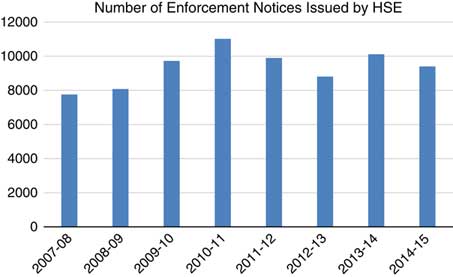
Number of improvement and prohibition notices42

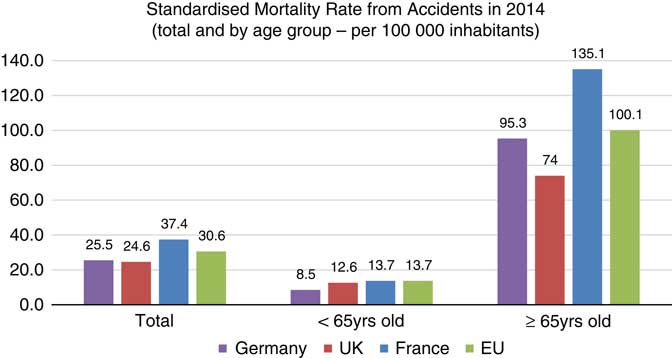
Mortality rate by age group

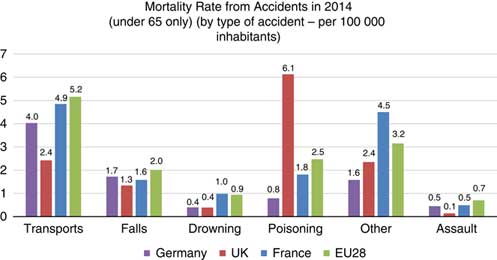
Mortality rate by type of accident

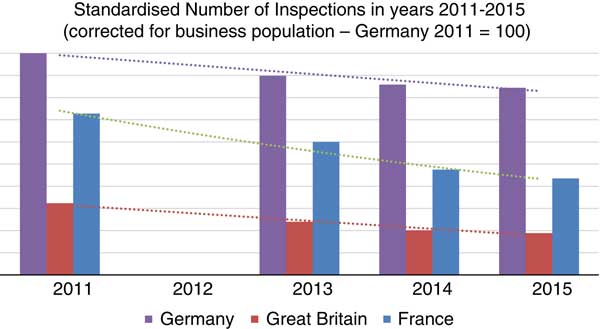
Standardised number of inspections57

This typology (see Figure 1) matters to an effective and efficient inspection and enforcement approach, paying attention to potential side effects, trade-offs, and attempt to find the “optimal” mix.Footnote 31 In contrast with some theories’ pretentions to definitely “explain” human interactions, we think it behooves scholars to be modest and accept the limits of humans’ ability to understand themselves.Footnote 32 In agreement with Hodges,Footnote 33 we see the combination of procedural justice studies, behavioural economics, as well as the more sophisticated analyses of “deterrence”, as different aspects of the same attempt to make sense of human behaviours. Whether one looks at “compliance”, at “beyond compliance”, or targets “behaviours” more broadly – the drivers, conditions, foundations are all essentially the same.
IV Evidence from regulatory delivery practices – occupational safety and health in Britain, Germany and France
Over the past couple of decades, a number of inspectorates have implemented approaches combining to varying degrees risk-based regulation (with risk defined as combining probability and potential magnitude of harm), “responsive regulation”,Footnote 34 and active compliance support (a form of “cooperation”). This involves targeting of visits based on the assessed risk posed by the establishment, modulating enforcement decisions based on risk and behaviour (“responsiveness”), making regulations more understandable, providing specific advice – and also focusing on the elements of regulations that are deemed by the inspectorate to be most relevant to prevent and manage risks, being actively selective and proactive to seek to escape the “compliance vs outcomes” problem.
These approaches are supported, eg by international institutions such as the World Bank and the OECD, but also criticised because of fundamental concerns about the nature of the “rule of law” and on the appropriate principles to decide on sanctions. Others question whether these approaches, which purport to achieve “smarter inspections” with a “win-win” combination of less burden and more impact, indeed deliver what they claim.
Data and methodological limitations make it difficult to answer this question conclusively. Additional challenges for occupational health and safety have been well illustrated by Hawkins.Footnote 35 Indeed, “it is very difficult for regulatory agencies to exhibit their effectiveness in terms of the number of injuries or deaths that did not occur”.Footnote 36 Overall, while measuring outcomes is the most relevant way to evaluate enforcement effectiveness, the complexity of the causal chains means that this can never be a simple exercise, and requires the consideration of trends (and changes in trends), and comparisons across different jurisdictions.
There were several reasons to select occupational safety, and these three countries. First, this field had been specifically studied in Britain and Germany already.Footnote 37 Second, data is easy to access and harmonised (by Eurostat)Footnote 38 – and reliable, for fatal accidents. Third, a significant extent of shared regulation exists, through EU Directives. Interestingly, these three countries were the first worldwide to create labour safety laws and inspectorates, but have ended up with very different practices and systems in this sphere, making potentially for an enlightening comparison.
1 Context – consolidation of “risk based approaches” in Britain
Regulatory delivery in OSH includes primarily guidance and inspections. OSH inspections are shared between the Health and Safety Executive (HSE), a national body, and Local Authorities (LAs). The former is responsible for slightly under half of business premises, LAs for the rest – but in recent years LAs have been conducting over two-thirds of inspections.Footnote 39 The dual structure results from history, and the HSE is – broadly speaking – responsible for traditional “high risk” and “major hazards” (in particular those covered by EU Directives). In recent years, the HSE has taken a stronger role of guidance (though not direct authority) over LA officers.Footnote 40
There has been a succession of policy steps to achieve greater consistency in regulatory delivery, not only in OSH (2005 Hampton Review, 2008 and 2014 Regulators Code etc). In OSH specifically, the HSE formalised its approach through an Enforcement Policy Statement and an Enforcement Management Model (EMM) – and recent reforms have given the HSE a stronger coordination role on how LAs perform their functions.
As Hawkins has shown, prosecution has already long been a “last resort” for HSE inspectors.Footnote 41 In fact, this went back to the 19th century – even though in principle health and safety violations are to a large extent “criminalised”, ie can be subject to prosecution and (in case of conviction) criminal penalties. As a far more frequent alternative, in cases judged serious enough for more than simple advice, inspectors can issue improvement notices (mandating the resolution of a given violation in a set time period) and prohibition notices (adding the prohibition to use a given equipment, facility, establishment etc).
Critics of the changes in health and Footnote safety enforcement in Britain in the past 15 years have spoken of a complete collapse in enforcement.Footnote 43 Notices, however, have continued to increase and decrease irrespective of the Government in place (see Figure 2), and of reform trends.
In fact, HSE staff seem to have become increasingly focused and efficient at maximising their enforcement effect – the percentage of convictions and average penalty per conviction are clearly on an upward trend,Footnote 44 as is the ratio of notices per inspection.Footnote 45
That there has been a tendency to resort less to criminal prosecutions is not disputed. The question is whether such an approach – less inspection visits overall, more risk-focused targeting, emphasis on guidance and advice, risk-based enforcement with limited use of prosecution but substantial use of notices – delivers positive results or not.
2 Comparing health and safety outcomes
The only way to assess the British approach’s effectiveness is to look at outcomes. Because of the time-lag issue pointed out by Hawkins,Footnote 46 occupational health outcomes are particularly complex. To address these difficulties, we have opted to: (a) focus on occupational safety only, and specifically by looking at fatal accidents only, as problems of variable under-reporting of non-fatal accidents are well-known; and (b) consider relative performance of several countries that are otherwise comparable, to try and look for a specific regulatory delivery effect.
a The complex issue of “comparability”
Saying that several jurisdictions are “comparable” is difficult. Differences between Britain, Germany and France are real – but the average differences are in many cases smaller than the intra-country differences. All three are advanced economies, among the earliest to have industrialised and have created a health and safety regulatory system (Britain being first on both counts). The population size and enterprise population is also relatively similar. Different employment structures (sectors, size of businesses etc) are corrected for by Eurostat. The question of different “cultures” is more complex and disputed.
Assessing “how similar” cultures are in relation to safety is difficult. Looking at mortality from all accidents, and not just accidents at work, appeared to be the most suitable way in our case. Eurostat series on fatal accidents are broken down by age and cause/type of accident.Footnote 47 Beyond the many variations, the data at least does not suggest that one of the three countries would be safer “across the board”. Average mortality is similar in Germany and the UK (both performing better than EU average). While accidental mortality is higher in France, it is not consistently so across all categories – rather, France’s under-performance is driven primarily by accidents affecting people over 65 years of age. Working-age accidental mortality in France is in line with EU average, and close to Germany and the UK.
Considering the cause of accident shows that there is no consistent over- or under-performed among our three countries – each has at least one cause for which it is performing much better, or much worse, than average. We can at least conclude that: (a) Germany’s and the UK’s situation in terms of accidental deaths overall is similar; (b) while the situation in France is worse overall, the difference is much smaller when considering the age groups under 65 years; and (c) even in France, accidental mortality is not consistently higher (in some areas it is lower than in Germany and/or the UK).
This suggests that none of these countries appears to have a worse “safety culture” in general, but each has some specific safety weaknesses. This at least validates the possibility of singling out occupational safety data and regulatory delivery, and seeing what differences exist.
Fatal occupational accidents

b Health and safety outcomes in Britain, Germany and France
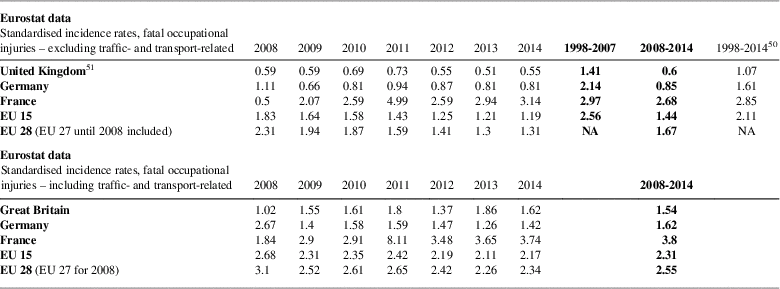
As said, we rely here on fatal occupational accidents only (see Figure 3 and Figure 4). Because fatal accident rates are low, a change of a few units from year to year can lead to important changes in percentage points – it is important to compare averages over a longer period. Eurostat has since 2008 maintained series both including accidents during work-related transport and excluding them. The HSE generally reports excluding transport, as it is not within its mandate. While Britain performs overall better than Germany and consistently better than France, the difference is far sharper when excluding traffic accidents, and is slightly reversed in some recent years when including them.Footnote 48
Britain’s performance in occupational safety, using fatal injuries as a proxy, is vastly better than France’s (2008–2014 average of 3.8 including traffic accidents or 2.68 excluding them). For Germany, excluding traffic accidents, the gap is constantly in favour of Britain and has remained remarkably constant (33% lower over 1998–2014, 29% lower for 2008–2014, and 32% in 2014). In recent years, including traffic accidents, Britain’s performance appears to have plateaued, whereas Germany’s improved markedly. Crucially, Britain performs far better in areas where the HSE has competence (excluding transport) than where it is not active (transport-related).
France has a rate of fatal occupational accidents (including transport) that is very high: a 2008–2014 average of 3.8, more than 50% above the EU 15’s and 2.5 times more than Britain’s or Germany’s. The gap with Britain and Germany is even worse when excluding traffic accidents. France has the seventh worst average over 2008–2014 in both indicators. It seems to be sliding in relation to the performance of other “old Member States”.
Over the period 2008–2014, Britain retains on average the lowest fatal injury rate in the EU (excluding traffic accidents). For 1998–2008, the best performance was Sweden’s, followed by Britain, the Netherlands and Finland. Including traffic-related accidents, the United Kingdom is third and Germany fourth over 2008–2014.Footnote 49 As for Germany, while it was performing relatively badly in the 1990s, its OSH results have improved very markedly and it reached the “leading group” inside the EU in the past 10 years.
c Health and Safety inspection numbers in Britain, Germany and France
Considering delivery practices, as Tilindyte has shown,Footnote 52 they differ significantly between Britain and Germany, and France is equally different (though in some ways closer to Germany).
OSH inspections in Germany are conducted both by state officials working for the federated states (Länder) in the Enterprise Supervision services (Gewerbeaufsicht), and employees of the mandatory insurance providers (gesetzliche Unfallversicherungen). The latter focus exclusively on occupational safety and health issues, while the former have a broader, looser mandate.Footnote 53
In France, the Labour Inspection (Inspection du Travail) is responsible for all labour-related legislation: OSH, vulnerable categories, work time, wages, holidays, dismissals etc.Footnote 54 While the majority of visits to enterprises correspond to “controls” (inspections), a number of them respond to labour disputes. As in Germany, additional inspections, purely on health and safety at work, are conducted by insurance bodies – the regional CARSAT (Caisses d’Assurance Retraite et de la Santé Au Travail – Pension and Occupational Health Funds).
On the other hand, HSE is mandated to look at “health and safety” in a holistic way, going beyond the occupational angle, and is also responsible for major hazards facilities (EU Seveso Directive), which falls to other bodies in France and Germany, thus the correction in workload goes both ways. The extent of the difference in inspections numbers means that all these nuances are unlikely to affect the general trend.
In France, OSH inspections suffer from sustained data problems: a number of inspectors refuse to use the official information management system, meaning the numbers are only estimates. The Ministry of Labour yearly reports to the International Labour Organisation include inspections and enforcement statistics,Footnote 55 but they repeatedly point out the data quality problems.Footnote 56 There is a trend of decreasing number of inspections in all three countries, but it is less clear in France with numbers going up or down repeatedly (which may be due to varying rates of reporting).
Comparing between countries requires adjusting inspections numbers proportionally to the population being controlled. Ideally, inspection rates should be normalised correcting for different economic structures, but only German data would potentially be detailed enough to allow this. Correcting for differences in population requires selecting an indicator. To reflect the focus of OSH inspectors on enterprises with employees, we use the number of employees – taking the figure for businesses with more than 10 employeesFootnote (but the overall figure is nearly identical). This indicator is nearly identical with the total population ratio.Footnote 58
The exact scope of competences of OSH inspections being different in each country, the number of workers for which they are actually competent may differ from the above, but we opted to use comparable indicators to ensure some statistical consistency.
For the last 10 years, OSH inspections have been 3 to 4 times more frequent in Germany, and twice more in France than in Britain (see Figure 5). The gap with Germany has increased in recent years – while the unreliability of French statistics makes the trends unclear. Ratios of 2 or 3 times (and more) clearly show that OSH inspections are significantly less frequent in Britain than in the two comparators.
This suggests that inspections and enforcement practices in France and Germany are less efficient than in Britain.Footnote 59 This shows that the assumption that “more inspections” will automatically mean “better outcomes” is mistaken; it also leads us to ask what makes British regulatory delivery more effective.
3 Understanding results: looking at regulatory delivery practices
a A “responsive regulation” explanation – Britain may have a better set of enforcement measures
Explaining the difference in performance can be attempted through a traditional “deterrence” angle, but it seems insufficient. Tilindyte suggests that British inspectors may have a more adequate “enforcement pyramid” than German ones in terms of gradual escalation options, considering not only the letter of the law but the actual practice.Footnote 60 Although the HSE only has notices at its disposal, their publication of enforcement notices (public registers)Footnote 61 adds a powerful “naming and shaming” effect. German inspectors have in theory more varied and powerful sanctions, but in practice (complexity of procedures, lack of knowledge of corporate rather than individual sanctions, “culture”) use them rarely.Footnote 62
Evidence from France is likewise mixed. In recent years, French labour inspectors have indeed made decreasing use of formal sanctions – at least to the extent that data is correctly reported. Following legal changes in 2014–2016, French labour inspectors now have significant powers to inflict administrative fines – but it is still unclear how much they are using them for labour safety.Footnote 63 The highest level of sanction is the Procès-Verbal, through which the inspector notifies the Public Prosecutor of the violation. Criminal prosecution is marked by delays of several years, so complete data is only available with a long time-lag.
Overall, given data limitations, we can tentatively estimate that there are around 1,000 OSH-related prosecutions per year in France, which is higher than the 600–650 reported in Britain.Footnote 64 The British number is, however, more reliable, procedures are faster, and anecdotal evidence suggests penalties may be higher, at least in recent years. The number of improvement notices (5,700) and prohibition notices (2,900) is also far higher in Britain (2015 data).Footnote 65
Overall, though OSH inspections in Britain are less frequent than in France, and far less than in Germany, the share that results in official notices is higher, and the “responsive” character of the enforcement response (more potential for graded response, more immediate response, more credible threats of escalation)Footnote 66 probably makes it more effective.
b Risk focus in targeting and during inspection visits
Targeting of interventions also matters. Tilindyte presents historical data on inspections, “deficiencies” identified (for Germany), and enforcement measures.Footnote 67 German inspectorates visit far more premises, but seem to find problems that warrant enforcement action only very rarely. Data suggests the situation is similar in France (338,552 infringements found in OSH in 2015,Footnote 68 but only a few thousand formal responses). German and French inspectors find a vast number of “deficiencies”, but consider most of these to be too mundane for enforcement, or enforcement not to be the adequate response.
This suggests a “net cast far too wide”. German and French inspectors may be visiting a large number of premises where the risk level is low, then identifying “deficiencies”Footnote 69 that reflect a large set of prescriptive and detailed rules, but declining to enforce because they see that it would be disproportionate. This means that too many premises are inspected, and too many issues of limited relevance controlled during inspections – whereas the HSE not only seeks to inspect just the highest-risk premises, but also to selectively control the aspects of operations that present the most risk.
The HSE has developed a system (Find-It) which integrates different datasets, assigns risk ratings for establishments based on indicators such as past enforcement measures, time since last inspection, accident records, etc. The system has improved efficiency, reduced time needed to plan, and increased the ratio of serious violations on total inspections (which, given that safety outcomes have not worsened, indicates better detection and not worsening compliance overall).Footnote 70 By contrast, inspections in Germany are planned based on a variety of different and non-connected systems.Footnote 71 In France, there is much resistance to increased use of information management systems (as seen above). In Germany, most targeting is done “in the absence of formal models or comprehensive risk assessment models”,Footnote 72 with some targeting based on sectors, others on issues, and many cases simply on the inspectors’ “personal experience and expertise”. Formalised models exist so far only in some Länder.Footnote 73
Britain adopted risk-management as the foundation for OSH early on: the Health and Safety at Work etc Act 1974 made risk assessment the norm for all workplaces. Rather than prescribing standards, the 1974 Act emphasised outcomes and left flexibility on how best to achieve them. By contrast, in Germany, OSH remained essentially based on sector-specific, detailed standards-based regulations. The 1989 EC Directive on health and safety at work (89/391/EEC), which introduced “general principles of prevention” based on riskFootnote 74 led to significant changes in the German legal order (but very little in Britain, as the Directive had similar principles to the 1974 Act).Footnote 75 The Directive was translated into German law with the 1996 Occupational Health and Safety Act.Footnote 76 Interestingly, improvements in OSH outcomes in Germany correlate with the introduction of systematic risk-assessment and risk-management.
c Compliance promotion
Professional attitudes of German and British inspectors have similarities in terms of emphasis on advice and “informal” rather than formal enforcement.Footnote 77 There is no “lack of advice” that could explain the relative under-performance of German inspections. In fact, as Britain and Germany both perform highly, “informal enforcement”, targeted sanctions and emphasis on advice appear like an effective combination.
In France, relations between inspectors and businesses tend to be difficult: incidents and the need for police or other protection are reported in each report to the ILO.Footnote 78 While incidents are reported only in 1–2% of visits at most, and are decreasing in recent years, this appears specific to France. This may stem from the institutional culture – and the fact that inspectors also control employment law, source of many conflicts.
A specificity of HSE’s approach is that advice is provided pre-emptively and with a broad outreach effort, in a way that is designed to be easy to understand and implement – whereas German inspectors (and French ones) seem to primarily provide ad hoc advice based on their findings and their own experience, the HSE and, increasingly, LAs provide guidance. The HSE has made particular efforts to change communication style and channels to reach audiences that were less receptive to inspectors’ advice.Footnote 79
d Enforcement predictability and consistency
Finally, the way enforcement is structured, and discretion framed, probably influences outcomes. British OSH inspectors’ discretion is exercised within a particular set of institutions, practices and culturesFootnote 80 that have been formalised in an “enforcement management framework” that improves transparency and predictability, and links the exercise of discretion to risk assessment and responsive regulation.
Enforcement discretion exists in Germany,Footnote 81 within the limits of Administrative Procedures Law (Verwaltungsverfahrengesetz) – but there are no specific guidelines to help inspectors take decisions, and make these more transparent. In France, there is a tradition of complete autonomy and full discretion of labour inspectors. Their decisions can be reviewed by administrative courts, but this is a longer-term remedy. Since 2015, a reform aiming to introduce more consistency has required enforcement decisions to be endorsed at the level of the “territorial unit”, and introduced more national level coordination.Footnote 82 These changes have, however, faced major resistance from inspectors’ trade unions.
There are two ways in which the clarity, predictability and transparency introduced by the EMM could support safety outcomes. First, through a positive procedural justice effect, by making it clearer for duty holders how they will be assessed, and how decisions will be taken – resulting in increased voluntary compliance.Footnote 83 Second, because the EMM emphasises the importance of risk assessment and of the “risk gap”, it pushes businesses to focus on critical issues.
4 Case study conclusion
Higher inspection numbers do not automatically produce higher compliance, and higher compliance seems correlated with a more comprehensive approach to regulatory delivery. It nonetheless does not mean that “fewer inspections are always better”. First, to take another example, OSH inspection numbers in the United States are (pro-rated to the population) several times lower than in Britain, and this time the outcomes are significantly worse. While there are many reasons for this, very low inspection coverage cannot be ruled out as one.Footnote 84 Looking at the difference between fatal accident rates including or excluding transport-related ones strengthens the point that more inspections does not (always) help, but regulatory delivery efforts probably do.
Because Britain performs much better excluding transportation-related accidents than including them, its performance solely on transportation-related OSH accidents is relatively poor. The source of the problem is regulatory. Work-related accidents on public roads are not reportable to HSE, since responsibility for investigating them lies with the police. Even when work-related transport is taking place on public roads, health and safety law still applies – and HSE and LAs inspectors could include this risk in their preventive and inspection work. In practice, however, given limited resources, they rarely do.
First, this is an illustration of the adage “what gets measured gets done”. The HSE and LAs achieve excellent safety results in spite of limited resources, but lack of attention to transport-related safey leads to worse performance in this area. Second, it shows that Britain’s high OSH performance is not an automatic result of a “better culture of safety”, but appears correlated with areas of intervention of the HSE and LAs, and thus with their active efforts to promote compliance through guidance, risk-focused inspections, risk-proportional enforcement.
V Overall conclusion
In conclusion, it appears that different tools and methods used for regulatory implementation or “delivery” produce divergent levels of effectiveness. The long-standing assumptions that compliance is primarily fear- and deterrence-driven, and that compliance more-or-less automatically produces desired outcomes, seem fragile. For a given set of rules, evidence strongly suggests that relying on a more comprehensive view of drivers for behaviour modification can result in “regulatory delivery” that is more effective – and also more efficient.
Effective regulation is achieved through a combination of interventions, as part of an approach where deterrence is only one of the many drivers of behaviour modification. These findings are confirmed by looking at a number of countries inside the EU as well as outside (eg very frequent inspections leading to very little effectiveness, in post-Communist countries).Footnote 85 They are also confirmed when considering ex ante rather than ex post tools (eg massive use of permits and licenses in Greece has significant costs but seems unnecessary when benchmarking against other countries, and Kleiner has shown licensing to have little positive impact, but considerable costs).Footnote 86