INTRODUCTION
Competition plays an important role in structuring communities (Gurvevitch et al., Reference Gurvevitch, Morrow, Wallace and Walsh1992) and invasion dynamics (Levine & D'Antonio, Reference Levine and D'Antonio1999; Stachowicz et al., Reference Stachowicz, Fried, Osman and Whitlatch2002; Levine et al., Reference Levine, Adler and Yelenik2004). Elton's (Reference Elton1958) biodiversity and invasibility hypothesis assumes that communities are saturated and that a non-native species must be competitively superior to the resident species in order to be a successful invader. A basic requirement for any species, including non-native species is resources (Byers, Reference Byers2000) such as food or space. Thus, competitive superiority could be an essential trait in obtaining access to resources leading to a successful invasion (Byers, Reference Byers2002).
Competition can be defined as a negative interaction between two species of the same trophic level that occurs as a result of exploitation for a shared resource (Connell, Reference Connell1983). Furthermore, interspecific competition can be quantified by the reduction in fecundity, abundance, survivorship or growth of an individual of one species as a result of exploitation or interference competition by individuals of another species (Branch, Reference Branch1984). Interference competition for example, occurs when species A and species B interact directly by capturing space (territory). They then respond directly to each other's presence rather than to the level to which the resource is depleted. For example in Japan, the non-native crayfish Pacifastacus leniusculus was able to physically remove the native crayfish Cambaroides japonicus from shelters, thus making it more prone to predation by fish (Nakata & Goshima, Reference Nakata and Goshima2003). Interference competition is the dominant form of interspecific competition in marine organisms and can often result in localized exclusions of a weaker competitor from habitats occupied by a superior one (Branch, Reference Branch1984; Branch & Barkai, Reference Branch, Barkai, Chelazzi and Vannini1988). Exploitation competition occurs when species A reduces the level of a resource and species B reacts to this reduced level. The two organisms do not respond to the presence of each other, but to the level of resource that has been depleted. For example, in the mud flats of northern California, the invading estuarine snail Batillaria attramentaria successfully displaced the native snail Cerithidea californica by being more efficient at converting a limited dietary resource to tissue growth, even though they both consumed the resource at the same rate (Byers, Reference Byers2000). This led to B. attramentaria having a higher reproductive rate than C. californica (Byers, Reference Byers2000).
Intense interspecific competition is more likely to occur with congeneric species that occupy the same area because these species are likely to have similar ecological requirements (Darwin, Reference Darwin1872; Hutchinson, Reference Hutchinson1959; Franke & Janke, Reference Franke and Janke1998). Therefore, non-native species invading communities that contain ecologically similar native species that use the same resources are likely to produce areas of intense competition, at least at the local scale (Tilman, Reference Tilman2004). The frequency and intensity of the competitive interactions may determine whether a native species becomes competitively excluded or can still remain in a habitat but at a reduced abundance. Furthermore, an increase in the density of an invading competitor may enhance the intensity of the competitive interaction between the two species and increase the likelihood of the inferior competitor being competitively excluded (Rosenzweig, Reference Rosenzweig1981, Reference Rosenzweig1991; Branch, Reference Branch1984). The intensity of the competitive interaction may be reduced if the inferior competitor has a refuge that reduces the amount of time an inferior competitor is in direct contact with the superior competitor (Bell et al., Reference Bell, McCoy and Mushinksy1991). Interspecific interference competition and aggressive behaviour by invading species may therefore be an important mechanism by which a non-native species becomes established in native communities.
The non-native north-east Asian amphipod Caprella mutica was first encountered in the UK on the west coast of Scotland in 2001 (Willis et al., Reference Willis, Cook, Fernandez and Takeuchi2004) and has since been found throughout Europe (Cook et al., Reference Cook, Jahnke, Kerckhof, Minchin, Faasse, Boos and Ashton2007). Caprella mutica may have similar ecological requirements to the native caprellid Caprella linearis. Since the invasion of C. mutica into European waters, this species has been found living on the same substratum types as C. linearis (Shucksmith, Reference Shucksmith2007). The two species have been collected from similar biotic structures (sponges and hydroids), which form part of the epifaunal communities on rocky outcrops and submerged cliffs, as well as, on man-made structures (Stachowicz & Byrnes, Reference Stachowicz and Byrnes2006). Caprella linearis can also occur at similar densities to C. mutica ranging from 10,000 to 30,000 individuals m−2 (Moore, Reference Moore1984) and shows the same range of feeding strategies as C. mutica (i.e. suspension feeding and grazing) (Michel et al., Reference Michel, Nauwelaerts, Stamhuis and Boos2007; Nauwelaerts et al., Reference Nauwelaerts, Michel, Stamhuis and Boos2007). Populations of both species have been found under the same environmental conditions (current speeds of 4.6–21.0 cm s−1 (Cook et al., Reference Cook, Black, Sayer, Cromey, Angel, Katz, Eden, Spanier, Karakassis, Tsapakis and Malej2006), same water temperature ranging from 7.4°C to 14.3°C (Ashton, Reference Ashton2006) and salinity 32–34.5 ptt (Ashton, Reference Ashton2006)) and in close proximity to one another (<1 km) on the west coast of Scotland (Shucksmith, Reference Shucksmith2007), suggesting that C. mutica has the potential to colonize habitats occupied by the native C. linearis.
Pseudoprotella phasma is a native caprellid species in the UK. This species reproduces in the spring and summer (Harrison, Reference Harrison1940) and occurs at low densities of just a few individuals per colony of hydroids (personal observation). Pseudoprotella phasma is found on a variety of epifauna such as hydroids (Harrison, Reference Harrison1940), particularly on Nemertesia antennina on the west coast of Scotland (personal observation) and bryozoans (Bradshaw et al., Reference Bradshaw, Collins and Brand2003) where it adopts an upright position. Grooming of the antennae indicates filter feeding in caprellids (Guerra-García et al., Reference Guerra-García, Corzo and García-Gómez2002) and the low frequency of this in P. phasma indicates a more predatory mode of life (Guerra-García et al., Reference Guerra-García, Corzo and García-Gómez2002). This species prefers areas of moderate silting and suspended solids (Guerra-Garcia & García-Goméz, Reference Guerra-García and García-Gómez2001). Competitive interactions between C. mutica and P. phasma were tested in this study because P. phasma is often found on the seabed in close proximity to the fish farms and buoy lines, occupied by C. mutica. It was hypothesized, therefore, that if C. mutica was to be displaced from the buoy or fish farm nets it could theoretically land on the substrate occupied by P. phasma. Although there are obvious differences between the two species (i.e. breeding, densities and preferred feeding mode) there is a strong possibility that the two species will have come into contact with each other as C. mutica has been shown to disperse from fish farms and buoy lines (Ashton, Reference Ashton2006; Shucksmith, Reference Shucksmith2007).
This study was undertaken to determine whether C. mutica would displace the two native caprellids. The experimental units were designed for space to be the limiting resource and this was done through the use of different habitat patches for the 2 species pairs, C. mutica with C. linearis and C. mutica with P. phasma. Three experiments were designed to test three hypotheses:
1) Caprella mutica will not displace the native caprellid P. phasma on artificial habitats and from its preferred natural habitat N. antennina.
2) Caprella mutica at a range of densities will not displace C. linearis from artificial habitats when space and density of C. linearis are held constant.
Based on the results of the previous two experiments, experiment 3 was designed to test the hypothesis:
3) Adding a refuge to the artificial habitats would prevent displacement of C. linearis and reduce the competitive interactions between the two species.
MATERIALS AND METHODS
Collection of animals
Pseudoprotella phasma was collected from Loch Creran (56°32′ N 05°20′W) from a depth of 10 m attached to the hydroid Nemertesia antennina. Caprella mutica was collected at a depth of between 1 and 10 m from hydroids, mussels, sponges and algae attached to mooring ropes in the Lynn of Lorne (56°33′ N 05°20′W). Caprella linearis was collected from sub-littoral sponges, mussels and hydroids attached to rock substrate at a depth of 10 to 25 m from Loch Etive (55°27′ N 05°22′W). All three species were collected in July 2005 and held separately at all times, in aquaria supplied with sand-filtered seawater, constant aeration, salinity 35 and temperature 14±0.5°C.
Experimental design
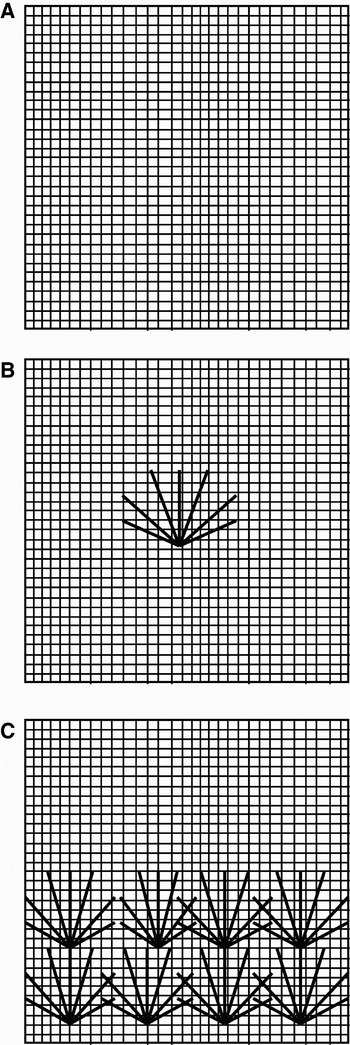
Three different artificial patches were used that consisted of a mesh (M), a mesh with a single refuge (R1) and a mesh that was covered with 50% refuge (R50) (Figure 1). The artificial mesh patches were constructed using flat plastic squares (8 × 8 cm) with a 1 mm squared mesh attached to one side. The refuge was constructed using the mesh square design by either adding a single artificial 25 mm long turf (LT)(Aquatic Plastics, London), free of biotic signals and chemical cues or adding 10 LT to cover 50% of the mesh square (Figure 1). Each patch was replicated 8 times.
Three 8 × 8 cm experimental patches that consisted of (A) mesh square (M); (B) a mesh square with a single refuge (R1); and (C) a mesh square that was covered with 50% refuge (R50).

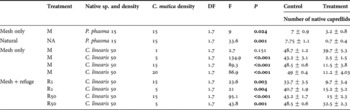
The experiments consisted of the native caprellids C. linearis and P. phasma alone (the control) and in combination with the non-native C. mutica (treatments) (Table 1). Caprella mutica was used at a range of densities on the different patches with C. linearis, whereas, C. mutica was used at the same density as P. phasma (Table 1). For P. phasma an additional experiment was carried out using the native hydroid N. antennina that P. phasma naturally lives on in the field (Table 1).
Ten different treatments and the controls used to test for competition between the two native caprellids and the non-native Caprella mutica, at a range of densities. M, mesh patch; NA, natural patch; R1, mesh patch with single LT refuge; R50, mesh patch with 50% LT refuge. One-way ANOVA and the means and SE are shown for the total number of caprellids remaining on the patch for the treatment and the control. P value in bold indicates significant differences.

For each treatment except those using the natural substrata, a patch type was suspended vertically in the centre of each of the eight 5 l aquarium tanks known hereafter as microcosms. Eight microcosms were randomly placed in a single large white container 100 cm × 80 cm to catch the water overflow. Each microcosm had a constant slow flow rate (not measured but the flow rate was adjusted so that there was a slow seepage of water out of the outflow) of sand-filtered seawater and held at a temperature of 14±0.5°C and salinity 35. No food was given during the experimental period, although a limited amount of both zoo- and phytoplankton may have come through the sand filters. This was assumed not to affect the outcome of the experiments. Each microcosm was randomly allocated either as a control or a treatment. There were 4 replicate controls and 4 replicate treatments within the large white tank to remove any bias of microcosm position. The experiments were run for 48 hours, with 2 dark and 2 light periods (14D:10L). After the 48 hours all caprellids were removed from each microcosm and placed into separate vials in alcohol and the number of caprellids on each patch was calculated in the laboratory. Microcosms and artificial patches were cleaned and rinsed in warm freshwater before being used again.
Competition between C. mutica and P. phasma
For the natural substrata, similarly sized colonies of the hydroid N. antennina were anchored to the bottom of each of the 8 microcosms, so that they projected upright into the water column. Pseudoprotella phasma were randomly selected from approximately 400 individuals of varying size and sex and counted into 8 groups of 15. Each group was placed into a temporary holding container (250 ml) with seawater before being added to the patches in the 8 microcosms, at approximately the same time and allowed to acclimatize for 1 hour prior to the introduction of the non-native C. mutica. One hour later, 15 C. mutica were randomly selected from approximately 10 000 individuals of varying size and sex and counted into 4 groups of 15. Each group was put into the temporary holding container with seawater before being placed on the same 4 patches as P. phasma in the treatment microcosms.
Competition between C. mutica and C. linearis
Caprella linearis was kept at a constant density of 50 individuals per patch relative to densities found in field during the summer (10,000 to 60,000 m−2), for all treatments (Table 1). Caprella linearis were randomly selected from approximately 10,000 individuals of varying size and sex and counted into 8 groups of 50 before being released onto the artificial patches and allowed to acclimatize for 1 hour prior to the introduction of the non-native C. mutica. Caprella mutica were randomly selected from approximately 10,000 individuals of varying size and sex and counted into the appropriate density for that treatment (Table 1) before being released onto the artificial patches.
Size of caprellids
Body length of all three species was measured to the nearest 0.1 mm from the front of the head to the end of pereonite VII (Willis et al., Reference Willis, Cook, Fernandez and Takeuchi2004), using image analysis software package ImageJ (ImageJ, http://rsb.info.nih.gov/ij/), to identify differences in size between species.
Statistical analysis
Data analyses were carried out to detect differences in numbers of native caprellids with and without C. mutica between the treatment and the control. The primary interest was to test if C. mutica at different densities would displace the native species on different patches (Table 1). Competition was measured by the difference in the number of native species on the patches in comparison to the control group 48 hours after C. mutica had been introduced. Using MINITAB 13 the assumptions of normality and homogeneity of variances were met and the difference in the number of caprellids between the treatment and the control was tested for using a one-way ANOVA. The effect of refuges on the distribution of C. linearis was tested using ANOVA with invader density and patch type as a fixed factor. A planned contrast was undertaken to look for differences between the mesh patches with no refuge (M) and the patches with a refuge (R1 and R50) using MINITAB 13.
RESULTS
Competition between P. phasma and C. mutica
Caprella mutica significantly displaced P. phasma on natural and artificial mesh patches. On M at equal densities (15 individuals per patch) only 21.6% of the initial density of P. phasma remained in comparison to 46.4% on the control after 48 hours (See Table 1 for statistical test, means and SE). On the hydroid, N. antennina, C. mutica was able to significantly displace P. phasma (Table 1) with only 5.0% P. phasma remaining on the hydroid, 48 hours after C. mutica was introduced compared to 53.3% on the control. Caprella mutica was on average 3 mm bigger than P. phasma with the mean size of C. mutica and SE 15.10±0.09 mm (N = 42) and P. phasma was 11.57±0.08 (N = 50).
Competition between C. linearis and C. mutica
Caprella mutica significantly displaced C. linearis from all the artificial patches except at the lowest density of 1 C. mutica per patch. Only 25.5% of C. linearis remained on M, 48 hours after C. mutica was introduced in comparison to 98.0% on the controls, when C. mutica was at the highest density of 20 individuals per M (Table 1). A similar result was observed when C. mutica was at the density of 15 individuals per M, with 23.0% of C. linearis remaining on M after 48 hours in comparison to 97.0% on the control (Table 1). The same pattern was also seen when C. mutica was at the density of 5 individuals per M with 5.0% of C. linearis remaining on M after 48 hours of C. mutica being introduced in comparison to 86.5% on the control (Table 1). This was surprising as invader density at 5 individuals per patch had a greater effect than C. mutica at 20 individuals per patch. At the lowest density of 1 C. mutica per M, C. mutica was unable to significantly displace C. linearis with 79.5% of C. linearis remaining on M after 48 hours of C. mutica being introduced in comparison to 97.5% on the control (Table 1).
Long turf refuge
Caprella mutica significantly displaced C. linearis on the patches that contained a refuge irrespective of how many refuges were on the patch (Table 1). At the densities of 15 individuals of C. mutica per R1, 19.5% of C. linearis remained on the patches after 48 hours of C. mutica being introduced in comparison to 67.5% on the control. At the density of 5 C. mutica per R1, 30.5% of C. linearis remained on the patch after 48 hours of C. mutica being introduced in comparison to 81.5% on the control (Table 1).
Caprella mutica at the density of 15 and 5 individuals significantly displaced C. linearis on the R50 patches with 30.0% and 65.0% remaining on the patches 48 hours after C. mutica being introduced in comparison to 81.5% and 97.5% on the control (Table 1).
Refuge effect
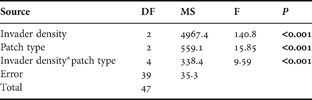
Differences in the number of C. linearis displaced by C. mutica between the different patch types were analysed to identify if more caprellids were displaced on the patches with no refuge (M) than the patches with refuges (R1 and R50). There was a significant difference between the number of C. linearis on the different patch types (M, R1 and R50) and invader density (0, 5 and 15) (Table 2).
ANOVA of differences in Caprella linearis density between absence and presence of Caprella mutica with invader density and patch type as fixed factors. Significant differences in bold.
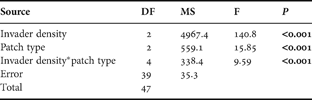
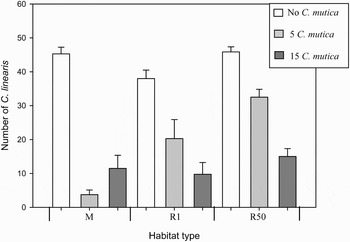
More C. linearis were displaced from M patches than R1 and R50 and more C. linearis were displaced from R1 than R50 at the invader density of 5 individuals per patch (Figure 2). A similar pattern was seen at the invader density of 15 individuals per patch, however, surprisingly a similar number of C. linearis were displaced on M as the R50 patch (Figure 2). Furthermore, more C. linearis were displaced from the M patch at the lower invader density of 5 individuals than at the higher density of 15 individuals per patch (Figure 2).
Number of Caprella linearis left on the different patch types at different invader densities of 0, 5 and 15. M, mesh patch; R1, mesh patch with single LT refuge; R50, mesh patch with 50% LT refuge. All differences are significant except at the invader density 15 between M and R1. Mean and SE are shown.

Differences in size of C. mutica and C. linearis
Caprellids were randomly selected from the experiments and measured to assess any differences in size between the two species used in the different treatments. Caprella mutica was approximately twice the size of C. linearis with the mean size of C. mutica 11.39±0.09 mm (N = 60) and the mean size of C. linearis 5.12±0.08 mm (N = 237).
Mortality of C. linearis in the experiments
Numbers of dead C. linearis were observed in the bottom of the microcosms and analysis of mortality was undertaken. Mortality rates in the experiments compared to the controls were significantly different when the data were pooled for all experiments (one-way ANOVA, F1,63 = 43.45, P = 0.001). Four times as many C. linearis died in the microcosms with C. mutica than in the controls for the majority of treatments. Furthermore, there was a significant difference in mortality between the different invader densities (one-way ANOVA, F7,24 = 3.80, P = 0.007). The lowest mortality occurred in the treatment M with a density of 1 C. mutica per patch and this was significantly different to treatment M and R1 that had an invader density of 15 C. mutica. Mortality may have been caused either by predation by C. mutica or by aggressive interactions, as each treatment had a higher mortality rate compared to their control, except for the treatment R1 at a density of 15 C. mutica per patch. However, there was no significant difference when the treatment of 1 invader per patch was removed from the analysis and the same pattern of mortality rates of C. linearis was observed between the different densities of C. mutica and the different patch types (one-way ANOVA, F6,27 = 2.20, P = 0.084).
DISCUSSION
This is the first set of experiments to show that the non-native C. mutica has the ability to displace native species when the resource space is limited. Caprella mutica was able to displace Pseudoprotella phasma on both artificial and natural patches and displace Caprella linearis even when the density of C. mutica was 10 times lower than the density of C. linearis. Only the lowest density of C. mutica (one individual per artificial patch) did not significantly displace C. linearis. Gammarus pulex, a freshwater non-native amphipod, was able to displace native amphipods when densities of G. pulex were low (Dick et al., Reference Dick, Montgomery and Elwood1999) and gain a foothold in the community. Displacement of native species by an invader increases the probability of establishment by gaining access to resources that were being consumed by the native species.
Behaviour and competition
Competition was measured by a reduction in the number of the native species in comparison to the control, but this did not show the specific mechanism by which C. mutica displaced the native species. One probable cause, although only assessed through limited qualitative observations and no quantitative measure was taken in this experiment, was the aggressive behaviour that was observed for C. mutica on the artificial patches. Aggressive behaviour in this study is defined as an interaction where direct physical contact between the native and non-native caprellid occurs and causes one of the caprellid species to move rapidly to another area on the patch or leave the patch completely. Caprella mutica appeared more active than C. linearis and crawled around the patch to a greater extent than C. linearis (personal observation). As C. mutica moved round the mesh square and encountered C. linearis, it would grip on to the native caprellids with its pereopods and C. linearis found it difficult to remove itself from this grip. Once released from the grip of C. mutica, C. linearis would move and/or even fall from the patch onto the floor of the microcosm. When the native caprellids were displaced from the patches they would sit on the floor of the microcosm in small groups. While caprellids have the ability to swim vertically (Keith, Reference Keith1971), once displaced the native caprellids would remain in groups and not attempt to return to the patch. Furthermore, if a native caprellid crawled onto C. mutica, the latter would make fast erratic movements and physically try to remove the individual with its gnathopods or mandibles. Aggressive competitive behaviour has also been observed in the non-native amphipod G. pulex in rivers in Ireland where they have been shown to displace native amphipods from patches (Dick et al., Reference Dick, Montgomery and Elwood1999) and aggressive behaviour by the green shore crab Carcinus maenas has been shown to displace the native Dungeness crab Cancer magister from its preferred patches (McDonald et al., Reference McDonald, Jensen and Armstrong2001).
Potentially C. linearis may have had a competitive effect on C. mutica as 10.2% of C. mutica were found on the aquarium floor but 89.8% remained on the patches. This may indicate that C. mutica was displaced by C. linearis. However, there was no particular patch that this occurred on and low numbers or individual C. mutica were displaced across all patches and no mortality of C. mutica was observed. It may be that some C. mutica moved off the patches either due to the competitive effect of C. linearis, in search of a different patch type or it may have been caused by intraspecific competition particularly at the higher densities of C. mutica. Due to the high numbers of C. mutica remaining on the patch at the end of this experiment the competitive effect of C. mutica on C. linearis was far greater than that of C. linearis on C. mutica even when the densities of C. linearis were 10 times higher than C. mutica.
Body size and competition
Small-to-moderate differences in body sizes between species may affect the outcome of competitive interactions (Hutchinson, Reference Hutchinson1959; Schoener, Reference Schoener1986) by determining which individuals of which species have exclusive access to behaviourally contested resources (Robertson, Reference Robertson1998). In this study, C. mutica was larger than the two native species and was twice the size of C. linearis. This size difference may have given C. mutica the competitive advantage. Larger reef fish have been shown to be behaviourally dominant to smaller reef fish, both within and between closely related species (Robertson & Polunin, Reference Robertson and Polunin1981). Furthermore, many introduced marine invaders have been shown to attain larger body size in the recipient system than in their native range (Grosholz & Ruiz, Reference Grosholz and Ruiz2003) and this may give the invader the competitive advantage over smaller native species. In Ashton's (2006) study, it was shown that C. mutica was the same size in its native habitat as in the invaded range. However, C. mutica is larger than native species of caprellids in Europe. Larger body size may not always be an advantage when invading a new community. A larger body size coupled with a higher activity rate than the native caprellids, may cause the non-native C. mutica to suffer higher rates of predation due to its greater visibility to predators. Reduction in the abundance of a superior competitor by predation may in turn reduce the intensity of competition and the displacement of the weaker native competitors (Paine, Reference Paine1966; Menge & Sutherland, Reference Menge and Sutherland1976).
Mortality of C. linearis
Aggressive interactions between the native species and C. mutica may have caused mortality, through physical damage of the native species by the larger, more robust C. mutica. Physical damage to either species was not assessed in this experiment. However, mortality was higher in the treatments than the controls suggesting that the presence of C. mutica was the cause. There was an indication that C. linearis could have been predated on by C. mutica, as the number of the native species at the end of the experiment was lower than at the beginning of the experiment for some treatments. However, total mortality could not be attributed solely to predation, as dead native caprellids were collected from the microcosms at the end of the experiment. It may be that C. mutica, in trying to occupy space, attacked the native caprellids leading ultimately to mortality. In previous laboratory experiments, it was found that C. mutica was predating on Jassa spp. as well as being cannibalistic (K. Boos, personal communication). However, the study concluded that this could be an artefact of keeping caprellids in aquaria where food can be limiting. In this study, the caprellids were not fed any additional food apart from what may have come through the sand filters. Predation on C. linearis by C. mutica could be either an artefact of the experiment or a trophic strategy that favours predation or cannibalism when planktonic food is limited. Predation on native amphipods by the non-native amphipod Gammarus pulex has been observed and the exclusion of native amphipods from habitats has been attributed to competition and predation by G. pulex in rivers in Ireland (Dick et al., Reference Dick, Montgomery and Elwood1999).
Refuges and competition
Introducing a refuge onto the artificial patches (adding long turf LT to the mesh squares) provided a structure for C. linearis to hide in. However, the addition of a refuge on a relatively homogeneous surface did not prevent C. linearis from being displaced by C. mutica. Increasing the refuge from a single long turf to 10, covering half the patch did reduce the number of C. linearis that were displaced in comparison to patches with no refuge but only at the low density of C. mutica (5 individuals per patch). Refuges are never partitioned equally when in short supply and some individuals always find themselves protected by a refuge while others are not (Berryman & Hawkins, Reference Berryman and Hawkins2006). If refuges are in short supply, there may be strong intraspecific competition to gain access to that refuge (Berryman & Hawkins, Reference Berryman and Hawkins2006). This may make some individuals of C. linearis more prone to interacting with a strong competitor than others and may explain why some individuals are displaced from the patches and others are not. Furthermore, refuge from a competitor may not be a refuge from predation. Refuges can still be prone to the effect of predation and cause displacement. Predation by adult non-native green crabs Carcinus maenas in refuge habitats of the native juvenile Dungeness crab in coastal estuaries in the USA was also shown to be a significant source of mortality (McDonald et al., Reference McDonald, Jensen and Armstrong2001) and also caused displacement of juveniles from their shelters (Moksnes et al., Reference Moksnes, Lipcius, Pihl and van Montfrans1997).
Limitations of the experiment
Care should be taken when interpreting these results since the experiments did not control for density (Underwood et al., Reference Underwood, Chapman and Crowe2004). For example, when an invader is added to the patch at a density of 5 individuals the density increases to 55 individuals but the density on the control stayed at 50 individuals. To take into account density, the control should have had 55 individuals. Caution needs to be taken as the caprellids could have been displaced from the patch due to an increase in the number of individuals and not by the invader. However, even at the low density of 1 invader more native caprellids were displaced from the treatment than the control although this was not significant. Furthermore, caution should be used because the experiment created a series of isolated patches. Each patch was in a separate microcosm and not connected to any other patch. In nature, different patches of habitats are often connected and may consist of a mosaic of different habitat patch types (Tanner, Reference Tanner2006; Melbourne et al., Reference Melbourne, Cornell, Davies, Dugaw, Elmendorf, Freestone, Hall, Harrison, Hastings, Holland, Holyoak, Lambrinos, Moore and Yokomizo2007). Thus, the composition of biogenic structures and other species that make up that habitat may affect the competitive ability of C. mutica, through predation and competition. This could occur simultaneously with several native species. Species composition may also affect how native species respond to the invader. For example, in the field, C. linearis may move to a nearby patch that provides all the resources that the previous patch provided. Caprella linearis can thus avoid aggressive interactions, although it will have still been displaced from the original habitat. Furthermore, there may be other factors such as differences in tolerance between species for different environmental factors such as temperature, hydrodynamic regimes or salinity that promotes coexistence between species. Heterogeneous habitats created by structure-forming species may provide more space (Stachowicz & Brynes, 2006) and refuges (Bell et al., Reference Bell, McCoy and Mushinksy1991) that reduce the likelihood of a species becoming extinct due to an invader. For example, the non-native mud snail IIyanassa obsoleta competitively excluded the native mud snail Cerithidea californica, but the latter did not become extinct because of a refuge in a pan habitat that was beyond the physiological tolerance of I. obsoleta (Race, Reference Race1982). The present study was carried out using pair-wise interspecific competition experiments and future investigation is required, as interactions may be different in a community with multiple species.
ACKNOWLEDGEMENTS
We would like to thank the anonymous referees for their comments that helped to improve the manuscript. This research was funded by the Natural Environment Research Council (NERC) and the Esmée Fairbarin Foundation Marine Aliens Programme.