Early regulation, encompassing emotional, physiological, and behavioral processes, is shaped by both individual and environmental characteristics, and comprises the building blocks for later adaptation (for a review, see Keenan, Reference Keenan2000). Infant temperament and cortisol, a key hormonal indicator of hypothalamic–pituitary–adrenal (HPA) axis activity, have been identified as prominent indicators of self-regulation and studied in depth during infancy (Enlow et al., Reference Enlow, Kitts, Blood, Bizarro, Hofmeister and Wright2011; Jansen, Beijers, Riksen-Walraven, & de Weerth, Reference Jansen, Beijers, Riksen-Walraven and de Weerth2010). Early temperament is considered highly stable across development, and has robust associations with later internalizing and externalizing problems (Leve, Kim, & Pears, Reference Leve, Kim and Pears2005; Tackett, Martel, & Kushner, Reference Tackett, Martel, Kushner, Zentner and Shiner2012), delinquency (Walters, Reference Walters2014), and substance use (Horner, Reynolds, Braxter, Kirisci, & Tarter, Reference Horner, Reynolds, Braxter, Kirisci and Tarter2015). Similarly, cortisol reactivity has been linked to effortful control and anger during early childhood (Donzella, Gunnar, Krueger, & Alwin, Reference Donzella, Gunnar, Krueger and Alwin2000), predicts internalizing problems (Granger, Weisz, McCracken, Ikeda, & Douglas, Reference Granger, Weisz, McCracken, Ikeda and Douglas1996), and has been linked to depression during childhood and adolescence (Lopez-Duran, Kovacs, & George, Reference Lopez-Duran, Kovacs and George2009).
Prenatal stress is widely recognized as a noxious influence for early regulation, with pervasive effects on physical and mental health across the life span (for review, see Talge, Neal, & Glover, Reference Talge, Neal and Glover2007). Prospective longitudinal studies have shown prenatal perceived stress and distress are associated with infant temperamental difficulties (Huizink, de Medina, Mulder, Visser, & Buitelaar, Reference Huizink, de Medina, Mulder, Visser and Buitelaar2002) and alterations in HPA axis functioning during infancy and childhood (Gutteling, de Weerth, & Buitelar, Reference Gutteling, de Weerth and Buitelaar2005; Tollenar, Beijers, Jansen, Riksen-Walraven, & de Weerth Reference Tollenaar, Beijers, Jansen, Riksen-Walraven and de Weerth2011), as well as later problems that reflect regulatory dysfunction, including internalizing and externalizing problems (Van den Bergh, Mulder, Mennes, & Glover, Reference Van den Bergh, Mulder, Mennes and Glover2005), clinically significant anxiety, oppositional defiant disorder, and attention-deficit/hyperactivity disorder (O'Connor, Heron, Golding, Beveridge, & Glover, Reference O'Connor, Heron, Golding, Beveridge and Glover2002). A smaller body of research has documented specific traumatic or stressful events, including victimization, that increase risk for early childhood temperament and behavior problems as well as HPA axis dysregulation (Burke, Lee, & O'Campo, Reference Burke, Lee and O'Campo2008; Levendosky et al., Reference Levendosky, Bogat, Lonstein, Martinez-Torteya, Muzik, Granger and von Eye2016; Quinlivan & Evans, Reference Quinlivan and Evans2005); these events may be a more objective indicator of the stressors experienced as compared to other measures of distress (e.g., anxiety) that confound environmental inputs and mental states. To further assess this link, the present study tested whether infant temperament and cortisol response to psychosocial challenge are associated with prenatal exposure to intimate partner violence (IPV) in utero, an impactful and traumatic experience that disproportionately affects women of low socioeconomic status (Bailey, Reference Bailey2010; Coker, Sanderson, & Dong, Reference Coker, Sanderson and Dong2004).
Emerging research investigates individual differences in susceptibility to the effects of prenatal stress. Current developmental models highlight multiple genetic polymorphisms as markers of stress vulnerability, and research has provided initial support for Gene × Prenatal Stress interactions as predictors of child behavioral outcomes (Grizenko et al., Reference Grizenko, Fortier, Zadorozny, Thakur, Schmitz, Duval and Joober2012; O'Donnell, Glover, Holbook, & O'Connor, Reference O'Donnell, Glover, Holbrook and O'Connor2014; Pluess & Belsky, Reference Pluess and Belsky2011; Thompson et al., Reference Thompson, Sonuga-Barke, Morgan, Cornforth, Turic, Ferguson and Waldie2012; Zohsel et al., Reference Zohsel, Buchmann, Blomeyer, Hohm, Schmidt, Esser and Laucht2014). Studies have focused on genes implicated in stress system activity, including the serotonin transporter promoter gene (5-HTTLPR), the catechol-O-methyltransferase gene (COMT), and the dopamine receptor gene (DRD4) and the brain-derived neurotrophic factor gene (BDNF; Val66Met). Because of its key role in neural plasticity, including cell differentiation, cell survival, neurotransmission, and synaptic plasticity (Kuczewski, Porcher, & Gaiarsa, Reference Kuczewski, Porcher and Gaiarsa2010), we evaluated whether the BDNF gene influences sensitivity to prenatal IPV exposure and its effects on infant physiological and behavioral regulation.
Prenatal IPV and Early Childhood Outcomes
Prenatal IPV harms numerous women and their children: reported prevalence rates of partner violence during pregnancy ranges between 4% and 20% (Chu, Goodwin, & D'Angelo, Reference Chu, Goodwin and D'Angelo2010; Gazmarian et al., Reference Gazmarian, Lazorick, Spitz, Ballard, Saltzman and Marks1996; Saltzman, Johnson, Gilbert, & Goodwin, Reference Saltzman, Johnson, Gilbert and Goodwin2003; Sharps, Laughon, & Giangrande, Reference Sharps, Laughon and Giangrande2007), and IPV increases risk for fetal complications, prematurity, and low birth weight (Campbell, Reference Campbell2002; Jasinski, Reference Jasinski2004; Silverman, Decker, Reed, & Raj, Reference Silverman, Decker, Reed and Raj2006). Yet, there is limited literature exploring the relationship between prenatal IPV exposure and offspring outcomes during infancy and childhood. Emerging data consistently report increased health and psychosocial problems for children exposed to IPV in utero, including decreased overall infant health (McMahon, Wintermark, & Lahav, Reference McMahon, Wintermark and Lahav2012), decreased mother–infant attachment quality (Huth-Bocks, Levendosky, Bogat, & von Eye, Reference Huth-Bocks, Levendosky, Bogat and von Eye2004), more infant internalizing and externalizing symptoms (Levendosky et al., Reference Levendosky, Bogat, Lonstein, Martinez-Torteya, Muzik, Granger and von Eye2016; Levendosky, Leahy, Bogat, Davidson, & von Eye, Reference Levendosky, Leahy, Bogat, Davidson and von Eye2006), and more depressive problems during childhood (Martinez-Torteya, Bogat, Levendosky, & von Eye, Reference Martinez-Torteya, Bogat, Levendosky and von Eye2016).
Prenatal exposure to IPV can disrupt the development of infant early regulation. Two longitudinal studies evaluated temperament among infants exposed to IPV in utero. One prospective cohort study of 173 Australian teenage mothers found women with IPV experiences during pregnancy were more likely to rate their infants as difficult at 6 months postpartum than mothers not exposed to violence (Quinlivan & Evans, Reference Quinlivan and Evans2005). Further, Burke et al. (Reference Burke, Lee and O'Campo2008) found psychological abuse during pregnancy predicted more negative infant temperament at 1 year of age, as rated by mothers, highlighting the need for including physical and psychological abuse as part of the characterization of IPV. Although only one study has documented that retrospective reports of prenatal IPV predict increased infant cortisol reactivity to a laboratory stressor (Levendosky et al., Reference Levendosky, Bogat, Lonstein, Martinez-Torteya, Muzik, Granger and von Eye2016), another longitudinal study suggests prenatal IPV is a robust predictor of cortisol reactivity well into childhood, even when controlling for multiple characteristics of the postnatal environment (Martinez-Torteya et al., Reference Martinez-Torteya, Bogat, Levendosky and von Eye2016). Additional research is needed to corroborate these relationships and better understand the aftermath of IPV exposure in utero.
The BDNF Gene as a Marker of Stress Susceptibility
The BDNF gene, located on chromosome 11p13, has been implicated in stress vulnerability (Pardon, Reference Pardon2010). A single nucleotide polymorphism (SNP) in the BDNF gene (Val66Met; rs6265) results in the substitution of valine (Val) to methionine (Met) at codon 66 and lowers BDNF secretion (Chen et al., Reference Chen, Patel, Sant, Meng, Teng, Hempstead and Lee2004). BDNF supports brain health and plasticity by promoting neuron survival and differentiation in cortical and hippocampal areas critical to learning, memory, and stress response (Bekinschtein et al., Reference Bekinschtein, Cammarota, Katche, Slipczuk, Rossato, Goldin and Medina2008; Pardon Reference Pardon2010; Richter-Schmidinger et al., Reference Richter-Schmidinger, Alexopoulos, Horn, Maus, Reichel, Rhein and Doerfler2011). Studies have reported carriers of the Met allele have lower mother-reported temperamental regulation during infancy (Giusti et al., Reference Giusti, Provenzi, Tavian, Missaglia, Butti and Montirosso2017), are at higher risk for anxiety disorders (Tochetto et al., Reference Tocchetto, Salum, Blaya, Teche, Isolan, Bortoluzzi and Leistner-Segal2011) and hyperactivity–impulsivity (Bergman, Westberg, Lichtenstein, Eriksson, & Larsson, Reference Bergman, Westberg, Lichtenstein, Eriksson and Larsson2011) during childhood, and report increased negative affect (Sen et al., Reference Sen, Nesse, Stoltenberg, Li, Gleiberman, Chakravarti and Burmeister2003) and anxiety (Lang et al., Reference Lang, Hellweg, Kalus, Bajbouj, Lenzen, Sander and Gallinat2005; for a meta-analysis, see Frustaci Pozzi, Gianfagna, Manzoli, & Boccia, Reference Frustaci, Pozzi, Gianfagna, Manzoli and Boccia2008) during adulthood. The BDNF gene is also implicated in HPA axis regulation, and predicts mobilization of the cortisol response during childhood (Dougherty, Klein, Congdon, Canli, & Hayden, Reference Dougherty, Klein, Congdon, Canli and Hayden2010) and adulthood (Schüle et al., Reference Schüle, Zill, Baghai, Eser, Zwanzger, Wenig and Bondy2006).
Furthermore, a body of research suggests the BDNF gene contributes to individual differences in susceptibility to the negative effects of early adverse experiences, and carriers of the Met allele who experience environmental stressors are at higher risk for difficulties in multiple domains of functioning, beginning in early childhood. For example, Chau, Cepeda, Devlin, Weinberg, and Grunau (Reference Chau, Cepeda, Devlin, Weinberg and Grunau2017) found an interaction between the BDNF gene and neonatal pain experiences predicted higher cortisol reactivity at age 7. Among preschoolers, the Met allele heightened the negative effects of parental depression and parental relationship discord, and increased child negative emotionality (Hayden et al., Reference Hayden, Klein, Dougherty, Olino, Dyson, Durbin and Singh2010). In addition, among a large sample of children adopted from institutions, there was a stronger association between duration of institutional care and attention regulation difficulties for carriers of the Met allele, as compared to children with the Val/Val genotype (Gunnar et al., Reference Gunnar, Wenner, Thomas, Glatt, Mckenna and Clark2012). BDNF Gene × Life Stress interactions have also been reported with samples of youth and adults, increasing risk for depression and posttraumatic stress disorder (La Greca, Lai, Joormann, Auslander, & Short, Reference La Greca, Lai, Joormann, Auslander and Short2013; for a meta-analysis, see Hosang, Shiles, Tansey, McGuffin, & Uher, Reference Hosang, Shiles, Tansey, McGuffin and Uher2014). Only one study to date has examined the BDNF gene as a moderator of the effects of prenatal stress for offspring. O'Donnell et al. (Reference O'Donnell, Glover, Holbrook and O'Connor2014) found two different BDNF SNPs (rs7124442 and rs11030121) moderated the effects of prenatal maternal anxiety assessed at 32 weeks gestation on internalizing problems when children were 4 years old, but no effects were found for rs6265.
Present Study and Hypotheses
Prior research supports the finding that prenatal stress, specifically IPV during pregnancy, can alter the development of infant biobehavioral regulation (e.g., Burke et al., Reference Burke, Lee and O'Campo2008; Levendosky et al., Reference Levendosky, Bogat, Lonstein, Martinez-Torteya, Muzik, Granger and von Eye2016). In addition, recent reports suggest genetic characteristics influence individual differences in susceptibility to the negative effects of prenatal stress on infancy and childhood outcomes (e.g., Pluess & Belsky, Reference Pluess and Belsky2011; Thompson et al., Reference Thompson, Sonuga-Barke, Morgan, Cornforth, Turic, Ferguson and Waldie2012). The current cross-sectional study extends these findings and evaluates the effects of IPV exposure in utero on temperamental and cortisol regulation among 12-month-old infants, and whether the BDNF (Val66Met) gene moderates the influence of pregnancy IPV. Because IPV during pregnancy is associated with postnatal victimization (Charles & Perreira, Reference Charles and Perreira2007; Harrykissoon, Rickert, & Wiemann, Reference Harrykissoon, Rickert and Wiemann2002; Tjaden & Thoenes, Reference Tjaden and Thoennes2000) and women victims of IPV are also more likely to have experienced victimization and trauma earlier in life (Green et al., Reference Green, Goodman, Krupnick, Corcoran, Petty, Stockton and Stern2000; Horwitz, Widom, McLaughlin, & White, Reference Horwitz, Widom, McLaughlin and White2001), we controlled for postnatal IPV and lifetime trauma in statistical analyses. Because they have been associated with cortisol and temperamental regulation, infant sex and birth weight (Else-Quest, Hyde, Goldsmith, & Van Hulle, Reference Else-Quest, Hyde, Goldsmith and Van Hulle2006; Honjo et al., Reference Honjo, Mizuno, Sechiyama, Sasaki, Kaneko, Nishide and Nishide2002; Schuetze, Lopez, Granger, & Eiden, Reference Schuetze, Lopez, Granger and Eiden2008; Talge et al., Reference Talge, Neal and Glover2007), as well as variables related to cortisol collection (i.e., mood and health on the day of assessment, and time since eating or sleeping; Egliston, McMahon, & Austin, Reference Egliston, McMahon and Austin2007; Granger, Hibel, Fortunato, & Kapelewski, Reference Granger, Hibel, Fortunato and Kapelewski2009), were evaluated as covariates.
We hypothesized that
1. Exposure to pregnancy IPV will be associated with decreased infant temperamental regulation and increased cortisol reactivity.
2. The BDNF gene will moderate the effect of prenatal IPV on infant temperamental regulation and increased cortisol reactivity: infant carriers of the Met BDNF allele will be more susceptible to the negative effects of exposure to prenatal IPV than infants with the Val/Val genotype.
Method
Participants
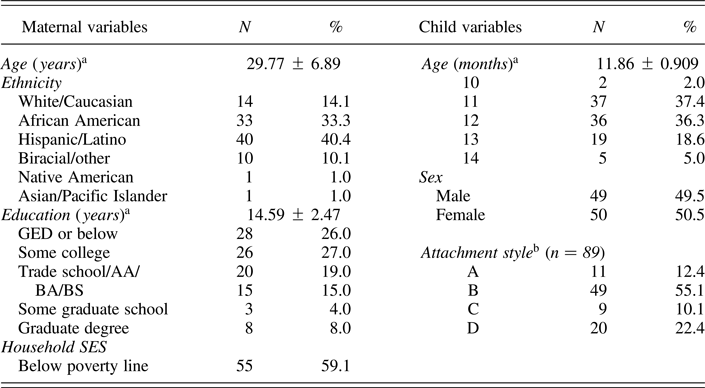
Data was collected as part of a larger cross-sectional study exploring the effects of IPV on relational, behavioral, and physiological infant outcomes. The sample consisted of mother–infant dyads recruited from urban community agencies in Chicago, Illinois. Ethical approval was obtained from the university's Research Subjects Review Board, and all participants provided written consent. Dyads were eligible to participate if mothers were 18 years or older, had no history of schizophrenia, had custody of their infants, and had a healthy 11- to 14-month-old infant (i.e., no significant birth defects, serious medical conditions, or developmental delays). Participants for this study were 99 mother–infant dyads (51% girls). The sample was ethnically diverse, and many participants had low socioeconomic status: 20.2% of women reported their highest educational attainment was high school, and 59.1% of the families reported income below the poverty line. The demographic characteristics of the sample are provided in Table 1.
Demographic characteristics of the sample (N = 99)
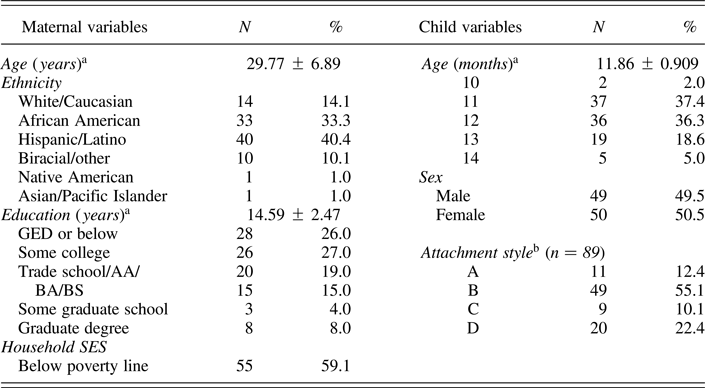
Note: SES, socioeconomic status. aMean±SD. bValid percent presented for attachment style (n = 89).
Procedure
Mothers completed a brief phone screening to determine eligibility. If eligible, mothers and their infants attended one in-person laboratory session where a battery of psychosocial self-report measures and dyadic tasks were administered. Mothers were instructed to refrain from feeding their infants during the 45 min prior to the laboratory visit and asked to reschedule the assessment if their infant was sick. Following consent, but prior to the observational tasks, one infant saliva sample was collected to ascertain genetic characteristics. About 20 min after the beginning of the lab visit, after consent and a free-play task, another infant saliva sample was collected to assess baseline cortisol levels. The mother–infant dyad then completed a separation and reunion task, the Strange Situation Task (SST; described in detail below). After the SST, mothers completed questionnaire measures while their infants played with a research assistant in the same room. Four saliva samples were collected after the SST to capture cortisol reactivity at 10, 20, 30, and 40 min following the end of the task. Women received financial compensation, and infants received a small toy at the end of the lab visit.
Measures
Stress challenge
Mother–infant dyads completed the SST (Ainsworth & Bell, Reference Ainsworth and Bell1970). This task included a series of 3-min episodes during which the mother interacted with her infant, a “friendly stranger” joined them and attempted to play with the infant, the mother exited the room leaving the infant with a stranger and then alone, and the mother–infant dyad was reunited after each of the two separations. The SST is commonly used to elicit the infant stress response (Gunnar, Talge, & Herrera, Reference Gunnar, Talge and Herrera2009). It has been shown to consistently induce mobilization of the cortisol response in infants between 9 and 18 months old (Goldberg et al., Reference Goldberg, Levitan, Leung, Masellis, Basile, Nemeroff and Atkinson2003; Gunnar, Larson, Hertsgaard, Harris, & Brodersen, Reference Gunnar, Larson, Hertsgaard, Harris and Brodersen1992; Van Bakel & Riksen-Walraven, Reference Van Bakel and Riksen-Walraven2004).
Cortisol collection
Saliva samples for cortisol assaying were collected using the SalivaBio's Children's Swab (Salimetrics, LLC), by placing the swab in the infant's mouth for approximately 60 s. All samples were stored at –20 °C until analyzed. Samples were thawed and centrifuged at 300 rpm for 15 min and then assayed in duplicate using a commercially available assay with detection range .003 to 3.00 ug/dl and low cross-hormone reactivity (Salimetrics, LLC). Samples were assayed in duplicate using enzyme linked immunosorbent assays at DePaul University (31.73%), the Salimetrics Saliva laboratory (58.44%), and at both laboratories (9.83%) to determine consistency between labs. To ensure equivalence between laboratories, Salimetrics provided a conversion to be applied to all samples analyzed at DePaul. After conversion, there was no significant difference in mean cortisol levels between labs.
Following Schuetze et al. (Reference Schuetze, Lopez, Granger and Eiden2008), infants who displayed a cortisol increase ≥20% from baseline at 10, 20, 30, or 40 min after the end of the SST were classified as “responders.” Infants who did not increase by at least 20% after the SST were classified as “nonresponders.” This increase in cortisol output is twice the upper limit for acceptable coefficients of variation of 10% and represents an increase unlikely due to chance. Using similar approaches, cortisol responder status reliably discriminates individual and environmental characteristics, including higher prenatal tobacco exposure (Schuetze et al., Reference Schuetze, Lopez, Granger and Eiden2008), more negative emotional reactivity during frightening and frustrating tasks among infants (Fortunato, Reference Fortunato2009), and more avoidance during social interactions among toddlers (Corbett, Schupp, Simon, Ryan, & Mendoza, Reference Corbett, Schupp, Simon, Ryan and Mendoza2010), and is associated with more prenatal IPV exposure and worse maternal caregiving during infancy, as compared to nonresponder status (Levendosky et al., Reference Levendosky, Bogat, Lonstein, Martinez-Torteya, Muzik, Granger and von Eye2016; Martinez-Torteya et al., Reference Martinez-Torteya, Dayton, Beeghly, Seng, McGinnis, Broderick and Muzik2014).
Salivary cortisol confounds
Cortisol concentrations can be impacted by issues surrounding sample collection, including time of day and variation in routine (e.g., infant sleep/wake cycles, feeding patterns, mood, and physical health problems; for review, see Egliston et al., Reference Egliston, McMahon and Austin2007). Thus, women rated their infants’ health and mood using a 5-point scale (ranging from much worse than usual to much better than usual) and reported the time the infants last ate and slept. In addition, interviewers recorded the time of each saliva collection.
Genotyping
Saliva samples were collected using two microsponges and preserved using Oragene DNA tubes (OG-500) in a –20 °C freezer. Samples were shipped to a commercial service (GenoFIND™) for analyses. Saliva samples were extracted using a prepIT•L2P validated protocol. DNA sample quantity and quality was assessed using PicoGreen analysis to determine DNA concentration, OD A260/280 ratios using a spectrophotometer to assess sample purity, and agarose gel electrophoresis to determine DNA integrity. Genotyping was completed using Taqman™ chemistry with polymerase chain reaction amplification and a pair of fluorescent light detectors that target the SNP.
Psychosocial assessment
IPV
IPV was assessed using the Conflict Tactics Scale 2 (CTS2; Straus, Hamby, Boney-McCoy, & Sugarman, Reference Straus, Hamby, Boney-McCoy and Sugarman1996). The CTS2 is a 39-item measure designed to assess strategies utilized by a couple during conflict resolution in the past year. Items capture the frequency of psychological (“My partner insulted or swore at me”), physical (“My partner used a knife or gun on me”), and sexual violence (“My partner used force to make me have sex”) experienced from a romantic partner. Scores range from 0 (never has happened) to 6 (more than 20 times). The scale has been shown to be valid in numerous studies assessing high-risk samples including a sample of incarcerated women and women with postpartum depression (Jones, Ji, Beck, & Beck, Reference Jones, Ji, Beck and Beck2002; Newton, Connelly, & Landsverk, Reference Newton, Connelly and Landsverk2001). Women completed this questionnaire twice, once in regard to their pregnancy, and once in regard to the postpartum year. The current study modified the parameters of time in the directions of CTS2 from “in the past year” to “during your pregnancy” and “since your baby's birth.” The adaptation of instruction, specifically in regard to the timeframe of the experience, has been done successfully in numerous studies to reflect the needs of the research question (Martin, Beaumont, & Kupper, Reference Martin, Beaumont and Kupper2003; Martin et al., Reference Martin, Harris-Britt, Li, Moracco, Kupper and Campbell2004). The CTS-2 has demonstrated good internal consistency in other studies (Straus, Hamby, & Warren, Reference Straus, Hamby and Warren2003).
The psychological IPV (8 items) and physical IPV (12 items) subscales were obtained by combining frequency scores for both minor and severe instances of IPV. For psychological IPV during pregnancy, α = 0.81. For physical IPV during pregnancy, α = 0.95. Total IPV scores were obtained by combining the psychological, physical, and sexual subscale scores for both minor and severe instances of IPV. In the current sample, total IPV during pregnancy α = 0.90.
Infant temperament
Infant temperament was derived from maternal self-report as assessed through the Infant Behavior Questionnaire (Gartstein & Rothbart, Reference Gartstein and Rothbart2003). The Infant Behavior Questionnaire is a 91-item measure used to assess three broad factors: negative emotionality, positive affectivity/surgency, and orienting/regulatory capacity. This has been shown to have good test–retest reliability on infants between 3 to 12 months old (Putnam, Helbig, Gartstein, Rothbart, & Leerkes, Reference Putnam, Helbig, Gartstein, Rothbart and Leerkes2014). Mean scores that range from 0 to 1 were obtained for each subscale. The 26-item orienting/regulatory capacity factor, used for current analyses, is composed of 4 subscales: low intensity pleasure (i.e., amount of pleasure or enjoyment related to situations involving low stimulus intensity, rate, complexity, novelty, and incongruity), cuddliness (i.e., expression of enjoyment and molding of the body to being held by a caregiver), duration of orienting (i.e., attention to and/or interaction with a single object for extended periods of time), and soothability (i.e., reduction of fussing, crying, or distress when soothing techniques are used by the caregiver; Gartstein & Rothbart, Reference Gartstein and Rothbart2003). These dimensions have been linked to later distress proneness and behavior problems (Stevenson, Thompson, & Sonuga-Barke, Reference Stevenson, Thompson and Sonuga-Burke1996) and also reflect effortful control and attention regulation capacities (Posner & Rothbart, Reference Posner and Rothbart1998). Internal consistency was acceptable with our sample, α = 0.76.
Covariates
Postpartum IPV
Occurrences of postpartum IPV were obtained via the CTS-2, as described above. In the current sample, postpartum psychological IPV α = 0.72, postpartum physical IPV α = 0.79, and total postpartum IPV α = 0.77.
Lifetime traumatic experiences
Lifetime trauma experience was assessed using the Life Stressor Checklist—Revised (Wolfe & Kimerling, Reference Wolfe and Kimerling1997). The Life Stressor Checklist—Revised is a 30-item measure that includes a range of stressors, including experiencing or witnessing serious accidents, illnesses, sudden death, and physical and sexual assault, among others. For each event, women indicated (a) whether the event occurred; (b) whether at the time of exposure the event triggered intense emotions; (c) whether the event occurred once or multiple times; and (d) the ages at which the event first and last occurred. A total lifetime trauma score was used by summing dichotomous scores of reported event occurrence. For the current sample, α = 0.79.
Sex
Infant sex was obtained via a maternal report.
Attachment classification
The SST is the gold standard for attachment research and it has been used in over 200 research studies (Holmes & Farnfield, Reference Holmes, Farnfield, Holmes and Farnfield2014). Videotapes were coded by two licensed clinical psychologist certified on attachment classification using the systems developed by Ainsworth et al. (Reference Ainsworth, Blehar, Waters and Wall1978) and Main and Solomon (Reference Main, Solomon, Greenberg, Cucchetti and Cummings1990). Infant behaviors were coded on four 7-point scales including proximity seeking, contact maintaining, avoidance, and resistance according as well as one 9-point scale for disorganization. Based on patterns of infant behavior toward the caregiver during separations and reunions, infants are classified into one of the following attachment categories: secure (B), insecure-avoidant (A), insecure-resistant (C), disorganized-disoriented (D), or unclassifiable. Intercoder reliability was calculated using 26 videotapes and was good (85% agreement; κ = .73, p = .000).
Attachment style was included as a covariate in analyses because multiple studies report associations between attachment classification and cortisol response to the SST. However, findings are mixed. Two small studies (n = 38 to 49) reported secure and insecure infants and toddlers had similar cortisol levels after the SST (Gunnar, Mangelsdorf, Larson, & Hertsgaard, Reference Gunnar, Mangelsdorf, Larson and Hertsgaard1989; Hertsgaard, Gunnar, Erickson, & Nachmias, Reference Hertsgaard, Gunnar, Erickson and Nachmias1995), while one small study (n = 32) found higher cortisol 30 min post-SST among insecure children (Spangler & Grossman, Reference Spangler and Grossmann1993). In addition, two large study (n = 106 to 360) found insecure resistant children had higher levels of cortisol post-SST, as well as steeper increases from baseline to post-SST levels, as compared to secure and avoidant children (Lujik, Saidjan, et al., 2010; Spangler & Schieche, Reference Spangler and Schieche1998). Furthermore, three small studies (n = 32 to 38) report children classified as D have higher post-SST levels than nondisorganized or securely attached children 15–30 min post-SST (Bernard & Dozier, Reference Bernard and Dozier2010; Hertsgaard et al., Reference Hertsgaard, Gunnar, Erickson and Nachmias1995; Spangler & Grossmann, Reference Spangler and Grossmann1993), but the two large studies did not find differences between disorganized and non-disorganized children (Lujik, Saridjan, et al., 2010; Spangler & Schieche, Reference Spangler and Schieche1998). Despite these mixed findings, attachment style likely influences children's emotional experience during separations from their primary caregiver and/or the sensitivity of the cortisol response to stressors. In our study, a dichotomous attachment style variable (secure vs. nonsecure) was used to account for the potential effect of attachment quality on children's salivary cortisol levels.
Results
Missing data
All women completed the questionnaires, and all infants provided saliva for genetic determination. Some cortisol scores were missing due to interviewer error (n = 3), due to infant being too fussy to participate in sample collection (n = 13) or not providing the minimal required saliva volume for assaying (n = 18), or due to values being higher than the detection range (>3; n = 16). Scores were available for 92 infants for the baseline score, 87 for the 10 min poststress, 91 for the 20 min poststress, 90 for the 30 min poststress, and 85 for the 40 min poststress sample. Infants with valid cortisol scores for both baseline and at least one of the post-SST samples were included in the statistical analyses where cortisol reactivity was the outcome (n = 92). Eighty-nine infants had attachment classification scores: 7 videos were missing due to technology problems (no or low-quality video) and 3 videos were uncodable due to administration errors.
Descriptive statistics and correlations
Skewness and kurtosis were evaluated and prenatal IPV (total, physical, and psychological scores) and total postnatal IPV were log transformed to address normality concerns. Approximately 72% (n = 73) of caregivers reported experiencing IPV during pregnancy, about 68% (n = 69) reported experiencing pregnancy psychological IPV, and about 26% (n = 26) reported experiencing physical IPV during pregnancy. For BDNF genotyping, 1% of children had two Met alleles, 25% had the Val/Met genotype, and 74% were homozygous for Val alleles. Raw cortisol values were as follows: baseline (M = 0.37, SD = 0.36), 10 min post-SST (M = 0.39, SD = 0.38), 20 min post-SST (M = 0.37, SD = 0.31), 30 min post-SST (M = 0.37, SD = 0.31), and 40 min post-SST (M = 0.37, SD = 0.32). Cortisol responder status was available for 92 infants: 55% were responders and 45% did not show significant (i.e., 20% or more) elevations in cortisol levels after the SST. Attachment classification scores were available for 90 infants: 55% were classified as secure, 12% insecure-avoidant, 10% insecure-resistant, and 22% disorganized.
Pearson correlations (for continuous variables), Kendall's τ (for one categorical and one continuous variable), and Spearman's ρ (for two categorical variables) were used to assess associations between potential covariates and infant outcomes: temperamental regulation and cortisol responder (yes/no). Variables associated with saliva collection (time of day, infant mood, health, time from eating, and time from sleeping) were not associated with responder status (r = –.09 to .14). Per recommendations (Liening, Stanton, Saini, & Schultheiss, Reference Liening, Stanton, Saini and Schultheiss2010), time of day of first saliva collection was still included as a covariate in the cortisol analyses, but the other potential confounds measured were not. Pregnancy and perinatal characteristics (birthweight, and smoking and drinking during pregnancy) were not associated with infant outcomes (r = –.18 to .15), and these variables were not included as covariates in additional analyses. Maternal lifetime trauma was negatively associated with infant orienting/regulation (r = –.21, p < .05). Sex and postnatal IPV exposure were not significantly associated with infant outcomes, but were included as covariates in hypothesis testing due to previous reports that sex impacts infant cortisol reactivity and temperament (Else-Quest et al., Reference Else-Quest, Hyde, Goldsmith and Van Hulle2006; Martinez-Torteya, et al., Reference Martinez-Torteya, Bogat, Levendosky and von Eye2016) and to tease apart the effects of IPV that are specific to in utero exposure versus exposure in the first year of life.
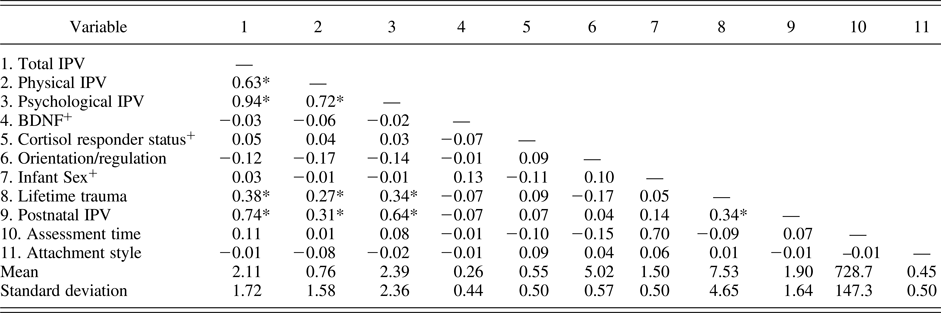
Table 2 includes means, standard deviations, and correlations between variables included in analyses. As expected, physical and psychological IPV during pregnancy were strongly associated. Prenatal IPV was significantly associated with other maternal trauma (postnatal IPV and lifetime trauma). BDNF status (Val/Val vs. Met) was not associated with IPV exposure during pregnancy or other maternal trauma.
Bivariate correlations, means, and standard deviations of all study variables
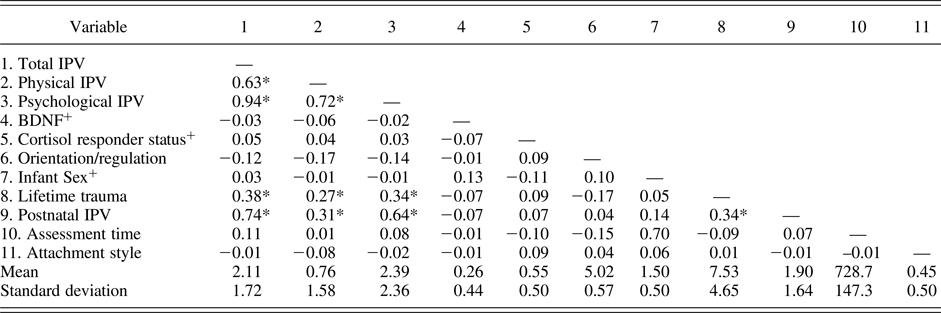
Note: IPV, intimate partner violence. BDNF, brain-derived neurotrophic factor. For BDNF, Val/Val = 0. For cortisol responder status, nonresponder = 0. For sex, girl = 0. Assessment time is minutes from midnight. For attachment style, secure = 0, calculated with valid attachment scores (n = 89). For categorical/continuous variable correlations, Kendall's τ is reported above. For categorical/categorical correlations, Spearman's ρ is reported. *p < .05. +categorical variable.
Hypothesis testing
The effect of prenatal IPV on infant temperamental regulation was evaluated using three independent regression models (one for each index of IPV: total, physical, and psychological) that included sex, lifetime maternal trauma, and postnatal IPV as covariates. Bootstrapping was used to obtain more accurate standard errors that are not dependent on the assumption of a normal distribution and to reduce chances of Type 1 errors (Fox, Reference Fox2002; Parra-Frutos, Reference Parra-Frutos2014). To account for multiple tests, the Bonferroni correction was used and the significance level was p ≤ 5/3 < .017. Pregnancy total (Std B = –0.26, bootstrapped p = .16) and physical IPV (Std B = –0.15, bootstrapped p = .30) were not significant predictors of infant orienting/regulation, while the effects of prenatal psychological IPV were significant at a trend level (Std B = –0.24, bootstrapped p = .07).
Similar logistic regression models were used to predict cortisol responder status using bootstrapping and Bonferroni correction. Pregnancy total, odds ratio (OR) = 0.93, confidence interval (CI) [0.64, 1.33], bootstrapped p = .68; physical, OR = 0.95, CI [0.72, 1.26], bootstrapped p = .77; and psychological IPV, OR = 0.96, CI [0.76, 1.22], bootstrapped p = .77, were not significant predictors of membership in the responder group.
To determine whether a significant interaction between BDNF and pregnancy IPV predicted infant regulation and cortisol responder status, the SPSS PROCESS macro created by Hayes (Reference Hayes2013) was used. PROCESS provides the coefficient for the product of the independent variable and the moderator and its test of significance, and derives regions of significance for the effect of the interaction using the Johnson–Neyman technique (Hayes, Reference Hayes2013).
Separate moderation analyses were conducted with BDNF as the candidate moderator with total, physical, and psychological IPV during pregnancy as independent predictors of infant temperamental regulation and infant cortisol response. Sex, postnatal IPV exposure, and maternal lifetime trauma were included as covariates in all models. In analyses including cortisol, the time of day for saliva collection was used as a covariate to account for differences in diurnal cortisol output. Models were run with (n = 89) and without (n = 99) attachment security as a covariate.
Physical IPV × BDNF on infant regulation
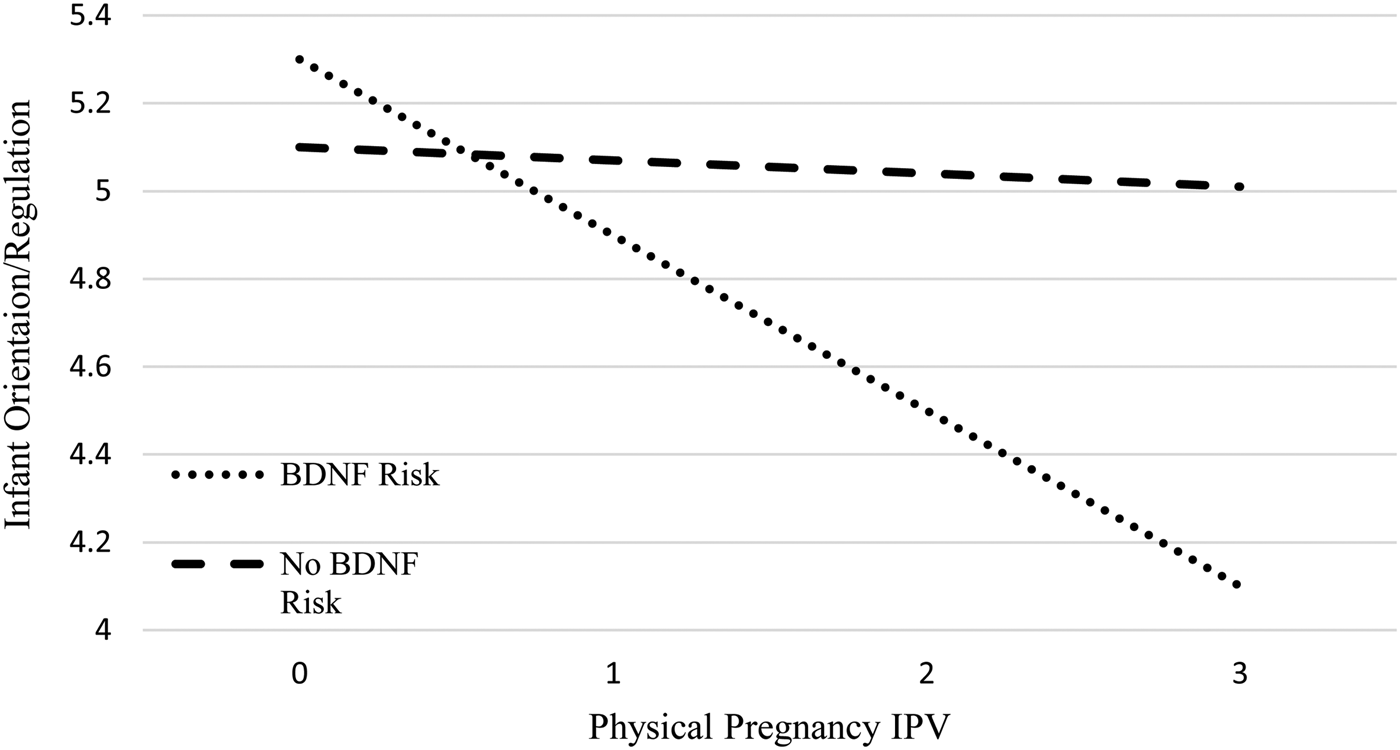
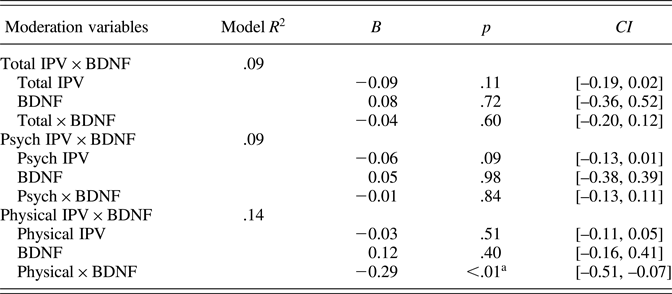
Moderation analyses revealed a significant interaction for physical IPV during pregnancy and BDNF on infant regulation (b = –0.29, p = .009, CI [–0.51, –0.07]). For infant carriers of the Met allele, more pregnancy physical IPV predicted less orienting/regulation, but for infants with the Val/Val genotype, there was no association between IPV and temperament. Figure 1 illustrates the interaction effect. Table 3 has the details for the three models testing BDNF × Pregnancy IPV interactions as predictors of infant orienting/regulation. Results were unchanged when attachment security was used as a covariate; thus, statistics are reported with the simpler model, using the larger sample size.
Physical pregnancy interpersonal violence (IPV) predicts lower orientation/regulation among those with the brain-derived neurotrophic factor (BDNF) gene Met allele.

Interaction of pregnancy IPV by BDNF predict infant orienting/regulation
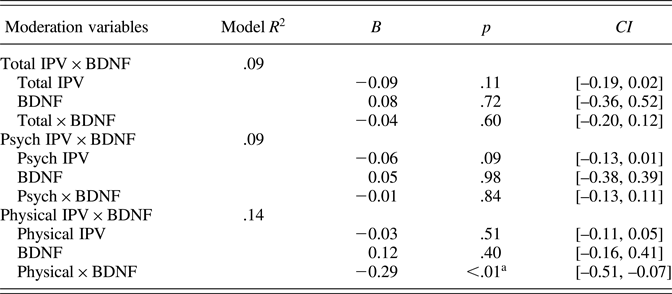
Note: IPV, intimate partner violence. BDNF, brain-derived neurotrophic factor. Covariates are infant sex, attachment style, maternal lifetime trauma exposure, and maternal exposure to IPV in the postpartum year. aSignificant main effect or interaction.
Total IPV × BDNF on cortisol responder status
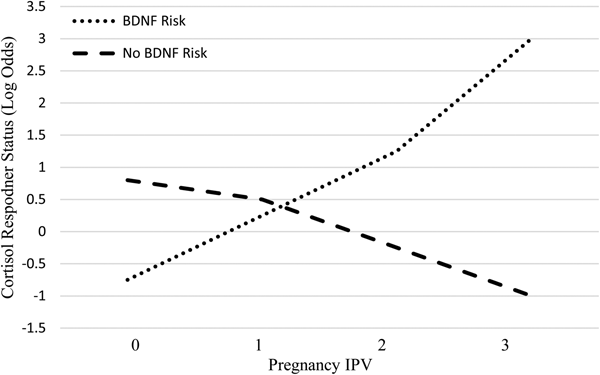
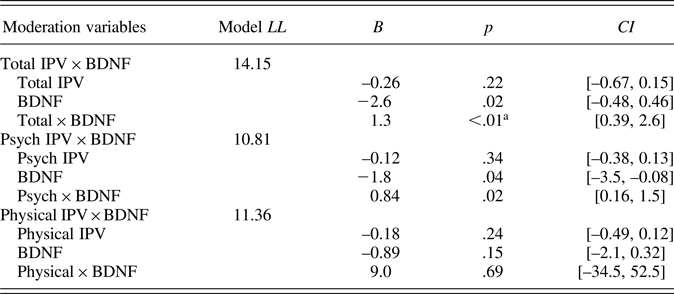
Analyses revealed a significant interaction for total IPV during pregnancy and BDNF on infant cortisol mobilization (b = 1.33, p = .005, CI [0.04, 2.26]). For infants with the Met allele, total IPV predicted an increased likelihood to be part of the cortisol responder group, while this relationship was not significant among infants with the Val/Val genotype. See Figure 2. Table 4 has the details for the three models testing BDNF × Pregnancy IPV interactions as predictors of infant cortisol responder status. Results were unchanged when attachment security was used as a covariate; thus, statistics are reported with the simpler model, using the larger sample size.
Total pregnancy interpersonal violence (IPV) increases the odds for cortisol responder status among infants with the brain-derived neurotrophic factor (BDNF) Met allele.

Interaction of total pregnancy IPV by BDNF predict cortisol responder status
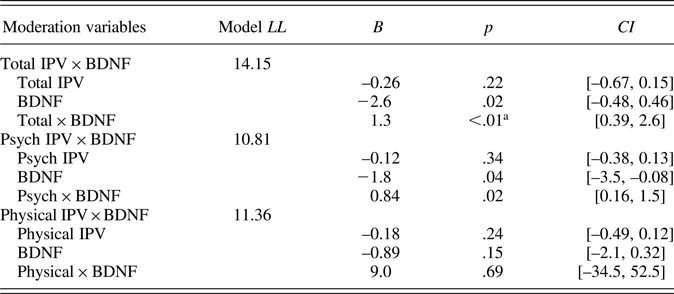
Note: IPV, intimate partner violence. BDNF, brain-derived neurotrophic factor. Covariates include time of day for cortisol collection, infant sex, attachment style, maternal lifetime trauma exposure, and maternal exposure to IPV in the postpartum year. aSignificant main effect or interaction.
Discussion
Findings from the current study demonstrate the BDNF Val66Met gene modulates infant susceptibility to exposure to IPV in utero. Specifically, after controlling for postnatal IPV, prenatal IPV was associated with infant biobehavioral regulation around 12 months only among infants carrying the Met allele, with more IPV exposure predicting less temperamental regulation and more cortisol mobilization in response to a laboratory stressor. Findings are consistent with previously longitudinal studies that document Gene × Prenatal Stress interactions (O'Donnell et al., Reference O'Donnell, Glover, Holbrook and O'Connor2014; Pluess & Belsky, Reference Pluess and Belsky2011; Thompson et al., Reference Thompson, Sonuga-Barke, Morgan, Cornforth, Turic, Ferguson and Waldie2012; Zohsel et al., Reference Zohsel, Buchmann, Blomeyer, Hohm, Schmidt, Esser and Laucht2014), and extend previous research by evaluating maternal victimization as opposed to general distress, focus on the BDNF gene, and integrate infant physiological along with behavioral regulation. Our results highlight the utility of models that address the interplay between contextual and biological characteristics to better understand the effects of prenatal stress on offspring early regulation, a critical influence for later resilience or maladaptation.
Pregnancy IPV was not a significant predictor of infant orienting/regulation and infant cortisol response when we evaluated relationships for all infants in our sample. A link between exposure to IPV in utero and temperamental difficulty has been reported by two longitudinal studies (Burke et al., Reference Burke, Lee and O'Campo2008; Quinlivan & Evans, Reference Quinlivan and Evans2005). It may be that results are inconsistent due to measurement differences. First, we focused on a specific aspect of temperament (i.e., regulation) while Burke et al. (Reference Burke, Lee and O'Campo2008) and Quinlivan and Evans (Reference Quinlivan and Evans2005) used instruments that integrated surgency and negative affect into their classification of difficult infants. Second, our measurement of IPV included the frequency of minor and severe instances of physical, psychological, and sexual violence, while previous studies grouped women as exposed versus not exposed based on severe instances of violence. In addition, our findings are inconsistent with a previous study that used similar methods to document that pregnancy IPV predicted significant mobilization of the infant cortisol response (Levendosky et al., Reference Levendosky, Bogat, Lonstein, Martinez-Torteya, Muzik, Granger and von Eye2016), but this may be explained by the use of different stressful tasks.
However, none of these studies accounted for individual differences in infants’ susceptibility to prenatal IPV, a theoretically central influence on infant regulatory outcomes (O'Donnell et al., Reference O'Donnell, Glover, Holbrook and O'Connor2014). Among infants with genetic susceptibility, we found total prenatal IPV increased the likelihood of being in the cortisol responder group, while physical IPV predicted lower levels of temperamental regulation. Because physical and psychological IPV were highly correlated, and tend to co-occur in violent relationships (e.g., Jun, Rich-Edwards, Boynton-Jarrett, & Wright, Reference Jun, Rich-Edwards, Boynton-Jarrett and Wright2008), it is difficult to ascertain the independent effects of each. However, Burke et al. (Reference Burke, Lee and O'Campo2008) previously reported that physical and psychological abuse during pregnancy were differentially associated with infant difficult temperament, suggesting potential differential effects that may also extend to Gene × Environment interactions. The deleterious effects of pregnancy IPV among genetically susceptible infants are consistent with a large body of research that documents “programming effects” of prenatal stress on offspring temperament and neuroendocrine outcomes, and has teased apart the contribution of pregnancy psychosocial stressors from other prenatal teratogens and postnatal stress (Bergman, Sarkar, O'Connor, Modi & Glover, Reference Bergman, Sarkar, O'Connor, Modi and Glover2007; Davis et al., Reference Davis, Glynn, Schetter, Hobel, Chicz-Demet and Sandman2007; Huizink et al., Reference Huizink, de Medina, Mulder, Visser and Buitelaar2002; Möhler, Parzer, Brunner, Wiebel, & Resch, Reference Möhler, Parzer, Brunner, Wiebel and Resch2006; Tollenar et al., Reference Tollenaar, Beijers, Jansen, Riksen-Walraven and de Weerth2011).
Our results, together with previous research, suggest that genetic variability may help explain individual differences in susceptibility to prenatal stress during infancy and childhood. For example, Pluess and Belsky (Reference Pluess and Belsky2011) reported the serotonin transporter promoter gene (5-HTTLPR) moderated the effect of prenatal anxiety assessed during the second trimester on maternal reports of infant negative emotionality at 6 months postpartum, using a large epidemiological Dutch sample. Furthermore, Thompson et al. (Reference Thompson, Sonuga-Barke, Morgan, Cornforth, Turic, Ferguson and Waldie2012) found the catechol-O-methyltransferase (COMT) gene moderated the effects of maternal ratings of perceived stress during pregnancy on later child emotional/behavioral problems (ages 7 and 11). Similarly, Zohsel et al. (Reference Zohsel, Buchmann, Blomeyer, Hohm, Schmidt, Esser and Laucht2014) and Grizenko et al. (Reference Grizenko, Fortier, Zadorozny, Thakur, Schmitz, Duval and Joober2012) found prenatal stress predicted child total problems, externalizing symptoms, and a diagnosis of oppositional defiant disorder/conduct disorder only among carriers of the 7-repeat allele of a 48 base-pair variable number tandem repeat of the dopamine receptor 4 (DRD4) gene. Our findings align with previous results, highlighting the role of multiple genetic polymorphisms implicated in stress vulnerability.
Our findings add to literature that documents the BDNF gene contributes to vulnerability or susceptibility to environmental inputs, including pregnancy IPV. Carriers of the Met allele were more likely to have low scores on mother-rated orienting/regulation capacities when they also were exposed to IPV in utero, but children with the Val/Val genotype showed high regulation scores regardless of pregnancy IPV exposure. Multiple studies have reported that the BDNF Met allele is associated with increased sensitivity to the negative effects of contextual stressors, including parental discord, caregiving problems, parental psychopathology, and stressful or traumatic events, increasing risk for a wide range of psychosocial problems, such as negative emotionality, attention-deficit/hyperactivity disorder, depression, and posttraumatic stress disorder (Gunnar et al., Reference Gunnar, Wenner, Thomas, Glatt, Mckenna and Clark2012; Hayden et al., Reference Hayden, Klein, Dougherty, Olino, Dyson, Durbin and Singh2010; Hosang et al., Reference Hosang, Shiles, Tansey, McGuffin and Uher2014; La Greca et al., Reference La Greca, Lai, Joormann, Auslander and Short2013). Together, this body of research suggests that the BDNF allele is a nonspecific risk factor for regulation, behavior, and emotional problems, consistent with the impact of BDNF expression on neuronal pathways in early development (Park & Poo, Reference Park and Poo2013). Neurotrophins such as BDNF have a substantial impact on neuronal development and function, including cell proliferation and differentiation, axon and dendrite growth, synaptogenesis, and synaptic function and plasticity (for a review, see Park & Poo, Reference Park and Poo2013), Specifically, decreased BDNF expression is associated with amygdala and hippocampal neurogenesis (Boersma et al., Reference Boersma, Lee, Cordner, Ewald, Purcell, Moghadam and Tamashiro2014), brain regions that are essential for attentional (Yeom, Park, Choi, & Bhang, Reference Yeom, Park, Choi and Bhang2016) and emotion regulation capacities (Davidson, Putnam, & Larson, Reference Davidson, Putnam and Larson2000).
The BDNF gene also moderated the impact of pregnancy IPV on infant HPA axis activity. Total prenatal IPV was associated with increased likelihood of mobilization of the cortisol response among infants who carried at least one copy of the Met allele, but not among infants with the Val/Val polymorphism. Although no studies of Gene × Prenatal Stress interactions have evaluated effects on infant cortisol reactivity, Dougherty et al. (Reference Dougherty, Klein, Congdon, Canli and Hayden2010) found young children with the Met BDNF genotype and two short alleles of the 5-HTTLPR had greater cortisol reactivity to high stress situations and less reactivity to low stress situations. The mechanisms that mediate this effect are still unclear, but animal studies suggest that increased BDNF levels in the hypothalamus modulate secretion of ACTH and glucocorticoids (Givalois et al., Reference Givalois, Naert, Rage, Ixart, Arancibia and Tapia-Arancibia2004; Naert, Ixart, Maurice, Tapia-Arancibia, & Givalois, Reference Naert, Ixart, Maurice, Tapia-Arancibia and Givalois2011).
The interaction between prenatal exposure to IPV and the BDNF gene may reflect epigenetic mechanisms. Monk, Spicer, and Champagne (Reference Monk, Spicer and Champagne2012) proposed that maternal prenatal distress can alter gene activity through DNA methylation and histone modifications. Preliminary evidence supports this notion; Braithwaite, Kundakovic, Ramchandani, Murphy, and Champagne (Reference Braithwaite, Kundakovic, Ramchandani, Murphy and Champagne2015) documented maternal prenatal depression symptoms, assessed during the second or third trimester of pregnancy, predicted mean BDNF promoter IV DNA methylation among their 2-month-old infants. In addition, animal studies document maternal prenatal stress increases offspring BDNF promoter IV DNA methylation and, consequently, decreased BDNF expression in brain structures that mediate emotion regulation (Boersma et al., Reference Boersma, Lee, Cordner, Ewald, Purcell, Moghadam and Tamashiro2014). Recently, one study demonstrated that the effects of prenatal stress on gene expression were most pronounced for infants with the BDNF Met/Met genotype: Chen et al. (Reference Chen, Pan, Tuan, Teh, MacIsaac, Mah and Buschdorf2015) found that antenatal maternal anxiety predicted methylation among infants with the Met/Met genotype, with less pronounced effects for infants with one or two Val alleles. Taken together, these studies point to methylation as a mechanism that may help explain early regulatory difficulties among infant carriers of the Met allele exposed to IPV in utero.
Limitations and future directions
Despite significant strengths, the limitations of this study should be noted. Maternal reports of IPV during pregnancy were obtained when her child was about 12 months old. Although retrospective reports may increase recall problems, previous research using a similar design suggests validity, documenting significant relationships between retrospective reports of IPV and relevant mother and child outcomes (Bogat et al., Reference Bogat, Martinez-Torteya, Levendosky, von Eye and Lonstein2016; Levendosky et al., Reference Levendosky, Bogat, Lonstein, Martinez-Torteya, Muzik, Granger and von Eye2016). Moreover, mothers’ reports of both IPV and infant temperament were used, and the association between these variables could be inflated by shared reporter variance. While a similar relationship emerged with cortisol outcomes, increasing our confidence in this finding, future studies may benefit from adding observational measures of infant regulation. In addition, while other studies, similar to ours, have found attachment security is not associated with children's cortisol response (Gunnar et al., Reference Gunnar, Mangelsdorf, Larson and Hertsgaard1989; Hertsgaard et al., Reference Hertsgaard, Gunnar, Erickson and Nachmias1995), a number of studies suggest effects that are specific to subsets of insecurely attached children (e.g., insecure-resistant; Luijk, Saridjan, et al., Reference Luijk, Saridjan, Tharner, van IJzendoorn, Bakermans-Kranenburg, Jaddoe and Tiemeier2010), or interactions between attachment quality and infant genotype (Luijk, Velders, et al., Reference Luijk, Velders, Tharner, van IJzendoorn, Bakermans-Kranenburg, Jaddoe and Tiemeier2010), temperamental characteristics (e.g., inhibited temperament; Nachmias, Gunnar, Mangelsdorf, Parritz, & Buss, Reference Nachmias, Gunnar, Mangelsdorf, Parritz and Buss1996), and early adversity, including prenatal stress (Bergman, Sarkar, Glover, & O'Connor, Reference Bergman, Sarkar, Glover and O'Connor2008). Studies with larger samples are needed to test models that account for complex interplay between genetic susceptibility, prenatal stress, early caregiving, and infant regulation with adequate statistical power. It may also be illuminative for future studies to examine cortisol recovery (e.g., return to baseline) as a marker of stress vulnerability and temperamental regulation capacity, as prior studies indicate associations between these variables (e.g., Beijers, Riksen-Walraven, & de Weerth, Reference Beijers, Riksen-Walraven and de Weerth2013). All cortisol samples in the current study were obtained with sampling methods occasionally stress inducing to the infant in a laboratory setting, which may have inhibited full cortisol recovery. Future studies may benefit from more comfortable cortisol sampling methods (e.g., use of pacifier to collect saliva) in naturalistic settings, such as the home or daycare setting, to more accurately assess normative recovery (e.g., Watamura, Kryzer, & Robertson, Reference Watamura, Kryzer and Robertson2009). Finally, our findings should be replicated, and longitudinal studies are needed to better understand the biological and environmental factors that confer susceptibility to the effects of prenatal stress over time and the developmental pathways of children who experience deficits in early biobehavioral regulation.
Conclusion
Prenatal IPV exposure significantly hinders the development of infant biobehavioral regulation, and this relationship is moderated by the BDNF gene. Our findings align with an emerging body of research documenting detrimental effects of maternal victimization during pregnancy on offspring outcomes throughout childhood as well as a handful of studies that report significant Gene × Prenatal Stress interactions. Results underscore the interplay of biological and contextual factors that shape early HPA axis activity and temperamental regulation, and inform efforts to better understand the mechanisms that translate prenatal stress into later offspring maladaptation.