Introduction
Epistaxis continues to be a significant burden to patients and the wider healthcare economy.1 It is the most common emergency presentation referred to ENT on-call services.Reference Lammens, Lemkens, Laureyns, Lemmens, Van Camp and Lemkens2 The National Epistaxis Audit 2016 aimed to enhance our understanding of current epistaxis management in the UK and identify areas for improvement in care.3 It constituted the largest prospective cohort study of epistaxis and its outcomes to date, and further demonstrated the power of trainee-led collaborative research in ENT. The Integrate network, which facilitated the multicentre project, allowed the collection of high quality data for significantly lower costs than previous similar national studies.
The National Epistaxis Audit 2016 reinforced our understanding of epistaxis as a common condition that affects patients of all ages and backgrounds. Although outcomes were generally good, one of the more surprising outcomes from the audit was the higher than expected 30-day all-cause mortality rate of 3.4 per cent. In orthopaedics, the high mortality associated with fractured neck of femur prompted the specialty to address this reality. In 2010, the National Hip Fracture Database was established with the aim of improving outcomes for affected patients.4 Is it time for epistaxis to go the same way?
We have long known that some of the sickest patients seen in ENT are those presenting with epistaxis, but this phenomenon has not been fully explored within current literature. Are our patients ultimately dying as a direct result of epistaxis or should epistaxis be seen as more of a symptom of severe morbidity related to other causes? Moreover, are there any common characteristics of patients dying after an episode of epistaxis that we can learn from? This study aimed to investigate in more detail the subgroup of patients presenting with epistaxis who subsequently died within 30 days of their referral to ENT.
Materials and methods
This study used anonymised data from the 2016 National Audit of Epistaxis Management.3 The following text summarises the audit methodology. Further information can be found in the referenced publication.
The audit period was 30 days from 7 November 2016. Patients aged 16 years and over who presented unscheduled with epistaxis to acute ENT services were eligible for inclusion. Patients given telephone advice only and those who were seen in scheduled out-patient appointments were not included.
Sites were recruited using open advertising via the Association of Otolaryngologists in Training and through a national network of ENT trainees identified by Integrate. Data were subsequently entered by 113 participating sites across the UK.
Data were entered prospectively through an online portal to the Data Safe Haven hosted by the University College London. Communication with the server was via a 256-bit Secure Hash Algorithm encryption, and the server itself was certified to ISO27001 and conformed to the National Health Service (NHS) Information Governance Toolkit standards.
Data were collected on: patient demographics, co-morbidities, antithrombotic medications, bleeding severity, Modified Early Warning System scores, source of referral and cause of death. Data were also collected on the management of epistaxis, including: nasal packing, cautery, blood transfusions, surgery and use of interventional radiology.
Thirty days following initial presentation, all patients’ case notes were reviewed to identify adverse outcomes, including re-presentation to hospital, myocardial infarction, pulmonary embolus, cerebrovascular accident, deep vein thrombosis and death. A clinical coding search was also conducted at 30 days following closure of the audit window in order to identify any missed presentations of epistaxis. Data from missed cases were entered retrospectively onto the database and highlighted as such.
The study steering committee had oversight of the data submissions in real time. This allowed timely support and feedback to the study leads during the audit and data collection window. Following the audit window, the data were scrutinised for duplications, errors and incomplete entries, and site leads were contacted to amend entries and improve data quality where possible.
Site leads were required to register the audit with their audit departments. They were also required to contact their local Caldicott Guardian to obtain approval for the data collection methodology. Formal ethical approval was not required, as per the NHS Research Ethics Committee guidance. Information posters were displayed at participating sites advising patients that data were being confidentially collected but that they could have their information excluded if desired.
Formal statistical support was provided. Haemostasis time was defined as the time from presentation to ENT services until the time at which final haemostasis was achieved prior to discharge.
For comparison of means, an unpaired t-test was used with two-tailed p-values. For comparison of categorical data, Fisher's exact test was used with two-tailed p-values.
Results
A total of 1122 patients were included in the final analysis of the National Epistaxis Audit 2016 dataset. For the purposes of this study, a further 137 patients were excluded as their records did not specifically report an outcome for mortality at 30 days following initial referral to ENT services. Of the remaining 985 patients eligible for analysis, 33 were identified as having died within the 30 days and constituted our ‘deceased’ subgroup. The 952 patients who were alive at 30 days’ follow up were used as a comparator ‘alive’ subgroup.
Overall median age was 73 years; however, age was higher in our deceased subgroup than in our alive subgroup (75 years (interquartile range = 66.84) vs 73 years (interquartile range = 62.82), respectively). The overall 30-day mortality rate for the National Epistaxis Audit 2016 cohort was 3.35 per cent (33 out of 985). The rate for males was 3.62 per cent (20 out of 552) and for females was 3.00 per cent (13 out of 433). The Office of National Statistics publish cohort life expectancies each year, based on UK life tables.5 The 2016 data give the comparative 30-day mortality rates for 73-year-old males and females of 0.080 per cent and 0.056 per cent, respectively. There was a male preponderance in both groups, representing 60.6 per cent (n = 20) of the deceased subgroup and 55.9 per cent (n = 532) of the alive subgroup.
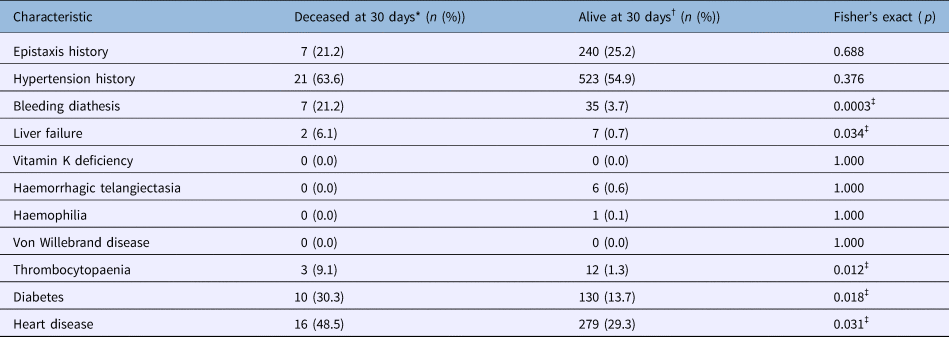
Table 1 demonstrates the prevalence of relevant co-morbidities in both the deceased and alive subgroups. Of note, 21.2 per cent (n = 7) of the deceased subgroup were identified as having a bleeding diathesis, compared with 3.7 per cent (n = 35) of the alive subgroup (p = 0.0003). Prevalence of diabetes, liver failure, thrombocytopaenia and heart disease were also significantly higher in the deceased subgroup.
Patient co-morbidities

*33 out of 33; †952 out of 952. ‡Indicates statistical significance.
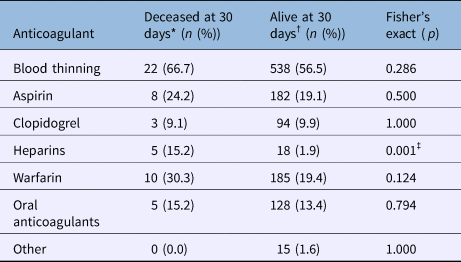
Overall levels of anticoagulation were high in both subgroups (Table 2). The rate of treatment with heparin products was notably higher in the deceased subgroup (15.2 per cent vs 1.9 per cent, p = 0.001).
Anticoagulant usage

*33 out of 33; †952 out of 952. ‡Indicates statistical significance.
The location of referral differed between the two groups. In the deceased subgroup, 45.5 per cent (n = 15) of patients were referred via the emergency department and 54.5 per cent (n = 18) were in-patients referred from a ward. Comparatively, in the alive subgroup, 89.8 per cent (n = 848) of patients presented via the emergency department, 5.8 per cent (n = 55) were referred from a ward and 4.3 per cent (n = 41) presented via their general practitioner. Framing these data by referral source showed a 30-day mortality rate for ward referrals of 24.7 per cent, compared with 1.7 per cent for emergency department patients and 0 per cent for general practitioner referrals.
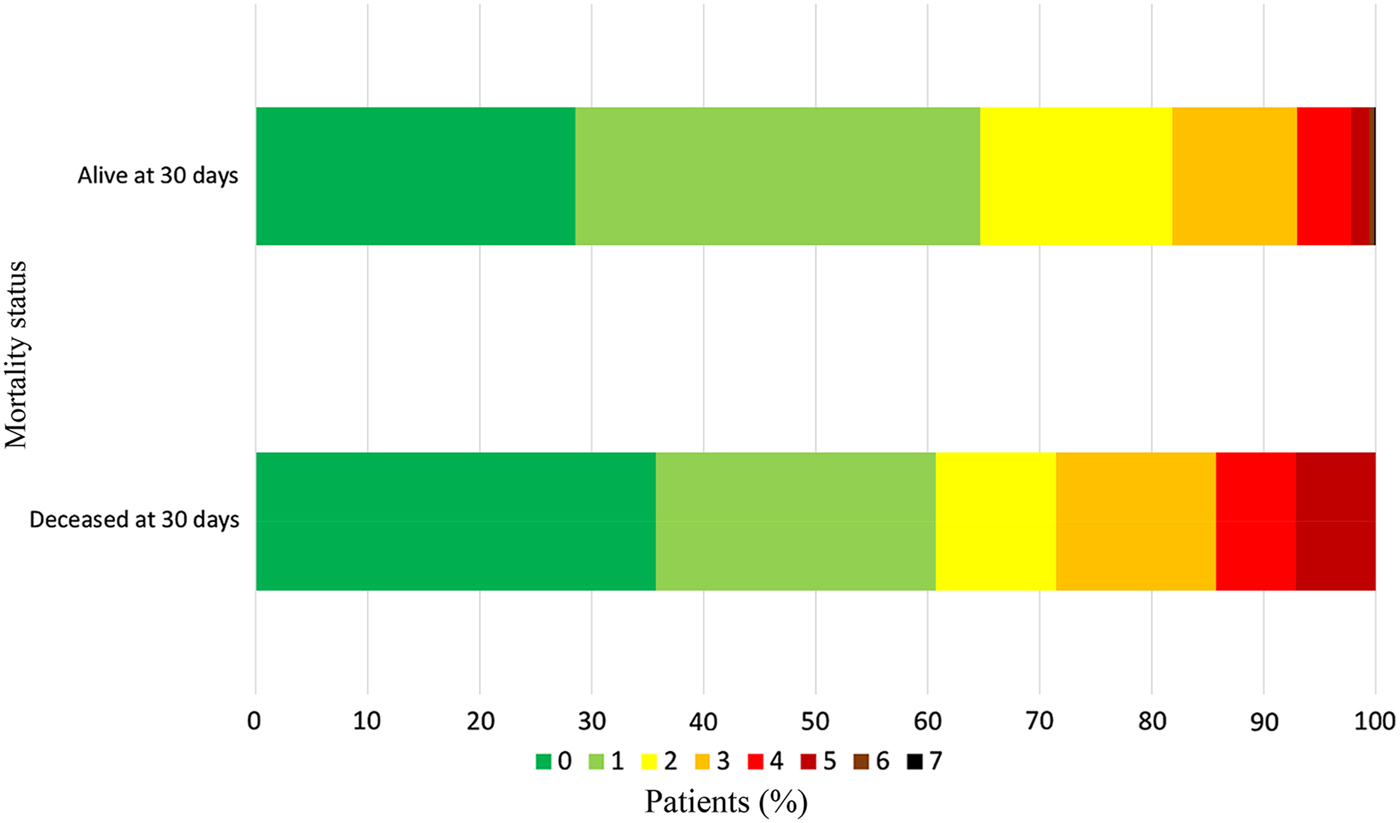
Figure 1 shows the distribution of Modified Early Warning System scores at presentation for the two subgroups. The median Modified Early Warning System score in both groups was 1. The mean Modified Early Warning System value for the deceased subgroup was not significantly different to that of the alive subgroup (1.54 vs 1.35, p = 0.45). The data were more widely distributed about the mean in the deceased subgroup, with a standard deviation of 1.62, compared with 1.28 for the alive subgroup.
Modified Early Warning System score at presentation.

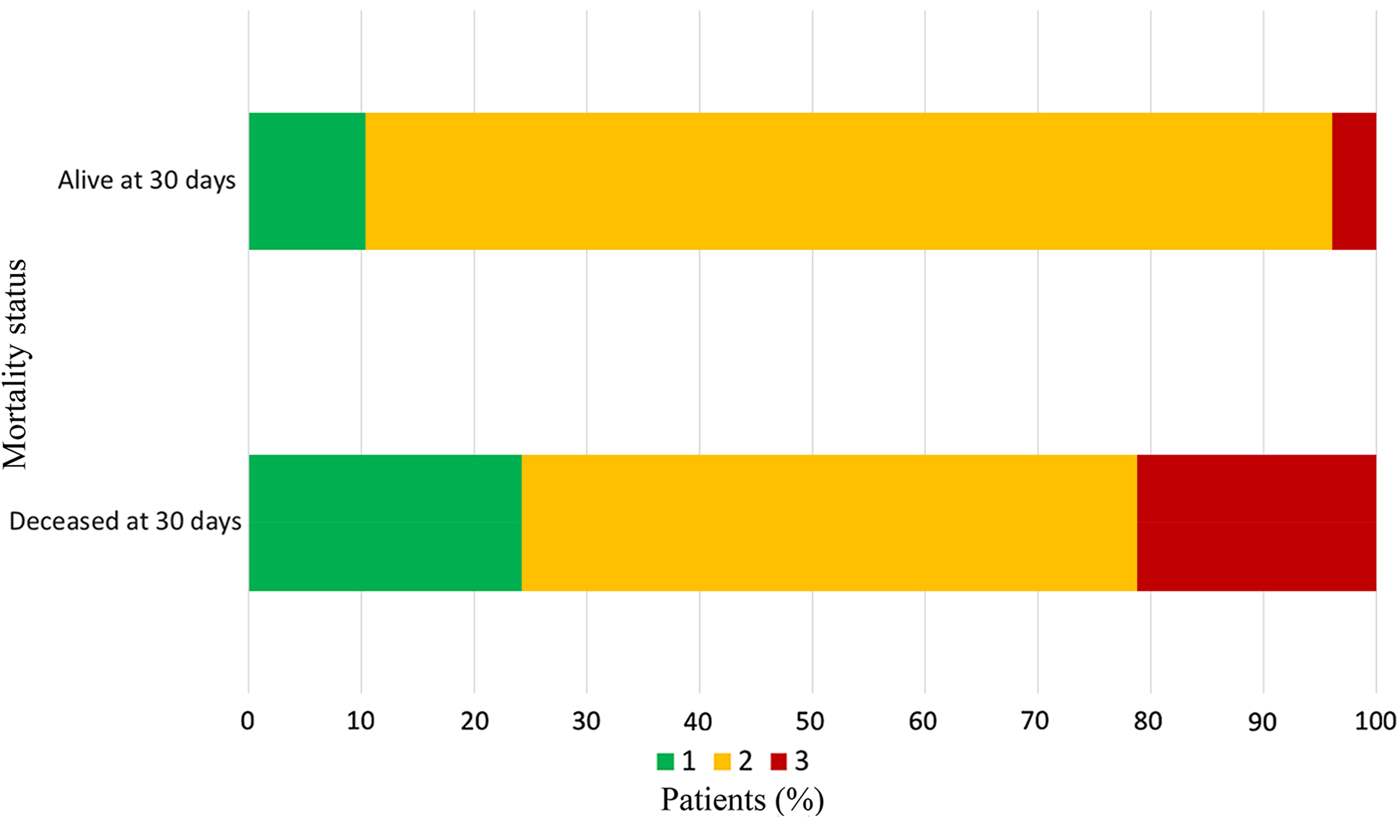
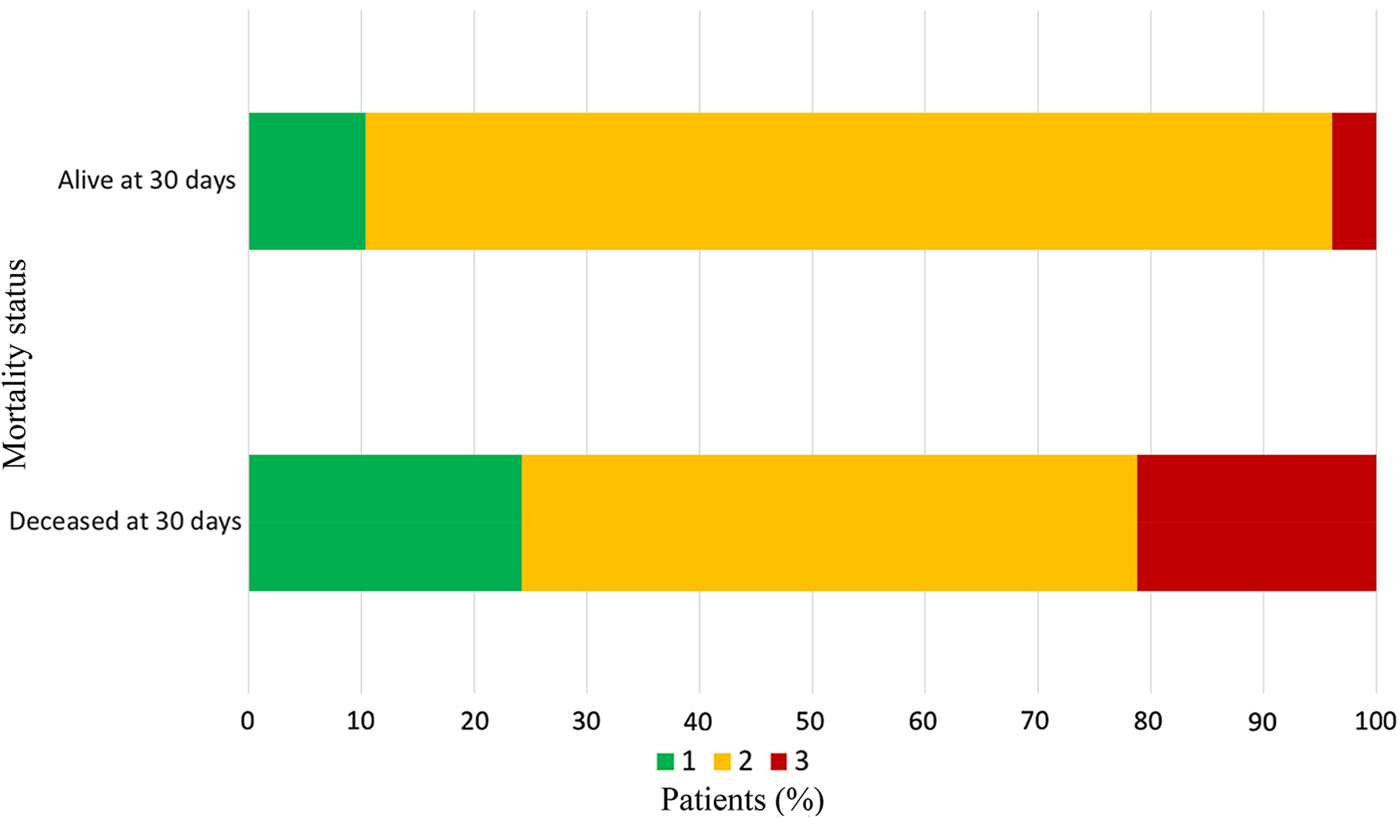
Figure 2 shows the distribution of World Health Organization (WHO) bleeding scores at presentation for the two subgroups. The median WHO score in both groups was 2. The mean WHO score for the deceased subgroup was not significantly different to that of the alive subgroup (1.97 vs 1.94, p = 0.66). The data were more widely distributed about the mean in the deceased subgroup, with a standard deviation of 0.68, compared with 0.37 for the alive subgroup.
World Health Organization bleeding score at presentation.
All patients had a recorded ‘haemostasis time’, reflecting the point at which epistaxis was deemed controlled. As such, no patient in this audit died directly from exsanguination due to epistaxis. The median haemostasis time was shorter for the deceased subgroup, at 11.3 hours (interquartile range = 0.6, 20.4), versus 18.3 hours (interquartile range = 0.6, 20.4) in the alive subgroup.
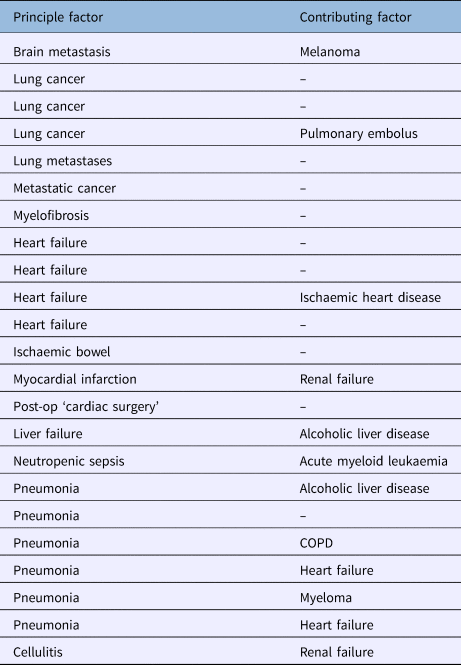
Ultimate cause of death data were available for 23 of the 33 deceased patients (Table 3). Broadly grouped, 34.8 per cent of patients (n = 8) died primarily due to an infective cause, 30.4 per cent (n = 7) from a primarily cardiovascular cause, 30.4 per cent (n = 7) directly secondary to malignancy and a single patient (4.3 per cent) from liver failure. Cardiovascular disease was the most common cause of death reported overall, contributing to the deaths of 9 of the 23 patients (39.1 per cent). No deaths were attributed to haemodynamic shock.
Cause of death

Post-op = post-operative; COPD = chronic obstructive pulmonary disease.
Discussion
The overall 30-day mortality rate for our cohort was significantly higher than for the general age-matched UK population. Interestingly, the disparity was greater for men than women (3.62 per cent and 0.080 per cent vs 3.00 per cent and 0.056 per cent). Although patients presenting acutely to a hospital would be expected to have a higher mortality rate than the general population, the observed rate was felt to be higher than expected.
High mortality in any patient group should prompt extra scrutiny. In other conditions, a high mortality rate has prompted national strategies for standardising and improving care.4 Alongside the 2016 national epistaxis audit, the British Rhinological Society has produced consensus guidelines for the care of epistaxis patients.6–Reference Williams, Biffen, Pilkington, Arrick, Williams and Smith11 It is hoped that these consensus guidelines will reduce variations in management which may be contributing towards suboptimal outcomes, and may be used as the basis for future national audits to ensure improvement in our standards of care.
Significantly more patients were referred to ENT services for epistaxis from wards in the deceased subgroup than in the alive subgroup (54.5 per cent vs 5.8 per cent). Patients referred to ENT from an in-patient setting will inevitably have a concurrent or pre-existing co-morbidity serious enough to have already required hospitalisation. These patients are therefore likely to represent an inherently more morbid group than those referred from the emergency department or the community, where epistaxis is their primary condition. Acute ENT services should, therefore, be mindful of the increased incidence of death in those from an in-patient setting. With nearly a quarter of ward referral patients dying within 30 days of referral to ENT (24.7 per cent), clinicians should make a particular effort to ensure close joint management with their referring teams.
Khan et al. (2014) examined medicolegal claims related to epistaxis in patients treated within the USA.Reference Khan, Blake, Vazquez, Setzen, Baredes and Eloy12 They identified four patients who brought legal claims related to nasal packing. In two of these cases, the patient subsequently died after aspirating their nasal packs during extubation.Reference Khan, Blake, Vazquez, Setzen, Baredes and Eloy12 Our analysis did not highlight any complications resulting directly from epistaxis mismanagement. However, it is worth noting the potential for harm from nasal packing, particularly in patients with altered consciousness.
There were no data to suggest that any of the patients in this study who died in the audit period had died as a direct result of the epistaxis itself (Table 3). Hypovolaemia, exsanguination and/or anaemia were not recorded as causes of death for any patient. It appears instead that these patients had ultimately succumbed to underlying or pre-existing illnesses. However, it is possible that the blood loss associated with epistaxis may have contributed towards an increased morbid state.
Seven cases of death associated with epistaxis were described by Woolf and Jacobs in their 1961 publication relating to admissions to four hospitals over a six-year period.Reference Woolf and Jacobs13 These case reports suggest that hypovolaemia and/or anaemia may have been more significant contributory causes of death than seen in the present study. This change may reflect the improvement in acute care delivered in emergency departments, with the adoption of standardised management algorithms related to haemorrhage, such as described in the Advanced Trauma Life Support programme.14
Around a third of patients in the deceased subgroup died primarily as a result of cardiovascular causes, a third died from infective diseases and a third from malignant causes (Table 3). Unfortunately, in the UK, the Office for National Statistics does not publish mortality data that specifies epistaxis as a specific cause. There are US data available, which reported that only 4 of the 2.4 million deaths recorded in 1999 were a result of epistaxis.15 This very low rate should not diminish the significance of the higher than expected rate we have identified in this series. It is probable that rates of epistaxis-related deaths are under-reported.Reference Woolf and Jacobs13 It is hoped the National Epistaxis Audit 2016 will go some way towards increasing the awareness of epistaxis-related deaths, so this rate can be better appreciated, and to improve care for this potentially very sick cohort of patients.
Woolf and Jacobs also questioned the role of blood transfusion in epistaxis; they advocated early transfusion, especially in the presence of pre-existing cardiovascular disease.Reference Woolf and Jacobs13 Twenty-one per cent of our deceased subgroup were WHO bleeding severity group 3 (requiring transfusion) and so received a transfusion during their treatment episode. However, none of these patients had cardiovascular disease recorded as a contributing factor to their deaths. Conversely, in Woolf and Jacobs’ case series, the majority of patients had notable drops in haemoglobin, and ultimately died from coronary thrombus, myocardial infarction, anaemia or directly from haemorrhage. Considering the high prevalence of cardiovascular disease in our cohort, and the high incidence of cardiovascular disease being recorded as an ultimate cause of death, particular attention should be paid to adequately managing conditions in epistaxis patients referred to ENT on-call services. Perhaps earlier reversal of antithrombotic agents or more aggressive transfusion policies should be considered and may help lower any associated mortality?
The WHO grading system of bleeding severity has limitations; the broad categories lack sensitivity, making the grading system susceptible to variation in transfusion policies. Inevitably, the majority of epistaxis patients who are reviewed by ENT services in the acute hospital setting will score 2 or more. To be given the highest score of 3, the patient must have received a blood transfusion. The average WHO haemorrhage scores did not vary significantly between the alive and deceased subgroups, but a greater proportion of the deceased subgroup had the highest WHO score of 3 (21.2 per cent vs 3.9 per cent). However, the proportion of patients with the lowest score of 1 was also higher in the deceased subgroup, as the distribution of scores was generally wider (24.2 per cent vs 10.4 per cent, standard deviations = 0.68 vs 0.37). Consequently, this study suggests that the WHO score is not a good predictor of epistaxis patients at higher risk of death.
• Epistaxis is a common emergency presentation to acute ENT services
• A recent large national audit showed 30-day mortality from epistaxis to be higher than expected, at 3.4 per cent
• A quarter of patients referred from a ward environment with epistaxis had died within 30 days
• Patients are not dying from exsanguination; rather, epistaxis is a general marker of poor health and a poor prognostic sign
Interestingly, the haemostasis time was shorter in the deceased subgroup than the alive subgroup. There may be a number of explanations for this seemingly paradoxical finding. Anecdotally, shorter bleeding times often result from generalised nasal irritation or excoriation, rather than a defined bleeding point or identifiable fragile vessel. This type of more insidious epistaxis may be more common after medical interventions, such as the administration of heparin products, and with certain patient factors, such as a bleeding diathesis or thrombocytopaenia. All these aspects were higher in the deceased subgroup. Additionally, the majority of the deceased subgroup patients were referred from a ward environment (54.5 per cent). Consequently, there may have already been an increased tendency for their nasal mucosa to have been aggravated by the drying effects of non-humidified oxygen, or from direct instrumentation by nasogastric tube insertion or similar.
Limitations
The proportion of patients who died during the follow-up period of the National Epistaxis Audit 2016 was small and so, inevitably, any deductive analysis will be limited. Regardless, it is felt that this small group is significant and worthy of further scrutiny. By utilising a prospective dataset, such as the National Epistaxis Audit 2016, we have hopefully minimised selection bias in identifying this unfortunate subgroup, ensuring the real-world applicability of our conclusions.
Another limitation was the relatively short follow-up period of 30 days utilised in the National Epistaxis Audit 2016. Ideally, there would have been a longer observation period, with more data available regarding time and cause of death. However, as this present study represents a retrospective analysis of a prospectively obtained dataset, obtaining further follow-up data was unfortunately not possible. It could also be argued that any mortality directly related to epistaxis would have occurred in this 30-day window and so a longer period would have been superfluous.
Conclusion
The recent national audit of epistaxis management identified a higher than expected 30-day all-cause mortality rate. Those that died were more likely to have been referred from a ward environment, and have cardiovascular-related diseases, diabetes or bleeding diatheses. Patients did not die from exsanguination; rather, it appears that the epistaxis is a marker of general poor health and a poor prognostic sign in otherwise already morbid patients.
Authorship and participation
The authorship committee comprised: J Hardman, ME Smith, M Ellis, R Williams and C Hopkins.
The study steering committee comprised: M Ellis, A Hall, J Hardman, N Mehta, ME Smith and RJ Williams (chair).
The executive committee comprised S Carrie and C Hopkins.
Statistical support was provided by: J Chynoweth, B Jones and K Stevens.
The site leads were: Y Abbas, Southend Hospital; M Abdelkader, Basildon and Thurrock University Hospitals; M Adams, Altnagelvin Area Hospital; A Addison, James Paget Hospital, Great Yarmouth; R Advani, North Manchester General Hospital; T Ahmed, Dorset County Hospital, Dorchester; V Alexander, Brighton General Hospital; V Alexander, Royal Sussex County Hospital, Brighton; B Alli, Bradford Royal Infirmary; S Alvi, Leighton Hospital, Crewe; N Amiraraghi, University Hospital Crosshouse, Kilmarnock; A Ashman, Great Western Hospital, Swindon; R Balakumar, Gloucestershire Royal Hospital, Gloucester; J Bewick, Addenbrooke's Hospital, Cambridge; D Bhasker, Pinderfields General Hospital, Wakefield; S Bola, Wexham Park Hospital, Slough; P Bowles, Worthing Hospital; N Can Guru Naidu, Barnet Hospital; N Caton, East Surrey Hospital, Redhill; J Chapman, Salisbury District Hospital; G Chawdhary, Milton Keynes General Hospital; M Cherko, John Radcliffe Hospital, Oxford; M Coates, Sunderland Royal Hospital; K Conroy, Wythenshawe Hospital, Manchester, and Macclesfield District General Hospital; P Coyle, Peterborough City Hospital; O Cozar, University Hospital of North Midlands, Stoke on Trent; M Cresswell, Derriford Hospital, Plymouth; L Dalton, Arrowe Park Hospital, Wirral; J Danino, New Cross Hospital, Wolverhampton; C Daultrey, Worcester Royal Hospital; K Davies, Morriston Hospital, Swansea; K Davies, Royal Liverpool University Hospital; D Dick, Royal Victoria Hospital, Belfast; P Dimitriadis, Royal Hallamshire Hospital, Sheffield; N Doddi, Princess of Wales Hospital, Bridgend; M Dowling, Stepping Hill Hospital, Stockport; R Easto, Monklands Hospital, Airdrie; R Edmiston, Royal Albert Edward Infirmary, Wigan; D Ellul, Western General Hospital, Edinburgh; S Erskine, West Suffolk Hospital, Bury St Edmonds; A Evans, Barnsley District General Hospital; A Farboud, University Hospital of Wales, Cardiff; C Forde, King George Hospital, London; J Fussey, Walsall Manor Hospital; A Gaunt, Queens Medical Centre, Nottingham; J Gilchrist, Royal Bolton Hospital; R Gohil, New Royal Infirmary of Edinburgh; E Gosnell, Royal Blackburn Hospital; D Grech Marguerat, Royal Cornwall Hospital, Truro; R Green, Ninewells Hospital, Dundee; R Grounds, Medway Maritime Hospital, Gillingham; A Hall, Royal National Throat, Nose and Ear Hospital, London; J Hardman, St Mary's Hospital, London; A Harris, Royal Gwent Hospital, Newport; L Harrison, Northampton General Hospital; R Hone, Royal Surrey County Hospital, Guildford; E Hoskison, University Hospitals Coventry and Warwickshire NHS Trust; J Howard, Wrexham Maelor Hospital; D Ioannidis, Royal Hampshire County Hospital, Winchester; I Iqbal, Freeman Hospital, Newcastle upon Tyne; N Janjua, Queen Alexandra Hospital, Portsmouth; K Jolly, Russells Hall Hospital, Dudley; S Kamal, Poole Hospital; T Kanzara, Countess of Chester Hospital; N Keates, Torbay Hospital, Torquay; A Kelly, Antrim Area Hospital; H Khan, Fairfield General Hospital, Bury; T Korampalli, Rotherham District General Hospital; M Kuet, Colchester General Hospital; P Kulloo, Royal London Hospitals; R Lakhani, St George's Hospital, London; A Lambert, Charing Cross Hospital, London; C Leonard, Royal Belfast Hospital for Sick Children; G Lloyd, Guy's Hospital, London; E Lowe, Southampton General Hospital; J Mair, Birmingham Heartlands Hospital; E Maughan, University College Hospital, London; T Mayberry, Queen Elizabeth Hospital – University Hospitals Birmingham NHS Foundation Trust; L McCadden, Craigavon Area Hospital; F McClenaghan, West Middlesex University Hospital, London; G McKenzie, Hull Royal Infirmary and Castle Hill Hospital, Cottingham; R Mcleod, Glangwili General Hospital, Carmarthen; S Meghji, Norfolk and Norwich University Hospitals; M Mian, Furness General Hospital, Barrow-in-Furness; A Millington, Ipswich Hospital NHS Trust; O Mirza, Royal Preston Hospital; S Mistry, Calderdale Royal Hospital, Halifax; A Mitchell-Innes, Birmingham Children's Hospital; E Molena, Frimley Park Hospital; J Morris, Royal United Hospital, Bath; T Myuran, Basildon University Hospital and Princess Alexandra Hospital, Harlow; A Navaratnam, Northwick Park Hospital, Harrow; E Noon, Blackpool Victoria Hospital; O Okonkwo, Salford Royal Hospital; B Oremule, Royal Lancaster Hospital; L Pabla, James Cook University Hospital, Middlesbrough; E Papesch, Broomfield Hospital, Chelmsford; V Pattni, Bristol Royal Infirmary; V Puranik, Ysbyty Gwynedd, Bangor; R Roplekar, Raigmore Hospital, Inverness; E Ross, Birmingham City Hospital; M Rouhani, Hammersmith Hospital, London; E Schechter, Luton and Dunstable Hospital; A Senior, Midlands NHS Treatment Centre, Burton-on-Trent; N Sethi, Leeds General Infirmary; S Sharma, Central Middlesex Hospital, London; R Sharma, St John's Hospital, Bath; Z Sherazi, Tameside General Hospital, Ashton-under-Lyne; A Tahir, Cumberland Infirmary, Carlisle; T Tikka, Queen Elizabeth University Hospital, Glasgow; O Tkachuk Hlinicanova, Glan Clwyd Hospital, Rhyl; K To, Royal Hospital for Sick Children, Edinburgh; E Toll, Royal Devon and Exeter Hospital; K Ubayasiri, Royal Derby Hospital; S Unadkat, Whipps Cross University Hospital, London; N Upile, Aintree University Hospital, Liverpool; A Vijendren, Lister Hospital, Stevenage; H Walijee, Alder Hey Children's Hospital, Liverpool; M Williams, Darlington Memorial Hospital; G Wilson, Leicester Royal Infirmary; W Wong, York District Hospital; G Wong, North Hampshire Hospital, Basingstoke; C Xie, Princess Royal University Hospital, Orpington; A Yao, Manchester Royal Infirmary; and H Zhang, Queen's Hospital, Romford.
Acknowledgements
The ‘Epistaxis 2016: national audit of management’ was funded by ENT-UK. (The funding body had no influence over content.)
Competing interests
None declared