INTRODUCTION
Durum wheat (Triticum turgidum var. durum) is an important crop in the Mediterranean region and its global significance has increased recently due to shortages of good quality varieties for the pasta industry, its increased role in international trade, and food shortages prevailing in many developing countries. The extension of durum wheat into areas with cold winters is limited by the susceptibility of existing germplasm to prevailing cold. Low temperature often affects plant growth and crop productivity, and causes significant crop losses (Xin & Browse Reference Xin and Browse2000). Durum wheat generally has much lower winter hardiness than bread wheat, and breeding for cold tolerance is consequently more difficult in this species. However, in areas where winter durum yields more than spring durum, breeding for winter hardiness has to be a high priority (Sãulescu & Braun Reference Sãulescu, Braun, Reynolds, Ortiz-Monasterio and McNab2001). Winter hardiness is a complex character determined by resistance to both biotic and abiotic stresses. Selection for winter hardiness is complicated not only by genotype×environment (G×E) interaction, but also by the relative magnitude of stresses contributing to winter injury. A fundamental component of winter hardiness is cold tolerance (Olien Reference Olien1964). However, the complexity of mechanisms underlying G×E interaction typically remains unresolved for this trait, and cold tolerance data are often interpreted in terms of average performance across a range of environments. A desirable genotype would be one that maintains an acceptable level of cold tolerance despite fluctuations in environmental conditions. Such a genotype would show full season, or stable, cold tolerance (Kolar et al. Reference Kolar, Hayes, Chen and Linderman1991).
The rate of progress, however, will depend on the existence of genetic variation for desired traits and the availability of reliable methods for the identification, selection and transfer of superior genes that are present in genetic resource collections (Ellis et al. Reference Ellis, Forster, Robinson, Handley, Gordon, Russell and Powell2000). This will require a good knowledge of the available genetic variation in landraces, primitive wheat and wild species. The ICARDA genebank preserves more than 22 000 tetraploid wheat accessions and the CIMMYT genebank 14 835 accessions. Iran's national genebank holds a unique set of tetraploid wheats (700 accessions), collected mainly within the country.
The main objectives of the present study were to (i) evaluate a set of tetraploid wheat accessions for cold tolerance and several drought-adaptive traits under rainfed conditions of Iran; (ii) examine the potential of accessions to combine cold and drought tolerance with high-yield performance; (iii) compare the different tetraploid wheat sub-species for cold tolerance and agronomic performance in relation to their growth habit (spring, facultative and winter); and (iv) quantify the phenotypic diversity and exploit this variation in future durum breeding programmes.
MATERIALS AND METHODS
Plant material
A subset of 641 tetraploid wheat accessions collected from cold regions in several countries were selected from the accessions conserved at the ICARDA genebank. The germplasm included accessions collected from 25 countries consisting of Turkey (280 accessions), Russia (156 accessions), Iran (78 accessions), Afghanistan (28 accessions), Armenia (24 accessions), Azerbaijan (17 accessions), Ukraine (13 accessions), Kazakhstan (eight accessions), Georgia (five accessions), Morocco (five accessions), India (four accessions), China (three accessions), Poland (three accessions), Austria (two accessions), Algeria (two accessions), Montenegro (two accessions), Serbia (two accessions), Tajikistan (two accessions), Bosnia-Herzegovina (one accession), Switzerland (one accession), Spain (one accession), Italy (one accession), Kyrgyzstan (one accession), Pakistan (one accession) and Uzbekistan (one accession). This subset was evaluated at three rainfed research stations of the Dryland Agricultural Research Institute (DARI), Iran, during the 2010/11 cropping season, including Maragheh (37°22′N, 46°15′E, 1400 m a.s.l.) and Qamloo (35°23′N, 47°14′E, 1850 m a.s.l.) stations representative of cold winter environments and Sararood (34°19′N, 47°17′E, 1351 m a.s.l.) representative of moderately cold winter environments.
The accessions differed in their growth habit (spring, facultative and winter), belonged to different tetraploid wheat sup-species and can be classified, according to van Slageren (Reference van Slageren1994), as T. turgidum subsp. durum (ssp. durum, durum or pasta wheat, 499 accessions), T. turgidum subsp. dicoccum (ssp. dicoccum, emmer, 39 accessions), T. turgidum subsp. carthalicum (ssp. carthalicum, 89 accessions), T. turgidum subsp. polonicum (ssp. polonicum, six accessions), T. turgidum subsp. turanicum (ssp. Turanicum, three accessions) and T. turgidum subsp. turgidum (ssp. turgidum, five accessions). These accessions were selected from regions with cold and moderately cold winters in which the average temperature is <5 °C up to stem elongation.
Each accession was sown in two rows 1 m long with 20 cm row spacing in a non-replicated trial at each research station. Plants were scored for the following agronomic and developmental traits: days to heading (day), days to maturity (day), plant height (cm), growth habit, grain yield (g/m2), thousand-kernel weight (TKW; g), flag leaf chlorophyll content (SPAD) and cold tolerance.
Days to heading was scored as the number of days from sowing until half of the plants in the plot had at least one emerged spike, whereas days to maturity was recorded when half of the plants in a plot had yellow leaves. Plant height was measured at physiological maturity, Zadoks growth stage (GS) 75 (Zadoks et al. Reference Zadoks, Chang and Onzak1974). Grain yield was measured for each accession in each plot (g/m2) and the TKW was measured using 200 grains for each accession. Chlorophyll content was recorded on three flag leaves for each accession at anthesis, using a chlorophyll meter (SPAD 502 Plus, Spectrum Technologies, Plainfield, IL, USA).
The growth habit of accessions had been previously determined at Tel Hadya ICARDA station in Syria by planting the accessions in late April when the minimum temperature does not fall below 10 °C. The accessions were scored at the end of the summer season and classified as spring when plants of the entire row flowered, as facultative when only a few tillers flowered late in the season, and as winter when none of the tillers flowered on the entire row and the plants stayed in rosette form.
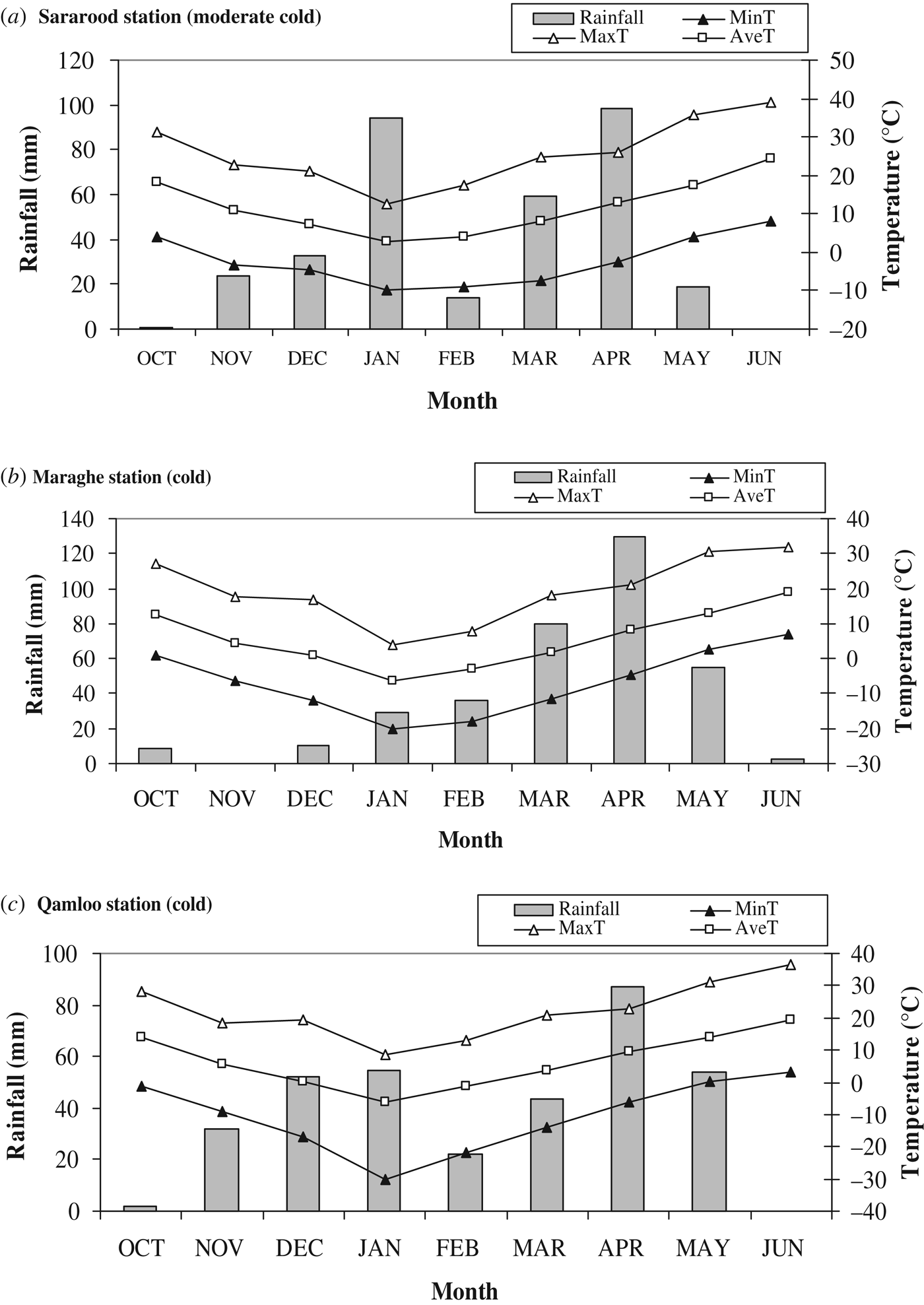
The minimum temperature was <0 °C from January to mid-April in the two cold locations (Qamloo and Maragheh), ranging from −20 to −11·5 °C at Maragheh and from −30 to −14 °C at Qamloo. The frost period coincided with the period between early tillering (GS 21 and GS 22, Zadoks et al. Reference Zadoks, Chang and Onzak1974) and the first node stage (GS 31). This temperature pattern provided an opportunity to evaluate germplasm for both early and late frosts. Frost was more severe in Qamloo than in Maragheh (Fig. 1). The proportion of foliage damage due to frost was scored in early April using the visual scores T=tolerant (plants with normal leaf colour and no signs of frost damage), MT=moderately tolerant (plant with yellow symptoms on leaf tips and recovering after frost period), MS=moderately susceptible (plants with 0·50 of the leaves with yellow colour), S=susceptible (plants with full frost damage symptoms on their leaves and up to 0·50 of plants per plot dead) and VS=very susceptible (plants with all leaves yellow, overall growth affected and >0·50 of plants per plot dead).
Mean monthly temperature and accumulated rainfall during the growing season at (a) Sararood, (b) Maragheh and (c) Qamloo locations.

Statistical analysis
The mean, range and standard deviation (sd) were calculated for each trait studied to evaluate the phenotypic variation within the germplasm collection at each location. The accessions were then classified into three groups: (1) mean±sd, (2) >mean+sd and (3) <mean−sd and the proportion of the different groups for each trait was calculated.
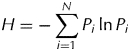
The Shannon's (Reference Shannon1948) phenotypic diversity index (H) was calculated and used to determine phenotypic diversity in the collection based on each studied trait at each location. This index is defined as:
 $$\eqalign{H = - \sum\limits_{i = 1}^N {P_i\,{\rm ln}}\,P_i }$$
where N is number of phenotypic groups, P i is the relative frequency of the ith group, and ln is the natural logarithm. The average diversity (H′) over k traits was also estimated as follows:
 $$\eqalign{H' = \sum\limits_{i = 1}^k {H_i }} $$
The genotype×traits (G×T) biplot analysis method (Yan & Rajcan Reference Yan and Rajcan2002) was used to display the relationships among the studied traits on the basis of growth habit data of the accessions for each location. The biplots, as described by Yan & Rajcan (Reference Yan and Rajcan2002), were constructed by plotting the first principal component (PC1) scores of the growth habit data and the traits against their respective scores for the second principal component (PC2) that resulted from singular-value decomposition of trait-standardized data in each location. In the G×T biplot, a vector is drawn from the biplot origin to respective trait markers to facilitate visualization of the relationships among the traits. The correlation coefficient between two traits was approximated by the cosinus of the angle between their vectors. Acute angles indicated positive correlations, obtuse angles negative correlations and right angles no correlation (Yan & Rajcan Reference Yan and Rajcan2002). The GGEbiplot software (Yan Reference Yan2001) was used for data analysis.
RESULTS
Description of climatic data and phenotypic diversity
Total rainfall was 342·5, 351·4 and 346·6 mm in Sararood, Maragheh and Qamloo, respectively. Rainfall was around the long-term average in cold stations (Maragheh and Qamloo) but was significantly less than the long-term average (445 mm) in the moderately cold station (Sararood). The locations differed in their monthly rainfall distribution and temperature (Fig. 1). The absolute minimum temperature during the cropping season was −30 °C at Qamloo, −20 °C at Maragheh and −9 °C at Sararood. Average minimum temperatures at Qamloo, Maragheh and Sararood stations were −10·6, −6·9 and −2·2 °C, respectively. The number of freezing days (<0 °C) was 132 at Qamloo, 130 at Maragheh and 75 at Sararood. The accessions tested consequently experienced cold and drought stresses, at different levels of severity according to the locations.
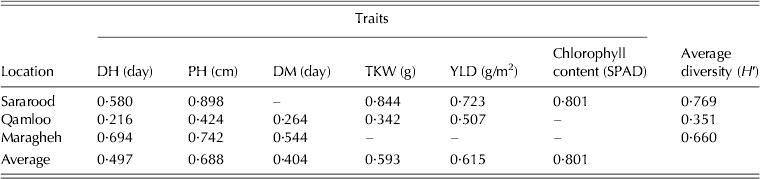
Among the traits, the highest phenotypic variation was found for plant height, grain yield and TKW across locations and the lowest for phenological traits. The average phenotypic diversity index (H′) varied from 0·351 at Qamloo to 0·769 at Sararood (Table 1). The highest phenotypic diversity index was observed at Maragheh and the lowest at Qamloo for DH and DM. For PH, TKW and yield the highest was found at Sararood and the lowest at Qamloo.
Shannon's phenotypic diversity index (H) based on each trait at each location
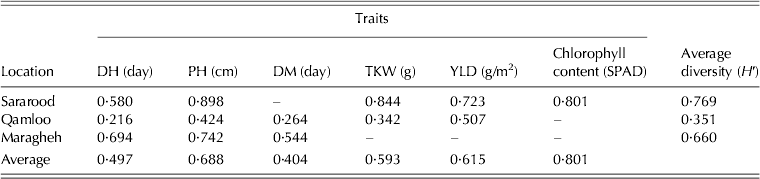
DH, days to heading; PH, plant height; DM, days to maturity; TKW, thousand-kernel weight; YLD, grain yield.
Comparison of tetraploid wheat accessions for agronomic traits
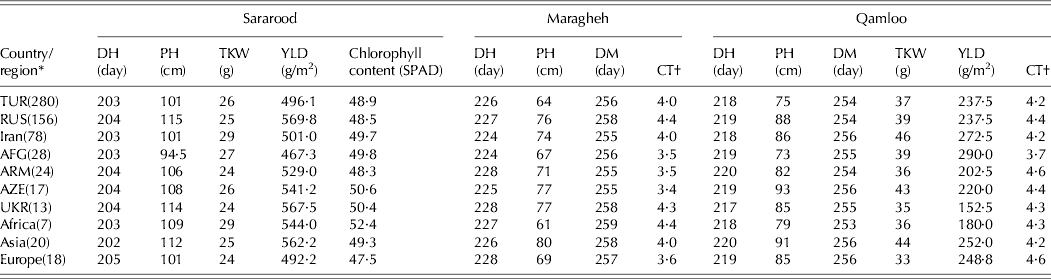
At Sararood, heading date varied from 202 days for Asian accessions to 205 days for European accessions (Table 2). Plant height was lower in the accessions from Afghanistan (94·5 cm) followed by those from Turkey and Iran (101 cm) and higher in accessions from Russia (115 cm) and Ukraine (114 cm). The accessions from Africa, Iran and Afghanistan had higher TKW (27–29 g) under moderately cold conditions (Sararood), whereas those from Europe, Armenia and Ukraine had lower TKW (24 g). The most productive accessions in terms of grain yield were from Russia, Ukraine and Asia (562·2–569·8 g/m2) and least productive from Afghanistan, Europe and Turkey (467·3–496·1 g/m2). High chlorophyll content (SPAD) was noted in the accessions originating from Africa, Azerbaijan and Ukraine (52·4, 50·6 and 50·4 SPAD units, respectively) and low chlorophyll content in the accessions from Europe, Armenia and Russia (47·5, 48·3 and 48·5 SPAD units, respectively). At Maragheh, days to heading varied from 224 (Iranian and Afghan accessions) to 228 days (European accessions). The accessions from Asia were the tallest (80·0 cm) and those from Africa the shortest (61 cm). Among the accessions, 10 out of 641 accessions (0·016) were characterized as cold-tolerant accessions. Accessions from Azerbaijan, Afghanistan, Armenia and Europe were found to be more tolerant to cold stress (Table 2).
Mean values for the accessions with different geographical origins based on the studied trait at three locations (Sararood, Maragheh and Qamloo) in Iran
DH, days to heading; PH, plant height; DM, days to maturity; TKW, thousand-kernel weight; YLD, grain yield; SPAD, chlorophyll content.
TUR, Turkey; RUS, Russia; AFG, Afghanistan; ARM, Armenia; AZE, Azerbaijan; UKR, Ukraine.
* The countries with <10 accessions are combined by regions, i.e. Europe, Asia and Africa.
† CT: cold tolerance; here the cold tolerance which is expressed in qualitative groups cannot be averaged – for this case they were converted to scores 1–5, where 1=tolerant; 2=moderately tolerant; 3=moderately susceptible; 4=susceptible and 5=very susceptible.
At Qamloo, heading date occurred slightly earlier in the accessions from Ukraine, Turkey, Iran and Africa (217–218 days) compared to those from Asia and Armenia (220 days). Accessions from Africa matured earlier (253 days) compared to those from Europe and Asia (256 days). The accessions from Azerbaijan were the tallest (93 cm) followed by those from Asia and Russia, whereas accessions from Afghanistan were the shortest (73 cm) followed by those from Turkey and Africa. Mean TKW among the accessions ranged from 33 g (European accessions) to 46 g (Iranian accessions). The accessions from Asia had TKW >40 g. The accessions from Afghanistan and Iran were the most productive in terms of grain yield and those from Ukraine and Africa the least. Due to severe cold stress, none of the accessions were classified as tolerant. But the accessions were classified in moderately tolerant, moderately susceptible, susceptible and very susceptible groups representing 0·084 (54 accessions), 0·204 (131 accessions), 0·058 (37 accessions) and 0·654 (419 accessions), respectively. The moderately tolerant group included the accessions from Europe (Russia and Switzerland) and Asia (Turkey, Kazakhstan, Iran, Armenia and Afghanistan).
Based on the results, a total of 242 accessions, including 146 from Asia, 74 from Europe and four from Africa, were identified as susceptible to cold stress. In summary, 0·016, 0·037, 0·197, 0·378 and 0·373 of accessions were classified as tolerant, moderately tolerant, moderately susceptible, susceptible and very susceptible, respectively.
Evaluation of agronomic traits in cold-tolerant accessions
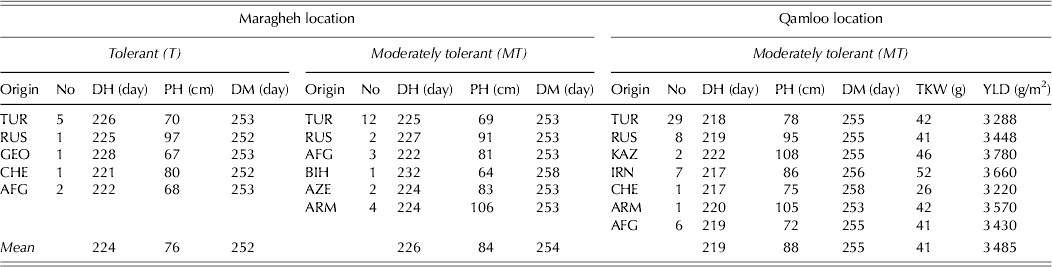
The cold-tolerant accessions were compared for agronomic traits at Maragheh and Qamloo (Table 3). At Maragheh, tolerant accessions were slightly earlier in flowering and maturity than the other groups. Among the cold-tolerant accessions, those from Switzerland and Georgia were early and late, respectively. Plant height among tolerant accessions varied from 67 (Georgia) to 97 cm (Russia). A total of 24 accessions from Asia (Turkey, Afghanistan, Azerbaijan and Armenia) and Europe (Russia and Bosnia-Herzegovina) were identified as moderately tolerant, and were tallest, while the very susceptible group was characterized as the shortest group. On average, the moderately tolerant group, in comparison to the tolerant group, was found to be late in heading and maturity and taller in stature (Table 3). The very susceptible group was also later in heading and maturity (data not shown).
Agronomic characteristics of cold-tolerant tetraploid wheat accessions in relation to their origins at Maragheh and Qamloo
No, number of accessions; DH, days to heading; PH, plant height; DM, days to maturity; TKW, thousand-kernel weight; YLD, grain yield.
TUR, Turkey; RUS, Russia; GEO, Georgia; CHE, Switzerland; AFG, Afghanistan; BIH, Bosnia-Herzegovina; AZE, Azerbaijan; ARM, Armenia; KAZ, Kazakhstan; IRN, Iran.
At Qamloo, it was not possible to record the agronomic data for the very susceptible group as the accessions included did not complete their growth cycle. The moderately tolerant accessions were characterized as a group having tall plants (particularly those from Kazakhstan and Armenia) with high TKW and grain yield (particularly for accessions from Kazakhstan and Iran) (Table 3). Susceptible accessions had moderate plant height and low yield, while those in the moderately susceptible group were short with medium yield productivity (data not shown).
Relationships between growth habit and other agronomic traits
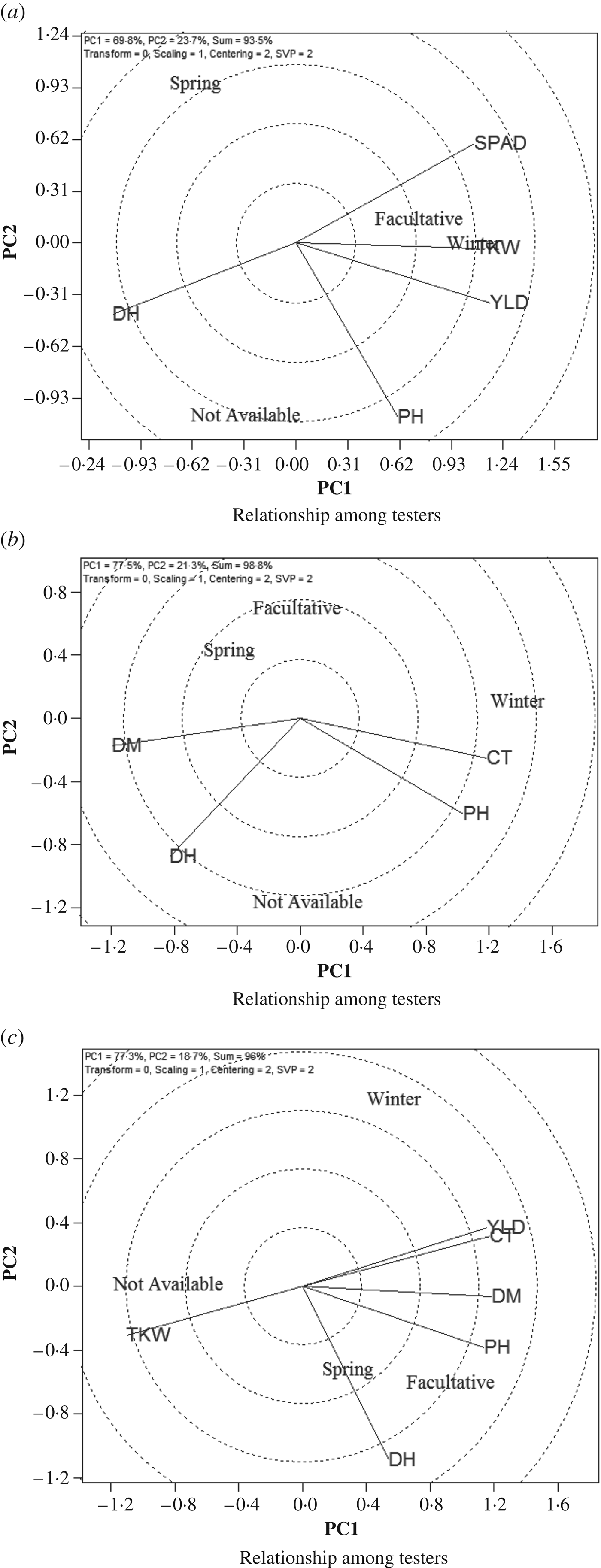
To visualize relationships among the traits studied based on growth habit in tetraploid wheat landraces, growth habit×trait biplots based on each location were created (Fig. 2). The biplots were constructed based on the first two PCs derived from standardized two way table data of growth habit and traits and explained 0·935 to 0·980 of the total variation.
Growth habit-by-trait biplot analysis for tetraploid wheat accessions showing relationships among the studied traits at (a) Sararood, (b) Maragheh and (c) Qamloo locations. DH, days to heading; PH, plant height; DM, days to maturity; TKW, thousand-kernel weight; YLD, grain yield; SPAD, chlorophyll content.
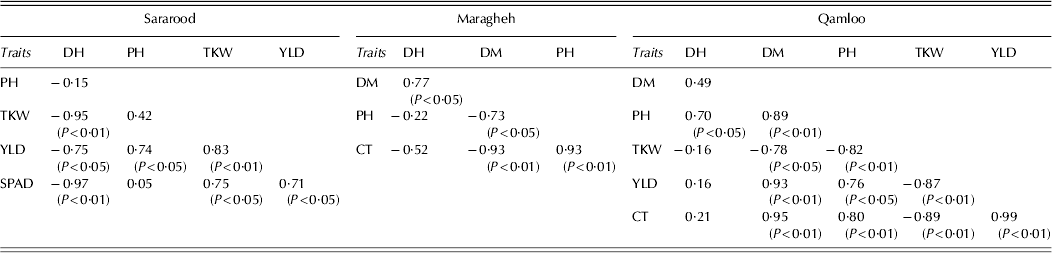
At Sararood, positive correlations were found between yield with TKW (r=0·83, P<0·01) and SPAD (r=0·71, P<0·05) (Fig. 2a, Table 4) as indicated by the acute angle between their vectors. These traits were negatively associated with days to heading, indicating that selection for earliness directly enhanced productivity, TKW and SPAD under moderately cold conditions. The winter and facultative types had higher yield, TKW and SPAD and were earlier at heading. No relationships were found between plant height, days to heading and SPAD as indicated by the right angles between their vectors.
Pearson's correlation coefficients between the evaluated traits for tetraploid wheat accessions differing in growth habit at each location
DH, days to heading; PH, plant height; DM, days to maturity; TKW, thousand-kernel weight; YLD, grain yield; SPAD, chlorophyll content; CT, cold tolerance.
At Maragheh, cold tolerance was closely associated with plant height (r=0·93, P<0·01) and negatively with days to heading and days to maturity (r=−0·93, P<0·01) (Fig. 2b, Table 4). In comparison to others, the winter types had higher levels of cold tolerance and tended to be earlier in heading and maturity, and tallest.
At Qamloo, cold tolerance was closely correlated with grain yield (r=0·99, P<0·01) (Fig. 2c, Table 4). The winter and facultative types had higher cold tolerance and yield, whereas the spring types tend to be later and taller. Positive relationships were found between cold tolerance with plant height (r=0·80, P<0·01) and days to maturity (r=0·95, P<0·01). Negative correlations were observed between TKW with other traits.
Comparison of tetraploid wheat sub-species for growth habit and agronomic traits
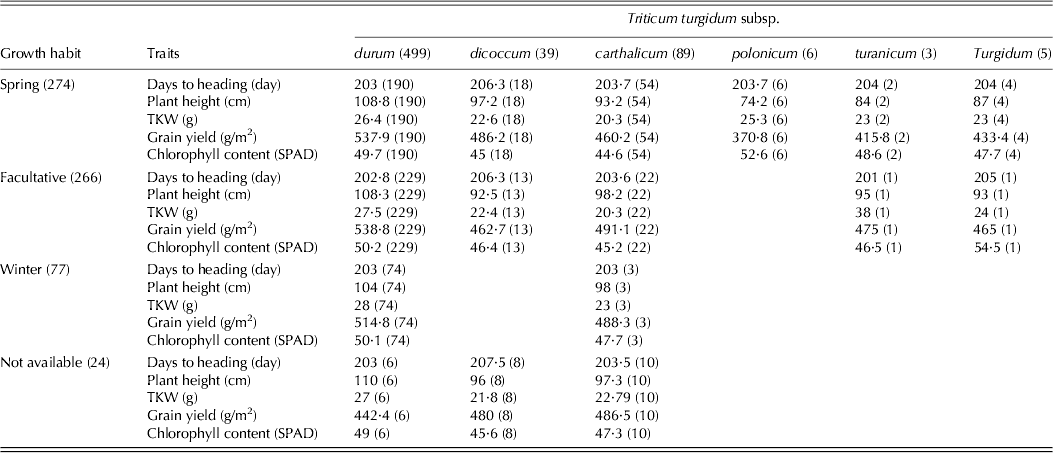
The agronomic characteristics of the different T. turgidum sub-species at Sararood (a moderately cold location) are compared in Table 5. Among the spring types, heading occurred earlier in ssp. durum than in other sub-species, whereas ssp. dicoccum was latest in heading. Among facultative types, ssp. turanicum was early at heading, whereas ssp. dicoccum followed by ssp. turgidum were late. Among the winter types no difference was observed between ssp. durum and ssp. carthalicum.
Agronomic performance of different sub-species of Triticum turgidum in the germplasm collection based on their growth habit at Sararood (numbers in parenthesis=number of accessions used to calculate mean values)
TKW, thousand-kernel weight.
Sub-species polonicum was the shortest among the sub-species, whereas ssp. durum was the tallest. The accessions with spring growth habit were shorter. Thousand-kernel weight varied from 20·3 g in ssp. carthalicum (corresponding to both spring and facultative types) to 38 g in ssp. turanicum (corresponding to facultative types). The tetraploid wheat sub-species with winter growth habit had the highest grain yield and the spring ones the lowest. Sub-species durum with facultative growth habit produced the highest grain yield, while ssp. polonicum with spring growth habit had the lowest yield. In general, the highest SPAD values were found in winter types followed by facultative and spring types. Sub-species turgidum (facultative type) had the highest SPAD value, whereas ssp. carthalicum with spring type had the lowest.
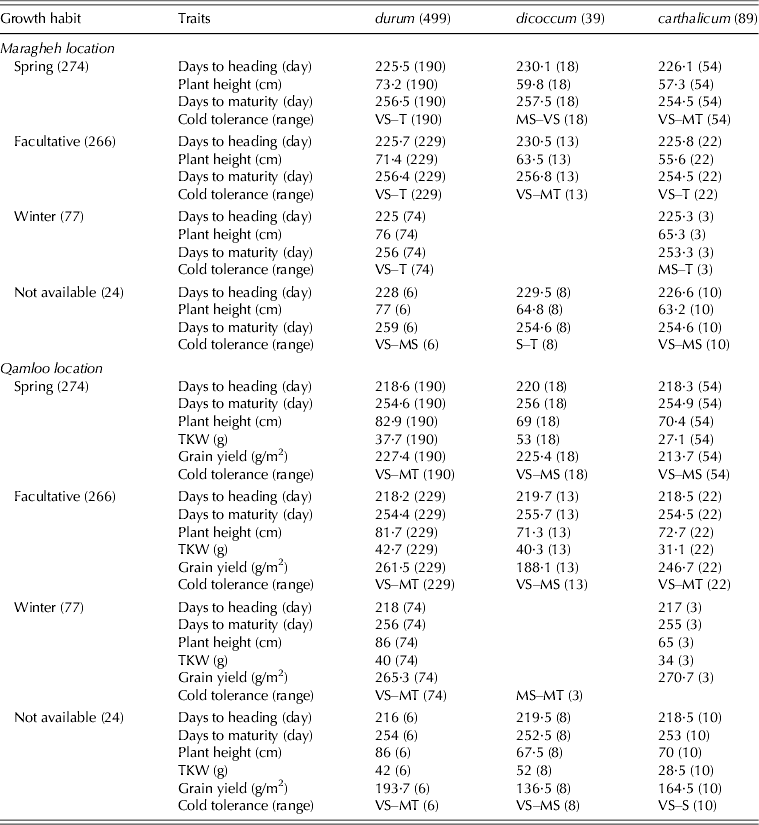
At Maragheh, days to heading ranged from 225 to 230 (Table 6). The sub-species with winter growth habit were slightly earlier at heading. The sub-species with facultative and spring growth habit tended to be shorter in plant stature compared to winter types. The ssp. turgidum accessions with spring growth habit were the tallest and the accessions of ssp. polonicum (spring type) the shortest (data not shown). Accessions of ssp. turgidum with spring growth habit were late maturing, while those of ssp. turanicum with spring growth habit and ssp. carthalicum tend to be early maturing. All accessions belonging to ssp. polonicum, ssp. turanicum and ssp. turgidum appeared to be susceptible to cold stress, while some cold-tolerant accessions were found among the other sub-species. For example, among the accessions of ssp. durum, spring types originated from Afghanistan, Switzerland and Russia, facultative types originated from Afghanistan and winter types originated from Turkey were found to be tolerant to cold. Among the accessions of ssp. carthalicum, facultative types originated from Turkey and Georgia and winter types originated from Turkey were characterized as cold-tolerant.
Agronomic performance of sub-species of Triticum turgidum with cold tolerance (CT) resources (i.e. ssp. durum, diccocum and carthalicum) in relation to their growth habit at Maragheh and Qamloo (numbers in parenthesis=number of accessions used to calculate mean values)
T, tolerant; MT, moderately tolerant; MS, moderately susceptible; S, susceptible; VS, very susceptible; TKW, thousand-kernel weight.
At Qamloo, the winter-type accessions were slightly earlier at heading than the facultative types (Table 6). Generally ssp. durum accessions were earlier than other sub-species at heading. No considerable differences were found between the accessions of other sub-species for earliness at maturity according to their growth habit. The accessions of ssp. dicoccum were shorter, while those belonging to ssp. durum were taller. The accessions with spring growth habit had higher TKW. Sub-species dicoccum among the spring types, and ssp. durum among the facultative and winter types, had the highest TKW. Winter types had higher grain yield and spring types had lower grain yield. Among the spring types, ssp. turgidum had the highest grain yield, while among facultative types ssp. turanicum included the most productive accessions (data not shown). Among the winter types ssp. carthalicum had higher grain yield than ssp. durum. Among the spring types, ssp. durum accessions from Russia, Turkey, Afghanistan and Switzerland and ssp. turgidum accessions from Kazakhstan were the most tolerant to cold stress. Among facultative types, the most tolerant accessions were ssp. durum accessions from Russia, Afghanistan, Turkey, Iran, Kazakhstan and Armenia and T. carthalicum accessions from Turkey (Tables 2 and 6). In the case of winter types, the tolerant accessions were ssp. durum accessions from Russia, Turkey, Afghanistan and Iran and ssp. carthalicum accessions from Turkey.
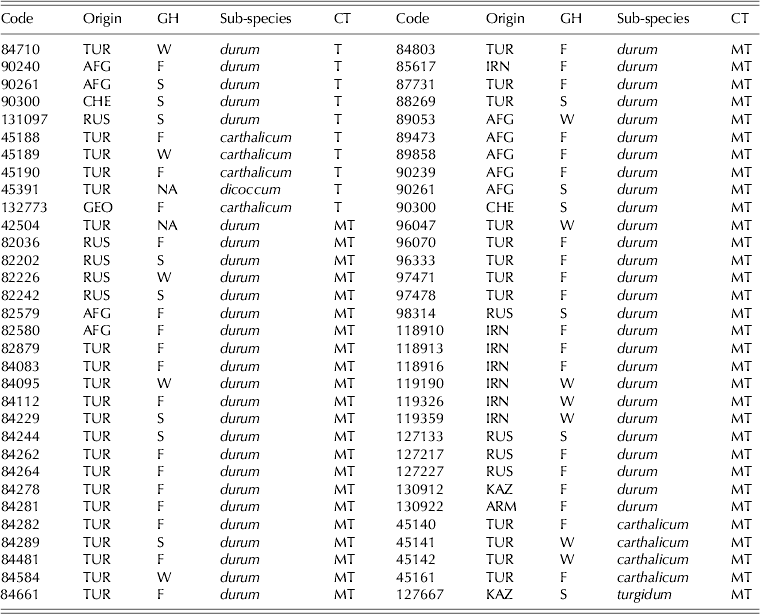
Based on the results, 64 accessions with different genetic backgrounds were selected as tolerant to cold stress under highland rainfed conditions of Iran (Table 7). These selected accessions are considered as promising parental germplasm for improving cold and drought tolerance in durum wheat for the highland rainfed cold regions of Iran.
Tetraploid wheat accessions with tolerance to cold stress
GH, growth habit; CT, cold tolerance; W, winter; F, facultative; S, spring; NA, growth habit not available; T, tolerant; MT, moderately tolerant.
TUR, Turkey; RUS, Russia; IRN, Iran; AFG, Afghanistan; ARM, Armenia; KAZ, Kazakhstan; GEO, Georgia; CHE, Switzerland.
DISCUSSION
Due to the susceptibility of durum wheat to low temperatures, frost tolerance is an important trait for breeding programmes in areas with severe winters (Longin et al. Reference Longin, Sieber and Reif2013). As the frequency of extreme temperature events is expected to increase as part of the general climate change phenomena, damage caused by cold temperatures may increase in some areas in the world, particularly in Mediterranean conditions where rainfall and temperature are often unpredictable (Marengo & Camargo Reference Marengo and Camargo2008). Thus, new cold-tolerant cultivars will need to be developed by taking into account the GS when plants will be exposed to cold in a particular region. In the present study, the climatic conditions that prevailed during the 2010/11 season exposed planted accessions to varying degrees of cold stress combined with drought at different locations, with severe stresses experienced at Qamloo where some accessions did not complete their normal cycle. The phenotypic diversity encountered in tetraploid wheat germplasm offers a large potential for the improvement of durum wheat under cold rainfed areas of Iran. This wide variation, however, is probably only a proportion of the variation that exists in tetraploid wheat collections worldwide, and further evaluation appears warranted to use and conserve this potentially valuable genetic resource. Future mining of wheat collections for cold tolerance and the identification of potentially cold- and drought-tolerant subsets may also use the focused identification of germplasm strategy (FIGS) developed at ICARDA (Bari et al. Reference Bari, Street, Mackay, Endresen, De Pauw and Amri2012).
Late shooting to avoid cold damage in spring is a valuable trait in durum wheat if supported by a robust and fast growth in order to achieve earlier heading. Thus in practical breeding for spring cold tolerance it could be worthwhile to screen germplasm for late shooting; and among selected lines, look for rapid growth vigour and development. This is considered, in most cases, a sign of earliness in durum wheat under rainfed conditions (Zencirci & Karagoz Reference Zencirci and Karagoz2005; Dodig et al. Reference Dodig, Zorić, Kandić, Perović and Šurlan-Momirović2012). In fact, the early types would be more suitable at Sararood, where terminal drought and heat stresses are common features. Under the Mediterranean-like conditions, early heading and early maturing types are desirable as these traits allow the plant to escape the terminal drought that usually occurs in these areas. This was also reported by Jaradat (Reference Jaradat1991), who found wide variation among landraces and areas of origin for earliness to heading and maturity.
All quantitative traits studied under cold stress were useful in differentiating the accessions according to their different geographical origins under rainfed conditions. The Sararood location was intermediate in winter temperature and severe in terminal drought stress, while the two other locations (Qamloo and Maragheh) had extreme environmental conditions in terms of low temperature and drought stress. These conditions led to considerable differences in yield and yield-related traits, favouring facultative and winter types under moderate cold and severe drought stresses, and winter types when evaluated under severe cold and drought stresses. Nevertheless, days to heading was the most important trait in explaining variation in grain yield at all locations but especially at Sararood (moderate cold and severe drought conditions). The importance of phenological adjustment under Mediterranean conditions has also been highlighted in several studies (Loss & Siddique Reference Loss and Siddique1994; Moragues et al. Reference Moragues, Garcıa del Moral, Moralejo and Royo2006).
A large variation was observed in the present study for cold tolerance. This trait has been studied in Triticum and Aegilops by Barashkova (Reference Barashkova1981) and Limin & Fowler (Reference Limin and Fowler1981), who evaluated a great number of species and populations. Those authors concluded that species carrying the D genome (especially Aegilops tauschii) are the most resistant, while those carrying the S genome are the most susceptible. Barashkova (Reference Barashkova1981) also noted a high frost resistance in Triticum timopheevi (AG genome), while Limin & Fowler (Reference Limin and Fowler1985) reported that the T. timopheevi (AG genome) accessions possessed only poor levels of cold hardiness. Rusmini (Reference Rusmini1959) has reported that the crosses between T. durum and T. timopheevi gave types resistant to cold and rust. Within the species of the Sitopsis section, Aegilops speltoides (the supposed donor of the G genome) was found to be the most resistant (Barashkova & Vavilov Reference Barashkova, Vavilov, Panayotov and Pavlova1991) and among the AB genome wheats, the highest level of resistance was registered in the ssp. turgidum (Barashkova et al. Reference Barashkova, Filatenko and Buren1990). In the present study, among the tetraploid wheat sub-species, ssp. durum and ssp. carthalicum were the most important sources of cold tolerance. Barashkova et al. (Reference Barashkova, Filatenko and Buren1990) studied resistance to frost under controlled conditions in seedlings of 213 accessions: 32 of ssp. dicoccum, 117 of ssp. durum, 53 of ssp. turgidum (all AuB) and 11 of ssp. compactum (AuBD), and reported that the most resistant among accessions with the genome structure AuB was the ssp. turgidum material. In the present work, no level of resistance to cold stress was registered in ssp. turgidum; however, the sample for ssp. turgidum included only five accessions (originating from Azerbaijan, Kazakhstan and Pakistan) and all were spring types, compared to the sample including 53 accessions evaluated by Barashkova et al. (Reference Barashkova, Filatenko and Buren1990). The current evaluations were under natural conditions with minimum temperatures of −20 to −30 °C under field conditions, while evaluations by Barashkova et al. (Reference Barashkova, Filatenko and Buren1990) were under controlled conditions.
Chlorophyll content (SPAD) is recommended for use as an indicator to determine plant tolerance to cold (Rizza et al. Reference Rizza, Pagani, Stanca and Cattivelli2001; Rapacz & Woźniczka Reference Rapacz and Woźniczka2009; Li et al. Reference Li, Xie, Yao and Chen2010; Nezami et al. Reference Nezami, Soleimani, Ziaee, Ghodsi and Bannayan Aval2010; da Cruz et al. Reference da Cruz, Sperotto, Cargnelutti, Adamski, de Freitas Terra and Fett2013). In general, low temperatures inhibit chlorophyll accumulation in actively growing leaves, and consequently limit crop productivity. In contrast, cold tolerance involves increased chlorophyll accumulation, reduced sensitivity of photosynthesis, improved germination and pollen fertility (Sanghera et al. Reference Sanghera, Wani, Hussain and Singh2011). However, temperature is one of the major abiotic stresses reported to drastically affect chlorophyll content in angiosperms. Up to 90% of chlorophyll content reduction has been observed in both dicot and monocot plants grown under chilling temperatures (Tewari & Tripathy Reference Tewari and Tripathy1998; Rodríguez et al. Reference Rodríguez, Velasco, Garrido, Revilla, Ordás and Butrón2013). The results of several studies indicate that the photosynthetic apparatus of crops can adapt to sub-optimal growth temperature and become more tolerant to severe chilling stress. It has been shown, for example, that plants which show faster recovery of leaves from photo-inhibition are more tolerant to chill-induced photo-oxidation and contain greater amounts of certain leaf antioxidants. Thus, it is likely that some of the genotypic differences related to low-temperature tolerance may be detectable only in leaves that develop at low temperatures (Fracheboud et al. Reference Fracheboud, Haldimann, Leipner and Stamp1999).
Evaluation of accessions at Sararood indicated that the highest SPAD value was for winter types followed by facultative and spring types, which verified the results of field evaluations for cold tolerance in the other two locations. The ssp. turgidum (facultative type) had the highest SPAD value, while the spring type ssp. carthalicum had the lowest SPAD. These results are in agreement with Barashkova et al. (Reference Barashkova, Filatenko and Buren1990), who reported the highest level of resistance to cold in ssp. turgidum under controlled conditions. However, the SPAD for ten first top entries varied from 59·6 to 87·4 and all belonged to ssp. durum with different types (eight with facultative types, one with winter and one with spring type).
Cold-tolerant accessions were found in accessions with all three growth habit types (winter, facultative and spring), indicating that cold tolerance is not strictly dependent on growth habit. However, most winter types, followed by facultative types, had high frequencies of cold-tolerant accessions, compared to spring types. According to Kosner & Pankova (Reference Kosner and Pankova2002), tolerance to low-winter temperatures is more common in winter- than in facultative-type cultivars and it is related to the genotype's ability to harden. Longin et al. (Reference Longin, Sieber and Reif2013) found high level of frost tolerance combined with good quality and yield in 101 elite winter durum wheat lines, concluding that durum wheat producers in Central Europe should cultivate winter instead of spring durum wheat, which is an attractive strategy to substantially increase the yield potential under increasing abiotic stresses due to changes in climate. Winter hardiness can be transferred to durum wheat from inter-specific crosses with cold-tolerant and winter hardy bread wheat or with wild relative species (Reynolds et al. Reference Reynolds, Ortiz-Monasterio and McNab2001). Since the genes Fr1 and Vrn1 are closely linked with the prostrate growth type (Roberts Reference Roberts1990), the selection of cold-tolerant genotypes based on their growth habit should allow breeders to overcome some of the problems related to insufficient cold temperature and duration required for vernalization. This is applicable in particular for wheat breeding programmes utilizing spring×winter crosses.
Many traits associated with cold tolerance, such as delayed spring growth or small cellular size, are associated with negative effects on yield, especially in rainfed environments where rapid growth in early spring and earliness are important adaptive characteristics to avoid late drought and high temperatures (Sãulescu & Braun Reference Sãulescu, Braun, Reynolds, Ortiz-Monasterio and McNab2001). The current results showed that the accessions with high levels of cold tolerance were relatively shorter in stature and earlier at heading. Thus, these characteristics may be used for selection and improvement of tolerant durum wheat genotypes for low-temperature adaptation.
Cold tolerance stress and high yield would be the key requirements to ascertain the success of durum wheat as an important cereal crop in highland areas of Iran. Accessions with a wide genetic diversity should be selected in combination with locally adapted accessions/varieties to achieve breakthroughs in genetic durum wheat improvement. For high yield, the accessions from India, Kyrgyzstan, Kazakhstan and Georgia should be of interest. The accessions from Turkey, Russia, Georgia, Afghanistan, Switzerland, Armenia and Kazakhstan could be integrated as sources of cold tolerance. Selection based on flowering, maturity, grain weight, plant height and chlorophyll content due to considerable variation among accessions may enhance the genetic potential of yield in cold and moderately cold rainfed areas of Iran. However, further phenotypic and molecular evaluations are needed to confirm the superiority of selected materials prior to their use in breeding durum wheat for cold- and drought-prone environments.
This research was supported by the Agricultural Research and Education Organization (AREO) of Iran. The provided genetic material by ICARDA is highly acknowledged.