Significant outcomes
-
∙ Dietary magnesium deficiency significantly alters the gut microbiota and reduces microbial diversity.
-
∙ Six weeks of dietary magnesium deficiency affects anxiety-like behaviour in the light/dark box.
-
∙ Duration of magnesium deficiency is suggested to influence behaviour in the evaluated test.
Limitations
-
∙ Future studies should address the impact of the length of the diet trial on anxiety-like behaviour, and should be supported by additional behavioural assays.
Introduction
Neuropsychiatric disorders such as depression and anxiety have been linked with low levels of cerebral magnesium in humans (Reference Eby and Eby1,Reference Eby and Eby2). Animals with magnesium deficiency have been proposed as novel models of depression and anxiety, as some studies have shown magnesium deficiency to induce depressive- and anxiety-like behaviour, which mimic human symptoms of these disorders and impact the hypothalamo–pituitary–adrenal (HPA) axis within 3 weeks of dietary deficiency (Reference Singewald, Sinner and Hetzenauer3,Reference Sartori, Whittle and Hetzenauer4). Abnormalities in the HPA axis have been associated with anxiety disorders (Reference Faravelli, Lo Sauro and Godini5). Accumulating evidence demonstrates an impact of the gut microbiota (GM) on anxiety-like behaviour and development and regulation of the HPA axis (Reference Bangsgaard Bendtsen, Krych and Sørensen6–Reference Sudo, Chida and Aiba9). Several studies have shown dysregulation of the HPA axis and altered anxiety-like behaviour in germfree mice, which could be normalised by inoculation with faeces from specific pathogen-free mice (Reference Sudo, Chida and Aiba9–Reference Neufeld, Kang and Bienenstock11). In addition, a study by Collins et al. (Reference Collins, Kassam and Bercik8) demonstrated transfer of the strain-specific anxiety-like behavioural phenotype by faecal transplantation from BALB/c mice to NIH Swiss mice and vice versa. Supporting this, a previous study in our laboratory showed stress-induced anxiety to be associated with an altered GM (Reference Bangsgaard Bendtsen, Krych and Sørensen6). Dietary magnesium deficiency has previously been shown to induce fluctuations in the intestinal abundance of Bifidobacterium spp. and increase the abundance of Lactobacillus spp. within 3 weeks of dietary deficiency. This effect may be a consequence of dietary nutrient availability affecting the GM directly, or a consequence of systemic magnesium deficiency affecting the alimentary tract (Reference Zimowska, Girardeau and Kuryszko12). It can be hypothesised that these alterations of the GM composition influence behaviour.
Aims of the study
We investigated the effect of 6 weeks of dietary magnesium deficiency on development of anxiety-like behaviour, the dietary impact on the GM and the association between this and behaviour.
Materials and methods
The study was conducted in strict accordance with the EU directive 2010/63/EU and with the Danish Animal Experimentation Act (LBK 1306 from 23/11/2007 with 2011 amendments). The protocol was approved by the Danish Animal Experimentation Committee (j.no 2012-15-2934-00254). Efforts were made to improve animal welfare and minimise stress of the mice. Eight-week-old male C57BL/6NBomTac mice (Taconic Ltd., Ll, Skensved, Denmark) were standard housed with five mice per cage in a controlled 12-h light/dark cycle (light on at 7 a.m.), and were given free access to diet and water. The room temperature was set at 22°C and the humidity 50–60%. After 1 week of acclimatisation, mice were randomly assigned to either a standard diet (Altromin 1324; Brogaarden ApS, Lynge, Denmark) containing the usual 0.2% magnesium (n=10), which corresponds to four times more than the daily minimum magnesium requirement of 500 mg/kg of food, or assigned to a magnesium-deficient (MgD) diet containing 0.02% magnesium (n=10), providing 10% of the daily ration recommended (Reference Crawley13) (Sniff Spezialdiäten, Soest, Germany). Mice were kept on their respective diets for 6 weeks, before being tested in the light/dark box (LDB) anxiety test. The LDB with the size 45×30×30 cm was divided into a dark (lux 1) and a light (lux 400) compartment, with a 7×7 cm entry opening in between. Before the behavioural test, mice were allowed to get habituated to the test room for 24 h. All tests were carried out between 8 a.m. and 3 p.m. The mice were individually placed in the centre of the dark compartment, and their behaviour was video-recorded for 5 min, and subsequently scored by counting latency to enter the light compartment and the number of entries into and the time spent in the two compartments. Mice were scored as entering a compartment, once all four paws were placed inside it. After each test, the compartments were cleaned using 70% ethanol solution and were allowed to air-dry. Faecal samples were obtained from each of the mice before the diet trial and after exposure to the LDB. The day after behavioural testing, mice were euthanised by cervical dislocation, and caecal samples were obtained by dissection. Samples were collected directly into a sterile Eppendorf tube (Eppendorf®, Hamburg, Germany), stored on ice and transferred to −80°C within 30 min. Faecal and caecal samples were analysed as previously described by DNA extraction followed by polymerase chain reaction amplification of the bacterial 16S rRNA gene (V3 region) and separated by denaturation gradient gel electrophoresis (DGGE) (Reference Pyndt Jørgensen, Hansen and Krych14). DGGE gels were analysed by cluster analysis using the dice similarity coefficient with a band position tolerance and optimisation of 1% using the unweighted pair group method with arithmetic mean clustering algorithm and by principal component analysis (PCA) in Bionumerics ver. 4.5 (Applied Maths, Belgium), as previously described and explained (Reference Lundberg, Clausen and Pang15). The first three principal components (PC1, PC2 and PC3) of the PCAs were used to compare the GM composition of the treatment groups by analysis of variance (ANOVA), taking into account DGGE gel number and cage factor, and to create multiple linear regression models for analysing the correlation between GM composition and behaviour. The number of bands in each DGGE profile was used as a measure of GM diversity, as previously described (Reference Muyzer and Smalla16), also taking the DGGE gel number and cage into account. Due to technical issues, the number of samples in each group was as follows: faeces n=8 (control) and n=6 (MgD); and in caecum n=9 (control) and n=6 (MgD). Statistical analyses were performed using SAS JMP vers. 10 (SAS Institute Inc., Copenhagen, USA). Data were checked for adherence to a normal distribution by QQ-plots and the Shapiro–Wilks test for normality. Data were compared using the Welch t-test or the non-parametric Wilcoxon test when not normally distributed. For ANOVA tests, data were ranked if not normally distributed. A p-value <0.05 was considered significant. Robustness of the linear regression models was checked by removing a random sample twice, which did not affect significance.
Results
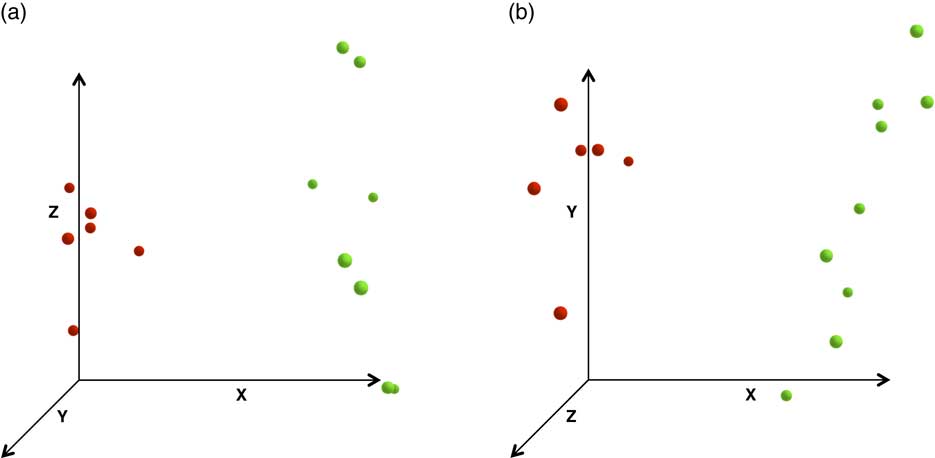
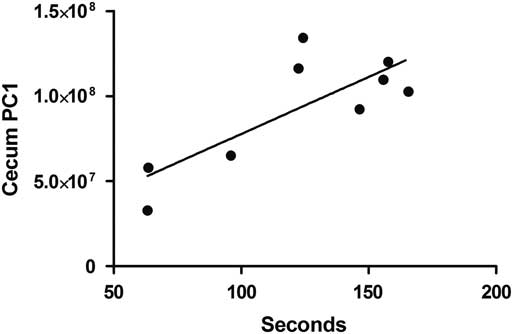
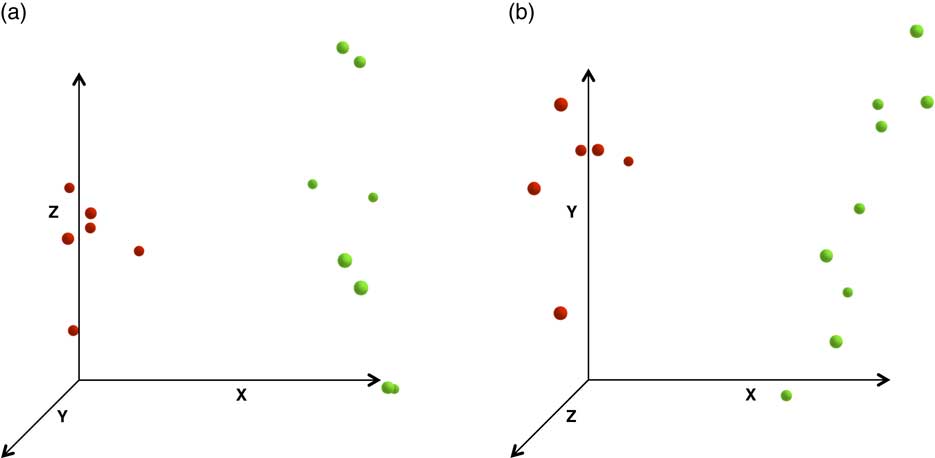
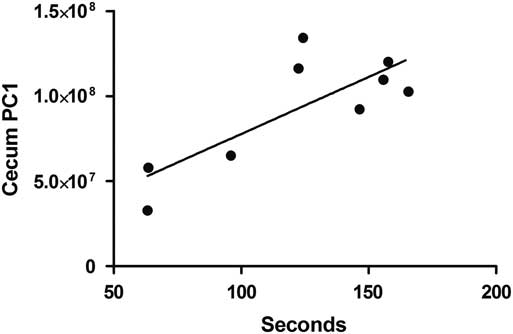
The MgD mice showed significantly shorter latency to enter the light compartment of the LDB than mice on the control diet (7.89±2.54 and 16.57±2.54 s, respectively, p=0.027), demonstrating an altered anxiety-like behaviour, with initially decreased aversion against the lit environment. No difference was observed between groups regarding entries into the light compartment (14±4 vs. 12±4 entries for the magnesium-deficient and the control group, respectively, p=0.33) and time spent in the light compartment (127.8±43.7 vs. 119.8±37.7 s. for the magnesium-deficient and the control group, respectively, p=0.68). Analysis of the gut showed that the MgD diet altered the GM composition of the mice significantly. No difference in GM composition was evident between the groups before the diet trial (p>0.05 for PC1, PC2 and PC3); however, after 6 weeks on their respective diets, the GM of MgD mice differed significantly from mice fed a standard control diet (faeces PC1, p=0.0011 and caecum PC1, p=0.0012) (Fig. 1), which was also visualised by a distinct clustering of the treatment groups in the dendrogram of the cluster analysis of both faeces and caecum (not shown). Furthermore, the MgD diet decreased bacterial diversity of the gut significantly (faeces, 19.00±2.2 and 26.16±2.0 bands for MgD and control mice, respectively, p=0.045). Linear regression analyses between behaviour and the individual GM profiles revealed a significant correlation between the GM composition and anxiety-like behaviour in the control group, in which the GM composition correlated with the time spent in the light box (caecum PC1, p=0.011, r 2=0.62, Fig. 2).
Principal component analysis plots illustrating differences in gut microbiota composition between mice fed a control diet or an MgD diet in faeces (p<0.0001) (a) and caecum (p<0.0001) (b). Red: MgD mice, green: control mice.
Correlation between the gut microbiota of control mice and time spent in the light compartment. Time spent in the light compartment of the test is significantly correlated to the gut microbiota profile of mice on control diet (caecum PC1, r 2=0.62, p=0.011). PC, principal component.
Discussion
The present study demonstrates altered anxiety-like behaviour in mice fed an MgD diet for 6 weeks, which is associated with a significantly changed GM profile and reduced bacterial diversity. In contrast to Singewald et al. (Reference Singewald, Sinner and Hetzenauer3), who found 3 weeks of dietary magnesium deficiency to increase the latency to enter the light compartment and to decrease the time spent in the light compartment, we did not observe an anxiogenic effect after 6 weeks of dietary magnesium deficiency. In line with Singewald et al., Sartori et al. also reported 3 weeks of dietary magnesium deficiency to induce anxiogenic behaviour, measured by increased latency to enter the light compartment. This was, however, not accompanied by a decrease in the time spent in the light compartment (Reference Sartori, Whittle and Hetzenauer4). It may be suggested that the duration of magnesium deficiency impacts behaviour in this version of the LDB test. This is supported by preliminary observations in our department, which demonstrated 3 and 6 weeks of magnesium deficiency to impact behaviour differently in a related anxiety assay (Reference Winther17). Poleszak et al. (Reference Poleszak, Szewczyk and Kędzierska18) demonstrated magnesium supplementation leading to high serum levels of magnesium to be associated with anxiolytic behaviour in mice, whereas supplementation leading to lower serum levels of magnesium did not affect behaviour. The magnesium stores of the body may very likely differ between mice fed an MgD diet for 3 and 6 weeks. It can be speculated that 6 weeks of dietary magnesium deficiency may impact the brain and behaviour in a different manner than 3 weeks of deficiency, further altering the behavioural outcome of the LDB test. Addressing this through behavioural testing at several time points up till 6 weeks of magnesium deficiency will clarify this. In accordance with previously reported alterations in the abundance of Bifidobacterium spp. and Lactobacillus spp. within 3 weeks of dietary magnesium deficiency (Reference Pachikian, Neyrinck and Deldicque19), we observed a significant impact of the MgD diet on the GM. Feeding an MgD diet for 6 weeks altered both the GM and reduced the diversity significantly. A reduced microbial diversity has previously been associated with disease development (Reference Collins, Verdu and Denou20), and altering the GM composition has been demonstrated to induce changes in anxiety-like behaviour (Reference Collins, Kassam and Bercik8). We did not observe major behavioural changes, and thus the impact of the observed GM changes on this aspect of anxiety-like behaviour is questionable. Interestingly, the GM composition correlated significantly with anxiety-like behaviour in the control group, and thus it may be speculated that inter-individual GM variation influence anxiety-like behaviour in the dietary unchallenged mice and that magnesium deficiency may disrupt a homoeostatic microbiota–gut–brain axis.
In conclusion, the duration of dietary magnesium deficiency may impact anxiety-like behaviour. This should be addressed through behavioural testing at several time points up till 6 weeks of magnesium deficiency in order to conclude further. Future studies should evaluate whether the induced GM alterations affect other aspects of anxiety.
Acknowledgement
Gu.W., G.W., D.B.S. and B.P.J. planned the experiment, Gu.W., B.P.J., P.K. performed the experiment, B.P.J., Gu.W. analysed the data and B.P.J., Gu.W., D.B.S., G.W., A.K.H. and D.S.N. wrote the manuscript.
Financial Support
This research received no specific grant from any funding agency, commercial or not-for-profit sectors.
Conflicts of Interest
There are no conflicts of interest between any of the authors. Gregers Wegener is editor-in-chief of Acta Neuropsychiatrica, but was not involved during the review and decision of this paper. Research material can be accessed by contacting the corresponding author.
Ethical Standards
The authors assert that all procedures contributing to this work comply with relevant national and institutional committees on human experimentation and with the Helsinki Declaration of 1975, as revised in 2008, and also with the ethical standards of the relevant national and institutional guides on the care and use of laboratory animals.