Introduction
Shanghai is known for the rich symbolic capital (for example, design features of the built environment and public art, termed as “urban sculpture” in the Chinese context)Footnote 1 associated with both its colonial golden age and contemporary urbanism. Sculptures first emerged in Shanghai when Western powers introduced bronze statues of European leaders into Shanghai's central areas, appropriating a cultural appearance on building façades. In approximately 1900, realist-style memorial statues of Auguste Léopold Protet, Sir Harry Smith Parkes, René Vallon, Sir Robert Hart and Alexander Pushkin were erected. In 1904, the Li family 李氏家族 became the first to erect a bronze statue of a Chinese officer. In 1924, a huge First World War memorial was completed and placed at the Bund. The winged goddess that stood atop of the monument even became the symbol of the Old City of Shanghai.Footnote 2
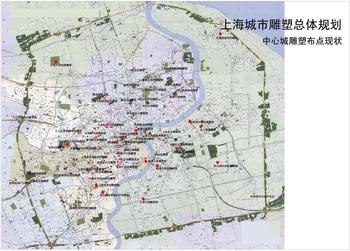
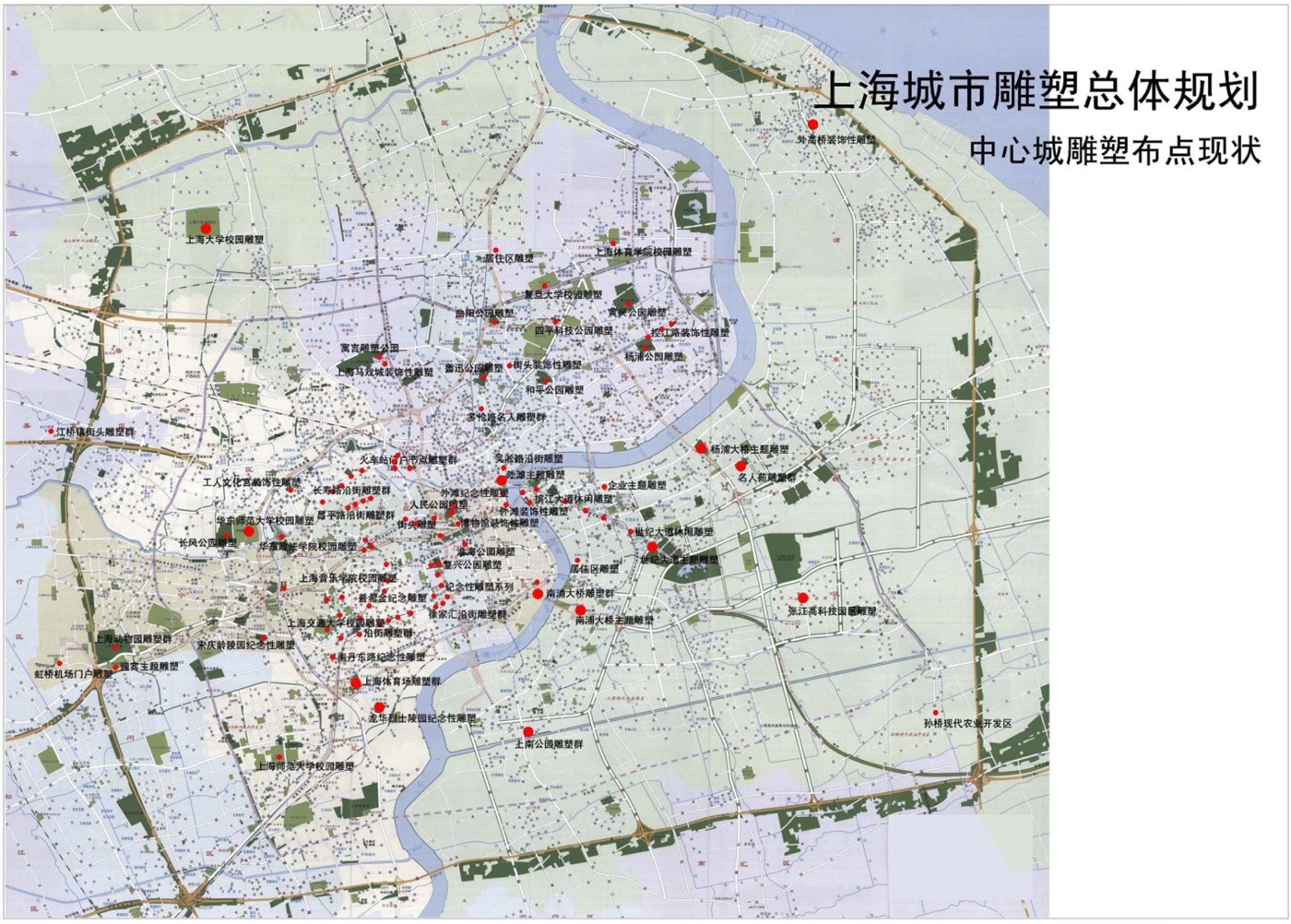
A revival of interest in outdoor sculptures and the subsequent rapid growth in the city's contemporary culture-led city development programme deserve scholarly attention. Wandering on avenues in Shanghai, you may encounter a number of evocative statues: Lu Xun 魯迅 wears a gown and holds a cigar, while sitting in a cane chair and looking outward. Kanzo Uchiyama is positioned in a deep bow, which symbolizes his Japanese identity with respect to Chinese culture. Cast in bronze, these life-sized figures have become part of the city's attractive urban landscapes.Footnote 3 Through state advocacy, the number of sculptures increased from about 80 (in 1986) to 5,000 (in 2015) – see Figure 1.
Distribution of Urban Sculptures in the Inner City of Shanghai, 2004
Recent literature on geographical studies has shown a rising interest in the subject of public art, focusing particularly on the relationships among cultural policies, planning and art.Footnote 4 Chinese urban studies recognize culture-led urban development as a new urban development trendFootnote 5; in particular, cultural resources, including cultural infrastructure and cultural capital, in creating development opportunities as part of urban entrepreneurial strategies, has been explored.Footnote 6 Symbolism is employed to constitute images of the urban scene transplanted from Europe and the US. It facilitates place marketing catering to the middle-class lifestyle.Footnote 7 The literature on public art in China only looks at community-based art projects to discuss the struggle of citizenship.Footnote 8 The public art scene in China, however, has not yet been explored or properly understood.
This paper studies Shanghai, the first Chinese city to develop a complete administrative apparatus for urban sculpture planning and an advanced urban sculpture scene with nationwide influences. It aims to elucidate the flourishing urban sculpture scene and its production system; specifically, how urban sculpture planning authorities have been producing urban sculptures, who the stakeholders are, and what their motives are for urban sculpture production. What are the urban outcomes of the urban sculpture production system and how is the urban sculpture scene characterized? This paper applies the “urban landscapes” theoretical perspective to generate an understanding of the urban sculpture scene in Shanghai.
This study utilizes qualitative research methods that are effective for exploring the nature and characteristics of any authority or institution. Semi-structured in-depth questions were used in interviews with government officials, including the chief sculpture officers at both the municipal and district levels. Senior art consultants on the art committee and leading artists in state-led projects were also interviewed. Over thirty case studies were conducted with the involvement of the district or municipal authorities through on-site reconnaissance.
The main argument of this paper is that the formation of a vibrant urban sculpture scene in Shanghai during the last two decades has been the result of the diversification of roles that urban sculpture performs, for example, urban beautification for both entrepreneurialism and international exchange; however, urban entrepreneurialism and globalization take place within the ideological framework of the Chinese government, which has transformed urban sculpture from explicit political didacticism into veiled ideological education under the guise of caring for the people. The sculptural production system involves dynamic interactions among three stakeholders, that is, the state, business sector and the communities.
Placing Public Art in the Political Economy and the Chinese Context
Urban sculpture can be understood using an “urban landscapes” approach regarding selective and deceptive representation of landscape images, manipulating their features, and inscribing their meanings. Landscapes can be conceptualized to be texts that bear underlying meanings.Footnote 9
Socially and politically constructed landscapes, or “representational space,”Footnote 10 bear the values of the populace through the selection and transformation of landscape components, resulting in the ideological inclusion and exclusion of people, in order to perpetuate the existing social order.Footnote 11 “Symbolic spaces” often represent centralized power.Footnote 12 From this perspective, the notion of public art is both contested and multifaceted. It engages different public and social forces while suggesting how place and public art are constructed.
Urban sculpture has traditionally been associated with the celebration of national and local elites, and national history as a privilege of the ruling class.Footnote 13 As exemplified by monuments, sculptures are used as vehicles to convey the dominant or mainstream thinking in society through a state-led cultural hegemony.Footnote 14 Culture is considered political in that it is expressive of the social relationships of class power, naturalizes the social order as an inevitable “fact,” and obscures the underlying inequality of a society.Footnote 15
On another level, cultural assets have been utilized to advance urban entrepreneurialism: they serve to improve the city's image and enhance residents’ confidence, thereby boosting the local economy in adherence to the neo-liberal and entrepreneurial philosophies.Footnote 16 The utilitarian functions of public art are explored for city branding purposes as well as image promotion in order to stimulate consumption, property values and tourism development.Footnote 17 They soften the brutality of existing structures, create an aesthetic mask to cover up social problems, enhance the attractiveness of places, and boost the value of real-estate properties.Footnote 18 On the other hand, entrepreneurial landscapes are underwritten by stakeholders for various speculative interests. They can also be purposefully utilized to legitimize the entrepreneurial policies of the state.Footnote 19
Assessing urban landscapes in China involves the perspective of transnational urbanism which mixes economic activities and cultural forms. This has led to an urban public art scene consisting of geographical images and associated meanings as the outcome of the participatory social processes of urban planners, ideologies and physical materials.Footnote 20
In the Chinese context since 1980, the orientation of the Chinese Communist Party (CCP) leadership has transformed from the totalitarianism of class struggle into an entrepreneurial-style authoritarianism. Urban entrepreneurialism in China embodies development-oriented urban policies and strategies. Decentralization of power since 1994 has fostered local autonomy and increased the importance of localities in urban development.Footnote 21
Apart from marketization, “globalization” is recognized as another source of social impetus for China's urban development.Footnote 22 The state has imposed transnational cultural sensibilities onto the configuration of Shanghai's cityscape and urbanity through a process of global networking.Footnote 23 The process of selective importation operates in a complicated manner involving overlapping and disjunctive orders, resulting from intrinsic differences between economy, culture and politics.Footnote 24 Olds points out that the Chinese gatekeepers of global flows are “inviting some flows in, guiding them into a specific territorial ‘window,’ shaping them into a specific form, and subsequently exploiting them for a myriad of political and economic purposes.”Footnote 25 The capitalist economy has shaped the physical manifestation of traditional, transnational urbanism in the urban landscapes of China.Footnote 26
Since the 1990s, cultural development in China has been shaped by the institutional lineages and influences of the socialist market economy. Art creation is in line with the ideological control exerted by the Party.Footnote 27 But, the autonomy of propaganda officials has diminished and thus selectively loosened control. Consequently, the burgeoning socialist market economy has led to diversified cultural forms, including popular arts, applied art and commercial entertainment, which have been part of vibrant commercial and entrepreneurial urban design practices.Footnote 28
Discourse on Urban Sculpture Production in China
Urban sculpture production has flourished in the associated discourse in contemporary China. In 1950, in order to strengthen the functionality of the political didacticism of urban sculptures, the Central Committee summoned top sculptors and architects to produce large-scale relief sculptures as well as hundreds of vibrant, life-sized statues of human figures in Tiananmen Square.Footnote 29 The sculpture production was discontinued during the Cultural Revolution period and revived in the late 1970s. In 1978, the redevelopment of the Shanghai People's Square involved decorating the space with urban sculptures, thereby leading to the establishment of the Urban Sculpture Group.Footnote 30 In 1980, the Urban Sculpture Planning Group, organized by the Planning Bureau, Cultural Bureau, Garden Bureau, and Artists’ Association, was established as the first specialized urban sculpture planning authority in China.Footnote 31 In 1982, the Artists’ Association (mei xie 美协) advocated advancing sculpture development by emphasizing the symbolic and aesthetic value of sculptures in urban development. The proposal “Suggestions for Constructing Sculptures in a Few Key National Cities” was approved by the Central Publicity Ministry, leading to the emergence of the National Urban Sculpture Planning Group and the National Urban Sculpture Committee. This signalled a new age of state-led urban sculpture development in China.Footnote 32
In the late 1980s, discourse on urban sculpture planning was dominated by Beijing. Twelve provinces and cities were designated for urban sculpture experimentation, and a planning approach was proposed that envisioned an exuberant urban sculpture scene.Footnote 33 In 1989, a working group to approve the Beijing chengshi diaosu guihua 北京城市雕塑规划 (Beijing Urban Sculpture Plan) convened leading national experts and a consensus was reached: urban sculptures should promote national patriotic revolutionary sentiments, a spirit of internationalism, and also exemplify the achievements of the Party.Footnote 34 Nationwide awareness of the value of urban sculpture planning (spanning three dimensions, that is, science, ecology and the environment) in guiding and boosting urban sculpture scenes was finally achieved in the 2000s.Footnote 35
Regulatory guidance and financing channels for urban sculptures were created. The national regulatory document “Urban Sculpture Construction and Management Methods,” published in 1993, specifies the nature of the urban sculpture authority, the necessary qualifications of sculptors, and the procedures for approval. The official document entitled “Guidance for Urban Sculpture Construction Related Work,” published in 2006, urges local governments to explore fundraising channels, methods and managerial modes for urban sculpture development.
China's urban sculpture planning system has inherited the Soviet-style urban planning structure, the Party's ideologies, as well as entrepreneurial urbanism.Footnote 36 The first urban sculpture plan on the town level was the Anhui Tongling chengshi diaosu guihua 安徽铜陵城市雕塑规划 (Anhui Tongling Urban Sculpture Plan) produced in 1992 as an experimental initiative.Footnote 37 In 2002, the Shenzhen Sculpture Academy established the first domestic public art master plan. One year later, the Municipal Urban Sculpture Committee Office (MUSCO) was established in the Planning Bureau in Shanghai and it enacted an urban sculpture master plan. In 2006, the central government issued a nationwide mandatory order to implement urban sculpture plans in local cities.Footnote 38 In 2008, Hebei Province headed the call and an urban sculpture production base for North China was established to mass-produce sculptures.Footnote 39
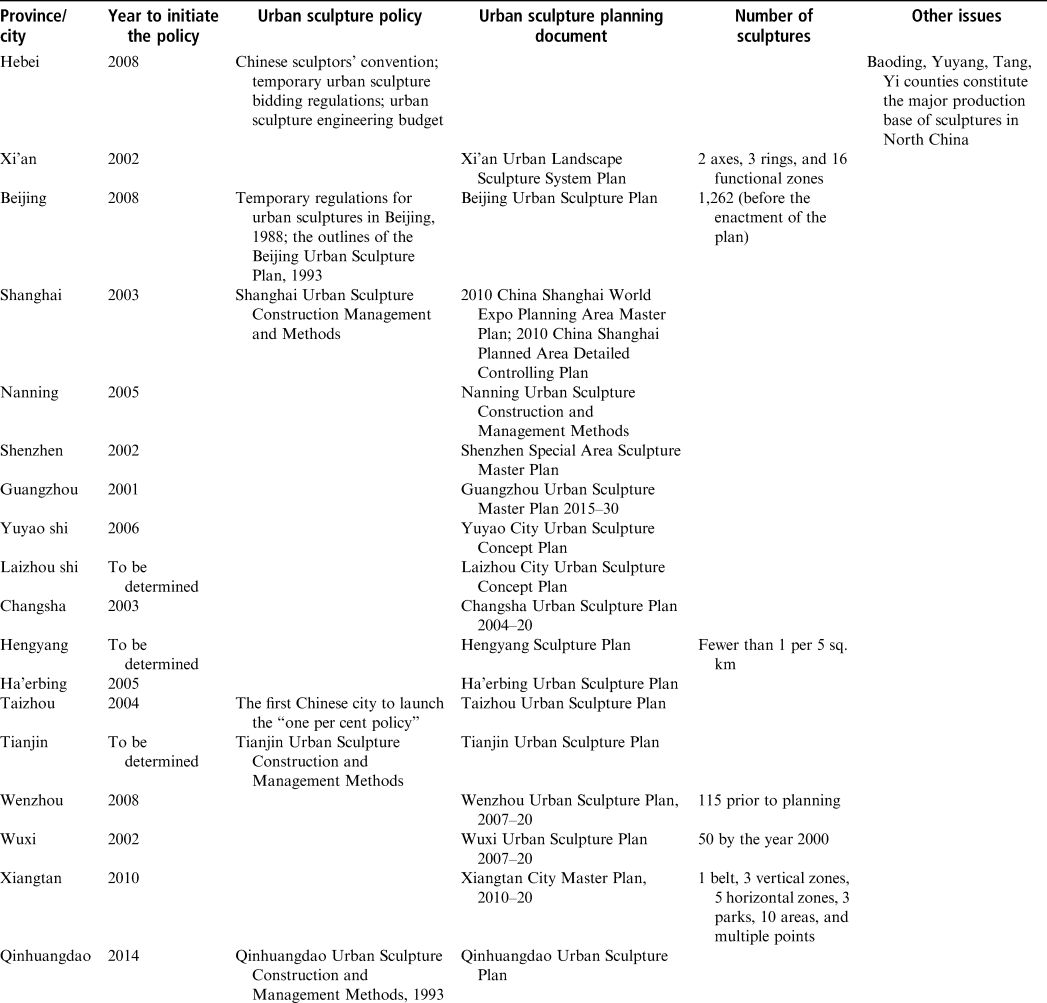
The success of the urban sculpture movement in China is reminiscent of the Great Leap Forward in terms of the dramatic increase in the number of urban sculpture plans (see Table 1). Urban sculptures have been enthusiastically embraced although a mismatch prevails between this Western-style art form and the traditional built form of historic Chinese cities, for example, Beijing and Xi'an, in particular.Footnote 40 In the Yangtze River Delta, cities geographically adjacent to Shanghai, such as Wuxi and Qinhuangdao, have explicitly followed the model of Shanghai regarding urban sculpture development. Wenzhou, for instance, is one of a few cities that highlight globalization as a theme to be represented by the city's urban sculptures.Footnote 41
List of Urban Sculpture Plans in ChinaFootnote 43
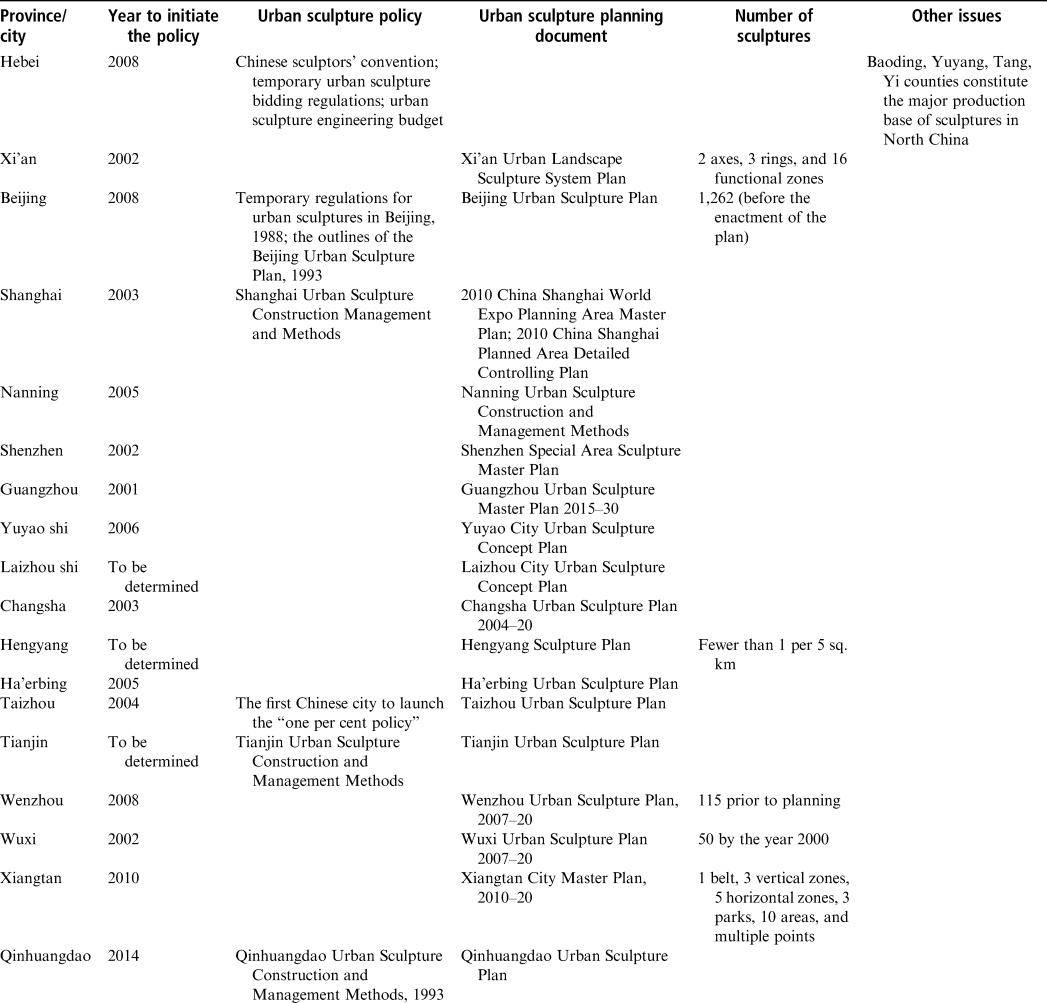
Some experiments have transcended Beijing and Shanghai. Taizhou, for example, was the first Chinese city to implement the “one per cent policy.” Under the policy, enterprises that acquire two square hectares of land for industrial and residential development through rental investments (of at least 30 million yuan or above) must put one per cent of their construction fees into urban sculpture projects.Footnote 42
Urban Sculpture Production System in Shanghai
Shanghai has been a pioneer among Chinese cities in terms of urban sculpture development. This section examines the urban sculpture production system in Shanghai, identifies stakeholders, and explores their interactions. I argue that Shanghai's unique urban sculptural production system has ensured both the prominence of the Party's ideological leadership and the maximum autonomy of professional artists, promoting their artistic practices and experimentation.
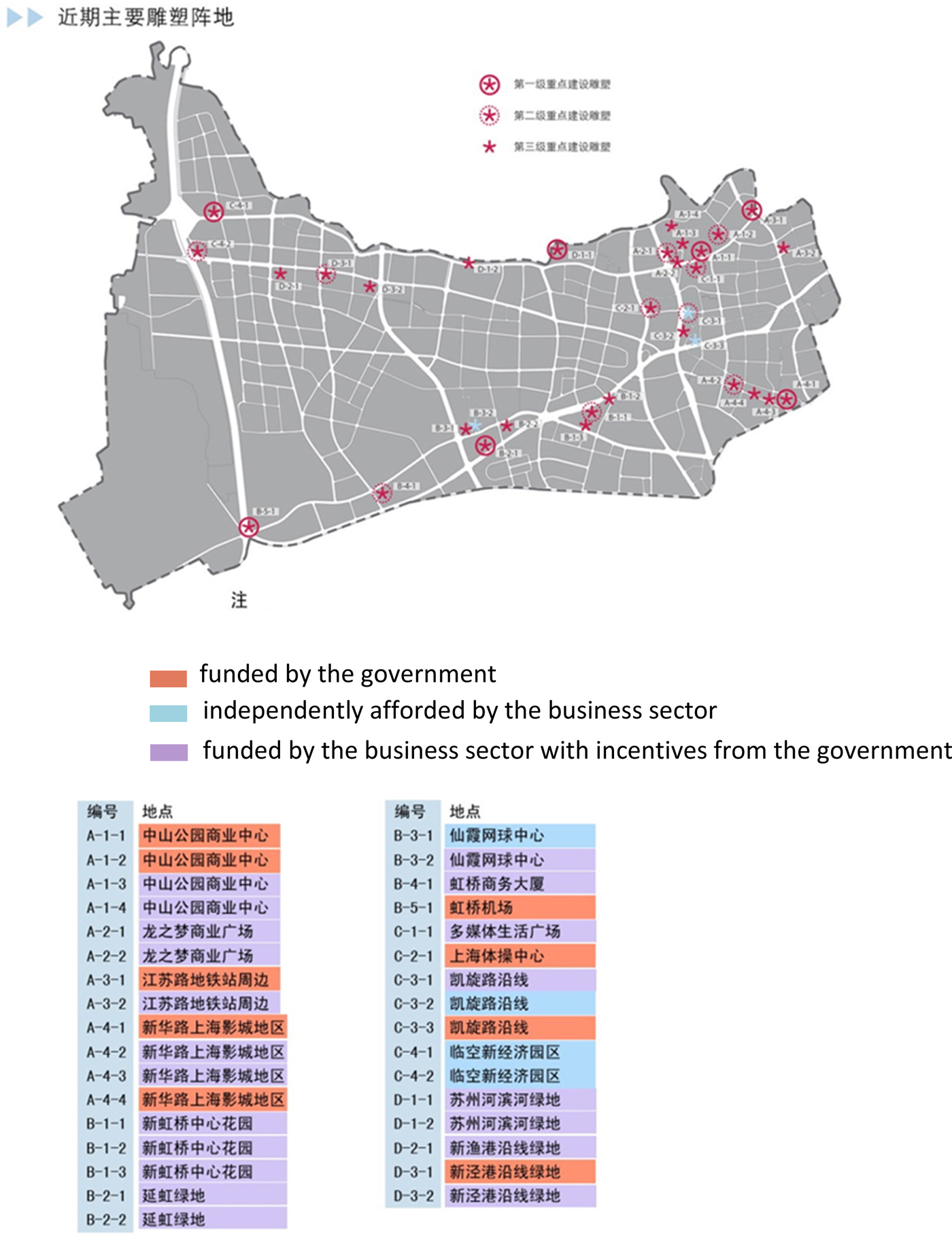
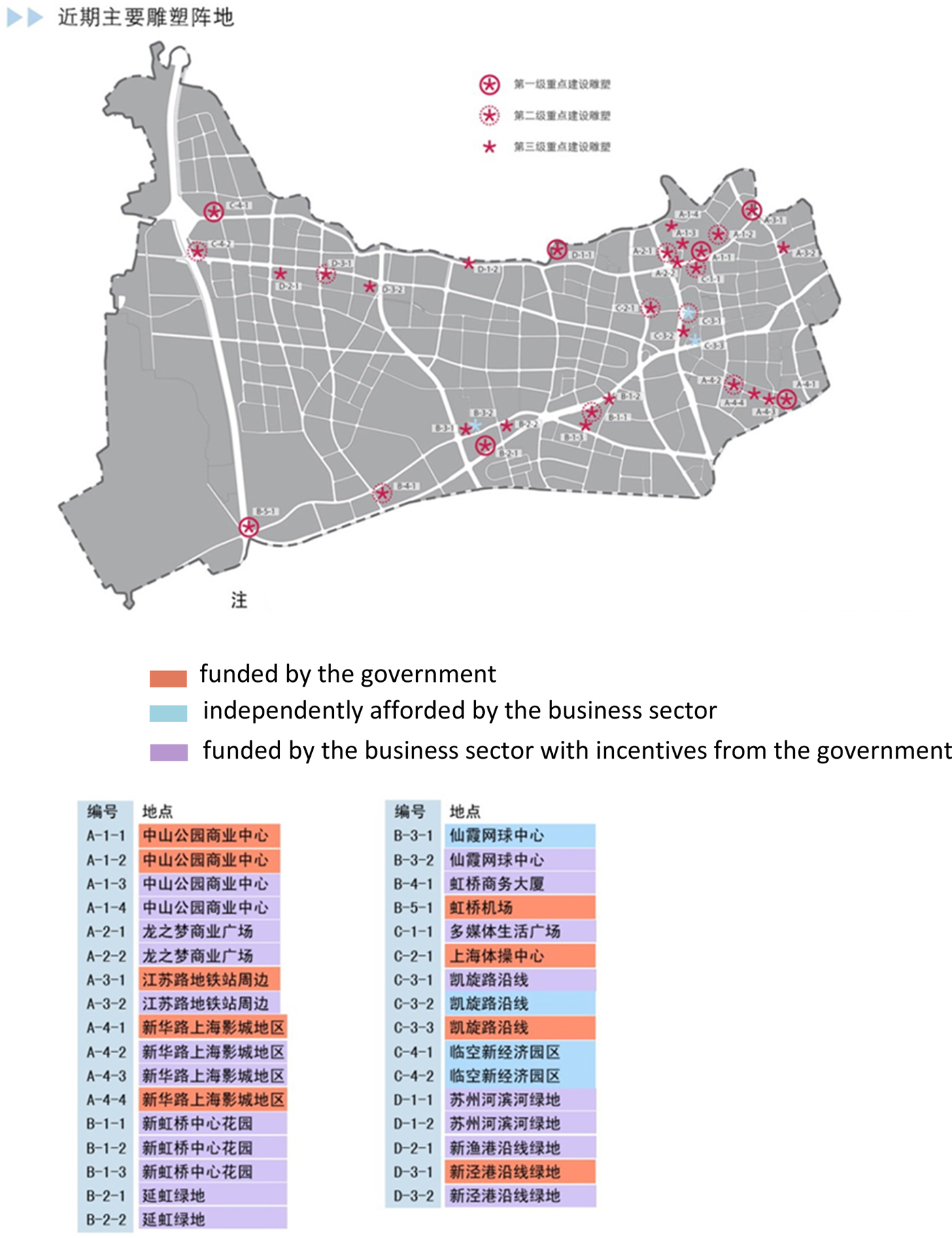
Three stakeholders play roles in Shanghai's urban sculpture production system. The government is the leading stakeholder shaping urban sculpture production through planning, direct execution of key projects, and project censorship and approvals. First, urban sculpture planning operates through a two-tier planning structure. The municipal-level master plan sets the goal for total sculpture quantity and proposes an overall pattern of geographical distribution, which is consistent with both political leaders’ ambitions and the municipal master plan.Footnote 44 Detailed district-level plans govern site selection and design.Footnote 45 MUSCO enacts the municipal master plan and is also responsible for reviewing and approving district urban sculpture plans, and coordinating international exchanges. The Artists’ Committee, as a consultancy agency, advises on decision making regarding sculpture schemes.Footnote 46 Second, when facing the difficulty of implementing planned sculptures,Footnote 47 the municipal and district authorities directly execute selected pivotal urban sculpture projects as well as innovative administrative mechanisms. The monumental statue of Chen Yi 陈毅 at the Bund, for instance, was designed and implemented under the direct leadership of the municipal government (see Figure 2).Footnote 48
Sculptures Planned for Shanghai in 2006 (with Stakeholders)
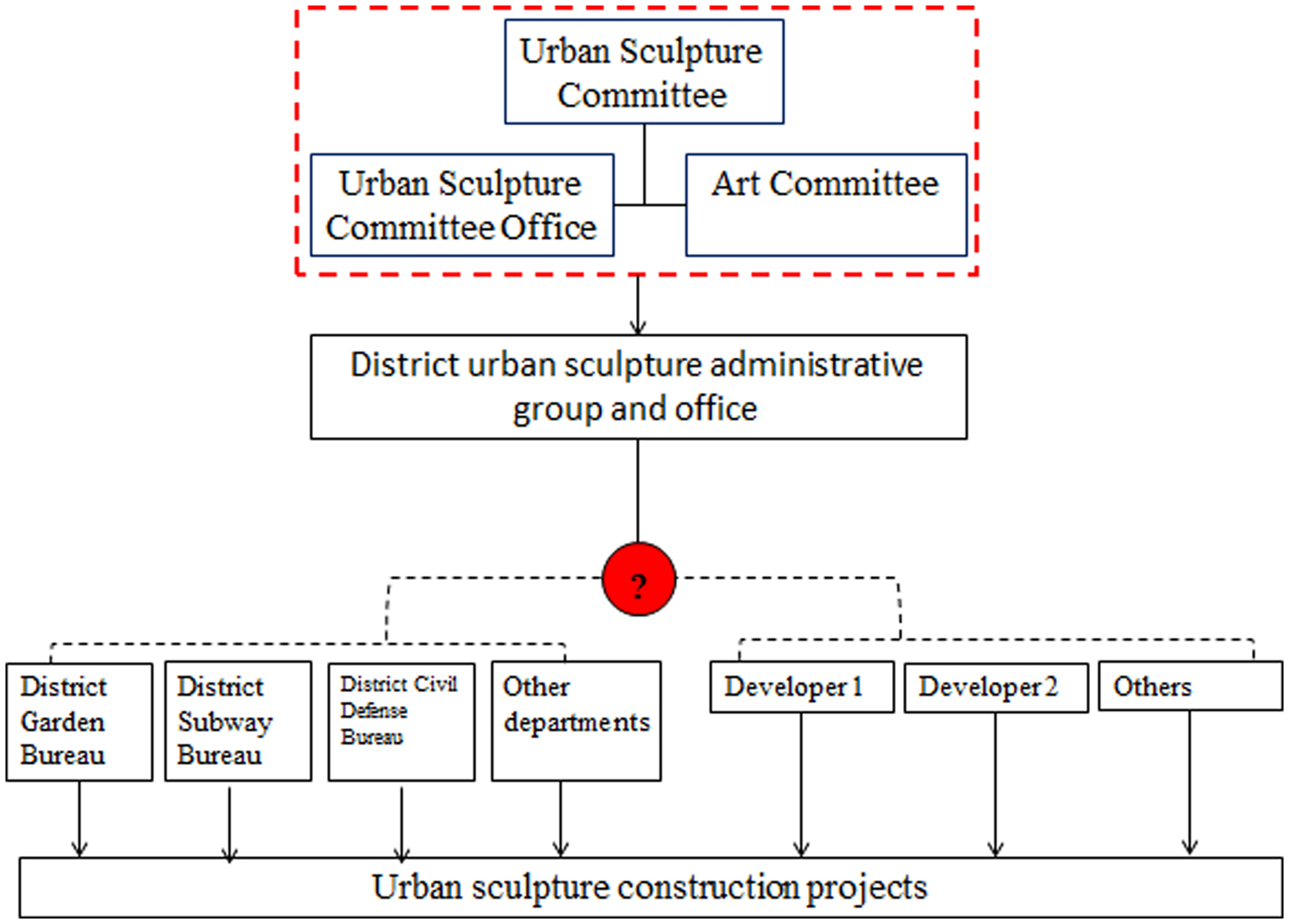
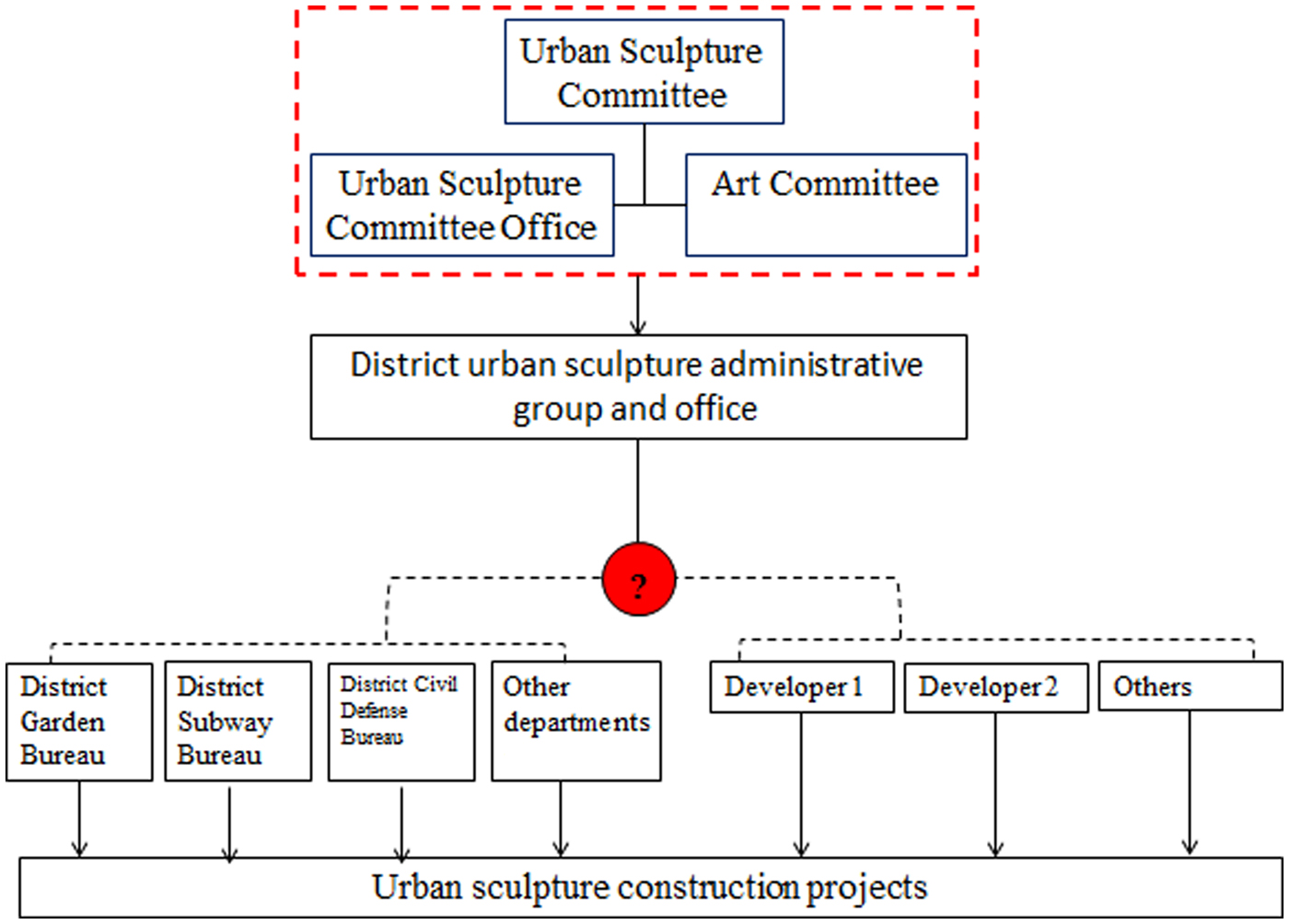
The relationship between the sculpture authority and the business sector is two-fold: on the one hand, the authority censors the sculptural content of private-sector proposals; on the other hand, the authority urges the private sector to implement sculpture plans (see Figure 3). The goal is to boost the quantity of state-desired artworks. In the former aspect, political content is the main issue pertaining to censorship. One noteworthy example is a statue of Deng Xiaoping 邓小平 created by a medicine company in Pudong.Footnote 49 Despite respectful motivations and a satisfactory artistic representation, the sculpture was ultimately not approved due to political concerns.Footnote 50
Stakeholders in Shanghai's Urban Sculpture Planning and Administration System
Regarding the latter aspect, in order to facilitate better planning implementation, sculpture authorities frequently reach out to lobby the business sector.Footnote 51 A Yangpu District sculpture officer said: “It is important for the government to guide developers toward an appreciation of the value of urban sculptures for transforming landscape features and increasing property values.”Footnote 52 The former vice-president of Luwan District, also a sculpture officer, shared the view: “I prefer not to push people to do what they don't want to do; I advocate for a win-win situation.”Footnote 53
To reduce political interference with artistic representation, an institutional innovation was proposed: the “curating system” (cezhanren zhidu 策展人制度). It involves the participation of four groups of people: 1) professional artists act as the main body of art producers; 2) art curators evaluate artworks and make recommendations to the Art Committee, serving as a consultancy decision-making mechanism; 3) the general public is entitled to vote for their preferred artworks and supervise the implementation of the plan; 4) MUSCO acts as the coordinator across two levels.Footnote 54 The Duolun Road sculpture project, for instance, exemplifies the “curating system.” This system functions because “sculptural works begin with a definite plan, and because there should always be a professional team to decide what sculptures are to be made, what sculptors are to be employed, and what opinions the masses have.”Footnote 55
“Public participation” in terms of this proposed mechanism has unfortunately not been actualized; it fails to allow citizens to participate in the decision-making process. An interview with Lü Pinchang provides some of the reasons why this may be the case. According to Lü: “Public participation is more about an attitude and belief … that everybody could participate in the sense that they could dialogue and feel the sculptural piece; this is the empathy such work exudes” after its completion. While sculptors may be “willing to listen” to public opinion, Lü states that “they may not be able to hear such public opinions.”Footnote 56
Development of the Urban Sculpture Scene in Shanghai
Through this production system, the city's urban sculpture scene has flourished. I argue that the Party's ideological control remains strong; however, explicit political didacticism has been converted into implicit ideological education that shapes “entrepreneurialism” and “globalization.” In other words, current policy has softened political didacticism and diversified the genres and functionality of urban sculptures within the current ideological framework.
Urban Sculptures for Didacticism under the Guise of Caring for the People
This section shows that on the one hand, the most important urban sculptures in the city continue to be ideologically constrained historic monuments; on the other hand, present sculptural decision-making processes have been masked by a discourse of caring, centring on the three “areas of focus” – “personal employment, the love of the people, and embracing human habitats” (weiwo suoyong 為我所用, weimin suo'ai 為民所愛, weijing suorong 為境所容).Footnote 57
Didactic monuments remain the most important urban sculptures in the city
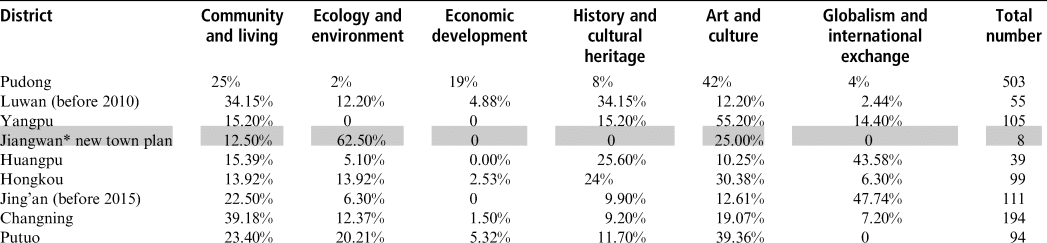
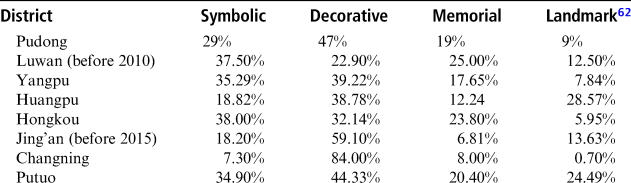
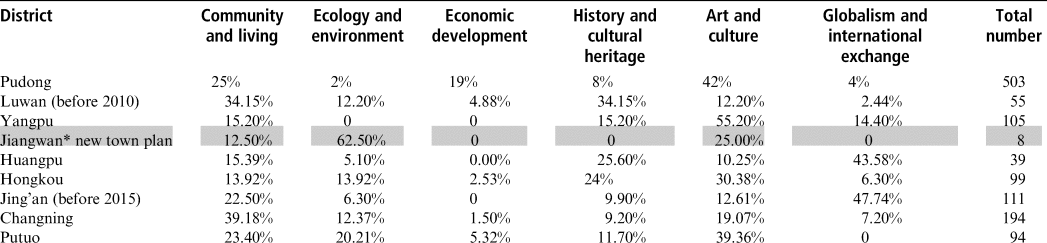
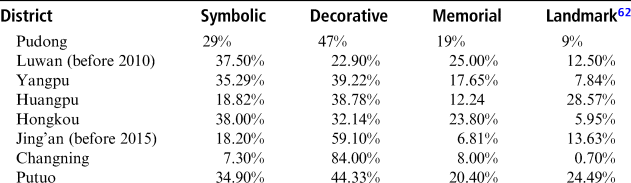
Historic monuments for the purpose of explicit political didacticism remain the most important genre; usually they are located in prominent public spaces with pre-existing cultural activities. Districts with long colonial and revolutionary histories, for example, Huangpu, Luwan and Hongkou, in particular, account for a high proportion of historic monuments (25 to 36 per cent). Also, a large number of award-winning sculptures are monumental statues exhibiting explicit ideological themes.Footnote 58 Some examples are shown in Tables 2 and 3.
Proportion of Sculptures Representing Different Genres in Eight DistrictsFootnote 61
Note:
*Jiangwan is a sub-district of Yangpu.
Proportion of Sculptures Representing Different Functions in Eight Districts
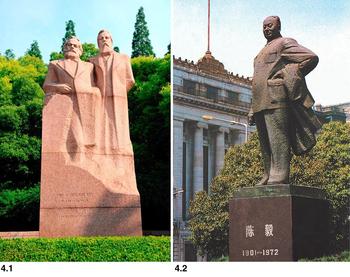
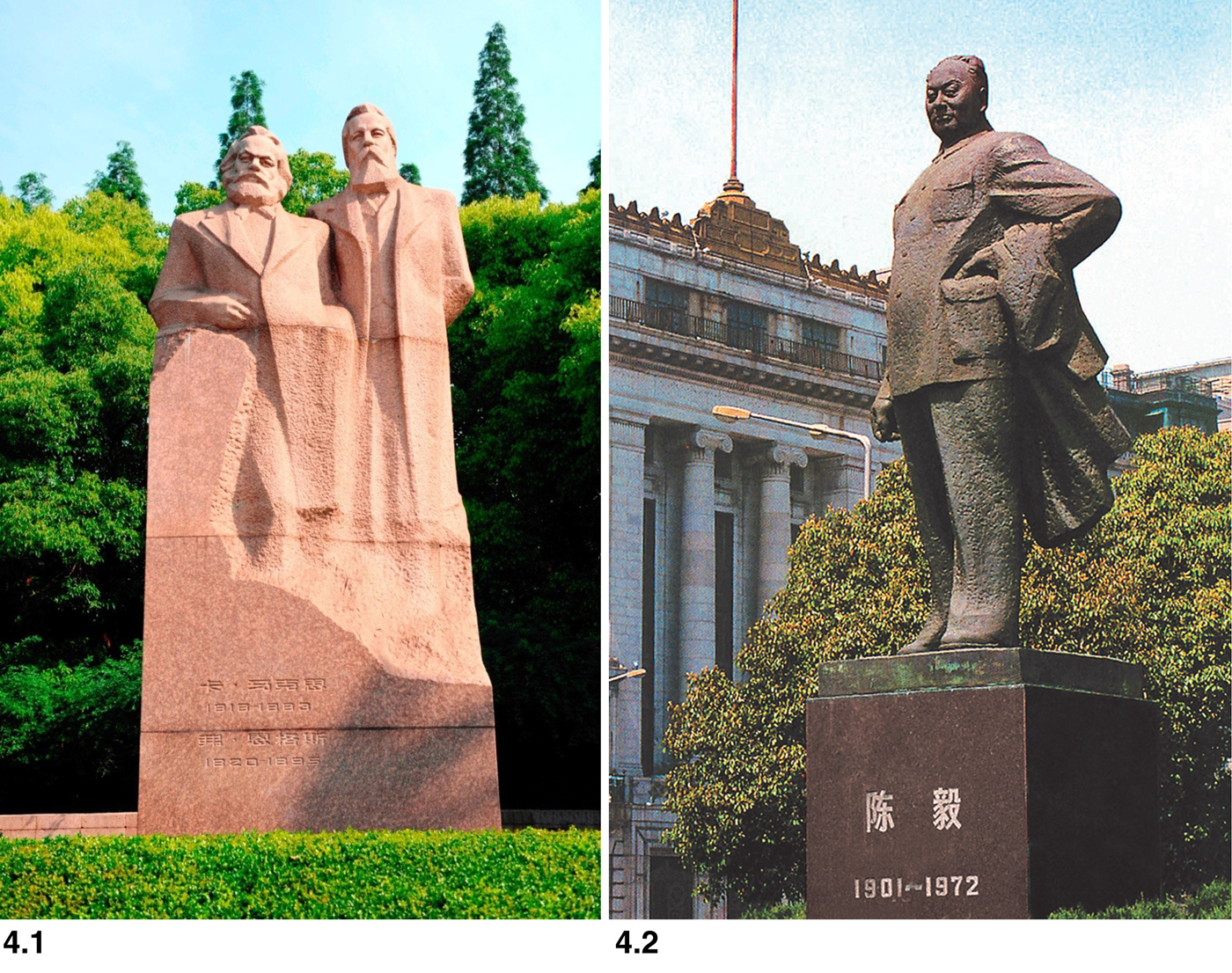
One of the most iconic examples of ideologically explicit sculptures is the massive carved stone statue of Karl Marx and Friedrich Engels, acclaimed as the most visited sculpture in Shanghai.Footnote 59 This monumental statue, 6.4 metres high and installed in a 365-square-metre plaza, features realistic facial modelling and transitions into an abstract-style representation of their bodies in their garments (Figure 4.1). The statue of Chen Yi and the Monument to the People's Heroes are also iconic landmarks on the Bund, overlooking the Huapu river. They symbolize the power of the current regime overshadowing the colonial past of the city, as embodied by a collection of Western, classical-style buildings. The statue of Chen YiFootnote 60 is 6.5 metres tall, cast in bronze, and mounted on a 3.5-metre-tall plinth of polished red granite, situated on the central axis of the plaza. Chen stands up straight, with his chest projecting outward, and clutches a coat draped over his left forearm (Figure 4.2). The Monument to the People's Heroes, completed in 1993, occupies 16,000 square metres of land in the adjacent Huangpu Park. The structure comprises three enormous triangular columns which symbolize the soldiers who sacrificed their lives during three historical periods from 1840 to 1949.
Examples of “Monumental Sculptures” in Shanghai
4.1: Karl Marx and Friedrich Engels by Liu Dawei, 1986, Fuxing Park
4.2: Chen Yi by Zhang Yonghao, 1993, The Bund
Political propaganda is expressed within monumental sculptures through the manipulation of their historical components – historical themes, events or figures. Historic sites are purposively selected; the narrative functionality of urban sculptures enables them to embrace a dimension of symbolic meanings for the venue. The Hongkou qu diaosu guihua 虹口区雕塑规划 (Hongkou District Urban Sculpture Plan), for instance, includes a list of key historic sites, figures and episodes – for example, Lu Xun tomb, the Shanghai General Post Office Building, Broadway Mansions Building, and residential buildings of past martyrs – in order to inform prospective sculptures.Footnote 63 History is manipulatively represented. For example, at the Party's second nationwide meeting, Zhang Guotao 张国焘was the actual leader while Mao was merely a follower. However, in one art grouping, the patron (local government) decided to swap the two figures in representation.Footnote 64 This example embodies the traditional role of monuments as agents that intervene in history as interpreted by the present-day nexus of power.Footnote 65
The trend toward democratized monuments
Despite the continued importance of historic monuments located in prominent locales, a trend towards the democratization of monuments with a veiled didacticism can be observed.Footnote 66 Under the CCP, the slogan “for my employment” has been incorporated with “for the people to embrace,” in an approach partially consistent with CCP's people-centric strategy for propaganda since the revolutionary era, which co-emphasizes political control and community outreach.
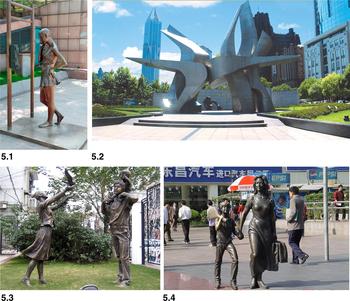
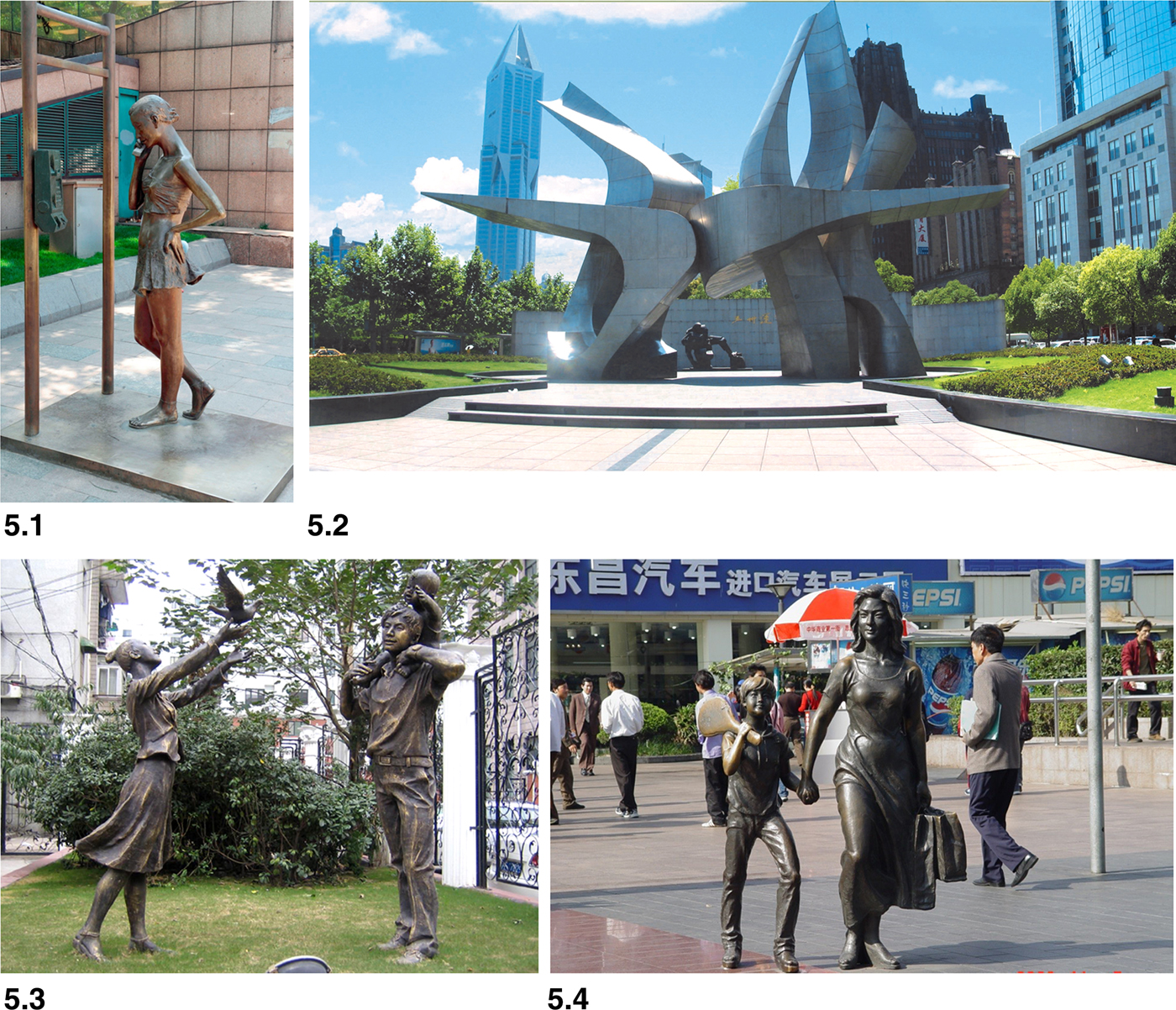
The trend toward a higher degree of democratization and accessibility can be observed. One sculpture in Luwan District depicts a scene of a walking couple encountering a friend riding on a bicycle. Another example is the Telephone Lady (dadianhua de shaonü 打電話的少女) sculpture (Figure 5.1) on Shanghai's Huaihai Middle Road. The 1.78-metre-tall, life-sized sculpture is erected on a road of historical and cross-cultural significance;Footnote 67 it is used and viewed as a “meeting point” and a landmark for locals. Sans plinth, the cosmopolitan “young woman casually and confidently” striking a pose while on the phone has been transformed from a sculptural “it” to a “her.”Footnote 68 Its value lies in its being reflective and constitutive as a snapshot of the city's “image, observations, and dialogues,” shaping a sense of everyday spatiality.
Examples of “Democratized Sculptures” in Shanghai
5.1:Telephone Lady by He Yong, 1996, Huaihai Road, Shanghai
5.2:May 30th by Yu Jiyong, 1986, Nanjing Road
5.3:Harmonious Society by Zhongyi Company, 2006, Lane 698, Wuyi Road
5.4:Sculpture Depicting Figures Shopping, by Zhang Yonghao and others, 2001, Nanjing Road, Shanghai
Artworks are favoured when they are vivid in their portrayal of political-cultural character and “accurately,” closely and creatively portray themes of everyday life. A statue of Nie'er 聶耳, a revolutionary composer, is one such case.Footnote 69 It is believed that through the democratization of monumental statues, Shanghai sculptures have come to reflect the city's open, multicultural and encompassing aspects.Footnote 70 Zhu references his experiences walking along Duolun Road – “one-of-a-kind cultural street” enriched by sculptures and plaques providing information on monuments of significant figures – which fosters an atmosphere of cultural abundance.Footnote 71
The model of public appreciation and involvement has stimulated an expansion of artistic styles within existing genres, including abstraction and minimalism.Footnote 72 Even monuments for political didacticism are not fixated on allegorical languages. One example is Yu Jiyong's 余积勇 iconic revolutionary monumental artwork “May 30th” (Figure 5.2), representative of abstract modernism. The two Chinese numerical characters are represented with entwining steel spirals similar to the design of the Guggenheim Museum in Bilbao by Frank Gehry, but created ten years earlier.
It should be noted that the diverse genres representing ordinary people's lives are not devoid of “representational space.”Footnote 73 Many sculptures symbolize the political slogans of propaganda. In one example of sculpture groupings themed around family, each person holds peace doves in hands, symbolizing “harmonious society” (hexie shehui 和谐社会) a slogan promoted by then president Hu Jintao 胡锦涛 (Figure 5.3). Another example of implicit didacticism can be seen on Nanjing Road where a group of sculptures depict the theme of shopping. The sculptures are life-sized, installed on the ground without plinths, and family-based relationships are represented. The human figures all reveal enjoyment and satisfaction (Figure 5.4). A certain concocted underlying ideology concerning economic prosperity and support for the Party is evident.
Urban Sculptures as a Tool for Urban Entrepreneurialism
The proliferation of “aesthetic sculptures” is another major feature of Shanghai's urban sculpture scene. This section argues that urban sculptures have been serving placemaking and city marketing functions. They have also distracted public attention away from critical social issues.
The entrepreneurial role of urban sculpture emanates from a transition in government policy towards pragmatic goals. The master plan clearly states: “The use of public art and urban sculpture to shape a city's image and fashion city branding, is a significant strategy in modern city development.”Footnote 74 Accordingly, the “aesthetic sculpture” section has quickly expanded. By 2004, of the 1,034 sculptures in Shanghai, 30 per cent were commemorative and allegorical, while 70 per cent were decorative and mainly for aesthetic purposes.Footnote 75 This is consistent with the district-based statistics in Tables 2 and 3, reflecting an increase in genre and thematic variety.
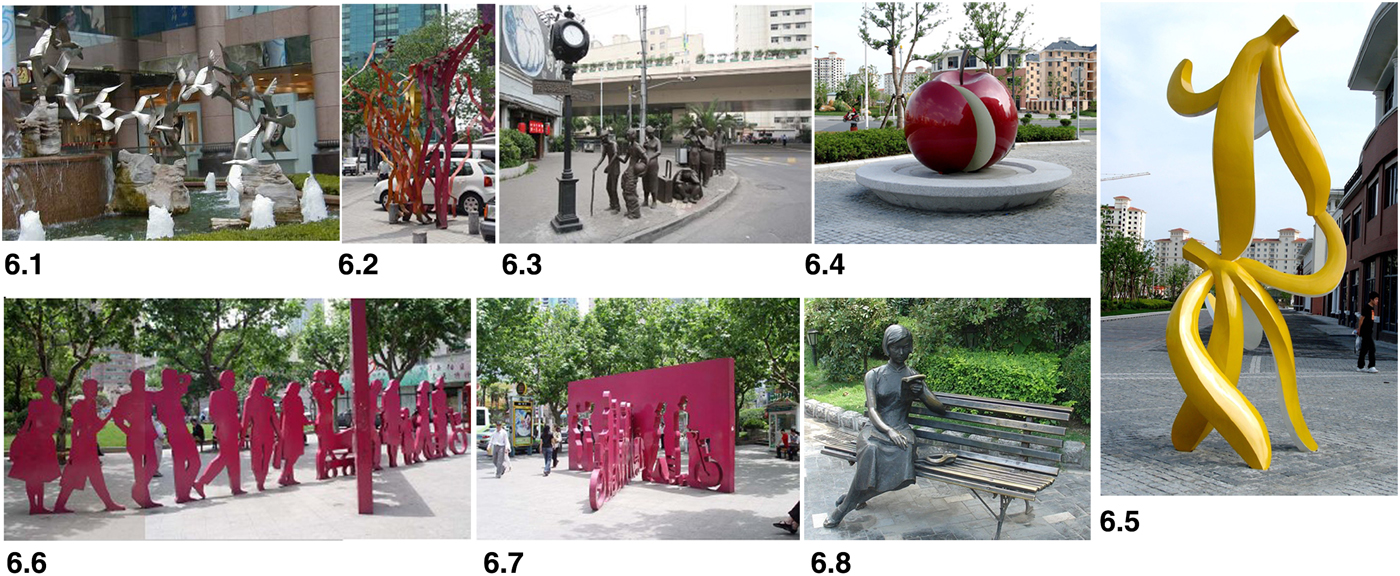
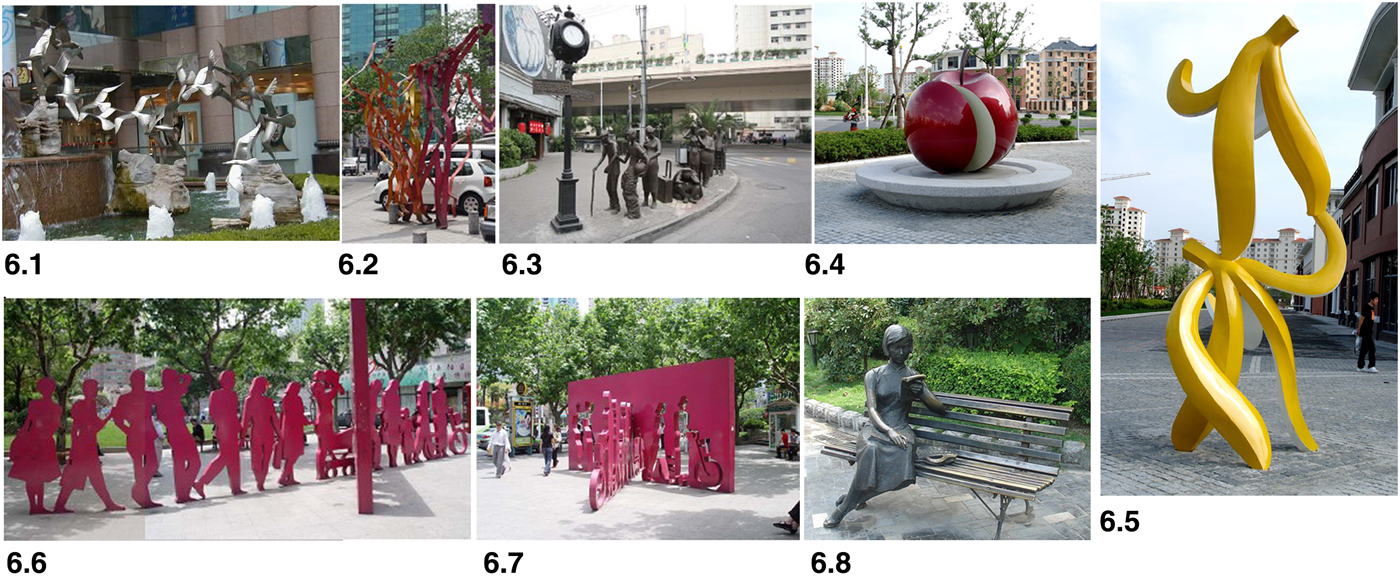
Aesthetic sculptures have been receiving growing recognition, and the criteria include: 1) compatibility of the artworks and their surroundings; 2) the visual effect of the artworks; 3) public reception; and 4) the artistic treatment of details.Footnote 76 In one example of a flock of flying birds, the bird wings stick to one another, projecting a dynamic look onto the building façade of a commercial building on Huaihai Road. Running water in the fountain accentuates its sparkling appearance. Innovative artistic languages, novel design techniques and new materials have also been adopted (Figure 6.1). The sculpture Dancer on Yuyuan Road, for instance, represents the idea of “movement” through twisted steel bands (Figure 6.2). In another example in Jing'an District, pop art has been overlaid on a group of sculptured figures waiting for the bus; their individualized features have been exaggerated. Pop art evokes a sense of humour, breaking the tedious boredom of waiting (Figure 6.3). Another sculpture Enjoyable Journey shows a group of figures cut out of 2-D board and installed perpendicular to the original board through the empty part. The colour fuchsia suggests auspicious omens that may delight the audience (Figures 6.6–6.7). A series of popularly received sculptures called Dancing Fruit is an outstanding example of vigour (Figures 6.4–6.5).
Examples of “Aesthetic Sculptures” in Shanghai6.1:Seagull, Jiuhan Property Ltd, 1996, No. 333 Huaihai Road, Shanghai 6.2:Dancer by Shi Yong, 2002, Yuyuan Road, Shanghai 6.3:Waiting, Zongyi Advertising and Decoration Ltd, 2007, Nanjing Road West, Shanghai 6.4:Red Apple by Zhou Xiaoping, Expo 2010, Shanghai 6.5:Dancing Banana Peel by Zhou Xiaoping, Expo 2010, Shanghai 6.6–6.7:Enjoyable Journey by Shi Yong, 2000, Nanjing Road West, Shanghai 6.8:Ding Ling by Wu Huiming, 1999, Sichuan Road, Shanghai
Historical urbanity in Republican Shanghai has been exploited as a type of symbolic capital. Hongkou District displays a sense of obsession with Republican urban lives, for example, Shanghai's first cinema, urban life at Suzhou Creek piers, trams in old Shanghai, and storytelling performances in old Hongkou. Through sculpture, historical urbanity informs the images of a city associated with the prevailing modernity of the former alleged “golden age,” with attractive results.
A number of sculptures have embraced participatory functionality to engage pedestrians. As one author observes:
far from being static entities, urban sculptures … not only enrich the material form of the city but also summon residents to appreciate their forms and therefore encourage people to become more involved in the complex tapestry of the city's fabric.Footnote 77
In Jing'an and Hongkou Districts, public parks display artworks that encourage sports. Some of the figure sculptures are installed on one end of the chairs, leaving the remaining space to engage visitors (Figure 6.8).
The entrepreneurial features of urban sculptures have been reinforced through site planning and design. Sculptures located on the landscape corridors and in development zones, for example, commercial streets, historic quarters and parks, are of significance.Footnote 78 Of the current sculptures in Yangpu District, 20.9 per cent are located along main and minor streets, such as Siping Road, Kongjiang Road and Changyang Road.Footnote 79 Moreover, “district,” as a spatial design component, has been applied in order to concentrate artworks within certain geographical areas, for example, Jing'an Sculpture Park and Yuehu Park.Footnote 80
With sculpture, the government's intention of developing attractive urban images to boost the local economy is evident. Shanghai's mainstream media that speaks for the state describes the “economic benefits that city sculptures bring” citing the UK as an example of an economy that generates over US$5 billion every year from tourism as the outcome of its government policy. The highly individualistic and vibrant city sculptures attract tourists to London.Footnote 81 A speech at the Shanghai International Sculpture Conference cited Zhuhai in Guangdong as a successful case of a small fishing village and wasteland transformed into a “vibrant and youthful city” after a “seaside sculpture” was erected.Footnote 82 The cases above are representative of a distinctive entrepreneurial approach.
Globalization in the Indigenized Context
The urban sculpture scene in Shanghai has been shaped by the trend of globalization; in the meantime, “globalization” has been politically manipulated through urban sculptures. What follows is an examination of the importation of overseas artworks and a display of Chinese domestic arts to the world.
Selectively importing artworks through global flows
Overseas artworks are selectively invited, accepted and displayed. The primary goal of importation is to educate local people using exemplary foreign figures, aside from promoting urban entrepreneurialism. Dongfang Lüzhou 东方绿舟 (Oriental Land Youth Zone and Holiday Village) for instance, aims to inspire the young through its installation of more than 160 sculptures of artists, thinkers and scientists. Acclaimed classic artworks from different historical periods were imported to enrich people's knowledge of Western art history. With sufficient funds from entrepreneurs, Rodin's The Thinker, César's Le pouce, Arman's Cavalleria eroica and other famous works were purchased for placement in the city. Another example of art importation is the invitation in 2006 of the renowned French sculptor, Pierre Marie Lejeune, to the Sino-Franco Sculptor Design Exhibition, where “a total of over 40 pieces of sculpture” were displayed.Footnote 83 Lejeune himself fits the criteria of celebrated foreign artist with little associated political conflict.Footnote 84
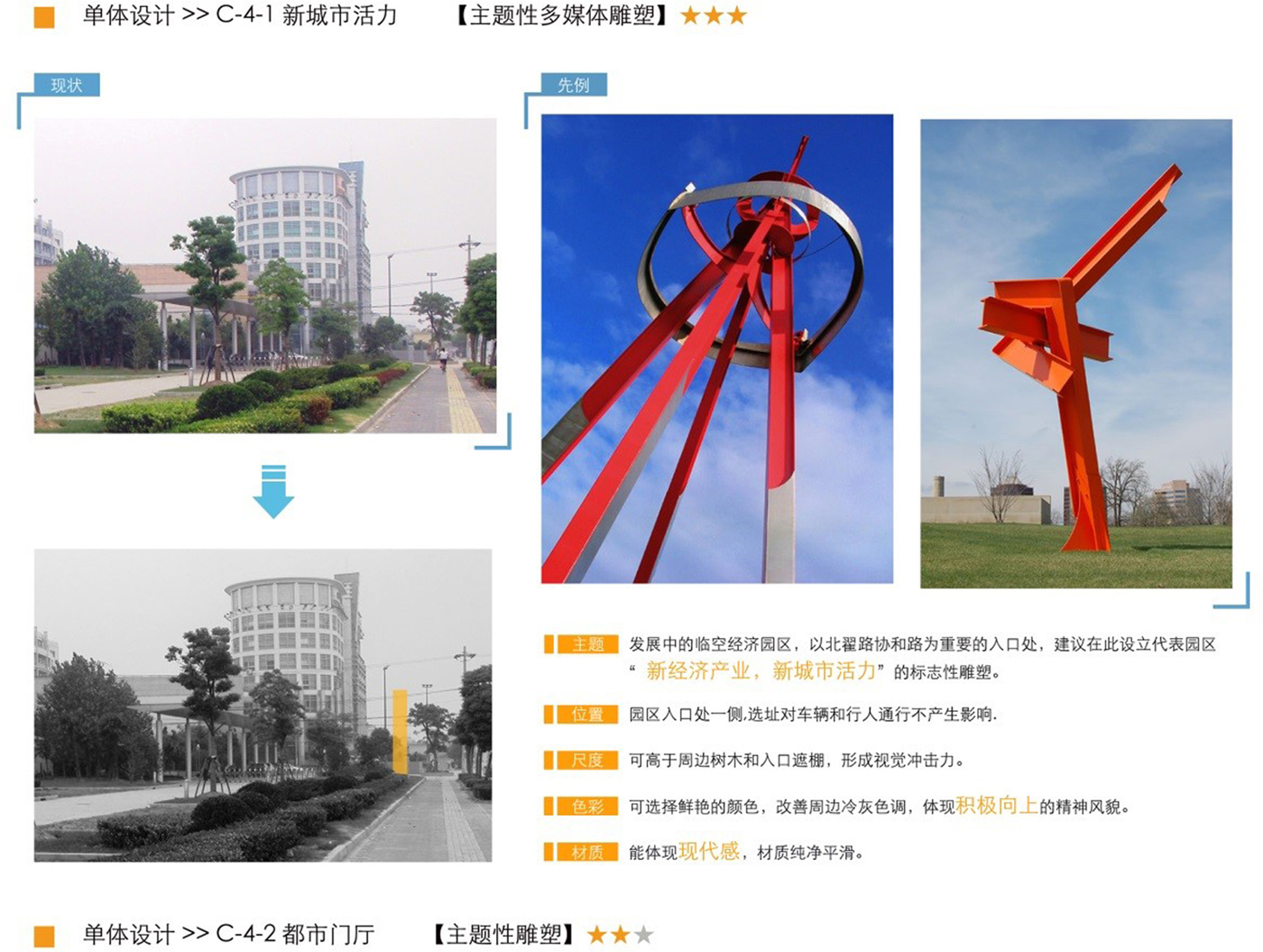
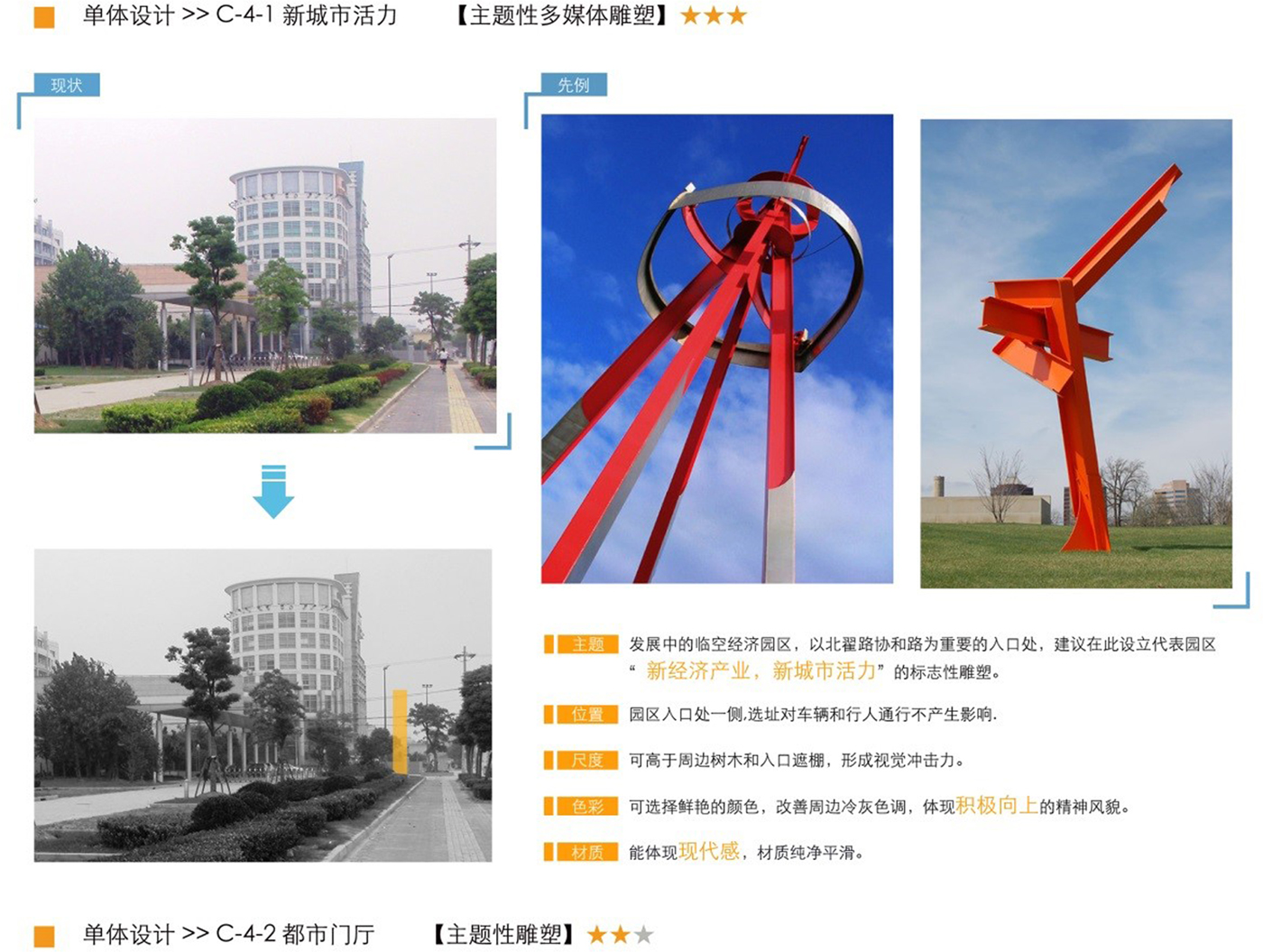
To this end, the government's efforts are further seen in the Sunshine Urban Garden residential area which contains an assortment of classical replicas (of angels and the goddesses Venus and Luna, for example) in the public open space at the entrance. Modernist-style sculptures adopted from the West also flourish. In the Changningqu chengshi diaosu zongti guihua 长宁区城市雕塑总体规划 (Changning Urban Sculpture Master Plan), for instance, to help inform the design of a proposed sculpture at the entrance to an economic park, a picture of Di Suvero's work in New York from 1970 was included. In another case, a picture of Alexander Calder's The Flamingo in Chicago was used to guide the design of a sculpture on Tianshan West Road (Figure 7).Footnote 85 As Zhu describes: “When the manifold streams of modern sculpture are accepted by Shanghai, the introduction of world-renowned sculptors becomes a natural consequence.”Footnote 86
Urban Plans that Include International Examples of Sculpture
Mega events have enhanced cultural exchange through design competitions, thereby importing fashionable design concepts and skills from abroad. In the run-up to the 2010 Expo, a sculpture exhibition included a total of 190 artists from Europe, Canada and the US.Footnote 87 More than 200 design teams bid for sculpture projects at Expo 2010. Finally, François Mitterrand Art Centre in France, Taipei Art Association, and the local Shanghai East Normal University teams won the bidding.Footnote 88
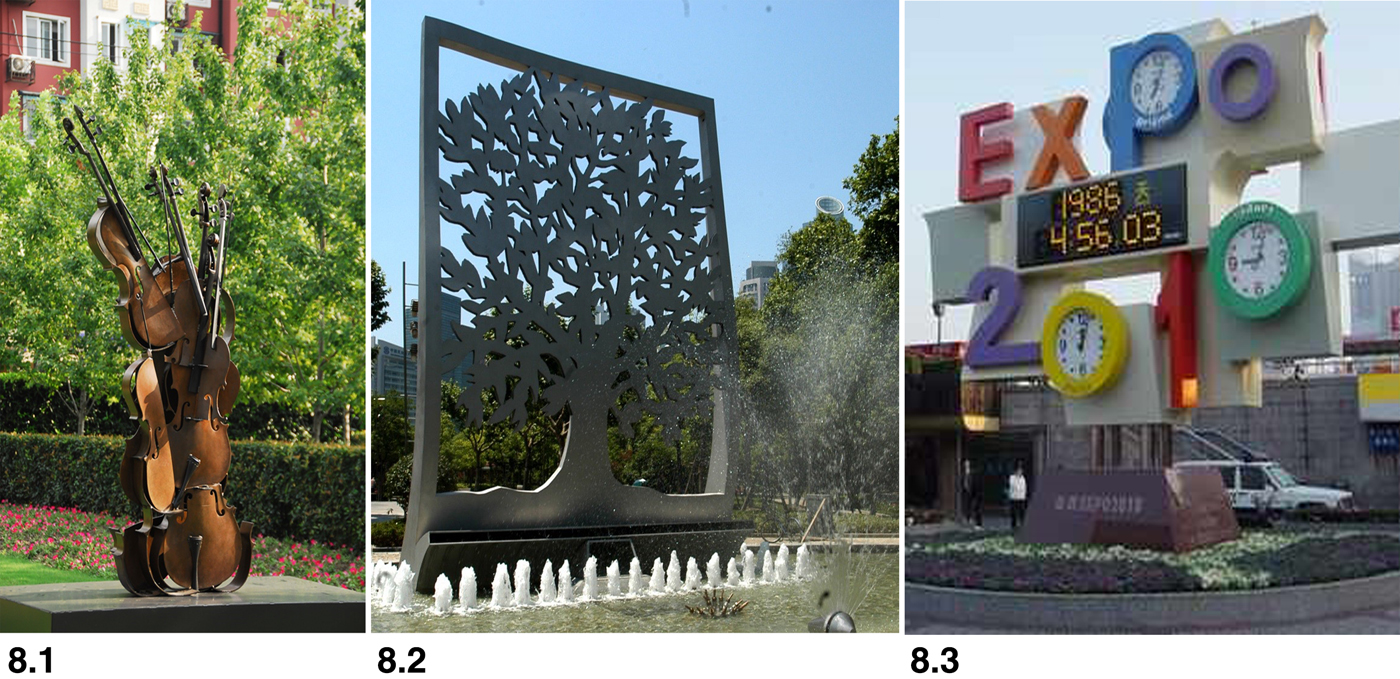
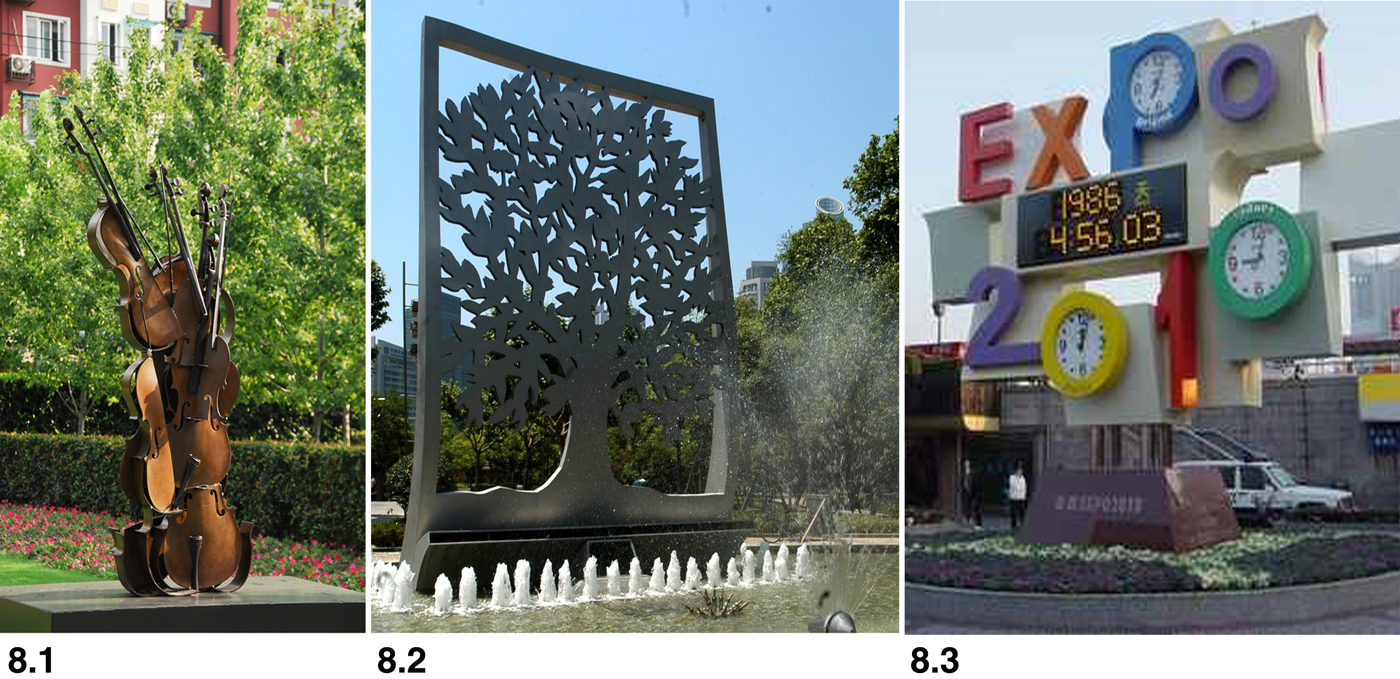
The Jing'an Sculpture Park is one case of importing modernist-style sculptures from abroad. It is a collection of around thirty artworks by world-renowned artists. For instance, Merciful Ferry by Arne Quinze is made of yellow and red bamboo in the shape of expansive umbrellas, generating a sense of movement such as blowing winds or floating clouds. The music series by Arman Fernandez was installed in prominent fountain locations (Figure 8.1). These artworks serve to shape the perception of the public.
Examples of Globalization through Urban Sculptures in Shanghai8.1:Music Series by Arman Fernandez, 2009, Jing'an Sculpture Park 8.2:Replica of La fontaine de l'espoir, a Gift from France to the Shanghai Government, 2005 8.3:Approaching Expo 2010 Anon., 2007
Nevertheless, it should be noted that irrespective of occasion, imported artworks can be banned immediately if they are considered ideologically inconsistent with the party-state. A sculpture team leader at the Shanghai Expo 2010 disclosed that one overseas design team from the François Mitterrand Art Centre proposed design schemes at the beginning of the competition – one artwork combining a dead fish with a fighter; the other resembling a huge medical pill (9 × 3 × 3 metres) – aimed at questioning the purpose of the World Expo and whether it can relieve the symptoms of political, economic and religious problems. Unfortunately, the proposed designs were considered controversial and officially banned.Footnote 89
Chinese scholars support the government's views in the media. To them, foreign sculptors and their works ought to be chosen and incorporated “with care” – “the government must consider and balance.”Footnote 90 Even artworks presented as gifts are screened. During the interview, the former president of the Artists’ Association gave one example: “Years ago, the French city of Marseille made a replica of La fontaine de l'espoir to be placed at the Xu Jiahui Park, as a gift of friendship to Shanghai” (Figure 8.2). In another case, a sculpture gift from the Mexican government was not accepted.Footnote 91
Showcasing national symbols to the world
Urban sculptures are utilized to manipulate Shanghai's image and also international perceptions of China. Both local institutions and the urban environment shape the notion of globalization. Urban sculptures are considered as having a far-reaching influence on the cityscape, the urban image of Shanghai, and also on its display of civic spirit.Footnote 92
By this logic, the symbols of the nation and the city are popular sculpture themes. For example, the magnolia is the city flower of Shanghai; it is widely used in urban sculptures to indicate the cosmopolitan spirit of the city (for example, the magnolia sculpture at the South Pudong bridge). The prominent transportation node where this sculpture is located serves as a focal point of transition for traffic routes and underlines the importance of this landmark.
At the Shanghai Expo 2010, a number of symbolic sculptures were created to serve as a welcoming gesture of internationalization, surrounding the theme of the Expo. One example is the landmark Approaching Expo 2010 installed on the riverfront green area on the Bund (Figure 8.3). Its central element is a clock showing the days remaining until the opening ceremony of the event. The clock was surrounded by white concave and convex boxes. This confluence between global and local, and the socially constructed image of the city, may appear “successful” thus far.
In addition, artworks representing national or city symbols are often presented as gifts in the service of diplomatic goals. Recently, the Shanghai government offered a choice of sculptures as a gift to the city of Basel in Switzerland. The Swiss local government selected a four-metre-long boat sculpture made by a Shanghai artist.Footnote 93
Conclusion
This paper presents an interpretation of the flourishing urban sculpture scene and the manner in which it has been produced from the perspective of “Chinese urban landscapes.” It argues that political didacticism remains the primary concern concerning urban sculptures, but there is a transition from explicit into soft or veiled didacticism as reflected by a growing number of democratized monuments for people to love, as well as an expansion of aesthetic and symbolic sculptures. In other words, the uniformity of the didactic functionality of sculptures has been broken, but an expansion of existing genres, as well as a higher degree of professional artistic autonomy for the purpose of cultivating entrepreneurialism and globalization, has been shaped by continuing ideological controls.
This paper unfolds discourses on urban sculpture and its associated planning practices since 1949. It also shows that a two-tier planning structure (comprising municipal and district-level authorities) has been operating to enact urban sculpture plans. The interaction between the state and the business sector boosts ideologically controlled urban entrepreneurialism: the state censors sculptures proposed by the business sector and enlists its participation in production. The communities, however, are excluded from decision-making. The outcome of the urban sculpture production system is an ideologically orchestrated and entrepreneurial urban sculpture scene that has generated economic returns along with fundamental contributions to political stability.
Three points about Shanghai's urban sculpture scene justify this finding. First, didactic monuments continue to be the dominant type of urban sculptures, but they are presented in a people-friendly manner. Second, the aesthetic attractiveness of urban sculptures can be observed. Such symbolic capital has been serving placemaking and city marketing functions, while distracting public attention away from critical social issues. Third, “globalization” involves selective importation and display of overseas and domestic artworks in alignment with the Party's interests.
This paper provides theoretical insights into urban entrepreneurialism in China. It introduces the concept “urban sculpture” into the discourse: contrary to the literature, urban sculpture, as one type of aesthetic asset for urban entrepreneurialism, contributes to the power and stability of the national regime in addition to economic development. This article has also introduced the term “urban sculpture” into the discourse of China's globalization. It shows that urban sculpture serves as a medium in China's globalization process, through which the state appropriates artistic language and art forms from abroad and represents the spirits and images of the country and city. “Urban sculpture” provides a new perspective to understanding the manner in which “globalization” is ideologically constructed in China.
Biographical note
Jane ZHENG is a distinguished research fellow at the Shanghai Theatre Academy. Her academic research interests are in modern Chinese art and cultural development in Chinese cities.
Acknowledgements
The work described in this paper has been funded with grants obtained from the Shanghai Education Committee Gaoyuan Discipline Construction Initiative II: Gaoyuan Shanghai Theatre Academy Art Theories (上海市教育委员会高原学科建设计划 II 高原上海戏剧学院艺术学理论) and the Research Grants Council of the Hong Kong SAR (GRF 14600215). I am very grateful to Zheng Jiashi for advice and support in empirical work. I thank Zhou Jingjing and Hou Yanyuan for field work assistance. Sincere thanks also go to Chloe Lam and Andrew Young for assistance at the writing stage.