Introduction
The optimal care for patients with acute or chronic coronary artery disease (CAD) needs a multi-disciplinary approach to reduce morbidity and mortality, improve symptoms and quality of life. There is reasonable evidence for the beneficial effect of a variety of interventions, including medical therapies, coronary revascularization, cardiac rehabilitation programs or lifestyle changes, such as quit smoking, healthy diet and physical activity (Fihn et al., Reference Fihn, Blankenship, Alexander, Bittl, Byrne, Fletcher and Smith2014; Knuuti et al., Reference Knuuti, Wijns, Saraste, Capodanno, Barbato, Funck-Brentano and Clapp2020).
A comprehensive approach to improving the care for these patients should consider the psychological impact of the disease, including behavioral and several psychological factors, such as depression, anxiety, stress or anger, which have been empirically linked to increases in cardiovascular risk (Chida & Steptoe, Reference Chida and Steptoe2009; Nicholson, Kuper, & Hemingway, Reference Nicholson, Kuper and Hemingway2006; Roest, Martens, de Jonge, & Denollet, Reference Roest, Martens, de Jonge and Denollet2010; Rozanski, Reference Rozanski2014) and lower quality of life (Appels et al., Reference Appels, Van, Bar, van der Pol, Erdman, Assman and Pedersen2006). Several psychological interventions (PIs) have been tested in this context and positive results have been described in narrative reviews (Linden, Reference Linden2000, Reference Linden2013) and meta-analyses (Dickens et al., Reference Dickens, Cherrington, Adeyemi, Roughley, Bower, Garrett and Coventry2013; Linden, Phillips, & Leclerc, Reference Linden, Phillips and Leclerc2007; Richards et al., Reference Richards, Anderson, Jenkinson, Whalley, Rees, Davies and Taylor2018; Rutledge, Redwine, Linke, & Mills, Reference Rutledge, Redwine, Linke and Mills2013).
However, the routine use of PIs in cardiac rehabilitation programs remains controversial because, while these are recommended (Knuuti et al., Reference Knuuti, Wijns, Saraste, Capodanno, Barbato, Funck-Brentano and Clapp2020) and implemented in high-income countries (Abreu et al., Reference Abreu, Pesah, Supervia, Turk-Adawi, Bjarnason-Wehrens, Lopez-Jimenez and Grace2019; Supervia et al., Reference Supervia, Turk-Adawi, Lopez-Jimenez, Pesah, Ding, Britto and Grace2019), this is not the case everywhere (Moghei, Oh, Chessex, & Grace, Reference Moghei, Oh, Chessex and Grace2019; Poffley et al., Reference Poffley, Thomas, Grace, Neubeck, Gallagher, Niebauer and O'Neil2017). Controversies, such as which specific treatment components should be included, the type and duration of interventions, professional involved, duration of follow-up, and specific endpoints, may contribute to the limited inclusion of PIs in cardiac rehabilitation programs (Linden, Reference Linden2013), and may explain in part why PIs have shown beneficial effects in CAD patients but with modest effects (Dickens et al., Reference Dickens, Cherrington, Adeyemi, Roughley, Bower, Garrett and Coventry2013; Linden, Reference Linden2000, Reference Linden2013; Linden et al., Reference Linden, Phillips and Leclerc2007; Richards et al., Reference Richards, Anderson, Jenkinson, Whalley, Rees, Davies and Taylor2018; Rutledge et al., Reference Rutledge, Redwine, Linke and Mills2013). This may also be due to the use of different definitions or types of PIs. Although cognitive-behavioral treatment (CBT)-based PIs have been suggested as the most effective for CAD patients (Linden, Reference Linden2013), with two exceptions (Dickens et al., Reference Dickens, Cherrington, Adeyemi, Roughley, Bower, Garrett and Coventry2013; Linden et al., Reference Linden, Phillips and Leclerc2007), a number of meta-analyses included broader categories of PIs, such as those based on not well-established paradigms, mixed PIs, and psychopharmacological treatments (Richards et al., Reference Richards, Anderson, Jenkinson, Whalley, Rees, Davies and Taylor2018; Rutledge et al., Reference Rutledge, Redwine, Linke and Mills2013). Finally, only negative psychological outcomes were assessed (Dickens et al., Reference Dickens, Cherrington, Adeyemi, Roughley, Bower, Garrett and Coventry2013; Linden, Reference Linden2000, Reference Linden2013; Linden et al., Reference Linden, Phillips and Leclerc2007; Richards et al., Reference Richards, Anderson, Jenkinson, Whalley, Rees, Davies and Taylor2018; Rutledge et al., Reference Rutledge, Redwine, Linke and Mills2013).
Cardiovascular positive health (Labarthe et al., Reference Labarthe, Kubzansky, Boehm, Lloyd-Jones, Berry and Seligman2016), a new concept based on the positive psychology paradigm (Seligman, Steen, Park, & Peterson, Reference Seligman, Steen, Park and Peterson2005) has emerged recently. It focuses on positive psychological factors, mainly dispositional optimism, happiness, positive emotions, sense of purpose or vital satisfaction, as potentially having a role in reducing cardiovascular risk (Boehm & Kubzansky, Reference Boehm and Kubzansky2012; DuBois et al., Reference DuBois, Lopez, Beale, Healy, Boehm and Huffman2015; Labarthe et al., Reference Labarthe, Kubzansky, Boehm, Lloyd-Jones, Berry and Seligman2016). Positive effects have been reported for some PIs based on the positive psychology therapy (PPT) paradigm in cardiac rehabilitation patients (Bolier et al., Reference Bolier, Haverman, Westerhof, Riper, Smit and Bohlmeijer2013; Huffman et al., Reference Huffman, Millstein, Mastromauro, Moore, Celano, Bedoya and Januzzi2016) but only in small trials, not considered in prior meta-analyses (Dickens et al., Reference Dickens, Cherrington, Adeyemi, Roughley, Bower, Garrett and Coventry2013; Linden, Reference Linden2000, Reference Linden2013; Linden et al., Reference Linden, Phillips and Leclerc2007; Richards et al., Reference Richards, Anderson, Jenkinson, Whalley, Rees, Davies and Taylor2018; Rutledge et al., Reference Rutledge, Redwine, Linke and Mills2013).
The aim of this systematic review and meta-analysis was to evaluate the evidence supporting the efficacy of PIs on improving negative psychological outcomes (depression, anxiety, stress, and anger) as well as positive outcomes (happiness and vital satisfaction), specifically in patients with CAD, including only studies testing the efficacy of empirically supported psychological techniques based on CBT and/or PPT.
Methods
This systematic review was conducted in accordance with the Cochrane Handbook for systematic reviews of interventions (Higgins & Green, Reference Higgins and Green2011) and reported according to the Preferred Reporting Items for Systematic Reviews and Meta-Analyses (PRISMA) standards (Moher, Liberati, Tetzlaff, & Altman, Reference Moher, Liberati, Tetzlaff and Altman2009).
Study search and selection criteria
We searched PubMed, PsycInfo, Scopus, The Web of Science, and Cochrane Library for randomized controlled trials (RCTs) evaluating PIs in patients with CAD or ischemic heart disease (IHD). The keywords used were CAD, IHD, acute coronary syndrome, psychological treatment, PI, cognitive-behavioral therapy, and positive psychology intervention. The search strategy for all databases is available in the online Supplementary material. No language limitations were imposed. In addition, we also searched reference lists of papers. The searches were done twice: First on May 2017 and an update in May 2018. We excluded case reports, editorials, meta-analyses, narrative reviews, and proceeding studies. Studies were eligible for inclusion if they met the following criteria: RCTs in humans including patients with CAD or IHD; the PIs and psychological techniques used in these therapies were based on CBT or PPT; and at least one of the psychological endpoints considered in this meta-analysis was reported. Exclusion criteria were: studies in which patient assignation to treatment conditions were not randomized or where there was no control group; PIs based on any treatment approach different to CBT or PPT; studies not describing the specific techniques used in their PIs; and when the treatment strategy only included physical exercise and educational or counseling programs. Selected studies were saved and screened using Mendeley (Reference Management Software & Researcher Network). Titles and abstracts of the citations identified from the searches were examined by three reviewers independently (IM, RJ, and LC) and disagreements were resolved by discussion.
Types of interventions
Two different types of PIs were considered: CBT and PPT paradigm. Both were PIs done in cardiac rehabilitation programs delivered by health professionals, including only adults diagnosed with CAD or IHD. We defined CBT as empirically supported PI based on the idea that learning principles and cognitions play a key role in human behavior and affective experience (Blagys & Hilsenroth, Reference Blagys and Hilsenroth2002), with an aim to reduce psychological distress and promoting an adaptive behavior in daily living by developing skills to manage physiological arousal and negative emotions, modifying dysfunctional beliefs and/or coping; CBT involves techniques such as relaxation training, emotion regulation, cognitive restructuring, problem-solving therapy, and/or relapse prevention (Blagys & Hilsenroth, Reference Blagys and Hilsenroth2002). PPT was defined as PIs focused on intervening on positive psychological dimensions and traits, such as positive emotions, vital satisfaction, dispositional optimism, happiness, or purposes of life and their link to well-being, and therefore aimed at developing individual strengths and not just correcting weaknesses through specific empirically supported positive techniques, such as gratitude training, three good things in life, developing you at your best or identifying and using signature strengths among others (Lee Duckworth, Steen, & Seligman, Reference Lee Duckworth, Steen and & Seligman2005; Seligman et al., Reference Seligman, Steen, Park and Peterson2005). PIs based on other psychological paradigms (e.g. psychodynamic, social learning theory, etc.) were excluded. Control groups were defined as those receiving usual cardiac rehabilitation, which could only include specific educational and/or physical activity training programs and medical treatment.
Psychological outcomes
Primary outcomes were depression, anxiety, stress, anger, vital satisfaction, and happiness. Secondary outcomes included negative affect, positive affect, hostility, daily activities, quality of life, and dispositional hope. These psychological outcomes were assessed by psychological self-report questionnaires designed specifically to quantify these psychological factors with adequate psychometric criteria. Outcomes were measured at the end of intervention (post-treatment) and/or at the end of the pre-specified follow-up time when this was longer than the intervention.
Data extraction
Three reviewers carried out data extraction independently and recorded on a Microsoft Excel® spreadsheet. Extracted data included year of publication, reference, patient population, study design, total patients, number of groups, type, techniques and description of PIs, intervention duration, timing of intervention after coronary event, follow-up time, and primary and secondary outcomes (as reported by authors) per intervention arm. After data extraction, two investigators (AVH and HBa) checked for the accuracy of extractions.
Risk of bias assessment
We used the Cochrane Collaboration's risk of the bias assessment tool (Higgins & Green, Reference Higgins and Green2011). The risk of bias was evaluated with the following items: random sequence generation (selection bias), allocation concealment (selection bias), blinding of participants and personnel (performance bias), blinding of outcome assessment (detection bias), incomplete outcome data (attrition bias), selective reporting (reporting bias), and other bias. Four reviewers (IM, RJ, LC, and HBa) evaluated risk of bias independently and labeled each study of having low, high, or unclear risk of bias. Trials with high risk of bias in any of the items of randomization or blinding were rated as having high risk of bias. Any disagreement was resolved by a senior investigator (AVH).
Statistical analysis
For studies reporting medians (m) and interquartile ranges (IQR), means were estimated by x = (a + 2m + b)/4, where m is the median and a and b are P25 and P75, respectively (Higgins & Green, Reference Higgins and Green2011). SDs were estimated using SD= IQR/1.35. When median and ranges were provided, the mean was estimated by x = (a + 2m + b)/4 using the values of the median (m), the smallest and largest value (a and b, respectively); SD was estimated by SD= range/4 if the sample size was <70 and SD= range/6 if the sample size was >70 (Higgins & Green, Reference Higgins and Green2011).
In our analyses, both CBT and PPT were combined as one PI arm. We used random effects meta-analyses and the inverse variance method. The DerSimonian and Laird method was used to calculate the tau estimator of heterogeneity. Effects of PIs v. controls on primary and secondary psychological outcomes were expressed as mean difference (MD) or standardized mean difference (SMD) and its 95% confidence interval (95% CI). SMDs were used as we anticipated different scales to measure primary and secondary outcomes across studies. To interpret SMD we used the guidelines of Cohen (Cohen, Reference Cohen1988): 0.2 was a small, 0.5 moderate, and 0.8 large difference. The analyses of outcomes were adjusted for baseline characteristics.
The degree of statistical heterogeneity was quantified with the inconsistency (I 2) metric (Higgins, Thompson, Deeks, & Altman, Reference Higgins, Thompson, Deeks and Altman2003). A low, moderate, and high degree of heterogeneity was defined as I 2 proportion of <30, 30–60, and >60%, respectively. We performed a number of pre-specified subgroup analyses per outcome: type of PI (CBT v. PPT), type intervention provider (psychologist v. unknown), post-treatment assessment (<10–12 weeks v. >10–12 weeks) and follow-up assessment time (<6 months v. >6 months), session type (group v. individual), type of CAD patient (acute coronary syndrome –ACS– v. any CAD, i.e. both acute and chronic CAD), and risk of bias (high v. low/unclear). Small study effects were evaluated with the funnel plot, and tested with the Egger's test of funnel plot asymmetry (Higgins & Green, Reference Higgins and Green2011). Statistical analyses were conducted using Review Manager (RevMan 5.3; Cochrane Collaboration).
Results
Selection of studies
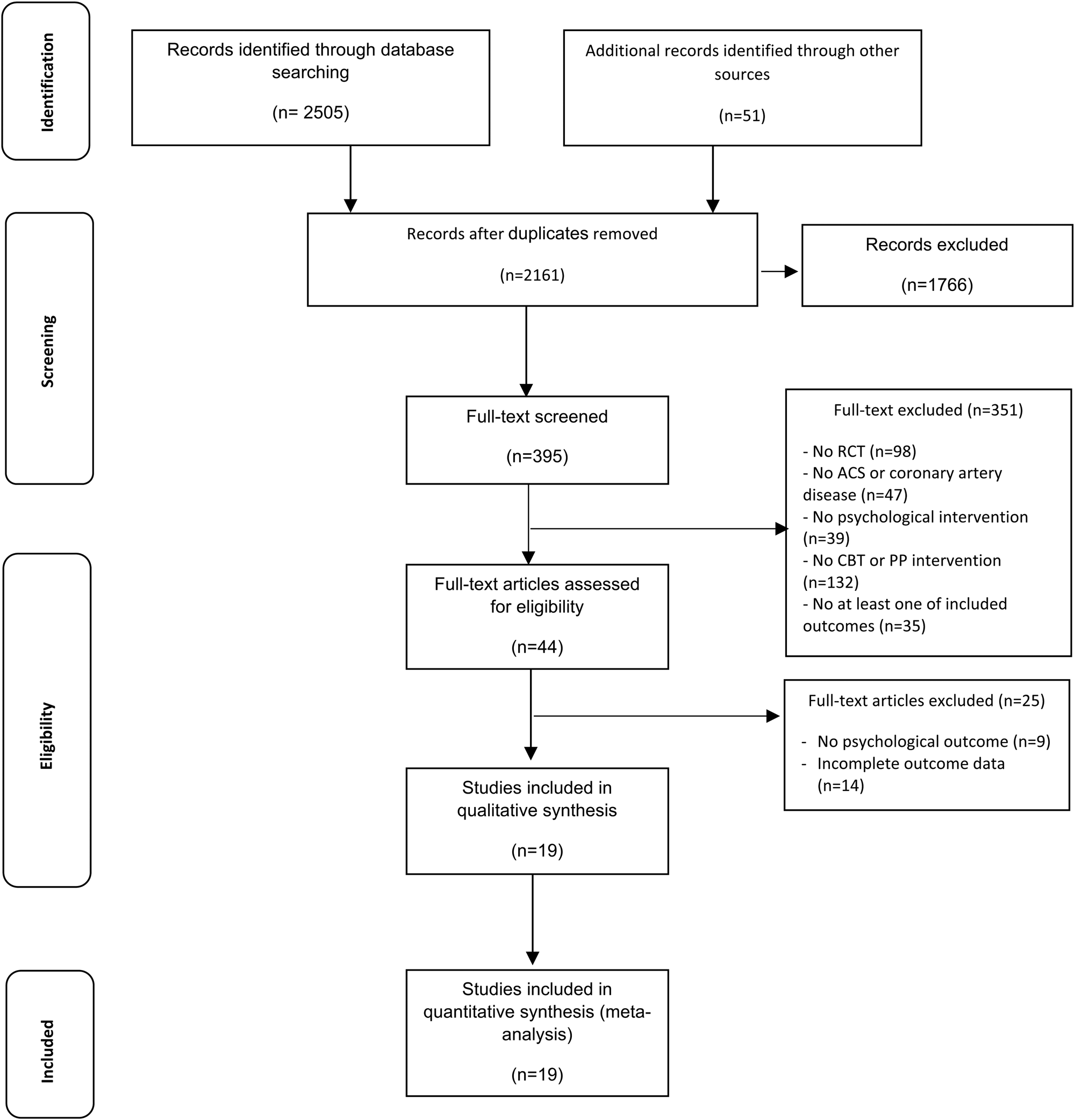
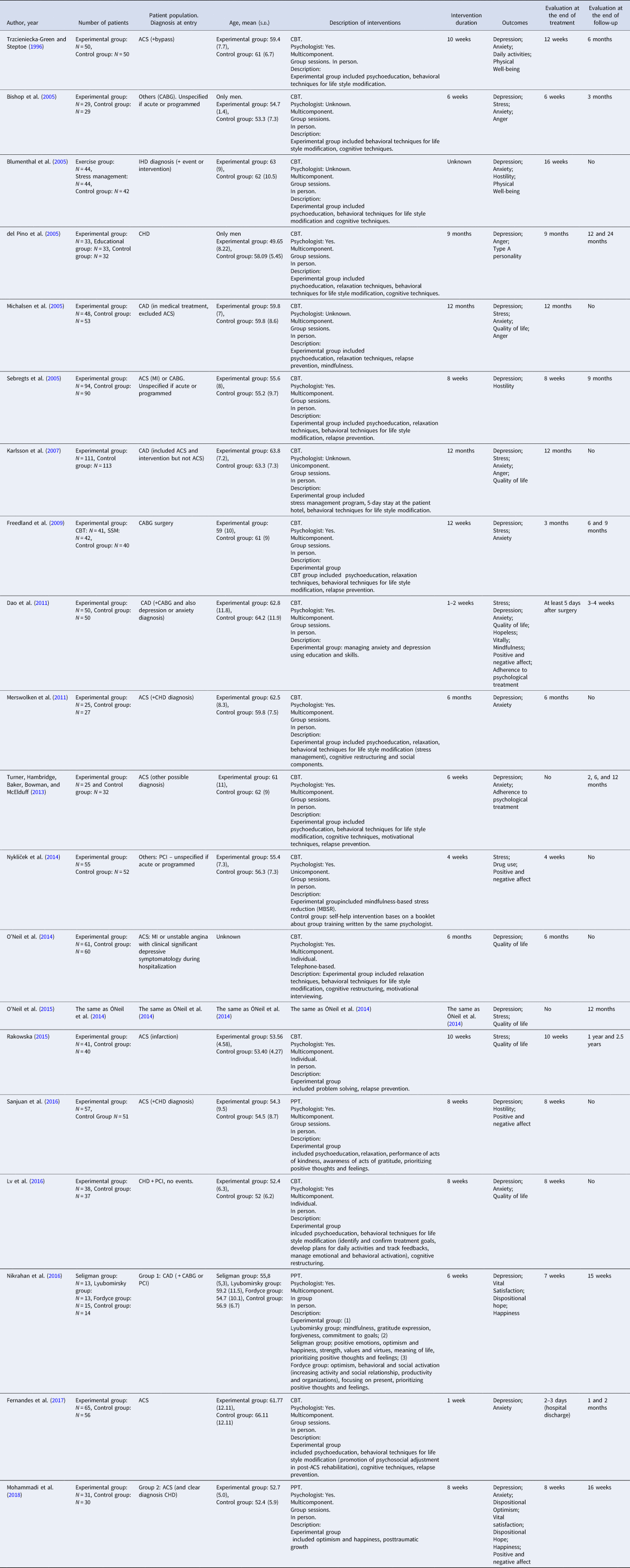
We identified 2556 publications. After removing duplicates and screening titles and abstracts, 395 articles were selected for full text evaluation (Fig. 1). Forty-four trials potentially had relevant information, and finally 19 trials (n = 1956) were found to have outcomes of interest. These 19 trials were reported in 20 studies (Table 1) (Bishop et al., Reference Bishop, Kaur, Tan, Chua, Liew and Mak2005; Blumenthal et al., Reference Blumenthal, Sherwood, Babyak, Watkins, Waugh, Georgiades and Hinderliter2005; Dao et al., Reference Dao, Youssef, Armsworth, Wear, Papathopoulos and Gopaldas2011; del Pino, Gaos, Dorta, & Garcia, Reference del Pino, Gaos, Dorta and Garcia2005; Fernandes, McIntyre, Coelho, Prata, & Maciel, Reference Fernandes, McIntyre, Coelho, Prata and Maciel2017; Freedland et al., Reference Freedland, Skala, Carney, Rubin, Lustman, Davila-Roman and Hogue2009; Karlsson et al., Reference Karlsson, Edström-Plüss, Held, Henriksson, Billing and Wallén2007; Lv et al., Reference Lv, Zhang, Ou, Gu, Su, Tong and Chi2016; Merswolken, Siebenhuener, Orth-Gomér, Zimmermann-Viehoff, & Deter, Reference Merswolken, Siebenhuener, Orth-Gomér, Zimmermann-Viehoff and Deter2011; Michalsen et al., Reference Michalsen, Grossman, Lehmann, Knoblauch, Paul, Moebus and Dobos2005; Mohammadi et al., Reference Mohammadi, Aghayousefi, Nikrahan, Adams, Alipour, Sadeghi and Huffman2018; Murphy et al., Reference Murphy, Worcester, Higgins, Elliott, Le Grande, Mitchell and Goble2013; Nikrahan et al., Reference Nikrahan, Suarez, Asgari, Beach, Celano, Kalantari and Huffman2016; Nyklíček, Dijksman, Lenders, Fonteijn, & Koolen, Reference Nyklíček, Dijksman, Lenders, Fonteijn and Koolen2014; O'Neil et al., Reference O'Neil, Taylor, Sanderson, Cyril, Chan, Hawkes and Oldenburg2014; Reference O'Neil, Taylor, Hare, Sanderson, Cyril, Venugopal and Oldenburg2015; Rakowska, Reference Rakowska2015; Sanjuan et al., Reference Sanjuan, Montalbetti, Pérez-García, Bermúdez, Arranz and Castro2016; Sebregts, Falger, Appels, Kester, & Bär, Reference Sebregts, Falger, Appels, Kester and Bär2005; Trzcieniecka-Green & Steptoe, Reference Trzcieniecka-Green and Steptoe1996). The results of one trial were reported separately in two publications (O'Neil et al., Reference O'Neil, Taylor, Sanderson, Cyril, Chan, Hawkes and Oldenburg2014, Reference O'Neil, Taylor, Hare, Sanderson, Cyril, Venugopal and Oldenburg2015).
Flowchart of study selection.

Study and patient characteristics of included RCTs

Characteristics of included studies
Table 1 summarizes the main characteristics of included studies. Studies were published between 1996 and 2018. Mean patient's age was generally older than 50 years old. Most of the studies had small populations, <100 patients per arm in most cases. Trials included patients after an ACS event or were chronic CAD patients or had a combination of acute and chronic CAD patients. No studies included only chronic CAD patients. CBT interventions were heterogeneous across trials, mostly multicomponent and in person with the only exception of the trials by O'Neil et al. (Reference O'Neil, Taylor, Sanderson, Cyril, Chan, Hawkes and Oldenburg2014, Reference O'Neil, Taylor, Hare, Sanderson, Cyril, Venugopal and Oldenburg2015) where the PIs were performed by telephone. Three trials evaluated PPTs (Mohammadi et al., Reference Mohammadi, Aghayousefi, Nikrahan, Adams, Alipour, Sadeghi and Huffman2018; Nikrahan et al., Reference Nikrahan, Suarez, Asgari, Beach, Celano, Kalantari and Huffman2016; Sanjuan et al., Reference Sanjuan, Montalbetti, Pérez-García, Bermúdez, Arranz and Castro2016) and there was also heterogeneity of this type of intervention among studies. Interventions lasted between 1 week (Fernandes et al., Reference Fernandes, McIntyre, Coelho, Prata and Maciel2017) and 12 months (Karlsson et al., Reference Karlsson, Edström-Plüss, Held, Henriksson, Billing and Wallén2007). Depression, anxiety, and stress were the outcomes more frequently reported, both after the intervention and at the end of follow-up. The time intervals defining post-treatment (at the end of the intervention) and end of follow-up showed high variability across RCTs, with post-treatment time ranging from 2–3 days (Fernandes et al., Reference Fernandes, McIntyre, Coelho, Prata and Maciel2017) to 1 year (Karlsson et al., Reference Karlsson, Edström-Plüss, Held, Henriksson, Billing and Wallén2007; Michalsen et al., Reference Michalsen, Grossman, Lehmann, Knoblauch, Paul, Moebus and Dobos2005), and follow-up assessment ranging from 3–4 weeks (Dao et al., Reference Dao, Youssef, Armsworth, Wear, Papathopoulos and Gopaldas2011) to 2.5 years (Rakowska, Reference Rakowska2015).
Risk of bias assessment
Sixteen trials had high risk of bias due to the lack of blinding of patients or personnel, or due to the use of wrong randomization methods (online Supplementary material Fig. S1). Only three RCTs (Michalsen et al., Reference Michalsen, Grossman, Lehmann, Knoblauch, Paul, Moebus and Dobos2005; Mohammadi et al., Reference Mohammadi, Aghayousefi, Nikrahan, Adams, Alipour, Sadeghi and Huffman2018; Trzcieniecka-Green & Steptoe, Reference Trzcieniecka-Green and Steptoe1996) had an overall low risk of bias. About 55% of trials had incomplete outcome data, and about 20% had selective reporting of outcomes.
Effect of psychological interventions on primary outcomes
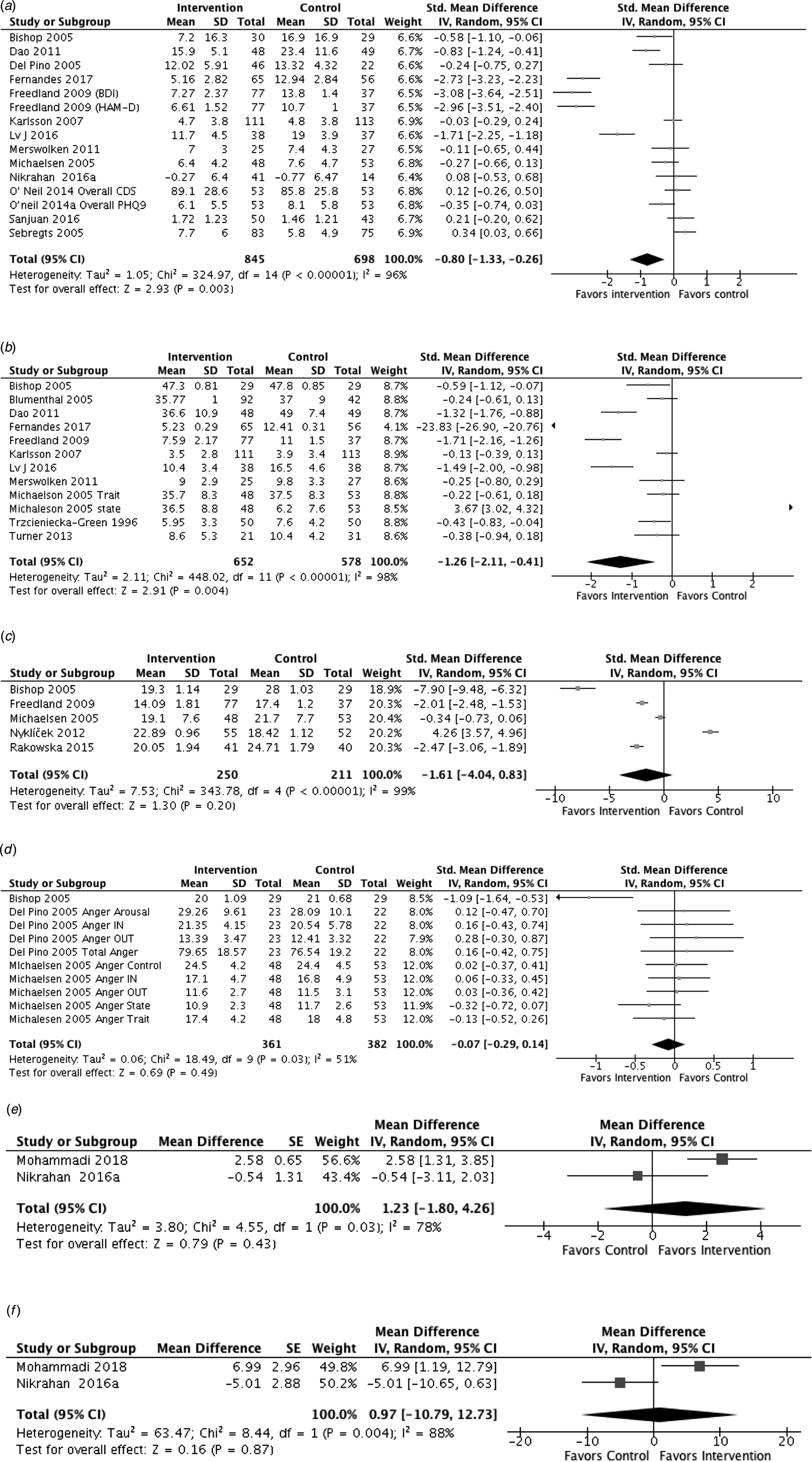
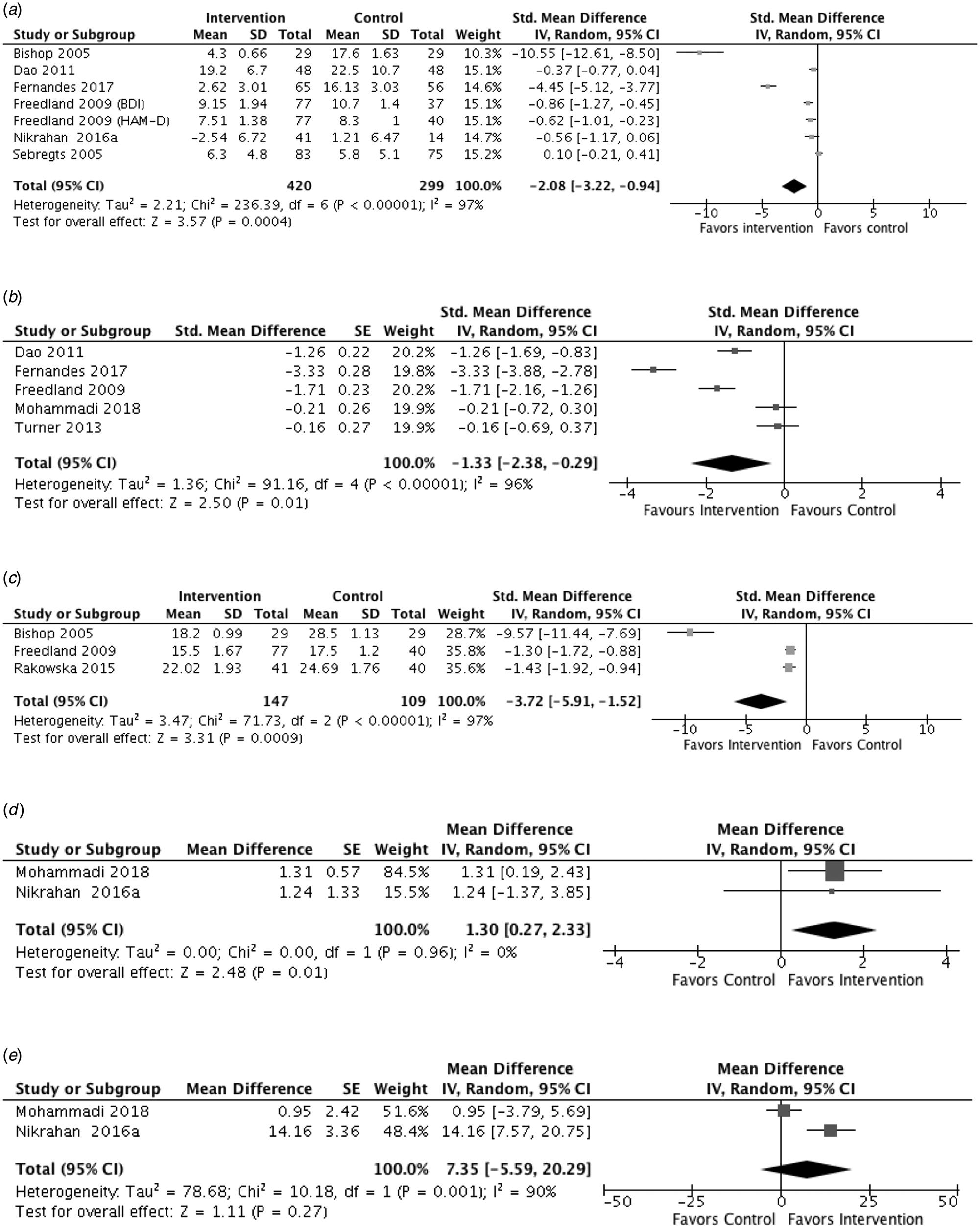
Meta-analyses assessing depression showed that, compared with controls, PIs significantly decrease depressive symptoms not only immediately after the intervention (13 trials, n = 1543; SMD −0.80, 95% CI −1.33 to −0.26, p = 0.003) but also at the end of follow-up (6 trials, n = 719; SMD −2.08, 95% CI −3.22 to −0.94, p = 0.0004) (Figs 2a and 3a). Similarly, anxiety significantly decreased both immediately after the PIs and at the end of follow-up (11 trials, n = 1230; SMD −1.26, 95% CI −2.11 to −0.41, p = 0.004; and 5 trials, n = 445; SMD −1.33, 95% CI −2.38 to −0.29, p = 0.01) (Figs 2b and 3b). However, although PIs did not decrease stress after the intervention (5 trials, n = 461; SMD −1.61, 95% CI −4.04 to 0.83, p = 0.2) (Fig. 2c), there was a significant reduction in stress levels at the end of follow-up (3 trials, n = 256; SMD −3.72, 95% CI −5.91 to −1.52, p = 0.0009) (Fig. 3c). No reduction in anger after PIs was found (3 trials, n = 743; SMD −0.07, 95% CI −0.29 to 0.14, p = 0.5) (Fig. 2d).
Efficacy of PIs on psychological outcomes immediately after the intervention. Forest-plot showing the efficacy of PIs compared with control groups on predefined psychological outcomes immediately after the intervention: (a) Effect on depression. (b) Effect on anxiety. (c) Effect on stress. (d) Effect on anger. (e) Effect on vital satisfaction. (f) Effect on happiness.

Effect of PIs at the end of follow-up. Forest-plot showing the efficacy of PIs compared with control groups at the end of follow-up on the predefined psychological outcomes: (a) Effect on depression (average follow-up, 4.5 months). (b) Effect on anxiety (average follow-up, 5.6 months). (c) Effect on stress (average follow-up, 13 months). (d) Effect on vital satisfaction (average follow-up, 3.8 months). (e) Effect on happiness (average follow-up, 3.8 months).

In relation to positive outcomes, although increases in vital satisfaction were not significant immediately after the two PIs (n = 116; MD 1.23 points, 95% CI −1.80 to 4.26, p = 0.4), the improvement was significant at the end of follow-up (MD 1.30 points, 95% CI 0.27–2.33, p = 0.01) (Figs 2e and 3d). On the contrary, meta-analyses of the same two trials showed no effect on happiness after treatment or follow-up (MD 0.97 points, 95% CI −10.79 to 12.73, p = 0.9; MD 7.35 points, 95% CI −5.59 to 20.29, p = 0.3, respectively) (Figs 2f and 3e).
Effect of psychological interventions on secondary outcomes
PIs did not reduce negative affect or increased positive affect immediately after the intervention (2 trials, n = 169; SMD −0.34, 95% CI −0.71 to 0.03, p = 0.07; and SMD 0.24, 95% CI −0.13 to 0.61, p = 0.2, respectively) (online Supplementary material Figs S2A and S2B). In three trials (n = 314), PIs significantly decreased hostility after the intervention (SMD −0.32, 95% CI −0.60 to −0.03, p = 0.03, online Supplementary material Fig. S2C), and in four trials (n = 374), PIs significantly improved quality of life after the intervention (SMD 0.50, 95% CI 0.07–0.93, p = 0.02, online Supplementary material Fig. S2D). PIs did not improve daily activities (online Supplementary material Fig. S3A) or quality of life at the end of follow-up (online Supplementary material Fig. S3B), or dispositional hope at any time (online Supplementary material Figs S2E and S3C). For most outcomes, heterogeneity of effects was high.
Subgroup analyses
The effects of PIs on main outcomes were similar across most of the pre-specified subgroups. In particular, for depression, anxiety, and stress, both after treatment and at the end of follow-up (online Supplementary material Figs S4–S9). However, the improvement of anxiety after treatment was higher in ACS patients (5 trials, n = 549; SMD −3.29, 95% CI −4.96 to −1.611; p = 0.0001) compared with chronic or mixed CAD patients (7 trials, n = 681; SMD −0.29, 95% CI −1.34 to 0.76; p = 0.59; χ2 = 8.85, p = 0.003, online Supplementary material Fig. S6A), and in trials at high risk of bias (9 trials, n = 928; SMD −1.98, 95% CI −2.92 to −1.04; p = 0.0001) v. at low or unclear risk of bias (3 trials, n = 302; SMD 0.99, 95% CI −1.10 to 3.08, p = 0.35; χ2 = 6.44, p = 0.01, online Supplementary material Fig. S6B). Subgroups analysis by post-treatment and follow-up assessment time showed a larger reduction in anxiety at the end of treatment for treatment durations <10 weeks (6 trials, n = 404; SMD −4.24, 95% CI −6.24 to −2.23; p = 0.0001) than those with a duration ⩾10 weeks (7 trials, n = 826; SMD 0.08, 95% CI −0.77 to 0.92; p = 0.004; χ2 = 15.11, p = 0.0001, online Supplementary material Fig. S6C). Also, larger reduction in depression was found when follow-ups were developed in the first 6 months after the intervention (4 trials, n = 330; SMD −3.76, 95% CI −6.43 to −1.10; p = 0.006) v. >6 months (3 trials, n = 389; SMD −0.45, 95% CI −1.05 to 0.15; p = 0.14; χ2 = 5.67, p = 0.02, online Supplementary material Fig. S5C). While CBT significantly reduced depression at post-treatment (13 trials, n = 302; SMD −0.94, 95% CI −1.53 to −0.35; p = 0.02), PPT showed a neutral effect (2 trials, n = 148; SMD 0.17, 95% CI −0.17 to 0.51; p = 0.003; χ2 = 10.14, p = 0.001, online Supplementary material Fig. S4C). The improvement in depression after therapy was higher when PIs were provided by psychologists (11 trials, n = 1047; SMD −1.07, 95% CI −1.78 to −0.37, p = 0.003) in comparison with PIs provided by undisclosed professionals (4 trials, n = 496; SMD −0.01, 95% CI −0.36 to 0.33; p = 0.94; χ2 = 7.07, p = 0.008, online Supplementary material Fig. S4A). Finally, no differences according to session type (group v. individual) were found at any moment (online Supplementary material Figs S4E, S6D, S8C, and S9).
Discussion
Our study showed that different types of PIs can improve a number of psychological outcomes relevant to the patient´s global health and wellbeing in patients with CAD in the short- and in the mid-term. In particular, depression and anxiety improved immediately after PIs, and depression, anxiety, stress, and vital satisfaction scores significantly improved at the end of follow-up after these interventions.
Despite the relatively low number of patients and the heterogeneity of interventions, our findings show that PIs based on CBT and/or PPT are helpful in improving the patient´s psychological health, that is, improving their health in a broader way. The aims of medical therapy for CAD are improving prognosis, reducing symptoms, and improving quality of life (Knuuti et al., Reference Knuuti, Wijns, Saraste, Capodanno, Barbato, Funck-Brentano and Clapp2020). All established interventions – i.e. medical therapy, coronary revascularization, cardiac rehabilitation – have been tested for the improvement of clinical or biological outcomes (mortality, non-fatal clinical outcomes, symptoms, such angina presentation or functional capacity) (Ponikowski et al., Reference Ponikowski, Voors, Anker, Bueno, Cleland, Coats and van der Meer2016). However, although fostering quality of life is a central target in cardiac rehabilitation interventions as it might have a positive effect on perceived wellbeing as well as on promoting treatment adherence, only a few interventions have evaluated their impact on quality of life (Riccioni et al., Reference Riccioni, Prencipe, Benvenuto, Masciocco, Ventra, Rizzo and Speziale2013; Stenvall et al., Reference Stenvall, Tierala, Räsänen, Laine, Sintonen and Roine2017; Weintraub et al., Reference Weintraub, Spertus, Kolm, Maron, Zhang, Jurkovitz and Boden2008; Zhang et al., Reference Zhang, Jones, Weintraub, Mancini, Sedlis, Maron and Spertus2018). Therefore, improving psychological outcomes is a key step for a comprehensive management of CAD from the patient´s perspective.
According to our data, PIs seemed to have positive and important effects on improving depression, anxiety, and stress not only immediately after the intervention, but also at the end of follow-up. Others meta-analyses (Dickens et al., Reference Dickens, Cherrington, Adeyemi, Roughley, Bower, Garrett and Coventry2013; Linden, Reference Linden2000, Reference Linden2013; Linden et al., Reference Linden, Phillips and Leclerc2007; Richards et al., Reference Richards, Anderson, Jenkinson, Whalley, Rees, Davies and Taylor2018; Rutledge et al., Reference Rutledge, Redwine, Linke and Mills2013) had previously shown significant effects, although of a smaller magnitude. Indeed, our results are especially relevant because the effects on the three primary psychological outcomes (depression, anxiety, and stress) are not only significant but large after the intervention but the benefits increase at the end of follow-up, showing that PIs have long-lasting and robust beneficial effects, which are not explained by the mere course of time, when patients become more functional in their daily living and the cardiac event turns into something of the past. The implications of these results may be clinically relevant since depressive symptoms, anxiety or stress are considered risk factors for recurrent cardiac events or increased mortality risk (Arnold, Smolderen, Buchanan, Li, & Spertus, Reference Arnold, Smolderen, Buchanan, Li and Spertus2012; Carney & Freedland, Reference Carney and Freedland2017; Ossola, Gerra, De Panfilis, Tonna, & Marchesi, Reference Ossola, Gerra, De Panfilis, Tonna and Marchesi2018; Tully et al., Reference Tully, Winefield, Baker, Denollet, Pedersen, Wittert and Turnbull2015). In addition, cardiac patients with depression or anxiety may be particularly compromised in their recovery (Nicholson et al., Reference Nicholson, Kuper and Hemingway2006; Roest et al., Reference Roest, Martens, de Jonge and Denollet2010; Rozanski, Reference Rozanski2014).
Regarding positive psychological outcomes, this meta-analysis may be supporting the recently defined positive behavioral cardiology paradigm (Labarthe et al., Reference Labarthe, Kubzansky, Boehm, Lloyd-Jones, Berry and Seligman2016), as happiness and vital satisfaction showed large improvements after de intervention and at the end of follow-up, although only vital satisfaction was statistically significant at the end follow-up. The low statistical power probably explains the lack of significant effects. Nevertheless, these results should encourage psychologists and cardiologists to dedicate more energy and resources to the investigation of the effect of PPTs on psychological and clinical outcomes in CAD patients.
As noted above, compared to other narrative reviews (Linden, Reference Linden2000, Reference Linden2013) and meta-analyses (Dickens et al., Reference Dickens, Cherrington, Adeyemi, Roughley, Bower, Garrett and Coventry2013; Linden et al., Reference Linden, Phillips and Leclerc2007; Richards et al., Reference Richards, Anderson, Jenkinson, Whalley, Rees, Davies and Taylor2018; Rutledge et al., Reference Rutledge, Redwine, Linke and Mills2013), our results show a larger magnitude of effects of PIs for improving psychological outcomes, which may be explained by the selection of only RCTs in which PIs were clearly based on empirically-based therapies, that is, the CBT paradigm (Linden, Reference Linden2013), only done by Linden et al. (Reference Linden, Phillips and Leclerc2007) and Dickens et al. (Reference Dickens, Cherrington, Adeyemi, Roughley, Bower, Garrett and Coventry2013). The inclusion of the positive behavioral cardiology paradigm (Labarthe et al., Reference Labarthe, Kubzansky, Boehm, Lloyd-Jones, Berry and Seligman2016) as a well-established therapy paradigm specifically designed to improve positive psychological dimensions (Bolier et al., Reference Bolier, Haverman, Westerhof, Riper, Smit and Bohlmeijer2013; Huffman et al., Reference Huffman, Millstein, Mastromauro, Moore, Celano, Bedoya and Januzzi2016; Lee Duckworth et al., Reference Lee Duckworth, Steen and & Seligman2005; Seligman et al., Reference Seligman, Steen, Park and Peterson2005) is also new. Our meta-analysis, focusing specifically on the efficacy of PIs in improving psychological outcomes, both negative and positive, in CAD patients, clearly differentiates from previous studies focusing on quantifying the benefits of PIs on morbidity and mortality outcomes (Dickens et al., Reference Dickens, Cherrington, Adeyemi, Roughley, Bower, Garrett and Coventry2013; Linden et al., Reference Linden, Phillips and Leclerc2007; Richards et al., Reference Richards, Anderson, Jenkinson, Whalley, Rees, Davies and Taylor2018; Rutledge et al., Reference Rutledge, Redwine, Linke and Mills2013), or their differential effects depending on distress reduction (Linden et al., Reference Linden, Phillips and Leclerc2007) or depression reduction (Rutledge et al., Reference Rutledge, Redwine, Linke and Mills2013). Only Richards et al. (Reference Richards, Anderson, Jenkinson, Whalley, Rees, Davies and Taylor2018) and Dickens et al. (Reference Dickens, Cherrington, Adeyemi, Roughley, Bower, Garrett and Coventry2013) analyze their effects on some psychological outcomes. As PIs are specifically targeted to improve psychological outcomes, finding larger effects is no surprise, although this would not explain the differences found with the last Cochrane systematic review (Richards et al., Reference Richards, Anderson, Jenkinson, Whalley, Rees, Davies and Taylor2018), where smaller but significant benefits on depression, anxiety, and stress reduction were reported. This difference may be explained by the inclusion of all kinds of PIs, while our meta-analysis selected only RCTs based on empirically supported PIs.
Although CBT- and PPT-based PIs are specifically designed to improve negative and positive psychological outcomes, respectively, the magnitude effect of PIs might be greater in CAD patients, in whom improving psychological health and wellbeing by reducing stress and negative emotions and fostering positive psychological factors could be an important target as these are linked, respectively, to a higher (Chida & Steptoe, Reference Chida and Steptoe2009; Nicholson et al., Reference Nicholson, Kuper and Hemingway2006; Roest et al., Reference Roest, Martens, de Jonge and Denollet2010; Rozanski, Reference Rozanski2014) and lower (Boehm & Kubzansky, Reference Boehm and Kubzansky2012; DuBois et al., Reference DuBois, Lopez, Beale, Healy, Boehm and Huffman2015; Labarthe et al., Reference Labarthe, Kubzansky, Boehm, Lloyd-Jones, Berry and Seligman2016) CV risk, as well as to a better quality of life (Appels et al., Reference Appels, Van, Bar, van der Pol, Erdman, Assman and Pedersen2006). Therefore, CBT- and PPT-based PIs may have a positive impact on all-cause and CV morbidity and mortality, as changes in negative (Hamer & Malan, Reference Hamer and Malan2010; Lovallo & Gerin, Reference Lovallo and Gerin2003; Rozanski, Reference Rozanski2014; Schwartz et al., Reference Schwartz, Gerin, Davidson, Pickering, Brosschot, Thayer and Linden2003; Steptoe & Kivimäki, Reference Steptoe and Kivimäki2013; Wirtz & von Känel, Reference Wirtz and von Känel2017) and positive psychological factors (Labarthe et al., Reference Labarthe, Kubzansky, Boehm, Lloyd-Jones, Berry and Seligman2016; Rozanski, Bavishi, Kubzansky, & Cohen, Reference Rozanski, Bavishi, Kubzansky and Cohen2019; Steptoe, Wardle & Marmot, Reference Steptoe, Wardle and Marmot2005) may contribute modifying some clinical and CV parameters, according to Linden (Reference Linden2013). Although the mechanisms by which changes on psychological factors may improve clinical outcomes remain unclear, it is likely that these may have a direct effect by improving CV risk factors and, indirectly, by facilitating enjoying healthier lifestyles, social and psychological functioning (Labarthe et al., Reference Labarthe, Kubzansky, Boehm, Lloyd-Jones, Berry and Seligman2016; Rozanski, Reference Rozanski2014; Rozanski et al., Reference Rozanski, Bavishi, Kubzansky and Cohen2019; Steptoe & Kivimäki, Reference Steptoe and Kivimäki2013; Steptoe, Wardle, & Marmot, Reference Steptoe, Wardle and Marmot2005; Wirtz & von Känel, Reference Wirtz and von Känel2017; Lovallo & Gerin, Reference Lovallo and Gerin2003; Schwartz et al., Reference Schwartz, Gerin, Davidson, Pickering, Brosschot, Thayer and Linden2003; Hamer & Malan, Reference Hamer and Malan2010), and improving adherence.
Compared with PPT, CBT seems to improve depression after the intervention, which could be explained by the fact that CBT is a treatment package specifically designed to modify negative psychological factors (Blagys & Hilsenroth, Reference Blagys and Hilsenroth2002), such as depression, whereas PPTs are specifically aimed at improving positive psychological dimensions (Lee Duckworth et al., Reference Lee Duckworth, Steen and & Seligman2005; Seligman et al., Reference Seligman, Steen, Park and Peterson2005). Therefore, PPT may not be able to improve depression by itself. Unfortunately, the information is scarce and analyses could only be done for depression. Future research is needed to clarify the differential effect of CBT and PPT on CAD patients.
Furthermore, not only its role but the way PIs should be given and by whom are relevant questions. Although weak, our results show some evidence suggesting that PIs developed by well-trained health psychologists may have stronger effects. This seems to be particularly true in the effect on post-treatment depression benefits, a prevalent complication after myocardial infarction (Pino, Zuo, Borba, Henderson, & Kalesan, Reference Pino, Zuo, Borba, Henderson and Kalesan2018; Smolderen et al., Reference Smolderen, Strait, Dreyer, D'Onofrio, Zhou, Lichtman and Spertus2015, Reference Smolderen, Spertus, Gosch, Dreyer, D'Onofrio, Lichtman and Krumholz2017), what is logical as they are professionals specifically trained for it. Unfortunately, and despite its relevance, this information was lacking in a majority of the studies reviewed, which may explain the weakness of the association found. The role of the incorporation of trained health psychologists to cardiovascular care teams to improve both psychological and clinical outcomes for CAD and other high-risk patients needs further attention and prospective and rigorous evaluation.
Acute CAD patients seem to have greater benefits in anxiety reduction after PIs. This is logical as ACS is associated with acute increases in the levels of anxiety and stress after the acute phase (Xu et al., Reference Xu, Bao, Strait, Edmondson, Davidson, Beltrame and Krumholz2017). However, the benefit was observed only immediately after the intervention with no persistence at the end of follow-up. Whether this is due to the described spontaneous time-dependent improvement of these psychological situations after ACS (Xu et al., Reference Xu, Bao, Strait, Spertus, Lichtman, D'Onofrio and Krumholz2015) or the lack of durability of the effects of PIs needs further study.
Finally, PIs in which the follow-up assessment occurred <6 months after the intervention showed significant benefits in depression compared with those with longer follow-ups. Reductions in anxiety were also larger when the intervention duration was <10 weeks, which is consistent with the findings by Linden (Reference Linden2013), where the beneficial effects of PIs fade away with time. This points out the importance of maintenance of the benefits as one important target for PIs.
Our meta-analysis is the first one to analyze the effects of PIs on positive psychology outcomes, including only empirically-supported PIs for CAD patients (Linden, Reference Linden2013), an inclusion criterion only in a minority of prior studies (Dickens et al., Reference Dickens, Cherrington, Adeyemi, Roughley, Bower, Garrett and Coventry2013; Linden et al., Reference Linden, Phillips and Leclerc2007). Our meta-analysis is also new on its exclusive focus on psychological outcomes in CAD patients while the majority of prior publications mainly focused on morbidity and mortality or on the differential effects on these outcomes depending on distress reduction (Linden et al., Reference Linden, Phillips and Leclerc2007) or depression reduction (Rutledge et al., Reference Rutledge, Redwine, Linke and Mills2013). Only Richards et al. (Reference Richards, Anderson, Jenkinson, Whalley, Rees, Davies and Taylor2018) specifically evaluated the effects of PIs on stress, anxiety, and depression, and Dickens et al. (Reference Dickens, Cherrington, Adeyemi, Roughley, Bower, Garrett and Coventry2013) on depression, but they did not study positive psychological outcomes.
A number of limitations should be acknowledged. First, the number of studies and the absolute number of patients enrolled is small. Second, PIs included a large variety of interventions with important differences in types, methods, professionals involved and duration as well as differences in outcomes and methods to measure the results. This information is not only diverse but is often lacking. Therefore, conclusions apply to a heterogeneous group in which differences in results may be explained by a variety of reasons. Third, our study confirms the important risk of bias to which these studies are subjected due to the impossibility of blinding patients or researchers to the intervention. This limitation can only be partially overcome by the analysis of results blinded to the intervention received by each group, a technique that should be mandatory in this kind of studies. And fourth, this meta-analysis does not address the efficacy of PIs on clinical outcomes, which will be the aim of a future analysis.
Conclusion
This systematic review and meta-analysis shows that PIs are effective in improving depression and anxiety immediately after the intervention, and may have a positive impact at the end of follow-up improving also stress and the level of vital satisfaction. However, much more research is needed in the field, with higher methodological standards in the trials, including detailed information of the type of intervention, professionals involved, timing and duration. Our results suggest that there is a role of clinical and health psychology for improving the care of patients with CAD and this option should be considered in cardiology departments.
Supplementary material
The supplementary material for this article can be found at https://doi.org/10.1017/S0033291720000598
Acknowledgements
The CNIC is supported by the Instituto de Salud Carlos III (ISCIII), the Ministerio de Ciencia e Innovación and the Pro CNIC Foundation, and is a Severo Ochoa Center of Excellence (SEV-2015-0505).
Financial support
None.
Conflicts of interest
None of the authors have conflicts of interest with public or private entities related to the content of this manuscript. Dr Bueno receives research funding from the Instituto de Salud Carlos III, Spain (PIE16/00021 &PI17/01799), Astra-Zeneca, BMS, Janssen and Novartis; has received consulting fees from Astra-Zeneca, Bayer, BMS-Pfizer, Novartis; and speaking fees or support for attending scientific meetings from Astra-Zeneca, Bayer, BMS-Pfizer, Novartis, and MEDSCAPE-theheart.org. Dr Jurado receives research funding from the Ministerio de Ciencia, Innovación y Universidades, Spain (PSI2015-68851-P). Dr Magán, Dr Jurado, Dr Redondo and Dr Bueno have received funding from Universidad Camilo José Cela, Madrid – Spain (2015–18). Dr Hernandez receives funding from the Agency Health Care Research and Quality (AHRQ) (HHSA290201500012I).