Background
It is acknowledged that all people with dementia will need to stop driving at some stage within the disease process (Breen et al., Reference Breen, Breen, Moore, Breen and O’Neill2007). Concerns about the capacity of people with dementia to drive safely relate to the importance of cognitive skills, including memory, visuospatial awareness, attention, and judgment for the complex tasks of safe driving within a changing environment (Aksan et al., Reference Aksan, Anderson, Dawson, Johnson, Uc and Rizzo2012). However, it is also understood that the diagnosis of dementia does not inevitably require immediate cessation of driving (Martin et al., Reference Martin, Marottoli and O’Neill2009). For example, a review of driving risks for people with dementia concluded that the risk of crash increases significantly over the course of the disease, but seems to remain “acceptably low” for the initial three years during which time most drivers with dementia have stopped driving (Aksan et al., Reference Aksan, Anderson, Dawson, Johnson, Uc and Rizzo2012, p. 1365). While overall the crash risks related to driving with a cognitive impairment are substantially higher than those driving without a cognitive impairment (Carr and Ott, Reference Carr and Ott2010), the level of cognitive impairment at which a driver's risk is too high for continued driving remains unclear (Eby and Molnar, Reference Eby and Molnar2012). Moreover, maintaining independence and mobility, in particular the ability to drive, has been acknowledged as important for both health and quality of life in older adults (Oxley and Whelan, Reference Oxley and Whelan2008). With rapidly increasing numbers of people with dementia, clinical research and policy attention are focusing on ways of maintaining road safety and mobility through driving screening, assessment, licensing policies, and support for caregivers (Perkinson et al., Reference Perkinson2005; O'Neill, Reference O’Neill2010). Research into driving cessation, both its implementation and implications, is also ongoing (e.g. Seiler et al., Reference Seiler2012).
The impact of driving cessation is well documented for older people. It has been associated with increase in depressive symptomatology (Windsor et al., Reference Windsor, Anstey, Butterworth, Luszcz and Andrews2007), restricted access to social networks and necessary community services, increased burden for family members (Johnson, Reference Johnson2008) as well as the feeling in the older ex-driver that they are a burden (Finlayson and Kaufert, Reference Finlayson and Kaufert2002) and earlier institutionalization (Freeman et al., Reference Freeman, Gange, Munoz and West2006). Retired drivers spend less time in activities outside the home (Marottoli et al., Reference Marottoli, Mendes de Leon, Glass, Williams, Cooney and Berkman2000), in valued roles, and with other people (Liddle et al., Reference Liddle, Gustafsson, Bartlett and McKenna2012). Investigation of driving cessation issues for people with dementia has highlighted similar losses (Jett et al., Reference Jett, Tappen and Rosselli2005). Strong emotional responses, individual loss of identity and grief, burden for family members, unsafe and unlicensed driving, and restricted life space are concerns associated with driving cessation for people with dementia (Taylor and Tripodes, Reference Taylor and Tripodes2001; Jett et al., Reference Jett, Tappen and Rosselli2005; Perkinson et al., Reference Perkinson2005; Byszewski et al., Reference Byszewski, Molnar and Aminzadeh2010). People with dementia are also noted to have restricted options in terms of transportation without driving (Perkinson et al., Reference Perkinson2005; Dobbs et al., Reference Dobbs, Harper and Wood2009).
Recognition of the impact of driving cessation has led to the development of driving cessation programs to improve outcomes for older people (e.g. Liddle et al., Reference Liddle, McKenna and Bartlett2007; Molnar et al., Reference Molnar, Eby, Louis and Neumeyer2008; Stern et al., Reference Stern2008). Understanding the process and meaning of driving cessation is important for effective driving cessation programs (Liddle et al., Reference Liddle, McKenna and Bartlett2007). For older people, driving cessation is recognized as both a transport behavior change and a life transition with phases of cessation and associated challenges for each (Liddle et al., Reference Liddle, Turpin, Carlson and McKenna2008).
While these approaches to support driving cessation have shown promise, ongoing investigation into driving and driving issues indicates that few caregivers and people with dementia are using supports during driving cessation (Croston et al., Reference Croston, Meuser, Berg-Weger, Grant and Carr2009) and that aspects of the process are still not well understood. One problem seems to be that different perceptions exist among health professionals, family members, and drivers with dementia (Perkinson et al., Reference Perkinson2005; Byszewski et al., Reference Byszewski, Molnar and Aminzadeh2010), necessitating finding approaches that combine the perspectives and needs of all stakeholders involved.
It seems likely that family members are well placed to monitor driving issues, but also may have difficulties understanding dementia and the risks associated with driving (Perkinson et al., Reference Perkinson2005; Croston et al., Reference Croston, Meuser, Berg-Weger, Grant and Carr2009). They may also be highly stressed by initiating driving assessment processes or policing driving cessation decisions, and are often left with the responsibility for providing transportation following driving cessation (Croston et al., Reference Croston, Meuser, Berg-Weger, Grant and Carr2009; Dobbs et al., Reference Dobbs, Harper and Wood2009). Health professionals may be well informed about dementia and its impact on driving; however, they may not be involved with the person with dementia at the times when most changes in driving skills occur or may see people out of the context of driving and not recognize the potential for driving issues (Perkinson et al., Reference Perkinson2005; Meuser et al., Reference Meuser, Carr, Berg-Weger, Niewoehner and Morris2006). At some point, drivers with dementia have limitations in awareness and judgments about their own driving performances (Carr et al., Reference Carr, Shead and Storandt2005). They may encounter substantial difficulties in making a transition to alternative transport and forming new routines without driving (Perkinson et al., Reference Perkinson2005). There are therefore many difficulties in developing a clear approach to support the key people involved in driving cessation for people with dementia.
There have been limited clinical interventions specifically targeting driving cessation issues for people with dementia (e.g. Stern et al., Reference Stern2008; Dobbs et al., Reference Dobbs, Harper and Wood2009). Improving understanding of the complex issues arising for key stakeholders with respect to driving cessation, including the person with dementia, family members, and friends, as well as health professionals, is critical in developing targeted and effective interventions. In particular, the needs of the people with dementia when they cease driving are not fully understood. This study aimed to explore when and how to best help people with dementia who are ceasing driving through understanding the process of driving cessation and the needs associated with different stages in the process.
Methods
A qualitative methodology was undertaken using semi-structured interviews with participants selected as rich source of information about the experiences related to driving cessation for people with dementia. A descriptive phenomenological perspective was undertaken to the study design and data analysis due to the complexity of the subject matter and the paucity of other research exploring the driving cessation processes. This enabled the description and understanding of the perspectives of different stakeholders in relation to driving cessation (Langdridge, Reference Langdridge2007).
Local context
Within Queensland, Australia, medical fitness to drive is ultimately the responsibility of the driver licensing authority (DLA). Older drivers aged over 75 years require a medical certificate each year certifying medical fitness to drive for continued licensing. Health professionals, including medical practitioners, occupational therapists and neuropsychologists, can inform the licensing authority about medical issues influencing a person's fitness to drive, but they do not have any legal obligation to do so. Drivers have a responsibility to report known medical conditions to the licensing authority. Specific guidelines related to dementia instruct health professionals that a diagnosis of dementia does not necessarily mean licenses should be revoked or restricted and to consider a variety of aspects of driving performance, insight, and the progressive nature of the condition (Austroads, 2012). If health professionals believe a patient will not inform the licensing authority or stop driving and thereby poses a risk to the general public, they have the option of directly informing the DLA, and if done in good faith, cannot be held civilly or criminally liable for the breach of confidentiality (Austroads, 2012). On-road driving assessments by specialized occupational therapists are available through the public health system or privately. While driving a private motor vehicle is very common, public transportation (bus, train, ferries, taxis) and transport services (supported transport for people with disabilities) are available, although limited in scope.
Participants
Ethics approval was obtained from the University of Queensland Behavioural and Social Science Ethics Review Committee (approval number 2009000196). Potential participants were made aware of the study through dementia support organizations, caregiver support groups, health professional networks and associations, and local media. If interested in participating in the study, potential participants contacted the research team. All participants self-selected for the study. Participants were included if they belonged to one of the three key groups identified as being involved with driving cessation for people with dementia:
1. Retired or retiring drivers with dementia (RD),
2. family members (FM) of retired/retiring drivers with dementia, and
3. health professionals (HP) with experience in the area.
Retired drivers with dementia were eligible to be included if (1) they reported receiving a diagnosis of dementia, (2) had ceased driving due to dementia, (3) were legally able to provide consent for participation, (4) were able to communicate sufficiently to provide consent and participate in the interview, and (5) had a family member willing to be present for their interviews and consent process. Retiring drivers required the same criteria as above, but identified themselves as planning to cease driving within 12 months. Family members were eligible to participate if they had been involved with a family member with dementia in their driving cessation process and were able to communicate sufficiently to provide consent and participate in an interview. Health professionals needed to have direct experience with driving issues of people with dementia and their caregivers.
For ethical reasons, people with dementia and their caregivers were informed that the research team (registered health professionals) might have to inform the medical team or licensing authority if they reported current illegal or dangerous behavior that was likely to cause imminent harm to others. This information was provided prior to participation as part of the consent process, and participants were reminded of this during their interviews. Although all people with dementia were legally able to provide consent to participate, assent for participation was also attained and checked throughout the interview process.
Data collection
Demographic data were collected via interview. People with dementia and their caregivers were interviewed about the impact and severity of the dementia symptoms using the Clinical Dementia Rating Scale (Berg, Reference Berg1988). Semi-structured interviews were conducted either face to face or over the telephone based on participants’ needs, preferences, and geographic location. All participants with dementia were interviewed face to face, with a caregiver present, for ethical reasons due to the possibility of legal implications and distress, and no participant with dementia expressed discomfort with this arrangement. Caregivers were then given the option of being interviewed with the family members present or at a separate time. An interview guide was used to enhance consistency during interviews; the interview time varied from 20 to 60 minutes and included questions about the experiences of driving and driving cessation, needs throughout the process, and also asked participants to reflect on an optimal approach to driving cessation (see appended Interview schedule). Interviews were audiotaped and transcribed verbatim. A researcher's log was kept during data collection and analysis to ensure transparency of data analysis. Participants were provided with a brief summary of the main content of their interview as part of the participant checking process (Patton, Reference Patton2002). Seven participants used this process to add further details to their interviews, or to update with new developments since the interview. These responses were recorded and analyzed with the transcripts.
Data analysis
Transcripts, the researcher's log, and responses to participant checking were read through carefully. Simultaneous bottom-up (line-by-line coding) and top-down (identifying major themes or messages of each transcript) initial coding was undertaken by two researchers (JL and SB) and a constant comparison method was applied (Patton, Reference Patton2002). Coding trees were developed for each participant group, reflecting major themes and content areas across the group, which were combined due to similarity. Dedoose, version 4.5.91, web-based software, which assisted with data organization and analysis (Leiber and Weisner, Reference Leiber, Weisner, Tashakorri and Teddlie2010), was utilized. Seven major thematic areas focused on the processes and timings of driving cessation with dementia and the differing ways in which key people interacted during the process. Peer checking was undertaken with SA checking the applicability of the coding tree and definitions on six transcripts across the three groups. Discrepancies (approximately two major and 20 minor) within the coding between JL and SA were discussed and resulted in the simplification of the coding tree and refocusing on the following two major thematic areas: (1) timing and processes of driving cessation, and (2) typology of retiring driver–caregiver approaches during driving cessation. Using this approach, no further discrepancies were noted. In the current paper, the process of driving cessation is reported with three key time points described. Verbatim quotes that are illustrative of important findings are included and pseudonyms are used for all participants.
Results
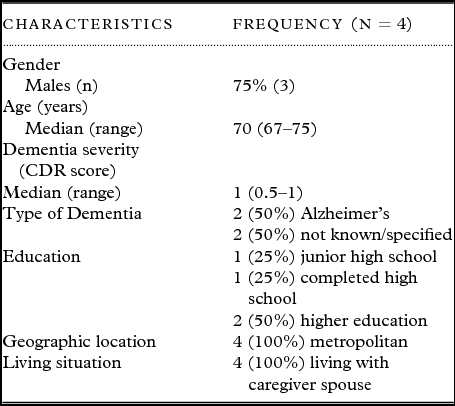
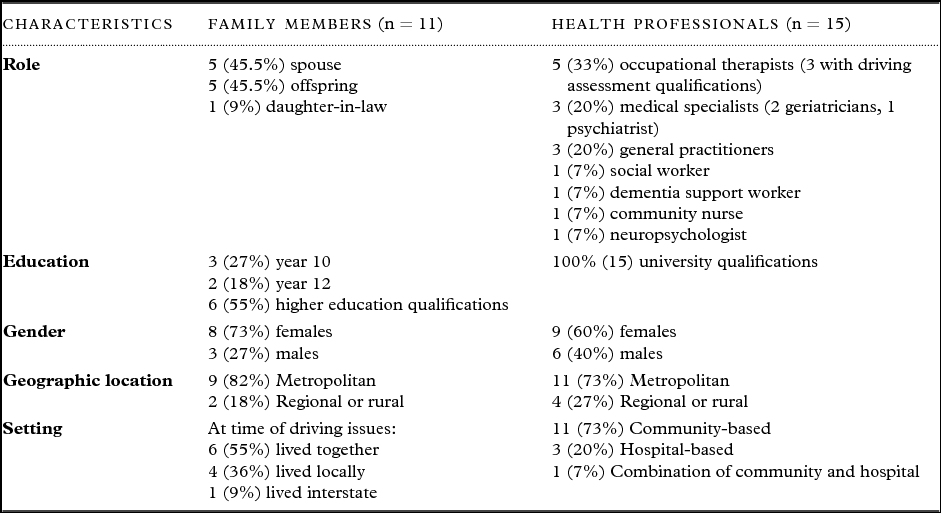
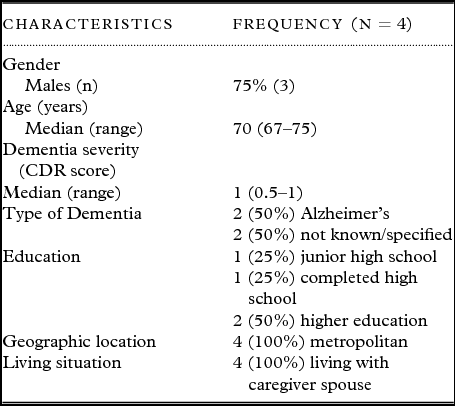
Participants included four retired drivers with mild dementia (Clinical Dementia Rating (CDR) 0.5–1), 11 family caregivers, and 15 health professionals. Their characteristics are described in Tables 1 and 2. In addition, six caregivers participated without the involvement of their family members with dementia and reflected on their driving and driving cessation experiences. These caregivers included one spouse, five sons or daughters, and one daughter-in-law. Their family members had more severe dementia than retired drivers directly interviewed (CDR 2–3), three were currently in residential care, two caregivers reflected on the experiences of a family member who had passed away, and one caregiver was caring for two parents with severe dementia at home with support services. These participants provided caregivers’ perspectives on experiences related to additional 11 retired drivers with dementia. The health professionals’ experience with people with dementia ranged from 4.5 years to more than 40 years. Every year each health professional drew on experiences with approximately five to more than 100 clients with dementia. One eligible retired driver and family member couple withdrew from the study prior to being interviewed as they found the topic stressful. One potential retired driver was excluded from the study as he did not have a diagnosis of dementia and had ceased driving due to a visual impairment. All other people who volunteered for the study were included.
Characteristics of retired drivers
Characteristics of family members and health professionals

Data from all participants indicated that the process of driving cessation involved the following three critical stages:
1. An early stage where concerns develop and increase.
2. A crisis stage triggered by a particularly worrying event.
3. An ongoing adjustment stage.
While these three stages were a shared discernible pattern for the majority of participants, variations were also noted, affected by other life events, personality, living location and situation, availability of support, and progression of dementia and other health events. People spent differing amounts of time in different stages, and challenges or sub-processes from different stages occurred simultaneously for some people. The stages serve as a general framework to organize the needs and experiences while recognizing the individual nature of driving cessation for people with dementia.
Early stage: worried waiting
All participants identified that the process of driving cessation with dementia had an early stage in which the person still drove but the issue of driving cessation was salient. This time point required active and effortful management often involving the person with dementia, their family members, and health professionals. Key characteristics of the stage were becoming aware of dementia, becoming aware of safety issues of driving, weighing safety issues against the meaning and life history of driving to the driver, and differing views about the right time for cessation.
At some point, all participants noted a transition from typical driving to an awareness about dementia and its impact on driving performance. Most participants described becoming aware of driving issues either directly or indirectly around the time of diagnosis of dementia. Others became aware of driving issues due to difficulties with driving performance or feeling uncomfortable or anxious while driving prior to diagnosis.
The meaning of driving and life history in the driving role varied for participants and hence influenced readiness for driving cessation. For some, driving reflected a key aspect of identity and self-worth. Diana described her father's long work and leisure history relating to cars: “To Dad, having a car was absolutely everything.” Others described it as a habitual form of transport, as Michael (RD) related: “Ability . . . to get to A to B. Or B to C or whatever.” People for whom driving formed a key part of their adult identity seemed less likely to spontaneously choose to stop driving and seemed more likely to reach a crisis point. Complicating issues included family members who did not live locally, comorbidities, caregivers who were not able to drive and relied on the driver with dementia, living in areas with limited transportation, and perception of “needing to drive.”
Discussing the issue of driving cessation was recognized as a potentially emotionally charged issue, and was avoided until necessary. Five family members and three retired drivers spoke of a direct conversation with health professionals about the possible issues related to driving. Six family members described seeking driving-related support and four family members described never having driving explicitly raised prior to a driving-related crisis. No health professional described raising driving issues as their primary role, but a number of them described regular involvement in this process, including geriatricians, health professionals in dementia services, and occupational therapists. Five health professionals discussed the difficulty of becoming aware of the extent of driving issues and suggested that caregivers or the driver with dementia may have clearer insights into difficulties with driving performance ahead of health professionals, as described by two general practitioners: James said, “. . . it's nearly always the relatives [first],” and Lionel stated, “[A] lot of [patients] recognize they’re losing their confidence, and . . . if they’ve got enough cognition to know that it is not a safe thing to do, most of them . . . they limit their driving.”
The family members interviewed also noted the importance of their role. All of the caregivers interviewed reported receiving some conflicting advice in the early stage of driving cessation. Sometimes the conflict was between recommendations from health professionals:
I wasn't happy with his driving, . . . because . . . if we went for long distances, I could see his concentration was failing. So I asked his GP and his GP said, “As long as he knows where he's going, he can drive.” . . . but when we went to see [geriatrician], she said, “No, it's a complex business and he shouldn't be driving at all.” So we sold the car within a couple of weeks.
Other times medical recommendations differed from those from dementia support services, the licensing authority, insurance providers, and informal networks. The lack of clear advice was reported as a source of particular stress by caregivers and people with dementia.
For the majority of people, this early stage was dominated by worried waiting. People with dementia, their family member and health professionals described various levels of uncertainty about when driving should stop for people with dementia. Furthermore, there seemed to be a lack of awareness about how to decide when to stop driving or how to seek information and support for this decision. Responsibility for driving issues was described as falling between licensing authorities, health services, and dementia support services, with a lack of clarity about responsibilities and access to various aspects. Marcus, a geriatrician with lengthy experience in working with people with dementia about driving issues, described the ongoing debate within the area as follows:
You want to pick it when it's going to happen, but not happening yet. And I don't think we’ve got a way of doing that yet . . . How you translate [safe driving skills] into practical measures or tools or whatever, I don't know. I don't think anybody does. . . . Some people would say the moment I diagnose you with Alzheimer’s, you don't drive. Other people say the moment your MMSE is 22, you don't drive. . . . My personal view is when their processing speed has slowed down to a certain level . . . So you may still maintain your other skills, but if you can't think fast enough, . . . how you measure that, I’m not sure.
During this stage, most caregivers were able to describe observed declines in driving performance, near misses, or minor accidents. These difficulties were not perceived as being of the magnitude to give a clear indication that driving should stop immediately, but on reflection it indicated serious difficulties. These difficulties included becoming lost when driving, getting flustered with changes, and appearing not to notice other drivers as readily and losing parked cars. Mostly the driver with dementia did not seem to recognize his/her own role in the incidents. Pam (FM) described a more serious incident where her husband Rob (RD) was driving on the wrong side of the road with their grandson as a passenger. While she was shaken “to pieces,” Rob's response was: “‘Oh everybody does it, everybody does that,’ and I just think, ‘No, no, no, no they don’t.’ So even then he had a bit of excuse for it.”
Family members and retired drivers described being strongly motivated to avoid becoming a danger to others. While prioritizing safety, there was also clear recognition of the depth of losses to identity, community engagement, and household access, which would follow driving cessation. Diana described the importance of driving for her father: “It meant transport, it meant independence, but it was also something about the activity itself that was so important to him . . . It was his manly activity.” Family members and health professionals described about the difficult balance between safety, independence, and well-being and the desire to time the decision so that unnecessary risks or losses did not occur. As described by Marcus, geriatrician: “The philosophical answer – the optimal time for people to stop driving is while they’re still safe, but they are soon to be unsafe.”
At this stage, family members and retired drivers frequently sought clarity and information with medical and neuropsychological testing, and formal driving assessment. This process of testing was described as helpful to people with dementia and their health teams, particularly where the tests were perceived to be directly related to driving.
This stage of driving cessation appeared to be characterized by uncertainty and close monitoring. Some people with dementia and their caregivers described deciding to stop driving at this stage. For some, it was a purposeful choice to make the decision while it was still within their control, as Olive (RD) described that her doctor said: “‘Well you can if you want to or not. That's your decision’ And I said, ‘Well okay, I’ll go now. Why wait? Wait for anything?’” In reflecting on this decision, all participants who had decided to stop reported being satisfied with their decisions. Relief appeared to be a common response to the decision having been made, which was also reported by health professionals. Michael (RD) and Dulcie (FM) described his decision to stop driving in the early phase of driving cessation soon after diagnosis:
Interviewer: What did you feel about that?
Dulcie: Greatly relieved.
Michael: No accidents.
Dulcie: No accidents, no death.
Interviewer: And do you think it could have happened in a better way?
Dulcie: No. I was just plucking up the courage to suggest to him that it was time to stop when he just announced that he felt he should stop.
Interviewer: Okay. And so he arrived at that conclusion himself? And what was your role through that process?
Dulcie: White knuckled passenger.
Advantages of stopping in the early phase were earlier acceptance and adaptation. Siobhan, an occupational therapist, described as follows: “If people have time to prepare for losing their license and get a number of opinions, they’re more likely to accept it.” The adjustment process focused on seeking information and support to make the decision, finding and adjusting to alternative transportation or adjusting community patterns, and reaching acceptance of the diagnosis and the loss of driving role and identity. Eight participants identified that planning was also important to assist with making new habits and routines. Dana, an occupational therapist, recommended that the issue of driving “should be broached as soon as the diagnosis is made, . . . while people still have some capacity for new learning.”
Family members reported needing support and consistent and relevant information for the decision, support for the grief process, and practical support and information for future planning for life without driving and with worsening dementia. Caregivers of people who had stopped in the early phase described that the most stressful aspect of their situation was not having sufficient guidance about the timing of the decision.
Crisis stage: acute adjustment
All participants who were interviewed related a crisis, near-crisis, or potential crisis related to driving and dementia. For the four retired drivers who stopped driving in the early phase, this crisis related to ongoing adjustment difficulties or retrospective reflection on the seriousness of driving difficulties. For the majority of participants, the crisis point was characterized by highly risky driving situations, high levels of conflict related to driving and driving cessation, or serious difficulties with adjustment to life without driving.
All health professionals, seven family members but no participant with dementia described high-risk driving incidents. These incidents involved near misses or collisions with other vehicles or pedestrians, becoming lost and highly distressed, and unlicensed driving. For some participants, a single critical incident triggered driving cessation. For other participants, there were escalating difficulties and intervention by family members and others, which was ineffective. In a few instances, intervention by others resulted in more risky driving such as driving at night or unlicensed driving.
All health professionals identified that in some families the caregiver was dependent on the driver with dementia and acted to promote continued driving. Most caregivers, however, were described as being in a very difficult position where it became their role to manage daily conflicts about driving. Elena, a social worker in a dementia service, described a common scenario:
The car is always there, it's always a reminder and we’ve had situations where people will just go, . . . he's just taking the keys and getting in the car and driving. . . so then you get the interpersonal conflict between the carer and the person whose ceased driving.
Two family members, both daughters, described physical conflict relating to discussing driving issues with their fathers. In both cases, a process of testing and ongoing involvement with health professionals and support services had not served to increase insight or change driving behavior. Diana described distressing conflicts with her father while arranging numerous driving assessments, support services, and counseling. The crisis point occurred when he drove unlicensed and took his wife from a nursing home. Diana came to remove the car and keys from the house: “And he lifted his arm up and sort of went in like this, . . . went to hit me across the head and I lifted my arm and caught his very frail arm on mine . . . and his whole arm went black [crying].”
Participants also acknowledged the magnitude of losses and grief associated with driving. Tanya, who worked within a dementia service and was a caregiver for her mother, described her response to her loss: “She turned a lot of her anger on to me, that I had taken the car away and she wouldn't speak to me for months”.
In addition to safety issues related to driving, family members and health professionals described high-risk activities related to alternative transportation, including unaccompanied trips on public transportation and risky pedestrian behavior. Family members also described requiring support to adjust to retired drivers becoming a passenger. Helen (FM) described the experiences with her husband: “One day we were driving and he got very upset and he hit me while we were driving. . . I knew it was out of frustration that I’m driving and he isn’t.”
The needs described for this stage included urgent assessment or time with health professionals after acute changes, intensive support for retired drivers and their families during the adjustment period with a focus on both practical support to prevent isolation, and emotional counseling and support. General supportive counseling was described as important, but specific individualized assistance was identified as an unmet need to manage crises as they arose. Again, caregivers and people with dementia identified that flagging the future crises related to driving at the time of diagnosis and directing people to support future needs would reduce crisis and conflict.
Post-cessation stage: the long journey
Following the crisis stage, another part of the driving cessation process was described. The long journey was characterized as a less emotionally intense time, but with ongoing demands and needs related to life without driving. The continuing adjustment process and implications for valued roles and activities were described by family members and health professionals.
A key aspect of the long journey was the perception of a smaller world with a reduced geographical area and a limited range of activities. To facilitate ongoing participation, some family members described the effort involved in promoting community access. Stimulation from activity and interesting surroundings were also described as being important for mood and well-being. Trina (FM), who also did not drive and used alternative transport to take her mother out from her supported accommodation, cited concern about her isolation because “[Mom] couldn't drive herself and nobody else did it.” Family members and people with dementia described surrendered roles and loss of independence for both parties involved in driving cessation (e.g. when activities could be continued but caregivers needed to attend). The spontaneity and choice within community mobility and activities was described by Molly (FM): “You sort of see something's on and you sort of think ‘Oh, I wouldn't mind seeing that,’ then you realize you can’t.”
Limitations in transport and community support options were described as an unmet need. Some family members also reported that battles and difficulty accepting driving cessation from the crisis point continued for the care recipient. Four family members described that the care recipient never achieved insight or acceptance into driving cessation and that actively battling about driving issues only ceased when the person became so frail or so confused that risks of unlicensed driving or physical conflict became minimal. For these caregivers, this process extended for a number of years and was described as distressing and exhausting. Diana (FM) described her relief only after her father became frail and moved to residential care: “Yeah, I sleep at night. Truly. I wasn't sleeping when I thought he was driving and crossed past that school. It was horrifying me.”
Participants identified that the issues that made the early phase more complicated continued to exacerbate adjustment for later phases. The progressive nature of dementia and the difficulties with learning new skills were identified as reducing spontaneous adjustment to driving cessation and placing increased burden on caregivers. While family members consistently reported feeling pleased that driving cessation had occurred without serious road safety consequences, six suggested that the situation could have been handled better with improved education and support. Kath (FM) and Scott (RD) reflected on their experience:
Kath: Yes, [we needed] some way of coping with it at the time. Because it . . . was pretty much out of hand there for a while. You must agree?
Scott: Yep.
Kath: The biggest problem we’ve ever had to face.
Discussion
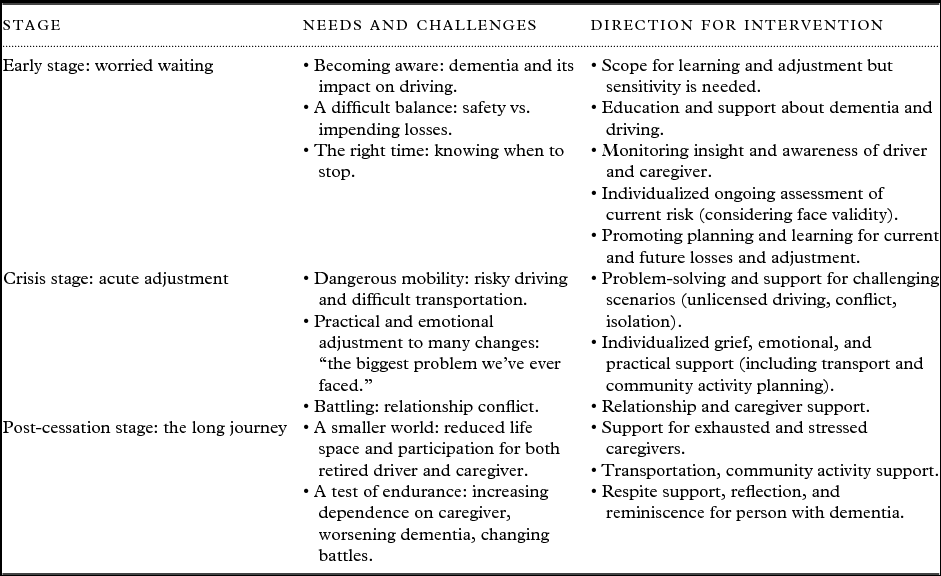
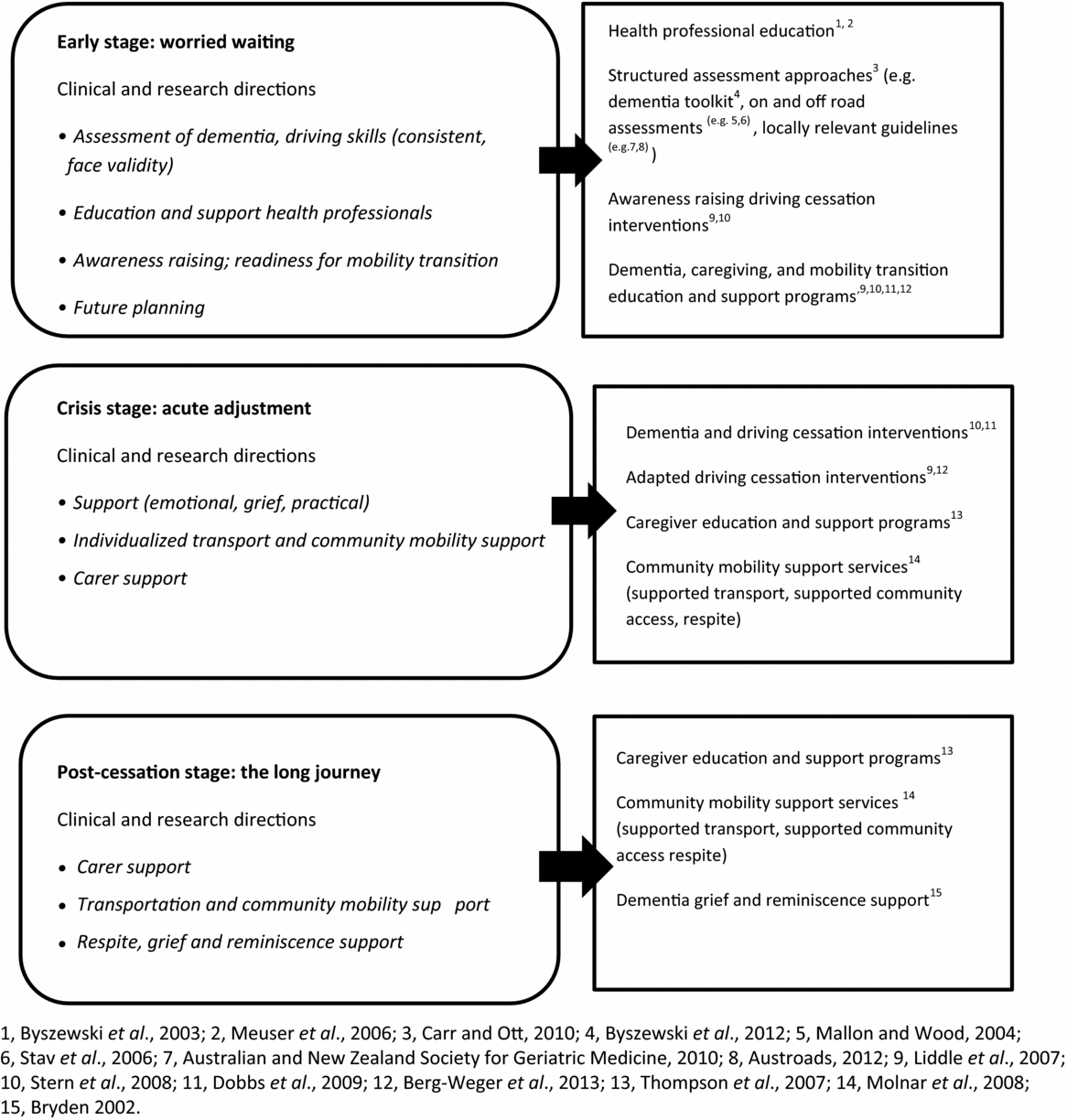
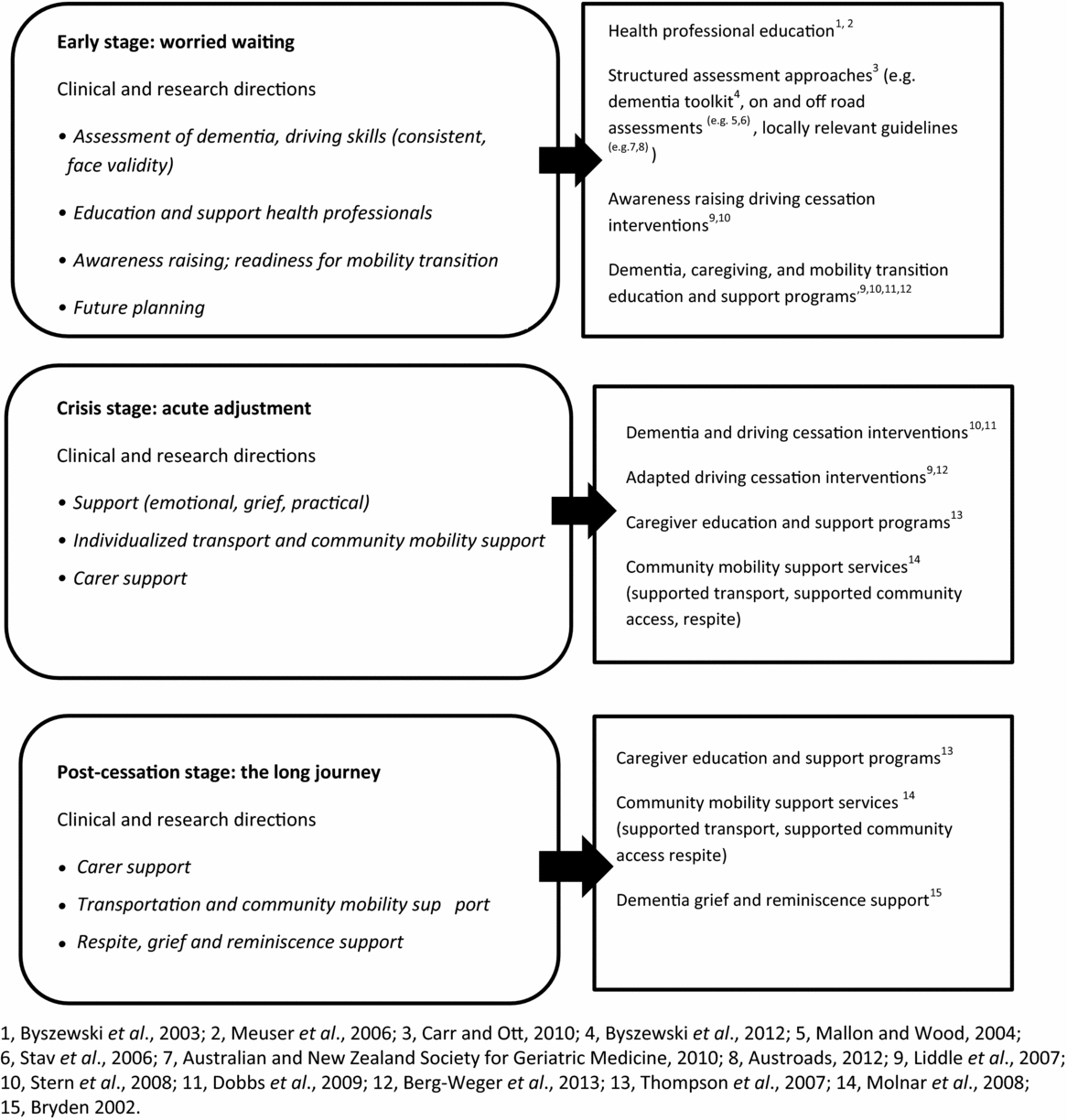
The findings of this study were built on the understanding of driving cessation for people with dementia by suggesting key times in the process with associated challenges and needs. The perspectives of the three groups of participants were combined to explore the complexity of the process for all concerned. Other studies have suggested that driving cessation for other groups of drivers is a process or transition, with stages of readiness and adjustment (Messinger-Rapport and Rader, Reference Messinger-Rapport and Rader2000; Liddle et al., Reference Liddle, Turpin, Carlson and McKenna2008; King et al., Reference King, Meuser, Berg-Weger, Chibnall, Harmon and Yakimo2011), and this study supports this view for people with dementia and provides rich data about the needs of various stakeholders in this process. These findings may be applied to better inform the development of resources and support options (Table 3) or may be used to help temporally organize driving assessment and driving cessation interventions that are noted in the literature (Figure 1).
Stages of driving cessation, challenges, and direction for clinical intervention derived from participants’ experiences

Published approaches to intervention and assessment corresponding to clinical and research direction by stages of driving cessation.
The findings of the study provide guidance into improving and optimizing the experience of driving cessation for people with dementia. The early stage of making the decision and waiting and monitoring deteriorating driving was characterized as effortful and stressful. People with dementia and their family members identified that there was a distinct need for more guidance, understandable assessments, consistent advice, and support for this decision. Health professionals also indicated that uncertainty and concerns around the decision to cease driving impact client outcomes and relationships with patients and their families. Two general practitioners in the study suggested that drivers with dementia routinely stopped driving when they need to do so, which is not supported by the research literature (e.g. Carr and Ott, Reference Carr and Ott2010). Family members and retired drivers also noted inconsistency in the advice they were given about driving. These findings are consistent with the body of research that has highlighted the need for training physicians and other health professionals about driving issues for people with dementia (e.g. Byszewski et al., Reference Byszewski2003; Meuser et al., Reference Meuser, Carr, Berg-Weger, Niewoehner and Morris2006; O’Neill, Reference O’Neill2010).
This study also identified that some people with dementia make an early decision to cease driving and were satisfied with their decision. While this group of participants is not likely to represent the experience of all drivers with dementia who may demonstrate poor awareness of the need to cease driving and require intervention (Byszewski et al., Reference Byszewski, Molnar and Aminzadeh2010), their experiences demonstrate the potential individuality of driving cessation found in other studies (Berg-Weger et al., Reference Berg-Weger, Meuser and Stowe2013). The findings suggest that driving cessation interventions for retiring drivers with dementia may need to occur within the first stage to engage people in the decision prior to difficulties with awareness. It should be noted that, as this study was not longitudinal, the stability of this reported satisfaction is unknown. Participants in the current study suggested that transition efforts be concentrated in this early stage to enable new learning for alternative transport and new habits, and to prevent risks to safety or emotional burdens becoming too high for all concerned. Research with older drivers has previously indicated that it can be very difficult to engage people in planning for driving cessation (Yassuda et al., Reference Yassuda, Wilson and von Mering1997), although recent intervention studies have identified that some older drivers actively seek support for making the decision to cease driving (Gustafsson et al., Reference Gustafsson2012). An active intervention supporting both caregivers and people with dementia about planning, adjustment, and practical changes to transport may help to meet the needs of the early stages.
All participants in this study identified moments within the driving cessation process that were characterized as a crisis, although the severity of the crisis varied from the time of acute adjustment and grief to physical confrontations or traffic accidents. This may reflect a self-selecting sample, which especially had challenging driving cessation experiences, but another research (Perkinson et al., Reference Perkinson2005) has also identified the extent of the difficulties associated with driving and driving cessation. Driving cessation support for people with dementia therefore needs to recognize the emotional needs of both people with dementia and family members through grief counseling, support for adjustment in life roles and activities, and peer support. Life transition research suggests that expected transitions may lead to easier transitions (Blair, Reference Blair2000), indicating that preparatory work aimed at the early stage of driving cessation may facilitate better outcomes and reduced severity at the crisis stage. This view was also supported by health professionals, family members, and retired drivers during the study.
Safety was the stated concern of participants from all groups in the study. Difficulties with driving, near misses, and crashes were described as happening during the first two stages of the driving cessation process. Studies on the safety of drivers with dementia indicate that driving performance is often poorer (Man-Son-Hing et al., Reference Man-Son-Hing, Marshall, Molnar and Wilson2007), and demonstrate a two-time increase in risk of crash involvement (Carr and Ott, Reference Carr and Ott2010). Difficulties reported ranged from crashes or near crashes with other motor vehicles, incidents with pedestrians, or becoming lost while driving. An investigation of outcomes for drivers with dementia who became lost found extreme consequences such as death and severe morbidity (Hunt et al., Reference Hunt, Brown and Gilman2010).
Retired drivers with dementia appeared to experience a process of driving cessation that was both similar and different from the one experienced by other groups of retired drivers. To our knowledge, other studies of drivers with dementia have not focused on the driving cessation process or identified stages. Findings did indicate the individuality of process, and the impact of readiness for transition from driving, and the long-term adaptation that was required following cessation as was found with older drivers without dementia (Liddle et al., Reference Liddle, Turpin, Carlson and McKenna2008; King et al., Reference King, Meuser, Berg-Weger, Chibnall, Harmon and Yakimo2011). This suggests the potential relevance for the application of the Transtheoretical Model of Behavior Change (Prochaska and DiClemente, Reference Prochaska and DiClemente1992) as has been previously applied with driving cessation of older drivers (Liddle et al., Reference Liddle, Turpin, Carlson and McKenna2008; King et al., Reference King, Meuser, Berg-Weger, Chibnall, Harmon and Yakimo2011). Compared with older drivers, drivers with dementia, however, had less scope for sharing experiences with peers, reduced opportunity for being directly involved in the decision, and seemed to have more difficulties with understanding and accepting the need to cease driving. The stages also indicated that the process was more crisis-driven (and less decision-driven) than for older drivers (Liddle et al., Reference Liddle, Turpin, Carlson and McKenna2008).
In addition to providing a framework to organize interventions suggested by participants (Table 3), the stages could be used to organize published approaches related to dementia, driving, and driving cessation (Figure 1). A specialized staged approach to intervention for this group could be developed from existing staged driving cessation programs or directly from the findings. The program should be individualized, sensitive, and involve the retiring driver and their family. The early stage focus should be on planning, assessment, and development of new community mobility patterns. Preparation for the crises in adjustment, safety issues, and interpersonal conflict may reduce their severity. Ongoing support for the retired driver and family member would also be required for the crises and ongoing adjustment stages to meet emotional, community engagement, and relationship support needs.
Limitations
While it is not the aim of qualitative studies to gain a sample that is representative of the population, it is useful to explore how the participants may be similar or different from those in other studies or clinical contexts. While efforts were made to include a proportionally higher number of retired drivers and caregivers, the nature of the issue of driving and dementia and its emotional nature appeared to deter some participants. The possibility of the health professional research team having to report any behavior that was likely to lead to imminent harm to others, for example dangerous unlicensed driving, may have deterred participants. The higher proportion of female caregivers is reflective of population trends in caregiving. Health professionals were relatively keen to participate and a range of professions were represented, reflecting the multidisciplinary nature of dementia care and driving issues.
This study used a volunteer sample of people who were available and able to communicate about a potentially emotional issue. Participants who did not speak English or who were highly stressed, busy, or burdened within the caregiving role would not have been able to participate. Retired drivers who were actively involved with the decisions to cease driving might have been more likely to select to participate. People with dementia were also interviewed in the presence of family members for ethical reasons. This may have limited the nature of what they shared during the interviews. Future research should attempt to further explore the experiences and needs of retired drivers who ceased driving involuntarily from their perspectives rather than drawing on the perspectives of family members and health professionals. Participants also self-reported the diagnosis of dementia and described functional difficulties, but formal diagnostic or health professional assessments were not conducted. Further research may explore the particular challenges of persons with dementia who are living in rural and remote areas, who are from culturally and linguistically diverse groups, and challenges of their family members and attendant healthcare professionals. The application of these findings to existing or new intervention programs may also be the focus of future research.
Conclusions
The process of driving cessation for people with dementia and their caregivers is characterized by three stages with differing needs. In the early stage, becoming aware of dementia and potential driving issues, was followed by a time of watching, waiting, and deciding when to stop driving. This early stage was followed by a crisis stage involving incidents of varying severity, ranging from emotional adjustment to traffic accidents or physical confrontations. Finally, the long journey of driving cessation, the post-cessation stage in this process, was characterized by ongoing transport demands on family members and inevitable losses of activities, roles, and life space for people with dementia. These findings suggest specific timings and foci for interventions to improve outcomes for people with dementia. These include support for managing grief, practical approaches to enhancing community access, and support for family relationships and caregivers.
Conflict of interest
This research was supported by a University of Queensland New Staff Grant and the funding body had no role in the design or conduct of the research project. No authors have any conflict of interests.
Description of Authors’ roles
Jacki Liddle, Nancy A. Pachana, and David C. Lie completed study design and application for and achievement of funding. Jacki Liddle, Nancy A. Pachana, Sally Bennett, Shelley Allen, and Bradene Standen were involved in running the trial and collection of data. Jacki Liddle, Sally Bennett, Shelley Allen, and Bradene Standen completed data analysis. Jacki Liddle, Nancy A. Pachana, David C. Lie, Sally Bennett, and Shelley Allen were responsible for writing and editing this paper.
Acknowledgments
The authors wish to thank the participants for their involvement in the study. Our thanks and appreciation also goes to health professionals, seniors’ services, and community organizations and the Ageing Mind Initiative at the University of Queensland who promoted the study. We acknowledge the assistance of research staff member Rosemary Allen in the collection of data for this project.
Interview schedule. Key questions
Retired/retiring drivers – key questions
1. Can you tell me what driving means to you?
2. Can you tell me how you came to stop driving?
3. Have there been any changes in your life since stopping driving (or do you expect any changes)? If so, can you tell me about them?
4. What, if anything, do you think might have helped you?
Family members – key questions
1. Can you tell me what driving means to you?
2. Can you tell me what driving means to your family member?
3. Can you tell me how your family member came to stop driving?
4. Have there been any changes in your life or your family member's life since stopping driving? Do you expect any changes?
5. What, if anything, do you think might have helped?
6. What are your needs now?
7. Any advice or information you can share that might help other families facing driving issues?
Health professionals – key questions
1. What is your general role working with people with dementia about driving-related issues?
2. What is the typical experience (or range of experiences) that people with dementia and their families have with driving cessation?
3. In your opinion, are there unmet needs related to driving cessation for people with dementia? If so, what are they?
4. What would help people with dementia when they stop driving?
5. In your opinion, what would be the optimal way for people with dementia to stop driving?