In the past two decades, there has been an increase in the research that considers individual differences in temporal psychology constructs as predictors of many outcomes, such as health-related behaviors, educational achievement, and pro-environmental behavior (e.g., Andre et al., Reference Andre, van Vianen, Peetsma and Oort2018). One key concept in this field is time perspective, defined as a multidimensional construct that comprises the thoughts, attitudes, and behaviors towards the three temporal regions of one’s life (Zimbardo & Boyd, Reference Zimbardo and Boyd1999). Although many researchers have focused on the future time period (e.g., Lang & Carstensen Reference Lang and Carstensen2002), Zimbardo and Boyd (Reference Zimbardo and Boyd1999) developed the Zimbardo Time Perspective Inventory (ZPTI) to assess cognitive, emotional, motivational, and social aspects of the past (past positive, past negative), present (present hedonistic, present fatalistic), and future (focus on planfulness). Another innovation of the ZTPI was its focus on both positively (past positive, present hedonistic, future [planning]) and negatively (past negative, present fatalistic) valenced aspects of time. Since its introduction in 1999, the ZTPI has become the most widely used scale in the literature.
However, concerns have been raised about robustness of ZTPI scores. In early studies, some ZPTI subscale scores have yielded low internal consistency estimates (e.g., Keough et al., Reference Keough, Zimbardo and Boyd1999; Zimbardo et al., Reference Zimbardo, Keough and Boyd1997), and the hypothesized five-factor structure has not yielded acceptable fit indices (e.g., Zimbardo et al., Reference Zimbardo, Keough and Boyd1997). Moreover, these types of psychometric issues have been found with regard to scores on multiple versions of the ZTPI for the past two decades (e.g., McKay, Worrell, et al., Reference McKay, Worrell, Temple, Perry, Cole and Mello2015; Milfont et al., Reference Milfont, Andrade, Belo and Pessoa2008; Sircova et al., Reference Sircova, van de Vijver, Osin, Milfont, Fieulaine, Kislali-Erginbilgic and Zimbardo2014; Temple et al., Reference Temple, Perry, Worrell, Zivkovic, Mello, Musil, Cole and McKay2019; Mello & Worrell, Reference Mello and Worrell2007; Worrell, Temple, et al., Reference Worrell, Temple, McKay, Živkovič, Perry, Mello, Musil and Cole2018). Thus, although research with the ZTPI has indicated that time perspective is related to a range of psychological constructs and adaptive behaviors (e.g., McKay et al., Reference McKay, Andretta, Magee and Worrell2014; McKay, Perry, et al., Reference McKay, Perry, Cole and Worrell2018), these findings can be questioned on the basis of the robustness of ZTPI scores.
The psychometric issues with ZTPI scores may be the result of (a) measuring multiple aspects of time (e.g., attitudes, behaviors, cognitions) on the same subscale, (b) including constructs other than time (e.g., hedonism, planning) on several subscales, or (c) both of these concerns. Nonetheless, the publication of the ZTPI had a profound impact on the time perspective literature and contributed to the development of several other instruments assessing all three time periods. One of these new instruments was the Adolescent Time Inventory (Mello & Worrell, Reference Mello and Worrell2007), which assesses time attitudes, the construct used in this study. The goals of the present study were (a) to assess the psychometric properties of time attitude scores and (b) to assess the association between time attitude scores and health related behaviors in a sample of Uruguayan adults.
The Adolescent and Adult Time Inventory – Time Attitudes Scale
The Adolescent Time Inventory (Mello & Worrell, Reference Mello and Worrell2007) is a measure that assesses five aspects of time perspective: Time meaning (how do individuals define the past, present, and future), time frequency (how often do individuals think about the three time periods), time relation (how do individuals think about the relationship among the three time periods), time orientation (which time period or periods is most salient to an individual), and time attitudes (what are individuals’ attitudes toward the three time periods). Time attitudes are the only aspect of the Adolescent Time Inventory that are conceived of as latent variables, and they are similar to time perspective as assessed by the ZTPI, including having scales with both positive and negative valence. In developing the Adolescent Time Inventory-Time Attitudes Scale (ATI-TA; Mello & Worrell, Reference Mello and Worrell2007), the authors tried to avoid the psychometric problems of the ZTPI (e.g., Zimbardo et al., Reference Zimbardo, Keough and Boyd1997) by using items that assessed attitudes only and items only focusing on time (see Worrell et al., Reference Worrell, Mello and Buhl2013). Originally developed to measure time attitudes in adolescents, ATI-TA scores were subsequently validated in adult samples (Cole et al., Reference Cole, Andretta and McKay2017; Mello et al., Reference Mello, Zhang, Barber, Paoloni, Howell and Worrell2016) and the instrument was renamed the Adolescent and Adult Time Attitude Scale (AATI-TA). The AATI-TA assesses negative and positive attitudes toward the past, present, and future: Past Positive, Past Negative, Present Positive, Present Negative, Future Positive, and Future Negative.
The multi-stage development process used to develop the AATI-TA is documented in Worrell et al. (Reference Worrell, Mello and Buhl2013), where the English and German versions of the scale are introduced. The process began with over 200 items, which were eventually reduced to 53, 49, and ultimately 30 items – five items on each of the six subscales – based on theory and psychometric analyses. There is strong evidence in support of AATI-TA scores. Internal consistency estimates ≥ .70 have been consistently reported for five of the six AATI-TA scores, with future negative scores having lower estimates in some samples (Worrell et al., Reference Worrell, Mello, Laghi, Baiocco and Lonigro2020). Additionally, evidence in support of the hypothesized six factor structure has been reported for samples from the United States (Mello et al., Reference Mello, Zhang, Barber, Paoloni, Howell and Worrell2016; Worrell et al., Reference Worrell, Mello and Buhl2013), Germany (Buhl & Lindner, Reference Buhl and Lindner2009; Worrell et al., Reference Worrell, Mello and Buhl2013), New Zealand (Alansari et al., Reference Alansari, Worrell, Rubie-Davies and Webber2013), the United Kingdom (Cole et al., Reference Cole, Andretta and McKay2017; McKay, Cole, et al., Reference McKay, Cole, Percy, Worrell and Mello2015), Turkey (Çelik et al., Reference Çelik, Sahranç, Kaya and Turan2017; Şahin-Baltaci et al., Reference Şahin-Baltaci, Tagay, Worrell and Mello2017), Albania (Worrell et al., Reference Worrell, Mello, Laghi, Baiocco and Lonigro2020), Nigeria (Mello et al., Reference Mello, Oladipo, Paoloni and Worrell2019), Italy (Donati et al., Reference Donati, Boncompagni, Scabia, Morsanyi and Primi2019; Worrell et al., Reference Worrell, Mello, Laghi, Baiocco and Lonigro2020), and Japan (Chishima et al., Reference Chishima, Murakami, Worrell and Mello2019).
Unlike the ZTPI, the AATI-TA includes a future negative scale, which has been the most psychometrically challenging, with future negative scores raising concerns similar to those raised with some ZTPI scores. For example, future negative scores have yielded very low reliability estimates in Turkey, Albania, Italy, and Nigeria, but not in the US, Germany, New Zealand, Japan, and the UK. Scores on AATI-TA short versions (i.e., 24 items) used in Germany (Buhl & Lindner, Reference Buhl and Lindner2009), Slovenia (Juriševič et al., Reference Juriševič, Worrell and Mello2017), and Spain (Konowalczyk et al., Reference Konowalczyk, Mello, Röske, Buhl, Heim and Worrell2018) have yielded acceptable to close fit with most factor coefficients > .50 across studies and acceptable to strong internal consistency estimates, including for future negative (αs ≥ .75) scores.
Scores on the six-factor structure have shown scalar invariance between younger and older adolescents in Spain on the short version (Konowalczyk et al., Reference Konowalczyk, Mello, Röske, Buhl, Heim and Worrell2018), between adolescents and young adults in Italy (Donati et al., Reference Donati, Boncompagni, Scabia, Morsanyi and Primi2019) using the full 30-item scale, and between young and middle-aged adults in the US for five scales (excluding future negative; Mello et al., Reference Mello, Zhang, Barber, Paoloni, Howell and Worrell2016). The six-factor have also been shown scalar invariance by gender (Konowalczyk et al., Reference Konowalczyk, Mello, Röske, Buhl, Heim and Worrell2018; Worrell, McKay, et al., Reference McKay, Andretta, Cole, Konowalczyk, Wells and Worrell2018) and configural invariance over a 2-year period (Worrell, McKay, et al., Reference McKay, Andretta, Cole, Konowalczyk, Wells and Worrell2018). In short, reliability and structural validity evidence for the six AATI-TA subscale scores is generally strong to date, with less support for the future negative scores. Convergent validity evidence is reported in the next section, and as with scales of this type, establishing validity for scores is an ongoing endeavor (American Educational Research Association [AERA], American Psychological Association [APA], and National Council on Measurement in Education [NCME], 2014, 2018).
Person-Centered Analyses
In addition to introducing the ZTPI, Zimbardo and Boyd (Reference Zimbardo and Boyd1999) recommended another change – advocating for “temporal profiles (p. 1273) – which has had important implications for the field of temporal psychology. Indeed, one goal of having an instrument that assessed all three time periods was to “profit from the use of combined ‘profile patterns’ [i.e., person-centered analyses] of the five ZTPI factors instead of independent examination of ZTPI subscales [i.e., variable-centered analyses]” (Zimbardo & Boyd, Reference Zimbardo and Boyd1999, p. 1284). Support for the utility of ZTPI profiles was provided in a study by McKay et al. (Reference McKay, Andretta, Magee and Worrell2014). Using a sample-specific short version of the ZTPI, McKay et al. (Reference McKay, Andretta, Magee and Worrell2014) identified four profiles – Balanced, Future, Past Negative, and Present Hedonistic – and found that adolescents in the Balanced and Future profiles were more likely to be abstainers and adolescents in the Past Negative and Present Hedonistic profiles were more likely to be problematic drinkers.
Researchers using the AATI-TA have also used both person-centered and variable-centered analyses. AATI-TA scores have been found to be associated with self-esteem, perceived stress, perspective-taking, and self-efficacy (Andretta et al., Reference Andretta, Worrell and Mello2014; Buhl & Lindner, Reference Buhl and Lindner2009; Cole et al., Reference Cole, Andretta and McKay2017) and several other constructs, providing evidence of convergent validity (Worrell & Mello, Reference Worrell and Mello2009). Research also shows that time attitude profiles are also predictive of outcomes. For instance, Buhl and Lindner (Reference Buhl and Lindner2009) applied latent profile analysis to the short version of AATI-TA scores and identified six temporal profiles in a sample of German adolescents. These profiles were associated with self-efficacy, perspective taking, and trust in schools, with positive profiles reporting higher scores on these variables than negative profiles. Similar time attitude profiles have been identified in the US, the UK, and New Zealand, and the research indicates that time attitude profiles are stronger and more reliable predictors of a variety of outcomes (educational constructs, cultural constructs, psychological constructs) than individual time attitude scores (e.g., Worrell & Andretta, Reference Worrell and Andretta2019). Two objectives of the current study were to see (a) if interpretable time attitude profiles would be found in a sample of Uruguayan adult participants and (b) if these profiles would be related to differences in health behaviors.
Physical Exercise and Eating Behaviors
Since prevention of some chronic pathologies depends on behavioral change, temporal psychology constructs may play a key role in design of interventions and framing of public campaigns. Temporal psychology constructs have been documented to be related to health protective behaviors in many studies (Andre et al., Reference Andre, van Vianen, Peetsma and Oort2018; Joireman et al., Reference Joireman, Shaffer, Balliet and Strathman2012; Murphy & Dockray, Reference Murphy and Dockray2018), as health protective behaviors often posit a conflict between present and future rewards. Time attitudes have been found to be associated with perceived stress, hopelessness, anxiety, depression, alcohol use, and the agentic aspect of hope (Andretta et al., Reference Andretta, Worrell and Mello2014; Buhl & Lindner, Reference Buhl and Lindner2009; McKay, Perry et al., Reference McKay, Perry, Cole and Worrell2018; Worrell & Andretta, Reference Worrell and Andretta2019). Whereas time attitude scores have yielded near-zero correlations with exercise, smoking, cannabis use, and visits to the dentist, time attitude profiles are associated with all of these behaviors (McKay, Andretta, et al., Reference McKay, Perry, Cole and Worrell2018). Konowalczyk et al. (Reference Konowalczyk, Mello, Röske, Buhl, Heim and Worrell2018) also found that time attitude scores were modestly associated with being a member of a sports clubs, sports significance, and self-concept related to physical ability and physical appearance.
To the best of our knowledge, no one has explored the association between time attitudes and attitudes toward healthy food consumption, and only McKay, Andretta, et al. (2018) have looked at time attitudes and physical exercise. We were also interested in analyzing intentions to eat healthy and engage in physical exercise as well as the actual behaviors within the framework of planned action theory. Although attitudes are an important determinant of behavioral intention and actual behavior, these three constructs are not interchangeable (Ajzen, Reference Ajzen2005). We expected that time attitudes would have stronger correlations with attitudes toward health and healthy food consumption than with intentions and behaviors (see Andre et al., Reference Andre, van Vianen, Peetsma and Oort2018, for a meta-analysis).
The Current Study
The current study is the first examination of AATI-TA scores in a Uruguayan sample, with the aim of assessing internal consistency evidence, structural validity evidence, and convergent validity evidence (AERA, APA, & NCME, 2018). We were also interested in seeing if interpretable time attitude profiles, found in other studies using the AATI-TA, would be found in Uruguay. In sum, we asked three questions in this study. First, we examined the internal consistency and structural validity of AATI-TA scores translated into Rio de la Plata Spanish in a sample of Uruguayan adults who were diverse in age and educational attainment. We hypothesized that AATI-TA scores would be reliable and the theorized 6-factor structure would yield acceptable fit estimates. We also hypothesized that the scores would be invariant across gender and developmental period as reported in Italy (Donati et al., Reference Donati, Boncompagni, Scabia, Morsanyi and Primi2019) and Spain (Konowalczyk et al., Reference Konowalczyk, Mello, Röske, Buhl, Heim and Worrell2018).
Second, we assessed the existence of interpretable latent temporal profiles in this sample, as well as their similarities to profiles found in other samples. We hypothesized that we would find several profiles, with some with some being more adaptive than others with higher scores on the positive than the negative attitudes. Lastly, we explored how time attitude scores and time attitude profiles were related to healthy food consumption and physical exercise attitudes, intentions, and behaviors. Although we speculated that positive scores and profiles would be associated with healthier attitudes and behaviors, we did not make specific hypotheses as this question has not yet been addressed in the literature.
Method
Participants and Procedures
Participants consisted of 446 (36.5 % males; n = 163) adults in Uruguay with a mean age of 34.53 years (SD = 13.17, range 18–75 years) who completed the ATTI-TA. Two hundred and ten participants were young adults (aged 18–29 years) and 236 were middle or older adults (aged 30 or more); two participants did not report their age. A subsample of 328 adults (34.8% males; M age = 33.97 years, SD = 13.32, range 18–75 years) also completed physical activity and healthy eating questionnaires. Participants were a convenience sample recruited by the researchers and their students in Montevideo and the metropolitan area of Uruguay. For the full sample, in terms of education, 13.5% had not completed high school education, 16.8% had a high school diploma, 39% were university students, 18.4% were university graduates, 5.1% had completed or were in advanced graduate studies, 5.6% had other tertiary education, and 1.6% did not report their educational level. Participants signed an informed consent in a manner that was approved by the local university’s institutional research review board and they completed the measures in a paper-and-pencil format during classes or at home.
Measures
In addition to self-reporting information on age, sex, and educational level, participants also completed questionnaires on time attitudes, health behaviors, and eating behaviors.
Time Attitudes
As noted in the Introduction, the AATI-TA consists of six subscales that assess positive and negative attitudes toward the past (Past Positive, Past Negative), present (Present Positive, Present Negative), and future (Future Positive, Future Negative). The instrument has been translated into several different languages, including Spanish, and the Spanish version has been used in other studies (Konowalczyk et al., Reference Konowalczyk, Mello, Röske, Buhl, Heim and Worrell2018). After looking the Spanish version of the AATI-TA (see Mello et al., Reference Mello, Worrell, Anguiano and Mendoza-Denton2010), the authors decided to start with the English version of the scale (Mello & Worrell, Reference Mello and Worrell2007) and do a translation to the Spanish dialect of the Rio de la Plata, that is used mostly in Uruguay and the Buenos Aires region of Argentina. A forward-translation/back-translation procedure was done beginning with the original English scale. Four English-language professionals contributed to these process (two for translations from English to the Spanish dialect of the Rio de La Plata and two for back translation). Discrepancies were resolved by discussion. Two cognitive interviews were also carried out to ensure comprehensibility by the intended sample, yielding excellent results for the version approved by the translators. The items for the final version used in this study (Mello et al., Reference Mello, Worrell, Alvarez-Nuñez and Vásquez-Echeverría2018) are presented as Electronic Supplementary Material.. AATI-TA items are scored on a 5-point Likert scale (1 = totally disagree; 5 = totally agree).
Also as noted in the Introduction, there is considerable, supportive psychometric evidence for AATI-TA scores, suggesting that the scale could be useful in Uruguay. There is strong support for the six-factor structure (Worrell et al., Reference Worrell, Mello and Buhl2013; Worrell, McKay, et al., Reference McKay, Andretta, Cole, Konowalczyk, Wells and Worrell2018), and evidence of convergent validity (Alansari et al., Reference Alansari, Worrell, Rubie-Davies and Webber2013; Andretta et al., Reference Andretta, Worrell, Mello, Dixson and Baik2013; Buhl & Lindner, Reference Buhl and Lindner2009; Chishima et al., Reference Chishima, Murakami, Worrell and Mello2019; Worrell & Mello, Reference Worrell and Mello2009). The subscale scores have generally been found to be internally consistent (Worrell, McKay et al., Reference McKay, Andretta, Cole, Konowalczyk, Wells and Worrell2018), with some exceptions for Future Negative scores (e.g., Şahin-Baltaci et al., Reference Şahin-Baltaci, Tagay, Worrell and Mello2017). AATI-TA scores have demonstrated scalar invariance across males and females, younger and older adolescents, and adolescents and young adults (Donati et al., Reference Donati, Boncompagni, Scabia, Morsanyi and Primi2019; Konowalczyk et al., Reference Konowalczyk, Mello, Röske, Buhl, Heim and Worrell2018).
Health Behaviors
We used questionnaires about physical activity with questions related to attitudes, intentions, and actions from Craig et al. (Reference Craig, Marshall, Sjöström, Bauman, Booth, Ainsworth, Pratt, Ekelund, Ingve, Sallis and Oja2003) and Joireman et al. (Reference Joireman, Shaffer, Balliet and Strathman2012). Physical activity attitudes were assessed by averaging three questions scored on a Likert scale of five values (1 = Strongly disagree; 5 = Strongly agree): “Regular physical activity is essential for good health,” “Regular physical activity makes me feel better,” and “I enjoy physical activity.” The mean intercorrelation among these items was r = .61. Physical activity intentions were assessed with one question: “During the next week, how many times do you plan on doing exercises?” The question had eight response options (0 = no days, 7 = every day of the week). Physical activity actions were also assessed with a single question and the same eight response options (0 = no day, 7 = every day of the week): “In the last 7 days, how many days have you engaged in physical activity for a total of 60 minutes per day?” As can be seen, all of the variables were coded such that higher values reflected more positive attitudes and healthier attitudes intentions, and behaviors.
Eating Behaviors
We used survey questions related to attitudes, intentions, and actions related to healthy food consumption from Joireman et al. (Reference Joireman, Shaffer, Balliet and Strathman2012) and van Beek et al. (Reference van Beek, Antonides and Handgraaf2013). Attitudes were assessed with two questions using a 5-point Likert format (1 =Totally disagree; 5 = Totally agree): “Healthy eating is essential for my health and well-being” and “I enjoy meals.” Behavioral intention was assessed with a single question with 10 response options ranging from 1 (Very unhealthy) to 10 (Very healthy): “Consider the foods you will eat in the next week and evaluate how healthy you think they will be.” We assessed the actions related to healthy food consumption using three questions with five response options (0 = Never, 4 = Once per day): “How often do you eat fruits,” “How often do you eat vegetables,” and “How often do you drink sugary drinks (e.g., soda)?”
Data Analysis
In this study, SPSS was used to calculate descriptive statistics, and missing values were imputed through the expectation maximization procedure for these analyses. MPlus 8.1 was used to examine the factor structure and factorial invariance and to create latent profiles. For the analyses using Mplus, we used the original data file and missing values were estimated using the full information maximum likelihood procedure. One participant was excluded from analyses due to a repetitive pattern of answers (i.e., giving the same response 25 times on the AATI-TA). No multivariate outliers were identified (using Mahalanobis distance procedure excluding participants with p < .001), and Item 9 on the AATI-TA (see Appendix) had the highest frequency of missing values (2.7%). Although the amount of missing data was low, using robust imputation techniques does not bias scores and is considered better practice than listwise elimination of participants with missing data, which can sometimes yield biased estimates (Graham, Reference Graham2009).
We used confirmatory factor analysis (CFA) to examine model fit of the factor solution of the AATI-TA. All CFA models were analyzed using Mplus 8.1 (Muthén & Muthén, Reference Muthén and Muthén2017) and fitted using the weighted least squares robust (WLMSV) estimator recommended for use with ordinal data (Svetina et al., Reference Svetina, Rutkowski and Rutkowski2020). Goodness of fit was evaluated with the comparative fit index (CFI), Tucker-Lewis index (TLI), and root mean square error of approximation (RMSEA). As has been done with previous studies of the AATI-TA, we considered values ≥ .90 for the CFI and TLI as acceptable and ≥ .95 as excellent. For the RMSEA, values ≤ .08 were considered acceptable and values ≤ .05 were considered excellent (Marsh et al., Reference Marsh, Hau and Wen2004). Measurement invariance was evaluated by age and sex; in these analyses, we used the same criteria to evaluate fit. To assess if constraints worsened model fit, we used ΔCFI, where the most restrictive model should not reduce the CFI value by more than .002. (Meade et al., Reference Meade, Johnson and Braddy2008) or as a minimum, .01 (Cheung & Rensvold, Reference Cheung and Rensvold2002).
Latent profile analysis (LPA) was conducted to explore the existence of time attitude profiles. LPA is a categorical latent variable approach that tries to identify hidden groups within a population based on a certain set of variables, in this case, ATTI-TA subscales scores. This analysis used Mplus (maximum-likelihood robust estimator). Models estimating two-profile to seven-profile solutions were compared. Better fit indices were determined by lower values in Akaike information criteria (AIC), Bayesian information criteria (BIC) and sample-size adjusted BIC (aBIC) but higher Entropy (< .80). Fit was also evaluated using the p value of Vuong– Lo–Mendell–Rubin likelihood ratio test (VLMR), the Lo-Mendell-Rubin test (LMR), and bootstrapped log-likelihood ratio tests (BLRT) where non-significant results signal that k – 1 profile solution is more parsimonious. We also considered the theoretical relevance of each latent profile (Jung & Wickrama, Reference Jung and Wickrama2008; Muthén & Muthén, Reference Muthén and Muthén2017).
Interpretations of correlations and group differences were based on effect sizes rather than statistical significance, using criteria suggested by Ferguson (Reference Ferguson2009). According to Ferguson, correlations of .20 represent an effect size of minimal practical significance, .50 a medium effect size, and .80 a strong effect size; equivalent values for r 2 are .04 .25, and .64, respectively. With regard to group differences, the comparable values for Hedges g are .41, 1.15, and 2.70, respectively.
Results
Preliminary Analyses
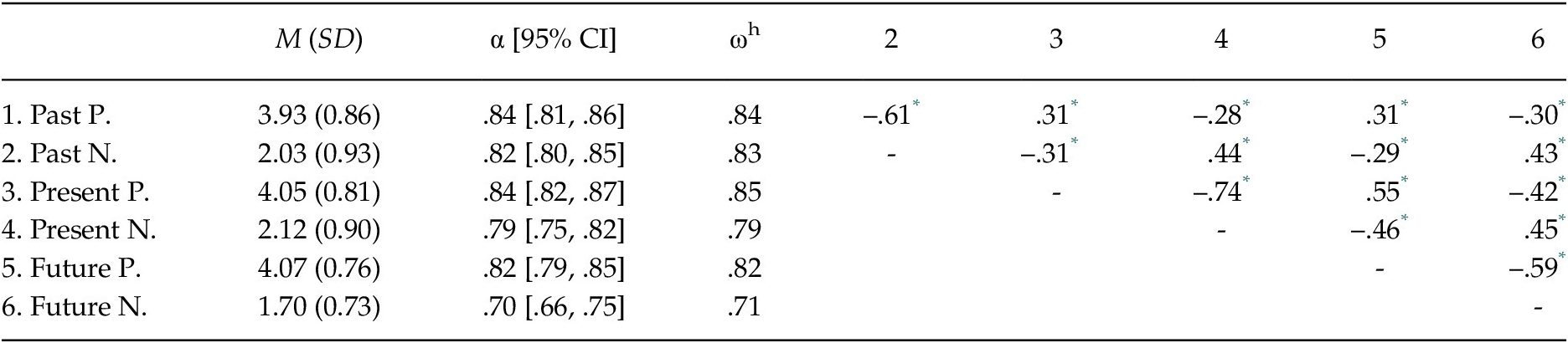
Table 1 contains descriptive statistics for the six AATI-TA subscale scores and intercorrelations among the scores. In keeping with the extant literature, means for the positive subscales were higher than means for the negative subscales. Also as expected, correlations between positive and negative subscales were negative and moderate to strong and between subscales of the same valence were positive and moderate. Internal consistency coefficients (alphas and omegas) are also presented in Table 1. Alpha coefficients based on the raw scores ranged from .70 to .84, and omega coefficients based on the factor coefficients from the six-factor model in Table 2 ranged from .71 to .85. The lowest estimates were for scores on the future negative subscale. All other internal consistency estimates were ≥ .79.
Descriptive Statistics for AATI-TA Subscales

Note. P. = Positive; N. = Negative; SD = Standard Deviation; ωh = hierarchical omegas were computed using the coefficients of the six-factor model.
* p < .01.
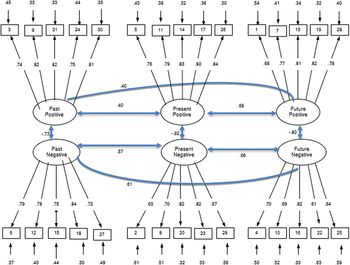
In keeping with prior examinations of the factor structure of AATI-TA scores, three models were examined. The first model consisted of two factors based on valence, with all of the positive items on one factor and all of the negative items on the other factor. Model 2 was based on time period, with the three factors consisting of past, present, and future items. The final model examined was the hypothesized six-factor model. The fit statistics for the three models are presented in Table 2. The two-factor solution yielded unacceptable fit. The three-factor model (grouping items by temporal period) showed improvements in model fit, with two fit indices in the acceptable range and one in the excellent range. The three fit indices for the theorized six-factor model were all in the excellent range. Given these findings, which matched the theory and results of previous studies, this model was chosen for further analysis. The model with factor coefficients and residual variances is presented in Figure 1.
Fit Indices Using WLMSV Estimator for Time Attitude Scores

* p < .001.
Factor loadings and residual variances for the six-factor solution.

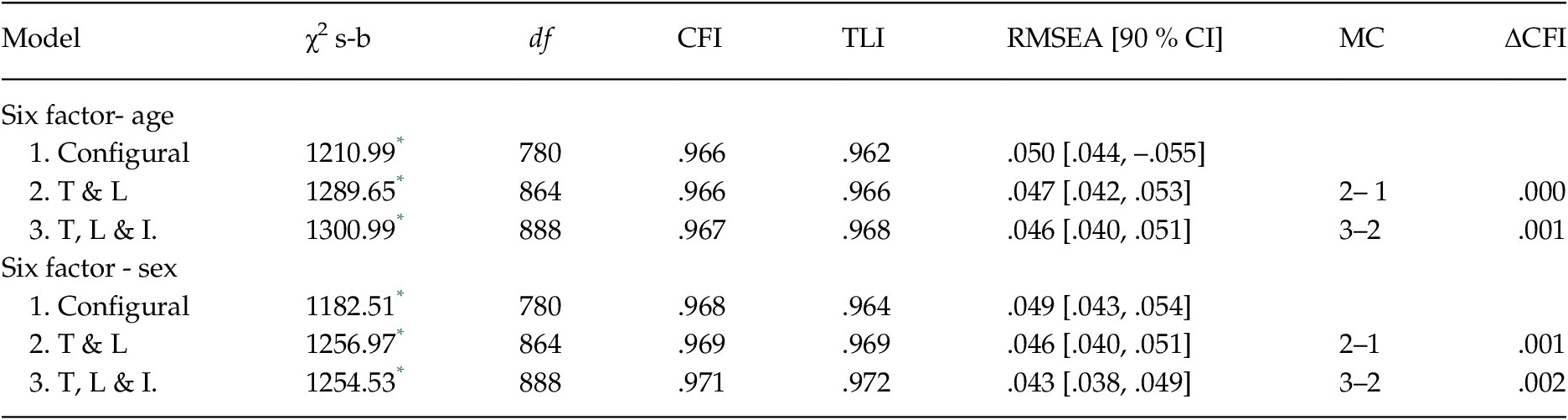
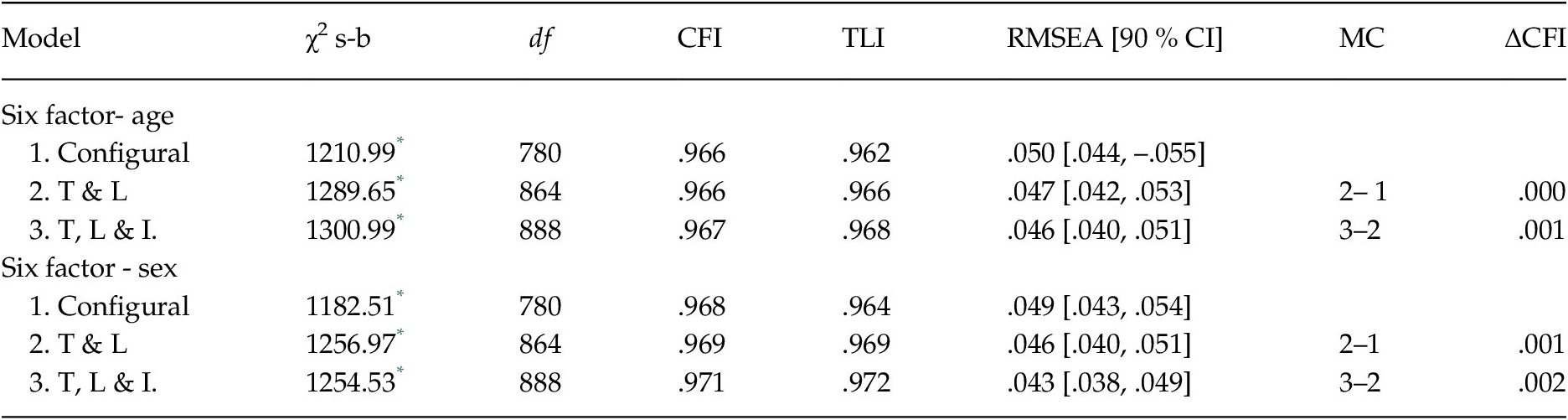
We then conducted invariance analyses on the six-factor model in Table 3, we present the results of measurement invariance by sex and age, although these groups were smaller than ideal for this type of analysis. Following the recommendations for measurement invariance analyses, with ordered categorical data (Svetina et al., Reference Svetina, Rutkowski and Rutkowski2020; Wu & Estabrook, Reference Wu and Estabrook2016), we tested for configural/threshold invariance, threshold and loading invariance, and threshold, loading, and intercept invariance, in that order. As can be seen in the table, model fit did not decrease substantially with increasing constraints, supporting intercept invariance.
Invariance Analyses (WLMSV) for Time Attitude Scores
Note. MC = Models compared; T = Thresholds; L = Loading; I = Intercept.
* p < .01.
Latent Profile Analyses
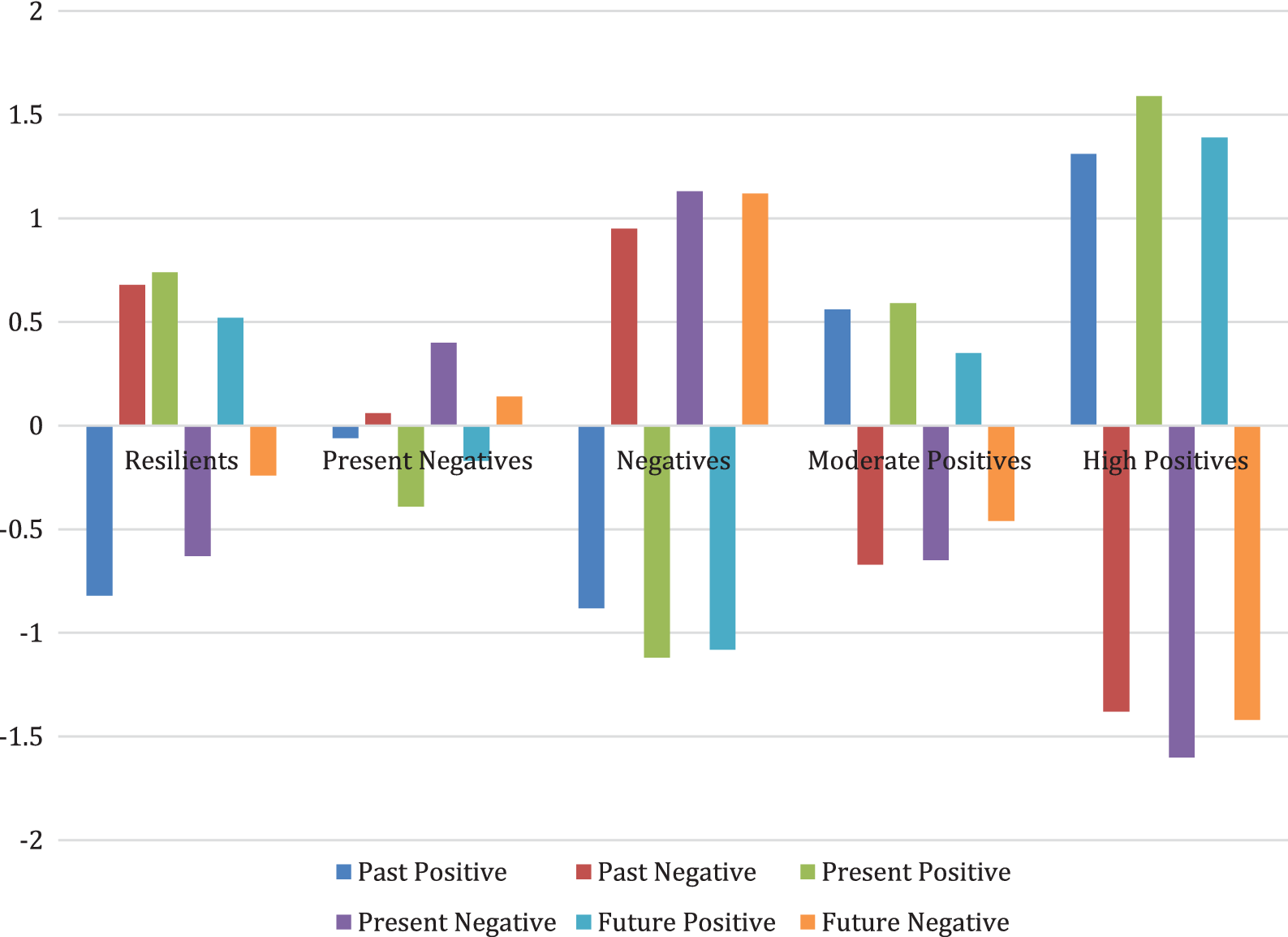
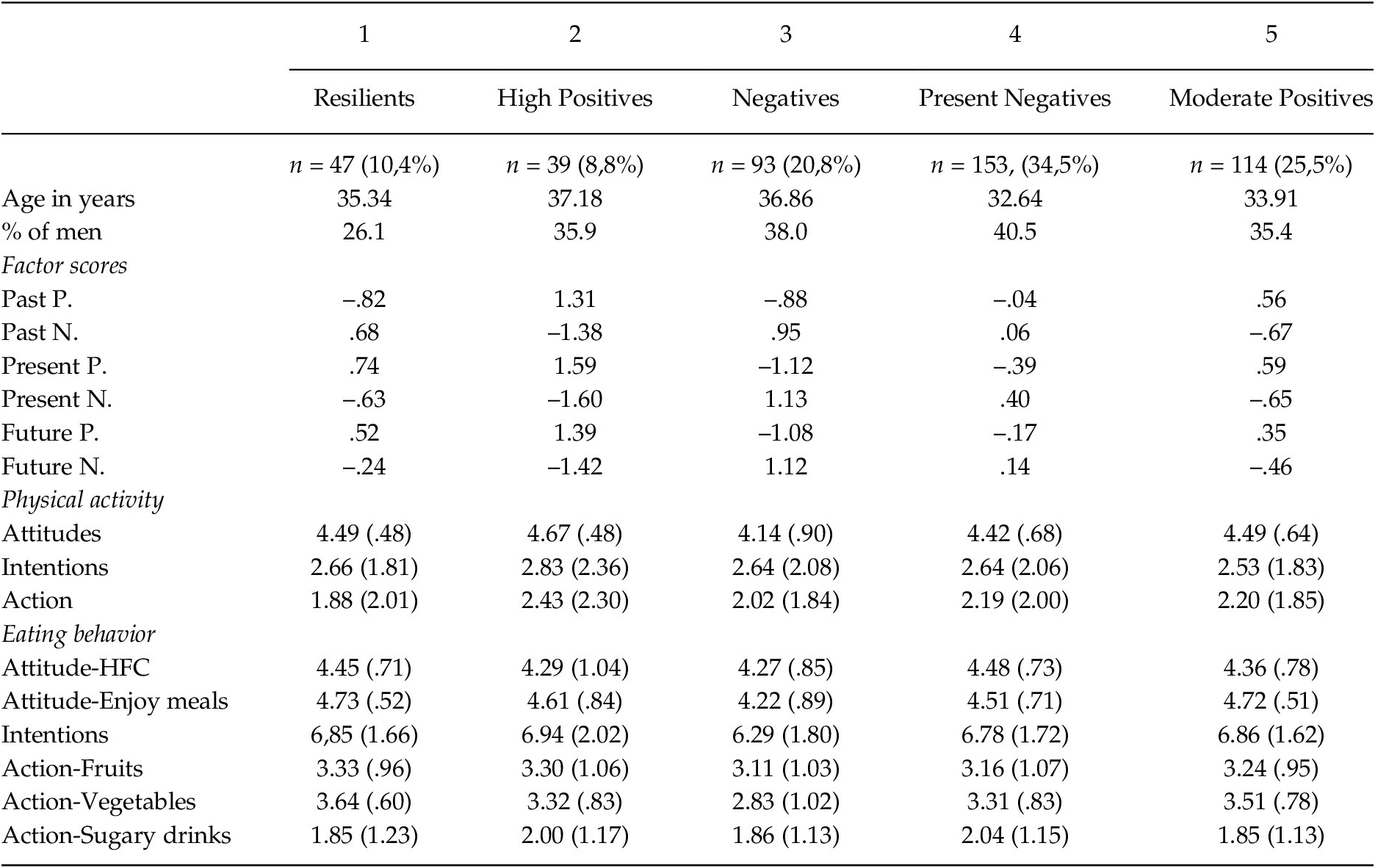
Latent profile analyses of AATI-TA scores were done with factor scores saved from the six-factor model. Model fit indices from the three to seven latent profile solutions are presented in Table 4. As can be seen, there was not a clearly acceptable solution based solely on fit indices, as the 3-, 4-, and 5-profile solutions could be considered good. We selected the 5-profile solution for interpretation based on the fit indices, parsimony, and theoretical considerations, such as content, size, and plausibility of the profiles generated (Jung & Wickrama, Reference Jung and Wickrama2008). For example, the 3-profile solution was very broad, grouping just positives, negatives and intermediates, and the 4-profile solution was very similar to the 5-profile solution, but with no distinction between the High Positives and Moderate Positives. The five-profile model has, comparatively, good fit indices and parallels previous findings in the literature using time attitudes scores (Morgan et al., Reference Morgan, Wells, Andretta and McKay2017). The five profiles, presented in Figure 2, are described below.
Model Summaries for Three to Seven Latent Profiles Solutions

Notes. AIC = Akaike information criteria; BIC = Bayesian information criteria; a = adjusted; VLMR = Vuong–Lo–Mendell–Rubin likelihood ratio test; LMR = Lo, Mendell, and Rubin test; BLRT = bootstrapped log-likelihood ratio tests.
Latent Profiles Found in Current Study.

Individuals in Profile 1 reported a negative evaluation of the past and positive evaluations of the present and future. Both their present positive and future positive attitudes were high, whereas future negative attitudes were substantially lower than past and present negative attitudes. This group, which made up 10.4% of the sample, was labelled Resilients. Profile 2, called High Positives, had scores on the three time positive attitudes subscales substantially above the mean and scores on the three negative time attitudes substantially below the mean. This group was the smallest with 8.8% of the sample. The third profile constituted 20.8% of the sample. Labelled Negatives, this profile was the inverse to the Positives profile, and characterized by substantially above average scores on the negative time attitudes and substantially below average scores on the positive attitudes. Participants in the fourth profile, labelled Present Negatives, represents people with an ambivalent evaluation of the past and future and a negative evaluation of the present; at 34.5% of the sample, this group was the largest. The fifth group was called Moderate Positives (25.5%); their scores are conceptually analogous to the High Positives, but with scores closer to the mean. There were no significant profile differences in terms of education, sex, or age. Descriptive statistics for the five time attitude latent profiles are presented in Table 5.
Means for Time Attitude Factor Scores and Outcome Variables by Latent Profile

Note. Standard deviations are offered between parentheses. P = Positive; N = Negative; HFC = Healthy food consumption.
Correlations with Outcome Measures
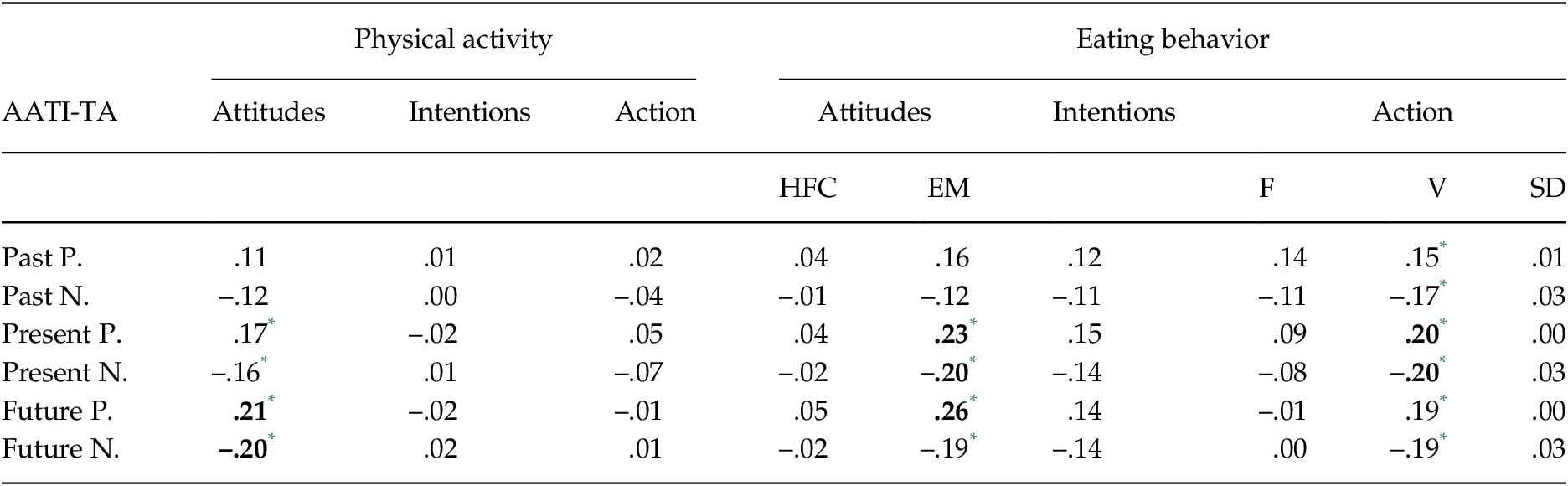
We examined the associations between AATI-TA subscale factor scores and several physical and healthy food consumption variables. These results are presented in Table 6, and correlations ≥ .20 are interpreted (Ferguson, Reference Ferguson2009). Healthy attitudes toward physical activity correlated positively with Present Positive and Future Positive scores, with the correlations in keeping with theory; that is, future positive scores were positively correlated with these healthy attitudes toward physical activity and future negative scores were inversely correlated with these attitudes. The pattern of correlations between healthy attitudes toward physical activity and past and present time attitudes was similar, but these correlations were neither statistically nor practically significant. No statistically significant correlations were observed between the six AATI-TA subscale scores and physical activity intentions or actions; indeed, these correlations were close to zero.
Correlations between TAS Subscale Factor Scores and Outcome Measures

Note. AATI-TA = Adolescent and Adult Time Inventory–Time Attitudes; P = Positive; N = Negative; HFC = Healthy food consumption; EM = Enjoy meals; F = Fruits; V= Vegetables; SD = Sugary Drinks. Bolded coefficients meet Ferguson’s (2009) minimal effect size for interpretation.
* p < .01.
There were no statistically significant or meaningful correlations between time attitudes and healthy food consumption. However, positive dimensions of present and future of AATI-TA correlated positively with enjoying meals, and the negative dimensions were negatively associated with this variable; although the correlation with future negative was below the threshold for interpretation.
Correlations between time attitudes and fruit consumption were generally close to zero (rs ≤ |.14|) as were correlations between time attitudes and drinking sugary drinks (rs ≤ .03). However, associations of time attitudes to vegetable consumption were statistically significant, although still relatively modest (|.15| < r < |.20|), and only the correlations for the present attitudes met Ferguson’s (Reference Ferguson2009) criterion for minimum practical significance (i.e., |.20|). All of these correlations were in the theoretically congruent directions.
Differences among Profiles
In the final set of analyses, we ran ANOVAs to examine if individuals with different temporal profiles differed in their intentions, attitudes, and behaviors towards physical exercise and healthy eating. Based on the previous literature on profiles, we hypothesized that individuals with the Positive profiles (High Positives, Moderate Positives, Resilients) would report more adaptive outcomes (i.e., endorsing healthy attitudes, intentions, and behaviors) and those with negative profiles (Negatives, Present Negatives) would report the least adaptive outcomes. Moreover, we hypothesized that the High Positives would report the most adaptive outcomes and the Negatives would report the least adaptive outcomes.
Physical Activity
Profile means and standard deviations on the outcome variables are presented in Table 5. The hypotheses with regard to physical activity were only partially supported. Positives reported the highest scores with regard to physical activity attitudes, intentions, and actions, but Negatives only had the lowest scores with regard to attitudes. Indeed, attitudes toward physical activity showed a main effect, F(4, 318) = 3.77, p < .01. In keeping with best practice, post hoc comparisons were conducted using Hedges g, an effect size measure (Ferguson, Reference Ferguson2009). High Positives (g = 0.66), Moderate Positives, (g = 0.45), and Resilients (g = 0.44) reported meaningfully (i.e., g ≥ .41) healthier attitudes toward physical exercise than Negatives. No other comparisons on attitudes toward physical activity met the 0.41 threshold. High Positives reported healthier attitudes toward physical activity than Present Negatives (g = 0.39), Resilients (g = 0.37) and Moderate Positives (g = 0.30), and Present Negatives (g = 0.36) also reported healthier attitudes toward physical activity than Negatives. Profile differences in intention to do physical exercise, F(4, 319) = 0.13, p > .05, as well as for action or engaging in physical exercise, F(4, 321) 0.42, p > .05, were both non-significant, with differences between the groups also having small effect sizes (gs < 0.25).
Healthy Food Consumption
The hypotheses with regard to eating behaviors were also only partially supported. Negatives had the lowest scores on five of the six eating behaviors variables, and the three positive profiles had higher means than the two negative profiles on four variables; attitudes toward healthy food consumption and consuming sugary drinks were the exceptions. However, for several of these variables, there were no statistically or practically significant differences among profiles. Attitudes toward healthy food consumption did not differ significantly among profiles (p > .05, g < 0.18), but enjoyment of meals differed significantly among profiles, F(4, 319) = 5.45, p < .001. High Positives (g = 0.44), Moderate Positives, (g = 0.71), and Resilients (g = 0.65) reported meaningfully higher scores on enjoying meals than did Negatives; Present Negatives (g = 0.37) also reported enjoying meals more than Negatives with a lower effect size. All other comparisons on this variable yielded effect sizes less than 0.34.
Intentions showed non-significant effects, F(4, 319) = 1.36, p > .05, although Positives and Negatives were the farthest apart, g = 0.35; all other differences on intention were low, gs < 0.34. The ANOVAs for differences in fruit consumption, F(4, 318) = 0.41, p > .05, gs < 0.22, and sugary drinks, F(4, 317) = 0.41, p > .05, gs < 0.17, were also neither statistically nor practically significant. However, we found a main effect of temporal profile for vegetable consumption, F(4, 322) = 7.57, p < .001, with Resilients and Moderate Positives, who did not differ meaningfully (g = 0.18), reporting the highest scores in this category; High Positives had the third highest score. Resilients reported eating meaningfully more vegetables than Negatives (g = 0.89), High Positives (g = 0.45), and Present Negatives (g = 0.42). Moderate Positives (g = 0.76), High Positives, (g = 0.50), and Present Negatives (g = 0.53) also reported eating meaningfully more vegetables than Negatives.
Discussion
The objectives of this article were (a) to determine the initial psychometric properties of AATI-TA scores translated into Rio de la Plata Spanish in a sample of Uruguayans, (b) to examine the correlations of time attitudes to physical activity and healthy food consumption, and (c) to identify temporal profiles and explore how these profiles relate to attitudes, intentions, and behaviors related to physical activity and healthy food consumption. The six AATI-TA scores had adequate to good internal consistency values and the scale’s six-factor structure was supported in this sample. Evidence for strong invariance of the model between males and between young and middle-aged adults was also supportive. A few time attitude subscales had minimally interpretable correlations with attitudes toward physical activity, enjoyment of meals, and eating vegetables. Five interpretable time attitude profiles were found in this sample, and several meaningful differences among profiles were found on attitudes toward physical activity, enjoyment of meals and eating vegetables. Profiles did not differ meaningfully with regard to intentions to engage or actually engaging in physical activity, nor with regard to attitudes toward healthy food consumption, intentions to eat healthy foods and fruits, nor consuming sugary drinks. These findings are discussed below.
Psychometric Properties of AATI-TA Scores
The internal consistency estimates in the current study generally mirror results from other studies in the literature and all had acceptable-to-good reliability estimates, with future negative scores just above the acceptable threshold. Suboptimal reliabilities for future negative scores have been reported in a few studies (e.g., McKay, Cole et al., Reference McKay, Worrell, Temple, Perry, Cole and Mello2015). However, in a study using Peruvian Spanish, future negative scores had an alpha estimate of .74 (Worrell, Merino Soto, et al., Reference Worrell, McKay and Andretta2018), and future negative scores obtained an alpha estimate of .85 in a sample of adolescents in Spain (Konowalczyk et al., Reference Konowalczyk, Mello, Röske, Buhl, Heim and Worrell2018). Thus, although it seems as if the future negative construct may be harder to measure, the extant data suggest that it can be measured reliably in many contexts and samples. Researchers using the AATI-TA should always examine the internal consistency of the subscale scores to ensure that they are working consistently.
The six-factor solution yielded better fit to the data than the competing models based on valence and time periods. This finding replicates results reported in other studies differing in language and culture (e.g., Alansari et al., Reference Alansari, Worrell, Rubie-Davies and Webber2013; Buhl & Lindner, Reference Buhl and Lindner2009; Çelik et al., Reference Çelik, Sahranç, Kaya and Turan2017; Chishima et al., Reference Chishima, Murakami, Worrell and Mello2019; Cole et la., Reference Cole, Andretta and McKay2017; Donati et al., Reference Donati, Boncompagni, Scabia, Morsanyi and Primi2019; Juriševič et al., Reference Juriševič, Worrell and Mello2017; Konowalczyk et al., Reference Konowalczyk, Mello, Röske, Buhl, Heim and Worrell2018; McKay, Cole, et al., Reference McKay, Cole, Percy, Worrell and Mello2015; Mello et al., Reference Mello, Zhang, Barber, Paoloni, Howell and Worrell2016, Reference Mello, Oladipo, Paoloni and Worrell2019; Şahin-Baltaci et al., Reference Şahin-Baltaci, Tagay, Worrell and Mello2017; Worrell et al., Reference Worrell, Mello and Buhl2013, Reference Worrell, Mello, Laghi, Baiocco and Lonigro2020). The strength of coefficients is another highlight of the measure, as all but three items had coefficients higher than .65 on their latent variable. Invariance by gender and age was supported as model fit was not reduced after models with more restrictions were tested. In sum, this version of the AATI-TA is comparable across sexes and younger and middle adults.
AATI-TA Score Associations and Profiles
The strength of correlations between the AATI-TA subscale scores and the outcome variables were generally small, and differed by the intentions, attitudes, and actions with regard to physical activity and eating behavior. Statistically significant correlations were found between time attitudes one the one hand and attitudes toward physical activity and enjoyment of meals on the other, but these associations were generally not practically significant. Correlations between time attitudes and intentions and behavior were even smaller. This pattern resembles that found by Andre et al. (Reference Andre, van Vianen, Peetsma and Oort2018) where meta-analytic effect sizes of temporal psychology constructs were higher for associations with health-related attitudes than with intentions or actions. The correlational findings suggest that time attitude scores are not meaningfully related to physical activity or healthy food consumption.
However, we also found latent temporal profiles in this study, an important recent line of research in temporal psychology, replicating some of the profiles found with AATI-TA scores in other languages. We found latent profiles representing positives and negatives as in the Morgan et al. (Reference Morgan, Wells, Andretta and McKay2017) and Cole et al. (Reference Cole, Andretta and McKay2017) studies, but we also found a couple profiles not yet described in the literature. One new profile, which we labelled Resilients, has some similarities to the Ambivalent profile found previously (Morgan et al., Reference Morgan, Wells, Andretta and McKay2017) and shows how individuals may overcome negatives attitude to the past and have positive attitudes to the present and future. Two versions of the Positives profile – High Positives and Moderate Positives – found in many previous studies emerged in this sample as well. The differences in profiles may be due to sample differences in age or cultural context, or may reflect profiles that have just not yet been found.
Furthermore, there were meaningful differences among a few of the time attitude latent profiles suggesting that this type of analysis may be a better way to analyze the relationship of time perspective to other variables (Zimbardo & Boyd, Reference Zimbardo and Boyd1999). Persons with a negative temporal profile reported (a) more negative attitudes towards physical exercise, (b) less enjoyment of meals and (c) less vegetable consumption, with effect sizes reaching practical significance. These attitudes and actions are related to higher risks of developing chronic illnesses, so targeting campaigns to individuals with a Negative profile may be a useful public health strategy, assuming that these findings are replicated. One important question to explain is why temporal profiles are associated with vegetable consumption and not with consuming fruit and sugary drinks. One possibility is that vegetables are more difficult to cook, so the preparation of them requires better attitudes towards eating and positive attitudes towards present and future (common to the three positive profiles). An alternative explanation could be that there are different temporal profiles have different associations with adaptive behaviors like healthy food consumption than with less adaptive, and nowadays, less socially desirable behaviors (e.g., sugar consumption).
In addition to replicating profiles found in other studies and cultural contexts (e.g., Alansari et al., Reference Alansari, Worrell, Rubie-Davies and Webber2013; Andretta et al., Reference Andretta, Worrell, Mello, Dixson and Baik2013; Buhl & Lindner, Reference Buhl and Lindner2009; Cole et al., Reference Cole, Andretta and McKay2017; Worrell & Andretta, Reference Worrell and Andretta2019) and thus confirming their generalizability, the findings in the current study confirm that some profiles are more adaptive than others, with the Negative profile being the least adaptive profile of the group. Worrell and Andretta (Reference Worrell and Andretta2019) found that Negatives not only had lower scores on a range of adaptive attitudes such as hope, optimism, and perceived life chances, but Negatives also reported higher hopelessness, and this group perceived more discrimination gender-based, ethnicity/race-based, and income-based discrimination than the positive groups, as well as lower school belonging and more barriers to college. The research to date suggests that Negatives are at risk for a variety of negative outcomes and will benefit from a variety of behavioral and mental health interventions.
As with most research endeavors, this one had several limitations. The main limitation of this study was the representativeness of this sample. Given that almost half of the participants were university students at the time of data collection, they are more educated than the average Uruguayan population, so it is not possible to generalize our results to the larger population. Moreover, as noted before, validity is an ongoing endeavor (AERA, APA, & NCME, 2018). The findings in this study, including effect sizes, need to be replicated, and these effects and other types of validity evidence for AATI-TA scores will need to be collected on other samples (e.g., adolescents, older adults, non-college educated individuals) in Uruguay in future research. Additionally, this study used self-report measures for convergent validity analyses, which may explain why the many of the convergent validity findings involved attitudes. Direct observations of eating behavior and physical activity as well as more robust indicators of outcomes may yield different results.
However, this study highlighted several future lines of research. First, it could be of interest to test to what extent temporal profiles are culture- or language-dependent in other Spanish speaking countries. Second, it could be of interest to broaden the study of the relation of temporal profiles with health behaviors and measure the extent to which those profiles are associated with rates of chronic illness. In studies of associations between time attitudes and other constructs (e.g., psychological wellbeing, educational outcomes), time attitude profiles have been found to have stronger associations than time attitude scores (Worrell & Andretta, Reference Worrell and Andretta2019). However, this claim cannot be made about health behaviors on the basis of this study; this issue needs to be examined in future research. For instance, further research could use other sources of information and work with clinical populations. Lastly, examining possible precursors of temporal profiles (like for instance, personality traits, negative/positive affect, etc.) may contribute to our understanding of how these profiles are related to other psychological phenomena. The results suggest that the AATI-TA will be a useful tool for future research.
Supplementary Materials
To view supplementary material for this article, please visit http://dx.doi.org/10.1017/SJP.2020.51.