

It was only this year, after working in archaeology for more than 15 years, that I received my first formal preparation or training to be a manager. Upon hiring an undergraduate student production assistant for Advances in Archaeological Practice through Georgia Tech, I was automatically enrolled in a several-hour online course with modules on interviewing, leadership, and more. I was required to complete it anytime within six months of the hire.
This course, by necessity, is generic; it needs to apply to anyone at our large public university who has any kind of direct reports, regardless of what type of work they do. The format of the course would be familiar to anyone who has completed a web-based corporate training module: it has videos and clickable elements but is designed, like so many products for onboarding and employee training, to be easy to complete without much thought or engagement. Completing this course is the totality of training in management that I have received in my career.
I have, however, been supervising the work of others since I was 19 years old. During my second year in the field, I was directing the excavation activities of a team of nearly a dozen students and workers. I went on to lead field schools and to manage the work of locally hired workers many years (often decades) my elder. It was some discomfort with this latter situation in particular that led to the research for my 2021 book, Why Those Who Shovel Are Silent (Mickel Reference Mickel2021).
I share this neither out of self-aggrandizement (highlighting my promotions) nor self-deprecation (exposing my lack of training) but because I think my experience is fairly typical in archaeology, especially within the United States. It is certainly applicable to management and administration in academic archaeological contexts; department and program chairs are generally chosen from tenured or tenure-track faculty who were initially hired for their research and publications. In that setting, when chairs are also skilled in management, it is more of a matter of luck than preparation. In CRM, as Johnson (Reference Johnson2026) and Crowley (Reference Crowley2026) point out in this issue, examples of flawed management likewise abound.
Ultimately, the skills that make us good archaeologists are not necessarily those that make for good managers. Field schools and university curricula might prepare young archaeologists to be able to recognize soil changes, handle a trowel, identify artifacts, write up reports, use a total station, or interpret complex data to tell stories about the past. But these skills and perspectives may not directly translate to those required to direct the work of others, determine adequate compensation, advocate for workers’ rights, resolve conflict, delegate, provide feedback and critique, support leadership development, or more broadly, make decisions about the organization and administration of archaeological projects that prioritize the well-being of the people carrying out the labor of the project in tandem with the stewardship of the material archaeological record.
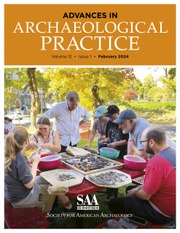
This themed issue of Advances in Archaeological Practice—“Advances in Archaeological Labor Management”—offers an intervention in this space. The authors in this issue not only take archaeological labor seriously as a topic but also consider the hierarchies and power structures in the field that position some individuals, groups, and institutions to take effective action to ensure more decent work for all who labor in archaeology. We collectively come from five continents, approaching a global view of work in archaeology, and write from academic, professional, museum, private, and public spaces. We aim to direct the fervent and inspiring energy around improving working conditions for archaeologists into action by those most strategically positioned to implement change.
A Critical Mass of Work on Archaeological Labor
Archaeological labor as a topic has received energetic attention, especially over the last decade, as a growing body of scholarship has focused on illuminating the underappreciated or historically erased contributions of archaeological workers around the world. Archaeological laborers themselves, of course, have never been fully invisible; they appear in the photographs, notes, and diaries from even the earliest archaeological expeditions. Still, these glimpses are unsatisfying, misleading, and often steeped in prejudice and racism, with archaeological laborers being described as objects of exotic fascination, used in photographs as human scales, or even being construed as harmful to cultural heritage or the land itself—thereby justifying their dispossession and displacement. These mentions and images do little to credit archaeological laborers with performing an essential role in the knowledge production process or to recognize that the expertise they contribute enables archaeology to proceed at all.
For this reason, much scholarship in colonial and postcolonial contexts examining archaeological labor has focused on correcting this gap in the history of archaeology, focusing on the backgrounds of photographs and the marginalia of excavation archives to locate the groups and individuals whose un(der)credited labor has been instrumental to building the archaeological record (Baird et al. Reference Baird, Kamash and Raja2023; Chadha Reference Chadha2002; Clément Reference Clément2010; Cline Reference Cline2023; Cradic Reference Cradic2023; Del Vesco Reference Del Vesco2024; Díaz and Williams Reference Díaz and Williams2024; Doyon Reference Doyon and Carruthers2014; Heffron and Tütüncü Çağlar Reference Heffron and Tütüncü Çağlar2024; Hodgett Reference Hodgett2025; Holley-Kline Reference Holley-Kline2022, Reference Holley-Kline2025, Reference Holley-Kline2026; Holley-Kline and Mickel Reference Holley-Kline and Mickel2024; Horn Reference Horn2024; Irving Reference Irving2017, Reference Irving2024; Kramer Reference Kramer2024; Mickel Reference Mickel2019, Reference Mickel2021; Mickel and Byrd Reference Mickel and Byrd2022; Quirke Reference Quirke2010; Riggs Reference Riggs2017; Rosner Reference Rosner2024; Salas Landa Reference Salas Landa2024; Shepherd Reference Shepherd2003; Troilo Reference Troilo2024a, Reference Troilo2024b; Zorn Reference Zorn2025). This robust (and growing) body of work illustrates the scale of local labor from which archaeology has benefited and shares individual stories and patterns in the experiences of local workers, especially in Latin America, East Africa, North Africa, Southwest Asia, and South Asia. A recurring theme is the alliance of archaeology in these places with colonialist, imperial, and capitalist projects that work to racialize labor forces and separate local inhabitants’ sense of ownership over the land and their cultural heritage. Some of this literature has uncovered friendly and warm interpersonal relationships between individual foreign excavators and specific members of hired local workforces, with excavators expressing closeness or appreciation for particular foremen or returning workers (see Baysal Reference Baysal2024; Heffron and Tütüncü Çağlar Reference Heffron and Tütüncü Çağlar2024; Quirke Reference Quirke2010; Zorn Reference Zorn2025). On the whole, however, local workers have been treated more as instruments rather than as instrumental to the archaeological research process. Mentions of their contributions are largely incidental or in passing and are almost never described as analytical or intellectual in nature.
This separation of the manual and mental work of archaeology is characteristic not only of colonial and postcolonial archaeology but is also at the center of other discussions on the changing nature of work in archaeology (Berggren and Hodder Reference Berggren and Hodder2003; Everill Reference Everill2009; Mickel Reference Mickel2021; Paynter Reference Paynter, Gero, Lacy and Blakey1983; Shanks and McGuire Reference Shanks and McGuire1996; Shepherd Reference Shepherd2003; Wong and Gutiérrez Reference Wong and Palá Gutiérrez2025). Berggren and Hodder (Reference Berggren and Hodder2003:421) refer to this disjuncture as the “separation of excavation from interpretation,” whereas Shanks and McGuire (Reference Shanks and McGuire1996:75) call it the “separation of reasoning and execution.” For their part, Shanks and McGuire locate this disconnection in the pursuit of an objective picture of the past, which subverts the archaeologist’s individual judgment, expertise, and craft in the process of excavation. Berggren and Hodder (Reference Berggren and Hodder2003:424) identify the methodological and technological shifts in the discipline over the course of the twentieth century that have created a routine “so codified that relatively unskilled workers could use it.” The result is a perceived deskilling of archaeological fieldwork that has permeated sectors and geographies of archaeology.
Of course, as much inquiry into the history of archaeology has shown, this supposed flattening of the work of archaeology has not resulted in equitable recognition for participants in archaeology or equal access to decent work and professional achievement. Much discussion has focused on the history of exclusion of women from the field and the diminution of women’s centrality to the development of archaeology (Bösl and Gutsmiedl-Schümann Reference Bösl and Gutsmiedl-Schümann2024; Browman Reference Browman2013; Claassen Reference Claassen1993, Reference Claassen1994, Reference Claassen2000; Díaz-Andreu and Sørensen Reference Díaz-Andreu and Sørensen1998; Pope and Teather Reference Pope and Teather2024). The culture, norms, and political economy of archaeology have also led to the documented marginalization and excision of Black and brown archaeologists (Carruthers et al. Reference Carruthers, Niala, Davis, Challis, Schiappacasse, Dixon and Milosavljević2021; Claassen Reference Claassen1993; Franklin Reference Franklin1997a; Franklin et al. Reference Franklin, Dunnavant, Flewellen and Odewale2020; Hawley and Speth Reference Hawley and Speth2016; Jones and Carey Reference Jones and Carey2023; Reilly and Barnes Reference Reilly, Barnes, Stewart, Beck, Fryer, Galaty, Garvey, Hoover, O’Shea and Ventresca-Miller2025; Shepherd Reference Shepherd2003) and of poor or working-class archaeologists (Corwin and Helmer Reference Corwin and Helmer2024; Everill Reference Everill2009; Ribeiro and Giamakis Reference Ribeiro and Giamakis2023; van Oeveren Reference Van Oeveren2025) in the United States, Europe, and elsewhere.
Such reparative historiographies have identified structural inequities and led to attempts in the field to redress such systemic injustices, which must and will continue. They have also demonstrated that diversity in the archaeological workforce leads to diverse situated knowledges (sensu Haraway Reference Haraway1988), countering the “view from nowhere” that systematization in archaeological methods and labor organization has arguably sought (Berggren and Hodder Reference Berggren and Hodder2003). Recognizing, celebrating, embracing, and materially enabling the efforts and influence of archaeology’s many experts is not only justice work but also lays the groundwork for more complex and nuanced understandings of the archaeological record.
In addition to such histories of archaeology, ethnographies of archaeology too have raised areas of concern for labor in contemporary archaeological and heritage practice (Benavides Reference Benavides2004; Breglia Reference Breglia2005; Brito Reference Brito2024; Castañeda Reference Castañeda1996; Gillot Reference Gillot2010; Heath-Stout Reference Heath-Stout2023; Leighton Reference Leighton2015, Reference Leighton2016; Zorzin and Gates St-Pierre Reference Zorzin and St-Pierre2017). Others have offered often vulnerable autoethnographic and personal reflections on their experiences of struggle, harm, and violence, as well as their sources of joy and persistence working in archaeology (Franklin Reference Franklin1997b; Heffron and Tütüncü Çağlar Reference Heffron and Tütüncü Çağlar2024; Kolhatkar Reference Kolhatkar2025; Norder Reference Norder2007; O’Mahony Reference O’Mahony2018; Prentiss Reference Prentiss2012; Voss Reference Voss2021; Zorzin Reference Zorzin and Resco2016). These discussions, together with statistical accountings (Aitchison and Rocks-Macqueen Reference Aitchison and Doug2024; Amundsen-Meyer et al. Reference Amundsen-Meyer, Holyoke and Munro2025; Brami et al. Reference Brami, Emra, Muller, Preda-Bălănică, Irvine, Milić, Malagó, Meheux and Fernández-Götz2023; Durbin Reference Durbin2026; Flatman Reference Flatman2022; Mate and Ulm Reference Mate and Ulm2021; Overholtzer and Jalbert Reference Overholtzer and Jalbert2021; Zeder Reference Zeder1997) and critical reckonings with access and inclusion in archaeology (Clements et al. Reference Clements, Fitzpatrick and Hunt2023; Franklin et al. Reference Franklin, Dunnavant, Flewellen and Odewale2020; Heath-Stout Reference Heath-Stout2024; Heath-Stout et al. Reference Heath-Stout, Kinkopf and Wilkie2022; Kurnick and Fladd Reference Kurnick and Fladd2026; Nelson et al. Reference Nelson, Sarah and Wylie1994; Phillips and Gilchrist Reference Phillips, Gilchrist, edited by J. Carmen and Skeates2012; Rivera Prince et al. Reference Rivera Prince, Blackwood, Brough, Landázuri, Leclerc, Barnes and Douglass2022; Westendorff et al. Reference Westendorff, Bardolph and Schuller2025) illustrate that archaeology retains many of the systems and structures that characterized archaeological labor organization and management over the past centuries and decades. Archaeology has not left behind its classism, racism, ableism, or sexism, nor its debilitating working conditions and inadequate salaries, nor its Cartesian insistence on the separation between bodily and brainy work. These realities necessitate reflection and action because they are harmful. They also lead to a drain of talent within the archaeological profession: as individuals are pushed out of the field, a narrower range of questions and approaches is applied to archaeological research, resulting in a deprived perspective on the past.
In attempting to determine and redress the source of these gaps, harms, and inequities, archaeologists have directed their attention to a few areas. Many researchers, especially women, have given attention to cataloging and characterizing risk factors of archaeologists working today, identifying areas requiring urgent action to make the field safer and more welcoming for archaeologists spanning intersectional positionalities (Coltofean-Arizancu et al. Reference Coltofean-Arizancu, Gaydarska, Plutniak, Mary, Hlad, Algrain and Pasquini2023; Markert et al. Reference Markert, Hodgetts, Cantin, Mallet Gauthier, Lyons, Supernant, Welch, Wiley and Dent2025; Poirier and Feder Reference Poirier and Feder2000; Simeonoff et al. Reference Simeonoff, Matsuda, Perry and Charolla2026; Voss Reference Voss2021). Discussion has also operated at a broader scale, grounding the source of the trouble with archaeological labor in political-economic critiques of archaeology’s alliance with contemporary capitalism (Aparicio Resco Reference Aparicio Resco2016; Corwin and Helmer Reference Corwin and Helmer2024; Flexner Reference Flexner2020; Hamilakis and Duke Reference Hamilakis and Duke2007; McGuire and Walker Reference McGuire and Walker1999; Patterson Reference Patterson1999; Wurst Reference Wurst2021; Zorzin Reference Zorzin2011, Reference Zorzin2021). And as archaeology as a field changes and reshapes with the adoption of new digital technologies, labor conditions too will surely be affected; it is encouraging in this case to see analyses like those of Huvila (Reference Huvila2021), Poehler (Reference Poehler2023), and Rosenzweig (Reference Rosenzweig2020) considering how digital technologies interpolate with the experiences, epistemologies, and economics of archaeological labor.
The conversation around archaeological labor has been given fuel and oxygen. It is loud and crackling. The hard work described in this section so far has illuminated shared experiences and senses of solidarity between archaeological workers, as well as axes of differentiation and divergent precarities, demanding action at multiple scales. In fact, the scope and urgency of the need for change can make it difficult to see precisely what steps should be taken and by whom, where, and when. Although some have expressed that a unified national archaeological union is a long way off or “would never work” (Archaic Inquiries 2019), archaeological workers have unionized in Ireland (Archaeology Ireland 2015; Malone Reference Malone2026), Canada (Kolhatkar Reference Kolhatkar2025; Markert et al. Reference Markert, Hodgetts, Cantin, Mallet Gauthier, Lyons, Supernant, Welch, Wiley and Dent2025), the United States (International Brotherhood of Teamsters 2024; Press Reference Press2024), and beyond.
It is true that interventions and solutions that might apply in one country or region might not work in another. In a small field, the distinctions between managers and workers may not always be clear-cut. We are faced as well with the conundrum that those with the privilege to act may not be the ones whose voices and perspectives are most necessary to building a better future. And at a time when archaeology itself is under threat as a humanistic social science and a perceived hindrance to construction and development, perhaps a campaign for better treatment and pay feels out of reach or even contradictory to keeping the field alive.
The authors in this issue do not propose to have all the answers or solutions to these many questions and contradictions. But they do hope to light a torch in a few specific directions, making possible pathways clearer. Recognizing that not everyone in archaeology is equally positioned to make changes in working conditions also means that some people and organizations are, at least in some ways, strategically poised to provoke progress. We have titled this issue “Advances in Archaeological Labor Management” because together, we aim to identify those points of power and potential energy—those places where pressure or policy or particular decision-making might lead to better labor conditions for all archaeologists and therefore to better archaeology. From my own perspective, this is not counterproductive to a future for archaeology. Instead, archaeology becoming a locus of dignified labor is integrally tied to the future of the field, because good working conditions are crucial for retaining those with diverse passions and talents. Furthermore, reframing archaeology as work, labor, and craft (after Shanks and McGuire Reference Shanks and McGuire1996) subverts perceptions of the discipline as either a bureaucratic nuisance or an aristocratic luxury that fuel public and political skepticism of the archaeological project.
Advancing archaeological labor will require a suite of creative changes in archaeological practice—some broad and structural, others surgical and precise. This issue presents recommendations across that spectrum and aims to bypass the bystander effect by not merely calling for action but by also articulating where and who should act. As for when to act, all of the articles in this issue unite in a vision and a call for action now.
A Trail Map through the Themed Issue
This issue begins with an inspiring model and rallying cry for collective organizing provided by Jaime Almansa-Sánchez and coauthors (Reference Almansa-Sánchez, Varón-Hernández, Caballero-Casado and Astorqui2026) in “Toward a Regulation of Archaeological Labor in Spain: Up against a Brick Wall for 40 Years.” They reflect on the recent history of archaeological labor organizations and situate this history within the broader political economy of archaeology in Spain. Almansa-Sánchez and coauthors illustrate how contemporary professional archaeology in Spain emerged within the crucible of Y2K neoliberalism, economic bubbles, and the 2008–2009 financial crisis. Their article highlights the development of PEPA (Plataforma Estatal de Profesionales de Arqueologica) and its influence on policy within Spain that could regulate wages and working conditions for professional archaeologists in Spain. Although the authors make clear the many obstacles to this sort of organizing, they offer specific examples of mechanisms by which archaeologists can win recognition and regulation (such as through collective bargaining agreements) and end on a note of hope about ongoing discussions in Spanish archaeology and broader transnational organizing across Europe.
The next article in the issue, “In the Shadows of Colonialism: Archaeological Labor Practices in (Post-)Colonial Zimbabwe,” by Genius Tevera and Tawanda Mukwende (Reference Tevera and Mukwende2026) offers a similar macro-level view, grounded in history and the political economy of how to advance labor management, this time in a postcolonial context. Tevera and Mukwende review the history of local hiring practices in colonial-era Zimbabwe and how the same patterns of hierarchy and exclusion are replicated in contemporary Zimbabwean archaeological practice. They focus on locally hired workers and the lack of recognition or compensation for the expertise they have contributed and continue to contribute to enable the archaeological research process. They suggest concrete avenues to decolonize archaeological labor management in Zimbabwe—practices that could be adopted in other contexts as well—such as more heterarchical power and decision-making structures, intentional capacity building, and equitable pay.
Like Tevera and Mukwenda, Wenchao Cai and Jianhui Dong (Reference Cai and Dong2026) focus their attention on locally hired labor in archaeology as a category of worker requiring consideration and action, this time in China; their article is titled “Toward More Inclusive Fieldwork: Labor, Knowledge, and Structural Constraints in Chinese Archaeology.” As in our first two articles, Cai and Dong take a historical view accounting for past harms and oversights. They first provide a nation-level view of the development of archaeology in China; locating the role of labor in this history, Cai and Dong then root down in ethnographic research at the site of Chengcun City, where they characterize different pathways available to locally hired laborers for participation and engagement in archaeology. Some workers are able to pursue professional roles in the heritage sector, but these opportunities are limited. More typically, locally hired workers experience the seasonality, informality, inconsistency, and precarity of project-based work. Cai and Dong advocate for a fuller incorporation and recognition of the centrality of local expertise to the production of archaeological knowledge and, bound up with this recognition, improved stability and clearer professional pathways for those seeking careers in archaeology or heritage.
All three of these articles are grounded in a historical accounting of structural problems for archaeological workers in a range of geographical contexts. Covering three continents, they demonstrate some clear through lines in the conditions underpinning the extraction or exploitation of labor from archaeological workers. All three contributions highlight both the lack of social recognition for the expertise of workers in archaeology and the need for structured career pathways and policies governing worker protections. The authors of these articles simultaneously illustrate effectively what is materially specific to their region—the guild model of Spain, the postcolonial setting of Zimbawbe, and the agricultural community of Chengcun, China—and how it shapes the past and possibilities for archaeological labor in their locale. Still, as a set, these three articles also provide insight into broad-scale conditions that structure, open, and foreclose pathways forward for the just treatment of workers around the world.
Cai and Dong, however, also offer a close look at worker experiences within the context of the Chengcun City site in China, and from there the issue moves to another discussion that focuses intently on the dynamics of particular archaeological research projects. The aim of the following articles is to identify concrete practices that directly confront the sorts of political economic dynamics named in the first set of three articles. In their article “From Workers to Companions: Confronting the Contradictions in Neoliberal Social Relationships in Peruvian Archaeology,” Henry Tantaléan and colleagues (Reference Tantaleán, Medina, Roman, Quispe-Baquedano, Sanandres, Santiago and Bendezú-Sarmiento2026) present the strategies used by the Chicama Archaeological Program (PRACH) on the northern coast of Peru that do not replicate the normative conditions of competition and extraction that characterize archaeology in Peru as much as other places already examined in the issue. Specifically, the project works to engender particular social relations between all constituents of the research program that subvert feelings of competition and extraction and instead foster collectivism and cooperation. Rooted especially in Marxist and feminist traditions, Tantaléan and colleagues make the case that structural conditions are enacted at an interpersonal level and that projects can be managed in ways that undermine the penetrating reach of capitalist political economy.
The issue remains in Peru as the next contribution by Amanda Brock Morales and Kimberly Munro (Reference Morales, Amanda and Munro2026) entitled “Beyond the Trenches: Rethinking Archaeological Labor through Ritual, Relational, and Community Archaeologies in the Central Andean Highlands” again demonstrates how to do archaeology differently, in ways that resist extractive hierarchy, exploitation, and exclusion. The authors describe how a schedule and pace of work were established collaboratively with community team members so that the archaeological excavation could complement, rather than compete with, local agricultural livelihoods and ritual observances. They draw on local, historically, and culturally rooted models for organizing labor and making decisions, relying, for instance, on the faena system at Cosma and more broadly recognizing the sacred and ancestral animate forces throughout the landscape as agentive participants in the archaeological excavations. A theme throughout this issue is that labor is constitutive of knowledge production, which is profoundly apparent in Brock Morales and Munro’s contribution, where restructuring labor too restructures the rules and process of knowledge production in these places. These authors illustrate how reimagining the labor contributions of local community members also means taking seriously Indigenous ways of knowing by valuing ancestral knowledge (including that of nonhuman ancestors), oral histories, and dreams.
Julieta Flores-Muñoz and Patricia Murrieta-Flores (Reference Flores-Muñoz and Murrieta-Flores2026) bring forward many of these same themes in “Working against Silence: Nahua Scholarly Labor, Digital Precarity, and the Politics of Archaeological Sovereignty—The MONARO Project in Veracruz, Mexico,” another example of reimagined archaeological labor from Latin America. As in several of the previous articles, they articulate how a broader neoliberal political economy structures archaeological practice within their national context, this time writing from Mexico. The authors share Brock Morales and Munro’s emphasis on the importance of knowledge from the landscape and oral history. Flores-Muñoz and Murrieta-Flores, however, are the first in the issue to focus on the role of digital technologies and data structures in reworking norms of archaeological labor, emphasizing the importance of digital equity and data sovereignty for archaeological projects in meaningfully transforming their labor practices and, concomitantly, their epistemologies. They present their work among Nahua communities where collection, transcription, translation, annotation, storage, and sharing of oral histories are all done collaboratively and with Nahua control of knowledge sharing at the center.
Joshua Wells and colleagues (Reference Wells, Gupta and Myers2026) continue the discussion of data governance and digital labor in “Is Archaeological Data Labor Sustainable? Only through Ethical and Policy Reforms and Indigenous Data Sovereignty.” They take a different approach to considering the possibilities and ramifications of the proliferation of data and technologies, highlighting how the digital turn has rendered invisible much of the labor that underpins archaeological research. Although, of course, much physical archaeological labor was also erased historically, the acceleration and intensification of data infrastructure have created new roles and responsibilities for managing, preserving, and stewarding archaeological data that could perhaps be mischaracterized as automatic and passive. Wells and coauthors illustrate that data labor is constant and expanding, particularly with the advent of AI and newly urgent questions about the appropriate degree and mechanisms for sharing data. The current system is unsustainable, and they argue for shifts in disciplinary culture, norms, and institutional policies that center accountability, security, nuance, and the human role in producing and managing archaeological data.
Technology is also at the center of Gabriella Armstrong’s (Reference Armstrong2026) contribution, “Unmanned Aerial Systems and an Archaeology of Accessibility,” in which she highlights the potential for unmanned aerial systems (UAS) to expand the accessibility of archaeological fieldwork to a wider range of archaeologists, particularly those with both visible and invisible disabilities. Armstrong demonstrates not only the expected ways that UAS enable archaeologists to collect data in difficult-to-access locations but also the unexpected ways in which the material affordances of UAS intersect with considerations that are core to an enabled archaeology. For instance, she suggests that the preparedness and planning required for the use of UAS can and should also be applied to other health and safety considerations and that the fragility of the equipment requires mitigating the roughness of the conditions to which it is subjected (something that our fragile human bodies surely benefit from as well). The adoption of UAS by archaeology invites considerations about how universal design principles can be incorporated more fully into archaeological fieldwork to make fieldwork environments accessible to a broader set of researchers in the discipline.
Charlotte Williams (Reference Williams2026) too examines fieldwork conditions, providing a lens into the planning and administration of an archaeological excavation and the unexpected consequences of management decisions. Her “Daily Provisions: Tracing a Long Durée of Feeding Archaeological Workers and Paths of Sustenance for the Future” is one of the only serious published treatments of the work and implications of how field crews are fed in the field. She mines mid-century archival records from excavations at Coahuila, Mexico, and Piedras Negras, Guatemala, to reveal how the project directors managed the necessities of provisioning and sustaining their research teams. Williams discusses the dynamics of racialization and inequity that shaped those processes at these projects and demonstrates a direct link between the choices made for provisioning field crews and the production of archaeological data. Musing that foodways form such a significant part of archaeologists’ interpretation of the past, Williams calls for greater critical attention and increased intention regarding the role of foodways in our own archaeological research processes.
The focus then returns to professional archaeology, where the issue began, for a set of articles coming from US-based CRM with implications and recommendations for transforming leadership across sectors of archaeological practice. First, Phyllis Johnson (Reference Johnson2026) offers concrete suggestions for how to implement “people-centered protocols” based on her experience directing the Augustana University Archaeology Lab, a CRM firm and research institution. In “Putting the People before the Work: Creating Healthy Working Environments in CRM,” Johnson emphasizes the need to put in place procedures and policies that support staff safety and work–life balance, opportunities for staff to further their professional development, and leadership by example. Her contribution demonstrates not only that these interventions can improve the environment and culture of a lab or organization but also that they do not have to come at the cost of productivity or revenue. Indeed, she demonstrates that Augustana’s productivity increased over the time in which Johnson was implementing these people-centered protocols.
Suanna Selby Crowley (Reference Crowley2026) picks up on the discussion of how to support students, direct reports, and younger colleagues in “Mentoring as Career Infrastructure: Building Sustainable Pathways in Archaeological Practice.” She reflects on her experience mentoring about 75 individuals since 2020 and argues that mentorship should not be taken as a favor that a senior colleague does informally or simply out of kindness for a junior. Instead, we must regard mentorship as “career infrastructure” and as essential to the field as professional certification or continuing education. She recognizes and applauds the efforts of existing formal mentorship programs in the field and introduces possibilities for what she terms “sponsorship” and “network weaving” as innovative ways to organize and sustain mentorship in archaeology. Recognizing that the labor of mentorship itself is distributed unequally, Crowley presents these complementary structures with an awareness of the need for a diversity of approaches with different affordances and scales. She even provides concrete examples for how one might become or improve as a mentor at various amounts of available time—from 30 minutes to a couple of hours to sustained investment. Neatly, she lays out the many options in setting up mentorship programs while remaining firm that mentorship itself is not optional.
Many of the recommendations shared by Johnson and Crowley overlap with those presented in Terry Peterkin Brock’s (Reference Terry Peterkin2026) how-to guide titled “Building Intentional Leadership and Management Approaches in Archaeology.” It focuses on how archaeologists might implement a values-based culture and shift from a management mindset to a coaching mindset as leaders. Although these interventions echo the advances advocated by other authors in this issue, Brock’s source of inspiration for how archaeologists might improve our workplaces comes from a unique place. For Brock, archaeology has much to gain by turning more frequently to business scholarship on management, sales, and marketing. He shares, for instance, how his museum adapted Scrum, an Agile project management system, to its projects. The core of Brock’s recommendations to fellow archaeologists is to look to business literature for resources on managing the work of archaeology.
Finally, the digital review for the issue remains explicit about both the material and social-emotional realities of archaeological labor. In “Fun Labor Is Still Labor: Archaeological Consulting in the Games Industry,” Emma Yasui (Reference Yasui2026) provides specific, experience-based guidance to archaeologists and heritage professionals interested in working as cultural consultants in the gaming industry, whether with tabletop or video games. She structures her review around “the good, the bad, and the ugly” of working in this space, not only highlighting the pleasures of aligning one’s career with one’s passions and the open-mindedness of many game developers but also cautioning about precarity in the industry and the personal cost of exposure to harmful tropes and depictions of places and communities. Yasui presents a set of specific recommendations for those venturing into the space of cultural consultation. Ultimately, her advice that “fun labor is still labor” is a vital reminder for archaeologists working across geographic contexts, sectors of archaeology, and in any stage of their career. “Get paid,” Yasui tells prospective cultural consultants, but perhaps technicians, local workers, students, and others are also reading and considering their right to just compensation for their contributions to archaeological knowledge production. Of course, those in positions to determine budgets and set salaries—project directors, university administrators, policymakers, CRM managers, and, in this case, game developers—also must recognize their role in advancing archaeology labor through the corollary: “Pay workers.”
This last point is at the heart of the intended contribution of this themed issue. As necessary and critical considerations of the history and current conditions of archaeological labor continue to proliferate, the need for change in our field becomes ever more apparent and urgent. To achieve this change, however, we must replace old ways of doing things with new ones, and so we need to spend time dreaming up what a better world might look like based on an informed understanding of the structures and systems of power in archaeology. It is not enough to say that archaeological labor is often inequitable or exploitative. To transform conditions, we need to specify what would make it less so and to articulate precisely who is in the position to implement new policies, procedures, and norms. What this issue reveals is that some change may come from principled leadership (Brock Reference Terry Peterkin2026; Crowley Reference Crowley2026; Johnson Reference Johnson2026); some from more collaborative, heterarchical, and decentralized social structures in fieldwork settings (Brock Morales and Munro Reference Morales, Amanda and Munro2026; Tantaléan et al. Reference Tantaleán, Medina, Roman, Quispe-Baquedano, Sanandres, Santiago and Bendezú-Sarmiento2026; Tevera and Mukwenda Reference Tevera and Mukwende2026); and some from bottom-up collective organizing (Almansa-Sánchez Reference Almansa-Sánchez, Varón-Hernández, Caballero-Casado and Astorqui2026). After all, while our archaeological training may not make us the best managers or supervisors, it may prepare us well to be effective organizers (Mickel and Olson Reference Mickel and Olson2021).
Recent work by Altschul and Klein (Reference Altschul and Klein2022) and Amundsen-Meyer and colleagues (Reference Amundsen-Meyer, Holyoke and Munro2025) has shown that neither the United States nor Canada is on track to graduate enough archaeologists with sufficient credentials or training to meet labor market demands. In these contexts, at least, there is a need for more archaeologists. Notably, this projection does not hold for all sectors of archaeology: academic archaeology in the United States, having felt the pressures of cuts to the humanities for years, is now feeling the effects of federal restrictions on research topics and funding (Marwick et al. Reference Marwick, Poole, Zhang, Shafizadeh and Beck2026). As a discipline, archaeology must contend with these dichotomies between strain and opportunity. There will be more work in some areas and more competition for work in others. To navigate this shifting and contradictory terrain, we must act in concert and with intention. We must advance our archaeological labor expectations, practice, organization, solidarity, and management. Here is a place we can start to gather.
Acknowledgments
I am so grateful to the authors in this issue for responding to our open call for abstracts, drafting your excellent articles according to an often-strict timeline, and navigating the review process. But most of all, I am grateful for your dreams and visions for a better world for archaeological workers. Thank you to Amany Abd Al-Hameed for helping with distributing the initial call for papers, reviewing the many (!) abstracts we received for this themed issue, and issuing the invitations to authors to submit their full articles for review. Thank you as well to those who offered feedback that strengthened this article. No generative AI was used at any stage in crafting this manuscript.
Funding Statement
This work received no specific grant funding from any funding agency, commercial, or not-for-profit sectors.
Data Availability Statement
No original data were used.
Competing Interests
The author is the editor of Advances in Archaeological Practice.

 Open access

